
Season 2: Episode 28 - The Challenge of Jewish Power
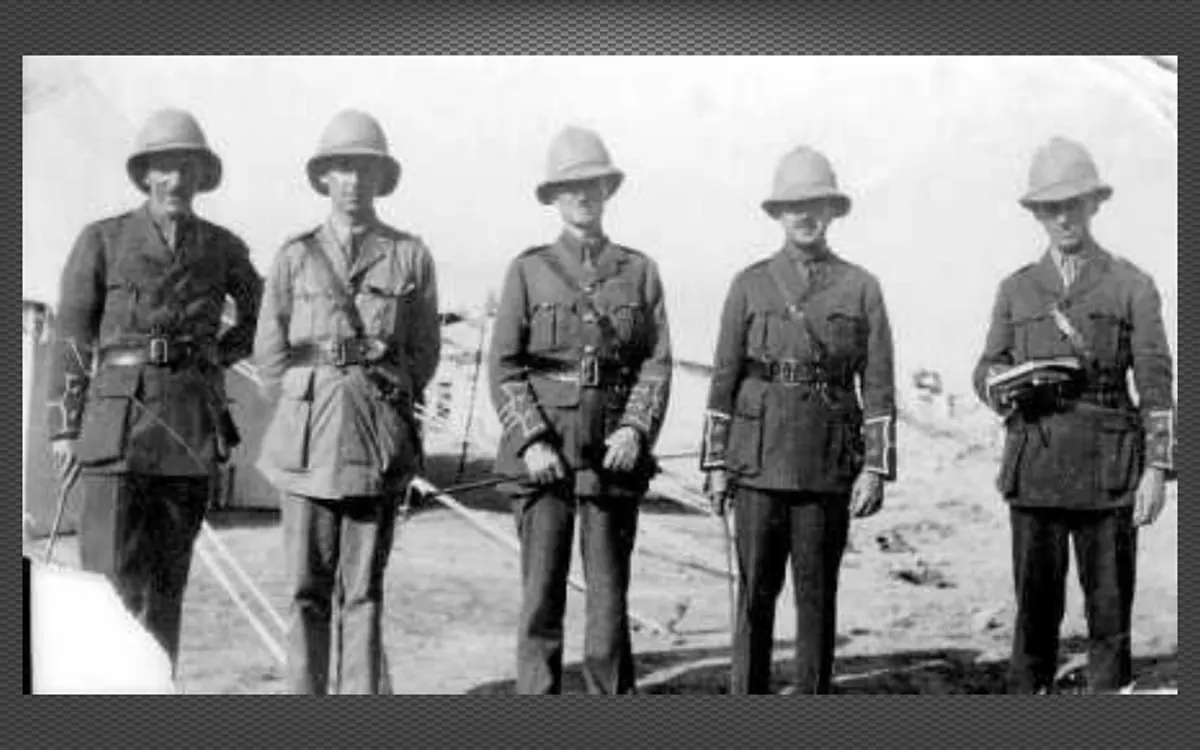
The return of the Jewish people to the tools of political and military power was bound up with their return to the land of Israel. This episode explores the rise of the military model within the Zionist movement and the power of the martyrdom of Joseph Trumpeldor as an inspiration for further struggle.
About this episode
The tyrant dies and his rule is over, said Kierkegaard; the martyr dies and his rule begins. First gratitude: after two thousand years as the object of others' violence, Am Yisrael faces the enviable problem of being its subject. In the Bible a gibor swung his spear over three hundred dead; the sages made him one who conquers himself, and exile turned Jewish potency inward to moral strength while politics and war were ceded to the nations and disparaged as tainted. Rav Yitz Greenberg: the state placed power in Jewish hands, dirtied them with blood and guilt, eroded the self-image of the innocent sufferer, and ethical muscles unflexed for centuries are stiff and sore. Ben-Gurion sat alone on the night of independence doubting the army, the world's acceptance, the reconciliation of a nation like all others with a light to the nations, and whether victims could wield sovereignty. In the West Rav Mike sees a divided camp: Orthodox Jews close to centralized power as in the Middle Ages, and liberals for whom, his brother at the New York Times suggested, evil has not vanished but attaches to whoever holds power, so that Israel's success itself makes it the Goliath. Here he sees trauma, a vortex that drags the present into the past until the future reproduces it: exile, the Holocaust, which American Jews read as a failure of tolerance and Zionists as a lack of power, F-16s over Auschwitz, and a hundred years' war, so that a Hebron spokesman the morning after an attack spoke of the Crusades, the Inquisition and the Nazis as one trauma. Nordau wanted Spartans not Helots and raised Bar Kochba, and Jabotinsky and Ben-Gurion will do for Jewish power what Ben Yehuda did for Hebrew.
Paulo Freire's Pedagogy of the Oppressed: oppression narrows horizons so that the slave's image of freedom is the hand that holds the whip, and some of that psychodrama marks the return to sovereignty, though the Jews fit no paradigm, having built another model of power, the belief that sins and merits drive history. Rav Mike has held that out as agency, and now doubts it through Ruth Wisse's moral solipsism, the Jewish tendency to attend to our own moral performance over survival and the behaviour of enemies. It was the Romans who burned Jerusalem, even if God allowed it; at what point do we hold enemies responsible and find the strength to defeat them? Golda Meir to Sadat, we can forgive you for killing our children but not for forcing us to kill yours, cares more about Israeli children's decency than the enemy's designs; Wisse would have her say we are here to stay no matter what you do. Israel alone wins wars and immediately sues for peace. Ben-Gurion named the task mamlachtiut, acting like a sovereign, handling military and political power effectively, responsibly and morally, and Renan noted that states are brutally established. Hashomer's slogan was from Yaakov Cahan's post-Kishinev Song of the Brigands: with fire and blood Judea fell, with fire and blood Judea will rise. The Jewish Legion got the process underway. Jamal Pasha's expulsions put eleven thousand Jews in the British camps of Gabbari and Mafruza at Alexandria, among them a tall one-armed man of Nordic features: Yosef Trumpeldor, son of a cantonist allowed to live outside the Pale, more Russian than Jewish, who lost his left arm in the Russo-Japanese War and told doctors he still had one to give the motherland, studied law, gathered Zionists, went up in 1911 and was deported as a Russian national.
A Jewish force to help Britain and gain a foothold circulated quietly, against the Zionist Organization's neutrality, which feared repercussions for Jews on whichever side lost; Weizmann was sympathetic but bowed; British assimilationists abhorred any distinct Jewish unit, Sokolow's official Zionists opposed it, and the Russian immigrants of the East End would not fight for the Tsar. For one Jew it was already real. Vladimir Jabotinsky, born 1880 in Odessa to a Russified family, the fulfilment of the Russian maskilim's dream, was a correspondent in Italy by 1896 under the pen name Altalena, a swing, a name to remember; after Kishinev he organized self-defence, and in 1908 the WZO sent him to edit a pro-Young Turk daily in Istanbul that died with the war. Jobless, he went to the camps in December 1914, organized the refugees, and on March 3, 1915 at Gabbari told the quarrelling leaders it was impossible to sit with folded arms on charity, that the British would surely march on Palestine, and volunteers stepped forward to form a unit to fight on the Palestine front. Beitar, named for Bar Kochba's last fortress and read as Brit Yosef Trumpeldor, would later swear seven principles, among them magen, every Jew trained in arms. General Maxwell knew of no Palestine offensive, said the law admitted no foreign soldiers, and offered only a mule transport unit on another front. Jabotinsky was insulted, by aristocratic pretension say some, by hadar say others, the untranslatable splendour of honour, national dignity and personal responsibility. Trumpeldor answered that any front leads to Zion, which Jabotinsky later made the principle of giyus, mobilization.
Trumpeldor formed the Zion Mule Corps from the camps under Lieutenant Colonel John Henry Patterson, who wrote that a Jewish unit had been unknown since the Maccabees and that as a boy devouring the deeds of Joshua, Joab, Gideon and Judah he never dreamed he would captain a host of Israel; a Christian-Zionist alliance that will reappear in Orde Wingate. Gallipoli was a catastrophe, 130,000 dead, the corps decimated, Patterson invalided home and Trumpeldor in command of the remnant. In London Jabotinsky's greatest opponent was the movement itself: in June 1915 the Actions Committee in Copenhagen declared a legion in sharpest contradiction to the character of Zionism and forbade any Zionist to take part, the first step toward his secession in 1923 and revisionism. East End Jews pelted him with rotten tomatoes and blew whistles; he needed a bodyguard; he pressed on, a determination he bequeathed to Menachem Begin and encoded as had ness, one flag, since serving two ideals is serving two gods. The Mule Corps remnant reached London in July 1916 and joined the 16th Platoon of the London Regiment; Jabotinsky enlisted as a private; Patterson recovered and found highly placed Jews the biggest obstacle, Sanballats in his word, one of whom admitted that under Patterson the Russian Jews might win Palestine and he did not want to be sent to live there. In August 1917 the 38th Royal Fusiliers was announced, no Jewish name, a Star of David on the sleeve, kosher food and a chaplain, joined by the 39th from Nova Scotia with American and Canadian Jews and the 40th, nearly seven thousand men. In June 1918 they forded the Jordan toward Jerusalem in Joshua's footsteps with Lieutenant Jabotinsky in the first battalion, Trumpeldor and Ben-Gurion among them, hoping to become the core of a defence force; Allenby, valuing Arab aspirations more, disbanded most of them in 1919, leaving one battalion named the First Judeans with a menorah badge and the word kadimah, the emblem of the state to come.
The land lies between empires, and Britain had promised it three ways. Allenby took Damascus with Faisal's Arab revolt, Britain made Faisal king of Syria to honour McMahon and undercut France, France took the Syrian mandate and the Franco-Syrian war erupted, Faisal was moved to a new Iraq and his brother Abdullah to Transjordan a year later, and the Upper Galilee settlements, Metula, Kfar Giladi, Hamra and Tel Hai, were caught between. Tel Hai, bought in 1905 and settled as a border post in 1918 by Legion veterans under Trumpeldor, stayed neutral while local villages and Bedouin sided with Faisal and pillaged the farms searching for French spies. On March 1, 1920 several hundred Arabs demanded to search the settlement; a shot in the air summoned Trumpeldor and ten men posted by Hashomer; the Arab commander was admitted to confirm no French were present; a Jew inside who had not been told confronted an armed Bedouin with a pistol, and when the smoke cleared five Arabs and six Jews were dead, Trumpeldor among them, and the outpost was abandoned and burned. A national myth, a past event embodying present values as a charter for action: eight dead with two from an earlier clash, hence Kiryat Shmona, the town of the eight; it is good to die for our country; the 11th of Adar a pilgrimage day. Brenner's eulogy, A Sacred Place: cold calculation would have evacuated, but the selfless heart believed love for a piece of earth could move mountains, and if we leave every dangerous place, to where? Aharon Sher of the first battle: one does not desert a place nor give up that which has been built. The argument was who wore the martyrs' mantle, the gun or the plough, Nehemiah's one hand on the weapon and one on the wall. Revisionists held up Tel Hai for armed confrontation, blood and sacrifice; socialists for restraint and settlement, their nursery-school pamphlet calling the fallen heroes of the spade whose weapon came only for the builder's stick; Achimeir asked what the socialists had to do with the militarist Trumpeldor and why they did not pilgrimage to Gordon's grave, while Katznelson in Davar recalled that Jabotinsky on the Provisional Committee had urged withdrawal from the Upper Galilee and called Tel Hai a two-front war against bandits and against indifference at home. Gush Emunim chose Tel Hai Day in the 1970s to call for settlers in Sinai, the West Bank, Gaza and the Golan; the argument now is whether we want the symbol at all. Bookends of exile: Rabbi Akiva on the stake declaring Shema as the rakes tore him, students crying even now, his soul leaving on echad, a devotion that carried a disembodied people two thousand years; and at the other end, Zionists who had mostly abandoned that belief, reuniting body and soul, rehabilitating Bar Kochba, and finding in a one-armed soldier-farmer the words to hold fast: it is good to die for our country.
Key ideas
- After two millennia as the object of power, the Jews are its subject, and the ethical muscles for it are stiff and sore; Ben-Gurion's word for the task was mamlachtiut.
- Trauma vortex and Freire's whip: the return to sovereignty is coloured by exile, the Holocaust and a hundred years' war; Wisse's moral solipsism asks when we hold enemies responsible.
- Jabotinsky and Trumpeldor met in the Alexandria camps in March 1915; Maxwell offered mules, hadar refused, giyus accepted, and Beitar's principles were born.
- Patterson's Zion Mule Corps bled at Gallipoli; the Zionist Organization disowned the legion idea; East End Jews threw tomatoes; the Royal Fusiliers forded the Jordan in 1918 anyway.
- Allenby disbanded the Legion to the First Judeans with a menorah and the word kadimah; Britain's three promises left Tel Hai between France and Faisal.
- Tel Hai is a national myth claimed by the gun and the plough alike, and with Rabbi Akiva's echad it bookends the exile: martyrdom at both ends of the journey.
Chapters
- 0:00 The martyr's rule begins; gratitude for the problem
- 1:06 From spear to self-conquest; power ceded
- 3:16 Greenberg's stiff ethical muscles; Ben-Gurion's doubts
- 5:25 The West: close to power, or power as evil
- 8:42 Goliath and David; is there a just model?
- 9:50 Trauma vortex: exile, Holocaust, hundred years' war
- 13:06 Nordau's Spartans; Freire's whip
- 16:18 Moral solipsism and Golda's line
- 19:31 Mamlachtiut; fire and blood
- 21:48 Alexandria: the one-armed hero
- 23:58 Who opposed a Jewish force
- 25:52 Jabotinsky of Odessa, Altalena
- 27:11 Gabbari, March 1915: folded arms
- 29:22 Beitar's oath: magen
- 30:27 Maxwell's mules; hadar and giyus
- 32:38 Patterson and the Zion Mule Corps
- 33:45 Gallipoli
- 34:50 Copenhagen disowns the legion; tomatoes and one flag
- 37:01 Sanballats; the Royal Fusiliers
- 40:12 Crossing the Jordan; the First Judeans
- 42:21 Between empires: Faisal, France, the Galilee
- 44:37 Tel Hai, March 1, 1920
- 46:49 A national myth; the town of the eight
- 49:01 Brenner's eulogy; the gun or the plough
- 52:13 Achimeir, Katznelson, Gush Emunim
- 55:23 Bookends of exile: Rabbi Akiva's echad
Who, where and when
People
Zev Jabotinsky, Yosef Trumpeldor, David Ben-Gurion, John Henry Patterson, General John Maxwell, Edmund Allenby, Faisal and Abdullah, Chaim Weizmann, Nahum Sokolow, Max Nordau, Menachem Begin, Yosef Chaim Brenner, Berl Katznelson, Abba Achimeir, Aharon Sher, Rabbi Akiva, Bar Kochba, Golda Meir and Anwar Sadat, Rav Yitz Greenberg, Ruth Wisse, Paulo Freire, Ernest Renan, Yaakov Cahan, Orde Wingate
Places
Alexandria, Gabbari and Mafruza, Gallipoli, London's East End, Copenhagen, The Jordan fords, Damascus, Tel Hai, Kfar Giladi, Metula, Kiryat Shmona, Hebron
Texts
Pirkei Avot 4:1, Pedagogy of the Oppressed, Jews and Power, Song of the Brigands, Patterson's journal, The Copenhagen declaration of June 1915, Nehemiah 4:10 and 11, A Sacred Place, Berachot 61b on Rabbi Akiva
When
1880 CE: Jabotinsky born, 1904 CE: Trumpeldor loses his arm, 1911 CE: Trumpeldor goes up, December 1914 CE: Jabotinsky reaches the camps, March 3, 1915 CE: the Gabbari meeting, June 1915 CE: the WZO disowns the legion, 1915 CE: Gallipoli, August 1917 CE: the 38th Fusiliers announced, June 1918 CE: the Jordan crossing, 1919 CE: the Legion disbanded, March 1, 1920 CE: Tel Hai, 1948 CE: Ben-Gurion's diary
Read the transcript
The tyrant dies and his rule is over, says Soren Kierkegaard. The martyr dies and his rule begins. There's a place for both life and death in our tale. I'm Roth Mike Foyer, and this is The Jewish Story. Episode 28, The Challenge of Jewish Power. So we've got a little problem. It's a problem that I've hinted at a few times. and really in the last episode I even named it. It's the problem of power. Before I launch into any discussion of the issue, I want to actually express a little bit of gratitude. It's the gratitude that such are our problems here in the year 57, 78, 2018, whatever year you think it is. Because after 2,000 years of being the object of the power and violence of others, the wheel has finally turned and Am Yisrael is facing the very real but enviable challenge of being the subject of power and violence.
I believe today that many of our problems as a people stem from a lack of understanding and really engagement of the depth of moral, psychological, and halachic, that being Jewish law, questions raised by the fact that we're finally wielding power. Back in the Bible, what it meant to be a gibur, to be a mighty man of power, was to swing your spear over 300 dead. I mean, just look up all the descriptions of David and his mighty men. And on some level, that definition never goes away. But with the loss of our national home, the loss of sovereignty, the Jews fled from the fields of politics and war. They fled into their communities, into their synagogues, and into ourselves. And even on the scale of the individual, the sages had a very different definition of de'bra, of might, than the Bible.
Eze hu gibor hakoveshet yitzro, who is the mighty one? He who conquers himself. And if you've been following the Jewish story for long, then you know that there have been notable warriors up until now, like, for instance, Shmuel and Nagit back in the Golden Age of Spain, and a good handful of powerful politicians. But by and large, the diaspora turned Jewish culture inward, and it linked its potency to moral strength and not to the type of strength derived from nationhood, land and army, institutions of central authority. Those were the field of play that we ceded to the nations and in many ways over the course of our long exile, we began to disparage them altogether as hopelessly tainted and immoral.
But let's remember, exile is not meant to last forever And praise be to God, in the 20th century, a portion of our people decided actually it was time to reclaim Jewish power in the fields of politics and war. And lo and behold, they succeeded. I'm standing here right outside the rebuilt Jerusalem telling you that it's true. But it seems to me that their victory was so swift and complete that we have yet to take the time to really absorb its implications. You know, as Rav Yitzch Greenberg said, the state of Israel was designed to place power in the hands of Jews to shape their own destiny and to affect and even control the lives of others. Taking power and the costs of power in human lives and resources have become central concerns of the Jewish people.
Inescapably, Jewish hands have become dirtied with blood and guilt as they operate in the real world. The classic Jewish self-image of exile, by the by. The innocent, sinned-against sufferer whose moral superiority sustained self-respect is being tested and eroded. He finishes by saying ethical muscles, not flexed for centuries, are now used, and sometimes they're stiff and sore. It's a tremendous challenge to move out of a self-conception which relates innocence and righteousness with powerlessness into the position of power. and no one saw that challenge more clearly than David Ben-Gurion, the leader of socialist Zionism in the pre-state days and of course Israel's first and up until Bibi longest reigning prime minister.
As all of Israel was out in the streets celebrating in 1948 in the wake of the Declaration of Independence, Ben-Gurion actually sat alone in his room and he wrote in his diary about his fears of that day. First of all, he doubted the Jews' ability militarily to withstand the onslaught of the combined Arab armies that was soon to come. He also doubted the world's willingness to ever accept a permanent Jewish state. He wondered also whether the Zionist vision of a state like all others, of being a Goy Kikola Goyim, a nation like everyone else, could possibly be reconciled with the Jewish mission to be a light unto the nations. and he was most disturbed by the question of whether a people so long accustomed to being the victims of sovereign power could suddenly turn around and wield it whether they could take responsibility for themselves and these doubts have only grown in the midst of Am Yisrael and we've been very slow criminally slow in my mind to exercise those ethical muscles and to ask what does our newfound power really demand.
You know, when I look to the West, and when I speak to my students at Pardes, to my brothers and sisters in the United States, and I try to understand their relationship to power, I see a divided camp and deep confusion. On one side are a big section of the Orthodox, who though small in number, are quite strong in spirit. And many, in my eyes, have taken the age-old posture of the relationship between Jews and power. The stronger and more centralized, the closer we get to it. If you remember, we saw this pattern throughout the Middle Ages in Europe. The Jews often saw their security and interests to lie with getting close to a central power with which they could directly negotiate their needs. And that shifted within Europe with the emancipation and the rise of citizenship model, along with basically democratic principles of government.
But in continental Europe, at least, it didn't end well. After a rise of significant Jewish presence within the parliaments of Europe. In the interwar period, the Nazi era basically erased it. So anyway, it's a dicey relationship to power. There's the Orthodox there, close to power, and perhaps a little bit blinded by it. And then on the other end of the poll, there are the liberals. You know, I once asserted to my brother that the post-modern moral relativists who have educated the millennial generation and really shape our culture right now destroyed the idea of evil. Now you should know, he's a staff writer for the New York Times, as well as a regular contributor to mainstream magazines like Harper's and Rolling Stone, which doesn't mean he's just cool and I'm his brother.
It means that he's completely immersed in the present of American culture. So I take his words quite seriously. And at first he agreed with me. He said, yeah, people below 40 don't believe in evil anymore. But as we continued to talk, he paused and he said, actually, I don't think it's true. Because, he claimed, many see anyone who is wielding power as evil. And as we spoke it out, I realized what he meant. The collapse of all the grand narratives, all the ultimate truths, which throughout history have justified the wielding of power in the name of victory, is a hallmark of postmodern culture. That culture views the world as a discourse of power, and all those stories are seen as naive attempts or cynical ones to wield power over others.
So in a world where ideals and ideologies are cynically exploited in order to motivate the masses toward the aim of accumulating power, then anyone who holds power must be a liar and probably a bit evil. Now I realize that any statement made about a generation or a culture is going to be a gross oversimplification, but just touch the implications if he's even partially right. It goes a long way to explaining how a whole generation of Jews is being slowly but surely dragged into a simplistic narrative that sees Israel as a colonial Goliath, which trampled the Arab David and took his land. Because the other simplistic narrative, which Zionism in its over-enthusiasm has been offering for the last generation, That one about the blameless pioneer and helpless refugee has lost weight by very fact of our success.
Because the Jews of Israel are holding power, we must be wrong, and perhaps even evil. This is a major question that faces not only the Jews, but Western culture altogether. Is there any healthy and just model for wielding power in the postmodern world? Because the problems of not wielding power don't go away. evil, whether you like it or not, is still out there in my eyes. So if I see confusion when I look to the West, what do I see when I look around me here in our fair country? Mostly trauma and quite a bit of confusion as well. You know, there's such a thing as a trauma vortex, and if you don't know it, you need to know it now. It happens when some past event was so disruptive that it continues to suck one into its psycho-emotional state in the present, even as it moves backwards in time.
And that phenomenon, in turn, prevents us from integrating that traumatic event into a healthy identity. In other words, in a sense, trauma is memory gone awry. Instead of what we've been trying to do in the Jewish story, telling a story about the past to build a present identity, motivated to create the future which we desire, trauma mingles present and past in a way in which the future begins to eerily drift toward reproducing that very traumatic past that we're trying to escape. So which trauma underlies the psychodrama that defines in many ways the Israeli relationship to power? Take your pick. I mean, it could be nearly 2,000 years of exile. It could be their culmination in the Holocaust whose shadow hangs over everyone and everything in Am Yisrael, wherever you live.
I don't care if you don't think it doesn't, or that we should get over it, or that dwelling on such things isn't healthy. You don't have a choice. That's what trauma is. And there's so much, so much to discuss in the behavior of both American and Israeli Jewry during the war itself, and their subsequent understanding of what happened in Europe once the scope of the murder became clear. At this point, I'll just generalize, since we're going to have to have a real discussion later, And I'll say that American Jewry at this point largely explains the Holocaust as the product of intolerance and the absence of universal human values. And thus the slogan never again means in their eyes we can never allow this to happen to anyone again.
And that's why Holocaust education tends to be about tolerance and humanism. Which are not intrinsically bad. The Zionist, at least the classic Zionist interpretation of the Holocaust, was very different. It was largely that 6 million Jews died because they lacked an army, a state. They lacked power. Never again here means I'll never let anyone do that to us again. And the ultimate symbol of this is, of course, the Israeli F-16s flying over Auschwitz. But like I said, a real discussion of the Holocaust deserves time and it lies ahead in our story. For now, the critical difference between American and Israeli Jews, in my eyes, is the Hundred Years' War we've been fighting in the land since well before World War II, and which goes on to this very day.
You know, and the trauma of that war can be encountered quite easily. I once went with a Pardes group to the city of Hevron, and the then speaker for the Jewish community gathers together in a synagogue, and if I'm not mistaken, that morning or perhaps the night before, there had been a terrorist attack in his community, so he was quite shaken. and as he began to speak to us within the space of the 10 minutes we had together maybe 15 he mentioned the crusades the inquisition the destruction of the temple Nazi Germany and of course Arab terrorism the echoes of history were so loud in that room that I could tell by looking in his eyes that he didn't know or even care what period we were in it was all one trauma and it's really hard in fact it might not be possible to develop a healthy relationship with power while you're still under continual attack, no matter who you want to blame for that attack.
So we've been tracing the rise of the new Jew for quite some time. And back in episode 23, I emphasized the role that Max Nordau's call for the new muscular Judaism played in the return of a military culture to the Jews. Nordau preached the need for the Jews to be Spartans rather than Helots, by which he meant brave warriors rather than frightened slaves. And it was he who first resuscitated the memory of Shimon Bar Kokhba, making him once again a glorious military leader, rather than the failed Messiah who betrayed the Torah, as the sages painted him. And in particular, Nordau emphasized that Bar Kokhba's glory was in knowing how to die well. Death before dishonor. Nordau began the discussion. and certain Zionist thinkers and activists will go on to explore and experiment with this new old Jewish relationship to power just as Eliezer Ben Yehuda and the other authors of the Hebrew Renaissance developed a new old relationship to the Hebrew language you know in a sense Zev Jabotinsky and David Ben-Gurion will do for our tradition of military power what Eliezer Ben Yehuda did for our tradition of language and because of the weight of the trauma of exile and the Hundred Year War and their intimate relationship to questions of power and violence in our country today, there's a psychological level here which cannot be ignored.
The fraught relationship that peoples who gain freedom after prolonged oppression have the power is well documented. By the way, if you want to read a particularly incisive and challenging look at the subject I recommend you pick up Paolo Freire Pedagogy of the Oppressed In a nutshell Freire observes that the oppression experienced by the oppressed creates a dual existence in their mind, the existence of their current state of oppression and a longing for freedom. The trick is that since oppression also narrows one's horizons, the image of freedom most available to the oppressed is that of their oppressor. In other words, it's easy for a slave to picture freedom as having the hand which holds the whip as opposed to the back which receives it.
Now, Freire has his own analysis of why and how this dual existence comes to be and what its implications may be for educating toward liberation, and they're worth reflecting on. But, you know, it's a truism that the Jews never fit any neat paradigm. And though, I have to say, I can see that our return to sovereign power is definitely marked by elements of the psychodrama of freedom as he describes it. There's more at play here. Because as I said, after the destruction of the Second Temple and the advent of the Great Exile, we adapted new models of power. We didn't just sit as its objects. And one of them was our ever-present phrase, because of our sins, we've been exiled from our land. The belief that it's our actions on the moral plane, our sins and our merits, which drive history, is a very different model than the belief that history is driven by kings in their wars.
And I've been holding it out for quite some time as a sort of ability to retain agency when we lack the classic elements of national power, land and military. But I have a creeping doubt about that. About 10 years ago, Harvard professor of literature, Ruth Weiss, wrote a book called Jews in Power, which I admit I have yet to read in full. But in it, she coins a very interesting term that she calls moral solipsism, which she says is the recurring tendency of Jews, be they individuals or communities, to pay greater attention to our own moral performance than to the necessities of survival and the behavior of our enemies. For our entire story, I've been claiming that this notion that because of our sins we were exiled from our land is a taking of historical agency.
It wasn't the Romans that destroyed the temple, but rather our sins. And I hold out that this belief that true power exists on the moral plane is a very important element in our survival and in thriving in our spiritual mission, even bereft of those traditional sources of political and military power. But I've started to wonder how much this attitude might just be a branch of what Professor Weiss calls moral solipsism. I mean, after all, it was the Romans that actually destroyed Jerusalem, even if God let them do it because of our sins. At what point do we hold our enemies responsible for their actions instead of taking them upon ourselves, and through that, by the way, find the strength to defeat them?
One example, and then we can get back into the flow of history. Weiss notes that when Golda Meir greeted President Anwar Sadat of Egypt on his historic 1977 flight to Jerusalem, she gave him the famous reproach, we can forgive the Arabs for killing our children. We cannot forgive them for forcing us to kill theirs. It's a pithy statement, by the way, which she may or may not have said. There's some questions. No matter, though, because it became an iconic Israeli attitude. And as Weiss points out, the quote expresses more concern with Israeli children's moral decency than with their enemies' designs to kill them. And, she claims, a greater understanding of her enemies and a greater appreciation of the political reality of power would have been to say to him, we Jews are here to stay no matter what you do.
And that would demand realism and tolerance, which perhaps would lend greater credence to peace. but you know, after all Israel is the only country I'm aware of which has won repeated major battles in the 20th century and then immediately began to sue for peace so this is just the tip of the iceberg of our problem, and it's only the beginning of our discussion of it, as sovereignty draws nearer and nearer in our story the issue is going to become ever more pressing, and as in so many things, David Ben-Gurin will be among those who understood the issue best He even coined a Hebrew word for the challenge. He called it Mamlachtiut. What was facing his newborn state? The need for Mamlachtiut, a word for which there's really no English equivalent, but that roughly translates as acting in a sovereign-like manner.
What Mamlachtiut meant to Ben-Gurion was our ability to handle power, military power, political power, in an effective, responsible, and moral fashion. But in order to do that, first we have to have a state. And as the great nationalist thinker Ernest Renan observed, such things are most often brutally established. We saw the beginnings of the rise of Jewish military power with the formation of HaShomer, the Guardsmen, in 1909 by Mani and Israel Shochat. I hope you remember the story. HaShomer was devoted to protecting the new Jewish agricultural settlements that were then springing up in the isolated places of Ottoman Palestine. But you should know, despite its avowedly defensive posture, the slogan of HaShomer was, With fire and blood, Judea fell.
With fire and blood, Judea will rise. It's a line taken from Yaakov Kahan's poem, Shir HaBir Yonim, the song of the thugs or the brigands, written after the Kishinev pogrom. And, I hope you recall, it was in the wake of Kishinev that the need for Jewish power in the old-fashioned style became welded into the Zionist dream. Kishinev and HaShomer began a process, but it was the Jewish Legion which really got it underway. When World War I broke out, The Jews of the Yishuv in the land of Israel were increasingly terrorized by the Turks and Arabs, this despite their professions of loyalty and even offers to send their young men to serve in the Turkish army. And as we saw last episode, this persecution culminated in the expulsion of all foreign citizens from Tel Aviv Yafo, which amounted to a significant percentage of the Jews in the Yishuv.
In the ensuing months, 11,000 Jewish refugees were evacuated by ship, and the vast majority passed through Alexandria in British-ruled Egypt. The British had to create two refugee camps for the boatloads of desperate Jews coming in. They called them Gabari and Mafruza, where conditions were as difficult as you would expect in wartime. And among the refugees who arrived in the first wave was one man who stood out, described by all accounts as a tall, broad-shouldered, lean man with tranquil Nordic features and a special touch of dignity lent by his empty sleeve. It was the one-armed Jewish hero of the Russian army, Yosef Trumpeldov. Yosef Trumpeldov was born in Pyatagorsk, Russia. I'm sure I said that wrong.
His father served as a Cantonist. You remember that these were the young Jewish men taken away, sometimes as early as age 12, to serve 25 years in the Russian army. And when he was released from the army, was recognized as a so-called useful Jew and allowed to settle outside of the Pale of Settlement, which meant that, though a proud Jew, Trumpledorf's beginning, his upbringing, was more Russian than Jewish. And that's what made it a natural decision to volunteer for the Russian army in 1902. During the Russo-Japanese War that broke out two years later, that's when he lost his left arm to shrapnel. And when the military doctors urged him not to go back to the fighting, given his handicap, Yosef's response was eerily familiar for those who know the end of his story, but I still have another arm to give to the motherland.
Nevertheless, due to his handicap, he soon left the army and began to study law. It was at that time he began to be drawn into Zionist work. Trumpledor quickly gathered a circle of young Zionists around him, and in 1911, they fulfilled their dream of making Aliyah, of going up to the land of Israel. But when World War I broke out, being an enemy national, Russian citizen, he was deported along with all those other Jews to the British refugee camps in Egypt. Never fear, though, because it was here that he made a fateful connection. Since the onset of war, the idea of a Jewish fighting force that could assist the British against the Turks, and perhaps even gain a foothold for the Jews in Ottoman Palestine, had been floating quietly amongst the few Zionist leaders in the British Empire.
I say quietly because the official policy of the Zionist movement was neutrality, as we mentioned last episode. They saw joining the war effort as a lose-lose proposition. I mean, remember, there were Jews in every country fighting on every side of the battle, and they were afraid that if the Germans won, the repercussions would fall on the Jews living in France and Britain, while if the Allies won, the Jews in Germany, Austria, and the other Axis states would be the ones to suffer. Chaim Weizmann, chief Zionist statement in the British Empire was actually sympathetic to the idea of a Jewish fighting force but he bowed to the policy of outward neutrality something which we know he didn't always do follow the party line, but furthermore Weizmann was acutely aware that the British Jews themselves were as ambivalent about the idea of a fighting force in the empire as they were about Zionism as a whole the assimilationists, mostly wealthy and title Jews were opposed to any exclusively Jewish unit because it was anathema in their eyes that Jews be singled out in any way as a distinct entity in the British national body.
The official Zionists, led by Nachim Sokolov, who was then living in London, were opposed because, as we said, their policy of the WZO, the World Zionist Organization, was neutral. And the strongest opposition actually came from the poor Jews of London's East End. They were recent immigrants from the Russian Empire, and they were not about to fight for the hated czar who happened to be Britain's ally at this point. But there was one Jew for whom a Jewish fighting force was a dream. Truth is, it wasn't just a dream, it was already a reality in his mind. It was something which must be and therefore would come to be through, partially at least, his agency. Zev Jabotinsky was born as Vladimir Jabotinsky in Odessa in 1880 into a deeply Russified middle-class Jewish family.
In many ways, he was the culmination of the dream of the Russian Enlighteners. His education was completely in Russian schools, but he was such a master of the Russian language and popular culture that he didn't stay in them long. He was recognized as a talented journalist from a young age, and by 1896, he was already off in Switzerland and Italy as a correspondent for a major Russian language paper in Odessa. Interestingly enough, for those Jabotinsky fans out there, he wrote his articles from Italy under the pseudonym Altalena, which means swing in Italian, or perhaps Old Italian in Yiddish. You'll remember that name in a few episodes. So in our story, we first met Jabotinsky speaking before a circle of Odessa Zionists on the very night that the word of the Kishinev pogrom reached the city.
And if you'll recall, even then he was known as a passionate and talented writer in order. He was considered a rising star in the Zionist movement, but it was in the wake of the pogrom that he added the title of militant to author and orator as he threw his heart into organizing what became quite controversial Jewish self-defense organizations. But he was still part of the mainstream. And in 1908, the World Zionist Organization sent Jabotinsky to Istanbul to take up the position of editor-in-chief of a new pro-Young Turk daily newspaper that had been founded and was financed by WZO President David Wolfson. But the paper, like so many other things, fell prey to the war, and in late 1914, Jabotinsky was left jobless and at loose ends.
And, with the keen insight for revolutionary opportunity that marked his entire career, he headed for the refugee camps outside of Alexandria. By the time Jabotinsky reached the camps in late December, there were already 1,500 Jewish refugees gathered. And he immediately began to organize them, his language and leadership skills quickly making him a useful liaison for the British. And on March 3rd, he called a meeting of the leaders in the Gabari camp, with the goal of creating some collective response to their banishment from the land of Israel. And it was at that meeting that Zev Jabotinsky and Yosef Trompelador first met. It was a stormy night. A huge argument ensued. There was no ideological unity amongst the refugees, and certainly none of them saw Jabotinsky as their natural leader.
Nonetheless, when he challenged them by saying it's impossible to sit here with folded arms and subsist on charity, and telling them there was no doubt that sooner or later the British would march on Palestine, they had no argument against him. In fact, he'd stirred their hearts enough that volunteers began to step forward, and the leaders of the camp that night voted to recruit a Jewish unit to fight on the side of the British army on the Palestinian front for the liberation of their land. And despite the qualms of assimilationists and advocates of neutrality and international negotiation, for Jabotinsky, a militant posture was the only proper response to their expulsion. Later, when he was head of the Beitar youth movement that he founded, Jabotinsky would formulate seven principles which he crafted into an oath meant to bind every member of Beitar.
By the way, Beitar is not only the name of the capital of the Bar Kokhba Rebellion, which fell to the Romans, our last Jewish stronghold in the land of Israel, it also is an acronym, which he would later say stood for Brit Yosef Trumpeldoor, the covenant of Yosef Trumpeldoor, which we will explain by and by. But this principle, these seven principles, one of them was Magin, protection, or has he called it military preparedness In Jabotinsky vision every Jew must complete some military training and know how to use weapons in order that they be ready at any time to respond personally to a call for national defense. And, as everybody knows, sometimes the best defense is a good offense. So Jabotinsky and Troubledore traveled to Alexandria to present their proposition to the British military representative in Egypt, General John Maxwell.
but his response was hardly encouraging. I've heard nothing of an offensive against Palestine, he said, and I doubt whether such a thing will be launched at all. Also, he added, the law doesn't admit foreign soldiers into the British Army. I can make only one suggestion, that your young men enlist in a mule transport unit for some other sector of the Turkish front. I cannot do more than that. Dapotinsky was deeply insulted by the suggestion that the Jews were only fit to be mule drivers. Now, some historians like to attribute his rejection of the idea of a transport unit as a reflection of his so-called aristocratic pretensions. But you could just as easily say that it is a reflection of another one of his core values, Hadar.
Now, Hadar is a fascinating word. In its original biblical usage, the Hebrew word means splendor, beauty, glory. and in the context of Jabotinsky's code it's almost untranslatable. It represents a combination of honor, national dignity and personal responsibility which was meant to bring out the best in every Jew at every moment. In other words, in his eyes it was beneath the Jews to be relegated to transport when they had a rich history as warriors and there was a need for soldiers on the battlefront. now Yosef Trumbuller had no such compunction after they left Maxwell he turned to Jabdinsky and he said to get the Turks out of Palestine we've got to smash the Turk on which front you begin smashing is just a question of tactics any front leads to Zion and though Jabdinsky did not agree later he would point to this attribute of Trumbuller's as yet another principle to be incorporated into the Beitar oath He called it Gius, mobilization, that every Jew should be prepared to take on each and any service for the sake of their people.
But for now, Jabotinsky returned to Europe to pursue his dream of a Jewish fighting unit, while Josef Trombador formed a transport unit from volunteers in the refugee camps in Alexandria. And Lieutenant Colonel John Henry Patterson was chosen to head the new transport unit, dubbed the Zion Mule Corps. and they were attached to the impending Gallipoli campaign. Now, a word about Colonel Patterson, just to appreciate the nature and depth, the texture even, of the Anglo-Zionist alliance at this point. This is what Patterson wrote in his journal after he received his commission from General Maxwell. A Jewish unit had been unknown for 2,000 years, since the day of the Maccabees, those heroic sons of Israel who fought so valiantly.
It's curious that General Maxwell should have chosen me, because he knew nothing of my knowledge of Jewish history and my sympathy for the Jewish race. When as a boy I eagerly devoured the records of the glorious deeds of the Jewish military captains, such as Joshua, Yoav, Gidon, Judah Maccabee, I never dreamed that I, in a small way, would become a captain of a host of the children of Israel. For Patterson, the Zion Mule Corps was filled with biblical and even prophetic overtones from the past. But for Trumpledor, the Zion Mule Corps was a historic opportunity to actually build a new Jewish future. And the two would work quite well together. We're going to see, in the coming episode, an even more powerful product of this particular Christian-Zionist alliance in the person of Ord Wingate.
But that's just a teaser. His story is yet to come. Meanwhile, if you don't know, the Galilee invasion was a catastrophic failure, a disaster. Nearly 130,000 lives were lost on both sides. And even though some contemporary historians will claim that it proved a critical aid to the Russians and wasn't a total loss, for our story, all we need to know is that the Allies withdrew in tatters. The Zion Mule Corps among them, its ranks decimated. Colonel Patterson was seriously ill after the battle and was sent back to Britain, and Captain Troubledore assumed command of the remnants of the Zion Mew Corps. Meanwhile, Jabotinsky had not ceased his political battle for a proper Jewish fighting force. He was in London.
But unfortunately, in a pattern which began to define his Zionist activities, the official body of the Zionist movement was his biggest opponent. When the executive committee of the World Zionist Organization, the WZO, met in Copenhagen in June of 1915, Jabotinsky tried to persuade them of the necessity of forming a fighting force to help the British liberate the land of Israel. But in the end, this is what the committee declared. Quote, In view of the oft-repeated rumors about the formation by England of a Jewish legion for the conquest of Palestine, the Zionist Actions Committee declares that every undertaking of this kind is in sharpest contradiction to the entire character of Zionist activities, that the Zionist organization will have nothing in common with any such undertaking.
Therefore, the actions committee demands that no Zionist should be under any circumstances participate in or support any such undertaking. The WZO had effectively disowned Jabotinsky and said by definition his actions made him not a Zionist. And in truth, this was the first step in a break that would actually lead him to secede from the World Zionist Organization in 1923 and form his own alliance of revisionist Zionists. More on that later. But for now, even without official support, Jabotinsky's efforts in London slowly advance. And if you're wondering how, just recall the nature of the British war government that we described in the last episode and the Christian Zionist influence within it. and as Jabotinsky climbed higher and higher on the political ladder with his plan so the opposition against him grew the Russian immigrant Jews actually began to agitate so violently against him that periodically he required a bodyguard his meetings were being disrupted by organized Jewish protesters who would blow whistles and pelt him with rotten tomatoes but still Jabotinsky pressed on and once again This determination became a hallmark of Zeb Jabotinsky's political career, and one which he bequeathed, by the way, to his disciple, Menachem Begin, future prime minister.
If you are correct, if you're in the right, then you never waver from your cause, no matter what opposition you arouse. And we'll speak in a later episode about how Jabotinsky and the revisionists became the internal enemy which the socialist Zionists needed in order to consolidate their rule, a struggle which really began here. But for now, we have the early signs of yet another principle from Beitar's seven principle, what he called Hadness, one flag. Jabotinsky used to say that serving two ideals is like serving two gods. You simply can't do it. And that single-mindedness lent a tremendous power to everything he did and may have been a jab at what he considered the divided heart of the socialist Zionists.
Meanwhile, in mid-July 1916, the remnants of the Zion Mule Corps reached London, still under the command of Captain Joseph Trompelador, and they were subsumed into the 16th Platoon of the London Regiment. Jabotinsky immediately enlisted as a private in the unit, but he didn't cease the lobby for a full-scale Jewish legion. And Colonel Patterson had recovered from his illness and became quickly an invaluable ally in that struggle. struggle it was because aside from British anti-Semitism and the pro-Arab lobby of the colonial and foreign offices that we noted in the last episode Patterson recorded in his memoirs that highly placed Jews in the government were his biggest opposition in fact he labeled them as Sanbalats, that's a name that echoes the people in the book of Nehemiah who opposed the return of the Jews and the restoration of Jerusalem following the Babylonian exile back in the first sorry, the 6th century before the Common Era.
Go listen to, I was going to say, the first and second episodes of season 1 if you're curious. This is what he wrote. I happened by chance one day to meet a prominent member of the Sanbalat deputation to the war office. Those are the high-placed Jews trying to stop him. And in the course of conversation, I asked him why he objected so strongly to the formation of a Jewish regiment. He replied that he had no faith in the Russian Jews and feared they would bring discredit on Jury. I said that, from what I had seen in Gallipoli of the Jews from Russia, I had more faith in him than he had, and that I felt confident I could make him into a good soldier. He was kind enough to remark, well, perhaps under you they will turn out to be good soldiers, but then they might win Palestine, and I don't want to be sent there to live.
Do you hear the divided loyalty? Finally, after three years of struggle, only months before the Balfour Declaration, the formation of a Jewish battalion was officially announced in August of 1917. Now, due to the lobbying of those Sanbalats, the named Jewish regiment was dropped. And apart from a Star of David on the sleeves of their tunics, the soldiers were not identified as Jewish. Officially, they were the 38th Battalion of the Royal Fusiliers, made up of British volunteers, who were actually members of the Zion Mule Corps and a large number of Russian Jews. But they were given kosher food, they were assigned a rabbi as their Jewish chaplain, and allowed to respect Shabbat and the Jewish holidays.
In April 1918, the 38th was actually joined by the 39th Battalion, raised in Nova Scotia and recruited from the Jews of the U.S. and Canada, and by the end, nearly 7,000 Jewish volunteers made up the 38th, 39th, and 40th Battalions of the Royal Fusiliers. And in June of 1918, the Royal Fusiliers crossed the Forge of the Jordan and fought their way toward Jerusalem. Zev Jabotinsky held the rank of lieutenant and was in the 1st Battalion to cross the river. Just try to imagine what he felt as Jewish soldiers followed in the exact footsteps of the ancient General Joshua who'd fought the same battle to enter the land thousands of years ago. Jabotinsky and his many other members of the Jewish Legion, amongst them Yosef Trumpledor and David Ben-Gurion, had high hopes that after their victory, the Legion could serve as the core of a Jewish defense force under British patronage.
But they were wrong. Field Marshal Edmund Allenby, famous commander of the British forces that had just defeated the Turks, was no great lover of the Jewish Legion, and perhaps, according to some, not even of the Jews. But what was clear, that he attached far more strategic importance to the region's Arab aspirations than the Zionist ones. And at his command, most of the Jewish legion was disbanded in 1919, reduced to one battalion, which, however, in recognition of their bravery and contribution to the war effort, was granted the official name of the First Judeans. And the menorah, emblazoned with the Hebrew word kadima, meaning eastward or forward, became its badge. That's the same menorah that would become the official symbol of the State of Israel.
And, even though it has a different number of branches, which is so evocative of the Maccabees, those priestly warriors who were willing to fight to the death for the sake of the sovereignty over their land, as were the modern Maccabees of the Jewish Legion. They were disbanded, but their work was far from done. The British could take away their commissions and even their guns, but a core of the Legion remained in the land of Israel, and their newfound military experience would become in high demand as the storm clouds of violence began to gather once again. You know, we've spoken many times about the peculiar situation of the land of Israel, a tiny sliver of land of small people, which throughout history has been sandwiched between huge empires.
First it was Egypt and Assyria in the ancient world, then Greece and Persia, then the Seleuces and the Ptolemaics, followed by the Romans and the Parthians, and the 20th century was no difference. I hope you recall from last episode the Sykes-Picot Agreement and the McMahon-Hussain correspondent. If not, go back and listen again. Do your homework. But for now, just recall that Britain had perhaps promised parts of the Middle East to three different peoples. The Jews, the Arabs, and the French. And all that was even before the war had ended and they'd begun to double-cross all three from the beginning. At more or less the same time that General Allenby conquered Jerusalem, his forces entered the city of Damascus as well.
And there they were joined by the forces of the Arab Revolt, led by the Hashemite leader, Faisal Hussein. And in order to fulfill the promises of the McMahon-Hussein correspondence, and, of course, to undermine the French position, the British established Faisal as king of the newly declared country of Syria. But don't get too excited, because he didn't last long. The French didn't take this assertion of British colonial power laying down. They managed to secure the League of Nations mandate for Syria, and from there, the Franco-Syrian War erupted. And who, of course, was caught between France and Britain? You guessed it, the settlements of the Yishuv. Now, in relatively short order, Faisal and his Arab armies surrendered.
But not to worry. The British made him king of the country of Iraq that they just created out of Mesopotamia, just as they would carve out the kingdom of Transjordan from his brother Abdullah only a year later. We'll have to talk more about that. But for now, like I said, who was caught between these warring colonial powers and their Arab clients? The agricultural settlements founded by the Zionists, and in particular the tiny vulnerable ones in the area of the Upper Galilee, Mithula, Kfargiladi, Hamra, and Telchai. Now the land around Telchai had been worked intermittently since its purchase in 1905. but it was only permanently settled as a border outpost in 1918 by the veterans of the Jewish Legion led by Joseph Trumpledor And when the Franco War began the Arab villages and the nomadic Bedouin tribes of the Upper Galilee quickly allied with the Arab kingdom of Syria under Faisal While the Jewish residents chose to remain neutral, basically they were waiting to see which side of the border they were going to end up on.
And early in the war, a Kfar Giladí resident was actually killed by armed Bedouin, and therefore the Jewish farms were on alert and regularly pillaged by the pro-Syrian Bedouin on this pretext of searching for French spies and soldiers. That's why, when on March 1st, several hundred Arabs marched to the gates of Telchai and demanded to search the settlement, the response of the Jews was to bar the gate and call for reinforcements. One of the farmers fired a shot in the air. It was a prearranged signal that brought ten men led by Yosef Trumpledor, who had been posted by Hashomer, in order to organize the defense of the entire region. In the process of negotiation, the head of the Arab forces was actually allowed to enter Tel-Khai in order to confirm that there were indeed no French forces present.
But unfortunately, not everyone inside Tel-Khai got the word. And when one of the Jews, shocked at seeing an armed Benoen inside the compound, confronted him with a pistol, the battle erupted. And when the smoke clears, five Arabs and six Jews were dead. And among them was Yosef Trumpledor. In the end, the Jews were forced to abandon their outpost, which was burned to the ground by the Bedouin as they left. It was a tragedy. But in a region where war has reigned for over a hundred years and where, sadly, in the 20th century, thousands of soldiers have fallen in battle, not to speak of civilians, one might be tempted to dismiss the Battle of Telchay as tragic but insignificant. That would only be because you undervalue the power of national myth.
Now, Yosef Troubledor was already a legendary member of the Yishuv when he died. And as word spread of his now famous last statement, Never mind, it is good to die for our country, the power of Telchai as a symbol blossomed overnight. The historical academic world defines a national myth as a symbolic narrative relating to an important event in the nation's past that embodies sacred national values of the present and which is used as a charter for political action. Do you hear our pattern? It's something that happened in the past, which embodies values in the present and orients us toward future political action. Now, first of all, we actually have to appreciate the pain. Eight dead, two who had been actually killed in a previous engagement, was a very high number for the tiniest shoe.
By the way, the city of Kiryat Shmona, known as the capital of the north, literally means the town of the eight, and was named after them. And not only eight dead, the loss of the well-known and highly respected Trumpledor added to the collective sense of loss and grief. But what was the symbolic power of Telchai that makes it an actual critical moment in Zionist education to this very day? Well, it depends on who you ask. Because despite the fact that national myths usually serve to promote solidarity, Tel Chai is a case study in how they can also become an agent of national conflict. I'll resist the temptation to make a joke about Jews and our inability to agree about anything, even our national myths.
The entire issue of agreed that Tel Chai marked a turning point in Jewish history. They marked the emergence of a new type of Jew in the land of Israel. Max Nordau's muscular Judaism had finally come to fruition in Yosef Trompledor's heroic example of joyful self-sacrifice. It's good to die for our country, was the motto of this new Jew. And within a few years, the 11th of Adar, that's the Jewish month in which the date of the battle of Telchai falls out, became a pilgrimage, say. It was complete with youth pilgrimage to the site and public programs that were held throughout the issue. Many people, immediately after the battle, eulogized Trompelador and all the other fallen, including, of course, Zeb Jabotinsky, Trompelador's friend and companion in battle.
But it's really the eulogy of Yosef Chaim Brenner, the pillar of Hebrew Renaissance then living in the land, who himself would die only a year later defending an isolated farmstead from an Arab assault. It was his eulogy, entitled A Sacred Place, which was critical in creating Tel-Chai as the center of Zionist sacred mythology. A cold calculation, he said, would have left no room for doubt that Tel-Chai should have been evacuated. But the heart, the selfless heart, believed in miracles. It believed the normal laws would be suspended, that devotion was everything, that love for a piece of earth could move mountains. Besides, if we left every place in which there was danger, there would be no place we would not have to leave, no position we would not have to retreat from, but to where?
And what now? Danger is everywhere. And when, tomorrow or the day after, it overtakes us in this or that form, will we know, every one of us, that we have no choice? Will we realize the necessity of rising to the occasion? will each of us stand his ground with the name of Trumpledore and Trumpledore's comrades on his lips in the place chosen for him by destiny? In the immediate aftermath of battle, no one argued with the message of Telchai, which was really embodied not in the famous words of Trumpledore, but rather in those of Aaron Shur, one of the casualties of the first battle of Telchai, who said, one does not desert a place, nor give up that which has been built. That wasn't their argument. The argument was, who has the right to wear the mantle of these martyrs?
Was it the growing body of Dziapotinsky's followers, who saw the gun as the means to national liberation? Or was it the controlling culture of the socialist Zionists, who preferred the plow? In the early years of Zionist settlement, which were totally dominated by the religion of labor, it was the image painted by the Bible in the book of Nehemia which most inspired the settlers. You know, it says in Nehemiah, the fourth chapter, the tenth and eleventh lines, he says, From that day on, half my servants did work, and half held lances and shields, bows and armor. And the officers stood behind the whole house of Judah, who were rebuilding the wall. The basket carriers were burdened, doing work with one hand, while the others held a weapon.
One hand on the gun, one hand on the plow. But the fight over the legacy of Tel-Chai foreshadows a struggle between the nationalist and socialist streams within Zionism that would break out in the coming decade over which one is the true instrument in holding fast to what we've built, the gun or the plow? And that argument would emerge in the coming decade as the fundamental ideological split between the socialist Zionists and the revisionist Zionists in their attitude toward the pioneering spirit. Was it defined by one's strong sense of national mission and a subsequent willingness to sacrifice even one's life? Or was the divining characteristic of the pioneer their commitment to settling and working the land?
The revisionists would hold up Telchai as a mobilizing story for their call to armed confrontation, to Jabotinsky's blood and sacrifice as central principles of national ideology, while the socialists looked to it as a support for their ideology of restraint in their struggle with the Arabs and eventually the British, rather advocating settlement in agriculture as a center point of national action. They even argued over whether Trumpledor was more of a farmer as a soldier. Abba Achim Eir, great ideologue of Jabotinsky's movement, would say in 1920, what do they, meaning the socialists, have to do with Trumpledor? Why don't they go on a pilgrimage to the grave of Alvdal Gordon? Why do they go to a pilgrimage to the distant grave of Trumpledor, the militarist Trumbledore who volunteered for the Zion New Corps in Gallipoli.
While on the other hand, in a pamphlet published by the Histadrut, the great labor union which dominated Israel, really until not so long ago, written for Ganonot, for the directors of nursery schools, the description of the martyrs of Telchai reads as follows. They were not heroes of the sword and the spear, but heroes of the spade and the plow. The weapon did not come but for the builder's stick. They knew how to die as heroes because they knew how to live as heroes, the heroes of work and construction. You know, in his role as part of the Provisional Committee, which led the Yishuv, Jabotinsky had actually advocated for pulling back from the Upper Galilee settlements, which he saw as impossible to defend in the face of the chaos of the Franco-Syrian War.
And in the struggle over the myth for who owns the story of Telchai, that decision was thrown right back in his face. This is what Beryl Katnelson, leader of the socialist Zionists wrote in the workers' paper Davar years later one should not forget that the Tel Hai heroes fought and fell in a two-front war, not only the war against bandits who wished to destroy a place of peace and labor, but also a war against indifference, helplessness alienation and fear at home in the Yishuv and amongst its leaders one should not forget their horrible isolation there and the response of the believers in so-called pure nationalism who had the ability and the influence to help. You can hear it. This idea of a two-front war is going to begin to define the relationship between the socialists and the Zionists.
And really, it represents, the struggle over this myth represents a vehicle for what will become a split within Israeli national consciousness to this very day. I'll just give you one example so you can understand the power of such a national myth. It was on the 11th of the Dada. Tel Chai Day, that Gush Emunim, in the 70s, the block of the faithful that drove the settlement movement, issued a public call for volunteers to join settlements in Sinai, the West Bank, Gaza, and the Golan. Because even today, no one doubts that Tel Chai is a symbol of the firm resolve never to abandon a Jewish settlement. But the argument's no longer about whether the best means of doing so is the plow or the gun. Today, the argument's about whether we want this symbol of holding fast at all.
Just a brief word of conclusion to bring us back to the question of power. Because Tel Hai will begin a cycle of struggle with the Arabs and eventually with the British that will force military power into the center of Zionist activity. And I'm particularly struck by the power of martyrdom. I'll let you draw your own conclusions. But I can't resist pointing out a striking parallel in Jewish history. We could even call it symbolic bookends to exile. The Second Commonwealth, which was the last period in Jewish history, when questions of military and political power were dealt with on a national scale, ends not only with the Bar Kokhba Rebellion, but with a very powerful image. If you don't remember the Bar Kokhba Rebellion, please go back to Season 1 and listen to Episodes 9, 10, and 11.
but in particular I'm thinking about the image with which our sages chose to end the story of that rebellion. I'm talking about the martyrdom of Rebbe Akiva. Tied to a stake in the midst of a Roman Colosseum the executioners tore his flesh from his body with iron rakes. And as the final agony approached so did the time of Kriyat Shema of the declaration of God's unity which in our tradition is the ultimate acceptance of the kingdom of heaven. And in that moment of torturous pain, Rebbe Yikiva began to declare, Shema Yisrael, hear Israel! And his students, forced to watch the death of their master, cried back to him, Rebbe, even now? They couldn't comprehend how, in the midst of the brutal separation of body and soul, both personally, as he died on the stake, and nationally, as the last vestige of sovereignty was being stamped out around him, they couldn't understand how Rebbe Yikiva, could say that he had his whole life longed for this moment of devotion.
And they watched as his soul left his body with the word echad, one. The assertion that there is only one. And that devotion carried Am Yisrael through nearly 2,000 years of disembodied national existence. It wasn't just Rebbe Akiva's flesh that they stripped away. And the belief that beyond all comprehension everything comes from one source even our history is largely what held us together and here on the other end of that centuries long journey the Zionists who of course many of whom most of whom at this point had abandoned that belief are nevertheless struggling to reverse that process to reunite body and soul and to do so they had to rehabilitate Bar Kokhba not as the rebellious one but as a glorious military leader ready to choose death and national destruction over dishonor.
And in their quest to find the strength to hold fast to the land in order that the process of national re-embodiment could be achieved, they found a powerful symbol in the words of that soldier farmer, the one-armed hero, Joseph Trumbulldor. It is good to die for our country. I just want to thank a few people. I want to thank all the people who give their hard-earned money to help make this show happen, to keep it free and widely available, and I want to invite you to join them right now. You can go right now to robmike.com. In the upper right-hand corner, you'll see a little button that says Be a Patron, and you can click on through to get a little bit of per-podcast support. I also want to ask everyone listening, send me your questions, your thoughts.
Season 3 is approaching, and I want to respond. You can do it at robmikefoyer at gmail.com, or you can just find me at robmikefoyer on Facebook. I also want to thank the Land of Israel Network for creating a platform that allows me to reach so many amazing people. I want to thank the Pardes Institute, P-A-R-D-E-S dot org dot I-L for building an institution that allows me to touch the hearts and minds of so many wonderful Jews. And I want to thank you for listening. I'm Rav Mike Foyer, and this is The Jewish Story.
More from Season 2
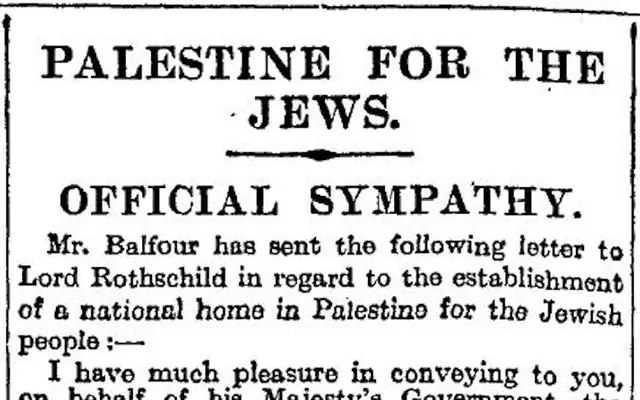
Season 2: Episode 27 - The Anglo-Zionist Alliance
World War One brought massive destruction and great change. When the smoke cleared from this great conflagration, the British Empire was left in control of the land of...
Play Episode
Season 2 Interlude: Rosh Hashanah and Crowning God King
In this interlude, Rav Mike talks about the intersection of memory and history, and how it can help us crown God king on Rosh Hashanah.
Play Episode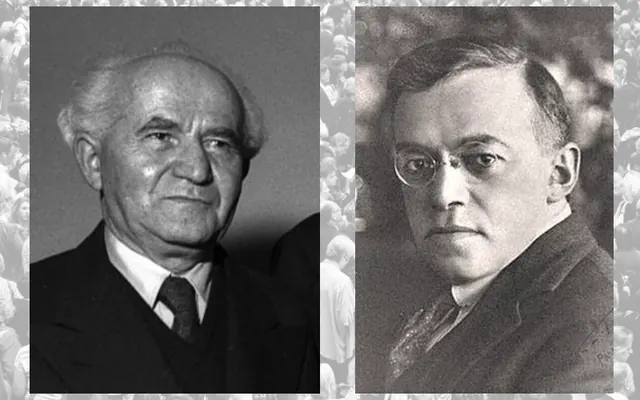
Season 2: Episode 29 - The Conflict Within
Each successive wave of immigrants that came up to the land brought with them their blessings, and their challenges. As the population grew, so did the nature of...
Play Episode