
Season 2: Episode 32 - Under Pressure
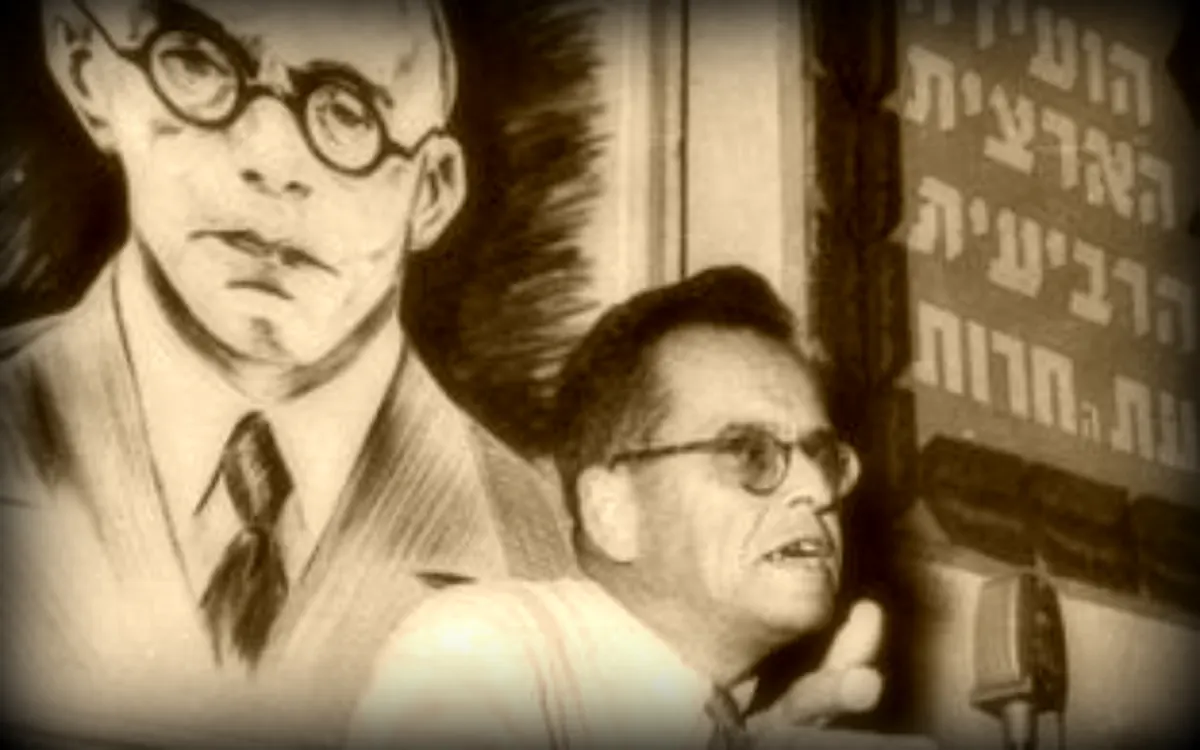
In the 1930's the ideological divides between the Revisionist and Labor Zionists grew, and cracks began to appear within the community of the Yishuv. Meanwhile, pressure on European Jewry was increasing with the rise of Nazi Germany. When you put these two processes together, the potential is nothing short of explosive.
About this episode
Only the poem that sets the heart on fire is not a falsehood, wrote Uri Zvi Greenberg. The clock ticks toward a conflagration; the Yishuv will double in the decade after 1929 behind Jabotinsky's iron wall, which the British for now provide, and the revolt of 1936 will dwarf 1929. Today the story is the struggle within, traceable from an unsolved murder in 1933 to the assassination of a prime minister in 1995: class warfare against individual liberty, gradual infiltration against high diplomacy, and the pressure. Jabotinsky was a greater thinker than politician, a nineteenth-century liberal who understood politics and never mastered his movement, so its violent fringe outpaced him. He called Polish Jewry a frozen stampede, three million pushed to flee with nowhere to go; Rav Mike raises him a pot on the stove, lid welded, fuel added, a bomb. The war and the Anglo-Zionist alliance had been a pressure valve; in 1933 Germany was reborn under the Nazis and the temperature spiked.
Abba Achimeir, born Abba Shaul Gaisinovich in Belarus in 1897, tutored at six by the poet David Shimoni, infected with Zionism at the gymnasium by Berl Katznelson, studied at the Herzliya Gymnasium from 1912, was caught at home by the war, and in 1919 lost his Bolshevik brother Meir fighting the Poles; he became Achimeir, my brother Meir, living for his trauma, a pattern to watch as leaders build power on pain. He left the USSR disillusioned with the communist paradise but kept Lenin as a model of direct action: our teacher is not Herzl or Jabotinsky but Lenin, the path of violence, blood and sacrifice. His 1924 Vienna dissertation on Spengler's Decline of the West embraced the view that liberal bourgeois culture was degenerate, that socialism was over-civilized and doomed, and that an age of Caesarism was coming, with thinkers shaping history by deeds. Back in the land in 1924 he joined HaPoel HaTzair, taught, and wrote prolifically for the left press until editors attached disclaimers: labour Zionism was a hybrid that could not succeed, and Britain was a foreign occupier, Balfour and the mandate tools of imperialism; are we so naive as to think Britain will spill its sons' blood for a Jewish state? He turned from Lenin to Mussolini, who had also begun a socialist, for his privileging of action and ruthless sweep, and in 1927 published in Haaretz, under Hillel's dictum, that Italian fascism was a model for Zionism, when the word did not yet carry its later horror. In 1928 he joined the revisionists with a column From the Notebook of a Fascist and called on Jabotinsky to command us more.
Uri Zvi Greenberg, born in Galicia in 1896 to Hasidic poverty and messianic expectation, published in Hebrew and Yiddish at sixteen, and was torn open by the Austrian army in 1915 at the Sava crossing before Belgrade: thrown by an explosion into an enemy post where all lay dead and his comrades hung boots-up on the electrified wire while the moon lit their cleats, a negative revelation of an indifferent God incorporated in mutilated flesh, the title image of Great Terror and Moon. In the 1919 pogrom he and his family waited their turn to be shot and were saved, and he knew that all Jews in the Kingdom of the Cross were doomed, writing in 1922 of pillars of cloud and gas seeping into the palace; when Bialik asked how he could describe the slaughter of millions, he said, I see it. He went up in December 1923 to the Hebrew revolution, served the left at first, then saw that a Zionism that would not fight openly for a state was bound to fail, and preached Malchut Yisrael, an Israelite kingdom, the vision of the radical right to this day. The greatest Hebrew poet of the century by the critics' consensus, thrice a Bialik laureate, absent from the curriculum and the banknotes, hounded out of the country by the end of the twenties as a cultural heretic, since labour Zionism had made itself the norm and dissent a deviance. In Poland through the thirties he preached escape in the streets while Jabotinsky failed to win mass immigration and statehood at the 1931 Congress, and in 1939 ran from Warsaw on foot. His Book of Denunciation and Faith of 1937, condemning a leadership that neither foresaw nor prepared for the clash, was damned as cheap propaganda and gained prophetic authority during the revolt.
The first sugya Rav Mike learned was two who hold a garment: claim it all and split; claim half against his all and get a quarter. Achimeir, Greenberg and Yehoshua Yeivin formed the maximalist faction on that logic, a state on both banks of the Jordan despite the 1922 severance of Transjordan, civil disobedience over diplomacy, and readiness for arrest, exile and execution, beyond Beitar's discipline and even Jabotinsky's one flag. The left's favourite insult, fascist, roots here, though socialists were gravitating to Lenin and Stalin and Ben-Gurion's class warfare and drive to dominate were matched by no one. 1929 was the breaking point: the British emptied Hebron of survivors until 1967, labour blamed the nationalists for incitement, and Jabotinsky, barred from re-entry in 1930 after a South African tour, became a voice from afar. Achimeir and Greenberg founded Brit HaBiryonim, named for the zealots who burned Jerusalem's grain to force the fight with Rome, thugs in modern Hebrew, idealists in intent, defenders of the birah, the capital. Beitar's Trumpeldor root, it is good to die, was a passive posture, and the sages teach to rise early and strike first. Achimeir's Scroll of the Sicarii, written after an attempt on Mussolini in 1926, modelled the anonymous hero who acts alone and dies for a future he will not share, hated by Marxists who deny the individual in history, a last resort and a sickness when parliaments fail, justified only as national self-defence. In practice the Biryonim did civil disobedience: a demonstration against the undersecretary Drummond Shiels, protest against the 1931 census, the disruption of Norman Bentwich's Brit Shalom-sympathizing lecture, and the first Jewish action against the Nazis, tearing the swastika from the consulates in Jerusalem and Jaffa in 1933 and burning a door; Achimeir was beaten and jailed in Acre, Jerusalem and Jaffa.
1933: Nazi consolidation, the April boycott of Jewish shops, civil service purges and quotas, the Middle Ages again. World Jewry answered, like Gracia Mendes, with a boycott of German goods launched at Madison Square Garden under Rabbi Stephen Wise and made effective by Polish Jewry, cutting German exports to Poland by forty percent, enforced by the Aguda as a vital interest. German Jews feared confirming the world-conspiracy myth; the Zionist leadership judged that the boycott harmed German Jews most and brought no favourable result for us, and the Jewish Agency negotiated the Haavara, the transfer agreement, signed in August 1933, by which some sixty thousand German Jews reached the mandate by 1939 with thirty-five million dollars in German goods bought with their frozen cash: the Yishuv got Jews, Britain gave certificates for wealth, the Nazis broke the boycott and shed Jews. Wise and Abba Hillel Silver nearly swung the Congress against it; Jabotinsky, demanding mass evacuation from a burning building, saw gradualism and a wish to curb the revisionist-leaning lower middle class; the Polish delegation to the World Jewish Congress called it a disgrace. Survival in the land against the dignity of the diaspora, a conflict that sounds familiar, mapped onto labour against revisionism. When Chaim Arlosoroff, head of the Agency's political department, visited Germany to negotiate, the revisionist press branded him a traitor, and on Friday night June 16, 1933 he was shot on the Tel Aviv beach beside his wife. Fifteen revisionists were arrested, Achimeir charged with plotting, Avraham Stavsky and Zvi Rosenblatt with the deed; the seized Scroll of the Sicarii reached the 18th Congress in Prague, where Katznelson waved it to demand an inquiry, and Jabotinsky's hoped-for Congress of Hope became a trial of his movement, which he called a blood libel, reminding Jews that guilt is personal and a man is innocent until judged. Achimeir and Rosenblatt were acquitted; Stavsky was sentenced to hang and freed on appeal. Rav Kook, who had kept silent through the feud despite Achimeir's angry letter from prison, attested on his inner conscience that Stavsky was innocent and that whoever has a divine spark must protest, wrote to Wise and the Archbishop of Canterbury, was pilloried by the mainstream, and when the acquitted secular Jew was carried from the courthouse to Merkaz HaRav, answered his own supporters that he loved every Jew equally whether they revered or despised him; it was his last campaign before he died in 1935. Begin's 1982 commission found Stavsky innocent and settled nothing. In October 1934 Ben-Gurion and Jabotinsky met sixteen times, Ben-Gurion fascinated and repelled by a man with nothing of the galut Jew, who could not open a sardine tin and was charmed by an omelet; Mapai rejected the accords, and in 1935 Jabotinsky founded the New Zionist Organization for a state on both banks and social justice without class war, a victory without joy, obsessed for his last seven years with evacuating a million and a half Jews, too late. On Rosh Hashanah 1933 Rav Kook preached three shofars: the ram's horn of holy awakening, the kosher horn of the call to return home as a free people, and the horn of an unclean beast, the persecutions that drive the Jews out while they still can, and he wept; whoever fails to hear the first two will be forced to hear the third, and over a cup of affliction no blessing is said.
Key ideas
- Polish Jewry was a frozen stampede, a pot with the lid welded on, and 1933 lit the fire; the struggle within runs from Arlosoroff to Rabin.
- Achimeir named himself for a dead Bolshevik brother, kept Lenin's method, embraced Spengler's Caesarism and Mussolini's action, and asked Jabotinsky to command us more.
- Uri Zvi Greenberg saw the Holocaust in 1922 and the war of liberation before either, and was hounded from the Yishuv for it; the greatest Hebrew poet of the century is on no banknote.
- Two who hold a garment: the maximalists demanded both banks and readiness for prison, and Brit HaBiryonim practised civil disobedience, the first Jews to act against the Nazis.
- Boycott against transfer: the Yishuv's survival against the diaspora's dignity, and Arlosoroff's murder turned the 1933 Congress into a trial of revisionism.
- Rav Kook broke his silence for Stavsky and loved every Jew who revered or despised him; his three shofars warned that those deaf to holiness and homeland would hear the unclean horn, without a blessing.
Chapters
- 0:00 The poem that sets the heart on fire; the clock ticks
- 2:16 The struggle within, 1933 to 1995
- 3:24 Thinker over politician; the frozen stampede
- 5:34 A pot with the lid welded on
- 6:39 Abba Achimeir: my brother Meir
- 9:59 Lenin's method; Spengler's Caesarism
- 12:09 Against labour, against Britain
- 15:25 Mussolini and the notebook of a fascist
- 17:43 Uri Zvi Greenberg: the Sava and the moon
- 19:51 The Kingdom of the Cross: I see it
- 21:25 Malchut Yisrael; hounded out
- 23:36 Poland in the thirties; Denunciation and Faith
- 25:49 Two who hold a garment: the maximalists
- 29:03 Fascists and Stalinists; 1929 the breaking point
- 31:15 Brit HaBiryonim: zealots and capital
- 34:27 The Scroll of the Sicarii
- 36:40 Civil disobedience; the swastika torn down
- 38:49 1933: Nazi boycott, Jewish boycott
- 41:06 The transfer agreement
- 43:11 Survival against dignity
- 46:30 Arlosoroff shot on the beach
- 48:39 A Congress turned court; blood libel
- 49:45 Verdicts; Rav Kook for Stavsky
- 52:57 I love all Jews equally
- 54:00 Sixteen meetings and an omelet
- 56:12 The New Zionist Organization; evacuation
- 58:17 The three shofars
Who, where and when
People
Abba Achimeir, Uri Zvi Greenberg, Yehoshua Yeivin, Zev Jabotinsky, David Ben-Gurion, Berl Katznelson, Chaim Arlosoroff, Avraham Stavsky, Zvi Rosenblatt, Rav Kook, Rabbi Stephen Wise, Abba Hillel Silver, Benito Mussolini, Oswald Spengler, Vladimir Lenin, David Shimoni, Chaim Nachman Bialik, Norman Bentwich, Drummond Shiels, Menachem Begin, A.B. Yehoshua
Places
Belarus, Tel Aviv, the Herzliya Gymnasium and the beach, Vienna, Belgrade and the Sava, Warsaw, Hebron, Acre prison, Madison Square Garden, Prague, 1933, Merkaz HaRav
Texts
The Decline of the West, If I Am Not for Myself, Haaretz 1927, From the Notebook of a Fascist, Great Terror and Moon, In the Kingdom of the Cross, Book of Denunciation and Faith, Bava Metzia 2a, two who hold a garment, The Scroll of the Sicarii, The Haavara agreement, Rav Kook's letter on Stavsky, Can Two Walk Together, The three shofars sermon
When
1896 CE: Greenberg born, 1897 CE: Achimeir born, 1915 CE: the Sava crossing, 1919 CE: Meir killed; the pogrom, 1923 CE: Greenberg goes up, 1924 CE: Achimeir's dissertation and aliyah, 1927 CE: the fascism article, 1930 CE: Jabotinsky barred, 1933 CE: boycott, Haavara, the swastika torn down, Arlosoroff shot, the Prague Congress, the three shofars, 1934 CE: acquittals; the Ben-Gurion-Jabotinsky talks, 1935 CE: the New Zionist Organization; Rav Kook dies, 1982 CE: Begin's commission
Read the transcript
Only the poem that sets the heart on fire, says Uri Tzvi Greenberg, is not a falsehood like all other achievements. Its truth is the only truth. And I'll tell you the truth, I'm here to try and tell you the truth as I see it. Because I'm Rav Mike Foyer, and this is The Jewish Story. Episode 32, Under Pressure. So the clock is ticking down towards the Great Conflagration. And the only question is, which one do I mean? A couple of episodes ago, we left off in the aftermath of the 1929 riots. And the stage was set for that hate triangle of British, Arabs, and Jews. The pattern was clear. And I want you just to recall Jabotinsky's fateful words in his essay, The Iron Wall. The Zionists want only one thing, he says.
Jewish immigration, and this Jewish immigration is what the Arabs do not want. And so he concludes Zionist colonization must either stop or else proceed regardless of the native population, which means that it can proceed and develop only under the protection of a power that is independent of the native population, behind an iron wall, which the native population cannot breach. And at this stage, it appears that the British were actually willing to provide that protection. Under the aegis of the mandate, the population of the Yishuv, the Jewish community in the land of Israel, will double in the decade following the 1929 riots and become increasingly armed. And that increase is going to add pressure to an already explosive situation.
And when it blows, the revolt of 1936 will make the riots of 1929 look like a kid's street fight in comparison. But that battle is not the story of our coming episode. I just want you to feel the pressure rising on the front of the British-Arab-Jewish relationship in the background as we go forward. Because our story right now is actually the intra-Jewish struggle. And the shots that we'll see fired today can actually be traced from an unsolved murder in 1933 all the way to the assassination of an Israeli prime minister in 1995, and perhaps beyond. It's a struggle that pits the path of class warfare on the part of the socialist Zionists as the future of the Jewish people against that of individual liberty and perhaps even fascism on the side of the revisionists.
It places the gradualist infiltration model of sediment that the labor movement saw as the future against that revisionist desire for high diplomacy. And we spoke a few episodes ago about the struggle between Ben-Gurion and Jabotinsky for control of the World Zionist Organization and the Jewish agency that was really at its heart. And we'll touch that story again today. But I really want to add the bitter facts on the ground in this episode to give a little taste of the increasingly divided society within the issue of which results from they're a conflict of vision, and by the by, which still defines our society here in many ways. And there's one more thing. We're going to add pressure. Lots of it.
In my eyes, Jabotinsky was always a much greater thinker than politician. He's a classic 19th century liberal, thinker, artist, writer, who had the capacity to be a statesman, just look at how he carried himself, and who understood politics, but he never mastered it. Right? He knew the depth of the truth that only what you fight for will ever truly be yours, but he was never able to master his movement the way that Ben Gray did. And because of this, the violent edge that always lurks at the fringe of political passions was often able to outpace him. And this is a story that we'll see most clearly in a coming episode when we talk about the birth of the underground armies. But it has its origins today because of the pressure.
There's a point at which gradual evolutionary approaches to change are simply overwhelmed by the revolutionary momentum of events. And in his writings, Jabotinsky used to characterize the Jews of Poland as a frozen stampede. I mean, just try to think about it. There were over 3 million Jews who were being pushed to flee by poverty, by hatred, by fear, by messianic dreams. But the rigid nature of borders of citizenship and their particular Jewish status meant that there was nowhere to go. So I'll add to his image of a frozen stampede. I'll see your frozen stampede, and I'll raise you the image of a pot boiling on the stove. You know, since Herzl wrote The Jewish State in 1896, the political stream of Zionist thought has been bound up with predictions of the impending doom of European Jewry, and therefore of the need for escape or evacuation.
And now, at this point of our story, almost 40 years later, the heat is on. When you heat water enough, of course it boils. And if you put a lid on that pot, but you keep adding energy, well, eventually it will boil over. But if you weld the lid in place and keep adding fuel to the fire, now you've created a bomb. World War I and the Anglo-Zionist alliance that emerged out of it seem to have created a pressure valve in this boiling pot of European during, allowing just enough of the Jews to get out in order to prevent a disaster. But in 1933, when Germany is reborn under the Nazi party, the temperature starts to spike. And our story today is about the cracks that begin to show between the Jews right before the explosion comes.
Abba Achimeyer was born Abba Shaul Gesinovich in 1897 in Dolgi, Belarus. He was born into a family that was neither particularly religious nor a Zionist, but which he always said knew that they were Jews. And foreshadowing the intellectual life that lay ahead of him, the young boy showed his intelligence early. By the age of six, David Shimoni, himself a poet and translator who would go on to win the Israel Prize in the modern state, was his tutor. The Abin rolled also in a Russian gymnasium in 1907, but because of his passion for his people, he continued to supplement his secular education with Hebrew and Talmud study. And it was in this gymnasium that he met the future labor Zionist leader, Beryl Katselson.
And Katselson was the one who infected him with the Zionist bug just before he himself made Aliyah in 1909. We spoke about his story a while ago. And once he had his eyes on Zion, Abba would not let his parents rest. They finally gave him permission to study at the Herzliya Gymnasium in Tel Aviv. Matt, by the way, is a quite historic institution. It was the first Hebrew high school in the land of Israel. And he arrived in 1912, only three years after its founding. But 1912, of course, was a turning point year in the world. And World War I caught Achimir at home on summer break in 1914. And he, together with the rest of his people, watched helpless as the first the World War and then the Russian Revolution of 1970 tore apart the world he'd known.
In 1919, his brother Meir, a committed Bolshevik, died fighting with the Red Army against the Polish forces. And it was in his honor that Abba Gassinovich became Abba Achim Meir. Achim Meir means my brother Meir. Now we're familiar with the fact that many of the idealists of the second and third aliyah Hebraicized their names. They took on labels that celebrated the agony and ecstasy of the national past, and also their abandonment of exile. Never forget, at the core Zionist posture is Shlilat HaGalut, the negation of exile. And what's a more powerful way of doing that than David Grun leaving his exile name behind and becoming David Ben-Gurion. And by the way, as we said, Ben-Gurion chose his name to recall one of the Jewish generals who fought against Rome in the Third Roman War.
But Ahemir's pain was much more personal. And his chosen name, My Brother Meir, meant that the trauma of his past was with him all the time. And in fact, that he had chosen to live for it. And as the maelstrom closes in and begins to consume the Jews of Europe, I want you to keep your eye on the role which personal trauma plays in our story, because the leadership developments that build their power on their pain are becoming more and more dominant in our story. So, soon after his brother's death, Abba abandoned the USSR. Despite the success of his studies at the University of Kiev, the horrors of the previous six years of war and social reconstruction had destroyed his faith in the communist paradise.
But I want to make something clear. He may have turned his back on communism, but at this stage, Lenin remained a role model for Achim Eir. If not for his political vision, then at least for his leadership style. Like Ben-Gurion, as we discussed, Abba admired Lenin's ability to take direct action. I quote, Our teacher is not Herzl or Jabotinsky, but Lenin. We reject the doctrines and philosophies of Lenin and his followers, but they were correct in their practical path. This is the path of violence, blood, and personal sacrifice. That's just a little foreshadowing of things to come. So from Kiev, Achim Eir went on to the universities of Lige and Vienna. And in 1924, he defended his doctoral dissertation entitled Remarks on Spengler's Concept of Russia.
The dissertation was a consideration of Oswald Spengler's seminal work, The Decline of the West, from a particularly Russian perspective. Now, I don't know if you've ever read The Decline of the West or even heard of it, but you should know that Spengler's ideas were wildly popular at this point in Western Europe, though still considered controversial, in particular by stuffy old historians who felt he was an amateur crowding them out. And Abba shared Spengler's view in particular that liberal bourgeois European culture was degenerate. It was eroded from within by an excess of liberalism and individualism and therefore, of course, on the decline. He also saw the socialism and communism, which were seeking to replace this culture in the early 20th century, as over-civilized ideologies doomed to failure.
I know it's a little bit depressing, but don't worry, because there was something that Abba Achimera and Spengler looked forward to. In particular, Achimera was deeply attracted to the age of the strong man that Spengler predicted to be on the horizon. This age of Caesarism, as he called it, which was soon to come in Spengler's mind, would at last allow the power of command to bring order to the world as the sort of sunset glory of the West. and Abba Achimera also felt another powerful call in Spangler's role that he assigned to thinkers in guiding, explaining, and molding history through their actions and so, before the year was out in 1924 Achimera followed his inner call to shape history right back to the land of Israel now of course under the rule of the British Mandate and considering his early labor Zionist connections and his attitude toward communism.
It was only natural that Abba joined the Hapuel Hatzair. That was the non-Marxist youth movement of labor Zionism, the mainstream in his day. And he quickly found work, therefore, as a teacher and a librarian. Don't forget, this was an institutional society. Your political party was cradle to grave, from immigration to health care to labor union to the voting box. So, like I said, he found work as a teacher and librarian, but his true passion and energies were reserved for the prolific number of articles he began to publish in Haaretz, HaPoelat, Zair, Davar, and Kuntras, all of them papers of the Zionist left. And in the beginning, at the outset his writing was so popular that Baruch Castelson labeled him a rising star of the movement.
But before long, something shifted. And in fact, Achim Eir's thoughts were quickly being published with disclaimers from the editorial staff that came before them. Because he'd lost faith in the world revolutions of socialism and communism before he ever made Aliyah. But here, now, faced with the reality of political and social life in the Yishuv, Abba Achim Eir reached another conclusion, that labor Zionism was a hybrid beast that could not succeed. And so, in his writing, he became deeply critical of the Zionist movement in general, and of the sacred labor movement in particular. And as if these heresies weren't enough, Achim Eir also dared to turn a critical eye on the sacred cow of the Anglo-Zionist alliance.
He was among the first, perhaps the first in print, to label Britain not a patron, but a foreign occupying power, and therefore as a barrier to Jewish sovereignty as opposed to a facilitator. In his eyes, the Balfour Declaration and the League of Nations mandate were not a source of legitimacy for a Jewish home in Palestine. They were tools of British imperialism, wrapped in the language of new international diplomacy. As he said in a letter to Beryl Castleton in 1925, are we so naive as to think that Britain will be willing to spill the blood of its sons to establish a Jewish state for us? you hear how he's pushing directly back against Zeb Jabotinsky's iron wall. So before the tender age of 30, Achim Eir was dismissing the political path of labor Zionism altogether, both Weizmann's reliance on the British and Ben-Gurion's practical approach of one more dunam, one more goat.
And even Jabotinsky, who dared to call for mass immigration and Jewish statehood in the 30s, was too cautious for Abba. The time had come for revolution. As these thoughts grew, Achimir's leadership ideal shifted as well, away from Lenin toward Benito Mussolini founder of the Italian Fascist Party Mussolini too began as a socialist And in the wake of World War II he declared socialism a dead doctrine And he began to call for the emergence of a man, quote, ruthless and energetic enough to make a clean sweep, and thereby revive the Italian nation. And in particular, it was Mussolini and the fascists' privileging of action over contemplation, and that call for ruthless and comprehensive vision that drew Achim Eir to fascism.
In a 1927 article entitled, If I am not for myself, who will be? That famous dictum of Hillel, published in Haaretz, he even argued that Italian fascism was a potential model to be emulated by the Zionist movement. Now, before you get too nervous, it's important to recall that in the 1920s, fascism had not yet garnered that sinister implication that it would a decade later with the rise of the Nazis. At this point, its appeal was primarily as the only competitor to the internationalist ideologies of communism and socialism. And, by the way, it offered the power of a centralized, disciplined state with strong leadership, which was going to weather the storms of a world growing darker every day. Nevertheless, you can imagine that publishing an article advocating fascism as a model for the Zionist movement in Haaretz was the beginning of the end of his association with the labor Zionists.
And in fact, in 1928, despite his criticisms of Jabotinsky's evolutionary as opposed to revolutionary Zionism, Achai Meir officially joined the Revisionist Party. He began publishing a column in the revisionist paper Doa Hayom, entitled From the Notebook of a fascist, and before the year was out, he was calling on Jabotinsky to command us more. But God said it's not good to be alone, and Abar Achim Eir was not the only member of the revolutionary faction within the revisionist camp. Uri Tzvi Greenberg was born in Galicia in 1896, raised in a deeply religious Hasidic household. It was an atmosphere saturated by tradition, sunk into poverty, but buoyed by messianic expectations. And so it's no wonder that the young man found his poetic voice from a young age.
Already at age 16, he was publishing poems in both Hebrew and Yiddish. But it was Uri's conscription into the Austrian army in 1915 that tore open the wellsprings of his imagination and added a grim modern element to his traditionalist background. In fact, he goes on to become the chief modernist poet of his era in Hebrew. It was the assault on Belgrade that would return to haunt his poems for decades. As he describes it, exposed to enemy fire while crossing the Saiva River, the young poet was thrown by a massive explosion. He suddenly found himself alone, disoriented, in the midst of the Serbian post on the other side. His fellow attackers hung lifeless, heads down, boots up, on the electrified fence, while all the defenders were dead on the ground around him.
And then suddenly, the moon breaks through the fall sky above him, and its silvery light begins to shine on the worn metal cleats of the upturned boots of his friends. Later in life, Rizvi would return obsessively to that image, recalling how he'd stood mesmerized in the strange light. And it was an image that would actually inspire the title of his first Hebrew book, Emagdola V'yareach, Great Terror and Moon. And the essence of it, as he carried it forward in life, was a horrific, negative revelation, that there was an indifferent God there with him, incorporated in the dead and mutilated flesh around him. And as if the horrors of war weren't enough, in 1919, during the great pogrom with which Polish soldiers celebrated their victory over the Ukrainians, Greenberg and his family were waiting their turn to be shot, just like everyone else in their village, when they were miraculously saved.
And according to his own account, this experience was the last straw. This is the point at which the young poet now knew for sure that all Jews living in what he called the Kingdom of the Cross were doomed. This is how he says it in a poem of that name. Did you hear the imagery? A pillar of cloud rising from the valley? The poison gas seeping into the palace? The fact that Uri Sfi Greenberg's poetry from the 1920s speaks of the Holocaust, as well as the underground struggles to come, and even of a war of liberation in the land of Israel, would seem impossible if it weren't for the dates at the bottom of each poem. And actually, when fellow poet Chaim Nachman Biala want to ask Uri Tzvi how he was able to write of the Holocaust and describe the slaughter of millions of Jews in 1922, his only reply was, but I see it.
In the Kingdom of the Cross was published in 1923, and it was meant to be Uri Tzvi's last great Yiddish work. Because just as the poem ends in the once extinguished East, so the poet went up to the land of Israel determined to channel his energies into the Hebrew language and into the Hebrew Revolution. So Uri Sfi arrived in the land of Israel in December of 1923, a committed poet-pioneer. And as was true of most intellectuals, at first he put his pen to service of the Zionist left, as has his newfound friend, Abba Achim Eir. But, like Achim Eir, Uri Sfi quickly found that he actually more naturally belonged to the radical camp of Zionist opposition. Because the poet, with his sharp and prophetic eyes saw that a Zionist movement that did not openly and vigorously fight to establish a Jewish state was simply bound to fail.
And it was further clear to him that the leadership of the Zionist movement was wedded to a future at best as a protectorate of the British Empire and certainly not as an independent Hebrew republic. In his poetry and in his journalism Ritzvi began to articulate a vision of Hebrew revolution one whose goal wasn't simply political independence, but the establishment of Malchut Yisrael, of a true Israelite kingdom, something which would go on to drive the vision of the radical right within Israel to this very day. When he followed Abba Achimer into the revisionist movement, Uri Tzvi finally stepped fully into his role of poet, prophet, and tragic victim of cultural exclusion. You should know by the way, if you haven't heard of him, which wouldn't surprise me, that literary critics agree that Uri Svi Greenberg was arguably the greatest Hebrew poet of the last 100 years.
And the Academy knew this. That's why he was awarded the Bialik Prize for Literature in 1948, and twice again before his death. That's a triple recognition that no other Israeli writer has ever received. Yet, in a country that honors its writers even higher than its generals. He has never been part of Israel's school curriculum, and you certainly won't see his face among the 20th century Hebrew poets whose images were recently added to Israeli banknotes. And that's because his movement into the revisionist camp was seen by the labor Zionists as cultural heresy of the highest order. So much so that by the end of the 1920s, he was essentially hounded out of the country. And that's part of the story that you need to absorb at this stage, is that labor Zionism wasn't simply a stream of Zionism.
It had established itself as the norm, and therefore everyone who dissented was a deviant. But you can't silence a prophet. Ask Jeremiah. Urizyfi returned to Poland for most of the 1930s, where he worked desperately to encourage mass evacuation of the Jews. Jabotinsky at this time fought and failed to get the Zionist Congress of 1931 to adopt the goal of mass Jewish immigration and by the way, Jewish statehood. That was the political side. Uri Svi preached escape to the people in the streets. After all, he could see their future in his dreams. And when the war swept him up in 1939 in Warsaw, he ran on foot to get back to the land. In the 30s, he also leveled his pen at the leadership of the Yeshuv from afar, now that he was safe, deriding it as a derelict in protecting Jewish life against the rising Arab violence, and also as perverse in its support for a worldwide socialist revolution that did not have the interest of the Jews at heart.
His poetry of the 1930s was collected in a book called Sefer HaKitrug VaEmunan, Book of Condemnation and Faith. It was published in 1937, and it contains all the power of prophecy, poetry, and politics, essentially of biblical proportions, giving a new maturity to the Hebrew language in the modern era, but a way which is strangely resonant with the classic prophetic past. By the way, that book also sealed his fate with the political and cultural establishment of the Yeshuv, who denounced it as nothing but cheap propaganda. I mean, it opens with a devastating attack on the labor of Zionist leadership, whom he claimed had neither understood nor had prepared for the inevitable Jewish-Arab clash to come.
And that's why, when it was published at the height of the Arab Revolt of 1936-1939, whose story we'll tell perhaps in the coming episode, it only strengthened the authority of his poetic, prophetic persona. But for right now, he was just a prophet crying in the wilderness. The first sugya, the first, I don't know, complex conceptual package of Gemara that I ever learned is called Shnaim Ochazim Betalis. It's a classic and I bet some of you listening have learned it. And if you haven't, I encourage you to crack open the first chapter of Bab Metsuya. And it so happened that I was learning this sugya during what's known by some people as the Second Intifada and by others as the Asla War. And so its political implications were quite hard to miss.
Basically it goes like this. If I see a shirt on the ground and you see it at the same time and both of us grab it and pick it up and I say it's mine and you say it's yours, well then we have to split it. But if I say it's half mine and you say it's all yours, well then you get three quarters and I get a quarter. And some things never change. As I said, Abed Achi Meir and Uri Zvi Greenberg and eventually their friend Yehoshua Levin and form the nucleus of a maximalist faction within the revisionist movement, which was already demanding more than the mainstream desired. And their stance was precisely that of Mysovia. They couldn't know for sure that demanding the maximum would achieve it, but they knew for absolute certain that the minimalist stance of the mainstream Zionists would end up with even less than they wanted.
Now practically, that meant a vision, as we'll discuss in coming episodes, of a state on both sides of the Jordan River, despite the fact that in 1922, as we mentioned, the British split off more than half of the Palestine mandate ultimately destined for the Jews and created the state of Transjordan. But it also meant, at this particular stage of struggle in our story, that they advocated civil disobedience in response to British immigration controls rather than diplomacy, and furthermore that they began cultivating amongst their brothers a readiness for violence, arrest, exile, and even execution in the struggle they saw as inevitable to come. And that was very different than the attitude even amongst the mainstream revisionist Zionists.
The emphasis on discipline and obedience to leadership within Beitar, that was the youth movement associated with revisionists, and Jabotinsky's embrace of the gun over the plow as the real tool of settlement, and in particular, Jabotinsky's doctrine of chad nes, of one flag, of the notion that all other questions were subordinate to the goals of establishing a Jewish state, spoke to these radicals. But they wanted to take that vision one step further. As I said, what drew Achim Eir was the desire for action, not contemplation. And it was that desire to take Jabotinsky's talk one step further into full-scale revolt, which drove Achim Eir and Uri Tzvi to cultivate the revolutionary elements within the revisionist movement.
To this day, it is the favorite insult of the left to label the right as fascists, and Achim Eir really is the roots of that accusation. But don't forget that in the 1930s, the socialists within our country were gravitating toward Lenin and Stalin as much as Achim Eir and Jabotinsky might have looked toward Mussolini. And it's far from clearer Who was really the dictator in the making? I mean, go back to episode 29 to refresh your memory about the political and economic struggles between the revisionists and the labor Zionists in the early 30s, and who was willing to use street violence as a tactical tool and strong-arm political moves. Just suffice it to say now that Ben-Gurion's commitment to class warfare as a means of bringing about the national rejuvenation and liberation was matched only by his drive to dominate the Zion as executive, so that by 1934, he and the labor movement controlled the Yishuv cradle to grave.
And it was a rule that would remain unchallenged until Menachem Begin won an electoral victory in 1977, 43 years later. And that's the internal political conflict, which lies in the background of our chapter now. Don't forget that we mentioned the growing role of the external conflict between Arab and Jew. Because for Ahimeir and the maximalists, the 1929 riots, and in particular the massacre in Hevron, were the breaking point in both their attitude toward the British and their fellow Zionists Not only had the British failed to defend the Jews their response to the Hevron atrocities was to actually empty the city of survivors leaving one of the four holy cities of the land of Israel bereft of Jews until 1967.
And, to add insult to injury, the labor Zionist leadership seemed just as interested in blaming the Nationalists' camp for inciting those riots as it was in glossing over their consequences in order to patch up the Anglo-Zionist alliance. Jabotinsky criticized the mainstream leadership from every platform that he could in the wake of those riots, but he wasn't really offering any concrete alternative plan. Furthermore, through the machinations of politics, when he left on a speaking tour to South Africa, he was actually barred from re-entering into the mandate shortly after, in 1930. It meant that for the rest of his life, Zab Jabotinsky would be a voice preaching to the people from afar. But Ahimeir, back in the land, had a growing sense of clarity that the British were the enemy of Jewish freedom and the labor Zionists untrustworthy allies in its pursuit.
And he burned with the feeling that there was far too much talk and not enough action. And so he joined together with the poet-prophet Oritzvi. in founding Brit HaBirjonim, the covenant of the Birjonim. Now I hope you recall that Beitar, the revisionist youth movement, took their name in part, at least, from the last stronghold of the Barkoch revolt, broken in 135 of the Common Era. But up till now in our story, they haven't really lived up to that militant name. And you could really say, in fact, that it was the other source of their name, Beitar, an acronym for Brit Yosef Trumpledor, that had a far greater influence on the character of Beitar. Remember Trumpledor's famous final words, it's good to die for your country.
Now, it's a powerful rallying cry, which Sev Jabotinsky wrote into the Beitar song, and was a noble aspiration for Zionist youth, but it was essentially a call for a passive posture. I mean, is it really so good to die for your country? And there's a split within the nationalist camp coming. A split on this very question. Because whether you think that martyrdom is good or not, it's not so hard to make the argument that better to kill one's enemies than die nobly at their hands. After all, the sages and the Torah itself teach that when someone comes to kill you, rise early to strike them first. So Brit Biryanim was no youth group. They were not Pitar, nor were they interested in the passive approach to problems.
They were a small, informal association of anti-British activists, and really the beginning of the Jewish underground. And they didn't choose their name lightly. If you've been with the Jewish story long enough, then you may recall that the Biryoni were the zealots who advocated active resistance to the Romans at the end of the Second Temple period. So devoted were they to the militant path that the Biryoni were the ones who set fire to the stores of grain that remained in besieged Jerusalem in order to force the people to fight Rome. Yes, Jerusalem burned from within before the Romans ever broke the walls and the biryani lit the fire. But the biryani were more than thugs, which is, by the way, the modern Hebrew translation of biryani.
It says a lot about our culture. Their desire for action was an idealist desire. They resonated not only with the power of the biryani to discard the constraints of polite society, but also the notion of birah, of a capital city that exists also in the original word. Because the original biryonim abandoned all conventions in defense of Yerushalayim ha-biryah, Jerusalem, our capital. And the modern-day biryonim intended to do the same in pursuit of the Hebrew Revolution. Now the name also implies a willingness to resort to political violence. And if you look closely, at Abba Achimair's writings, it might seem that this was the case. In 1926, after a failed attempt on Benito Mussolini's life, Achimair was inspired to write Megilat Hasikakin, the Scroll of the Sikari.
It's an exploration of the relationship between acts of ancient Sikari and modern-day political assassination. You may or may not remember that the Sikari were the extremists even amongst the zealots of the end of the Second Temple period. Their name derives from the daggers, the sike, that they kept hidden under their tunics in order to pop up in a crowd and stab Jewish moderates who were sympathetic to Rome. To the Sicarii, Roman rule was illegitimate by definition. Liberation, therefore, the only goal, and a combination, treason, punishable by death. Achimier used the Sikari as a vehicle to present a philosophical model of a hero, of an individual, anonymous, who acts alone, who makes history through deeds and not words, and who is ready to sacrifice and die in the name of the greater good.
Now he traces the roots of such heroism to the Hebrew Bible and places it in contrast to his modern day opponents. I quote, The Sicarius possesses an ideal of life. He is certain that he leaves the world having been given the opportunity of realizing life in a different mode, even better than the future one in which he himself will not participate. He sacrifices himself upon the altar of life for the future to come. Not for nothing are the Marxists opposed to the Sicari. The extreme Marxists and the moderate are all alike, no different. The Marxist negates the hero's value in history. He is jealous of individual heroism. Now it's true, when you look at the whole scroll, it's clear that Achimera saw such heroism as a last resort.
One to be resorted to only when there's the feeling that the liberal parliamentary means are not enough to bring down the existing regime. And Sikari killing could only be justified in his eyes because it constituted a form of national self-defense. He even describes it as a sickness, a necessary evil perhaps, but a bad sign nonetheless for the society in which it emerges. And truth is, in spite of their rhetoric, Brit Habirionim limited its activities to civil disobedience, as I said. Bloodshed and violence would wait another decade for the underground armies of the Irgun and the Lehi. Its first organized act was a demonstration outside the Tel Aviv Hotel, where the British undersecretary, Dr. Drummond Shields, was staying on a visit.
And then they protested against the second British census in 1931. Remember, a census is the ultimate imperial power. And members of the Brit Bironim disrupted the inaugural lecture of Dr. Norman Bentwich as professor of international relations at the Hebrew University of Jerusalem. They did so because of his sympathies for the Brit Shalom movement. That was the binationalist movement we discussed in the last episode. And significantly, the Biryanyi were also the first group of Jews to take action against the Nazi regime. They actually climbed up and removed the swassika flag from the German consulates in both Jerusalem and Jaffa in 1933, and they even set fire to the door of the one in Jerusalem. And despite their choice of peaceful means, though disruptive, the Biryanyi met with a quite violent reaction from the British authorities.
Achim Eir was beaten and arrested at all three of those protests. He served time in Akko prison, Jerusalem, and in Jaffa. So the Bireonim were great in spirit, if small in scale, and perhaps of dubious method. And behind their struggle lay the question of the Sikari. Were they really willing to use political violence to gain their ends? And this was the question which would finally ignite the powder keg of intra-Jewish struggle in the Yishuv with the murder of Chaim Orlozarov in 1933. 1933 was a fateful year for Am Yisrael. This was the year in which the Nazi party finally consolidated its hold on the German parliament and one could honestly say that Adolf Hitler had come to stay. And if there were any doubt over whether the Nazis' anti-Semitic rhetoric for simply election propaganda, it was dispelled in April of that year when a nationwide boycott of Jewish-owned businesses was announced, followed quickly by the exclusion of Jews from the civil service and the imposition of quotas on Jews in schools and universities.
It seemed like the Middle Ages were here again. But it's the modern era, and the Jews are not quite so helpless any longer. You know, following in the footsteps of Gracia Mendez, You've got to go back to episode 5 to get the reference. World Jewry responded to these persecutions with a boycott of German goods. Economic power is very real power. The movement began the mass rally in Madison Square Garden of all places. It was sponsored by the American Jewish Congress under the leadership of Rabbi Stephen Wise. He was a reform rabbi and a pillar of the American Zionist movement. And when we get deeper into the Holocaust story, we'll come back to his personal story. But despite where it began, it was really the widespread participation of Polish Jewry that made the boycott effective.
That was because of the economic relationship between Germany and Poland. I mean, during the years of 1933 to 1935, when the boycott was at its height, German exports to Poland plunged by nearly 40%, even as total Polish imports were increasing. And solidarity was rigidly enforced. It was a tight-knit traditional group there in Polish society. One might even call it religiously enforced, because in January of 1933, the Gudad de Israel proclaimed at its fifth national convention that breaching the boycott was a grave betrayal of the vital interests of Jewry. Now, there were only two groups among world Jewry who didn't see the boycott as such a vital interest. The first was German Jewry itself, and one could perhaps excuse their hesitation around the boycott.
they feared that Jewish action of such a scale would only strengthen belief in Germany in that mythological world Jewish conspiracy that Nazi ideology had been warning about for years. The other group, though, is a little bit harder to swallow, and that was the Zionist leadership. In the spring of 1933, after meeting with Jewish leaders in Germany, the Zionist executive in Great Britain began to formulate a decision against participation in the boycott movement. And at a meeting of the History of Truth Executive Committee in the same year, they expressed the issue quite bluntly. The boycott harms German Jews first and most. The boycott has no favorable results for us. And that's really a question of who is the us there?
Are we talking about the Jews? Are we talking about the Jews in the land of Israel? Because in the eyes of the Zionist movement, a favorable result was getting the German Jews to the Yeshuv together with their wealth, and a boycott stood in its way. And so, toward that end, just as the boycott was taking shape, agents of the Jewish agency were negotiating the Heskem Ha'avara, the transfer agreement, with the Nazi regime itself. The final agreement was signed in August of 1933, only months after the boycott was announced. after almost three months of discussion and negotiation. And it paved the way for the migration of approximately 60,000 German Jews to the mandate from 1933 to 1939, along with nearly $35 million worth of goods.
Now you can just imagine the impact that had on the state of the Jews in Israel. And the idea was simple. The Germans weren't going to let the Jews go with their cash, but they would let them use that cash to purchase German manufactured goods, which would then be exported to a guaranteed market in British mandatory Palestine. Basically, German Jews would use their cash to buy German products, move to Israel, and then redeem that cash through the goods that had been purchased by the mandate. So the Yishuv got his Jews. The British were willing to provide the immigration certificates because they brought with them such wealth and development into the mandate. And the Nazis got to break the boycott, Not to mention ridding themselves of tens of thousands of Jews.
Everybody wins, right? Well, I mean, everybody except world Jewry, who had already identified Nazi Germany as the ultimate enemy. I mean, the American leadership, the Zionist leadership, I mean, really, Rabbis Abba Hillel Silver and Stephen Wise, argued vehemently against this agreement, and they almost convinced the Zionist Congress itself to vote against it. Jabotinsky railed against it from Poland. He saw the transfer agreement as the essence of that labor Zionist approach favoring gradual, controlled Jewish immigration, driven always by their perception of the economic absorptive capacities of the Yishuv, and the desire to strengthen their hand. Meanwhile, there's Jabotinsky in Poland shouting from the rooftops for mass evacuation.
Absorptive capacity be damned. I mean, after all, if you're jumping out of a burning building, you don't look too closely at what lies below. Furthermore, he suspected that it wasn't just a gradualist approach. The labor Zionist motivation was really their desire to curb the aliyah of the lower middle class, the majority of which supported the revisionist movement, in order to build a socialist society in the land of Israel with them at its head. And so, following the lead of the Brit Habir Yonim, the revisionists prescribed all political and economic relations with Germany and joined full force into the boycott. the joint delegation of Polish Jewry to the World Jewish Congress in Geneva in 1933 unanimously protested against this transfer agreement they termed it a disgrace the quote was the Palestinian agreement pains us because it infringes on our dignity and weakens the Jewish people in its struggle suddenly for the first time the Zionist movement was torn between transfer and boycott between the needs of the Yishuv as a living community and the sentiments of the Jewish people around the world.
Now it's important to appreciate that from its origins, Zionism drew its moral strength from its self as the safeguard of the Jews existential interests in the Yishuv and the whole world They were the hope of the Jewish people in their own eyes But suddenly now, the sense of dignity and pride and real fear of the Nazis that drove the boycott movement were considered luxuries by the Zionist leadership. They saw themselves in an existential struggle to establish a social and economic base in the land. They needed those German Jews and their money. The idea of a conflict between the survival of the Jews in the land and the moral vision of those in the diaspora might sound familiar to you. So add to this the fact that the conflict between boycott and transfer mapped so well onto the struggle between the labor and revisionist Zionists for resources and influence in both the Yishuv and the diaspora centers, in particular Poland, and you can see the explosion on the horizon.
Abba Achim Eir and the Brit HaBerunim were the first in the Yishuv to take action against the Germans, and now they were suddenly leading the way for most of world Jewry. Therefore, when word got out that Heimur Lazarov, head of the political department of the Jewish Agency, was making visits to Germany and negotiating with the Nazi leadership, the revisionists began to attack him in their press, branding him out as a traitor. And then, on Friday night, June 16, 1933, or Lazarov was shot and killed by two men while walking with his wife along the beach in Tel Aviv. Suspicion fell immediately on the revisionists, and particularly on the Brit Habiranim. Fifteen members of Beit Tar, revisionists, Brit Habiranim, were arrested, and Abba Achimir was among them.
The police also seized the revisionist archives and Achimir's personal writings, including the notebook in which the unpublished scroll of the Sikari had been written. After the initial investigation, Achimir was charged by the British mandatory police with plotting the murder of Chaim Olozarov, while two beitaris, Avram Stavsky, a recent immigrant and Achimir's roommate, and Zvi Rosenblatt, were charged with actually carrying out the deed. Copies of some of the documents seized, including the scroll of the Sikari, were actually acquired by the labor Zionists from the British mandatory police in, let's say, a questionable fashion, and brought to the 18th Zionist Congress in Prague that August in 1933.
Barak Hathlinson held them up and used them as a tool to call for a commission of inquiry, an internal judicial process to root out all elements guilty or responsible for what he called such trends in the Zionist movement. It was a blatant politicization of a multi-party platform, and it was from here that the conflict began to spiral, because as recently as July of that year, Jabotinsky was writing of a Congress of Hope that Prague would focus on burning issues for the Jewish people like the Nazi menace in Germany, the question of Jewish self-defense in the Palestine mandate and this Jewish state, Jewish majority idea which was his passion. Instead, the 18th Congress became a court in which the entire revisionist movement was tried, convicted, and condemned along with Stavsky, Rosenblatt, and Achim Eir before they'd ever stood trial.
But Jabotinsky was not the wilting flower type. He struck back hard. In his writing, he labeled the Zionist executive's actions a blood libel, and he released a statement from Poland reminding the accusers that there were two rules sacred to civilized humanity. Number one, a man claiming his innocence is considered innocent, he says, until a court has pronounced him guilty. Further, and secondly, he goes on, even the proven guilt of an individual should never be construed as the guilt of the community to which he belongs. Both these rules should be specially sacred to Jews, doubly so the second one, the violation of which has always been a poisonous weapon in the hands of anti-Semitism. Yeah, that's right.
He basically called the labor leadership anti-Semites. Meanwhile, the wheels of the law ground forward. In May of 1934, Abba Achimir was acquitted of the charges against him, but Rosenblatt and Stavsky went to trial. Rosenblatt also was acquitted due to the total lack of evidence against him, but Abraham Stavsky was actually convicted and sentenced to die by hanging. However, upon appeal, his sentence was overturned by unanimous decision of the Court of Appeals, and his life was spared. Achim Eir had refused to leave jail despite his acquittal, and he began a hunger strike, which ended only at the begging and prompting of the chief rabbi of the Palestine Mandate, chief Ashkenazi rabbi Avram Yitzchak HaKohen Cooke.
Because unlike the rest of the leadership of the Yishuv, Rav Kooke had refused to take sides in the public debate around the murder and in general in the power struggle between the revisionists and the laborites. Abba Achimir had even sent him an angry letter from prison asking how he could stand aloof at the rifest trial of his generation and watch the blood of innocent Jews spilled. But Rav Kook held his silence. That is, until Stavsky was condemned to die. That's a quote. I, the undersigned, this is from Rav Kook, attest to the fact that innocent blood is about to be shed in Jerusalem. I can attest on the basis of my inner conscience that Avram Stavsky is innocent of the murder charge. The absolute truth, known to me, rests with the one judge who voted for acquittal.
Whoever has a divine spark within himself, Jew or non-Jew, must protest and must do his utmost to rescue Stavsky and must see to it that justice prevail. And Rav Kook did his utmost. He went from silence to screaming from the rooftops. He sent messages and telegrams to everyone from Rabbi Stephen Wise to the Archbishop of Canterbury. He spoke, he wrote, he begged, he pleaded. Meanwhile, the mainstream Zionist leadership turned on Rav Kook and pilloried him in the press. But still, he wouldn't relent. Jabotinsky was orchestrating the legal and political defense from abroad while Rav Kook marshaled all the moral force he held for the sake of saving a Jew. And in the end, when Stavsky, a non-religious Jew by the way, was acquitted he was carried by a huge cheering crowd from the courthouse to Rav Kook's yeshiva, Merkaz Arav.
Now, Avram Stavsky's story actually doesn't end here. And we'll come back to his role in saving tens of thousands of Jews in the midst of the Holocaust and his eventual death at a bullet fired by his fellow Jew. And the story of his trial doesn't go away either. If you want to appreciate just how divisive it was to the social fabric of Jewish society down to our day, all you need to know is that when Menachem Begin became the first right-wing prime minister in Israeli history, he saw it as worthwhile to appoint a special commission to investigate Orlazov's murder. That was in 1982, almost 50 years after the event, and when that commission found Stavky incident, you can be sure that it didn't put the issue to rest.
After all, what self-respecting leftists would trust the commission appointed by a disciple of Jabotinsky himself, the mastermind of pre-state terror? So Stavsky's story doesn't end here, but sadly, Rav Kook's story does. His defense of Stavsky was the Rav's last public campaign before he died of cancer in 1935. And just before he died, an open letter was addressed to Rav Kook by his most loyal supporters, warning that the stance he'd taken was a political one and therefore threatened all he'd worked for in bringing together all the Jews around the issues of the Torah and the political rebirth of Am Yisrael. The Rav's response is worth reading in entirety, and you can send me an email. I'm happy to send you a link, but I'm just going to quote these few lines.
I adduce heaven and earth as witnesses to my unqualified love with all my heart and all my soul of the Jewish nation as a whole and of every Jew, regardless of its political affiliation. I know specifically regarding the Olazorov case that the accused is innocent of all the charges. I trust that the truth will become evident to all and that we will not have blood guilt on our hands. In every political party and in every movement, there are matters with which I disagree. This in no way impaired my boundless and flaming love for our holy nation and its various parts. I love all Jews equally, regardless of whether they revere or despise me. In October of 1934, inflamed by Olazarov's murder and the Stavsky's acquittal, the struggle between the revisionists and the laborites had reached such heights that a meeting was arranged between David Ben-Gurion and Zev Jabotinsky in an effort to reach peace.
I guess we could kind of call it the original Camp David Accords. At least that's the way A.B. Yeshua, a famed Israeli author, describes it in his play, Can Two Walk Together? In fact, he tells a funny story about how Jabotinsky, who used to brag that he was so sophisticated he was incapable of opening a can of sardines, was charmed when the ever-practical Ben-Gurion made him an omelet. But more eggs were broken than could possibly be consumed, as the two leaders hammered out an accord in what turned out to be a series of 16 meetings over the course of a month. They reached agreements to stop violence and incitement, to grant mutual recognition to their two competing labor unions, and to increase the immigration quotas to non-union beitaris.
And despite their ideological differences, Ben-Gurion reported at being both fascinated and repelled by Jabotinsky. There was in him, he said, something, a complete internal spiritual freedom, he told his biographer ten years later. He had nothing of the Galut Jew and was never embarrassed in the presence of a Gentile. And that's despite the fact that less than a year later he was calling him Vladimir Hitler. For his part, Jabotinsky respected anyone who knew how to wield power. And he saw in Ben-Gurion a man wholly devoted to the future of the Jewish people despite their differences on what that future looked like. Nevertheless, their personal agreement failed to bear fruit. Ben-Gurion's party, the Mapai, workers' party of the land of Israel, if you recall, rejected the proposed agreements, and in fact, he ended up insisting on the revisionist's full return to the World Zionist Congress.
In response, Jabotinsky said that the time has come for a clean-cut break. For a new Zionist organization which represented the masses devoted to the principle of a Jewish state on both sides of the Jordan River and social justice without class warfare. So he had a plebiscite within the revisionist movement, and the new Zionist organization was overwhelmingly approved in June of 1935. Japatinsky had declared independence from the World Zionist Organization. But his was a victory without joy, because the clock is still ticking. Or if you like, the house is on fire, and no one feels its heat quite like him. and you might be forgiven for asking that if the house is on fire why are the Jews arguing about who gets to sleep in the master bedroom?
For the last seven years of his life as Ben-Gurion built up the Yeshuv and his own power base Jabotinsky became obsessed with Jewish evacuation the focus of the New Zionist organization was the preparation of a 10 year plan for evacuating one and a half million European Jews and resettling them in Palestine but little did they know that it was already too late. So the fall of 1933 was a time of mixed tidings in the land. On one hand, Hitler's rise in Germany threatened to spread darkness over the whole world. On the other, there in the Yishuv, immigration from Central Europe was on the rise. Educated Jews with critical skills and serious financial means were strengthening their hands. If you were walking the streets of Jerusalem and listening closely, it might seem that the footsteps of redemption could already be heard.
And Rav Kook saw both the darkness and heard the light. And he gave the following sermon on Rosh Hashanah that year. We say in our daily prayers, Tika B'Shofar Gadol Lecheruteinu, sound the great shofar for our freedom, and raise the banner to bring our exiles together. There are three types of shofars, says Rav Kook, that may be blown on Rosh Hashanah. The best is the horn of a ram. And if that's not available, then the horn of any kosher animal, other than a cow, may be used. And if a kosher shofar is not available, then one may indeed blow on the horn of any animal, even one which is not kosher. But when using the horn of a non-kosher animal, no blessing is said. So he continues that the three shofars of Rosh Hashanah correspond to three shofars of redemption, three divine calls, which summon the Jewish people to be redeemed and to redeem their land.
The best preferred shofar of redemption is the divine call, which awakens and inspires the people with holy motivation through faith in God and the unique mission of the people of Israel. This elevated awakening, as you call it, corresponds to the ram's horn. And it's for this great shofar, this awakening of the spiritual greatness and idealism, that we fervently pray. He continues that there is a second shofar of redemption, less optimal form of awakening. This shofar calls out to the Jewish people to return to their homeland, to the land where our ancestors, prophets, our kings once lived. It calls to us to live as a free people, to raise our families in a Jewish country and a Jewish culture. This shofar is kosher, he says.
We may still recite a blessing over its call. There is, however, a third type, and at this point of the sermon, a cook burst into tears. The least desirable shofar comes from the horn of an unclean animal. This shofar is the wake-up call that comes from the persecutions of the anti-Semitic nations, warning the Jews to escape and flee to their own land while they still can. And the shofar of unclean beasts is thus transformed into a shofar of redemption. Whoever failed to hear the calls of the first two shofars, says Rav Kook, will be forced to listen to the call of the third. And over this shofar, however, no blessing is recited. One does not recite a blessing over a cup of affliction. I just want to thank a few people.
I want to thank all the people who give their hard-earned money to make this show free, possible, and widely available. And I want to invite you to join them. You can go right now to robmight.com. You can see in the upper right-hand corner a Be a Patron button. You can click on through a little bit of per-podcast support. I want to thank the Land of Israel Network. That's thelandofisrael.com for making a platform that allows me to reach so many wonderful people. I want to thank the Pardes Institute. pardes.org.il for building a school that allows me to touch the hearts and minds of so many wonderful Jews. And I want to thank you for listening. I'm Rav Mike Hoyer, and this is The Jewish Story.
More from Season 2
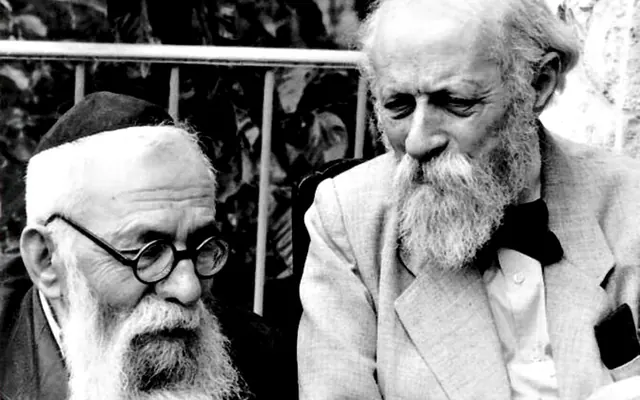
Season 2: Episode 31- Interwar Jewry
Though the land of Israel is the hinge around which the Jewish Story turns, there are many Jews whose future does not lie in Zion. This episode widens...
Play Episode
Season 2 Interlude: On Authenticity
Sometimes I just gotta be me, but the problem is knowing just exactly where to find myself. In this interlude from the flow of the Jewish Story, Rav...
Play Episode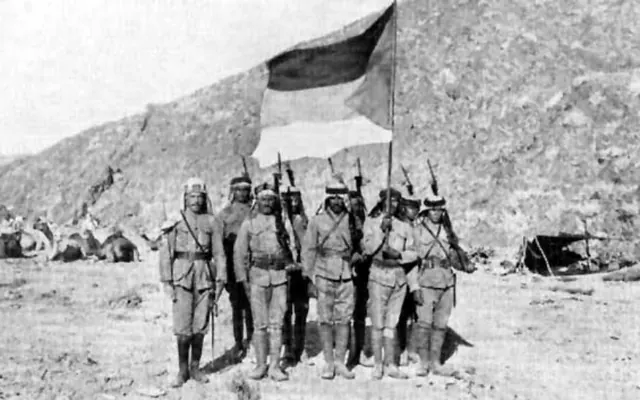
Season 2: Episode 33 - The Arab Revolt
The 1930's saw the hate triangle of Arabs, British and Jews explode into an unprecedented scale of violence known as the Arab Revolt. The revolt brought on yet...
Play Episode