
JS S2:E36 The Revolt Against British Rule and the Struggle Within the Underground
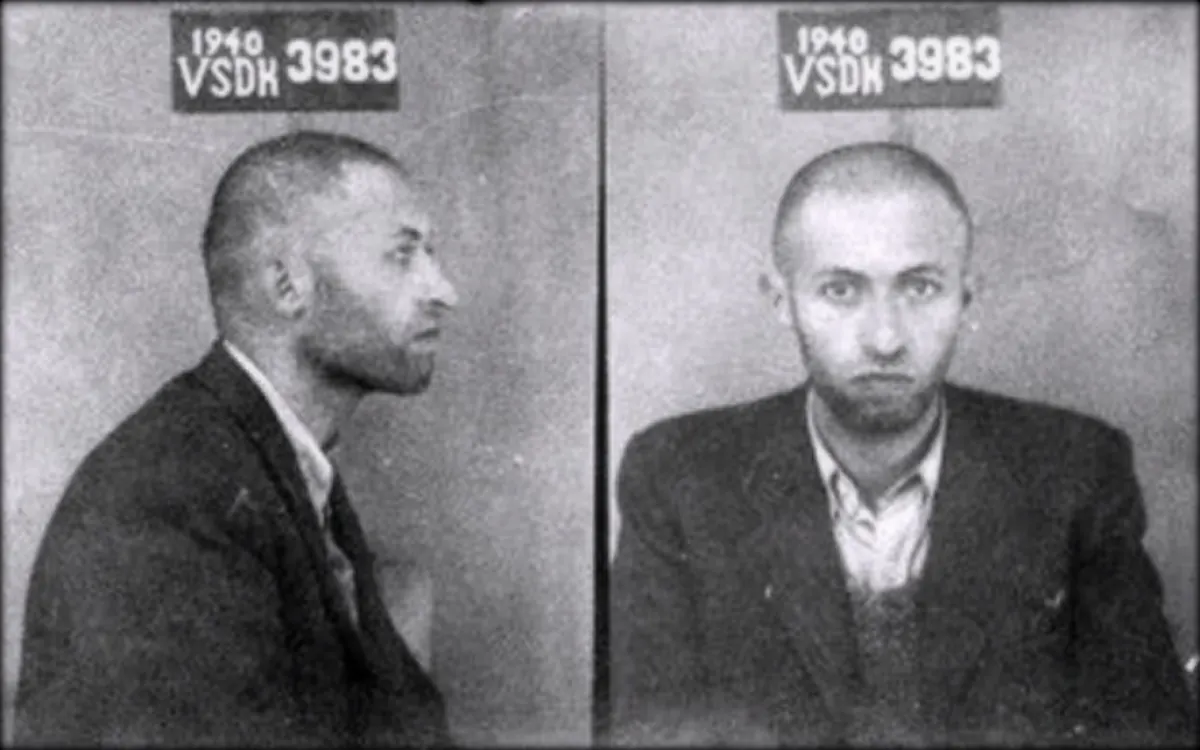
As European Jewry was consumed by the Shoah, the Zionists in the land of Israel gradually came to see the British blocking the gates of Israel as their main enemy. The episode explores the split between the Irgun and the Lechi, the rise of Menachem Begin as a leader and the internecine war which almost doomed their struggle.
About this episode
Ours is a generation that rose from the bottomless pit of hell, said Menachem Begin. Rav Mike opens with the old question, do the ends justify the means, and refuses the easy no: the last months of the war brought Dresden and the atomic bombs, which one may call terror on a vast scale and also the only way to end the war, and historians hold that only shattering Germany let it re-enter the nations, as Germany and Japan are pillars of democracy today. The Geneva Conventions humanized the inhuman, a step forward, and they blur the truth that societies go to war, and are stacked for the nation-state, finalized in 1949 as it won its monopoly on legitimacy, while non-state actors face either non-violence or asymmetric war, where one man's freedom fighter is another's terrorist because there is no budget for tanks and no territory to separate front from home. Means cannot be judged alone, or whoever grabbed a state first wins every argument, and ahead lie Jews, Arabs and British with no clean hands, and the Shoah to factor in. On August 31, 1939 the Irgun command met in Tel Aviv without David Raziel, caught by the CID two days after the May White Paper; since May the Irgun had struck telephone junctions, rails and Jerusalem's transformers. Raziel and Avraham Stern had clashed over who was the enemy, the Arabs with Britain as a wayward ally to be prodded at gunpoint, or the empire that would never give up such an asset, and over whether the Irgun answered to the revisionist party or led a Hebrew revolution free of legal politicians. Then the CID burst in and took the entire command.
In jail Raziel learned of the war and offered the British a truce and help against the Nazis, and on September 11 Zeroni's leaflet suspended all offensive action so as not to aid the greatest enemy the Jewish people has known, hoping the war would bring sovereign independence in the historic borders. The command at Sarafand read it as surrender; by June 1940 Raziel had freed all prisoners on his commitment, and days after Dunkirk, Europe now Hitler's, the stormy meeting resumed where it left off. On July 17, 1940 Stern and his men seceded as Lohamei Herut Yisrael, the Lehi, and the split exposed both bodies to the Haganah and the CID. Three things about the Lehi: its ideological diversity, Shamir later to Likud and prime minister, Yellin-Mor to a one-seat left-wing list, and veterans who founded Semitic Action in 1956 for a federation of the region's indigenous peoples; Stern's eighteen principles of rebirth, redemption of the land, sovereignty and revival of the nation; and its willingness to own the label of terror as a means of national war, directed at representatives of the empire rather than at people, and meant to shake the Yishuv from complacency. They robbed banks, shot policemen and sought collective punishment that would wake the Yishuv to its occupation. Wanted posters carried Stern's face as the CID captured or killed his men, and in the winter of 1942 they caught him; shot while trying to escape by the police record, murdered by his followers' certainty. Those who give their lives for a cause are remembered by its righteousness and their deeds.
By mid-1941 Rommel threatened Egypt, Vichy Syria threatened from the north, and Iraq's pro-Axis revolt seized Mosul's oil; British intelligence in Cairo remembered Raziel's promise and asked for a unit to blow the Baghdad refineries. He led four men himself, and a German plane's direct hit on his car killed him, leaving the Irgun confused, many asking what Hebrew liberation gained from blood in the sands of Iraq. Jabotinsky could not guide them: worn by years of warning, in America for a Jewish brigade, his heart broke at the first signs of Europe's destruction and the Irgun's shattering, and he died at a Beitar camp in New York on August 4, 1940. Rudderless in the hour of greatest need, the Irgun recovered slowly in the winter of 1942 as the war turned and news of extermination seeped in, and pressure grew to end Raziel's truce. On June 17, 1943 Herut warned that Britain had betrayed the friendship declared at the war's outbreak, no Hebrew army, while illegal immigration met shut gates, Cyprus and African camps, and ships turned back. Headquarters concluded the truce must end without waiting for the war; they lacked only a leader. Menachem Begin, born in Brest-Litovsk in 1913, began in Hashomer Hatzair and found home in Beitar at sixteen, studied law in Warsaw where he learned his oratory and organized student self-defence, shared Jabotinsky's stage at twenty-two, and led Beitar Poland, nearly a hundred thousand members training in arms, illegal transport and agriculture, an army of conquest awaiting the command. In 1938 Jabotinsky still counselled caution, fearing the preparations would be washed away by moving too soon, and Begin led the activist opposition.
At the last Beitar world conference, Warsaw 1938, Jabotinsky warned, if you will not liquidate the exile, the exile will liquidate you, and the room fell silent; Begin rose to call on Jewish youth to collect iron and ensure the nation a better tomorrow, and the whisper ran that he was the hope of the nation. Begin fled Warsaw to Vilna in 1940, was arrested by the Soviet secret police and sent to a Siberian labour camp, freed when Stalin released Polish citizens, unbroken; he joined the Polish Free Army, whose training sent his unit to Palestine in 1943, and when discharged he took command of the Irgun in December 1943, passing two resolutions: armed struggle against the mandate at once, rejecting individual terror and postponing attacks on military targets until the war ended, and detachment from the revisionist party. On February 1, 1944 posters across the land proclaimed the revolt, there can no longer be a truce between the Hebrew nation and youth and the British administration that betrays our brothers. Three undergrounds now stood: the Haganah, defence, under the Histadrut and the Agency, Ben-Gurion's militia; the Irgun, tied to the revisionists and beyond the mainstream pale; and the Lehi, terrorists to the leadership and potential allies at once. Begin, having studied the Irish and Indian independence struggles, devised a strategy of relentless guerrilla attacks to humiliate the British and damage their prestige, provoking repression that would alienate the Yishuv and draw world attention, turning the mandate into a glass house with the whole world looking in. The Irgun opened the revolt on the immigration offices, then the income-tax offices and police stations, and the Lehi added shootings; the turning point was the November 1944 assassination in Cairo of Lord Moyne, the resident minister held responsible for the White Paper and the Struma. Two Lehi members, Eliyahu Hakim and Eliyahu Bet-Zuri, carried it out, refused to recognize the court, accused the empire of their people's murder, sang Hatikvah, and were hanged. Churchill, Moyne's old friend, warned that if Zionism's labours produced a new set of gangsters many like himself would reconsider.
The Jewish Agency condemned the killing more fiercely than Churchill, and the Hunting Season, the saison, began: the Haganah's full-scale persecution of the Irgun, presented as rooting out terror and also an effort to crush a hated rival. Sneh and Golomb had told Begin the national institutions were democratically elected and the Irgun must accept their authority, warning that a clash could lead to destruction. After Moyne the talking was done, directed solely at the Irgun, the Lehi having agreed to suspend action. The Haganah hired hundreds to shadow Irgun members, set up detention centres, kidnapped commanders, some tortured, and handed close to a thousand Jews to the British, several hundred deported to African camps; a High Commissioner's letter shows the Agency used the season to turn in revisionist-party members with no terror connection, ridding themselves of rivals. Only two Agency members protested; the chief rabbinate and the philosopher Hugo Bergman, a Brit Shalom man and sworn opponent of the Irgun, condemned the kidnappings as the tomb of democratic life. The Yishuv leadership did not know Begin, who refused to let the Irgun retaliate for two reasons that were one: retaliation would plunge the Yishuv into civil war and give the British an easy victory, and he wanted to keep what relations he could with a Haganah rank and file increasingly uneasy at fighting their brothers, who would one day be an asset. The Irgun's 1944 pamphlet, There Will Be No Fraternal War, promised the loyal Jews there would be no strife in the country, and the power of that determination to hold the people together under provocation would mark Begin's leadership in the years ahead.
Key ideas
- Do the ends justify the means: means cannot be judged alone, or whoever grabbed a state first wins every argument; the Geneva law is stacked for the nation-state.
- Raziel and Stern split over who the enemy was; Raziel offered Britain a wartime truce and Stern seceded to form the Lehi, exposing both to the Haganah and the CID.
- Jabotinsky died in New York in 1940 and Raziel in Iraq in 1941, leaving the Irgun rudderless until Menachem Begin came home from a Siberian camp to take command.
- The Proclamation of Revolt of February 1944 declared there could be no truce with a British administration betraying the Jews to Hitler, by a strategy of the glass house.
- The Lehi assassination of Lord Moyne in November 1944 drew Churchill's threat and triggered the Hunting Season.
- In the saison the Haganah handed close to a thousand Jews to the British, yet Begin refused to let the Irgun answer, holding the people back from civil war.
Chapters
- 0:00 A generation from hell; do the ends justify the means?
- 2:10 Societies go to war; the nation-state's law
- 4:22 Rand's gun; the command meets without Raziel
- 7:45 Raziel and Stern on who is the enemy
- 11:00 The CID takes the command
- 12:15 Raziel's wartime truce; read as surrender
- 14:23 July 1940: the Lehi split
- 15:31 The Lehi: diversity, eighteen principles, proud terror
- 20:57 Stern hunted and killed
- 21:48 Iraq, 1941: Raziel's death
- 23:07 Jabotinsky dies; the Irgun rudderless
- 24:13 The turn of 1942; pressure to end the truce
- 26:23 Menachem Begin of Brest-Litovsk
- 28:38 Warsaw 1938: collect iron
- 30:50 Siberia to Palestine to command
- 33:08 The Proclamation of Revolt
- 34:54 Three undergrounds
- 37:23 The glass house strategy
- 39:34 Moyne assassinated in Cairo
- 44:00 Churchill's threat; the Agency condemns
- 44:58 The Hunting Season
- 50:18 Kidnappings; the Agency turns in rivals
- 53:04 Protests; Bergman
- 55:41 There will be no fraternal war
Who, where and when
People
Menachem Begin, David Raziel, Avraham Stern, Zev Jabotinsky, David Ben-Gurion, Moshe Sneh, Eliyahu Golomb, Yitzhak Shamir, Natan Yellin-Mor, Benjamin Zeroni, Eliyahu Hakim, Eliyahu Bet-Zuri, Lord Moyne, Winston Churchill, Hugo Bergman
Places
Tel Aviv, Sarafand, Baghdad, Brest-Litovsk, Warsaw and Vilna, Siberia, Cairo, the African detention camps
Texts
Zeroni's leaflet of September 11, 1939, Stern's eighteen principles of rebirth, Herut, The Proclamation of Revolt, There Will Be No Fraternal War
When
August 31, 1939 CE: the command arrested, July 17, 1940 CE: the Lehi split, August 4, 1940 CE: Jabotinsky dies, 1941 CE: Raziel killed in Iraq, December 1943 CE: Begin takes command, February 1, 1944 CE: the Proclamation of Revolt, November 1944 CE: the Moyne assassination; the Hunting Season
Read the transcript
Ours is an almost biblical generation of suffering and courage, said Menachem Begin. Ours is a generation of destruction and redemption. Ours is a generation that rose up from the bottomless pit of hell. Well, history didn't place me in that generation, but God gave me the gift of telling their tale. Because I'm Rav Mike Foyer, and this is The Jewish Story. Episode 36, The Revolt. So I want to start off with a moral question. It's an old one, a classic, if you will, but one that's going to become pressing as our story progresses. And in fact, it might just be one of the more important questions of our day, despite its somewhat prosaic nature. And that is, do the ends justify the means? And before you rush in there with the obvious answer of no, I want to remind you that a few episodes ago, we touched on the problematics of the term terrorist.
And then I made an argument that labeling someone a terrorist is less a tool of analysis of their means than it is an effort to avoid thinking about the ends toward which they're aiming. I mean, after all, just to give it some context, at this point in the Jewish story, we are in the midst of a brutal world war. And in fact, in the final months of World War II, the world will witness, aside from ultimately the liberation of Auschwitz, the firebombing of Dresden, in which tens of thousands of innocent civilians will die at the hands of Allied bombs, not to mention the dropping of nuclear weapons on Hiroshima and Nagasaki, the only time such a thing has ever been done in war, which will kill hundreds of thousands.
And one might be tempted to call these acts of terror on a massive scale that light up the darkest dreams of today's terrorists. and at the same time you could make an argument that they were the only way that could save lives by swiftly ending the war and furthermore when we look at what they actually did to the nations that were being fought we take the wisdom of many historians who believe that the primary reason World War I rolled so quickly into World War II was that at the end of the Great War Germany was left unbroken that only the shattering of the enemy allows them to re-enter the fraternity of nations sufficiently humbled so that they can play a new and constructive role in the world community.
And the reality is, when you look around, Germany and Japan are pillars of the rule of democratic nations today. And we have to add to this, this important and problematic idea of the rules of war. Now, the Geneva Conventions emerged out of the 19th century European experience of the horror of total war, which, by the way, built on a good 1,500 years of slaughter, and a deep desire to at least ameliorate the effects of war if the causes couldn't be totally uprooted. And I do believe that humanizing the inhuman marks a step forward for humanity. These laws embody an empathy for other and a concern for life that did not have a solid place in law beforehand. Nevertheless, they also blur the brutal reality of the truth that it's not armies which go to war it's societies that do.
The armed forces are just the most obvious tool of conflict but in our present world of cyber battles and narrative warfare and terror the battlefield and the home front are once again all but impossible to separate. Furthermore, the rules of war are stacked in the favor of the nation-state, just like most of international law. I mean, after all, the Geneva Conventions were updated and finalized in 1949, just as the nation-state was achieving its absolute victory as the only legitimate model of governance in the second half of the 20th century, and down to our very day, though it may be showing some cracks, it's still presumed to be the sole embodiment of peoplehood. But nation states are not the only bodies engaging in conflicts today.
Far from it. Depending on how you count, they might actually be the minority. And you add to this the nature of military technology, the scale of force and the cost of that force wielded by nation states puts non-state actors in one of two positions. Either they have to have the cultural fortitude to wage a non-violent battle, or they end up engaging in what we call asymmetrical warfare. It's a wonderful term, isn't it? And one man's freedom fighter may be another man's terrorist, but what marks them both is the need to use tactics that lie outside the norms of warfare because they simply don't have a budget for tanks and planes, nor the political and territorial integrity to separate the home front from the battlefield.
So who exactly is responsible for the death of perhaps innocent bystanders when freedom-fighting terrorists launch missiles from a kindergarten roof? It's a question that belies technical analysis. You can't simply judge one set of means versus the others, and therefore it pushes us back to the question of what role the ends play in evaluating the morality of the means. If we're not willing to do that, what we end up with is a situation in which anyone who managed to grab a nation state at some point in history, that legitimacy will always give them the upper hand both militarily and morally. And I have to say that the chapters that lie ahead in our story are filled with brutal warfare. Jews, Arabs, and British will fight one another and each other amongst themselves.
Militias, terrorists, freedom fighters, and imperial forces are all going to be struggling to the upper hand in this little slice of God's good earth. And no one's hands will be cleaned from bloodshed of the most ruthless type. And so we have to add to this also the Shoah. And I have no idea how to factor the incomprehensible reality of national extermination into this moral equation, and yet I have a sense that we can't avoid doing so. So, I want to consider these questions closely over the upcoming episodes of the final military struggle for Jewish liberation in the land of Israel. Because if we don't look at them closely and begin to try to parse out the political from the psychological, the emotive from the moral, then I fear that we'll end up in a world which will look just as Anne Rang described it.
Force and mind, she says, are opposites. Morality ends where a gun begins. On August 31st, 1939, the day before the Nazis invaded Poland, the Irgun General Command convened for a special session in Tel Aviv. Now these underground fighters could not have known that the very next day would change the world. but nonetheless I'm confident it was a tense and stormy meeting. It had been nearly two years since the breaking of the restraint, since these militant underground fighters had decided to let loose their guns and bombs on the Arabs of the mandate, and the violence of the Arab revolt had all but run its course. David Raziel was not there. This charismatic commander that had led the transition of the Irgun from passive to active defense, as he called it, who had proclaimed the truth to his men that, quote, the objective of war is to break the will of the enemy, and had taught them that this couldn't be done except by shattering their power, was now sitting in a British jail cell.
The criminal investigation department, the CID, that we'll hear much about today, had finally caught up with him. The Jews called him the Bolechet, the secret police, and this department was the spearhead of the British imperial rule and their struggle against the Jewish underground liberationists. They'd arrested him only two days after the white paper of May 17, 1939. You remember, I hope, that we spoke about it. It was the paper that shut the doors of Palestine to anything more than symbolic immigration. just as Europe burst into flames. And the British knew. They knew that the fighters of the Yirgun would not abandon their brothers in Europe without a fight. So snatching their commander off a plane at the Lida airport was quite a coup.
Hanukkah-Kalai was now commander-in-chief. He'd replaced Raziel. And Abraham Yair Stern, who'd been summoned back to the land of Israel from Poland, was now head of the information department. And in the two months since the announcement of the White Paper and Raziel's arrest, the Irgun had gradually turned its gun on the tools of British power in the mandate. They started with somewhat symbolic acts, striking telephone network junctions, rail lines. They even once plunged Jerusalem into darkness by destroying four British electricity corporation transformers. And I can imagine that the meeting that night was for the purpose of planning the next series of strikes against the British power that was blocking the escape of the Jews from Europe.
And, with the Nazi shadow already stretching its hand over Europe, I bet the mood was for escalation. But, oddly enough, it was probably a more unified group with the commander absence. because since the breaking of the restraint, David Raziel and Avram Yair Stern had clashed. Their basic argument was over who is the true enemy. Raziel saw the Arabs as the main front in the battle for Jewish independence and he looked at the British, much as his mentor Jabotinsky did, wayward allies who needed to be prodded back onto the right path even if that prodding was at the point of a gun. Yair, on the other hand, saw very clearly that the British were the true enemy. His heart and mind told him that the Arabs might strike a deal, but that the empire would never willingly abandon an asset like Eretz Israel to anyone else's rule, certainly not to the Jews.
Raziel and Stern had also clashed over the relationship between war and politics. Yair Stern and his comrades believed that the Irgun had to break its dependence on the Revisionist Party The legal status enjoyed by these politicians made them unfit to lead underground revolutionaries and frankly their public profile made them a risk The Hebrew Revolution would not be led by a political party David Raziel, on the other hand, saw himself as a military commander in his eyes, Jabotinsky and the movement's leaders were the ones who should determine the political path, and the Irgun, like a good army, should bow to their authority. But whatever the mood, the meeting didn't last long. Right at its height, CID detectives and heavily armed policemen burst into the room.
The entire general command had been discovered. Taken first to Jaffa, and then on to a Jerusalem jail, They had no way of knowing that the war in Europe was breaking out even as they were being taken away. But David Raziel knew, because after two months he'd already settled somewhat into prison life, at least enough to have sources of information. And as soon as word of the war reached him, the commander also knew what had to be done. He may have seen the Arabs as the local opponent, But it was clear to Raziel that Hitler was the archenemy of the Jews, and it was also clear to him that the British now stood nearly alone against him. Raziel wrote a letter from his place of detention to the British commander-in-chief in Palestine, to the mandatory government secretary, and even to the British police commissioner, whom he had no love lost for.
In it, he told them that he was ready to declare a truce between the Irgun and the British, and furthermore, he offered to help the Allies in their struggle against the Nazis. At the same time, Raziel sent secret instructions to Benjamin Zeroni, who was now acting commander of the Irgun, after the arrest of the entire general command, and on September 11th, Zeroni distributed the following leaflet, quote, To avoid disrupting the course of the war against Germany, and in order to invest maximum effort in assisting Great Britain and its allies, the Irguns Hawaii Leumi has decided to suspend all offensive activities in Palestine which could cause harm to the British government and in any way be of assistance to the greatest enemy the Jewish people has ever known, German Nazism.
The leaflet did conclude with the hope that the war would bring this tortured nation the sole recompense it deserves, the achievement of sovereign independence within the historic borders of liberated homeland. Nevertheless, it was a truce at best. And the members of the General Command, who were now sitting in a detention camp at Sarafond, by the way, it's a prison adjacent to the Sarafond camp, Britain's largest military base in the Middle East at the time, they didn't share David Raziel's view. And despite the hopes expressed at the end of his leaflet, they read it as a message of surrender. Months of negotiations followed, but by June of 1940, David Raziel had managed to free all of the Irgun prisoners in return for his commitment to a truce and his express readiness to fight on the behalf of the British.
And immediately after their release, the General Command held yet another stormy meeting in Tel Aviv, essentially picking up right where they'd left off. Avram Yair Stern and his followers had spent nearly a year in prison watching the British military presence grow. David Raziel, meanwhile, had been glued to his radio and news of the war. Only days before the meeting the Allies had evacuated Dungurk. Europe now belonged to the Nazis. And what followed was perhaps inevitable There was no easy way to bridge the gap in vision between Raziel and Stern nor apparently much will to do so On July 17, 1940, Avram Yair Stern, together with his most loyal men, seceded from the Irgun and founded the Lohamei Cherut Yisrael, the Israel Freedom Fighters, Lechi for short.
the split, as it was known, devastated the Irgun. Along with a good chunk of the rank and file members, many senior commanders withdrew. And there was rancor and recriminations and a lot of accusations and public fight. And all that chaos that accompanied the breakup made the underground secrecy, which was so critical to their struggle, all but impossible to maintain. The Irgun and the newborn Lekhi were totally exposed to both the Haganah and to the CID, each of which began to draw up lists of names, addresses, and positions of the active members. But they kept those cards close to their chests for now. Now, I can't tell every story, although I have to admit it drives me crazy that it's not possible.
but there are a few things that you need to know about the Lechi, or the Stern Gang, as they came to be labeled by their British and Jewish detractors. First of all was the unique diversity of political ideologies held by its members and even amongst its leadership. You can see this by what happened after the Lechi broke up in the early years of the state. Some, like Yitzchak Shamir for instance, joined the mainstream right-wing parties. Shamir, of course, went on to serve as prime minister on behalf of Likud. Others went to the left. Natan Yellen Moore found a left-wing party called the Fighters List, which had a short-lived life and only won a single seat in Israel's first elections. And some just didn't map on to the right-left binary at all.
There was a group of Leche veterans who went on to establish the Semitic Action Movement in 1956. they were in pursuit of a regional federation between Israel and its Arab neighbors based on the principle of an anti-colonialist alliance of indigenous inhabitants of the Middle East and God willing next week I'm going to bring in someone to speak a little bit more about such an off the map idea but if you want to get a sense of the depth and power of the thought that went into the vision that coalesced around Avraham Yair Stern around the Lechi all you need to do is read his 18 principles of the rebirth. I'm not going to go through them all now because 18 is a big number. If you want, you can send me an email.
I'll send them to you. Or frankly, just Google it. It's 2018 people. But their goals were simple. Redemption of the land, establishment of sovereignty, and revival of the nation. And to borrow a phrase from another revolutionary, they were willing to pursue these goals by any means necessary. The second thing you need to know is that the Lehi were proud terrorists. That's right. I remember, actually, my oldest daughter's first mitt appellate, her first caregiver, was a Lehi fighter, sweet, elderly, smarty woman named Tamar, who used to get this nostalgic smile whenever I asked her to tell me stories about her life in the underground. And I'll never forget the first time she said to me, Ch'in ch'in, hainu terroristim.
Yes, yes, we were terrorists with this unbelievable smile. The Halechi saw no shame in this label. On the contrary, as they proclaimed in their underground publication, Hechazit, the front, neither Jewish ethics nor Jewish tradition can disqualify terrorism as a means of combat. We are very far from having any moral qualms as far as our national war goes. we have before us the commandment of the Torah whose morality surpasses that of any other bodies of law in the world. Ye shall blot them out to the last man. And the explanation that was given about the goals of terror in that very article might shock you. And they may sound very familiar. It demonstrates against the true terrorist who hides behind his piles of papers and laws he has legislated.
It is not directed against people, it is directed against representatives. Therefore, it is effective. It also shakes the Yeshua from their complacency, good and well. And last, the Lechi were willing to negotiate with the devil himself, in this case, even the Nazi Germans, in order to free their brothers from Europe and throw the British out of their land. and so they robbed banks to purchase weapons shot down British policemen in the street and published their underground manifestos their goal was to strike the imperial occupier in any way they could in order to provoke collective punishment which would awaken the Jews of the land of Israel to the reality that they were under occupation and all the while they were looking to provide the Jews of the Yishuv with an ideologically clear alternative to what they saw as the confusion of the Haganah and the Irgun.
Now, of course, the British did not take this escalation of violence laying down. Wanted posters, offering a handsome sum, soon plastered Yair's face all over the country. And he slipped from hiding place to hiding place, as one by one the leading members of the Lehi were captured or simply gunned down by the agents of the CID. In the winter of 1942, While the Nazis were bogged down at Stalingrad and the planes of the Ukraine were just starting to soak with Jewish blood, the CID finally caught up with Yair. The official police records say he was shot while trying to escape. But his Lehi followers were certain that the British police had murdered Yair in cold blood. But no matter how you tell the story, the moral is the same.
Those who are willing to give their life for their cause will be remembered according to its righteousness and their deeds. By mid-1941, I hope you recall, the British were on the defensive all over the world. The situation in the Middle East looked particularly grim. Rommel's Africal Corps was storming across North Africa and threatening Egypt. The French Vichy government that occupied Syria and Lebanon was threatening the British bases in Palestine from the north. In Iraq, Arab leaders sympathetic to the Nazi cause were in full-scale revolt. They took over the critical Mosul oil fields and placed a major air base under siege. The staff of the British embassy in Baghdad were actually hostages in their hands.
In desperation, the empire remembered David Raziel's promise. and the head of British intelligence in Egypt turned to the Irgun to send a unit to blow up the refineries in Baghdad, hoping to at least deny the Luftwaffe, the German air force, the fuel reserves that were there. Raziel quickly organized a four-man unit, which he decided to lead himself. Now the mission changed many times along the way, but it didn't really matter. Because when a German plane scored a direct hit on the car carrying Raziel and a British officer, the Irgun was thrown into great confusion. It's hard to accept the loss of such a leader. And furthermore, many members didn't really understand why Raziel had gone on the mission to begin with.
Did the blood of a man committed to Hebrew liberation really serve that cause by soaking the sands of Iraq? Raziel's death only compounded the problems that were begun by the split with the Lehi. Their path became unclear, and the internal debates only grew. It might have been that Jabotinsky could have given them guidance, even from abroad, but he was gone as well. Nearly a year before, right about the time of the split, Jabotinsky had gone to the United States in pursuit of his dream of a Jewish brigade, a unit of Jews who could fight the Nazis alongside the British forces as their own national people. Worn out from his struggle to save European Jewry from the imminent disaster, Roche-Betar had suffered for years from heart trouble.
And the first signs of the destruction of European Jewry and the shattering of the Irgun were just too much. His heart broke, and on August 4, 1940, Zev Vladimir Dziubutinsky suffered a fatal heart attack while at a Betar camp in New York. and so in the hour of the Jewish people's greatest need the Irgun was left rudderless and it was only in that fateful winter of 1942 that they began to slowly recover from the blows the war had reached a turning point with the halt of the Nazi advance at Stalingrad and as we've spoken about the information about the extermination of European Jewry was beginning to seep into the Yishuv and before the stones of Jerusalem had even had a chance to absorb Yair Stern's blood the Irgun leadership had already begun to reconsider its position on the situation they began with reorganization of the ranks officer training courses, new recruits the underground newspaper Cherut Freedom began once again to appear on a regular basis and as the war shifted in favor of the Allies as the year turned toward 1943 and furthermore, as the evidence of mass murder began to mount, more and more members of the Irgun favored ending the truce which David Raziel had declared at the outbreak of the war.
And on June 17, 1943, Cherut gave the following warning, evidence that a change in relations with the British authorities had taken place within the Irgun command. When war broke out, the Jewish people declared their loyalty to the British government to help it vanquish the enemy of the entire world and of the Jewish people. Great Britain has betrayed this friendship. The Jewish people have not been acknowledged as a fighting nation. A Hebrew army has not been established. And the one area where the Uyghur had maintained its opposition to the British, illegal immigration, had only inflamed their anger even more toward the occupier. because despite their growing awareness of the final solution, the British government had kept the gates of the mandate firmly shut.
Now the Irgun had been involved in Al-Yab-Bet, as it was known, since its inception, but now, as the Jews were not only prohibited from entering into the land of Israel, but were being interned in camps in Cyprus or Africa, and some were even being sent back to the slaughter in Europe, the time for more direct action seemed to have arrived. The Irgun General Headquarters came to the conclusion that the truce it had proclaimed when the war broke out had to be ended, and that it was essential to take action against the British without waiting until the war was over. All they lacked was a leader. Menachem Begin was born in Brest-Litov, the city of the Russian Empire right on the Polish border in 1913.
a passionate Zionist from an early age. Menachem started out, as did most of his peers, in the socialist Zionist movement, specifically in Hashomer Hatzair. But it was when he joined Zev Jabotinsky's Beitar youth movement at age 16 that he truly found his home. After graduating from Polish government school, Begin went on to study law at the University of Warsaw. This is where he learned his oratory skills, something that would become one of his hallmarks as a political leader. It was also where he first organized a self-defense group of Jewish students to counter harassment by anti-Semites. And this use of violence to fight those he saw as the enemies of the Jews was another characteristic that would define his leadership for years to come.
Begin graduated law school in 1935, but he never practiced law, because by this time he was a close disciple of Zeb Jabotinsky, and he was a rapidly rising star within Beitar. By age 22, he would already be steering the stage with his mentor at the Beitar World Congress in Krakow, and he went on to become head of Beitar Poland, the movement's largest branch. By the time Menachem Begin was in charge, Beitar Poland was far more than just a youth movement. Its nearly 100,000 members were engaged in weapons training to defend Polish Jewry, preparation and transport of illegal immigrants to Israel, agricultural training and communications. In other words, they were an army of conquest in the making. An army which lacked only the command to strike.
And in 1938, as the debate around restraint ranged in the land of Israel, and the Irgun emerged as the unofficial underground of the revisionist movement, Zev Jabotinsky continued to hold out for a cautious approach. Rosh Beitar felt the time was not yet ripe for war, and many people believed that was because he feared that all their preparations would be washed away if they moved too soon. Menachem Begin, however, did not agree. In fact, he had become the unaffitled spokesman for the activist opposition within Beitar, and when the two shared the stage for the last time at the World Beitar Conference in Warsaw, 1938, Begin saw the movement at a crossroads to either descend into political irrelevance or rise to war.
Now, there was no way the two could know that this would be the last such conference. And when Jabotinsky finished his opening speech and his final words hung in the air over the heads of the delegates, if you will not liquidate the exile the exile will liquidate you the room fell silent But it was when Menachem Begin rose and suddenly appeared on the stage and gave an answer to this warning that the packed room began to hum with suppressed energy as he reached his crescendo. We do not wish to become subjects of ridicule and shame. Let Jewish youth collect iron. Let it create the military potentialities and then we shall ensure for the Jewish nation a better tomorrow. The activists had taken the heart of the conference.
Voices began to whisper, Begin is not only the hope of our movement, Begin is the hope of our nation. And early on Friday morning, in the last hours of the gathering, Jabotinsky took the stage for one last time. He knew that the movement was out of his control and was rushing toward war too soon in his mind. But none of them could know that they were all too late. Elohim le'yagon b'chartano, he said, God has created us for pain and suffering, for the hangman's rope, and for prisons. These will accompany your lives in the struggle for the freedom of our land and nation. But the day will come when the nation will choose you to lead, and the crown will truly be yours. And if today the youth in Eretz Yisrael have taken up arms, then remember, this is the work of Beitar.
Therefore carry with dignity and pride your name, Beitari. Now, we heard last episode what fate lay in store for Beitar Poland, and all the Polish Jewry. Roche Beitar had never said a more true word. And in 1940, having fled Warsaw for Vilna, together with much of the Beitar leadership, Menachem Begin was arrested by Stalin's NKVD, that's the forerunner of the KGB and a little bit harder to say, and sent to a Siberian labor camp. With the Nazi invasion of the Soviet Union in 1941, the political map of Europe was overturned once again, and Stalin ordered all Polish citizens set free, Menachem Begin among them. Unbroken, even unvent, by more than a year of torture and suffering, He remained steadfast and focused on his goal, the liberation of the land of Israel for the Jewish people.
He just had to figure out how to get there. So soon after his release, Begin joined the Polish Free Army. I mean, the world was at war after all. And in 1943, his unit was sent to the British-controlled Palestine for training. And he'd come home. He'd come home at a time which seemed ordained by the highest wisdom. As I said, it was just that summer when the Irgun military command had decided to take action against the British, and now, through God's grace, their leader had arrived. Not quite. He was still wearing a Polish uniform, in fact, and his radical companions, many of whom now made up the leadership of the Lechi, having split from the Irgun when that truce with the British was declared, implored him to desert and join the underground right away.
But Everler Stickler, for law and propriety, Begin waited until he was officially discharged to disappear from daily life. And when he did, the Irgun general headquarters came to the conclusion that the truce it had proclaimed when the war broke out was over, and it was now essential to take up action. The military leadership of the Irgun immediately begged Begin to take charge, and when he protested that he knew nothing about warfare, they told him they didn't lack for fighters. What they needed was, quote, a leader of authority to blaze our political and ideological path. And so in December 1943, Menachem Begin assumed command of the Irgun. At the first meeting of the general headquarters, he passed two critical resolutions.
Number one, that an armed struggle against the British mandatory government had to be launched without delay. The resolution actually stipulated two restricting conditions. Number one, the rejection of individual terror as a method. and number two, a postponement of attacks on military targets until the war ended. And so, through this, they really maintained their distinction from the path of Alekhi. The second resolution was that the Urguan had to detach itself from the Revisionist Party and determine its own path, and in this, they honored a certain aspect of Yair's vision in the end. On February 1st, 1944, the following posters appeared on the walls of the buildings, all over the land of Israel.
To the Jewish people dwelling in Zion, we are in the last stage of the world war. We face a historic decision on our future destiny. Each and every nation is now conducting its national reckoning. What are its triumphs and what were its losses? What road must it take in order to achieve its goal and fulfill its mission? Who are its friends and who its enemies? Who is the true ally and who the traitor? and who is proceeding toward the decisive battle. Sons of Israel, Hebrew youth, the armistice proclaimed at the beginning of the war has been breached by the British. The rulers of the country have chosen to disregard loyalty, concessions and sacrifice. They continue to implement their aim, the eradication of sovereign Zionism.
We must draw the necessary conclusions without wavering. There can no longer be a truce between the Hebrew nation and youth and the British administration of Eretz Israel, which is betraying our brothers to Hitler. Our nation will fight this regime. Fight to the end. The revolt had begun. So at this point of our story, we have three separate underground armies forming. I want to make sure they're clear in our minds. The first to come together was the Haganah, Formed initially in response to the violence of the Arab riots of the 20s, their name really tells us all we need to know about their ethos. Haganah means defense. And I refer you back to episode 33 for more of the story about how the Irgun first broke away from the Haganah over the very questions of violence and restraint.
And for a reminder that the Haganah's striking arm, the Palma, was quite capable of applying violence when they felt the need, or that it was morally justified. But what's critical to recall is that the Haganah was formed originally under the aegis of the Histadrut, that all-embracing workers' federation, which was more of a state in the making than just a union. And because of this, it was made up almost entirely of labor Zionists. And when the executive of the Jewish agency took over a responsibility for the Haganah, it became the unofficial army of the unofficial Jewish government in the mandate. David Bankerian's personal militia. The story of the Irgun I've just filled in. It only remains to emphasize that their association with Jabotinsky and the revisionists gave them a political base, but it put them beyond the pale of the overwhelmingly left-leaning Zionist mainstream in the Yishuv.
This was as opposed to their popularity amongst Eastern European Jewry, but that voting bloc never made it to the land of Israel. and finally we've introduced the Lohamei Cherut Yisrael the Israel freedom fighters of the Lehi to Haganan the mainstream leadership Geir Stern and his followers were on one hand terrorists and as such more of a threat to the Zionist project than the British or even the Arabs but on the other hand they saw a potential left wing ally in them but no matter how you slice the politics they certainly didn't weep when Ya'ir was murdered. The relationship between the Irgun and the Lehi was complex, as we mentioned, and the tension between them is going to remain in our story for some time to come, despite Begin's personal relationship with much of its leadership.
But for now, the Lehi certainly welcomed the Irgun's call to revolt. They saw it as a final waking up to the truth that they'd been pursuing for years, though they did differ with the Irgun's strategic vision. Menachem Begin had studied the Irish War of Independence and the Indian Independence Movement, and from this knowledge he devised a strategy he believed would force the British out of the land. He proposed a relentless wave of guerrilla attacks aimed at humiliating the British, damaging their prestige, but not actually destroying their imperial power. He hoped that these attacks would have forced the British to then resort to repressive measures, which in turn would alienate the Jews of the Yishuv, while at the same time attracting the attention of the international media.
This should sound familiar. And the mandate would then become, in his words, a glass house with the whole world looking in. The Jews within, standing united against British repression, while outside global sympathy, would create political pressure on the empire. And ultimately he believes that the British would be forced to choose between increasing force or withdrawing, and he was certain in the end they would cave. Now, the first target that the Irgun chose when it opened up its guns in the revolt was the immigration offices of the mandatory authorities. More than anything else, these offices symbolized the injustice of the British occupation and the forces that barred the gates of the mandate as the Jews of Europe burned.
Next came income tax offices, a target always sure to rally public support, and then a series of strikes on police stations throughout Israel. The intensity of the attacks rose as the year 1944 progressed, and casualties mounted on both sides. Not to be outdone, the Lechi joined the momentum of the revolt with a series of shooting attacks on individual policemen. But the real turning point of the underground struggle came in November of 1944 with the assassination of Walter Edward Guinness, first Baron Lord Moyne. In 1944, Lord Moyne was the British resident minister of state in Cairo, which under the colonial system at that time meant he was responsible for Persia, the Middle East, including, of course, mandatory Palestine, and large chunks of North Africa.
And Moyne was seen by the Jews to be an anti-Zionist. I'm not going to get into the rhetoric of whether that's true or not. It doesn't really matter. That's how he was seen by them. and as the Minister of State who was directly responsible for the enforcement of the white paper. Not only was he the one holding the door shut as the six million died, he was personally one responsible for the destruction of the SS Struma that we discussed back in last episode. And it would be the Lehi who decided his fate. Eliyahu Hakim and Eliyahu Beitsuri two Lehi members lacking in extensive operational experience but fluent in Arabic and therefore able to blend into the local population were dispatched to Cairo their mission was quite clear and after many trial runs the two Eliyahu's lay in wait for their target outside his home on November 6, 1944 in the early afternoon the resident's car pulled up to his house and the driver jumped out to open the door.
Bait Suri shot first, hitting the driver, while Hocking pulled the door open and fired three shots at Lord Moyne himself. He died hours later on the operation table as the doctors struggled to save him. Their mission complete, the two assassins made their getaway on rented bicycles, but they didn't get far. Within minutes and after a brief firefight, they were there in the hands of the Egyptian police. And on January 10, 1945, the two Eliyahu's were charged with murder in the Egyptian court, and a week later their trial was held. Now they refused to recognize the court, or to participate in the proceedings against them. It was a posture that they'd learned from other revolutionaries, and one that would be repeated by many Lehi and even Irgun fighters in the year ahead.
However, when the testimony against them was completed, Eliyahu Hakim rose to his seat and said the following, We accuse Lord Moyn and the governments he represents with murdering hundreds and thousands of our brethren. We accuse him of seizing our country and looting our possessions. We were forced to do justice and fight. The sentence was death. And when it was passed, the two young men rose to their feet and sang Hatikvah, the Hope, the national anthem of the Jewish people. And on March 23, 1945, Eliyahu Hakim and Eliyahu Beitsuri were marched barefoot to the gallows, blinded at the base of the scaffold, and hanged by the neck until dead. British Prime Minister Winston Churchill, who himself had sent Moin to Cairo because of their long personal and political friendship, and who had once described himself as a Zionist had the following to say in the House of Commons.
If our dreams for Zionism are to end in the smoke of the assassin's pistols and our labors for its future to produce only a new set of gangsters worthy of Nazi Germany, many like myself will have to reconsider the position we have maintained so consistently and so long in the past. If there is to be any hope of a peaceful and successful future for Zionism, these wicked activities must cease, and those responsible for them must be destroyed, root and branch. The assassination of Lord Moyne and the reaction amongst the British establishment created shockwaves in the Palestine mandate and throughout the world. Even before the identity of the assassins became known, the Jewish agency executive gathered and issued an even fiercer condemnation than that of Churchill.
To the Yishuv, together with all the civilized world, the Jewish community has been shocked to hear of the despicable crime of murder of the British minister in the Middle East, a crime rendered more despicable by the fact that the British people have been engaged for the past six years with great heroism and supreme effort together with their allies in a life and death struggle with the Nazi foe They went on to say, Terror in this country can stifle the prospects of our political struggle and destroy our inner peace. The Eshuv is exhorted to cast out of its midst all members of this destructive and ruinous gang, not to succumb to their threats and to extend the necessary aid to the authorities to prevent acts of terror and to eradicate its organization, since this is a matter of life and death for us.
And as everyone knows, in matters of life and death, there can be no compromise. And so, the hunting season began. The hunting season, or saison in French as it was known, was the codename for the Haganah's full-scale persecution of the Irgun. It was presented as an effort to root out terrorism from the political culture of the Yishuv. But it's hard to avoid the conclusion that it was also an effort to put an end to the activities of a hated rival, one that was a long time in coming. We've discussed over the course of many episodes the rising competition, the political tension, and even the sporadic violence that occurred between the labor Zionists and the revisionists, go back to episode 32 for a bit of a refresher.
And the revolt of 1944 only added new fuel to this fire. The heads of the Jewish Atency, who constituted the official leadership of the Yeshuv, both in their own eyes and in those of the mandate, had already split with the Irgun and Jabotinsky's revisionists over the question of restraint vis-à-vis the Arabs during the revolt. And despite their complicity in undermining the mandatory government's policy through illegal immigration, they were still categorically opposed to attacking British targets, especially as the empire was fighting the Nazis. This is no longer simply a question of rivalry. Now, as they saw it, the Irgun was directly challenging the policy of Jewish leadership in a time of war in a way in which they saw as a threat to the entire Zionist project.
And so, toward the beginning of the revolt in September of 1944, Menachem Begin held two meetings with Moshe Sneh, head of the Haganah general headquarters, and Eliyahu Golem, one of the commanders, in order to come to a new understanding. The message he received was that the national institutions have been democratically elected, and therefore that the Irgun and the Lehi must accept their authority. Now, this is a theme which continues in our political discourse unto this very day. Whoever wants to claim legitimacy to their power loves to wrap themselves in the sacred cloak of democracy, no matter what anti-democratic means they choose to employ and ends they pursue. You keep your eye carefully on who espouses democratic culture and who pursues it over the next 30 years of our story.
So Moshe Sneh, in one of the meetings, had the following to say on the question of national authority. It is we who control the public. We do not intend to renounce that control because it is we who have received a mandate from the Jewish people. If you continue your activities, a clash will result. Eliyahu Golem was even more direct. We demand that you cease immediately. We do not want a civil war, but we will be ready for that as well. It is clear that we are not speaking about your physical liquidation, but the developments could lead to that as well. They could lead to your destruction. And then, it will not matter who started. But that was all in September. Once Lord Moyn was assassinated two months later, the labor Zionist leadership of the Yishuv had decided that the time for talking was done.
Now it's noteworthy that though it was the Lehi who killed the British resident, the hunting season which erupted in its wake was directed solely against the Irgun. Now this was partially because of their size. Despite the ideological clarity over the anti-imperial struggle that drove the Lehi's readiness for violence, numerically they were insignificant as a competitor for national leadership. unlike the Irgun. And furthermore, apparently Golem and Sne had a more direct and perhaps more productive conversation with the Lechi. The Lechi agreed to suspend all activities against the British for the time being, but made it very clear that they would respond to any violence with a violence of their own.
In preparation for the hunt, the Haganah hired more than 300 people to begin to follow Irgun members, and at the same time they began to set up detention centers in large towns and on Kibbutzim. The opening stroke of the season was the kidnapping of Irgun commanders. On December 11th alone, Eliyahu Ravid, the Irgun's chief storekeeper, was kidnapped and interrogated. Next came Daniel Yanofsky, who was kept blindfolded throughout the months of his captivity. He was soon followed by Mordechai Kaufman Rahanan, who was snatched in Petah Tichva, and whose interrogation was accompanied by torture. And there are no exact numbers for exactly how many Irgun members were taken off the streets by their fellow Jews.
But the history book of the Haganah gives the following details. According to one source, it says 20 people were kidnapped by the Haganah for interrogation and 91 were interrogated without being arrested. Some 700 names of individuals and institutions were given to the police and some 300 people were arrested on the basis of those lists. A special committee was actually appointed to discuss the problem of high school students who were active in the Irgun and it was decided to expel 30 of them from various schools. And before long, the entire Haganah command was preoccupied with the season. They shadowed suspects, kidnapped fighters on the basis of a list that they had received from the Haganaz intelligence service, the Shai.
And all the while, the Palmach, their striking arm, stood guard over the Jewish agency leaders for fear that the Irgun might react with counter-kidnappings. The Jewish agency even set up a department for special assignments in order to maintain close contact with the CID. Close to 1,000 Jews were handed over to the British in a matter of months. Most were taken to the Latrun detention camp, and several hundred of the so-called hard core were deported from there to further detention camps in Africa. A letter from the High Commissioner in Jerusalem to the Colonial Secretary in London reveals that the Jewish agency was interested in more than just rooting out terror from their midst. it's clear that they exploited the season in order to turn in active members of the revisionist party who were not even members of the Yergun and thereby rid themselves of hated political rivals the letter states the following 1.
In all, the Jewish agency has supplied so far details of 830 suspects, of whom 337 have been located and detained of these, 241 are being held under the emergency regulations, we'll speak about those in the next episode, the remainders have been released under surveillance or unconditionally. Several useful arrests have been made in the Irgun Center in Tel Aviv. Listen to number two. Unfortunately, the Jewish agency's list of so-called terrorists continues to include numerous people who have no terror connections, but politically speaking are undesirable to the Jewish agency. this adds to the difficulties the police have in separating the sheep from the goats only two members of the Jewish agency executive the head of the Mizrahi party Rabbi Yehuda Fishman Maimon and Yitzchak Greenbong protested this brutal policy but the kidnappings were fiercely condemned throughout the rest of the issue the chief rabbinate even published a strong worded notice that declared this cruel deed is utterly prohibited by the Torah and is alien and abominable to the Jewish people and to every Jew.
It desecrates the name of Israel and our settlement in Eretz Israel. Cease these cruel and despicable acts. A voice of protest was heard from the other end of the cultural spectrum as well when the distinguished philosopher Hugo Bergman who was a member of Breit Shalom and thus a sworn opponent of everything for which the Irgun stood nevertheless wrote the following. these kidnappings are the tomb of democratic public life a death sentence against all we hold dear in the Yishuv Bergman knew well that the Jewish agency executive and the other power structures created by the World Zionist Organization could only be characterized at best as quasi-democratic and that was without considering their dominance by labor Zionists since the 30s one that will continue up until the 1970s.
But what really disturbed the philosopher was the thought of the damage being done to the tender democratic culture that he was so eager to see fostered in the Jew. And one might assume that the Irgun, which had come into being after all through its refusal to restrain Jewish arms against Arab violence, would be the first to fight back against such aggression from their brothers. In fact, it may have been part of the overall plan of the hunting season to first decapitate the leadership of the Irgun and then provoke its remnants into a futile civil war, thus allowing the labor Zionists to delegitimize and destroy their rivals in one fell swoop. But the Yishuv leadership did not know Menachem Begin.
Or perhaps they were unable to separate the reality of the man and his leadership from the layer of demonization with which they painted he and his followers. Now, it was no simple task for Begin to persuade the remnants of the Irgun command to exercise restraint in the face of these kidnappings, torture, and arrests which had decimated their ranks. And he gave two fundamental reasons why they should, and in many ways they're really the same. First, Begin argued that to react would plunge the entire yeshuv into civil war, which itself would just spell the end of their struggle against the British in Eretz Israel and give an easy victory to the imperial occupiers. Don't forget, divide and conquer is the oldest tool of empire.
Second, despite his pain and anger, Begin wanted to maintain whatever relations he could with the Haganah. He knew from his own intelligence that as the season progressed, dissent was growing amongst the Haganah ranks who were being asked to fight their brothers rather than their enemies. And he knew that should the Haganah decide to join the struggle against foreign rule, they would be a tremendous asset. As we'll see in the coming episode, his foresight was quite accurate. And it's a testimony to the power of Menachem Begin's leadership, as well as to the core value of the love of Am Yisrael that drove many of the members of the underground, that he was able to hold back the members of a militia that had been born and trained in the spirit of breaking the restraint.
And the following is from a 1944 pamphlet published by the Irgun proclaiming its policy of non-retaliation in the face of the hunting season. It's titled, There Will Be No Fraternal War. The air is filled with gunpowder. Orders and leaders do not cease to speak of the internal strife. One of them has said that it has already begun. The second, even more loudmouth, has profaned his lips with the hysterical cry of blood for blood and eye for an eye. A third has labored and labored until he finally devised a plan to save the Jewish people. And this is it, to expel from their homes, to expel from schools, to starve and hand over our fighting youths to the British police. It is them or us, it declared, and all means are acceptable in order to liquidate them.
That's from Ben-Gurion's speech at a history truth conference. And what will they do? asked the pamphlet, these persecuted people against whom the terrible edicts are directed, how will they defend themselves? These are grave questions, and we feel it our duty, on our own behalf, and on behalf of the Irgun Zwei Leumi in Palestine, to provide an answer. And this is our answer. You may stay calm, loyal Jews. There will be no fraternal strife in this country. and the power of the determination to hold the people together even in the face of such a provocation is something which will play a role in Begin's leadership with critical power in the years ahead and we should all merit to see such leadership in our days so I just want to thank a few people before I finish up here first I want to make a dedication to Risa Batshmul whose love and kindness will always live.
I want to invite you, if you'd like, to send me a message if you want to dedicate a show to someone you love in their memory. I also want to thank all the people that give their hard-earned money to help make this show possible, keep it free and widely available. I want to invite you to join them. Go right now to robmike.com. In the upper right-hand corner, you'll see a button that says Be a Patron. You can click on through for a little bit of podcast support. and I want to thank the Land of Israel Network that's thelandofisrael.com for creating a platform that allows me to reach so many amazing people I want to thank the Kardes Institute pardes.org.il for building a school that allows me to teach such amazing Jews and I want to thank you for listening I'm Rav Mike Hoyer and this is The Jewish Story
More from Season 2
JS S2:E 34: The Holocaust
There are things which need to be spoken about no matter how difficult and questions which need to be asked, no matter how unanswerable. Here is the first...
Play Episode
JS S2:E35: Jewish Resistance in the Warsaw Ghetto
By 1942 there was no escape from Europe for the Jews, and even if they had managed to run - who would take them in. This second episode...
Play Episode
S2:E37 - Survivalist Zionism: How the Zionist Struggle Looked After the Holocaust
Once World War Two ended all the promises of the allies were put to test - would they find a solution to the Jewish problem now that the...
Play Episode