
TJS S3 Passover Interlude: The Exodus, a story beyond belief
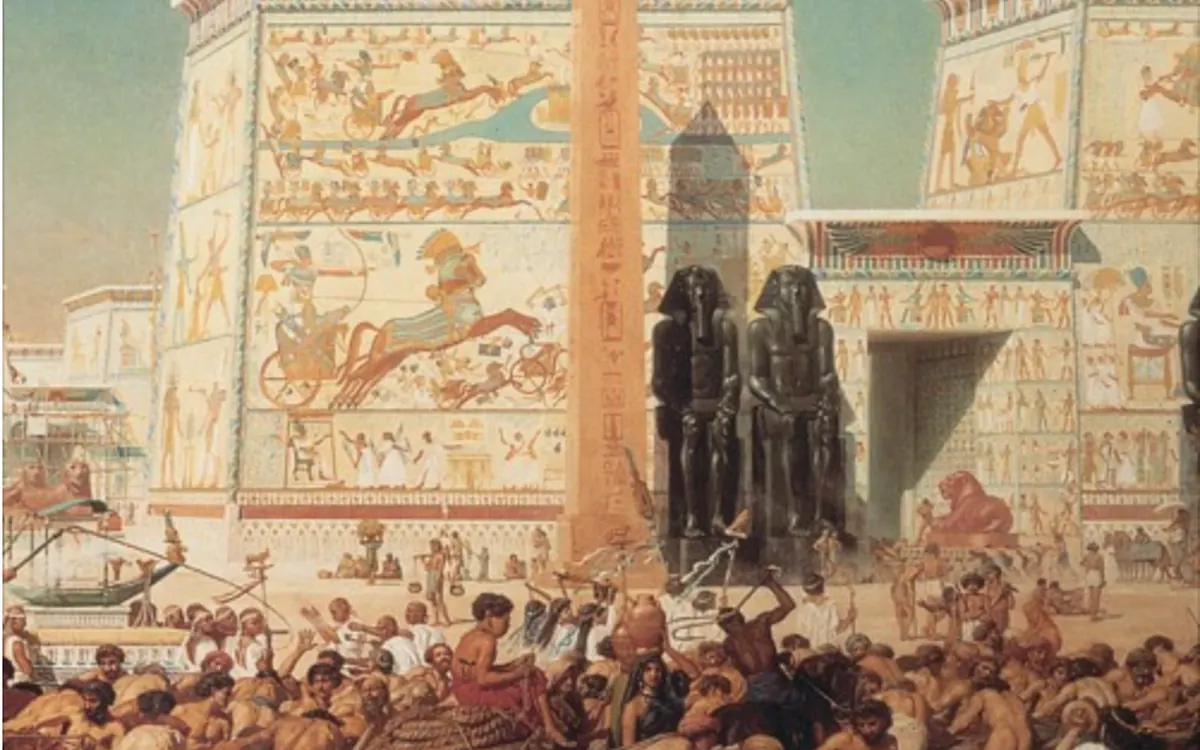
The commandment around which seder night revolves is the telling of the story of the Exodus. Many people today struggle with questions of historicity, meaning - did this really happen? Here is an episode on why the real questions of the Exodus lie in the future and not the past, along with some insights on how to tell a story which goes beyond belief.
About this episode
To ask the origin of stories is to ask the origin of language and the mind, says Tolkien. Pesach has many names, the festival of freedom and of redemption, but to Rav Mike it is above all Chag Emunah, the holiday of faith, a word hard to translate: not an anti-intellectual leap nor a reduction of the world to reason, but the obligation to use the intellect up to the point where it is no longer the right tool, knowing when to accept that I do not know and that I cannot. The word emunah first appears not as a noun but as a verb, when Moses' hands were emunah until sundown as Israel battled Amalek, a steadfast determination, which gives the fullest definition: a steadfast commitment to building my life into a vessel that can hold my relationships, my understanding, and God. That is the whole project of telling a story of the past that can hold us in the present so we reach the future we want, and it centers on the Seder night, where the breakthrough came when his ten-year-old daughter asked, is this really true, and he answered yes, it is all true, and we will keep talking about what truth means.
This is the distinction drawn long ago between Thucydides and the Torah, between the Greek endeavor where truth is subordinate to the facts and the Torah's approach where the facts are subordinate to a truth, a story told truly with enough fact to grasp it, which builds a family into a vessel that can hold God and shapes a people by being told to children. To tell such a story, the first step is a chosen consciousness, since most of us live embedded in the story of our lives without knowing it is a story, a stream of consciousness holy in a child but only good if the story is taking us where we want to go. On the national level this is what Rav Mike calls shot consciousness, skating across the surface, belonging to the forefathers, and God repeatedly tries to evoke consciousness in Abraham, bringing him outside himself at the covenant between the pieces to count the stars, waking him to the fact that he is part of an intergenerational saga. Abraham fears he loses agency if his life is a determined script, but God reveals that awareness is only the first step: we are not characters alone but authors, and the knowledge given is the word inui, the particular suffering that strips us down to the essential self, so exposure to the deep narrative gives agency.
Moses in real time gets the final instruction, told before the plague of the firstborn to frame the answer for when children ask what this service means, God framing a conversation about telling the future of a past still in the future, because some experiences are too important to be lived in the stream of consciousness: once awoken to the intergenerational reality we must know beyond being in the moment that we are in the story, which is why the Haggadah adds stories of others telling their stories. Beneath the chosen consciousness lies the question of topography, and Rav Mike loves myth, as Cocteau said, history consists of truths that turn into lies while myth consists of lies that turn into truths, because history is honest by being alienated from the present, so any lesson drawn from it is a projection, while a myth, perhaps with historical events at its core, has been constantly adapted to stay relevant, lies that turn into truths. Every story has a topography that bounds our free choices like the terrain of a campsite, as the arc of kingship in Israel ran from David to destruction and Josiah was told the story was already over.
The sages fixed the topography of the Exodus in the Mishnah of Pesachim: we begin in disgrace and end in praise, and the Gemara asks what disgrace, Rav saying we were idolaters and Shmuel saying we were slaves, so the praiseworthy end is for one divine service against idolatry and for the other freedom. This fixes the halachic obligation to tell the story on this structure, and it fixes the damage done by Cecil B. DeMille, since Moses says let my people go that they may serve me, and not let my people go alone: Pesach is the festival of liberation, not merely of freedom, a journey from servitude to service. The Haggadah weaves both Rav and Shmuel together, because liberation from external oppression is no small thing, but freedom from must be followed by a conscious choice of freedom of, a choice whom to serve, since everybody has to serve somebody. A slave and a free person both work; what distinguishes them is for whom. Avodah Zarah is serving something foreign to you, Avodat Hashem the service of a God whose will you have internalized, so by building the story on this topography the Haggadah lets us apply our awakened self-awareness to the question of whom we serve, setting ourselves free this night.
The story is our escort, says Chinua Achebe, and the story owns us. The last element is how to connect to the infinite in a story about God's will unfolding in creation, and Rav Kook teaches in Orot HaKodesh that the highest knowledge bubbles up from the depths of the soul through cleaving to God, so we must tell a story from inside us. The Haggadah helps: called to consciousness that our lives are a story through all that makes this night different, given agency to re-understand the past through the present, delving into the mythic topography to make a tale of once upon a time relevant, and then, since this is a divine story of unfolding will, present awareness is overtaken by past consciousness, fulfilling Rabban Gamliel's command that in every generation a person must see themselves as personally leaving Egypt. There is no more powerful way to cleave to God than by singing a song of joy as at the sea, and the Midrash says the first to say give praise, O servants of God, was Pharaoh, who told Israel you were my servants, now you are the servants of God, the two being the same. The telling ends but the story is not over, and the Seder closes in the transcendent state of Nirtzah, next year in the rebuilt Jerusalem, a new song about what the world will be when everyone is on Mount Zion.
Key ideas
- Emunah is the steadfast commitment to building life into a vessel that can hold relationships, understanding and God, first appearing as a verb in Moses' hands.
- The Torah subordinates facts to a truth, telling a story truly enough to build a family into a vessel and shape a people by telling it to children.
- Telling the story requires a chosen consciousness, waking from the stream of life to know we are both characters in and authors of an intergenerational saga.
- Myth consists of lies that turn into truths, constantly adapted to stay relevant, while history stays honest by being alienated from the present.
- The topography of disgrace to praise fixes Pesach as liberation, not mere freedom, a journey from servitude to service, from avodah zarah to avodat Hashem.
- The telling ends in singing and in Nirtzah, next year in Jerusalem, giving voice to the infinite finding expression in the finite.
Chapters
- 0:00 The origin of stories; Chag Emunah
- 1:08 Emunah as a verb; Moses' hands
- 2:12 A vessel that can hold; the Seder
- 4:22 Is this really true? Thucydides and the Torah
- 6:34 A chosen consciousness
- 8:46 Abraham brought outside himself
- 10:54 Author, not only character; the word inui
- 14:05 Moses framing the future's past
- 16:29 Myth and history; Cocteau
- 18:43 The topography of a story
- 20:55 Disgrace to praise; Rav and Shmuel
- 22:00 Fixing Cecil B. DeMille; liberation not freedom
- 24:11 Servitude to service; whom you serve
- 26:25 The story is our escort; Rav Kook
- 27:35 Telling from inside
- 28:46 Seeing yourself leave Egypt
- 29:48 Pharaoh's praise; singing at the sea
- 30:53 Nirtzah; next year in Jerusalem
Who, where and when
People
J.R.R. Tolkien, Moses, Abraham, Jean Cocteau, Chinua Achebe, Rav Kook, Rabban Gamliel, The Maharal, Rav and Shmuel, Aunt Helene
Places
Egypt, Mount Sinai, The Red Sea, Mount Zion
Texts
The Haggadah, Genesis 15, the covenant between the pieces, Exodus 12, Mishnah Pesachim 10, Orot HaKodesh
When
The Exodus from Egypt, The covenant between the pieces, Seder night in every generation
Read the transcript
To ask what is the origin of stories, says J.R.R. Tolkien, is to ask what is the origin of language and of the mind. We must be satisfied with the soup that's set before us, he says, and not desire to see the bones of the ox out of which it has been boiled. Well, I'm not looking for any ox, bones or flesh, but I am trying to tell a story that's rooted in its origin and reaching for the sky. Because I'm Rav Mike Foyer, and this is The Jewish Story. Pesach Interlude, the Exodus from Egypt, a story beyond belief. Okay, if you're anything like me, then you're taking a break, or maybe even right now, you're knee-deep in cleaning fluid. I just stopped scrubbing out my freezer in order to try to carve out a little bit of time to address what I see to be the essential element of this holy day.
That's right, Pesach is upon us, and it's time to get ready. Now, this is a Chag that has a lot of names. We call it Chag HaKerut, the festival of freedom. We'll come to that. Or even Chag HaGiula, the celebration of our redemption. But to me, the primary name of Pesach will always be Chag Emunah. The holiday of, well, belief, faith. Emunah is a notoriously hard word to translate. And when it comes to that faith and belief, I believe that both of those words are lacking. Faith has connotations of an anti-intellectual leap into things we don't understand. And that's a little bit contrary to the way in which I understand the world. Belief has got just too much connotation of the rationalism of a world that I can reduce to my understanding.
And I'm not buying that either. If you want to reconcile the two of them in the definition of Muna, then we might call Muna the obligation to use my intellect right up to the point when it's no longer the proper tool for the job at hand. it's knowing when to accept not only that I don't know but I can't know that's a functional definition of Emunah but it's not so connected to Yitzhiat Mitzrayim that's actually more the Emunah of Purim that blows the doors off the world as we know it preparing the way for the Emunah of Pesach so if I wanted to find a definition for the Emunah of Pesach I'd look for the first place in the Torah that the words actually use I'm not talking about the root Alef Mem Nun but rather the word Emunah and you'll find it right toward the end of the story of the first appearance of Amalek, the anti-Israel, not surprising the people who are known for bringing suffolk, for bringing doubt into the world.
And it says there, as Am Yisrael is battling on the plains below, that Moshe sat up upon the hill, and he held up his hands. And so long as his hands were up, Am Yisrael overcame. And as soon as they dropped, Chas HaShalom, the opposite. So it says, His hands were heavy, And they took a rock, and he sat on it. And his hands were Emunah until the sun came down. Now we could go for hours on this one verse alone, but for me what's fascinating really is that Emunah here seems to be a verb rather than a noun. Meaning he's got some sort of determination to keep those hands up. and it's his determination, despite the fact that it takes Arun and Chor to help him, that makes his hands Emunah. And this gives me what I see to be the fully functional definition of Emunah, in particular how it relates to Pesach, and most deeply to our mitzvah, our commandment to tell the story of the Exodus.
Because the word Emunah, in my eyes, really means a steadfast commitment to building my life into a vessel that can hold. Can hold my relationships, can hold my understanding and experience, can hold God. And if you've been listening to the Jewish story for even a little while, then you know that's basically what we're trying to do. I'm trying to tell a story of the past that can hold us in the present in a way in which we'll get to the future we want to live. But what you may not know is that really my whole approach to storytelling centers around the Seder night. And there's very few people out there who are listening to this now who've probably been there, but nonetheless, you might have heard that things get a little wild in the foyer house on Seder night.
All I'm trying to do is wake up the children. I'm not talking about snoozing. I'm talking about a deeper awareness because I'm just like you, hoping and praying that my kids will care. And, you know, I bless us all right now. I hope you bless me back that we're going to find a way this Pesach to cut through those layers of Instagram-induced cynicism and make a lasting impression. For me, the breakthrough moment in the potential of the Seder came a few years ago when my then 10-year-old daughter turned to me in the middle of the muggy, in the middle of the section of the telling of the story of the Exodus, and said, Abba, is this really true? Just imagine the moment. I mean, she's a product of religious school education.
She doesn't have the liberal background that I've got. And she's only 10. This is a time for what we call a munapshuta, just the simple faith that, yes, the story we're telling is true. And that's exactly what I said. Yes, it's all true. And as you keep getting older, we're going to keep talking about what truth actually means. And we've been talking about that here on The Jewish Story for quite some time. This is the distinction, if you're a listener from way back, that we made between Thucydides and the Torah, between the Greek approach to truth and history and the Torah's approach to memory and story. Remember that there is no word for history in the Hebrew language. And when you look in Herodotus or in his intellectual air, most particularly Thucydides, What you see is that the basis of the Greek endeavor of history is give me the facts and I'll tell you the truth, that the truth is subordinate to the facts, which to most Westerners strikes them as perfectly rational.
The problem is now that we're living in the postmodern era and people are talking about alternative facts and fake news, we've come to realize it's always the narrative that's driving the bus. Whereas the Torah's approach to the past is the exact opposite. The Torah has a truth. You can even call it the truth, if you will. But the key is the Torah is asserting its truth and then using facts insofar as they're necessary to understand. I don't mean in a deliberately manipulative or underhanded fashion. It's just that if I tell you a story which is true, I give you enough fact in order that you can grasp it and that it's real to you. But in this case, it's the facts that are subordinate to the truth. Now, that's not to say that the events of the Exodus didn't happen.
And it's certainly not to claim that they aren't true. On the contrary, our job on Seder night is to tell the truest story possible. But it's not necessarily a story that's going to be believed in the rational sense that we can pick it apart at origin and determine that each historical fact is indeed a fact. Rather, it's a story that builds our family, our family into a vessel that, please God, can hold God. It's a story that can shape a people because we're telling it to our children. who are our future, of course, they can shape a people that can tell the story of the past in the way that shapes their future. And so what I want to do a little bit today is talk about how do you do that? When it comes from the mitzvah of Magi, the commandment to actually tell this story to our children, to our peers, to ourselves, how do we tell a story that's really beyond belief?
So the first step is that a story has to be the product of a chosen consciousness. You know, most of us live most of the time embedded in the story of our lives without ever even knowing that it is a story. It's what we call stream of consciousness. There's no thinking about my life. There's only living. Now, if you're a child or some sort of pure innocent, there's a sweetness in power to this perspective. You know, there's something very holy and pure about people who are that unselfaware. But it's only true, provided the story that we're living is actually taking us where we want to go. In my counseling work one of my favorite opening questions is so what your story You be surprised a lot if not most people will say instinctively oh I don have one But when I ask them well what did you want to speak to me about Suddenly it comes spilling out And the great art form and it something that you can do for those that you love as well, is to simply listen well enough that when you say back to someone what it is they're speaking out, they hear their own story.
So that's on a personal level, and it's worthwhile to think about what are the stories that we live in? Victimhood, entitlement, a blessed life. Any way you cut it, we've all got these narratives that are running the bus, and we live, to some degree or another, inside them. Now, that's in the personal level. On the national level, national historic, this is what I've called shot consciousness. It's the consciousness that is skating across the surface of the story, unaware even, that it's there. And in our history, it belongs to the Avot, to the forefathers, Avraham Yitzchak and Yaakov. And you see, in particular, when you look at Avraham, that God is repeatedly attempting to evoke consciousness. He's trying to break him out of that stream and into a higher state of self-awareness in which Avram can access the deeper power that his story actually provides.
Brit ben Abitarim, the Covenant Between the Pieces, is actually the critical turning point in this relationship between God and Avram. If you look in Breshit 15.5, you'll see it says, God brought him outside, outside his tent in the simple reading. Now look up into the heavens and count the stars if you are able. And he says to Avraham, this is how many children that you will have. Now hear the language, he brought him outside. He had Avraham step outside himself so much so that the Midrash here says that he brought him outside of the whole halal haolam, outside of the world, so that he could look from the outside in. And Rashi tells us further, this is because that Avraham had looked at the stars and he thought he was locked into a life with no children at all.
Here's God trying to wake Avraham up to the fact that, oh, you think you're living your life, but you're actually part of an intergenerational saga. Now, Avraham, like most of us, doesn't immediately feel empowered by this sudden self-awareness that he's part of an intergenerational chain because if my life is also a story, in particular one that lasts after I go and began before I arrived, then don't I actually lose agency? How is it that I can be part of what seems like a deterministic playing out of a narrative in which I have nothing more than a bit part and not lose hope for life? Basically, how does being self-aware, having a chosen consciousness of stepping into my story, help me know that I really matter?
And that's exactly what Abraham says back to God only a few psukim later when he says, even though God has promised him that he'll have children and that they'll inherit the land, he says, through what will I know that I'm going to inherit it? And it's right after this, after this moment of panic when Avraham realizes there's a big story going on and he doesn't know how to leverage it, that God reveals to Avraham that awareness that we're living a story is only the first step. because within this marvel that we call creation and in particular in that jewel of human consciousness is the fact that we're not living out a script that's written in stone when I say story we're not just a character, we're one of the authors and that's why God says to Avram okay, you're not there yet you shall surely know your children are going to be strangers in a land which is not there Avdum ve'inuotam ar-bam o'tshana and they will subjugate them and cause them to suffer for 400 years.
It's the slavery in Egypt that allows Avraham's moment of self-awareness of being pulled out into a narrative that will allow Am Yisrael for generations to come to access this perspective from the outside on our own life. And the critical knowledge that God gives him in that moment is that word inui. Now, Inui is not simple suffering, as it's often translated, because, of course, the bread in which we make the Magi, on which we tell the story of Pesach, is Lechem Oni, the bread of affliction. I'm talking about Matzah, but it's also Lechem She'onim Alav Harbed Dvarim. It's the bread on which we are able to actually answer many things. Because this is why, or this is as the Maral, that great sage of the late 16th century, says Inui is the particular type of suffering which strips us down to essential self.
And that's how the exposure to the deep narratives of our lives can actually help us gain agency. So much of our time is spent, I don't know, tangled up in shallow narratives. He said, she said, they think this about me, this is important because I think that's important, etc., etc. One of the hallmarks of the appearance of the divine in our lives, be it personal or national, is an event that strips all that nonsense away and exposes the deep fundamental story that we're living. I'm sure that if you take a minute to reflect on it, you can get a sense of what that might be in your own life. And by the way, it's a great question for the Seder table. If you want to bring people to self-awareness as part of this process, it's not enough just to change things up.
and make the kids ask you, hey, why did you do that? And shock them out of the immediacy of stream of consciousness. You want to make them aware that they have a story. So you can ask people, what's your core story? One of the ways of doing that, in a very simple fashion, is oddly enough, if I gave you $10 million, what would you do right now? And what's that say about who you are? That's on a personal level. Here, Avraham got a glimpse of the story that lay ahead for his children. But it's actually Moshe, in the real time of that story, who's given the final instruction about how important it is to maintain this self-awareness, that we're not just living, we're living a story. Because right before the plague of the firstborn, on the last moment of the Exodus, God says to Moshe, I'm in the 12th chapter of Shemot, if you want to look it up, 26th line.
And it will be that when your children say to you, what is this service to you? You'll say to him, this is the Passover offering. It's Passover offering to God who passed over the houses of B'nai Israel in Egypt when he struck down the Egyptians and saved our own houses. Now, on one hand, it's a simple question here. This hasn't happened yet. Why is Moshe, who's basically packing up, preparing the matzahs and the Korban Pesach and getting all the people in order for the first Seder night, why is he being told, be aware that someone's going to ask you about this in generations to come and you have to have your answer framed? I mean, God is basically framing a conversation about Moshe telling the future about a past which still lies in the future for him.
Digest that for a minute. And what you're seeing is that there are certain experiences in a person's life and in the life of people that are just too important to be lived in the stream of consciousness. If once we've been awoken to the fact that we're living in intergenerational reality, that we are characters in a story which we are both acting out and which we're authoring, then we have to know beyond the fact that we're in the moment, that we're in the story. You know, it's probably why the Haggadah, right after we begin to tell the story of the Exodus, actually adds in stories of other people telling their stories. So this awareness this being called to consciousness to a chosen consciousness can express itself personally in our narrative awareness and nationally in the sense of the intergenerational project But it also begs the question of what topography underlies the stories that we're living in our lives.
I love myth. I know in the 21st century, myth's got a bad name. Although, frankly, in the postmodern era, it's making a comeback. In the modern era, it was just a lie. I love it because of the type of power it offers for integrating information experience, understanding into a coherent whole well beyond any intellectual or rational theory. And I also love it because of the sentiment expressed by Jean Cocteau. He's a French writer, artist, et al. And he says, I've always preferred myth to history because history consists of truths which turn into lies, while myth consists of lies which turn into truths. Now, what does he mean by that? Many things, but to me, in particular, in our efforts to tell a story which lies beyond belief, he's cluing us into the problem of basing our lives on history.
Because history, by definition, lies in the past. Not only does it lie in the past, but we want it to stay there. A good historian doesn't muddy their picture of the past with their understandings of the present or their aspirations of the future, to the degree that that's even possible. And so, therefore, one of the ways in which history is honest and true is by being completely alienated from the reality in which we live. In which case, any lesson you think you're deriving from history is a lie. You're projecting on it. It may be an accurate analysis, it may not, but you've made an effort to keep history in the past, so how could it possibly be true in the present? A myth, on the other hand, which, by the way, may have at its core historical events.
But what's happened to those historical events is because they were so true, because they were so important, there's been a constant effort to adapt and keep their relevance to the time in which we live. And so therefore, a lot of the factuality may fade, but they are indeed lies that turn into truths because they're expressive of a true reality today. And part of the way in which we can understand mythic analysis of a story is to ask the simple question of what's the topography that underlies every story? In our own lives, it means that though we believe we're free will actors, and indeed it's important that we act as such, Nevertheless, our choices are constrained by reality. Once you picture a situation I've been in plenty of times, you're leaving your campsite for the day.
And now you can choose your destination and you can even pick out your travel route. You're going to go down the ridgeline, through the valley, but every choice you make is going to be bounded by the topography which you're given. And that's not even to speak of the weather and other conditions. This is the nature of topography. The same is true in history. I'll give you a great example. the kingship in Israel. I could trace you an ark, which looks like in the Bible, from David to destruction. There are some noble peaks here and there. If you know the story of Yoshiahu, the last righteous king, you'll see that God tries to tip him off to the fact that there's a topography which dominates his personal story.
He wants to make a revival. He thinks, in fact, that he can be the Messiah. But God's best promise that he can give him is that your eyes shall not see all the disaster which I will bring upon this place. Basically, you're doing great, kid, but the story's already over. So that's part of that topography. But you want to go even deeper, is that, hmm, if we ask someone in the 13th century, is the story of kingship over in Israel? So I think most people would say yes. Maybe, maybe they were still holding on to that messianic ideal of kingship. But I'll tell you something, my great aunt Helene should be healthy and well, grew up in a very religious shtetl-type town in Eastern Europe before the war. And she used to tell me that, oh, Michael, when we read the Bible, bulimimises, they were myths.
Why? Because she said, we had a king? And this is a woman who grew up in a very religious environment. She might have believed those stories to be true, but they were bulimimises. They were irrelevant fragments of the past, because who could imagine that the story of kingship was actually going on? I mean, after all, Bibi, Melech Israel, whatever you think of it, We've got a pretty strong kingdom going here. So that's just an example in the Bible. I'm getting diverted here. What we really want to know is what's the topography of the Exodus story, and how can it help us tell a story which isn't just about the past and factual, but harnesses the power of mythic topography in order to tell a story beyond belief.
Well, fortunately here, our sages tipped us off to what's probably the fundamental structure underlying the whole story of the Exodus, and in particular, the way in which we're meant to tell it. If you look in the Mishnahh of Pesachim, chapter 10, Mishnahh 4, you'll see many things there, but in particular, you'll see what this fundamental structure is meant to be. It says, that we begin in disgrace, we end in a praiseworthy state. It's one of the ways to read it, and for now, that's what I want to focus on. In case you're wondering, what's it mean to begin in disgrace and end in a praiseworthy state? but that's what the Gemara on 116a itself asks. My B'gnut, what is this disgrace? Rav says in the beginning we were idolaters, but Shmuel argues with him and says in the beginning we were slaves, which means for each of them the praiseworthy state of the end will be different as well.
To Rav, of course, it's going to be divine service as opposed to idolatry, and for Shmuel it will be freedom. This is the fundamental underlying topography of the Exodus. in fact, it's a halakhic obligation that we tell the story on this structure. And the question is, what does it teach us? Well, I'll tell you what it teaches us. It teaches us how to fix all the damage done by Cecil B. DeMille. Yes, I'm sure you've seen it, if you're above a certain age. The Ten Commandments. Classic. Charlton Hashten. I know. It's great. I love it. But there's one fundamental problem that that movie introduced into the consciousness of more than one generation, and that's, what does Moses say when he goes to Pharaoh? let my people go let my people go but it's only half the story and it's not an accident to the western audience for which that film was crafted Pesach is the festival of liberation not the festival of freedom and that's why they left off let my people go in order that they serve me in the wilderness because in Cecil B.
DeMille's world once you get rid of the master and oppressor doesn't matter. No one can tell you what to do anymore. Being free is having no one to tell you what to do. And if you want to sit on the beach and sit martinis until you get gout, gesundheit. Have a good time. Well, that may be nice. And that may be a type of freedom. But it's not the Pesach story. This is a story of freedom, not liberation. We went from being slaves to paro to being servants of God. And what people often do as a journey from slavery to freedom in actuality is a journey from servitude to service. And that's what this topography is meant to teach us. It's why, actually, instead of trying to resolve the argument between Rav and Shmuel, whether our disgusting beginnings were in idolatry or in slavery, and whether ideal is freedom or divine service, instead of trying to resolve it, the Haggadah actually weaves both their answers together.
Because liberation from external oppression is nothing to be disparaged. Having come from a free people, child of free people, it's a little bit hard to appreciate, but nevertheless, not a small thing. However, if freedom from isn't followed pretty quickly by a conscious choice toward freedom of, a choice whom to serve, well then, life doesn't lack for masters. And always remember, most of them don't have our best interest at heart. Like Bob Dylan said, everybody got to serve somebody. So you might as well choose the right one. and the depth of this topography and its power and its ability to help us tell a story which really lies beyond belief is understanding the relationship between slavery and ideology if you really want to know go check out the Rambam third chapter of The Laws of Avodah Zarah where he tells the story of Avraham and relates it to the Exodus from Egypt.
But for now, think about it this way. The slavery-freedom tension is something that unites them. It's that both a slave and a free man have to work. Life is work. What distinguishes them is whom they work for, A slave's efforts go to someone else, and a free man's efforts, nominally at least, go to themself. And the same is true when it comes to idolatry and divine service. It's really clear when you say it in Hebrew, Avodah Zarah is idolatry, it's strange worship, and Avodah Hashem is divine worship. You're going to serve someone no matter what. Avodah Zarah means you're serving something which is foreign to you. And Avodat Hashem, divine service, means the service of a God whose will you have already internalized.
Like I said, in life you're going to do the work. And that means that we'll be either driven by external necessity or internal values. And by constructing the story of the Exodus on this topography, what the Haggadah does is allow us not only to take that self-awareness we gain by starting off everything different on this night, but to apply it to the question of, okay, this is a story about once upon a time. But it's not an attempt to historicize, to tell a story which is way over there. It's an attempt to harness the power of myth underlying the story in order to make it relevant to my very selves. Because by telling the story on this topography, we actually set ourselves free on this night. And even if we're not physical slaves, we still come far more free to choose whom we serve.
The story is our escort. Without it, we are blind. Does the blind man own his escort? No, neither do we the story. Rather, it is that story that owns us and directs us. Wise words from Chinua Akebe that can teach us about the last element of how we tell a story beyond belief that I want to speak about today. And that is really a question, which this story is so big, it's a story about God's will unfolding in creation. How on earth do we connect to the infinite and tell a story about something which is by definition bigger than we are? Well, before I answer, I want to give you Ralph Cook's take on it because this is one of my favorite quotes from him. He says in Orotakodesh, regarding the highest knowledge, there is no place to ask, how do you know?
Any knowledge which comes through investigation is only a means to arrive at this highest knowledge, which bubbles up from within the deepest depths of the soul. And the means most fit for achieving this transcendent quality is cleaving to God with every power. Now, it's beautiful, but easier said than done. What he just said is that you have to tell a story which comes from inside you, from that place which is connected to the infinite and sees itself as giving voice to something so much bigger. And once again, the Haggadah is here to help us. First, just to get it straight, we're called to consciousness that our lives are a story. We break that stream of consciousness, unawareness, through all the things that make this a different night.
And then, with that self-awareness awakened and the agency that it provides us, We harness the present in order to re-understand the past. We delve into the topography, that mythic architecture that underlies a story of once upon a time, in order to make it relevant to each of us around the table. But it's not enough, because this is not just a human story of liberation. It's a divine story of unfolding will. And at a certain point, present awareness is overtaken by the telling of past consciousness. We have the opportunity to fulfill Robin Gamaliel's command of the Mishnahh when he says, In each and every generation, a person must view themselves as though they personally left Egypt. As it says, And you shall tell your son on that day, saying, It is because of this which the Lord did for me when I came forth out of Egypt.
Now what exactly does it look like to reach the point on Seder night when I see myself as actually coming out of Egypt? When I let the wave of the past and all its powerful topography break over that awakened consciousness in the present, and I let myself sing. As I move out of the narrow places that bind my story, there's no more powerful way of cleaving to God than by singing a song of joy, just like the children of Israel when we came through the Red Sea. And the Midrash says, you know, that the first person who ever said the phrase, Halu Avdeh Hashem, give praise, O you servants of God, was actually Paro. It was Pharaoh. That when he saw Israel leaving, he said, Hitchir Paro v'tzavach v'amamah.
The Midrash says, Paro began to cry out and say, V'shava ha'item av'dai. In the past, you av'dai, you were my servants. But now, you're free. Behold, you are on your own recognizance. Behold, you are the servants of God. Notice that the two are the same. You must give praise and thanks because you are His servant. This is the only way to give voice to that powerful, expansive force within the story where the infinite finds expression in the finite. Because then, the telling comes to the end, but the story isn't over. And lo and behold, in the Seder itself, where do we find ourselves at the end of Halel? Well, we find ourselves in that beautiful place of In the coming year, let it be in the rebuilt Jerusalem, the moment of Nirtza, that transcendent state of knowing.
that I haven't just woken myself up to the fact that we're in a story and managed by making it a different night, hopefully to do so for those around me as well. And I haven't just delved in to the mythic architecture, the topography which underlies our story of the past in order to make it eternally relevant for me in the present. I've also opened my eyes and my heart to sing a new song about what the world's really going to be like when everybody's there on Mount Zion in the coming year. Let it be soon. Let it be now. And I want to wish you all, and I hope you wish me back, that this should be a holy, a happy, a kosher, and a redemptive Pesach filled with a munah. And we should all merit to tell a story that's beyond belief.
So I just want to thank a few people. I want to thank everybody that gives the hard-earned money for helping to make this show happen, to keep it free and widely available. And I want to ask you to join them right now. It's a good time to give people You can go to my website, jewishstory.co. In the upper right-hand corner, you'll see a button that says Be a Patron. You can click on through to give a little bit of per-podcast support. If you have any questions, you can find me at robmikefoyer at gmail.com. You can find me at Jewish Story Podcast on Facebook and even the Jewish Story on Twitter, believe it or not. I want to thank the Land of Israel Network. That's thelandofisrael.com for creating a platform that allows me to reach so many amazing people.
I want to thank the Pardes Institute, P-A-R-D-E-S dot org dot I-L for building an educational institution that gives me the privilege of teaching so many wonderful Jews. And I want to thank you for listening. I'm Rav Mike Foyer, and this is The Jewish Story.
More from Season 3
TJS S3E3 Mass Immigration and Ingathering the Exiles - part I
illustration attribution: By Government Press Office (Israel), CC BY-SA 3.0, commons.wikimedia.org/w/index.php?curid=22807003 Rav Mike Jewish History Kibutz Galuyot Ben Gurion
Play Episode
TJS S3E4 Sink or Swim - mass immigration and the in-gathering part II
There are times in the history of peoples and nations when the decisions made shape the future. The three years after Israel's foundation saw its population double through...
Play Episode
TJS S3 Interlude Independence 5779 Independence or self-actualization?
There is no word for independence in Biblical Hebrew, and the roots of the modern word can teach us much. This might right be called the day when...
Play Episode