
TJS S3E27 Six Day War I - beginnings near and far
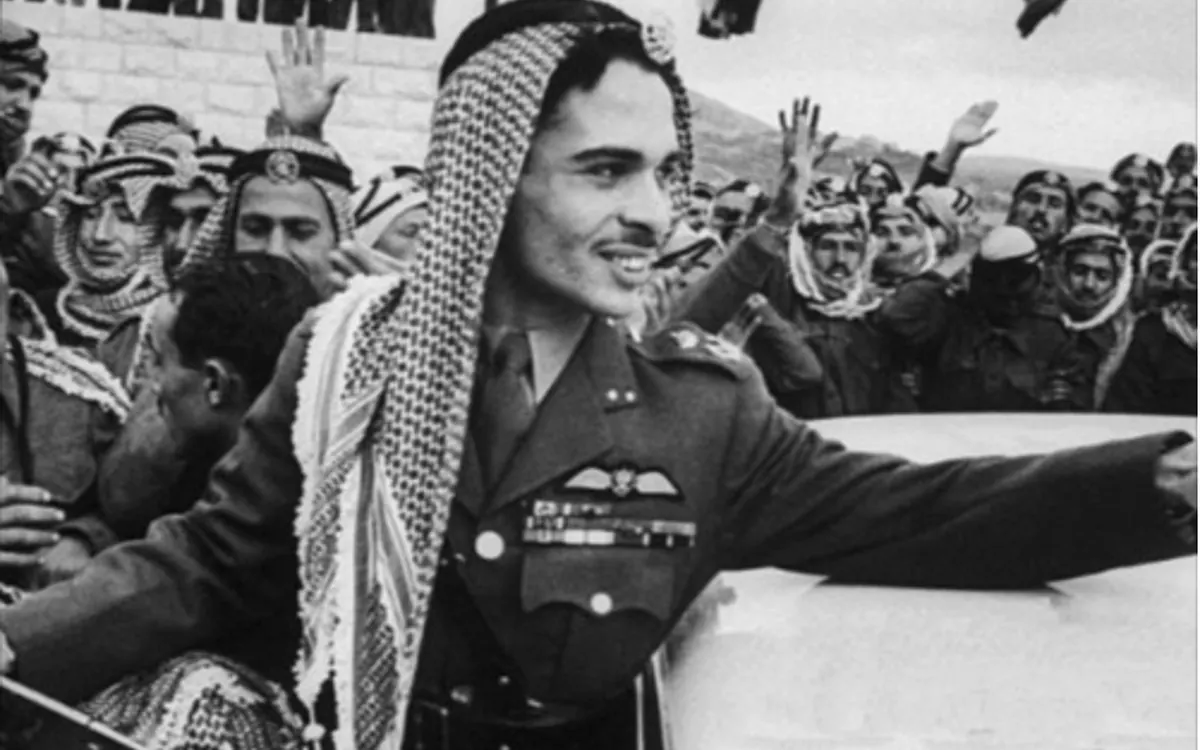
Who can say when historical events like the Six Day War actualy began, and what were their causes? It is a daunting task, but not one which we can shirk, nonetheless. Here is the first episode in our lead up to war - a look at a new personality, a battle and some broader context.
About this episode
The older I get, said Eisenhower, the more wisdom I find in taking first things first. Rav Mike has had a hard time getting started on the Six-Day War, the war that drew the map of today's Middle East, birthed a new messianism still shaking Judaism, and shaped American Jewry, since it is never honest to point to a single origin of something so complex. When did World War One begin, with Princip's bullet, the July ultimatum, Russia's mobilization, or the balance of power fixed at Vienna in 1815? Historians speak of proximal and distal causes, and we learn more about the historian from their assertions of beginnings than about the history, true in personal work too, where the first question is always where does your story begin. Assertions of causality are never values-neutral, often tools of narrative warfare to kick the legs from under someone else's past, so be careful knocking down narratives since you never know what they hold up, and defining when a conflict began also defines when you think it ended, acute for a war arguably still not over. The story truly began with Daniel and the dream of kingship passing to the nations, and the question the war poses is where we stand in that vision, whether a kingdom of flesh and blood can again represent the kingdom of God.
The key new character is Yitzhak Rabin, born in Jerusalem in 1922 to founding members of Ahdut HaAvodah, who absorbed Hebrew labor and Hebrew language as a sabra in the deepest sense, prickly outside and sweet within, raised on greater Israel and the rejection of territorial compromise. His education began at the Kadoorie agricultural school near Mount Tavor, where his first taste of the Jewish-Arab conflict came when Arabs attacked and Yigal Allon swooped in to organize the boys, beginning a lifelong association in the Haganah and then the Palmach. Rabin fought in Lebanon where Dayan lost his eye, became operations officer responsible for the convoys to besieged Jerusalem, and consistently chose service to the state over loyalty to any individual, overseeing the expulsion from Ramla and Lod and, under Ben-Gurion's orders, giving the command to fire on the Altalena, killing more than a dozen fellow Jews, so that some say the bullet that killed him in 1995 was the last shot of that battle. Appointed chief of staff at the end of 1963, he was a crucial victory for Levi Eshkol against Ben-Gurion's new Rafi party, which painted Eshkol as a military ignoramus.
The mid-sixties were not simple days, as the Soviet Union flooded the Arab states with weapons, so Eshkol, who understood what an army needs though he lacked combat experience, went to the White House to acquire Patton tanks and Skyhawks, reading the writing on the wall as France shifted toward a post-colonial stance. The arms race that began with the 1955 Czech deal was itself a cause of the coming war, since what is the point of all those guns if you will not use them. The border conflict deepened, Gaza quiet while Syria's front replaced it as the most volatile, the war for water over the Jordan's headwaters and the demilitarized zones where armored tractors drew Syrian artillery from the Golan, creating the shelter generation of the Galilee. Rabin held Syria accountable for terror launched from its territory yet was reluctant to strike guerrillas embedded among civilians, until in November 1966, after three paratroopers were killed by a mine near Arad, he and Eshkol deviated from policy, since a mutual defense pact had just tied Syria and Nasser together and they feared triggering the very war they sought to avoid, so the blow fell on Jordan and not Syria.
Operation Shredder was meant to be a surgical retaliatory raid in the style Dayan perfected, but four hundred soldiers with tanks and APCs, the largest operation since Suez, stumbled into a Jordanian patrol at Samu, and the pitched battle left fifteen Jordanian soldiers and three civilians dead, over a hundred homes rubble, and eleven Israeli dead including the commander. Rabin had argued Jordan could stop ninety-five percent of the Fatah raids and that Israel must force Hussein to eliminate Fatah himself, a strategy with risk since the Hashemites were a foreign ruling family, descended from the Sheriff of Mecca and planted by the British after being ousted by the house of Saud, and more than half Hussein's population were Palestinians who hated him only slightly less than Israel, having seen his grandfather assassinated on the Temple Mount. Hussein, who had kept secret lines to Golda Meir and others, saw Samu as outright betrayal, and when the Americans, deep in Vietnam, would promise no military intervention, he played his final card, threatening to militarize the West Bank and admit Saudi and Iraqi troops, tipping the balance toward war.
Much of the groundwork was laid by the Cold War. The Baghdad Pact aimed to ring the Soviet southwestern frontier with strong states on the NATO model, but Moscow's foothold came when Nasser recognized communist China in 1955 and announced the Czech arms deal, outflanking the pact for eighty-three million dollars and marking the failure of containment. Middle Eastern oil, a quarter of world supply and most known reserves, made the region vital, so vital that from 1949 the Truman administration developed an oil denial policy, moving explosives into place to blow the wells and plug the fields in case of Soviet invasion, even exploring radiological weapons until the CIA rejected them in chilling terms about forcing expendable Arabs into contaminated areas. Last was the nuclear factor, since the American ambassador warned Johnson that the only trigger for war would be Egyptian conviction that Israel was producing nuclear weapons at Dimona, and the two wildcards in Israeli minds were an Egyptian strike on Dimona and Soviet intervention, the Soviets watching Dimona so closely that a nuclear American ally in the region might move them to encourage their Arab clients to war.
Key ideas
- It is never fully honest to point to a single origin of the Six-Day War, since assertions of beginnings are tools of narrative warfare that also define when we think it ended.
- Yitzhak Rabin, the Jerusalem-born sabra, rose through the Palmach choosing service to the state over any individual, and became Eshkol's chief of staff.
- The war for water over the Jordan's headwaters and the demilitarized zones was a prelude to 1967 and created the shelter generation of the Galilee.
- The Samu raid fell on Jordan rather than Syria and convinced King Hussein that Israel could not be trusted and that he was safer on the radical side.
- The Cold War laid much groundwork, from the Czech arms deal that broke containment to the chilling oil denial policy.
- The two nuclear wildcards in Israeli minds were an Egyptian strike on Dimona and a Soviet intervention that could itself be nuclear.
Chapters
- 0:00 The problem of beginnings
- 3:15 Narrative warfare; when did it end?
- 5:26 Rabin the sabra; Ahdut HaAvodah
- 7:46 Kadoorie; the Palmach and the Altalena
- 11:08 Chief of staff; Eshkol versus Ben-Gurion
- 13:29 The arms race; Eshkol rearms
- 16:50 The war for water; the shelter generation
- 18:40 Terror; the paratroopers at Arad
- 21:17 Operation Shredder; the Samu raid
- 24:42 The Hashemites; Hussein's delicate throne
- 28:02 Hussein's betrayal; the American refusal
- 31:15 Militarizing the West Bank
- 33:30 The Cold War; the Baghdad Pact
- 34:40 The Czech deal; oil denial
- 37:56 Nuclear fear; Dimona and the Soviets
Who, where and when
People
Yitzhak Rabin, Levi Eshkol, David Ben-Gurion, Yigal Allon, King Hussein, Gamal Abdel Nasser, Lyndon Johnson, Dwight Eisenhower
Places
Jerusalem and the Kadoorie school, The Golan Heights and the Galilee, Samu and the West Bank, Dimona, The Sinai
Texts
The book of Daniel, The Baghdad Pact, Lawrence of Arabia, The CIA oil denial memo
When
1963 CE: Rabin becomes chief of staff, July 1966 CE: the water war climax, November 1966 CE: the Samu raid, 1955 CE: the Czech arms deal, 1949 CE: the oil denial policy
Read the transcript
The older I get, said Dwight D. Eisenhower, the more wisdom I find in the ancient rule of taking first things first, a process, he says, which often reduces the most complex human problems to manageable proportions. Well, I've got a pretty complex story to tell, and I'm going to try to take it piece by piece, because I'm Rav Mike Foyer, and this is The Jewish Story. episode 27 six day war part one causes near and far so we've got a really big story to tell we're on our way to the six day war and i gotta admit i've had an awful hard time getting started this is the war which drew the map of the middle east as we know it today it birthed a new messianism which is still shaking the foundations of Judaism, and it set the stage for a good chunk of the development of U.S.
Jewry up to our time. So this is going to take a while. And like I said, I've been quite troubled by where exactly to begin. And of course, as soon as I said that, many of you probably said, but you already have, which is of course the problem. is it ever really an honest act to point to the origin and causes of something so complex as the Six-Day War? Now, by the way, this is not just our problem, a local issue. This is a global dilemma. And it has a certain historical dimension. I mean, for example, when did World War I begin? Was it the shot from Gavrilo Princip's gun? Was it when Archduke Ferdinand actually died? When Austria-Hungary gave the Serbs the July ultimatum? when Russia mobilized its troops?
You see the problem, right? Because we could extend the chain of questions of causality backwards in time as well and start picking apart the web of international treaties that created a situation so unstable that one death brought on tens of millions more. And historians like to talk about proximal and distal causes or sometimes triggers and causes. Now we all agree that Princip triggered the war, I guess literally in this case, But how far back can we trace the causes? And if I say that the 1815 Vienna Conference, which created the idea of a balance of power in Europe, was a cause of World War I, then haven't we actually reached the point of the absurd? I mean, everything leads to everything else.
Basically, any major world event is too complex to grasp in toto. And that means we can often learn more about the historian from their assertions of causality and beginnings than about the history itself, which, by the way, is true in personal work as well from my experience. One of the first questions I always have a client write about is, where does your story begin? And I find that the more times I ask the question, the more answers I'll actually get, which rolls us over into what I'll call the cultural dimension of this problem of beginnings. Assertions of causality and beginnings are never values neutral. Often, they're explicitly tools in assigning responsibility, subtly drawing moral conclusions from historical events.
Take, for example, the innocent question of when the Civil War in America began, and what were its causes? Now, it goes without saying that if you asked that question in Boston, and you asked it in Savannah, you would get radically different answers. You might even learn that it was actually the War of Northern Aggression, or at very least the war between the states and not a civil war. When we claim knowledge of when a conflict started and assert its primary causes, often we're engaging in narrative warfare. We're attempting to kick the legs out from under somebody else's version of the past. And remember, you should always be careful knocking down narratives. You never really know what they're holding up.
The last, but certainly not least, in addition to the historical problem and this sort of cultural narrative dilemma. When you identify how conflict began, you're often, intentionally or not, defining when you think it ended as well. And for the Six-Day War in particular, this problem will be quite acute. Seeing as practically speaking, I could say it's still not over. Did it begin with the birth of Israel in 1948? Well, then we know how that ends. Was it the formation of the PLO in 1964 that brought it on? How about Nasser's occupation of the Sinai in 67? These questions of how the State War began, when it ends, and therefore what it was all about, are going to prove to be particularly important for the next phase of the Jewish story.
And I'm still quite not so sure how to tell it. So any thoughts you have on what you'd like to hear in Season 4, now's a good time to send me an email, robmikefoyer at gmail.com, or hit me up on Facebook, that's robmikefoyer at Facebook, and just tell me what you'd like to hear. But for now, just remember, our story began way back at the beginning of season one with Daniel and the dream of the future he was privileged to see. You can go back to that first episode and do some review. But for now, just recall that since the destruction of the first temple, the Jewish story has been about kingship in the hands of the nations, not in the hands of Am Yisrael. at least on the national level with those classic tools of kingship as we know them, state, culture, army.
And one of the questions posed by the massive victory of the Six-Day War will be, where are we in that vision of the future that Daniel was privileged to see? Do these events hold out hope that a kingdom of flesh and blood will once again represent the kingdom of God on earth? or were they just another round of power play, another battle between kings and their armies? In other words, was the Six-Day War just another in a long chain of sociopolitical conflict or did it offer a new beginning, a new creation even, as the very name Six-Day War implies? So like I said, I've got my work cut out for me if I'm going to tell a full, honest, and meaningful story. And I think I could do worse than starting with one of the key characters who's been actually part of our tale for quite some time, but in an unseen role.
1967 was a transition point in Israeli and Jewish history in countless ways. And one of the actually most significant of them was the rise of a generation of native-born leadership within the state of Israel. And among that generation, there is perhaps no one better known in our day than Yitzhak Rabin. Rabin was a Yerushalmi. He was born in the Holy City on March 1, 1922, to Nehem Yerobin and Rosa Cohen. And he was the Israeli equivalent of a red diaper baby. Both his parents were active founding members in the Achdut HaVodah party that Ben-Gurion founded only three years before his birth. Although, in all fairness, to call him a red diaper baby is actually a misnomer. Because Ahdud HaAvodah was founded by Ben-Gurin in order to split from the more hard-line communist elements within the labor movement.
What I meant when I said that was that Yitzhak absorbed the two central values on which the party was built, Hebrew labor and Hebrew language, from the very youngest age, which made him a sabra in the deepest sense of the word. That's that prickly cactus, which is the name for a native-born Israeli, you know, hard on the outside, but oh so sweet in the middle. Now significantly, Ahdut HaAvoda was also an advocate of greater Israel, and the rejection of territorial compromise would be part of Rabin's worldview, at least until much later in his life. So young Yitzchak's schooling started at Beit Chinuch LeYelde'ovdim, the school for workers' children in Tel Aviv, which should come as no surprise, but his actual education really began at the Keduri Agricultural School near Mount Tavor in the Lower Galilee.
This legendary school was founded in the early 30s, together with a sister school for Arab students in Tulqam, by the Iraqi Jewish philanthropist Elis Keduri, with the mission of developing the land and all of its people. It was a noble vision, but one which soon fell prey to the conflict which was even then brewing in the Middle East and the whole world. Now, if you've been listening since the second season, you may recall the Arab revolt of 1936 to 1939. You can go back to season 2, episode 33, for the full story. But for now, know that Yitzhak Rabin's first taste of war, and not just war, his first taste of the Jewish-Arab conflict, which would dominate his life, came when the Qaduri school was attacked by Arabs from a neighboring village.
It was Yigal alone, fellow Qaduri graduate, who swooped in like a knight in shining armor to organize the boys in a self-defense unit. And seeing as Alon was also an Ahdut Avodah activist and a commander in the Haganah, not to mention a dashing figure that all the boys looked up to, he did some recruiting as well. The Arab revolt ended in 1939, but Yitzhak Rabin's association with Alon in the Haganah had only just begun. In 1941, he was among the first to join the Palmach, the newly formed striking arm of the Haganah. And during their first two-year initial cooperation with British rule, Rabin actually fought in Lebanon. It was the same conflict in which Moshe Dayan lost his eye. From here on out, his military career was only onwards and upwards.
Rabin was deputy commander of the Palmach's 1st Battalion. He led numerous operations in the pre-state phase. In October 1947, during the War of the Roads, that awful first phase of the War of Independence, he was appointed operations officer of the Palmach and became responsible for the convoys supplying Jerusalem during the siege. Once the state was declared the Israel Defense Force the IDF absorbed the pre militias into its infrastructure And though the Haganah became its backbone many of the Palmach Nekim were sidelined by Ben He had suspicions over their loyalty to one another as opposed to the state Many of them actually quit the military altogether in protest despite the fact that the war was just over.
But Yitzhak Rabin was a man who consistently chose service to the state over loyalty to any individual. And so he went on to many campaign positions during the war, including Operation Danny, when he oversaw the expulsion of the Arab population from Ramla Lod, you can go back to Season 2, Episode 40 for that story, and perhaps it was this proven loyalty that caused Ben Gurion to send Rabin and his men to the beach of Tel Aviv on a hot day in June to intercept the Al-Talena. If you don't know the tragic story of this Irgun arms ship sunk by the IDF in the midst of the War of Independence, it's there in Season 2, Episode 40 as well. I'm not telling it all. All you need to know for our now is that under orders from Ben-Gurion, it was Yitzhak Rabin who gave the command to fire upon his fellow Jews, killing more than a dozen.
Like it or not, there is a certain narrative of modern Israeli history which is encapsulated in the assertion made by voices in our society today that the bullet which assassinated Rabin in 1995 was actually the last shot fired in the Battle of Yalta Lena. But for now, there was no question that Rabin emerged the victor in 1948. And in 1949, when Ben-Gurion made his final purge of the ranks of the IDF leadership of the remaining Palmachnikim, Rabin managed to retain his command. We don't really need to go into any further detail about his career. Suffice it to say that Yitzhak Rabin's appointment as Chief of General Staff of the Army at the end of 1963 met with widespread approval from both the public and the military.
And it was a particularly important victory for the man who appointed him, new Prime Minister Levi Eshkol. You may recall that Levi Eshkol took over the twin posts of Prime Minister and Defense Minister Fem Ben-Gurin after the old man quit in protest over the last round of the Lavon Affair scandal. But you also might remember that Ben-Gurin was never one to go quietly into the night. When he finally realized that the Mapai party, which he had built, was not going to beg him to come home, he formed a new party called Rafi, Rishimat Poli Yisrael, the Israeli workers' list, in order to rejuvenate the politics of the country, as he claimed, and of course, regain power. Together with his protégés, Shimon Peres, Moshe Dayan, Teddy Kolok, and others, Ben-Gurion hoped to recapture the public's imagination, as well as the leadership of the country, by campaigning on a platform of electoral reform and a hard-line stance on security matters.
And this last one was really the wedge he hoped to use in order to regain the prime ministership. One of his primary tools was to paint Levi-Ashkol as a military ignoramus could not be trusted to guide Israel through the dangerous waters of the Middle East. And so, Eshkol appointed the hero soldier Rabin as his chief of staff. Now, the mid-1960s were not simple days for the IDF. The Sinai Campaign of 56 may have bought the economy a crucial decade of quiet, allowing it to develop and grow, but the army received no such respite. And Eshkol may have lacked personal experience of combat, but he well understood what an army needed to win wars. This is the point at which the Arab states are undertaking a massive rearmament as the Soviet Union floods the Middle East with its weapons, buying influence in that old imperialist style.
We spoke back in episode 24 of this season about how Levi Eshkol was actually the first Israeli prime minister to receive an official invitation to the White House and how his primary goal was to obtain American arms. Now, the French are still officially Israel's largest arms supplier at this point in our story, but Eshkol could read the writing on the wall. He saw that France was beginning to shift its foreign policy away from Israel and toward a more, let's call it, post-colonial stance on the Middle East, and he understood what that would mean for their support in any coming conflict. And so when he went to the White House, Eshkol was particularly interested in acquiring patent tanks and American Skyhawk fighters, something he actually ultimately succeeded in doing.
Now, one might rightly say that the arms race, which began back in 1955 with Egypt's first major purchase of Soviet arms, and which is now picking up rapidly in the mid-60s, is a major factor, if not a downright cause, in the conflict to come. I mean, after all, what's the point of having all those guns if you're not going to use them? From his first days in office, Eshkol set himself to rearm, upgrade intelligence, and restructure the army's command infrastructure. And it was done in partnership with Yitzhak Rabin, whose three-year tenure was so successful that late in 1966, the Prime Minister extended it for an additional year, which fatefully placed him at the head of the army in the coming war.
But we're not there yet. Because for now, when Lieutenant General Rabin became Chief of Staff on January 1st, 1964, the Arab armies surrounding Israel were rapidly re-arming, like I said, and his mentor, Prime Minister Ashkol, was moving heaven and earth to match them. But the arms race wasn't the only problem muddying the waters of the Middle East at this point. There was also the ongoing border conflict. The so-called West Bank of the Jordan River, conquered and annexed by Transjordan, which then, of course, changed its name to Jordan, in the War of 48, is still a constant source of infiltration. infiltration. And we'll speak a little bit more about that in a few minutes. But in 1964, it seemed clear that Nasser at least had learned his lesson from the 56 Suez War.
The border with Gaza was quiet. And it seemed, at least on the Egyptian front, that the Palestine issue was in deep freeze. So much so, in fact, that the other Arab states will goad him continually toward action. And we'll see how that results when the time come. But no such thing could be said about Syria. Israel's northern border has now replaced the Egyptian one as its most volatile. And at least until Nasser rolled his tanks into the Sinai in the spring of 67, U.S. analysts were certain that the next war would actually begin there. Maybe they just knew the ancient truth that Jeremiah teaches in the first chapter, or maybe they were just watching the news closely. We've mentioned a few times in the last couple of episodes how Syria was attempting to divert the headwaters of the Jordan River.
Those were efforts that led to not only bombing raids by Israel, but also a relocation of the source pumping station from the national water carrier. There were also constant clashes with Syria over the attempts by Israeli farmers to cultivate land within the demilitarized zones that had been established between the two states by the post-49 ceasefire. Now, these zones were open to civilian use, but the Syrians didn't care, and their artillery fire made farming there a lethal pursuit. Just imagine it. By the early 1960s, armored tractors were standard equipment. And of course, the response of Israeli fighter bombers only led to increased shelling. truth is, since 1949 Syrian guns had dominated a good chunk of northern Israel through their commanding positions on the Golan Heights at this point, more than a decade of shelling had created what was known as Dor Hamiklatim the shelter generation young men and women raised in the kibbutz in agricultural villages of the Galilee for whom it had become a way of life to flee for shelter into the deep rock bomb shelters built under their houses.
It's a situation which sadly has actually reduced itself in our day in the area surrounding the Gaza Strip. In addition to its efforts to choke Israel's water supply and prevent the agricultural development of the Galilee, Syria had become a primary, if not the primary, state sponsor of terror. We spoke a couple of episodes ago about the birth of the PLO, the Palestine Liberation Organization, and in particular about its most militant member, the Fatah. By the time Fatah undertook its first guerrilla attack, not surprisingly, attempted sabotage on a national water carrier pump, their base was firmly established in Damascus. And when it came to thwarting Syria's attempts to diverting Israel's water sources, or even stopping their artillery, the chief of staff consistently rejected any reprisal which might require entering Syrian territory.
Instead, as I mentioned, air force interventions were increased, along with Israel's own tanks and artillery. But when it came to terror, Rabin believed that a state was accountable for all hostile operations launched from its own territory. He therefore held Syria responsible for terrorist operations originating from anywhere in the north. Nevertheless, he was still reluctant to authorize Israeli reprisals against guerrillas who were embedded in a civilian population. But, you know, in war, logic rarely derives all decisions. And so, in November 1966, another piece of our puzzle leading up to the Six-Day War fell in place when Rabin and Prime Minister Ashkol deviated from that policy. On November 11, 1966, three Israeli paratruvers were killed by a landmine placed not far from the southern town of Arad.
It was a tragic event but hardly a surprising one Because while it true that cross raids into Israeli territory had dropped significantly since the Sinai War nevertheless the threat of terror remained quite real And truth is, in the latter half of 1960s, it was growing. In fact, with that strong backing from the New Baathist regime in Syria, Palestinian terror groups were launching regular raids into Israel, mostly from Lebanon and Jordan. The situation was fast coming to resemble the Fedayin raids that had been a major impetus for Israel's invasion of the Sinai in 56, and so it should come as no surprise that Prime Minister Levi Eshkol and the IDF general staff felt that this latest provocation required a robust response.
It's been 13 years since that disastrous Kibbea retaliation raid that we spoke about back in episode 6, so apparently that's long enough to forget the risk of playing with fire. When the general staff gathered to consider the situation, Commander of the Southern Front Ishayahu Gavish suggested a broad daylight raid on Jordanian territory using tanks and APCs. Now, you may wonder why. After all, the terrorists were Palestinians, and their backers were in Syria. Not only that, King Hussein of Jordan was the most conciliatory toward Israel of all the Arab leaders. Since 1965, it seemed he'd been working quite hard to stop the PLO from using his territory as a base for terror. Basically because he knew full well that he had the most to lose out of any conflict which might result.
So the answer to that question is really that Israel was already dancing around war with Syria. It was no longer a matter of shelling and bombing. When a much larger round of conflict erupted after the final Israeli destruction of the Syrian earthworks attempting to block the headwaters of the Jordan happened in July of 1966, it pushed the Ba'athists in Syria to put aside their differences with Nasser and to make a mutual defense pact. The final agreement, which tied their military ships, so to speak, together, was signed only a week before the murder of the paratroopers. The Israeli leadership now felt increasingly trapped. They knew that a decisive show of force was necessary to maintain any deterrent power.
Furthermore, Eshkol himself was suffering in the polls and had Ben-Gurion nipping at his heels claiming that he was too weak to respond. But they feared to make any response too decisive. Now that Syria and Nasser were tied together, they might actually trigger the war they were trying to avoid. Just picture them dancing around a powder keg with a candle in their hands. One misstep and boom. And so, it was Jordan and not Syria which received the blow. Now Rabin, sorry, Chief of Staff Rabin, had been arguing for more than a year that despite King Hussein's claim to be making his best efforts, In reality, the Jordanians could stop 95% of the Fatah raids, which were then taking place from their territory.
Looking at all his intelligence assets, the chief of staff had come to the conclusion that thwarting cross-border raids before they occurred from the Israeli side was all but impossible. The time had come for Israel to force the king to eliminate Fatah himself. And this was a strategy with some risk. The Hashemite kingdom, after all, is the most colonial of Middle Eastern states, and the natives are getting increasingly restless. The occasional bloodshed and mayhem on the Israeli side of the border served an important purpose. It kept their focus away from the royal family which ruled over them. Now recall, or if you don't know, then know, that the Hashemite family that rules in Jordan to this day originated in Arabia.
It was the sheriff of Mecca and his sons who first found international fame, assisting Lawrence of Arabia in the British efforts against the Ottomans in World War I. Go watch the movie. It's really worthwhile, Lawrence of Arabia. Now, they were subsequently ousted from the Arabian Peninsula by the house of Saud. That's why it's the Saudi Arabia and not, I don't know, Hashemite Arabia. But in recognition of their service, the British, in good colonial fashion, carved out several new states for them, including Transjordan, which was cut from the Palestine mandate in 1921, as well as Syria and Iraq. But by the time we reach our point in the story, in the 1960s, King Hussein of Jordan is last king standing, because so-called progressive Ba'athist regimes are now ruling in both Iraq and Syria.
And Hussein is far from secure on his throne. More than half his population even then were Palestinian, and they hate him as a foreign ruler only slightly less than they despise the Zionist entity across the border, which they claim stole their homes. As a young boy, Hussein actually witnessed the assassination of his grandfather at the hands of a Palestinian nationalist on the Temple Mount. And so he knew full well that his rule depended almost entirely on the power of his military and the pacification of the Palestinians under his rule. Yitzhak Rabin knew this as well. Nevertheless, only weeks before the paratrooper's death, in a speech at the IDS Higher Military College, Rabin declared that Israel should no longer fear the fall of the Hashemite Kingdom of Jordan, that there was no danger whatsoever of whatever rose in its place becoming a militant satellite of Nasserite Egypt, as they deemed Syria to be.
Instead, Rabin stated, we have to make Hussein choose. Either he puts an end to Fatah activity, or he loses his throne. And two days after the terror attack, he was presented with that choice. Operation Shredder was meant to be a surgical strike, a quick and brutal retaliatory raid along the lines which Moshe Dayan had perfected back in the 50s, except that things went wrong almost immediately. First of all, the scale of the operation seemed all out of proportion. 400 Israeli soldiers, accompanied by tanks and APCs, crossed the border into Jordan and route to the terror-sympathizing village of Samu. It was actually the largest Israeli military operation since the Suez War, which in itself risked unexpected escalation.
Now add to this the initial dubious choice of Jordan, as opposed to Syria as the original target, and then, finally, a dose of bad luck. The troops reached Samu without incident and were in the process of evacuating the villagers before destroying their homes when a unit of 100 Jordanian legionnaires on patrol stumbled across their perimeter. The firefight, which erupted, transformed a surgical raid into a pitched battle and when both sides called in for air support, one Jordanian hawker-hunter jet was downed and the situation threatened to spiral into all-out war, The Israelis eventually managed to slug their way back across the border, leaving behind 15 dead Jordanian soldiers and three civilians.
The village of Samu was essentially gone. Over 100 homes had been reduced to rubble during the fighting, and 96 of the villagers wounded. And they themselves hardly fared any better. 11 IDF soldiers were dead, including the commander of the raid. The initial fallout from the operation was as swift as it was predictable. Confusion within the cabinet and the IDF general staff on who exactly had authorized a raid of that scale, UN condemnation, Arab threats of unified retaliation. But what Israel didn't see right away was the impact which Operation Shredder had on King Hussein of Jordan and in particular on his political perspective. Like I said, Hussein is in a delicate position. And perhaps that's why he had always maintained discrete lines of communication with the Israeli leadership, at least since the earliest days of his reign, despite the obvious risks, both domestic and international.
This is certainly why he saw the Samu Raid as an act of outright betrayal. As he complained to the U.S. ambassador to Amman, Finley Burns, For the past three years, I've been meeting secretly with Golda Meir, Avivin, and others. I told them, amongst other things, I could not absorb or tolerate a serious retaliatory raid. They accepted the logic of this and promised there would never be one. As far as I am concerned, this attack was a complete betrayal by then of everything I have tried to do for the past three years in the interest of peace, stability, and moderation. And then he added a crucial suspicion. I never fully trusted their intentions toward me or toward Jordan, he said. In assessing Israeli intentions, I ask you to put my experience with them into your equations.
Hussein perceived his position as delicate vis-a-vis Israel, largely because he'd been watching them in their record expansion for over a decade. Truth is, the king's greatest fear, aside from a coup from within, had become an Israeli takeover of the rich agricultural land of the West Bank, which he thought they needed in order to have room to grow. The ambassador duly communicated the king's concern to the U.S. State Department, and he was in turn instructed to assure the king that the U.S. government had expressed its full displeasure to the Israelis over the Samurai and to reiterate American commitment to the territorial integrity of all states in the region. But Hussein didn't get even the slightest hint of what he really wanted, which was an expression of U.S.
willingness to intervene militarily on the behalf of Jordan in case Israel did invade. Remember, the U.S. Army is deeply deployed in Vietnam in 1966. If they're going to stretch themselves, in order to intervene anywhere else, it's not going to be in the Middle East. Frankly, the State Department was inclined to view Hussein's concern as purely psychological, meaning he's just scared. The CIA, on the other hand, saw things in a very different light. Their assessment was that Hussein weakness in the face of Israeli retaliation was highly likely to end in an army coup So as I said more than half of Hussein population were Palestinians which he ruled none too kindly. And they were a primary target for the incitement generated by Nasser's Radio Cairo broadcast, which never failed to label the king as a coward and western stooge, part of that conservative, if not reactionary element in the Middle East which Nasirah Egypt was committed to kicking out.
In desperation, Hussein sent his top aide, General Amir Kamash, to plead with Secretary of State Dean Rusk for an immediate airlift of American arms which could shore up his control over the military. Kamash unknowingly confirmed the CIA's assessment when he warned that while the king was still strong, without U.S. support, November 13th, which was the day of the Samurai, was likely to become Jordan's new national day, meaning the government was in jeopardy. Kamash also tried to play the Cold War card, ever popular in the 60s. He told Rusk that Israel had attacked Jordan rather than Syria, which Israel really held responsible for terrorism because they were backed by the USSR. Hint, hint, hint. But the Americans balked at anything more than a symbolic arms sale.
And that's when Hussein threw his final card. If the Americans could not arm him immediately, he would do something he'd resisted for 10 years, something which Nasser and the Ba'athists had been demanding for that entire time. He would transform the West Bank into a military protectorate and allow Saudi and Iraqi troops to defend it. It seemed a bitter pill to give up on the dream of a Jordanian Jerusalem, but absent full U.S. support and considering his fear of Israeli conquest, it suddenly appeared to be a viable solution for Hussein. Militarizing the West Bank would satisfy the violent desires of those Palestinian militants and the radical Arab regimes that threatened to topple him, while simultaneously uncoupling the security of the West Bank from that of his own kingdom.
But it would also push things much more rapidly toward war. You would suddenly have an aggressive army on the West Bank and not the more compliant Jordanians. And just like that, Hussein tipped the balance of power in the Middle East. The Americans, who tended to see the whole region, truth is, the whole world, through the East-West conflict lens of the Cold War, woke up too late to the local reality of Middle East politics. In the long run, they'll come to see Jordan as the keystone to preventing conflict between Israel and the radical Arab regimes. It's still, by the way, foundational to their and Israel's worldview today. But right now, in our story, the Samu Raid convinced Hussein that war was inevitable, that Israel was not to be trusted and that in order for his throne to survive he was safer on the radical side of the Arab divide.
So we've got a new key personality in Yitzhak Rabin. We've seen a bit of the chain of events which begins with Operation Shredder and the destruction of Samu. What we need now before we can bring this opening episode to a close is a little bit more context. because the path of events leading up to the Six-Day War may have begun in the heat of border clashes, but much of its groundwork was laid by the Cold War. Arguably, America has had at least one hand in the Middle East since Truman's recognition of Israel in 1948, and certainly the West as a whole, in the form of the British Empire, has been there far, far longer. And you may recall that in the episodes around the Suez Crisis, we mentioned the Baghdad Pack, that 1955 defense treaty between Turkey, Iran, Pakistan, and the United Kingdom.
Remember that the aim of that pact was to create an alliance of strong states along the southwestern frontier of the Soviet Union, basically on the model of NATO, states that could prevent its expansion into the Middle East. A key provision was U.S. and British access to military bases through the region, meaning it wasn't just about containment, it was about immediate threat. containment was the general Western policy toward the Soviet Empire, and thus Moscow's first real foothold in the Middle East actually came, we mentioned it, on May 17, 1955, when Nasser formally recognized the People's Republic of China, meaning Communist China, as the quote-unquote legitimate government of the Chinese people.
Now that may not sound so impressive to you, but the struggle on the international political stage between the Soviets and the Americans over who would recognize the nationalists or the communists as a legitimate government of the Chinese people was actually a significant Cold War battleground at the time. But remember, all victories come at a price. And what Nasser charged became apparent in September of the same year when he announced the Czech-Egypt arms deal. At the low, low cost of just $83 million in arms, the Soviet Union outflanked the Baghdad pack. The deal marked the failure of containment in the Middle East. The Russians were now there to stay. Aside from the arms race, Middle Eastern oil was, of course, also a crucial context in the coming conflict.
Remember, the Middle East right now produces about a quarter of world oil supply, although who knows what's happening in world oil supply, but in general before the current crisis. And it holds between two-thirds and three-quarters of all known reserves. And for that reason alone, both West and East have always defined the region as vitally important. So important, in fact, that already back in 1949, the Truman administration had developed what they called an oil denial policy. That meant their concern over what would happen to the balance of power in the world if the Soviets controlled the oil of the Middle East was so severe that a plan was developed in coordination with the British as well as oil companies, and without the knowledge of Arab governments in the region, to move explosives to the Middle East where they would be stored in case of a Soviet invasion, but not in order to stop the Soviets, but rather as a last resort, the oil installations and refineries were to be blown up, the oil fields plugged to make it impossible for the Soviet Union to even use the oil resources.
So great was America's fear that the administration actually explored deploying what they called radiological weapons to do the job. It was an option ultimately rejected by the CAA, whose explanation, by the way, is downright chilling, so it's worth reading it to you. They say denial of the wells by radiological means can be accomplished to prevent an enemy from utilizing the oil fields, but it could not prevent him from forcing quote-unquote expendable Arabs to enter contaminated areas to open wellheads and deplete the reservoirs. Therefore, aside from other effects on the Arab population, it is not considered that radiological means are practicable as a conservation measure. Makes your blood run cold, huh?
Unless you think oil fears were a passing phase of the late 40s. As fears of regional instability grew in the wake of the Suez crisis, the Eisenhower administration actually moved the explosions into place, and evidence suggests that the denial plan remained in place at least through the early 60s. but last but certainly not least we've got to speak about nuclear weapons which of course in terms of explosive potential far outpace oil as early as 1964 the US ambassador to Egypt had warned President Johnson that the only trigger for Egyptian-Israeli war would be quote an Egyptian conviction that Israel had started the production of nuclear weapons if Nasser had proof of this he might well attempt a preemptive strike truth is, Ambassador John S.
Badu was just repeating Nasser's own warning from four years early, prompted by a report in the New York Times about the real nature of the Damona facility quote, Israel's development of nuclear weapons would prompt the Arab states to launch a preemptive war you can go back to episode 19 of this season for some of the complexity which surrounded Israel's nuclear program and its relationship with the United States and the region, but for now just know that there were two wildcard factors in the mind of the Israelis which governed the future of any war. That was an Egyptian strike on Dimona and Soviet intervention. An intervention, of course, that itself could be nuclear. Don't forget, it was the nuclear ultimatum, which was an ultimate significant factor in getting Israel, France, and Britain to cut the Sinai campaign short.
But little did Israel know that the Soviet themselves had been watching very closely the progress of what was happening in Dimona, and that the Israeli nuclear program was of deep concern. A nuclear ally of the United States and the Middle East was a significant breach in the security of the USSR, so significant, in fact, that they might be willing to go to war, or, better, at least encourage their Arab clients to do so. but that is a part of the story that we'll have to explore in a coming episode I want to say a few thank yous before I sign off I want to thank all the folks that give their hard-earned money to help make this show happen to keep it free widely available I want to invite you to join them you can do that in two ways if you want to dedicate an episode you can contact me robmikefoyer at gmail.com or you can find me on Facebook at robmikefoyer at Facebook and if you'd like you can go to my website right now in the upper right-hand corner you'll see a button that says Be a Patron.
You can click on that to make a little bit of per-podcast support. Remember, put your money where your ears are. Every dollar counts. I also want to thank the folks at The Land of Israel Network. That's thelandofisrael.com for creating a platform that allows me to reach so many amazing people. I want to thank the Pardes Institute, pardes.org.il for building an educational institution that gives me the privilege of teaching so many fantastic Jews. And I want to thank you for listening. I'm Ralph Mike Boyer, and this is The Jewish Story.
More from Season 3

SPECIAL LIVE! Pesach 5780 The Haggadah as narrative therapy
We tell stories to make sense of our lives, to give them meaning and direction, and the more challenging life is - the harder it is to craft...
Play Episode
TJS S3 Interlude - Making every day count
The exodus from Egypt was only the first step on the road to Sinai. The bridge between Egypt and Sinai, between liberation and revelation, is embodied in the...
Play Episode
TJS Interlude - Yom Haatzmaut Interview 2020
Here is an interview of me by Rabbi Yonatan from the RRG Beit Midrash at Hebrew University in which we reflect on Israel Independence day from the historical...
Play Episode