
TJS S4 Interlude 10th of Tevet: it's not too late
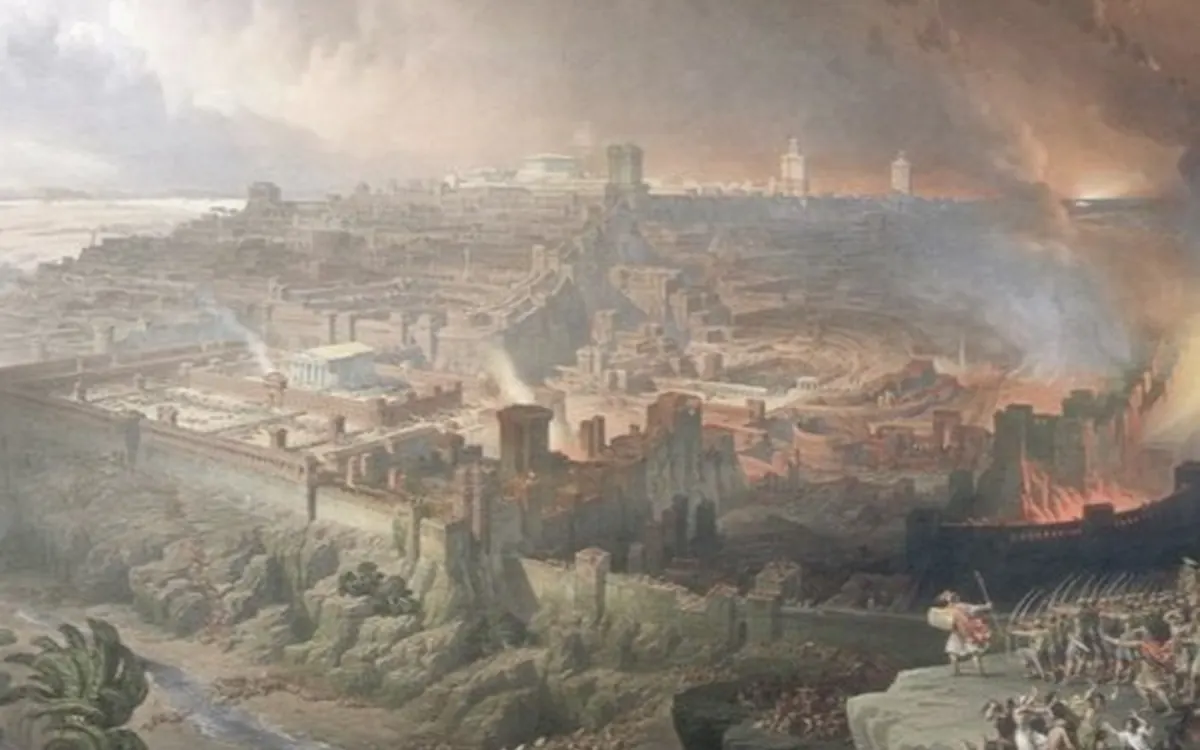
Every fast day is an chance for cheshbon nefesh, for making an accounting of life and the world. The Tenth of Tevet offers an additional, unique opportunity - to think about immanent dangers. Here is an exploration of some of the challenges which our world faces and how this holy day can leave us better prepared to meet them.
About this episode
George Eliot said it is never too late to be what you might have been, and Seth Godin warned that if you wait until you are ready it is almost certainly too late. The Tenth of Tevet is near, and Rav Mike finds its message both timely and timeless. He admits most Jews will not fast, in part because Jewish education has failed to teach people how to fast as a moral and spiritual practice, a piece of the larger failure to teach prayer. In our overfed society we are unused to hunger, yet the hunger of a fast is a gift and an invitation. He asks a favor, that you give the day to reflection rather than eating, because hunger is the great motivator, a way of touching the raw stuff of life within us, the part that wants to grow and thrive, and above all a call to consciousness.
The Rambam teaches that the fast days exist to awaken our hearts and open the path of repentance, recalling the evil acts of our ancestors that resemble our own. Memory is never passive, but an active reconnection to the past meant to shape the future, which is the whole aim of the Jewish story. There are three fasts marking the destruction of the Temple, the seventeenth of Tammuz for the breaking of the walls, the ninth of Av for the destruction, and the tenth of Tevet for the beginning of the siege. Why mourn a beginning, and in a siege that lasted more than two years? Because the breaking of the walls and the destruction marked a process already unstoppable, while when Babylon closed the siege the story was far from too late to change. That is the first and critical message of the day.
Rav Mike turns to the danger of distraction. Censorship once worked by withholding information, but in the information age the real tool is distraction and a cultivated moral dullness. He reads Erich Fromm's Escape from Freedom, written in 1940, which warns that destroying any structured picture of the world paralyzes critical thought, as the bombing of a city is followed by an advertisement for soap, until we cease to be genuinely related to what we hear and sink into flatness and indifference. The individual is left like a child with puzzle pieces, except the child knows what a house is while the adult no longer sees the meaning of the whole. Ezekiel, told to mark this day, speaks a parable of a boiling pot. Unlike the frog who leaps from the heating water, humanity finds ways to tell itself it will be fine even as the enemy stands at the gate.
On the tenth of Tevet we also mourn Ezra the scribe, a foundational leader whose impact reached Christianity, Islam, and the Western world. Ezra led the spiritual return to Zion and understood how to wield story in service of redemption. He heard the voice of God in the proclamation of Cyrus, yet his recognition that God acts in history never pushed him toward passivity. As the first chronicler of the full tale of Am Yisrael, he put the story in order, beginning the book of Chronicles with Adam, knowing a society needs a bedrock narrative. And then he took agency to move the next chapter forward. The opening line of his book reappears as the very last line of the Hebrew Bible, whose final words are let him go up, a call to the reader to write the next chapter rather than the end of a story.
Last, the day marks the translation of the Torah into Greek for King Ptolemy, which the sages compared to the day the golden calf was made. The problem was never translation itself, for the sages elsewhere command writing the Torah in seventy languages. Rav Mike labels the Ptolemy translation an act of cultural appropriation, a text that became the base for a competing culture claiming to supersede the original, where the translation Moses set at the gateway to the land was an invitation back to the original and its living people. We mourn it because it cut off conversation and prevented a common language. A shared language grows from a shared story, as Tolkien said language and mythology are related functions. When we no longer live in the same mythic world we cannot share a language, so the call is to tell stories that unite rather than divide, and it is not too late.
Key ideas
- We were never taught to fast as a spiritual practice, yet the hunger of a fast is a gift and a call to consciousness.
- The tenth of Tevet mourns the beginning of the siege because, unlike the walls and the destruction, the story could still have changed.
- Erich Fromm warned that a world of disconnected fragments paralyzes critical thought and breeds flatness and indifference.
- Memory is an active reconnection to the past meant to reshape the future, which is the whole work of the Jewish story.
- Ezra heard God's voice in history yet took agency, ending the Hebrew Bible with a call to write the next chapter.
- We mourn the Greek translation because it cut off conversation, and a shared language can only grow from a shared story.
Chapters
- 0:00 It is never too late to change
- 2:10 Why we don't know how to fast
- 4:19 Hunger as a call to consciousness
- 5:24 The Rambam; memory that reshapes
- 7:34 Three fasts; the beginning of the siege
- 8:40 Why mourn a beginning
- 9:49 Distraction and the control of consciousness
- 11:00 Erich Fromm; the puzzle with no house
- 13:12 The boiling pot; frogs and humans
- 15:27 Ezra the scribe
- 17:42 Hearing God without passivity
- 19:54 Let him go up; the last word
- 22:02 The Torah translated for Ptolemy
- 24:11 Cutting off conversation
- 26:21 A shared language from a shared story
- 29:42 Pharaoh's doubled dream; urgency
Who, where and when
People
George Eliot, Seth Godin, The Rambam, Erich Fromm, Ezekiel, Ezra the Scribe, Cyrus of Persia, J.R.R. Tolkien
Places
Jerusalem, Babylon, The land of Israel, Egypt
Texts
Ezekiel 24, Escape from Freedom, The Book of Ezra and Chronicles, Tractate Soferim and Megillat Taanit
When
586 BCE: the destruction of the First Temple, 588 BCE: the siege of Jerusalem begins, 3rd century BCE: the Torah translated for Ptolemy, 1940 CE: Fromm writes Escape from Freedom, 2020 CE: the tenth of Tevet falls twice
Read the transcript
It's never too late, says George Eliot, to be what you might have been. But, Seth Godin adds, if you wait until you're ready, it is almost certainly too late. So I'm definitely looking to be all that I can be, and I in no way want to be too late. I'm Rav Mike Foyer, and this is The Jewish Story. Interlude, 10th of Tavit, Not Too Late to Change. So the Tenth of Tevet is soon upon us, or perhaps you're hearing this on the day itself, or even after it's gone by. No matter. Either way, I feel the message of this day is both timely and timeless. Before we dive into the details of the Tenth of Tevet and how they might be able to better help us understand our world and maybe even gain a bit more agency toward changing it, I want to say a word about fasting in general.
Now, I'm not ignorant. I'm aware that most Jews world over will not be fasting on the 10th of Tevet, and that my non-Jewish brothers and sisters who are listening to this now probably are unaware of the day whatsoever. Even amongst those who define themselves through their observance of Torah and mitzvot, there are going to be many who choose not to keep this fast. And there are all kinds of reasons for that. None of them really need to be discussed right now, except for one. And that is that Jewish education has failed miserably when it comes to teaching people how to engage fasting as a moral and spiritual practice. And the truth is, it's part of a larger educational failure to properly teach people how to pray.
I'm going to restrain myself from the urge to dive into that one and call for the prayer revolution. You can listen to some of my other content on that topic. You've probably heard me rant before, but I will say that the time is coming. Sooner rather than later, I'm going to have to branch out and bring you my broader vision of what the Torah really could be, beyond the narrative base that we're doing here in the Jewish story. So stay tuned, but I'm going to hold it in for now. People don't know how to fast because they weren't taught. It's really that simple. And frankly, in our overfed society, being hungry is nothing that we're used to, much less taught to relate to in a positive fashion or to seek out.
Fortunately, just knowing that is half the battle. I want to make an ask right now. And you can decide by the end of this episode whether you're on board. And maybe, if you like, you can let me know. Send me an email at robmikefoyer at gmail.com. If you decide to spend a little bit of time on the 10th of Tevet, not eating, but rather reflecting. So if you don't generally fast on this day, try it. If you do, then deepen your awareness and intention with some of the thoughts that follow. And even if you're listening to this days after the fast has passed, considering letting yourself be hungry for a day anyways. Because the hunger we feel during a fast isn't a distraction. It's a gift. It's an invitation.
You know, I hear the distraction thing a lot from students and friends, especially on Yom Kippur, when the fast is much longer, and we're all trying to be in synagogue and focus on prayer. Oh, this would be much easier if I weren't so hungry and tired. I want to get the most out of this day, but hunger is so distracting. Well, I've got news for you. On one level, that hunger isn't a distraction. It's the point. One of the greatest challenges our society faces is that we're overfed in every sense of the world. And when our belly is full, no matter how much I say I care about people, about the world, about God and the moral fabric of creation, it's just too easy to allow my heart to be dulled in my own satisfaction.
Hunger, after all, could be called the great motivator of life. Think about people who accomplish the incomprehensible, those who break through barriers. They always have that hungry look in their eyes. In fact, feeling our hunger is a way of making contact with the raw stuff of life within us, with that part of us which doesn't want to just live, but to grow and thrive, to be and do. Now, you may be thinking, that sounds nice, Mike, but how is refraining from eating for 12 hours meant to accomplish that? Well, first and foremost, engage the hunger as a call to consciousness, as a reminder that you've chosen to make this day one like no other. You've devoted it, at least on some level, to a deeper awareness.
And the question is, what consciousness does the Tenth of Tavid in particular offer? Not yet. Because before we get to the specifics, I want to add one more general intention to that rumbling in your belly that you're going to see as an invitation to awareness. If every time I feel hungry or tired, every time I reach for a glass or a bite to eat and say, no, not today. It's a call to consciousness. Like I said, that's already a victory. Because interrupting the stream of thought in our minds, that semi-aware flow of life, always offers an opportunity to pick my head up and look around. But the Rambam, great sage of Jewish history, says that there's a particular task to which we're meant to apply ourselves on the fast days in general.
He says, There are days where all of them israel fess. Because of sort of past tragedies which occurred, in order to awaken our hearts, to open up the path of repentance. So far, so good. I can understand today to think about what we did wrong. But he goes further. And this will be a memory, a recollection, a reconnection to our evil acts and the acts of our ancestors, which are similar to those today. Meaning, there's a certain repetition. We could say that we're just suffering now for what our ancestors did in the past, but the reality is so often we're repeating their mistakes. He says, Because when we recall these things, we're going to change our ways and make ourselves better. Remember, memory is never just a passive recollection of what was in the past.
It's an active, in the present, reconnection to that past with the goal of shaping the future. And of course, if you've been listening for any time, you know the Jewish story is about telling a story of the past which can build a present identity motivated and empowered to create the future that we want to live. And so, this is an opportunity not just to feel the hunger and a little bit of the want in life to help clarify what exactly it is we want. It's a chance to talk about the past events which we're marking on this day in hopes that we'll be moved to tshuva, to repentance in the present and through that, to change the future. So, what exactly is the 10th of Tevid? There are three fast days which mark the stages that culminated in the destruction of the Holy Temple in Jerusalem.
Let it be soon, let it be now, Lord. There was the 17th of Tammuz, which recalls the breaking of the walls of Jerusalem. And, of course, the 9th of Av itself mourns the destruction. And then there's the 10th of Tevid, which marks the beginning of the siege. As it says in Ezekiel 24, lines 1 and 2, in the ninth year, on the tenth day of the tenth month, the word of the Lord came to me. O mortal, record this exact day, for this very day the king of Babylon has laid siege to Jerusalem. Now, this might seem a bit anticlimactic. I mean, mourning the destruction itself, that's a no-brainer. And I also get marking the drama of the shattering of the walls. It was the beginning of the end, as it were. Not to mention that together the 17th of Tammuz and the 9th of Av offer an appealingly compact and powerful period of national mourning But why the outlier Why mourn the beginning of the siege here in the middle of winter And by the way, it's a siege which according to many authorities lasted for more than two years.
So the reality is, from the perspective of what the past has to say about the present and future, I think that nothing could be more important than this day on which the siege began. And that's because, unlike the 17th of Tammuz, the breaking of the walls, and the 9th of Av, the destruction, which essentially mark the culmination of a process of deterioration which was already unstoppable on those dates, when the Babylonians closed the siege on Jerusalem in that 9th year, 10th day of the 10th month, the story was far from too late to change. What do I mean? If you indulge in doom scrolling, you might have been infected with a feeling of helplessness. And I got to admit, it would be hard to blame you.
It's somewhat overwhelming the picture of the world with which we're presented through mainstream media, much less through that little screen in your hand. A note, by the way, about distraction culture. Remember, censorship and control of consciousness used to come through the control of information. But limiting information available to the average person is today somewhat impossible. Of course, there will always be secrets kept by power, but shutting down access to information overall is just too hard in the information age. But in an age of eroding liberty, when citizens of democratic countries seem to be willing to sacrifice our freedoms for a sense of safety, We need seriously to think about the relationship between information, agency, and freedom.
We need to be wary of the distraction. And not just the distraction, which is really the way in which our minds are centered, but the moral, I don't even know what to call it, obtuseness, which is deliberately cultivated by this scrolling through the world. I'll give you an example, because nothing really expresses it better. It's not an example, actually. It's an explanation. There's a following quote. It's a little bit long, but I'll give it some explanation as we go. It's a quote from Eric Frum, a very important thinker. It's taken from a book that everyone needs to read. It's entitled Escape from Freedom. He wrote it in 1940 as he was grappling to understand the rise of fascist societies and even the emergence of totalitarian elements within the democratic societies that surrounded them.
but his words are more relevant now than they were 80 years ago. So much so, he might as well have been a biblical prophet. So listen to what Frum has to say. He says, another way of paralyzing the ability to think critically is the destruction of any kind of structuralized picture of the world. Meaning, we need an intellectual and moral framework in order to critically examine and make sense of the massive amount of facts with which were presented in life and through the media. Because he goes on, he says, radio, moving pictures, and newspapers, ha ha ha, have a devastating effect on this score. The announcement of the bombing of a city and the death of hundreds of people is shamelessly followed or interrupted by an advertisement for soap or wine.
Newsreels let pictures of torpedoed ships be followed by those of a fashion show. Papers tell us the trite thoughts or breakfast habits of a debutante with the same space and seriousness they use for reporting events of scientific or artistic importance. This may, and in fact should, sound familiar. Imagine what Frum would say if he saw us all scolding away in our own little worlds. But this isn't just a critique of the phenomenon. It's a concern about the moral and intellectual results. He says, because of all this, we cease to be genuinely related to what we hear. We cease to be excited. Our emotions and our critical judgment become hampered, and eventually our attitude toward what is going on in the world assumes a quality of flatness or indifference.
This is the danger that lies beyond the simple tool of distraction. It's indifference and the sense of disempowerment that it's too late, I can't do anything anyway, which follows in his wake. and so he finishes by saying the individual is left alone with these pieces like a child with a puzzle the difference however is that the child knows what a house is and therefore can recognize the parts whereas the adult does not see the meaning of the whole the pieces which come into his hands he's bewildered and afraid and just goes on gazing at his little meaningless pieces or in our days at his little screen as the case may be You know, it's noteworthy to me that once God tells Ezekiel to mark the tenth of Tavit as the date on which the siege was laid, the prophet begins to speak out a mashal, an allegory of a boiling pot.
He says, put the cauldron on the fire, pour the water in, collect the pieces of meat, every choice won, etc. Take the best of the flock, pile the wood under it, and get it boiling briskly. We've all heard the idea that if you put a frog in a pot of water and slowly raise the heat, that it'll sit there until it boils to death. I mean, I'm sorry, if truth of the matter is, it's a lie. Science has proven that frogs aren't that stupid or that insensitive. They will indeed jump out when the water gets too hot for comfort. However, history teaches us that the same can't necessarily be said about humanity. Somehow, even when the heat is rising, even when we're able to look over the walls and see, not a threat on the distant horizon, but the enemy at the gate somehow will find a way to say, I don't know, it'll be okay, I have other things to do, or even if it won't be okay, what can I really do about it?
That is the first, foremost, and critical message of the Tenth of David. It's not too late. That's why we're marking a day for a siege that actually lasted for more than two years. Before we even get to the particular message and strategies for change, you have to hear the essential warning. This is a day of hope and fear. Fear for the present, for those who had experienced the siege, but fear for the future, for us, because they may have seen the enemy at the gate, but they didn't change their ways. We have a hope to learn from their experience to know that there's still time to change the future. If you have an even passing familiarity with the Jewish calendar, then you may know our sages never instituted a fast day for only one reason.
In my eyes, it was a simple act of kindness, really. I mean, if they'd fixed a separate fast for every tragic event in Jewish history, even only the major ones, we'd never eat. And tradition teaches us that in addition to the beginning of the siege that we noted, on the 10th of Tevet we fast for the death of Ezra HaSofa, Ezra the scribe. And once again, this is not just a matter of picking the scabs off of historic memory in order to feel bad about something which has no relevance to our lives today, God forbid. Ezra was a foundational leader for Am Yisrael. And seeing as we had a profound impact with giving birth to Christianity, Islam and frankly the Western world one could say Ezra was a leader for a good portion of humanity today and humanity needs nothing so desperately right now like good leadership.
If you want a deep dive into Ezra's story you can go way back to season 1 episode 2 which I have to say I have this desire to go back and remake all those episodes but I won't do it. Don't be nervous. For now just take the bare details between the 6th and early 5th century before the Common Era Ezra was the leader of the spiritual return to Zion at the end of the Babylonian exile meaning he was the one who helped us pick up the pieces after we failed to heed the warning that Ezekiel first delivered at the beginning of the siege, in which Jeremiah shouted from the rooftops until it all ended. I call Ezra a visionary leader, and in particular because he understood how to wield the power of story in service of redemption, both personal and national.
If you look at the first line of the book named for him, the book of Ezra, it says in the first year of King Cyrus of Persia, when the word of the Lord spoken by Jeremiah was fulfilled, the Lord roused the spirit of King Cyrus of Persia to issue a proclamation throughout his realm by word of mouth and in writing. And what follows is what's known as the Declaration of Cyrus. Cyrus tells the Jews in the land which he has conquered, he's Persian, he conquers Babylonia, after Babylon conquered Jerusalem, and all the Jews were taken away from Jerusalem into exile to Babylon. Cyrus sends us home. He sends us home, but notice what Ezra said in order to fulfill the word of the Lord spoken by Jeremiah. Now, Ezra's not a prophet, at least not in the simple text, but he is a visionary.
He's able to hear the voice of God in the words of Cyrus. But what's most important to me is that hearing the voice of God can be an overwhelming experience. It might, in fact, not just be overwhelming, it might be disempowering. I mean, after all, if God is speaking and acting in history, why should I bother to do anything? but Ezra was never pushed toward religious passivity by his recognition that God is indeed in charge on the contrary what Ezra did was he looked closely at the topography of the story which he had inherited not just which he inherited but which he inhabited more closely in fact than anyone who had preceded him according to tradition Ezra was the first chronicler of the full tale of Am Yisrael the books known in Hebrew as Dire'a Yamin the Words of the Days, or known to the English reader as the Books of Chronicles.
And of course, this isn't just the story of Am Yisrael, of the Jewish people, but the story of the role it plays in the human tale. And after all, the first book of Chronicles begins with the lineage from Adam. Ezra knew that to build a successful society requires a bedrock narrative on which it can rest. And so he devoted much of his energy to putting our story in order. but he didn't rest there. It wasn't just a matter of getting all the facts straight from beginning middle to end. Because, you know, sometimes, like I said, the sense that we're part of a larger tale can be disempowering. I mean, after all, what significance could my role in the Jewish story possibly be when its main characters include King David, Moses, and the first human being?
And that's where we really see Ezra's true genius as a leader. He didn't just tell the story of Am Yisrael, he took agency in moving the next chapter forward. The first line of his book, which like I said, in my eyes, represents his role as a visionary who heard the voice of God speaking through the events of his days, actually reappears as the last line of the Hebrew Bible. it's a stunning stunning power which he brings to bear as an author and not just in that last line but in the last word if i asked you what the last word of the hebrew bible was would you know ask your friends later because now you'll know you'll impress them it says right thus saith king cyrus of persia right as we just heard the lord god of heaven has given me all the kingdoms of the earth and has charged me with building him a house in Jerusalem, which is in Judah, any one of you of all his people, the Lord is God, be with him, and let him go up.
The last word of the entire Hebrew Bible, the last word of the chronology, the story, that Ezra put together is, let him go up. That's not the end of a story. It's a call to the reader to write the next chapter. It's a beginning. Now, I know it's already cliche to say we face a crisis of leadership here in Israel, in America, and frankly, world over. And it, furthermore, matters not at all to me, whether you think President Trump is the modern Cyrus or a new Caligula, whether you see Bibi as king or the cause of all of our problems. What matters to me is that you take it upon yourself to move the story forward. This isn't the time or place to delve in the details of how we cultivate leadership within self, community, and society, and the critical role that story plays in that process.
But trust me that it can be done. In fact, it's a primary focus of my spiritual counseling. If you're interested in doing it for yourself or for those around you as a leader, you can be in touch with me. Rav Mike Foyer, gmail.com. Find me on Facebook, Rob Might Foyer, or I don't know, send up smoke signals. This is the mission, people. For now, mourning Ezra on the 10th of Teirut is an opportunity, a chance to look at our situation squarely in the face, to let that lack of leadership hurt, to feel the hunger for something more, and then to resolve to strap on our boots and take that next step upwards, the Ya'al, and choose to move the story forward. Last, but certainly not least, on the 10th of David, we mark the tragic translation of the Torah into Greek.
As it says in Tractate Zofrim, there were once five wise Jews who wrote the Torah in Greek for King Ptolemy. We'll call him third century before the common era, ruler of the, surprise, Ptolemaic Greek kingdom based in Egypt. And it says, that day was as difficult for the people of Israel as the day the golden calf was made, because the Torah could not be fully translated. Or, as Megillah Ta'anit puts it, which is an even older source, on the 8th of Tevet, the Torah was translated into Greek in the hands of King Ptolemy, bringing darkness to the world for three days. Now, in the story of Am Yisrael, you don't get worse than the golden calf. And the whole world plunging into darkness for three days is downlight biblically frightening as well.
So we can say without doubt that in the mind of the stages, this was a true disaster. But the question I want to know is why? And not only why, but what can it teach us about fixing our own problems before it's too late? Don't lose sight of what this day is really all about. First of all, I just want to dismiss the idea that the problem is translating the Torah at all. You know, in various forms, this is sadly a growing attitude amongst the faithful, so to speak, that no one can really understand us, so we shouldn't even try. That the only way to know what it is to be a Jew is to get on the inside and squarely stay there. That translation is a falsification. You know, one of the sources I just quoted does seem to support that.
It said straight out, the day was as difficult for the people of Israel as the day the golden calf was made because the Torah could not be fully translated. But a word to the wise, never build your theology, and certainly not your behavior, on a single statement of the sages. They always reserve the right to contradict themselves. And not, God forbid, out of some sort of shallow intellectual inconsistency, but because they knew well that sometimes the only way to communicate depth of understanding is to force students to engage mutually exclusive concepts both of which are nevertheless true. And that's why it says in the Mishnahh and Sotah and they wrote it down all the words of the Torah in 70 language.
As it's stated they bring a proof text from Deuteronomy you shall write on the stones all the words of this law clearly elucidated Be hey tev So here we have according to the sages a divine command to translate the Torah into all 70 languages, one of which was presumably Greek. And yet, today, we're mourning for another historic act of translation into Greek. Now, we've discussed this before, and truth of the matter is, you can find it early on in the first season of the Jewish story. But right now, I want to label this act of translation, which, though it was done originally by Jews and for Jews, ultimately became the Septuagint that served as the base text for early Christianity. I want to label it as what it really was, a profound act of cultural appropriation.
The difference between the translation done for Ptolemy and the one by Moses is how it relates to the original. The one for Ptolemy, the one we're mourning, will become the source of a competing culture. Ultimately, it will claim to be a divinely inspired work which was more in line with God's intent than the original and thus could be divorced from it and in fact used as a tool to crush the Hebrew original. the one that Moses wrote would sit at the gateway to the land of Israel and thus not just be an entree into the illumination which the Torah offers but an invitation to engage with the original and with the real people of Israel still striving to live it in the world we mourn this translation not because it made the Torah available but because it cut off conversation it ironically prevented any hope for the formation of a common language.
Now, creating a common language is not a technical act of translation. Trust me, I spend a lot of time trying to do it. When I say, am I speaking your language? I'm not asking if the words I'm using are technically comprehensible. I'm asking whether they express a shared awareness, a joint story in which we're both participant and of which our language speaks. The translation we're mourning made the Torah into a text to be fought over for mastery rather than a story which could be used to shape that shared consciousness. Have you noticed how language is fragmenting all around us in the world? Did Columbus discover America or plunder it? Was Jerusalem liberated or occupied? How many genders are you willing to name?
This linguistic fragmentation is a symptom of a much deeper problem. the breakdown of the stories which once united us. My literary hero and author of the greatest human work of literature ever, J.R.R. Tolkien, put it this way. The making of language and mythology are related functions, he says. To give your language an individual flavor, it must have woven into it the threads of an individual mythology. The converse indeed is true. Your language construction will breed a mythology. Now, to me, it's important to remember that a myth is not, God forbid, the opposite of fact. Myth, in fact, are stories which are large enough to contain truths that transcend culture, geography, and even time. What he's saying is that a shared language emerges from a shared mythology, and that a shared mythology can actually emerge from a shared language.
Now don't be afraid. I'm not about to take a deep dive into what you may hear in my words. After all, I spent an entire semester with my class at Pardes trying to craft a shared language in which we can discuss just the first three chapters of Genesis. I can't imagine we'd make much headway on a larger text in the next few minutes. Nonetheless, I will sound the warning because that's what the Tenth of David is all about. when you no longer live in the same mythic world. You occupy separate universes. If we don't share a story, of course we won't share a language. Translation between languages is only possible when it takes place through an intimacy of dialogue that essentially creates a shared world.
I know that we're speaking the same language, not when we check the same box about our native tongue, but when we're in an ongoing conversation about the fundamental myths that make up our world. And I want you to take this as a call to action. Start telling stories which unite rather than divide. And if you want to do that, you're going to need to find people with whom you disagree and nonetheless can tell stories together. And if you've been listening for any amount of time to The Jewish Story, you know that's what I'm striving to do through my teaching and even one-on-one through my counseling practice. not just to craft the common language for the technical discourse, but to cultivate a shared story from which a living, shared language can naturally emerge.
Bless me that it's not too late. I actually want to add on just one more closing thought. I was going to end there, frankly. But, you know, we recently read in Parsha Mekites, in the weekly Torah reading about the dreams of Pharaoh. I'm betting most of you know the story. seven lean cows, seven fat cows, seven big sheaves of wheat, seven small ones. But there's a line which often gets far less attention, which is nonetheless particularly relevant for us this year, around the 10th of Teved. He says, and Yosef is explaining, he's interpreting Pharaoh's dreams. And he says, He says, well, as for Pharaoh having the same dream twice, it means that the matter has been determined. ki nahon ha-davar mim Hashem God's ready to do it um-mimaher Elohim l'asoto and in fact, God's hurrying to carry it out it's that sense of urgency which gives Yosef the holy chutzpah, the courage to push himself forward as the man with the plan I mean, after all, it's hard to believe having been a slave for so many years and shut in a pit for a good chunk of him, that he nonetheless had a sense of self that allowed him to step into the moment because he knew no one else would.
And it surely contributed to Pharaoh's willingness to hear him. After all, power always needs tools ready to its hand. Well, guess what? Fun calendar fact. The 10th of David, this day which I'm offering to you as a warning that it's not too late, but you should be aware that the walls have already closed in. The 10th of David actually falls out twice in the year 2020. It happened on January 7th, and it's going to happen on December 25th. I mean, what could be more spot on with 2020 than having the 10th of Tavit fall out twice? This, in my mind, is a clarion call to action. Take the day itself for reflection. Feel that hunger. Use the time to really touch the places where you sense the walls closing in. and then we need to begin to imagine better leadership, to empower ourselves, to tell the stories which can bring us together rather than divide us.
And maybe, just maybe, the disaster that so many of us sense on the horizon doesn't have to come to be. I just want to thank a few folks before I sign off. I want to thank all the folks who give their hard-earned money to help make the show happen, keep it free and widely available and I want to ask you to join them. go right now to my website jewishstory.co in the upper right hand corner you'll see a button that says be a patron and click on that for a little bit of per podcast support or you can be in touch with me directly about sponsoring a show I'm happy to do it in honor of someone with us today or someone who's passed on I also want to thank the Land of Israel Network that's thelandofisrael.com for creating a platform that allows me to reach so many amazing people I want to thank the Pardes Institute p-a-r-d-s.org.il for creating an educational institution that gives me the privilege of teaching so many wonderful Jews.
And I want to thank you for listening. I'm Rav Mike Foyer, and this is The Jewish Story.
More from Season 4
TJS S4E8 War of Attrition part I
Changing our conceptions is one of the hardest things in life to do, for countries as well as individuals. Israel's stunning victory in the Six Day War of...
Play Episode
TJS S4 Interlude Hanukkah 5781: Letting the light out
Rav Mike's annual shiur in honor of the yartzheit of his father, Charles M. Feuer, ob"m. Gratitude is one of the keys to happiness, especially in dark times....
Play Episode
TJS S4E9 War of Attrition part II: the diplomatic front
Every major conflict is fought on many fronts. This second installment on the War of Attrition explores the diplomatic front. We will encounter Yitzchak Rabin as the new...
Play Episode