
TJS S4 Interlude: Interview with Rabbi Berel Wein
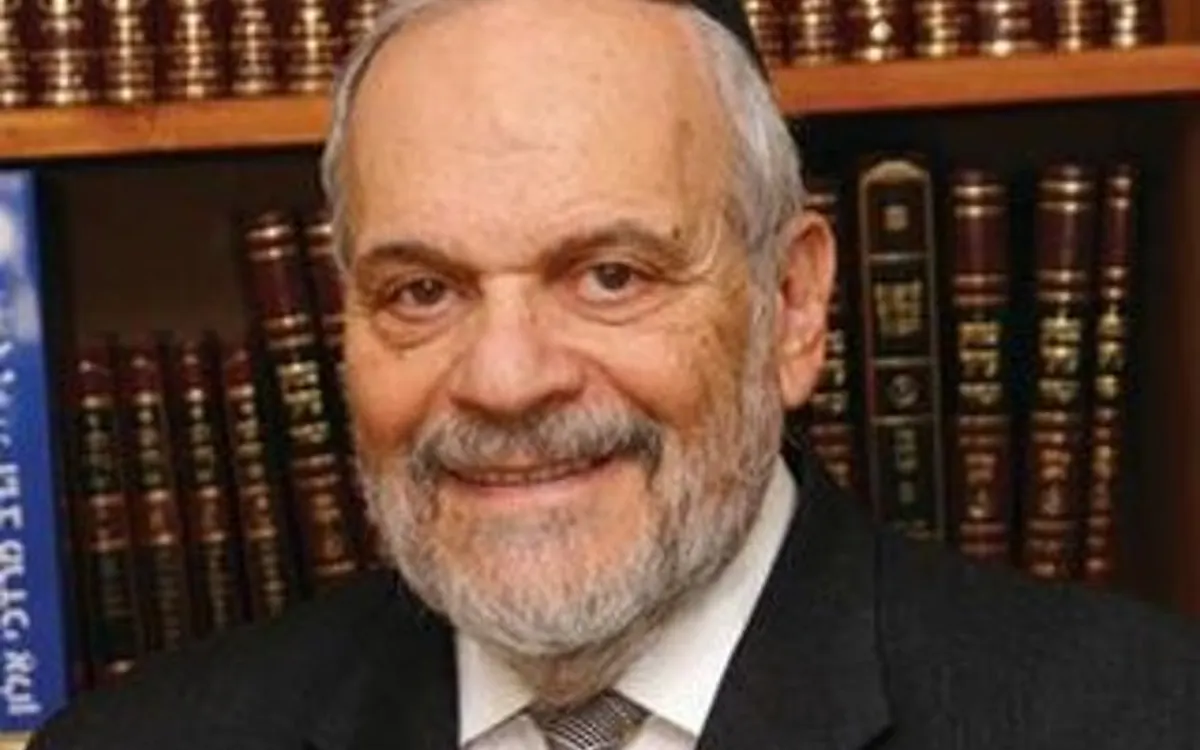
It is not every day that you get to speak with a legend, much less interview one. Here are some precious words I had with the 'alter rebbe' of Jewish history, Rabbi Berel Wein. We touch on the nature of history, the Jewish people, the experience of salvation and much more.
About this episode
You shall rise before the aged, says Leviticus, and show deference to the old. Rav Mike sits with Rabbi Berel Wein, author, historian and teacher, and asks how the son of a rabbi and immigrant, born in 1934, became in effect the storyteller of Jewish history. Wein answers that he was always an avid reader, a Civil War and First World War buff who devoured biographies, until one day at fifteen, discussing a dispute between Rabbeinu Saadia Gaon of ninth-century Babylonia and the Rosh of fourteenth-century Toledo, it struck him that these were real people with real lives. The yeshiva librarian, Mrs. Mishkin, fed him books in Hebrew and English, and he was hooked. After the Holocaust he wanted to know how such a thing could happen, what six million Jews were doing in Eastern Europe, questions never discussed in the classroom or at home. He practiced law for nine years, then, as he puts it, repented and entered the rabbinate.
In Miami Beach a few women asked for a class, and not knowing what to teach he reached for the story of Hanukkah through the Book of Maccabees, telling what happened rather than its law. The class grew because husbands grew embarrassed that the women knew more, and in Monsey it expanded into full courses. When doctors on call began recording the lectures to catch what they missed, then passing the tapes around the hospital, the recording project was born, and there are now more than a thousand lectures online across every age of Jewish history. His friend Meir Zlotowitz of ArtScroll asked for a history book, and Wein wrote Triumph of Survival by hand, followed by volumes on the Middle Ages, the classical age and the twentieth century, along with Hebrew works and films on Rashi and Maimonides. Success, he says, is always an unexpected gift, since you cast your bread on the waters and cannot know what will stick.
Critics said he lacked a doctorate and wrote with bias, and he answers that all history carries the author's bias, that there is no purely objective history, and that he simply does not care, a self-confidence his parents instilled in the youngest boy in every class. He cites Rabbi Yochanan's teaching to rise even before an old illiterate gentile for all he must have experienced. History, he insists, cannot be understood from outside, which is why most books are full of facts yet fail to tell the story, the way one can write glowingly of the Sabbath without observing it and still not get it. He compares it to standing on Little Round Top at Gettysburg and finally seeing Pickett's charge. His Eastern European teachers gave him a sense of that world his grandchildren lack, and he worries that today's education portrays a world that never was, a fiction that makes it harder to face what is.
If Eastern Europe was so perfect, he asks, where did the three million secular Hebrew-speaking Jews of Israel come from, and the honest answer requires seeing that there never was a flawless, fully observant Jewish society, that Spain saw assimilation and conversion before the Inquisition. History moves in cycles, and what endures is the overarching reach of heaven that preserves and guides us. Turning to 1967, Wein recalls Miami Beach in the two weeks before the war, when people filled the synagogue and simply sat all day without praying, a resilient faith among members and non-members alike, because everyone felt the Holocaust might be happening again after Nasser's speeches. They were not personally threatened, yet they knew that if Israel were crushed, American Jews could not raise their heads, remembering a Holocaust during which America did nothing.
A second lesson soured him for life. Asked by the Israeli consulate to enlist Christian clergy, he drove to a church on Pine Tree Drive, where the pastor coldly told him the issue did not concern him or the American government, which strengthened Wein's conviction that the preservation of the Jewish people rests with the Jewish people and the Lord of Israel. When the news came that the Old City had been taken, he stopped his car on Ferry Avenue and found fifteen other cars had done the same, strangers embracing and weeping. He is cautious about the word miracle, which even the Rambam struggled to define, yet calls the victory unnatural and unpredictable, something that on paper should not have happened. Its fruit was a surge of Jewish pride, kippot worn openly in the street, a boost to Orthodoxy, and his closing charge, drawn from the Baal Shem Tov, that exile flows from forgetting and redemption from remembering what a special people we are.
Key ideas
- Wein became a historian when a yeshiva dispute between Saadia Gaon and the Rosh made him realize these were real people with real lives.
- A women's class on the Book of Maccabees grew into more than a thousand recorded lectures and a shelf of history books for ArtScroll and Koren.
- He answers critics by noting that all history carries the author's bias, and a self-confidence from his parents lets him simply not care.
- History cannot be understood from outside, the way one can praise the Sabbath without observing it and still miss it, or see Gettysburg only on a map.
- In Miami Beach before the war, Jews filled the synagogue and sat all day in silent faith, fearing the Holocaust was returning after Nasser's speeches.
- Wein hesitates at the word miracle yet calls the victory unnatural, and his charge from the Baal Shem Tov is that redemption flows from remembering.
Chapters
- 0:01 Rise before the aged; meeting Rabbi Wein
- 1:04 Becoming a historian; the real people behind the Rosh
- 5:31 Law, the rabbinate, and the women's class
- 7:46 From lectures to recordings
- 10:03 Writing for ArtScroll; Triumph of Survival
- 12:10 Success as an unexpected gift
- 14:18 Critics and bias; not caring
- 17:28 Understanding history from inside
- 18:31 Writing the Sabbath from outside; Gettysburg
- 20:42 A slanted education; where the secular came from
- 22:52 Cycles; no perfect Jewish society
- 23:57 1967 in Miami Beach; sitting in the synagogue
- 26:10 The cold pastor; trust no princes
- 29:50 Stopping the car; strangers weeping
- 30:52 Was it a miracle?
- 35:15 Remembering; a special people against the stream
Who, where and when
People
Rabbi Berel Wein, Rabbeinu Saadia Gaon, The Rosh, Mrs. Mishkin, Meir Zlotowitz, Rabbi Yochanan, Gamal Abdel Nasser, The Baal Shem Tov
Places
Miami Beach, Monsey, Jerusalem and the Old City, Gettysburg
Texts
Triumph of Survival, Faith and Fate, The Book of Maccabees, Zakhor by Yosef Hayim Yerushalmi
When
1934 CE: Berel Wein born, 1967 CE: the Six-Day War victory, 1981 CE: the Osirak reactor strike
Read the transcript
B'pnei sevata kum v'hadarta p'nei zak'en, you shall rise before the aged, says the book of Leviticus, and show deference to the old. Well, I hope I always feel young enough to rise, and humble enough to know whom to show deference. Because I'm Rav Mike Foyer, and this is The Jewish Story. Season 4 interlude, Interview with Rabbi Beryl Wein. Well, I know everybody's excited to get past 1967. Not that it's an event that ever really gets old. But we've spent a good amount of time, and I have here one last episode to talk about 1967 from hopefully a different and exciting perspective. I have the great privilege and honor to be sitting with someone who, for me, is in many ways a personal role model since I began this journey.
I'm here with Rabbi Beryl Wine. You may know him as author, historian, rabbi, teacher. He's currently the Rabbi of Beit Knesset Hanasi and Rehavi. He's the director also of the Destiny Foundation, which is committed to many of the things that I see to be important to Am Yisrael, and has agreed to give me just a little bit of his time. Shalom Ravwine, how are you doing today? Thank God. So I know that we're catching in the midst of a busy day, so with your permission, I'd actually like to dive right in. Is that okay? Absolutely. Okay, so my first question for you is a personal question, which is when I was looking over your bio, there's a whole life journey which I'm sure you could tell many stories about but the question that came up for me and when I say personal it's not just about you I guess it's about me too how does it come to be that an orthodox rabbi son of a rabbi, son of an immigrant father born, if I'm not mistaken, in 1934 how does it come to be that you became the alter rebbe, if you will, of Jewish history it's not exactly the track I think a lot of people would have expected Well, I didn't intend to become an alt-rebbet of anything.
No one ever does, right? Well, I can't say no one ever does. There are people who think that they're born for it. Well, really, from my earliest memories on, I've been an avid reader. I read mostly secular histories in high school. I'm a Civil War buff. Really? I'm a World War I buff. I've read hundreds of biographies of people. And I remember that one day in the yeshiva, I must have been 15 years old, I was discussing with my rebbe a point that was being discussed over the centuries by Rabbeinu Sadia Gon and Rabbeinu Osher Ben Yechiel, the Rush. The Rush is 14th century Toledo, Spain. Rabbeinu Sadia Gon is 9th century Babylonia. And they're having this discussion. And when I finished talking to my Rebbe, and I went back to sit down to learn with my Chavrusah it struck me for the first time who were these people?
I mean, you know, he's had a rush so the rush is printed on the back of the Gemara so we know but he had to be a person so who was he? and the yeshiva then had a very the yeshiva in Chicago had a very large library and it was an official library and we had a librarian Mrs. Mishkin and I went into the library one-on-one shower I wasn't that great at sports so the other guys were outside shooting baskets and I went into the library and I asked her if she had any books that could help me understand who Rebbein of Sadia was and who LaRush was. And she had such books, both in Hebrew and in English. Really, that hooked me. I would go in the library almost every day and she provided me with books. It's a tremendous merit that she started you on such a journey.
She was a very fine woman. She really was. So it was this sense that these are real people. Well, I think she liked me because I was probably her only customer. So it was really the sense that the Rosh, Rav Saadjah, and everyone in our great chain. Right, who are they? Yeah. What happened to them? Certainly after the Holocaust, I wanted to know how such a thing could happen. What were six million Jews doing in Eastern Europe? and how did we have a Jewish settlement in the land of Israel that was fighting for a state and how did the Jews come to America I mean these are all basic to me they were all basic questions in life which hadn't really been discussed never was discussed in the classroom my parents like most Eastern European Jews never discussed any of these things.
The yeshiva never was discussed. Though there was one course in Jewish history in the yeshiva that was taught by an eminent historian and professor. But it was I think boring is a kind way of it was absolutely impossible to have any interest in the subject. Well, having listened to many of your tapes and read your books, you succeeded in changing that for us. So, and then I became a lawyer. I went to law school. I became a lawyer. I practiced law for nine years. Then I repented, and I went into the rabbinate. The tikkun. And when I had my congregation in Miami Beach, aside from teaching a Talmud class and a Mishnahh class and a Parsha class I don't mean to Chas V'Shalom to mean it but those are the usual classes every rabbi has to do that a few women in the congregation said they wanted a class for women I didn't know what to teach them even though I come from a long line of women but I really didn't know how to deal with it and then it struck me that in fact it was this time of the year before Hanukkah let's talk about Hanukkah but not to talk about it so much in halachic terms or even spiritual terms, but what was the story?
What happened? And I read the book of Maccabees and a few other things, and I started giving lectures. And the rabbinate has taught me that if you're successful with women in a woman's class, and the women come home and tell their husband, and their husbands are embarrassed that they don't know anything and that the women know. So from there it grew. They said, please, you know, I expanded. Then I became a Robin Muncy. So then I had a whole full-blown series of courses and of lectures. Then somebody said, record them. I remember I had a series that I was starting, and the women's class I never charged for. But the men's class, I said, you know, it was a $50 registration. The $50 should go to the yeshiva that I then founded in Muncie.
So about 30 men registered and paid the $50. It says a teacher is a big victory. No, no. If you're in this business to get paid, you're doomed to disappoint. And a number of them were physicians. They were doctors in the local hospital that made rounds. Doctors don't have a firm schedule. they're always on call. So after two, three lectures, two of them came over to me and he said, you know, we didn't attend the third lecture, we had an emergency call to go to the hospital and we paid the So we going to send our tape recorder so that whatever happens we hear the lecture I said, that's more than fair. So they started recording the lectures. After a few weeks, the doctors came back to me, and they said, you know, we pass these lectures around in the hospital to other doctors, even to non-Jewish doctors.
You have no idea how successful they are, how interesting they are. You should record everything. Let's make recording sessions and lessons in Jewish history, etc. And that's really how it started. So now there are over a thousand lectures there on the internet on every age of Jewish history. and then I started to write on Jewish history my friend by Mayor Zlodowicz of Blessed Memory the founder of Heart Scroll so he said to me one day they had a number of history books but he said we could use a history book if you can write one So I said I'm going to write the modern period, 1648, until I think then it was 1980 or 1985. And I called it Triumph of Survival. The first history book I wrote longhand. The women at the art scroll had a hard time reading my handwriting, which to put it mildly never was good apparently it was good enough and the well if there's money in the account it's good enough having used it to teach you succeeded and so then he gave me a computer and then it was called the word processor yeah and then I wrote a book on the Middle Ages and then I wrote a book on the classical age the time of Damarim and Thanoim and from the time of Ezra and then I wrote a book on the 20th century faith and fate and so then it snowballed and it became, you know I delivered lectures and I wrote and I made two movies, so all of that.
I did a biographical movie on Rashi and a biographical movie on the Rambam, on Maimonides. It's been a tremendous impact. I'm curious if along the way there were unexpected challenges for you, personally, or unexpected gifts, things that you found that you never really thought you would see. Well, I'm a very modest person. but I didn't know that I was going to be that great a writer. I didn't know that people would read my works or that people would publish them. But I've been very successful. I mean, I worked with Coran Publications. I have books that I've written in Hebrew. I have Swarim and Halacha and on the Parsha. I have a book that Corrin published on Treasar, the 12 prophets which is widely used and if I say so myself an excellent book introduction to understand Nevim and prophecies and then it just started and I've been writing ever since So success was an unexpected gift.
Success is always an unexpected gift because you have no idea, you know, what King Solomon said, cast your bread on the waters. That's all you can do is throw it out there. You don't know what will stick and what people will appreciate. And how about unforeseen challenges? Well, they were not unforeseen, but I knew they would come. well you have critics that say history needs history and then you have professional historians that say you don't have a PhD in history so how do you have to write a history book and then you have others who take a different view because all history when it's written is written naturally with the bias of the author there's no purely objective history it's actually where I want to go to next, with your permission.
So, you know, so I... But it never really bothered me what other people say. That is really, I think, one of... What do you think that is? One of the qualities that I always treasure is that I really don't care. That's just a trunat nefes, you think? That's, yeah, and that's something my parents installed in me. a great deal of self-confidence. I was an only son. I was always the youngest in the class, the youngest in the yeshiva. I was always subject to, I shouldn't say persecution, but to the... The youngest gets a hard time. Yeah, to the criticism, the older ones in the class, many of them resented. It was all sorts of things. I didn't care. I just didn't care. I met a Jew on the street a few months ago, and he said to me, you know, I was in Shul Shabbat, and I heard what you said, and I didn't like what you said.
So I said to him, I didn't like it either, but I had to speak, and you didn't. It just bounces off. Right now, I mean, when you get to a certain age, Baruch Hashem, and you've seen your life already and Baruch Hashem the Lord has blessed you with family and you've also gone through a lot Rabbi Yochanan said that you have to stand up even for an old non-Jew who is an illiterate because he said how many experiences this person must have had in his lifetime Amen, that's true So that, you know, you see things from certain perspectives. I really don't care. I really, you know. Well, I definitely care what you think. And in a second, I'm going to want to hear your thoughts actually on 1967 as an event. But first, I want to go a little deeper into what role you think that knowing history can or maybe even should play as a Jew.
And give a little context to our listeners. I'm confident that you're familiar with Professor Yosef Chaim Yushami's work, Zahor, Jewish History and Jewish Memory. So for our listeners who may not be so, I pulled a couple of quotes out where he says that in the biblical period, the meaning of specific events was laid bare, as he says, by the inner eye of prophecy. This is the way we understand. For Chazal, for the rabbis, in the rabbinic period, he says, biblical past was known, the messianic future was assured, the in-between time was obscure, and frankly they weren't so impressed by the Greco-Roman tools of history that were contemporary. It never presumed history, not then, not now, to offer proofs for its truth.
They were more interested in sort of telling the story of the past, the hermeneutics of it. They had law, they had storytelling, they were trying to shape a community. And then comes this modern historical perspective. Cause and effect, objectivity like you alluded to in all its challenges. and it's unquestionably founded on a critical approach. You know, standing outside, looking at the events. So my question is, what benefit do you see in applying that critical lens to standing outside of our story when so much of the richest of the tradition we've inherited is specifically about being inside? You think a Jew needs to know history? I don't think you can understand Jewish history or you can understand Judaism or the Jewish people from the outside.
Therefore, to me, most of the books that have been written on Jewish history are full of facts and knowledge, but they don't tell the story. They just don't tell the story because they're not in it. They don't put on film every day. They don't observe the Sabbath. You can write about the Sabbath in the most glowing terms, but if you don't observe the Sabbath you don't get it you just don't understand what's happening I think that's true in general history as well I said I was a Civil War buff I went and visited almost every Civil War battlefield if you stand at Gettysburg and you stand on Little Round Top or on Culp Hill so then you have a sense You can see Pickett Charge in front of your eyes And there you have, you understand what they meant, the high water of the Confederacy and why when it was over the south, it had no chance anymore.
And that's true. so that's true in Jewish history also Jewish history is the inside if you see I had the benefit yet of having Eastern European teachers so they imparted to me Eastern Europe right so I thought I have some understanding of what went on there before the war even before the war certainly but my My grandchildren have no understanding. They just, you know, they can tell you this goddle and that goddle, but they don't get it. Okay, so that's just the way it is. Right. And the education that they get today is almost tailored that they should never get it. What do you mean? Because it's slanted. It portrays a world that never was. it creates fictions and therefore it makes it harder to deal with the realities of what is I always say to them if Eastern Europe was so perfect how come there are three million secular Jews in Israel who speak Hebrew know Hebrew they know some Torah they live somewhat the Jewish life where did they come from?
I said did a spaceship land from Mars and deposit them? they came from somewhere now what was the somewhere and why? why is a very hard question to answer anyway but at least what happened and if you get that somehow straight in your mind so it's much easier to deal with today and much easier to deal with secularism and all of the current fads to a certain extent we've seen this movie before Greek and Roman culture for 400 years was a homosexual culture Socrates said the greatest love was a man for a man. Okay, so once you know that, and once you know what Chazal said about it, and once you know that you survived that, and that you were able to say that the individual has choices and abilities, etc., but that a homosexual society is doomed, so okay so there's a gay parade there isn't a gay parade it doesn't go to the heart of the matter anymore that's exactly what I thought I was hearing aside from the picture I painted of standing outside which I agree with you is not useful to a Jew so to speak who wants to be a Jew but to actually understand there's a saying that history doesn't repeat itself but it does rhyme there's many cycles there's cycles and there's ups and downs and there never was a perfect Jewish society.
There never was a society that was 100% Torah observant. There never was such a thing. And if you study the Jews in Spain, you see assimilation and conversion before the Inquisition, before, you know, things happen. We live in a world where people have choices and things happen. nevertheless you have to see the overarching reach of heaven that somehow preserves us and guides us that's the job of Jewish history so this is actually a beautiful segue to my next question as I mentioned before in my introduction in the Jewish story we've been speaking about 1967 and there's a lot of academics standing outside looking at the impact of 1967 on American Jewry on Israeli Jewry, and you may be familiar with the term of political theology that gets thrown around a lot, this sort of sense that suddenly religious thinking, which in the early days of the state, and frankly for many years amongst American Jewry, wasn't such a big part of the political organization and actions.
Something that I personally think of as biblical thinking. For Am Yisrael, I mean, the idea that religion should influence politics is hardly new for us. But I'm curious, both, what was your experience? I was a rabbi at Miami Beach. A number of things occurred that made an impression on me for the rest of my life. It taught me lessons about Jewish people and about non-Jewish world. the first thing that was taught is that the two weeks before the Israeli Air Force struck people came to the synagogue sat down and sat there all day they didn't pray they didn't say anything they just sat there as though that was their protection. That somehow, because we all felt that God forbid the Holocaust was happening again.
If you heard Nasser's speech, he's throwing everybody into the sea, he's killing everybody. So I saw a resilient faith, and many of the people were not members of the congregation and many of the people were not observant Jews and I think there were people that never weren't an Orthodox synagogue in their life he just came and sat it's like there are no atheists in foxholes type of situation that was one thing that made a great impression on me even though they themselves didn't feel personally threatened That's right. They were not personally threatened. We were going to survive. Nasser was not going to come to Miami Beach. So I think that would have been a fitting punishment for him. But we were not threatened.
But we knew that if, God forbid, the state of Israel was crushed, then Jews in America couldn't raise their heads. just could not raise their heads with all the protections of the American Constitution and of the American government, et cetera. But there was an innate feeling that we were gone. And we had the experience of the Holocaust when America did nothing. Right. Then the second lesson that was a foolish thing, but the Israeli consulate from Atlanta said that we should try and influence our congressmen, senators, that they should speak up and ask Lyndon Johnson to send the American fleet or something. Something, right. and they said one of the ways to do it was to get the Christian clergymen to join with us now I had nothing to do with the Christian clergymen in our neighborhood but there was a beautiful church on Pine Tree Drive so I said I'm going to bite the bullet and they drove to the church and I asked to see the minister, the pastor, I don't know what they called him then.
And I spoke to him and I asked him if he would join me in writing a letter to the congressman of our district. And he was very curt and very cold and he said this issue does not concern me at all. And it should not concern the American government. It's not, in my opinion, a vital interest of the American government. Goodbye. Now, that was a revelation to me because I was, you know, I was a gung-ho American patriot. Civil War buff. and I was certain that, you know, that the spirit of America would rise against the dictatorships and the totalitarian, and I was a Cold War fanatic to defeat the Soviet Union and here is this person who is supposedly a man of God and this is the response I got from him So that soured me, and I've remained sour the rest of my life.
In what sense? I'd al-tiftuchu b'n-divim b'vena dom-she'in lo t'shashua, and you certainly can't rely on our so-called friends. but it strengthened me in my faith that the preservation of the Jewish people is up to the Jewish people and the Lord of Israel. And that is really the whole story. Now, we need all of the things that go along with it. Sure. We need F-35s. We need all of that. but ultimately ultimately you can't count on Trump and you can't count on Biden and you can't count on anybody ultimately in a merely shame that's right and that strengthened me that gave me that gave me a great deal of faith and then when the war came and the victory came so I remember I was driving on Ferry Avenue in Miami Beach in my car and there were then there came the bulletin that the old city had been conquered and you heard the recording from the hotel so I stopped the car and I got out of the car in the middle of the street and I saw that there were 15 other cars that had that same reaction.
And we all embraced and wept. I didn't know any of them. But Miami Beach was basically a Jewish city then. So we all felt it was a historic moment, that somehow something had happened. Would you call it a miracle? Well, you know, miracles, the Rambam, Rambam has a hard time defining miracles, so why should I have an easy time? I would certainly call it one of the most unexpected, unnatural, unpredictable events of our time. Because on paper it shouldn't have happened. but you'll notice that in all wars there are things that shouldn't have happened that happened in fact in life in general right that's right Hashem Yishmul Choma Hashem Shmo so God does things that you know he doesn't ask us he just does it so you know that you should get away with an escapade like that you know to fly the planes below the river everything has to go perfect like when they destroyed the nuclear reactor in Iraq 1981 so that has to go perfect and there's no military operation that ever goes perfect so in that sense certainly it's miraculous it's out of the ordinary do you think part of the miracle depends on how we receive it and what we do in response I haven't spoken to God God hasn't spoken to me in the last two weeks I don't know how to judge these things we should certainly respond I think the response was positive at least for a while a lot of Jews felt Jewish feeling Jewish is very important before you want to make someone observant you have to make them Jewish.
Yes, the field, you know. I think that happened. Now, before, people coming to sit in the shul, afterwards, people standing and embracing in the street. Then you could wear a kippah in the street, and nobody would touch you. From that day on in America, Orthodox Jews, all types of Jews wore kippah in the street. They could hold their heads up. That's right. They gave them a sense of self-pride, of equality. That was a very important turning point. I think within the Jewish people, it gave orthodoxy a great boost, too. In what sense? that the Orthodox felt. I mean, I felt that the wave of the future was going to be Orthodoxy. There's no question that demographically, theologically, psychologically, the rest were going to fall away, and they are falling away.
We see that in front of our lives. Yeah, it's a great sorrow. But again, that's history. Right. You know, if everybody that was at a connection to the Jewish people and to Judaism was counted as a Jew, there'd be 150 million Jews in the world today. Yeah. Do you think we'd be better off? I don't know. You know, you're asking God's mind. I can't. I ask you. But I don't think we'd be better off. I mean, you know, the Lord blessed us. Right. Right. The least amongst the nations. Because we're so few, everyone counts. If there'd be 150 million Jews, you'd never get a minion from Elchemar. So true. So, with your permission, I have one last question. You know, there's, of course, a famous saying by Santayana that those who don't know history are doomed to repeat it.
I myself have become much more attached to something a little more organic. There's a beautiful quote from the Baal Shem Tov. It says that exile flows from forgetting and redemption from remembering. So maybe a thought on what we can remember from history that can bring redemption just a little bit closer. We can remember what a special people we are. we can remember that no one has witnessed what we have witnessed over 3700 years of civilization but we can remember that if our teacher Moses came back today he would recognize us and we would recognize him even though things and circumstances are far different and I think the main task is to instill Jewish pride, to be proud I'm proud to be Jewish my Rebbe in the Yeshiva used to say the most important I'm special because I'm special and I have to behave special I have to do this, I have to do that I realize I have special challenges.
I realize people won't like me because I'm special. I realize all of that. But that doesn't change the basic fact that I am special. And, okay, so that's a matter of education. And we should remember that we have always been against the stream. We have always been on the other side of Rome or Ivory. we're always the naysayer we're always the naysayer we're always saying no that's not a comfortable position no it's not but that is our our lot in life and that is really what makes us special well it's an incredibly important thing to remember that not just we're special that we have that task, as you said, of swimming against the stream. Okay, my friend. And I want to thank you very much, Rabbi Berwine, for taking the time to speak with me today.
Folks who want to access more of your writings and your recordings can go to the Destiny Foundation, correct? Right. We have the website, the Destiny Foundation. Or you can go to RabbiWine.com. Excellent. I'll put those in the show notes as well. And thank you once again. I want to thank all the folks listening as well, especially those who give their hard-earned money to make this show happen, keep it free and widely available, I want to invite you to join them. You can go to my website, that's jewishstory.co, and in the upper right-hand corner you see a button that says Be a Patron. You can click on that for a little bit of podcast support. You can be in touch with me at robmikefoyer at gmail.com. Also, you can find me on Facebook at robmikefoyer.
I want to thank the Land of Israel Network, that's thelandofisrael.com, for creating a platform that lets me reach so many people. I want to thank the Pardes Institute, p-a-r-d-s.org.il, for building an educational institution that gives me the privilege of teaching so many fantastic Jews. And I want to thank you for listening. I'm Rav Mike Foyer, and this is The Jewish Story.
More from Season 4
TJS S4E6 Israel post 1967 part II - A Greater Israel
One can look at life as one long string of decisions, whether for individuals or nations. Israel had a number of decisions to make in the wake of...
Play Episode
TJS S4E7 Israel post 1967 part III Settling Hebron
The return to Israel can have two meanings - a return to the Land and a return to essential self. The birth of a settlement movement striving for...
Play Episode
TJS S4E8 War of Attrition part I
Changing our conceptions is one of the hardest things in life to do, for countries as well as individuals. Israel's stunning victory in the Six Day War of...
Play Episode