
TJS S4 Interlude: Interview with Rena Rossner
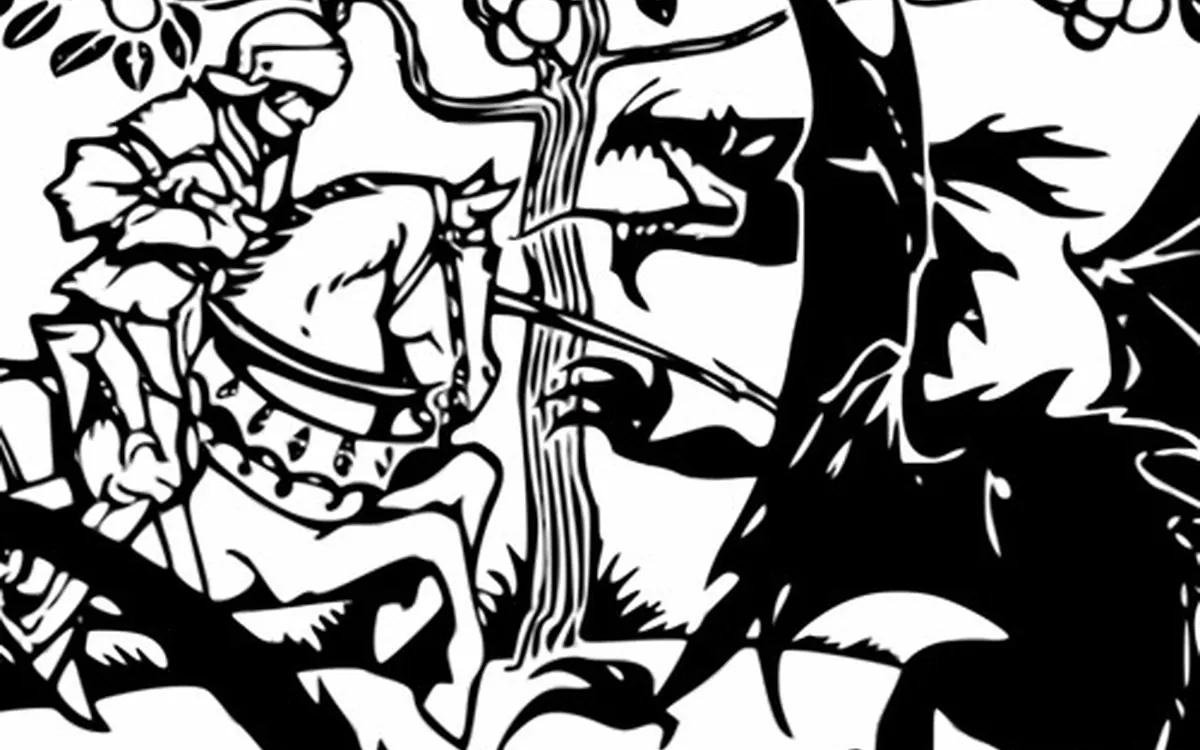
The power of fairy stories goes well beyond entertainment. In this interlude Rena Rossner, author of The Sisters of the Winter Wood joins me to explore myth, story and the power of fairy tale. Along the way we touch on God, history and my favorite author as well!
About this episode
Tolkien said to ask the origin of stories is to ask the origin of language and of the mind. Rav Mike recalls his most formative college class, a history of science taught by Harvey Rabin, a genius who spent the course showing that we do not understand the limits of reality. When a freshman blurted out whether he believed in God, Rabin deconstructed the boy and then, cornered by the seniors, suddenly said he believed in Peter Pan, in fairies, and changed the subject. Ever since, Rav Mike has wondered what it means to believe in fairy stories. He has fought all his life against the demand to grow up and live in a world of what you see is what you get, because hope is rooted in the belief that what is does not define what might be, and the insistence that we face the facts is an attempt to kill that hope.
His love began in third grade with Tolkien's Lord of the Rings, in his eyes the greatest work of literature ever made, and with Tolkien's essay On Fairy Stories, where he says Faerie cannot be caught in a net of words. For Rav Mike, story is the most important tool we have for integrating knowledge and experience into a wholeness, and stories can heal or harm depending on how they are told, the basis of his counseling. What he wants to explore is enchantment, our power to create worlds out of our minds. When the snake told Adam and Eve they would be like God, Rashi explains that he meant able to create a world, which the snake framed as a competition though Rav Mike sees it as a gift. He brings on Rena Rossner, author of The Light of the Midnight Stars, to explore it with him.
Rossner's novel follows three sisters with magical abilities drawn from sources about King Solomon and a Romanian myth of the Solomonars, weather-controlling mountain men used as an anti-Semitic trope. She grew up in Israel on the Andrew Lang fairy books her mother read to her from a loft by a window where birds roosted, a small house she later remembered as a palace. She never stopped being a child and never stopped reading fairy tales, which leads to the question of whether such stories are childish or childlike. Rav Mike has fought for years to shift that word, because our overemphasis on maturity comes at the cost of imagination and flexibility of mind. Rossner speaks of the longing to inhabit the worlds we make, a bear who wishes she were a swan, and of the very Jewish power to create with a word, from the golem to the Baal Shem Tov's chariots.
Rossner describes going beyond the golem into the wider heritage of Jewish fairy tale, and above all writing the women back into the story. The Torah pairs the patriarchs with matriarchs, but the women thin out among the prophets and the Talmud, so where she finds a figure like Rabbi Isaac of Tirnau, known to have had daughters we know nothing about, she imagines their story from the history and the life around them. This, she says, is what we all do, as on Passover every Jew is commanded to enter the story and relive the Exodus, reinventing it each year. She creates the world she wants to inhabit and retells the story in the process. Rav Mike hears in this the tension of narrative therapy, where people present a factual story of who they are when the same events could be told another way, keeping faith with the facts while becoming an agent in the telling.
Tolkien gives fairy stories three faces, the mystical toward the supernatural, the magical toward nature, and the mirror of scorn and pity toward man. Rav Mike feels the magical in the middle is where human agency survives against forces too large to affect, and Rossner adds the mirror of representation, writing the orthodox Jewish heroine she never saw as a child. On myth, Rav Mike's eleven-year-old asked what if God is a myth, infected by a culture that poses myth against fact, so he offers Cocteau, that history is truths that turn into lies while myth is lies that turn into truths. In fairy tales we battle demons we could not defeat in life, visualizing ourselves slaying the dragon, though Rossner insists her book leaves room for real tragedy and pogrom. History happened, and myth is our chance to replay it, since every story is the provenance of the teller.
Key ideas
- To believe in fairy stories is to hold that what is does not define what might be, which is the root of hope.
- Our power to create worlds out of our minds is the gift the snake offered as a competition with God.
- Rossner fights to make childlike rather than childish the word for fairy tales, against an overemphasis on maturity.
- The very Jewish power to create with a word runs from the golem to the chariots of the Baal Shem Tov.
- Writing the women back into the story is both representation and the agency of retelling a shared past.
- History consists of truths that turn into lies, while myth consists of lies that turn into truths we can replay.
Chapters
- 0:00 Harvey Rabin and Peter Pan
- 2:13 I believe in fairies
- 3:14 Against growing up; hope
- 4:18 Tolkien on fairy stories
- 7:39 Meeting Rena Rossner
- 9:58 Earliest memories of fairy tales
- 12:16 Childish or childlike
- 14:31 Longing to inhabit the worlds
- 16:48 Beyond the golem
- 19:07 Writing the women back in
- 21:22 Reliving the Exodus
- 23:40 Three faces; the magical in the middle
- 25:50 Windows and mirrors
- 30:20 Myth; lies that turn into truths
- 37:01 History happened, myth replays it
Who, where and when
People
J.R.R. Tolkien, Rena Rossner, Harvey Rabin, Rashi, Andrew Lang, Rabbi Isaac of Tirnau, Jean Cocteau, The Baal Shem Tov
Places
Colorado College, Tirnava, Israel, The Garden of Eden
Texts
On Fairy Stories, The Light of the Midnight Stars, The Sisters of the Winter Wood, Genesis 3
When
2018 CE: The Sisters of the Winter Wood published, April 2021 CE: The Light of the Midnight Stars published, each Passover: reliving the Exodus
Read the transcript
To ask what is the origin of stories, says J.R.R. Tolkien, is to ask what is the origin of language and of the mind. Well, I'm a great lover of stories, as you may know, and I'm always interested in getting at the root of things. I'm Rav Mike Foyer, and this is The Jewish Story. Season 4 interlude on fairy stories, an interview with Reena Rosner. You know, the most important class I took in college, or at least one that made the biggest impact on me, was actually my last. It was a history of science class, and I've got to say that I was a little bit jaded on the scientific vision at that point. But fortunately, it was somewhat restored by the professor, Professor Harvey Rabin, genius philosopher, bald-headed madman, and New York Jew, who spent the entire course teaching us that we really didn't understand.
the limits of reality as they've been taught to us. Now, the class was mostly seniors who were finishing up a four-year, quite grueling course in scientific education at Colorado College, but there were a few freshmen who'd been sprinkled in there, not just for diversity's sake, but because, it seemed to me at least, they were trying to fulfill the requirement for a course in science. Now, somewhere along the way, the question amongst the seniors arose whether Harvey Rabin believed in God. Was he a materialist as he sometimes seemed to be? Or did he admit that existence is always just a little bit bigger than we make it out to be? And at one point, there was a freshman who blurted out in the middle of the discussion, but wait, don't you believe in God?
Just imagine the gasp amongst all us seniors. He'd actually spit out a question that we'd all been juggling with for days, weeks even, and afraid to ask. Meanwhile, I've never seen anything like it. It was completely brutal. Rabin began to deconstruct this kid's notion of God and selfhood to the point where if we hadn't stopped him, his psyche probably would have been left quivering there on the floor. But what we did was pick up the gauntlet. Because once the question was on the table, well, we might not have put it to begin with, but we weren't going to let it go. And so began a verbal fencing match, the likes of which have rarely been seen. At a certain point, we thought we had him cornered. And then Rabin stops and he goes, you know what I believe in?
Peter Pan. That's what I, Peter Pan. I suddenly looked at him and I said, what? He said, Peter Pan, what's that thing in Peter Pan? And I said, fairies? He said, yeah, I believe in fairies. And then he just pivoted and took the conversation in a completely different direction. And since that time, I have wondered what exactly it was he meant by believing in fairy stories. You know, there's a lot of talk out there in the world today about adulting. And I'm aware that it can mean many things. And I'm also aware that many things which it means are rather important to life. But what seems to lie at the heart of the entire endeavor is the insistence that I just grow up and live in the real world. Well, I don't know about you, but I hate that phrase.
From the youngest age, I've been fighting against living in a world of what you see is what you get. Just deal with it. And though it's been a long battle, I can safely say that I have now succeeded in exiting such a limited existence. Never forget that hope is rooted in the belief that what is does not define what might be. And that therefore this insistence that we grow up, face the facts, is nothing less than an attempt to kill the hope within us. And my fascination with fairy stories started way before Harvey Rabin used it as an exit strategy to get out of the question of whether God and quantum physics are one and the same. When I was in third grade, I discovered the key which unlocked the door to hope.
And that was fairy stories. Now, I say fairy stories rather than fantasy literature, which might be a more accurate description. because my first and greatest and continuing love was The Lord of the Rings Saga by J.R.R. Tolkien. In my humble opinion, the greatest work of literature ever created by human hand. And one of Tolkien's most important works of popular scholarship, he being a linguistic or, let's say, philological scholar at Oxford, was an essay entitled On Fairy Stories. I highly encourage you to find it on the web and to read it. There he says the definition of a fairy story. He says, I will not attempt to define that, nor to describe it directly. It cannot be done. The Ferrier cannot be caught in a net of words, for it is one of its qualities to be indescribable, though not imperceptible.
It has many ingredients, but analysis will not necessarily discover the secret of the whole. Now, anyone who's been listening to the Jewish story for any amount of time knows by now that story, in my eyes at least, is the most important tool which we know for integrating our knowledge and experience into a wholeness of existence. Furthermore, you might realize that I'm a deep believer in the power of stories to heal or to harm, depending on how they're told, thus the basis of my entire counseling practice. If you want to explore your story, by the way, you can send me an email, robmikefoyer at gmail.com, and we'll talk. But what I want to explore today is actually the power of enchantment which resides within the story.
This unique ability we have as human beings to create worlds out of our minds. You know, if you're familiar with the book of Breshit and all the stories of creation, you may know that when the snake approached Adam and Hava, you can look it up in Breshit, that's Genesis 3.5, he says, you will be like God if you eat from the tree of the knowledge of good and evil. And Rashi brings a beautiful Midrash in just two words. What does it mean? you'll be like God this is the definition of the ability to create a world, to create a world which is so real that we can even try to inhabit it now, that in the snake's mind was a competition with God, but what I see is a beautiful gift and I want to explore the role that fairy stories play in helping us to maintain a sense of childlike wonder toward creation and saving us from that crushing belief that our perception and reality are one and the same.
It's a belief, by the way, that threatens to trap us in a world limited by what we already know, rather than inviting us into one which is open to real discovery and explanation. Now, to do such a thing is a big task. So I'm going to not do it alone. rather than ramble off into some unfocused discourse on my childhood and why an act of imagination is the key to happiness. And by the way, to break your heart with stories of how I held out until seventh grade, really believing that just around the corner, right out of the edge of my vision, those dwarves and elves were waiting for me, just like Tolkien said, right? That it's something which is indescribable, though not imperceptible. So rather than just rambling on, I've actually got an interview up ahead with Rina Rosner, author of a new book of Jewish fairy tale, The Light of the Midnight Stars.
So I'm super excited to be sitting here together with Rina Rosner, author, literary agent, and cook extraordinaire, as well as personal friend. She's published a cookbook called Eating the Bible, which I can attest to having some fantastic recipes. Her debut fantasy novel, The Sisters of the Winter Wood came out in 2018, if I'm not mistaken. And her next book, The Light of the Midnight Stars, comes out on April 13th of this year. And that's the immediate trigger for why I've asked her to join me today on The Jewish Story, because I read it recently. I was privileged to get an advanced copy. And aside from being a fascinating tale that weaves together many of the elements of story that I find so important, as we'll get into momentarily, it was just a darn good read.
So, hello, Rina. How are you doing today? Hello, I'm good. Thanks for having me, Mike. Well, I'm pretty excited about the opportunity to talk. Before we even get started into my agenda about fairy stories, just give us a few words about The Light of the Midnight Stars. What's the book about? Sure. So The Light of the Midnight Stars is at its heart a story of three sisters, each one of them different, but they each have different abilities, magical abilities. They live in the town of Tirnava, which is also sometimes known in Hungarian as Nagy Zombat. Their father is sort of the rabbi of the town, but he also has supernatural and magical abilities. And all these abilities are based on different elements in sources that I've read that King Solomon had these abilities.
it's also based on a myth a Romanian myth of the Solomonars who sometimes was used as an anti-Semitic trope even about red-haired mountain men ostensibly Jews who could control the weather and had various different magical abilities so the father has these abilities his daughter has these abilities and then a tragedy happens in the town and they're forced to flee and reinvent themselves and how each of these sisters, his daughters sort of use their abilities or don't use their abilities in their attempt to reinvent themselves. It's also a fairy tale retelling of a fairy tale called Boys with Golden Stars, which I found in an old fairy tale book that I had on my shelf. Fantastic. Well, as a redhead of Romanian descent myself, I find it quite telling.
And it sounds like you reached both into history and into the land of the fairie in order to put these things together. And as I mentioned to you before we got started, it's the world of the fairy that I'm most interested in. So I want to start off actually with a personal question, which is, what's your earliest memory of fairy stories? And what do you think drew you to them? I grew up here in Israel, actually. My family moved here when I was about a year and a half old. And so in those days, it wasn't easy to get your hands on too many books. And most of the books that we got our hands on there were English language books. were British in nature. And so one of my earliest memories is my mom used to read to me from these fairy tale books edited by Andrew Lang called The Red Fairy Book, The Green Fairy Book, The Blue Fairy Book, The Silver Fairy Book.
It was only later in life that I realized that these books are like really famous and really old and really rare And I have almost all of them too And I collected them as I got older in my travels in the UK I would see one in a bookshelf in some random bookstore and just pick it up for a couple of pounds Apparently they all really rare and really expensive now but I just had them So I was looking for specifically at that, you know, in writing this book for Romanian fairy tales. And so I went back to these books, which were like just my childhood fairy tale books. My mom used to read to me. It was actually almost the perfect setting for like having read fairy tales. we had this house in Israel, there weren't enough bedrooms.
So my parents built a loft and there was like a staircase, a ladder leading up to a bed. And I had windows next to my bed that all these birds used to roost in next to my head. And my mom would climb that ladder and sit and, you know, like Rapunzel let down your hair and read me these fairy tales. And I remember going back to the house, that same house, like years, years later, thinking it was a palace and realizing it was actually really, really small. Exactly like the thing that we're talking about, right, is that the place where fairy tales and children meet and the place where fairy tales, are they meant for children or not meant for children? You know, and what do children see in them or not see in them?
And in my case, I think I never stopped being a child and I never stopped reading fairy tales. You know, it's funny you say that, because I think a lot of the time people dismiss fairy tales and fantasy literature in general as childish. and I've been fighting a running battle for quite a number of years to shift that toward childlike. And in my introduction, I got into it a little bit, but there's an overemphasis on maturity in our society, which comes at the cost of the imagination, creativity, flexibility of mind. So part of what I hear you saying is that what drew you to the fantastic, to the world of the fairie, was a sense of the magic of childhood. Like you said, Like, you know, there was this ladder and it was a palace.
And then maybe when you look back now, it's not quite what it was. But it holds a place in the heart that that never really diminishes. And, you know, I have a quote here. I asked you to read before we got together Tolkien's classic essay on fairy stories, which the listeners should know is a highly worthwhile read. It's probably, I don't know, 40 pages in a Word document. You can find it online. but it's a turning point in, I would say, Western culture's understanding of the importance of fairy stories by, of course, the author of the greatest fantasy book ever, in my humble opinion. But he says the following, and I wonder what you think of it. He says, the primal desire at the heart of Ferry is the realization, the independent realization of the conceiving mind of imagined wonder.
It's this desire, I think, that we all have to be able to birth worlds, And it's something that in our tradition goes straight to the heart of the relationship between humanity and God. I mean, you may recall in the Garden of the promise that the snake makes to Adam and Eve, if they eat from the fruit of the knowledge of good and evil, is that they will be like God. And as Rashi fills in, be able to create worlds. And one of the things I always find amusing about that story is the snake never lies. He may present things in a half light and use them for his own agenda, but he never lies. And this seems to be bound up with our understanding of the human conditions. We have the ability to create worlds and its ability, which, you know, isn't always a comfortable one.
I wonder in that sense that you haven't created a number of worlds yourself. You ever long to inhabit the worlds that you create? And if so, what do you do with that longing? Of course. Absolutely. My first book there has two sisters, one who can turn into a swan and one who can turn into a bear. and people often ask me, like, who are you? You know, what would you prefer? And the truth is, is kind of both. Like, I think I'm more of a bear, but I kind of, I'm a bear who wishes she could be a swan. Yeah, we'll explore that one later. And I think in this book too, in The Light of the Midnight Stars, you know, there's elements of all three sisters in me. You know, I wish that I could, so one sister falls in love with a star and can read and chart the path of the heavens and see things in the sky.
And that was something that always fascinated me because if you go back into our sources, there are so many cryptic things that are mentioned about, you know, first of all, even just at its most basic, like the Torah, we begin with the mitzvah of like counting the moon and when does the month begin? And our entire cycle of Jewish holidays is based on where is the moon in the sky at this moment and why? You know, and so that's something that is, you know, both very much in our culture, but also like, what if I really could look up in the sky and foretell the future and see things. And then one of my, one of my, one of the girls, one of the sisters in the Lit and Midnight Stars can make things grow and can conjure fire and can speak things into being.
And I'd love to get to that, like at a later point, like the connection between like spoken words and Tolkien speaks about this too, you know, the ability to bring things into the world with speech is something that's very, very Jewish, like to create with a word. Well, say more about that. I'm very curious because part of what I'm interested in is where do these fairy stories go when we close the book? And what do they offer the waking world? And that power of language, I think, is part of that. So why did you mention it there? What does it say to you, that power of language? Yeah, well, I mean, I think that like it goes back to what you were just saying about we are created by a creator, constantly trying to emulate our creator as people of faith were made in the image and Tolkien speaks about this, were made in the image and likeness of a maker to create as divine.
And I think that it's completely natural for human beings to want to create as because we were created. And one of the things that when you go and research and look into, which I did extensive research into, you know, what is Jewish magic and what is, how does Jewish magic work, you know, and one of the ways in which it works, I mean, the most commonly known example is the golem, right? So the word Emmet was written on a piece of paper or spoken or put on his forehead or whatever, and that animated him. But it goes well beyond that. I mean, that's the one I think is the sort of most commonly known. One of the speeches I once gave, a keynote speech I gave about my previous book, you know, was like the title was going beyond the golem.
And that is what I try to do in my books. What do you mean? Because that's the most common myth, but there are so many, There are so many legends and myths and fairy tales that are a part of our heritage. And sometimes they're couched as midrash. But sometimes they're actual like fairy tales. If you go to the Baal Shem Tov, there's stories of chariots of fire and flying chariots and people who can jump from one place to another and miraculous speed instantaneously. People who are miraculously healed, all sorts of things like that. And then let's not even get into like Rabbi Nachman, you know, of Brecht's Love, who wrote his own fairy tales. You know, there's a tremendous history of storytelling in our tradition for the last, you know, since creation.
And I think that it is only natural. And I think it's sad that we've sort of lost, I feel, to a certain degree, the ability and the knowledge and the comfort level in which, you know, that we need to be able to sort of write these stories and create these stories and not be afraid to create these worlds and to want to inhabit these worlds. Yeah, I tell you, that is a that is a key painful piece that we have lost. What do you think? Where did it go? In an email you wrote to me recently, you said that you felt like you kind of wrote your own holy book, right? And we have so many holy books on the shelves. Lord knows I've got more than I could possibly read. I mean, what's the Torah lacking today that only fantasy can provide?
Well, I remember when I called you when I was working on this book and I said, Mike, can I write my own holy book? Like, is this crazy? You know, but part of it was because I think, you know, I found certain things that were relevant in some places and other things that I found relevant for the world I was creating in other places. But there was no one book that was the book I needed to set up my world. And I do think that that is what we do as scholars, as readers as Jews, right, is that it's not that we're picking and choosing, it's that we garner from the tremendous amount of literature and history around us and create our own world that we inhabit in faith, but also in story. I mean, history is always the provenance of the teller.
You know, there are facts, but then there are also the question of who told the story. And that's a big big thing like uh in history uh it's for me as a woman and one of the things i do in both of my books hopefully all of my future books too um is i sort of write the women back into the story for me um if you look at the torah um you have you know uh almost all the patriarchs have their counterparts right there's always like the mother and the father and you have the abot and the imahot and then you get to the prophets and there are fewer women and then you get to the Talmud and there are really a lot fewer women and so for me there's a need to kind of write women back into the story there's this rabbi, Rabbi Isaac of Tirnau he was a historical figure and we know that he had daughters but we know nothing about them and in the absence of that what I try to do is to write them back into the story.
If they existed, what would they have been like? And let's look at all the history and let's look at all the literature and let's look at what Jewish life was like back then. But then I need to make the cognitive leap into, okay, and now I have to imagine their story. But that's honestly like what we all do in our creation of, one of the things I talk about, when I talk about Light of the Midnight Stars, one of the important parts of the story to me was, how do we tell stories? Because there's a lot of storytelling within the book. Every single character tells their own story, but it's kind of very meta. But there's also like a story that's being told throughout the book that you don't know who's telling it until the end.
And then there's also this holy book that is sort of its own form of fairy tale and story. But I think that that is what we are as people. And I think that is what we are as Jews, are not just storytellers, but constantly choosing how we tell the story. One of the best examples of this, and I'll quickly end with that. I could talk about this forever. That's okay. That's why I asked you. Is like the story of Egypt, right? Exodus. What do we do on Passover? Like every single one of us, we are commanded to sit down and put ourselves into the story to tell the story and relive the Exodus from Egypt every year every Passover reinventing the story and inserting ourselves into it And that what I try to do I try to reinvent stories and insert my characters and my worldview and the things that I wish existed So I create the world that I want to inhabit, but I'm also retelling the story in the process.
That's a very powerful image that you create the world you want to inhabit. it. And if I heard you correctly, you really do that through telling the story of the world. One of the things that I've garnered in my work in narrative therapy is the tension between sort of fact and story. But there are certain events, like I see you doing the research and picking up these sort of historical anchors. But, you know, when you speak to a person about their own life, they often will present you a sort of factual narrative. This is who I am. This is how it happen, when in the reality is, no, here are the events, and this is how you put them together. And in many ways, the conclusion people have already drawn about their life presupposes the story which they tell out of those events, when in reality, you could tell a different story.
So if I hear you correctly, when I ask what is sort of fantasy offered to the world in which we live today, in particular, what the Torah is lacking, it's an ability to sort of keep faith, as it were, with the facts of our history, while at the same time reintroduce ourselves as agents in telling that story, whether it's as a woman, like you mentioned, you know, whether it's simply people who don't necessarily fit the mold of the form that Judaism is taking today. You didn't say that, but I imagine you've gotten a little bit of pushback here and there. And like you asked me, am I allowed to write my own holy book? I happen to encourage you to do it, but I don't think that every rabbi out there in the world would take that stance.
And nonetheless, this intersection between the facts of the past and the power in telling the story in the present is exactly, I think, what fantasy can provide. So I got another quote for you here from on fairy stories. Tolkien says that fairy stories as a whole have three faces. And this is where I think we run into his essentially Christian topography. He says three faces. One is the mystical toward the supernatural. We might call it upwards. He says the magical towards nature. And the mirror of scorn and pity, as he calls it, toward man. He says the essential face of Theriot is the middle one, that magical, right? And so as far as I can tell, there's a tension that he's touching on between God and history, where in the middle lies magic.
You follow me? Like God is kind of like above my pay grade, as it will. God's so big. Okay, we have Torah, we have all these things, we have a belief in Revelation. I'm not going to get into that right now. Let's just take God as a given. Then we have this topography of history, which often feels like we're rolling along. I mean, we're living through a historical era. I mean, sure, at all times, but certainly right now with everything that's happening in America and the COVID and et cetera, and it often feels like you're on a bus and you just can't get off. You feeling that way lately? You know? And in between is this sense of what could be. This sense of the magical, and I have a belief or a feeling, if it will, that the magical is our way of maintaining individual human beings' sense of agency.
in the face of events and forces, which are almost too large for us to affect otherwise. So I'm wondering, what does writing fantasy, what does writing fairy stories give to you? What's your experience there? Well, you know, I think that, see, when I read that quote, you know, about the mystical, the magical, the mirror, it had a lot of resonance for me. in terms of what I do, because I think that that is what I try to do in my work. I always try to combine, you know, elements of the mystical, elements of like what we would call fantasy or prophecy or the divine that is found in history, that is found in our sources, and to pull that out, to make my own magic out of it, right? But one of the most important things for me about the mirror, and it's something that we talk about as a literary agent I do a lot of work in children's literature but I think it's something that applies to adult literature as well we talk about windows and mirrors when we talk about representation and trying to make sure that the literature out there for children is as diverse as possible one of the things that is important to me to bring to the table is to write the stories that I never got to see as a kid I never got to see an orthodox Jewish female character be the heroine of her own fairy tale.
And for me, that's the mirror, right? That's what I try to do in my work is to say, you know, to make sure that the next generation will see themselves reflected in books that are published by a mainstream publisher, you know, books that are being published as fantasy. But if you look into it and you know the sources, or if you choose to use my book as a jumping off point for doing research into the history and into the, you know, the the the Torah elements of my book um it's all there and and you can be you know you can see we can see ourselves reflected in stories but someone's got to tell them um and so so for me of those three elements like the mystical is there the magical is there it's important but the mirror right is is is also really really really key um I'm not sure that my definition of mirror my use of mirror is the same definition that Tolkien had, but it almost doesn't matter because that's ultimately what we do when we tell and retell stories.
What Andrew Lane did, right, he talks a lot about, Tolkien talks a lot about how we take, we recreate story after story after story, right, but it's not the story that's important. He actually says this, I wrote down one of the quotes, it is precisely the coloring, the atmosphere, the unclassifiable individual details of the story that inform with life the undissected bones of the plot that really count. And so it's not the story that's told and retold that's important. It's the details, right? It's the individual details of the story. And so it is important that, you know, when you take a story and retell it and set it in a Jewish environment and create Jewish characters and that they keep Shabbat and that they, you know, speak the way that they speak and that they pray the way that they pray.
all those details are more important than the plot to me you know and that actually is where the magic happens right in taking a story that we know and repealing it and and sewing it and creating that tapestry and creating that new world and saying no this story is my story too it's our story too so that's fascinating to me in in the sense of the tension between you know what tolton calls the creator and the sub-creator, right? That we don't have the ability to really birth worlds, as we say, yesh, me, me, something from nothing. We have an ability to rework the substance creation. And what I hear you saying is that the details are our actual tool, right? Something I try to tell my class all the time is nobody ever was moved by a story about someone who went somewhere and did something, even if that something was really important.
We're moved by the places that we can attach and in in the detail is what allows us to do that i got another quote to throw i'm just going to keep going here but don't let me forget to come back to uh what you have to say to all those potential story writers out there i want to i want to end on that note if i recall but so i've got a quote from the french poet and um playwright i'm sure i'm going to say his name wrong jean cocteau right you'll get your husband to correct me on that later um and before i tell I just want to say that I've been fighting a battle lately online and in the classroom over the word myth. My son actually came to me yesterday. He's too young to listen to this show. He won't feel bad about me mentioning.
And he said, I have a question for you, but I don't want to ask. So why not? I feel bad or maybe I'm not allowed. He's an 11 year old. I said, well, you can ask me what you want. He said, what if Hashem is a myth? What if God's a myth? Now, he's been infused, I would say, even infected by that aspect of Western society that poses myth against fact. Right. Which is tragic. Which is tragic. And instead, I want to offer this definition of myth and see what you think about it. So Cocteau says, I've always preferred myth to history because history consists of truths which turn into lies. Well, myth consists of lies which turn into truths. So, I mean, here you are, you're writing more than fairy stories. You're also writing folklore, which I think is a very important category.
And beyond the general category, I experienced at least The Light of the Midnight Stars as a fantastic exploration. I mean, fantastic, not just in the sense of fantasy, but really, really, I just enjoyed the writing. A fantastic exploration of the European Jewish experience in the high Middle Ages. so I'm curious what do you see to be the relationship between God, history and fairy stories how do you put the three together in a way in which you're able to move people first I was going to comment you can go for the quote first I had to ask you about eight different things I've had way too much coffee this morning I just want to warn you that now my brain is still a sentence before that sentence so wait, remember that sentence let me just say, one of the things that I think is important about fairy tale right and this relates to to the quote is that you've got history right and then you've got myth the importance of the space of fairy tale fantasy mythology folklore is that it's the place in which and this is often why many of fairy tales are quite dark right and and Tolkien talks about this too are they really meant for children or not meant for children But in fairy tales, we're able to battle demons that we can't battle in real life or that we haven't been able to battle in real life previously in history.
Fairy tales enable us to confront the darkness, battle the beast and slay them, even if we can't do so in real life. And that act is a very important act because I think it gives us all hope that maybe would we be in the same situation again? We would know how to be braver, how to act differently, how to slay the beast. And even if we don't, we know that we can always do so in the realm of theory, in the realm of fantasy, in the realm of myth, in the realm of folklore. Which is not falsehood, but lies between that space between myth and fact. Yeah Yeah You know and it a very important space You know you can get into all psychology and I sure there a lot of you know when you want to go do something it really important to sit down and kind of like you know prepare yourself and imagine yourself doing what you doing And, you know, I'm sure there's like all sorts of real terms for what I'm saying, but I know that these things exist.
Right. Visualize yourself in the space and then you'll be able to. But that's exactly what happens in fairy tales. We visualize ourselves in the darkness, fighting the death, fighting the dragon, fighting the beast, slaying the dragon in a way that we can't do in real life. And that's a really important thing. It's an important process. And for me, one of the things that happens in my books is I always sort of try to play on in the Sisters of the Winter Wood. I sort of turned the goblin myth on its head. Right. Jews were very often referred to as hook nose, money hungry, money lending creatures. How do you say that in the past tense? Are still right. And so in my book, it's not the Jews who are the hook nose creatures.
It's the people it's often right. You know, people used to say that as children, like bullies. that often bullies project onto you the things that are missing in themselves. They're the goblins, really. And so, you know, in my story, the sisters sort of defeat the goblins of their own game. They're not the goblins. The people who accuse them of being goblins are the goblins. And so similarly, the story of the Solomonars in The Light of the Midnight Stars, the Solomonars were these, you know, red-haired, red-bearded mountain men who flew cloud dragons in the skies and controlled the weather. Now, Jews have always been Why were Jews accused of controlling the weather? Because often, as the story goes, you know, they would see us on Sukkot in Huss, shaking, you know, Lulavim, shaking palm fronds at the sky and chanting.
Granted a strange sight to the average non-Jew, probably. And very soon after that, rain would come because that's the rainy season. That's when it's, you know, we pray to God for rain. It doesn't mean that rain will actually come. We hope it will. Right. But generally, it's also the season in which the rainy season begins. That's the Jewish chap. You only pray for rain in the rainy season. Otherwise, it's a waste of time. It's the best way to ensure that it'll actually happen. You know, and so I try to do that, too. But I think that, you know, battling with anti-Semitism, battling with these demons, it's a way for us, for me, to re-inhabit the spaces that might scare me, the spaces that might scare us, and find a way to come out on top.
So that is, I mean, if you want to go into like the issue that, you know, how do other people, you know, or how do I inspire others to do the same thing? You know, to look into history and to look into our heritage and draw upon, you know, the different elements of magic that exist there. I think that that's that fantasy, that fairy, that that I mean, essentially every book of fiction is a fantasy. right it's hulkine talks about this too the concept of willing suspension of disbelief you know it applies to someone writing about a living room and the characters in it as much as it applies to some writing about someone riding a dragon they both have to you still have to create the world that's believable enough for people to be along you know um you can have characters that are too evil to believe they're too nice um you can have dragons that are not detailed and fully fleshed out enough.
It's a matter of how you tell the story, again, going back to that. Yeah, well, that's that power he speaks about. The real hallmark of sub-creation, as he calls it, is the ability to legitimately inhabit the worlds which we shape. Like you're talking about, even the fantastic has its boundaries of believability. But I heard something very important, actually, even for me as a counselor in what you said, is that perhaps we could say that the relationship between history and myth is that history happened, and myth is our opportunity to replay it. And not only just to replay it, but to retell it in subtle ways that allow us to encounter the demons which may have defeated us once or which we may have avoided last.
And in that, to summon up within ourselves the elements of character, the aspects of selfhood that we would like to have won and which we are therefore almost training to be victorious when indeed these demons rise again. So in a sense, the myth becomes a processing of history to keep it ever relevant, which might be the essence of Cocteau's point. So history is always in the past, and its particulars will never really be relevant to the world in which I live again. But the essence of the story which it tells, which we call myth, is ever-present and therefore always relevant. effect. So maybe I think it doesn't always mean that we emerge victorious. In Light of the Midnight Stars, there is a pogrom that happens and people die.
It's not, you know, I don't use that. I didn't use the story as a way to say, and then there was a pogrom, but then we beat them at their own game and fought them and, you know, everybody lives. Like, no, the tragedy is an important part of our story, unfortunately. And I feel that And to do battle with demons in that way is almost doing our own history a disservice, because you need to leave space to acknowledge the pain and you need to leave space to acknowledge the history and those who died. But at the same time, that doesn't mean, you know, each sister in my book takes from what happened and moves forward in different ways. And they're not all pretty ways and they're not all happy, perfect ways.
And there is no happy ending in my book. Tolkien's sort of fascination with what he calls catastrophe, this idea that true fantasy has to end in a redemptive fashion. I think we as Jews would agree with that in the long run. We've been telling our story for quite some time. And I think that the readers need to know that there is some real darkness in the light of the midnight stars and some adult themes just for the parents out there that are contemplating. It is not a children's book. It is not published as a children's book. It's an adult fantasy. But I really do want to say before we start to wrap it up that I've been reading fantasy, a little bit of science fiction, but mostly fantasy since I was in third grade.
And I deeply enjoyed not just the story, but also your weaving of prose and poetry, which I thought was extremely well done. And as you said, the story within the story, this power of experience of being a storyteller as well as a listener for the reader and the characters. and so maybe um just end off with an opportunity is there anything else that you'd like to say to to readers to to listeners to potential writers um about the power of the fantastic it's a big opportunity there's so much to say yeah go for it you know i'll go back to the same thing i was saying a little bit before but go a little deeper and that's and you know you were you you touched on this as well for me the stories that our grandparents told us and even the stories that our parents told us, even though they may present them as facts, everything is a choice about how you tell the story, right?
Your mom may tell a different story about how she met your dad, then your dad tells about how he met your mom, right? Your grandmother may tell a different story about everything that we do in life is about. Every story we tell, you know, it's a question of, like, the details you leave in and the details you leave out. And sometimes I think it's really interesting to go back and mine those details and separate the tale from the teller and separate the history from the reality and then realize that every single story that we tell and that has been told is the provenance of the teller right and that goes to history as well um any historian is still picking fast and choosing what to tell and what not to tell and there's always going to be a hundred, a thousand, a million stories that never got told, right?
Because nobody picked those details. Nobody chose those details to tell. Nobody, nobody, you know, so many figures of history lost to us because their stories were never told. And to me, that just means that there's a world of infinite stories out there, both historical and present, right? That there are so many different stories out there to tell. There are so many different stories yet to be told. And there's so many stories about our own lives, you know, to examine that, right? How do I tell my own story? How, what is a different way that I can tell my story? You know, and that applies to fantasy, but it also applies to writing fiction. And it also applies to, you know, how we choose to like invent and reinvent our own lives.
I think that's a beautiful ending note that people should appreciate that there's a sense of wonder and freedom and agency, which comes from recognizing that fairy stories, fantasy, are really this intersection between the facts and the narrative. Between, as you said, the sort of way in which we present the story and the million other ways in which the very same events could be constructed. And in many ways, we learn as much about the storyteller from the story as we do about the story itself. And in that sense, I'm very grateful that you as a storyteller have taken a little bit of time to speak with me. Before we go, I want to ask if somebody wants to read Light and Midnight Stars, or any of your other works, where should they go to get them?
Well, they are available on Amazon. However, there is a wonderful new consortium of independent booksellers called Bookshop.org that's trying to support indies in these really difficult times. They don't ship internationally as far as I know, but certainly for American readers and viewers out there, I would definitely recommend going on to Bookshop.org. people that live outside of the U.S. It's a bit more challenging. Book Depository, which is where I often order a lot of my books, is an Amazon-owned company. But basically, my books are available wherever books are sold. Great. Not until April 13th. The new book, The Midnight Stars, won't be available until April 13th, 2021. It's available in the U.S. and the U.K.
It's being published by Red Hook, which is a subsidiary of Little Brown in the U.S., and Orbit, which is the sci-fi fantasy imprint in the UK. Yeah, thanks for having me. Excellent. Well, thank you very much. And I want to thank all the folks that are listening. I want to thank the folks that give their hard-earned money to make the show happen, keep it free and widely available. I want to invite you to join them. Go right now to my website, jewishstory.co. You'll see a little button in the upper right-hand corner that says be a patron. You can click on that to give a little bit of per-podcast support. Or send me an email at robmikefoyer at gmail.com or find me on Facebook, and I'll give you the details of how you can dedicate a show.
I want to thank the Land of Israel Network, that's thelandofisrael.com, for creating a platform that allows me to reach so many fantastic people. I want to thank the Pardes Institute, p-a-r-d-s.org.il, for building an educational institution that gives me the privilege of teaching so many wonderful Jews. And I want to thank you for listening. I'm Rav Mike Foyer, and this is The Jewish Story.
More from Season 4
TJS S4E9 War of Attrition part II: the diplomatic front
Every major conflict is fought on many fronts. This second installment on the War of Attrition explores the diplomatic front. We will encounter Yitzchak Rabin as the new...
Play Episode
TJS S4E10 War of Attrition part III - an honorable peace
The battlefield and the boardroom come together for the last episode in the series on the War of Attrition. Meet new Prime Minister Golda Meir as she balances...
Play Episode
TJS S4E11 Black September
There is a narrative battle which has been raging for decades between Arab and Jew in the land of Israel, and sometimes it breaks out into open warfare....
Play Episode