
TJS S4E10 War of Attrition part III - an honorable peace
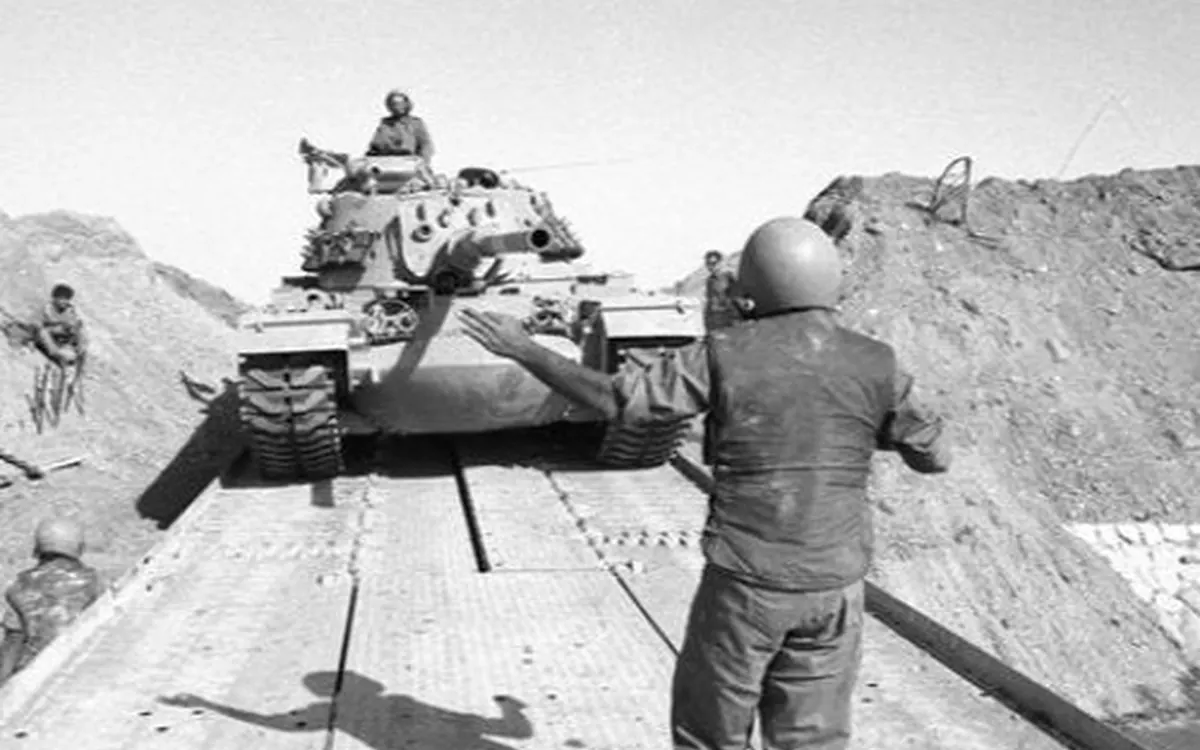
The battlefield and the boardroom come together for the last episode in the series on the War of Attrition. Meet new Prime Minister Golda Meir as she balances war and politics in her new policy of 'asymmetrical response.' Unfortunately this may win her the battle just as it looses the war. Hear from the likes of Henry Kissinger, Egypt's General Nasser, the Soviet Union, Yitzchak Rabin, asymmetrical response and more.
About this episode
Who is honored, ask the sages? One who honors others. Rav Mike opens on honor, an elusive idea in our cynical age, which has an outward face and an inward one. The outward face is the esteem a society grants, and what a society honors reveals its own values as much as the individual's. The inward face is integrity, the one who makes their deeds match their beliefs or breaks themselves trying, a rock in the stream that shapes the water around it. Both faces matter, and a society that honors the unworthy undermines the ground it stands on. In Hebrew, honor is kavod, which shares its root with heavy, because the honorable carry weight, and when they pass everything shifts. And so the local story begins with the passing of a man of weight, Levi Eshkol, who died of a heart attack in February 1969.
Those near Eshkol knew he was in a sense the last casualty of the Six-Day War, having given his all during the waiting period. The same crowd that mourned him had mocked him two years before as weak and indecisive, yet he had stood under inhuman pressure, listening to every voice while staying rooted in his own conviction. Michael Oren called him a distinctly Jewish leader of wisdom, humility, and forbearance, able to withstand opposition, strike compromises, and go to the brink but not beyond. He had dreamed of a peace of honor between equals, a phrase that is central to the whole struggle between Arabs and Jews. Rav Mike finds what-if history futile, so we will never know how Eshkol would have handled the war or the peace, only that in June 1967 he led on a scale his critics never imagined. Begin, whom Eshkol had brought in from the wilderness, gave the finest eulogy.
With Eshkol gone, a power struggle loomed between Dayan and Allon, and the party turned to Golda Meir. Born Golda Mabovich in Kiev in 1898, she carried from the Pale the bitter taste of exile, pogroms, and hiding from Cossacks, which became a lifelong commitment to Jewish power and dignity standing upright before the nations. Her family brought their all-encompassing Jewishness to Milwaukee, though observance did not survive the passage. In Denver, among her sister's circle of labor Zionists, she found a clarity and a purpose that would shape her nation, and she married on the condition that they make aliyah to a kibbutz. She rose through every rank of Zionist institution, served as the first ambassador to Moscow and then as the world's only female foreign minister, flying tourist class and lecturing dignitaries in her kitchen. With Eshkol's passing, the party felt Golda was the woman to finish the war.
Meir inherited the war of attrition and, taking Rabin's counsel that Washington wanted Israel to give the Egyptians and their Soviet backers a bloody nose, adopted a policy she called asymmetrical response, meeting any Egyptian attack with disproportionate force. It was an extension of Wingate's reprisal arithmetic, now carried out with American Phantoms. But Rav Mike sees a gap in it, the role of honor and shame in Arab culture, where a Jewish state is the ultimate humiliation and honor is restored only through public blood. Nasser spoke of erasing the shame of 48 and 67, and every Israeli jet that struck deep inside Egypt added humiliation, creating a blood and honor cycle beyond simple tit-for-tat. The high point of the campaign was Operation Rooster, the theft of an entire Soviet P-12 radar strapped between two helicopters and flown across the water, later handed to the Americans for Vietnam.
Humiliated, Nasser flew to Moscow in January 1970 and won both arms and Soviet crews, SAM batteries, pilots, and the 18th Air Defense Division, which began picking Israel's Phantoms out of the sky. As losses mounted, William Rogers pushed a ceasefire now backed by Kissinger. Then on July 30 the air force drew the Soviet pilots into an ambush, downing five MiGs with no losses, remembered as the day the USSR learned to fear the IAF. To Israel these were the last shots of the Six-Day War, but to Egypt the opening round of 1973. The ceasefire took effect on August 8, and within minutes convoys drove Soviet-Egyptian SAMs right up to the canal in flagrant violation of the standstill, missiles that would let Egypt cross in 1973. Begin had already resigned over the Rogers plan, and his voice rang with righteous anger at the betrayal the Americans would not act on.
Key ideas
- Honor has an outward face of esteem and an inward face of integrity, and a society that honors the unworthy undermines itself.
- Levi Eshkol was in a sense the last casualty of the Six-Day War, a leader of wisdom, humility, and forbearance.
- Golda Meir carried from the Pale a lifelong commitment to Jewish power and dignity before the nations.
- Asymmetrical response ignored the role of honor and shame, creating a blood-and-honor cycle rather than deterrence.
- Operation Rooster stole an entire Soviet radar, and Ramon 20 taught the USSR to fear the Israeli Air Force.
- Minutes after the ceasefire, Soviet-Egyptian SAMs rolled to the canal, a standstill violation that enabled Egypt's 1973 crossing.
Chapters
- 0:01 What is honor?
- 2:12 The two faces of honor
- 5:47 The death of Levi Eshkol
- 6:54 A distinctly Jewish leader
- 8:04 A peace of honor between equals
- 11:17 Golda Meir steps forward
- 12:21 From Kiev to Milwaukee
- 15:44 Denver; a passion for the people
- 19:10 Golda the foreign minister
- 20:13 Inheriting the war; asymmetrical response
- 23:43 Honor and shame in Arab culture
- 28:00 Operation Rooster
- 30:16 Nasser flies to Moscow
- 35:56 Ramon 20; the day the USSR feared the IAF
- 38:09 The ceasefire and the standstill betrayal
Who, where and when
People
Levi Eshkol, Golda Meir, Menachem Begin, Yitzhak Rabin, Gamal Abdel Nasser, Moshe Dayan, Henry Kissinger, William Rogers, Michael Oren, Orde Wingate
Places
Kiev and the Pale, Milwaukee and Denver, The Suez Canal, Ras Gharib, Moscow
Texts
Michael Oren's essay on Eshkol, Resolution 242, The Rogers plan
When
February 1969 CE: Eshkol dies, March 1969 CE: Meir inherits the war, December 1969 CE: Operation Rooster, January 1970 CE: Nasser goes to Moscow, July 1970 CE: Ramon 20, August 1970 CE: the ceasefire and standstill violation
Read the transcript
Who is honored, ask our holy sages? One who honors their fellow human beings. As it said, for I honor those that honor me, but those who spurn me shall be dishonored. I give honor to everyone who walks uprightly in the world, and I'm wishing us all to see better days ahead. Because I'm Rav Mike Foyer, and this is The Jewish Story. Season 4, Episode 10, War of Attrition, Part 3, The End Game. So I have a story to tell today, and it does mostly belong to the years 1969 and 70. It's part of our linear approach. Nonetheless, considering the insanity that is swirling around us, I mean, my news feed is filled with insane photos, up to and including a picture of a man in a buffalo bikini and face paint running amok in the American Capitol building, so I can't not at least begin with a finger in the present.
And you might be listening to this well after the events of January 2021, maybe even years later. But I think there's a point we can touch here, which is timeless. And that is the idea of honor. Honor is a very elusive concept and not necessarily all that popular in our postmodern cynical world. You know, if you type honor culture into Google, you will be assaulted by a torrent of social psychology. They'll tell you how honor itself is a false concept, that the culture of honor was created by men to control women or to have excuses to kill each other in socially acceptable fashions. Now, I'm not denying that there's truth in these analyses. Honor killings are a shameful, horrific injustice which have no justification.
And we'll touch lightly the problematic impact that honor and shame can have on politics later in this episode. But at heart, I am a learner of text and a lover of language, so I want to actually know what the word means before I try to evaluate what it would look like embodied in our culture. Because I hope that no one listening would argue that to be honorable is a quality to which we should not aspire. If you cruise the dictionaries a bit, which I admit I do, you'll get the sense that honor has what I'll call an outward face and an inward face. The hour one is that granted by society in recognition of actions or behavior of an individual. You know, recognition be it formal or informal. It can be a good name or a public esteem that a person gets, or it can be a rank or title that they've been granted.
And that aspect of honor teaches us as much about the society which grants it as it does the individual who receives that status. I mean, what could be more revealing about the values and vision which shape a society than the people whom it honors? And what if they don't deserve it? But due to the formalities of the world they've built, people who are dishonorable receive that honorable recognition anyway. Well, then we might actually question the honor of the society rather than that of the individual. Don't be fooled. The two aren't mutually exclusive. But if a society honors those who are unworthy, the person was unworthy, but what does it tell you about the world in which they live? The interface of honor is what we call integrity.
One who has a sense of honor makes sure that their deeds match their beliefs, or they break themselves trying. Now, these are the people who are like rocks in the stream of life. Those who remain unmoved by the passing torrents of the moment which shape life for the rest of us. And in their immobility, in their rock-solid integrity, they are actually able to shape the stream which flows around them. This is a particular quality of leadership that deserves reflection. And I mention this now for two reasons. One is that both faces of honor, outward esteem, and inner integrity are critical qualities without which, in my humble opinion, a society cannot survive. Now, it's a typical aspect of postmodern arrogance that sneers at the notion of honor and honorable contact.
See, the problem is they assume a world of victims and perpetrators in which an honorable person must just be hiding a lust for power behind a social facade. But if we fail to honor those with integrity, or worse, we honor those without it, in our pursuit for power, we risk undermining the cultural foundations on which our society rests. You have been warned. The other reason I bring it up now is more local. In Lashon HaKadosh, in Hebrew, the word for honor is kavod. And I'll restrain myself from launching into a deep dive on the topic of kavod. If you're curious to hear it, let me know. Maybe I'll record something. You can email me, robmikefoyer at gmail.com, or send me a personal message on Facebook.
But for now, know that kavod shares its three-letter root with kavod, the Hebrew word for heavy, because the honorable carry weight in the world. And therefore, when they pass, everything shifts. And here at the start of our local story for the day, we have to mark the passing of a man of weight, integrity, and honor. In the early morning of February 26, 1969, Prime Minister Levy Eshgol died of a heart attack. He'd actually been at home a few days recovering from the flu, and overall was in the midst of a slowdown, stretching a few months due to his ill health when the final moment came. And though the Prime Minister's heart trouble had begun in 1965, those nearest to him knew that in a sense, he was the latest casualty of the Six-Day War.
He'd given his all to save the nation, and it had just taken a while to see the results. Moments after Eshkol's passing was announced on the Ko Yisrael radio station, a mourning crowd began to assemble outside his residence in Rehavi, Jerusalem, many weeping, others silent with shock. Now don't forget, less than two years before, Many of these same people may have joined in the mockery to which Esko was subject in public and the press, all convinced he was simply too weak and indecisive to leave the nation. Their objections had been so fierce that Esko almost stepped aside in favor of Ben-Gurion as prime minister and indeed was forced to compromise by ceding the defense mystery to Moshe Dayan. He had then, however, stood up under inhuman pressures during the waiting period, those tense weeks before the outbreak of the war.
Pressure from his cabinet, the Americans, Egypt, Syria, the Russians, strike now. Don't go it alone. Hold back. Fight. Die. In the midst of it all, the Prime Minister managed to listen to the voices around him, to see the pieces in play, but to remain rooted in his own inner conviction. He never allowed his inner voice to be overwhelmed by the chaos around him. Dr. Michael Oren actually has a fantastic article about Levi Eshkol published in the Azure magazine. You can find it by Googling or if you want, send him an email. I'll share it with you. And there he calls Eshkol a distinctly Jewish leader, naming his essential qualities as those of wisdom, humility, and forbearance, rather than the more charismatic, aggressive, sort of stirring words type leader that we often look for.
He also highlights Eshkol's combination of commitment and flexibility. He points out, quote, Eshkol was able to withstand overwhelming opposition, to temporize and strike compromises while never losing sight of his objective. He knew when to hold tight and when to give in, to go to the brink but not beyond it. Rare qualities in a leader. And Eshkol was surely planning to employ this combination of commitment and flexibility toward peace just as he had in war. During his visit to President Johnson that we spoke about, in the midst of their discussion about securing the Phantom Jet, Eshkol shared the following reflection on Israel's recent June victory. I have no sense of boastful triumph, he said, nor have I entered the struggle for peace in the role of victor.
My feeling is one of relief that we were saved from disaster in June, and for this I thank God. All my thoughts are now turned toward achieving peace with our neighbors, a piece of honor between equals. Now, it's easy to hypothesize about what might have been. Had Eshkol been the leader who pursued the peace as well as the war? And people love to do it. The truth is, it started right after his death. In the eulogy he received from the daily paper Ma'ariv, you can almost hear the sense that his unique personality would be missed in the difficult days ahead. They say, perhaps only Eshkol, whose personality combined audacity, obstinacy, and weakness could have weathered the most serious crisis Israel has ever faced.
And all I'll add to that is, yet. Personally, I find what-if-ing history to be a more or less futile endeavor. Bottom line, we'll never know how Eshkol would have handled the war of attrition, how he would have pursued the peace and managed the conflict within Israel's new borders. All we can say is that in June of 1967, Levi Eshkol had come through with leadership on a scale that his critics could never have imagined. Not just that he would, but that they were capable of. And he may have done the same after the war. I would also note that his phrase, a piece of honor between equals, may seem like standard diplomatic speak, but the question of honor is central to the struggle between the Arabs and the Jews in the Middle East, and we will return to it.
As always, it was Menachem Begin who had the finest sense of the historical nature in the moment of his passing. He actually gave his words over more than a year after Eshkol had died in his own final address to the cabinet of the unity government from which he was resigning. That was a government into which Eshkol himself had invited Begin, bringing him in from the political wilderness after decades of struggle. We'll speak why and wherefore of that resignation before the end of the episode, but for now, noting that the primary names hurled at Eshkol during the waiting period were irresolute and indecisive, Begin declared that history had proven otherwise The very opposite was the case he said He took upon himself vital decisions initiated measures and lent support to faithful judgments of historic consequence.
It was Levi Ashkol who stood at the helm of the nation during the Six-Day War. Without his leadership, whatever was accomplished could never have come about. Indeed, I believe his government was a unique phenomenon in Israel's history. weighty words. And there were certainly unique elements within Eshkol's government, as Bacon said. But, frankly, there was also plenty which was commonplace, not the least of which was political rivalry. While alive, Eshkol had ruled the Labour Party, not with an iron fist, that wasn't his style, but at least with a firm hand. And he'd been supported by many allies, in particular by Secretary General of his party, Golda Meir. Now, with Eshkol gone, many political observers feared that a power struggle was imminent, particularly between Defense Minister Moshe Dayan and Labor Minister Yigal Al-Lun, and it, in fact, might tear the party apart.
Meir had tried to retire from politics already back in 1966, when she'd handed off the foreign ministry to Abed Ibn, but then the Mapai leadership had persuaded her to stay on as Secretary General in order to support Eskol and to guide their own party transition from Ma Pai into the Labour Party. Now they turned to her for an even bigger sacrifice, not just for the party, but for the country as a whole. Golda Meir was born Golda Mabovich on May 3, 1898, in the heart of the Palo sediment, Kiev, the capital of modern-day Ukraine. She was named for a maternal great-grandmother, a woman known as a matriarch who ruled the family until her dying day at age 94, and of whom it was said that she always took salt instead of sugar in her tea to recall the bitterness of Galut of the exile.
Now, true or not, this was certainly the taste which the pale left in her great-granddaughter's mouth when the Mabovich family finally fled, joining the great migration exiting Russia in the early 20th century. You may recall that a flood of 2 million Jews left the pale between 1880 and 1920. A handful of pioneers to the land of Israel, some to the UK and elsewhere, but the vast majority went to America. Golda Mappovich arrived in Milwaukee, of all places, at age 8, and she brought to the Midwest a bitter taste of exile, of poverty, pogroms, of hiding from Cossacks while violence raged outside. These were early experiences which would leave their mark, expressing themselves as a long-time commitment, not just to Jewish security, but to the importance of Jewish power and Jewish dignity, standing upright before the nations of the world.
The family brought from the pale their religion as well. In Europe, their kitchen was kosher, family life revolved around Shabbat and the Chagim. Their lived knowledge of prayer probably would have put ours to shame. But to call them orthodox would be a misnomer. Remember, orthodoxy proper is a religious movement rooted in a self-conscious stance, a choice to be traditionalist rather than traditional, keeping law and custom as an option amongst others. And that was a choice which Golda Mabovich's family never made. They remained as all-encompassingly Jewish as one could be in the run-down Jewish section of Milwaukee, but religious practice did not survive her passage to the New World. Which is not to say it left no lasting impression.
You recall, I hope, back in Season 4, Episode 4, the story of how Golda went to shul on Rosh Hashanah in 1948, during her first year as ambassador into Moscow, and all she could do for the crowd which mobbed her in tears to cry out and say, in Yiddish, thank you. Thank you for remaining Jewish. So let's say she was a believer in the people of Israel, if not exactly in the God of Israel. Another impression which the future prime minister carried from her childhood in the pale was the importance of labor Zionism. She recalled her older sister Shana sneaking out to meetings in Kiev, risking her life from the tsar's police and her parents' wrath. Now, Golda was always a smart and ambitious girl, something which didn't exactly please her dominating father all that much.
And true to form for the time, her greatest dream was to be a teacher, while her parents wanted nothing more than for her to get married. It doesn't pay to be clever, her father used to warn her. Men don't like smart girls. By the time Golda was 14, her sister Shane had married and moved off to Denver, while she was secretly enrolling in high school over her parents' objections and working to pay her own expenses. Eventually, the fight between Golda and her parents was so bad that she fled to Shana in Denver, where she and her husband lived among a circle of labor Zionists, social Zionists, anarchists, and before too long, her parents actually apologized, paving the way for Golda Meir's return, graduation, and even enrollment in a local teacher's college.
But Meir had found something in Denver which would take her much further away than the Rockies. Listening to her sister's friends discuss the future of the Jewish people and all humanity, Golda discovered a new clarity in her own thoughts, a new sense of purpose. And hearing their debates ignited within her a passion which would shape her life to come, in fact, would shape the life of her nation. She also, while she was in Denver, fell in love with one Morris Merrison. And when they married a few years later in 1917, it was on the condition that they would immediately make aliyah and live on a kibbutz. Now, you have to recall the faithfulness of this hour. in 1917, World War I, he's raging across the globe.
The British Foreign Secretary, Lord Arthur James Balfour, had just made his declaration of support for the establishment in Palestine of a national home for the Jewish people only a month before they were married. Also consider the weight of the condition which Golda had set on their marriage. The first kibbutz had come into being only a decade before, and joining one was essentially making a commitment to a life of back-breaking labor. This, unfortunately, was not a weight which Morris and Golda Marison at this point would be able to bear together. When they arrived, Golda became a model kibbutznik from the word go, while Morris almost immediately got malaria. After a couple of years of very difficult struggle, they moved to Jerusalem to raise a family.
While they did have two children, the call of the Zionist mission was too strong, and her own abilities too vast for Meir to find satisfaction as wife and mother. She and Morris separated, though they never actually divorced. And when he passed away in 1951, Golda technically became a widow, but she remained married to Am Yisrael for the rest of her life. Golda Meir's rise through the political ranks reads like a primer in Zionist history. She was head of the political department in the East Redut, key posts in the World Zionist organization as well as the Jewish agency. She served as secret liaison to King Hussein of Jordan during the War of Independence and ambassador to the USSR after. In 1949, Golda Meir was actually given the labor ministry portfolio in Ben Gurion's government, and she played a key role in helping to house and employ the flood of immigrants who tripled Israel's population during those crucial years.
By her own account, Golda would have liked to keep that post forever, it being the ultimate embodiment of her labor Zionist dream. But in 1956, Ben-Gurion called her to become foreign minister, making her the second highest member of his government and the only female foreign minister in the entire world. This was the point at which Ben-Gurion also insisted she adopt a Hebrew last name, as he'd done with all of his cabinet members, in order to better represent her newly reborn Hebrew-speaking nation. And so, Golda Mabovich, who had become Golda Meirson, was now finally Golda Meir. now as foreign minister she was a world sensation and not just because she was the first woman to enter into the diplomatic version of the ultimate boys club having grown up in poverty and been forged in the ideological fires of labor Zionist austerity foreign minister Meir had no use whatsoever for formality she flew tourist class when she traveled she shocked hotel staff by hand-washing her own underwear in the sink, and horrified foreign dignitaries by entertaining in her kitchen.
Just picture her serving up homemade pastry, apron-clad, and dishing up with it a fierce lecture on Israel's security needs. Now, there's obviously a feminist story to tell here, and trust me, we'll do it in a coming episode. So, Golda Meir is going to be with us for some time. I'm thinking, in fact, it might be worthwhile to explore the feminist side of Golda's story together with Betty Frieden, another Jewish woman whose writings helped spark the second wave of American feminism. If you haven't heard of her, you can do a little bit of pre-research. Look her up. There's an episode coming there. But for now, we have a war to finish. And with the passing of Lebi Eshkol, the Labour Party leadership felt that Golda Meir was just the woman to do it.
When Meir took over the role of Prime Minister at the end of February 1969, she inherited the war of attrition. As we saw back in episode 8, it was only a week later that Nasser abandoned the informal ceasefire that had held since the last flare-up, as he declared in his speech to the Congress of the Arab Socialist Union in March of 69. The so-called Middle East crisis, which is in fact our natural and rightful struggle, is now entering a very important and serious phase. We ask every soldier at the front to account for his action if he sees the enemy and does not fire at him. So, it's clear the Egyptians stood. The critical unknown factors in the hands of the Prime Minister were the stance which America and the Soviet Union would take in the new round of fighting.
The Russians could wait, but the Prime Minister needed to know now where her ally across the Atlantic stood. and so she reached out to Ambassador Yitzhak Rabin, and his reply was unequivocal. By 1969 the Sinai Peninsula was becoming a Cold War front to rival that of Vietnam And at least in one sense this was good news for the Jews Ambassador Rabin explained it to his new Prime Minister this way. The Americans knew that the Soviets were pulling the strings on the Egyptian war effort, and therefore were testing both Israeli and American resolve. According to Rabin, Henry Kissinger had made it clear that President Nixon views Israel's ongoing military success as undermining Nasser's and therefore the Russians standing in the whole Middle East.
That's why rather than cautioning against escalation, the ambassador actually advocated for it, claiming that, quote, the American willingness to supply us with arms is dependent upon our giving the Egyptians and the Soviets a bloody nose. In simpler terms, when asked by the president, in view of Soviet involvement, is Israel's position still, give us the tools and we'll do the job? Rabin's answer was a resounding yes. It was this Cold War calculus, as well as Prime Minister Amir's own strongly held feeling that Jewish blood should never be spilled without a high price, that gave birth to a new policy for the Israeli government. Prime Minister Meir called it asymmetrical response. Basically, it was a resolve that any Egyptian attack whatsoever would be met with a disproportionately large response.
In some ways, it was really just an extension of the reprisal method that British officer Ord Wingate had taught Moshe Dayan and his fellow Haganah leaders back in the pre-state days. Then, for Wingate, it was simply a matter of math. a handful of Jews would never be able to face an overwhelming number of Arabs in the battle in a traditional sense. And so the Jews had to make it clear that the price exacted for any aggression would be higher than the mass of Arabs were willing to pay. Now, though, those reprisal raids were going to be undertaken with American F-4 Phantoms, and the aim would be to bloody the noses not only of the Egyptians, but their Soviet backers as well, in hopes of making the cost of war too high to pursue.
It's not an illogical approach, but I think it lacks consideration of one critical factor, the role which honor and shame play in Arab culture. You know, there's an Arabic quote that gets a lot of attention when people speak about the differences between Arab and Western culture. And despite being a gross oversimplification of the issue, it is nonetheless to the point. The quote is, it is better to die with honor than live with humiliation. Now, the very existence of Jewish political freedom runs counter to that quote because it overturned over a thousand years of the dimmy second-class status which Islam traditionally ascribed to the Jews who lived as a tolerated religion but not a politically independent people within the medieval Islamic empire.
Hence, the creation of a Jewish state in the heart of the Arab world, is on a certain sense the ultimate shame, not only to those who lost the war in its creation, but to the very religious fabric on which their society rests. Add to this the more modern perception, fueled by Israel's action since the pre-state days, that she is a tool of Western imperialism. That means that even the progressive elements within Arab society, who no longer look to the Koran as a guide to action, nonetheless perceived Israel's existence as an insult, part of a larger pattern of the shaming of the Arab world by the West. This is why, in his speeches during the War of Attrition, Nasser didn't talk about regaining lost territory.
He spoke of erasing the humiliation of 48 and 67. Honor is restored and shame wiped away only through vengeance, and particularly through the exaction of a price in blood which is public, and therefore known to all. And so, Prime Minister Mayer's new policy of overwhelming retaliation, of asymmetrical response, by not taking into account the additional humiliation which accumulated every time Israeli jets struck deep inside Egypt, proving their inability to stop us, she created a blood and honor cycle which went well beyond a simple cross-border tit-for-tat. In many ways, this policy of asymmetrical response, which is, by the way, largely the IDF's doctrine in certain respects to this day, rather than teaching the lesson that aggression doesn't pay, it creates an ever greater burden of shame, a debt which demands further response even beyond the cold calculus of war.
Now, I'm not judging the Arabs, nor am I blaming Israel for fueling this cycle of conflict. I'm just pointing out a gap in cultural perception which helped to bring the war of attrition to the brink of superpower confrontation. I could even make the argument that in this, as in other things, we Jews have what to learn from our Arab cousins. That if we were more clear on the boundaries of our own honor, if we held more tightly to our dignity in our relationship with the Arabs, we would be better equipped to make that piece of honor between equals of which Prime Minister Levi Eshkol had dreamed. Be that it is it may, Prime Minister Golda Meir took to heart Ambassador Rabin's perspective that the Americans wanted to see Israel given the Egyptians, and by proxy, the Soviets, a bloody nose.
And by the summer of 1969, the delivery of the F-4 Phantoms was underway, and the Israeli Air Force began attacking the Egyptian forces on the Suez Canal without interruption. The aerial assault was combined with a renewal of the deep commando raids, like the one that had plunged Cairo into darkness at the beginning of the war. On July 20th, the Sair at Macal raided Green Island in the northern Gulf of Suez, killing 80 Egyptian soldiers and losing six of their own. Egyptian artillery bombardments increased in response, claiming the lives of many more Israeli soldiers, and prompting the IDF to strike even deeper into Egypt's heartland. On October 30th, commandos reached the Nile River, blowing up a transformer station, two dams, and a bridge.
But without question, the greatest and perhaps most humiliating coup of this renewed round was Operation Rooster. During the Six-Day War, Israel had captured massive amounts of military equipment in its conquest of the Sinai, including, of course, the latest Soviet arms, radar, and anti-aircraft systems. Her analysis of these spoils of war had given Israel an almost complete mastery of the Egyptian air defense systems and thus control of the skies over the canal. But an air raid defense array destroyed during a September 1969 raid soon came back online in a completely different configuration, one which the Israeli pilots found much harder to penetrate even with their new Phantom jets. A reconnaissance mission was quickly launched to photograph the new installation, and the picture showed it to be a state-of-the-art P-12 Soviet raider located on the beach of Ras Garim, halfway down the western bank of the Gulf of Suez.
The first strait was just to destroy it with an aerial strike. But even as the attacking aircraft were about to lift off, the order came through canceling the mission. Because the idea had come up, why destroy such a valuable prize when it could perhaps be stolen instead? And so at 9 p.m. on December 26, Israeli jets began pounding the Egyptian forces along the western bank of the Cal and all the way south to the Red Sea. At the same time, a select force of the 35th Paratroopers Brigade was ferried west toward Raskarim. They easily overwhelmed the light security force at the site and quickly began to dismantle the entire installation. Meanwhile, two massive CH-53 helicopters were en route to lift off the P-12 Raider, complete with communications caravan and antenna.
The four-ton caravan was actually heavier than the CA-53 was designed to carry, and so they strapped it between the two helicopters and tried to lift it off anyway. En route, a hydraulic pipeline ruptured, and faced with either releasing the radar into the sea or crashing, the captain managed to do neither and cross the waterline in Israel before making a hard landing. From here, it was a simple task to retrieve the undamaged radar and deliver the latest Soviet technology into the hands of the waiting intelligence specialists. For good measure, after a thorough study, Israel handed equipment over to the Americans for help in their battles against the Russian proxy forces in Vietnam. Their air superiority assured, within weeks, the Israeli Air Force began a new series of raids, culminating in a string of attacks on targets in the heart of Egyptian territory, which destroyed bases and missile batteries along the Nile and in the Cairo region.
Egypt's humiliation was complete, and there seemed to be only one place to turn for the tools which would help to restore her honor. On January 22, 1970, Egyptian President Nasser flew to Moscow to ask the Soviets for anti-aircraft batteries and jets, which would help him regain control of the skies over the Suez Canal. This was far from his first request for arms. I mean, we've been watching Soviet weapons tilt the balance of power back and forth in the Middle East since the original Czech-Egypt arms deal announced back in September of 1955. For the West, you may recall, that was the deal which marked the failure of containment, making the Soviet Union official in the Middle East. For Israel, it was a deal that marked the next round of fighting to come.
And therefore, a personal mission from the president of Egypt to the Soviet premier Harold did something more than a discussion of weapons and money. Nasser's real aim was a different depth of direct involvement by the USSR. Specifically, it was not enough to have as many arms as he could pay for. He needed Soviet advisors and technicians to man and maintain these new weapons, and he wanted a lot of them. Premier Leonid Brezhnev initially balked at being drawn so directly into a conflict which he knew could spiral into war with America. But, you know, war has its own momentum. And in the end, he complied with Nasser's request. By June of 1970 there would be over 10 Soviet advisors manning SAM batteries radars and other weapons stations along the canal with more than 100 pilots flying so training missions in the skies above the western side And the results of Nostra's mission were immediate and brutal.
The primary Soviet unit sent to Egypt was the Soviet 18th Air Defense Division, manning SAM-3 anti-aircraft missiles and they erased the momentary advantage Israel had gained from the bold theft of the P-12 radar basically in one night. As the winter moved on, the 18th began to pick Israel's new phantoms out of the sky one by one. At the end of three months, the losses were so heavy that the first shipment of fighters looked to be exhausted within a few weeks. U.S. supplied countermeasures proved inadequate in the face of the new Soviet weapons and Washington was in no rush to approve a resupply. See, days before Nasser left on his trip to Moscow, U.S. Secretary of State William Rogers had published a ceasefire proposal, and as the winter went by, his calls for Israel and Egypt to come to the table grew ever louder.
This wasn't the first initiative Rogers had put forward since the outbreak of war, but unlike his initial plan, this one had the support of National Security Advisor Henry Kissinger. In another episode, we'll discuss how Kissinger and Ambassador Rabin worked together to thwart Rogers' first effort, and how their victory served Israel's interests and served as a key stepping stone in Kissinger's rise to Secretary of State. For now, just know that the second round of the Rogers plan was going to happen, as far as Kissinger, Rogers, and President Nixon were concerned. Rabin, ensconced in Washington, saw the writing on the wall, and he told as much to Prime Minister Amir, just as he continued to affirm to her that the harder Israel struck the Egyptians, the happier Nixon and Kissinger would be.
Now, the Prime Minister had categorically rejected the first Rogers plan, which had contained far more than a ceasefire. It included Israeli withdrawals from other territories conquered in 1967, something which in her eyes amounted to an American-imposed settlement which would rob Israel of the benefits of its victory. And she was far from wrong. Nixon's policy of detente was not well served by the War of Attrition. As much as sucking it to the Soviets over the canal while the Americans were getting trounced in Vietnam may have felt good, it made for bad international diplomacy. It was only the conflict between Kissinger and Rogers, and Ambassador Bean's role, that allowed Prime Minister Meir to succeed in avoiding that first plan.
But the initiative on the table now had full U.S. backing, which meant she would experience pressure which had not yet been brought to bear. And, unfortunately for her domestic front, there were enough clauses in this new Rogers initiative that Menachem Begin and his Gehal party would find it objectionable, and, in fact, it would probably bring down her unity government. Meanwhile, as winter turned towards spring, things continued to escalate over the canal. Unlike the Israelis, the Soviets lacked for neither men nor material, and they threw it recklessly into the battle. As the Soviet buildup peaked, and the number of their pilots passed 100, the risk of direct Israeli-Soviet conflict rose on a daily basis, and with it, a real, if distant, chance of a superpower blow up.
The storm finally broke on July 30, 1970, when, tired of suffering endless losses, the Israeli Air Force drew the Soviet pilots into a perfectly planned and executed ambush, downing five MiG-21 fighters with no Israeli planes hit. Operation Ramon-20 has, together with that opening round of the Six-Day War, become a crown jewel of Israeli air combat lore, where it's simply known as the day the USSR learned to fear the IAF. Which is more than just boasting. It's a story that has real implications down to our day. I mean, right now, we're flying the not-so-friendly skies above Syria together with the Russians, and they give Israel respect. In the story which took hold within Israel, we'll call it the Israeli narrative, that took hold in the wake of such a dramatic victory, it became the decisive victory in the war of attrition, or even, as some call it, the last shots of the six-day war.
That will have many consequences, because to Israel, these may have been the last shots of the Six-Day War, but to the Egyptians, they were the opening round of 1973. Perhaps most disastrously, the downing of those MiGs was offered amongst officers as a conclusive proof that SAMs or no SAMs, even with direct Soviet support, Egypt was incapable of facing Israel in war. and so the story is still often told of the battle that forced the Soviets and the Egyptians to end the war of attrition in utter defeat and therefore 1973 will come as a complete surprise from where I'm standing the reality is let's say more complex I could easily label that victory of July 30th as what enabled Israel to accept the US brokered ceasefire without too much loss of face or too much domestic opposition.
That opposition was on the rise anyway. Don't forget that each phantom down by those Sams may be another family bereaved, to say nothing of the casualties mounting along the canal as Egyptian guns continue to hammer the Israeli fortifications into the summer. Eventually, American pressure and reassurances, including one that no Israeli soldier would be withdrawn from present lines until a binding peace was signed, combined to convince Prime Minister Meir to bring the Rogers plan to vote in her cabinet. And as she suspected, it led to the resignation of Menachem Begin and his Gachal from the Union government. Begin saw the regional negotiation aspect of the Rogers plan as nothing short of Israel making a commitment to withdraw as a precondition for a possible discussion of peace, a foolish waste of assets which had been hard won in war.
And he sensed in the ceasefire process a dangerous capitulation to American pressure over arms. Basically, they held back the arms to bring Israel to the table. And so he led his party back into the opposition. But even Begin couldn't know that the worst was yet to come. Through the final negotiations, the Israeli Air Force refused to be baited by the angry Soviet pilots who were trying to catch them in a rematch. But their SAMs continued to take their toll. two more phantoms were downed in the very first days of August, that not only rushed Israel to sign, but left her woefully unprepared for what came next. The ceasefire came into effect on August 8, 1970. But it was put into place so quickly that the verification measures for the standstill provision were not yet in place.
Meaning, you make a ceasefire, nobody's supposed to move. But minutes after the ceasefire went into effect, headlights lit up the entire western Suez. It was convoys of advancing Soviet-Egyptian SAM missiles being driven right up to the canal's western bank. This was a violation of ludicrous proportions. It basically granted Egypt the very thing which Israel had gone to war to prevent the ability to deny Israel air superiority over the canal and a strip to its east. In October of 1973, these missiles would enable the Egyptian army to cross the canal and overwhelm the Bar-Lev line of fortification, as dozens of fighters would be shot down trying to stop them. But right now, in August of 1970, no one could have known that.
Nonetheless, everyone recognized that this was a disaster. At first, the Americans simply denied that any such thing had happened, but once the evidence became clear, they lodged a complaint with the Soviets. Moscow literally laughed off their protests. With one small, underhanded move, they'd shifted the balance of power in Sinai, humiliated Secretary of State William Rogers so badly that he essentially left office, and gained credit with the Arab world for having defeated Israel, despite getting whooped in some dogfight that nobody remembers anyway. Israel, on its own side, immediately halted the second phase of the Rogers plan, those regional talks through the UN, but the damage was already done.
The IAF was in no shape to re-engage, certainly not with the Egyptians sitting at such a strategic advantage. Kissinger made it clear that the U.S. was far too deeply embroiled in Vietnam to even think about direct confrontation with the Soviets, and that meant that Prime Minister Golda Meir and her government were forced to just eat it. and that all Israel would pay the price in the years to come. Despite dropping plans for regional negotiations, Begin the Gachal still stayed out of the government. He saw the violation and the American failure to act as nothing short of a historic betrayal, and his voice rang with righteous anger as he spoke in the opposition from the Knesset podium. The conclusion has to be drawn, and the Knesset and the people have to be aware of the implications of this conclusion that when President Nasser of Egypt decides to reopen fire and knowing the realities as we do we have to assume that such a day shall surely come.
He will have a decisive advantage over us. This is the reality and the Americans know it to be so. I just want to thank a few folks before I sign off. I want to thank all the folks who give their hard-earned money to help make the show happen, keep it free and widely available and I want to invite you to join them. Go right now to my website, jewishstory.co. You'll see a little button up there in the right-hand corner. You can click on that to make a little bit of per-podcast support. I'm also happy to dedicate shows. If you want to be in touch with me at rovmikefoyer at gmail.com or send me a personal message on Facebook, I'll share the message of how you can dedicate a show and honor someone with us today or in the memory of those who have gone.
I want to thank the Land of Israel Network. That's thelandofisrael.com for creating a platform that allows me to reach so many amazing people. I want to thank the Pardes Institute, pardes.org.il, for creating an educational institution that gives me the privilege of teaching so many fantastic Jews. And I want to thank you for listening. I'm Rav Mike Poyer, and this is The Jewish Story.
More from Season 4
TJS S4 Interlude 10th of Tevet: it's not too late
Every fast day is an chance for cheshbon nefesh, for making an accounting of life and the world. The Tenth of Tevet offers an additional, unique opportunity -...
Play Episode
TJS S4E9 War of Attrition part II: the diplomatic front
Every major conflict is fought on many fronts. This second installment on the War of Attrition explores the diplomatic front. We will encounter Yitzchak Rabin as the new...
Play Episode
TJS S4 Interlude: Interview with Rena Rossner
The power of fairy stories goes well beyond entertainment. In this interlude Rena Rossner, author of The Sisters of the Winter Wood joins me to explore myth, story...
Play Episode