
TJS S4E11 Black September
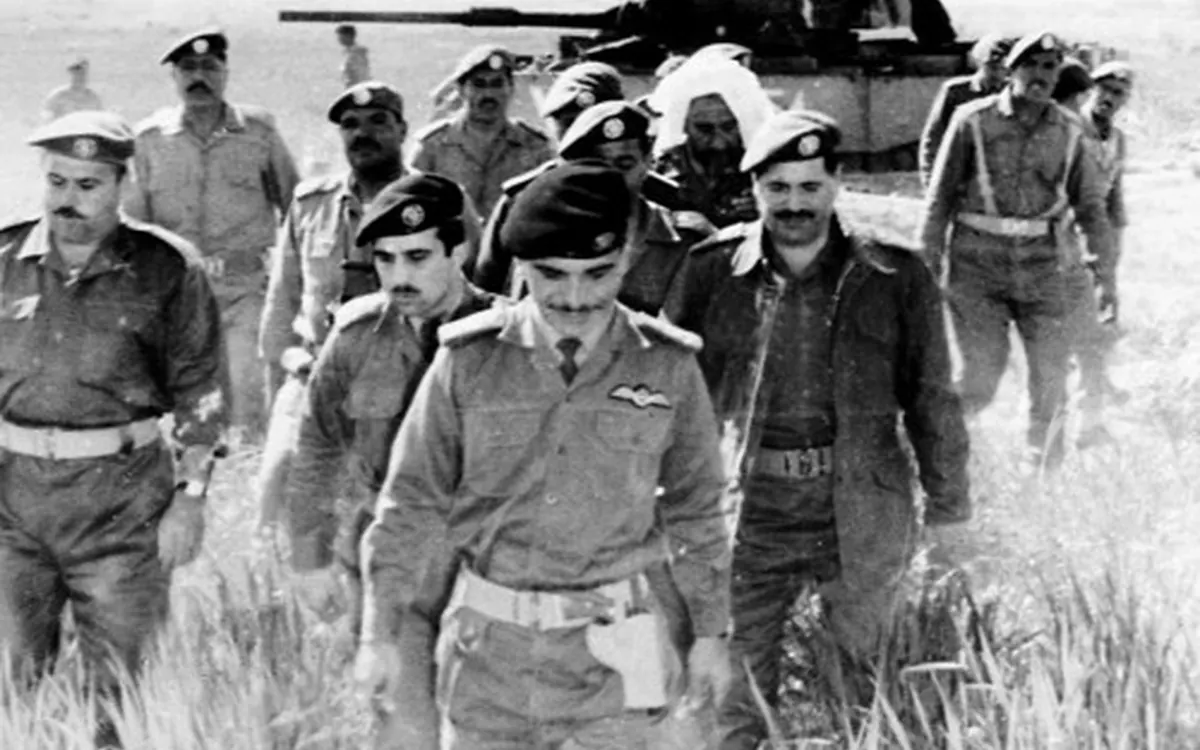
There is a narrative battle which has been raging for decades between Arab and Jew in the land of Israel, and sometimes it breaks out into open warfare. This is the story of the abortive attempt by Palestinian Arabs to overthrown the Hashemite Kingdom of Jordan and the role it plays in giving an international standing to their nationalist struggle.
About this episode
Rabbi Menachem Mendel of Kotzk said everything can be imitated except the truth. Rav Mike frames a battle of national narratives, where to understand the Jewish story today you must come to grips with the Palestinian narrative. Identity can be sought in origins and the legitimacy of the past, or engaged as present psychology, since real people have real identities even when built on historical falsehood. We might also ask what future an identity seeks to build, a dicey standard that brings an external value to bear. Historically much of the Arab nationalist movement rejected a unique Palestinian nationalism, as Philip Hitti told the Anglo-American Committee that there is no such thing as Palestine in history. When the Arab states invaded in 1948 they sought lost or expanded territory, and holding the West Bank and Gaza, they created no state between the river and the sea.
In Resolution 242 the Palestinians appear as a refugee problem, with no people's national claims, and Lord Caradon confirmed no Palestinian state had been proposed. So Golda Meir's remark that there is no Palestinian people, only Palestinian refugees, was less absurd in context, though the narrative had already shifted under her. Khartoum's famous three noes carried a fourth yes, an insistence on the right of the Palestinian people in their own country. What changed the world's perception was the Battle of Karama. Al-Karama, a town in the Jordan Valley, had become the headquarters of Arafat's Fatah, which after the crushing of its West Bank uprising moved across the Jordan to launch cross-border raids. King Hussein was not pleased, two-thirds of his people called themselves Palestinian, and a state within a state was forming on his soil as farmers fled and fighters replaced them.
On March 18, 1968, an Israeli school bus hit a mine, and Israel launched its largest assault yet on the bases around Karama. Everything that could go wrong did. Arafat was tipped off, a paratroop brigade landed among guerrillas in firing position, the tanks sank to their treads in the mud, and the Jordanian Legion joined the fight from the heights. The IDF withdrew without finishing its mission, losing 33 dead, though it inflicted ten times the casualties. The scale did not matter. Never before had Palestinians stood and fought Israeli forces to a standstill, and Karama, which means dignity in Arabic, became the rebirth of a people, with thousands rushing to volunteer. Arafat said the Palestinian was no longer refugee number so-and-so but a member of a people holding the reins of their destiny, words that resonated among post-colonial struggles and the Western left.
Karama also moved the Soviets from opposition toward material support, a sea change pushing the conflict toward an Israeli-Palestinian one. Arafat became a hero and soon chairman of the PLO, doubling down on armed struggle, while George Habash's PFLP took a global view, naming four enemies, Israel, world Zionism, imperialism led by America, and Arab reaction. Both drew on Frantz Fanon, who called violence a cleansing force that frees the colonized from his inferiority and restores his self-respect, and Rav Mike notes that early Zionism too, from Nordau's muscular Judaism, bound national liberation to the physical and the violent, so the two identities grew up together through violence. Habash knew that to kill a Jew far from the battlefield had more effect than killing a hundred in battle, and the rising tides of international media and travel gave him dramatic violence in far-flung places.
The PFLP's 1968 El Al hijacking is called by some the birth of international terror, and a wave of hijackings, time bombs, and airport massacres followed against an unprepared world. Meanwhile Arafat's fighters, flush with victory and oil money, built a state within a state in Jordan, and clashes with Hussein's army grew. The crisis broke in 1970, and after a triple hijacking landed jets at a desert airfield near Amman, Hussein unleashed his Bedouin brigades. On September 20 Syria's armor crossed into northern Jordan, and Hussein begged for airstrikes from any quarter, including Israel. Kissinger moved quickly, Israel flew reconnaissance and massed troops on the Golan and at Beit She'an, and the Syrians retreated. Nasser brokered the accord and died the next day. For the Palestinians it would forever be Black September, the PLO decimated and driven to Lebanon, while Israel had proven herself the American aircraft carrier of the Middle East.
Key ideas
- To understand the Jewish story today you have to come to grips with the Palestinian narrative and the battle of national narratives.
- Resolution 242 treated the Palestinians as a refugee problem, and Golda Meir insisted there was no Palestinian people.
- The Battle of Karama, whose name means dignity, became the rebirth of the Palestinian people in the eyes of the world.
- Both Fatah and the PFLP drew on Fanon's idea of violence as a cleansing force that restores self-respect.
- The PFLP perfected international terror, since a Jew killed far from the battlefield drew more attention than a hundred in battle.
- Black September decimated the PLO and drove it to Lebanon, while Israel emerged as America's aircraft carrier in the region.
Chapters
- 0:00 The battle of national narratives
- 2:15 No such thing as Palestine in history
- 4:32 1948; the states who did not free Palestine
- 7:55 Khartoum's fourth yes
- 9:00 The town of Karama
- 12:16 The raid that went wrong
- 14:25 Dignity regained
- 16:47 The Soviets reconsider
- 20:04 Arafat, Habash, and the PFLP
- 22:22 Fanon; violence as cleansing
- 24:39 The birth of international terror
- 31:24 The triple hijacking
- 34:44 The Syrian invasion
- 36:56 Israel masses troops; Hussein's gamble
- 39:04 Black September
Who, where and when
People
Menachem Mendel of Kotzk, Yasser Arafat, George Habash, King Hussein of Jordan, Golda Meir, Frantz Fanon, Henry Kissinger, Gamal Abdel Nasser, Philip Hitti, Lord Caradon
Places
Al-Karama and the Jordan Valley, Amman and Irbid, The West Bank and Gaza, The Golan Heights, Southern Lebanon
Texts
Resolution 242, The PLO charter, The Wretched of the Earth
When
1946 CE: Hitti before the Anglo-American Committee, March 1968 CE: the Battle of Karama, July 1968 CE: the El Al hijacking, September 1970 CE: Black September, September 1970 CE: the death of Nasser
Read the transcript
Everything in this world, says Rabbi Menachem Mendel of Kotzk, can be imitated except for the truth, because an artificial, counterfeit truth is not the truth at all. And truth be told, I'm just trying to tell a story that can bring the truth a little bit more to light, because I'm Rav Mike Foyer, and this is The Jewish Story. Season 4, Episode 11, Black September. Before we get started, I want to say that this episode is in honor of Seth Weisberg, super mensch, wonderful learner, and it's his birthday. We're giving you a host for a year of good health, ongoing and meaningful learning, and my personal thanks for all you do to help make the Jewish story happen. And as long as I'm saying, I want to invite folks to reach me at rovmikefoyer, gmail.com, if you want to honor someone likewise.
So meanwhile, there's a battle of national narratives taking place in this land. And for better or worse, if you want to understand the Jewish story today, you're going to have to come to grips with the Palestinian narrative one way or another. You know, in questions of identity, we could start by searching for origins, locating the legitimacy of that identity in the story of the past. If the past is real, then surely it defines the present. at least in part. Or, if you want to avoid that whole messy question of historicity, we can leave the past to the side and engage the reality of the present. And we can recognize that as a function of personal and communal psychology, identity is actually about the story of people tells itself in the here and now, regardless of its historical veracity.
Real people have real identities. And even if they're constructed on the basis of historical falsehood, that doesn't weaken their psychological and cultural power. Their reality is in the present. We might also ask what that identity is seeking to achieve. What kind of future are its adherents looking to build in the world? Meaning, even if the history is true, and a people or person experiences their identity as real, are we going to accept its presence in the world if it's taking us somewhere we don't want to go? Now, you have to see that this is a dicey standard of measure, because it has to bring to bear some external value by which we can measure the worth of another person or people's identity.
And dicey or not, this is happening all the time. Some nations are seen as real and legitimate, others not. Some religions are given the status of acceptable, if not sacred, others are not. And of course, no one wants to accept someone who identifies as a Nazi, right? Now what lies ahead today is a story about the inflection point of the Palestinian National Liberation Movement and how it helped shape the world in which we live. I say inflection point because the narrative war between Jews and Arabs in this land has been with us for some time. But something happened in 1968 which supercharged that struggle. Historically, even much of the Arab nationalist movement rejected the existence of a unique Palestinian nationalism.
As Arab historian Philip Hattie told the Anglo-American Committee of Inquiry, which came to hear the complaint of Arabs and Jews in mandatory Palestine back in 1946, there is no such thing as Palestine in history. Absolutely not. It is but a very small, tiny spot surrounded by a vast territory of Arab Muslim lands, beginning with Morocco, continuing through Tunis, Tripoli, Egypt, and going down to Arabia proper, then going up to Transjordan, Syria, Lebanon, and Iraq, one solid Arab-speaking bloc. Now, in all fairness, not all of his peers agreed, because already by the early 20s, the heyday of Arab nationalist movement, a group of intellectual, economic, and political elite had begun to label themselves as Palestinian rather than simply Arabs of southern Syria.
You could say they were hoping to capitalize on the redrawing of the map of the Middle East, which was taking place just then, as the British and French were carving states out of the carcass of the Ottoman Empire. And they were also coming to consciousness that their collective experience was somehow different than that of the Arabs of the surrounding land. But these are all theoretical discussions. Nothing creates reality like facts on the ground. And recall that when the surrounding new Arab states invaded Israel in 1948, they were looking to recover what they saw as their lost territory, or simply to shamelessly expand their colonially defined borders, not to free Palestine. And perhaps the best proof of this is that left in possession of Yudah Shomron, the so-called West Bank, and Gaza after that war, Egypt and Transjordan did not opt to create another state between the river and the sea.
On the contrary, Transjordan became Jordan by annexing Yudan Shimon, and Egypt left Gaza as a refugee camp. Two decades later, those same states claimed it was their own territory, which they had lost to Israel in the Six-Day War. I mean, the Palestinians were certainly a separate group in their eyes by this point. But they appear in UN Resolution 242, which ended the Six-Day War, as a refugee problem, not as a people with a legitimate claim to national aspirations. When asked, as author of that resolution, whether in anyone's mind it addressed itself to the potential for a Palestinian state, British UN Representative Lord Carradine had replied to the negative. The answer is no, he said. There was no suggestion or provision at the time in the discussions of the United Nations about the establishment of a Palestinian state.
No one had proposed it. It had not been brought forth by the Palestinians themselves at this stage. I was there, and I was in touch with all the Arab ambassadors concerned, and with the Palestinians, of course. Withdrawal of Israeli armed forces from territories occupied in the recent conflict, termination of all claims or states of belligerency and respect for and acknowledgement of the sovereignty, territorial integrity, and political independence of every state in the area and their right to live in peace with insecure and recognized boundaries free from threats or acts of force. So that rejection by many Arab nationalists and Arab nations of a Palestinian national movement makes it a little less absurd that in the aftermath of the Six-Day War, and well after the foundation of the PLO, Israeli leaders continued to insist that there were no Palestinians.
Thus, Prime Minister Golda Meir explained in her often quoted and misquoted 1969 interview with the London Sunday Times that, quote, there is no Palestinian people, there are Palestinian refugees. Palestine was then the area between the Mediterranean and the Iraqian border. You say there's no such thing as a Palestinian. East and West Bank, no. East and West Bank was Palestine. I'm a Palestinian. From 21 until 48, I carried a Palestinian passport. There was no such thing in this area as Jews and Arabs and Palestinians. There were Jews and Arabs. Now, there are plenty of people still holding out on that stance today. But if one's going to do so, they still have to recognize that on some level, identity is a function of self-definition and not purely the product of an objective external reality.
Truth of the matter is, in the eyes of the Arab states and the world at large, the narrative had already shifted out from under Golda in 1969, whether she knew it or not. the Khartoum conference which took place in the wake of 1967 is famous for its three no's we've spoken about them before no peace with Israel, no recognition of Israel no negotiations with Israel but it shouldn't be missed that in the very clause in which those three no's appear, there was a fourth yes that went along with this rejectionist stance an insistence on the right to the Palestinian people in their own country now that's a shift and while such declarations may sound dramatic they generally lack the power to change reality nonetheless by the time Prime Minister Meir had her fateful interview the Palestinians had rocketed from their place as a line item in the Arab laundry list of accusations against Israel to the torchbearers for national liberation movements around the globe and what changed the world's perception was the Battle of Karama.
Al-Karama is a town in the Jordan Valley, about 8 miles north of Jericho and 50 kilometers due west from Amman. Historically, Karama was a quiet farming town. But in 1968, it was transformed into the headquarters of Yasser Arafat's Fatah, or Palestine National Liberation Movement. The humiliating defeat of the Arab states in the Six-Day War had made it clear to Arafat and many of his comrades that if the Palestinians had real national aspirations, they would be achieved by themselves and themselves alone. You may recall from back in Episode 5 that the Fatah guerrillas first embraced Israel's conquest of Udon Shemroun as an opportunity and attempted to spark uprising amongst the Arabs of the West Bank, but they were quickly crushed.
Defeated but not destroyed, Arafat moved his base across the Jordan and launched a new phase of struggle, cross-border raids. And to say that King Hussein of Jordan was not pleased with his new guests is an understatement. Two-thirds of his population defined themselves as Palestinian, and they did not love the Hashemite rulers. In 1951 Hussein himself had witnessed the assassination of his grandfather the king at the hands of a Palestinian enraged by rumors that he might think about making peace with Israel And during his long reign Hussein would survive numerous attempts on his own life His power base was secured by the Bedouin tribes, whose loyalty to the Hashemite family was absolute, and whose control over the core of the military complete.
But the sentiments of the majority of his subjects, as well as their radical behavior, was a constant management issue, we'll call it. A familiar cycle began with Fatah's new strategy. And as Israeli retaliatory raids took their toll, thousands of farmers fled eastwards to be replaced by more fedi'in guerrillas eager to join the fight with Israel. It was a state within a state in the making. And by February of 1968, Hussein felt his sovereignty had slipped far enough. He sent a caravan of 20 carloads of troops and police to order Fatah out of Karamah, but when they arrived, the Jordanians were surrounded by machine-gun toting guerrillas whose commander announced, you have three minutes to decide whether you leave or die.
Their retreat was an echo of things to come, and by March, the 900 guerrillas surrounding Arafat far outnumbered the civilians left in Karamah. The turning point came actually on March 18th, when an Israeli school bus traveling from the Aravat town of Beit Dora hit a mine planted by terrorists. Two adults were killed and ten children wounded. Israel's response was to launch their largest assault to date against the guerrillas entrenched on the other side of the Jordan. The goal was to drive the enemy eastward out of striking range, and their primary target was the complex of Fatah bases in and around Karama. At first glance, the Battle of Karama was different from previous raids, only in terms of scale.
Three reduced brigades, two paratroopers and one armor, were deployed to surround the era and destroy the bases while the air force dominated the skies. You know, we've heard this story before. Israel's tendency to ignore the sovereignty of its neighbors in pursuit of its own security has often had unintended consequences. Go back to Season 3, Episode 6, for the story of the disastrous Kibirate that forced Israel to reconsider its policy of retaliation altogether or Season 3, Episode 27 for the story of the Samurai, which pushed Jordan toward war in the lead-up to 67. For now, as they approached Karama, the IDF hoped at the very least that the Jordanian Legion, which had an infantry division, artillery, and armored brigade dug in on the heights overlooking the river, would stay out of the fight.
But they were wrong. And in fact, they were wrong about just everything in this raid. everything which could go wrong, did go wrong for the IDF. First of all, Arafat had been tipped off about the raid through his own intelligence network, and so when one of the paratroop brigades was actually helicoptered in, they landed in the midst of guerrillas in ready-firing position. The Israeli tanks, who were meant to surround the bases and support the infantry assault, sank to their treads in the wet mud of the valley, becoming easy prey for the artillery of the legionnaires firing from the heights above. And to make things worse, political considerations prevented the IDF forces from circling behind the legionnaires from the east because it would bring them too close to Amman.
Add to all this the fierce determination of a group of Fatah fighters to die as martyrs for their cause. And we could easily understand the assessment of one IDF historian who later wrote of the operation, only by a miracle was a major catastrophe be avoided. In the end, the Israelis were forced to withdraw without completing their mission. Most of the guerrillas, including Yasser Arafat, escaped, and though the troops blew up over 170 houses, the main fortifications remained in place. IDF losses were extremely high for Sustan operation, 33 dead and 161 wounded. Though, they gave worse than they got. 156 guerrillas and 84 Jordanian legionnaires died in the fighting as well. Hundreds of each were wounded.
But like I said, the significance of this battle doesn't lie in its scale. Of course, both sides claim victory in the days come. And we might say that by inflicting at least 10 times more casualties than it suffered itself, the IDF clearly won the battle. But we would also say that perhaps Israel lost the war. Never before had Palestinians stood and fought Israeli forces to a standstill. certainly not on such a large battle, nor had they ever inflicted such casualty. In an ironic twist of fate, the name Karama means dignity in Arabic, and Palestinians felt that they had indeed regained some measure of dignity through their courageous stand. Refugee camps throughout the Arab world erupted in celebration when the news spread, hailing the battle as the rebirth of the Palestinian people and rushing to join the struggle.
Volunteers from as far away as Europe flocked to join these guerrilla groups, with Fatah reporting that nearly 5,000 volunteers applied to join the movement within the first 48 hours after the battle. And beyond this boost to morale and recruitment, Qahama established the Palestinians' claim as a national liberation movement in the eyes of the world. Remember, this is the age of international media. They were no longer refugees seeking to infiltrate Israel's border in order to return to their personal homes, something which wasn't exactly pitched to seize the imagination of the world. Now, they were participants in a national chapter of a global revolution. As Yasser Arafat said, what we've done is to make the world realize that the Palestinian is no longer refugee number so-and-so, but the member of a people who hold the reins of their own destiny and are in a position to determine their own future.
Those are words which will resonate around the world, particularly among developing nations engaged in their own post-colonial struggles, and among the Western left-wing elite engaged with the ideas they see to be underlying those struggles. Lady Fisher, wife of the Archbishop of Canterbury, wrote in a letter to the Times of London, published only five days after the battle, the Palestinians were, quote, surely only doing what brave men always do, whose country lies under the heel of a conqueror. Now, a little bit bitter of a pill coming from the lady of the Archbishop of Canterbury, whose country had conquered half the world. But nonetheless, they're an echo of many more words to come. Because world over, the struggle of the Palestinians will soon come to embody the moral rectitude that underlies any revolutionary movement for national liberation, and by any means necessary.
Karma also caused the USSR to reevaluate its relationship with the Palestinians. Before the Six-Day War, the Soviets had shown open opposition to the PLO, and Fatah in particular, as independent actors, seeing them at best as insignificant, and at worst as a dangerous wild card in an already volatile region. But in the wake of this battle, the Soviets began expressing sympathy toward the Palestinian national struggle. And by 1971, that sympathy had become material assistance, meaning guns and money. It's a shift which would prove to be a sea change in the Arab-Israeli conflict, pushing it toward the Israeli-Palestinian conflict. A conversation we'll have at some time. And it would make waves on the Cold War front as well.
Beyond the tactical mess, For Israel, Karamah was judged to be another cross-border raid, albeit a big one and messy, like I said. The acts of real political significance in 1968, in their eyes, were unfolding down in the Sinai with Egypt as the war of attrition was getting off the ground. The IDF's doctrine of taking war to the enemy had failed to smash the guerrillas, though, and perhaps the army couldn't have known that by scattering them instead north to Lebanon and east toward Amman, they'd laid the seeds of two major coming conflicts. The official Israeli political line on the national struggle would continue to be, as Golda said in her earlier interview, there is no Palestinian people, there are Palestinian refugees.
Which is not to say that they were entirely ignorant of the changes afoot. As he listened to the global response, Israeli diplomat Gidon Raphael concluded, the operation irrevocably implanted the Palestinian problem into the international agenda, no longer as a humanitarian issue of homeless refugees, but as a claim to Palestinian statehood. And what about Hussein, the Hashemite king, in whose country this was all playing out? Well, after karma, Hussein made a public proclamation that he was so moved that, quote, we are all fedi'in, we're now all guerrillas. Though, considering how unstable his throne really was, you might be forgiven for questioning whether that was a voice of support or a cry for help.
So in the wake of karma, Yasser Arafat was a national hero, and he used that newfound popularity to solidify his position within the PLO. Within a year, he would be chairman of the PLO, and not long after, declared commander-in-chief of the Palestinian Revolutionary Forces. But Fatah wasn't the only voice in the struggle, nor their path the only one pursued. George Habash's popular front for the liberation of Palestine held ten seats in the Palestinian National Council, second only to Fatah. We actually met Habash briefly, he and the PFLP, back in episode 5, when I referenced the rise of international terror as one of the realities of the post-67 word. now the stand at Karama energized Arafat and Fatah to double down on the battlefield approach to national liberation And they were also moved by the recent Algerian revolution against France and the Viet Cong seemingly successful war against America.
However, George Habash took a more global view of the struggle. The PFLP identified four forces which stood in the way of Palestinian self-determination. the State of Israel, the World Zionist Movement, world imperialism, led by the United States, of course, and Arab reactionaries. Certainly they agreed with Arafat on the endgame, as had been written into Article 21 of the latest version of the PLO charter. Palestinian armed revolution rejects all solutions that do not include the total liberation of Palestine. And Habash also shared the opinion on the appropriate means to be employed toward that end, As stated in Article 9, quote, that the only way to liberate Palestine was through armed struggle.
Now, this is not simple bloodthirst, right? In this, they all reflect a shared identification with the teachings of author, psychiatrist, and political philosopher Frantz Fanon. Through his experience with the Algerian National Liberation Front and the power of his pen, Fanon had become the voice for the global movement of decolonization before his death from cancer in 1961. And his words still inspire revolutionary thinkers around the world today. His writings, especially the wretched of the earth, deserve your attention, no matter what attitude you may take on the question of colonialism, post-colonialism, etc. But for present purposes, I just want to note that beyond the utility of violence, he explained violence as a means of cleansing the colonized people of the shame of colonialism, a way in which they could establish a new identity.
As he writes, the colonized man finds his freedom in and through violence. And elsewhere he says that the level of individuals, violence is a cleansing force. It frees the native from his inferiority complex and from his despair and inaction. It makes him fearless and restores his self-respect. Now, I'm not going to wade into the debate right now about who's native and who's the settler in the Arab-Jewish conflict over the land of Israel. But if you've been listening to the Jewish story since the rise of Zionism, Then, you've encountered the fact that since Max Nordau coined the term muscular Judaism, the movement for national liberation of the Jewish people has been bound up with a return to the physical and to the violent.
And that element of the restoration of self-respect and the removal of fear is quite central to early Zionist thought. And that was well before Fanon wrote The Wretched of the Earth. The fact is that the national identity of Am Yisrael, the Israeli, and the national identity of the Arab people of the land of Israel, the Palestinians, have grown up together. And for better or worse, much of what connects them is violence. So like I said, Habash's PFLP agrees with Fatah's means and its ends. But their political identification of a fourfold enemy meant that the PFLP was looking to wage war on a more global battlefield than the Fatah. George Abbas knew that the Palestinians had grabbed the world's attention at karma, and he aimed to keep it.
He also knew that, quote, to kill a Jew far from the battlefield has more effect than killing a hundred of them in battle. And in the late 60s, the two rising tides of international media and international travel offered him the perfect means for dramatic violence against his enemies in diverse and far-flung places. I already noted back in Episode 5 that some analysts identified the PFLP's July 22, 1968 hijacking of an El Al airliner en route from Rome to Tel Aviv as the birth of international terrorism. I don't know if you want to call that the birth, but Palestinian liberation movements didn't create international terrorism. but they certainly perfected it as a weapon of choice for radical revolutionists world over.
In the coming decade, Palestinian organizations would hijack or attempt to hijack 29 aircrafts. They would also be the first to employ time bombs and altimeter bombs to bring down airliners in flight, such as the February 21st, 1970 bombing of a Swiss Air jetliner en route from Zurich, which went down with all 47 passengers and crew. Add to these, maskers at airport, check-in counters, and waiting rooms, and you have a full-scale assault via an industry which is rapidly reshaping the globe in the second half of the 20th century. To say that the world was caught completely unprepared is a gross understatement. I mean, personally, I remember that before 9-11, I had to go through more security to get into the grocery store here in Israel than I did to reach the gate in an American airport.
And that's nothing. In the late 60s, basic security elements like passenger information or metal detectors and even armed guards were often lacking in airports. As Layla Khaled, PFLP hijacker of late repute, recalled, you just show your passport and pass on by. Habash had found a successful new front for the battle of national liberation. And just in time, by the way, because despite Fatah's determination to wage a guerrilla war on Israeli territory, Karameh was the high water of their efforts. From a peak of 1,500 cross-border attacks in 1968, they fell to less than 200 by 1972 as Israel mastered its borders. Meanwhile, the campaign of international terror conducted by the PFLP and other groups rose, and with it, the popularity of the method.
Haddad argued that while hijackings and other operations couldn't actually free territory in the way in which the Fatah hoped, nonetheless, they would cause pain to Israel and grab world attention. And in the end, the world will, quote, decide it has to do something about Palestine. It will have to give us justice. The PLO's UN observer noted that in the wake of the first wave of violence, the, quote, hijackings aroused the consciousness of the world and awaken media and world opinion much more and more effectively than 20 years of pleading at the United Nations. And as the 70s stretch on, we'll see that it seems to be working. By 1980, the PLO will actually have more embassies around the world than Israel, and national struggles in post-colonial states world over will be shaping themselves after its mold.
We're going to have to have a full discussion of the international implications of this terror campaign in a coming episode. For now, I want to consider how it intersected with the immediate wake of Karama to create a situation so volatile it almost exploded into regional war. In 1968 and 69, the PFLP focused Severed on Jewish and Israeli targets. And despite Habash's arrest and subsequent splintering of his organization into factions, they were responsible for almost every act the Palestinian terror abroad in those years. But as we heard, Israel and World Zionism were not the only enemies. The Hashemite Kingdom of Jordan was the ultimate embodiment of Arab reaction, a colonial state originally carved out by the British Empire, propped up by American arms, and ruled as a semi-feudal monarchy, or even a family business.
And it was so close to home. Driven from the banks of the Jordan at Karma in 1968, Arafat and his men had reconsolidated themselves 50 kilometers to the east in the refugee camps around Amman and in northern Jordan. They were flushed with their victory and flushed with cash as well. Another consequence of Fatah's dramatic stand against the IDF was a renewed commitment from the oil-rich Arab states to fund the struggle. Convinced that only the Palestinians could free themselves, Fatah threw off any restraint which the Arab states had managed to hold over the PLO, moving their headquarters from Damasus to Amman and taking control of the camps. The results were immediate and disastrous. Armed guerrillas began to challenge Jordanian sovereignty on a daily basis, and violent clashes became common in the streets of the capital.
Beyond the question of their firepower, the PLO used those petrodollars to build an impressive network of autonomous institutions within the camps, rapidly becoming a state within a state throughout northern Jordan. Meanwhile, Fatah raids and Israeli retaliation further eroded the integrity of the kingdom as both crossed its borders at will. It seemed to many observers that Hussein's branch of the Hashemite family was ripe to follow in the footsteps of the colonial regimes that the British had placed on the throne in Iraq and French in Syria. They were going to fall in the face of the radical revolution. The crisis began in late May of 1970, when clashes once again broke out between the guerrillas and Jordanian soldiers.
After two weeks of fighting, the king had had enough of this challenge to his sovereignty, and he ordered the shelling of the camps around Amman. 400 people were killed. It was the PFLP who took the direct form of retaliation. Seizing the Intercontinental and Philadelphia hotels in downtown Amman, their gunmen held 33 Westerners hostage, demanding the dismissal of the commander-in-chief and the interior minister and the brigadier whose tanks had fire on the camps. Now, despite his aspirations for sovereignty and his big talk about restoring control, Hussein folded like a wet noodle. signing an agreement which gave the PLO absolute control over the refugee camps in return for their commitment to keep armed men out of Amman But even that big leap of sovereignty was too much for the guerrillas and low clashes continued.
When Nasser, president of Egypt, signed the ceasefire with Israel on August 7, ending the war of attrition, as we spoke about in a previous episode, he explicitly warned the PLO not to make any moves which would jeopardize the stability of the region. And Hussein saw this as an opportune moment. He too endorsed the Rogers initiative and publicly warned the guerrillas that they were living in a new Middle East, one which would no longer tolerate challenges to sovereign states. Needless to say, Arafat, Habash, and the PLO were not impressed. By the end of the month, the Legion was once again shelling Fatah positions in the camps around Amman. And on September 1st, Hussein survived an attack on his motorcade, the second attempted assassination, in three months.
The final straw came on September 6th, and the PFLP managed to pull off a spectacular triple hijacking of Pan Am, TWA, and Swiss Air jetliners, carrying hundreds of British American and German and Israeli travelers. The planes were landed in an abandoned British Royal Air Force Base outside of Amman. and though they were swiftly ringed by Jordanian troops, the king was helpless in the face of such ruthless violence. Meanwhile, only a few days later, on September 9th, National Security Advisor Henry Kissinger convened a meeting of a group in Washington, which he labeled as the Special Actions Group. And he opened the meeting by stating, quote, if we do not get the Fedin in Jordan under control, the peace initiative will go by the board.
The president's instincts are to crush the Fedin now. That being said, Kissinger well knew that this was easier said than done. Though President Nixon favored an American military response to the hostage crisis, the Middle East was quite far from the basis of American power. And let's not forget that the U.S. was neck deep and perhaps even a bit overextended in Vietnam at this point. Furthermore, the National Security Advisor recognized the delicacy of the situation. The use of U.S. troops to crush the terrorists might enhance American standing. but their presence on Jordanian soil would further discredit the sovereignty of the Hashemite king, who was a keystone of their vision for stability in the Middle East.
And further, the special action group was in no way confident that King Hussein himself would risk the political fallout from taking on the Palestinians. After all, like I said, most of his populace sided with the guerrillas, as did the majority of the surrounding Arab states. Richard Helms, director of the Central Intelligence Agency, assessed the situation like this. He wants to avoid fighting. He is simply not willing to take on the Palestinians in his kingdom with the possible help they would receive from the Iraqis and possibly the Syrians. Finally, the members of the group were well aware that the problems here went beyond issues of terrorism or even integrity of the Jordanian state. The odds of that Syrian invasion in support of the Palestinian uprising or the mobilization of the Iraqi forces already stationed in Jordan since before the Six-Day War were quite high and that meant there was also potential for their Soviet backer to get involved.
Meanwhile, on the ground in Jordan, Arafat felt that this time Habash and the PFLP had gone too far. It was one thing to kill Jews or to poke your finger in the eyes of the West, but now they were at risk of alienating the Arab states who were their backers. Fatah moved to expel the PFLP from the PLO, but before they could bring any real pressure to bear on the hostage situation, on September 12th, the terrorists blew up the empty place, released the majority of their captives, and kept a few dozen, including all the Jews, whom they dispersed among their strongholds in the camps. This proved to be the point of no return, as the Palestinians recognized that whatever lay ahead, they were going to face it together.
And so, the guerrillas cast off all pretense, seizing control of a large swath of northern Jordan surrounding the town of Irbid, setting up roadblocks on the routes heading south, and declaring it the first Arab Soviet. This was now sovereign Palestinian territory, at least for a brief moment in time. On September 17th, King Hussein replaced his civilian cabinet with a military government and unleashed a full-scale assault on the bases in refugee camps around Amman. The guerrillas were determined and well dung in, and much of the populace was behind them. But Hussein's elite armored brigades were almost exclusively Bedouin, like I said, completely loyal to the Hashemites and armed to the teeth with the finest of American equipment.
And so it proved to be a slaughter. Meanwhile, as this was unfolding on the ground, in Washington, the Special Action Group was watching from afar, making contingency plans, sending American naval power to the region in order to deter the Soviets from any foolish moves and praying that the Syrians would not become involved. It was obvious to everyone that from a military standpoint, Israel was the most powerful asset which the U.S. could easily and rapidly deploy should the Syrians mobilize. but it was also apparent that to do so might cost more than it achieved. As President Nixon told Kissinger, I made it clear, it would be fatal to the king if the Israelis came in. Jordan has to be strengthened to scare off Iraq and Syria.
We also have airplanes to strike. I want Europe mobilized in readiness if we do. I want to hit massively, not just little pinpricks. And at 2 a.m. on September 20th, Syria's 5th Division, more than 170 tanks and 16,000 infantry, labeled as the Palestine Liberation Army, crossed the border into northern Jordan. King Hussein phoned the U.S. ambassador at 3 a.m. the next day, asking that he relay an urgent message to the president. Situation deteriorating dangerously following Syrian massive invasion. Stop. Northern forces disjointed. Stop. Irvid occupied. I request immediate physical intervention, both air and land. Stop. Safeguard sovereignty, territorial integrity, independence of Jordan. Stop. Request immediate airstrikes on invading forces from any quarter.
Zayed Rufay, close advisor to the king, clarified to the president that strikes from any quarter included Israel. Well, despite Nixon's initial opposition, Kissinger moved quickly. He asked Israeli Ambassador Yitzhak Rabin to forward her quest for the Israeli Air Force to fly reconnaissance missions over Jordan at daybreak on September 21st. Israel's response was swift. In addition to the overflights, she began to mass troops on the Golan Heights overlooking Syria and mobilize a reserve division into the Beit She'an area, from which they could strike at almost any point in the Jordan Valley. Feeling that backing, Hussein decided to take a gamble, and he withdrew the last of his armored reserves from around the capital to throw them into the fighting of the north.
It was a risk that paid off. By the afternoon of September 22nd, the Syrians had begun to retreat and within two more days, the Palestinians were begging for peace. Now, Hussein was tempted to reject their overtures and finish crushing his enemy, but Egypt and the other Arab states intervened, pressing him to negotiate. In the end, an accord was signed to end the civil war in Cairo on September 22nd. It happened to be Nasser's final political act as the very next day he collapsed and died. And Nasser's death wasn't the only change brought about in the Middle East by the month of September 1970. First of all, the PLO was decimated. They claimed that 900 fighters and 3,500 civilians had been killed in the Jordanian assault.
For the Palestinians, it would forever be known as Black. September. The war between the PLO and the Hashemite Kingdom was far from over, actually. And for the next year or so, Hussein would continue to drive the guerrillas out of his kingdom. In the end, they were forced to move their base to southern Lebanon, which they dubbed Fatah Land. And from here, they would build a new state within a state and continue to wage that cross-border war with Israel until the 1982 Lebanon invasion. For Israel, it seemed to me a month of absolute win. I mean, the Jordanians had slaughtered her enemies for her, and simply by making some flyovers and massing troops within her own borders, she'd proven herself to be an indispensable ally of the United States, the American aircraft carrier of the Middle East.
We might want to ask, from today's perspective, if the choice to prop up the colonial kingdom of Jordan, rather than allowing it to fall and become a Palestinian state, was in the end the wisest move. But you know, hindsight is always 20-20, if I'm allowed to say that anymore. The wider world will have to wait to feel the results of Black September, because out of the ashes of those refugee camps around Amman would arise a new resolve to use the tool of international terror. But that's a story which will have to wait until next week. Before I sign off, I want to thank a few people. First of all, Seth Weisberg. Wish him a happy birthday. Give those hopes for a year of health and ongoing substantive learning.
I want to thank the folks that give their hard-earned money to make this show happen. I want to invite you to join them. Go to my website, jewishstory.co. You'll see a button in the upper right-hand corner that says be a patron. You can click on that to give a little bit of per-podcast support. Or reach out to me, robmikefoyer at gmail.com. Or you can send me a message on Facebook, robmikefoyer. And I'm happy to share with you the details of how you too can dedicate a show. I want to thank the Land of Israel Network, that's thelandofisrael.com, for creating a platform that allows me to reach so many amazing people. I want to thank the Pardes Institute, P-A-R-D-E-S dot org dot I-L, for building an educational institution that gives me the privilege to teach some fantastic Jews.
And I want to thank you for listening. I'm Rav Mike Hoyer, and this is The Jewish Story.
More from Season 4
TJS S4E10 War of Attrition part III - an honorable peace
The battlefield and the boardroom come together for the last episode in the series on the War of Attrition. Meet new Prime Minister Golda Meir as she balances...
Play Episode
TJS S4 Interlude: Interview with Rena Rossner
The power of fairy stories goes well beyond entertainment. In this interlude Rena Rossner, author of The Sisters of the Winter Wood joins me to explore myth, story...
Play Episode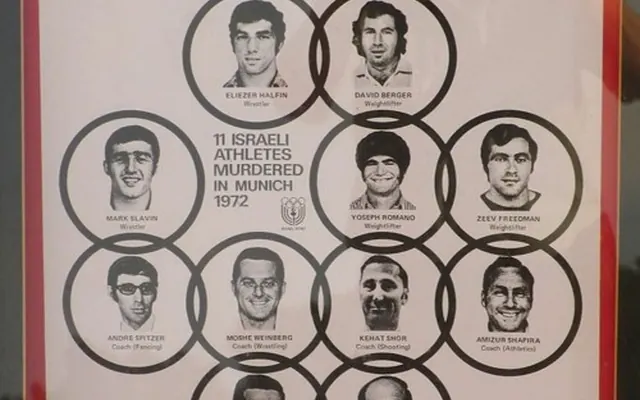
TJS S4E12 The 1972 Munich Massacre
The whole world watched in horror as the murder of eleven Israeli athletes at the 1972 Munich Olympic Games by the Black September terrorist group raised the bar...
Play Episode