
TJS S4E7 Israel post 1967 part III Settling Hebron
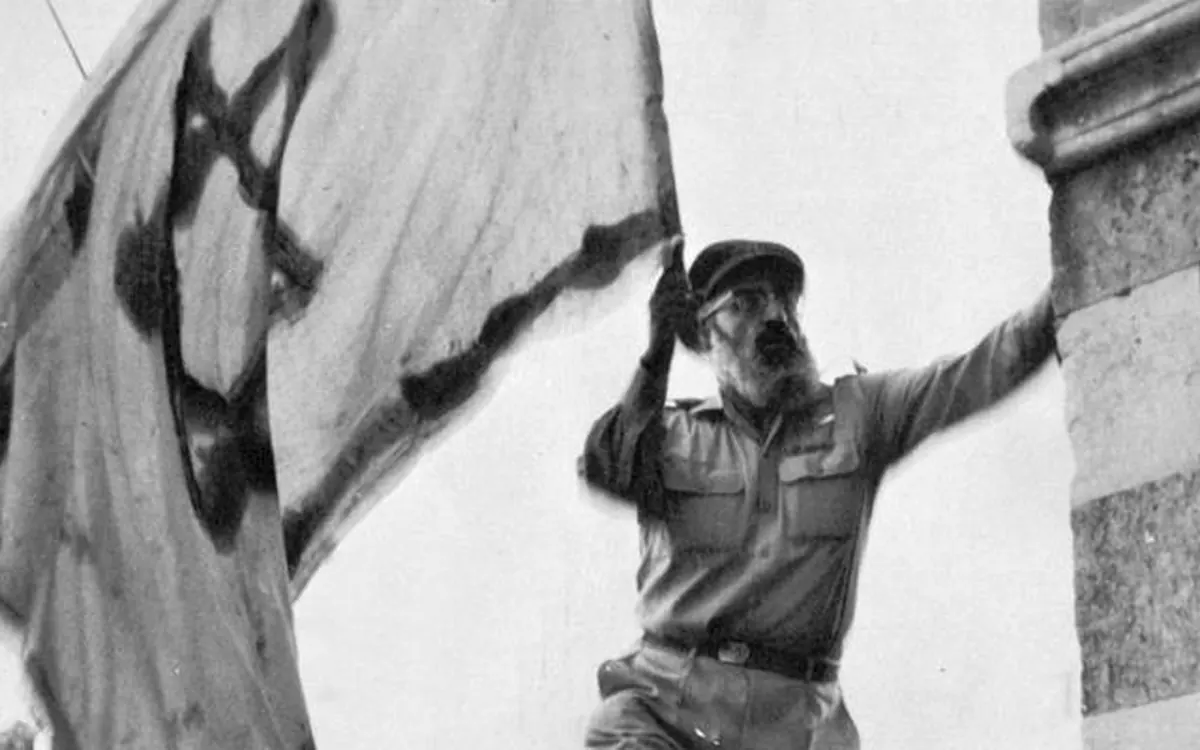
The return to Israel can have two meanings - a return to the Land and a return to essential self. The birth of a settlement movement striving for redemption was one of the most significant results of the Six Day War, and no community tells the story better than Hebron. Learn about IDF Chief Rabbi Shlomo Goren, the Tomb of the Patriarchs and Matriarchs / Cave of Machpela, Rabbi Moshe Levinger, Eliyakim HaEtzni, Hanan Porat, the Gush Emunim movement, and the Jewish settlement movement, Moshe Dayan, Levi Eshkol, Haim-Moshe Shapira and more.
About this episode
In practice, theory and practice are not the same, and Rav Mike is interested in getting the job done. He begins with critical theory, which offers the power of standing outside a thing yet sweeps away the irreducible texture of life as actually lived, and he borrows one of its ideas for his own use. The Kenyan writer Ngugi wa Thiong'o called it the colonization of the mind, inducing in the colonized a set of beliefs that automatically grant superiority to the colonizer's truth claims, an invidious comparison in which you have already internalized your conqueror's standards as the higher ones. The Jews, he argues, may be the oldest survivors of colonization still working their way back to their essential self, since two thousand years of exile mean that returning to the land of Israel and returning to the identity of Am Yisrael are separate stages. It is not enough to get the Jew out of exile, you also have to get the exile out of the Jew.
The land has always been the vehicle of that authentic return, and early Zionism sensed the problem of the colonized mind without the term, pushing the Hebrew Renaissance yet often longing merely to be a nation like any other rather than asking what a Jewish government should be. The 1967 victory, Rav Mike insists, was a biblical event, a spiritual atomic bomb whose shockwave rolled out from the Temple Mount and offered a chance to re-root from inside the story. That shockwave carried Chief Military Rabbi Shlomo Goren, who after blowing the shofar at the Western Wall urged General Uzi Narkis to blow up the Dome of the Rock and was threatened with prison instead. Turning to the next holiest place, Goren raced south to Hebron, addressing soldiers at three in the morning about David's seven years of kingship there before driving ahead of the brigade into a city hung with white flags of surrender.
Finding the gate of the Tomb of the Patriarchs locked and told there was no key, Goren fired on it for three hours until a crowbar pried off the hinges, then blew the shofar and read the portion of Chayei Sara that tells of Avraham's purchase of the very site. A week later he returned at night with a holy ark and Torah scrolls and told the Muslim qadi the Jews had come to stay, prompting Moshe Dayan to order the flag down, the ark removed, and Jewish prayer confined to the seventh step as at a mosque. Goren confronted the defense minister, warning he would be the most accursed man in Jewish history, and in the end had his way. The same shockwave ran through the government, lifting Eshkol, who would be dead within two years, crowning Dayan a hero, vindicating Yigal Alon and bringing Menachem Begin in from the political wilderness.
Rav Mike turns to Chaim Moshe Shapira, the National Religious Party elder who signed the Declaration of Independence and embodied a dovish, pragmatic religious Zionism, invoking Rabbi Yochanan ben Zakkai and opposing both the preemptive strike and the conquest of the Old City. He represents the past, though he held the leadership until his death in 1970, because the future had already arrived. Religious Zionism had shifted from opposing partition in 1937 to endorsing it in 1947 out of pragmatism, with a mildly messianic sense of the beginning of redemption, and in the mid-sixties the new yeshivot hesder, which paired rigorous Torah with army service, spread Rav Kook's vision that Torah flourishes by reaching into all of national life and cooperating with secular Jews. The war added messianic excitement that moved quickly toward the radical, as Rav Tzvi Yehuda Kook's teaching that redemption is now and imposes a duty to extend sovereignty became suddenly actionable.
His student Rav Moshe Levinger, born in Jerusalem in 1935, the year Merkaz HaRav was founded, took that charge to the moshav of Nachalim, where his wrinkled shirt signaled a disdain for material comfort and his condition for the post was a say in national as well as religious affairs. To him the victory proved that learning must bring action, and after a feeble response to his call for return he was drawn toward Hebron, allied with the secular nationalist Elyakim Haetzni. A scouting group found vegetables growing over the graves of the 1929 massacre victims, and the idea arose to rent the Park Hotel, taken for ten days with talk of staying until the Messiah comes. On Seder night more than sixty guests, a who's who of the coming settlement movement, heard the far-left author Moshe Shamir read Dayenu as a warning against settling for past achievements. A month later Eshkol's cabinet decided the settlers could stay, and the Jews felt they had come home.
Key ideas
- Rav Mike borrows the idea of colonizing the mind to argue that returning to the land and returning to the identity of Am Yisrael are two separate stages.
- It is not enough to get the Jew out of exile, you also have to get the exile out of the Jew, and the land has always been the vehicle of that return.
- Rav Goren took Hebron as a one-man army, firing for three hours on the locked gate of the Tomb of the Patriarchs before reading of Avraham's purchase of it.
- The war's shockwave ran through the government, lifting Eshkol and Alon, crowning Dayan, and bringing Begin in from the political wilderness.
- Religious Zionism shifted from Shapira's dovish pragmatism toward the activist redemption of Rav Tzvi Yehuda Kook and the yeshivot hesder.
- Rav Levinger's Park Hotel Seder of 1968 gathered the coming settlement movement, and a month later the cabinet let the settlers of Hebron stay.
Chapters
- 0:00 Theory and practice; critical theory
- 4:25 Decolonizing the mind; the exile in the Jew
- 7:52 The land as vehicle; a spiritual atom bomb
- 11:10 Rav Goren at the Wall; the Dome of the Rock
- 12:15 Turning toward Hebron; the 3am address
- 14:24 Racing ahead; white flags and a locked gate
- 16:39 Returning with the ark; Dayan's orders
- 18:51 The shockwave through the government
- 21:02 Chaim Moshe Shapira; the old guard
- 22:07 Religious Zionism from Peel to partition
- 24:16 Merkaz HaRav and the yeshivot hesder
- 26:25 Rav Tzvi Yehuda; redemption made actionable
- 27:27 Rav Levinger at Nachalim
- 30:43 Haetzni and the plan for Hebron
- 32:56 The Park Hotel
- 35:02 The Seder in Hebron
Who, where and when
People
Ngugi wa Thiong'o, Rav Shlomo Goren, Uzi Narkis, Moshe Dayan, Chaim Moshe Shapira, Rav Tzvi Yehuda Kook, Rav Moshe Levinger, Elyakim Haetzni, Moshe Shamir, Hanan Porat
Places
Hebron and the Tomb of the Patriarchs, The Temple Mount, Nachalim, Kfar Etzion, The Park Hotel
Texts
Decolonizing the Mind, The portion of Chayei Sara, The teachings of Rav Kook, The Passover Haggadah
When
1929 CE: the Hebron massacre, 1935 CE: Merkaz HaRav founded and Levinger born, 1967 CE: Goren enters Hebron, 1968 CE: the Seder at the Park Hotel
Read the transcript
In theory, theory and practice are the same, they say. In practice, they are not. And practically speaking, I'm interested in getting the job done, whether it fits the theory or no. Because I'm Rav Mike Foyer, and this is The Jewish Story. Season 4, Episode 7, Israel Post-67 Part 3, Settling Hevron. Do you ever feel like the world is being taken over by kooky theorists, by academics on steroids who flex their mental muscle by bending language in unexpected and frankly incomprehensible ways? Now, this is not a neutral phenomenon, because I'm sure I wouldn't be the first to warn you that all fascism begins in language. But truth be told, I'm not going to get that worked up about it. The theoretical discourse doesn't interest me that much.
Certainly not concepts for concepts' sake, blah, blah, blah. And not even the admitted power that these sort of ideas can bring forward. I'm not denying the power of theoretical discourse. If you can wade through the verbiage, there's often critical insight to be gained, pun intended, because this is all about critical theory. And what critical perspective offers is the ability to look at something from the outside. If you look closely, most of the energy that goes into these verbal gymnastics is expended on trying to stand outside of whatever is being considered. You do this by placing definitions, categories, and narratives on it. Hence all the talk of structural racism, gender dysphoria, post-colonial theory.
The irreducible aspects of individual life as it's actually lived get swept away by this defining language of systems and concepts. And whether I buy into the specific critical models being applied, I don't doubt we all need to get outside of ourselves and what we think in order to understand things from time to time. But I also would like to remind the world that sometimes you have to be on the inside. Sometimes you have to inhabit the wholeness of organic experience. And not only does jargon not help this, it hinders. So there's just going to be a tension. You know, here in the year 5781 or 2020, depending on when you think it is, Am Yisrael has been focused on coming home for well over a century.
And after so many years of concerted effort to reorganize ourselves materially as a nation in our land, we've succeeded. I mean, I'm looking out the window at the largest Jewish commonwealth since the height of the Maccabean era. Nonetheless, when I look out there, I can't help but feel that there's a depressingly small amount of energy and awareness being spent on the spiritual and cultural challenges we face. Why is that? Why is the whole world thinking about their culture? And we seem to just be cruising along building roads and buildings. Now, our goal is to do more than come home. We want to actually be at home. We want to be Amba Artzo, a people in our land. We want to be Israel and not just a collection of Jews in the Middle East.
And unfortunately, most of the thought being applied to who we are and the cultural challenges we face, even by my fellow Jews, is critical and deconstructed in nature. They're not looking to build up a narrative of who we are. They're trying to tear us apart. That's why, in the eyes of so many, I'm not a traditional Jew striving to attach myself to God and seeking to live a whole life in my native Judea. I'm a white, supremacist, colonist, heterocentric, ashkenormative hegemon, probably misogynist too, erasing indigenous culture as I go, dominating the temporal and spatial narrative dimensions. If this makes sense to you, you should write me a letter. In my humble opinion, the world has never needed Am Yisrael more than it does right now.
They've never so badly required us be who we are, who we could be. I mean, listen, the startup nation is great, but I believe we have far more to offer the world than the cash machine, microchips, and drip irrigation. The essential problems that humanity faces aren't technical. They're not even resource-based. We have enough to go around and the ingenuity to figure out how to make it last for more. What we lack is moral vision and the social will to pursue these things in a just and sustainable manner. And that's where the true nature of Am Yisrael is meant to shine. We're supposed to be oligoyim, the light unto the nations. We are able to offer in our ideal a standard of measure, an example of behavior, a set of organizing principles that can help build a new world.
But in order to do this, we have to build our own society on our own organic values and visions. And after more than a hundred years of aping the Western materialist approach to life, it's time we recognize that this is harder than it sounds. And that's why, actually, those kooky theorists can help us out. There's an idea which in post-colonial theory is called decolonizing the mind. And we need it bad. Decolonizing the Mind is the title of a book by Kenyan novelist and post-colonial theorist Gugiwa Tiongo. And he defines the colonization of the mind as, quote, inducing a set of beliefs in the colonized mind. He says these beliefs automatically grant superiority to the colonizer's truth claims or their reasons when they clash with those of the colonized.
This means that the one who conquers you becomes the standard of measure for what is true and right, not just because they hold power over you, but because they own the inside of your mind. Colonization of the mind sets up what he calls an invidious comparison. It's a false dichotomy in which the colonized must choose between their own organic perspective and that of the colonizer. The problem is, is they've already internalized the colonizer's standards of value as superior. And so you can imagine which one they're going to choose. Go back and listen to the episodes in season two about the early days of enlightenment and emancipation in Europe. This notion of the colonization of the mind is why physical freedom from the colonizer is only the first step.
The next step is to expel them from your head. As Gugi wrote, the bullet was the means of physical subjugation. Language was the means of the spiritual subjugation. That's a sentiment that early Zionist advocates, they would have understood. That's why they pushed Hebrew Renaissance. And now, most Israelis I meet just want to speak English with me. Now, I know it's popular in post-colonial circles to call us colonizers right now. The Jews are colonizing Palestine. but the truth of the matter is, we may be the oldest survivors of colonization still striving to get back to our essential self. Note, not to get home. Thank God, we've done that. But 2,000 years of exile means that getting back to Eretz Yisrael, to the land of Israel, and getting back to Am Yisrael, what it is to be the people of Israel, are actually two separate stages in the process.
It's not enough to get the Jew out of exile. You've got to get the exile out of the Jew. Now, fortunately, for Am Yisrael, a primary vehicle of the emergence of our authentic identity has always been our encounter with the land. I mean, God says to Avram, up yourself and replant, because it's there I'll make you a great nation. Or, that generation that survived the 40 years in the wilderness becomes a people when they meet the land. Even the returnees from Babylonian exile 2,500 years ago were the minority, but they become the main plot of the Jewish story because they enter into that center point of the land. The early phases of Zionism recognized the existence of this problem of the colonization of the mind, though they lacked the term.
And an appreciation of the depth and scope of the challenge, I think, was also evading them. The idea of Shlilat HaGalut, the negation of exile, and the whole new Jew endeavor, you can go do a little bit of review on those terms, were based on what I would call romantic longing to get back to our roots, to free ourselves from the form we'd taken in response to the oppressive context of exile. And like I said, the Hebrew Renaissance was a powerful vehicle for leaving that inner exile, arguably the most successful in creating a truly independent Israelite existence. But behind and beneath it all was the very human longing to be a nation like any other, which dominated much of Zionism, to find peace in our land by letting go of what makes us Am Yisrael, rather than uncovering it.
And thus the secular and often anti-religious stance of Zionist leadership, the willingness upon independence to lower the Union Jack and run the Star of Deva right up the same flagpole, rather than asking what Jewish government actually ought to look like. And I could go on. Being a nation like any other, Avoiding the painful and difficult process of decolonizing our minds, of making a full spiritual return from exile, might have been easy to avoid at first. But 1967 changed that. I will insist in my dying breath that the victory of the Six War was an event of biblical proportions And if you read the Bible a failure to respond to such signs is nothing short of disastrous. This was an opportunity to re-root in the land, one which finally offered us the chance to explore who we are from the inside, from within our own story, to get the oppressors out of our heads.
I'd like you to picture this biblical event like a spiritual atomic bomb. A shockwave rolled out from Jerusalem around the world at our contact, re-contact with the Temple Mount, right? This is certainly our narrative center. We've seen it in the last episodes touch Soviet Jewry, American Jewry, Israel and the nations around it. In my humble opinion, its reverberations will shake government and cultures for decades to come in our stories. Last week, we saw it pick up Hanan Perat and bring him home in an act whose symbolism would be childishly heavy-handed if it wasn't so real on the biblical, Zionist, and Messianic scales. This return was, practically speaking, this point in our story, the beginning of the emergence of a group of Jews who were looking to throw off exile in a more profound fashion than Am Yisrael had yet achieved.
And we're going to learn a little more about them today. But I want to start this week's story following that shockwave, as it picked up Chief Military Rabbi Rav Shlomo Goran and sent him riding on fiery chariots toward the holy city of Hevron. I'm sure many people listening right now are familiar with the iconic picture of Rav Shlomo Goran, General Chief Rabbi of the IDF, blowing a shofar at the western wall immediately after his capture. You may, however, be unaware that from there, he went straight to his commanding officer, General Uzi Narkees, commander of the Central Division, and told them that this was the moment to blow up the Dome of the Rock. Alarmed, Narkees replied, Rabbi, stop. Do this, and you'll go down in history, Rav Gorin insisted.
Tomorrow might be too late. Narkees refused again. Aware of the danger of the moment, he threatened, Rabbi, if you don't stop, I will take you from here to prison. Now, Rav Gorin didn't go from that conversation to prison. Realizing that the physical liberation of the Temple Mount was not going to be followed by its spiritual freedom, he turned his eyes toward the next holiest place he could think of, the Tomb of the Patriarchs in Hevron. Grabbing a jeep, he headed south from Jerusalem, reaching Gush Etzion at 1.30 in the morning, where Lieutenant Colonel Svika Ofer was organizing armed infantry units for the coming assault. Ofer told the rabbi that the troops would head out at 6, and Rav Gorin asked to address them before departure.
So at 3 a.m., the company assembled to hear these words. Dear soldiers, today we liberated our nation's holy of holies in Jerusalem, the Temple Mount. Tomorrow, we're going to liberate the second holiest city in Eretz Israel. You're going to liberate the Jewish people's city of the patriarchs, which is the foundation of the kingdom of David. King David ruled for seven years in Hevron before he ruled in Jerusalem. You're going to fight against the worst and wildest murderers. they carried out the pogroms all over the country and killed 164 fighters right here where we are now after they surrendered and laid down their arms. There is no absolution for that. Know how to behave with them and in the name of the Lord, take action and succeed and go from victory to victory, from the victory in Jerusalem and Judea to the victory in Hevron.
Only a few hours later at 6 a.m., Rav Gorin was out on the road waiting. one of Madden's chomping at the bit, but the battalion was nowhere to be seen. He told his driver to start toward Hevron nonetheless, and in a moment he and his escort were tearing down the highway, their siren causing any random vehicle on the road to let them pass. The closer they came to the city, though, the more empty the roads became. Rav Goren's driver at a certain point turned to him and said, Rabbi, we're the first ones here. There are no soldiers ahead of us. The entire brigade is behind us. We could get stuck in Hevron alone, and who knows what they'll do to us. Drive on, was the only reply he received. White flags hung from every house they passed, and when they finally drove down the main street of Hevron, every balcony sported a white sheet, hung there in hopes of making their position abundantly clear.
The surrender was so complete that the municipal government and the remaining military powers of the Jordanians had decided on their own to place a curfew, ordering that no one leave their home. But Rav Gorin wanted to make a clear statement that the Israeli Defense Forces had just conquered Hevron, even though at this stage the IDF consisted of he and his Jeep. So he motioned to his driver to stop next to a podium in the middle of the city, where a policeman usually stood to direct traffic. And he took the Uzi from his escort and climbed the podium, firing off a whole magazine into the air to notify the residents of the city that the Israeli Defense Forces had captured Hevron. But truth be told, Main Street had never been Raul Gorin's destination.
I can't even imagine the emotion he felt as he approached the gate to the tomb of the Patriarchs and Matriarchs. Raul Gorin's last visit to the site had actually been under the British mandate, and he'd been barely saved from being beaten to death by an Arab mob when a mandatory policeman snatched him out of the mosque. And now he'd returned as a one-man Jewish army. Iftah el-bab, he shouted in Arabic, Open the gates! Voices in high replied, Nefish muheftuah, we don't have a key. Rav Goran wasn't about to enter into some Talmudic discourse on how they had locked themselves inside without the keys. Instead, he leveled the Uzi once again and began to fire on the gates. But to no avail. For three hours, he and his driver shot, pounded, and struggled to break down the gates in the middle of the city of Hevron while all the people watched from the surrounding buildings and did nothing.
But it wasn't until the first tanks of Colonel Ofer's battalion finally arrived that they managed to acquire crowbar and pry off the hinges. Rav Goran's first act upon entry was to blow the shofar as he'd done at the Kotel only hours or perhaps a day before. And then he retrieved the Torah skull which was in his jeep and went straight to the tomb to read the weekly portion of Chayeh Sara, the one that tells the story of Avram's purchase of that very site. Now, Rav Goran had retreated before the generals in his desire to change the reality on the Temple Mount, but he wasn't about to give up twice. Once the war was fully over, about a week later, he returned to the Tomb of the Patriarchs in the middle of the night with his assistants, and they were carrying an Arun Kodesh, a holy ark, and Torah scrolled to put in it.
He informed the Muslim Qadi that was there the Jews had returned to stay. When Defense Minister Moshe Dayan heard of the Rabbi's action, he issued immediate orders to turn the cave of the patriarchs back over to the Muslim authorities, just as he'd done to the Temple Mount. They read like this. Number one, take down the flag, which Rav Gorin had hung over the building. Number two, remove that Arun Kodesh, that holy ark, and the Sefer Torah, because the site is not a synagogue for Jewish prayer services. Number three, and perhaps most insultingly, any Jew who wants to go into the cave of the patriarchs can only go as far as the seventh step and pray there. Or if he wants to go inside the cave, he must remove his shoes because he is entering a mosque.
But Rav Gorin was not to be denied. When he heard this order, he came straight to the defense minister and confronted him, declaring, Do you think you can hand over the cave of the patriarchs to the Arabs? It's a holy site for the Jewish people. This is the burial place of the fathers and mothers of our nation. This is where the kingship of the house of David began. This is what our soldiers have been fighting for. And he went on to tell him, I held my peace when you gave the temple mount to the Muslim wath, but this time I won't let it happen. The entire Jewish people will curse you forever. You will be the most accursed man in Jewish history if you do this thing. You will go down in history as a terrible disgrace.
There was much more argument which followed. But in the end, the rabbi had his way. the Jews had returned to the graves of their ancestors seemingly to stay. That same shockwave of victory, of history if you will which dropped Hanan Porat back in Kfar Hatzion and which Rav Goran rode to victory in the midst of Hevron also passed through the Israeli government. We've explored some of this already in its aftermath Prime Minister Levi Eshkol was hugely elevated, victorious on the battlefield, vindicated in the eyes of his political enemies who'd pushed for a more militant posture in the lead-up to war. He may never have reached the popular acclaim of his defense minister, Moshe Dayan, whom the war made into a hero of epic proportions, But Eshgol was unquestionably in charge in this moment, ready to lead in victory as he had done in war, with that winning mix of compromise, calculation, and conquest.
Tragically he would be dead within two years Labor Minister Yigal Allon had been lifted up as well basking in the victory which had quote finished the job of 48 the war in which he himself had his hero days on the battlefield As we heard last episode, Alon put his plan for control of the territories into Eshkol's hands within weeks of victory because he believed the time had come to be done with war altogether. Menachem Begin was there as well. He may have begun his tenure as a guest of the Mapai-dominated alignment in the unity government formed in the shadow of war, but victory had brought him in from the political wilderness, and he'd remain in that cabinet as minister without portfolio until 1970.
And if you know a little bit of history, you'll know that he'll have his shot at the prime ministership before too long. But right now, the man I'm really interested in is far less known. Senior National Religious Party Leader and Minister of Internal Affairs Chaim Moshe Shapira. Shapira was the essence of the old guard amongst religious Zionists. He'd been a signatory to Israel's Declaration of Independence, served as Minister of Health and of Immigration in David Ben-Gurion's first provisional government during the war, and held a ministerial post more or less every year since then. Shapira represented the mildly dovish and always pragmatic stance that had characterized mainstream religious Zionism since the day that they had supported Herzl's Uganda proposal back in 1903.
During the pre-state struggle, Shapira made a name for himself speaking against the Urgun and the Lehi. In 56, he supported the retreat from the Sinai Peninsula, actually citing Rabbi Yochanan ben Zakkai's decision to negotiate with the Romans and saying, quote, a bit more modesty, a bit less vanity and pride, won't be unhelpful to us. And you may remember that Shapiro was the most vocal voice in Eshcol's government that opposed a preemptive attack in May of 1967. He even stood against Menachem Begin's urging to conquer the Old City during the war, saying that the powers want to internationalize the Old City, and I personally am not opposed to that. What matters for our story right now is that Chaim Moshe Shapiro, actually represents the past, whether he knew it or not.
He would maintain control of the political leadership of religious Zionism until his death in 1970. But here in 1967, the future has already arrived. A little bit of context. In the pre-state period, most religious Zionists opposed any partition of the land of Israel. The proof for this would be that the overwhelming majority of the representatives to the 20th Zionist Congress voted against the 1937 Peel Commission. only a handful didn't vote against, and they abstained. There was a mildly messianic element that underlay their thinking. Many saw the Zionist movement, the Balfour Declaration of 1917, and the general growth of the Jewish settlement as Atchalte de Geula, the beginning of redemption. But I say mildly messianic because despite their opposition to dividing the land in 1937, ten years later, the UN Partition Resolution received the endorsement of almost all religious Zionists.
It was a profoundly pragmatic shift. 1937 was not 1947. And together with Jews world over, the religious Zionists recognized that this was not an opportunity to be missed, to establish an independent state, no matter how truncated. There were those, like Uri Svi Greenberg and the visionaries of the underground who wept, but most felt that no price was too high to pay for a safe haven in the wake of the Shoah. The years since independence had witnessed another slow change. And not just in the religious Zionist camp, growing awareness of the extent of the Holocaust, of the persistence of global anti-Semitism and ongoing terror, all worked to enhance the militant tendencies within Israeli society as a whole.
And that process was only more pronounced amongst religious Jews, who anyway represented the more particularist element within Israeli society. Nonetheless, as I said, the veteran leadership of the National Religious Party continued to hold moderate positions on questions relating to territory and war. I mean, Chaimusha Shapiro was seen by many as a bulwark against the secular Ben-Gurion's militancy when he was Prime Minister. But only a few years before the Six-Day War, a process began which in many ways signaled the beginning of the end for his brand of religious Zionist pragmatism. Until the mid-60s, the sole high-level yeshiva, school for higher religious learning in Israel, that educated its students simultaneously to a depth of Torah and to a profound identification with the Zionist enterprise, was the Merkaz Harav Yeshiva, the educational institution founded by Rav Avam Yitzchak HaKohen Cook just before his death in 1935.
The rest of the major yeshiva world belonged to the Haredi community, who were at best ambivalent to Zionism, at worst openly hostile. Now, this all changed with the launching of what's known as the system of yeshivot hezder. Hesder means arrangement, and it was an arrangement between Torah learning and the army. These schools combined rigorous text learning with a deep commitment to military service, and frankly, engagement of broader society. in general. And what allowed them to succeed with such an innovative educational approach was largely the teachings of Rav Kook. Unlike the Haredi worldview, the growth of Torah and Rav Kook's vision doesn't depend on a strategy of isolation and segregation, nor does it require the passive, apolitical, classic posture of exile.
On the contrary, Rav Kook taught that Torah would only really flourish when it extended its influence to all aspects of national life. And that perspective allows for what I might call a religious national activism and, critically, for a cooperation with non-religious Jews, especially those who are involved in rebuilding the land of Israel. The Hezriyashivot sparked a religious revival in the ranks of religious Zionism well before the Six-Day War, or well before, within the decade, let's call it, before the Six-Day War, making a hugely significant impact on the level of religiosity in that community which is still felt to this day, what the war added was a messianic excitement, one that moved quickly toward the radical.
I hope you recall Ratsvihutukuk's prophetic speech that I quoted once again last episode. Now, Ratsvihutukuk had always insisted, in the footsteps of his father, on the sacred nature of the state. In his eyes, it was nothing short of a manifestation of an ongoing process of redemption. And so he taught his students that the sanctity of the state imposes on every Jew the holy duty to take an active part in redemption. And not just in general, but in specific by extending sovereignty, the power of the state, over all the territories of the land of Israel, which were still under foreign rule. Until 1967, these were discussions which basically found their place in the Beit Midrash. but after the war Rav Tzvi Yehuda's words suddenly became actionable and his students from Merakazerav were well positioned to make them so they were already the most dynamic teachers in this new system of national religious yeshivot the hezer yeshivot and they would soon take a leading role in the project of settling the recently conquered lands so Chaim Moshe Shapira might have been sitting in the cabinet looking over the pragmatic alone plan with Levi Eshkol.
But out in the streets, a new type of religious Zionist was being trained, one with a much more activist stance on redemption. Rav Moshe Levenger was born to Jewish-German immigrants in Jerusalem in 1935, obviously. Not born as a rabbi, but in that very year he was born, the Merkaz HaRav Yeshiva, where he learned, was founded. By all accounts, he was a passionate and committed student, and once he received his ordination, the Rosh Hashiva, Rav Tzvi Yudhakuk, sent him out to spread the light of his father's teaching as far as possible. That shockwave I've been describing, that pulsed out from the conquest of the Temple Mount in 1967, found Rav Levenger serving as rabbi of the Nachalim religious Moshav near Petach Tikva.
From what I can tell, the leadership of Nachalim was probably a little bit taken aback from his appearance when he first applied for the job. His wrinkled shirt and simple slacks weren't the suit which was the customary attire of Ashkenazi rabbis in his day. But the community would soon learn that this wasn't simply his style. It was an outward manifestation of a deep disinterest in material comfort altogether and an almost otherworldly disdain for physical limitation. But apparently, they didn't blink at the condition he laid down from the very outset of his service. Ideal in national as well as religious affairs, he declared. This was the spirit of Mercaz HaRav coming through. Rav Tzvi Yehuda had taught him that in a time of redemption like the present, there was no distinction between the national and the religious.
And that was before the war. Rav Levenger was only 31 when he took the post in 1966, and he revitalized religious life on the kibbutz. His method was simple. Along with traditional lessons in Talmud and Halacha he began to teach Rav Kook works This is what he had been trained for more than trained commissioned by Rav Tzvi Yehuda to spread his father urot his lights and the redemption potential throughout Am Yisrael. And to Rav Levenger, the victory of the summer of 1967 wasn't just the culmination of millennia of Jewish longing, or even the answer to his personal three times daily prayers. it was the ultimate testimony to the truth he'd received from Rav Tzvi Yehuda that redemption is now and since the essence of what he'd been taught at Merkaz Rav was Tamud Gadol Sheh Medvi Lemaseh that the reason learning is so great is that it brings us to action he knew such a victory demanded a response many of the families living in Nachalim were actually refugees from Nevei Yaakov a settlement originally north of Jerusalem that had been destroyed by the Jordanians in 1948.
In Rob Levenger's eyes, their return could serve as the perfect catalyst. It would cause a massive wave of Jews moving into these newly conquered lands, which he saw to be the only proper response to the miraculous June victory. But when he posted an advertisement in the papers calling for people to join in this return, the response was feeble at best. But no matter, a better opportunity soon presented itself in the form of the children of Kfar Etzion. As we heard briefly last episode, Rav Levenger was much the original enthusiast who supported Hanan Porat and his group going home. Once the government had approved that effort, Rav Levenger actually moved in with the core group. But really, he never settled in Kfar Etzion.
Rather, he began to crisscross the country in an old willies pickup, promoting his vision and connecting with like-minded souls. And so it should come as no surprise that Rav Levenger was drawn quickly into the movement for greater Israel or that he built especially close ties with attorney and secular nationalist El-Yakim Ha'etzni. Didn't Rav Kook teach that men like Ha'etzni were the true vehicle for the present redemption? Ha'etzni, by the way, was also the son of German Jews. He'd made Aliyah, but he grew up just like Rav Levenger in Jerusalem in the pre-state days. He'd fought with the Haganah and then the IDF in 1948, spending a year and a half recovering from severe wounds. But once the state was established, Ha'asti became disillusioned with the ruling Mapai party.
He renounced his membership and went to Tel Aviv to establish a law office and private practice. All that changed with the victory of Six-Day War. Suddenly, as part of his office, he opened the Action Office for the retention of the territories and became a driving force in the movement for greater Israel. And only a few weeks after Rav Levenger had moved out to Kvar Etzion, when he was already back in his community, serving in Nachalim, he received a phone call from Elia Kima Etzni, suggesting that he knew the next objective in the plan of redemption, the city of Hevron. It all began with a few simple newspaper ads, commissioned by a group calling themselves the National Religious Party's Young Guard, telling anyone interested in going up to Hevron to write at once to POB 4288 Tel Aviv.
The ads were the brainchild of Rav Levger and Elie Kim HaEtsni. And while they awaited a popular response, they also began to pursue contacts with ministers and officials in hopes of convincing them to grant government sanction for returns of the holy city of Hevron. But we saw Moshe Dayan's response to Rav Gorin. And so it should come as no surprise that as summer turned to fall and fall toward winter, there was no response from the government. Rav Levenger and Haizzi, however, were not deterred. They knew that it's often easier to gain forgiveness than permission. I mean, hadn't Rav Gorin proven that with the placement of a Torah scroll in the Tomb of the Patriarchs? He had more power than the defense minister himself.
And so a core settlement group was formed, and Rav Levenger decided that a scouting mission was in order. They chose as their guide Avram Franco. He was old enough to have lived in Hevron's Jewish quarter before all the Jews were expelled. That was following the massacre of 69 of their brothers and sisters in 1929. And they wandered through the city, even making a few futile attempts to purchase apartments, until they found themselves at the ancient Jewish cemetery. Neglected since the Jews had been expelled, they found vegetables growing in the plot where the victims of the 29 massacre had been buried. It was a painful sight, but one which inspired Rob Levenger with an even greater determination. And it was there, as they spoke in the cemetery, that the idea of renting a hotel was suggested.
And so the group made its way to the Park Hotel in downtown Hevron. The owner greeted them at the door, and I can only imagine his surprise, but nonetheless, on hearing their desire to rent the entire hotel for 10 days, he responded with enthusiasm. Now some say they presented themselves as Swiss tourists, Others, that they simply didn't explain who they were. Everyone agrees that they told the owner they might like to extend their stay for an indeterminate time. And legend has it that Rav Levenger added, Ad Shevo Mashiach Tzidkenu, until the Messiah comes. The settlement group now knew where they would be. The only question was, when? And the answer seemed obvious. What better day to renew the Jewish presence in the holy city of Hevron than on Seder night.
And that's how it came to be that Rav Levenger's wife Miriam and her friends spent the day before Passover in downtown Hevron, kashring the kitchen of an Arab hotel for Pesach. The days before had been spent in collecting funds and rounding up supporters, many of whom assumed that this was merely a symbolic act. Perhaps they didn't really know Moshe Levenger, because they couldn't have been more mistaken. For instance, Yitzchak and Chaya Gani Ram checked into the hotel with three children and only one suitcase, assuming that the army would evict them after a day or two. Imagine their surprise when a truck pulled up to the entrance carrying the entire Levenger household, refrigerator, washing machine, and bookshelves included.
There were more than 60 guests at the first Seder in Hevron in almost 40 years, and they make up a who's who of what we now know as the settlement movement. It was a surprisingly diverse crowd, considering the perspective of today. And when it came time for author Moshe Shamir, a well-known member of the far-left secular Hashomer Hatzair movement, to comment on the Haggadah, many of the religious participants flinched in expectation of what he would say. But this is what Shamir had to say. He asked first, why is it that we recite the song Dayenu, which means it would have been enough, as part of the Haggadah? After each and every stance lists some divine gift, which we would never want to forego, we then ask, or say, it would have been enough.
But really? Would it really have been enough if God had brought us out of Egypt but not split the Red Sea? Or if we'd survived 40 years in the wilderness but not entered the land of Israel? And this is how he answered his question. The truth is, he says, that this part of the Haggadah has only one aim, to teach us how each and every generation of Jews tends to settle for the achievements of the past, to settle for what its forefathers had accomplished. We two right here have the same tendency to say Dayenu, to say enough. The state of Israel, Dayenu, it would have been enough. Unified Jerusalem and liberated Hevron, Dayenu, it would have been enough. Wasn't it last year at the Seder that we said, if God had given us Israel, but had not given us Jerusalem and Hevron, Dayenu, it would have been enough?
That's why we've got to know that we'll be facing many more Dayanus until we reach full redemption. When Shamir finished, Rav Chaim Drukman stood and kissed him on the forehead. On the second day of the holiday, the guests of the park hotel sent a telegram to the Minister of Defense, Moshe Dayan, Chag Sameach, from the settlers of Hevron. On the third, they were visited by Labor Minister Yigal Allon and the poet Nathan Alterman. Even former Prime Minister David Ben-Gurion sent a note, Hevron is still waiting redemption, he wrote, and there is no redemption without extensive Jewish settlement. Exactly one month after Rav Levger and his friends moved into the park hotel, Levi Eshkol's cabinet convened to discuss the matter, and when they adjourned, the decision had been made that the settlers could stay.
There was even a promise of government help toward establishing a new yeshiva in the ancient city. Now, if you know anything about the decades to come, then you know there are many rocky chapters ahead for this community in Hevron. But for right now, the Jews felt that they'd come home. I just want to thank a few people. I want to thank the folks who give their hard-earned money, help make this show happen, keep it free and widely available. I want to ask you to join them. Go right now to my website, jewishstory.co, and in the upper right-hand corner you'll see a little button that says Be a Patron. You can click on that to make a little bit of per-podcast support. I'm happy to dedicate shows as well in honor of those who are with you today or in memory of those who passed on.
Send me an email at rovmikefoyer at gmail.com or a personal message on Facebook, rovmikefoyer, and I'm happy to share the details with you. I want to thank the Land of Israel Network, that's thelandofisrael.com, for creating a platform that allows me to reach so many amazing Jews. I want to thank the Pardes Institute, p-a-r-d-s.org.il, who gives me the privilege of teaching. I want to thank you for listening. I'm Rav Mike Foyer. And this is the Jewish Story.
More from Season 4
TJS S4 Interlude - Interview with Yossi Klein Halevi
This week I host author and thought leader Yossi Klein Halevi. Our conversation touches on his personal experience the early struggle for Soviet Jewry, the challenges of writing,...
Play Episode
TJS S4E6 Israel post 1967 part II - A Greater Israel
One can look at life as one long string of decisions, whether for individuals or nations. Israel had a number of decisions to make in the wake of...
Play Episode
TJS S4 Interlude: Interview with Rabbi Berel Wein
It is not every day that you get to speak with a legend, much less interview one. Here are some precious words I had with the 'alter rebbe'...
Play Episode