
TJS S4E9 War of Attrition part II: the diplomatic front
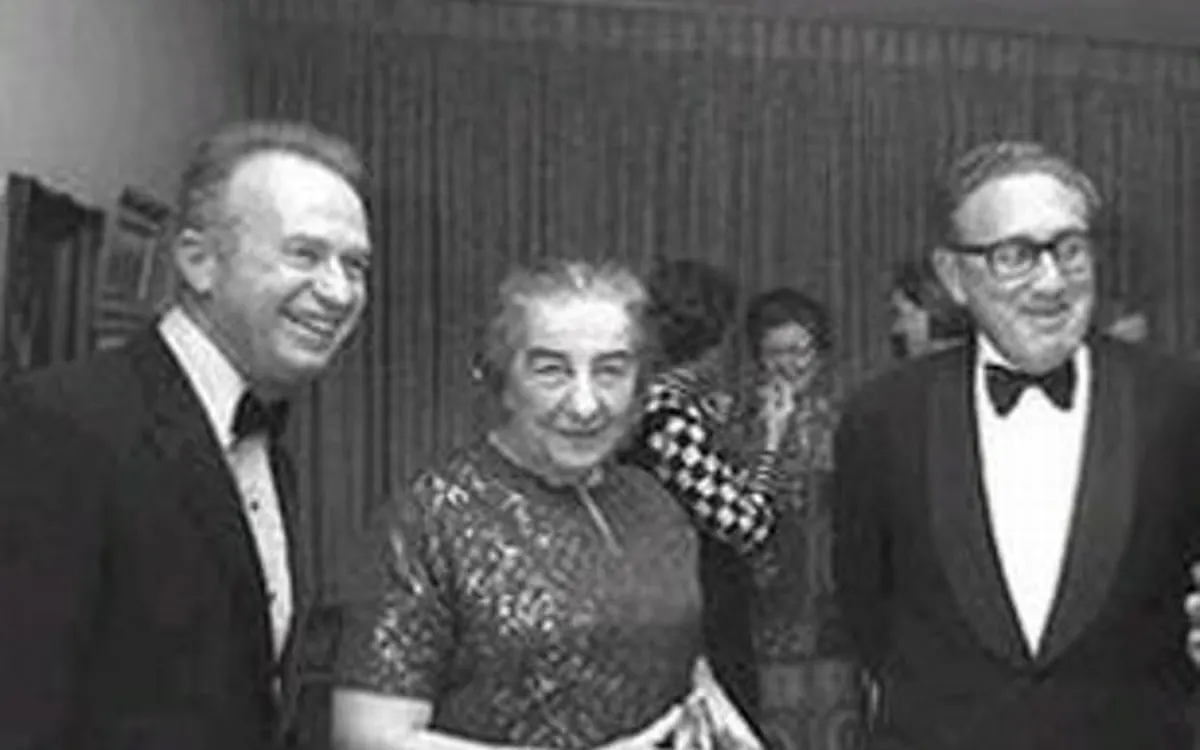
Every major conflict is fought on many fronts. This second installment on the War of Attrition explores the diplomatic front. We will encounter Yitzchak Rabin as the new Israeli ambassador and get our first look at American Jewish policy maker Henry Kissinger as our story leaves the battle ground for the boardroom.
About this episode
Victor Hugo said all the forces in the world are not so powerful as an idea whose time has come. The War of Attrition slipped from memory between the Six-Day War and Yom Kippur, yet one of its main theaters was not in the Middle East at all, but in Washington. Rav Mike puts two cynical sayings on the board, that diplomacy is saying nice doggie until you find a rock, and that it is the patriotic art of lying for one's country. In the Cold War the superpowers waged their rivalry through narrative as much as arms, and Goebbels had already seen that radio would be to the twentieth century what the press was to the nineteenth. Narrative truths are the most powerful tools for shaping consciousness, and Israel would struggle to tell its story to the world. To understand the war we have to meet two Jews at the center of the diplomatic battle.
The first is Yitzhak Rabin, who had been everything along the military axis and now wanted politics. To Prime Minister Eshkol's astonishment, the chief of staff asked to become ambassador to Washington, a blunt man who blushed at small talk and spoke only passable English, hardly the diplomat's mold. Foreign Minister Abba Eban, his urbane opposite, was horrified. But Rabin saw that the United States would supply the rocks Israel could find, and he meant to be there to make them the biggest and the best. The Washington embassy was the most important posting in Israel's service, its power flowing from the ambassador's role as the prime minister's personal emissary. Rabin laid out four objectives, meeting Israel's arms needs, coordinating policy for any peace initiative, securing financial support, and ensuring American willingness to deter direct Soviet intervention, since no one thought the war was over.
The battlefield before Rabin was dominated by the Cold War and Vietnam. Johnson pursued containment, and by smashing two Soviet clients Israel had confirmed its place as a worthy ally, but Nixon would soon bring détente, a relaxation of tension in which Israel was a source of friction. Resolution 242 had barely avoided a superpower breakdown, calling for withdrawal from territories, carefully not from the territories, and for an end to belligerency, clauses open enough to remain unfulfilled fifty years on. A sharper issue was Israel's nuclear program. Rabin had to hold the line of constructive ambiguity, a phrase of Kissinger's, pledging only not to be the first to introduce nuclear weapons. His meetings with Paul Warnke over the Phantom deal read like a fencing match over what the word introduce even meant, while the Pentagon tried to attach a nuclear memorandum to the sale of the fifty jets.
Knowing the Pentagon held the cards and that Johnson had grown ambivalent, Rabin crossed the bounds of diplomatic practice. Through a friend in the Democratic Party he reminded Johnson that Nixon had pledged to deliver the planes if elected, an underhanded move in an election year, and in January 1969 Johnson overruled the Pentagon and ordered the sale. As ambassador, Rabin inevitably became a big Jew in Washington, and his influence was tied to the American Jewish community, which could marshal domestic power around a foreign state. He traveled widely, building his own network, and worked with a growing institutional world, though his relations with AIPAC soured. 1968 was AIPAC's coming of age, the year it became tax-exempt and proved its bipartisan reach by placing military-aid planks in both party platforms. Where things curdled was partisan politics, for Rabin was no ordinary ambassador.
Rabin had known Nixon since hosting him warmly in Israel in 1966, when most dismissed him as a spent force, and he came to believe Nixon would be the better ally. He expressed that preference clearly and later doubled down, flying on Nixon's campaign plane in 1972 while Cy Kenen of AIPAC hosted a fundraiser for McGovern, a gamble that won him access and ill will. His distaste for American Jewry's involvement in foreign policy was reinforced by the second Jew of the story, Henry Kissinger. Born Heinz Kissinger in Bavaria and fled to Washington Heights before Kristallnacht, he became, in a friend's words, more American than any American, his patriotism forged as a GI liberating the camps where but for America he might have been. He saw history as meaningless incidents shaped by human will, argued for the will to use tactical nuclear weapons, and rose as the ultimate inside outsider, indispensable yet never allowed to forget he was a Jew.
Key ideas
- One of the main theaters of the War of Attrition was Washington, where the superpowers fought through narrative as much as arms.
- Rabin wanted the embassy because America would supply the weapons Israel needed, and he set four objectives for his tenure.
- Resolution 242 called for withdrawal from territories, carefully not from the territories, leaving it unfulfilled fifty years on.
- Israel held the line of constructive ambiguity, pledging only not to be the first to introduce nuclear weapons in the region.
- Rabin broke diplomatic practice by leveraging Nixon's pledge to win the Phantom sale, and bet openly on Nixon in 1968 and 1972.
- Henry Kissinger rose as the ultimate inside outsider, indispensable to power yet never allowed to forget that he was a Jew.
Chapters
- 0:00 Diplomacy as war by other means
- 3:15 The Devil's Dictionary; narrative warfare
- 5:25 Two Jews at the center
- 6:36 Rabin wants Washington
- 9:49 The most important posting
- 10:53 Rabin's four objectives
- 13:04 The Cold War; containment and Vietnam
- 14:22 Détente and Resolution 242
- 16:29 The nuclear question; constructive ambiguity
- 19:52 The fencing match with Warnke
- 21:00 Leveraging Nixon; the sale ordered
- 23:06 The ambassador and American Jewry
- 24:10 AIPAC comes of age
- 27:32 Betting on Nixon
- 31:11 Henry Kissinger; the inside outsider
- 39:44 The court Jew
Who, where and when
People
Yitzhak Rabin, Abba Eban, Levi Eshkol, Lyndon Johnson, Richard Nixon, Paul Warnke, Henry Kissinger, Cy Kenen, Joseph Goebbels
Places
Washington, The Suez Canal, Vietnam, Washington Heights, Bavaria
Texts
Resolution 242, The Devil's Dictionary, Nuclear Weapons and Foreign Policy
When
1968 CE: Rabin becomes ambassador, January 1969 CE: Johnson orders the Phantom sale, 1969 CE: Nixon brings détente, 1972 CE: Rabin bets on Nixon again, 1973 CE: Kissinger becomes Secretary of State
Read the transcript
All the forces in the world, said Victor Hugo, are not so powerful as an idea whose time has come. Well, I'm not quite sure what the idea is, but I can see it coming, because I'm Rav Mike Foyer, and this is The Jewish Story. Season 4, Episode 9, War of Attrition, Part 2, The Diplomatic Front. So here we are in the midst of a war, and an important one at that. Now the war of attrition may have slipped from the public mind due to its being sandwiched between the miracle of the Six-Day War and the disaster of Yom Kippur, but students of history would do well not to forget it. Last episode, we laid the groundwork, let's call it, for our story. Egypt's determination not to let Israel rest easy on the east bank of the Suez Canal.
Now, Israel's almost inability to conceptualize what a defensive war looks like, the superpower interests in the region, I mean, you can almost see spiraling escalation on the horizon. And truth is, there's actually more than one front in this war. Each of the so-called confrontation states, which ring Israel at this point, Egypt, Jordan, Syria, Lebanon, has its own story of conflict between 1967 and 1973. And we will come to them, have no fear. But for now, my eye is fixed firmly on the Sinai Peninsula. Or at least, one of them is. Because if we're going to understand the significance of the War of Attrition to the Jewish story and world history, then we need to appreciate that one of its primary theaters of engagement wasn't even in the Middle East.
It was in Washington. Now, there are two somewhat cynical sayings about diplomacy that I want to put on the board so we can carry them with us as we move forward into this story. First is the old classic. It's been attributed to everyone from Napoleon to Teddy Roosevelt that diplomacy consists in soothingly saying, nice doggie, until you have a chance to pick up a rock. Now, there's no question that a continuum has always existed between war and diplomacy. And here in the Cold War era, it's only more true. The U.S. and the USSR are vying for global domination, call it what it is, while at the same time they're striving to avoid direct confrontation. And that means that their conflict will spread beyond the classic battlefield into the intellectual, cultural, and world political spheres.
This is hardly something new in world history, but the power of modern media and the threat of nuclear holocaust will make the narrative warfare in which they engage a particularly important part of our story. and not only Israel but American Jewry as well will find themselves right in the middle of it on the local scale Israel has been largely cut off from diplomatic pursuits by the three nose of the Khartoum conference and its own mildly messianic sense of manifest destiny which was brought on by the victory of 67 I mean after all why give up through negotiation what you've won or God has given you through war but on the global scale Diplomacy has never been more important to Israel. And that brings me to my second quote.
This one I can actually squarely attribute to American writer, journalist, and Civil War veteran Ambrose Bierce, whose work The Cynic's Word Book, also known as The Devil's Dictionary, was a major hit in its day and frankly still worth checking out. In The Devil's Dictionary, Bierce defines diplomacy as a noun, the patriotic art of lying for one's country. the industry that will spring up in America and the Soviet Union which aims to win the battle for hearts and minds around the world is closely tied up with the evolution of mass media in the 20th century and let us not forget that combination has its origins in Nazi Germany it was propaganda minister Joseph Goebbels who first said what the press has been in the 19th century radio will be for the 20th century and would probably have added Facebook in the 21st.
Now, he made cheap radios that he called people's receivers of all things available to almost every German. Now, this is a battlefield which no one can afford to ignore. Now more than ever, even in 1968. Not that every diplomatic pursuit is built on a lie, God forbid. It's just that narrative truths are the most powerful tools known for shaping consciousness. And because narrative by definition is interpretive of past and present, as well as aspirational and idealistic in its relationship to the future, sometimes they diverge from the facts on the ground and sometimes they're able to shape them. It's a rule for life in understanding narrative warfare. and it's worth keeping in mind as Israel struggles in the 70s to tell its story around the world.
So all this is basically a roundabout way of saying we need to turn to the diplomatic front today in order to flesh out our understanding of the war of attrition. And that means that there are a couple of people we need to introduce. After all, victory on the battlefield may be elevated by a certain faceless glory, but there's no such thing as the tomb of the unknown diplomat. diplomat. And there are two particular Jews who I want to meet today because they sit at the center of the diplomatic battle being waged between 1967 and 1973. The first we've already met, and in fact, to some degree, we know him well. We last saw him in his role as chief of staff of the Israel Defense Forces. But in the coming chapter of our story, he'll be the embodiment of yet a third truism about diplomacy.
This time, it's the words of Chinese communist leader Zhou Enlai, who said, all diplomacy is a continuation of war by other means. It's just a truism that life either moves forward or back. There is no standing still. And I can imagine that this insight posed a particular dilemma for Chief of Staff Yitzhak Rabin in the fall of 1967. I mean, he'd been fighting his whole life. He'd been a Palmach soldier, commanding general, finally Chief of Staff. Together with Prime Minister Levi Eshkol, Rabin had overseen first the modernization of the IDF, and then its miraculous victory that summer. So at least along the military axis, there was basically nowhere forward left to go. always an ambitious man, Rabin had picked out politics as the next realm in which to excel.
His near-term, or let's just say mid-term aspiration, was to sit in the cabinet, and he understood it might be a slow climb to get there. Now, he couldn't know that in less than a decade, he'd actually be sitting in the prime minister's chair. And because he couldn't know it, he chose his first step very carefully. Prime Minister Eshkol was downright flabbergasted when the chief of staff approached him only months after the war with a request for appointment as ambassador to the United States. Now, Rabin was blunt to the point of being rude and known to be so uncomfortable small talk that he would blush in a crowd. He spoke only passable English. Together, these are hardly the hallmarks for success in the diplomatic world.
And if the prime minister was shocked, Foreign Minister Abba Even was downright horrified. Even had a strongly held dislike of Rubin, rooted in many things, not the least of which was their polar opposite personalities. I mean, the foreign minister made almost a caricature of the urbane cosmopolitan, multilingual, articulate, charismatic, a hero to the Jews of the world, as a voice of reason and justice. While on the other hand, the chief of staff played his native role almost too well taciturn military man, Sabra, prickly native-born Israeli who'd seen fighting all his life, whose Hebrew was more raw bedrock than sculpted verse, and whose national identity was all but the sum total of who he was.
As one can imagine, these different ways of being gave rise to very different ways of seeing, some of which resulted in fundamentally opposing conclusion, especially on matters of war and diplomacy. Add to this, their recent bitter struggle over the preemptive strike which had won the war, and so doing, vindicated Rabin's perspective. Now, a small consequence of that, by the way. You know, we laid the groundwork for the role which our conceptions have in shaping our decisions in the last episode, and we're going to see it through when we discuss the Yom Kippur War. But for now, just think of Ibn more as the lie-for-your-country type, and Rabin is the guy saying nice doggie as he looks for a rock.
And aside from his personal ambitions for the ambassadorship as a road to politics, Rabin recognized that the U.S. would be supplying Israel with the rocks she would be able to find in the foreseeable future. He wanted to be personally there in Washington to ensure they were the biggest and the best, and that the supply remained uninterrupted. And fortunately for Rabin, the Prime Minister agreed. Eshkol understood full well the importance of the role which he was offering to Rabin, and he came to see him not just as the right man, but perhaps as the only one who could play this role in the current era. The Washington embassy had been a key post since well before the state. Ben Gurion had been the first to read the writing on the wall and recognize the U.S.
was the coming international patron for Israel. And it only increased in importance since much of its power stemming from the fact that the Israeli ambassador in Washington was known to be a personal emissary of the prime minister, More of a trusted advisor than a professional diplomat. Post Six-Day War, there was no question that the U.S. Embassy was the most important posting in Israel's foreign service. I mean, frankly, it was true for half the countries of the world, and for Israel only more so. Her victory in the war had brought many things, but it had also put everything on the table. And Israel was counting on American backing for her approach to redrawing the map and crafting a stable balance of power, mostly through weapons sales.
No one understood the gritty details of what that required better than the former chief of staff, and no one had a greater stature to get it done than the heroic architect of Israel's miraculous 1967 victory. Now I know that note might fall flat in the ears of some of you listening right now We going to follow Rabin complex persona and how it was shaped and the way it shaped Israel for some time to come He's not going away until his tragic murder in 1995. But for now, there's no question that Rabin arrived in Washington in 1968, holding a status that commanded extraordinary respect amongst politicians and military professionals, and that his close relationship with Prime Minister Eshkol was well known.
He had what he deemed to be a complete grasp of the military and political issues at play in the U.S. relationship, and he was going to take an unprecedentedly activist role in securing Israel's interests. In his classic terse style, he detailed his objectives to embassy counsel you to add there within a few days of arriving. Number one, meet Israel's defense requirements. Read arms sales. Number two, coordinate American and Israeli policies in preparation for any settlements or peace initiatives which should arise. Read get America on our side when we're sitting at the table. Number three, secure financial support, mostly in the forms of loans and loan guarantees for Israel's economy. That one's easy to understand.
And last, but certainly not least, in the current Cold War environment, to ensure U.S. willingness to deter direct Soviet intervention against Israel in the advent of any coming conflict, because no one, especially not the former chief of staff, thought that the war was over. Now, these are no small tasks. Any single one of them could have consumed all the time and energy which Ambassador Rubin would have, and each one assumed an existential importance in his eyes. And of course, every ambassador is a bridge between two nations. Israel's interests might have been clear to Rabin, but he also knew that in order to achieve them, he'd have to enter into struggle with certain elements on the American side.
So let's quickly consider the battlefield which lay before him. The dominant fact of American foreign policy when Yitzhak Rabin became ambassador in 1968 was unquestionably the Cold War, and in particular, American involvement in Vietnam. President Lyndon Baines Johnson had presided over the escalation of that conflict for almost six years by this point, pursuing the containment doctrine that had guided the American approach to global communism more or less since the end of World War II. Deeply Christian, at least in his cultural roots, Johnson liked to explain containment with a quote from the book of Job, 3811, if you want to look it up. He would say, you may come so far and no further. Now, to my ears, it's a bit awkward that the quote actually comes in a passage which celebrates God's infinite power and man's inability to comprehend, much less master creation.
But nonetheless, by smashing two Soviet client states in 1967, Israel had well confirmed its place as a worthy ally in the containment framework. But that's going to change quite soon. In January of 1969, Richard Nixon will replace President Johnson and will pursue a policy which he called détente. Nixon wasn't going to give up on the American goal of restraining the Soviet Union. But he aimed to do so not through confrontation or belligerence, but rather through a relaxation of tension, as the term détente implies. And for all its glorious victories on the battlefield, Israel is a major source of tension in the diplomatic realm. Go back to episode 33 at the end of season 3, and you'll see that the results of Israel's victory became an immediate cause of American-Russian conflict within the UN.
It was the British proposed Resolution 242, which actually managed to avoid a super tower breakdown in the Security Council in the months after June 67. And you may recall that the resolution states as its goal, quote, the establishment of a just and lasting peace in the Middle East. Surely a goal we can all agree on. And it makes that goal contingent on two essential principles. Number one, withdrawal of Israeli forces from territories occupied. in the recent conflict. Notice, from, not from the, meaning the withdrawal has to be from some and not necessarily from all. That's one. Two is the termination of all claims or states of belligerency and respect for the sovereignty of every state in the area and the right to live in peace within secure and recognized boundaries.
Right? No more war. Let us all have borders. It sounds nice. But these clauses are open to such a broad range of interpretation that it should come as no surprise the resolution remains unfulfilled even now, more than 50 years later. And since the beginning of this season, I've been throwing out some of the factors which complicate the pursuit of peace from the internal Israeli perspective. But in the nature of his office, the internal perspective is not the one which the ambassador needs to focus on. Rabin's mission was to maintain Washington's support for the territorial status quo, so long as a diplomatic settlement acceptable to Israel wasn't available. And seeing as we've learned in the last few episodes that Israel doesn't really know what she wants, and Nasser, at least right now, seems bent on returning to war, one might think that that holding pattern will prove quite stable.
But as we'll see in coming episodes, there are forces on the American side, particularly within the State Department, which see an American-enforced peace as the only solution to the problems of the Middle East, or at least the one that's in America's best interest. Another issue, aside from Resolution 242, which Ambassador Rabin will have to contend with, is the U.S. government's stance on Israel's nuclear program. Now, you can go back and listen to Season 3, Episode 19, for the backstory on the birth of the Jewish bomb. For now, just know that the U.S. held little doubt about Israel's nuclear capability in 1968, nor about her willingness to use it, at least as a last resort. Just imagine, the Six-Day War could have gone very differently than it did.
And, as we learned at the end of that episode, Israel had prepared a Samson option in case of disaster. And if you're not biblically literate enough to get the reference, Samson brought the house down around him and in his own death destroyed his enemies. You can probably fill in what that means in the Middle East. Now is not the time to revisit the large and complex role which Israel's nuclear program played in her long-term relationship with America. What we do need to know, however, is the impact it has on a more specific and, to Ambassador Rubin, more pressing issue. Recall that in January of 1968, Prime Minister Levi Eshkol became the first Israeli leader to make an official visit to the American president.
And his aim was U.S. arms, in specific, America's most powerful weapon, the F-4 Phantom fighter bomber. Johnson, in the end, did agree to that sale, at least in principle. But one of the guiding rules of life, much less international agreement, is many a slip twixt the cup and the lip, meaning it may look like a done deal. But there are a lot of steps between a presidential agreement and Israeli pilots flying the F-4 over the Sinai. Any one of them was a potential deal breaker. And so, right off the bat, Ambassador Rabin found himself sitting on a regular basis with Assistant Secretary of Defense Paul Warnicke, particularly in the course of November 1968. The focus of their discussion, or we could call it argument, was a memorandum of understanding, which the Pentagon was trying to attach to the sale of the 50 phantoms they'd agreed to, the focus of which was Israel's nuclear program.
Now, you should note, Rabin had initially been amongst those who opposed developing nuclear weapons. He felt, as did others, that the resources were better spent on getting conventional arms. But well before he took up his post as ambassador, he'd come over to Shimon Peres' side that the nuclear weapons were the real deterrent they needed in the region. And now he found himself between a rock and a hard place. Israel's official stance, which of course he was obliged to keep, was what is known as constructive ambiguity. It's a phrase attributed to Henry Kissinger, who's going to be the second Jew of our story. We'll get there shortly. And it refers to the deliberate use of ambiguous language on a sensitive issue in order to advance some political purpose.
In this case, it means that any direct inquiry about whether Israel did or did not have a nuclear program was met simply with a pledge, quote, not to be the first to introduce nuclear weapons in the region. Well, that's about as ambiguous as you can get. But it was important to Israel that she be, on one hand, evasive enough to avoid direct U.S. sanctions, while nonetheless explicit enough to deter her neighbors. And so Rabin's job was to hold Warnicke off without actually admitting or denying that Israel had a nuclear capability, and, bottom line, to get those jets. The notes of their meetings have actually been declassified, and they read like a fenting match. At one point, Warnicke says, what was specifically meant by the word introduce?
Rabin replies by asking him for his definition of nuclear weapons since, quote, you're more familiar with these things than we are. It's almost silly in its details. But in the end, Rabin knew that the Pentagon held all the cards, right? As once he had given it, President Johnson now appeared quite ambivalent about his pledge to sell the planes. And so the ambassador made a move which crossed the bounds of accepted diplomatic practice, and it was something which became a bit of a hallmark of his tenure in Washington. Through a mutual friend in the Democratic Party, Rabin sent a message to President Johnson, reminding him that Richard Nixon, the Republican candidate, had pledged to deliver the planes to Israel if he were elected.
It may have been a bit of an underhanded tactic, but in an electing year, it was a particularly effective one. In mid-January 1969, just before he was replaced by Nixon in the White House, Johnson overruled the Pentagon and ordered them to implement the sale of the planes. And we see next episode that this was decisive in the way in which the War of Attrition and its impact on the Cold War will play out Now that just one little taste of a single front in the diplomatic battlefield into which Rabin had stepped. There were others. Now you can imagine that when he arrives in Washington, the Israeli ambassador becomes a big Jew in town by definition. and Rabin came into the post bigger than most from the get-go.
To Americans, he was a foreign military hero, with all the style and glory that imparts. To many Jews, he was the man who personally straightened their backs by guiding Israel from total destruction to unprecedented victory. And to the leadership of American Jewry, the institutional side of the community, he was a new player in an ecosystem of power, an ecosystem which had preceded him and, frankly, would live on when he was gone. Remember, issues of the Middle East hold importance in American politics for many reasons, not the least of which is that they sit on a powerful intersection between domestic and foreign affairs. The Jews are, in American history, uniquely capable of marshalling their domestic political power, And one of the primary issues which motivate them, at least at this point in history, is the well-being of a foreign state, Israel.
And so no matter how much space American Jewry wanted to put between itself as Jewish American citizens and the government of Israel, the Jewish state, the ambassador's influence in Washington was inevitably tied up with his ability to work with and influence the American Jewish community. Now, there was, of course, already a circle of influential Jews who'd gathered around President Lyndon Baines Johnson and outgoing ambassador Avram Harmon when Rubin arrived. But by all accounts, he wasn't so pleased with this inheritance. And so from the outset, he and his wife Leah traveled extensively, visiting Jewish communities across the U.S., where he was often hailed as a hero and found it quite easy to start to begin to build his own network.
and they cultivated a close circle of Jewish friends in Washington as well. Aside from the personal touch, there was a vast and growing institutional life within the Jewish community which were being needed to build a relationship to. By and large, it went well, with the notable exception of the American-Israel Public Affairs Committee, better known as AIPAC. Now, we actually met AIPAC founder Cy Canaan back in Season 3, Episode 11, in his pre-institutional phase as he helped rally the American Zionist movement in support of Israel during our struggles in the 50s. And beyond the immediate result he was able to produce, what emerged from that effort was a well-organized lobbying organization called AIPAC.
In 1968, the year in which Rabin arrived in Washington, was a big year for AIPAC. We might even call it their coming of age. First of all, it was the year that became tax-exempt. Now, that may sound depressingly mundane, but it really means that they were now a recognized American non-profit pursuing international understanding. They were no longer an ad hoc Zionist alliance, or even worse, a domestic lobby for the Israeli government. And certainly, with the legal scrutiny that came with that status, they could not be accused of being an outgrowth of the Jewish conspiracy to rule America, even though people continue to accuse them of that even today. 1968 was also the year that President Johnson made it clear he would not be standing for re-election.
And Cy Kanin, for one, was surely sad to see him go. For years, the founder of AIPAC had known the president as one of Israel's most loyal allies in Washington. Later in life, he used to like to recall that after Kennedy's assassination and Johnson's ascendancy to the presidency, Johnson told one Israeli diplomat, you have lost a great friend, but you have found a better one. Nonetheless, Johnson's departure was not exactly a disaster, because 1968 was also the year that AIPAC proved the success of its bipartisan posture. We saw last episode how they succeeded in getting both the Democratic and the Republican National Conventions to adopt a platform plank which called for military aid to Israel, proving that they were a player in the game, no matter who won the White House.
By all counts, things started out fine. When Rabin took his post in 1968, there was no significant daylight between the ambassador and AIPAC around that burning issue of the day, the sale of the Phantom Jets to Israel. Everyone agreed. The goal was as many and as fast as possible. Typically, where things soured was around partisan politics. Now, traditionally, foreign ambassadors stay out of domestic politics, particularly presidential politics. But it just so happened that Rabin wasn't your average ambassador, and that he arrived in the U.S. during the midst of a presidential election year. 1968, no less, by the way. We shouldn't forget the purely American madness, which was swirling around Rabin's new position when he arrived.
And American madness, which, of course, has a deeply Jewish thread. Go back to season three. This was a unique opportunity for a man of a being's analytical mind. And so he used his first months to study the workings of the government, to identify key people in media and government and society, and to develop his relationship with the Jewish community, like I said. Now remember, at this point, Jewish support for the Democratic Party has been all but unquestioned since Roosevelt. And it wasn't just support. This is a deep identification with the party, something that remains largely so even now amongst the vast majority of American Jews. Rabin, however, already had a personal relationship with Richard Nixon when he arrived.
In 1966, after losing both a presidential and a gubernatorial race, Nixon came to Israel. I guess he needed a break. And unfortunately, he was considered by most to be a spent political force at that point. And so he was given little attention by the Israeli government. Rabin, however, hosted him in style in his capacity as chief of staff. He gave Nixon a thorough tour and security briefing. So here he is in 1968, listening closely to the views which the Republican candidate expressed along the campaign trail. And Rabin quickly became convinced that Nixon would be a better ally to Israel than Democratic hopeful Hubert Humphrey. So on the eve of the presidential election, Rubin arranged a meeting with Nixon that confirmed his feelings.
Though he avoided taking a public position at this point, the ambassador was careful to express his preference quite clearly to those he felt mattered. Add to this his experience that President Johnson never really liked him. He dealt with Rubin formally, as most presidents do with most foreign ambassadors, but not as he'd done with Rabin's predecessor, with whom Johnson was quite close. Another fact was that, like I said, Rabin wasn't a career diplomat, schooled in the niceties and mindset of his trade. So now perhaps, with all these together, we can understand how Rabin felt no hesitation in breaking with both tradition and protocol to back a presidential candidate, and a Republican at that. Now, 1968 won't be the only race Rabin bets on.
On the contrary, he actually doubles down in the 72 election, flying on Nixon's campaign plane at one point. It was a gamble that I could argue paid off quite well for the ambassador over the coming years, creating a sense of free access to the White House and a strong personal relationship with the president. But it was a gamble that didn't sit well with much of American Jewry, and particularly not with Cy Canaan of AIPAC. That breakdown of relationship came to a head during that same 1972 campaign because while Rubin was taking photo ops with Nixon, Cy and Beatrice Canaan were hosting a fundraiser for Democratic candidate George McGovern. You can imagine that didn't end well. But beyond the partisan divide, I have to add the fact that Nixon's handling of the Vietnam War did not sit well with American Jewry in general.
Well, interest of Israel was certainly in supporting the U.S. government's commitment to shoring up its client states. You could probably put those dots together. Remember, Nixon inherited this war from the Democrats, Kennedy and Johnson, and he had promised repeatedly on the campaign trail to end it. But war is never simple, especially not the Cold War. He did succeed in lowering the domestic flame in America around the draft through what he called his Vietnamization policy of transferring the fight into the hands of the South Vietnamese. But at the same time, Nixon escalated passions at home with his massive bombing campaigns and not-so-secret invasions of Cambodia and Laos. Just to give you a sense of scale, in four years, the U.S.
military would drop more bombs on Cambodia than it had in the entire Pacific theater during World War II. And of course, the Jews were and will remain in the forefront of opposition to that war, draft or no draft. Bottom line, navigating the waters of American Jewry is no simple task, even for a big Jew of Rabin stature. And over the years of his service, he would develop a healthy dislike of their tendency to involve themselves in U.S. foreign policy. It was a sentiment that he perhaps learned from and was certainly strongly enforced by his mentor and fellow big Jew in the diplomatic arena, Henry Kissinger. For all my cynical introduction, I do want to state for the record that diplomacy can also involve the pursuit of a higher vision.
And one way in which we can understand the story of Henry Kissinger is just that. Call it the Jewish version of the American dream, or maybe American exceptionalism meets the exceptional Jew. Henry Kissinger was born Heinz Kissinger in 1923 in the Bavarian city of Firth. His family, fortunately for him, fled to New York in 1938, shortly before Kristallnacht, and they settled in Washington Heights, a neighborhood which at that point held so many German immigrants that it was sometime known as the Fourth Reich, which I'm sure didn't fall quite as badly on the ears then as it does now. Now Kissinger scholars love to debate the extent to which his upbringing amongst these German immigrants influences political vision and their arguments fill whole volumes For our story, both local and long-term, I'll just throw this out there.
Kissinger grew up surrounded by these immigrate elders, many of whom preceded him into the upper echelons of academia and even public policy. Their takeaway from the collapse of the Weimar Republic, which existed between World War I and World War II and the rise of Nazi Germany could be characterized as a lingering fear. This sense that democracy actually has the capacity to undermine liberalism. After all, Hitler was voted into power. And this sense of the limitations of democracy as a guardian of liberty had a lasting impact on Kissinger. And frankly, it should serve as a warning to us all even today. So meanwhile, back into our narrative. In 1942, Kissinger was drafted into the U.S. Army, and the most formative experience of his youth, at least by his own count, was serving in the 84th Infantry Division as it swept through Europe.
Now, there is a crucial element of the Jewish story writ large, which is expressed through his experience as a G.I. As one Army friend put it, Henry was, quote, more American than I have ever seen any American. It's a bit of a backhanded compliment if you listen closely, since he's essentially pointing out that Kissinger wasn't really an American, but it contains an important lesson nonetheless. As Henry Kissinger himself pointed out later in life, the intellectual class tends to be dismissive of the patriotic side of the immigrant experience, especially today, but even decades ago, and now is a focus on how a narrow framework of nationhood in America defined by gender and race is imposed upon new arrivals, hence the whole discourse of when the Jews became white.
But for Kissinger and many other 20th century immigrants, America was nothing short of the promised land, defined, as he said, by, quote, its idealism, its humanity, and its embodiment of mankind's hopes. World War II was for Henry the beginning of what became an intense patriotic nationalism, which itself became the foundation on which he built his career. After all, in his eyes, the American state had saved him, it made him a citizen, given him professional opportunities. Remember, when he became an officer of the American occupation of Germany in 1945, helping in the liberation of the camps, he was well aware that, but for America, there go I. He could have been on the other side of those fences.
And so America and his loyalty to the American state became the source of the values that he would pursue. And his identification with the state was so deep that as we'll see in coming episodes, it sometimes even override his analytical self. Like I said, that's the story we'll hear in a time to come. For now, let's put it in the words that Kissinger himself used during his swearing-in as Secretary state in September of 1973. There is no country in the world, he said, where it is conceivable that a man of my origin could be standing here next to the President of the United States. But there are many steps between the Army and the White House. In 1947, Kissinger enrolled at Harvard on the G.I. Bill, and you can go back to season three in that episode about whether the Jews became white and remember the role that the G.I.
Bill played in bringing Jews into the American mainstream. There, his brilliance was noticed by William Yandel Elliott, a well-connected history professor from, as his name probably indicates, the white Anglo-Saxon Protestant elite. He advised a series of U.S. presidents on international affairs. And it was under Elliott's guidance that Kissinger did two things. First of all, begin to make direct connections to the public policy world in which he'd rise. And second, to develop his own guiding view of how history operates, which would have a profound impact on the next two decades of American foreign policy. In Kissinger's eyes, what defined history wasn't the American story of liberal progress, or the Marxist tale of class consciousness.
He was more moved by what we would call historiosephers like Arnold Toynbee and Oswald Spengler, but nevertheless, he didn't completely accept their visions of civilizations being born, maturing, and dying. More than anything else, Kissinger came to see history as what he called a series of meaningless incidents. But it didn't lead him to nihilism. It led him to the recognition that what gave shape to history was actually the application of human will. In 1954, Harvard failed to offer Kissinger the junior professorship he'd been hoping for. But the dean of the faculty, George McBundy, recommended him to the Council on Foreign Relations, where he started to manage a study group on nuclear weapon. And so a few years later, in 1957, Kissinger published a book that made his political future.
It was entitled Nuclear Weapons and Foreign Policy. And that was the way to make your name in the late 50s in foreign policy. His argument was very simple. He claimed that the U.S. needed to have the will to use tactical nuclear weapons on a conventional battlefield. He claimed that if we reserve nuclear power for the sort of strategic doomsday scenarios that we call mutually assured destruction, then America was essentially unable to wield its power effectively. Now, he couldn't have known that President Eisenhower's Joint Chiefs of Staffs had been telling him more or less the same thing for years. But from this point on, Kissinger's rise was basically uninterrupted. He became a consultant on security matters for administrations from Eisenhower straight through Johnson.
And during the cultural battles of the Cold War, his message has a resonance which went well beyond his analysis of the strategic and tactical uses of nuclear weapons. Basically, he was an evangelist for the American way and continually argued that the U.S. needed not only to wield power, but to better broadcast its ideology. As he said in a 1958 interview with Mike Wallace, a capitalist society, or what's more interesting to me, a free society, is a more revolutionary phenomenon than 19th century socialism. I think we should go on the spiritual offensive. Military policy can't be a substitute for other measures. It can only be the screen behind which other measures are possible. Now with this qualification, I think that we must have a military capability that permits us to react to Soviet threats at the same level of intensity at which they present it, so that we don't always have to choose between the destruction of the United States and the defense of the countries that may be threatened, but rather that we can defend the areas which are threatened at the place where the threat occurs.
Kissinger got his big break when Nixon entered the White House in 1968, appointing him first as assistant for national security affairs, then as head of the National Security Council, and ultimately, as we saw, Secretary of State. And we're going to pursue his role, the role that Kissinger plays together with Yitzhak Rabin in shaping the battles and the politics which lie ahead. But right now, I want to draw this to end with a touch of the Jewish angle and to raise a couple of questions. First of all, how does the scruffy immigrant kid who never lost his German accent rise to these heights of power? And frankly, is it good news for the Jews that he did so? in answer to the first question or at least in reference to it it's important to know that Kissinger was not as unique as he might seem in fact he was simply the archetype of a much wider phenomenon because geopolitics in the Cold War era that followed World War II gave access to a whole new group of American citizens to power.
William Donovan head of the Office of Strategic Services, that was the precursor of the CIA, said it best right after the war, and frankly, put it most honestly, he emphasized that in this new Cold War era, the U.S. government must cultivate the immigrants that they had traditionally excluded from public service. He encouraged the government to label them as, quote, specially qualified personnel, because these arrivals from Central Europe, like Kissinger, were the best position to interpret and even infiltrate the societies that were now the key battlegrounds in the global struggle against communism. And so, on a certain level, this paved the way for Henry Kissinger to become the ultimate inside outsider.
It's a model that we've seen throughout history. You can call it the court Jew. You can look at the Jews who lay at the heart of the Islamic Empire, deeply enmeshed in the structures of power and yet always standing slightly askew. skew. Kissinger's brilliance and cultural insight made him indispensable to the men with whom he worked, but his accent and obvious Jewishness made him mildly indigestible to them as well. No matter how deeply he identified with the American ideal, no one ever forgot that Kissinger was a Jew, and he knew that. Leonard Garment was another Jew who served Nixon as a domestic policy advisor and later legal counsel, and he recalled that Kissinger often complained about, quote, the goddamn anti-Semites in the administration.
I just said that in a Nixon accent, I guess. Garment put it this way, and we'll end with this. Kissinger was treated at the White House as an exotic wunderkind, a character, an outsider. His colleagues' regard for him was genuine, but so were the endless jibes at his accent and style, and so were the railings against Jewish power that were part of the casual conversation among Nixon's inner circle. Just as a black man can never change his skin, Kissinger could never, in fact, would never shed his Jewishness. rovmikefoyer at gmail.com or send me a message at rovmikefoyer on Facebook. I also want to thank the Land of Israel Network. That's thelandofisrael.com for creating a platform that allows me to reach so many fantastic people.
I want to thank the Pardes Institute, P-A-R-D-E-S dot org dot I-L for building an educational institution that gives me the privilege of teaching so many, so many wonderful Jews. And I want to thank you for listening. I'm Rav Mike Foyer and this is The Jewish Story.
More from Season 4

TJS S4 Interlude Hanukkah 5781: Letting the light out
Rav Mike's annual shiur in honor of the yartzheit of his father, Charles M. Feuer, ob"m. Gratitude is one of the keys to happiness, especially in dark times....
Play Episode
TJS S4 Interlude 10th of Tevet: it's not too late
Every fast day is an chance for cheshbon nefesh, for making an accounting of life and the world. The Tenth of Tevet offers an additional, unique opportunity -...
Play Episode
TJS S4E10 War of Attrition part III - an honorable peace
The battlefield and the boardroom come together for the last episode in the series on the War of Attrition. Meet new Prime Minister Golda Meir as she balances...
Play Episode