
Conversation with Yehudah HaKohen - politics, liberation and the tribes of modern Israel
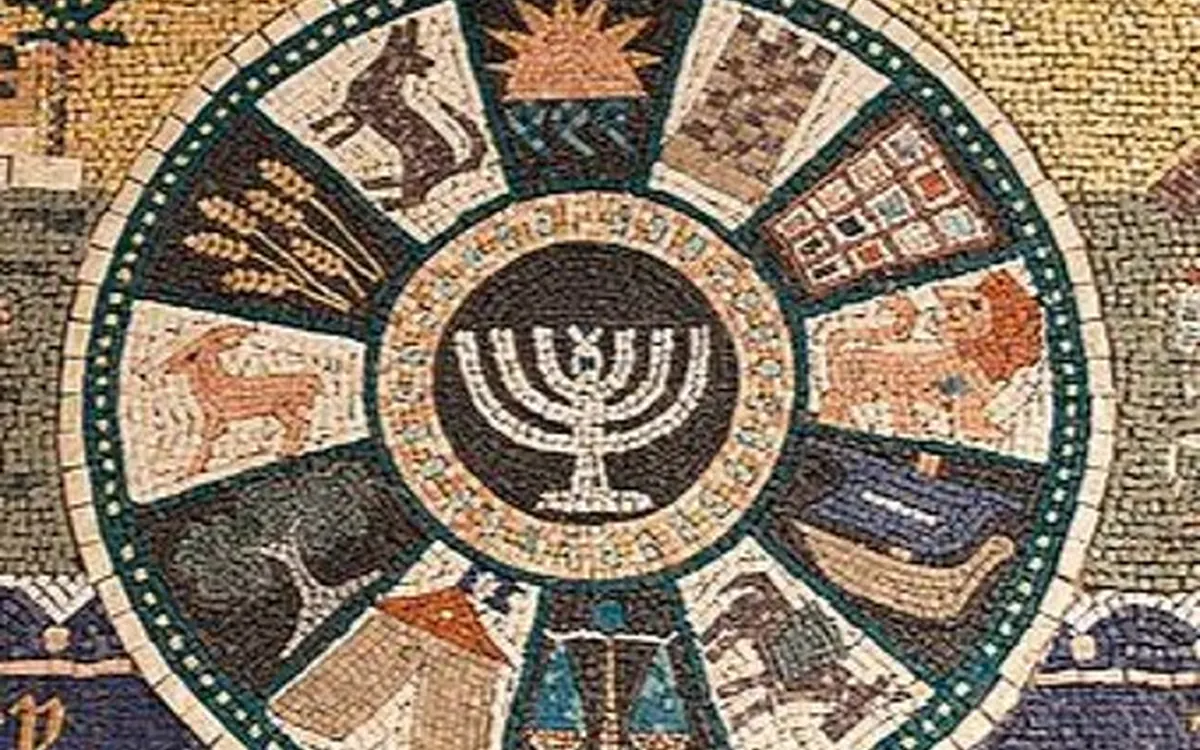
Here is a raw take from a great pre-Passover holiday conversation. Apologies for the lack of polish - sometimes this holy day takes all you've got! Join Rav Mike Feuer and Rabbi Yehuda HaKohen of Vision magazine for this special crossover episode on the Israeli Knesset elections, politics, religion and more. What is right wing and left wing?
About this episode
Yehudah HaKohen of Vision Movement hosts a Pesach crossover with Rav Mike, opening on the holiday of liberation and the fourth Israeli election in two years. Yehudah argues that Israelis misread their own politics by superimposing a Western frame, since left-wing here means the westernized ruling class rather than anyone trying to overthrow capitalism. He offers a different map drawn from Manitou's teaching on the tribes of Israel, where each tribe carries value and today's groupings express different tribes. The two leadership tribes are Yosef and Yehuda. Yosef is what we share with the dominant civilization of the age, a focus on material rebuilding, security, economy and government, which the Vilna Gaon and Rav Kook read as the movement of Mashiach ben Yosef, the Zionism that looks like other peoples reconstituting themselves in their land.
Yehuda is the force focused on what makes Israel unique, its Torah and its Beit HaMikdash, the smaller first-temple kingdom that was less dominant yet won the narrative battle. Rav Mike adds that Yehuda is more than a past orientation, a self-referential depth of identity, a vision of the future that gives the world its proper place without treating its norms as decisive. Yehudah maps the extremes, with Shimon and Levi as sharp expressions of Yehuda and Dan as an anarchic expression of Yosef, placing Jews who vote the Palestinian joint list as Dan, Otzma Yehudit as Shimon, and Noam as Levi. The Haredi world, he argues, is moving toward Shimon and a Kahanism of Haredi Torah welded to nationalism, as the parties harness nationalist language and grow as the fastest demographic between the river and the sea.
Rav Mike brings in Arnold Toynbee, who held that civilizations rise through a creative minority solving real problems and die when that minority becomes a merely dominant one, which fits the sages' teaching on the death of Mashiach ben Yosef. Zionism, born with creative power, loses its potential once it hardens into the assumption that this is simply how things must be. Yehudah believes the most powerful force to come could be a union of hardcore Yehuda Jews in Judea and Samaria with the Palestinians, balancing a Haredi world turning Kahanist, though he stresses the hard work of understanding each other's story first. Rav Mike counters that we are not yet equipped for that discourse, since we are still grounding ourselves in our own story, and Pesach is precisely where we plant our feet in that story and claim it as freedom.
They turn to halacha, which Yehudah pictures as faucets through which blessing enters, with pipes behind them that only those who grasp the hidden Torah should touch, warning against activists who would change the law because feelings were hurt. Rav Mike presses that halacha is alive, a soul we share with Torah, and that the sages could hardly have imagined our world, so real bridging work is needed. The deeper question becomes freedom itself, and Yehudah distinguishes liberation, a negative freedom from, from freedom, a positive freedom to be fully oneself and to carry a mission in history. Egypt, both agree, was less a prison of the body than an idolatry, the mindset that completely absorbs its own constructs, so the Rambam describes the oppression there as a loss of what was revealed to Abraham rather than only slavery.
Real freedom, Rav Mike says, is frightening, since liberation from the constructs that both constrain and define us forces genuine choice with consequences, which is why people cling to constructs for the safety they give, as the corona year showed. Yehudah recalls that Israel was so mired in the Egyptian mindset that even Moshe saw the people as beyond hope and left for Midian before God sent him back. The agency lies at the cusp of liberation and freedom, in waking each morning and choosing again who we are and what we must do. The Hebrew calendar, our first national mitzvah given in Egypt, marks the intersection of the solar time we share with all the world and the linear, God-given time that carries a mission we cannot universalize or delegate, and both wish each other a chag of freedom.
Key ideas
- Yehudah HaKohen argues that a Western frame misreads Israeli politics, where left-wing names the westernized ruling class.
- Manitou's tribes offer another map, with Yosef as material rebuilding and Yehuda as what makes Israel unique.
- Yehuda won the narrative battle of the first-temple period, and Rav Mike reads it as a self-referential depth of identity.
- Toynbee's creative minority that hardens into a ruling one fits the sages' teaching on the death of Mashiach ben Yosef.
- Egypt was an idolatry of absorbed constructs, which the Rambam frames as a loss of what was revealed to Abraham.
- Freedom is the frightening agency to be fully ourselves, chosen again each morning through the Hebrew calendar.
Chapters
- 0:00 A Pesach crossover conversation
- 2:26 A Western framing on Israeli politics
- 5:38 Manitou and the tribes of Israel
- 6:45 Yosef and Yehuda
- 9:01 Yehuda wins the narrative battle
- 12:34 Living Jewish history, not the past
- 13:40 Dan, Shimon and Levi today
- 15:52 Toynbee and the creative minority
- 17:06 The death of Mashiach ben Yosef
- 20:25 The Haredim moving toward Shimon
- 21:37 Grounding in our own story first
- 23:57 Halacha as faucets and pipes
- 27:09 What does freedom really mean
- 29:24 Egypt as idolatry, not only slavery
- 35:00 Moshe and a nation beyond hope
- 37:21 The calendar, solar and lunar
Who, where and when
People
Yehudah HaKohen, Manitou, The Vilna Gaon, Rav Kook, Theodor Herzl, Arnold Toynbee, Moshe, The Rambam
Places
The land of Israel, Judea and Samaria, Egypt, Midian
Texts
The teaching on the tribes of Israel, Rav Kook's eulogy of Herzl, The Rambam on the laws of idolatry, The Book of Exodus
When
The first-temple period, 1967 CE: the release of the force of Yehuda, 2021 CE: the fourth election, the festival of Pesach
Read the transcript
This is Yudah HaKohen, Vision Movement, Vision Magazine, and you're listening to the Next Stage Podcast. We are coming up on the holiday of our freedom, the holiday of liberation, the holiday of our national birth, Pesach, where we, of course, celebrate our liberation from slavery in Egypt so many thousands of years ago. And I'm really excited to have with me on the show Rav Mike Foyer from The Jewish Story, Landofisrael.com, Pardes Institute, and I'm sure several other places. I'm Malad Dumim. Planet Earth. Planet Earth. This is going to be a little bit of a crossover episode where you'll be able to hear this both over here at Vision Magazine and all the many platforms that Rav Mike is broadcasting through.
Thanks, Euda. It's great to be here. It's been a long time since we had a conversation. I'm trying to remember the last time that we got together to chat was. I think it was sometime last year. I know this is our third, at least for the next stage, this is our third conversation. We did Yomir Shalim at some point sitting out in front of the Iriah. That was the last time I remember, but I feel like there was something. There was one since then, and I remember it being significant and dealing with something that was happening on our calendar, of course. Of course. The great thing about our calendar in general is that it always provides conversation. Oh, it is the great tool, not only for sort of leveraging spiritual growth, but just engagement.
I mean, there's always something going on. I can tell you as a content producer, if people don't want to hear it, that's their issue. But there's always what to talk about. Right, right. So between our calendar and just the tumultuous political realities of our country, there's always something to talk about. This is the truth. And we just had an election this week. We had the fourth election, fourth national election cycle in two years. Democracy at its finest. So we don't have to talk about who got what or what government might be formed at this point. We can leave that for another program. Anyway, it's going to take a while of jail. Yeah. But I actually have some thoughts that I've been kind of playing with on how we think about our political spectrum.
because I think it is very problematic that we have a habit of superimposing a very Western framing on Israel's political spectrum, which sometimes works, but is often unhelpful in trying to understand the different, you know, when we talk about left and right and religious and secular, these are very Western ideas of how to understand different political groupings and different players in the political game or different interests. and I don't think that's a question of labels you think there's a question of substance meaning when we talk about religious parties or we talk about left-wing right-wing parties are you saying that the problem is the labels and it just lends itself to a misunderstanding what people are really about or you're saying no no no these people aren't actually right-wing you know like they're not sometimes well certainly for the term left-wing I think that Israel's probably the only country I could think of where the term left wing, like Smolini, is synonymous with westernized ruling class.
Like when you actually use the term left winger in the public discourse, you're not saying like somebody who's trying to overthrow capitalism. You're talking about those wealthy, elitist, televiving who think they're better than me. That's basically... We don't think that's similar to the democratic party in America, which is leftist center considered? Well, I wouldn't call the Democratic Party a left-wing party either. I think that's a liberal party. I think that's like the center of the American political spectrum. Okay. I mean, we're sliding into the no true Scotsman fallacy here. I think there are leftists out there, but I don't think that the Democratic Party is a left-wing party. I would even say that Bernie Sanders is still on the left end of liberal.
I don't really think he's a leftist. And certainly is. But has the best mittens on the internet. Can we just say that perhaps the most enjoyable episode of the last six months was watching Bernie's picture appear in every possible combination one can imagine. Come on. You know, not against, but I don't think I appreciate it to the extent that you've been appreciated. I have enjoyed it enormously. Man, you got to get pleasure out of life. It is, it has been a very difficult year and I got some very genuine smiles out of that one. Okay, great. I mean, some were good. Some were pretty clever, but they seem to abruptly stop. Yeah, well, you know, it runs its course. So, I mean, I have also some thoughts to share before we dive into the meat of Pesach on the structural problems that we face, because, you know, you made that comment about the fourth election in the last two years.
And, you know, and it is democracy at work on some level. I mean, you know, the fact that our country is very divided and that people have a somewhat tribal allegiance to certain sort of groupings and et cetera. But I think that there's some major structural problems that our country faces that unless they're engaged as such, we're going to be stuck in this sexual, until we give up on democracy. I could agree with that. I'm not sure we're moving in the same direction here, but we might be. What I'd like to present to you, and I want to hear your thoughts, because I've been thinking about a better way to understand our political spectrum. I've been doing this podcast on the Parsha I took a break for now I was doing it I did Sefer Breshit and Sefer Shemot Yeah, people love it Yeah, Baruch Hashem And it was really a passion project A labor of love And I hope to get back to it But it was just, you know A lot of work And a lot of other important things That are on my plate Were being neglected That's what a labor of love will do But it was really based on the teachings of Manitou And he focuses heavily on the different identities of the Hebrew tribes, of the sons of Israel, the tribes of Israel, in a way that actually lets us kind of see different political or sociopolitical groupings in Israeli society today or in the broader Jewish world as expressions of different tribes.
And each having value, like meaning none are like the bad tribes, the good tribes. Although, you know, there are more broad-minded tribes and more narrow-minded tribes, and it's easy for certain narrow-minded tribes to see other tribes as kind of antagonistic. But I think you and I are probably relatively broad-minded compared to many of the people we know. I'm broad-minded, but I'm antagonistic, which just means I just don't like anybody. Right, right. But we can appreciate the different people they might contribute. So without getting into all of them, I think, you know, the two main leadership tribes in our history have been Yosef and Yuda. Right. And Yosef, according to Manitou, and I don't think this comes from Manitou, I think he's just expressed it most recently.
Yosef represents that which we share in common with the rest of the world, specifically the dominant civilization of any given generation. Like in Yosef, the next time it was Egypt, which leads us up to Pesach, you know, ultimately. In the time of the Maccabean, in the time of the Maccabean revolt, it was Greece. In the time of the first temple period, you had the Kingdom of Israel, which was very connected to the international community. the trade routes ran through the kingdom of Israel. But because the force of Yosef is, and of course, the kingdom of Israel was for the most part led by leaders from the tribe of Ephraim, which is one of the sub-tribes of Yosef, the dominant sub-tribes of Yosef. So Yosef represents that which we share in common with the rest of the world, and is a focus on the material well-being of the Jewish people, things like security, things like the economy, and which perforce we have in common with the rest of the world.
Right, right. And the Vilna Gon understands this process of Mashiach ben Yosef as the material rebuilding of the nation of his own its land. And of course, Rav Kook speaks about this in his eulogy of Herzl. Basically, we understand Zionism as the movement of Mashiach ben Yosef, the movement that kind of looks like other peoples, other civilizations, and is trying to rebuild the Jewish people materially, government, army, economy, all that we share in common with the rest of the world. And Yehudah is the force of Israeli society that's focused on what makes us unique, what's special, what's about Israel. Our Torah, our Beit HaMikdash. And of course, in the first temple period, when these kingdoms split, Yehudah was the less dominant kingdom, but it was certainly a more focused inward on what makes Israel unique and special and important.
Well, Yudah was less dominant in real time, but Yudah won the narrative battle. Yeah, I mean, you know what I'm saying? Yes, if you look, I mean, the Kingdom of Israel was a regional military power, and like you're pointing out in trade, and Yudah was much more internally focused. It was a small town type kingdom, but it won the narrative battle. Right. Because in the end, what makes us unique is actually not our process of embodiment, which is what I would call that sort of Mishayach ben Yosef, you know, the ability to just reconstitute ourselves. Like, whichever, any nation that wants to be a nation has to have, you know, an embodiment in some way to project its power and to affect its will in the world.
But in the end of the day, even though Yudah was less competent at that, in the end, the spirit which it articulates and the story which it tells is actually the impact that we've had on the world. Right. Although the question is, can you exist without Yosef? I mean, that's a bigger question. Like, for example, Rashi teaches that when Yosef is born, Yaakov realizes, he understands he can come back to the land of the Hebrews to confront Esav, because Yosef is the power within Israel that could be like Esav and can defeat Esav. And of course, the prophet of Wadia, who comes from Esav originally, says that Yaakov is the fire and Esav is the straw and Yosef is the flame. So Yosef is important. And I would say that every major political issue in Israeli society today comes down to this kind of friction between the force of Yosef and Yuda I tell you where I see it the most Whenever any social or political issue arises and you know that they arise.
I've never seen them go away that they have to arise again. They're just there. Right. So every one of these issues, a Yosef person might look at any given social or political issue through the context through the prism of what is politically correct according to the most ostensibly morally developed civilization of the time you know whereas yuda might look at it through the lens of well what is a halacha or what are the lessons of jewish history past what do we see in the tanakh what did we do what did our ancestors what would david a melech do in this situation what would yoshua ben nun even though he comes from yosef what would he do in this situation And the Yuda people tend to actually want to make policy based on what seems to have been what we did in the past.
I think it's – by the way, I want to just caution the note. I don't think it's purely a past orientation. I think that there's also just a deep sense of self-referential identity, right? If you're going to say that Yosef is the sort of the norm of the day and excels, right? He's the side of the Jewish story, which is the Jews are just like everybody else, only more so. Right. Like, and we know that side in every society that we've joined. And even as you're pointing out within our own sort of reembodied national project there, we have a huge element that just wants to lead. It wants to lead like the West or wants to lead like whatever, wherever they lean toward. Right. They want to be like Bahrain or fill in the blank.
But beyond the memory and this idea, I want to check my decisions according to Halakha and the inheritance of the past, we have a vision of the future, which is self-referential in a good way. I don't mean self-referential in that we often speak about self-referential thinking and negative in the counseling. So I see it all the time as a problem, sometimes get locked in. But in the sense of a depth of identity that allows us to act with integrity, not in the face of world norms necessarily, but just giving them their proper place. Right. Not as definitive as an element. I think you're making a really important point because when we speak about Yuda, we shouldn't reduce it to just thinking about the glorious past or trying to go back to that, like a pre-colonial mindset.
I think it's more of living history, like the Judah Jews are living Jewish history, Mamash. And I would say the majority of Jews living in Judea and Samaria in the West Bank are, for the most part, Yehuda type Jews. But I would say that both Yosef and Judah have extreme expressions. Oh, yeah, sure. Like Shimon and Levi are both extreme expressions of Judah. And Dan is an extreme expression of Yosef. It's actually Hushim ben Dan who kills Aisav. And so the way Manitou explains Dan is Dan is like an anarchist tribe that has trouble with like any kind of national consciousness and is almost like completely separate from the Jewish people. And it's interesting that we see that the Mishkan had to be built by Bitzalel from Judah and Aholi Av from Dan.
It had to be a combination of these two forces. So Dan, I would say, are the Jews in Israeli society who vote for the Palestinian joint list. That's Dan. That's like the tribal expression of Dan, those Jews. Interesting. And I would say that the Otzma Yehudit party, which is part of B'Tselloz Motrich's religious Zionist collection, that's Shimon. Like the Kainistim are Shimon. I would say the Noam party, which is more the Ravtau kind of Haramor, the Nechina and Eli, that's Levi, a more maybe intellectual type of... Yeah, the religious-driven kanaut as opposed to just the national body kanaut. But also deeper. I would say it's intellectual. That's what I meant, religious-driven, meaning it's like Torah. And I would, by the way, I would say the Haredi parties.
But one of the most interesting things to me about this past election is how nationalist, especially the Gimel, the Ashkenazi Haredi kingdom was. Yeah, it's kind of come out of the closet. I mean, everyone's already known, at least for the last decade or more, that the level of nationalism in the Haredi world has only been growing. But now the parties themselves have decided to harness that language in order to maintain their votes. They have to, right. So I would say the Haredim are Yisachar headed towards Shimon. This is a very specific breakdown, Yuda. We spent some time thinking about this. I have been thinking about this, and I really, I'm excited to share it with you, because I know that you're a thinker and you're somebody who could appreciate these ideas.
By the way, I would define somebody like Batello Smoltrich as Judah. He's not Shimon, he's not Levi, he's Judah. So I think that party there, by the way, I think all the quote-unquote Zionist parties, from Meretz to Yamina, are all Yosef. Some of them are liberal, some of them are conservative, but they're all coming from a Western framing. They're all, there's other parties because Zionism, because if Zionism is the movement of Mashiach and Yosef and Zionism then becomes a dominant ideology of Israeli society, I mean, most Israelis are brought up in some kind of quote unquote Zionist ideological context, then it makes sense that the majority of the political parties would be, Zionist parties would be Yosef.
so pause for a second because we're going to go with this we go one more step which is are you familiar with Arnold Toynbee's theory on the rise and fall civilizations I'm familiar with the theory he is there's a lot to it but the piece that really struck me and what you said is he speaks a lot about how societies are led by creative minorities and that when that creative minority sort of emerges to solve a problem and is successful, it generates a lot of energy and brings life. And that's the sort of growth phase of civilizations. And he says that the hallmark of death in a civilization is when the creative minority becomes, I forget the exact term he uses, but basically a ruling minority. Like you said, that Zionism first emerged with incredible energy and power because it was solving real problems.
We could talk about done well, done not well, this brand, et cetera. But once it becomes a dominant ideology, like you're saying, well, this is just the way things are supposed to be, it loses its creative potential almost by definition because it's conservative, small c. Well, our sages speak about the death of Mashiach ben Yosef. So that was going to be my question, is that who do you see to be the creative minority on the horizon who's able to solve the problems which our society faces? Of course, that would depend on how you define the problems, but I don't know how far afield we really want to go. So I'll tell you what I'm thinking. I think that if you just look at demographics, I mean, if you think about how many children the head of the Labor Party has and how many children the head of the Merits Party has and how many children the head of the Shah's Party has and how many children, you know, the head of the religious Zionist Party has.
Like you see that this country is moving in a certain direction. Demographically. And of course, the Palestinians, which we haven't even mentioned yet. so you know i would say by the way i also think it's ironic that this religious zionist party of betelus motrich that i wouldn't call zionist is the only one to actually have the word zionist in its name yeah i hear that i've had that thought too why don't they just ditch it already you know it's a i mean it's pulling it's pulling a lot of heartstrings and there's a lot of um i mean i i remember watching a lot of that really begin to fracture during the heat nut coup during the disengagement when when when that term religious zionist started to either fall apart or more for or just lose its meaning and just simply become a marker for for people who've held certain positions right i i think we're using the terms not you and i but i think israeli society in the jewish world are using these terms improperly because really i would say religious zionism is Mizrahi.
Religious Zionism, you know, existed from the time of Zionism, etc. is one of the flavors of Zionism, a rather weak flavor, by the way. Always was, sure. Until the Messianic fervor of 67. In the Jewish story, that's why I say that's when religious Zionism came out of the little box that it kept in up until then. So that's the point I'm making. I'm saying that that's not religious Zionism. That's not Yosef anymore. What emerged was the force of Yudah. and perhaps the force of Yehuda emerged first of all because of the Jewish return to Jerusalem meaning that allowed for the release of that force and also of course the success of Yosef meaning in Galut before we came back before Zionism in Europe at least for Ashkenazi Jews there was Yosef like the Maskilim and there was Yisachar the Torah world that were kind of but it was only with the return to nationhood the success of Yosef that actually allowed for Yehudah to come back to life.
Of course. Yeah, yeah. To pave the way. So to answer your question from before is where do I see this going? I believe the Haredi world is moving towards Shimon. Meaning the way I understand Kahanism is it's Haredi Torah with nationalism. That's Kahanism. Haredi Torah with nationalism. There are many people that said that about Rav Kahan himself. That he took a Haredi sort of worldview in theology and welded it. To nationalism. Right. I think that's the best way of looking. I think it was he himself had learned in the Mir Yeshiva, which is, of course, a Haredi institution. And he was also very influenced by the nationalist teachings of Zev Jabotinsky. He combined those two things and you get Kahanism. And I think that's where the Haredi world's going.
I don't expect them, even when the Haredi parties are able to demand the defense ministry and the foreign ministry, I don't see them becoming Kuknikim. I don't see them actually having a mystical, Kabbalistic worldview of Jewish history. I think they're going to be, you know, take the Kainist approach. And they are the fastest growing demographic between the river and the sea. We have to take that seriously. I believe, and again, this is a big if, but I do believe, and maybe a lot of my work, you know, is kind of focused around this, that the most powerful force between the river and the sea could be a combination of the Yehuda force and the Palestinians Meaning if the more hardcore West Bank Jews were able to unite with the Palestinians, we could find, and of course, you know, obviously go through the hard work of understanding each other's story and identity and aspirations, grievances, and figuring out a solution for this country that actually meets both our needs, I think that combination of Palestinians with the most hardcore Jews, most ideologically driven Jews living in Judea and Samaria would be the most powerful political force between the river and the sea and could balance the Haredim who are about to become Kainist.
That's a lot to chew on. I have to digest that. There's a big if in there. It takes work. It's not just takes work. It's not just that it takes work i'm not afraid of work yeah um i you know the in the model we're speaking about the element of self-referential identity of the jewish story you know something that i spend a lot of time not only you know creating content for but really thinking about is that how much can we tell our story actually from a place of inner voice and identity i feel like we are not equipped right now to enter into real discourse with the Arabs of our of this land because we are still trying to figure out who we are now obviously to some degree that's a myth and an illusion because we're going to figure out who we are side by side because we all live here right um and and I and I I'm I'm down with that and I think it's true but I think we're doing a disservice since we skip too much of a step okay you know and and and pasach i think is an important part of that equation because pasach is not just the holiday of our sort of national liberation or national covenant but more than anything else is the place we ground ourselves in our own story and that we assert that as freedom you're you're 100 right most of israeli society is not ready to engage palestinians their story their identity their grievances Well, a chunk of it would be ready to, but in so doing, they would throw away their own story.
Right. I mean, there's a chunk of them who are more than willing to detach from whatever sort of tenuous grip they have on our story into some sort of par-Western, free-to-be-you-and-me world. You know what it's like? It doesn't really exist. It's like trying to play with halacha, right? You have a lot of rabbis today who would like to change certain halachot, and they shouldn't be doing that. and there are rabbinim who maybe should be but don't want to i'm not sure what you mean by should in that equation i mean that like as we as we uh halakha historically does evolve it's some it's alive it's something that we share a soul with we share a soul with torah that's why i'm wondering what's the should in that sentence no meaning that when our reality today is different reality than it was when a lot of you know i have to be careful with what i'm saying here um and not with me.
Right. A lot of halakhot were concretized when our situation, our reality was very different than it is right now. Yeah, I'll put it to you in a very simple way that I've put to my halakhot class many times. Do you believe that the sages could imagine the world in which we live today, sociologically, economically, culturally, politically? Maybe so. You think so? It's not the answer you're looking for. No, I think that you're fudging it. Like, really? You really think they could conceive of the world in which we live? I think it's a big stretch. And if that's the case, then there's a pretty intensive level of work that needs to be done in bridging those two worlds. I'll tell you like this. I relate to the mitzvot, to the halachot, as like faucets.
You turn on a faucet, bracha comes into the world, right? Somebody lights Shabbat candles, somebody puts on tefillin, Baruch HaKam's into the world. But there are pipes behind the faucets. And it's only those, in my opinion, who really understand the secrets of Torah, Torah tenistar, how the system really works, like, from the inside, from the back end, who should be playing with the plumbing. And those who are just, quote-unquote, modern rabbis who just think this isn't politically correct, or this needs to be upgraded because somebody's feelings were hurt here. That's the should. That's what I was like for, meaning there are people that are Baruch HaKam people that are not, but people that really have the capacity and the appreciation for the wholeness of the structure.
And they are hesitant. And there are those who lack it, but are activists. Right. But it's the same thing with peace. I think the Jews who are in a rush to engage with Palestinians and make peace are the ones who shouldn't because they'd lose their identity, like you said. And the Jews who should, the ones with a real strong, deep Jewish roots and who understand their identity, they don't want to. And a lot of my work over the last 11, 12 years has been trying to bring some of the most hardcore Jewish activists in the West Bank together with their Palestinian counterparts in order to create a very small scale, because we're just a small scale operation, unfortunately. But, you know, B'srat Hashem will grow.
But the idea is really to build these relationships, because I would argue that what we'd call Yehuda, you know, in this generation, as we're shifting from Yosef to Yehuda, the Yehuda people are the most advanced sector of Israeli society in terms of the Gula process. And it's the most advanced sector of Israeli society who should be engaging Palestinians and not the Yosef people, not Shelley Yechimovich and not Naftali Bennett. But I would like to see Betel Osmotrich sit down with Palestinian activists. My experience is that the limited experience I have is that they're willing to do it. It's just usually there are so many the power assumptions are extremely difficult to shift and that the level of trauma that is bound up with that intensity of identity is very hard to sort through.
Yeah, no, there's a lot of work to be done. There's a lot of narrative therapy. It all comes down to being, you know, narrative therapy. And that's why I'm, you know, I'm more interested in speaking to my fellow Jews than in the intercultural dialogue at this point, because I feel like the level of healing, you know, again, here we come to Pesach, we're looking for liberation. And, you know, as a person who engages in narrative therapy on a regular basis, I often wonder, it's like, well, how much are we reinforcing the narratives that keep us stuck within the trauma loop of our past, which on one hand offers a freedom, because it's a grounding and a solid identity, which can stand up against the sort of, you know, like the waves of the time, so to speak, as the Rambam and Ruff Cook and everyone else speaks about this need to like, not just be overwhelmed by what's popular.
in Europe or America or etc. But its own form of slavery if it prevents us from growing and engaging the potential for freedom that we have in our land. Right. I think that's very well put. So what does it mean for us to be free? Like what does freedom really mean for the people of Israel? I mean, okay, so there's some classic elements that we have to get on the table. First of all, of course, the difference between liberation and freedom. How would you define that? But I would say that liberation is a negative phenomenon. It's liberation from. And freedom is a positive phenomenon. It's freedom of. Okay. Right? And that's why, of course, in the structure of the Exodus, we leave Egypt, and that's an act of liberation.
But we're headed to serve God in the wilderness. That's where we find our freedom. As I'm thinking about that, I want to throw out, you know, for me, freedom is the freedom to be yourself, to fully express yourself as a chilek elokam imal. Freedom is the freedom to be what you're in this world to be. And as a collective, the children of Israel have a job to do, have a mission in history. We have a tafkid. We have a task in human history. And anything that gets in the way of us being able to fulfill our mission is an obstacle to our freedom. Like, clearly, Roman rule or British rule over our homeland is something we need to be liberated from. Slavery in Egypt, clearly we have to be liberated from. But there are also, obviously, ideologies we might need to be liberated from or, you know, or what people call a galut mentality.
I don't know if this is really the time or place to get into the levels of colonization our people experienced even after the Roman destruction. But we have to, I think we still need to decolonize in a very real way. And the layers of colonization that we experienced, and of course, different Jews in different parts of the world experienced different types of layers of colonization during the exile period. This, the idea of like decolonizing the mine that I'm sure you're familiar with out there in a lot of the post-colonial thought is something on one hand that we have a lot to offer the world in exploration. I mean, you could say on some level that the Pesach Seder has been a tool, not even of decolonizing the mind, but trying to keep some space free, you know, of the oppression of other cultures in forcing us to become something which we are not by living in reference to their standards.
So we have our story. It's a crazy thing, right? we we we came out of egypt we i mean like a story i tell every year to my classes that when one of my daughters my 16 year old was was 11 years old she turned to me at the satyr table said ah but then it's really happened is this true and and you know that's like a big moment you know it's that's it's absolutely true and we're going to spend the rest of your life talking about what truth really is as you get older and older right so it might be worth thinking about what Egypt was because it not only Israel who achieved liberation from Egypt but we learned that the world achieved liberation Meaning there's this idea that had we not been brought out of Egypt, we'd still be slaves.
I don't think that means we would still be physically slaves in Egypt because other things could have happened over the last few thousand years that would have either ended the Egyptian empire as it existed or freed the Hebrews or whatever. but I think it was a culture. It was an ideology. It was a way of experiencing and understanding the world that dominated the world. We're talking about the superpower of the world at the time, which really cast a very oppressive shadow over all of civilization, really pictured life as fixed and recurrent cycles of materialism determined by nature. Their gods were like the sun, the Nile, the animals. There was this kind of social Darwinism that dominated their thinking that, you know, So just like the plants and the animals dominate their weaker competitors, humans do the same.
You know, like that was just the way. Which is not an unreasonable assumption, remember. Coming from, you know, have you been to Egypt? Have you ever seen like the temples at Karnak and Abu Simbel? No, never been. Because of the Iser Torah? First of all, I only leave the land of Israel for mitzvah. Like I generally don't leave the land of Israel unless I have a specific mitzvah. I have yet to find the mitzvah that's bringing me to Egypt. That's the Iser Torah. That's what I meant. Not going back. But even if it was France, I haven't met the France yet. Yeah, yeah. But when I was a younger and wilder man, I went and I saw all the way down to the Sudanese border. So I went down the Nile and we sailed on the Nile in a little boat for a few days and said it was a pretty amazing trip to see this culture, which plays such an important role in our story.
And something that really drove it home to me is that, you know what? when you really think about it you look at the scale of what they built and so like there was no reason that pharaoh shouldn't have thought of himself as a god right the entire sort of pyramid of labor of the of the nile valley was oriented toward his personal gratification right right but you know because we as a people understand that that we serve the infinite and therefore all of the ways in which we think about and speak about god to some degree are constructs and we believe in our constructs we believe they've been revealed to us they believe both been handed down the wisdom of experience and divine revelation but they're constructs you know and the aim self like that understanding embedded in our mystic tradition of like just don't get too hung up on your constructs but the egyptians on some level you want to know what they were they were the people who completely absorbed their constructs and therefore that is the essence of idolatry And it's important if you look in the Rambam in the beginning of Hilchad of Odasara.
I don't know if you've ever looked at the first parrach there. He gives the whole narrative journey of Avraham. And there's an important detail that in that description, he speaks about the oppression in Egypt as idolatry and not as physical slavery. and what happens when we went into egypt that we lost sight of what had been revealed to abraham that he had handed down to yitzhak and yaakov etc and and we almost lost this idea of the unity of god and it was then god sent us moshas and brought us out which is a fantastic shot that the physical slavery was actually a symptom and not the problem right and like the real oppression was the fact that we fell into that egyptian mindset that those constructs are a dominant and decisive reality Right.
Even to the point that we weren't ready for liberation, meaning one of the things that the Manitou brings is that Moshe, when he killed the Egyptian, he didn't have to kill the Egyptian. He was a prince of Egypt. He could have done anything. But he killed the Egyptian in order to start a slave revolt. But nobody revolted. None of that. They turned on him. Right. So what Moshe does at that point is he leaves and he goes to Midian. And the reason he goes to Midian is because he wants to start a new nation with the descendant of Abraham. Remember, Midian is one of the sons of Abraham with Keturah. So he tries to start a new nation and then Hashem has to convince him to actually go back and free the Hebrews.
And then later, after the golden calf, when Hashem offers Moshe, okay, we're going to start again with you, you know, it was because that's what he had wanted originally. That's what he was convinced away from. It was a test for Moshe to see, like, does he still, but really, like, Israel was so mired and so subjugated that it appeared from the outside, even to Moshe, like, this nation is hopeless. These people are beyond hope. We have to start again elsewhere. And I think it's important also to recognize that the number one reason people cling to their constructs is because they give us a sense of safety and security. Like this we've seen in this year of COVID, right? And that has to be honored, meaning real freedom is frightening.
If you liberate someone from the constructs that both constrain but also define them, then they have to make real choices and there are potential consequences. And it's not a one-time act. Right. It's a constant devotion. Right. And so therefore, it's not surprising if they have a little Arachmanis, basically a little understanding of Anab Yisrael and the world today, why it's so difficult actually to be free. Well, I think it's important to be able to strike a very empowering balance. I think the balance between these, at least our constructs, some of what you mentioned, you know, in the middle of the and so understanding, even like, for example, even when something goes wrong, and we realize that we made a mistake, and that something bad happened as a result.
it's important on the one hand to know that yes that's the script the author of history wrote maybe it had to happen that way but also i'm supposed to learn something from this so i behave differently the next time meaning those things are true no question i mean the that's striking the balance of agency right um you know and um i think the agency lies right at that cusp of liberation and freedom you know you go out from egypt it's let my people go right and we break all the constructs that constrain us right she have doing about me bar that they serve god in in the wilderness like the mitzvot are are are a very defining construct one that we trust because they were given to us but it's the agency is in choosing in in in waking up every morning and certainly in the cycle of the hebrew calendar you know coming back every year to our story and choosing again that yes this is who i am yes this is what i use to strive to do what i need to do in the world.
These are the stories I tell my children. These are the values I want to propagate in the world. Well, I think that calendar you mentioned is an important part of this story, because that Hebrew calendar we were given as our first national mitzvah was given to us in Egypt. And it was before all the plagues were done. It was really part of this need to psychologically understand that we're not Egyptian, meaning that was part of us like seeing ourselves as a separate people from Egypt. That was part of the liberation process, having a separate calendar. And as you mentioned, that calendar is our story. That calendar is what brings us back every year to different features of our collective story and this narrative that we've been living for thousands of years and continue to live.
And now we're here in one of the most amazing and perhaps climactic chapters of that story, meriting to be participants. So, you know, this is always when we head into Pesach and we realize the enormity of our journey, where we're coming from and where we are. And, you know, you and I could have very easily been born 300 years ago in Poland. That would have been tough. Right. But we really need to appreciate the fact that for whatever reason, we were chosen to be right now at a time when we've come back to life. We're in the land of Israel. We have self-determination. We have problems. But at the end of the day, there are different kinds of problems than we had in Poland, you know, 300 years ago. I want to bring it back to where you started the whole show, because our calendar is this intersection between the solar and the lunar, if people aren't familiar, although I'm hoping that they are, right?
And in a sense, the solar calendar is what belongs to the whole world. It's that cyclical time of sunrise, sunset, the seasonal, it's the universal, which is important, but at the same time, it doesn't necessarily mean it's going anywhere. And the gift of, right, that this will be the first month for you, that we're going to count one, two, three, Okay, of course, it also goes around itself. But I mean, there's a linear element. And it's not just a linear element, but it's bound, like you pointed out, to God's return to history, as it were, right? God's intervention, right? It makes us to understand that on one hand, we're just like everybody else. We share the same seasons, the same cycle. There's only one planet, people.
And we got to learn to live in the world knowing that that is true. On the other hand, we have a mission to do. And we're not like anybody else. And we're going somewhere. What's that? For the sake of, for sure, for the sake of, but meaning that that mission is our mission. It's not one that we can avoid. It's not one that we can water down by universalizing it. And it's not one that is going to be served. What's that? It's not one that we can delegate to other people. Exactly. It's not going to be served by trying to pass it off to others. Exactly where I was going to go. So I really feel like as we come toward this festival of freedom, that people should work on both ends, really, of setting ourselves free to some degree in order to be ourselves and yet understanding that that individuality is really in service of one shared reality that binds us all.
Right. Well said. All right. Well, I wish you a Chag Semeach V'Kasher. Chag Semeach V'Kasher. I'll see you on the way through the Red Sea if I don't see you sooner. The Festival of Our Freedom, Chag Chalutenu. It should be happy, kasher, meaningful, and really, as the world seems to be changing around us and this whole COVID thing seems to be behind us. So that's been lifting, at least. Yeah, lifting. You know, I hope to see you soon, like in person. Amen, amen, amen. This is you, Dakohen, Vision Movement, Vision Magazine, and you're listening to the Next Stage Podcast. Be sure to check out the show notes at visionmag.org backslash the next stage 5-0.
More from Season 4
TJS S4 Interlude: Haggadah - interview with Mark Gerson
Telling the story of the Exodus is something so simple that we do it every year, and so complicated that we never get it quite right. With all...
Play Episode
TJS S4E14 Yom Kippur War part II The Cherbourg Boats
Long before there was a start-up nation the Jews were the can do people, but a constant crisis-solving posture poses problems of its own. Here is part two...
Play Episode
TJS S4E15 Yom Kippur War III - breaking the concept
Sometimes the ideas we hold most dear are those which prevent us from seeing t hat which is most important. Here is an episode about the 'concept,' the...
Play Episode