
TJS Live - Survival Zionism part VI
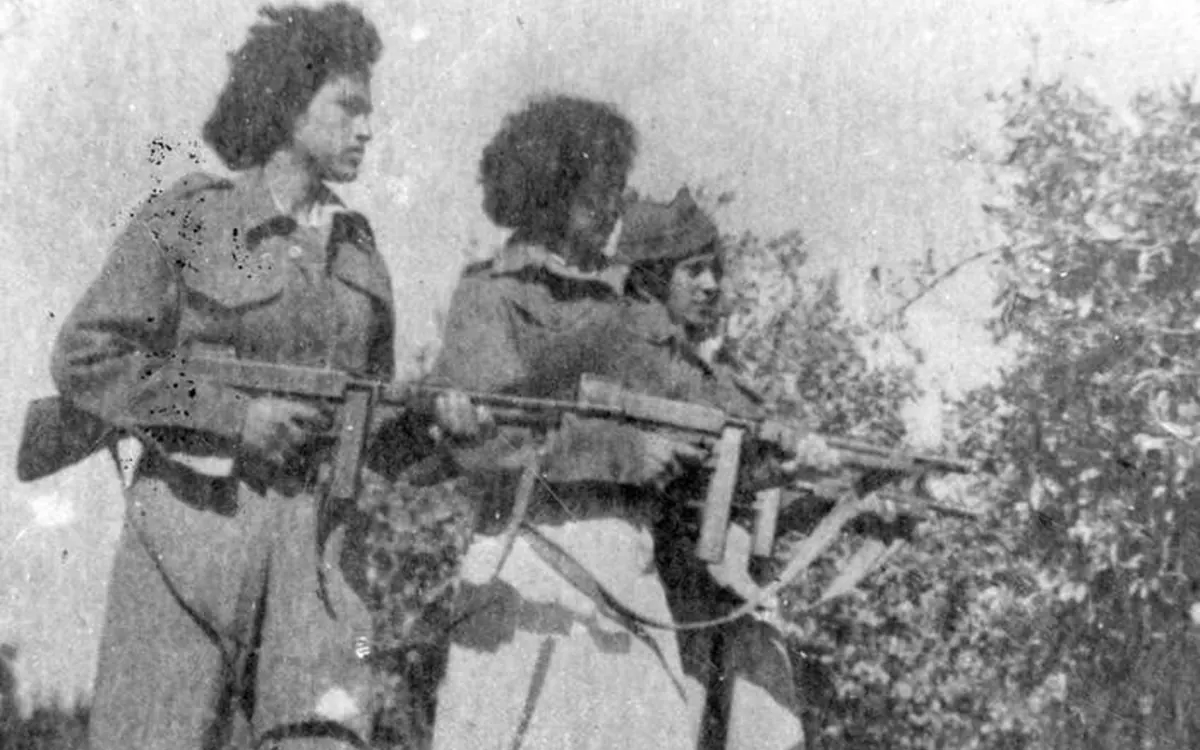
Here is part six of the live series on Survival Zionism. This episode returns to the land of Israel to look at the struggle for liberation which preceded the war for independence. If you like the live style, sign up for this year's TJS Live weekly class at:
About this episode
We survive every moment, said Updike, except the last one. Rav Mike closes the series by reviewing survival Zionism and then separating two wars that people conflate, the war of liberation against the British and the war of independence against the Arabs. Zionism was a small thread in Jewish life until the brutal selection of the Shoah carried it to the head of the people. He gathers the tensions. The problem of power ran between restraint, havlagah, and active defense, and today, he argues, the question has shifted to the wisdom of strength, since the Jews now have power and lack the wisdom to use it. The conflict with the Arabs rests on a scarcity of identity, a zero-sum model where my narrative depends on negating yours, and the Holocaust leaves the attitude of nowhere else to go.
The question that governs the class is simple, who is the real enemy, and in 1945 it was far from clear. The British physically held the land, cut away pieces of it, and shut the gates of immigration as the Jews of Europe burned, yet they held the mandate under international legitimacy meant to build a Jewish home. He recaps the three undergrounds. The Haganah is the restraint-minded militia of the labor mainstream, and it becomes the backbone of the Israel Defense Force. The Irgun split from it in 1931 over active defense under David Raziel. And the Lehi split from the Irgun in 1941 under Avraham Yair Stern, whom the world knew as the Stern Gang, a name that turns freedom fighters into terrorists.
When the British shut immigration in 1939, they arrested Raziel, who sat in his cell listening to Hitler's rise and became convinced the Nazis were the enemy. He pledged a truce and sent the Irgun to help the British, and died on a British commando mission in the Iraqi desert, over the Mosul oil fields. Yair Stern asked why the blood of a Jewish fighter ran out defending British oil, and he broke away. To the Lehi the enemy was only the British, since the empire would never willingly abandon an asset like Eretz Yisrael, and Stern held that the Arabs were a secondary concern and that a liberated region would free them too from the colonial yoke. First ideology, he taught, then war, which turns a militia into a revolutionary underground.
The Lehi were proud terrorists, and Rav Mike reads their journal, that neither Jewish ethics nor tradition disqualifies terror in a national war, alongside Frantz Fanon on violence as a cleansing force, written twenty years later. Yair was gunned down in 1942, and a movement is harder to kill than a man. By 1943 the Irgun had come around to naming Britain the enemy and lacked only a leader, and Menachem Begin arrived as a soldier of the free Polish army, released from a Siberian gulag. A stickler for law, he served out his enlistment before taking command of the Irgun in December 1943, declaring an armed struggle against the British while still sparing their military targets, and detaching the Irgun from the revisionist party to become a revolutionary army.
On February 1, 1944, the posters declared war on the British administration betraying our brethren to Hitler, and the war of liberation ran to May 1948. Its turning point was the assassination of Lord Moyne in Cairo by two young Lehi fighters, the two Eliyahus, who sang Hatikvah in an Egyptian court and were hanged, while Churchill rose in the Commons to compare the Zionists to Nazi Germany. The killing set off the hunting season, when the Haganah and the Jewish agency, pressed by the British, turned on the Irgun, kidnapping and handing over their own. Begin held his men back from civil war. The season ended when the British kept the gates shut even after the war, and the Haganah at last recognized the enemy, briefly joining the united resistance that bombed the King David Hotel in 1946.
Key ideas
- The war of liberation against the British is distinct from the war of independence against the Arabs, a difference the standard narrative blurs.
- The problem of power has given way to the wisdom of strength, since the Jews now hold power and must learn to use it.
- The three undergrounds divided over the enemy, and Yair Stern's Lehi held that only the British stood between the Jews and liberation.
- Raziel fought for the British and died over the Mosul oil fields, while Stern asked why a Jewish fighter's blood ran out in the Iraqi desert.
- The Lehi were proud terrorists whose ideology of liberation anticipated Frantz Fanon on violence as a cleansing force.
- Begin declared the revolt, the Lord Moyne assassination triggered the hunting season, and the Haganah turned on its own before joining the fight.
Chapters
- 0:00 We survive every moment except the last
- 1:06 Liberation versus independence
- 4:30 The problem of power; wisdom of strength
- 10:29 A scarcity of identity
- 12:48 Narrative warfare
- 19:30 Who is the real enemy?
- 21:45 The three undergrounds
- 24:08 Raziel arrested; the enemy is the Nazis
- 28:32 Yair Stern and the Lehi
- 33:21 Ideological clarity; the British
- 38:20 Proud terrorists; Fanon
- 44:56 Menachem Begin arrives
- 49:35 Begin takes the Irgun; the revolt
- 55:00 The assassination of Lord Moyne
- 61:53 The hunting season
- 68:37 The door stays shut; united resistance
Who, where and when
People
Menachem Begin, Avraham Yair Stern, David Raziel, David Ben-Gurion, Lord Moyne, Winston Churchill, Yitzhak Shamir, Frantz Fanon
Places
Eretz Yisrael, Cairo, The Mosul oil fields, The Haifa port, Sarafand
Texts
The 18 principles of rebirth, Hechazit, The Wretched of the Earth, The Revolt
When
1941 CE: the Lehi splits from the Irgun, 1942 CE: Yair Stern killed, 1943 CE: Begin takes the Irgun, 1944 CE: Lord Moyne assassinated, 1946 CE: the King David bombing
Read the transcript
We do survive every moment after all, said John Updike, except the last one. I'm hoping we all have quite a few more moments before that time comes. I'm Rav Mike Foyer, and this is the Jewish Story. We interrupt your regularly scheduled programming for the last installation in the live Survival Zionism series. If you've liked this live Jewish Story content, I invite you to join the upcoming weekly live class beginning on August 8th. You can send me an email at robmikefoyer at gmail.com, or you can find all the registration information at robmikefoyer on Facebook, on my website, jewishstory.co. Hope to see you there. This is the last class in this series, believe it or not. Rather than sort of like make some grasping race to 1948, what I want to do is first take some time to just review the pieces of this idea of survival Zionism.
which is really the backbone of the chorus. And then my goal is to speak about the sort of the rise of the war of liberation, because the war of independence and the war of liberation, as we'll speak about, are actually two different things. And it's come to my attention recently in speaking to people that that they've been conflated. And oftentimes people don't understand even just on a factual basis. What's the difference between the war of liberation that was fought against the British and the war of independence, which was fought vis-a-vis the Arabs? also they don't appreciate the significance culturally intellectually spiritually to our very day in the very different models right of whether it was a colonial liberation movement or whether we fought for our independence so we'll speak about that that's the goal for today my hope is to get to around 1946 with uh with good grace as they say so um we ready to go so first things first remembering that the the premise that i've been arguing from the beginning is that Zionism from 1897, and really as we've spoken about from before, was a relatively small political thread within the vast sort of weave of Jewish life.
You can say it was important, you can say it represents an essential element, say what you will, but from a socio-political standpoint, the Zionist movement was not the leadership of Am Yisrael. Through the process of 1938 to 1945, 1948, because of the brutal selection through which the Jewish people passed in the Holocaust and the circumstances here that we've been describing, the Zionist movement emerged as the leading movement within the sociopolitical sort of constellation of the Jewish people, which led to a successful creation of the state of Israel, which led to Judaism as we know it today and is beginning to fray, if you haven't noticed. The idea that Zionism is the organizing principle and guiding cultural light, moral beacon, call it what you will, that is leading the Jewish people is almost over, and it therefore deserves thought.
Not only how did it become such, but what is the next phase? In that note, I've set myself to understand this question of the skills, the tools, the cultural momentum, which allows one to survive are not necessarily the same skills, tools, and cultural momentum, which allow one to build a successful society. And so I want to keep an eye on that, and we'll return to that question at the end. But in brief review, we started off with the conflict between Jews. And there's just a few dimensions to that conflict I want to put the finger on, because we're going to return to that in our class today. I'm not going to do an exhaustive review here. Don't worry. First of all, where's the very basic dynamic between establishment and outsiders?
The establishment within the land of Israel, what's called the Yishuv, the Jewish community in the land of Israel, is dominated by the labor Zionist movement. Primarily secular, politically left wing, economically socialist. And why does that matter? Because they control the political structure. Remember, the job of every politician on some levels is to get reelected. And since most of these people weren't actually democratically elected, their job is to defend their power. And no matter how noble the ideals or a grand division which they serve, which I do believe it was, nonetheless, you cannot remove that human element of power. And therefore, once you have it, everybody who wants it to some degree becomes your enemy.
And we're going to see that's going to emerge in a very brutal fashion in today's class. There's also this question of what's the role of force? I've been thinking a lot about the problem of power. It's something we speak about. I almost said Ralph Ruth Weiss. That's very funny. Professor Ruth Weiss has a book, which name is evading me right now, to the effect of the problem of Jewish power. You know, it's been a discussion since the beginning of the Zionist movement that much of the wisdom that our people have generated over the last 2000 years has been the wisdom of powerlessness. As we spoke about a little bit last week, if you recall, in the different dynamic in the way American Jewry approached the response to the Holocaust than, say, Israeli or, you know, the Zionist Jewry.
But it's important to note that the problem of power, you know, in the era we're speaking about has been between the philosophy of restraint, of havlagah is the term in Hebrew, the idea that morally it's important to restrain ourselves, whether that's not attacking the Arabs, whether it's not attacking the British. But the idea is that that moral purity goes together with this very important notion to this day in Tzahal, which is called Tohar HaNeshek, a purity of arms. If you watched, you know, the Ramat Khal's speech on Yomazik Haran, he actually used the term and the word has gotten a lot of attention in our recent conflict round of fighting with Hamas. So there's that restraint on the one side.
On the other side, we saw the breakers will revisit today toward active defense. The sense that a small people beleaguered by many sort of many enemies around and within can't necessarily afford from a survival standpoint simply to sit back and respond. Sometimes it needs to be an activist stance. We saw that this is a cause of great tension. Another thought I wanted to share with you just as a larger context is I think that one of the challenges we face, especially watching the current round of fighting, is that we haven't moved past this discourse of the problem of power. The problem of power was an argument in the early Zionist movement. And the sides were, do we use it or not? Right. You understand?
Do we restrain ourselves or do we apply force? Whereas I actually think we've moved past it and don't recognize that today we should be speaking about the wisdom of strength. How do we learn the wisdom and strength? Instead of solving the problem of power, which was a genuine issue in the Zionist world, today we have strength. We just don't understand the wisdom that would allow us to use it. Whether that means striking our enemies before they strike us, whether it means sacrificing things because we're not afraid we're going to disappear. I'm not taking sides on what it means, but I think there's a fundamentally different set of options which become available when one contemplates the wisdom of strength as opposed to the problem of power.
I just wanted to share that with you. But that being said, in our arc, the problem of power is one of the things that causes tension between Jews. We have the socialist versus the individualist side, which just needs to be recognized that that's a struggle that is ongoing in our society. and then we have what is going to become very pressing today which is the relationship to the non-Jewish world it is the principle of political Zionism from day one from Herzl and even before that the only way the Zionist movement is going to achieve its aims is with an international patron Herzl was a believer, he went to the Kaiser he wanted him to convince the Sultan Jabotinsky also was a big believer that the British Empire was our patron.
And as we'll see today, that becomes a dominant thought in all but one very small and active element of the Jewish resistance movement. And to this very day, still dominates the discourse within Israeli politics. Where would we be without fill in the blank? America. Or if you're willing to break with America, then we're going to have to find a new patron where there is another vision, which is that the Jewish people have an ability to stand on their own. It's a question whether that's ever been true. Let's just remember, you could read the Bible, and you'll find that we were handling between Assyria and Egypt and Babylon, as opposed to between, you know, America, Russia, and China. And you might say it's the same story.
On the other hand, there is a vision of Av-Livadad-Li Ishkon, of people that dwells alone. And I don't mean necessarily building walls and being xenophobic, But I do mean a people who understands that our survival and our ability to thrive depends upon ourselves and ourselves alone. So that's a major split we'll see. So that's the sort of context of the emergence of survival of Zionism and the tension between Jews. We also saw between Arab and Jew. And actually, in today's class, it's not going to be so present. But I do want, especially in light of recent events, not to lose sight of it. First of all, there's a question of actual scarcity. Now, if you're familiar with the history of the Zionist movement from the teens all the way through the 20s and 30s, there were a series of studies.
Right. Agricultural studies, hydrological studies of the water resources about in the catchphrase, which all of them use is the carrying capacity of the land. Right. How many people can actually live in this land? And if there's a limited number, who gets to stay? Arabs versus Jews. right because because the numbers on each side are rising it's important to of course note that the time of the mandate was a time of massive inflow of arab residents as well as jewish so but i don't want to ignore that scarcity but but um but being that being said i have to tell you i don't know if i've told most of you guys is i have a graduate degree in international development and i spent a couple years at brandeis studying so that the nature of the way in which we build our world and the one lesson i walked away from grad school with is the world's problems are not material and technical, right?
That humanity has proven time and again its ability to solve problems of resource. The world's problems are problems of social will and morality, meaning we don't know what to do and we have a hard time even when we know what to do marshalling the social will to do it. So why do I say that now? Because aside from scarcity of resource, the real challenge which emerges at this time of survival Zionism between Arab and Jew is a scarcity of identity, right? That the nationalist model precludes the existence of another nation on the land. The classic European nationalist model is a people and a land belong to one another. It's usually united by a language and a common history, but it means there can't be a both, in our modern language today, it can't be both the state of Israel and Palestine.
It's got to be one or another. And in identity terms, that's what's called a scarcity of identity. In order for me to be me as an Israeli, you can't be you as a Palestinian. Why? Because your whole identity narrative depends on the negation of mine, and my whole identity narrative depends on the negation of yours. I mention it now because it's a zero-sum battle, which is a very common result of a sense of survival mentality, and it's one which haunts us to this very day. And the question becomes, to what degree are there other models of identity beyond the purely national, which might lend themselves to the opposite, which is an abundance of identities, which is I can be me, you can be you, and maybe even in a redemptive sense, in order for me to be me, I need you to be new, right?
That's what's called the ecosystem model. The trees need the grasses to be the grasses, not to be trees. They need the bees to be bees, et cetera. And there is, I'm not going to go into it now, because it's off our topic, but I put it out there because what emerges during the period of survival of Zionism as Arab nationalism comes into being, in all honesty, Palestinian nationalism has its roots in the teens and really doesn't come online until the 60s, frankly, but as a national identity. The Jewish national identity, in a classic sense, comes from the 19th century. Obviously, as a peoplehood, it's much older. But those are zero-sum models, and that will lend itself to many of the problems which we face today.
And because of that, and this is the last note, what flows from there is not just the physical combat, but a narrative warfare. Now, if we were going to go all the way through 1948, the turning point, anybody want to take a guess? What event is the turning point in narrative warfare between Arabs and Jews in this region? Dir Yassin. One of the battles leading up to the actual declaration of the state in which many Arabs died in the village of Dir Yassin. I say died because that's one thing you can say for sure. Who killed them? How they were killed and why? As we say, Sharif and Mahloket. And if you guys stick around for the class next semester, I will unfold the battle of Dir Yassin for you and point out how it was a perfect storm in the battle not only between Arab and Jew, but between Jew and Jew.
And because of that, narrative warfare, meaning that there's literally a front in the conflict, which happens first in radio and telling stories, and then ultimately in television, and now in the Internet and social media, which is just as much an expression of the conflict as the people with guns and bombs and et cetera. You've seen it, I'm sure, in the last couple of weeks, if you didn't notice it before. So that's in terms of the context out of which survival of Zionism emerges. And the key here is it's zero. It becomes a zero-sum model. Now, I want to make sure you understand. It's a zero-sum model that emerges. It doesn't mean it's the only way it can be. Don't misunderstand me. I'm not telling you it's a zero-sum reality.
I'm telling you it's a zero-sum model that emerges because of the survivalist pressures, because of the nature of the identity that each side relies upon, and because of the brutal conflict that just spills bad blood, which is never easy simply to move beyond. Last but not least is the context of the Holocaust. Now, I'm not going to go through it all. The one thing, of course, the Holocaust to this day remains as part of the context, en li eret acheret. I have nowhere else to go. If the Jews before 1942 looked at Israel as a place where ideologically maybe some people go, but practically speaking, it's not where we belong, right? Then after the Holocaust, the sense that if we had had a place to go, there would literally be millions more Jews in the world.
And of course, the other option is America, and America shut its doors just as did everywhere else. And even though post-war America will to some degree atone for that sin, and Jews will flood in there, that's what sets the stage. And that's precisely my point. In survival Zionism, the attitude is, I have nowhere else to go. American Jewry doesn't have that. Oh, lo and behold, today, 70, 80 years later, you have a divided discourse where, you know, even the most Israeli, most liberal Israeli, excluding like the far left, kind of has a certain attitude of saying, listen, push comes to shove. what do you want from my life? Where am I supposed to go? You understand that's a formative attitude whereas American Jewry even though they won't say you can come here, you can go there doesn't have that frame as a frame of reference for understanding the conflict.
They don't have the attitude of survival Zionism. The sort of parallel to that we saw is that that fight comes by any means necessary and I have to tell you because we're not going to actually get to learn the, yes, as Joanne pointed out, the U.S. shut its doors in 1924 and opened them post-war, but not before, as we spoke about. We're not going to get to speak about the War of Independence in its details, but one thing I think it's important to understand is that the attitude that we will fight for survival by any means necessary, first of all, was hardly unique in the world. Second of all, one of the things that I'm always astounded by. And I've done a lot of very difficult reading of the details of the military actions, which were done in 1948.
And I highly encourage you, by the way, Benny Morris has a book which is called Righteous Victims, which is not an easy read emotionally and morally, but I think is an honest presentation of the very complex situation. But one of the things that struck me is that is that I'm astounded that in 1948, the Jews of this land were not more brutal than they actually were. I'm astounded that a quarter of the population literally came out of the ovens of Europe and hesitated at all in the midst of a brutal guerrilla war to use every and any means to simply eliminate their enemies. Again, I'm not making excuses, but it is worth contemplating that even though I will say that part of survivalist Zionism is the attitude of by any means necessary, which comes out of the Holocaust, except it wasn't entirely true.
And that that's a question. Good, bad or otherwise. And last but not least in that equation is the the that question we spoke about which is the purpose of Zionism to save Jews or the Jewish people Right Meaning if you have just numbers every single Jew is your mission Or is it that there needs to be a thriving cultural, political, social, maybe even religious. People in the land, and if numerically we lose a lot, we'll rebuild. That's an uncomfortable question, and we've seen it emerge more than once. And as we get into the 50s and what the certain actions of the state of Israel or the pre-state, Yishuv, will come to light in what's known as the Kastner Affair, if you're familiar with it, you'll see that that was a practical question at times.
And really, really last but not least in context is just the demographic push. In 1945, when the war ended, there were more than a quarter million Jews in the displaced person camps of Europe. I mean, the remnants of millions. And that's a demographic pressure, and they need to go somewhere. It's a demographic and moral pressure, because the world suddenly decides it has to finally solve the Jewish question. As opposed to the final solution to the Jewish problem, the world will feel it now has to finally solve the Jewish question. And, you know, that itself will open a door for survival of Zionism to seize what it might not have otherwise had the courage to do so. So that's the context. I want to get into the narrative.
But before I do clarifications of things that people want to make sure they understood before we start into the linear narrative once again. Chats open. I can't necessarily see hands. OK. So you drop the questions there if you need to. So, OK, the question I really want to focus on for the entire class is relatively simple, which is who is our real enemy? That's a question, by the way, that bears consideration in our day to day. Most of the time today, you ask people who's the enemy, they're going to tell you the Arabs. It's not so clear and it was even less clear. What? No, no, no. um they it's not so clear and it was even less clear in 1945 because there was a split as we spoken about about whether the british who are physically occupying the land of israel calling it palestine who let's not forget are only doing so with international legitimacy because they were granted the mandate by the international community in order to facilitate the emergence of the jewish national home in palestine and who have used their own internal political processes to cut away physical pieces of the land and to limit to the point of insignificance Jewish immigration into the land so that the political situation now, what are we supposed to do?
We can't exactly give a Jewish home when the Jews are a minority in this sliver of land. So are the British the enemy who are preventing the Jews? The MacDonald White Paper of 1939 shut the gates of immigration as the Jews of Europe were literally being burned. Or are the Arabs the enemy because in terms of a street-level violence, and in terms of the narrative war, they're claiming what's ours, we're claiming what's theirs. You understand? And in war, if you don't understand who the enemy is, then I don't care how fast or strong or able to apply force you are. You are going to misapply it. And therefore, victory is not available. If you cannot tell me who you are clearly fighting, and you are not accurate in your identification of the enemy, then you have lost the war before you've ever fired a shot.
So that being said, you may recall what I call the split, right? The Haganah, we're going to re-encounter all three of the Jewish undergrounds, so maybe I'll give you sort of like the brief overview so you remember who they are. The Haganah is the one that has captured the imagination in the Jewish narrative. Haganah means defense, right? And they are the underground army, which really was formed originally by Jabotinsky back in 1920, but was subsumed into the first, the Histadrut. The Histadrut is the labor union, which was almost a state, I would say a state within a state, but there was no state. But labor union doesn't touch it. It's a comprehensive, right? The early Zionist model was cradle to grave party identification.
They're going to give you your education. They're going to give you your health care. They're going to be a union that is also a job placement agency, and they will eventually build a retirement home and etc. And within this union called the Histadrut, it also ultimately emerges the Jewish agency, which is the political go-between between the Jewish populace and the colonial masters. Let's call the British what they are. Eventually, what's called the Vadlu Mi is also part of that, which is a quasi-government. But the militia, the paramilitary organization, which is associated with all those mainstream semi-official, I mean, they're official, but semi-governmental bodies, is the Haganah, is numerically the largest, and its ethic is restraint, hence the name Haganah.
And of course, it becomes the backbone of Tzavah Haganah L'Israel. The Israel Defense Force literally takes the name Haganah, puts it in the center, and if we were going to tell the story in another couple episodes, you would see that they fought to maintain the centrality right down the line. So that's the Haganah. They're on one side. We saw in 1931 a split away from the Haganah over this question of active defense led by a man named David Raziel, whose name I hope you recall, right, which created what we know as the Irgun, the Irgun Tzavai Lumi, or the ETZEL, which is the acronym, Aleph Tzabilamid, Irgun Tzavai Lumi, the National Military Organization. And the militant element there characterizes what the split was over, that they felt that a more activist approach to stopping the Arab violence which they were encountering in 1931 was required.
And David Raziel led that split and formed the Irgun. Well, there's another split, because gosh, have you ever noticed that Jews are splitters, not lumpers? Right? Like, I mean, it wasn't just a, wasn't just a, that's a taxonomy term if people aren't familiar, meaning you're like, you can categorize things by making larger categories, or you can categorize things by splitting them into ever finer, you know, units. Jews are definitely splitters, not lumpers. But the issue around which the next split happened is one which needs to be understood. So I'll tell it as a story. So like I said, David Raziel led the Irgun's shift toward that active defense, right? And in 1939, when the British announced the end, essentially the end Jewish immigration into the land of Israel, as I believe I told you the story, they realized that that such a personality was best kept under close watch because the Jews were not going to take shutting the doors of Europe laying down.
So they arrested Raziel from Lowe's airport literally two or three days after the McDonald white paper was announced. You might think, what are they arresting for? The answer is they don't need to tell you. And let's remember that, that the British mandatory government is a colonial government, which has a structure of law, but it is not a democratic structure. And what's an interesting sidelight, many of the structures of law that the mandate will use in order to maintain order are going to stay on the books in Israel. That's the way law works, right? Law is like it's like geology and like archaeology. You lay down a layer and you build on top of it. It's very rare that you get rid of law and start fresh.
Well, much of the law that the state of Israel uses to maintain order, especially within Yehuda and Shomron, is based in the British mandatory law, which was used to suppress the violent revolt of Jews against the British that we're about to discuss. I leave it to you to draw any moral or spiritual conclusions. But nonetheless, the British begin to grasp power by trying to remove any potential enemies from the field. Raziel ends up in jail. But Raziel, despite the fact that he's sitting in a British jail, is glued to the radio, is listening to the rise of Hitler and the outbreak of World War II, and becomes convinced that it is Hitler who is the enemy of the Jewish people and not the British. And in fact, the British stand more or less alone against him.
And so he writes a letter to the British commander in chief in Palestine, also to the head of the mandatory government, etc., basically pledging a truce and furthermore that the Irgun will help the allies in their struggle against the Nazis. And he sends instructions to his commander in absentia, Benjamin Zeroni, right? And it says the following. This is received on September 11th, 1939. To avoid disrupting the course of the war against Germany, and in order to invest maximum effort in assisting Great Britain and its allies, the Irgun Savailumi, that's the Ezo, has decided to suspend all offensive activities in Palestine, which could cause harm to the British government, and in any way, the assistance, to the greatest enemy the Jewish people has ever known, Nazi Germany.
Now, the pamphlet does end by expressing the hope that his tortured nation would then receive the recompense it deserves, which is sovereign independence within their liberated homeland. But notice two things. First of all, it's a pragmatic identification of the enemy. The Nazis are the enemy. Therefore, if we're going to fight, you fight the enemy and not somebody else. Number two, who's going to give us our independence, the British in recognition of our service to them. This is the classic, even where the Irgun, which is a little bit more activist, does not abandon the central principle of the Haganah and the sort of ruling class of the Jews within the land of Israel, which is that the British are the legitimate authority within this land.
And if we are going to have independence, It will be granted by them. Okay. So this didn't land well with many of the, with many of the, sorry, Robert, I just, I saw that, but I'm going to stay focused. Didn't land well with many of David Raziel's former comrades and even many of the commanders. Now, most of the Etzel command was actually not in jail with Raziel. They were in the detention camp at Sarafond, which is the largest British military base in the Middle East here in the land of Israel. I'm not exactly sure where it is in the mandate. I didn't look it up. But just let that sink in for a second. The largest military base in the Middle East. Remember, the British control, to some degree, they don't control Egypt anymore.
They have a large presence there. They control Iraq. They control chunks of what we call today Syria all the way out to India. But the largest military base in the Middle East is here in the land of Israel. Right. You don't give up that kind of power. Oh, is Sarafen Tel HaShomer? That would make sense, actually. You don't give up that kind of power easily. Thank you for that, Sheila. So so they're sitting in prison and they say Raziel is going off the rails. He doesn't understand who the proper enemy is. And it's Avram Yair Stern and his followers who break with Raziel. Raziel follows through on his pledge. The British let him go. And he gathers his men. They begin to enlist en masse. Raziel himself will actually die in 1940 in Iraq on a mission for the British army.
He was shot by a Luftwaffe plane. They were sent to try to disrupt the oil fields, what are known as the Mosul oil fields to this day, very important oil fields. The British at the time controlled them, and there was a sort of a local revolt that threatened their power. And they were desperate because Rommel was making his way across North Africa and British power stretched very thin. So the British authorities remembered Raziel's promise and actually sent he and some other men on a commando mission. He died in the Iraqi desert. And one of the big questions that Avraham Yair Stern, who sort of picks up the flag of active defense from Aziel, will raise continually is why did the blood of one of our most important Jewish fighters run out on the sands of Iraq in defense of British oil fields?
you hear it and the answer is quite clear because he identified the enemy as the nazis and therefore was willing to apply the force which he had to defeating them and defending the british whereas avram yet your stern saw things very differently and on july 17 1940 he and his most loyal men a very small group split again from the iraq remember i told you splitters and they form what's known as the Lochamei Cherut Yisrael, the Israel Freedom Fighters, the Lechi, for sure. Right? And if you haven't heard of Lechi, I'm willing to bet that you heard of the Stern Gang. Now, that, you know, we say, what's in a name? And the answer is everything. A name dictates the nature of the relationship you have with them.
If I call them the Freedom Fighters of Israel, I've elevated them to a noble liberation movement. I call them the stern gang. Well, they're just terrorists. And we're familiar with this language today. And I want you to keep in mind, to the extent that you're able, that the very same double labeling happens for Hamas without comparing the two. I'm not going there right now. But just appreciate that to its own people, Hamas is a liberation movement. To those who oppose them, they are terrorists. And as we'll see, that's an important sort of looking glass to be able to step through when necessary. So first of all, we spoke about the Haganah, we spoke about the Ergun. Let's say a word about the Lehi. First of all, I want to debunk one of the primariness, which is sort of like a shoddy substitute for real education.
It's often presented that the Haganah, this is my left, I think you're seeing it on the right, the Haganah is on the left, the Irgun is to the right of them, and the Lehi is to the right of them. Now, that's not entirely untrue if you look at certain individuals, but the reality is that there was a diversity of political ideology within the Lehi from the outset. I'll just give you an example. Yitzhak Shamir, former prime minister of Israel, was one of the core members of the Lehi, even while Yair Stern was alive. And certainly once he died, he was in many ways the political leader. He certainly belongs on the right, if not far right, of the Israeli political spectrum. Although, remember, he was a prime minister on the Bethlehem Likud, which is not exactly the far right, at least anymore.
Right. At the same time, Nathan Yellen Moore, who was the operational commander of the Lehi, founded a left wing party that he called the Fighters List. Once the state came into being. Furthermore, there were people who were so off the sort of political binary left-right map that after the state was founded, a group of Lehi veterans went on and established what they called the Semitic Action Movement. You ever heard of this? Probably not. Semitic Action Movement in the mid-50s set the goal of a regional federation between Israel and its Arab neighbors based on an anti-colonialist alliance of indigenous inhabitants of the Middle East. it's an anti-colonialist movement because in the end of the day the thing you have to understand about the lehi is that is two things first of all that they saw ideology as the necessary precursor to war and and yair the reason he split with david raziel and the yirgun is because he said that the ideological poverty of the yirgun was the root of its organizational moral and ethical deterioration.
At first, you have to crystallize your ideology, and then you go to war, because then you shift from being a paramilitary organization to a revolutionary underground. Which leads to the second piece, is that to Yair and the Lehi, there was no question who the enemy was. It wasn't the Nazis. It wasn't even the Arabs. It was only the British. Only the British, in the eyes of the Lehi stood between the Jews and their liberation. As Yair pointed out, if the British weren't here, the Nazis would have been more than happy to take all the Jews of Europe and send them to the land of Israel. They in fact tried to at a certain point. Furthermore, Yair did not believe that their battle with the Arabs was intrinsic.
On the contrary, he felt like there might be some difficulty ahead in the resource distribution and the drawing of boundaries, but in the long run, we were an anti-colonialist movement. We would help the Arabs free themselves from the British and French yokes. So the ideological clarity and the identifying the enemy allowed for an application of force, which was not only fanatical in its willingness to use force and die, but it was also precise in its application. Yeah, Bobby had a question there. It doesn't say you're echoing. I think I understood you. You're a terrible echo. But I think what I heard you say is, weren't the Arabs killing Jews? Why were they not the enemy? I'll tell you why. In the same way that if I live in the inner city in America, and let's go back.
I mean, it's a parallel, but it's worth it because you're asking an important question. If I lived in 1930s, inner city America, and blacks and Jews are conflicting. so if there's a group of black kids that break my window shop as a Jewish owner in a black neighborhood I can say that the black people are the problem because they're the ones attacking me or I can take a step back like your ear says wait a minute how did this situation emerge I'll tell you how to emerge there's a power structure can you mute yourself please Barbara there's a power structure which created a situation in which is in the power structures interest that I fight with these folks on the street, and they left their way to the bank.
In the same way the British had every interest in a low level of conflict between Arab and Jew because it was the perfect excuse for not only maintaining but increasing British power The only – listen, what do people say today? Stability in the Middle East, we need to bring the international community in. We're going to internationalize Jerusalem. We're going to enforce a solution, right? So Yair's point, and I want to move on from here into the flow of the narrative, Yair's point was twofold. First of all, you must have ideological clarity. You must understand what you're trying to achieve. And we're going to get to his 18 points in one second. And you must know who your enemy is. And to Yair Stern and the Lehi, the only real enemy.
It doesn't mean that there weren't going to be fights with the Arabs along the way. And it doesn't mean that we love the Nazis and they can do whatever they want. But it means that keep your eyes on the prize. If you want to win in war, you must be clear on who your enemy is. And then that absolute dedication to the objective, which only a clear ideology allows. So the key is that the primary ideological shift that the Lechi tried to affect within this struggle was that they weren't fighting an evil government or bad policy. We weren't trying to get the mandate to shift its immigration policy or to allow for more Jewish land purchase. We were fighting a foreign ruler, and the only solution was to expel them.
You understand that? For sure the Haganah did not look at it that way. And even the Irgun, Begin, as we'll see, he was looking for a shift in policy, and in the end of the day, still saw Britain as a legitimate entity of rule. He came around on that, but only because the Lehi forced it. Um, furthermore, like I said, there needs to be this ideological clarity. I'm not going to, um, drag you through what was called the 18 principles of rebirth, but it's highly worthwhile. And in fact, I'll share with you right now a link in the, um, in the, uh, chat there. So those who want at their leisure can look at, at, um, what, uh, what the Lehi called the 18 principles of rebirth. were the 18 principles guiding the Lehi's struggle.
But the key is that I want to extract out of this and just move on, is that this is no longer a fight against policy in an attempt to get the British to do what we want. This is a liberation movement, which will only reach its achievement when foreign rule is over. And the other, last but certainly not least, is very important to understand, is that the Lehi were proud terrorists. They were proud terrorists. Their ideological clarity led them to the conclusion that, oh, I'll just read it to you. This is from Hechazit, which means the battlefront, which was the Lehi underground publication. Neither Jewish ethics nor Jewish tradition can disqualify terrorism as means of combat. We are very far from having any moral qualms as far as our national war goes.
We have before us the command of the Torah, whose morality surpasses that of any other body of laws in the world. You shall blot them out to the last man. Right. Now, the goal of terror in the eyes of the Lechi was to demonstrate that behind the terrorist lies the true terrorist who uses his piles of papers and laws in order to control our land. Right. And it will shake the people out of their complacency in order to take action. And thus, the Lechi robbed banks to purchase their weapons. Jewish banks. Right. Shot down British policemen in the street as opposed to the Haganan. Certainly even the Irgun only in the beginning directed its combat against the institutions and not against the people. and as we'll see because of this rapidly gained a very bad name I mention it now my oldest daughter's first babysitter Alva Shalom she just recently passed away Tamar Shohami was a lechi fighter and I used to ask her about it all the time tell me stories and I'll never forget when I asked her about the violence you know what she said to me yes yes we were terrorists again i'm not i'm not advocating this to you but you need to understand that that violence is a tool which is wielded by those with ideological clarity and and and that is as true i'm going to say this and you may not like it it is as true of hamas as it was of the lehi right and and to share another quote with you guys i want to show you something france fanon was an important post-colonial writer who whose whose works had a tremendous to this day by the way have a tremendous influence on the post-colonial world and even in critical race theory etc but the piece i brought you here is perhaps one of his most well-known sections from his best-known work the wretched of the earth and it's about the cleansing nature of violence.
He says, at the level of individuals, violence is a cleansing force. It frees the native from his inferiority complex and from his despair in inaction. It makes him fearless and restores its self-respect. Even if the armed struggle has been symbolic and the nation is demobilized, the people have the time to see that the liberation has been the business of each and all and that the leader has no special merit. You know, that could have been written by Yair Stern and the Lehi, who were saying it 20 years before Frantz Fanon wrote it. And one of the reasons I think it's so important to understand the story of the Lehi is not just because, practically speaking, they are the ones who will drive, if not numerically, ideologically, and in the intensity of the violence they're willing to apply.
They will drive the war of liberation from the British, which is what allows for the Haganah and to a lesser degree the Irgun to step in and fight the war of independence. Right. But there's a deep disconnect between the war of liberation from the British, which the Haganah almost never fought. We'll see that they do join in eventually. And the war of independence, which is the narrative, you know. I mean, whoever presents this period of Zionism as an anti-colonial struggle. And yet it is one if the sort of post-colonial world were interested in learning our history, they would see there's a lot in common. So so so it sounds great, but it doesn't end well for yet here. Why? Because, you know, being a terrorist has a price.
Wanted posters began to plaster the mandate in late 1941, early 1942. And in the winter of 1942, while the Nazis were bogged down in Stalingrad and the killing fields of Poland and Ukraine had begun to really soak with Jewish blood, the CID, the Criminal Investigative Department of the Mandatory Police Force here in Palestine, finally caught up with Yir. The official report was that he was shot while trying to escape, as were many of the Lehi soldiers who were cornered. But the Lehi followers were certain that the British police force had essentially murdered, yet you're in cold blood. But he was indeed killed in the winter of 1942. But as you probably know, you can kill a man. It's a lot harder to kill a movement.
So in 1943, we've watched this arc already, right? word is leaking out in Europe. Who wrote what I showed? Frantz Fanon. Very important. Wretched of the Earth must be read. If you want to understand what's happening out there in the progressive world and the critical race theory, etc., you must read. It's also extremely well written, by the way. We know the arc of the pressure, which is building both in Europe and here in the land of Israel. in June 1943 the Irgun which had been loyal soldiers to the British together with and had turned their backs to the Lechi many of whom were comrades remember like the split they talk about today still there are like old Israeli men who are bitter with their friends who went one way or the other although unfortunately that generation is passing but in the summer of 1943 the Irgun issued the following warning in its newspaper called Cherut, called Freedom.
It says, when the war broke out, the Jewish people declared their loyalty to the British government to help it vanquish the enemy of the entire world and of the Jewish people. Notice, it's all about who's the enemy, right? But Great Britain has betrayed this friendship. The Jewish people have not been acknowledged as a fighting nation. A Hebrew army has not been established. Again, still assuming the Nazis are the enemy and that we get our legitimacy from the British, right? Despite their growing awareness of the final solution, the British government kept the gates of the mandate firmly shut. We haven't spoken about it. It's a story we can't go into. But illegal immigration is the one action that all of the underground movements are sort of united.
Everybody's trying to smuggle Jews into the country. Everybody agrees on that, all the Jews. And what happened, I'm not going to read the rest of the quote to it, is that essentially this was a last warning shot. that the Yagun general headquarters had come to the conclusion that actually they had identified the wrong enemy. That the Nazis were not at this point, knowing the extent of the final solution that was happening in Europe and the extent to which the British were willing to go to enforce the blockade on the land of Israel and prevent Jews from getting out of Europe and into, they had shifted their focus on who was the true enemy. It was coming around to Britain where all they lacked was now a leader because wars are really fought.
under leadership. And lo and behold, who should arrive in the country but Menachem Begin? We spoke a little bit about Begin. Begin is from Brest of Tafs. He's born in 1913. He grows up in Zionist youth movement, starts out in Hashomer HaTzair, what we would call a far left socialist movement. But as soon as Beitar really became a force at age 16, he was already in Beitar. He rose, I told you this story, so I'm just touching the, he rose to the leadership of Beitar Poland, which is, you know, I mean, I was involved in a youth group growing up, as I hope you were. It may not sound so impressive, but there were 100,000 members of Beitar Poland by the time Begin was the head. And they weren't just getting together to sing songs and build campfires.
They were facilitating illegal immigration to Israel. They were undergoing agricultural and weapons trainings, meaning they were an army in the making. And you may remember, we spoke at a certain time about the uh the jabotinsky's speech in 1938 in warsaw and i made the accusation which wasn't mine it was an accusation from the time that jabotinsky was unwilling to pull the trigger guys remember that and a couple of you wrote to me and said i don't understand he wasn't willing to pull the trigger on whom now you understand he wasn't willing to pull the trigger on the british it wasn't and he also resisted the shift toward retaliation against the Arabs, although in the end he came around to that.
But what he wasn't willing to do was point his finger at the British and say, you are the enemy. Why? Because Jabotinsky was a classic political Zionist who believed that the legitimacy of the Zionist project came in the eyes of world patronage, that the British Empire, once it granted us our land, it would be ours forever. As opposed to Yair Stern, who broke with Jabotinsky earlier than anyone else, Well, anyone else who became a leader. And now Menachem Begin was in Warsaw when the Nazis entered. He fled along with the rest of the Beitar leadership. He fled for Vilna, ended up actually getting arrested by the NKVD, which is the precursor to the KGB, by Stalin's secret police. And he spent more than a year in a Siberian labor camp in the Gulag.
He was shipped off to the east. But, you know, history and politics being what it is, the Nazis invaded the Soviet Union in 1941. Stalin ordered all the Polish citizens who were in the Gulag to be released and actually helped build a free Polish army. So Begin actually enlists in the Polish army. If you're unaware that Begin's first service in the military was actually in the free Polish army, which if you understand Menachem Begin's history, it's just like, you know, thinking of Menachem Begin in a Polish army is just like, I don't know, think of a chicken in a three-piece suit or something. But so in 1943, where is his unit of the Free Polish Army sent? British Mandatory Palestine. Because they're sent there for training or maneuvers.
I actually don't know what the decision was. Now, that's just the summer that I told you that the Irgun had decided they realized who the real enemy was. And all they lacked was a leader. Lo and behold, who shows up in the country as a Polish soldier but Menachem Begin? As a sidelight, Begin was such a stickler for law and propriety, he wouldn't desert. I mean, basically every Jew in the Polish Free Army that came to Palestine just chucked his uniform and went underground. It's like, I owe something to the Poles, right? But Begin, he was a lawyer, and he was a very sharp person, I think, to his credit personally. But in this case, all his friends were saying to him, but he finished out his service until he was decommissioned.
And in December of 1943, Menachem Begin assumes command of the Irgun. Now, that's the Etzel. That's this sort of middle. It's not Haganah. It's not the Lechi. And in the first meeting of the general headquarters, there were two resolutions that were passed. First was that an armed struggle against the British mandatory government must be launched now. They're still holding with their ethic against no individual terror and no attack on military targets until the war had ended. Meaning the British are the enemy, but terror is not legitimate, and we don't want to undermine their military effort against the Nazis. We'll attack the tax offices. We'll attack the police headquarters. We're not going to attack Safran military base or their air force because they're still fighting the Nazis.
That's one. The second is that the Irgun must detach itself from the political party, from the revisionist party, and take its own path. Because like Yair, they understood being a paramilitary organization that's answerable to politicians is not the same as being a revolutionary army. And and with the entry of the Irgun into this struggle, you could say, I mean, this, by the way, if you haven't read, I'll just write it down here. It's a great book called The Revolt by Begin. It's it's a really worthwhile book. first of all, it's just a great read. Second of all, it's a, you know, in many ways, if you read the standard Haganah Ben-Gurion history, then you'll get one layer. You read the revolt, the revolt, you'll get another layer.
There's also, by the way, as long as I'm telling you, by Israel El-Dad, if you really want to be disturbed, you can read the first type. I just leave it at that. He was the ideologue of Gilechi. So these are these are different perspectives on the same events, radically different perspectives, I might add. So so they is there. He makes these two declarations that indeed the British are the enemy, but we're not going to use terror and we're not going to attack their military capabilities, just their local political institutions. And the second is that they are now truly an underground revolutionary army and not a paramilitary organization ansible to politicians. Begin goes underground and remains underground until the British are driven from the country.
He's got a huge price on his head, and it's worth it to read the revolt, if only to see the number of disguises and different lives that he lived during this period. But on February 1, 1944, the country is plastered with posters that read the following. To the Jewish people dwelling in Zion, we are in the last stage of the World War. We face a historic decision on our future destiny. Each and every nation is now conducting its national reckoning. What are its triumphs and what were its losses? What road must it take in order to achieve its goal and fulfill its mission? Who are its friends and who its enemies? Who is the true ally and who the traitor and who is proceeding toward the decisive battle? It goes on.
I'm not going to read you the whole thing, but it says there can no longer be a truce between the Hebrew nation and the British administration of Eretz Israel, which is betraying our brethren to Hitler. Our nation will fight this regime. Fight it till the end. Right. And this is the declaration of war on the British as opposed on the Nazis. right what comes next from basically february of 1944 until the british leave are driven out in may of 1948 is the war of liberation and we only have about 15 20 minutes left there's no way i can give you sort of a detailed picture of that but i want you to understand that there's a phase of war liberation and the war independence fighting the arab armies who try to invade afterwards is a different phenomenon.
Put out those posters. Lechi or Irgun? No, that was the Irgun. The Lechi had been fighting that fight all along. That's exactly my point. The Lechi had been fighting that fight since they split with the Irgun back in 1941. Even once Yair was gunned down, they kept doing it, but they were a small handful. It was very hard for them. Everything they did hurt because they were willing to use violence without regret. In fact, as I pointed out, that's why I read the France Fanon piece, they understood that to some degree violence for them was liberating themselves from the entire fog a lacking ideological clarity and what is what gave him their power Now you have a much larger organization led by a man whose political sophistication was not small.
Menachem Dagan was a political thinker of significant force, hence the fact that he eventually became prime minister in 1977, even though he was forced into the political wilderness for 30 years. What will happen next is that they will gain such momentum in their fight against the British, that even the Haganah will be forced to join in. So I want to give you at least some sketch of the arc of the War of Liberation so you can understand what's happening. And we'll unfortunately have to close there. But I do want to remind you guys that I'm going to pick up here. The course next year is going to be from 1945 to 1967, because I feel like it's a story that must be told, even though many people think they know it.
So, OK, so if you want to understand, like, one of the important turning points in the war for liberation, it was the assassination of Lord Moyne. Right. Who is Lord Moyne? So Lord Moyne, his full name is Walter Edward Guinness, the first Baron Lord Moyne. Walter Edward Guinness, the first Baron Lord Moyne, was the British resident minister of state lodged in Cairo. He is the sort of highest colonial authority within Britain divided Persia Middle East. He also was responsible for much of North Africa because he sat in Cairo. And as the British resident, he was responsible for the immigration policy, which kept Jews out of the land of Israel. And many of the Jews held him personally responsible for the destruction of the SS Struma.
You recall the struma was the ship that sat in port in Istanbul until it was dragged back out to sea and then mysteriously sunk with all hands but one aboard. Hundreds killed, more than 200. Right. And so it was decided by the Lehi that he needed to die. Not just because personally his hands were considered to be soaked in blood, but because he represented the power of a foreign government over our land. He held the door shut. We say the British shut the door to immigration. Well, Lord Moyne had his foot wedging it closed. So in November of 1944, Eliyahu Hakim and Alioube Tzuri, two young Lehi members who weren't so experienced in operations but were both fluent Arabic speakers and thus able to blend well with the Arab population in Cairo, were dispatched to Cairo.
and began a series of test runs, you know, checking out their target outside his home until on November 6, 1944, in the early afternoon when Lord Moyne, when the resident's car pulled up to his house and the driver jumped out to open the door, Batsuri shot him once in the chest while Hakim pulled the door open and fired three shots from behind. And he died three hours later after doctor's attempts to save his life. Now, their mission completed, the two assassins jumped on bicycles and tried to make a getaway, But they were actually seized quite quickly. And after a brief firefight, they ended up in an Egyptian prison. And on January 10th, 1945, were brought to trial, charged with murder. And by the way, did not deny the charges.
There was no attempt to say other than we refused to recognize this court. That was the Lehi Way, which the Irgun eventually sort of took. if you're familiar with the struggle between the Irish Republican army and the British, it was a big part of the way in which the Irish Republican army related to the British. And we can argue about who got who from what, since the British, since the start of the Irish sort of struggle for liberation from the British is quite old. But you understand the significance in light of everything we've spoken about. If you're fighting a struggle for a better government and changing the immigration policy, then you recognize the legitimacy of the court. You just think it's making a bad decision.
If you're fighting an anti-colonial struggle for liberation, then the court itself has no legitimacy. And indeed, the two Eliyahu's, as they're known, refused to recognize the court, refused to participate in the proceedings against them, meaning they offered no defense. Right. But when their sentence was passed and they were found guilty and sentenced to death, Eliyahu Hakim, he rose to his feet and he said the following. We accused Lord Moynihan and the government he represents with murdering hundreds and thousands of our brethren. We accused him of seizing our country and looting our possessions. We were forced to do justice and fight. And if you want to understand the lechi and really the attitude that eventually Menachem Begin and the Ergun came around to, you couldn't do better than that.
So the two Eliyahu's were sentenced to death. and when they received that sentence, their only response was to rise to their feet and sing Hatikvah in the midst of this Egyptian court. And on March 23rd, 1945, Eliyahu Hakim and Eliyahu Beitsuri were marched barefoot to the gallows, blindfolded, and hanged by the neck until dead. Now Winston Churchill, Prime Minister, British Prime Minister, who himself had sent Lord Moyne to Cairo because they were longtime friends, right? He had considered himself, or at least called himself a Zionist at some point. He stood up in the House of Commons and he said the following, if our dreams for Zionism are to end in the smoke of an assassin's pistol and our labors for its future to produce only a new set of gangsters worthy of Nazi Germany, many like myself will have to consider the position we have maintained so consistently and so long in the past.
If there is to be any hope of a peaceful and successful future for Zionism, these wicked activities must cease, and those responsible for them must be destroyed, root and branch. Now, there's a number of things that come from this. First of all, did you notice what he did? In 1945, he compared the Jews to Nazis. I haven't been able to nail it down, but this may be the first major comparison that was made ever, comparing the Zionists to Nazis. It may be, it may be not, but it was Winston Churchill on the floor of the House of Commons, which means even if he wasn't the first to do it, certainly it was the most politically significant. Second of all, notice what he says, our dreams for Zionism. He assumes the only legitimate claim the Jewish people have to the land of Israel comes through the British Empire.
Whereas Eliyahu, the two Eliyahu's, the Lehi that sent them and the Irgun that stands with them, are fighting a war of anti-colonial liberation, which means not only do we not receive our independence from the British, it's only by driving them out that we'll ever liberate ourselves. So to say that the assassination of Lord Moyn created shockwaves throughout the world is a given, like you just heard from Churchill. But for our story and the emergence of survival Zionism, what's more important is to understand the waves that it created in the Yishuv, in the Jewish community here. And what it really created practically is something known as the hunting season, or les saisons, for those of you who speak French that I don't.
What's the hunting season? Well, at a certain point, the British government had legitimate contacts with the Jewish agency and the International Committee that were the government of the Jews of the issue. And they themselves controlled the Haganah. So what happens when the colonial patron turns to its client and says, these radicals are threatening your dream that will someday give you state, what is the legitimate authority of the Jewish people going to do? Turn on them like that. And suddenly in the minds of the Haganah and the Jewish agency, it wasn't the British that were the threat. It wasn't even the Nazis because they'd been defeated. It was the Jews, the Jews that didn't agree with them, the Jews with whom, as I pointed out to you, they already had a lot of bad blood, the Jews whom they differed on in terms of socialism versus capitalism, the ones they differed on from a collectivist versus a individualist, the ones that they differed on from the power structure the outside all those things are reviewed and you know what happens is that the full resources of the Haganah are now devoted not to struggling to liberate their land from the from the uh from the British occupiers but rather to finding and rounding up every single one of the Yirgun operatives that they can find even though it was the Lehi that dispatched the two Eliyahu's apparently the Lehi was made first of all they were much smaller and less of a political threat.
And they were also able to cut a deal to basically cool things down. But this is what's known as the hunting season. It begins with the kidnapping of Irgun commanders. On December 11, 1945, Eliyahu Ravid, Irgun's chief storekeeper, meaning the quartermaster, was kidnapped and interrogated. Then they grabbed Daniel Mianofsky, who's famous for the street that's even behind me right now. Right? Blindfolded, held for months in captivity, found Mordechai Kaufman Rahnan, who was tortured, all of whom were giving up names and identities and locations of the Irgun members. There's no exact detail, but the history book of the Haganah, its own internal documents, provides the following details. It says, according to one source, 20 people were kidnapped by the Haganah for interrogation.
91 were interrogated without being arrested. Some 700 names of individuals were given to the police. 300 people were arrested. A special committee was appointed to discuss the problem of high school students who were active in the Irgun, and it was decided to expel 30 students from various schools. This is a purge. It is a purge which I promise you to this day has not been forgotten within the political and cultural structures of our country, right? That at the height of the struggle by the Leche and the Irgun against the British occupier, the Haganah is induced to turn on their brothers as opposed to joining the struggle. now to say that this is a bitter pill is to deeply undervalue it i have lots of details here but again i want you to understand the arc of the progress and the danger here of course is civil war which is arguably exactly what the british wanted remember it's hard to believe the british really ever intended to leave this land i can make all kinds of arguments the largest military base the port of Haifa, which ends the pipeline for the Mosul oil fields in Iraq to the refineries of Haifa and their ability to ship it to Europe, the proximity to the Suez Canal, which they're losing control of because they've lost control of Egypt, even as we speak, right?
The deteriorating situation in India, which is about to lead to Indian independence, right? The idea that the British were going to walk away from the Palestine mandate is more than a bit of a myth. And so So therefore, fomenting civil war amongst the Jews and a conflict between Jews and Arabs provides the perfect excuse for the necessity for not just the maintenance, but the increase of British presence in power. I only have about five minutes. I just want to show you the arc. What happens is that Begin decides there won't be civil war. And he publishes the following pamphlet, even though his men were rearing. I mean, literally, their commanders were being kidnapped and tortured by their fellow Jews.
and hand it over to the British police and incarcerated. It is with a gloomy face, this is from the pamphlet that Bacon published, that the loyal Jew asks himself and his neighbor, are we to suffer this as well? Will a civil war break out in Eretz Israel? Will our home be destroyed before it has been built? He goes on and on. It's very powerful. He says, and this is the plan, to expel us from our homes, to expel from school, starve and hand over our fighting youth to the British police. it's them or us, the government meaning the Haganah, the Jewish agency they had declared, and all means are acceptable in order to liquidate them that's from Ben-Gurion's speech to the history of the Duke Begin says, what will they do, these persecuted people against whom the terrible edicts are dictated how will they defend themselves these are grave questions that we feel it our duty, on our own behalf on behalf of the Irguns of Ileumi the Etsil to provide an answer this is our answer, you may stay calm loyal Jews.
There will be no fraternal war in this country. And Begin held back the Irgun from fighting, allowed his men to be kidnapped and tortured. And in the end, the hunting season ended when the Haganah realized that the British were not going to allow the Jews into the land even once the war was over. Remember, remember Van Gurion's statement, we're going to fight the The Nazis, like there's no white paper, we're going to fight the white paper like there's no Nazis. The white paper was what prevented the 1939 McDonald white paper that limited Jewish immigration. As soon as the war was over, the official entities of the Yishuv assumed that the British would open the gates because there was no longer the problems of focusing on the Nazis.
And their demand, the immediate demand, was 100,000 Jews be allowed in. There's a quarter million Jews in the DP camp, the displaced person camps of Europe at this point. All survivors. 250,000 of them, and the demand is 100,000 to be let in. I'm not going to go into the details, but there's something called the American, the Anglo-American Committee of Inquiry, where there's a joint committee of inquiry sent by England and America that goes and tours the DP camps and examines the situation, comes to the land of Israel, interviews Jews, interviews Arabs, and the conclusion that the American government came to was 100,000 Jews must be allowed into Israel immediately. And the British had committed to following through on whatever the conclusions of this committee were.
And the Labour government, which had been in opposition during the war, swept into victory. Clement Attlee, if you're familiar with British history, swept into victory post-war. The Labour government was strongly supported by the Jews of Britain, had made promises to support Zionism during the war. And so the sense was 100,000 Jews would come right away. And you know what happened? Nothing. Clement Attlee became Prime Minister for Labour. He appointed Ernst Bevin as Foreign Minister, and the door remained shut. And the next phase of the War of Liberation, which we'll have to wait until next year to speak about, will be the United Resistance, when finally the Haganah, for a brief period, recognizes that the enemy here is no longer the Nazis, they're gone.
And the enemy is not the Arabs, but the enemy is the British, because if you want to have independence, first you need to fight a war of liberation. So I think there's much more to be said, but there's only so much history you can shoehorn into three minutes. I think that we've reached at least a place of understanding what the questions on the table are, if not understanding how the answers will unfold. And I just want to take the opportunity to thank you guys, especially the many of you guys have been in this class for years. literally i want to really encourage you guys um to stick with it i hope it's not too much of a disruption that i'm going to be moving uh i'm still i'm not leaving parties i'm taking a taking a sabbatical to work on projects this class is going to continue at eight o'clock on sunday nights it will continue online and i'll be recording it and distributing it only to the people who register um and you can register directly through parties um especially if you feel like a loyalty which i fully understand i'm not looking to pull anything away from parties on the contrary i'm looking to strengthen our partnership um and uh if people have questions uh and comments on what we've just done i'm happy in the last couple minutes to uh to address them yeah barba um when did when they um bombed the um king david was that no that that was the last act of this united resistance it was in 1946 it was the last act of the United Resistance where the Haganah after that basically got cold feet and decided, no, no, we can't do this.
We can't actually fight the British left that way. That was the Irgun's... It was the Haganah, not the Irgun? No, it was the Haganah. It was planned jointly. It was executed by the Irgun. Begin and the Irgun executed it, but really it was the spirit of the Lehi that drove it because of the willingness to use force on that level and the identification of the enemy. Esther, you got a question? Yeah, Valtalena, yes. Well, if you're following Valtalena, it's critical to the story of the switch between the battle for liberation and the battle for independence. And again, that story lies ahead. And yes, it's a very important part of this tale. You're entirely correct. Other comments, questions? Okay, folks. Well, listen, everyone should have a wonderful summer.
Thanks, Mike. You can always be in touch with me if you have questions and comments. I'm happy to hear your feedback. and hopefully you guys will be willing to join the class in the year ahead. Before I sign off, I want to thank a few people. I want to thank all the folks that give their hard-earned money to make this show possible, keep it free, make it widely available. I want to invite you to join them. Go to my website, jewishstory.co, and you'll see a button in the upper right-hand corner that says, Be a Patron. You can click on that to make a little bit of per-podcast support. I'd also like to invite you while you're there to sign up for Jewish Story Live, The upcoming weekly live class is beginning on August 8th.
It's going to be a whole lot of fun. I want to thank the Land of Israel Network, that's thelandofisrael.com, for creating a platform that allows me to reach so many wonderful people. I want to thank the Pardes Institute, P-A-R-D-E-S dot org dot I-L, for building an educational institution that gives me the privilege of teaching so many fantastic Jews. And I want to thank you for listening. I'm Rav Mike Foyer, and this is The Jewish Story.
More from Survival Zionism (Live)
TJS Live - Survival Zionism part IV
Here is part four of the live series on Survival Zionism. This episode tells the story of the Warsaw Ghetto. If you like the live style, sign up...
Play Episode
TJS Live - Survival Zionism part V
Here is part five of the live series on Survival Zionism. This episode returns to the United States to look at the impact of these fateful years on...
Play Episode