
TJS S4E15 Yom Kippur War III - breaking the concept
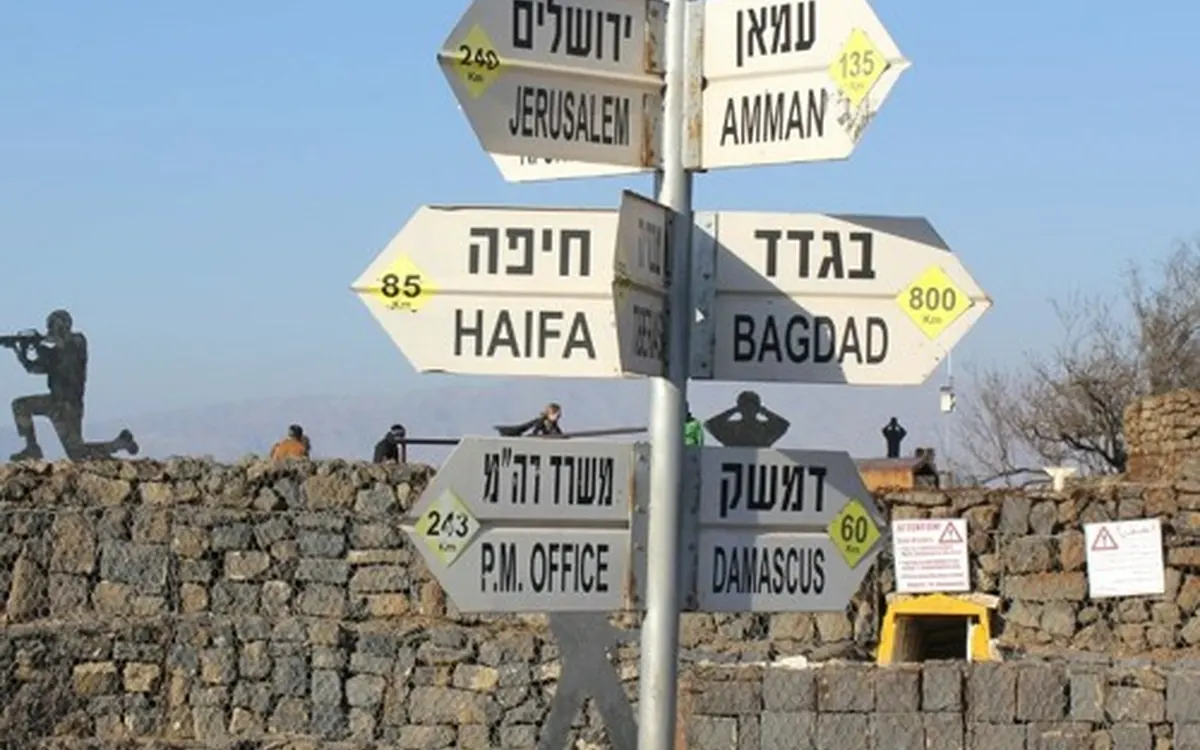
Sometimes the ideas we hold most dear are those which prevent us from seeing t hat which is most important. Here is an episode about the 'concept,' the security analysis paradigm which stopped Israel for from recognizing its danger almost until it was too late. Learn about the Schoenau ultimatum in which Syrian-based Arab terrorists kidnapped Russian Jews from Vienna. Plus Egyptian leader Anwar Sadat, the USSR, the Moscow Summit of 1972, Bruno Kreisky, President Richard Nixon, Leonid Brezhnev, US-Soviet détente, the Cold War, King Abdullah of Jordan, Benny Peled, Eli Zeira and more.
About this episode
Schopenhauer said the discovery of truth is prevented most of all by preconceived opinion. Rav Mike remembers his geology professor at Colorado College, Eric Leonard, who explained how a high alpine park came to be, then stepped two paces to the left and explained the same formation in a wholly different and equally logical way. The lesson stayed with him for life: if I had not believed it, I would not have seen it, since what we look for tends to be what we see. He carries that frame into the Yom Kippur War, asking how one of the world's finest intelligence operations could be so stunned when all the information was already out there. The failure lay in the reading of it. That question echoes through history, from Barbarossa to Pearl Harbor, and the answer here rests less in missing facts than in the frame that decided in advance what those facts could mean.
The frame was called the Concepcia. Soviet premier Brezhnev wanted detente with America, so he pressed his client Egypt to lie low, and the twenty thousand Soviet advisors in Egypt mocked the Egyptian soldier and held a defensive posture. When the Moscow summit of 1972 sealed detente, Sadat watched his diplomatic hopes fade, and in July he expelled the entire Soviet mission, a move that stunned Washington and cheered Israel. In Israeli eyes he had just wrecked his own army on the eve of any war, which only deepened a dismissive pride toward the Arabs that Dayan voiced openly to his officers. Into this walked Major General Eli Zeira, head of Amman, brilliant and self-assured, who held that analysis should rest on what the enemy intends rather than merely on what he is capable of doing.
The Concepcia itself was simple. Everyone knew Sadat wanted all of the Sinai back, by diplomacy or by war. Amman judged war impossible until Egypt had long-range bombers to neutralize the Israeli Air Force and Scud missiles to deter strikes on its heartland, and the Soviets had refused both. Since Syria would never move without Egypt, both fronts seemed secure. What hard-baked this into doctrine was its source, a highly placed Mossad asset known only as the angel, trusted to reflect Sadat's own thinking. Then in the spring of 1973 a huge Egyptian buildup triggered the costly Blue and White alert, and when the forces melted away like summer clouds, Zeira looked vindicated and the Concepcia became gospel. Only later would Israel learn that Soviet pressure, rather than fear of the IDF, had pulled Egypt back that spring.
September brought warnings the doctrine swallowed whole. Two Israeli jets ambushed a Syrian squadron and downed thirteen planes, and the papers crowed as though at a World Cup. The Syrians massed eight hundred tanks on the Golan against fewer than a hundred Israeli, and Amman called it fear of an Israeli attack. On the night of September twenty-fifth King Hussein of Jordan flew secretly to Tel Aviv to warn Golda Meir that Syria stood in a jump-off position for war and that Egypt would join. The expert on the Jordanian desk heard the truth in the king's voice and was overruled. Faced with a choice between believing the impossible and the unacceptable, Rav Mike observes, most people will choose the impossible, because to admit the Concepcia had deluded Israel for years was simply unbearable.
Even as the clock ran down, the frame held. Egypt explained its own buildup as a training exercise called Tahrir 41, and that satisfied Amman. What truly enraged Golda was a parallel outrage, the seizure of seven Soviet Jews on a train to Vienna and Austria's swift surrender of the Schonau transit center to the terrorists. She flew to Strasbourg and set aside her text to tell Europe that a government which bargains with terror brings shame upon itself. By October fourth the families of Soviet advisors were fleeing Cairo and Damascus, and in the early hours of the fifth the angel asked to meet at once, using the code word for imminent war. Golda asked everyone to leave phone numbers for the holy day, and soon enough they would all answer that call.
Key ideas
- Rav Mike's geology teacher taught that if you had not believed it, you would not have seen it, the frame that decides in advance what the evidence can mean.
- The Concepcia held that Egypt would not go to war without long-range bombers and Scuds, and that Syria would not move without Egypt.
- The doctrine carried the authority of the angel, a Mossad source trusted to reflect Sadat's own thinking.
- A false alarm in the spring of 1973 made Zeira look vindicated, though it was Soviet pressure that had pulled Egypt back.
- Facing a choice between the impossible and the unacceptable, Israel's leaders chose to believe the impossible.
- King Hussein's secret warning and the Soviet evacuation were folded into the frame until the very eve of Yom Kippur.
Chapters
- 0:01 If I had not believed it, I would not have seen it
- 2:17 Narrative frames; the Concepcia
- 4:31 Soviet detente and defeatism
- 7:44 Sadat expels the Soviets
- 9:55 Dayan's dismissive pride
- 10:58 Zeira takes over Amman
- 12:05 The Concepcia defined
- 13:13 The angel; unassailable
- 15:24 The May alert proves Zeira
- 18:40 The air battle; thirteen to zero
- 21:03 Eight hundred Syrian tanks
- 23:17 The impossible and the unacceptable
- 24:34 King Hussein's warning
- 27:54 Golda at Strasbourg; Schonau
- 36:52 Leaving phone numbers for the holy day
Who, where and when
People
Arthur Schopenhauer, Eric Leonard, Anwar Sadat, Leonid Brezhnev, Moshe Dayan, Eli Zeira, Golda Meir, David Elazar, Zvi Zamir, King Hussein
Places
South Park, Colorado, The Sinai and the Suez Canal, The Golan Heights, Strasbourg and Vienna
Texts
The Agranat Commission report, Golda Meir's Strasbourg speech, Yehuda Avner's The Prime Ministers
When
1972 CE: Sadat expels the Soviets, May 1973 CE: the false alarm, September 1973 CE: the air battle over Syria, September 1973 CE: King Hussein's warning, October 1973 CE: the eve of Yom Kippur
Read the transcript
The discovery of truth, says philosopher Arthur Schopenhauer, is prevented more effectively not by the false appearance of things present which mislead into error, nor directly by weakness of the reasoning powers, but by preconceived opinion, by prejudice. Well, I'm always looking to get that out of the way and see things as they actually are. I'm Rav Mike Foyer, and this is The Jewish Story. Season 4, Episode 15, Yom Kippur War, Part 3, Breaking the Conception. You know, one of my favorite and most powerful educational memories comes from my freshman year in college at the Colorado College, a wonderful place, in my Introduction to Geology course. There we were, standing on the edge of South Park.
Try to erase the cartoon from your mind and picture a high alpine park, the base of which is probably above 9,000 feet, ringed by snow-covered 14,000-foot peaks. Fantastic, right? And our professor, Eric Leonard, who went on to become my advisor, a mensch of a man, stood up in front of us and began to explain exactly how such a fantastic geological formation could come to be. And as he spoke, it was as if you could see it unfolding, the mountains rising, things splitting, the faults, the whole nine yards. So he finished, and he let people ask some questions and asked if it was clear. And then he said, okay, now watch this. And he literally took two steps to the left and explained the entire situation in a fundamentally different fashion, which looked to be just as logical.
And his point was, locally speaking, that geology is an observational science. And one is quite aware of the popular saying that if I hadn't have seen it, I wouldn't have believed it. But many people are unaware of the inverse, that if I hadn't have believed it, I wouldn't have seen it. What he wanted to teach us is that when it comes to learning from what you see in the world, always be aware that often what you look for is what you see. And of course, what you see is what you get. Now that was a fundamental frame, which we then pursued for the next four years as we romped not just the front range of the Colorado Rockies, but really the entire West. And I've taken it quite far with myself. In the spiritual counseling work I see with people, I've noticed that the narrative frames which we use to interpret to our lives, we often assume to be gospel truth and therefore see them proved all around us in our lives, in the world, the people around us.
But the reality is, as I've learned from experience, if you change that frame, the world that you see can be quite different. And of course, the options that you have in front of you, perhaps more positive. And what I want to do in the current episode, aside from referencing the other things in my life, is explore this phenomenon in the efforts for intelligence gathering and analysis that led up to the Yom Kippur War. We've been speaking for a few episodes about how it could be that such a stunning surprise struck what was one of the most sophisticated intelligence operations in the entire world. Because remember, in theory, all the information was out there. We just didn't know how to read it. And this is not just a local question.
It's one that you can trace back through history and has been asked many times. Who missed Operation Barbarossa when the Nazis opened up on the USSR? are. How about the sneak attack on Pearl Harbor? Who knew but didn't realize that they know? And 9-11, of course, for the Americans listening and a little bit more close to home. In our current case, when it comes to the Yom Kippur War, as we'll see, the post-war Aghronok Commission was able to fairly clearly identify the failures within the Israeli intelligence community. But, you know, we say that hindsight may be 20-20, but For right now, we have a story to tell. In all fairness to the failures of the Israeli intelligence community, there were a lot of intelligent and powerful people around the world who found it all but unthinkable that Egypt would open another round with Israel again less than a decade after the disaster of the Six-Day War.
As we heard in the voice of Henry Kissinger a couple of episodes ago, our definition of rationality did not take seriously the notion of starting an unwinnable war to restore self-respect. And the R in that statement is the national security policy team of the U.S. government. Furthermore, seeing as Kissinger was secondary of the state when he said it, it may well reflect an international attitude. Now, certainly the Soviets didn't think such an idea was feasible or even frankly desirable from their perspective. In the early 70s, Soviet Premier Brezhnev was far more focused on detente with America, with all the economic and political benefits that it offered. And that meant the only role he envisioned for a client state like Egypt was to lay low and not rock the boat.
The USSR had no problem rearming Egypt as she licked her wounds and recovered from 1967. But their focus was on keeping the peace, or at least on non-belligerence. And with those weapons which they received came 20,000 Soviet technicians and advisors, almost all of whom took a decidedly defensive posture, and often were openly discouraging of the idea of war by deriding the Egyptian ability to even fight one. As one Soviet advisor said to his Western colleague, you have an expression in the West, give us the tools and we'll do the job. Well, here in Egypt, they have changed it slightly. Now it's give us the job and we'll wreck the tools. Arrogant comments like those made in the face of President Anwar Sadat's newly rebuilt officers' court added the bitter taste to the Soviet's defeatist attitude.
After the War of Attrition, there was a growing sense amongst Egyptian political and military leaders that the USSR wasn't just failing to forward Egypt's interests, it might actually be acting against them. And for President Sadat, the bubble finally burst with the Moscow Summit of 1972, where U.S. President Richard Nixon and General Secretary Leonid Brezhnev signed the first Strategic Arms Limitation Treaty. Now, for the Cold War antagonists, as well as most historians, this was a defining moment of detente and therefore a critical episode in modern history. But for a Cold War client state like Egypt, it was a far more complicated event. Now, war was not the only possible way that President Sadat saw toward regaining the Sinai.
There was also the option of an internationally imposed settlement that could do it as well. Or at the very least, pressure from the USSR could strengthen Egypt's hand in any negotiations with Israel. But with detente reaching epic heights, Sadat saw the writing on the wall for his hopes on the diplomatic front. I can't say for sure whether the Middle East even came up in this nuclear power summit, but if it did, I can bet you that no one there was about to let it make waves. Now, not only were Soviet mockery and defeatism on the ground, deepening the psychic wounds the pride of Egypt had received in 67, undermining their ability to take the Sinai by force, Soviet policy was pushing off any hope of doing so through diplomacy, at least any time soon.
So in a surprise move, on the 19th of July, 1972, Egyptian President Anwar Sadat announced an immediate termination of the Soviet mission to Egypt. All personnel to leave, post-haste. The crowd went wild on the streets of Cairo. As Sadat explained, all decisions taken must emanate from our own free will and the Egyptian personality. And in service to the Egyptian people who never accepted to enter into spheres of influence, Political decisions must be made in Egypt by its political leadership without having to seek permission from any quarter whatsoever its status. Now, the expulsion of the Russians was either a world-class move of statementship or the biggest blunder the Sadat could possibly make.
And it caught everyone by complete surprise. The Soviets kind of shook their heads and figured that things would sort themselves out. This was a disruption in the client-patron relationship, not a rupture. In Washington, the press was carrying stories of key U.S. officials being, quote, stunned by the move and a massive scrabbling for urgent high-level meetings and assessments trying to figure out what exactly had happened and what it meant. And in Israel, I think that jubilation wouldn't be too strong a word, because whatever the reason, in the eyes of the political and military leadership, Sadat had just eroded his fighting force on the ground by thousands of trained personnel, set back his mastery of technology by a decade, and spit in the face of his sole arms supplier, all in one fell swoop.
What fool would do that right before launching a war? So, as we make our calculus about how such a surprise as the Yom Kippur War could happen, we need to keep the expulsion of the Russians in mind. Add to it that dark side of the abundance and spaciousness that came with the victory of 67? The fat coating Israel's sense of readiness and even a little rot, as we spoke of in a previous episode? Now let's not forget to throw in a healthy dose of dismissive pride toward the Arabs and their ability to win a war, should they be so foolish as to start one. As Defense Minister Moshe Dayan said in a speech to a group of officers in August of 1973, only a few months before the war, Israel's strength was a product both of its own military power and the weakness of their opponents A weakness quote that derives from factors I don believe will change quickly The low level of their soldiers in education technology and integrity and inter-Arab divisiveness which is papered over from time to time, but superficially and for a short space.
All this might be, as we say, Dayenu, enough to explain what lies ahead. But if we want to really understand the psychological underpinnings of surprise, we have to witness the power of the concept. Major General Elie Zeyra became head of Amman in October of 1972, just a year before war broke out. Now, Amman is an acronym for Agath Modyin, the intelligence branch, and it's the IDF's military intelligence department, which plays a central and really leadership decisive role in the Israeli intelligence community. Zera came up through the paratroopers, whose regular brigade he had commanded, and held various senior positions in the general staff headquarters. In the mid-50s, he'd served as military assistant to then Chief of Staff Moshe Dayan.
Dayan knew Zera well, respected him deeply, and now that he himself was defense minister, actually saw Zera as a potential coming Chief of Staff. Brilliant and self-assured, Major General Zera was beyond a rising star. He was a powerhouse. and he brought a fresh attitude to Amman. It was no longer in his eyes enough to rely on analysis of what the enemy might be capable of doing. Now we must base our recommendations on what he intends to do. Now in fairness, anyone who steps into a position of institutional leadership inherits many things, not the least of which is its worldview. And what was known as the concept or the conceptia in Hebrew was well established before Zerah arrived at Amman in 72. It's just that he will hold so faithfully to it that that post-war agronaut commission, which sought to find what exactly had just happened, will find Zera uniquely responsible for the catastrophic failure to see war coming.
Back in Episode 8, we spoke about how hard it is to change your conceptions, and how, in general, the IDF was unable to adapt from the victory of 1967 to the realities which led up to 1973. In that discussion, the focus was on the war of attrition and what it means to have a defensive posture as an army. And we're going to come back to that in the next episode once the fighting actually breaks out. For now, the specific frame of strategic analysis, which in Israeli historical lore is known as the Concepcia, is actually quite simple. First of all, no one in Israel, least of all Amman, doubted that Sadat was determined to regain all of the Sinai, be it through diplomacy or war. Now, that being said, diplomacy wasn't a concern of Amman, and they deemed war to be impossible for one simple reason.
Sadat would not go to war over the Sinai before he had two things. Long-range bombers, capable of neutralizing the Israeli Air Force by striking their bases inside Israel, and scud surface-to-surface missiles which could reach Tel Aviv and thus serve as a deterrent against any Israeli attacks on the Egyptian heartland. Now, the Soviets had thus far refused to provide these offensive weapons, and they weren't going to be encouraged to do so by Sadat's expulsion of 20,000 of their advisors. Ergo, Egypt is not going to war. And since Amman also deemed Syria too weak to wage war without Egypt, beyond any border skirmishes, the northern front was secure as well. Now, this may seem a bit of a simplistic formula on which to hang your national security, but it wasn't just a matter of intelligence analysis.
A concept is that came to Amman from a highly placed Mossad asset known only as the source, or even as the angel. Much mystery surrounds the source, and there's even a drama about his alleged exposure and death in 2007, and I don't want to go into it. So for now, I'll just leave him as he was then. unnamed. Unnamed, but not untrusted. The source was deemed by the Mossad not only to be unimpeachable, but also to have intimate and reliable insight into the thinking and actions of President Sadat himself. And thus, the concept appeared unassailable because it wasn't based on Israeli analysis, it was reflective of Sadat's own thinking. Now, even with such a pedigree, no healthy intelligence community accepts such gospel truth unchallenged, unless it's been proven beyond a seeming doubt.
And so it was that the concepcia didn't get hard baked into Amman's thinking until it was tested. Now, when Major General Zera took over, in addition to his insights on the nature of President Sadat's strategic thinking, Amman also held a detailed version of Egypt's battle plan for retaking the Sinai. And in the spring of 1973, an unprecedented movement of troops, artillery, and bridging equipment to the western bank of the canal seemed to indicate that the moment was fast approaching. The Egyptian army was placed on alert throughout the country, and expeditionary forces actually began to move toward Egypt from Iraq, Algeria, and other Arab countries. Intelligent assets on the ground, including the source himself, all reported Sadat's intention to go to war, and they set the date in mid-May.
The IDF was placed on alert status, codenamed Blue and White, Cahol Levan. On May 8, 1973, Prime Minister Golda Meir arrived at Army headquarters for a briefing, where she was told by Zera that despite overwhelming evidence of the contrary, the chances of an all-out war with Egypt were very low. Chief of Staff David Eleazar, known as Dado, firmly disagreed. He recognized that war wasn't a certainty, but nonetheless he'd ordered his general staff to act as if it were. The blue and white alert shifted tank depots closer to the front, sped up the creation of new attack units and readied bridging equipment to cross the Suez. Head of the Mossad, Zvi Zamir, also rejected Amman's assessment. Zamir knew the Concepcia quite well.
I mean, after all, it was his agent who had delivered it in the first place. Nonetheless, Zamir felt that Sadat was ready for war, And while not forecasting its outbreak, he supported Dado's preparations and the alert status for the army. Even Defense Minister Moshe Dayan believed that war was a reasonable option for Egypt at this stage, and that if it came, it would be all out. Dayan's reasoning would actually prove in the end to be quite sound. In his eyes, Sadat couldn't possibly win a conflict with Israel, But he could end the current political stalemate and provoke international intervention simply by crossing the canal in force. But Eliezerra did not blink. His assessment was, not only was the probability of war low, it was very low.
Even as senior analysts on his own staff began to challenge him, he remained a rock. As he insisted, it was the job of Amman to keep the national blood pressure low and avoid unnecessary false alarms. The alternative was the general staff mobilizing the reserves every few months, a decision with devastating effects on the national economy and national morale in a country with a citizen's army. Appearing before the Knesset Foreign Affairs and Defense Committee, Zarek declared that, quote, if the Egyptian army is planning to cross the canal, warning indicators will reach us. He assured them that even poised to strike as the Egyptians currently were, there were specific steps they would have to take before attacking, and those had not occurred.
And that spring proved him correct, or so it seemed. As quickly as they had gathered, the threatening Egyptian forces dispersed like summer clouds. It would only be discovered later that it was Soviet pressure that forced Egypt to back down in that moment, not fear of the IDF or the Air Force. But such questions were academic at that point. Eliezer and Amman had kept the national blood pressure from boiling over into war, and his authority as an intelligent analyst skyrocketed, along with it, the authority of the Concepcia. Within days, all that was left of the seeming Egyptian threat was criticism within the government over the heavy expenditures which the blue and white alert had cost, and gratitude that the mobilization hadn't gone any further.
Defense Minister Dayan, who on May 21st had told the General Staff, quote, gentlemen, please prepare for war, only a month later was declaring in a Time Magazine interview that there wouldn't be war for 10 more years, and telling the IDF, quote, we're on the threshold of the crowning period of the return to Zion. The General Staff, and in particular Chief of Staff David Eleazar, were left with the feeling that they wouldn't be so quick to contradict Eliezerra again. To do so ran the risk of crying wolf and being labeled as alarmist, or even worse, bloodthirsty. There was one discordant note in this triumphant symphony of the Concepcia, a report by an Amman analyst indicating that despite Egypt's de-escalation, much of the artillery and bridging equipment which had been moved forward to the canal remained in place.
But Lieutenant Colonel Yonah Bandman was head of the Egypt decks at Amman, and a protege of both Zera and the Concepcia. Thus, such details were like chaff before the flame of their certainty that the Concepcia had been proven beyond the shadow of a doubt. On September 13, 1973, less than a month before Yom Kippur, two Israeli phantom fighter jets crossed Israel's northern border into Syria. Their avowed mission was reconnaissance and both planes were indeed equipped with state cameras fit for photography at high speed But military historians today largely see this as an ambush which for all practical purposes, is exactly what it was. The jets had entered Syrian airspace at low altitude, both to evade radar and facilitate their observations.
But as they concluded their mission, they rose quickly up to a detectable altitude before turning to flee. The Syrian response was immediate, and more than a dozen MiG-21s were dispatched to engage the Israeli jets as they fled over the Mediterranean. Waiting for them was a squadron of phantoms flying low and slow below the Syrian radar, and in the subsequent dogfight, 12 Syrian jets were downed, while only one Israeli jet was hit, whose pilot, thank God, managed to eject unharmed. The following day's papers were triumphant. They put the score at 13-0 and crowed over Israel's military superiority, much the same way they would have celebrated a World Cup victory. But this, of course, was a far deadlier game.
At the subsequent weekly cabinet meeting, Prime Minister Meir raised the question of what type of reaction Israel could expect from the Syrians after such a stunning blow. The response from the defense minister and the chief of staff, after, of course, having consulted Amman, was that the Syrians will, quote, make use of this and try to start something on the Golan Heights. That something might be tank battles or even a random bombing of Israeli settlements in the north, but it would not be war. Why not? Well, because, of course, Syria won't go to war without Egypt. And Egypt won't go to war without long-range bombers. This should sound familiar. I should note that the Amman officers of the Syria desk were actually amongst the few in the institution who rejected the concepsia.
They estimated that Hades Assad, leader of Syria, was geared for war with Egypt or without. That information was not passed on to the chief of staff or to the cabinet. As the days progressed, so did the buildup of Syrian armed forces, until by September 24th, two days before Rosh Hashanah, there were 800 tanks lined up on the Syrian side of the Golan, eight times more than the IDF had, and their artillery had moved out of defensive positions and toward the front. And remember, there's no canal between them and Israel. Despite this massive grouping of forces and the fact that the Syrian army was on full emergency footing throughout the Golan, the IDF analysts in Amman continued to insist that the deployment was a response to Syrian fears about a possible Israeli attack, not a prelude to war.
Even a week later, Amman would still be insisting that, quote, the Syrians are taking this emergency footing because of fears of our forces and not because of offensive plans. Now, this is the point at which I personally begin to wonder how we ought to share out responsibility for what's about to unfold. I mean, granted that Eliezer was Roche Amman. He was the head of the IDS intelligence branch and therefore ultimately responsible for the analysis which the government was receiving. And, you know, we say garbage in, garbage out. Your conclusions are really only as good as the information upon which you base them. But nonetheless, the members of the cabinet were hardly military ignoramuses. Now, Prime Minister Meir, in fairness, had no military experience, but she was literally surrounded by military men.
Defense Minister Moshe Dayan, Industry and Trade Minister Chaim Barlev, both former chiefs of staff, Deputy Prime Minister Yigal Allon, former commander of the Palmach and hero general of the War of Independence, Minister of Transportation, Shimon Peres, longtime director of the Defense Ministry, and Prime Minister Meir's confidant, Minister Without Portfolio, Israel Galilee, who had served as political commander of the Haganah. And all of them were willing to look at 800 Syrian tanks facing less than 100 Israeli and say that the Syrians were deployed out of fear. But at the same time, they were too afraid of the IDF to strike. How does that happen? In my eyes, it's an excellent demonstration of an important truth that most of us, most people in fact, when faced with the choice between believing the impossible and the unacceptable, will actually choose the impossible.
To accept that the Concepcio was wrong and that the Israeli intelligence apparatus had been deluding itself literally for years was unacceptable. and therefore the impossible task of ignoring the obvious or reframing the mounting evidence that war was indeed brewing in the north and south wasn't so impossible after all. And just to strengthen our sense of the impossible which the Concepcia had to overcome, on September 25th, King Hussein of Jordan himself appeared to deliver what might have been the final blow. And I mean appeared in the literal sense. That night, a helicopter landed at a Mossad security installation outside of Tel Aviv, and the king was quickly and quietly ushered into a room where Prime Minister Meir awaited him.
After an hour, consisting of a brief conversation around a minor border problem north of Eilat and a longer chat about the situation of the region as a whole, the king came to his point. The Syrians, he said, are in, quote, pre-jump-off position for war. Now he had the Prime Minister's attention, and she leaned in as she asked, would the Syrians go to war without Egypt? King Hussein responded that he thought not, but that he believed Egypt would actually cooperate. Now, Prime Minister Meir wasn't the only one listening to the king's words. In an adjacent room, a group of Amman officers were monitoring the conversation, and among them was Lieutenant Colonel Zusia Keniazer, head of the Jordania desk at Amman, meaning an expert in knowing whether the king was actually telling the truth.
And Kennezzar was in shock. He knew that Hussein had actually met with Egyptian President Anwar Sadat and Syrian President HaTaz Assad only two weeks earlier in Alexandria. And he could hear in the king's voice that he was deeply disturbed. Everything he knew told him that this was a real warning. So just imagine his reaction when the other Amman officers around him dismissed Hussein's words almost out of hand, calling them nothing more than conjecture. In a major break of protocol, in an attempt to save the day, Kenny Azra telephoned his direct superior, General R.A. Shalev, head of the Mons Research Section, and second-in-command to Eliezerah, and told him that, quote, the bottom line of what Hussein had to say was that there's going to be war with Egypt and Syria.
But one voice, no matter how certain, was too small to drown out the power of the Concepcia. After the king was taken back to his helicopter, the prime minister asked her assistant to get Moshe Dayan on the line, despite the fact that it was already after midnight. Defense minister had already received a report from Amman at that point, and he reassured Prime Minister Meir that Hussein had added nothing to their understanding of the situation. Syria wouldn't go to war without Egypt. Egypt wouldn't go to war without bombers, repeat after me. As they got to the car to drive back to Jerusalem, The Prime Minister's long-time personal assistant, Luke Kedar, asked if she should change Meir's travel plans.
Throughout the Prime Minister's entire conversation with King Hussein, Kedar had been in and out of the room, bringing coffee and snacks and clearing up, and she had therefore heard much of the King's report, and seen how visibly disturbed he was at the thought of impending war. Now, the Prime Minister was scheduled to travel to Strasbourg the next day and address the European Council, But as important as that might be, surely it was less important than impending war. But Lou Quedar was shocked at Prime Minister Meir's response. There would be no change in plans. And as far as she was concerned, there would be no war either. Prime Minister Meir received a briefing on two matters just before her departure from the airport.
and her reaction to them both gives us a powerful insight into how she could be unwittingly leading the nation into a trap. The first was a military update. The Syrian front had been further strengthened, but the day's intelligence report, which the Prime Minister was perusing, read, quote, Our estimation stands that the strengthened front is part of the Syrian fears of an Israeli attack, which they have been anticipating for two weeks. In a new development, which seemed to be an alarming affirmation of King Hussein's warning, The Egyptian armed forces were now on alert as well, and troops had begun to move toward the canal. While at first Amman thought that these moves were some sort of strange, fearful response to Israel's ambush of Syrian MiGs, a stretch, they were able to offer the Prime Minister a more logical explanation.
The Egyptians were actually planning a large-scale military exercise, dubbed Tahrir 41, in the canal zone from October 1st to October 7th. Nothing to worry about here. Now, that's kind of how Prime Minister Meir received it. On the other hand, she found the second matter far more disturbing. Only half a day before, seven Jews had been taken hostage on a train en route from the Soviet Union to Vienna. This was no random act of terror, as bad as that might be. On the contrary, it was a strategic move. In the preceding couple of years, the USSR had begun to loosen restriction on Jews wishing to immigrate to Israel. However, since the Soviets had broken off diplomatic relations with Israel in the wake of the Six-Day War, there was no possibility of direct travel between the two nations.
And that's where Vienna came in. Just outside the Austrian capital was the Castle Shonau, out of which the Jewish agency had been operating a transit center where Soviet Jews could arrive be processed and then flown on to Israel It was a keystone in the Israeli aspiration to bring Soviet Jewry home And now, the terrorists were holding seven hostages and demanding that unless the Austrian government instantly closed down Shonau, not only would the hostages be killed, but Austria itself would become the target of violent retaliation. This is classic protection racket. The Austrian cabinet had already met by the time Prime Minister Meir received this report, and led by fellow socialist and Jew Chancellor Bruno Kresge, they capitulated to the demand.
Kresge had already announced that Chonelle would be closed immediately, and the terrorists were actually escorted to the airport and given safe passage to Libya. Nobody in civil life would regard himself as bound by a promise that he'd given to somebody who put a gun to his head. If you got the man to go away, you wouldn't feel that you had to carry out your promises to him. Do you feel any sympathy, in fact, with the actions of the Austrian government, or would you have been prepared in the face of this threat to have seen these hostages killed? I don't believe that. The evidence is not very strong in favor of the idea that they would have been killed. I believe that they should have been much more tenacious and patient and persevering.
The fact is that in most of these cases recently, the terrorists have been very glad to bargain for their own safe conduct away. Isn't in fact Israel's problem now that fewer and fewer European nations want to get involved in the Arab-Israeli dispute, that they want the easy way out? Well, if it were the easy way out, one could at least understand it intellectually. It's not the easy way out because a country which gives in to terrorism becomes a breeding ground for further terrorist acts. Now, if the update from the Golan in the Suez had failed to move Prime Minister Meir, this news positively enraged her. She arranged for an early fright from Strasbourg to Vienna, and she was ready to confront Kresge's cowardice.
But first she wanted to give Europe a piece of her mind. I've decided at the last minute not to place between you and me the paper on which my speech is written, is how gold to open. Instead, you will forgive me if I break with protocol and speak in an impromptu fashion. I say this in light of what has occurred in Austria during the last few days. I can only imagine the silence in the room as Prime Minister Meir addressed the assembled representatives of Europe and was about to call them out on their cowardice. Since the Arab terrorists have failed in their ghastly efforts to rehab it in Israel, they have of late taken their atrocities against Israeli and Jewish targets into Europe, aided and abetted by Arab governments.
And she went on to speak bitterly about the situation in general, and specifically about the 11 Israeli athletes kidnapped and brutally murdered at the Munich Olympics only a year before. And the dis-ease in the room became palpable. Terrorists who have committed terroristic acts and murder, like in Munich, in the Olympic Games. finally these terrorists find themselves free again to go through the same operation or to try to go through the same operation all over again. Now, they have gotten much more than that. I fully understand, she said, the feelings of a European prime minister saying, for God's sake, leave us out of this. Fight your own wars on your own turf. And I can even understand why some governments might even decide that the only way to rid themselves of this insidious threat is to declare their countries out of bounds.
If not to Jews generally, then certainly Israeli Jews, or Jews en route to Israel. It seems to me this is the moral choice which every European government has to make these days. She'd aimed her arrow well. The call to make moral choices about Jews in transit through Europe was a stinging blow less than 30 years after the liberation of Auschwitz. And then Golda threw down the gauntlet, with words whose relevance continues to echo down to our day. European governments have no alternative but to decide what they are going to do. To everyone which holds up the rule of law, I suggest that there is but only one answer. No deals with terrorists. No truck with terrorism. What happened in Vienna is that a democratic government, a European government, came to an agreement with terrorists.
In so doing, it has brought shame upon itself. In so doing, it has breached the basic principle of the rule of law, the basic principle of the freedom of the movement of peoples, or should I just say the basic freedom of the movement of Jews fleeing Russia. Oh, what a victory for terrorism this is. A very basic, important principle of freedom, of movement of people has been put under a question mark. At any rate, as far as Jews are concerned. And there's a great victory. I know, I'm convinced, that the question of the lives of the four people are very dear, and they are free now, and they are alive. But, Mr. President, I'm convinced, certainly with no intention whatsoever on the part of the Austrian government or its prime minister, but I'm convinced that what has happened in Vienna is the greatest encouragement to terror throughout the world.
The council chamber erupted in applause. Prime Minister Meir knew that a good portion of the European Council had gotten her message, at least for now. So off she flew to Vienna. I would love to take you through the verbal pummeling pummeling, which Austrian Chancellor Kresge received at the hands of Golda Meir. But it would take us too far afield for now. I do, by the way, highly recommend reading Yehuda Avner's account of it in his fantastic book, The Prime Ministers, in general, a book that must be read. But for now, back to our story. The Prime Minister returned to Israel well after midnight on October 2nd. Unless we think that international terrorism had completely pushed the military situation out of her mind, for which I grant you she could be forgiven at least for the night, Moshe Dayan awaited her at the airport to inform her of a meeting arranged for the morning.
And the following morning, they did meet along with Chief of Staff David Eleazar, General Shalev of Oman, and the Israeli Air Force Commander Benny Pellet. All parties were in agreement about the unlikelihood of immediate war. The message from Eliezer at Oman was that the chances of an imminent war were lower than low. And yet, listen to the clock begin to tick. The next day was on Thursday, October 4th. The Amman Signals Intelligence Branch, which monitored electric communications, overheard an alarming message from the KGB in Moscow to its station chief in Damascus, ordering the evacuation of all the families of Soviet advisors in Syria. A few hours later, evidence on the ground made it apparent that a similar evacuation was underway in Egypt as well.
And that night, or if you like, technically, the next morning, 2.30 a.m. on Friday, October 5th, the head of the Mossad, Zvi Zemir, was awoken by a phone call. It was the case officer who ran the source, and he told Zemir that the source wanted to meet the boss in Europe immediately, and unbeknownst to himself, used the code word for imminent war. And so it was that October 5th, Zemir wasn't present when the cabinet met, but almost all the pieces were in place nonetheless. The military chiefs met first in Defense Minister Moshe Dayan's office on that morning of Friday the 5th, and most proceeded together from there directly to the Prime Minister's office to brief her on the situation. The evidence was mounting, and yet, yet Chief of Staff Eleazar was still in doubt, and Rosh Amman, the head of Amman, Eliezer, continued to insist that even with this news of the Russian evacuation, the thought of Egyptian-Syrian attack was, quote, absolutely unreasonable.
When asked to explain why such a thing was going on, he replied, maybe the Russians think the Arabs are going to attack because they don't understand them well, meaning not as well as he did. And still the information continued to pour in detail after detail, which, post facto, should have made the picture entirely clear, including the fact that the soldiers of the Egyptian army, a country of deep Muslim faith, had been ordered to break their Ramadan fast that day. Nonetheless, as the meeting wrapped up, it was Eliezerah and Amman's assessment that carried the day. The chances of war with Egypt were lower than low. As a precaution, Prime Minister Muir asked all assembled to leave phone numbers with her where they could be reached on tomorrow's holy day in case of an emergency.
And soon enough, they would all have to answer that call. I just want to thank a few folks. I want to thank the folks who give their hard-earned money to make the show possible, keep it free and make it widely available and I want to invite you to join them. You can do that by going to my website www.jewishstory.co and in the upper right hand corner you'll see a button there that says be a patron. You can click on that and make a little bit of per podcast support. Or if you'd like to dedicate a show in honor of someone who's with you today or someone who's passed on, I'm happy to share with you the details. Send me an email or a message on Facebook I'd like to also thank The Land of Israel Network that's thelandofisrael.com, for creating a platform that aroused me to reach so many amazing people.
I want to thank the Pardes Institute, P-A-R-D-E-S dot org dot I-L, for building an educational institution that gives me the privilege of teaching so many wonderful Jews. And I want to thank you for listening. I'm Rav Mike Foyer, and this is The Jewish Story.
More from Season 4
TJS S4E14 Yom Kippur War part II The Cherbourg Boats
Long before there was a start-up nation the Jews were the can do people, but a constant crisis-solving posture poses problems of its own. Here is part two...
Play Episode
Conversation with Yehudah HaKohen - politics, liberation and the tribes of modern Israel
Here is a raw take from a great pre-Passover holiday conversation. Apologies for the lack of polish - sometimes this holy day takes all you've got! Join Rav...
Play Episode
TJS S4 Interlude Yom Ha'atzmaut: whom do you serve?
Like Bob Dylan said, everybody's gotta serve somebody and like the Sages said - it will be your stomach, your country or your God. Here are some thoughts...
Play Episode