
TJS S4E18 Yom Kippur War VI The end game
Some people play a perfect role in the Jewish Story, and in this episode that will be US Secretary of State Henry Kissinger and General Ariel Sharon. As the fighting reaches its conclusion, each will give his utmost to achieve his ends, but as we will see though the battle may be won - the war is far from over.
About this episode
Tolstoy named patience and time the two most powerful warriors, and Rav Mike reframes the great man theory of history as the power of a perfectly embodied role. The words we choose shape how we see and so how we act, and in his counseling work he presses people to ask what their story is and, beyond that, what role they play in it, savior or victim, sage or fighter. Some roles fit so well they grant great agency over the events of a life, and some grip us so tightly we struggle to break free and regain our autonomy. He cannot judge how fully Napoleon embodied his role in France, yet he knows the Jewish story, and two men who step forward this week embody their roles with uncanny precision.
The first is Henry Kissinger, the insider-outsider. A refugee whose family fled the Nazis in 1938, he landed at fifteen in a Washington Heights so German it was called the Fourth Reich, a shy, accented boy entranced by the country that had saved him. He climbed to the very center of American power, and yet as a Jew he was prepared from before birth to see the world from outside, a perspective rooted in nineteen centuries of lived experience. That, in Rav Mike's eyes, is why he became the heir to a role first played by Joseph and brought to its height by Daniel, the outsider who becomes the indispensable adviser at the heart of empire, wielding a big stick while never quite belonging to the court he serves.
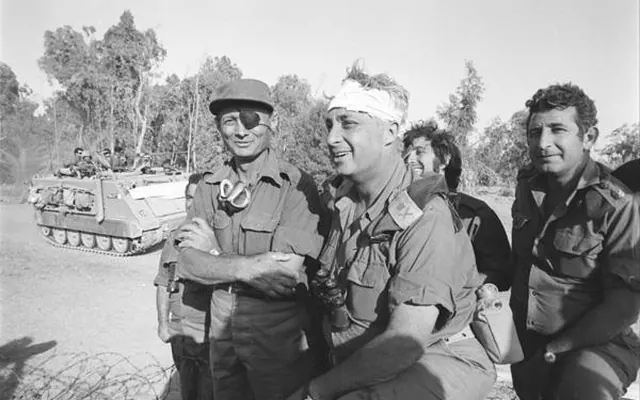
The second is Ariel Sharon, the living embodiment of the bold, aggressive Israeli character. Forced into retirement months before the war and handed a reserve division only through Dayan's intervention, he flagged down retreating tanks on the second day and read a shock in those faces he had never seen in any of his wars. For Sharon there was one answer, attack, because he saw Israel's survival as hinging on denying the Egyptians any sense of success and building in the Arabs a conviction that they could never win. That very quality, Rav Mike notes, would cut both ways, since a measure of Egyptian success would later make Sadat both willing and able to make a real peace.
The turning point lay at the Chinese farm, a seam between the Egyptian Second and Third Armies where Sharon had prepared bridging ground before the war. On October twelfth the cabinet weighed a crossing, and Zamir's report that Egypt would launch phase two toward the Sinai passes, feared only days earlier, now lit Elazar's face, because it would draw Egyptian armor out from under its missile umbrella. Shazli, Egypt's chief of staff, protested that venturing east was madness, and was told it was a political order meant to relieve the reeling Syrians. On October fourteenth phase two became a slaughter, three hundred Egyptian tanks lost against forty Israeli, and as Barlev put it, both armies had returned to themselves.
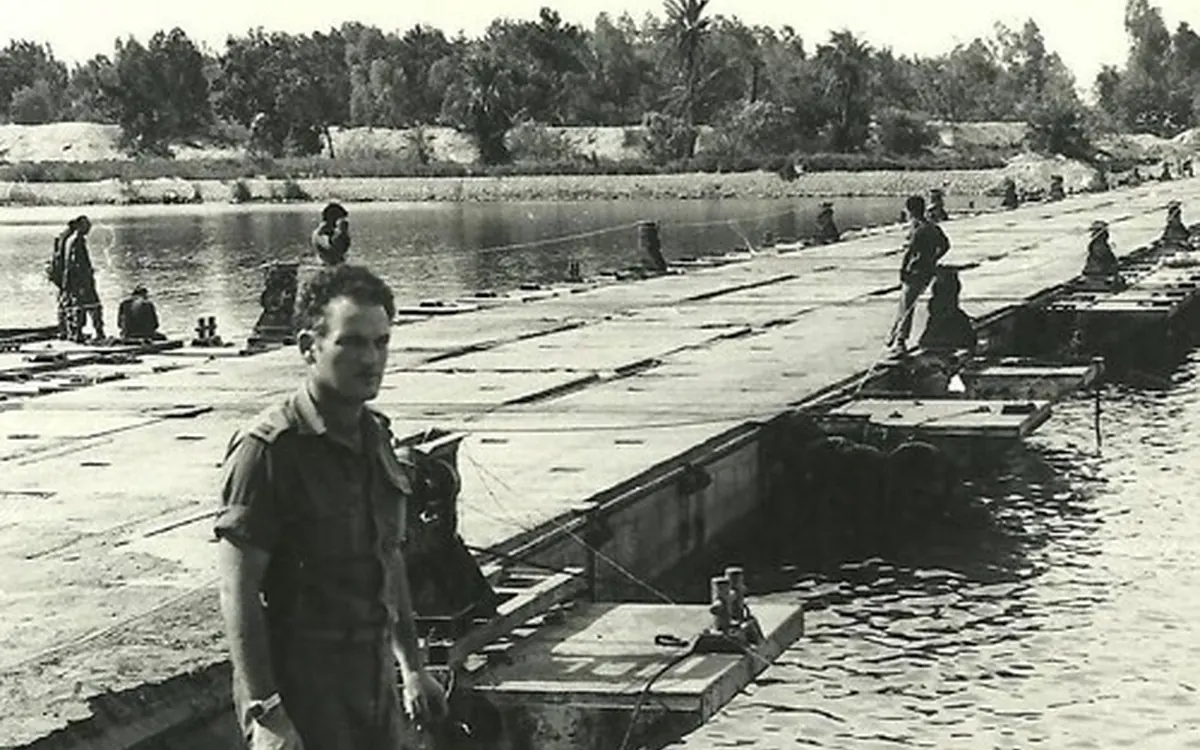
The crossing, Operation Stout-Hearted Men, brought the most brutal fighting of the war around the Chinese farm while Danny Matt's paratroopers slipped over the canal on a fragile pontoon bridge. A Battle of the Generals raged as Sharon pushed forward against Barlev and Dayan, who wanted to pull back, and Sharon answered that it was the Egyptians who were surrounded. Golda announced the crossing to the Knesset, which stiffened Elazar's resolve to finish. Kosygin flew to Cairo bearing Brezhnev's warning that Cairo was not far from the canal, and Sadat, dismissing the crossing as a mere maneuver, reversed himself within a day and begged for a ceasefire. Kissinger stalled his way to Moscow, handing Israel ninety-six hours to redraw the map, and the IDF closed to within fifty miles of Cairo.
Key ideas
- Rav Mike reframes the great man theory as the power of a perfectly embodied role, and asks what role each of us plays in our own story.
- Kissinger the insider-outsider inherits the role of Joseph and Daniel, the outsider who becomes the indispensable adviser at the heart of empire.
- Sharon embodied the aggressive Israeli character, seeing survival in denying the Egyptians any sense of success.
- That same quality cut both ways, since a measure of Egyptian success would later make Sadat willing to make peace.
- Phase two drew Egyptian armor out from its missile umbrella and became a slaughter, three hundred tanks lost against forty.
- The crossing at the Chinese farm, Golda's Knesset announcement and Kissinger's stalling gave Israel ninety-six hours and brought it fifty miles from Cairo.
Chapters
- 0:00 Patience and time; the embodied role
- 2:23 What role do you play in your story?
- 3:26 Kissinger the insider-outsider
- 6:59 Filling the role of Joseph and Daniel
- 9:09 Sharon flags down the retreating tanks
- 11:27 The warhorse not to be bridled
- 12:37 Attack; a psychology of defeat
- 14:47 The seam at the Chinese farm
- 17:03 The cabinet; news of phase two
- 19:18 Shazli's protest; a political order
- 21:33 Phase two becomes a slaughter
- 24:44 Stout-Hearted Men; the crossing
- 28:02 The Battle of the Generals
- 30:11 Golda announces the crossing
- 31:14 Kosygin in Cairo; Sadat's about-face
- 36:53 Ninety-six hours to redraw the map
Who, where and when
People
Leo Tolstoy, Henry Kissinger, Ariel Sharon, Moshe Dayan, David Elazar, Golda Meir, Saad al-Din Shazli, Anwar Sadat, Alexei Kosygin, Leonid Brezhnev
Places
Washington Heights, The Chinese farm, The Great Bitter Lake, The Suez Canal, Cairo
Texts
The Yom Kippur War by Abraham Rabinovich, The Joseph narrative, The Book of Daniel
When
12 October 1973 CE: the cabinet decides to cross, 14 October 1973 CE: phase two fails, 15 October 1973 CE: the crossing begins, 22 October 1973 CE: the ceasefire
Read the transcript
The two most powerful warriors, said Leo Tolstoy, are patience and time. Well, it's taken me a little bit of time, but I've gained some patience. I'm Rav Mike Feuer, and this is The Jewish Story. Season 4, Episode 18, Yom Kippur War, Part 6, The End Game. And this show is dedicated in memory of Hanabat Zvi Hirsch and Gabriel Ben Moshe, who both always loved a good story. So, we've touched on the great man theory of history a number of times along the way in the Jewish story. It's basically the idea that the events of history are shaped by individuals and their personal powers and ability to really harness the maelstrom of the times around them. I believe, in general, I've raised before in contrast to the more, call it, structural social science approaches of social and economic history as the drivers for our world.
meaning that, you know, someone like Napoleon, per se, wasn't actually in charge of what was happening, but was rather produced by the economic and social forces of his day. Right now, I don't want to get into that conflict. I just want to offer another perspective on the theory itself, simply by changing the name from calling it the Great Man Theory of History to the power of a perfectly embodied role. Now, I know you might be tempted to dismiss the difference as semantics, But word choice itself is not a small thing in my eyes. The words we use aren't just means of communication. They're means of conceptualization. They're ways we understand the world in which we live and thus how we shape it. In my work as a spiritual counselor, one of the questions I'm constantly pushing people to consider is not only what's your story, but also what role do you play in it?
Are you a savior, a victim, a bystander? Are you a sage or a fighter? Now, these can be archetypes, but sometimes they fit us and fit us very well. And we'll find that the story we're telling about our lives is shaped in ways which either give us great agency over that story and therefore some understanding and active engagement of the event in our lives. And sometimes these roles are so powerful that we struggle to free ourselves from them and regain some measure of our autonomy. Now, I don't know France deeply enough to analyze how profound or perfect Napoleon's embodiment of his role in their story really was. But I know I'm Yisrael, and I can say with confidence that certain people are indeed the living embodiment of types of Jews.
And one of those who comes into our story this week is Henry Kissinger. He was the ultimate insider-outsider. Recall that Kissinger is a German immigrant refugee whose family fled the Nazis in 1938. At age 15, he landed in Washington Heights, there in Manhattan. It was a neighborhood so wholly German at the time it was called the Fourth Reich. And Kissinger started this new phase of life as a shy, socially awkward immigrant kid. Kind of character par excellence already. As one biographer described him, he was an observant Jew who played soccer for the neighborhood club, but flunked his driving test. He was, by all accounts, entranced by the country which had saved his family, its technology, its pace of life, and the freedom that it offered.
Nonetheless, even at a young age, Kissinger had that European attitude that Americans took a casual approach to life. At one point he wrote, quote, no youth of my age has any kind of spiritual problem that he seriously concerns himself with. Now, the type of problems which lay ahead for young Henry and which he will engage on behalf of this new country may seem more material than spiritual, but the scale of event in which he came to deal gave them, I think, a spiritual significance. So, how does the Orthodox Jewish immigrant whose childhood shyness left him with a thick accent come to be sitting in the halls of power in America and around the world, and by the way, wielding a big stick? I gave Kissinger's backstory in episode 9 of this season.
So you can go there to really hear it. But for now, suffice it to say, he has a boatload of brains and worked relentlessly toward his goals. That alone makes him the embodiment of the hardworking immigrant story. But that's hardly a particularly Jewish story in that respect. There were tens of millions like him in America. Perhaps most importantly, Kissinger had a very real and unique perspective to offer to the men who elevated him to his role. And that is the perspective of the insider-outsider. In the coming four years which unfold from our story, Henry Kissinger will sit at the center of American power, attempting to forward and defend her interests, and through that, shape much of the political situation of the planet right through the end of the century.
Now that's the inside of the inside, as Rep. Schlumberger would say. You don't get more intimate with America than that. At the same time, unlike really anyone else around him, certainly in terms of his scale of power, he won from around here. And aside from social awkwardness, a bit of alienation and the occasional outright anti-Semitism, that meant Kissinger was able to see America's interests and how they were to be best moved forward and defended in entirely different ways. You know, much of his policy was actually driven by this perspective. It won't come out as much in this episode as I thought it would, but it will come out a lot in the next. And by an understanding of what he considered the saving elements of his own story.
Even if the men around him had served abroad for some time, they brought their American frame of reference with them as we all do when we travel, and so would never really see their world from the outside. As an immigrant, Kissinger had the European outsider perspective, fine, but that wasn't so rare or precious. What I'm speaking about goes much deeper. As a Jew, Kissinger was prepared from before birth to see the world around him from the outside. He may have been at home in Germany before he left, but as a Jew, he was never really from there, certainly not in the 30s. He adopted America wholeheartedly, but he was clearly from Germany in the eyes of the people around him. Now, we have discussed before this perspective of insider-outsider as a defining characteristic of what would be true Jewish history.
One which serves as a critical lens for understanding all of the past in much the same way that gender serves for feminist theory or race for black history. It's a Jewish perspective on the past, rather than just looking at Jewish history as a subplot in the human story. It's a perspective rooted in lived experience, one that reflects a historical existence of, at this point, 1900 years, a powerful and precious perspective. But what makes Kissinger the perfect embodiment, at least in his generation, of his role, is the fact that, perspective aside, the role of Insider-Outsider as powerful advisor is much older than two millennia. He's filling a role first played by Joseph, and in the biblical sense, reaching its culmination with Daniel.
That's a long story into which to fit so well, unless you're playing the character just right. Now, once Israel turns the tide, And the question at hand becomes a post-war Middle East, the way in which Kissinger wields power and what perspective guides him in doing it will shape much of our story. And since he's still alive and well today, in theory, we could pursue his ongoing embodiment of this role for many chapters of the Jewish story to come. We shall see. And in fact, I was a bit surprised to see that we really only get to touch on him at the end because for now, before we can talk about what comes after, we have to turn the tide of the war. And in order to do that, we'll actually need a man who is yet another perfect embodiment of his role in our story, General Ariel Sharon.
If you want to understand Ariel Sharon, or Arik, as he is known, or was known, and the real, if complicated, role he'll play in transforming the near catastrophe of the Egyptian invasion into a potentially cataclysmic Israeli victory, Then picture him right when he arrived at the main Sinai base of the Ideath in Rifidim. Now Sharon was headed south of the command of a reserve division on the second day of the war. And he flagged down several tanks that were retreating as he approached. Ever the field officer, he wanted to speak with their commanders, see them eye to eye and get through them the ground level perspective on what was actually unfolding in the field. and he saw something in their faces which Sharon had never seen in all of his wars and he'd fought in every single one.
And it really told him all he needed to know, shock and bewilderment. Sharon had been the commander of the Southern Front up until only three months before when he'd finally been forced into retirement after it was made clear that in no one's wildest dream, not even his mentor Moshe Dayan, would he ever become chief of staff. A lifetime of combativeness and insubordination had finally caught up with him, and it was only through Dayan's direct intervention to overrule Chief of Staff David Eleazar that Sharon had gained command of this reserve division at all. He may have felt some disgrace in returning as a subordinate to a post where he had only a brief time before been in command, but everyone rose instinctively when he entered the war room, and many gave an audible sigh of relief.
because even Sharon's harshest enemies, and he had a number, recognized him as a gifted soldier. Ben-Gurion himself had said that Arik was, quote, the greatest field commander in the history of the IDF. Add to his former role as commander and present role as inspiration under fire, the fact that southern commander General Shmuel Gonen was simply flailing in the face of the Egyptian crossing And you see why an environment ripe for Sharon to do what he did best bulldoze the situation was in the making Moshe Dayan once famously said of his generals that he preferred to restrain warhorses than prod oxen who refused to move. And most people assumed he was talking about Ariel Sharon. In general, Sharon exemplified the bold and unhesitatingly aggressive aspect of the Israeli character, the one that had allowed a young country to achieve such miracles in both peace and war in the previous decades.
You know, they say that once in the early 50s, then Chief of Staff Moshe Dayan had asked Sharon to see whether it was possible to capture Jordanian soldiers in order to exchange them for Israeli prisoners of war. Within a few hours, Sharon had rounded up a friend, grabbed a pickup truck, and driven down to the Jordan River. He then waded straight out into the water, and pretending to inquire about some missing cows, jumped and disarmed two Jordanian soldiers. He cuffed them, blindfolded them, and drove them back to headquarters in Nazareth, where he found, of course, Dayan was already out, and he left him a note. Moshe, the mission is accomplished. The prisoners are in the cellar. Shalom Arik. And he was more than just a testosterone junkie.
In 1967, Sharon had planned the IDF's first ever divisional scale battle, one which he crafted alone and on the fly, and they took the strategic crossroads of Abu Aguila, something that played an important role in Israel's stunning victory. It's a battle still taught in military academies around the world today. Nonetheless, Sharon was also well known for his disastrous insistence on entering the Mitla Pass in 1956, something which caused dozens of unnecessary deaths to Israeli soldiers. So, when this ultimate fighting man and stubborn warhorse entered the underground headquarters at Rafidim, in his mind, there was no question about what was to be done. Attack. And this is more than bravado, or the inability of an Israeli military mindset to move beyond charge as the strategy of war.
As he would later write, Sharon saw Israel's survival in that moment as dependent on denying the Egyptians any sense of success. The immediate battle clearly hinged on the psychological factor, but so did the war. In his eyes, the only option was a swift counterattack, one that would throw the enemy off balance and ultimately, quote, create in the Arabs a psychology of defeat, to beat them every time and beat them so decisively that they would develop the conviction that they could never win. Now, there's a lot to be said about that quote, particularly in light of the terrible situation in which we find ourselves today. And we'll speak in the long run about whether this quality of crushing the enemy, which our own so perfectly represent at this point, is going to actually serve the country, especially in light of the role which a sense of Egyptian success will actually play in Sadat's willingness and ability to ultimately make peace.
But that story lies ahead. For now, Sharon is a war horse not to be bridled. As we heard last episode, he did indeed get his counterattack the very next day, Monday, October 8th. And it was such a disaster that it nearly knocked the IDF out of the war along the canal. You may recall that as the army was regrouping the day after the failed attack, southern commander Shmuel Gounen still struggled to reign in Sharon and enforced the chief of staff's orders that they take a defensive posture. And fortunately for our story, and frankly the state of Israel, Gounen didn't manage to stop Sharon before one of his battalion commanders happened upon a seam which lay open between the northern flank of the Egyptian 3rd Army and the southern of the 2nd.
It was a corridor nearly a mile wide, stretching from the Israeli lines right up to the point where the Great Bitter Lake empties into the canal to the north, and where there was an agricultural station known as the Chinese Farm. By a stroke of divine grace, it was right here at the northern end of the lake that Sharon, as southern commander before the war, had made preparations for bridging the canal in case of need. There was a 200 by 500 foot yard that had been cleared for heavy bridging equipment, complete with an access route and dirt banks to give some protection. Two miles south of the bridge yard was actually a paved road called the Akavish Road, built as a link to the forward supply depot back at Tassa.
Now the Tiritur Road lay just to the north, running parallel to Akavish and ending at the Matzmid Fort, a fallen stronghold of that Barlev line. Sharon knew that the Chinese farm was the gateway to victory and he was determined to force it open but the decision to do so was political, not military On Friday afternoon, October 12th, the inner cabinet met in Tel Aviv Prime Minister Golda Meir, Defense Minister Moshe Dayan, Israel Galilee himself a minister without portfolio but the most intimate advisor that Golda Meir had Labor Minister Yigal Allon and members of the IDF general staff. The chief item on their agenda was how to achieve a ceasefire. And the immediate question was whether crossing an Israeli force onto the west bank of the Suez Canal would make it happen.
Now Chaim Barlev was there. He'd just returned from the southern front, where he had been sent to replace Commander Shmuel Gonen. His troops had recovered from their shock, and he carried their fighting spirit with him. so he was a bit dismayed to find that the mood in Tel Aviv was still gloom and doom as it had been in the first hours of the war. Our boys are fighting, he said, bless them, with cool heads and a dash of humor without panic. And they're fighting, Barlev said. He urged the wisdom and feasibility of a crossing. Everyone knew the risks, but if they were going to do it, now was the time. Air Force Commander Benny Pellet seconded Barlev's sense of urgency, warning, in what he later admitted was a lie, that the Air Force was almost at the red line, the point beyond which they would no longer be able to support a major ground assault.
And as the discussion progressed, an aide entered and whispered in the ear of Mossad Chief Sfidz Amir, there by invitation of the Prime Minister. He excused himself and soon returned with a written message. It was a report from one of his agents in Egypt, And it's said that the Egyptian forces were planning to attack the Mitla Pass and Rafidim base either Saturday or Sunday. Now, perhaps even 24 hours and certainly 48 hours before, this would have been very bad news. But now, the whole room set up, and Chief of Staff David Elazar's face actually glowed. He couldn't have hoped for better news. It was, they thought, phase two of the Egyptian invasion plan, well known to the IDF. But, whereas, like I said, days before it might have been feared, now it presented a golden opportunity.
Such a major attack would bring a large portion of the Egyptian armor well east of its missile umbrella, and that meant the IDF would finally have a chance to destroy a good chunk of its armor before launching its own counterattack. As Eleazar and his generals left to make their plans, Defense Minister Moshe Dayan pointed out to those remaining the political potential of this news. United States Secretary of State Henry Kissinger had repeatedly warned Israeli Ambassador Simcha Dinetz that as Soviet pressure mounted, he couldn't continue to hold off a demand for a UN ceasefire much longer. Nonetheless, highly aware of the political implications of Israel's military posture in Sinai, meaning the Egyptians had seized a chunk of territory and the IDF had nothing to show in return, Dayan had told Dinitz that under no circumstances should he agree to a ceasefire.
But now, he suggested to the cabinet, the time had come to say yes. First of all, the Egyptians surely wouldn't agree to a ceasefire just as they were launching phase two of their invasion. And second of all, by withdrawing opposition to that ceasefire, Israel would solidify America's goodwill and thus its continued supply of arms. Now, the cabinet weren't the only ones to receive this news. When Egyptian Chief of Staff, General Sa'ad al-Din Shazli, first heard about the planned Egyptian advance eastward into Sinai, his reaction was the exact opposite of David al-Azhar's. Shazli well knew that his army's success up to now had stemmed from meticulous planning, a renewed fighting spirit of his troops, and more than anything else, a deep awareness of their limitations.
And when War Minister Ahmed Ismail first asked Shazli about the feasibility of continuing eastward to the Sinai passes of Mitla and Giddi, Shazli vigorously protested. So far, he had achieved exactly what President Sadat had asked for, a firm foothold on the east bank of a canal which he could use as leverage to remove Israel from the rest of the Sinai through political means. His men were dug in deep, and they were confident that the Israelis would not be able to dislodge them. Venturing further into the Sinai seemed to Shazli like madness. But by Friday the 12th, the question had become an order. And when Shazli tried to point out the danger to Ismail, the reply was, It's a political decision. We must develop our attack by tomorrow morning.
So what had happened? Well, in an ironic twist of fate, Egypt's alliance with Syria, which had provided so much power at the surprising outset of the war, was now to prove its downfall. Since the heroes of Israel had pushed the enemy back from the Golan on October 9th, Syrian President Hafez Assad had been begging the Egyptians to launch an offensive, some sort of attack that could draw off the Israeli forces who were even now moving within artillery range of Damascus. The Egyptian advance to the passage had actually been part of the plan from the very beginning, but until now, President Anmur Sadat had declined to carry it out. But at this point with Hafez Assad and his army on the ropes he felt he couldn ignore the Syrian cries from the north any longer And so Sadat ordered the 21st and 4th Armored Divisions until now held in reserve to cross the Suez Canal and begin Phase 2 of the Egyptian War Plan, which actually started at 6 a.m.
on October 14th. And in many ways, it was the exact opposite of Phase 1. This was no small collection of tanks that they faced any longer. the thin Bar Lev line. There were now more than two divisions of Israeli armor dug in on the high ground, and as they advanced, the Egyptians were forced to leave the protective cover of their surface-to-air missiles. The outcome, just as General Shazli had feared, and Dado Eleazar hoped, was disastrous. When the smoke cleared, Egyptian tank losses were counted at almost 300, compared to a mere 40 Israeli tanks lost, only six of which were actually damaged beyond repair. The Israeli victory was so overwhelming that Egyptian media, which, unlike during the Six-Day War, had been sending reliable ports from the front, now began broadcasting news of the capture of Mitla Pass and other imagined victories.
As Chaim Barlev set in a phone call to the Prime Minister, we've returned to ourselves and the Egyptians have returned to their selves. Or, as Arik put it, They came, they were hit, and they started to run. Bold words for a man who was about to face the most horrific fighting of his long career. But considering that he and the country had just survived the worst week in Israeli history, perhaps we can forgive the boast. When toward the end of his life Moshe Dayan wrote his memoirs, this is what he had to say about the battle for the Chinese farm. I am no novice at war or battle scenes, but I have never seen such a sight. Here was a vast field of slaughter stretching as far as the eye could see. You know, many people call it, in contrast to the Valley of Tears in the North, the Valley of Death.
Now, I've warned you many times, I am not a military historian. And maybe now is actually the right time to plug a fantastic book, Abraham Rabinovich, or Rabinovich, depending on how it's actually pronounced, has an incredible work called The Yom Kippur War, the epic encounter that transformed the Middle East. I've used it as the backbone for my research, and I highly encourage everyone to go out and get it if you want to understand particularly the military details of war, but also its scope. I mean, it's as readable and as informative as Professor Michael Oren's book, Six Days of War, on 67. Nonetheless, I do need to give you the broad strokes of what's unfolding now around the Chinese farm in order to understand where we're going.
The operation that Israel developed for crossing the Suez was codenamed Stout-Hearted Men, and it would take all the courage its soldiers had. It called for laying two bridges across the canal, which would then be crossed by two armored divisions commanded by Generals Bren Aden and Ariel Sharon. The task of these divisions was to be capturing a 50-mile-wide swath of territory on the west side of the canal, something that would encircle and cut off the Egyptian Third Army. And from here, they were to slowly advance on Cairo. Sharon's division was assigned to capture the marshalling yard for the bridgehead, as well as the Akavish and Tertur approach roads, the Chinese farm to its north, and a high point above the northern end of the Great Bitter Lake, dubbed Missouri of all things.
Now, once those positions were taken, and only once they were taken, Schoen was going to move the rest of his division over the canal, led by a paratroop brigade under the command of Colonel Danny Matt. They would be following Aiden's division in an ideal plan. Sounds simple, right? But what followed was one of the most brutal and bloody battles in Israeli military history. In fact, according to many, the most. At 4 p.m. on October 15th, an armored brigade under Colonel Amnon Reshef swept toward the gap in the Egyptian line. The Israeli forces remained undetected along the entire 19-mile trek they took, and they managed to capture that Barlev strongpoint Motsved that stood above the staging ground without encountering real resistance.
Rasha's brigade then divided into battalions to accomplish those three main objectives I listed. Taking the yard, opening the Akavish and Tirtour Road, and taking the Chinese farm in Missouri. Now, unbeknownst to General Sharon or Colonel Rasha, the administrative centers of the Egyptian 2nd Army's 21st Armored and 16th Infantry Divisions were located in the Chinese farm. That may not matter to you, but it would to them, because it meant that as the IDF approached, they were instantly surrounded by hundreds of tanks, guns, missiles, and thousands of troops. And to make things worse, the defenders were dug in in the farm's irrigation ditches. The result was a slaughter that began that afternoon and lasted until Reshef's brigade, or at least its remnants, finally managed to break the Egyptian positions on October 18th at the cost of hundreds of dead and scores of destroyed tanks.
As the fighting ranged around the Chinese farm, the rest of the 40th had a much easier time clearing the Akavish Road and taking the marshalling yard. Now immediately, the first round of bridging equipment, and that's a bit of an exaggeration, it was actually a set of interlocking amphibious rafts, which were known as Gilawas, began to move down the Akavish Road. But because the fighting is still going on, and the parallel tour to road was still contested, a massive traffic jam of armor and transport immediately developed. Before he knew it, the operation was soon hopelessly bogged down, and Colonel Danny Matt's paratrooper brigade took more than two hours to go less than three miles, and they were the spearhead of the crossing.
By the time they made it to the bank of the canal, the bridge was up. Like I said, if you want to call it a bridge. It was essentially a floating set of metal boxes and hardly a solid path for a large-scale invasion of Africa. Nonetheless, as soon as they got there, Sharon ordered the paratroopers across, even as the battle for the Chinese farm wasn't just ongoing, but actually growing in intensity. By 3 a.m. on October 15th, Matt's entire brigade had crossed, and with that foothold established, Sharon and Aiden prepared to move their armored divisions over as well. In Ariel Sharon's eyes, securing the Chinese farm in the Missouri position were far less important than the actual crossing, and so he downplayed both the losses and the intensity of the fighting in his initial report.
His commanders in Tel Aviv, and even in the rear bases in the Sinai, saw things otherwise. They were appalled, even by the lowered figures of losses that Sharon shared, and skeptical that a two-division attack across the Suez Canal could rely on a single pontoon bridge. What we need, Chaim Barlev told Sharon on the radio, is a bridge and a road. And to my regret, we have neither. Defense Minister Moshe Dayan actually proposed to extract the paratroopers right away and just give up on the idea of the crossing altogether. As a compromise, Barlev ordered that there be no further transfer of tanks across the canal. Now Arik saw their attitude as madness. He himself said later he lived by Napoleon's Favis Maxim.
In war, there is but one favorable moment. The great art is to seize it. And in Arik's eyes, that moment was now, and nothing would stop him from seizing it. When Barlev pointed out that there was a huge risk of the troops on the West Bank becoming surrounded, Sharon replied, we're not surrounded, it's the Egyptians who are surrounded. Now, there was a whole battle, known as the Battle of the Generals, that took place between the people in authority, even as the firefights raged around them. But in the end of the day, Sharon was right. It would take days of brutal fighting, and a stubbornness would stop just short of formal insubordination, and threatened to have him removed several times. But in the end, Sharon got his invasion of Africa.
By midnight on Wednesday, October 17th, 17th, General Bren Aden's division began to cross the canal. And soon, there would be hundreds of Israeli tanks on the West Bank. And within a week, the war would be over. The first hint which Egyptian President Anwar Sadat got of the imminent collapse of his plans, actually came to him on the first day of the Israeli crossing, via no less an authoritative source than Prime Minister Golda Meir herself. Unable to contain her excitement after 11 terrible days of fighting, when the Prime Minister heard the news that Danny Matt's paratroopers had crossed the canal, she decided to share the good news with the nation. Right now, she announced in a speech to the Knesset late on Tuesday, as we convene in the Knesset, an IDF task force is operating on the west bank of the Suez Canal.
David Eleazar and the other members of the general staff were horrified. Now, in her defense, the Prime Minister assumed she wasn't telling the Egyptians anything they didn't know. After all, weren't they fighting this very force? And indeed, Sadat had heard rumors of skirmishes on the west side of the Suez, but he dismissed them, and the Prime Minister's comments, as psychological warfare. Now, ironically, the real impact of the Prime Minister's faux pas was to stiffen the resolve of Chief of Staff Eleazar, because with the Chinese farm untaken and the tour to a road still closed and what looked to be a disaster unfolding, he'd been on the verge of pulling back his forces. But to evacuate now would be yet another blow to the national morale and Eleazar understood that they could not afford it.
You know, it was in the end the Soviets who convinced Sadat that he had a real problem. Primeir, Alexei Kozigen boarded a plane for Cairo on the 16th his intent was to convince Sadat to accept the ceasefire which had been batting back and forth in the UN Security Council already for days and he carried two messages for the Egyptian president directly from Chairman Brezhnev. The first was a reminder that under no circumstances would Soviet troops become involved in the fighting. They would send tanks and planes, and even those were becoming a little costly, but not one drop of blood. The second was a warning about what Soviet intelligence now called a potential Israeli breakthrough to the western side of the canal.
Remind him, said Brezhnev, that Cairo is not far from the canal. After congratulating Sadat on Egypt's impressive military achievements, Kossigen went straight to the heart of the matter and raised the issue of a ceasefire. The Egyptian president at first refused to even consider the idea, insisting that fighting would go on until there were international guarantees, meaning American and Soviet, that Israel would withdraw from all territories she had captured in 1967, not just the Sinai. Kosykin had received a briefing from the Soviet military mission in Cairo that morning before they'd met, and he pointed out to the president that Israel's cross-canal operation might soon pose a real threat to Egypt's military position on the eastern side of the canal.
But Sadat dismissed the crossing as a political maneuver. Their talks continued for three days, but without any real progress. Even when, on the last day, Kosagin shared a reconnaissance photo of the Israeli buildup along the western bank of the Suez, Sadat was unconcerned. It's a tactical situation, he said, and it has no impact on his war aims. That being said, and despite his bold posture of unconcern, as soon as the meeting broke up, Sadat quietly authorized the withdrawal of a limited number of units from the Sinai in order to shore up the defenses around Cairo. And lo and behold, less than 24 hours after his final meeting with Kosykin, Sadat summoned Soviet Ambassador Vinogradov to the Al-Tahira Palace.
I apologize, by the way, that I'm slaughtering pronunciation in multiple languages. So the president announced that after consulting with his military commanders, he had decided to ask the Soviets to seek an immediate ceasefire in the UN Security Council. Now, keeping in mind that this was a fantastic flip-flop, I mean, only five days before Sadat had rejected the U.S.-Soviet initiative, to which Israel had agreed, and less than 24 hours before he'd been bragging about how he was going to get the whole Sinai back, Vinogradov asked what are your conditions? to his surprise the president responded that Egypt would accept a ceasefire on existing lines a complete about face from the insistence on Israeli withdrawal to pre-67 lines and one which his security advisor Hafez Ismail explained by labeling the Israeli presence across the Suez as a serious threat to Cairo's security it was as Chairman Brezhnev would later call it a desperate appeal.
And in an expression of the contempt that he'd held toward the Egyptians since the outset of the war, he said, quote, he Sadat, he meaning Sadat, got what was coming to him. But as we'll see in the end, so will the Soviets. Because immediately following Sadat's appeal, Brezhnev sent an urgent message to the White House asking that Secretary of State Henry Kissinger come to Moscow the very next day. Because in his eyes, every hour counted. Now, Kissinger couldn't agree more that every hour was important, although he put a slightly different construction on the value of time than the Soviets did. Even before Kosygin had arrived for his failed trip to Cairo, Kissinger had sent a message to Sadat's military advisor, Hafez Ismail, who was his sort of backdoor contact with the president, assuring him that, quote, the United States recognizes the unacceptability to the Egyptian side of the conditions which existed prior to the outbreak of recent hostilities, and promising that once the fighting ended, they would assist in, quote, bringing a just and lasting peace to the Middle East.
In Diplospeak, what this meant was, if you let me, meaning the United States, serve as broker, then I will get you, Egypt, a chunk of your territory back. The Egyptian response had been to invite Kissinger to Cairo, an extraordinary act considering that Egypt was even then in the midst of a war in which the U.S. was supplying its enemy. But Kissinger was too savvy to leap at such easy bait. He knew that before he could play his endgame, Egypt's hand needed to be weakened just a bit more. And he also knew that it was the Israeli canal crossing which would make it happen. Remember, in this situation, at least in Kissinger's eyes, American interests required three things. An end to the conflict that didn't undermine Israel, its client state.
And one that didn't wreck relations with the Arab world, thus allowing America to supplant the Soviet Union as the power in the region. And finally, one which didn't threaten detente with the Soviets. We'll see next episode that that third one proved to be the sticking point. Now, this was the type of complex foreign policy environment in which the Secretary of State thrived. Before he left for Moscow, Kissinger asked Israeli Ambassador Dinetz to update him on the situation from the front three times a day. And he told him that he estimated Israel had four days of fighting left before a ceasefire took hold. In other words, you people have 96 hours to redraw the map of the Middle East. Before he'd even left, Kissinger had begun to stall.
He told the Soviets that he would refuse to begin negotiations before he'd had a good night's sleep, which means that in addition to the 15 hours it would take him to get to Moscow, there was another half day added to Israel's military timetable. But once discussions began, Kissinger saw that the Soviets were in quite a hurry. Clearly the situation of the Arab armies in the battlefield was desperate, and rightly so. You know, on the morning of Monday, October 22nd, General Aden addressed his brigade commanders, who were, of course, on the west side of the canal at this point, and taking huge chunks out of the Egyptian armor. He had taken to giving a daily parody of Israel Radio's morning broadcast, which always began with the day and a verse from the Psalms.
And his chosen texts for this day tell us all we need to know about the situation in the field. today is Monday the 22nd of October he said the 17th day of the war on this day the Levites would chant in the temple and you shall strike the Egyptians and pursue them to the end and then he added should it come to pass that you do not hurry you will not finish the task prepare for orders over and hurry they did the IDF was racing to complete the encirclement of the Egyptian 3rd Army before the ceasefire would come into effect that very night. And frankly, what unfolded over the next 24 hours was such blatant ignoring of the ceasefire that it required another UN Security Council declaration to enforce the ceasefire once again on October 23rd.
Here was the problem. The general staff in Tel Aviv viewed the end of hostilities as a real dilemma at this point. On one hand, they knew that with only a few more days, they could force the surrender of the Third Army and cut off the Second as well, which would bring about a total Egyptian military collapse and thus produce a lasting victory. Chief of Staff David Eleazar, Prime Minister Meir, and Defense Minister Moshe Dayan were not interested in this being yet another round of fighting. They wanted to win and win for good and believed that only a decisive victory will allow them to do so. At the same time, as I said, they knew well that this wasn't in the national interests of the United States and the political debt to which they owed the United States was too large just to ignore them and keep on fighting.
Up in the north, Israel had pushed the Syrians so far back that the IDF was within 30 miles of Damascus. And down in the south at this point, Though Egypt had seized nearly 1,200 square kilometers of the Sinai, Israel held another 1,600 on the West Bank, and the tanks of Aden's divisions hadn't just cut off the Third Army by the time the ceasefire actually came into effect. They were only 50 miles from Cairo. So this is our situation at present. The fighting has ceased for now, but as we'll see in the next episode, the war is actually not quite over. We still have to consider the Arab oil embargo and its impact on the international situation, and a nuclear alert that will arise right on the heels of that ceasefire.
But I'll have to say that those are stories for another day. I want to thank a few people. And frankly, even before I do, I just want to say again, this show is dedicated to the memory of Hanabat Zvi Hirsch and Gabriel Ben Moshe, two people who always loved a good story. And I want to thank all the folks who give their hard-earned money to make this show happen, keep it free, and make it widely available. I want to invite you to join them. You can go right now to my website. That's jewishstory.co. And up in the right-hand corner, you'll see a little button that says Be a Patron. Click on that. You can give a little bit of per-podcast support. Or, if you'd also like to dedicate a show, you can reach out to me at RobMikeFoyer at gmail.com.
Or on Facebook, you can send me a message, RobMikeFoyer. And I'm happy to share with you the details of how you can dedicate. I'd also like to thank the Land of Israel Network that's thelandofisrael.com for creating a platform that allows me to reach so many wonderful people I want to thank the Pardes Institute pardes.org.il building an educational institution that gives me the privilege of teaching so many wonderful Jews and I want to thank you for listening I'm Rav Mike Foyer and this is The Jewish Story
More from Season 4
TJS S4E17 Yom Kippur War V: Down but not out
This is the story of how close the end really came during the Yom Kippur War. Even as Israel's tanks held out in the north, turning a stretch...
Play Episode
TJS S4 Interlude Yom Yerushalayim (live)
Here is a LIVE Yom Yerushalayim class given in honor of the 10th yartzheit of Fruma Raizel bat Genendel and Nehemia haKohen. It explores the relationship between Yom...
Play Episode
TJS S4 Interlude: Despite it all
Here is a rant on the current struggle in Israel and Gaza. There is something in it for everyone, both to provoke and inspire. Make sure you don't...
Play Episode