
TJS S5E7 Yitzhak Rabin's first term - part II
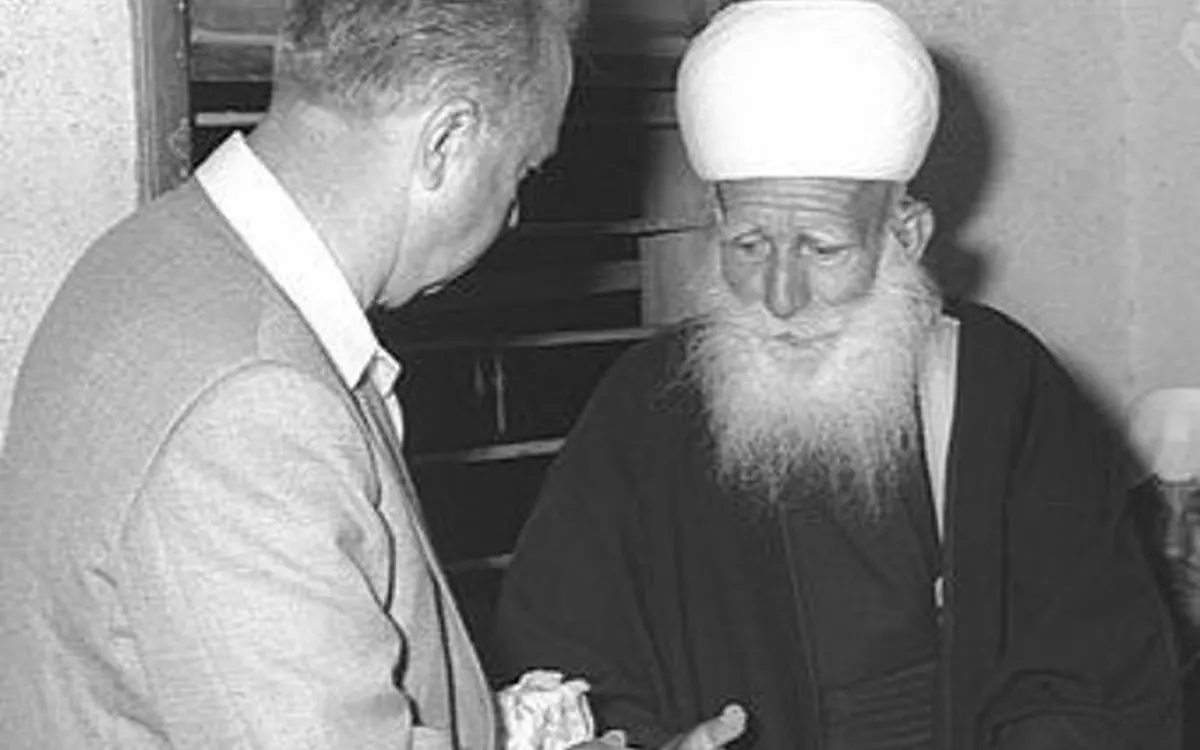
Prime Minister Yitzhak Rabin in the 1970s faced conflicts on all three fronts of Jewish history - within Am Yisrael, between Israel and the nations, and as a people in their land. This episode focuses on the third, as the Arab/Israeli war shifts into the Israeli/Palestinian conflict. This new phase of struggle will see the rise of the PLO as a legitimate political force, the strengthening of Palestinian identity among Israeli Arabs through the birth of Land Day and a horrific surge in terror in Maalot and other places.
About this episode
Rav Mike returns to Rabin's first term through a frame he has offered before, a three-part vision of Am Ba'am, Am Be'artzo and Am Ben Ha'amim, the people among itself, the people in its land, and the people among the nations, each of them now a dimension of conflict. Facing down Gush Emunim with military pragmatism was a fight within Am Ba'am, a near civil war held off only by shared culture, and Rabin took a bend-don't-break approach. His face-off with Kissinger belonged to Am Ben Ha'amim, where the old Arab-Israeli conflict was cracking into the era of Arab-Israeli conflicts, and the battle over Zionism as racism was another front. Now the third dimension, the people in its land, is about to boil over.
Everything shifted in how the Arabs of the land viewed Israel after 1967 and 1973, since the near defeat stripped the army of its aura of invincibility. In November 1973 the Arab heads of state met in Algiers and declared the struggle against Israel a long-term historic responsibility, casting Zionism as a resurgence of the colonial system. The published declaration shocked no one, but a Lebanese paper printed the secret resolutions, whose editor was promptly arrested, and there the Arab world named the PLO the sole representative of the Palestinian nation. The Islamic Conference in Lahore repeated it two months later. Rav Mike reads this through high school physics, that pressure equals force divided by area, so narrowing the front from a broad Arab war to a focused Palestinian liberation movement concentrated the power that could be brought to bear.
The Soviets saw the advantage too, fearing an American-brokered peace more than anything, and blessed the PLO as the cornerstone of a rejectionist front that could jam any peace train. In late 1974 Arafat was invited to address the United Nations General Assembly, the closest thing to international recognition of the PLO as sole representative. Rabin answered with his usual three clear points, that the partner is Jordan, that there is no room for a third state that would strive for Israel's destruction, and that there is therefore no point in political talks with a Palestinian body. Yet he was over-focused on Israel among the nations and slow to feel the shifts in the land itself. After the resolution he warned the Knesset that the aim was to set Israel outside the pale and prepare an Arafat-led state on its ruins.
One voice in the Knesset would not circle the wagons, Avraham Levenbraun of the Communist Rakah, who rose to say the resolution ignored its own causes. He pointed to the expropriation of Arab land and the stated plan to Judaize the Galilee, linking it to the refusal to retreat from the territories, and argued that the world called Israel racist because she was. Rakah, a 1965 breakaway that had become the platform for Arab nationalism, surged among Israeli Arabs, taking some sixty percent of the vote in Nazareth, a reawakening of national identity. The trigger was the Galilee Development Plan of 1975, which expropriated twenty thousand dunams to alter the demographic nature of the region, and the advisor Shmuel Toledano admitted plainly that the state wanted a Jewish majority, touching every raw wound of land, second-class status and guilt.
Rakah called a day of action for March 30, 1976, and when the local Arab councils voted against it protests erupted, a curfew was declared, and two days of rioting left six protesters dead. In Arab memory the day became Land Day, enshrining sumud, steadfastness, and it marked the first time Arabs of the Galilee and of the West Bank and Gaza protested as one people. The term also saw a surge in terror, the twin massacres of Kiryat Shmona and Ma'alot, the Savoy Hotel and a Zion Square bomb, work of the PFLP yet applauded across the Arab world. Rav Mike closes on a worry, that conventional war unites a people while terror, painful but not existential, lets opinions diverge, and that the gap opening between Israeli and American Jews begins with this very shift of 1973.
Key ideas
- Rabin's term is read through three dimensions of conflict, the people among itself, in its land, and among the nations.
- The near defeat of 1973 stripped the army of its aura and opened the way for an activist Palestinian national identity.
- At Algiers and Lahore the Arab and Islamic world named the PLO the sole representative, narrowing the front to concentrate its pressure.
- The Soviets blessed the PLO as a rejectionist front, and Arafat's UN invitation was the closest thing to international recognition.
- The Galilee Development Plan triggered Land Day in 1976, uniting the Arabs of the Galilee with those of the West Bank and Gaza.
- A surge in terror marked the term, and Rav Mike sees the gap with American Jews beginning in the 1973 shift from war to terror.
Chapters
- 0:00 Three dimensions of conflict
- 1:14 Am Ba'am; the civil war over settlement
- 4:37 Am Be'artzo; the people in its land
- 6:46 An activist Palestinian identity
- 7:52 The Algiers summit
- 10:00 The secret resolutions; the PLO anointed
- 13:15 Pressure equals force over area
- 16:33 Arafat at the United Nations
- 17:42 Rabin's three points; Jordan is the partner
- 19:53 Levenbraun; the resolution might be true
- 23:08 Rakah and the Arab reawakening
- 26:36 The Galilee Development Plan
- 28:50 Toledano touches every raw wound
- 31:06 Two days of rioting; Land Day
- 36:40 The surge in terror
- 39:59 Terror, war, and the American gap
Who, where and when
People
Yitzhak Rabin, Yasser Arafat, Avraham Levenbraun, Meir Vilner, Shmuel Toledano, Tawfik Ziad, Atallah Mansour, Golda Meir
Places
Algiers, Lahore, The Galilee, Nazareth, Kiryat Shmona and Ma'alot
Texts
The Algiers declaration, The Galilee Development Plan, Rabin's Knesset speech, The Al-Nahar leak
When
November 1973 CE: the Algiers summit, 1974 CE: Arafat at the United Nations, March 1975 CE: the Galilee Development Plan, November 1975 CE: the Zionism as racism resolution, March 1976 CE: Land Day
Read the transcript
A wise ruler, said Chinese philosopher Han Fei, when he makes his laws, is bound to find himself in conflict with the world. Well, I don't get to make the rules around here, but I'm not afraid of stirring up a little bit of conflict. I'm Rav Mike Foyer, and this is The Jewish Story. Season 5, Episode 7, Yitzhak Rabin's First Term, Part 2. Last episode, I named an impressive list of challenges which Ysukh were being faced when he took over as Prime Minister in 1974. And when I did so, I put them in what I would call general categories. Domestic versus international, social, economic, etc. Today, I want to revisit the fights which were being fought during his first term. And spew out one which we didn't really consider in context of a frame that I've offered to you before.
This frame is a three-part vision of Am Ba'am, Am Ba'artzo, and Am Ben Ha'amim, people among itself, the people in its land, and the people amongst other nations. Of course, the people I'm speaking about is the people Israel. This is the Jewish story after all. Now, ideally, I would love to call these three dimensions of relationship, and they are. But at this point in our story, there are also three dimensions of conflict, and frankly, they've been so more or less since the beginning. We are a people immersed in conflict. When Yitzhak were being moved to face down the activists of Gush Emunim, and to counter their messianic longings with his military pragmatism, he was fighting on the front of Amba Am.
It was a civil war, so to speak. Now, not exactly a civil war, God forbid. but that's really only because there was enough shared culture, history, national experience holding the two sides together to ward it off. So practically the students of Ratzvi Yehuda heard his call for civil war as an actual cry for civil disobedience and rather than breaking arms and legs to clear the hilltop once again Rabin took a bend-don't-break approach to their passionate desire to strike Rue deeper in the land above Shechem. But this conflict between the people, Am Ba'am, is being waged on many fronts, and will have a particularly important role in the political upheaval, which is going to take place at the end of Rabin's term.
We will discuss that by and by. Now, the Prime Minister took a similar bend-don't-break, if you're a Clelander, you've got to send me an email if you get the reference. If not, he took a similar bend-don't-break approach in the Am Ben Ha'amim, Israel Amongst the Nation dimension as well. I personally like to picture his face off with Secretary of State Henry Kissinger as like two sides of Jewish history squaring off for a slugging match. Or maybe a grudge match. I mean, after all, Kissinger did tell all the big American Jews that right when they really needed a Rothschild, they got a soldier peasant. And he may have tried to insult Rabin, but Kissinger certainly played the stereotypical cosmopolitan Jew as his foil.
Now, whether you hold that shuttle diplomacy and the Camp David Accords between Egypt and Israel, which it ultimately produced, were good news for the Jews or not, you have to admit that Rabin didn't crumble under severe American pressure. The need for a client state to bow to its patron from time to time is just part of the package. And if it's a true patron, such an action might actually serve the nation's strength and perhaps even strengthen its sovereign posture. But even if not, the need to bow is a defining characteristic of the patron-client relationship. Never forget that. Now, through this unprecedented whirlwind of international diplomacy, Rubin also presided over a major shift in the Am bin Ha'amim dimension, the Israel amongst the nations.
Because the Arab-Israeli conflict with its front of universal opposition was cracking. And in fact, the era of the Arab-Israeli conflicts had arrived. Now, someone said that to me recently. Just add the S. Maybe it was Gil Troy. If you remember, or if you happen to say it to me, let me know. But either way, the Arab-Israeli war is, of course, only one front in that conflict between Israel and nations. The battle over Zionism is racism that Rabin witnessed in his first term is another obvious one. So like I said, the battle is hot on two dimensions of the conflict. Within Am Yisrael, the nation is struggling with itself over the question of whether sort of material pragmatism or messianic idealism should really be driving the bus.
And facing the nations, there's a lessening of intensity in the battle post Yom Kippur, but it is far from over. And frankly, our story is about to heat up in the third dimension as well. Am Be'artzo, the question of the people in its land. It's important to remember that there is a world of difference between how Zahal, the institutions of the Israeli government, and Jews in general are viewed by the Arabs of the land post-1967 and post-1973. The fact that the Egyptians and the Syrians took Israel to the brink removed forever the army's aura of invincibility and much of the sense of inevitability that that power lent to the institutions of governance, be it those in the state proper or those in the administered territories, as the Rabidin government had come to call them.
On a more poetic front, you could say that Raul Gorin's shining face, from which everyone fled in awe and fear in 67, has been replaced by a somewhat darkened countenance, if you will. And this lessening of stature on the ground, the people in its land, is going to have many consequences. Now last episode, when I was listing that litany of challenges that Rabin faced, I used a phrase which might have struck you as shockingly parv, strange that is, or maybe disgustingly PC, or perhaps you simply thought it was true. I said that beyond the test to governmental legitimacy presented by Gush and Munim, Ruin faced the rise among many Arabs of a more activist Palestinian national identity. Now, activist Palestinian national identity is a phrase which needs to be unpacked.
Which Arabs? What kind of activism? Who exactly are the Palestinians? And why are they seeking a specifically national identity? the conflict dimension of Am Be'artzo of the people within its land is between the Jews and those allies to their state and the Arabs of the land who do not accept the state now of course it has a direct intersection with the conflict of Israel and the nations and frankly as we will see eventually with the Jews amongst themselves but for now the Arab world is about to change tactics in its approach to waging war on Israel And beyond whatever interests the Arabs of the land actually have for themselves, they will become a critical tool in this new phase and this new dimension of war.
In November of 1973, the Arab heads of state met in Algiers for a summit conference in the wake of the Yom Kippur War, or the October War, as they would have it. I'm sure they had much to discuss. As the declaration, which was issued at the summit's conclusion, makes very clear, it's a document worthy of analysis, but not right now. For present purposes, we need only note one point, that they may have failed to destroy Israel, but the war was far from over. The opening line of the declaration reads, the Arab world is passing through a decisive stage in its history. The struggle against Zionist invasion is a long-term historic responsibility which will require still further trials and sacrifices. Stirring rhetoric.
But what this tells us is that despite the relentless narrative already being spun around the world, that the joint surprise attack of a month earlier was actually a defensive action, this declaration of ongoing war surprised no one, I'm sure. Now, when I look through, what actually surprised me a bit was the paragraph which follows, saying, beyond its policy of war and territorial expansion, Israel also aims, in the framework of the imperialist strategy, at destroying all the possibilities of development of the peoples in the era. At this juncture, marked by the rise of movements of national liberation and decolonization, Zionism appears as a serious resurgence of the colonial system and its methods of domination and economic exploitation.
Like I said back in episode 4, the conceptual frame for today's assault on Israel's legitimacy as a colonial settler enterprise was set long ago. That was 73. But frankly, there's no shocker in that paragraph either. Just some tremendously cutting-edge third-world rhetoric. I have to wonder who the editor was, by the way. Now, sadly, the events we detailed in that episode on Zionism is Racism Declaration show that this rhetoric did surprise many in Zitzkak Rabin's government, or at least struck them as empty revolutionary babble. Rabin was a warrior from his youth, and like many old soldiers, he was slow to see that the battlefield, which he knew, was no longer the only active front, and perhaps not even the most important.
he was slow to comprehend how the conflict of Israel amongst the nations was about to intersect that of Israel within its land. But that important issue aside, which we'll come to, the essence of this post-summit public pronouncement, like I said, shocked no one. But what many, even many in the Arab world, may have found surprising were the decisions made in Algiers not meant for publication. And fortunately for us, they got to read them anyway, only a week late. when the Lebanese newspaper Al Nahar published a text of the secret resolutions adopted in Algiers, prompting much excitement around the political world and the immediate arrest of its editor, by the way. Now, these are worth reading closely and in full.
You can send me an email, robmikefoyer, gmail.com, if you want to read them, as they do provide an incredible snapshot of where the Arab world stands at this moment in time, or at least where they stand in their discussions with one another. And frankly, where they stand is supremely focused on the ongoing war with Israel. Sadly, not much else, foreign or domestic. This secret annex opens with the heading, The Current Goals of the Arab Nation. Notice the singular. And for the present purposes, all we need to know is one of those goals. Commitment to restoration of the national rights of the Palestinian people. According to the decisions of the PLO that the Palestine Liberation Organization as the sole representative of the Palestinian nation may sound empty or obvious in 2021 but I assure you that in 1973, it was not.
Hence the reservations expressed by the Hashemites, and others not named, I would imagine. Here in Algiers, in the wake of what would prove to be the final failure to solve the Zionist problem through frontal assault, a new approach to battle is being crystallized, and it hinges on the PLO. now instead of the poor refugees all but left out of the all out military struggle who might muster a battalion if someone else agreed to arm it now the PLO are to be the leaders in the struggle to defeat Zionism not as an act of war but as an act of national liberation and they're not just leaders in the national liberation but they're the sole representative of the Palestinian nation This despite the existence of many other organized groups vying for attention at the time, and I can assume endless voices that we've never even heard.
This is a power move in the most simple sense. Remember your high school physics. Pressure equals force divided by area. And that means the more focused the front on which you bring yourself to bear, the more power you are able to exert. the Arab-Israeli war had a very broad front and they've lost on it several times what we're witnessing now is the transformation of that Arab-Israeli war into the Israeli-Palestinian conflict a national liberation movement with a very specific leadership and the pressure which will be brought to bear through such a shift in focus is going to prove painful indeed unless you think this was a one-time event in Algiers Only two months later, at the February 1974 Islamic Conference in Lahore, Pakistan, an identical statement was made.
Now, not only the Arab nations, but the Islamic world as a whole have anointed the PLO sole Palestinian sovereign. Now, it's worth noting here the nationalist Islamic one-two. If the Palestinians have declared a national liberation movement, in a sense, a subset of the Arab nation whose goals that Algiers secret annex was seeking to list, then at least makes sense why the assembled heads of the other Arab nations would feel empowered to recognize Pielo as the sole representative of a branch of a nationalist movement. But what does that have to do with Islam? Granted, the conference, only the second of its kind, was called to discuss the situation in the Middle East, but really, why should Indonesia's opinion on who represents an Arab nationalist movement matter?
And frankly, why does their opinion support an organization which includes Christians, atheists, and militant Marxists? But of course it matters. Because as we all know, this is a religious conflict in many ways. But that's a story for some other time. For now, the USSR also saw the advantage in this shift from conventional war to struggle for national liberation, and thus in the importance of the rise of the PLO. They had just watched an inconceivable amount of their latest and most expensive arms employed in a two-front sneak attack fail to defeat Israel in a conventional war. It was clearly time for something new. And beyond any hatred of Israel or empathy for the Arabs, what the Soviets feared more than anything else was a U.S.
negotiated peace in the Middle East. and since they could see that there was no easy option of themselves moving back into the role of international broker well then, war was the next best bet and the PLO was the perfect cornerstone on which to build a rejectionist front one that could be counted on to stick a wrench in the wheels of any peace train which might get rolling under American encouragement and who knows, maybe national liberation combined with some sophisticated narrative warfare would succeed where conventional combat had failed. And so the USSR joined the Arab heads of state and the entire Islamic world in giving the PLO their blessing. Last, but certainly not least, in late 1974, Yasser Arafat, head of the PLO, was invited by special UN resolution to address the General Assembly as part of its discussion on, quote, the question of Palestine.
Now, I quoted his speech back in episode 4, But for now, appreciate that the invitation itself, with 105 countries in favor, 4 against, and 20 abstaining, was the closest thing to international recognition of the PLO as the sole representative of the Palestinian nation that you can get. I mean, after all, this is the United Nations. Lamenting the plight of Arab refugees is over. We are now interested in discussing the national rights of the Palestinian nation. And so the Israeli-Palestinian conflict, the effort of a colonial oppressor to crush a noble national liberation movement, has been born. And what did Israel have to say about these developments? Well, the following is from an interview with Prime Minister Rabin from Yidiot-Ahronot on the 26th of July, 1974.
He says, my approach to the Palestinian issue is based principally on three points. The first is that, should you ask me, who is the negotiating partner with whom a solution must be worked out for the issues referred to as Palestinian? The answer is Jordan. A second point, I see no room for a third state between Israel and Jordan, since a separate state for the Palestinians, fundamentally and by its very nature, would strive for the destruction of Israel. And this leads me to the third conclusion, said the Prime Minister. If the first two assumptions are correct, I see no point to political talk of a political solution with a Palestinian body. In fact, we are in daily dialogue with the Palestinians or with Arabs residing in Judea and Samaria, but a distinction must be made between this dialogue and political negotiation with them as an independent entity.
This is classic Rabin, if you don't know. Three clear points, speaking to the point, and giving off that feeling that he has everything figured out. except that he is somewhat over-focused on Israel amongst the nations and doesn't really appreciate that there are some major ships happening on that dimension of Amba'ar Tzoh, the people in its land. And that's a part of the conflict which is just about to boil over. Back in episode 4, I gave the sense, supported by many historians and contemporary voices, that Yitzhak Rabin's government was neglectful of the threat which the Zionism is Racism Resolution represented. That in my framework, they saw the dimension of conflict between Israel amongst the nations as focused on the Arab world, maybe including the Soviets, but frankly, who cares what Zambia thinks about us?
Now, that may have been true in the lead-up resolution, but post-facto, it seems things came quite clear. And this is how the Prime Minister responded in his speech before Knesset on November 11, 1975, the day after the resolution. He said, we must not delude ourselves. This is not an abstract ideological debate, but a significant attack with clear political objectives. And as such, it is unprecedented in the history of the struggle we have been engaged in for several decades. The aim of the Arab representatives and their supporters is to set Israel outside the pale and invalidate its very existence in order to prepare the political conditions for intensifying the struggle against Israel as an independent country and prepare the ground for the establishment of an Arafat-led state on Israel's ruins.
Powerful words, particularly resonant considering the path I just charted out in the evolution of PLO as the new spearhead of the old war against Israel. But what interests me now was that there was one voice in the room which wasn't vibing to the Prime Minister's call to circle the wagons in this new round of conflict, or at least there was one voice willing to say so. At a certain point in the discussion, which followed Prime Minister Rabin's opening statement, Avraham Lebenbrown, representative of the Israeli Communist Party, Rakhach, rose to speak, And he wanted to talk about why the resolution might be true. Mr. Speaker, distinguished Knesset, the Prime Minister's statement on the vote in the UN on November 10th ignored the reasons which gave rise to that discussion there.
Now you can imagine this was a sour note for many listening. certainly it sounded strange on the heels of a member of Knesset Avraham Milamit of the National Religious Party who speaking before Laban Brown had finished his declaration by calling out the words of Isaiah to the UN Utsu Eitsa Vitufar Dabu Dava Velo Yakum Kiimanu El take counsel together and it shall come to naught speak the word and it shall not stand for God is with us and in fact Laban Brown was quickly cut off by a Likudnik imagine that who declared the reasons are Arab racism and imperialism. Laban Brown tried to continue with this point, but another member of Knesset cut across him with a question, really an accusation. Are you for the resolution or against it?
Listen and then you'll know, was his eminently Jewish reply. But the attack was relentless, with attempts to force him to define his position on the history of the partition, post-67 borders, the recent Geneva conference, not to mention, of course, the resolution in question. Eventually, the speaker regained control of the floor, and Laban Brown had his say. And among the reasons which he offered that gave rise to that discussion of Zionism and racism, as he said, was the following. He said, the discussions at the UN Assembly were held at a time when inside Israel, the policy of national discrimination and repression against the Arab population was increasing. plans have been prepared, he declared, for the expropriation of the rest of the land of the Arab citizens of Israel.
Now, Leibniz Brown followed this dramatic accusation by a general denouncing of the government's plans to, quote, Judaize the Galilee, choking Arab villages at the expense of expanding Jewish settlement. And then, making an explicit link between the land expropriations in the Galilee and the government's refusal to join an international process that was even then pressuring Israel to retreat unconditionally from the territories conquered in 67, Laban Brown declared, the government of Israel should abandon its policy of force and annexation and take the course of peace. You hear the elements? The world condemns Israel as racist because she is. And what's the proof of racism? Her policy of force and annexation, whether applied in the Galilee or in the Shomron.
And of course the element which he left unstated but which was clearly implied by Levin Braun equation is that just as Israel had one policy that unified policy was being leveled against one people, the Palestinian Arabs, no matter what side of the 1967 borders they lived on. And this came as no surprise from the mouth of a Rakak representative, be he Jewish or not. Now, Rekach has an acronym for Rishimah Kommunist Hadashah, the New Communist List. It was initially established as a 1965 breakaway from Maki, the official old-school Israeli Communist Party. And the breakaway group were primarily the Arab members, though they were joined by a handful of Jews, including Mayor Vilner, who became the head of the new list.
Rekach adopted an Orthodox Communist position, by which I mean that they parroted the line of the Soviet Union on the Middle East and, frankly, almost everything else. therefore labeling Zionism as an imperialist bourgeois movement. Leibn Brown surely shared the sentiment expressed by that Algiers summit that Zionism appears as a serious resurgence of the colonial system and its methods of domination and economic exploitation. And thus, he sounded the discordant note in this debate on how to respond to the Zionism as racism resolution by saying that if it wasn't exactly true, it might have been well-deserved. Now for our present story, it's important to know that beyond its role as an anti-Zionist element within the Knesset itself, the post-1973 Rekach was also fast becoming a primary political platform for any organized domestic Arab nationalism within Israel.
The elections that brought Golda Meir to her last months as Prime Minister, post-Yom Kippur War, also saw a surge in voting for the Rakhakh party amongst Israeli Arabs. In the general elections, Rakhakh only gained one seat. But in some places, for instance, the city of Nazareth, always a bellwether of nationalist sentiment amongst Israeli Arabs, they captured almost 60% of the vote. This wasn't some sudden surge in communist sentiment amongst Israeli Arabs. It was a reawakening of national identity. By the mid-70s, many Israeli Arabs were willing to recognize the material advantages that living under the Israeli state had brought them. Nonetheless, most were also plagued by very complex feelings of second-class citizenship, national solidarity with Arabs elsewhere, guilt, conflicting loyalties.
In short, a mess. the Arabs of Yudah and Shomron conquered in 67 had responded to the shaking of Israel's status in the wake of 73 with a renewed violent struggle that's the resistance model and as we'll see Palestinian movements abroad will take an even more extreme approach to that violent response on the other hand Israeli Arabs felt this shift in power and the inevitability of the Israeli state in far more subtle ways. For many, it came mostly as a renewed openness to asserting the Arab side of their identity. And that translated well for Rakak at the ballot box. And it coincided perfectly with the message of Palestinian national identity now being broadcast on every available global channel.
Shifts in identity are notoriously difficult to quantify. And the electoral success of Rakak could be attributed, potentially, to many things. Practically speaking, such questions of identity really need a trigger in order to reach the type of clarity that allows us to identify the action they're driving. And such a trigger had already been provided by November of 1975, as Laban Brown knew quite well. His declaration that plans have been prepared for the expropriation of the rest of the land of the Arab citizens of Israel was a rank falsehood. But, as with any lie that gains traction, it was built on a grain of truth. And that truth was the government's recent announcement in February of the Galilee Development Plan of 1975.
On March 11, 1975, the Israeli government published the details of a plan to expropriate 20,000 dunams, about 5,000 acres of land in the Galilee. 30% of that land, or a little bit more, was currently owned by Arabs, 15% by Jews, and the remainder was designated as state-owned land. Now, this is hardly an earth-shattering amount of land in and of itself, but was part of a larger plan, both literally and figuratively. Since the pre-state days, it was Israel's undeclared but undenied policy to take over land wherever possible in the Galilee in order to establish Jewish life. And the state's power of expropriation had been used to build the Jewish town of Upper Nazareth, above the old Arab Nazareth, and to expand development towns like Carmel, Malot, and Kiryat Shmona in the first two decades after independence.
It was a policy that had basically ceased in the mid-60s. And this current act was part of, as I said, the Galilee Development Plan of 1975. And it represented a renewed approach to comprehensive development for the region. One whose purpose was declared by the Ministry of Agriculture to be, quote, altering the demographic nature of the Galilee in order to create a Jewish majority in the area. If Prime Minister Rabin's government had wanted to force the question of Arab-Israel identity versus Palestinian identity to a head in 1975, they could not have found a better issue. As Israeli-Arab commentator for the Haaretz newspaper, Atal Mansour wrote in response to the announced development, there is no subject more sensitive to the Galilee Arabs than land.
From the left to the right, there is a deep conviction that Israel's aim is to transfer all Arab land to the Israel Lands Authority or Jewish National Fund. Now, as I said, no one denied that since the Battle of Tel Chai back in 1920, the Zionist movement has been fighting to settle as many Jews as possible in the Galil. But, according to Shmuel Toledano, the Prime Minister's advisor on Arab affairs, this time their approach had changed. He said, we're doing everything we can to avoid taking Arab land. Said that in an interview with the New York Times. I hope the Israeli Arabs realize that. But the fact remains that the time has come to develop Galilee. It has become a forgotten, depressed era. And when he was asked about the accusations of Judaizing, Toledano was what I'll call refreshingly straightforward.
I don't deny that we want to increase the Jewish population there. I don't feel that is wrong unless it specifically hurts the Arab interests. It is a simple fact that Arabs are a minority in Israel and are going to remain so. that's a fact of life they accepted years ago when they decided to stay and live here. And right there, with one simple statement, he touched almost every raw wound that the Arabs of the Galilee were nursing, fear of losing their land, the second-class citizenship which they face, the guilt with which they live for having accepted the reality of Zionist rule. Now, given his role as advisor on Arab affairs, Mr. Toledano could not have failed to appreciate that the situation on the ground when the Galilee development plan was declared in 75 was not the same as it had been in the 60s when such developments had ceased.
And in fact, as far back as 1972, he had advised Prime Minister Golda Meir to reject a request made by the head of the Carmel Local Council to expropriate land for further development, saying we would reawaken a problem that has been dormant. Well, it's wake-up time now. And clearly other elements of the government were not altogether unaware of how explosive the situation in the galley had become. In a meeting held on March 14th, Toledano advocated for a restrained response to what had already been rumored protests. He said decisions must be made, but not provocations. Minister of Police Shlomo Hillel gave a similar view. Quote, presumably it could here and there escalate into road blockages using rocks and tires and stone throwing.
However, he went on to say there wasn't much more than that to expect from protesters. He felt that Rakak, which was already leading calls for opposition to the plan, favored quiet, nonviolent protests. And in fact, Rakak had called for a day of general strikes and protests on March 30th when the expropriation would legally take effect. the first signs that perhaps they had underestimated the level of anger and therefore potential violence occurred on March 18th when the heads of the local Arab councils almost universally members of the Labor Party and its Arab satellite parties voted against supporting the Day of Action which Rekak was advocating when that decision was made public protests erupted outside of the municipal building many of which had to be dispersed with tear gas The government got the message and now escalated its threat, declaring all demonstrations illegal and warning public employees, like school teachers, who they feared would encourage their students to participate in the coming demonstration, that they face dismissal from their jobs if they took part.
They furthermore announced a curfew in Arab towns in the north beginning on the evening of March 29th. Plans were made to reinforce the police with large numbers of border guard units. Now, many Arab political and labor leaders, led by these personalities from the Rakak party, especially Nazareth Nehr, Tafik Ziyad, continued to call for general strikes and protests to be held on March 30th in defiance now both of the expropriations and the curfew. They added their own threats as well against those teachers and other public sector's employees to encourage their participation in the planned events. What followed was inevitable. On the Israeli side, there were decades of war and fear. The bad blood is inconceivable.
I mean, the twin terrorist massacres of Malot and Kiryat Shmorna, in which 45 people died, 29 of whom were children, had taken place less than a year before and only a few kilometers away. On the Arab side, as Hannah Nakara of the National Committee for the Defense of Arab Land said, we are a nation that has been facing the tragedy of dispossession for 30 years, that time has come for us to say to the rulers of Israel, no more. And the result was two full days of rioting. Now, depending on who you ask, of course, peaceful protests were set upon by violent Israeli police, or wild riots ensued which were only brought under control once the army used appropriate force. A later government report noted that, quote, Arab public figures tried to limit the protests, but lost control over the events.
The protesters burned tires, blocked roads, and threw rocks and Molotov cocktails. Along with this are reports from certain Israeli police of the time that tell of deep hatred toward the Arabs anger and willful destruction of property Now the details always matter in these situations but not for purposes of the present story The immediate outcome was tragically six protesters dead and hundreds wounded on both sides. That's the immediate, because the long-term effect of these March 30th events are still being measured. March 30th marked the first time since the establishment of the state that Arab citizens embarked on a large-scale political protest. Now that may seem strange almost 30 years after the state, but don't forget that the Arabs of the Galilee, at least, had been under martial law until only nine years before.
Perhaps even more significantly, this was the first time since the birth of the state that Arabs in the West Bank and Gaza protested together with the Arab population within the boundaries of the state of Israel. There were sympathy strikes and walkouts in the West Bank at the same time as these events were taking place in the Galil. Now, in Arab memory, March 30, 1976 is known as Land Day. And it's been marked as such ever since. A day which enshrines, quote, an important event in the Palestinian collective narrative. one that emphasizes Palestinian resistance to Israeli colonization, and the quality of sumud, of steadfastness, meaning holding on to the land against all pressure. What we can see here is that the issue of land expropriation not only created a narrative, which is continuing to gain momentum today, but it served to spark a union between two populations, the Arabs of the Galilee and those of the Shomron and Yehudah in Gaza who were divided not just by geography but by clan, local culture and the political boundaries it brought them together in many ways into one identity and so for our story it marks a turning point because that Palestinian collective narrative one which we saw earlier is even now being weaponized as part of the war against Israel has come to Israeli Arabs and there it will remain.
Now I know this has been a bit diffuse but I want to touch one more aspect of this Ambe Artzo, the nation in its land, dimension of the conflict before we wrap it up and that is the surge in terror which occurred during Yitzhak Rabin's first term in office. There were the twin massacres that I mentioned in Kiryat Shmona and Maalot in 1974. horrible events 45 victims more than two dozen children troops were concentrated all around the cemetery as nearly 10,000 townspeople lined the gravesides and the country's president Professor Ephraim Katzir and the Deputy Prime Minister Mr. Yigul Alon were among the mourning crowds contingents of women soldiers marched in slowly with wreaths then the coffins themselves 18 of them draped with the Israeli flag were driven slowly through the weeping crowd to be carried to the graves.
There was a murderous attack on the Savoy Hotel in Tel Aviv, only three weeks, by the way, before those land-date protests, and another in Zion Square in Jerusalem where a bomb in a refrigerator killed 18 people only a few months later. And these are just the ones that were big enough to make international news. The core attacks were executed by the Popular Front for the Liberation of Palestine. That's the PFLP. but they were applauded around the Arab world. After all, a piece of that secret protocol from the Algeria summit that I didn't mention read as follows. In view of the continuation of the struggle against the enemy, meaning Israel, until the goals of our nation are attained, the conference resolves support of Palestinian resistance by all possible measures to ensure its active role in the campaign.
And that campaign, of course, at this point, is the destruction of Israel. And as we'll see in coming episodes, the terrorization of Jews wherever they may be. This is going to have an interesting impact on how the struggle of Amba Artzo intersects not only the struggle of Israel amongst the nations, as I've already noted, but the struggle of Israel within itself. Because sometimes I worry that Jews, and in particular Israelis, are most easily united through the pain of terror, and that this will progressively become what divides them specifically from American Jews. Kissinger's shuttle diplomacy managed to push off the danger of conventional war with Egypt and as I said, ultimately led to the first peace treaty.
And the other Arabs' heads of state may have seen the folly of conventional war at their conference in Algiers, but make no mistake, the war for national liberation goes on through these twin tools of resistance and terror. And when people speak about the growing gap between Israeli and American Jews today, I think it begins with that very shift in 1973. That shift from the Arab-Israeli conventional war to the Palestinian national struggle. In 75, the year we've been concentrated on, Israelis are reeling still from the scale of their loss in the Yom Kippur War. It's something for which American Jews are also weeping, and even a few died, But it's not the same as the societal scale pain and trauma which characterized that generation of Israelis to this day.
And remember, they're in charge right now. Israel's socioeconomic fabric in 75 is sagging, I would say, under the financial and social stress. The economic challenges of being a boycotted state in the Middle East have been profoundly deepened by the war. And the changes to world economy brought on by the Arab oil boycott aren't making it any easier. Americans are living a tough economy as well and doing their almighty best to show solidarity with Israel by helping through fundraising. But fundamentally, fundraising is a skimming off the top of communal wealth. And no matter how deep any individual may dig into their pockets, it's not going to be their UJA donation that empties them. Those differences are nothing new.
I mean, it's obvious to say that Jews in Israel and those in America have had, let's say, divergent experiences of the struggle for national survival. What's going to change at this point is that shift from conventional war on the part of the Arab and Muslim world toward the model of Palestinian struggle for national liberation and how it affects a sense of existential fear. Make no mistake, everyone in America and Israel knows that they're still in a shooting war. As Arafat made clear in his infamous gun and olive branch offer I mentioned back in episode 4, but terror is fundamentally different than conventional war. A long-term strategy of terror may indeed threaten national survival, but nonetheless no single act of terror, be it ever so large and gruesome, itself threatens the existence of the national polity.
Its threat is most viscerally experienced only on the local level, And that means it's far easier for divergent opinions on the causes and the consequences and responses to emerge. On the other hand, conventional war, even from a distance, or even the credible threat of conventional war, creates an incredible unity amongst people in general and the Jews in particular. I remember when I was in high school being glued to the TV during the Gulf War. I was staying home from school, staying up at night. Terror does not produce that. And if you want to tell me that 9-11 did produce it for Americans, then I'll say, well, the downing of the Twin Towers with the exception that proved the rule. And don't forget, in 1974-75, there was no internet.
And only the first inklings of our 24-hour news cycle. American Jewry may have watched closely as the Malot siege unfolded or followed the story of Entebbe, which we'll tell next week with bated breath. But, nonetheless, the non-existential nature of each individual act, despite its pain and trauma, lent itself to a more arm's-length interpretation about why did such a thing happen, how should we relate to it, and how do we solve this conflict. up through 1973 American-Israeli Jewry were largely united on such questions in the face of the all-out war waged or threatened by the surrounding Arab nations post-73 with the shift of the conflict to Amba Artzo to really the struggle within the land Israel comes to experience this as the next phase of the existential hundred-year war waged through resistance at home terror abroad but the same war However, American Jews will begin to experience things differently.
When we saw Henry Kissinger speak to the big Jews of America at the Klutzenk Sunday brunch last episode, the feeling in the room was that diplomacy might have its challenges, but it was working. And that it might just be possible to put the threat of existential war in the rearview mirror. No such feeling floated around Israel at the time. And it's true that the Americans would witness as the process of shuttle diplomacy was punctuated by terror attacks, many of which were explicitly aimed to derail that process. But that's where the point-specific pain and non-existential threat nature of terror really opens out its space for divergent experiences. In the Israeli polity, Malot Kiryat Shmona the Savoy, they left no doubt that the struggle for national liberation was simply a new name for an old war.
But as we're going to see in coming years, and for us, in coming episodes, and in particular, once the war in Lebanon erupts, the sense of threat and the solidarity which it evokes is no longer so easily shared across the Atlantic. but like I said that's a story that lies ahead for now I want to thank a few people I want to thank all the folks who give their hard earned money and help make this show possible keep it free and widely available I want to call on you to join them now you can do that by going to my website jewishstory.co in the upper right hand corner there's a button that says be a patron click on it to give a little bit of per podcast support or if you want to make a one time donation I take PayPal robmikeforia.gmail.com is the associated email or send me an email Send me a personal message on Facebook.
I'll share with you the details of how you can dedicate a show in honor of someone who's with you today or in love of those who have passed on. I'd also like to thank the Land of Israel Network. That's thelandofisrael.com. They're building a global center for spiritual transcendence in the heart of Judea. I want to thank the Pardes Institute, pardes.org.il, for throwing the doors of the Beit Midrash open as wide as possible. And I want to thank you for listening. I'm Rav Mike Foyer and this is The Jewish Story.
More from Season 5
TJS S5E5 - Gush Emunim
Many things within Israeli society were threatened with collapse in the wake of the Yom Kippur War, and perhaps the most profound danger was a loss of spirit....
Play Episode
TJS S5E6: Yitzhak Rabin's first term
When most people think about Yitzhak Rabin as Israel's Prime Minister they focus on the Oslo Accords and his tragic murder, but many are unaware that Rabin's assassination...
Play Episode
TJS S5E8 Yoni Netanyahu and the Raid on Entebbe
Heroism is a precious quality, and one strong enough to change the world. Here is the story of the Israeli mission to free hostages held by Arab terrorists...
Play Episode