
TJS S5 Interlude - A conversation on violence with Rabbi Yehuda HaKohen

There are some conversations which Am Yisrael is just not having. As a follow up to some of the issues raised in the last few episodes Rav Mike is joined by Rabbi Yehuda HaKohen of the Vision Movement for a conversation on power and violence in the State of Israel.
About this episode
We cannot change anything until we accept it, said Carl Jung, and Rav Mike opens a hard conversation on violence and power with his friend Rav Yehuda HaKohen of the Vision Movement. Weeks of episodes on the Jewish underground and the headlines about settler violence set the stage. Yehuda resists the word settlement, drawing a line between the fenced communities that function like affluent suburbs dropped in by a UFO and villages without fences like Yitzhar that engage the world around them. Rav Mike offers his own image of suburbia plopped down in the middle of a battlefield. The honesty of those who live exposed, who refuse to hide behind the violence of the state that keeps the rest safe at night, becomes the thread they follow.
The question of whether we are still at war runs underneath everything, since the deeds that earn a medal in war land you in jail on a suburban street. Yehuda holds that the land was already conquered in 1948 and 1967, and that the real work is justice for every human within the borders, from Jenin to Hebron. Rav Mike reaches for Max Weber, the state as the body holding a monopoly on the legitimate use of force, and asks whether Israel truly has it. Yehuda treats the laws of the state as holy where they meet the Torah, even pausing at a red light on a Tuesday. Yet he traces the violence of Judean youth against soldiers back to years of tools inherited from the British, administrative detention and aggressive interrogation once reserved for Palestinians.
When those same tools reach Jewish teenagers, citizens and minors, the alarm finally rings for parents who had grown comfortable while the methods fell only on non-citizens. Yehuda calls the hilltop youth an avant-garde of honesty, antagonizing the contradictions the rest prefer to ignore. The two turn to the deeper wound, the Jewish discomfort with power after two thousand years of powerlessness that some elevated into a virtue, shaped in part by Christian ideas foreign to how our ancestors lived. Rav Mike names the shift from Yaakov to Israel, from the diaspora Jew holy in his house to the nation that must be strong and just in the open world. He loves Yehuda's image of a people called to live in solid form rather than the gas form of exile.
They weigh how Israel overuses power with the Palestinians while bowing with insecurity before the Western powers. Yehuda distinguishes the violence of control, colonial and freezing, from the violence of change that can open conditions for a real relationship afterward. Rav Mike brings in Frantz Fanon on catharsis, violence as an inner purging of the self-loathing bred by generations of oppression, and pairs it with Menachem Begin in 1944 declaring we fight therefore we are, a cleansing answer to Descartes. He feels a magnetism toward these youth even as he worries that sixteen-year-olds should not be driving the bus, and that the state is failing its obligations. The struggle to be free, he senses, is the birth of a new way of being a Jew in the land.
Yehuda calls it decolonization, a return to Jewish identity within the twenty-first century rather than a pageant of donkeys and ancient dress. The hilltop subculture threatens the westernized ruling class, and the threat is the new Jewish culture being born of the reunion of people and land, far more than the violence itself. His quarrel with these youth is real, since they idealize undermining the state in an almost anarchic way, where the old Jewish underground still saw the state as holy and acted as vigilantes only when it failed to protect them. Rav Mike closes on the watchword that all organic births are messy, and that every birth needs midwives. He calls for people invested in bringing the nation to its next stage rather than standing aside to point at the mess.
Key ideas
- Rav Yehuda HaKohen separates fenced communities that function like suburbs from villages without fences that engage the world and, in his eyes, live more honestly.
- The question of violence turns on whether we are still at war, and on whether Israel truly holds Weber's monopoly on the legitimate use of force.
- The tools of administrative detention and interrogation, inherited from the British, corrupted their users until they were turned on Jewish youth as well.
- Two thousand years of powerlessness bred a discomfort with power, and the move from Yaakov to Israel asks the nation to be both strong and just.
- Yehuda distinguishes the violence of control, colonial and freezing, from the violence of change that can open the way to relationship.
- The hilltop youth embody a new Jewish culture being born, and every organic birth is messy and in need of midwives.
Chapters
- 0:00 We cannot change until we accept
- 1:08 Settlers or settlements; the word
- 3:35 Villages without fences; Yitzhar
- 6:07 War or not; the medal and the jail
- 8:52 Do we have the land; justice in Jenin
- 10:03 Weber and the monopoly on force
- 12:50 Dina d'malchuta; the red light
- 15:11 Violence against the soldiers
- 17:58 Inherited tools; administrative detention
- 21:41 The youth as avant-garde of honesty
- 23:09 Jewish discomfort with power
- 26:59 Yaakov and Israel; solid and gas
- 30:42 Violence of control and of change
- 34:56 Fanon; we fight therefore we are
- 37:20 Decolonization; a new Jewish culture
- 40:51 All organic births are messy
Who, where and when
People
Rav Yehuda HaKohen, Carl Jung, Daniela Weiss, Max Weber, Rav Kook, Frantz Fanon, Menachem Begin, Rene Descartes
Places
Beit El, Yitzhar, Ma'ale Adumim, Bat Ayin, Jenin and Hebron
Texts
Black Skin White Masks, Begin's declaration of revolt
When
1920 CE: the conflict begins, 1945 CE: the British emergency regulations, 2022 CE: the conversation on violence
Read the transcript
We cannot change anything until we accept it, said Carl Jung. Condemnation does not liberate, it oppresses. In other words, you've got to learn to look the world in the face if you want it to look otherwise. I'm Rav Mike Foyer, and this is The Jewish Story. Season 5 Interlude, a conversation on violence with Rav Yehuda Hakohen. Okay, I'm here with Rob Yehuda HaKohan of the Vision Movement. For full disclosure, he's a good friend. But beyond that personal interest, it's time to have a conversation about a tricky and potentially painful topic. I'm speaking about violence and power. And in my experience, there aren't so many people who have both the groundedness in a traditional Jewish perspective, as well as a breadth of knowledge about the intellectual field of the world today, as well as a willingness to take some risks in how he looks at these type of complicated questions.
I'm really excited. Thanks, Yudah, for joining me today. Good to be with you. So you are a listener, but just to remind those of us who might not be in the linear flow of the Jewish story, the last few weeks, we've been hitting both directly and from the side on a particularly challenging topic. It's the topic of violence. I had an interview with Daniela Weiss, one of the founding leaders of the settlement movement. I had a couple of episodes on the Jewish underground, sort of labeled as Jewish terrorists, and it keeps coming up again and again, this question of violence. Plus, I've got to say, I feel a little bit inundated by the headlines lately, that they seem to be speaking about sort of settler violence.
You have to say it in that tone, by the way, to give it the proper impact, settler violence. More often than not, my wife and I have a running question of whether the violence has actually increased or whether the media has sort of shifted its perspective on that topic. What do you see? Now, you live on a hilltop just next to Beit El, correct? Yes. Right. Just north of Beit El. Yeah. Just north of Beit El. Thank you. What do you see from your perspective, sort of at a ground level that's happening out there in the settlements? Is the media giving us a fair view of what's going on? Well, first of all, I try to avoid the S word. I do think that there are Jews who are living in the West Bank according to structures of settler colonialism.
But I don't think it's right to call all the Jewish communities out here settlements, you know, by definition, or all the Jews living out here settlers. I think that word has some very negative connotations. And even though I hate getting like bogged down and tangents over semantics, you know, that's one of the words that I still feel is worth fighting against. Yeah, I struggle because I find that if I I haven't agreed with you, nonetheless, sometimes for ease of communication, I find that if I attempt to work around it, what I end up doing is just sounding either mealy mouth or completely confused. What would you say is the distinction substantively? I mean, I don't care about the challenging term, meaning I, living here in Malia Dumin, which is essentially a suburban outpost of the city of Jerusalem, would qualify differently as where you are?
Maybe. I think there are definitely communities, Jewish communities in the West Bank that essentially exist as if a UFO just like planted them. They have a gate around them. They have military protection. And inside of that gate, they function as like an affluent suburb. And I think, you know, without any really awareness, engagement with the world outside their fence. So I think those feel like settlements to me, like I feel comfortable calling those places settlements because they really seem to be functioning, you know, with full, you know, they seem to be functioning according to a settler model. But when you come to a place like, let's say, Yitzhar, which is a Jewish village near Shechem, that's often, you know, demonized for violence against Palestinians or foreign activists or whatever.
I wouldn't call that a settlement. I think they're structured differently. I think the way they exist is different and they don't have a fence. And I think it's much more organic. I think it's much more healthy. the only thing I might want to change is how they relate to Palestinians or how they relate to the state of Israel. But I don't think, but I do think that the way that they're living is much more organic, natural, healthy. I think they've taken further steps to indigenize as opposed to Jews living in, let's say, Neveh Daniel or Elazar or Efrat or Alon Shput. Maladoumi might be something in the middle. Yeah, well, you know, one of the things that I've often attempted to do to explain to people the world in which I live is just to tell them, imagine you took suburbia and you plopped it down in the middle of a battlefield, right?
I feel oftentimes that that's what we've done. And in many ways that, in my eyes, goes to the heart of this question of violence. Because when I'm speaking to people... But if that's the case, then I think we should at the very least acknowledge that the Jews who live in the communities without fences, who do sometimes engage in violence against Palestinian neighbors, Like, you know, without supporting or condoning that violence, we can say that because they're not just suburbanites living inside of their fence in like an artificial way, but actually engaging beyond and sometimes having to be violent, they're actually like a step above, like meaning like a step. They're more advanced, let's say, in terms of a national development than those who are like within the fence of their communities.
I mean, I don't want to get necessarily the teleology in advance. My point was, is they're more honest, right? Because the question of violence, in my eyes, at least part of it, revolves around this question of whether we're at war or not. Because, you know, the old saying that the things that you do in war, they'll give you a medal for it. If you did it on a suburban street, they'll toss you in jail, right? That's because there is, or at least historically has been, and understanding that love it or hate it, war has always been a tool of statecraft. It's been a tool of national development. And that I think that you and I might agree, tell me if not, that we're a people in process of conquering our land.
You know, toward what end, with what vision of how we and the non-Jewish residents of the land will somehow come together in that? You know, we have visions that might match and might diverge. But the piece that troubles me, and this is what I've heard from folks, not so much in Utah, I don't know so many folks up there, but I've spoken to people in Batayan down in the Judean hills, which is also legendarily a place without offense, which I think you rightly said is an important distinction, right? Because the posture is fundamentally different. It's an outward facing one as opposed to an inward facing one. And what I've heard from the folks that I know down there is that they are still in the midst of a battle while those of us living behind the fences have kind of decided that the war is over and want to go about our business.
But the reality is that there is a violence which exists either in the tools of the state or in the structure, which is what keeps us safe at night. And they choose not to hide behind that, so to speak. So is that what you mean by a little bit more advanced? Well, sort of. I mean, you use the word battlefield. You said, I think it was suburbia on a battlefield. Yeah, that's how it always strikes me. Right. So if that's true, let's just go with it. If that's true, if this is a battlefield, I would say that those who are actually willing to take responsibility, engage it, you know, not hide behind fantasies of normalcy are more advanced. I mean, they're more honest. You used the word honest. I think that's a good word.
Now, that doesn't mean every move they make is right. Now, that's a different question. And there's a lot of pieces to that question. But I do think they're at least engaging with the reality that most of the Jews living in the West Bank are not. I think that they're trying to The reality If you're correct If it's a battlefield That it's a battlefield That there's a war going on outside of some kind Now that war I don't know if I agree with you that we're still in the process of conquering our land I think we conquered our land in 1948 We conquered our land in 1967 Parts of our land Maybe one day we'll conquer more land I suggest we figure out The status of minority populations In the territory we already control before we even think about conquering anything new.
But I don't see what's happening now as battles of conquest in terms of it being like national conquest, the land of Israel. I think we have the land of Israel. It's a question of what we decide goes on inside. I think we have an obligation to ensure justice in the country. That includes in Janine, that includes in Ramallah, that includes in Tolkarem and Hevron, meaning we have an obligation to make sure there's justice for all humans in this land. But we have the land, meaning right now, Israel, the state of Israel is sovereign, really, over Janine. The state of Israel really is sovereign. We'll pause for a second, because when it comes to the question of sovereignty, it can get quite complex. But in our local issue, the phrase of the sort of famed sociologist Max Weber is always my watchword.
He defined the state as the organization which has a monopoly on the legitimate use of force to maintain order. That's what he said is the sovereign state. But right now, we don't have a monopoly. We being the state of Israel doesn't have. Certainly not in Janine. And I would even argue not in Guitar. It was one of the questions I tried to pose to Miss Daniela Weiss, or Miss, I guess, about the question of whether the willingness to break the law in order to pursue what she perceives to be the national aims isn't fundamentally undermining the sovereignty of the state, which she claims to be trying to uphold. Are we really sovereign in Yitzhar and Janine? Essentially yes In terms of the Government of Israel having the ability to decide this morning what will happen in those places meaning if there is a drastic policy shift whether we talking about Yitzhar Janine or even the Temple Mount the Prime Minister of Israel there no British to to fight off in order to take it there no Jordanians to fight off in order to take it we have it we have the military power to do what we want uh in these places it's our janine and the temple mount uh it's really a question of how we exercise that and what we should do what we shouldn't do what decisions we make what are the um what are the um i'm sorry i'm uh forgetting my english here uh okay you can switch whatever language works no i i like like what are the factors influencing those decisions.
You know, like we have... I understand. Nobody else claims the large picture. But let me be specific. You know, Yitar has gotten a fairly bad reputation within the Israeli society because of a repeated clash, which happens not just between the residents of Yitar and their neighbors, but between they and the soldiers of the IDF. Right? Once you begin attacking the army itself, aren't you fundamentally using violence to undermine sovereignty and not to enhance it? No, I would even rewind and say that that happened before. What do you mean? Meaning, okay, there are a lot of pieces to this, but first of all, I think we should acknowledge that at least in the capitalist system, the nation state is really the, for the most part, advances the interests of the ruling class.
And the nation state, we're taught within this liberal ideological paradigm that the nation state should have an exclusive monopoly on the use of force. Now, I think that that needs to be critiqued generally. But when it comes to the state of Israel, I think there are special considerations we need to think about. First of I see the state of Israel as the vehicle through which the people of Israel, the Jewish people, fulfill the mitzvah of possessing the land. There's an inherent Kedusha in that. I also relate to the state of Israel as Rav Kuk did, as Yisod Kisei Hashem Bolem, as the foundation of Hashem's throne in this world. Therefore, you know, like for example, yesterday this happened to me. I was walking with a student.
It actually happened twice to me yesterday. I was walking with a student and the light was red. I did not walk. They walked and questioned me later, like, why didn't you walk? And I had to explain that, you know, when the laws of the state do not come in contact with the Torah, we treat the laws of the state as holy. That was a big caveat. Right. On Shabbat, I walk on red, meaning that I don't like really pay attention to the red lights on Shabbat because what's I mean, I'm not going to create a traffic incident. I'm not looking to hurt anyone. But but if there's no cars coming and the light is red on a Tuesday, I generally do not walk unless I'm in a rush to do a Mitzvah, pick up one of my kids, teach a class.
I'm late, whatever. Then I might walk on red. But normal circumstances, like I don't walk on red on a Tuesday in Jerusalem. but on Shabbat I would walk on Reddit. Alright, I'm going to ask you a loaded question. You ready? Because this idea of what we call Dina de Malchut, that the law of land is indeed law and therefore has the force of Torah, which we might even double down as you pointed out here, that could apply in any country but here as you're pointing out that the government of Israel to some degree serves as a foundation for an expression of God's will in the world, so therefore even something seemingly mundane as jaywalking, has a sacred force. But you pointed out there's an important caveat, as long as it doesn't conflict with the laws of the Torah.
Now imagine you find yourself watching the IDF, the Israeli army, protect Palestinian Arabs as they plant trees on a section of land that you feel belongs to the Jewish people. Is violence a legitimate response to that undermining of Jewish sovereignty over the land? Certainly not in the way you built up the example. I warned it was pointed. Right. But I think that one thing that's missing from the context you provide is that this violence among, you know, Judean teenagers toward West Bank Jewish teenagers, whatever term you want to use, against Israeli soldiers is relatively recent and the result of many years of violent abuse. Violent abuse of whom by whom? Of the state and often soldiers being the instruments of the state against certain Jewish communities.
Meaning that one of the reasons that I believe that the Jews you're talking about should actually be in the driver's seat of the Jewish people's relationships with the Palestinians. I actually think that these should be our ambassadors to Palestinian society is because they share many experiences, whether we're talking about politically motivated house demolitions, whether we're talking about police brutality, whether we're talking about administrative detention. Yeah. Right. Or torture, torture for confessions. Right. What they call aggressive interrogation. Moderate physical pressure in that wonderful euphemism of our Supreme Court. Right. And I think that there's something to think about here, because, you know, we often hear certain sectors of Israeli society claim that the occupation corrupts.
Right. And I think I've seen that. Honestly, I've seen Israeli society desensitize ourselves to certain things because we're so used to, you know, using these methods against Palestinians that eventually we did what might have been unthinkable to us a few decades ago and began using these same methods against Jews. I'll tell you a quick story. One of my neighbors here, his son, was involved with the group of what people call the Hilltop Youth. The army came to his door, took him away for administrative detention. His father said, where are you taking him? I said, I don't have to tell you that. How long have you taken him for? I don't have to tell you that. right and so his father published an editorial in a local paper saying that he was a guest he thought we lived in a democratic country and and i wasn't going to rub salt in his wounds i wasn't going to confront him but i wanted to kind of say to him really you thought so i mean you knew full well that we've been doing this using this tool to control the arabs of this area for decades and their tools which you well know we inherited at least legally inherited from the british occupation of our country, you know, mostly codified in 1945.
So it's a little bit shocking to me that people are shocked that suddenly, as you point out, the state, when it perceives its interests threatened, is willing to use such tools against anyone. Well, I'll tell you where I think the difference is from his perspective, not knowing who your neighbor is. That's why I'm trying to be abstract, because he's a good person who only wanted to protect his son. So I think, first of all, his son was how old when this happened? A teenager Okay, so a minor though, correct? Yes, a minor So I think where the shock probably comes from Is the perspective that Well, without getting into the question of the Palestinians Being perceived as an enemy population Not just non-citizens, but an enemy population Whether we're at war with them Right, so I think we've been locked in conflict For over 100 years now, since 1920 at least Some people might be early or whatever.
But I think where the shock comes from, from a, you know, a suburban parent living inside the fence of, you know, a Jewish community in the West Bank, is that, you know, like from a legal perspective, the major difference here is that those Palestinians we've been doing this to, right or wrong, I want to leave that question aside for a second. And technically, legally, they're not citizens. They're not citizens of a democratic state. When things like this, I'm saying that to have citizenship in a quote unquote democratic nation state is supposed to grant a human being certain protections. So we can have a discussion of the state. Yeah. Right. I mean, we can discuss whether or not Palestinians should have Israeli citizenship.
I think that's an important discussion to have. But right now they don't. And so so when these, you know, methods that have been used against the population that we for the most part, most of Israeli society perceives this population as a hostile enemy population. So when tactics are used against them, for the most part, we can, you know, tell ourselves it's justified or assume that the experts, you know, the security officials know what they're doing. But when it's done to a citizen of the state, especially a minor, I think it raises red flags that aren't raised objectively aren't raised when used against an enemy population. You know what I'm thinking? In a certain sense, then, that once again, the violent honesty of these youth, again, without advocating for the use of violence, that violent honesty is once again the avant-garde.
It's pushing consciousness amongst citizens who might be willing and able to ignore the consequences of the lifestyle we live when they only are played out on non-citizens, whereas the willingness of these youth to break the rules is exposing some of the fundamental structures by which we live. Right. They are antagonizing the contradictions. Yes. I want to pull back the lens for a second because I know you're a person. Can I just clarify? I just want to clarify one thing. Sure. I want to say that even though that legal argument makes logical sense that we should distinguish between the treatment of a citizen versus a non-citizen and everything that means, I still think on a moral level treating Palestinians living under us like this for so long does have a corrupting influence which makes it easy to treat our own children this way Yes, I agree.
To me, the way I conceptualize it myself is that sovereignty means, leaving aside sort of modern notions of citizenship and even rights, sovereignty means taking responsibility for every human being who lives within your borders. And I see these tools as a way of avoiding the depth of responsibility, that it's a problem management perspective, as opposed to a real engagement of the very messy question of how on earth do we actualize our vision as a people returning to our land and our national destiny and the spiritual sort of redemptive vision, which is driving that while we are here engaged with a large group of non-Jewish residents, if not citizens. I feel like we have avoided that question about as profoundly as a person can do for 50 or really 100 years, like you pointed out.
But I want to pull back just a little bit because I know you're a person that also has an international perspective, if you will. One of the questions I actually got from a listener and wonderful supporter recently is that this person feels that oftentimes Israel is held up to a standard which not only is no one else in the world, no other nation state in the world held up to, but is frankly downright absurd, which is that our right to a national embodiment is contingent upon a level of moral purity, and in particular, an absence of violence, which is simply incandescent. inconceivable in a real historical process, that every time we're accused of violence, every time that, you know, the newspapers splash pictures of our youth, you know, throwing rocks or burning tires or, God forbid, you know, beating people up, that it's pointed to as to say, see, the Jews don't deserve their land.
Do you think that there is a false morality which is applied to Israel out there? And if so, what's its origin? How would you respond to it? specifically around the question of violence? I think that there are many angles to this. There is some of it is internal. Some of it is the Jewish discomfort with power or maybe. Yeah, tell me about that. That's an important piece. Right, right. I think that we have had no power for 2000 years. We've been powerless for 2000 years. And now we have power again for the first time. And we don't really know how to use it properly. We're not comfortable with it. Well, we elevated powerlessness to a moral value during that time. Some of us did, right? In some parts of the world, I think more than others, but yes.
And I think that part of that also was the influence of Christian ideas on Jewish communities. What do you mean by that? Well, I think that powerlessness is actually a virtue in Christian thought in a way that is not in Jewish thought. And ironic, though that may be from its historical embodiment. Sure. But I think for Jews living powerless in Christian societies, in fact, even victims of Christians for so many centuries, you know, it's easy to understand how we were able to cast ourselves in this role of righteous victim, of pious victim, and that there is some kind of holiness in that, which is obviously doesn't match up to our ancient teachings or the way our ancestors lived. I think that we are really...
In case people know you're referring to every leader of note in the Bible and for many centuries afterwards was also a leader in war and also a leader of spirit. Right, and I think that the real difference between Yaakov and Israel, meaning when Yaakov, Jacob becomes Israel it's like the difference in the diaspora Jew and the Israeli. And what we're meant to be as Israelis, as Israel, is strong and just, dealing with the difficult world and all of the difficulties of national life and international relations and structuring an economy and sanitation systems and warfare and everything, and showing that all of that has Kedushah, all of that can be holy. And I think that's difficult. It's easy for Yaakov to be holy in his house or in the synagogue or in the yeshiva.
I call this the spiritual luxury of exile. Right. But the real, what Israel is meant to do and why we need to be in solid form and not gas form and in our land. I love it. I've never heard that. That's something you used before. I've never heard you say that. I love it. Ah, solid versus gas? Yeah. Well, I think that's a good way of thinking about it. Just first as opposed to, I like physical metaphors. Feel free to use it. But I think that that's the challenge. The challenge is now what we need to do is to be powerful and just. That is what it's meant to be. And we haven't figured that out yet, I think. Part of it is because we're uncomfortable with our power. Some of us, what we call the right in this country, often wants to overuse power.
the liberal Zionists or what we call the left, you know, they want to underuse it. Oh, but I think that Israel, you know, has a pretty consistent track record of overusing power with the Palestinians, or I would even say the wrong kind of power, maybe the wrong kind of power, but overusing it with the Palestinians and underusing power with the international community. Because let's be honest, we behave like a herb. I don't know if you know that term herb when I was growing up. I don't know. I don't know. Okay. So can I say bitch? We behave like a bitch on the internet. We're going to freak that out. Yeah, it's fine. All right. But we behave. We're subservient. Yes. We behave with a lot of subservience and insecurity and whatever when facing the international community, especially the Western powers.
But we get to be really tough with the Palestinians. And I think that I want to be fair. I think that most Israelis genuinely believe that if we weren't in control of the Palestinian population, they'd be killing us. I think most Israelis genuinely believe that had they gained the upper hand instead of us, we'd be dead. I think that is a perspective that permeates Israeli society and has some justification, meaning there's certainly a lot of evidence to suggest there's validity to that. Certainly in 48. I don't know. And it's also considering our history, not a question that I would like to gamble on. But to me, certainly the leaders of our country and its inception, they're driving moral lessons they derive from the Holocaust.
And maybe even to this day is that when your enemy says they're going to destroy you, believe them. Right. And I think that now that we have the upper hand and we have power, we have to figure out what to do with it. And maybe there's a little bit of bourgeois liberalism in the idea that, well, we only control them, we don't wipe them out, what they would have done is worse. Like, I think that there are different types of violence that communicate different messages. Like, I'm ultimately, I do define reconciliation with the Palestinians as an objective of Jewish liberation for this generation. So I'm interested, I'm invested in Jewish-Palestinian reconciliation, but I want it to be done right. And I think that there are, there are ways, like, there are situations where one has to be violent.
I'm not naive. I know that violence is sometimes necessary. But in those circumstances, you know, sometimes we have a choice between using the type of violence that reinforces a lot of the negative assumptions about us versus using a different style of violence that might shift the way people see us. There's a difference between violence as a tool of control and violence as a tool for change. Okay, that's interesting But I think there's, for example, violence that creates conditions for better relationship afterwards And violence that negates those conditions I think that's what I meant, that it was control and change Right, right, and I think that a lot of And we think, because again, because Israel, Israeli society Because of our identity crises because of maybe the nature of Zionism as an ideological paradigm today in Israeli society.
I think we buy into a lot of Western liberalism and therefore tend to see the violence of control, which is a very colonial form of violence, as morally superior to other forms of violence that we see in the region. And I think that's something we have to question. And the Hilltop youth, by contrast, are not looking, you know, when they engage in violence, again, I'm not saying it's right. But one thing I am acknowledging is that when they engage in violence, or when the Jewish underground you spoke about in your previous couple episodes engage in violence, that violence was much more familiar to the region and much less colonial in nature. Well, I want to springboard off that, but I would note that one of the challenges I see with the underground, and I spoke this out in the episodes, is that there was kind of two streams there.
One was the revolutionary change, the redemptive even vision. And the other one was the sense of vigilante need to take the tools of violence into their hands because they felt the state had failed in its obligation to protect its citizens and frankly was trying to consolidate the power of control. But I want to springboard once again to a different intellectual paradigm, which is that in the introduction to my last episode, I quoted Francis Fanon, who I'm convinced I'm saying the last name wrong. Fanon. What? Fanon. Fanon. Okay. I can mangle almost any language in pronunciation, trust me. But if people are familiar, West Indian political philosopher, a very strong voice in what became the post-colonial intellectual movement.
And I pulled a quote from his work Black Skin White Masks where he speaks about catharsis you know which really in the classic Greek means to purify cleanse or purge And he spoke about violence as a tool for liberation in the sense of an internal process that removes the feelings of self-loathing and even use false consciousness that have been internalized after generations of foreign oppression. And one of my sources of frustration, again, without justifying the violence of the Hilltop youth, one of my sources of frustration is that when I look at these young men and women, the Jews, and then I look at the young men and women of the Palestinians, I see both of them in many ways trying to figure out who they are by shedding the structures that have tried to force them to be someone they're not.
And reaching for violence in many ways, in the same way I see my own teenage kids just reaching to push against any structure that tries to prevent them from being who they are. And it's a source of frustration to me that we're unable to see the attempt here at a revolution to birth a new way of being a Jew. And I know you're someone who tries to help people see their revolutionary potential. So I guess as we're sort of winding down here, what I ask you to do is take a minute and offer your thoughts on how is it, either by violence or not, how is it that we can actually liberate ourselves from these internalized structures of oppression, really? I mean, as Jews, it takes a lot more than 100 years of fighting back into our land to actually become free.
so I think first of all just in terms of the Fanon quote it's often overlooked that Menachem Begin said something very similar in 1944 when he officially, I would say it this way when he officially brought the Etzel into Lehi's already ongoing war against the British I think it's wrong to look at Begin as declaring a revolt I am also guilty of saying that but you are correct Alekh was already in revolution since 41, you know, you could say. Yeah, 39 maybe. Yeah, we could argue about that. But yeah, we get the point. Either way, Begin, the Edsel was late to the party. But one thing that... They came in with a bang. One thing Begin mentions in his declaration of revolt is that he says, we fight, therefore we are.
meaning that we saw that you know after being turned into soap i think he uses a lot of graphic examples of the holocaust and he's saying after this experience there's something about using violence that is cleansing for us internally yes like therefore we are as opposed to as opposed to saying i think therefore i am right like descartes is i think i think therefore i am we fight therefore we are to me that's often where i feel um strong magnetism towards these youth even though i'm i'm troubled because i feel in many ways the that the state is failing in its obligations and that that you know just like nature abhors of acting so does politics and that oftentimes i don't necessarily want 16 17 year olds you know driving the bus on this nonetheless i feel a strong magnetism toward this sense of struggle to be free.
Right. No, no, there's something else there too, you know, because we, I speak a lot at least about decolonization. And I know that that word has been a little bit hijacked and dumbed down in pro-Israel spaces, but I think it's real work. I think, you know, there is a post-colonial process we need to experience and we need to undergo. And I think that these kids are actually one example, not the only example, but certainly an example of what a decolonized Jew can look like. I mean, they've really you see these kids forget the violence. I'm just talking about a lot of them are are really trying to connect to their land in a very, very, very organic way. The styles of clothing, the peyot, a lot of them are shepherds, which, again, I'm not.
You were telling me a story about a friend of yours, Shepard, earlier. Maybe that would be instructive here. Well, I just want to make clear, I'm not talking about pre-colonial mind. I'm not talking about like, you know, decolonization doesn't mean going back to the way our ancestors were 3000 years ago. We're obviously forward. We have to decolonize, return to our identity within the context of the 21st century where we are in history. But we're not going to ride donkey. I mean, if somebody wants to ride a donkey, that's their business. Right, but everyone should feel free to use a bicycle or an automobile, whatever. But these kids, and I think for the most part, these kids represent a subculture that might be threatening to certain elements of Israel's westernized ruling class, not because of the violence.
Meaning the violence is a good reason to hit them. The violence is a good reason to vilify them in the media and to make their lives difficult. But I think they really represent a new Jewish culture that's being born out of the reunification of the Jewish people in the land of Israel. And now I have some philosophical differences with them, meaning I think that, you know, I have, first of all, I don't think that they have to be enemies with the Palestinians. I think that's something that could be, I believe that that conflict could actually be solved relatively easy, but I'm not in charge. So what can I do? I would point out that you're doing more than most Baruch Hashem I appreciate that but I also think that I have an issue with the way they relate to the state I mean part of what separates these kids from the Jewish underground you've been speaking about on your program is that the members of that Jewish underground related to the state of Israel they related to the state of Israel as something holy an instrument by which the Jewish people fulfill the mitzvah of possessing the land of Israel.
And they didn't want to act against the state, but they really felt endangered. They really felt that they were being killed, meaning people had been killed. The Begin government, ironically, had failed to protect them. And they felt no choice but to secure their existence by making who they perceived to be their enemies afraid to mess with them. Classic vigilantism. Right. They need stepping in in the role of the state. But these kids are actually looking, meaning a lot of the teenagers today, one of the areas in which I think they're misguided is that they actually have they've actually idealized. What's the word I'm looking for? They've actually they've actually made it an ideal to undermine the state.
It's more of an anarchic view. Right. They see the state. They do not. They see the state almost in the Haredi way. They see the state the way the Haredim have traditionally seen the state of Israel and not as something intrinsically holy. So I think that, you know, so I think there needs to be a real like, like, while I, while I am interested in the development of the subculture, and I think it shows a lot of health. And I think there's a lot of it's very romantic in some ways, you know, the idea of Jews returning to their land and these kids growing up strong and free and unafraid, even to the point of engaging in violence, etc. There's something romantic and exciting there. But at the same time, I think that these kohot, these forces can be more productively utilized if they were channeled in better directions.
So, you know, one of my watchwords for understanding, so you call this a birth, because I think an excellent term, right? The birth of the Jewish people reuniting with the people of Israel, reuniting with the land of Israel. And one of my watchwords is that all organic crosses are messy. So maybe we'll wrap up on that image. And also a call to action is that, you know, every birth needs midwives. You know, and the more people are invested in bringing the Jewish people to their next stage of fruition, rather than simply pointing out the mess and saying, I want no part of this, the more likely it is that what's born will be really healthy, strong, free in its land. And I want to say that personally, I know that you're deeply invested in that process of helping the Jewish people in this sort of revolutionary phase of birth.
And I want to ask, where can folks who want to know more about what you think, want to get involved in the activism you do, where can they get in touch with you? How can they find more? Well, the best place to go deeper into these ideas, into these topics would be visionmag.org, Vision Magazine, where there are plenty of articles. I have two podcasts. We publish your podcast there as well. Folks, got to listen to the weekly partial podcast, by the way. Incomparable. And so that's visionmag.org. And also there's visionmag.org. And also there's visionmovement.org where you can check out a lot of our programs. You know, if you are a if you are somebody who is relevant, you know, our target demographic, we have programs for students.
students. We have programs for young professionals. We've set up some young professional chapters that are spreading our ideas in different cities across North America and in Israel. And of course, we're active on university campuses and with students who are here in Israel. So there are many ways to get involved. And so check us out. But I think in terms of the ideas, in terms of the type of conversations that we're having, it's visionmag.org. All right, fantastic. Rob, you're going to have a colon of the vision movement. This is really a conversation where we touched. I feel like there are so many tabs open, and inevitably we didn't close many. But I do appreciate, as always, your bringing up your full self here.
And if folks have questions, they can also email me, robmikefoyer at gmail.com. You can send me a message on Facebook. And as always, I want to thank some people before I sign off. I want to thank all the folks who give their hard-earned money, help make the show happen, keep it free and widely available. I want to call on you to join them right now. You can go to my website, jewishstory.co. In the upper right-hand corner, you'll see a button that says, Be a Patron. You can click on that to give you a little per-podcast support. I want to thank the Land of Israel Network. That's thelandofisrael.com. They're building a center for global transcendence in the heart of the Judean mouth. I want to thank the Pardes Institute, p-a-r-e-s.org.il, for throwing the doors of the Beit Midrash open as wide as possible.
I want to thank you for listening. I'm Rav Mike Foyer, and this is The Jewish Story. Thank you.
More from Season 5
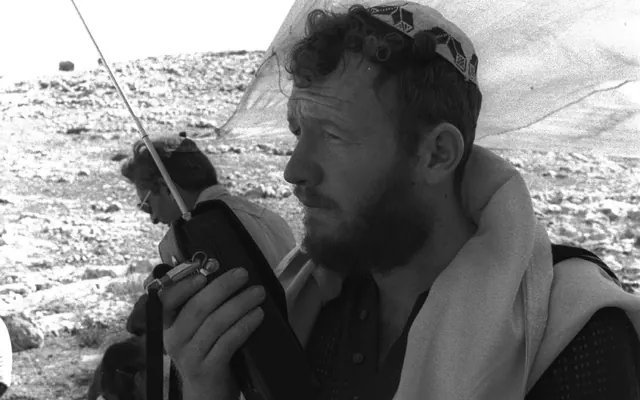
TJS S5E12 The Jewish Underground part I
In politics as in physics - for every action there is an equal and opposite reaction. Prime Minister Menachem Begin's signing of the Camp David Accords with Egypt's...
Play Episode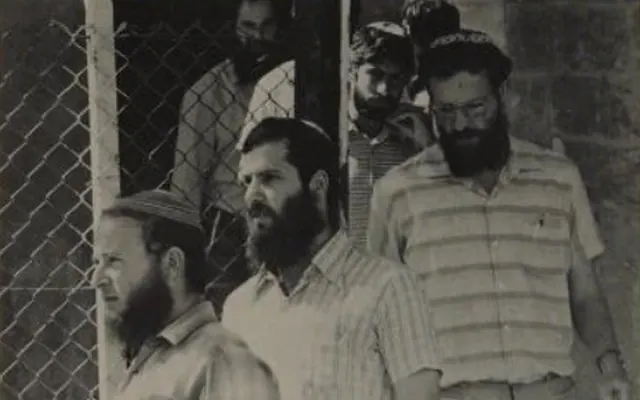
TJS S5E13 - Settler Violence? The Jewish Underground of the 1980s part II
Today the media loves to discuss "settler violence," but it is rarely interested in its historical origins. This episode picks up the story of Yehuda Etzion and Menachem...
Play Episode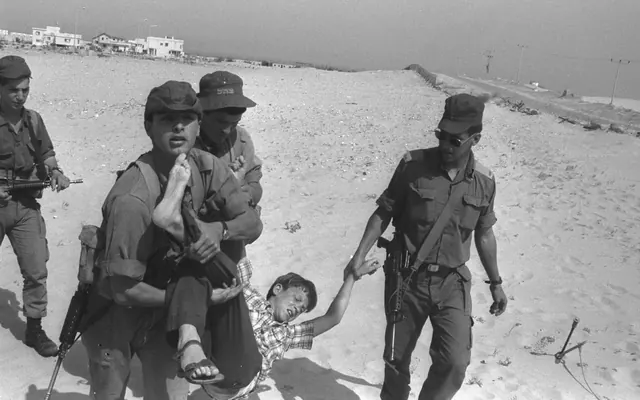
TJS S5E14 - The Evacuation of the Sinai Peninsula
People like to talk about the price of peace, but they rarely define what peace actually means. This makes evaluating the price impossible. In April of 1982 Israel...
Play Episode