
TJS S5E15 - Bombing of the Iraqi Nuclear Reactor
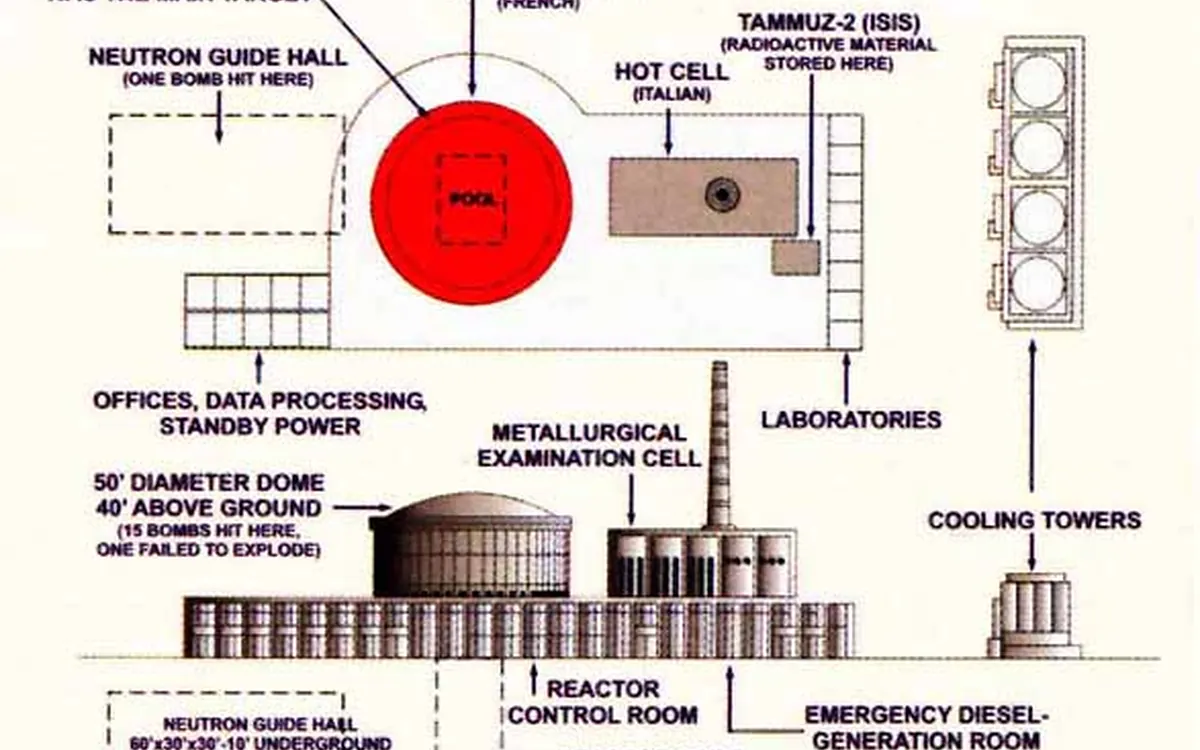
Israel's leadership came to be part by never forgetting the principal of "when one comes to kill you, rise early and kill first." Israel Prime Minister Menachem Begin's 1981 bombing of the Iraqi reactor Osirak on the distant banks of the Tigris gave birth to the "Begin doctrine" of absolute opposition to enemy possession of nuclear weapons - which is still being questioned today. Without doubt Begin's rising to strike first in Iraq was a testimony to the power of adhering to first principles.
Learn the inside story of Operation Opera, the involvement of Ilan Ramon, later to become Israel's first astronaut, the rise of Saddam Hussein, US Operation Eagle Claw, the Islamic Revolution of Ayatollah Khomeini, and the reaction of US President Ronald Reagan.
About this episode
A man does what he must, said Kennedy, and in May 1981 Menachem Begin sat with young American Jewish leaders and gave them the lessons of the Holocaust. If an enemy says he seeks to destroy you, believe him, come to the aid of any threatened Jew, learn to defend yourself, guard Jewish dignity, stand united, and know there is a pattern to Jewish history. Begin was speaking to himself as much as to them, since within a month he would order the strike on the Iraqi reactor. Rav Mike draws out the Begin Doctrine, that no enemy of Israel may hold nuclear weapons and that Israel will act alone to ensure it, a principle that reaches down to the Syrian strike and the Iranian question of our own day.
Saddam Hussein read of an Israeli bomb and decided only nuclear weapons could make Iraq great as it had been under Nebuchadnezzar, the king he revered as the last to conquer the Jews. He turned to France, flush with oil money after the 1973 embargo sent prices soaring, and Jacques Chirac proved happy to sell two reactors with seventy-two kilograms of weapons-grade uranium. Saddam named them Osiris and Isis, then changed the large one to Osirak for the ring of his country's name. He infiltrated the IAEA in Vienna, placing the fox inside the henhouse, while diplomatic protests from Washington and London changed nothing. Begin's predecessor Rabin had watched and waited, but Begin, who believed his enemies when they threatened destruction, would not.
Before any airstrike came the work of sabotage, slowing a process you lack the power to stop outright. Mossad chief Yitzhak Hofi drew on an old tradition reaching back to the campaign against the German scientists in Nasser's Egypt. In April 1979 a team slipped into a warehouse in the French port of La Seine-sur-Mer and blew apart the reactor cores bound for Iraq, a phantom ecological group claiming the deed. Letters and bombs struck the Italian firm building the reprocessing plant, and three Iraqi scientists died, among them Yahya El-Meshad, found dead in his Paris hotel. The sabotage bought time without halting Saddam, whose Night of the Long Knives and demand for a delivery date made clear what a nuclear Iraq would mean.
Air Force commander David Ivry ruled out a commando raid against a site ringed by earthen walls and gun towers, and the math of an airstrike seemed hopeless, since Baghdad lay far beyond the range of any Israeli plane. The Islamic Revolution in Iran came to the rescue, canceling the Shah's order for F-16s and leaving General Dynamics glad to sell eight of them to Israel. Here was the only aircraft that could manage the round trip. Ivry gathered eight pilots and trained them in low-level navigation without telling them the target, among them the young Ilan Ramon, later lost in the Columbia disaster, whose mother had survived Auschwitz. Ramon plotted the fuel ranges and understood better than anyone that this might be a one-way flight.
On the eve of Shavuot, June 7, 1981, eight F-16s took off from Etzion under radio silence, dropping their wing tanks before crossing into Iraq. King Hussein saw them from his yacht, but his warning never reached Baghdad. They climbed over the Tigris and destroyed the reactor from within in eighty seconds, fourteen of sixteen bombs on target, and returned without a loss. Begin's first word was Baruch Hashem, and he credited the grace of God for accomplishing the impossible. The condemnations poured in from the UN, Europe and even Washington, yet Reagan privately shrugged that boys will be boys, and the Wall Street Journal praised the one nation still living in the world of reality. A decade later, in the Gulf War, many critics came to agree.
Key ideas
- Begin's lessons of the Holocaust told American Jewish leaders to believe an enemy's threats, and became the Begin Doctrine against any nuclear enemy of Israel.
- Saddam Hussein, revering Nebuchadnezzar, bought reactors from a France made eager by petrodollars after the 1973 oil embargo.
- Iraq infiltrated the IAEA in Vienna, placing its own inspector inside the agency meant to monitor the program.
- Mossad sabotage, from the La Seine-sur-Mer warehouse to the deaths of Iraqi scientists, bought time without halting Saddam.
- The cancelled Iranian F-16 contract gave Israel the one aircraft capable of the round-trip strike on Baghdad.
- Eight F-16s destroyed Osirak in eighty seconds on the eve of Shavuot and returned without a loss, drawing worldwide condemnation.
Chapters
- 0:00 A man does what he must
- 1:08 The lessons of the Holocaust
- 3:25 The Begin Doctrine
- 6:43 Saddam's dream; the Israeli bomb
- 8:55 France, petrodollars and the reactors
- 11:06 Osiris, Isis and Osirak
- 12:10 Infiltrating the IAEA
- 15:37 The threat of a nuclear Iraq
- 20:02 Sabotage; the wooden shoe
- 22:19 The warehouse at La Seine-sur-Mer
- 26:44 The scientists begin to die
- 30:02 The math of an airstrike
- 32:10 The F-16s from Iran
- 34:22 Ilan Ramon; a one-way trip
- 36:42 Eighty seconds over Baghdad
- 41:05 Boys will be boys; the reckoning
Who, where and when
People
Menachem Begin, Saddam Hussein, Jacques Chirac, Yitzhak Hofi, David Ivry, Ilan Ramon, Yitzhak Rabin, Yahya El-Meshad, Ronald Reagan, King Nebuchadnezzar
Places
Baghdad and the Tigris, Osirak and Al-Tuwaitha, La Seine-sur-Mer, Vienna, The Etzion airbase
Texts
The Israeli Bomb, The Book of Esther, The Begin Doctrine, The Wall Street Journal editorial
When
May 1981 CE: Begin and the UJA leaders, 1975 CE: Saddam in Paris, April 1979 CE: the warehouse sabotage, June 1981 CE: the strike on Osirak
Read the transcript
A man does what he must, said John F. Kennedy, in spite of personal consequences, in spite of obstacles and dangers and pressures, and that is the basis of all human morality. Well, I'm not only doing what I must, but everything I hope that I can to push the world forward. I'm Rav Mike Foyer, and this is The Jewish Story. Season 5, Episode 15, The Strike on Osirak In May of 1981, Prime Minister Menachem Begin met with a young leadership mission from the UJA, the United Jewish Appeal, which is the major organization directing funding from American Jewry to Israel. Now the mission was half work and half play. And the opportunity for the 30 young men and women to sit around with the Prime Minister of Israel in an intimate setting was certainly part of the latter.
Their conversation touched on many things, but as was often true with the Prime Minister, the focus quickly became the Holocaust. Now, in addition to Menachem Begin's deep attachment to the memory of those he'd personally lost, and his ever-present responsibility felt toward defending those who remained, that particular conversation was sparked by a recent diplomatic kerfuffle between Israel and Germany. It's worth actually looking at Yehuda Avner's account that he offers in his book, The Prime Ministers. Every word that Begin spoke is gold. But for present purposes, I want to focus on his answer to the closing question. Irving Bernstein, Executive Vice President of the UJA and shepherd of this leadership mission, was worried that Begin's harsh attitude toward Germany might have left a negative taste in the mouth of his flock.
And so, just as the Prime Minister's aide entered to remind him of the next meeting, Bernstein asked Bacon for some parting wisdom. Before you leave, Mr. Prime Minister, he said, would you share with us what you think is the relevant message of the Holocaust for the people here who are coming leaders of the American Jewish community? Bacon scanned the circle of young men and women around him for a long moment, and then he gave a prophetic reply. I pray with all my heart that you shall forever enjoy lives of tranquility and security. However, you must always remember that we have a certain collective national experience that goes back many centuries. Prime Minister paused and leaned across the table, looking directly into their eyes.
In light of that experience, I believe the lessons of the Holocaust are these. First, if an enemy of our people says he seeks to destroy us, believe him. Don't doubt him for a moment. Second, when a Jew anywhere is threatened or under attack, do all your power to come to his aid. Never pause to wonder what the world would think or say. Third, a Jew must learn to defend himself. Fourth, Jewish dignity and honor must be protected in all circumstances. The seeds of Jewish destruction lie in passively enabling the enemy to humiliate us. Fifth, stand united in the face of the enemy. And sixth, there is a pattern to Jewish history. Now, I gave this to you in brief form. In reality, the Prime Minister had many more words of wisdom in response to Irving Bernstein's question.
And I promise you, they're all worth reading. In real time, the visitors were clearly moved by the scent of historical responsibility, which always radiated from Menachem Begin. But there was no way that they could know that while he was speaking to them, he was just as much speaking to himself. Because less than a month after their conversation, the Prime Minister would give the final order for the strike on Osirak, the Iraqi nuclear reactor. And I'm going to tell that story in a moment. But before I do, it's worth pausing to contemplate the significance of these moral imperatives which a true leader of Israel felt flowed from the greatest collective trauma Am Yisrael has experienced since the destruction of the Second Temple.
Practically speaking, there's what's known as the Begin Doctrine, the policy principle which states that no enemy of Israel be allowed to acquire nuclear weapons and that Israel will act on its own if necessary to ensure that that remains the case. Now, that policy led to the incredibly audacious raid that we'll shortly discuss. It also led to the bombing of the Syrian nuclear facility in 2018, and it looms large over the current international negotiations around the Iranian nuclear program. As well, it should, because just like Begin said, when your enemy says he'll destroy you, you have a moral obligation to believe him. The message about unity that he delivered is clear, if difficult to achieve, And so to the point about mutual aid.
God forbid war breaks out in Ukraine, for instance. For the first time in the bloody history of that region, the Jews at least know that someone has their back. And I, for one, hope we don't think twice about what the world will say when we reach out to save them. The significance of Jewish dignity and honor is something that needs to be digested, both here in Israel and in the American Jewish community. Honor is tough to measure. and a proud, dignified Jew could look very different on opposite sides of the Atlantic. Nonetheless, as Begin told those young leaders, it was only, quote, after the enemy had humiliated the Jews, trampled them underfoot, divided them, deceived them, drove brother against brother, only then could he lead them, almost without resistance, to the gates of Auschwitz.
Words worth pondering. Then there's that pattern of history to which Begin referred. How interesting that I'm telling this story right now. Not just because Israel is once again facing the threat of a nuclear enemy to the east, just next to Iraq, but also because it's the holy month of Adar, when we're celebrating our victory over the Persian enemy, the enemy that some now call Iran. And due to Menachem Begin's moral clarity and the courage and skill of Israel's soldiers, in 1981, we saw true fulfillment of the words that come toward the end of Megillat Esther, the book of Esther. It says, on that very day on which the enemies of the Jews had expected to get them in their power, the opposite happened and the Jews got their enemies in their power.
May we merit speedily to such a salvation once again. In 1970, Palestinian American academic Hua Jabir published his book, The Israeli Bomb, in which he asserted that the Arab world would face a bleak future of Israeli dominance if they could not match Israel's nuclear capability. Now, of course, at that point, Israel neither confirmed nor denied the existence of the Jewish bomb, as is true today. And by the way, you can go back to Season 3, Episode 19 for the story, but the intellectual and political elite of the Arab world were convinced that it exists. Hence the fact that Jabir's book was an instant bestseller in those circles, and began to assert a real influence on the thoughts of policymakers in Arab states.
Nowhere was this more true than in Ba'athist Iraq, where Saddam Hussein was already ruling the country with an iron fist, serving as vice president and man behind the throne of ailing President General Ahmed Hassan al-Bakr. Saddam had watched Nasser's failed attempt to make Egypt world power, trying to unite the Arab states through pan-Arabism. And now, reading Jabir's words, he became convinced that only nuclear weapons would make Iraq great again, in a way that hadn't been since Nebuchadnezzar. Now you should know that Saddam identified deeply with Iraq's Babylonian roots, and revered that great king who had first elevated Baghdad to a center of the ancient world. He also, by the way, honored Nebuchadnezzar as the last Middle Eastern ruler to conquer the Jews.
He loved to recount the story of the destruction of Jerusalem to his colleagues, boasting that he would someday follow in the mighty emperor's footsteps. Within a year of reading the Israeli bomb, Saddam initiated a secret nuclear weapons program through the Iraqi Atomic Energy Commission. Their plan was to acquire a foreign reactor for producing plutonium under the guise of a civilian nuclear program to obtain the technology, skills, and infrastructure they would need to build a bomb. Sound familiar? Ironically, the Iraqi leader turned to the same source for his foreign reactor as Israel had done, the French, who proved, once again, more than happy to oblige. Now, to understand what seems, frankly, like a reckless disregard for world safety, we need to understand France's financial situation at that point.
You may recall that the 1973 Yom Kippur War had brought with it an oil embargo which caused the price of crude to skyrocket from $2.90 a barrel to $11.65 a barrel. That's a factor of four. And though the embargo ended not long after the war itself, prices never really went back to what they were. market values took a back seat to OPEC's newly discovered power to set its prices. And so in addition to the changes this forced on the world economy, it meant that nearly a trillion dollars in global wealth shifted eastward in the mid-70s. In a few places in our story, we've touched on the birth of the petrodollars and how in the hands of the Arab nations, there was a sudden new surge in political power that flowed from this.
And nowhere was this more obvious in their fresh ability to dictate terms to Europe, who were receiving 80% of their oil supply from the Middle East in 73. France received 20% of the oil it consumed from Iraq on its own. So it was that Prime Minister Jacques Chirac went to Baghdad in 1974, almost hat in hand, and was ecstatic to host Saddam Hussein in Paris a year later. Before he left for Paris, the Iraqi soon-to-be dictator told the Lebanese news magazine Al-Ubsu Al-Arabi that the agreement he was pursuing was, quote, the first concrete step toward the production of the Arab atomic weapon. Saddam came to Paris looking to receive, but he was far from empty-handed. He came ready to offer the French Prime Minister 70 million barrels of oil a year for 10 years at present market prices, as well as the Iraqi purchase of billions of dollars in French-made weaponry.
Saddam even threw in contracts to purchase 100,000 Peugeot and Renault as a gesture to French industry. And for a last sweetener, French companies received the contract to build a billion lake resort west of Baghdad that he was planning All he asked in return was two little nuclear reactors really one large and one small solely for research purposes, of course. The list price for each of these facilities was $150 million and Iraq paid $300 million each, looking at it as a bargain. Saddam named the larger reactor Osiris after the god of the underworld he never lacked for a sense of the dramatic, and the smaller one, of course, was Isis, Osiris' wife, though in the end he changed the name of the large reactor to Osirak, because he liked the ring of the name of his country bound up in it.
They would be built, more or less, by the very same companies which had destructed that wonderful textile factory that Israel has down in Dimona. Now, Hussein was no fool. As much as he didn't hide his attention to build an Iraqi bomb, he also knew that the world must be presented with a plausible story of peaceful pursuits. So it was, he determined to target the International Atomic Energy Agency, which was responsible for monitoring facilities like the one he was building on the edge of Baghdad. Get inside and turn it to our purposes, he ordered his men. Already in September of 73, a delegation was sent to the IAEA headquarters in Vienna to lobby for an Iraqi to have a seat on their board of governors.
And they succeeded. Once Iraqi Minister of Higher Education, Dr. Al-Shawi took that position, a special intelligence office was created at the Iraqi embassy in Vienna. With their help, Al-Shawi succeeded in getting an Iraqi nuclear physicist appointed as an IAEA inspector. Not only would this be the case of the fox guarding the henhouse, the insider knowledge of operations he gained would prove invaluable in circumventing the attempts to observe and control the Iraqi program. Fortunately for Israel, While the world might have been willing to ignore Saddam Hussein's true intention, they would soon have a Prime Minister at the helm who believed his enemies when they threatened destruction. The Mossad began monitoring Iraq's quest for a nuclear weapon as soon as French Prime Minister Jacques Chouac made his first visit to Baghdad in 1974.
Since then, Prime Minister Yitzhak Rabin's government had explored every diplomatic channel available in hopes of preventing the construction of that Iraqi reactor. Aside from the formal route, Defense Minister Shimon Peres had tried to make use of his personal friendship with Shrak, a last remnant of the French connection Peres had used to make Israel a nuclear power, but it proved to be too much of a cash cow for France to abandon it. And when word of the French-Iraqi deal went public, and furthermore, it was learned that France had agreed to the controversial inclusion of 72 kilograms of weapons-grade uranium as startup fuel, international pressure mounted. But even the expression of official diplomatic concern by the United States and the UK over the sale of nuclear technology to Iraq didn't manage to slow the process.
Reality was that Iraq was seen by the NATO nations to be quietly drifting away from the Soviets. In 1974, its trade with the US hit 200 million, and that number was expected to triple in the next two years. Hundreds of American businessmen were headed to Baghdad, surely a victory for American democracy. And no one in Europe was about to provoke the Arab world so soon after the embargo. The Iraqis said the reactor was for research purposes, just as the Israelis had. And so why rock the boat? It was clear to Israel that they would be facing Iraq alone. And in the wake of the Yom Kippur War fiasco, Prime Minister Rabin was not ready to do that. And so he and his cabinet decided that their only option was to watch and to wait.
But Saddam Hussein took no such passive stance. So when Menachem Begin became prime minister in the 1977 upheaval election, he was presented with a very different scenario to the east. By that time, it was clear to the Mossad that Iraq had much bigger plans than research. Their estimates were that the Osirak reactor at the Al-Tawethe nuclear center southeast of Baghdad would go hot within three to four years. And that once it did, it would produce enough weapons-grade uranium to build two or three Hiroshima-sized bombs a year. Military intelligence estimated that even one such bomb dropped on Tel Aviv would result in 100,000 dead. Now, you have to know that even without the atomic bomb, Iraq was already one of Israel's most formidable enemies.
190,000 men in uniform, 2,200 tanks, 450 attack planes. Now, together with strong Soviet backing and a gross national product of $18 billion a year, that's 10 times of what Israel boasted, they were second only to Egypt as an existential threat. But of course, you know if you've been listening, that within months of Begin's election, the Egyptian front would be neutralized through his pursuit of peace. Iraq, on the other hand, went in the other direction. They became the leader of the Steadfastness and Confrontation Front. It was an organization formed by the PLO, Syria, Libya, and others, with the express purpose of remaining dedicated to Israel's destruction in the face of Egypt's capitulation. And so, in the eyes of the cabinet members that Begin assembled to debate their response to Osirak, the idea of an Iraqi nuclear strike on Tel Aviv wasn't simply paranoia.
As they gathered around the table to look at the grainy 8x10 photographs of the reactor smuggled out by Mossad agents at great personal risk, everyone agreed that something must be done. The problem was, no one could agree on what. In subsequent meetings, it came quite clear that there was a split between hawks and doves, and that that split rested on the question of how bad the political fallout might be. Yeah, pun intended. Defense Minister Ezer Weizman and Deputy Prime Minister Yigali Adin argued that to strike the reactor was a gross violation of Iraqi national sovereignty. It was an act of war over which the world, and in particular the Americans, would go ballistic. Foreign Minister Moshe Dayan agreed, and he added to this concern his perspective that an unprovoked attack on Iraq would actually force Egypt to retreat from the fragile peace process that he was committed to nurturing.
They were supported unexpectedly by the two representatives of the intelligence services present in these meetings, Director of the Mossad Yitzhak Hofni and Yeshua Sagoy, Head of Amman, the military intelligence. To the political concerns about preemption, they added a reality that no one had ever destroyed a nuclear reactor under construction, and that the difficulties of striking so far away were simply overwhelming. Furthermore, both were skeptical that Iraq would ever have the technical capacity to assemble a bomb, even if they managed to get the reactors up and running well enough to generate plutonium. Ranged against these opinions were the commander of the Air Force, David Ivry, and chief of staff, Rathiei Tan.
While they recognized the validity of the political points, both felt the doves were exaggerating the potential consequences. Hadn't the old man, Ben-Gurion, always told them that what matters is what the Jews do, not what the nations say? They were supported in this, of course, by agricultural minister Ariel Sharon. I mean, after all, strike now and consequences be damned was his life motto. As for the technical challenges, no one knew them better than Ivry and Eitan. Nonetheless, they believed that just as in the Entebbe raid a little more than a year ago, if you will it, it is no dream. Bottom line, in their eyes, Israel couldn't afford to wait and find out if Iraq would manage to build the bomb.
Even as the debate raged, Begin shocked all assembled by announcing that they must proceed with caution. The old Yagun commander was certainly not afraid to strike first. And listening to the debate, he felt the weight of history pressing him to act against what could literally be another Holocaust. Nonetheless, Begin recognized that the action being contemplated was so severe that it required a united government and much more intelligence. And so the Prime Minister ordered Ivry and Eitan to draw up plans for a strike, and he tasked the Mossad and Amman with gathering information and generating agents in and around the target. As the meeting broke up, Air Force Commander Ivry insisted, if we're to wait, we have to slow things down a bit.
The Prime Minister agreed, and he turned to Mossad Chief Huthni with an eyebrow raised in question. Well, we may have one or two ideas. was his reply. The English word sabotage derives from the French saboteur, meaning to bungle, botch, or wreck. Itself actually derived from the word sabote, which was a certain type of wooden shoe worn by poor working men in early industrial Europe. A popular, but sad in my eyes, apparently mythical explanation of the term's origin is that workers would throw those wooden sabots into weaving machines to disrupt production in protest of the exploitative working conditions under which they suffered. Whatever the origin, the words about what you do when you lack the power to outright stop a process, but you desperately need to slow it down.
And when you hope that by raising its cost, those affected will consider dropping whatever process you've tossed your shoes into altogether. The need to stop larger forces with minimal and precise force is a situation Israel has known well from its earliest days. And some of the Mossad's earliest exploits were actually the sabotage of enemy missile programs. In the late 50s, German scientists, many former Nazis, began to gather in Egypt with the goal of launching a ballistic missile program. And legendary Mossad chief Israel Hawell was more than a little preoccupied with the Holocaust. He had, after all, been the one who orchestrated Eichmann's capture and thus was prepared to stop their program by any means necessary.
When Egyptian President Nasser unveiled two new test missiles at a military parade, boasting that they were designed to hit targets south of Beirut, as he said, Nasser responded with Operation Damocles. One scientist was assassinated two months after the parade, and by November, letter bombs addressed to others were arriving at a steady pace, one of them killing five Egyptians. Prime Minister Ben-Gurion actually challenged Harrell over his methods, but his reply was there are people who are marked to die In the end Ben brought the reign of terror to an abrupt close worried about its potential impact on German relations but the work was done By 1963, the German scientists had all fled Egypt. So it was that when current Mossad chief Yitzhak Hufni promised Menachem Begin's cabinet that he would slow down Iraq's program and buy the IDF, or the politicians, the time they needed, his organization was well prepared.
On April 9, 1979, three container trucks approached a secure warehouse facility in the French Mediterranean port town of La Seine-sur-Mer. The first two trucks contained Mirage jet engines bound for a Middle Eastern client. The third, which had joined the convoy unnoticed along the way, held a team of five Mossad saboteurs and one Israeli nuclear engineer. The guards at the gate were far more concerned with what might leave the warehouse than with what entered it. And so, with barely a glance at the manifest, they waved the trucks through. One of those guards had actually been hired just a few days before, with impeccable credentials, of course. And in order to familiarize himself with his new job, had taken a walk through the compound just before the trucks arrived.
As the third truck pulled up to a nondescript-looking storage bay, the driver surveyed the scene in his mirrors, and then moved quickly to the back of his truck to unlatch the door. Six men in street clothes dropped to the ground and headed into the storage bay, whose door had been conveniently unlocked by the new guard only an hour before. Inside the building were crates marked for shipping to Iraq. In prying them open, the men confirmed that they were indeed the Finnish cores for the Osirak reactor that the French were constructing. Then the engineer stepped forward and pointed out the most damaging placements for the five plastic explosive charges the saboteurs carried. Meanwhile, outside the compound's gate, a crowd had begun to form.
A strikingly attractive woman had just been brushed by a passing car as she'd crossed the street and was now shouting obscenities at the driver in a way that would make a sailor blush. Seeing the commotion, the guards left their posts at the gates and jogged over to see if the woman needed any assistance. Moments later, a deafening explosion erupted behind them, shaking the entire village and blowing out windows blocks away. Guards turned in astonishment as their warehouse was engulfed in flames. By the time they turned back, the women in the car were nowhere to be seen, not to mention the saboteurs. A few hours later, a group calling itself the French Ecological Group telephoned the French Daily Le Monde to take responsibility for the act, claiming it had been done to, quote, neutralize machines that threaten the future of human life.
No one had ever heard of them, and they were never heard from again. The damage to the cores was significant, but they weren't put out of commission. A slowdown to Iraq's march toward the bottom, perhaps, but not a halt. Three months later, Iraqi President General al-Bakr announced his retirement, and Saddam Hussein was declared president of the Revolutionary Council and the Ba'ath Party and head of the army for life. What followed was a bloodbath known in Iraq as the Knight of Long Knives, were under the guise of a supposed betrayal, Saddam watched and laughed as agents of his dreaded secret police murdered 60 deputies and ministers of his very own party. The videotape that Saddam ordered made of the slaughter was leaked just far enough that the whole world got the message.
When he learned of it, Mossad Chief Hufni felt the pressure more than ever, knowing that a nuclear Iraq would make Saddam's internal purge look like a schoolyard spat. Soon after, the Iraqi president held a surprise meeting with the heads of his nuclear program, demanding a delivery date for his bomb. Meanwhile, Hothny began to play every card in his hand. In 1979, Iraq signed a contract with the Italian firm SNI Technit for a plutonium separation and handling facility, as well as a uranium refining and fuel manufacturing plant. Neither faculty was subject to international monitoring, and both were essential for Saddam's plan to convert his research reactors into a bomb factory. Soon after the contract was signed, workers at SNIA began to receive threatening letters from a group that called itself the Committee to Safeguard the Islamic Revolution, a nod toward the new regime that had just taken over Iran, against whom Iraq would soon launch a horrifically bloody war.
Then, bombs began to go off the offices of the firm. One even targeted the home of the company's director general. But still the process went on. Hockney had in his hands by this time a list of all the Iraqi scientists working on the program, many of whom were stationed in France. From one, he'd managed to purchase plans of the entire Al-Tawefa compound, providing the IDF with a clear picture of the Osirak reactor, the chemical reprocessing plant, administrative buildings, and the smaller ISIS reactor. But as 1980 moved forward and the reactor approached operational status, the pressure mounted. In June of 1980, Yaha al-Meshad, an important scientist in Iraq's nuclear program, arrived in France to test fuel for the Osiak reactor, but he never went home.
The morning he was meant to go back to Baghdad, Amnay knocked at his door, and hearing nothing, entered the Paris hotel room and found him dead on the floor in a pool of his own blood. In the next several months, two more Iraqi nuclear scientists died in separate poisoning incidents. Clearly, the gloves were off. While Yitzhak Hufni and the Mossad were buying time, Air Force Commander David Ivry was putting all his resources toward figuring out how one destroyed a nuclear reactor nearly 600 miles away in the heart of enemy territory. Now, the success of the Antebbe raid in 76, go back to Episode 8 if you don't remember, at first inclined Ivory toward a commando assault. But the logistics of the operation to insert, destroy, and extract were far beyond those of the Antebbe rescue.
Not to mention that the hundreds of people we require to plan and execute meant that maintaining long-term secrecy was all but impossible. And when Ivery received updated photographs of the Al-Toaitha compound that housed the reactor, he all but dropped the idea completely. The Iraqis had ringed the site with a 20-foot high earthen wall topped by electrified fences and gun towers. Those photographs, by the way, came to Ivery courtesy of the United States as an unexpected outcome of Begin's political gamble at Camp David. As part of a package of incentives that Carter had used to bridge the gap between the two sides, he'd given Israel access to the American KH-11 satellites, something even their British allies didn't have.
Those satellites were the surveillance technology of the day, and the pictures they provided were invaluable to Israel's ultimate success. Nonetheless, at that moment, all the photos proved to Ivry was that an Entebbe-style commando assault was at best a suicide mission, and at worst an invitation to a hostage crisis too terrible to contemplate. In fact, speaking of hostages, it was another hostage crisis that convinced Ivry and Chief of Staff Rafi Eitan that their only option was to strike from the air. 1979 saw the Islamic Revolution overturn the Pahlavi dynasty in Iran, with Ayatollah Khomeini declared Supreme Leader of the New Islamic Republic before the year was out. It was an event with wide-reaching consequences, which we'll perhaps have to consider.
But for now, just recall that the revolutionary events of that year included the taking hostage of 52 American diplomats in the U.S. Embassy in Tehran. They were held for 444 days, until being released only minutes before Ronald Reagan was sworn in as president in January of 1981. But well before that, in April of 1980, then-President Jimmy Carter authorized Operation Eagle Claw, sending American Delta Force commandos in to free the hostages. Unfortunately, their disastrous failure was a major blow to American prestige, in addition to being the nail in the coffin for the idea of sending an Israeli assault team into Baghdad. We tried, we failed, and we have paid a price. The administration is deeply disappointed.
It is clearly the darkest moment of Jimmy Carter's presidency. A large crowd is now gathered around the American embassy to celebrate the failure of the rescue operation. To them, the failed rescue attempt was proof that the United States is powerless. Nonetheless, as Ivry and Eitan looked at the situation, they were stumped by the math. Baghdad is 545 miles from Jerusalem as the crow flies, and both knew that Israeli fighters would have to take a far more circuitous route. Any strike team that would leave the Etzion airbase in the Sinai would face a round trip, therefore, of more than 1,200 miles, 2,000 kilometers, and Israel did not possess any plane capable of flying that distance, nor did they have the technology for mid-air refueling.
the generals appeared to have reached a dead end on one hand a ground assault was too dangerous to even contemplate and on the other hand the airstrike was too far to accomplish what were they to do well oddly once again the islamic revolution came to the rescue the late 70s had seen the u.s. slowing the flow of their latest military technology to israel both due to president carter's displeasure, shall we say, over Israeli policy in Yehuda and Shomron, and due to pressure from the Soviet Union to keep the balance of power in the Middle East. But the fall of the Shah in Iran had an unexpected consequence. His government had recently signed a contract with the United States to purchase 160 brand new state-of-the-art F-16 fighter bombers.
Now, coincidentally, the F-16 was the only plane theoretically capable of a round-trip strike of the type Israel was currently contemplating. Canceling the contract once the Islamic Republic was born proved to be a political necessity. But at a cost of $40 million per plane, it was also very bad for American business. The General Dynamics Corporation that manufactured the F-16 already had 76 of the aircraft in their production pipeline. Eight were being actively assembled. And so it was that only months after the Shah fled Tehran Defense Minister Ezer Weizmann received a call from the U Defense Department inquiring whether Israel might perhaps be willing to purchase eight F fighter bombers Weizmann of course who knew of the dilemma faced by Ivry and Eitan was all too happy to oblige I mean after all what are friends for With the planes, they now had a key piece in the puzzle.
And once they were acquired, Commander Ivry set about assembling his team of eight pilots to fly them. They were sent to the U.S. to master their new craft, taking a six-month crash course for what usually was a two-year process. Ivry told them that there was a specific mission for which they were being trained, but he kept them in dark about the target. Work on long-range, low-level navigation, he told them. When Team Commander Zevraaz pushed for more detail, all Ivry would say was, I want you to concentrate on an air-to-ground mission, that being military jargon for bombing. One member of Raz's team was Ilan Ramon. Now today, we remember him as the tragic hero of Israel's space program, having died in the 2003 Columbia space shuttle disaster.
But in 1980, he was to be the youngest pilot sent to train on the F-16s. And the strike on Ulcerak would actually be his first combat mission. You may or may not know that Israeli fighter pilots are the elites of the IDF. And so, as the eight men gradually learned more about what exactly they were planning to do, a sense of grim determinism began to grip them. Ramon, by the way, had been added to the mission despite his lack of combat experience because he'd planned out the maps and the fuel ranges. And that meant that more than any of his compatriots, he understood quite well that this might be a one-way trip. Furthermore, he was chosen to be the last in the strike formation and thus the most likely to be shot down.
Nonetheless, as Ramon explained in an interview 20 years after the strike, my mother is a Holocaust survivor. She was at Auschwitz and barely survived it. Before I set out, it was clear to me that there's a good chance I will stay there. I think we in Israel are so focused on our own quagmire that we frequently forget what we have this country for. And perhaps I was given the honor of being part of something that is so important to the entire Jewish people. Presented with incontrovertible evidence that the Osirak reactor would go hot by the end of the summer, meaning that any strike would risk a nuclear disaster on the outskirts of Baghdad, Prime Minister Menachem Begin's cabinet voted to approve Operation Babylon on May 10th.
The raid was initially scheduled to be launched on May 17th. But that very day that they took the vote, The Prime Minister received a letter from opposition leader, Truman Perez, appealing to him to delay the strike. Now, whether he knew it or not, Perez achieved exactly what he was after just by sending his message. Because the military men, as soon as they saw it, hit pause in the attack and feared that their top secret plans had somehow been leaked. The Prime Minister himself was furious and thus determined to go ahead. There was an upcoming national election in only a couple of months, and Perez was currently leading big in the polls. And he declared to his cabinet, for all I know, a month from now, Shimon Peres will be sitting in this room.
From his letter, it's clear to you that he certainly wouldn't carry out this operation. And I'm not willing to leave the stage knowing that I left this problem hovering over our children. And so it was that at 3.55 p.m. on June 7, 1981, the eve of the holiday of Shavuot eight heavily laden F-16 fighter bombers took off the Etzion airbase in the Sinai in addition to their bombs and missiles each carried a 300 gallon center line fuel tank that had been added to the two 370 gallon wing tanks an F-16 normally carries the mission plotted a dog leg course over the Gulf of Akba aiming to avoid Jordanian radar to the north and the Saudi radar to the south They were actually seen by eye. King Hussein of Jordan was aboard his yacht in the Gulf of Aqba, and a pilot himself, he immediately recognized what it was he was seeing, but his urgent warning sent to Iraq never reached the ears of anyone in authority.
Racing at 360 knots, only 150 feet above the desert floor, the planes crossed over the Gulf into Saudi Arabia in total radio silence. They cruise across the desert, and just before crossing into Iraq, they jettisoned their wing tanks. Now that doesn't sound like much, but it was an incredibly risky maneuver, never having been performed with bombs mounted right alongside. They might have damaged or even detonated their ordnance, but there was no choice. They needed to lighten their load in order to have some hope of making it home. The strike force expected to be challenged by Iraqi air defenses once they crossed the Euphrates, but silence reigned as they turned northeast toward their target. The nuclear complex came into view on the banks of the Tigris, the white dome of the Osirak facility unmistakable in the middle, and the F-16s climbed sharply to 5,000 feet, releasing flares and chaffs to confuse heat-seeking missiles and radar.
Swooping down in their strike pattern, they delivered their payload. The first bombs blasted the dome open, and those that came after destroyed the reactor from within. 14 of 16 of the bombs hit their targets. And from the first drop to the last, the attack took only 80 seconds. The surprise was so complete that the Iraqi air defenses were actually in the cafeteria eating their dinner. Their radars shut down and cold. And so as the Israeli jets banked sharply and sped away, the defenders shot wildly, but to no avail. As Commander Raz led his squadron up to 30,000 feet for their race home, Ilan Ramon, the last in line, took one look back. Where the reactor had been, there was nothing but a massive fireball.
Satellite pictures would later show that while the reactor itself was completely destroyed, the strike had been so precise that the perimeter fence around it and the surrounding buildings were left standing. More Iraqis were actually killed by Saddam Hussein's vengeance than died in the strike. And it's unclear to this day how many of those were actually killed by the wildfire of the defenses. Ramon followed the leaders up to 40,000 feet, where, despite the fact that they would be highly visible, the air was thin enough to save fuel, a last desperate effort to make it home. And, by the grace of God, they met no resistance and managed to land back at the Etzion base after three hours and ten minutes of flight time.
The first words from Menachem Begin's mouth when he heard of their unprecedented success were Baruch Hashem, thank God. And as he would tell American Jewish leader Max Fisher only a month later, am I a believer? Do I believe in the God of Israel? The answer is a categorical yes. How else to account for our success in accomplishing the virtually impossible? Every conceivable type of enemy weaponry was arraigned against our pilots, Yet not a single one touched us. Only by the grace of God could we have succeeded in that mission. Israel has nothing to apologize for. We decided to act now, before it is too late, that we shall defend our people with all the means at our disposal. What about the world? What did they say?
Well, you could probably guess. Condemnations poured in from the UN, Europe, even the US, was forced to frown at its ally, despite President Reagan's initial reaction when he heard the news of, well, you know what? Boys will be boys. I said, Mr. President, the Israelis have just taken out a reactor in Iraq using F-16s. He said, they did what? And I said, well, repeated myself. And he said, you know what, Dick? And I said, what's that, Mr. President? He said, boys will be boys. The president went around the table, and with the exception of one member of the cabinet, there was a very strong anti-Israeli condemnation mood in the room. It was really rather vitriolic, especially the vice president and Jim Baker.
Then we finally got around to me, and I said to the president, before this is over, we'll be on our knees thanking God Israel did what it did. Prime Minister Menachem Begin was completely unapologetic about his adherence to the lessons of the Holocaust. And in time, certainly a decade later with the Gulf War, many of his critics came to see that a nuclear Iraq would have been a disaster for the world, not just for the Jews. Even in real time, there were those that understood. And, considering the threats that Israel faces today, I could do worse than end with the words from an editorial that the Wall Street Journal published only three days after the amazing strike on Osirak. It began an atom bomb for Iraq, we've learned in the last 24 hours, has become the greatest cause celebre of world opinion-dom.
Various governments, including our own, and a lot of pundits, have been busily condemning Israel's raid on Iraq's nuclear reactor, Our own reaction is, it's nice to know that in Israel, we have at least one nation left that still lives in the world of reality. This kind of silliness has a mysterious power to blind most who man foreign ministries, think tanks, and editorial sanctums. Of course Iraq was building a bomb. Of course it intended to target Israel. Of course, given the Iraqi reputation for political nuttiness reaffirmed again in its starting a war with Iran, its atom bomb would have also been a danger to all its neighbors. We all ought to get together and send the Israelis a vote of thanks.
And I'd like to say a vote of thanks. I want to thank those who give their hard-earned money to make the show happen, keep it free and widely available. I want to ask you to join them. You can go right now to my website, jewishstory.co. In the upper right-hand corner, you'll see a button that says Be a Patron. You can click on that to give a little bit of per-podcast support. I also encourage you to reach out to me RobMikeFoyer at gmail.com or on Facebook at RobMikeFoyer happy to share with you the details of how you can do a one-time donation dedicate a show in honor of the loved ones both here and those who've moved on I want to thank the Land of Israel Network that's thelandofisrael.com they're building a center for spiritual transcendence in the heart of Judea I want to thank the Pardes Institute p-a-r-d-s.org.il for throwing the doors of the Beit Midrash open as wide as possible.
And I want to thank you for listening. I'm Rav Mike Foyer, and this is The Jewish Story.
More from Season 5

TJS S5 Interlude - A conversation on violence with Rabbi Yehuda HaKohen
There are some conversations which Am Yisrael is just not having. As a follow up to some of the issues raised in the last few episodes Rav Mike...
Play Episode
TJS S5E14 - The Evacuation of the Sinai Peninsula
People like to talk about the price of peace, but they rarely define what peace actually means. This makes evaluating the price impossible. In April of 1982 Israel...
Play Episode
TJS S5 Interlude Purim 5782 In search of joy
Adar is the month when we increase our joy. The question is, in an increasingly bewildering world, where is it to be found? Learn about the Jewish holiday...
Play Episode