
TJS S5 Interlude: What Makes Someone a Jewish Leader?
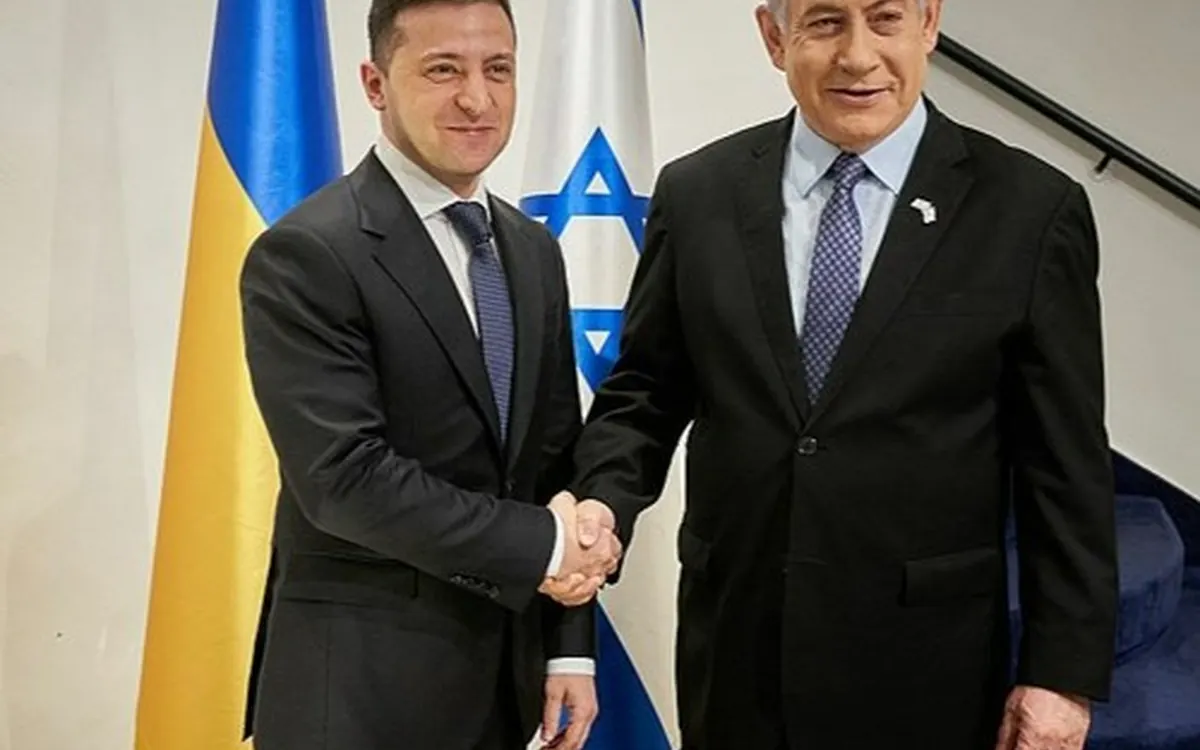
Sometimes a listener question can cause a whole interlude. Here is an exploration of Jewish leadership and its roots in the Jewish story. Along the way we touch on Ukrainian president Volodymyr Zelenskyy, Rabbi Chaim Kanievsky and Prime Minister Naftali Bennett. There is also an opening attempt at defining leadership and a chance to ask the question - what exactly makes someone a Jewish leader?
About this episode
If you had felt yourself sufficient, said Aslan, it would be proof that you were not, and Rav Mike admits he often feels insufficient. He got rare traction calling Volodymyr Zelensky the first postmodern Jewish hero, a comedian leading a nation's resistance with dance videos in his past. Postmodernism makes little sense except around power, and Zelensky fights a postmodern war stripped of ideological cover against Putin. The trouble is that in theory a postmodern hero should not exist, since today's moralists who see only victims and perpetrators treat every hero as a villain with better public relations. Yet the world is gaga over him, which is absurd in the postmodern sense and quite understandable in the human one, because everyone needs a hero.
Zelensky's Jewishness barely makes his list of faults, a third-generation survivor raised under the Soviet system, and Rav Mike resonates with Bennett's defense that you cannot blame a man fighting for survival. A listener asks for the roots of today's Jewish leaders in Jewish history, a huge task he leans toward for season six. First he must define a Jewish leader, and he starts with the opening of Esther, the drunk king who cannot rule himself, his family, or the ministers of the world. Rav Mike draws out three dimensions of malchut, kingship as the context that lets the pieces come to right relationship, across self, the interpersonal, and the whole world, the three scales Achashverosh managed to violate at once.
These become three dimensions of leadership, self-mastery marked by discipline, interpersonal leadership marked by integrity and communication, and malchut shemayim, the awareness of a larger horizon within which we always operate. The week brought the funeral of Rav Chaim Kanievsky, called Sar HaTorah, whose daily learning across the whole library was simply incomprehensible, true mastery that is always a mark of real leadership. The road to mastery runs through discipline, focus and a sense of ultimate concern, and for him Torah was his only concern. His leadership flowed from Torah as hora'ah, living instruction for every corner of life, the rabbinic model grown over two thousand years of exile, which has found great difficulty adapting to the national scale.
National leadership reaches beyond the state, and Rabbi Jonathan Sacks stood as a Resh Galuta, head of the exile, rooted in Torah and never replaced. The Torah offers two models, the Mesharet and the Melech. A Mesharet, a public servant, becomes a leader by building a coalition of interests and cannot move too far or too fast, an ideal model for a community living within a larger sovereign. A Melech draws others after him toward a goal, which works on the national scale where quantity has a quality of its own. Many a big Jew has fallen by playing king while only leading a community. And in exile the classic posture became the shtadlan, who makes an effort before power yet never redefines the context that true kingship can reshape.
Rav Mike then swings freestyle through today's leaders. Naftali Bennett is a public servant par excellence, head of a coalition built on anyone but Bibi, rooted in a softer, accommodating stream of religious Zionism. Yair Lapid is the airbrushed heir of his father's militant secular Ashkenazi world and the media personality turned politician. Mansour Abbas, an Israeli leader though not a Jew, raises the Rambam's ruling that even minor authority must rest with a Jew, against the reality of a government that depends on his goodwill. Bezalel Smotrich carries the purist religious Zionist vision into ideology. Rav Mike closes that kingship needs a partner in prophecy, the voice that can speak truth to power and lift the king toward a horizon that embraces us all.
Key ideas
- Zelensky is a postmodern Jewish hero whose very existence confounds moralists who see only victims and perpetrators.
- The opening of Esther reveals three dimensions of malchut, self, the interpersonal, and the whole world, which Achashverosh violated at once.
- Leadership runs across self-mastery, interpersonal leadership, and malchut shemayim, the awareness of a larger horizon.
- Rav Chaim Kanievsky embodied the rabbinic model of mastery of Torah as living instruction, hard to adapt to the national scale.
- The Torah offers the Mesharet, a public servant building coalitions, and the Melech, who draws others toward a goal.
- Today's leaders mostly take the shtadlan posture, and kingship still needs its partner in prophecy.
Chapters
- 0:00 Feeling insufficient; the postmodern hero
- 1:08 Zelensky and the postmodern war
- 2:12 A hero who should not exist
- 4:23 Zelensky's thin Jewishness
- 6:35 The listener's question; season six
- 7:45 Esther; the king who cannot rule
- 10:05 Three dimensions of malchut
- 12:16 Three dimensions of leadership
- 13:22 Rav Kanievsky; Sar HaTorah
- 15:33 The road to mastery; Torah as hora'ah
- 18:49 Rabbi Sacks; the head of the exile
- 21:15 Mesharet and Melech
- 27:51 Public servants, not kings
- 31:11 Bennett and Lapid
- 34:26 Mansour Abbas and the Rambam
- 36:38 Smotrich; kingship needs prophecy
Who, where and when
People
Volodymyr Zelensky, C.S. Lewis, Naftali Bennett, Rav Chaim Kanievsky, Rabbi Jonathan Sacks, Yair Lapid, Mansour Abbas, Bezalel Smotrich, Maimonides
Places
Ukraine, Jerusalem, The Knesset
Texts
The Chronicles of Narnia, The Book of Esther, Mishpat Kohen, The Laws of Kings
When
the Second Commonwealth, 2022 CE: the funeral of Rav Kanievsky, 2022 CE: the war in Ukraine
Read the transcript
Welcome, Prince, said Aslan in the Chronicles of Narnia. Do you feel yourself sufficient to take up the kingship of Narnia? I don't think I do, sir, said Caspian. I'm only a kid. Good, said Aslan. If you had felt yourself sufficient, it would have been a proof that you were not. Well, I don't know about you. I often feel insufficient. Nonetheless, life moves forward. I'm Rav Malik Foyer, and this is The Jewish Story. Season 5 interlude, some thoughts on leadership. You know, I am far from what you might want to call a social media whiz, but I recently got more traction than I had ever received on a post where I labeled Vladimir Zelensky the first postmodern Jewish hero. I mean, just imagine tapping your ancestor in the pail on the shoulder 150 years ago and saying, someday the Russians will try to crush Ukrainian nationalism and a Jewish comedian will lead the resistance.
I mean, that's enough on its own. But when you add the fact that he has an extensive and mildly offensive repertoire of dance videos on YouTube, you've really got the postmodern thing going on. And, by the way, the fact that he became president in no small part because he was so popular in his last starring TV role as a history teacher so outraged by government corruption that he runs for president and stuns the country and himself by winning. The last episode was published weeks before he was really elected. So we'll get more postmodern than that, at least in its connotations as having no essential truth or even sometimes any discernible sense. that wonderful absurdity that characterizes so much of our discourse.
Now, remember, there's no sense in postmodernism except when it comes to power. And in that respect, Zelensky is definitely fighting a postmodern war. There's no patina of ideology or religion remaining to soften the brutality of Putin's power move here. And if we can believe even half of what we see in the media, he's creating facts on the ground that will take more than a generation to heal. The problem with the idea of postmodern hero is that in theory, he shouldn't exist. Now, I stand by the analysis I've made many times that today's postmodern moralists, who view everything through the lens of power and oppression, only see victims and perpetrators in the world. There are no heroes. Because a hero purports to use power in the name of good, and to these moralists, is simply a villain with better PR.
And yet, somehow we see the whole world is gaga over this hero, which makes absolutely no sense. Absurd in the postmodern sense, but actually, I think, quite understandable in the psychological. Everybody needs a hero. I'll prevent myself from breaking out into song. Right? And don't you just wonder if Zelensky took himself seriously, or if he felt like he was in a movie when he told the Americans who wanted to evac him at the outbreak award, I need ammunition, not a ride. And maybe you wonder if he even said it. So like I said, postmodern hero for sure. But what about the Jewish part? I think that's where I hit some raw nerves. Now, I did a little searching, and he actually has a great article, or there is a great article, I should say, in which he is quoted, called 18 Things to Know About the Jewish Defender of Ukraine, Vladimir Zelensky.
and there he testifies to the fact that Judaism actually plays an extremely small part in his own personal conception. French philosopher and Jew Bernard-Henri Lévy interviewed Zelensky back in early 2019. Oh, I get chills just even saying early 2019. Anybody remember life before Corona? So anyway, amongst the questions that Lévy asked Zelensky was about his Jewishness, and Zelensky declined to explore it, saying, the fact that I am Jewish barely makes 20 in my long list of faults, a phrase which marks him forever as a Jewish comedian. I mean, you can run, but you can't hide. He's a third-generation survivor whose Jewish substance and soul were born and raised under the Soviet system, and therefore that absence of substance is hardly surprising.
I mean, his parents did marry one another, but they weren't interested in or perhaps even equipped to try and resist the system. Zalengzi says his essential inheritance from his parents was an inability to accept lies, something I would love to say is characteristically Jewish, but I'm forced to say is rather aspirationally definitive of Yaakov Yisrael. And though that assertion sounds bold, it also rings more than a little bit hollow after having listened to him just the other day trying to convince the Knesset that the Ukrainians were the good guys during the Holocaust. I mean, that isn't just revisionism. It's absurdity. Now, I have to say that in my eyes, he's overplaying his hand toward Israel, the Jews, in general.
But that only makes him Jewish, right? And I actually resonated with Naftali Bennett's response, which was basically, you can't blame someone fighting for their survival for what he says. And what could be more Jewish than that? So Vladimir Zelensky, postmodern hero, take it or leave it. But I did, aside from my desire to chatter a little bit, get a few substantive responses to this post. And amongst them was an email from a listener which read the following. Seeing the heroism of the openly Jewish president of Ukraine, I would love to hear an interlude on the different types of current Jewish leaders in the world and how their roots are based in Jewish history. Now that's an interesting task. to trace how the Jewish story coughed up our present day leadership, to understand how they both express and shape that story.
That sounds exciting to me. It's not just a task. It's a huge task, far beyond what I can do right now. Don't be nervous. But that's okay, because in fact, it's one of the things I'm leaning toward for part of season six. Now is the time to get your voice in. Send me your suggestions. Who do you see out there who's making the Jewish story happen right now? Who has the most compelling vision of where it might be headed? Who you'd like to hear me interview or do some research on? Frankly, you can send me your thoughts in general about what you'd like season six to look like. I'm in the midst of a serious creative process, people, and I want your input. I'm even, by the way, thinking about bringing rabbis out of the box back, for those who recall it.
Send me your opinions. But that aside, I think it's worthwhile to try and do a little bit of justice to this listener's question, even in part, because leadership is a passion of mine. It's an active part of my own training and background in the outdoors. And a big part of what I offer to many of my counseling clients, leadership training, can be a very deep personal exploration. And there is no greater need in the world today than leadership on every level. Before I could even presume to take a passing glance at Jewish leaders in the world and how their roots are based in Jewish history, then I'm going to have to define what is a Jewish leader. You know, not too long ago, we read the Gilad Esser, the book of Esther, and maybe you wondered why the opening drama begins with the following.
Queen Vashti is committed an offense, not only against your majesty, but also against all the officials and against all the peoples in all the provinces of King Ahasuerus. For the queen's behavior will make all wives despise their husbands as they reflect that Ahasuerus himself ordered Queen Vashti to be brought before him, but she would not come. I mean, not only is it a strange way to start a story about redemption, the drunk king who tries to get his queen to dance in her crown before his courtiers and is rejected, but it seems to be a little bit extreme. I mean, we're getting a presentation, basically, of someone, a king, who gets so drunk celebrating the destruction of the temple. And notice, the taking of Malchut Shemayi, the taking of the kingdom of heaven and placing that crown on his head, that he can't rule himself.
So he's so drunk he can't rule himself. And then he proceeds to make a fool of himself by trying to rule his family and demonstrating that he can't do that either. And then he stands humiliated before the ministers of the world. and instead of laughing at him, they panic and say, now that this has happened, no man will rule ever again. Aside from the comedy and the drama, which shouldn't be discounted in the Megillah, I believe it comes to teach us one of the fundamental facts of the reality within which we exist, and that's that there are three dimensions, three scales, if you will, of malchut, of kingship. And he violated them all. There's self, there's between others, and there's the whole world.
And that's exactly what Achashverosh failed to rule over any of them. Now, just for an operating definition, one that we've thrown out there before, but it's always worth reviewing, in my eyes, kinshet, the word malchut in Hebrew, because language matters, malchut is the context that allows the pieces to come to right relationship. It's the ability to hold together a situation, either passively or actively, that allow a complex system to reach the full expression of which it is capable. And Malchud lies at the center of the Torah perspective on leadership So much so that if I were to lay out these three dimensions of malchud we end up with three dimensions of leadership which are actionable Like I said, I do this with people all the time.
In a brief technical presentation, there is malchud of self. Right? Self-leadership. You know that old phrase, all leadership is self-leadership? As much as it's false, it's also true. I mean, it all begins there. It's just necessary but not sufficient to all tasks at hand. And it's characterized by self-awareness and discipline. If you don't know yourself and have a grip on yourself, how could you ever hope to lead yourself, much less others? Then there's the malchut of the interpersonal. This is classic leadership, right? The ability to work well with others and to get others to work well with each other. By the way, every report card I ever had was, brilliant student doesn't play well with others. But this classic leadership element is characterized by integrity and communication.
And last but certainly not least, we have Malchut Shemaim, literally the kingdom of heaven. And what this is takes a little bit more articulation. Because one doesn't have to believe in God to know that there's a larger horizon within which we operate, whether personally, interpersonally, or even as a species. It could be the nature, cosmos, government, or humanity. And one of the most important insights that I take from systems thinking is when I'm analyzing a situation, you always have to ask whether the system that I'm looking at and attempting to define and understand is nested within another larger system. And of course, how that larger system influence, regulates, defines, etc., the system that I'm trying to understand.
I mean, I'm a free human being, right? An independent actor? Well, life always has boundaries. And what lies beyond isn't the void, but rather larger systems at play. And so in a sense, when I speak of Malchut Shemaim, literally the kingdom of God, which for me, as a believing Jew who knows where the Torah came from, is literally the kingdom of God, I would say that we're all reaching for the aspect of God, which is in-sof, the infinite, that singular, all-encompassing horizon within which we all operate, which always has to be taken into consideration when one attempts to lead. Now, how you fit specific stories of kingship, history, human nature, redemption, etc., into that horizon, that has to do with the embedded systems, so to speak.
But in the end, there's only one infinite horizon. So, malchut of self, we might also call self-mastery, leading oneself. And malchut in the interpersonal dimension, we could call the ability to bring others to mastery, right? And malchut shemayim is knowing when you lead that there is always a greater master. And leadership, which incorporates that third dimension of malchut, is characterized by intellectual and emotional creativity and faith. So, this is a little bit of understanding of what leadership looks like. What about the Jewish part? This week we all witnessed from afar the funeral of Rav Chaim Kanievsky Zechertzadik Lebracha. I say from afar because I can't speak for you and where you are, but I have to admit I didn't go to the funeral.
I have too many deep-seated issues with authority to feel a strong enough emotional pull to get me past my really deep-seated loathing of crowds. It's unfortunately a consistent behavior. One might say my claim to fame is that I was actually the only person wearing a kippah heading out of and not into Jerusalem during Rav Avadiyah Yosef Slaviyah nine years ago. It was like escape from New York. I don't want to say anything else about it. Which is not to say, God forbid, that I don't feel the loss. Because beyond the bounds of his family and his community, the loss for Am Yisrael and Rav Kamiersky was of a leader unique, not just in his own generation. I mean, there's a reason he was called Sar HaTorah.
It's an interesting phrase. Sar HaTorah has implications of the angels. It's one of the languages that the rabbis use. Angels appointed on large responsibility. But in modern Hebrew, it would mean the minister of Torah. Like in a government, Sar HaMishpatim, right? And no matter how you slice it, Rav Kaniaski had true mastery, which is always a quality of real leadership. when you look at the reports Rabbi Kamiaski learned every single day it's simply incomprehensible pages of Zohar, chapters of Psalms and Tanakh whole sections of Jewish law from the Gemara through the Mishnahbruah reams of thought from Midrash to the mystics and then he would write over 50 books and monographs by the way to quote my friend Rabbi Alex Israel at this level of mastery one is conversant with every corner of Torah and can marshal an entire array of perspectives on any topic.
Can you tell he's British? Hence, they called him the Minister of Torah. I mean, who else would you want making decisions at that level in this area? And to Rav Kanievsky, there was nothing which lay outside of his province. Now, the road to mastery, it's important to know, is made up of three simple elements. I say simple because they can be easily defined. That doesn't mean that they're lightly achieved. The road to mastery is made up of discipline, focus, and a sense of ultimate concern. Raul Kaniaski lived to 94, pursuing a life of discipline and focus whose piety was legendary. And not only was Torah his ultimate concern, it was actually his only concern, which should not be misunderstood. There are more stories of his interpersonal sensitivity and holy concern for everyone who came to him to consult than there are about his learning.
Though in fairness, you can only look at that list of what he accomplished daily for so many times before your mind just goes blank. And as far as the task at hand, it's actually simple to trace the roots of Rav Kanievsky's leadership in Jewish history. Without Torah, there is no Jewish in the Jewish history. And who but the Jews would want to be led by a man whose sole concern was Torah? By the way, when I say Torah, I don't just mean the study and comprehension of our tradition, But actually, most importantly, it's Torah as Hora'ah, as a relevant and ongoing instruction for every aspect of life. This is what made Rav Kanievsky a Jewish leader, and not just a Jewish archetype or symbol of mastery and devotion.
People from every aspect of society went to him with every kind of question, not despite the fact that he was removed from what Medhi considered to be the world, attached only to Torah, but because of that fact. Now this is a model of Jewish leadership which evolved out of two things. The reality that without a mastery of Torah, dwelling somewhere within the nation, hopefully close to the surface, there will be no more Jewish within three generations. Even if there are still leaders who claim to call themselves Jewish, I refer you back to our postmodern hero with which we began. That's one reason. That's that reality that a mastery of Torah is necessary for there to be anything Jewish at all. And the historic role which rabbinic power, as the knowledge elite amongst the Jews, played in the evolution of communal existence and thus communal leadership for 2,000 years of exile.
I mean, rabbinic leadership rooted in mastery of Torah didn't begin before the temple was destroyed. It's not a product of exile. But even while the temple stood, it evolved on the communal scale. the sages of the Second Commonwealth were grassroots leaders, not national leaders in the classic sense. And Rob Kanievsky was in many ways the most pure and profound expression of this rabbinic leadership imaginable, a model of leadership which has found great difficulty, to say the least, in adapting to life on the national scale. And the historic roots of the national rabbinate is not a discussion into which I want to descend right now, nor is the questionable wisdom of rabbis becoming politicians. I mean, it is interesting to ask, by the way, whether Rav Kaniaski thought of himself as a national leader.
He, whether you know it or not, played a very important role as head of his particular branch of the Haredi, the so-called ultra-Orthodox world, in the wonderful tribal politics of Israel. So he might be seen as communal, if not downright secretarian, but never forget, and this is the piece I want you to remember, that his leadership flowed from Torah, which he, despite the mastery that he attained and knew was impossible for almost anyone else, saw it as the inheritance and soul of the entire nation. Now, there's no doubt that Rav Kanievsky dreamed that with the coming of the Messiah, we would be witness to the rebirth of rabbinic leadership on the national scale, the Sanhedrin in all its glory sitting in the court of Hewn Stones on the Temple Mount, he amongst them without question.
let it be soon, let it be now but you may not know that Rav Kineski actually fled Poland for the land of Israel with his family in 1934 and he never once left right up to his death last week 88 years later and yet, despite living in the land almost every day of his life he also lived in exile every day of his life to a very real degree and in exile thank God we have the Torah from which flows hora'ah, that practical instruction about everything in life we might need to know. We just live it in community until that great day comes. Let it be soon. Let it be now. Before I take a few swipes at our national leadership, because why not, I want to dive a little bit deeper into the model that I working with You know in my doing research for this episode which you may find hard to believe considering how far it going I googled American Jewish Leaders 2022 And the first thing to pop up was a program for training leaders for tomorrow.
Hopeful for the future, perhaps, but not so comforting in the present. I look around and I see a leadership dearth. I'm going to keep pushing this until somebody steps forward and takes up the mantle. The next two articles I saw were first a warning about anti-Semitism, and then a piece on Zelensky's call with the American Jewish leaders. Now, taken together, those two amount to a foreign policy of American Jewry. Listen, American Jewry is a strong community within a strong nation, and therefore their foreign policy deals with basically the same issues that any strong player in the international scene deals with. Keep our enemies at bay and lend our strength where we see is right. Now, featured as the leadership of American Jewry in both those articles, was the Conference of Presidents of Major American Jewish Organizations.
We as a people have an acronym problem. A classic conglomerate of Jewish institutional power. Now, these are legit the big Jews, no questions. Heads of the organizations that wield the budgets and stand for the people. Nonetheless, it's important to remember that when it comes to leadership, whether it's communal or national, by the by, there's always another and no less powerful dimension to leadership, and that is active individuals. not embedded in classic institutions, but nonetheless able to garner authority through their profile, clergy, media personality, politicians, business people, activists, etc. Anyone who lives as an active subject and not just as a passive object of the Jewish story is a leader within it, if only within their own lives.
I refer you back to my comment earlier, send me your thoughts, people. The Torah, however, when we try to get a little bit deeper into our models, offers us two models of leadership which often compete, but just as much coincide. And I want to try to understand them briefly now. It's the Mesharet and the Melech. Now, Melech is a king, and we touched on Malchud and how it exists in multiple dimensions before. A Mesharet is literally a servant, which at first glance might seem strange as a leadership model, but when you think about it again, you'll realize we're all familiar with the notion of a public servant. Public servants become leaders. through a very specific process, which bears reflection in our political context today.
A public servant becomes a leader by creating a coalition of interests, a coalition which is powerful enough to give them the strength to lead. Now, in my eyes, the Mesharet is in many ways the optimal model for community leadership. If I can represent and serve a large enough swath of the community, then I can lead, Though not too far and not too fast, because my primary task will always remain maintaining my coalition of interests, which itself is in the interest of those whose interests I don't represent. If you're outside of my coalition, you don't want me to have the power of a king to dictate decrees. So long as the community has moderate needs, then leadership of a masharit can be ideal. which is not to say that the malchut that a king type posture doesn't exist on the community scale it exists on every scale like I said note the fact that the big organization in the article I noted was conference of presidents of major American Jewish organizations I'm sure each one of them takes their executive power quite seriously within their realm but trying to be king often doesn't go well when you're ruling over a community within another sovereign entity that in fact you can look back over history and see the downfall of every big Jew has at least one root in overstepping their bounds when they think that they're king, when they're actually just leading a community.
Because melech, the word king, derives from the word molich, which is to draw others after you. Now what draws people after a king might be force, it could be charisma, interest, or belief, but the leadership model is someone who sets the goal and heads toward it. And so to some degree, everyone else is following or standing in conflict. And there's only so much conflict that a community within a larger sovereign entity can contain. We could look at national politics as nothing more than a change in scale for communal politics. The state of Israel is just a larger Jewish community. The stakes may be higher, but essentially the game is the same. And if you want to understand our Knesset today, then you need to look at it as such.
Not only is the Knesset as an institution literally an outgrowth of the intercommunal leadership structures that the Zionist movement evolved in the late 19th and early 20th century, structurally reflective of the bureaucratic steps they had to take to keep a diverse and fractious bunch of Jews together in order to do anything, anything, the Knesset also lacks a coherent statement of vision and purpose toward which they could draw the nation, what we might call a constitution. Oh, how I dream of our constitutional revolution. I'll put it up there in the Let It Be Soon, Let It Be Now. One that could really articulate a national vision and set new and wiser rules of the game for government and society that are relevant to the world in which we find ourselves today and aspirational toward the one in which we want to live tomorrow.
Now, I know that this is not without risk. The process of writing and adopting a constitution could just be the crucible within which the state either rises or burns away. But I'm willing to take that risk if you'll join me. It's the only way in my eyes for the Knesset to become real national leadership. On the Mesharet model, public servant, they're not kings, but whose members truly serve the public in their struggles to build coalitions of interest, as opposed to simply serving themselves, which sometimes is what it feels like. Melchut, true kingship, may exist, like I said, in its lesser form on the communal scale, just a dozen of personal, but there's a reason we talk about sovereign states. Part of that is a question of scale.
Quantity has a quality of its own, after all, as they say. But also, there's an essential aspect of kingship as a model of leadership that rests on rule of a nation, which means, of course, rule over everything that goes on within your borders and the ability to set the posture from that border outwards. So where does Malchut exist within Am Yisrael today? You know, I always say, as in the Second Commonwealth, so in the Third. when Ezra Nehemia and Zerubel led Shivat Zion that returned from Babylonian exile back to the land of Israel they rebuilt many of our national institutions which had been destroyed on the way out into exile but notably not the kingship modern Zionism was even more modest in its national aspirations except for crazies like me and my friends no one even talks about the centrality of rebuilding the temple and how a real national rebirth requires it And certainly, we have no king.
I'm not even sure that we want one. Which is not to say that our national government is lacking in authority. Rav Kook, in Mishpat Kohen, in his legal halachic works, actually says that a government appointed by the people, so long as a king doesn't exist, has the power of kingship in many respects. Although, keep in mind my previous comments on the Knesset and the need for a constitution, I question what exactly our democracy is representative of. But I don't want to go too far with that. Right now, I want to finish out with a look at a few of our current national leaders through the lens of the roots in Jewish history. Now, before I do, I want to point out, national leadership is not definitionally the province of the state of Israel.
We are a people even beyond the borders of our nation-state. Rabbi Lord Jonathan Sachs Zecher Tzadik Lebracha comes to mind as a national leader who lived outside of the land and as my friend Yishai loved to call him, he was the Resh Galuta, the head of the exile a powerful position which has its roots in history going back to the Second Temple and post-Second Temple era right? Now, in my eyes Rabbi Sachs' position came from both his mastery of Torah, his fantastic ability to communicate and represent Israel amongst the nations, and he has never been replaced. Not only never, but it's unlikely that he ever will be, considering the state of Jewish life outside of the land. I won't even tell you, by the way, who Yishai thinks inherited his mantle.
You could ask him yourself. But when I look at our political leadership here in Israel, who classically at least have more of a claim to national leadership, my sense is that while we merited in the early generation of leaders like Ben-Gurion and Menachem Begin, to people who wrestled with the independence of vision and the wielding of power that allow you to take definitive decisions, these things that characterize true kingship, they have not been replaced. We're now left at best with public servants. And when they go out to face the world as our national leadership, they almost universally take a historical posture of shtadlanim. Once again, if you want to understand the roots of our leadership in Jewish history, you have to understand the shtadlan.
L'ishtadel means to make an effort. And historically in exile, these were the Jews who sometimes unasked, unrepresentative, took upon themselves to stand before power on behalf of their community seeking to further the interests of that community or often simply just to preserve their lives Now this is not a bad thing by the way but it characterized by a certain stooping posture. And that stoop is very specific. It's an acceptance of the realities of power. The court Jew, the wealthy royal treasurer, the venerated and respected sage, they can all make efforts, hence hishtadel, shtadlanim, but they will never be able to challenge power on the level which redefines the context. That's a posture which characterizes true malchut.
Remember, malchut is the ability to set the context that allows the pieces to come to right relationship. It doesn't mean, by the way, you have to always rule over others, because a rock set in the middle of the stream will change its course just as surely as the Army Corps of Engineers that tries to dig in a new bed. But this posture, remember, on all three dimensions, the willingness not just to make efforts within the existing situation, but to redefine the context in radical and empowering ways is definitive of kingship. So do we have those leaders now? Now, I've kind of run out of steam. I don't have the energy for a deep analysis, but I'll take a stab at a few. And I'm going to do it freestyle.
So I hope this doesn't get me into too much trouble. I have a list. I don't have much beyond that. We have to start, of course, if we're going to speak about aspirations for kingship, with our Prime Minister, Naftali Bennett. Now, Bennett is public servant par excellence in the way I've defined it. He's coalition of interests. Remember, he himself only had six, maybe seven, I forgot now, seats in Knesset. Hardly the plurality, much less the majority that you would think would come with national leadership. but he's at the head of a coalition of interests. And it's so diverse, because it was based solely on a negative pursuit, anybody but Bibi. Nonetheless, here he is at the head of a nation, and his historic roots might go deeper than you think.
Many people associate the people of Yamina, of the religious right, so to speak, with the right. But you may not recognize that within religious Zionism, there has always been a split. there's been, I don't know, the left camp, the right camp, the accommodationist camp, the purist camp, the radicals, and I don't know what you want to call it. Bottom line, the National Religious Party in its history was actually the natural partner of the Labor Party, mildly socialist, interested in socioeconomic issues, and in influencing the Jewish character of the state. Now, at a certain point, they inherited the secular nationalist stance of the right. But it came together with what today in Israel is called the Dati light world.
A certain ease of religious being. You could be negative and say it's a lack of focus on the demands of the Torah. Or you could say positive, which is driven by desire that Israel should be a more Jewish state, but not one in which the halakha is forced upon those around them. So Bennett definitely has some roots in his story. I'm swinging away here. Next on my list is Foreign Minister Yair Lapid. I mean, a foreign minister may not be a king, but he definitely speaks out to the world and has the possibility of setting an agenda. So what about Yair Lapid? We've got to call him the Israeli Great White Hope. You'll excuse me for the expression, but he is the Ashkenazi leadership par excellence. His father, if you don't know, was Tommy Lapid, Bundus and famous hater of religion and no mean politician himself.
Strong Israeli of a very specific, militantly secular Ashkenazi type. His son is basically the airbrushed version of him today. He's the Israeli version, by the way, also of progressive Democrat. His appeal is as much to American administrations as it is to Israelis. He's also, by the by, the archetype of media personality turned politician, which on one hand is the essence of our world today. I mean, remember, Zelensky played the role of a high school teacher who was voted in as president before he actually became president. And without going into the depth of it, I've got to say that's an intersection that makes me less than comfortable. Here's another interesting national leader today, Mansour Abbas.
oh, I thought this was about the roots of Jewish leadership in history. Abbas is definitely not a Jew in fact, he's not just a Muslim but he is called an Islamist a person who believes that Islam should be definitive of all aspects of life. Nonetheless, he's an Israeli leader, though not Jewish. And that of course, raises profound questions about where our national identity might split from our religious identity even though there are forces within our society, striving to keep them together. You know, one easy answer to whether Mansur Abbas is a national leader for the Israeli nation, if not the Jewish people, would be to say, listen, with all due respect, the Rambam, Maimonides, says in the first chapter on his work on the laws of kings and their wars, in the fourth law, he says, even somebody who has authority over the minor sections of your waterworks has to be a Jew.
And he quotes from the Torah, It's from amongst the midst of your people you shall place upon your king. Anybody who you appoint, should only be from amongst your people. Now, you could look at the Rambam and you could see it as a definitive statement in Jewish law and our country is simply in violation. You could look at the Rambam and see it as an aspiration toward which we're moving and we're not there yet. Or you could look at the Rambam and say, how do I reconcile this with reality? Because the reality is we live in a civil state, one which we chose to create. And Mansour Abbas isn't just a member of the Israeli government. Its existence depends upon his goodwill right now. I leave it to you to decide whether that's a good thing or not.
But it raises right now the question of what national independence, What does malchut on a full scale look like in reality today, with its roots in history as opposed to the ideal discourse of law? And that brings me, last not least, to the opposition. And if I'm going to pick out any character, I'm going to leave Bibi to the side because it's just a tired discussion. I want to talk about B'Tzalov Smutrich. Love him or hate him? Idealist or demon? I mean, talk about a guy who riles people up in ways that I rarely ever get to see. The roots of B'Talos Motrich in Jewish history are very easy to find. He's loyal to the religious Zionist vision in many of its purest roots. Just as Naftali Bennett represents one stream, I might call it the softer, more accommodating, more personally focused stream of Judaism, B'Talos Motrich represents an idealism which grates into ideologue.
I mean, remember, he is blamed by many for having caused the current government to come into being by his consistent adherence to that statement of the Rambam that you can't sit in the government with a non-Jewish party. Now, the thing you have to understand about Smatritch is that he cannot be denied as a genuine product of Jewish history, as a leader who's attempting to delve into Torah in order to drive the wisdom that it can offer for leadership. and so therefore if you choose to love him so you can choose those roots if you choose to hate him or oppose him I don't know why I'm using the language of love and hate he kind of riles that up in me then you simply need to understand that it's either machloket l'shem shemayim you have a different opinion within Torah with which you're going to oppose or you're stepping into some pretty thin ice so at this point I think I've done as much as I can do I want to say one last word and that is this is that kingship, if we aspire to it, if we want Jewish leadership, whose roots aren't just in Jewish history, but are expressive of the Torah's vision for not only our nation, but humanity, kingship has a partner, and that's prophecy.
Without Nebuah, without the prophetic, without the ability of someone to speak truth to power, not just as a check upon the king's ability to create the context, but as an up-leveling. when challenge forces the king to see a context which includes Malchut Shemaim, that kingdom of heaven, in those three dimensions that I explained to you, then the king and the prophet together can express a kingship which is a horizon that embraces us all. So who out there today is willing to do so? Who can not only speak truth to power, but can get their voice through the noise and be heard? Well, this yet remains to be seen. I just want to thank a few people. I want to thank all the folks who give their hard-earned money to make the show happen, keep it free and widely available.
I want to call upon you to join them right now. Go to my website, jewishstory.co. In the upper right-hand corner, you'll see a button that says Be a Patron. You can click on that to give a little bit of per-podcast support. We're looking to gain momentum. Season 6 is coming, people. You can also email me, robmikefoyer, at gmail.com, or you can send me a message, robmikefoyer, on Facebook. Happy to share with you details of how you can give a one-time donation or even dedicate the show to your loved ones, both with you today and those who have passed on. I want to thank the Land of Israel Network. That's thelandofisrael.com. They're building a center for global transcendence in the heart of Judea. I want to thank the Pardes Institute, pardes.org.il, for throwing the doors of the Beit Midrash open as wide as possible.
And I want to thank you for listening. I'm Rav Mike Foyer, and this is The Jewish Story.
More from Season 5
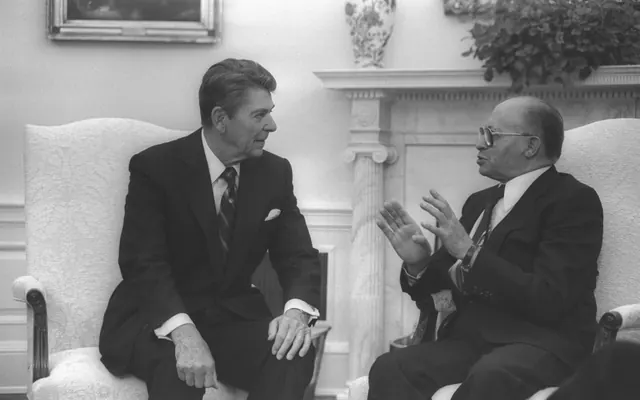
TJS S5E16 - Lebanon War part I
Before we can discuss the outbreak of war between Israel and the PLO in Lebanon, we must lay out the political context. As Yasser Arafat and his Palestinian...
Play Episode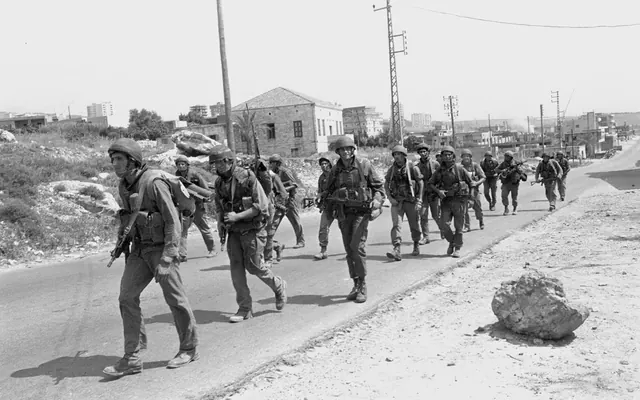
TJS S5E17 - Lebanon War part II
Operation Peace for the Galilee begins with Israeli jets pounding Yasser Arafat's PLO bases in southern Lebanon, but there is always a backstory. In this episode learn about...
Play Episode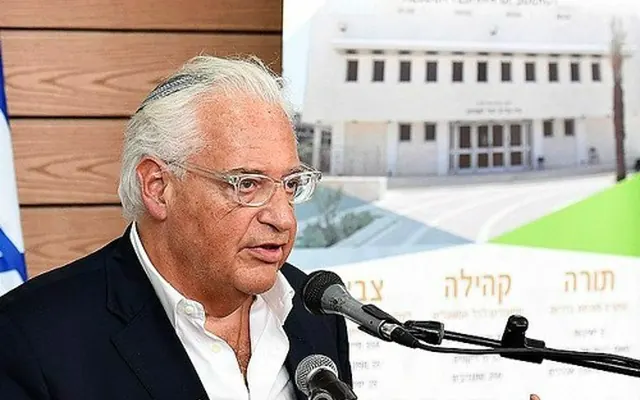
TJS S5 Interlude: interview with Ambassador David Friedman
We are all actors in the Jewish Story, and part of the art of becoming a main character is knowing how to seize the moment. Here is an...
Play Episode