
TJS S5 Interlude: interview with Ambassador David Friedman
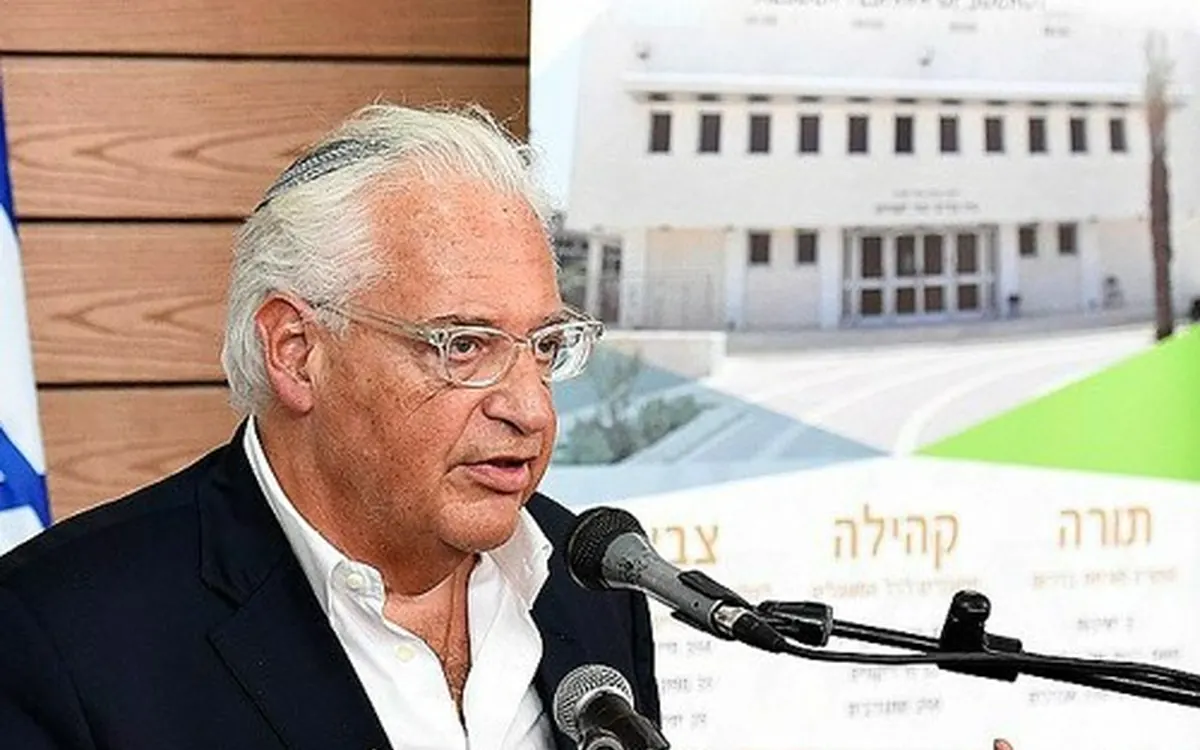
We are all actors in the Jewish Story, and part of the art of becoming a main character is knowing how to seize the moment. Here is an interview with former US Ambassador to Israel David Friedman which explores how he came to be in his position, the contributions he made and his vision for where Israel might be headed.
About this episode
Among the mapmakers of each generation, said Emerson, are the risk takers, and Rav Mike sits with Ambassador David Friedman, who shaped the Jewish story from 2017 to 2021. A rabbi's son who became a lawyer, Friedman came to represent Donald Trump through winning his cases and friendship, and when Trump ran he offered help on the one issue he felt competent to advise, Israel. He and Jason Greenblatt wrote the most pro-Israel platform in party history, and Friedman became the first ambassador Trump nominated, a month before taking office. He credits a path that felt divinely inspired, strategy paired with the humility to oversell nothing, focusing on what he knew so that on that limited issue he would have a voice.
Friedman shares a story never told before, of a kabbalist rabbi in 2011 who read his family's future and told him to stay in his job and go to Israel in five years, that he would have much to do. Almost exactly five years later he became ambassador. His book Sledgehammer argues that breaking with the past brought peace, since the United States had treated Israel as a client state to be saved from itself, convinced Washington knew better than Israel what was best. That was wrong for both, weakening the one true ally in a region where Israel is the solution rather than the problem. The deepest break, he says, was moving the embassy to Jerusalem.
Moving the embassy broke the idea that Israel could not reach its national aspirations without Palestinian consent, a veto held by the Authority and Hamas that left both countries stuck in a ditch. When the sun rose the next morning, the only violence was an old flare-up on the Gaza border sixty miles away, convenient for a split screen. To the warning that Israel must give up Judea and Samaria or cease to be Jewish or democratic, Friedman answers that you can be alive or dead, and that comes first, since these are not peaceful partners yet. You make peace with former enemies, he says, and current enemies you first have to defeat.
To break the closed circle of foreign-policy elites, Friedman says you have to make Judaism matter to more people, since a people that respects its own heritage earns respect. He asks what America would charge for the Statue of Liberty, priceless and not for sale, and says Shiloh and the Temple Mount mean far more to the Jewish people. A nation willing to bargain away its most sacred places will not be respected, and he found a deep commonality with observant Muslims who honor their own holy sites. His counsel is for Israel to act like a sovereign, to build a national consensus on its borders and make its case to the world with dignity rather than embarrassment.
Friedman had a direct hand in the Abraham Accords, and he recounts Sheikh Abdullah bin Zayed of the UAE saying he hates the word tolerance, that you tolerate a toothache, and asking why not go all the way to love. The real alignment, the Sheikh told him, is the shared battle against extremism, a war between ideologies rather than nations, and Israel now appears as a force of moderation and stability. His Friedman Center for Peace Through Strength opens with Isaiah's second chapter, and he notes that people quote the swords into plowshares while skipping the first half, that the nations of the world will come to Jerusalem where God resolves their differences. From Jerusalem, he says, flow the values that make America and Israel great.
Key ideas
- A rabbi's son who represented Trump, Friedman became the first ambassador Trump nominated and helped write the most pro-Israel platform in party history.
- His book Sledgehammer argues that the US had wrongly treated Israel as a client state to be saved from itself.
- Moving the embassy to Jerusalem broke the Palestinian veto over Israel's national aspirations.
- Friedman holds that you make peace with former enemies, and current enemies must first be defeated.
- Respecting sacred places like the Temple Mount and acting like a sovereign is how Israel earns the world's respect.
- The Abraham Accords rest on a shared battle against extremism, and Isaiah's nations come to Jerusalem before swords become plowshares.
Chapters
- 0:00 The mapmakers; meeting Friedman
- 1:04 A rabbi's son who represented Trump
- 3:15 Writing the platform; first ambassador
- 5:27 Humility and strategy; one issue
- 7:37 The kabbalist's five years
- 11:03 Sledgehammer; the broken relationship
- 12:11 Patron and client; saving Israel from itself
- 13:14 Breaking the veto; the embassy
- 15:27 Jewish or democratic; alive or dead
- 16:30 Former enemies, not current ones
- 17:37 Make Judaism matter
- 18:59 Sacred places and self-respect
- 24:40 Act like a sovereign
- 29:05 The Abraham Accords
- 31:25 Tolerance, love and extremism
- 33:35 Isaiah; the road to Jerusalem
Who, where and when
People
David Friedman, Donald Trump, Rabbi Morris Friedman, Jason Greenblatt, Sheikh Abdullah bin Zayed, Ronald Reagan, The prophet Isaiah
Places
Jerusalem, Judea and Samaria, The Temple Mount and Shiloh, The United Arab Emirates
Texts
Sledgehammer, Isaiah 2, The American Declaration of Independence
When
2017 CE: Friedman becomes ambassador, 2018 CE: the embassy moves to Jerusalem, 2020 CE: the Abraham Accords
Read the transcript
Among the map makers of each generation, said Ralph Waldo Emerson, are the risk takers, those who see the opportunities, seize the moment, and expand man's vision of the future. Well, I can see a map of the future unfolding before me even as we speak, and I pray to seize the moment right. I'm Rav Mike Foyer, and this is The Jewish Story. Season 5, Interview with Ambassador David Friedman So I'm sitting here with Ambassador David Friedman, former U.S. Ambassador to Israel from the years 2017-2021, and beyond the specific role as ambassador, a real shaper of the Jewish story. And I'm super excited and grateful to be here. Thank you so much, Ambassador, for giving me your time. Thank you, Mike. It's great to be with you.
Thank you so much. So I want to dive right in because time is precious. You know, the work is long and the master is pressing, as we say, not to mention the fact that Pestis is coming. So I don't know about you, but I feel pressure kind of across the board right now. My kitchen almost every day. Yeah, it's coming. Get ready, people. But before we jump into the depth of the story, I have to admit I Googled you before I came, which I'm sure has happened in the past. And personally, I'm super curious, how does a rabbi's son become representative of the world's most powerful country in one of the most complicated regions on the planet? Tell me a little bit about how that happened for you. Well, it's certainly not an easy path to replicate.
People ask me, how do I become an ambassador? And I said, well, if you want to follow my career path, it's going to be complete mazel for you to get this job. As a rabbi's son, obviously I became, I shouldn't say obviously, but as a rabbi's son, the son of a particular rabbi, my father, Rabbi Morris Friedman, whose pictures adorn a lot of this room that we're in. I see this, by the way, I didn't know that they would when I prepared that question, but I can see I've touched something quite important. Well, you have him here with the former Prime Minister Netanyahu, you have him with Shimon Peres, with Elie Wiesel, and with Ronald Reagan. That's what I was looking at, yeah. It's a pretty good group. Anyway, Father inculcated in me a very strong passion for Zionism.
Without him knowing, and he passed away before any of this happened, so without knowing where this would lead, I was a lawyer. I was a lawyer working in a law firm. I, with a couple of other guys, founded a law firm in the early 1990s, and I came to represent Donald Trump. At that time, a real estate developer, no political. New York personality. A big New York personality, but no one saw him as being a political force. I had very good interactions with him. He has gone through lots of lawyers over his career. He doesn't like a lot of them. In my case, we had some real success. Looking back on it, I don't attribute that to any particular skill on my part because a lot of these cases were difficult. I think I was just on a path that was divinely inspired and one of the odd ways in which I became close to him was by winning his cases.
And then we became friends to a certain extent. I mean, we have very different lifestyles, but he liked me, I liked him, and we stayed in touch. And then as he embarked upon a path to get the Republican nomination for the presidency, I reached out to him and offered some help on one issue, the only issue I really felt competent to help him on, which was Israel, how the U.S. would interact with Israel. and he invited me to help him on that particular issue. So, for example, before the Republican convention, I was given the pen, along with Jason Greenblatt, to write the Republican platform on Israel, and we wrote the most extraordinary pro-Israel platform in history of any party. That's a historic moment in and of itself.
To the extent platforms matter, yes. Fair. But it was a, and you compare it sort of to four years earlier when the Democrats left out anything on Jerusalem and they tried to have a voice vote supporting Jerusalem as the capital of Israel, and they couldn't get it. But they claimed to have heard that the eyes have it, even though it was really clearly the nays that had it. But anyway, there was a big difference. And so we were given this opportunity. And then against all kinds of odds and challenges, he became president. And the morning after the election, I was with him that night, along with thousands of other people. The next morning, I quickly ran home at 5 in the morning, took a shower, ran back to Trump Tower, found my way into his office early, like before 8 a.m.
He was sitting there, you know, fresh as a daisy. And I had the chance just a few minutes before everybody started running in to remind him that I really wanted to be the U.S. Ambassador to Israel. And we had that discussion. And, you know, it took a few weeks until, obviously, you have to deal first with the Secretary of State and the Secretary of Defense and the Chief of Staff. but I was the first ambassador. He nominated me in mid-December, a month before he took office. The first time in history that the U.S. ambassador to Israel was nominated that early or was the first ambassador nominated by a president. There's a real story here I hear, meaning there's the roots. Like you said, your father inculcated in you this clarity of value.
And what an amazing thing to think that perhaps in this world, he didn't get to see the full fruits, although let's not assume we've seen the full fruits yet. He didn't get to see the fruits of the ambassadorship, right? But clearly laid the seeds. But then, like you said, mazal, right? There's just a winding path. But I heard something else in there, which was a clarity of what was important to you. Like you said, I was able to help in one area. You know, a lot of times when people encounter those in power, I've experienced this. I can't imagine the feelings that you've had. We want to be helpful in every possible way. And yet I hear a clarity on your part of what you can and cannot offer. Well, look, you have to be strategic and you have to be humble, right?
Those things don't always go hand in hand. But you have to be humble in not overselling your capabilities. Somebody with a reasonably high IQ who reads the newspaper can come to the view that they know something about everything. I'd say it's a widespread phenomenon. It's a widespread phenomenon. So you could become, in your own mind, an expert on the economy, an expert on… Epidemiology, perhaps. Yeah, well, when that became relevant, sure. An expert on immigration, an expert on crime. I didn't oversell for two reasons. Number one, I was humble. I didn't think that it was something that I could add. And number two, I thought that if I focused on what I knew and what I cared about, there was a much better chance that as to that limited issue, I would have a voice.
And that was the way I approached it. So one more personal piece, and then we'll broaden the lens. What's one thing you feel? I mean, the Jewish story, my tagline, as it were, is telling a story of the past, which creates an identity in the present that has the strength to build the future that we desire. So what would you say, since you were so involved in building a present and future, as we'll speak about momentarily, what's something from your past you feel like really helped guide you or give you the strength? You were standing literally amongst princes and presidents. Something from your past, you feel, that helped you either make decisions or take the actions which you took. Well, like I always felt that I was privileged to be born in this era, to live in this era.
This is an extraordinary time to be alive, you know, where the Jewish people are able to pray at the same place, in the same language, in the same liturgy that we used 2,000 years ago. I didn't get that on my own. I got that clearly from my parents. I recall during the Six-Day War, my parents were glued to the TV and crying when Jerusalem was regained by the Jewish people. And I really thought I was living in special times and that if I could, I wanted to be a part of it. Now, I chose a different path than my father. I didn't become a rabbi. I became a lawyer. That enabled me to become a philanthropist because it was a successful law practice. But that was never enough, and I was always wondering, how am I going to actualize this in a more concrete way?
I'll tell you an interesting story. I don't think I've ever told this story before. So let's see. In 2016, I was nominated. At the end of 2016, I was nominated to be the ambassador. The end of 2011, I went to see a rabbi. He was a rabbi who I had heard incredible things about. He was visiting from Jerusalem. He had a reputation of being a Makubal, and I wanted to be with him. And the question I wanted to ask him was, I really believe in the future of the Jewish people in the land of Israel. I'm living here now on Long Island. Life is good here. Business is good. But I really think that I belong in Israel. What do you think? It's the perennial Jewish question. And where do I belong? Right. So the first thing was he asked me to write down the names of all my kids, and I wrote them down, and he looked at me and started telling me about my family.
And he was so prescient in his comments. I forgot all about what I had come for, right? Because if you have somebody telling you about the future of your children, it's much more interesting than anything else. So I kind of lost track of why I had come for them. At the very end, I said to him, by the way, this is why I came, although I appreciate everything you've said. Just to close the circle. Yeah, what do you think? And he said, stay in your job. Go in five years. And I said to him, yeah, but in five years, I'll be 58. Now I'm 53. I've got a lot of energy. I don't know what I'm going to feel like in 58. Should I really give up the five years? He says, stay in America. Keep doing your work. And I guarantee you in five years you have a lot of things to do in Israel Wow And I heard that forgot all about it about two years into my job as ambassador It's like 2019, so seven years later, I'm talking to somebody who was having a hard time and they wanted to talk to a rabbi, and I recommended this rabbi, and all of a sudden I remembered what he told me.
I said, holy cow, five years, almost exactly five years. And yeah, no, I had a lot to do in Israel. You had a lot to do. So that's sort of part of my personal experience. Unbelievable. Well, let's talk a little bit about some of the things that you did manage to do and, in fact, are continuing to do. First and foremost, you have a new book out. The title is Sledgehammer, How Breaking with the Past Brought Peace to the Middle East. I have to admit, as I did already, but I'll do it publicly, that I have not yet read it. I have a copy in my hands. Don't be worried. As someone who's dedicated quite a bit of his life to connecting, trying to put past and present together, that subtitle strikes me. It's like breaking with the past brought peace to the Middle East.
What does that mean to you? What exactly, why is that the subtitle of the book? Well, you know, I always felt that the United States' relationship with Israel was broken, not broken in a perspective of policy, although clearly broken on policy as well, meaning it wasn't just, you know. That wasn't the foundation of the break. It's not just, you know, should Jews be living in your hometown? But whether or not, what does international law say about Yudhav HaShemron? Does the green line mean anything or not? Obviously, I don't think it means anything. So there were those policy things which were wrong, but there was more that was wrong. There was a sense that the United States needed to save Israel from itself, that somehow the United States knew more about what was best for Israel than Israel did itself.
So the United States would deal with Israel sort of as a client state and have the, listen, we're going to give you a lot of money. We're going to sell you weapons. We're going to give you some weapons. But you've got to do what we tell you because our interests in the region are far broader than just Israel, and you've got to play ball with us. The way it works is between patron and client. Yeah, and that's wrong, not just for Israel. It's wrong for America because by preventing Israel from having its own identity and following the will of its own people, from being a true democracy. And second of all, you're weakening the state of Israel at a time when it's in America's interest for Israel to be as strong as possible.
Why? Because it's the only true ally we have in the region. Because Israel is the solution to the Middle East, not the problem. And one of the ways we proved that was by working with all these Arab nations and having and then normalized with Israel without Israel making any commitments with regard to territory or otherwise. I want to come to that discussion, but first I want to talk about the breaking. What do you think was the most important or foundational thing to which you took that sledgehammer? Well, I think the most foundational thing and the most important thing, because it resonated throughout the world and it drove our policy forward very successfully, was moving our embassy to Jerusalem.
And the reason why that's so important is because it was exactly that type of breaking with the past. We broke with the conventional wisdom. We broke with the idea that Israel cannot achieve its own national aspirations without the consent of the Palestinians. And we had to break that. And we had to break it not just because we wanted to move our embassy to Jerusalem, but because as long as that veto existed in the hands of the Palestinian Authority and Hamas, which, you know, I mean, there really isn't a unified Palestinian political movement. I mean, they're all over the place. That's why they call them the Jews of the Arab world. Right. But, you know, they're very dangerous, as we have seen yesterday in the last couple of days.
And, you know, the idea that U.S. and Israel would be stuck in the mud, stuck in a ditch, until the Palestinians decided to relinquish their veto was bad for Israel, bad for America, and bad for a process of normalizing and making peace in the region. So when we broke that veto by moving our embassy and when we saw that in the aftermath of that, the sun rose the next morning. There wasn't, you know, the only violence was on the border with Gaza, which had been going on for months already, really had nothing to do with the embassy. It had to do with the fact that... No, but it made a great media connection, I recall. It made a great... There was the split screen of the beautiful ceremony. And people thought that we were so callous because we were having this ceremony where down the block people were throwing.
It was 60 miles away, and it was violence that had been in place already for a month. It was driven by the refusal of Abu Mazen to pay Hamas their share of the tax revenues that they were entitled. So it really was spawned by internal matters. So really, if I had to put my own words on it, the fundamental sort of the broken foundation to which you took the sledgehammer was this mistaken notion that the relationship is not just patron-client, but like you said, that the United States needs to save Israel from itself. Right. And there was and there is this notion. I mean, you've heard this, I'm sure, many times that if Israel doesn't relinquish the Judea and Samaria to the Palestinians, it will have this problem where it can either be a Jewish state or a democratic state, but not both.
I've heard this from so many Democratic lawmakers and policymakers. What I tell them is, look, there are lots of ways to skin this cat that doesn't require the type of diplomatic, dangerous diplomatic move that you're suggesting. And we'll get to it, but one of the things we did was to actually write out a plan which provided for exactly the type of demographic relief that they were talking about without putting Israel at risk. So you can skin the cat. What I said is, look, we're not there yet. These are not peaceful people that want to really make peace. And, you know, your argument about, you know, you can be Jewish or democratic, but not both. Let me get back to a more basic thing. You can be alive or dead, but not both.
That's true. And until we solve the alive or dead, but not both, we're not ready to talk about the next step. And we haven't solved it yet because, unfortunately, the people that you, you know, want Israel to make peace with are not prepared to accept Israel as a Jewish state. And I think that resonated with some people. But then there was the response, well, you make peace with your enemies. And my response was you make peace with your former enemies, not your current enemies. Your current enemies you have to defeat. When they're former enemies, you can make peace with them. They're not former enemies yet. Yes. And this actually leads me to when I was doing my research in lieu of having the time to read yet, I saw a quote from you in an interview where you said that the U.S.
foreign policy elites spend no time with anyone but Israeli foreign policy elites in developing their views. So part of what I hear you saying is that there is kind of a closed circle of sort of self-perpetuating ideas, which, if I want to be kind, I could say is detached from the reality on the ground. If I want it to be less kind, I would say has its own interests and is pursuing them despite the reality on the ground. What do you see to be the primary way to break through, again, with that metaphor of taking the sledgehammer, that closed circle and to open up the reality of a broader... Like you said, there's more than one way to skin a cat. And when I look at the situation here, the appalling lack of creativity, you know, in thinking about the situation is one of the saddest pieces.
How do you break through these circles of policy elite? Well, I think you have to make Judaism matter to more people. Because? Because if Judaism matters, then the Jewish people will look at Israel in a way that I think will be helpful for Israel to gain the respect that it deserves. I'll give you just sort of an example. Look, would you expect any country at any price to give up a national treasure? I used the example. What would America charge for the Statue of Liberty? You know, the answer is it's priceless and it's not for sale. Sure. Right? Well, you know, I would think the Statue of Liberty means a lot less to America than Shiloh means to the Jewish people. Or let's take the easiest example, Harabayat.
Right, the Temple Mount. Temple Mount means to the Jewish people. Right. Whether or not, you know, it's the right time for the Jews to be on there. I mean, we can debate that. I'm a Kohen, so I don't go anyway, so I'm not really the right person to ask. You don't go yet, but you've got a job waiting for your afternoon. I hope I have a doubt. I sure hope so. But the whole point is that if for Israel to be willing to bargain with ancient God-given rights that are reflected in the most sacred texts known to man, if Israel is willing to bargain with that, not only is it bad for Israel in two respects. Number one, we shouldn't be doing that because you want to go to war with anybody. Don't go to war with God.
It's a losing game. It's a losing game, yes. And second of all, and maybe more practically speaking, no one will respect you. Israel will not be respected by the world if it doesn't respect itself. And it can't have self-respect if it's willing to bargain with the most sacred places in Judaism. And I think that's – I have found that over and over again in my conversation with the Arab world because they have their sacred places and they respect you know observant Jews to a certain extent Some respect more than others because there a commonality between you know observant Muslims and observant Jews There's a fundamental belief that animates how they see themselves in the world. There are two really critical pieces in this.
First of all, the last piece that you said that there's a reason it's important to strengthen the Jewish nature, not just the Jewish nature of the state, but just of the discussion, is because it creates a commonality between forces that are often seen as opposed. Oh, it's a religious war. But here I hear you saying, well, yes, except people of integrity who believe in God and who see themselves as existing in a covenant share in many ways more than which divides them. The other piece I heard is, I share my own story, I've dabbled a little bit in peace work. and I was once speaking to a Palestinian activist who I would say was very open to the realities of Israel as a Jewish state and when we came in our discussion to Jerusalem he said no the Temple Mount it's called the Temple Mount but it's off, it's out of discussion I said how can that be?
you're talking about what to me is the most central element not of just my religion small r, but of the whole mission in the world and you know what he said to me? he said if the Jews really believed that was true there wouldn't still be a mosque on the Temple Mount right because what he said he said if you really believed that in in his worldview then you act upon it not that i'm advocating that but i think that your your point about the lack of respect that our relationship the willingness to bargain over the most precious things is a real challenge well you know i use um this example which uh usually gets a laugh which is you know imagine you know you're you're dating a woman for you know for five ten years right and she says when are we getting married?
And you say, well, I love you. And well, I didn't ask you whether you love me. When are we getting married? And, but I love you. I love you so much. We have such a great life together. When are we getting married? I love you. Okay. That is the, that is the Israeli government view of Yudava Shomron, right? We love it. It's our heritage. Okay. It's our, we're never giving it up. Are you getting married? No, we're not getting married yet, but I'm there, but you know, I tried to push that envelope a little bit and look, I'm not, I'm not minimizing the, uh, the diplomatic and political issues involved. They're daunting to some extent. I'm sure. From your view, I can't even imagine what they look like. Sure. But at the end of the day, again, it comes back when people say to me, what should the United States be doing?
What the United States should be doing is encouraging Israel to continue to exercise its democratic rights, to develop a national consensus on what it wants to be when it grows up, and then to make that case to America and the world. People said to me, the New York Times would say to me, well, you for or against annexation, I don't like that word, but are you for or against it? I said, I mean, it depends. I mean, I think this is Israel's choice. They need to come if they want American approval, which I'm not saying they need. I was assuming they want American approval. They need to come and say, this is what we want to do. Here's why we want to do it. Here's why it's appropriate for Israel. Here's why it makes Israel stronger.
Here's why it's good for America. Here's why it doesn't cause the world to blow up. Or if there are issues, we think in the long run they're mad. Whatever it is, make the case and then let the world react. But if you make the case with self-respect and dignity and with a powerful argument, I think the world will ultimately come to respect you, which is the most important thing. And if you're embarrassed or ashamed to do that, then maybe let people select the right government. That's not embarrassed or ashamed. So you're basically pro-Israel growing up and deciding what it wants and acting toward it. I'm not even advocating a particular view. I have my own views. I mean, if I were in Israel voting, I know who I'd vote for, but I'm not an Israeli.
And so I say, look, let these people of Israel who bear all the risks of whatever the decision is, let them, and before they even vote, start developing a national discussion about it. It's too important to just have a vote. You are so correct that that discussion is sorely lacking right now, too. This is the equivalent of abortion in America. Congress won't touch it, right? They won't have that discussion. Why? Because there's no upside in talking about it, because whatever they do, they're going to offend. Somebody's going to unload on you. I mean, they'll talk about it philosophically, but they won't talk about it legislatively. They won't actually move on it from a – Again, your metaphor of I love you, but I'm not going to commit.
Right, and that's because it's such a third rail politically. But I think this is Israel's longest border. and you know if you ask israelis what's your border what's your eastern border most of them they don't know you really can't know and what you what you'll hear is that well israel can't ever give up the jordan valley but you can't give it up is it yours now what is your map show i mean it's just time to deal with it as my feeling whatever it is just deal with it because at the end of the day if you leave the decision to the world you're not going to like the outcome No. The word that comes up from when you say it is it's time to act like a sovereign in your land. Yes. Yes. So I want to pivot for a second, although I want to come back to the local politics and just ask a larger political question.
Because as you are clearly aware that former President Trump is a figure people love to hate and also who draws an exceptionally passionate type of support. And I recall the excitement that surrounded all the sort of policy shifts that you spearheaded here in the Middle East, which also circled around him as a personality and people comparing President Trump to Cyrus the Great, you know, in the time of the Second Commonwealth. At the same time to Caligula, this person was like worshiping himself and is going to, you know, set up an idol in the temple. So as someone who had both a personal and professional, has personal and professional relationship to the former president, good news for the Jews?
yeah i mean net for sure if you really you know care about the tweets although that's not those are those don't even exist anymore if you care about the days of the bad tweets yes look if you care if you care a lot about some of the outbursts and look there are lots of unforced errors i mean you know i don't i don't i don't think anybody would deny that yeah if that's if that's what matters to you then then it matters to you if what matters to you are the facts on the ground and the policies that he brings and who are the people that he brings to help create his government. Look, with him you get an extraordinarily pro-Israel government. You get a strong defense establishment in the United States.
You get strong border controls. Does that mean something to you? I mean, it should mean something to everybody because it's very much damaging America right now. You get a pro-growth economy, low regulation, low taxation. I mean, it's the kind of stuff that most people who are frustrated with Democrats in office, they dream about. Now, you also get a guy who's probably the greatest retail politician ever. I haven't heard that phrase, but yeah. And so he's able to garner a lot of excitement in the things he does. So it's a mixed bag. If you just sort of care about a strong America with a strong Israel, that to me is pretty good for the Jews. It's good for everybody. So I'm interested because not that I would sort of put this in President Trump's lap, but during the last, say, five to ten years, Israel has become an extremely partisan issue.
I think there are probably a lot of Jews. When I say is it good for the Jews, the inevitable question someone's going to ask me is, well, which Jews, Mike, are you talking about? So do you feel a sense of concern over Israel becoming a partisan issue in American politics? If not, why not? So what do you think can be done? It's unquestionably a partisan issue, and it's likely to stay a partisan issue. I don't know what the answer is to that. I don't think it has anything to do with Trump. I'm not even sure it has anything to do with Obama. They reflect the will of the people that voted for them. I don't want to get too hung up on the politicians. At the end of the day, people vote for their politicians, and politicians take polls and they decide which views they want to take because they want to get elected.
And there is clearly a very strong view within America that is hostile to Israel. There is. And so, you know, can politicians do a better job of trying to reduce that tension? Sure, but they don't want to, and why would they? Because that is a top five issue, you know, in Republican politics right now. You know, there is, it might be a top three. I mean, there's, you know, there's life, there's Israel, there's conservative judges, which to a certain extent goes back to life. And there's, you know, there's the freedom of education and freedom of religion. I mean, that's, you know, what a lot of Republicans care about. So as long as they care about that, you're going to have a Republican Party, which is going to speak to a pro-Israel relationship.
Democrats, you know, it's like number 28 on their list. and when it's number 28 on their list, that's just in terms of whether they care about it at all. And then when they care about it, some of them don't like Israel. They care about it negatively. So that type of voter demographic is going to produce politicians who are not so pro-Israel. Now, there are some people of conscience on the Democratic side who try to help Israel, but you can't compare the parties right now, and it's not because of the politicians. It's because of the people. who vote for them. I think this is an important observation, which, again, on the face of it sounds obvious, but I think you're correct that we often hang up on politicians as a driving force and forget that America is a successful democracy in this sense.
And therefore at the risk of speaking about the will of the people I mean that what we seeing And so actually it a beautiful segue to what I wanted to speak about next because therefore if we were going to do anything it an educational mission And by the way I should just jump on one thing because something that happened yesterday So I have a friend who was in the National Security Council when I was ambassador, and I was very close to Robert O'Brien, who was the national security advisor. And he called me up and told me this friend of ours was running for the Senate in Oklahoma, right? and I talked a little bit and I endorsed him for the Senate. And much to my surprise, he put out a big spread, you know, about getting this endorsement from me.
Yeah, it's interesting. In Oklahoma. Right. We're awfully far from Oklahoma right now. You go far and wide in Oklahoma, you're not going to find too many shuls. I mean, Chabad is everywhere. I'm not sure they're in Oklahoma. I bet they are, but they're holding on by their toenails. Right, okay. So, I mean, my point is that there are a lot of people who really care about Israel. A lot of them aren't Jewish. So when you say good for the Jews, it's really good for pro-Israel. Maybe that's a mistaken view, right? The question is, is it good for the pro-Israel community? Are Republicans good for the pro-Israel community? And the answer is yes. Are they good for the Jews? The Jews are very diverse, and a lot of them don't vote Republican.
And Israel is not one of their top issues. Maybe I can widen the lens even further. I accept the correction that maybe is it good for the Jews is not the right question. And really the question is, is it good for humanity? Because the next piece I would love to move to in what you're doing is the one that I actually find most enlivening. I mean, here in Israel, we just had this negative summit. It's an amazing thing. The foreign ministers of Egypt, UAE, Morocco, you know, of course, the American Secretary of State, something that even five years ago was essentially inconceivable. And you had a direct hand in bringing to being the Abraham Accords, which are sort of the political, public face underpinning of what is progressively becoming what people at first wanted to dismiss as a diplomatic window dressing, but is every day we're seeing more and more becoming a substantive basis for a new Middle East.
Can you tell me a little bit about how such a revolution comes to happen? Yeah, it's really not that complicated. And I'll share with you a conversation I had with the foreign minister of UAE, Sheikh Abdullah bin Zayed, who was one of the foreign ministers who was in stable care, who's a great, amazing guy. I mean, so I had a conversation with him. Two things he said. First of all, we talked about tolerance, and he said to me, I hate that word. He said, you know, you tolerate a toothache. He said, why can't we go all the way to love? I mean, why are we tolerating each other? We have so much more that we can do than tolerate. But apart from the semantic point, he said to me something which is, I think, the most important point about all of the Abraham Accords.
He said, look, our collective battle, he said yours and mine, is against extremism. He says, that's it. He says, we got extremists in my country. You got extremists in America. You got extremists in Israel. You've got extremists. You've got people who are willing to die for some misbegotten political or ideological or religious mandate. And we have to win that fight. And all of us who are advancing the cause of moderation in government have much more in common, regardless of what our religions are, regardless of what our other politics are. So UAE and Israel have a lot more in common than you think. because we have to win the war of the 21st century, which is the war against extremism. It's not a war between nations.
It's a war between ideologies, and we have to win that battle. And we are ideologically on that front aligned, and that's the most important alignment that we have. And that's true of Bahrain, and that's true of Morocco, and that's hopefully growing to be true in Sudan. It was true in Kosovo, which is a Muslim country, which normalized with Israel. That's the bottom line. Israel is seen now in the world as a force of moderation a force of stability, a democracy and again a solution, not a problem and that's the whole point of all these Abraham Accords and why they're growing more So it's beautiful because I know you have a personal attachment to the city of Beth El and I was just thinking as you were speaking about that vision of a ladder firmly planted on earth but whose head is in heaven, meaning on some level we as Jews are extremists, we think of what we've been through and what we believe and how we act But at the same time, if I understood you correctly, the difference is that we believe that our vision needs to be grounded.
The reality of the human reality and the reality of the commonality, as you're saying. And not that there, I'm sure, aren't many conflicts to overcome. And that really brings me to what I'd like to wrap up with. But one point, I just want to be for you. Yeah. We value life. Yes. Okay. And when you value life, your extremism is, whatever that is, is tempered. Yes, absolutely. And that's, I think, critical. It is foundational, and I appreciate you putting it front and center. So again, when I was doing some research, I saw that in 2021, you created the Friedman Center for Peace Through Strength, which seems to me to be your vessel where you want to forward this whole vision that took its political embodiment when you had position of ambassador through the Abraham Accords.
And aside from a curiosity about where that vision is headed, I was really struck by the fact that when you open up the homepage of the website, I'm sure you know, it's quotes from Isaiah. Not just from any old area in Isaiah, but the second chapter of Isaiah. And, you know, the second chapter of Isaiah holds an interesting place in general human culture, as I'm sure you're aware, that there's the famous line of beating our swords into plowshares on the, you know, the entrance of the UN plaza there. Of course, it was unattributed until not so long ago, right? But what was noteworthy to me is that you didn't start there. That's a universalist vision, which I would like to believe everyone but those extremists could get behind.
It seems to me you made a conscious choice to start with all the world coming to Jerusalem and then from there Torah comes out. So could you maybe share a little bit, because this is the Jewish story. And as a person who has embodied in such a fantastic way, I wish that I could show people the pictures that I'm looking at here in the room. in a fantastic and powerful opportunity, as I heard you say, like an awareness of the time in which we live. You didn't say it, but what I heard was a call to action, that it would be a mistake not to act. What's your vision of how that Torah can come out to the whole world? Well, you know, the whole point of Isaiah saying nation will not lift up sword against nation, that's the aspirational end point.
But Isaiah actually tells you how to get there, and nobody picks up on that. And they skipped that first half of the chapter. They skipped the first half, and the whole point of the first half, the immediately preceding sentence, nations of the world, not the Jewish people, the nations of the world will come to Jerusalem, whereupon God will resolve their differences, and then nation will not lift up sword against nation. So I do believe in the centrality of Jerusalem, the centrality of Israel as a solution to world peace. And I think anyone who reads Isaiah, and Isaiah is just, you know, extraordinary. extraordinary no words to describe the brilliance of his prophecies but this I think is the most important and so you know peace through strength is also peace through truth you know and and and that's why to me when you're when you're true to your own values when you're true to uh to reality you're you're strong that's what gives you strength you don't get strength from having an m16 I mean the guy with the m16 yesterday is dead you know who shot up uh in b'nai brock he's not strong he's Strength is when you have a value system based on truth.
And Jerusalem, in the words of Isaiah, is where the people of the world have to come. And it's not just the geographic trip to Jerusalem, but it's the values that come from Jerusalem. Look, the Declaration of Independence, right? To me, maybe the second greatest document ever written after the Tanakh, right? What is the Declaration of Independence? Why is it special? because it determined that human rights don't come from the sovereign. Human rights come from God. They're all endowed by our creator with unalienable rights. And all those rights, life, liberty, you can go through the Bible and find them in the Bible. So the rights of mankind, the essential human rights, what made America such a great country and continues to make it a great country is the notion these are unalienable.
They come from God. They're not negotiable. Now, where did all these ideas come from? The word of God came from Jerusalem. This is the wellspring right here where you and I are sitting another kilometer down to the east into Jerusalem. This is the wellspring of the values that make America a great country, that make Israel a great country, and those values exported throughout the world will fulfill the vision of Isaiah. Well, I don't think we could do any better than ending on that note, and I wanted to hear that not just as an idea but a call, to come to Jerusalem and to take part in the vision that's unfolding here. I want to thank you, Ambassador Friedman, for taking the time to share your thoughts with me.
I also want to thank all the folks that are listening. I want to say that you can give your hard-earned money to help make the show happen, keep it free and widely available. Go to my website, jewishstory.co. In the upper right-hand corner, you'll see a button there that says Be a Patron. You can click on that to give a little bit of per-podcast support. Send me an email, robmikefoyer at gmail.com. If people want to get in touch with you to get your books, look on Amazon is probably the best place. Where else can they go? It's on Amazon. I think you can go on sledgehammerbook.com. There's a landing page there as well. You'll never forget that title. And I want to thank the Land of Israel Network. That's thelandofisrael.com.
They're creating a center for global transcendence in the heart of Judea. I want to thank the Pardes Institute, pardes.org.il, for throwing the doors of the Beit Midrash open as wide as possible. And I want to thank you for listening. I'm Rav Mike Foyer, and this is The Jewish Story.
More from Season 5
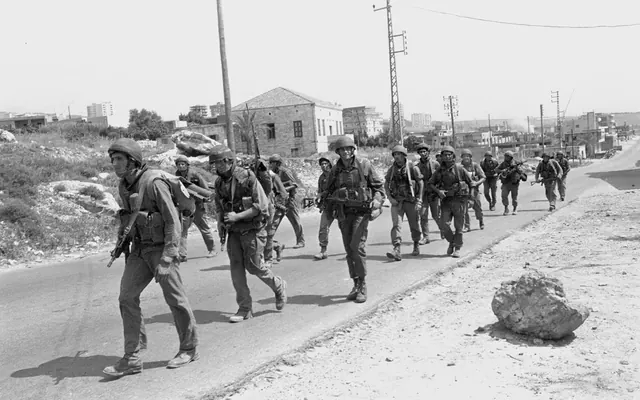
TJS S5E17 - Lebanon War part II
Operation Peace for the Galilee begins with Israeli jets pounding Yasser Arafat's PLO bases in southern Lebanon, but there is always a backstory. In this episode learn about...
Play Episode
TJS S5 Interlude: What Makes Someone a Jewish Leader?
Sometimes a listener question can cause a whole interlude. Here is an exploration of Jewish leadership and its roots in the Jewish story. Along the way we touch...
Play Episode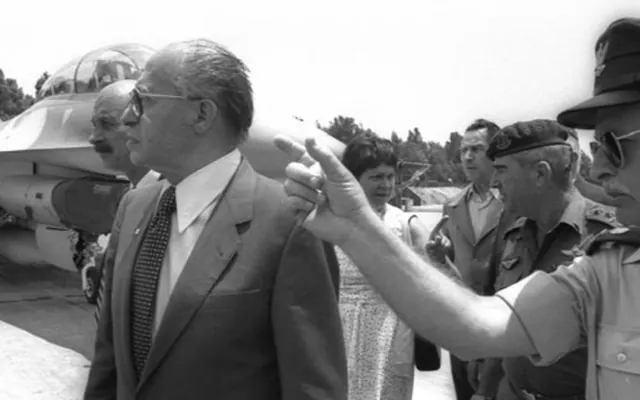
TJS S5E18 Lebanon War part III - the invasion
Crossing into Lebanon to destroy PLO started as a successful mission, and when the IDF destroyed the Syrian SAM belt in the Bekaa Valley through Operation Mole Cricket...
Play Episode