
TJS S5 Interlude Interview with Daniel Gordis

Menachem Begin has been part of our exploration of the Jewish Story since the uprising against the British back in 1944, and the Lebanon War was the last chapter in which he took an active role. In order to give a fitting wrap up to such an important character, here is an interview with Dr. Daniel Gordis, author of the biography Menachem Begin: The Battle for Israel's Soul.
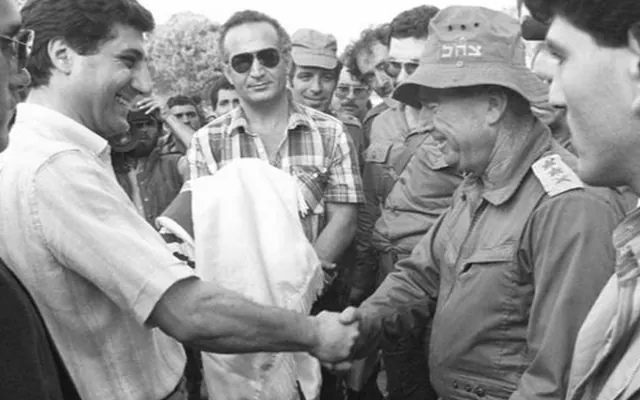
picture credit: Yoram Reshef studios
About this episode
Aquinas on the captain who would keep his ship in port forever. Rav Mike sits with Dr. Daniel Gordis, founder of Shalem College and author of a Begin biography, to close out the Lebanon arc. Gordis grew up in a Ben-Gurionite home in Baltimore, and when an editor asked him to write a Next Book biography, Ben-Gurion was already taken by Peres, so he was steered toward Begin. Walking into the Begin Center ten minutes from his home, he discovered a man he calls one of the greatest Jews who ever lived, because his whole life served the Jewish people whether the Jews liked him for it or not, from the underground to giving back Sinai. He was stunned that a lifetime of Zionist education and aliyah had left him knowing so little of the man's grandeur.
Gordis defines biblical statesmanship. Begin believed the Jews returned by the right vested in the Bible, carried home by the strength of virtue, and Ben-Gurion, secular as he was, would pick up a Tanakh and say the same. They felt they were writing the next book of the Bible, Chronicles Three, holding that Judaism at its greatest lived in its homeland, spoke Hebrew, and used power when it needed to. They were rebels against Judaism through Judaism and for Judaism, children who pushed their parents' story forward. Begin, raised in a traditionalist home, did not rebel against his father the way Ben-Gurion and Ahad Ha'am did, yet he shared the conviction that the Jewish people had come home and restored an ancient grandeur that could speak Hebrew and wield power.
On power, Gordis says Jewish strength requires humility and belief at once, pointing to the Tel Aviv corner of Herzl and Ahad Ha'am, the state and the cultural rebirth together, each a failure without the other. Begin was unabashed about power, driving out the British to open the land to Jews who had nowhere to go, though the hanging of the two British sergeants, one a Jew and one a friend of Zion, hovered over him as what he later called a brutal act. Rav Mike hears in biblical statesmanship an answer to his worry over kochi veotzem yadi, the forgetting of God that both powered and endangered Zionism, naming it instead a heroism that holds moral complexity under a guiding story of these children who will not sleep in fear.
Before Osirak, Begin ignored the binders on Saddam's psychology and paced his office reciting Tehillim while the planes were in the air, a man of deep faith though not observant in the ordinary sense, who listened to the BBC on Shabbat. Gordis contrasts Begin's modesty, the L-shaped sofa he slept on and the Nobel money he gave away, with a present leadership polluted by corruption, presidents and chief rabbis gone to prison. Asked his own greatest decision, Begin named the aversion of civil war at the Altalena, telling his men they could not fire on Hebrew fighters because it was the Bible, and Gordis, with reverence, lets the man's own words stand rather than offer a verdict of his own.
Gordis calls Lebanon the greatest mistake, the first war Israel chose, and believes Sharon misled an aging Begin grieving Aliza, leaving the nation little to show for the boys who came home dead. He defends Begin's pathos, the readiness to be overwhelmed by his people's story, as the source of both his killing of British soldiers and his signing with Sadat, all driven by love of the Jewish people. His enduring compass was a single question, is it good for the Jewish people and its restored Jewish state, so powerful that even his closest aide Yechiel Kadishai could not predict what he would do about a building freeze. And Begin honored freedom itself, telling Soviet Jews who chose New York over Tel Aviv that freedom means you get to choose where you live.
Key ideas
- Gordis came to Begin by accident and found a man he calls one of the greatest Jews who lived, whose whole life served the Jewish people.
- Biblical statesmanship held that the Jews returned by the right vested in the Bible, a conviction Begin and the secular Ben-Gurion shared.
- Jewish power, Gordis says, requires humility and belief at once, the state of Herzl and the cultural rebirth of Ahad Ha'am together.
- Before Osirak, Begin ignored the binders and paced his office reciting Tehillim while the planes were in the air, a man of deep faith.
- Begin named the aversion of civil war at the Altalena as his greatest decision, and Lebanon stands as his greatest mistake.
- His enduring compass was a single question, is it good for the Jewish people and its restored Jewish state.
Chapters
- 0:00 How Gordis came to Begin
- 2:15 A Ben-Gurionite home in Baltimore
- 4:22 Steered toward Begin
- 5:24 One of the greatest Jews who lived
- 8:33 Osirak; the planes in the air
- 10:35 Thank God Israel has such pilots
- 11:45 Biblical statesmanship
- 14:02 Rebels through Judaism
- 15:08 The question of power
- 17:17 Herzl and Ahad Ha'am
- 19:39 The two British sergeants
- 21:51 Corruption versus Begin's modesty
- 29:21 The greatest decision; the Altalena
- 31:24 The greatest mistake; Lebanon
- 35:56 Pathos as love of the people
- 43:52 Is it good for the Jewish people
Who, where and when
People
Daniel Gordis, Menachem Begin, David Ben-Gurion, Shimon Peres, Ahad Ha'am, Theodor Herzl, Ariel Sharon, Aliza Begin, Yechiel Kadishai
Places
Baltimore, The Begin Center, Sinai, Osirak, Tel Aviv
Texts
The Book of Chronicles, Anonymous Soldiers, Kol Dodi Dofek
When
1948 CE: the Altalena, 1979 CE: peace with Egypt, 1981 CE: the strike on Osirak, 1982 CE: the Lebanon War
Read the transcript
If the highest aim of a captain, said Thomas Aquinas, were to preserve his ship, he would keep it in port forever. Well, I don't know about you, but I'm ready to set sail on the Sea of Adventure. Come along if you will. I'm Rav Mike Foyer, and this is The Jewish Story. Season 5, Interlude. Daniel Gordas on Menachem Begin. So I am sitting here with Dr. Daniel Gors. He's a founder of Shalim Kalavich, where we have the privilege of being seated right now. He's also author of many things, not the least of which is a sub-stack entitled Israel from the Inside, which you can also find as a podcast. And there's an upcoming yet another book called Impossible Takes Longer. And I have to admit, I'm in love with the title, even though I haven't seen a page of the work.
Dr. Gors, thank you so much for spending your time with me. Thank you for the invitation. It's really an honor. So I'm really excited. Just to give you a sense of why I reached out to you at this stage of the Jewish story is my listeners have just finished what I hope was an enjoyable take on the Lebanon War. And that in many ways served as a capstone to the political career of Menachem Begin. And I've gotten some great feedback, as you can imagine, both pro and con on Prime Minister Begin as a leader. And so I thought to myself, we need to do some sort of roundup. Some look at Menachem Begin as a figure in Jewish history, and who better to do that with than a man who wrote a recent book on Menachem Begin's life.
So before we get started, actually, I have to ask a personal question. I was looking, I admit I Googled you, which is, I think, an appropriate thing to do in 2022 before you speak to someone. And I was looking at your background. We have a very similar background in many respects in the conservative movement, in the American world, coming from what people call liberal American Judaism. How is it that someone from your background actually ends up writing a book on Menachem Begin, whose name is certainly associated with the right, although many would like to disavow him today? Yeah, and I think people on the right would disavow him, and some people on the left would actually embrace him more than we would think, but we'll come back to that.
Sure. The story of how I got to Menachem Begin is actually, it's kind of how life works. You get surprised in the most amazing way. So when I grew up in Baltimore, I grew up in a very Zionist home. My parents, who had both been raised in New York, were both raised in Hebrew-speaking homes in America in the 1930s and 40s. That's about as rare as it gets. That's about as rare as it gets. That's why they married each other, I think, because they don't know anybody else. It was the American version of the Eliezer Ben Yehuda story. There was this Hebraic little enclave of families in New York in the 30s and 40s who were very Zionist. They were more the intellectual Ahara Amian Zionists. Oh, I hear a podcast coming.
Well, they were not politically involved, Zionistically, at least at that point, but they were deeply involved. Anyway, my parents, we moved around. We moved to Baltimore. My father was in the public health service then. And we had pictures of the family periodically stationed on the walls throughout the house. There was one person whose picture followed us from every house, and he always ended up in one of those plexiglass frames in the kitchen in a yellow sweater that faded more and more over the years. And that was David Ben-Gurion. My parents were real Ben-Gurionites. And I wish as a kid that I had actually said to them, why is he on the wall? But I don't know. He was always on the wall. I never remember the day that he wasn't on the wall, but I didn't ask them.
I see him on the wall here. Yeah, well, he's here. Amenachem Begin is here and whatever. Moshe Dayan is there. Fast forward many years until about, I guess, 10 years ago or so. Jonathan Rosen was then the editor of what was called the Next Book Series, which was a series of biographies of Jewish people. Yes. Wonderful series. Wonderful series, and he's a brilliant editor. He's just unbelievably, unbelievably talented and gifted and lovely to work with. And he reached out to me one day and said, you know, we're doing this series, and would you like to do a biography? So I said, you know, I've never done a biography before, but this was not, you know, academic. Academic spend years in the archives. It was tell the story of the person based on historical research that was done than any more that you wanted to do.
and that fit my schedule working with Shalem and students and all of that. I said, happy to do it. He says, great. Who do you want to do? I said, I want to do Ben-Gurion. He said, oh, that one's taken. Inevitably so. Inevitably so. So I said, oh, yeah, by whom? Thinking. He goes, Shimon Peres. I said, oh, yeah. Okay, fair enough. I think he kind of trumps me on David Ben-Gurion. So I said, okay, I'll think about it. I'll get back to you. A couple years went by, and I just didn't think about it, and he reached out to me again. I said, I would love to do it. I just don't really have any good ideas. And he said, you really want to write about Israel. That's what you really want to do. I really wanted to write about the idea of the nation state.
I actually gave him an idea of writing a biography of the idea of Zionism. I'd rather that Jack, who wrote God, a biography, Jack Miles, wrote a Christian clergyman, also a scholar, wrote. He won a Pulitzer Prize for it, so it's obviously an excellent book. It's a fascinating quote-unquote biography of God looking quote-unquote at God's personality from Bresheat, Genesis, all the way through. I've never read it. I mean, you're tempting me. It's fabulous. You've got to read it. And I thought, okay, if he can write a biography of God, then you'll write a biography of an idea. And I wanted to write an idea that sort of Zionism has a youth, it has an adolescence, it has a maturity. Is it in its old age? Is it not in its old age?
I thought it was an actually excellent idea. He thought it was a terrible idea. It sounds good to me. Yeah, he didn't like it. But he did say, but if you want to write about the idea of Zionism, you should write about Menachem Begin. And I said, Menachem Begin, like the one who blew up the King David Hotel and was a wanted terrorist and then got us into 18 years of Lebanon war, that Menachem Begin? And he said, yeah, that Menachem Begin, but you should learn a little bit more. And I knew a little bit more, but not enough. And I live about a 10-minute walk from the Begin Center, and I'd never been inside it. and I was in New York when we had this conversation and I said, okay, I'll give it a week and I'll read a couple of biographies.
I'll go to the Begin Center. I'll get back to you. And so I called my friend who worked at the Begin Center and I said, I need to do a private tour because they'd be able to do it at my own pace and take notes and whatever. So we set it up and I went online. I bought a couple of books, read them, and I discovered a person who was so unbelievable that what struck me was really two things. Number one, he was really one of the greatest Jews who ever lived. And I say that not hyperbolically. I mean, he's really up there. Because? Because he was, and we'll get back to it, obviously, but because his whole life was about serving the Jewish people. He did whatever it was going to be for the Jewish people. So if being in the underground was good for the Jewish people, then that's what he was going to do.
If being wanted by the British was what the Jewish people needed, then that's what he would do. But if giving back the Sinai was good for the Jewish people so Jewish boys wouldn't die on the Egyptian border, then that's what he would do. And if he lost people on the left, like Ben-Gurion hated him at the beginning at least, then that's what he would do. And if he lost his party on the right with cats and others, then that's what he would do. Meaning he did it for the Jewish people whether the Jews liked him for it or not. He really believed that the story of the state of Israel was like DeVre Hayamim Gimel, right? I mean, how do you say DeVre Hayamim? Chronicles. Chronicles. Chronicles 3. Chronicles 3.
There's the next story in the story of the Bible. And he saw Israeli generals as continuations of Avner and Yoav from the biblical story. I mean, he really did. The Tova Luton, for better or worse there. Yeah. Yes. And look what Ariel Sharon did to him in Lebanon and so on and so forth. But he really, he was an unbelievable figure. So that was the first thing that struck me. But the second thing that struck me was I had grown up in a very Zionist home. I'd been in a Zionist youth group. I'd made Aliyah. I've been doing Zionist writing for years and years. How did I not know all of this? I mean, how did I live in a country that he really helped shape? And I knew so little about the grandeur of the man. And I said to myself, if I, you know, basically, you know, all I do on Shabbat is read books about Israel.
A well-educated Jew. You know, if I didn't know this, then most people don't know this. And if I felt transformed by learning the story, then maybe other people will be transformed by learning the story. and what we need is exactly what NextBook does, which is a short, very readable, accurate, and academically sensitive book, but not a tome that goes into archives. Accessible with integrity. Exactly. That's a great phrase. I'll probably steal it. Please. And yeah, so that's how I got to the book. Excellent. You actually kind of answered my follow-up question, but I'll throw it out there anyway, which is, was there something in your research that made you sit up and say, wow, I never would have thought that?
I'm trying to think if there was one thing. It could be ever so small. It was just, I mean, for example, the story of what happened, Erev Shavuot, with the attack on Osirak. I mean, there's just one little thing that sticks out. Partly because we're coming up to Shavuot, and I'm probably going to write a piece about Begin and Shavuot and Osirak, because Iran is back in the news. Oh, yes. I did an episode not so long ago. I felt like I was speaking both in the news and in the past. Exactly. But the Shin Bet had brought him a whole pile of binders to read about their psychological analysis of Saddam Hussein. And what was he going to do once we bombed his reactor? Important question. Very important question.
Nothing. But, I mean, he did actually at the end during the Gulf War. That was the payback. But it took years. But they wanted him to read this because then some pretty serious decisions were going to have to be made. Oh, sure. and he gets the call that the planes are lined up on the runway and he hangs up and he gets the call that the planes are in the air and he hangs up and he knows that he's not going to get another call until the planes are on their way back if it goes that well. He does not touch the binders. He paces back and forth in his office with other people there looking at him saying to Hillen, reciting Psalms. And everybody thought he was the first religious prime minister. He really wasn't a religious prime minister, for example, in the way that Naftali Bennett is religious, getting up in the morning and putting on tefillin and being Shomer Shabbat.
But he was a kind of deep faith that the God of Israel was deeply involved in the fate of Israel. And this guy who people today would not call him religious if they knew exactly what he did and did not do. Listening to the BBC on Shabbat. Was very much so, was deeply a man of faith. And that just moved me very much. This image of the planes are in the air, and he's reciting to heal him. And by the way, when the planes returned, and thank God all the pilots came back safely. What some people don't know is the pilots were killed in training for the mission. Yes. But thank God the pilots who went on the mission itself all came back safely. The last one being Ilan Ramon, who tragically died in other circumstances.
People wanted to get a sense of, like, what does Begin think about this? So they said to him, do you think this was a miracle from God? And he said, thank God Israel has pilots like this. It was a kind of a mixture of his admiration for the military, his faith in God. He was really an extraordinary human being in multiple ways. Well, that's actually a perfect segue to the next question I had, because in reading some of your articles, I came across one that you wrote for Tablet Magazine. It was a number of years ago. And I saw you characterize Israel's founding generation of leadership as having embodied what you called a biblical sort of statesmanship, and Menachem Begin perhaps more than any. So what would you say is biblical statesmanship and where do you see it over the arc of a lifetime of Menachem Begin leadership Well biblical statesmanship I think as I was using it in that article if I remember correctly was to say that first of all he really believed that we had come back to the land of Israel by virtue of the right to the land of Israel vested in us by the Bible.
Yes. You know, We didn't come back to the land of Israel. By virtue of strength, but by the strength of virtue, so to speak, by the strength of the fact. And by the way, David Ben-Gurion, who was his nemesis, believed exactly the same thing. Absolutely. I mean, David Ben-Gurion, who was totally not observant, didn't wear a kippah at the Declaration of the State on purpose. Oh, sure. If you would ask him, well, how is this land yours? He'd pick up a Tanakh and he'd say, look. Now, if you'd say to him, yeah, but the Tanakh says other things too, he would say, well, yeah, whatever. I mean, he was not a theologically believing Jew, but he was also a kind of a biblical statesman in the sense that these people all believed the Jewish people had come home.
They had restored an ancient grandeur. If you were going to say in the morning prayers, when are you going to dwell in Zion? Well, they were going to answer that question. We're going to bring you back to dwell in Zion. And there was obviously something very radical about Zionism politically and theologically, which is why the far right never bought into it, because we were kind of hurrying the hands of the clock of time, and it was up to God to do it. So in that regard, they were rebels against Judaism, but they were also rebels against Judaism through Judaism and for Judaism. They were children that rebelled against their parents and pushed their parents' story forward. Yes. Menachem Begin less than David Ben-Grogan.
Menachem Begin grew up in a from home, a traditionalist home. I mean, it's traditional light. It would be Masorati today, traditional. And knowledge profoundly more deep than most religious homes. Oh, for sure. But I mean, for example, when his sister was in high school and there was an exam given on Shabbat, her father said, education is the key to life and life trumps Shabbat. So you take the exam on Shabbat. Now, it's not exactly a serious halachic response, but it was a response that took the tradition seriously and also navigated life in Poland, which was not exactly so simple back then. No. So Menachem Begin did not rebel against his father in quite that way, but obviously Ben-Gurion did and Ahad Ha'am did.
And most of the early founders of Zionism did. So they were biblical statesmen in the sense that they really felt they were writing the next book of the Bible. And they really, really believed that. And they were biblical statesmen in the sense that Judaism at its greatest lived in its homeland. Judaism at its greatest spoke Hebrew. Judaism at its greatest used power when it needed to. Judaism at its greatest was culturally rich. I mean, David is David is a warrior, but the author of Psalms. King Salman is a warrior, but the author of Ecclesiastes and the rebirth of Hebrew culture, the rebirth of Jewish culture, the rebirth of Israeli culture. They were biblical statesman in that regard. You said a very important word there.
It's something that is close to my heart and mind right now is that question of power. So just to follow up a little bit on that, how do you think that a biblical statesman would be different than another in their relationship to power? I mean, the question of how to use Jewish power today is a burning one in my eyes. Yeah, it's a burning one in most people's eyes. There are people who obviously are completely unabashed about using power and couldn't really care less what the consequences of that use of power are. I think they make for great sound bites. So they get more media exposure than they are relative to the population of Israel, I think. And there's a few people in Israel and many more outside Israel who think that any use of power in which a person on the other side is injured, killed, God forbid, whatever, is an abuse of power and Jews should not be in that business.
Which, by the way, Ahad Ha'am thought. Also, Ahad Ha'am said we should not get into the business of state making because state making is ugly business. Or it's dirty. Yeah, dirty, ugly. I mean, invariably, you know, you have to do everything but decide who gets what medicines and therefore who's going to die and who's not going to die. And you have to arrest Jews for committing crimes. And you have to collect taxes from people who are poor and think they can't afford to pay taxes. And you have to send boys to the army who are not all going to come back. And you have to also kill people on the other side. That's what state making was about. And one of my, I guess my favorite street corner in Tel Aviv is the intersection of Ben Gurion and Achad Ha'am.
Oh, sorry, of Herzl and Achad Ha'am. because Herzl was the ultimate Jewish statesman who knew very, very little about Jewish content and just believed that to save the Jews, you needed a state. And Ahad Ha'am knew a tremendous amount about Jewish content and was alive at Herzl's time and was totally opposed to him, but believed that state would actually destroy it. And what we have, of course, where you and I are sitting in the state of Israel is the victory of Herzl and Ahad Ha'am. You have the state that Herzl wanted and you have the cultural rebirth that Ahad Ha'am wanted. And if you had had one or the other, you'd have a failure. If you had the state with no Jewish content, there's really no point.
And if you tried to have the Jewish content without a state, we would all be dead. So I think that's not an exaggeration. I'm with you on it. So I think that Jewish power requires humility and belief at the same time. You have to believe in the justice of your cause and to understand that the United States exists because the United States uses power. And Japan exists because Japan actually now is actually re-empowering itself. It's looking right now at what's happening in Europe, and it's saying actually that whole post-war pacifist thing, that is actually not a really good way to stay alive, so Japan is rearming itself. Germany is rearming itself. All these countries that said, ah, post the Second World War, we can do without power, are saying to themselves, actually, if you look at the Ukraine, it's actually not a very smart idea to be without power.
And the Jews just learned this a lot earlier, because we'd been without power much earlier, And Zionism was in many ways a response to Jewish powerlessness. And you can see it in Bialik and you can see it in Brenner. I mean, you can see it in certainly Jabotinsky, to be sure. You see it in a lot of people. They said powerlessness is not noble. Powerlessness is death and there's nothing noble about death. And therefore, they said we're going to have to get power in the Jewish brigade, in the British army and all of that. At the same time, and so Begin was not abashed about using power. He was convinced that to get rid of the British, to get allowed, well, he was convinced that to open up the borders of Eretz Israel after the Second World War, when there were hundreds of thousands of Jewish displaced persons in Europe with nowhere to go, and the British were not letting anybody in.
To say nothing of before the war was over. To say nothing of before, correct. And by the way, because the Nazis had not gotten to Hungary yet, for example, so Hungarian Jewry was technically still alive. Now they would have gotten here is not entirely clear, but they had nowhere to go, so there was no point in fleeing. And Begin's point when he declared the merit, the revolt was saying, if we don't open up the borders of the land of Israel, these people are all going to die. And the British are never going to be convinced to open up the borders of the land of Israel because they need the Arab oil and they need the Arabs. The only way to do this is to make them want to leave. And the only way to make them want to leave is to make British mothers feel like, not making an analogy, American mothers felt in Vietnam.
It is not worth the life of my kid. And that was the attack. Now, it was brutal. It was gruesome. The Irgun under Begin, by and large, attacked only British soldiers, whereas the Lehi also attacked civilians and so forth. But he was pretty strict about that. But there were innocent people who were killed. I mean, and there was a very famous story of the two British sergeants who everybody knew were innocent, and he still ordered their hanging. And he said later in his life that it was what he called a brutal act, which is his way, I think, of saying that might have been a mistake. I think that it hovered over him morally. But he had no compunction about attacking Iraq because Iraq had said it was going to destroy the Jewish people, and that was Jewish statesmanship again.
and he had no compunction, by the way, about invading Lebanon at the beginning, at least going 40 kilometers in, because they were shelling Kiryat Shmona. And he, as the prime minister, would look at Jewish children sleeping in bomb shelters, falling to sleep, crying in their parents' arms because they were so scared. And his argument was we did not create a Jewish state for Jewish kids to go to sleep crying because they're scared of the goyim. Again, that's the word that he would have used. Always. And so therefore, I think he would say that Jewish power is nothing to be ashamed of, but it's got to be used judiciously. And by the way, they attacked Iraq when they attacked Iraq before it went hot. Yes.
Because they did not want to kill Iraqi citizens. No, it was a very important consideration. And I hear that in the biblical statementship, something which is an answer to something that's troubled me for quite some time, is I've always felt that the original sin, if you will, of Zionism, was kochi ve otsumiadi. It was my strength and the power of my hand that did all this greatness. That forgetting of God that on one hand was necessary for that rebellion and the shift in momentum that allowed a Zionist movement to emerge from a much more, say, religious, fatalist stance. On the other hand, it went off the rails very quickly without a guidance of a sense of a larger story which it served. Power and the use of good is heroism.
And so then I would say perhaps that biblical statesmanship is a statementship that values heroism with its moral complexity and its guiding principles of the image of these children will not sleep in fear. And so at the risk of being political, if the generation of the founders were biblical statesmen, what do you see being practiced by Israeli leaders today? Well, that's obviously a very complicated question. The current generation of Israeli leaders, and I'm talking about not only prime ministers, I'm talking about leaders of the Knesset, prime ministers, others in the political world, chief rabbis. Israeli leadership in general has become deeply polluted by corruption. And it's not taking a stand on whether Bibi did or didn't do anything.
It's in the courts, and the courts will rule. But we've had a president go to jail. We've had a chief rabbi go to jail. We've had a prime minister go to jail. You know, America's never had a president go to jail. I mean, Nixon was pardoned, obviously, and all that. But we're suffering from a very, very grave pandemic of corruption. And I have to say, what everyone says about Naftali Bennett, there's not even a sniff of any of that with him. True. I mean, not a sniff. You can say that he violated his promise to his voters by saying that he wouldn't sit in a cabinet with such and such parties, and now he did it. That's a fair legitimate argument. True, but it's not the same thing as corruption. But nobody has said that Naftali Bennett is taking money for himself.
Nobody has said that Naftali Bennett was swayed by personal non-political interest because his wife this, his kids that, his house, whatever. Nobody has said that. And I actually think that – And they would have. Right. Oh, for sure. And I think that what Bennett, by the way, has brought – people, whether they agree with him or not, there's a few outspoken, obviously, people who will just – whatever. But by and large, I think what he has restored is a sense of – people will laugh at this, but I actually mean it seriously. a kind of selflessness. He's not trying to get rich. He's doing what he thinks is good for Israel and the Jewish people. Well, did you see his response when he went yesterday to visit the family of this soldier who was killed in the recent action who lambasted him and told him that he was as responsible as the terrorists for his father's death?
And his response was simply, a family that's lost their father has the right to say whatever they need to say and I as the prime minister need to sit here and listen I think that that was very noble I do think by the way that he was very also noble during Yomazee Karan on Memorial Day for fallen soldiers when he stood there for five minutes when he was being heckled I think that the government, I'm not saying him, but in the government, there was, I think, a failure after the fact to call out those people and to say, you can be as angry as you want. You don't have the right to steal from all of the Israeli people the somber, non-political nature of that day. You stole something from me, from me personally, and you had no right to steal it.
I, who thank God don't have anybody that I mourn for, still feel a tremendous sense of horrible loss on that day. And you had no right to sully or pollute that moment. There are political moments and there are non-political moments and have to be sacred moments. And I think that the government failed in not calling that out afterwards. But again, it's hard to do without making it political and so on and so forth. But let's go back. I mean, look, you had, and obviously, Bibi, there's all these questions about corruption and so forth. E.O.R. Olmert went to prison and acknowledges that he violated the law. And, you know, Katsav apparently did a horrible thing. And chief rabbis who have gone to prison may still go to prison.
We've lost the compass. And, you know, you look at Golda Mayer's kitchen, because you can still go see it. There's pictures. And I think the kitchen's still there, actually, in Tel Aviv. I mean, you wouldn't stay there for a weekend with your family. You would just say, I can't make a Shabbos dinner in this kitchen. But not only did she, she actually kind of cooked for the cabinet when they would come over. Although famously bad cook. I guess. She never offered me food. And you look at Ben-Gurion's house, which was unbelievably simple. He had an amazing library of tens of thousands of volumes. but the house itself was unbelievably modest. And again, I don't want to pick on Bibi but when Bibi wanted to spend $40,000 to put in different beds for the flight from Tel Aviv to London and Menachem Begin, by the way, when we're coming back to Begin, when Begin left office, he had nowhere to go.
He had nowhere to move to. He had nowhere to sleep that night because he and his wife had lived in Rosenbaum 1 in a rented apartment with three kids, two daughters and a son who throughout all their teenage years until they went to the army, shared a room, and Begin and his wife had an L-shaped sofa in the living room, which they would put together at night to make a bed. That's how they lived when he was the head of the opposition. And then he left the opposition, became prime minister, lived in the prime minister's house. Then he left the prime minister's house. He'd gotten the Nobel Prize, but he'd given all the money away. The money still actually generates prizes to this day. And nowhere to go.
Nowhere to move. Elisa had died. There was literally no – so his friends raised some money and rented him an apartment, and they eventually bought him an apartment. I mean, not a fancy, fancy. Now, that was, the prime minister had nowhere to sleep. I mean, it was a different era. And I don't think we're going to get back to that ever. But I think that one of the reasons that Begin is held in such high regard is because he was already prime minister at the stage where one could have begun to dabble in that sort of thing. Never occurred to him. By the way, people don't believe this, but I mean, he was as in love with his wife when she died as he was when he met her at the age of 16 or 17. And three days after he met her in her father's house, wrote her a letter that said, my lady, we only met a few days ago, but I feel as if I've known you, et cetera, et cetera.
I mean, it was just a love story. And those kinds of things, just again, they seem so quaint, so Hollywood-y, so pretend, but it was really genuine. I'll give you two indications of how hungry I think Am Yisrael is for a return to some sort of biblical statesmanship. Levine Melech was not perfect and Shlomo Melech was not perfect. And part of the grandeur of our tradition is you can say that these were great leaders. They were not perfect people. That's, I think, one of the great things about the Jewish tradition. You start with Abraham and go on. But I think, you know, first of all, get into any taxi. and don't put your AirPods in, which is a signal to the taxi driver, don't talk to me, which I have to say did not work on my way to Tel Aviv today, but okay.
He is still talking to me and I was trying to do dafiomi and listening to a share, but okay, whatever. But normally you talk to a taxi person and the politics is the first thing that comes up and they're always complaining. And if you were to say to them, who do we need? You're going to hear Begin. You're going to really hear Begin. You're not going to hear Ben-Gurion. You're going to hear Begin. That's the first indication. The second indication is that Haaretz, Israel's not left-leaning, but hardcore left newspaper of record, sort of New York Times-ish in certain kinds of ways, highbrow, cultural, but really hard left, did a ranking a few years ago, not that many years ago, of all of the prime ministers.
You know, economics and this and that and immigration and army and peace. And they ranked them in the end. They gave everybody a grade and they had a whole computational system. And then they said, who were the greatest? Well, obviously, place number one was not up for grabs because David Ben-Gurion is a demigod, right? Number two was Begin. Interesting. In other words, the most lefty, because he was an extraordinary prime minister. Yes. He brought peace with Egypt. There was a huge economic beginning and break. It was always Shamir who solved the inflation problem, but he took his first stabs at it. But, you know, we won't go through all of that right now. But he also made mistakes. I mean, Lebanon ended up being a mistake.
We're going to come to that. Don't worry. But I think Am Yisrael is very, very hungry for the Jewish statesmanship that he represented, which is why both Haaretz and your proverbial taxi driver both rank him very high. Well, listen, you've mentioned so many things from Bacon's life. And thank God, hopefully, our listeners have been paying attention, people. If not, go back and do a review. but it's well known, as you mentioned, that Begum was immersed in Jewish history. In many ways, that was the core of his Jewish identity, beyond traditionalism, as you said. Not just its significance, but the crucial historical importance, as you said, of the time in which he lived and was a leader. So what would you think of all the amazing episodes in Menachem Begum's life?
What was his most historic decision and why? The one that we're still living most today. He was asked that question. Really? Yes. He was asked that question several years after he was no longer prime minister. He gave very few interviews. Yeah, he was always a recluse. He was a recluse. He was really a recluse. He came out for occasionally, not every year, occasionally for Aliza's yard site, and obviously for medical reasons. And he gave very, very few interviews. But he did give an interview. And he was asked, what was your greatest decision? What did he say? He said it was avoiding civil war during the Alta Lena. telling my soldiers you cannot shoot at Hebrew fighters, not Israeli soldiers. It was before Israeli.
No, it was Israeli. It was actually already, yeah. It was July. It was July. They were the IDF. They were. He said you cannot fight at Hebrew fighters because it was the Tanakh. It was the Bible. And he said, you know, he could have pointed to Iraq and the nuclear reactor. He could have pointed to peace with Egypt. He could have pointed to a Nobel Prize. He could have pointed to getting the British out. I mean, and there are people who are non-Israeli, but who are historians from abroad who look at the period. There's a book called Anonymous Soldiers, which claims actually that it was actually the Irgun that got the British to leave. That had it not been for the Irgun, who knows what would have happened. This is definitely a solid argument made.
By the way, there's a fascinating – I just bought it. I haven't read it yet, but I read the reviews. It's a fascinating novel. It just came out in Hebrew. But the premise of the novel is that the British don't leave. Whoa. And it's about sort of what unfolds in 48 and after when the British refused to leave. Interesting. Which is really kind of, yeah, it's kind of interesting. So he could have pointed to all those things, but he pointed to the aversion of civil war. So look, first of all, if he asked me what was his greatest moment, I would let the man speak for himself. That's what he said. That's what he said. And I have such reverence for him that I'm going to let his words stand. And his greatest mistake?
The greatest mistake was probably Lebanon. At all? What's that? At all? Well, again, Anita Shapira, who is one of Israel's greatest living historians and a fabulous historian of Ben-Gurion and not a huge fan of Begin, but an unbelievable scholar in her own right, has pointed to many, many prime ministers in Israel who, if they had left earlier, would have left at the top of the wave. In other words, by the time Ben-Gurion finally left office, the country was totally sick of him. Sure, sure. Her biography points out that 1953 was his peak. Right. Should have never come back. He had another decade. Correct. And it was messy. And if Begin had left after the beginning of Lebanon, when we had pushed Arafat and his terrorists back towards Beirut, but had not crossed the 40-kilometer line, then yes, then that was not a mistake.
And I actually am one of those people who believes that Ariel Sharon misled him. I think that it's very interesting because the people who want to defend Begin's leadership at that stage fall into two camps. One camp says Sharon lied to him. But then he's not such a great leader. But then he's like losing it already. So some people say, no, absolutely not. You know exactly what Sharon was doing. And either way, he doesn't come out looking great. He was older and Aliza had died. And things were really terrible. But I think, look, was Lebanon a mistake in any way? It's hard to argue. The what-if questions about history are not usually, as you know very well, not usually terribly useful. What if Pearl Harbor hadn't happened with the United States?
Who knows? Right, whatever. What if Chamberlain hadn't done? Who knows? But I think we do know this. First of all, it was the first war that Israel started by a decision to start a war. It was the first war that Israel started that – War of choice. It started. It was a war of choice. That's a big change in Israeli history to be sure. If you look at what we face now in Lebanon, at the end of the day, we have nothing to show for all our efforts. Nothing. I mean our greatest strategic threat comes from Lebanon. And if you want to know why is Israel bombing Syria every other day, and it's been doing it for years, because we learned the mistake that we made in Lebanon, which is that we allowed them to build a base there.
And we retreated because we'd allowed them to build a base there. In other words, it was untenable because boys were coming back in bags. Because even though we were there, we were kind of holed up in these Motsavim, these little fortresses, and people were getting killed in the fortresses. But even if they weren't, we weren't stopping Hezbollah from getting embedded there. True. or whoever preceded Hezbollah. So it's a whole long story there. So we don't have a lot to show for Lebanon and for the hundreds of boys who came back dead. I'll go on a little. People will disagree, I'm sure, and they'll write you angry letters, but that's fine. They're not going to write me the angry letters. That's okay. As you know, every response is a good response.
Some of them are better than others, but I would say that I think that it's fair to say in retrospect that Lebanon, the war in Lebanon was not the way to stop that. Maybe you had to take air action. Maybe ground forces were the mistake. I don't know. Right. Like we're doing in Syria now. I don't know. I'm not a military guy. Fair. But I think in fairness, one would have looked also, but I mentioned earlier, the sergeants on a moral level, I mean, the sergeants were kidnapped to prevent the hanging of Jewish prisoners by the British. Yes. The British then went ahead and hanged the prisoners, hanged them anyway. And you knew that one of the two sergeants you kidnapped was a Jew and the other was a Zionist a Zionophile They were on your side You weren going to prevent it and Begin said hang them anyway That, I think, is a very, very, very painful thing.
And if I'm not mistaken, I could be wrong, and I wouldn't swear to this, but if I'm not mistaken, that episode does not appear in the Begin Center's biography of him that you walked through. I wouldn't swear to that, but I'm pretty certain. but you make that many decisions of such a grave nature in your lifetime you're going to get some of them wrong sure you know I have a good friend Isha Felicher who has been hammering away at me as I've built up what he claims to be a pro-Bagan perspective which I think is fair in my presentation and he has made a good point to me in my eyes which is that Bagan's great flaw in his eyes was his pathos It wasn't just that he experienced Jewish history. He was often almost emotionally overwhelmed by it and how he was perceived.
Do you agree? Disagree? Do you think that that is a fair statement? I think it's a fair statement but an unfair criticism, meaning I don't think there's anything wrong with being overwhelmed by pathos. I actually think if your people's story doesn't make you cry, you don't know it well enough or you don't feel part of it enough. The book that I wrote about why my family and I decided to extend the one-year sabbatical into living here 20-something years ago was called If a Place Can Make You Cry. Nothing about the United States, which I have tremendous regard for. I mean, I think it's going through a terrible time, and I feel horrible about it, and it's agonizing to watch it. But nothing about the United States that I grew up in, in the 60s and the 70s and the 80s.
It was a great country. It had its strengths. It had its weaknesses. It had its sins. It had its accomplishments. I never cried. I didn't cry on Memorial Day. I didn't cry on July 4th. I didn't cry when America won gold medals at the Olympics. I hear Hatikvah at the Olympics, and I get tears in my eyes. The siren on Yomazikaron, I get tears in my eyes. And at a certain point that first year when we had come and my wife wanted to make Aliyah, and I desperately didn't, and we compromised on one year. We've been here now for 23 years. It sounds like you won that compromise. Yeah, you can know who makes the decisions in our household. I thank God she won that decision because I think we've had an extraordinary journey with our kids that we would not have had living just a good old suburban life.
Nothing, there's anything wrong with it. It just was not as powerful for us as we were blessed and privileged to have. I don't think there's anything wrong with having pathos. And I think his pathos is what made him kill British soldiers. And his pathos is what got him to sign a deal with Sadat. In other words, because he loved the Jewish people. So if the British were keeping the Jewish people out, the British had to be gotten rid of. And if signing a deal with Sadat and getting rid of land that he did not believe was Eretz Yisrael, then he would give that land away and he would save some Jewish boys. And yes, I think he was overwhelmed by pathos, and I don't think that's a critique. Okay, excellent.
Well, you shall listen, and I guess I'll get his response. I'll pass it on to you if I feel like it's worth hearing. so as you mentioned and I joined you I'm not fond of what if-ing history so instead in conclusion rather than what if-ing I'm going to say looking back on what you know of Menachem Begin having studied and written successes and failures some of the things we've touched on here what wisdom would you offer for the would-be leaders of the Jewish people today not what if-ing what would Begin do today I feel very strongly like you said it's a silly question but you have a sense of the man as a leader as a human being as a Jew So what wisdom, not just to political leadership, by the way.
So I called my book about Begin, Menachem Begin, The Battle for Israel's Soul. It really started with the whole issue of reparations, which he was opposed to. The Nazis or the Nazis slash Germans should not be able to buy their innocence after they killed his father and his brother and his wife's family. Are you going to kill any of them? But I would say that what Menachem Begin bequeathed us at the end of the day was an Israeli soul. So he was in favor of settlements. And when the Supreme Court ruled that a particular settlement had been built on land that was not legally built. It was Elan Moreh. It was Elan Moreh, exactly. People were waiting for him to say, well, the court's going to have to whatever.
He said, yesh, shoftim birushalayim. Right. There are judges in Jerusalem. There was a reverence for the court, reverence for the judges. I mean, there was a parasha called Shoftim, and there's Halakhot and Maimonides called Halakhot Shoftim. I mean, there are judges matter, and he spoke about them with a regard that we don't hear anymore. He stopped El Al from flying on Shabbat because he said a Jewish airline doesn't fly on Shabbat, and they would show him the bottom line. They'd say it's not possible. He'd say, we'll figure it out. We're not flying on Shabbat. And it was a huge political battle. Huge political battle. All the embassies had to be kosher. He says, what does it mean that there's an Israeli embassy that certain Jews can't walk in and eat the food?
And again, I don't want to talk about each of these specific decisions and whether every embassy actually is kosher and how El Al is going to make it or not make it and whatever. And why the Startup Nation's airline has one of the worst websites in Airdom. Let's not go there. But he believed that there's no point having this country. You're not going to have this country if you're not going to fight for it. But there's no point having it and fighting for it if it doesn't embody a Jewish soul. And I think that Israeli discourse, there are pockets of that discourse where it is alive and well. And where secular Jews are having this conversation and religious Jews are having this conversation. And Jews are having this conversation with Arabs.
And Haredim and non-Haredim are having this conversation. And Haredim Hadashin, the new wave of Haredim, are having this conversation. There are huge pockets in Israel, but it's not in the public discourse. A prime minister now who kind of raised that and said, well, a Jewish state would blah, blah, blah. People would kind of chuckle. And Ayelet Shaked, I think, could have done much better, even if she didn't want to admit Ukrainian refugees. If she had put that in the context of Jewish history and Jewish obligation and Jewish demographic majority, and she had spoken in terms that were unabashedly Jewish, I might have agreed or disagreed with her. You know, it doesn't really make any difference. But what saddens me about the conversation that Israelis had about whether or not to let Ukrainians in, Ukrainian non-Jews, Jews who are not eligible, people who are not eligible to make Elia by the law of return, let's be more exact, we didn't have that conversation in a Jewish lens.
And you say that, you know, history, his whole life was listening to the orchestra of Jewish history. and his whole life was listening to the pummeling that the Jews did receive at the hands of history and that the retaking of the reins, to use a different metaphor for a second, that Jews had accomplished by virtue of Zionism's success. He saw the whole world. He saw his life. He saw his children's lives. He saw his marriage. He saw his generals. He saw his opponents and his colleagues in the Knesset all in terms of Jewish history. That's biblical statesmanship. And it's not about right or wrong, I mean right or left. And it's not around, as a Freudian slip, but it's not about right or wrong. And it's not about right or left.
And it's not about annexation or non-annexation. And it's not about, you know, letting in Ukrainians, not letting in Ukrainians, or this or that. It's about having a Jewish conversation about the kind of country this should be. It's still happening, but it's not happening in the Knesset. And it's not happening enough, even though I'm an admirer of his in many ways, it's not happening enough in the prime minister's office. and what we need to restore is the conversation about what Israel ought to be that Menachem Begin shaped. A conversation to evoke the Jewish soul. And last, but really last, as I mentioned to you before we started, Jew story goes out to a lot of people. Jew, non-Jew, conservatives, progressives, religious and not.
Something that you learned that you think we should all just know to take away with. Something that I learned from Begin? Yeah. so Begin famously when he was asked by when he was asked by his compatriots to stop these Russian Jews who were going to Vienna and then going to New York instead of coming to Tel Aviv after all it was Israel that had gotten them out and Begin said actually that's what freedom is freedom means you get to choose where you live would I like them to come to Israel I would like them to come to Israel am I going to tell people where to live there would be no point of getting them out of Soviet Russia if I was going to then tell them where to live. That's the whole point of freedom.
And he was just surprising. You would have expected that Menachem Begin would say, of course they have to come to Israel. I asked a person who was his longtime associate when I interviewed him for the Begin biography, and it was during the time when Obama was pushing Bibi to do another building freeze. And it was Yechiel Kaddishai. And I said to Kaddishai, in his house, he unfortunately has passed away, But I said to him, you know, you were Begin's right-hand man for decades, forever. Let's assume he's the prime minister. And Barack Obama is pushing him building freeze again. What would he do? And I was sure that Yechiel Kadesh, I was going to say to him, are you kidding me? He would tell Barack Obama to go, you know, whatever.
And he looked at me quietly and he said, To tell you the truth, I have no idea. Because that was his greatness. That it was a question of what mattered for the Jewish people. And if not ticking off the President of the United States at that critical moment was the best thing for the Jewish people, maybe he would have imposed a building for us. So be it. I don't know. But he was just unpredictable except for one thing. Is it good for the Jewish people and its restored Jewish state or is it not? And I learned how powerful a compass that can be in the life of a human being. And I pray that there will be people who will model themselves on him who will lead this nation in the future. Oh, man, I think that we can't do better than that as a takeaway.
Before we leave, folks who want to read your books, who want to find your articles, your podcasts, how can they best do that? The best way to go is onto the podcast website, which is – you can just Google, actually, Israel from the inside. Where I try to do a little bit of what you're doing, showing lots of different points of view. I call it the mosaic of Israeli life. Excellent. To show people that we're really made of all these little different squares of different colors, and it makes up for a vibrant picture. So it's called Israel from the inside. If you Google Israel from the inside, Daniel Gordas, you'll get to that. also danielgordas.org or danielgordas.info. It's got all the books. And I look forward to our continuing a conversation as well.
I do as well. And thank you so much once again, Dr. Daniel Gordas, for taking the time. I want to thank everyone. I want to remind you folks that Season 6 is coming. Send me your ideas. Leadership, people with vision, those whose voices you want to hear and have me amplify. I want your feedback. Send robmikefoyer at gmail.com. You can also go to my website, drewstory.co. Hit that button in the upper right-hand corner there. It says be a patron. You can give a little bit of per-podcast support. I want to thank The Land of Israel Network. That's thelandofisrael.com. They're building a center for global transcendence in the heart of Judea. Thank the Pardes Institute, p-a-r-d-s.org.il for throwing the doors of the Beit Midrash open as wide as possible.
And I want to thank you for listening. I'm Rav Mike Foyer, and this is The Jewish Story.
More from Season 5
TJS S5E19 Lebanon War part IV - Sabra and Shatila
The assassination of Christian Lebanese Phalangist leader Bashir Gemayel was an explosion which rocked the region, and the massacres at Sabra and Shatila which followed in its wake...
Play Episode
TJS S5 Interlude Historical Obligations Yom Ha'atzmaut 5782
The RRG Bet Midrash Torah Cafe hosts Rav Mike Feuer for a live word of Torah on Yom Haatzmaut - Israel Independence Day. How does history create obligations,...
Play Episode
TJS S5 Interlude - Jerusalem Day with Rav Aaron Leibowitz
Jerusalem Day (Yom Yerushalayim) is a time when past and present come sharply together, and have the potential to define our future. Social activist and former Jerusalem city...
Play Episode