
TJS S5E21 American Jewry circa 1984
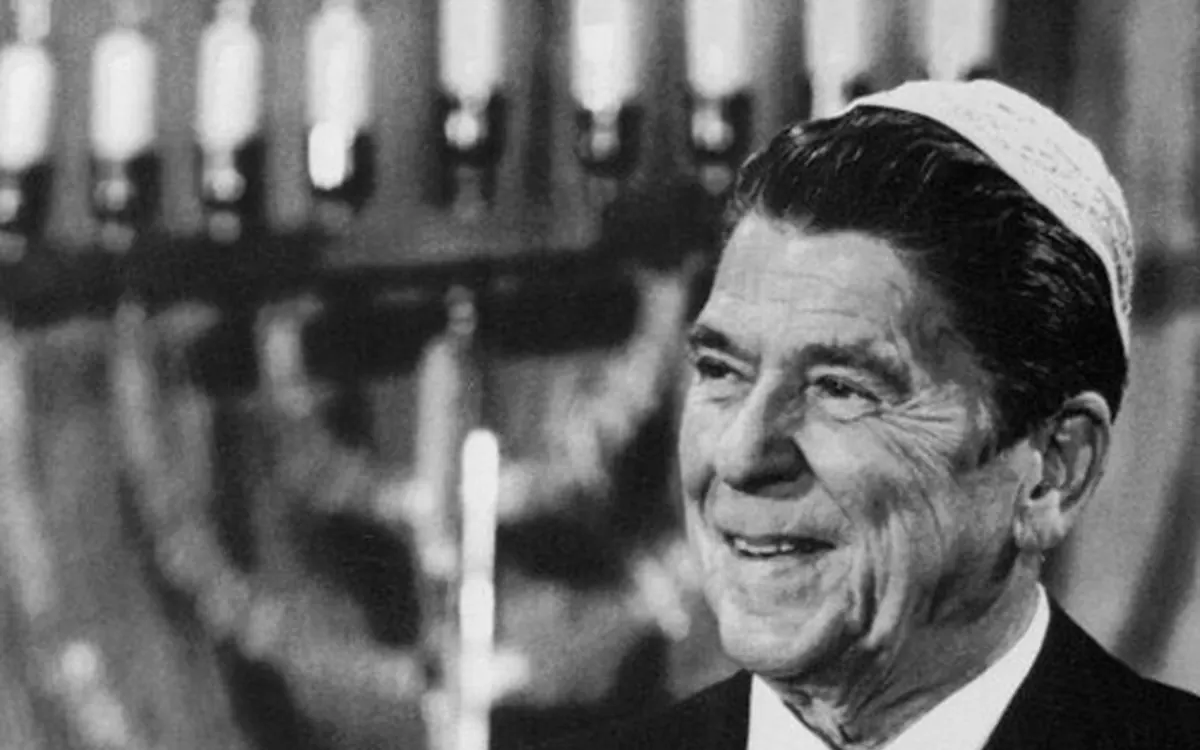
As we circle in toward the end of season five, it is time to check back in with American Jewry. The 1980s were a time of economic and social security for the Jews of the US, and the overall growth of their religious communities was boosted by a surprise source - the kollel. It was a decade in which the assumption that Jews vote Democrat was first really challenged, and in which the early rumblings of antisemitism in the public sphere could be felt once more.
About this episode
Thoreau on disobedience, and Orwell's 1984, who controls the past controls the future. Rav Mike checks back with American Jewry a decade after the season's start, warning that the podcast as we know it may end with season five and give way to a different season six, narrative therapy for the nation. The core structures are the movements. The conservative movement enjoyed a sunset effect in the eighties, its egalitarian leadership, Ramah camps and USY powering a rich community life built on peoplehood and a bright-eyed Zionism, even as after-school Hebrew education was a disaster and the bowling-alone disintegration loomed on the horizon. The running joke was that a successful conservative Jew is an Orthodox one, and today, Rav Mike adds, one living in Israel.
The reform movement looked similar, its informal prayer groups serving as surrogates for the eroded extended family in the era of latchkey kids, but its camps were driven by an ethos of social justice that would become Tikkun Olam rather than peoplehood. On the front lines of intermarriage, whose rate had risen nearly fivefold since the fifties, the Central Conference of American Rabbis passed its 1983 resolution on the status of children of mixed marriages, accepting the child of a Jewish father as Jewish and overturning two thousand years of matrilineal descent. The deeper shift was the birth of an assumption that Jewish identity is something one chooses rather than something one simply is, with the bar set progressively lower in the decades to come.
Orthodoxy, written off as institutional decay by the sociologists of the fifties, proved the reports of its death exaggerated. The surprise of the eighties was the consolidation of a right-wing religious camp around the kolel. Rav Aron Kotler reached America in 1943 and built Beit Midrash Govoha in Lakewood, an enclave an hour from New York where married men could devote themselves to Torah Lishma, Torah for its own sake, giving up profession and status as a religious elite guided by Rav Chaim of Volozhin's ideal. His old-new model survived and became a template, growing from twelve students to thousands, and the community kolel carried it across the American countryside as in-reach, a colony turning committed Jews into Torah Jews by the force of its idealism.
In politics the Jews voted Democratic in the seventy percent range from 1928 onward, earning like Episcopalians and voting like Puerto Ricans, cemented by FDR and the boomers of the civil rights era. Yet a Jewish vote mattered through the megaphone effect of swing states, as the Florida hanging chads of 2000 showed, and through Jewish money, which by 2016 supplied half the Democratic Party's funds. Against this tide rose the neoconservatives, Norman Podhoretz turning Commentary into a platform with his broadside is it good for the Jews, and Irving Kristol defining a neoconservative as a liberal mugged by reality. They recruited few in the eighties, since for most Jews liberalism had become a religion in its own right, though Reagan took thirty-six percent in 1980 and appointed many of them to power.
The season's darker note is anti-Semitism, which takes the form the society of the day requires. In 1983 Earl Raab analyzed commodity anti-Semitism, a hatred useful as an instrument rather than held as sacred belief, and named its chemistry: the target factor of how prone the population is to hostility, the trigger factor that activates it, and the control factor of the civilizing forces that inhibit it even when triggered. In America the control factor, allegiance to law and the ideal of individual freedom, is the chief safety. Raab warned that educated people who lose that allegiance become the most sophisticated ideologues of commodity anti-Semitism, a chilling word today when anti-Zionism has become a litmus test within progressive politics and the veil to anti-Semitism is thin.
Key ideas
- The conservative movement enjoyed a sunset heyday in the eighties, its peoplehood and Zionism powering a rich community life.
- The 1983 CCAR resolution accepted the child of a Jewish father, overturning matrilineal descent and framing identity as a choice.
- Reports of orthodoxy's death proved exaggerated, and the kolel consolidated a right-wing religious camp around Torah Lishma.
- Rav Aron Kotler's Lakewood grew from twelve students to thousands, and the community kolel carried the model across America as in-reach.
- American Jews voted Democratic from 1928 onward, while the neoconservatives asked whether liberalism was good for the Jews.
- Earl Raab's commodity anti-Semitism names a hatred useful as an instrument, held in check chiefly by allegiance to law and freedom.
Chapters
- 0:00 1984; who controls the past
- 2:19 Checking in a decade later
- 3:25 Season six; narrative therapy
- 7:43 The conservative heyday
- 10:03 Reform; social justice and surrogate family
- 13:27 Intermarriage; the 1983 resolution
- 16:48 Orthodoxy reported dead
- 22:11 The kolel; Rav Aron Kotler
- 24:30 Torah Lishma in Lakewood
- 28:52 The community kolel; in-reach
- 31:02 Jews and the Democratic vote
- 34:21 The megaphone effect and Jewish money
- 37:50 The neoconservatives; is it good for the Jews
- 41:09 Reagan and the Christian right
- 43:30 Commodity anti-Semitism
- 44:38 Target, trigger and control
Who, where and when
People
George Orwell, Rav Aron Kotler, Rav Chaim of Volozhin, Norman Podhoretz, Irving Kristol, Earl Raab, Ronald Reagan, Milton Himmelfarb
Places
Lakewood, New York, Florida, Washington
Texts
Orwell's 1984, The 1983 CCAR resolution, Commentary magazine
When
1943 CE: Lakewood founded, 1980 CE: Reagan takes 36 percent of the Jewish vote, 1983 CE: the patrilineal descent resolution, 1983 CE: Raab on commodity anti-Semitism, 2000 CE: the Florida hanging chads
Read the transcript
Disobedience, said Henry David Thoreau, is the true foundation of liberty. The obedient must be slaves. All I can add to that is don't you try and tell me what to do. I'm Rav Mike Foyer, and this is The Jewish Story. Season 5, Episode 21, American Jewry, circa 1984. You know, when I listen, I hear a lot of people talking about the future with fear these days. And I get that. Things are really uncertain. But no matter what forms of anxiety my adult life might offer, there's something unique about the terror of childhood. And when I look back on being a kid, my fear of the future focused on the year 1984. Now, I was only 10 in 84, but my precocious older brother had read the book of that name. While he may not have grasped it to its awful depths, he certainly got enough out of it to scare the daylight out of me.
I remember watching the ball drop on New Year's Eve 1984, terrified that the world was going to end. I mean, after all, Reagan was president, and the Soviet Union was the evil empire at the time. And when my 6th grade class turned a string of classrooms into a participatory art nuclear protest, it wasn't just an expression of my hippie teacher's ideals. It was a reflection of very real fear. And God bless my brother, I was feeling it that night. And furthermore, with all the Holocaust education I had absorbed by age 10, I found it not at all difficult to imagine how our government could suddenly take over life and make everyone think their way. Now, I have read the book since, actually more than once.
And despite being more than 30 years older than I was in 1984, its central messages become more frightening every day. And I offer you two quotes that strike me particularly hard as the creator of the Jewish story. Who controls the past controls the future. Who controls the present controls the past. That one's been guiding a lot of discourse around the issue of destroying historical monuments. And the next one is the one that really gets my goat. If thought corrupts language, language can also corrupt thought. Now, you may be wondering, why am I talking about 1984? Well, like I said, we began this season in the year of my birth, 1974. And it's almost time to bring it to an end. And I want to do that basically by checking back in with American Jewry a decade later in the mid-80s.
Now, I feel the need to bring some wholeness to this season over the next couple of episodes. and not really just season five, but in reality, I'm ready to wrap up the Jewish story as you know it. You have been warned. I've been telling this story of the past for five seasons, and I pray God I've made my contribution to shaping our present identity to a form that fits the future I'm dreaming of, as I've told you so many times. But history has to end sometime. And it looks like for the Jewish Story podcast, that might be the end of season five. But I'm not giving up. Have no fear. There will be a season six, but it's going to be a bit different. By 1984, we touch the years which I actually lived and remembered.
And as I move forward, I want to start thinking about the future in light of the past that we've been laying out for the last five years. Call it a goal of using the past to tell a story of the future, inspiring enough to get my own present tush in gear, building it. I mean, that's what I do in my personal narrative counseling work. I talk to people about their past and future together in order to generate a clarity of vision and a focus on action in the present. And right now, I feel ready to start doing that for real on the national scale. Season six is when I take the gloves off in my fight to do narrative therapy for my nation. And I'm going to need your help. First of all, I need to know whose vision is inspiring you today.
Whose vision actually challenges you to think? I'm aiming to collate a conversation. I want to bring together as many voices as I can, which will allow us to start to see the outlines and topography of how the Jewish story looks today. So, practically speaking, send me names, people. Send me the names of the people you want to speak to. And by the way, send me the questions you want me to ask. I hope you feel I've been honing my interview skills. and I have gotten quite a bit of helpful and specific feedback from the folks out there. You can always send me your thoughts, robmikefoyer at gmail.com. Happy to hear all suggestions and questions. Now, I do want to say I'm not going to give up on telling the story of history in Season 6, but I'm thinking about taking it in different directions.
For instance, how about this? Identifying pieces of the present, which are shaping the Jewish story and unpacking their story from the late 80s onward. An example, I want to tell the story of the separation barrier that scars the land of Israel here. And I want to do it by tracing it all the way from the outbreak of the first intifada in 1987 until today. And why am I telling you this? Because your homework is to look at the world around you and ask, Mike, how did this come to be like that? Hey, Mike, why are these people doing that? where did those things come from? You get it? Last but certainly not least, I always wanted to be a thought leader when I grew up. And seeing as I'm going to be just about 50 years old when season six ends, I guess there's no better time to grow up than the present, right?
I hope this sounds exciting to you because it sounds absolutely terrifying to me. But I know all I need to succeed are two things, God's help and your support. Now, I'm always praying for the Jewish story to end well, and I hope you are too. But aside from grace, what I really need to make Season 6 happen and to make it really revolutionary is time. And as you know, in our world, time is money no matter how you slice it. So now's the time to put your money where your ear is on. So few people are telling our story today at all, much less in a way which is honest, that can be heard by a diversity of people and that generates a rich, proud, and peaceful Jewish identity. Stories make change. Told with integrity and passion, they can unleash the energy for people and nations to remake the world in a way that reflects our values and visions.
And that's what I'm aiming to do with The Jewish Story. And you can help make it happen by freeing my time to focus on what really matters. For those of you who are already patrons of The Jewish Story, God bless you for your partnership up until now. I hope you'll stay with me through Season 6. If you're not yet a patron, well, go right now. Jewishstory.co, you'll see a button in the upper right-hand corner. Click on that. You can become a patron with a little bit of per-podcast support. And by the way, every effort counts. Don't be shy to join the $1 club. And if you're already in the $1 club, consider doubling down to $2 for the coming season. Now is also a great time to get a dedication on the calendar for Season 6.
If you have a birthday, a yard site, an anniversary, or any other special occasion, be in touch. Rav Mike Boyer at gmail.com. I'll let you know the details of how you can make that happen. Okay, enough. This is starting to feel like an infomercial about season six. One minute more, and I'll be back in the 80s trying to sell you some Ginsu knives. I got to know if you got that one, right? Cut to tin can, can slice a tomato too. The Ginsu is so sharp, it can cut through a tin can and still slice a tomato like this. I'm just going to end by saying that Orwell's Inquisitor in 1984 gives the ultimate terrifying image of the dystopian future that we are hoping to avoid. He says, if you want a picture of the future, imagine a boot stamping on a human face forever.
And that's why it's worth telling a story which aims to set us free. And in order to keep on keeping on with doing that, While giving, like I said, some wholeness to Season 5, we're going to need to go back to America circa 1984 and check in with the Jewish story on the other side of the world. The core structure of American Jewry are the movements. Reform, conservative, and orthodox being the big three. Can't leave the Reconstructionists out there, but you know, those are the big ones. And each of them has their own history. In fact, we've touched upon some of it along the way. By the mid-80s, where our conversation now lies, conservative Judaism was followed closely by reform as the largest and most representative of American Judaism, as really they still are today, though it's a little bit more of a contested feel.
From today's perspective, actually, when I look back, the conservative movement was actually enjoying a sunset effect in the 80s, that glorious burst of energy which precedes a declining state. When I was 10 in 1984, the Ney Yashirin Synagogue, also known as the Purple Palace, was the place to be for all the Jews I knew, and it was like that in plenty of other synagogues. The emergence of egalitarian leadership amongst the conservative movement in the 80s and the ongoing do-it-yourself ethos of the Jewish catalog culture we spoke about back in episode one were powering a rich community life. Now, it is true that after-school Jewish education was nothing short of disastrous. Never forget that two generations of Hebrew school did what a thousand years of missionaries couldn't accomplish.
But nonetheless, Ramah Summer Camp and the USY Youth Movement gave religious life within the conservative movement a real and youthful energy. The foundational element in conservative Jewish education was peoplehood. By the time I was 10, it had evolved into a bright-eyed and enthusiastically optimistic Zionism, which also offered a vision, albeit one that was threatening to the liberal suburban life which sponsored it. Hence the fact that I'm here and my home is far away. When I was a camper at Camper Mouth, the running joke amongst the staff, which of course was the elite of the conservative movement, was, what do you call a successful conservative Jew? Orthodox. and today I might have added living in Israel.
Now, there is progressive communal disintegration on the horizon for the conservative movement, driven in no small part by the larger American social trends, what's called the phenomenon of bowling alone. Not to mention a cooling, should we call it progressive cooling, of Zionist passion, but the 80s were unquestionably the heyday of the conservative movement. In some ways, the reform movement looked much the same at this point. Their sanctuaries and their temples may not have been as full, except on the high holidays, but the momentum of the radical havurahh-type Judaism that we spoke about, again, back in episode one, had evolved in the reform movement into all kinds of less formal prayer and gathering spaces, but no less vibrant amongst reformed Jews.
Participatory prayer and learning groups are, in fact, still the backbones of many reformed communities, egalitarian, informal, discussion-oriented, and even often peer-led. And those groups smaller communities within the larger temple structure were described by one rabbi as quote surrogate for the eroded extended family And now this was crucial in the 80s, in that era of latchkey kids. Now, there's another essential difference between the reform and conservative experience of the 80s, and it's played itself out today. The reform movement wasn't outright rejecting Zionism, as it had in its origins, but their education, their camps and youth movement were driven far more by an ethos of social justice, which would evolve into the world that we know today as tikkun olam, aiming to repair the world, far more by that than one of Jewish peoplehood.
That makes sense not only historically when you look at the arc of the reform movement, having rejected the Jewish national embodiment for a purist religious stance really from the outset, but it also makes sense sociologically. because the reform movement in the 80s was the only movement really that saw itself on the front lines of an issue that plagues Jewish sociologists and community leaders more than any other except perhaps anti-Semitism. And that is intermarriage. The rate of Jews who married non-Jews increased nearly five-fold from the 1950s to the 1980s in America. I'm going to say that again, five-fold. And while the precision of that number may be somewhat contested, I mean, you know, lies, damn lies, and statistics after all, the reality that reform rabbis were facing in their congregation was not a matter to be disputed.
And that's why on March 15, 1983, the Central Conference of American Rabbis, the reform movement's body of leadership, passed a resolution entitled The Status of Children of Mixed Marriages, which stated, quote, We face today an unprecedented situation due to the changed conditions in which decisions concerning the status of the child of a mixed marriage are to be made. What does that really mean? It means that they've made a decision in committee to overturn at least 2,000 years of Jewish law and tradition and declare that a child born of a Jewish father and a non-Jewish mother was indeed a Jew. If you're unaware, up until this point, all codified Jewish law had followed what's called matrilineal descent, that a Jew is a Jew because they're born to a Jewish mother.
Now, the socially progressive elements of the reform movement had found common cause with the more traditionalist Jewish survival elements in passing this resolution. What do I mean? Many people present felt that it was simply biased to accept the child of a Jewish mother and a Gentile father as Jewish, while rejecting the child of a Jewish father and Gentile mother. It's just not fair. And everyone present could see that the rising intermarriage rate made it imperative to somehow expand the balance of Jewish identity. Otherwise, who were the people these rabbis were looking at in the pews? Technically, the consequence of this resolution was no different than the instruction given to rabbis in the CCAR's 1961 Rabbi's Manual.
There it says, Reform Judaism accepts a child as Jewish without a formal conversion if he attends a Jewish school and follows a course of study leading to confirmation. Meaning, so long as you stay in our educational system, we consider you a Jew. There was, however, a difference. First of all, this was a public resolution endorsed by a leadership body. taking not only a public stance, but giving birth to fundamental assumptions held by many Americans, and certainly progressive Jews chief amongst them, which is that Jewish identity is now something that one chooses, rather than something one simply is. Now true, at this stage, nominally, that choosing was meant to be done through significant religious acts of identification, staying within an educational structure which was supposed to foster commitment to Judaism and the Jewish people.
But the educational structure of Reform Judaism was hardly thriving in the 80s. And the bar is going to get progressively lower, pun intended, in the coming decades. To the point where today, choosing identity based on an inner conviction and rejecting the right of anyone else to demand that I conform to their definition of Jew, woman, or anything else for that matter, is the front line of many American battles. If I say to you, what makes you a Jew, you can say back to me, what makes you such a bigot? Okay, conservative reform, we're checking in here. What about orthodoxy in the mid-80s? Now today, the idea of a thriving American orthodoxy surprises no one. I mean, from Joe Lieberman to Ben Shapiro, we've had decades of high-level political and cultural exposure, and the professions have been home to large numbers of identifiably religious Jews for even longer.
Those trends were well underway before the 80s. But, again, here in the 80s, I believe we may be looking at a turning point. Back in the 50s, it became fashionable to speak about a life committed to Torah and mitzvot with maybe a bit of nostalgia bound up with the old country, but largely as an absurdity in the new American existence. Those Jewish sociologists who still serve today as the role of prophets amongst non-Orthodox Jews had already written Orthodoxy off in the 50s. Marshall Splare, for instance, wrote in 1955 that the history of American Orthodoxy can, quote, be written in terms of a case study of institutional decay. Notice, he's already writing the history. The live story is over in his eyes.
Nathan Glazer, famed sociologist and son of the Orthodox world himself, was less dire, if no more kind, condemning Orthodoxy as, quote, bereft of any sense of spirituality which can speak to the modern world, and thus irrelevant if still alive. But from today's perspective, and even from the perspective of the 80s, it appears that the reports of Orthodoxy's death were greatly exaggerated. There was a core of Jews who, upon arrival in America, never wavered in their essential commitment to Torah, though many were forced by poverty and social realities into violations of many mitzvot, many commandments. It's common wisdom, by the way, that what's called the Hashkamah Minyan, the early morning Shabbat service, I mean, who other than strange morning people like me would get up at 6.15 to go to shul on the one day of the week that you don't have to work.
It's common wisdom that the origin of that Hashkamah Medin was actually men who had to work on Shabbat in order to keep the jobs they needed to feed their families, but nonetheless insisted on praying before they went and violated the Sabbath. Now, religious life in America has always been about compromise. I mean, even more so than religious life on some level is. Anyway, that's a conversation if you're interested in having. But the challenges of immigration, the realities of the American capitalist economy and the unprecedented opportunities offered through hard work in America made the push and pull factors to break the law enormous. Even as the economy evolved into a two-day weekend and the immigrant generations gave way to more secure and professional children and grandchildren in the 60s and 70s, America continued to offer another temptation to religious life and that was integration.
and we can see that as compromise of a different scale. America is socially and culturally and politically different than anything the Jews encountered over 1500 years of European history. So it's not surprising that the various stances within Torah which attempt to integrate Jewish and non-Jewish thought or even religious devotion with what's called the diverse cultural and intellectual streams flourished here in America. Ideas like Torah of Avodah, right? Engagement in the Torah and engagement in the larger world, be it work or otherwise. Torah Umadah, the intellectual struggle to reconcile or at least give happy coexistence to the wisdom of the Torah and the scientific perspective. These became intellectual and even spiritual bases for what's known today as modern orthodoxy.
Personalities like Rav Moshe Feinstein and Rav Soloveitchik and institutions like the Yeshiva University all helped this modern orthodoxy survive the challenge of the 50s. And with the 60s and 70s, new energy started to flow into the community. In part from what's known as the Baal Tshuva movement, the newly returning religious movement, a phenomenon that perhaps we'll touch on in more depth next episode when we get to Chabad's story in America. And these were also the decades of the move by Jews into the suburbs and the professions, and modern Orthodox congregations were increasingly including wealthy individuals who could afford to invest in the community. But the surprise element of the 80s for Orthodox, one with an impact ultimately on all American Jewry, and from today's perspective, on America as a whole, was the consolidation of a right-wing religious camp.
Now when I say right-wing, I mean that certainly in the 80s, primarily in terms of their halakhic legal and social outlook. But since the Reagan years, the 80s, were also a turning point in the American culture war, inevitably politics is going to get into the mix as well. And the driver for this new element in American Judaism, American Orthodoxy in particular, was an institution known as the Kohlel. The word kolel is quite old. Its roots really are in a collective meaning. And for centuries, or more, it referred to communal bodies of one type or another. In the 19th century, that application began to narrow, and the definition came to rest on a new type of institution, a Beit Midrash, a study hall for Torah, in which married men could receive a stipend to continue their Torah studies past the age when both yeshiva bachars, single young men, had to go out and get married and get a job.
In 19th century Europe, even such elite, subsidized learning in a kolal had to be somehow an investment by its supporters. And so the early kolalim were largely oriented around creating community rabbis. But that model changed when Lithuanian Rosh Yeshiva, renowned scholar and war refugee, Rav Aron Cutler, arrived in America and established the Beit Midrash Gevoa in 1943 at the height of World War II. When Rav Aron reached America, he saw not only the same land of opportunity many of his immigrant brothers and sisters saw, but he also encountered a spiritual desert. His issue was not primarily with what we know as the liberal movements, the ones that had self-consciously broken away from the yoke of Torah, or in the case of the conservative movement in 1943, was slowly but surely moving to do so.
The Rosh Hashiva took grace exception to modern orthodoxy, actually, because its ideal of integration between American values and professional life and Torah appeared downright dangerous in his eyes. And the generally relaxed modern orthodox approach to observance and law was clear proof that it was doomed to failure in Rav Aron's eyes. in order for authentic Torah Judaism, as he called it, to survive in this new land, an old new model was required. Alt Noy that old new model one which was somehow both purist and yet activist Rav Aron dream was to create a generation of American Jews who were kol kulo Torah entirely devoted to Torah, willing to, in fact, sacrifice everything, professional and cultural advancements, material and social status, everything for the sake of learning Torah.
Now, I called it the old new model because just like Herzl's Zionism, which aimed for a return and rebuilding of the old Noy land, the old new land, the Rosh Yeshiva's vision was an innovative response to a present reality, which reached for elements of tradition to reconfigure them to meet the needs of the present. Now first, he needed a ghetto. Oh, sorry, an enclave. That's why the Beit Midrash Bo was built in Lakewood, near Jersey. Hence, if you know it at all, you probably know it as the Lakewood Yeshiva. At the time, Lakewood was more than an hour's drive from the Jewish centers of New York City, which meant his young scholars could study distracted only by the most minimal contact with the outside world.
And the power of that physical separation paled in comparison to Rav Aren's educational philosophy. Following the teaching of Rav Chaim of Voloshen, the original Lithuanian Yeshiva head, whose story, by the way, you can go back to Season 2, Episode 19, to hear. Always worth doing some review. So, following the teaching of Rav Chaim, Rav Aaron preached a radical stance on Torah Lishma. The Torah Lishma is an ideal that's been held up by Jews since the time of our sages. It can be translated roughly as Torah for its own sake. But what that means and the behavior its fulfillment might require has been a matter of debate literally for millennia. To Rav Chaim Velozhin and Rav Aaron Cutler, it was clear what it meant.
It meant that Torah learning was the supreme ideal to be pursued purely for its own sake, not toward any other goal, professional, financial, or even application to practical Jewish life. That's why Lakewood, the yeshiva there, didn't aim to be a rabbinical seminary, intent on moving its graduates toward pulpits or educational positions. On the contrary, the students were encouraged to devote themselves purely to learning for as many years as they possibly could. In order to do so, they were fired by an ethos of self-sacrifice, giving up everything that the world around them told them which was important. And a passion for Torah combined with a scrupulous focus on observance. They were the religious elite troops, if you will.
Now, many in America might have thought such an idea absurd in 1943. I mean, after all, the isolationist stance of building an enclave swam against the tide of American Jewry, who were soon to flood the suburbs post-World War II. And the ideal of Torah study with no end involved, and certainly no practical profit, flatly contradicted the American worth ethic that most Jews had adopted with a passion upon arrival. But the first American kolal not only survived and thrived, it became a model across America and in Israel as well. Now, remember, there's a parallel process going on over in the Middle East. When Ben-Gurion and religious leader Hazan Ish struck their deal to exempt the yeshiva students in the new state from a military duty, they were only a few hundred strong.
And Ben-Gurion was sure that they were the last of their kind. Today, that status quo agreement keeps tens of thousands of boys out of the army and in yeshiva, and they are the heart of a thriving sector of Israeli society built around Torah Lishma, learning Torah for its own sake. Measured in pure numbers back in America, Rav Aron Cutler's model has been an unquestionable success. He began in 1943 with 12 students. By the early 80s, Lakewood had grown close to 500. And by the way, by 2005, that number was 4,300. But there's way more than numbers at stake in this story. The real question is one of overall impact. With the continual growth of numbers of young men who wanted to join the Kolel through the 60s and 70s, it became clear that new resources were going to be required to sustain a life of Torah learning for so many young men.
And so, the idea of the community Kolel was born. Think of it as a colony of the Lakewood mothership. You take a group of families, usually a minion, right? That's 10, the minimum number of men required for a prayer quorum. You take a minion of families who leave Lakewood and settle in an existing Orthodox community somewhere out there in the great American countryside. They'll be supported by local philanthropists, one who are looking a little bit more for a return on their investment than Torah learning. They want to influence the community within which they leave. and these young men and their families have a mission. Beyond learning Torah in Omaha rather than New Jersey, that mission, as one leader of the community Kolel movement put it, was to change committed Jews into Torah Jews.
Notice, this is what's known as in-reach as opposed to outreach. They're not looking to pull in Jews from the street, as we'll see next week with the Chabad movement. They're looking to get Jews who are already committed to really get on. forward. But Moshe Sternbach, one of the leaders of the Israeli yeshiva world even today, explained it this way during a lecture in 1980 at the Johannesburg Community Kolel. He said, the young men who study in the Kolelim become models for the rest of the community. The presence of the idealism of a group of young men who give up money and prestige for the pursuit of Jewish knowledge is the most powerful statement of what Jewish values are. In the face of such models, people are forced to re-examine their own scale of values in a Jewish light.
At least they're compelled to find some time during the day when they themselves can devote themselves to Torah learning. And once these people begin studying Torah, they themselves become more and more committed to Jewish practice. It's a powerful model, and I got news for you. It works. Already by the 70s, the heirs of Rav Aron Cutler believed that his mission had succeeded. An American yeshiva world espousing an orthodoxy that rejected popular culture was an existent reality. Emboyed by the newly observant of that Baal Tshuva, the return movement that I mentioned, that orthodoxy was no longer preoccupied with survival as it had been in the 50s. It was ready to move toward expansion. To say that this change in the fabric of American Judaism made some other Jews uncomfortable is a gross understatement.
Somehow, even today, the most unrestrained hateful rhetoric I hear from liberal Jews is against the Haredim and the Orthodox. Oh, but by the way, just you wait until some of them become Republicans. The idea that Jews have always been Democrats, that Jews in fact just are Democrats, is so deeply rooted in the American psyche that even if it's not actually true, it might as well be. Jews came into American politics largely from the left to begin with, and by the time there were enough of us in the Golden Medina to matter politically, the scales were heavily tilted from the socialist politics many of the immigrants brought with them from the old world. Now, I say there was enough of us to matter, even though Jews have never been more than 3.5% of the American population.
Now, what should be an insignificant number, especially when pared down to eligible voters? Nonetheless, everyone from social activists to anti-Semites has been talking about the Jewish vote for decades. And American Jews have been an active element in the American political scene for at least, I don't know, 80, 90 years? Since the 30s, let's call it. The first great era of political activism was the labor movement, women's rights, social reforms, early 20th century. and it saw intense Jewish involvement, cementing both the perception and the reality that Jews are liberal, if not card-carrying Democrats. That piece actually was put in place forever, seemingly, during the Roosevelt era. For various reasons that lay beyond present discussion, let's just say the Jews love FDR, despite, by the way, his inaction in the face of the unfolding Holocaust in Europe.
In fact, numbers say that from 1928, right through President Joe Biden, the majority of American Jews have voted Democratic, usually in the 70% range, and identify as proud liberals. Even as Israel emerged as a foreign policy issue for American Jews in the 50s, they still tended toward Democratic presidential candidates, regardless of their perspective on the Middle East, to say nothing of what they did in local elections. this trend of Jew equals liberal equals democrat was strengthened even further by the baby boomers who were not only raised on the legend of FDR but themselves took to the streets in the 60s and 70s to fight for the liberal and progressive causes of civil rights, anti-war social freedom and even when the forces of the new left seemed to turn on them, a story we discussed back in season 4, Jews held the mainstream left and even as they entered the higher social and economic ranks of American society, a move that separated Jews from many of their traditional allies, that didn't change.
It was a mystery that many people have shattered their brains trying to understand. It led Milton Himmelfarb, sociographer and director of the American Jewish Committee's information and research branch, to declare in 1973, Jews earn like Episcopalians and vote like Puerto Ricans. Basically, the Jewish vote seems to be securely in the democratic corner. Now, a quick word on that term, Jewish vote, since it has serious potential for misunderstanding, if not downright Jew hate, the perception of Jewish power is as old as the hatred of Jews, meaning basically as old as Sinai. I'll personally never forget sitting in a bar one night in Cambridge, Massachusetts, arguing about the Middle East with some friends, and we noticed that a Syrian student was listening to us.
so we invited him to join our conversation. And right away he wanted to know why the Jews needed Israel when they controlled so many other countries. In the course of trying to tease out that statement, we asked him how many Jews he thought there were in the world. His first answer was in the order of a billion. We managed to pare him down to hundreds of millions. And, of course, once the astonishment and laughter passed, an argument broke out amongst the Jews. No, no, 12.5 million Jews. No, there's 14 million Jews. But aside from the perception of Jewish power, the idea that the Jewish vote is crucial to American national politics does have quite a bit of truth. Some of that is due to the Jews' disproportionate representation as officeholders and activists.
And even more of it is because of what's known as the megaphone effect, how our voices have been amplified by the Electoral College. Now, the Electoral College, in general, magnifies the power of any given state to swing a presidential election. And despite being 3% or so of the populace, many of the key swing states which help determine presidential elections have a very high percentage of Jews. The most dramatic example I can offer of the consequences of that geographic distribution actually came back in 2000. You're too young to remember this. Please hang up now. I can't bear it. If you recall the saga of the Hanging Chads, that contested election between Al Gore and George Bush that went all the way to the Supreme Court.
We've all heard about how the chads get dislodged, but sometimes do chads only get dislodged part way like so that they those hanging chads If somebody for example were to put the stylus through the hole next to Al Gore name and then they're making up their mind whether they want to carry through with that and actually vote for him, and then decide, you know what, I'm a Democrat, but I just don't like this guy, and they pull the stylus out, Could that leave the kind of indentation you're talking about? Depending on if he comes back and touches it hard enough, he may unknowingly have dimpled it. It turns out that there were enough elderly Jews in Florida who misread their ballot and voted for Pat Buchanan instead of Al Gore that they, according to many, created the electoral deadlock which eventually made George Bush president.
Now, beyond Jewish activism and their concentration of population in swing states, is, of course, Jewish money. And before you start telling me that the power of Jewish money is just an anti-Semitic trope, realize that estimates say that in the 2016 presidential race, Jewish donors contributed 50% of the funds of the Democratic Party. Despite these overwhelming trends, a new type of Jew began to emerge in the late 70s and to take a highly public profile in our period of the 80s. Now, we introduced these Jewish neoconservatives back in episode one of this season. I told you we were going to do a little bit of review with the conversion of Norman Poderitz from being son of the Jewish old left to scion of the new right and his transformation of Commentary Magazine into a neoconservative platform.
Poderitz had dared to break the mold when he began to attack what he called left-wing permissivism and progressivism, feminism, homosexuality, affirmative action. But, for present purposes, the title of his 1972 broadside, with which he launched this editorial campaign, says it all. He asked, is it good for the Jews? Potts wanted the Jews to wake up in the early 70s and see that not all was well in the Golden Medina, and that if Jews didn't start considering their own communal interests at the ballot box, they would soon find themselves in a precarious position. Now, few rank and file Jews heard that call. Not in the 70s, certainly, and maybe a few more in the 80s. But Potteryx did become a leader of an intellectual movement which was soon to have real political power.
As Jewish journalist Irving Kristol, dubbed the grandfather of neoconservatism, put it, a neoconservative is a liberal who has been mugged by reality. A neoliberal is a liberal who has been mugged by reality but has refused to press charges. And not only did Crystal and company feel assaulted, they were ready to throw the book at anyone who opposed them. Many, like Crystal, had been communists in the old world, the City University of New York, back in the 20s. But now when they looked around at America and the world being promoted by their political heirs, they were frightened by what they saw. He, Potterets, and other neoconservatives waived a journalistic and intellectual campaign to recruit Jews into the Republican Party.
Their argument basically was that the Republicans promoted social and economic policies that would benefit the Jews, and were more supportive in general of the military, a stance bound to be more helpful to the state of Israel. But, as should be obvious from what I said previously, they were fighting a losing battle in the 80s. Pateritz himself said that for most American Jews, liberalism had, quote, become more than a political outlook. It has, for all practical purposes, superseded Judaism and become a religion in its own right. And in words which echo quite strongly today, he added, for many, moving to the right is invested with much the same horror that their forefathers felt about conversion to Christianity.
Professor Leonard Fine, co-founder of Moment magazine, declared, politics is our religion. Our preferred denomination is liberalism. While on the other side, one conservative commentator snapped that the only difference between Reform Judaism and Democratic politics is the holidays. So you can see that the trends, which today people want to call JEGZIT, right? That call for the Jews to exit the Democratic Party and to join the Republican are hardly new. And the split between the politics of the religiously liberal and the Orthodox, which are a cause of so much consternation in certain Jewish circles today, was already growing with the rise of the new orthodoxy we discussed earlier. By 1990, a survey of the Jewish community confirmed the trend, saying that the more religious and traditional a voter, and even moderately so, the less likely they were to embrace that American Jewish liberal package.
This being said, pundits have been predicting a mass exodus of Jews to the Republican Party ever since Ronald Reagan garnered an impressive 36% of the Jewish vote in 1980. In fact, the best Republican showing since 1916. And ever since then, they've been consistently wrong. I mean, we'll see what 2024 brings, but I wouldn't hold my breath. Despite the lack of mass movement in the 80s, President Reagan did appoint many of these Jewish neoconservatives to senior positions, and their influence on policy went well beyond what any of them could have done in the voting booth. But, as we've seen many times this season, Reagan was not universally supportive of Israel. He objected to the bombing of the Iraqi nuclear reactor, he sold advanced weaponry to Saudi Arabia, and harshly condemned Israel in Lebanon.
Perhaps even more significantly, Reagan era was also the era of the birth of the modern Christian right. And, no question, if forced to choose between rejecting Reverend Jerry Falwell's moral majority and supporting Israel, or even Soviet Jewry, most American Jews didn't have to think twice. They detested Reagan's domestic policies, as well as those of George W. Bush, who succeeded him. And by the 80s, it was clear that the American Jewish majority was way more pro-choice than pro-Israel in the voting booth. I know this has been somewhat diffuse, but one last word on the state of affairs of American Jewry in the mid-80s, with an eye toward the future meaning today. Because, love it or not, the story of Jewish history can't ignore the question of anti-Semitism.
Now, if you looked around, you'd probably feel, rightly so, that Jew hatred had functionally disappeared in America in the 80s. And in my eyes, in general, the Jews had never lived in a society less inclined than America to hate them on the personal level. But anyone with an appreciation for Jewish history knows that personal hatred of Jews is only one expression of the danger which surrounding society poses. Because anti-Semitism tends to take the form to the needs of the society of the day. And in 1983, Earl Rabb, again, Jewish sociologist and community activist, published an analysis of what he called commodity anti-Semitism. In my eyes, today it sounds not only prophetic, but downright chilling.
Send me an email, robmikefoyer at gmail.com, and I'll share the link. To Rabb, a commodity in this sense is something which, under certain circumstances, is instrumental and therefore useful, as opposed to a sacred belief or a piece of identity which one would never give up or trade on the market. Meaning that the danger of a new anti-Semitism in America isn't actually alleviated by the fact that aside from a small percentage of hardcore haters, Americans don't hold essentially anti-Jewish beliefs, on the contrary. And in fact, Rab points out that the basic elements of chemistry of Jew hatred are no mystery and potentially present within America. He says there's the target factor, meaning the raw susceptibility of the Jew to become a target.
How negative is the general's population attitude toward Jews? How prone are they to become hostile? Or, in fact, how much are they willing to sit neutral while others are? In Rab's Day, one survey asked American voters how much of an issue it would be if a candidate said that they held anti-Jewish beliefs. 30% said it was no issue at all. After the target factor is the trigger factor. What are the precipitating set of events which can turn not only passive anti-Semitism, but even neutrality into an active state of anti-Jewish sentiment? And last, but certainly not least, there's the control factor. What's the strength or weakness of the civilizing elements which inhibit activation of anti-Semitism even when it's triggered?
Meaning, how much will people act on these beliefs and how much power does society have to stop them? Now, for two decades after the Holocaust, anti-Semitism in the public sphere in America was non-existent. But as we've seen during the upheavals of the 60s and 70s, when, by the way, the control factor was deeply shaken in America, that silence was broken. Just recall the anti-Semitic poetry recited aloud on a New York City radio station by a child during the Oceanside Brownsville strike we spoke about back in Season 4, Episode 3. Rob wasn't trying to build a mountain out of that molehill. He was trying to wake up his fellow Jews to the possible dangers on the horizon, and he was against the naivete of his community.
much of which, even then, was based on that old Eastern European assumption that, quote, no enemies to the Jews on the left. The key point of Rab's analysis was that in America, the control factor, meaning how much allegiance to law and the ideals which it embodies, is there? That's the most important safety factor for American Jews. He points out that the well-known parallel between rising education and falling anti-Semitism something which is universal in America, with the exception of the African American community, that parallel is rooted in the idea that Americans, the quality of a life which Americans cherish more than any other is that of individual freedom. And surveys show the more educated, the more they cherish freedom.
That should strike you as somewhat problematic in light of today's trend. Because history has shown that if the educated lose their sense of allegiance to society, they are doubly dangerous, often becoming not only opponents of the control society exercises, but the most sophisticated ideologues of commodity anti-Semitism. Because even if you don't hate Jews yourselves personally, it's a hatred that can often be treated for political power. And I think, looking around today, it's beyond question that within progressive politics, anti-Zionism has become a commodity, almost a litmus test for entry. and that the veil between anti-Zionism and anti-Semitism is exceedingly thin. Now, I hate to end on such a note, but like I said, this was going to be a bit diffuse and we're still in the middle of the story.
So stay tuned, because as always, the best is yet to come. I want to thank some folks before I sign up. Thank the folks who give their hard-earned money to make this show happen, keep it free and widely available. I want to call on you to join them once again. You can go to my website, jewishstory.co. In the upper right-hand corner, you'll see a button that says be a patron, click on that to give a little bit of per-podcast support. I want to thank the Land of Israel Network. That's thelandofisrael.com. They're building a center for global transcendence in the heart of Judea. I want to thank the Pardes Institute, pardes.org.il, for throwing the doors of the Beit Midrash open as wide as possible. And I want to thank you for joining me.
I'm Rav Mike Poyer, and this is The Jewish Story.
More from Season 5
TJS S5 Interlude Interview with Daniel Gordis
Menachem Begin has been part of our exploration of the Jewish Story since the uprising against the British back in 1944, and the Lebanon War was the last...
Play Episode
TJS S5 Interlude - Jerusalem Day with Rav Aaron Leibowitz
Jerusalem Day (Yom Yerushalayim) is a time when past and present come sharply together, and have the potential to define our future. Social activist and former Jerusalem city...
Play Episode
TJS S5E22 Soviet Jewry - the end game
Here is the third and culminating episode in a story that we have been following since season four. The Eighties saw a welding together of American Cold War...
Play Episode