
TJS S6E9 Boundary issues part V
Uzi Dayan was national security advisor to both Ehud Barak and Ariel Sharon, helping them navigate the stormy waters of the Camp David summit, the Oslo war and Operation Defensive Shield. Through it all, he labored to build his vision of a separation wall on a solid political foundation.
About this episode
There are no constraints on the human mind and no walls around the human spirit except those we erect, said Ronald Reagan, and Rav Mike turns to the wall itself with a question that has been with him from the start. Why would God bind Am Yisrael in exile with an oath not to come up to the land like a wall, and what were the sages so worried about. A biblical worldview embraces the power of imagery and of hidden realms of consciousness and morality, the narrative topography on which our lives play out. He is not sure what the image forbids, only that we must heed the warning or be prepared to pay the price, for an oath can be loosed and even broken, yet there is always a cost.
When it comes to the sages he can say more. Exile shaped a worldview that looked askance at human power, teaching that the mighty one is the one who conquers his own inclination, a safer instruction than any display of force. Two thousand years of being the object of power rather than its subject deepened this, as did reflection on our own story, where a sovereign Israel was rarely a shining example and where national security always rested on spiritual security. Power corrupts, people and societies alike, and yet holding any kingdom requires wielding power, often aggressively. So the Jews seemed caught in a bind, either stay in exile and suffer or seize power and risk corruption, collapse and later exile, and they chose to pray and wait rather than come up like a wall.
Rav Mike names the original sin of Zionism, the voice that says my strength and the power of my hand made all this wealth and glory. When we lose the sense of partnership with God, with reality, with the people around us, we risk the arrogance of believing we hold the world up alone. The Torah places the cure right beside the sin, remember that it is God who gives you the strength to make this might, so that the power we build becomes a power for the world and the generations. The tikkun for that primal failure is bitachon, which he strips of its modern senses of a guy with a pistol and a vest and of passive faith, and recasts as an activist trust, a stance that we are partners in the divine plan, which may demand every sacrifice and will never fail.
The last general in the story is Uzi Dayan, nephew of Moshe, a Sayeret Matkal commander and national security advisor who watched the Oslo process implode. Ehud Barak went to Camp David in July 2000 determined to force a final deal, and Dayan warned him against the take-it-or-leave-it stance, asking what happens if you fail, hearing that they would expose Arafat and insist on core values, meaning war. Dayan told him there was a bug in his plan, that the guinea pigs would not cheer if the whole lab went up in flames, and that is what happened. Arafat rejected the deal and turned to war, the Ramallah lynching seared itself into memory, Barak chased another summit at Taba under fire, and the country answered by electing Ariel Sharon in a landslide.
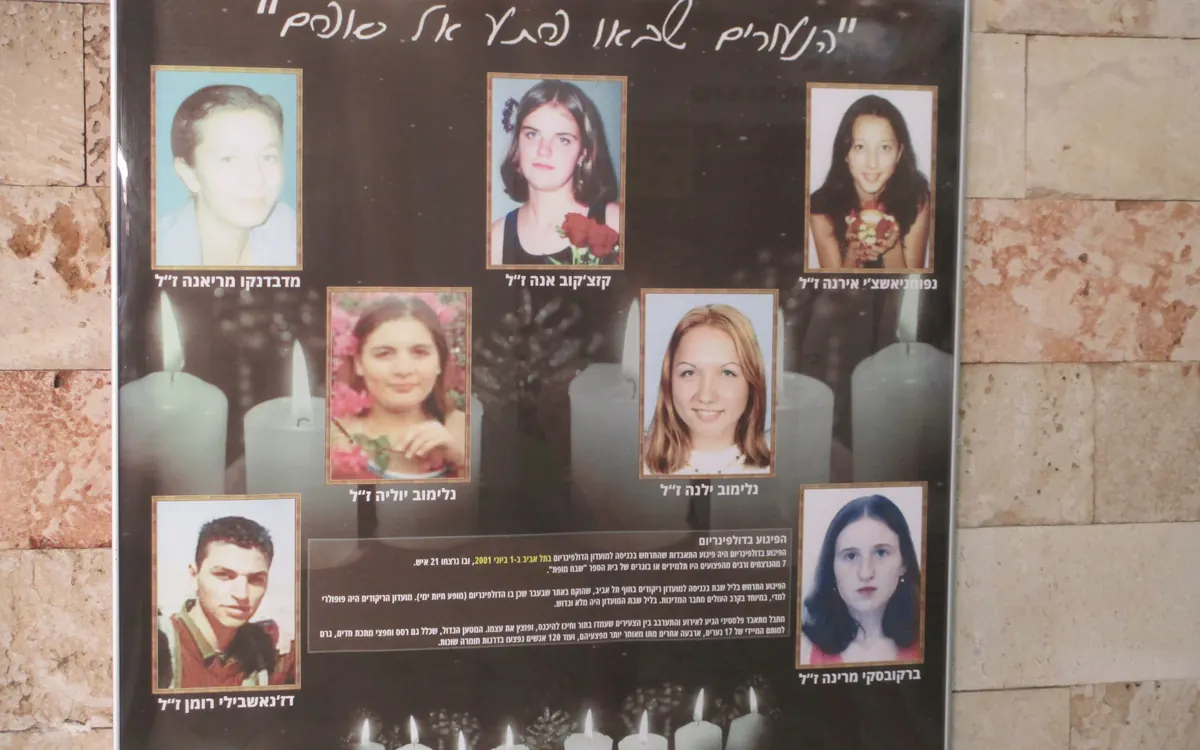
After the Park Hotel massacre at the peak of a wave that took more than fifty lives, Israel finally awoke and launched Operation Defensive Shield, a defensive wall thrown up against the suicide bombers, and the cabinet approved the security barrier on June 23, 2002, a policy Sharon had profoundly opposed. He understood that a temporary barrier becomes a permanent border, and that the line implied some Israeli blood mattered more than others. Colonel Danny Tirza, whom Arafat had dubbed father of the map, drew a route that ran mostly inside the West Bank to include the Jewish blocks. Rav Mike closes on seven days, the seven days of quiet Sharon once demanded, the length of a Shiva, and the realization that Am Yisrael has not had seven days to mourn and regroup since the Second Temple fell, so instead we built a wall to hide behind.
Key ideas
- The oath not to come up like a wall warns of a real price for seizing power by force, since an oath can be loosed yet never without cost.
- The sages, shaped by exile, held that the mighty one conquers his inclination and that national security always rests on spiritual security.
- The original sin of Zionism is the voice of my strength made this, and its tikkun is bitachon as an activist trust in partnership with God.
- Uzi Dayan warned Barak against the take-it-or-leave-it stance at Camp David, and the lab went up in flames as he predicted.
- After the Park Hotel massacre Israel launched Operation Defensive Shield and approved the security barrier Sharon had opposed.
- Am Yisrael has not had seven days to mourn and regroup since the Second Temple, so instead we built a wall to hide behind.
Chapters
- 0:00 No walls except those we erect
- 1:19 The oath not to come up like a wall
- 2:28 The sages and the fear of power
- 4:37 Exile or corruption; the bind
- 5:41 The original sin of Zionism
- 6:50 The tikkun of activist trust
- 10:07 Uzi Dayan, the soldier's soldier
- 12:25 Camp David; the guinea pigs
- 17:53 Arafat's rejection; war erupts
- 19:04 The Ramallah lynching
- 20:18 Taba under fire; Sharon wins
- 25:54 The Park Hotel; Defensive Shield
- 30:17 The barrier approved
- 37:14 Dayan's three parameters
- 41:36 Tirza, father of the map
- 43:48 Seven days of mourning
Who, where and when
People
Ronald Reagan, Uzi Dayan, Moshe Dayan, Ehud Barak, Ariel Sharon, Yasser Arafat, Yitzhak Rabin, Mahmoud Abbas, Danny Tirza, Marwan Barghouti
Places
Camp David, Taba, Ramallah, The Mukata, Kalkilya and Tulkarm
Texts
The oath not to come up like a wall, The Haaretz editorial, The Oslo Accords
When
July 2000 CE: the Camp David summit, 2000 CE: the Oslo War erupts, March 2002 CE: Operation Defensive Shield, June 2002 CE: the security barrier approved, 2006 CE: the active stretch completed
Read the transcript
There are no constraints on the human mind, said Ronald Reagan, no walls around the human spirit, no barriers to our progress, except those we ourselves erect. And I gotta tell you, they can be mighty large. I'm Rav Mike Foyer, and this is The Jewish Story. Season 6, Episode 9, Boundary Issues Part 4. The Wall. So as I struggle to bring this exploration to a close, and trust me, even though it might end today, it's certainly not over, I feel the need to raise a question. It's one that's actually been with me since we started. And that is, why would God bind Am Yisrael in exile with an oath not to come up to the land like a wall? What is the problem there? Or if you want a slightly less biblical take, we can ask, what were the sages so worried about if we did come up en masse, pushing forward behind a defensive front?
Now, I don't presume to speak for God, but a biblical worldview has to embrace the power of imagery, like a wall. And the power also of realms of consciousness and thus morality that begin at least as hidden from human eyes. Those are crucial elements of a biblical worldview, because decisions, actions, and outcomes on both the personal and national scale are often subject to these moral-spiritual dimensions that we don't always see. They're the narrative topography on which our lives play out, both as individuals and as peoples, and hence the power of kichoma as a wall. Even though I'm not entirely sure what the specificity implies, much less why it's so particularly bad that we were actually bound by an oath not to go up like one.
On some level, we just need to be willing to heed the warning. No wall. Kind of like in the words of the prophets. Or, if we're not willing to heed the warning, we need to at least be prepared to pay the price. So that's a bit of a biblical take. When it comes to the sages, I think I can offer more specific insight. Thoreau has developed a worldview in exile which wasn't exactly pacifistic. It came to look deeply askance at the use and even the very nature of human power. Now, this wasn't just the wisdom of exile. A world in which they're teaching, Ezu hu gibur, who is mighty, hakovesh et yitzro, the one who conquers their own inclinations, is a far safer and more productive instruction than any encouragement to classic displays of might.
It's also more than a product of repeated experience of what it means to be the object of power rather than its subject, beaten as others flailed around with their own societies fighting to get a grip. After two millennia of that type of abuse, Isaac Asimov's words surely could have found a place amongst the sages, because if violence isn't always the last refuge of the incompetent, it certainly usually is. The rabbinic attitude toward the exercise of power, especially on the national scale, is also the product of a considerate reflection on our story. Because as soon as you open up the Bible, you're confronted with the fact that the leaders of a sovereign Israel were not always, shall we say, the most shining examples of glory and success.
And the biblical narrative makes it abundantly clear that for Am Yisrael at least, national security always depends on spiritual security. A righteous people is close to God and therefore powerful in every sense. The Second Temple period and the three Roman Jewish wars that bracketed it only deepened that understanding in the rabbinic mind. Because no matter how much power our kingdom managed to garner, it only built toward a bigger explosion if it failed in our mission. Add to this the fact that power corrupts. We all know it. People and societies. You might call that the structural nature in the relationship between power and evil. And yet, the pragmatic reality of world history is that holding the power of any kingdom, no matter how just and prosperous, requires wielding power, often in passionate and even aggressive ways.
And so, it looks like we're in a bind. either stay in exile or risk corruption, collapse, and later exile. It's not a particularly good choice. And in fact, that type of bind binds us in inaction here in exile, caught between the rock of suffering and the hard place of potential corruption, but nonetheless convinced that to seize power and leave exile by force was the wrong choice between them, bound by an oath not to come up like a wall. So instead, the Jews prayed for redemption and suffered under the power of others. It took almost 2,000 years to decide we'd had enough. Either we decided or God did. I'll leave that one up for you to decide yourself. But either way, we came up like a wall. And here I am speaking to you from the heart of the successful Zionist project, one that's been around long enough to give expression to the dreams of millennia.
It's an incredible privilege, as well as to give form to its fears. And that's where our responsibility kicks in. It's important to remember that both the Bible and the rabbinic mind do articulate a vision of just power. One in which it doesn't corrupt, rather brings life, promotes growth, and spreads the greater good. The source of breakdown in the relationship to power is a primal failure. One of thinking that we are in control. When we say to ourselves, It was my strength and the power of my hand which made all this wealth and glory. Now, dare I say, that was certainly the original sin of Zionism, our recent wall-building project. Because self-emancipation may have started with the idea that we're simply done waiting for God.
But it moved pretty quickly to, and who needs that deity anyway? When we lose a sense of partnership, be it with God, the larger reality that lays beyond our control, or simply the people around us, we always risk the arrogance of believing that we hold reality up on our own, and the dangerous and powerful freedom which that offers. Now, I've seen it any number of times in my counseling practice. On the personal level, failing to understand our partnership is debilitating. But on the national level, it's downright disastrous. Hence the fact that the solution for that sin is given right next door to it in the text. God didn't want to leave us without hope after all. It says, Remember the Lord your God.
Ki hu hanotein lecha koach la'asot chayel. Because God is the one who gives you strength in order to do all that might and accumulate that wealth. Notice, it doesn't say, forget about your hand and the strength of your own abilities. Know that everything comes to you from God. It says, know that the power that you've used to accumulate that wealth, to establish that position, to hold up that wall, that power comes to us from God. because when we know we're a partner, then we realize that the power and strength of what we build is for the world. It's for the generations. It's for God. The latest phase of the Jewish story, our return to the land, miraculous victory in war, and gradual reclamation of our sovereignty have all been fueled by the larger story, which itself, of course, is driven by a vision of a righteous people serving God and the world.
a nation of ministers and a holy people. And that requires exercising power on the personal, national, even on the global scale. And the ways in which we've done this in service of our vision up until now, I do believe are manifold and beautiful. And the ways in which we've done it in service of ourselves, in reaction to our fears and expression of our own desires are both eminently human and doing ongoing damage. And it's that damage which I believe led to the warning, whether rabbinic, divine, or both, against coming up like a wall. It's not that such a thing was forbidden, or frankly impossible, because oaths can be loosed and even broken. It's that there is an absolute price to be paid if we choose to do so.
Now, thank God, thank God, thank God, the Torah teaches us that every failure is an opening for tikkun, for a deep repair which often creates a world which is stronger than it was before it broke. And even the most primal sin can be fixed. In fact, that's really what redemption is all about. So if the original sin of Zionism is kochi v'otam yadi, that foolish sense of power and security which come from convincing ourselves that we have a wall to lean on. We don't need to step out and risk full engagement with the partnership God, the world, and other people. Well, if that's the primal sin, then this tikkun is actually quite clear. It's bitachon. Not in the modern sense that bitachon is used as security.
It's of a pretty ironic expression. I mean, bitachon used to mean trusting in God. Now it means trusting some guy with a pistol and a reflective vest. It doesn't mean that. Nor does it mean that sense of a passive faith in God's power to save. When people say, just have faith, you know, that's not exactly what B'tichon means. The tikkun, the fixing that we need for the primal failure of believing we can take all the power to ourselves and build up a wall behind which we'll be totally safe, is an activist trust, a stance that we're partners in the divine plan. Now, such a partnership may demand every possible sacrifice, but it surely will never fail. The last general I need to name as leader amongst that professional class of warriors who shaped the political geography that resulted in our wall is Uzi Dayan.
Now, in many ways, Dayan is Israel's born-on-the-4th-of-July general. Not exactly a Yankee doodle dandy. Can I call him a Yankee doodle dandy, or is that just too cheesy? He was actually born on the 4th of January, not July, but as an orphan whose father was killed in the War of Independence, and as nephew of his famous uncle Moshe Dayan, little Uzi, promised to be the Israeli's Israeli. I mean, for goodness sake, he shares a name with Israel's trademark submachine gun. And Dayan did indeed go on to become the quintessential soldier, serving in Sayeret Matkal, the IDF's most elite commando unit for more than four decades, eventually as its commander. He went on to join the general staff, holding first the central command and then the post of deputy chief of staff.
And, most critically for our story, Dayan served as head of Israel's National Security Council from 2000 to 2002 and as such was national security advisor to two prime ministers Ehud Barak and Ariel Sharon and lest we forget both themselves highly decorated generals Now, as a professional soldier with a job that also required thinking in a political dimension, Uzay Dayan was well positioned to watch the implosion of the Oslo process. The seven years that followed the initial agreement signed by Yitzhak Rabin and Nasser Arafat there on the White House lawn had been rocky, to say the least. Little peace had been achieved for Israel, and even less self-rule, frankly, for the Palestinians. Terror had not ceased.
On the contrary, Islamic rejectionists like Hamas were employing their new favorite tool of suicide bombing to devastating effect throughout the 90s. And not only did Yasser Arafat and the Oslo-created Palestinian Authority avoid condemning such murder at all costs, they often contradicted the statements squeezed from them in English later during an Arabic speech. And furthermore, it was becoming increasingly clear, at least to Israeli intelligence, that there was a significant crossover between the PA security force Israel was training and arming and those aiming to kill Jews. Meanwhile, despite the avowed intention of finally separating from the Palestinians, Israel was overflowing evermore into Yudas Shomron and Gaza.
I mean, the country was booming. Despite all the challenges, Israel had absorbed more than 900,000 Soviet Jews during the Oslo decade. And that massive influx of human capital gave birth to whole new sectors of economy and society. So just as the politicians were working as hard as they could to frame the ideological underpinnings of the Settler movement as crazed messianism, aid by the tragic assassination of Yitzhak Rabin in 1995, economic and social forces were pushing ever more Israelis toward the undeveloped so-called periphery of the West Bank, which was actually the center of the country. Nonetheless, the government signed Oslo II, another phase of the agreement, and made moves to continue ceding control to the Palestinian Authority.
But meanwhile, the roads and housing infrastructure from Jews grew by leaps and bounds. The ongoing terror, combined with redeployment of the IDF to positions outside of Palestinian population areas, meant that closure was now the tool of choice for security, finishing off the local version of separation we've been discussing. Between 1993 and 1996, the heart of the Oslo process, there were a total of 342 days of closure in the Gaza Strip and 291 in the West Bank. That's a lot of time, and not surprisingly, during that very same period, Palestinian per capita GNP declined by almost 39%, while unemployment jumped from 5% to nearly 30% by 1996. The feeling was that there would be a resolution of this pressure one way or another, either through explosion or real separation.
And you'll notice, no one was talking about sovereignty. Prime Minister Ehud Barak was elected in 1999 on a promise of peace in our times. And it's a testimony to the desire for resolution amongst the Israeli electorate that they chose him at all, despite the ongoing terror war of the late 90s. The first thing that Barak did was to execute a rapid unilateral withdrawal from Lebanon. Now, we're going to have to find some time to discuss that at length. Maybe we'll take a look at the current state of Israel's northern border in another series of episodes. For now, suffice it to say that while Israel could feel clean in the eyes of the world for having withdrawn from Lebanon, and they might hope no more soldiers would have to die in the security zone there, things didn't exactly play out as Prime Minister Barak had hoped.
The next big move in Barak's eyes was to deal with the Palestinians. And indeed, when he signed on to the Camp David Peace Summit with Yasser Arafat in July of 2000, Awud Barak was determined to finally bring the process of Oslo to its product once and for all. And he did, though not in the way in which he intended, I imagine. To those in Brock's inner circle, it was clear he was head to that summit with the intent of pulling out every stop in order to make a final deal. He had concessions that had never been offered, ideas which had never been tried, and an electorate that had given him a mandate by a healthy margin over Benjamin Mr. Security Netanyahu in his election in 99. As Brock said to the press on the tarmac before he left for Camp David, I would like to make another comment to the Palestinian leadership and people.
We will be coming to a decisive crossroads in relationship between us. The choice between us is between choosing the peace of the brave, which will put the relationship between us on the right track, between neighbors on good terms with a flourishing peace, or God forbid, further conflict that will lead to further victims that won't solve anything. I mean, I hate to be negative, but we know which one was chosen. Uzi Dayan was intimately involved in Brock's preparations for Camp David, and he later recalled a conversation with the Prime Minister where he warned against this very take-it-or-leave-it, all-or-nothing stance. When Dayan asked Prime Minister Brock whether he was so sure this approach would close the gaps in negotiation, Brock replied, I don't know.
And so Dayan asked, and if you don't succeed, what exactly will happen? Barack's response was, then we'll expose the real face of Arafat, and we'll have to insist on what Barack called our core values. Presumably that meant war. Prime Minister Barack replied Dayan, there's a bug in your plan. Don't expect the guinea pigs in your laboratory, meaning the Israeli people, to cheer you and praise you if your experiment succeeds and the whole lab goes up in flames. And that's exactly what happened. Barack threw down his deal, And Arafat rejected it. And then came the true face of war. Now, say what you will about the negotiations at Camp David. What was offered, how it was done. You can blame who you like for the breakdown of the talks.
But while walking away from the negotiation table is understandable, it's even a tactic. Even if you kick it over in anger as you leave, ripping a leg off and starting to beat your supposed negotiating partner with it is not. Uzi De'an watched horrified as the prediction he had made was fulfilled, and violence erupted only two months after Raq's failure at Camp David. It began with a month of rioting, but quickly the situation metastasized, and 12 Israeli Arabs were killed by police responding to violent protests within Israel, in that October joining over 100 Palestinians and tens of Jewish Israelis who had been killed. Then came the awful image of the Ramallah lynching, a picture that I'll never be able to erase from my mind, when two Israeli reservists accidentally wandered into the town.
Two Israeli soldiers were reported to their base in Betel. One was about to become a father. The other one was a father of three young children, Vadim Gurdjieff and Yossi Abraham. Tragically, they didn't know their way so well and made a mistake. It turned out to be the mistake of their life. They reached the entrance of Ramallah. In Ramallah, they were pulled out from their car and brought to the police station in town. That triggered airstrikes on PA's targets in the West Bank and Gaza, a significant escalation toward war, including the destruction of the very police station in which they were brutally murdered. What happened today was the most heinous crime. It was almost, I could say, a premeditated crime, lynching two Israeli soldiers who strayed into an area who were noncombatants, reservists, with families, with children, And a mob lynched them.
And the mob lynched them with the support, tacit support, of the Palestinian police who interrogated them several minutes before. And the mob lynched them because the mob was incited for the past 10 days by the official Palestinian Authority, newspapers, television, radio. Do we even have reports of someone picking up the phone, their cellular phone, and calling, you know, the wife of one of them, telling, we're killing your husband right now. these are reservists, they're not regular soldiers they didn't even know the area believe me, if it was regular soldiers they wouldn't have straighted to Ramallah because they know the road but Barack had been elected to make a deal and even the catastrophic breakdown swirling around him didn't deter him from its pursuit and so Uzi Dayan watched astounded as the Prime Minister simultaneously resigned triggering new elections for Prime Minister and accepted U.S.
President Clinton the invitation to another summit with Arafat, this time to be held in Taba, Egypt, only three weeks before Israelis would go to the polls. The objective now is to put the peace process back on all its tracks. But we should have no illusions. The way ahead will be difficult. There are hard decisions to be made. I believe the Prime Minister is ready to move forward decisively. And America is clearly ready to help in any way we can. The National Security Advisor was no longer just skeptical of his Prime Minister's all-or-nothing approach. He saw the political horizon itself as increasingly irrelevant. In General Dayan's opinion, what Israel needed now was a stronger defensive position, not a political program.
Now, in my opinion, never has Israel seen a more raw example of negotiation under fire than the Taba summit. I mean, maybe there was a lull in violence, but no ceasefire was even discussed, much less achieved, before those discussions began. Furthermore, with experienced negotiators, hard lessons of the recently failed Camp David summit, close at hand, the new so-called Clinton compromise, if ever there was a time to force a deal, this was it. Not to mention the fact that Ehud Barak was facing an 18% gap in the polls against Ariel Sharon when he went to Taba. I mean, what political future did he possibly have if he came home without a deal in hand? Ariel Sharon looks set to win the February 6th poll.
He's against the concessions offered by Barak to the Palestinians and says if elected, he'll wipe the negotiating slate clean. He did not bring peace. What happened is due to the mistake that he made, he brought warfare to the area. Nonetheless, the closing statement from Taba read, The sides declare that they have never been closer to reaching an agreement, and it is thus our shared belief that the remaining gaps could be bridged with the resumption of negotiations following the Israeli election. Well, when the election was held, the country came down unequivocally against closing those gaps, at least for now. Ariel Sharon won in a landslide. Having campaigned in part on the promise he would never sit with so-called arch-terrorists, Yasser Arafat.
The space between Israel and the Palestinians, those so-called gaps, would be filled first with war and then with a wall. In the mid-90s, when political hopes for peace were abundant, the IDF's general staff was already tasked to prepare a plan for the failure of negotiations and the possibility of war which that threatened. In fact, right before Prime Minister Barak went to Camp David, Israeli intelligence handed him an analysis which anticipated the violence that actually materialized in September 2000 following his failed talks The IDF was particularly worried about the message that Palestinian militants had taken from Israel's recent hasty unilateral withdrawal from Lebanon. Coming on the heels of rising casualties in the security zone, and executed, like I said, in an alarmingly quick manner, It had looked an awful lot like Israel's will to fight had been broken in the face of armed resistance, and they'd simply cut and run.
And hence the fear in the army that the Palestinian leadership would choose the option of strategic terrorism, convinced now that Israeli society was no longer willing to pay the price in blood for maintaining their security, in this case, for controlling the West Bank and Gaza, no matter what religious, historical, or security issues were in play. And that's exactly what occurred in September of 2000. But the Palestinian leadership, in choosing to wage a terror war, overplayed their hands and, frankly, underestimated their enemy. During the first year of violence, Israel's stance was largely reactive. Things started slow, but they gained quickly. As I said, at first, Prime Minister Brak was still pursuing the Oslo illusion and, therefore, had an interest in minimizing the conflict.
And of course, the IDF's ability to respond had been almost institutionally muted by a decade of US and European pressure, one that had assumed decisive proportions the closer it looked like the Oslo process would come to fruition. Nonetheless, 200 Israelis and more than twice as many Palestinians were killed in 2001, often in horrific fashions that included bombing of restaurants and discotheques. In March of 2002, though, that stance changed. Last episode, I mentioned the Park Hotel Seder Night Massacre, where 30 people were murdered at the peak of a two-week terror wave, one that took more than 50 Israeli civilian lives. We add to this in March the growing involvement in that war of Fatah, heart and soul of Arafat's organization within the Palestinian Authority, and even the PA's own security service were increasingly involved.
This is compounded by mountain evidence that the PA was even using its political status to smuggle arms into its territory, preparing for an even bigger confrontation. Finally, and perhaps most importantly, after that bloody Pesach, Israel's electorate awoke, belatedly, but awoke nonetheless, to the need to take responsibility for our own security and stop bowing to international actors who had other interests at heart. The result, at least in the short term, was Operation Defensive Shield. Now, note the name, because in a sense it says it all. The time had come to throw up a military wall against the suicide bombers. And even though Arafat quickly called for a ceasefire following the Park Hotel massacre, no one was listening by that time.
On March 29th, the day after Chag, Ariel Sharon's cabinet met and released the following statement. Israel will act to defeat the infrastructure of Palestinian terror in all its parts and components. To this end, broad action will be taken until this goal is secured. Arafat, who set up a coalition of terror against Israel, is an enemy. At this stage, he will be isolated. The cabinet approved the mobilization of reserves as per operational need. 30,000 reservists rushed to the bases, including, by the way, many volunteers who hadn't even been called, but were eager to finally start fighting back. I myself remember the excitement in the air, and also my own sense of confusion and even disappointment as being one of the only men between ages of 18 and 50 who was in shul that Shabbat.
The operation was a stark reminder to both Israelis and the Palestinians of what can actually be accomplished when you apply military power as it was designed to be used. After years of chanting the mantra, there is no military solution to terror, there is no military solution to terror, within days, the IDF took control again of the major West Bank cities, killing and capturing many responsible for planning the terror attacks and preventing even more. Arafat himself was not touched, but he was left to stew under siege in his Mukata compound in Ramallah. On April 15th, in a major event, the IDF arrested Marwan Barghoudi, the most senior official of the Al-Aqsa Martyrs Brigade terror group, and also the Fatah leader responsible for planning this terror war.
And most significantly, they also seized dozens of computers and hundreds of internal PA documents that showed clearly the integration between the Palestinian Authority and the terror war. And in a pattern that would become increasingly familiar over the next two decades, international pressure mounted rapidly, and Israel was forced to end Defensive Shield after less than three weeks. And that's where the truth of this no-military-solution attitude really comes to light. Because while Operation Defensive Shield achieved its immediate objectives, it was conceived as an operation, not as a war, meaning limited objectives, not victory, and certainly not sovereignty. It's true the IDF was now repositioned to operate in eras formerly excluded to them by the Oslo Accords, and Israeli intelligence was confident it could now prevent as much as 90% of all terror attacks.
But 10% is pretty horrific. Remember, the percentage for each victim is 100. The PA had been exposed as the enemy, but not dismantled. On the contrary, other than on the far right, Israel continued to look to this stooge government as their only hope for a peaceful partner, or at least as the excuse for avoiding the challenges posed by sovereignty. And that itself tempered the international reaction to the PA's involvement in the Oslo War. I mean, if Israel wasn't going to draw the harsh conclusions about what they created during Oslo, why should the US and Europe bother? They did, however, insist on the appointment of a prime minister independent of the Yasser Arafat, who had truly been burnt in the eyes of the world, one who had signed on to the latest roadmap for peace offered by the world powers.
That international plan called for disbanding terror organizations, halting settlement activity, and establishing a democratic and peaceful Palestinian state. It sounds nice. But the new prime minister Mahmoud Abbas proved just as unwilling, or uninterested, to fight terror as his predecessor, Yasser Arafat. And as for that democratic and peaceful Palestinian state, Abbas is now well into the second decade of his four-year term as president. And what about Israel's commitment to stop building in Yudash Ramon in Gaza? On the contrary, the largest project is yet to come. The formal decision to erect a security barrier along the West Bank was made by Ariel Sharon's government on June 23, 2000, three months after the Park Hotel massacre.
Sharon's advisors recall that it took the death of 139 Israeli civilians within one month to finally force the Prime Minister to accept a policy which he profoundly opposed. It was initially conceived as a temporary piece of a three-pronged approach. Offense, together with Operation Defensive Shield and the U.S.-backed roadmap were meant to offer a long-term political horizon for dealing with the Palestinian issue. But, as the man who orchestrated the expansion of Jewish life in Yudah, Shimon, and Aza, Sharon well understood the power of facts on the ground. A temporary bearer can become a permanent border just like that. And beyond his concerns about the politics of where exactly to draw the line, Sharon was morally and politically opposed to the implication of the wall, that somehow the blood of Israelis on the western side was more important than that of Israelis who lay beyond the barrier.
And thus, the announcement made by his cabinet on June 23, 2002, read, The construction of security fences and obstacles in the seam area and in the Jerusalem envelope is for the purpose of reducing the infiltration of terrorists from Yudah and Shomron to carry out tax in Israel. The fence, like other obstacles, is a security measure. it does not establish a border, political or otherwise. The initial phase of construction was meant to be 115 kilometers, mostly in the northwest section of the West Bank in Shomron, where the population centers of the Palestinians and the Israelis were quite close, and it was projected to cost about a million dollars per kilometer. Truth be told, this was nothing new.
Already in 1994, the IDF had given then-Prime Minister Yitzhak Rabin maps of what it viewed as Israel's needs for security. And the fence was a component. And as a result, actually, from 1994 to 2000, a couple of sections of that wall were indeed built, one particularly near Kalkilia and the other near Tukkarm. But there was little enthusiasm in the government for building a continuous fence out of fear of its diplomatic implications. But right now, politics is actually what's pushing for facts on the ground. In January of 2003, about half a year later, Ariel Sharon became Israel's first incumbent prime minister to be re-elected since Menachem Begin won a second term in 1981. It was a landslide victory which doubled the Likud seats from 19 to 38.
The implosion of the Oslo process had pushed a significant swing rightward in the Israeli electorate, one that we still feel today. But it's important to understand that this was a move to the moderate right. Most Israelis believed that jihadist terrorism would continue until crushed, and frankly, were skeptical that that was even possible. And they were certainly not surprised when polls in 2003 showed that nearly 50% of Palestinians saw the goal of the ongoing Oslo War as Israel's destruction. They also believed that Barak's Camp David and Taba proposals had been both serious and generous. In fact, perhaps too generous. And that proved that there was no hope for a negotiated settlement. It's not in the foreseeable future.
Now, crucially, Israeli voters were also deeply skeptical of the solution being proposed by Sharon's opponents in that election, particularly by the Labour Party, unilateral withdrawal from most of the West Bank and Gaza. The idea that this would make Israel more secure was belied by the incipient chaos growing up in southern Lebanon in the wake of Barack's withdrawal. It pointed toward unilateral withdrawal as a path toward a better motivated and more heavily armed enemy, not toward peace. Hence, to this moderate right-wing majority, a fence, one with no express political implications, one that could keep the terrorists far away enough and not overly hamper the IDF's operational abilities, seemed like the ideal solution.
And in fact, despite Sharon's initial approval of the fence in June of 2002, it was his biggest political vulnerability going into election. 59% of Israelis polled felt he was moving too slowly on its construction. And that's really why he swung behind it. Just before the election, General Uzzi Dayan had left his role as National Security Advisor to found what he called the Public Council for a Security Fence for Israel. This first step into politics allowed Dayan to put enormous pressure on his former boss Prime Minister Sharon By Dayan estimate more than 80 of Israelis agreed ultimately with the vision of two states for two peoples a number which perhaps is a little bit inflated. Nonetheless, the question they all held was how to end the conflict between them because no one was interested in warring states between the Jordan and the sea.
Dayan rejected Israeli sovereignty out of hand. His mantra was the classic Jewish and democratic state. He was convinced that the Zionist dream would be drowned by the Arab birth rate should there be one state between the sea and the river. He also scoffed at the international community's ability to negotiate peace. Every plan from Oslo through the U.S. road map endorsed by Sharon had the same flaw in Dayan's eyes. They were designed to progress toward a solution only after the terror infrastructure was dismantled, and that made every peace process hostage to terrorists who had proven their willingness to kill and die to prevent that very process. Dayan was done waiting, and he claimed the Israeli people were finished as well.
His solution was classic military thinking. Redeploy in a more secure position and fight whatever battles come. In other words, build a wall where it works best for you. He actually received support for that vision from an unexpected quarter when the far-left Haaris newspaper, always a vocal supporter of the peace process and a major backer of Oslo, published an editorial in support of his wall. It's not difficult, said the editorial, to list all the flaws of a separation fence. But the fence's advantages outweigh its disadvantages. First of all, hopefully, it will reduce the intolerable place and blood that has been paid with the lives of peaceful Israelis practically every day. But beyond the immediate security benefits resulting from the establishment of a protected seam area, a new, tangible reality of separation between two national geographic entities will ensue.
the change could be revolutionary, a physical change that leads to a psychological change with which it may be possible to rehabilitate the much longed for political change. Now, that seemed like a bit of a dream perspective and a little bit too naive for Uzayyan. Having been a soldier his whole life, Dayan had no illusions about politics or the chances for peace. He loved the quote, the classic Israeli joke, about that messianic vision where the lion lays down with the lamb. You know, the punchline is, we're all for it, as long as we get to be the lion. Nonetheless, in a 2005 interview where he was defending Ariel Sharon's disengagement from the Gaza Strip, an act which was the ultimate extension of Dayan's vision of unilateral disengagement, Uzi said the following.
He said, you know, in Hebrew, peace, shalom, it's a very noble word. It's Shalem. It's perfect. It's almost everything. And in Israel, when you say peace, you mean security, personal, national, all the other security, and freedom of movement. Israelis like very much to go everywhere, and I don't know, going to Oman, to Syria, or visiting Palmyra, returning to Israel. Nobody throws stones at you. Nobody calls you a bloody Jew. That's Shalom. This is peace. But he went on to say for the Palestinians, most of the Palestinian people do want peace. and they call it salam. But salam for the Palestinians, said Dayan, it's a slightly different perception. One is don't rule us. Get out of our sight. Leave us alone. Give us our freedom, our self-definition.
And he said the first step toward that salam was to build a wall and withdraw behind it to get out of their sight. It was a pragmatic policy with a broad political appeal. and that's why Prime Minister Sharon could not afford to ignore it. And so, the construction of the wall accelerated. In 2003, while a fellow at the prestigious Washington Institute, General Dayan, or retired General Dayan, I should say, laid out his vision, which ultimately took shape. He said three parameters should shape the route of the fence. Security, freed of politics, he warned. Demography, which includes incorporating as few Palestinians as possible on the western side of the fence. and human rights, including those of both Israelis and Palestinians, the majority of whom are not terrorists.
Such a route does exist, he insisted. Even so, Israeli and U.S. policymakers must keep in mind that failure to agree on a route is not an excuse to abandon construction. Moreover, he continued, a completed fence would not be perpetual. It would exist solely in order to create a reality of disengagement, much like the extensive fence that Israel built and dismantled along the Suez Canal. I mean, sounds pragmatic, right? And yet, I can't help, as I listen, to wonder if he heard the frightening echoes of history in that last comparison. The fence along the Suez was only dismantled after it was overrun in war. Colonel Danny Terza served as head of the strategic planning unit of the Udan Shulman Division in the IDF Central Command from 1994 to 2007.
He was the IDF's maps expert. During the early stages of the Oslo process, Yasser Arafat had dubbed him Abu Harita, father of the map, and it was his job to advise politicians who danced and danced around his maps for more than a decade. Tirso was therefore the logical choice for project manager when it actually came time to build the wall. And though he wasn't a politician, his choices of route were political by their very nature. By his own testimony, the basic principle he strove to follow was the maximum number of Palestinians beyond and the minimum number of Israelis. He used the 1967 green line as a reference but only as a reference, often extending the route deep into the mountains in order to include major Jewish population blocks.
Now, even a casual Google search of the Israeli separation barrier will give you a sense of how that impacts Palestinian lives on a daily basis. As one 2011 UN report states, when completed, the majority of the route, approximately 85%, will run inside the West Bank, rather than along the Green Line. The total area located between the barrier and the Green Line amounts to 9.5% of the West Bank. That report goes on to detail a list of hardships farmers cut off from their land, travel routes erased or made torturously long, neighborhoods divided by concrete, livelihoods in ruins. Colonel Tirso was also the one tasked with defending the wall and its route 124 times in front of the High Court of Justice in Israel.
In the initial phase, the court demanded changes in only five of those cases. There's always more of an exploration to be done on the pragmatism, on the details, on the benefits and costs. But once again, I need to end on a personal note. You know, I will never forget when in the midst of the Oslo War, and I was sitting right here while blood was flowing in the streets, Ariel Sharon demanded seven days of quiet before he'd call off the dogs, halt the Operation Defensive Shield, and allow any sort of negotiation to be resumed. At the time, I was personally still deeply in the shadow of my father's sudden death, and it struck me. Seven days is seven days of Shiva, of that intense phase of Jewish mourning.
It's a period of time when you're meant to sit stunned, immobile, and hopefully sheltered by family and friends, so that you can begin to regroup and possibly consider the new world which this tragedy has created. Sharon's choice of seven days was likely completely unrelated, but to me it bespoke a foundational element of the Jewish story that I'd never considered. it was that we hadn't had seven days to mourn since the destruction of the second temple almost 2,000 years ago. There hadn't been seven days of quiet to just sit and regroup in two millennia. Since that great revolt, first of three Roman Jewish wars, there had been fight, struggle, and then crushing defeat, followed by centuries of run, hide, claw to survive in exile.
With the Zionists' return to the land, The activity may have changed, but the momentum didn't cease. Now it was build, build, build, fight, fight, fight, keep our foots on their necks, lest they stomp on ours. Seven days, just to sit and stare, to feel the brokenness and the pain, to let the tears flow before any decisions needed to be made? Not for two thousand years. And it strikes me that this is a bare minimum threshold. It's what we need to have any hope for regaining the type of psycho-emotional equilibrium necessary for healthy decision-making on the personal and on the national plane. And for 2,000 years, that space of time was lacking. Needless to say, Sharon didn't manage to secure them either.
Instead, he built a barrier that we could hide behind, and its construction hasn't ceased. You know, for most of its length, the wall is actually a chain-link fence with sensors, surveillance cameras, barbed wires, and patrol roads, a whole swath through the land. It's only in about 5% of the places, oh so photogenic, that it's a 9-meter tall concrete wall, mostly in urban areas where slabs take much less space to build. in an interview given only a few weeks ago to the Jerusalem Post Colonel Tirza, architect of the wall on the ground said that it had cost even though not complete so far 8 billion shekels which included some 140 million shekels a year spent simply on maintenance and he also boasted of its success because according to Tirza there were more than 3,000 attacks which originated from the West Bank between September 2000 and the end of 2006 when the active stretch of the wall was completed.
And they resulted in the death of 1,622 Israelis inside the 1949 armistice lines, the so-called Green Line. Now, from 2007, when most of the existence fence was already up, But until today, there have been 141 texts that led to the killing of some 100 people. And that, too, is what it means to live behind a wall. Just want to thank folks. I want to thank folks who give their hard-earned money. Keep this show going. Make it free and keep it widely available. I want to call on you to join them now. I need your support for Season 6. You can go to my website, jewishstory.co, and see a button in the upper right-hand corner. and click on that to give a little bit of per-podcast support or be in touch at ravmikefoyer at gmail.com or find me on Facebook, ravmikefoyer.
I'm happy to share with you the details of how you can dedicate a show or make a one-time donation. I want to thank the Land of Israel Network. That's thelandofisrael.com. They're creating a center for global transcendence in the heart of the Judean Mountains. I want to thank the Pardes Institute, pardes.org.il, for throwing the doors of the Beit Midrash open as wide as possible. And I want to thank you for listening. I'm Rav Mike Foyer, and this is The Jewish Story.
More from Season 6
TJS S6E7 Boundary Issues part III
Violence often has an arc, and in this episode we trace how the intifada progresses together with the Israeli policies of suppression and separation. Along the way we...
Play Episode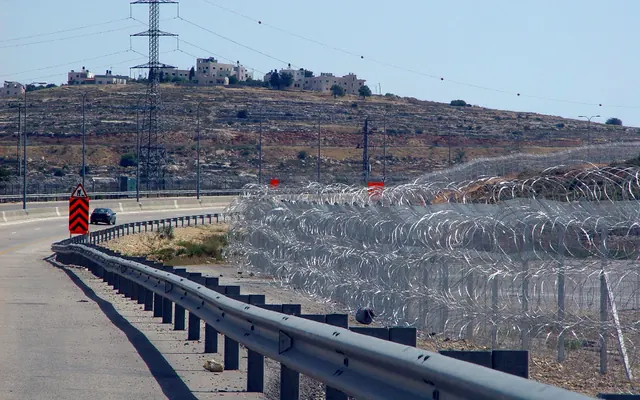
TJS S6E8 Boundary issues part IV
Though the first intifada paved the way for the wall, the second - known as the Oslo War - brought it into being. This episode makes a bridge...
Play Episode
TJS S6 interlude - The Age of Prophecy
Here is an interview with my dear friend and co-author Dave Mason. In it we explore imagination as a tool of spirituality, the challenges of co-writing a novel...
Play Episode