
TJS S6 interlude - The Age of Prophecy
Here is an interview with my dear friend and co-author Dave Mason. In it we explore imagination as a tool of spirituality, the challenges of co-writing a novel and the idea of an Age of Prophecy.
Join the Age of Prophecy 7-day challenge at theageofprophecy.com/self-fulfilling-prophecy/
About this episode
For the Lord God does nothing unless he reveals his secret to the prophets, says Amos, and Rav Mike steps aside from the main story to admit that he also indulges in biblical fantasy as co-author of the Age of Prophecy series. He invites listeners to the seven day self-fulfilling prophecy challenge and sits down with his co-author, friend and chavruta Dave Mason to talk about where the project came from. The conversation is a window into transformative Torah, the conviction that learning stays beautiful but weak until it becomes action, and into the power of story to carry wisdom into a life. It is a warm, personal detour, two rabbis who usually meet on a Monday morning putting their thoughts, for once, on the record.
Dave tells the backstory. Years ago at the Sulam Yaakov learning program they studied the early prophets while a teacher opened the inner workings of prophecy, and Dave, an Orthodox Jew who had learned much law and few of these magical stories, was stunned that this whole mystical realm sat uncracked on our shelves. Finishing Harry Potter for the third time, he thought that a real-life Hogwarts would have people breaking down the doors, and that our own tradition holds exactly such a world. Being a businessman his first instinct was to hire a writer, and only when he saw it would not happen otherwise did he start writing himself, in secret, telling no one, not even his wife, for a long while. Rav Mike names the three moves, discovery, the determination to act, and answering a real need.
Then Dave pulled Rav Mike into the work, and they turn to the question of writing a story with a partner. Rav Mike calls himself a problem solver who loves being stuck in a corner, since that is where the most creative solutions arrive, and both remember the afternoon in a small shul in the Golan when the answer to a narrative problem was that Shimon had to die. They invoke Tolkien, who wrote that when the hobbits met Strider he had no more idea who he was than they did, the adventure of charging into an unknown world. On a deeper level Rav Mike recalls the image of Moshe and Aharon, each saying you speak, no you speak, until the divine word came out from between them, since revelation, grasping a world larger than ourselves, has to come through interaction.
The larger aim is to bring imagination back into religious education, and the golden calf becomes the test case. A reader was disturbed to see Israelites bowing to a calf inside the kingdom, and Rav Mike simply told her to read the Bible, since there were three golden calves and Jeroboam raised two in the northern kingdom as an intermediary, a vehicle between the people and God rather than a rival to him. People have a need for the fantastic, and once that wonder was the orientation of religion before it learned to compete with science by offering certainty. Dave explains why story works, you can slip important things into a reader who is lost in a world and does not want to put it down, learning effortlessly, and a story leaves room for many characters and many paths to argue.
Dave also wrote The Size of Your Dreams, a novel that teaches teenagers to build a vision, and a money book that became a love story because his own debts grew out of his marriage. The most moving thread is his forty days at the Western Wall, where he had heard that forty days of prayer brings an answer, and the answer he received was not the cash he wanted but a harder word, that he already knew what he had to do and simply did not want to do it. In those same forty days the idea for the Age of Prophecy was born. That is the shape of the self-fulfilling prophecy challenge, practices, guiding questions and sources, with no guarantee of revelation but a promise that anyone who engages with serious intent will finish a somewhat different person.
Key ideas
- Rav Mike co-authors the Age of Prophecy series, biblical fantasy offered as transformative Torah that turns learning into action.
- The idea was born from seeing a whole mystical world of the prophets sitting uncracked on our shelves beside Harry Potter.
- Writing with a partner holds the question longer, and revelation itself, like the word between Moshe and Aharon, comes through interaction.
- Jeroboam raised two of the three golden calves as an intermediary to God, and reintroducing the fantastic restores the wonder of religion.
- A good story teaches effortlessly and leaves room for many characters and paths to argue, which is why the Torah is full of stories.
- Dave's forty days at the Kotel brought not the cash he wanted but the harder word that he already knew what he had to do.
Chapters
- 0:00 Biblical fantasy; the prophecy challenge
- 2:07 The backstory at Sulam Yaakov
- 3:10 A real-life Hogwarts in our tradition
- 5:26 Writing in secret
- 8:35 Writing with a partner
- 9:39 Killing Shimon
- 11:54 Tolkien and Strider; the unknown
- 17:18 Divine speech between Moshe and Aharon
- 18:21 Fantasy in religious education
- 19:24 The golden calf controversy
- 20:31 The three golden calves
- 23:57 The need for the fantastic
- 26:03 Story as effortless teaching
- 32:34 Multiple perspectives in a story
- 36:20 Forty days at the Kotel
- 38:31 The self-fulfilling prophecy challenge
Who, where and when
People
Amos, Rav Mike Feuer, Dave Mason, Moshe, Aharon, Jeroboam, J.R.R. Tolkien
Places
Jerusalem, Ein Karem, The Golan, The Western Wall, Ecuador
Texts
The Age of Prophecy, The Lamp of Darkness, The Size of Your Dreams, The Cash Machine
When
2008 CE: the Age of Prophecy begins, The age of the early prophets, Jeroboam's golden calves, The forty days at the Kotel
Read the transcript
For the Lord God, said the prophet Amos, does nothing unless he has revealed his secret to his servants the prophets. A lion has roared, who will not fear the Lord God has spoken, who will not prophecy. Well, what more can I say to that? I'm Rav Mike Foyer, and this is The Jewish Story. Season 6, Interlude, A Modern Prophecy Challenge. And now for something completely different. It's come to my attention recently that many listeners to the Jewish story are unaware that I also indulge in biblical fantasy. And I don't just mean that on a personal perspective. I am the co-author of the Age of Prophecy series. In the works, two books written, several more along the way. It's biblical fantasy. If you want, by the way, to taste my perspective on what imagination might look like when it's applied to spiritual practice, you can check out theageofprophecy.com you can download one of the books but what I want to do now is invite you to take the prophecy challenge go to that website theageofprophecy.com and you scroll down you'll see the 7 day self-fulfilling prophecy challenge it's an opportunity to engage some of the wisdom of the prophets in a way in which it's actually practically applicable a little bit of transformative Torah to aid your personal growth and in order to make that even more appealing I've invited my co-author to join me with an interview.
So here's some thoughts on the Age of Prophecy with Dave Mason. So I'm sitting here with friend, co-author, Hebruta, and fellow rabbi, Dave Mason, and I'm super excited to have a conversation here in your beautiful home. Hi, Dave. Thanks for having me. Hey, Mike. Thanks for coming by. I mean, truth be told, people should know it's not an uncommon sort of occurrence for us to be together on a Monday morning. but it isn't actually so often that we get a chance to sit down and really try to put our thoughts in a recorded form. I almost said pen to paper, but this is, of course, a digital medium. And so what I would like to do is start off with a little bit of the back story because when I look at the Age of Prophecy Project, I know a lot about it.
In fact, with the exception of your holy wife, I probably know more about the arc of formation than anyone but yourself. But I get the question all the time when people say to me, hey, there's this thing I heard. It's like the biblical Harry Potter. How did that come about? So tell me a little bit for you. How did the age of prophecy begin? So it began, wow, let's see, 14 years ago now as we're telling this story. Yeah, we're getting old, I know. That's the last comment we'll make on that. And at the time, you and I had started, we were part of starting this new learning program, Selam Yaakov. And it was the second year, and we were learning about prophecy. We had this process. We were learning about the Navim Rishonim, the early prophets, and we were learning these stories.
And I thought these stories were incredible. And we also had a class going on. And this rabbi was teaching us kind of about the inner workings of prophecy. and I was so blown away by it because I've been an Orthodox Jew for a long time. I've learned a lot of Torah, but yet there's this incredible magical world here, the world of the prophets, and I'd never learned anything about that. We'd learned so much about laws. Why weren't we learning these incredible stories and this incredible understanding of the world and nature that was completely different? Why weren't we getting this? Why wasn't this like day one? So first step was kind of an exposure, meaning there's a very standard approach to religious education, which even though neither you nor I were born in the religious world, nonetheless, especially as those not born in the religious world, there's a certain fast tracking.
Here's the stuff you need to know in order to fit the mold. And at Sulem Yaakov, it was a unique environment. And so there was an exposure to what I might call the richness of what it means to be part of an ancient people. There really is. And I was so touched by that. And at the same time, I was finishing Harry Potter 7 for the third time. Just giving a geek warning now that everyone should know. Raise your hand if you're a geek. You can't see us, but we're both raising them. Okay, thank you. So here I am reading Harry Potter 7 for the third time and learning all these things about prophecy. And suddenly this comes together in my mind. I had this thought. if there was to be a real life Hogwarts, people would literally break down the doors to get in and learn what they had to teach.
The proof is that they've basically created a mock in people like join the houses and stuff. I mean, you were way ahead of your time in that thinking. Exactly. And yet here we are. We had this whole incredible magical realm in our own past, in our own tradition, in these books that are just sitting on these shelves kind of uncracked. and for all these years I hadn't even delved into it. And I said, this is incredible. People don't even know what we have in our own tradition. And I said, you know, somebody needs to write a Harry Potter type book set in this biblical world of the prophets and show the magic of the prophets and this whole deeper mystical worldview that they were part of. And being a business person, my first thought was, okay, who can I hire to accomplish this?
I thought about it. I thought about different writers I knew. I thought about how I could put the project together and get the right person in charge in order to be taking this idea of mine and running with it. Project management. Project management, yeah. Which you're good at. Exactly. It was much more of my forte than writing. We'll get to that later. And at a certain point, I'm like, if I want to see this happen, I just have to figure it out. I just have to put pen to paper or fingers to keyboard and just start writing. and I started writing this book and didn't tell anybody about it. I didn't even tell my wife about it for quite a while and I just started playing around and seeing what would come and we'd be sitting in Suleymiakhov and I'd ask the most random questions to people when I needed to know something.
I remember one day asking, I think David Swidler, a question about Ugaritic mythology which is just a very, very random. I do want to say there was probably never a better environment in Jerusalem where one could ask almost anything within the realm of propriety and get a legitimate answer, or at least something amusing. Absolutely. And I got a straight answer to my question, and nobody ever said, huh, Dave, why do you want to know that? I mean, I have to say now that once you dragged me into the project, it took me, what, two years to even ask why it was you were interested in learning the Rambam's perspective on prophecy, or why it was these particular chapters in the works of the prophets were a focus.
At a certain point, it just never connected for me. So let's not be too surprised. So here I am writing this book, and eventually I told my wife about this. We were actually having dinner in Ein Karim, and we started walking home looking to catch a bus, and the bus didn't come, and we just started walking, and I remember sharing this with my wife, and we just decided to walk the entire distance back home. It was like an hour and a half, two-hour walk, and I just explained what was going on with this book, and she was just in complete shock. The next person I told about it was actually you. So we'll get there in a second. I want to make sure that – because I'm interested in the process here, even though I've been part of it since almost the beginning.
First is the discovery. I think that's very important, that oftentimes we engage things in life at their surface and we assume that what you see is what you get. But particularly as children of an ancient tradition, which I do dare say that we are, it's always worth it to dig. And when you get that first exposure, to recognize there's a richness often to the things we have, though we have them, we don't know. But the second, and to me even more important element, was a determination to do something about it. Because as we'll speak about later, an element which has always drawn me to this Age of Prophecy project is the perspective of transformative Torah. that learning is an enormously beautiful intellectual and emotional exercise, but until it becomes transformative, until we're able to take it into action and make it part of our lives, it will always lack the power it might otherwise wield.
And so therefore, the fact that you were excited and realized that you need to do something about it, and last but not least, it's a response to something relevant in the world. You looked around, businessman that you are, and said, hey, there are 12-year-olds. They used to say reading is dead, right? Now there are 12-year-olds lining up around the block to wait in line to read the next or buy the next thousand-page novel. Obviously, there's a need. And if you're going to have a product that moves the world, you've got to meet the need. Okay, so then you revealed this secret to me. And one of the questions I get from people all the time, and I've answered it for myself, I'm kind of curious actually to hear the answer from you, is that we were Chavrutot before we began to write together.
I mean, we're learning Torah in the classic sense of a head-to-head, you know, there's a phrase that our sages use, O Chavruta, O Metuta, right? You have a study partner or you're dead, meaning that this can't be done alone. And also that there's an aspect of life that comes out through, let's say, constructive conflict. You know, now when that text already exists, if we're learning the Gemara or some story in the prophets, so we can clash over meaning, but the text exists between us. But here, you and I have been Chavruta, we've been study partners, as it were, in creating a text together in order to understand it in further development. How has it been for you to write a fictional story with a partner?
It's a question I get all the time. And by the way, don't hold back. So it's a question I get all the time because I've written four novels now, all of them with partners, two with you and two with my wife, Hannah. And I love the process. I really like having a second person there with me in the process. I've always kind of felt my strongest skill as a writer is that I'm a problem solver. That I like finding when I get stuck in a corner and don't really know what to do from here. That's usually when the most creative scenes, the most creative solutions come about. I've got a memory I want to share with you. You going to remember We were sitting in the Golan when you guys had moved up to the Golan Wow we have been at this for quite some time haven we Oh yeah So we sitting in a Beit Midrash in a small shul in Yonatan and we had a problem with our narrative At a certain point, you got this glow on your face.
You said, I think we have to kill Shimin. You remember that experience? Shimin was a character in the novel. If you haven't read The Lamp of Darkness, hit pause, go buy the book, and read it, and then come back and finish. Spoiler alert, Shimin dies. Yeah, I guess at this point I might have ruined part of the story, but it's not. Well, actually, it's fairly crucial. Oops. Anyway, moving on. So that was a powerful experience for me in what you're speaking about as a problem solver is that I often felt like we're just charging ahead into the unknown. One of the things I read by a writer that moved me the most is that we're both Tolkien fans. In fact, people should know that there's an ongoing Haruta argument here over whether the book should be more like Tolkien or more like Harry Potter.
I believe in the end that I won, but practically speaking that you've driven the bus. Ideally, it should be like Tolkien, but since nobody reads books like that so much anymore, we're going to go for the Harry Potter piece. I am so not re-engaging in this argument on this podcast. I was trying to bait you. Anyway, one of my favorite memories is he says that there's a moment in the Fellowship of the Ring, in the early parts of the book, where the hobbits get to the inn in Bree and they meet Strider, who's going to be, if you know the story so much, the king, etc., if it's a spoiler, then tough luck. But Tolkien writes that when the Hobbits got there and met Strider, he had no more idea who he was than they did.
That it was this incredible adventure of charging into a world. Has it been like that for you? 100%. To me, entering into the world of the prophets was not just a process of, oh, hey, there are people out there I want to teach about this realm. it's been a real journey of exploration and self-reflection because ultimately that's who the prophets were they were people who went off into the wilderness and they connected with themselves and they worked on themselves and they were able to connect to the world around them and to God but we say that every single prophet trained to get prophecy that it's always been a process of growth and exploration and understanding. And for me, it's not like I was just recording some stories that I had written about but people didn't know.
It was a process of learning and exploring and saying, what was this realm about? What was the life like? What did it mean to get taken from a normal world and brought into this mystical world of the prophets? What changes did people go through when they approached that? It raised more questions than it answered and it led me on this whole incredible journey that I've been extremely grateful to be on. So then to come back to the question that I started with, on that journey, how was it for you and what did it add or detract to have a partner? So to me, I just absolutely love this idea of like being stuck and not knowing where to go and having somebody you're just going back and forth with and back and forth and talking about it.
We've had some real arguments. We've had some real arguments. And to me, it's just absolutely – it's a great process. It's the way it often works. So every single book I've ever been part of, I've done the initial drafts on, both with you and with my wife, Hannah. And I'd write them and then I'd pass them on and I'd put them aside. I like a gap of time in between drafts. And I'm not the type of writer who can write a draft and then make a few edits and then publish. I write draft after draft after draft after draft. It's true, people. So to write a draft and then pass it on and hear reflections, hear somebody else say to me, okay, wow, this part really worked. This part didn't here. What do we do about that?
I was never that nice. I'm starting to raise issues. I think for the podcast we can claim you were. And then to be going back and forth and struggling and talking things out, and I feel like that's what really sparks my creativity. Sitting alone with a laptop just doesn't get me there the same way. In fact, I just saw a picture from like six years ago that we were – no, sorry. It was in Ecuador. It was like three years ago we were working on the book The Cash Machine that my wife and I were writing together. And we were in Ecuador, the three of us, myself, my wife, and my son. And we were going on this hike and we got lost. and we're just wandering around this mountain, not sure where this path was and how we were supposed to get back to it.
And we started talking about the cash machine and the fact that we didn't really know how it ended. And at the time, my son, who was, I don't know, maybe 14, at the time, he actually came up with the solution, with the ending that we needed for the book. But just the three of us going on a hike and discussing this book and the ending and where we were stuck and just talking about it for hours until we had worked out what an ending should be like. I remember that with The Key of Rain, book two of the Age of Prophecy series. Sure, I remember too. I was really stuck with a challenge in that I felt that the scenes that are in the biblical narrative are so powerful. And we made it very plausible that our main character be there to witness all of these scenes.
We did a good job in constructing that. But we had a bit too much of a fly-on-the-wall experience of somebody outside watching these incredible things unfold. But you don't really want that. You want your protagonist to be the mover, the shaker. You want them to be the person who's actually moving things forward. For it to be his story. To be his story. And so how were we able to take that and make it his story? How were we able to get to the big ending culmination, having him just witness it and not really be part of it? That didn't work. but the scene was so spectacular as it was what do we do about that and then we realized that wait a second there's another scene in this book that wasn't the culmination there's another scene coming up and what we came up with that day just completely shifted for me the entire narrative don't ruin it for people i'm not going to ruin it like you did with the first book yeah i'm just gonna it's okay the shimmin part is only only a side thing but the solution we came up with came from a place of saying there's something here that is not working what do we need how do we get out of this and it's just hours of debate that got us there so it's beautiful there's a powerful image here first of all that um working with a partner allows a much more profound holding of the question because when you're working alone try to create a narrative something i do all the time in the jewish story at a certain point like i gotta finish this story if i'm gonna publish it there's got to be the next step whereas with you working with a partner you can just come with the questions, like, I don't know where this is going.
And you can sort of bat it back and forth. On a deeper level, there's a classic image that the sages share about Moshe and Arun. Right? There's never been two greater prophets, but we could put Elijah up there, maybe two. But, you know, they say that in the beginning in Egypt, even before Sinai, but when Moshe was really coming into his own as a prophet, that each of them would say, you speak. No, you speak. No, you speak. Back and forth. And that the divine speech actually came out from between the two of them. That there's some aspect of revelation, of the prophetic, of being able to grasp a world which is larger than us, which on some level is really what prophecy is about, that has to come through interaction.
Because otherwise, we're all stuck inside our own little world. So on that note, I want to pivot toward what I see to be one of the more important sort of big picture pieces of what you're doing, what we're doing together, which is trying to bring fantasy and imagination back into the mainstream of religious education. You know, we've had some fairly skeptical responses. One of my personal favorites was the email you got from a woman who loved the book, was from the religious Orthodox Jewish community, but her husband told her she can't read it because it says that there was idolatry, right, in the kingdom of Israel in the first temple times, and you told her to go read the Bible, if you recall, right?
The golden calf. I do recall, exactly. This was actually somebody I'd given the book to before it even came out, and somebody I knew well, and she was so disturbed to see them bowing down to the golden calf. They knew about the golden calf. The golden calf happened in the desert, and Moses came down from the mountain, and Moses destroyed the golden calf. And now you have the Israelites bowing down to the golden calf. When they already have a kingdom in the land of Israel. Yeah. Why were you interjecting that? That seems so inappropriate. Why did you want to bring back that golden calf idea? We thought you were trying to teach about the biblical times. Why do you have to go reintroduce the golden calf and pretend the Israelites recreated the golden calf?
And exactly, I told her to go and read it. And for anybody listening, there were actually three golden calves created throughout Jewish history. The famous one lasted a mere number of hours, but there were two. But it ended dramatically. Yes. It's a very famous scene. But there were two more created in the kingdom of Israel. So a bit of historical context. Everybody knows King David and his son was King Solomon. Really, we think of this incredible kingdom they had, but the kingdom didn't last beyond them. King Solomon's son lost the kingdom and the United Kingdom split into ten tribes and two tribes. and the ten tribes had most of the populace and most of the power, but what they didn't have was Jerusalem.
And they didn't have the temple. And so the new king of the northern kingdom said, what am I going to do? Because if I let the people go to the temple, as they're supposed to do three times a year, then everybody's going to go down there. And there's a rule that says only a king from the house of David can sit in the temple. So everyone is going to go be standing around and see one person sitting in a kingly manner and they're going to say, that's what a real king looks like. This other guy with us, who's also standing, he just doesn't stack up. We should be giving our allegiance to the one who is the real king And so he thinks to himself okay what do I do about this And he kind of I believe goes back in the historical narrative The golden calf to me was very clearly not a replacement for God.
We have a lot of idolatry in Jewish history. We have the Baal, we have Asherah. They're very much part of a different story. The golden calf was a replacement for Moses, essentially. It was a vehicle, an intermediary between the people and God. If you look at the narrative the people said about the golden calf, they said, this is your God, O Israel, who brought you out of Egypt. They were still connecting the golden calf to their experience, to their understanding. So this actually goes to the heart of how we got into this, which is that people have a need for the fantastic. They have a need for the imaginative. And once upon a time, that was the orientation of what we call religion. It was toward the wonder of existence.
And there was a point at which science started to offer certainty and dispel the clouds of superstition so religion wasn't going to be put second best. So we had to step in and make it certain. But there's an element of wonder, I think, that people are seeking. So this is a good example of every one of the Haruta. Yeah, if you could only see the faces he was making at me there. I'm feeling a little hurt. I'm going to go the exact opposite way on this one. Because what was God? God was something to the people coming out of Egypt as something they completely couldn't relate to. They didn't want to hear directly from God. They freaked out when they heard directly from God. They said, Moses, you be our intermediary.
You go back and forth between us. And when Moses didn't come down the mountain, they started freaking out. We know we've got this connection to this hugely powerful God, but we can't see this God. We can't handle hearing this God. We have no way to connect to this God. All other gods in Egypt and in our experience, they have little statues. The statues are not the God themselves. The statues are a physical embodiment. And I feel like they wanted to come a little bit out of that mystical experience. They want something concrete they could relate to. Listen, we can duke it out later. But I think you'll agree that either way, whether you go from the finite to the infinite or the infinite to the finite, in between lies the fantastic.
And the fact is that there are mysteries which are impossible to grasp, which we need to make concrete in order to have a relationship to them. At the same time, we live in a world, especially today, where things have been made so concrete that it feels confining. And when we can scrape away at the surface of the rules and the structures and we discover the depth of the ancient tradition there, it's exciting. And so what I really want to sort of touch on is the power that reintroducing the fantastic and the imaginative into spiritual practice really offers. I'll tell you a story. I remember that I was like science fiction, fantasy geek extraordinaire growing up. Like really, and as is true of all good geeks, lived in the world of the books that I read.
It wasn't just that I read these books. I really inhabited that world. and sometimes my parents wondered whether I was ever going to come back. But I remember very clearly in middle school, I have a clear memory, that I was walking down the hall and for some reason, like as we say in Hebrew, nafalit asimon, right? Like the penny dropped. I guess you say the same thing in English, right? Except you can find a penny and not an asimon anymore. And I realized that there weren't elves and dwarves and dragons and magicians waiting just around the corner. just hiding and just waiting until I could finally discover that it wasn't going to happen that that world of the fantastic which gave me a sense of freedom and possibility and excitement did not exist it was heartbreaking actually I would go so far as to say crushing and it took me years years to recover and I continued to read fantasy but it was more than as escapism as opposed to a richness of my daily life it was only when I began to learn Torah on a depth that I really can grasp today, that that type of richness of a lived experience returned to my life.
So, I'm curious, for you, what is it that drew you to story as a vehicle for teaching the world the Torah that you think matters? Because if you recall, one of the first versions of the book we wrote was terrible. We put all the favorite Torahs in it and every character would turn to the reader and just teach Torah and one of our editors along the way said, that's wonderful, now take it all out. And she was a very religious woman, so we were quite shocked. Why story? What does it bring to the table? It's like you said, you can get lost in a story. You can get into a story and it can just feel like, I want more of this. I want to know how it ends. I want to know where it's going. In fact, we were talking about the golden calf before and I was like, I didn't finish my golden calf story.
I didn't connect all the dots. That's because I got you off. We need to go further into that. Like when I'm in a story, I don't want to go to sleep at night. I don't want to put it down. I don't want to get up in the morning and go where I have to go. I'm like, no, no, it's okay. I'm just going to sit here and read. I'm in the middle of this. It's immersive. It's so immersive. It can be so addicting. And to me, that's such a big part of it is that when you have a story, you can learn effortlessly when you've got a really good story that pulls you in and so actually all of my books thus far i'm working on my first non-fiction book actually at the moment but all the books i've published so far have all been novels that teach because say a word about that outside of the age of prophecy realm yes because i realize if i can get people into a really good story i can slip in information that they that i think it's important for people to know without them feeling like they're getting a lesson drilled into them.
It's very biblical. It's kind of like the stories of the early prophets. There you go. So far, I've published two books. And one of them came about because I saw something working in my life that blew me away with how powerful it was. And I said, I want to teach these techniques to others. So that led to the book, The Size of Your Dreams. It's really a book that teaches you how to create a vision and gives you the tools to manifest it in your life. And that one is set within a high school classroom with these four students. And this teacher who just wants to teach them that there's so much more that they're capable of than they might even realize themselves. And it goes into a lot of issues of self-identity, how you build a robust self-identity, how you dream big and how you really manifest everything you need to make those dreams happen.
And that's been a book that we've seen. It's been hugely impactful in people's lives, especially while it's written for adults. When middle school age kids read this, we get this feedback that people say, wow, it changed my life. In fact, we know a lot of teenagers right now who have been struggling a lot. It's been a brutal couple of years. It's been a brutal couple of years. I think it's hit the kids the worst. And so we've decided to actually start, that book is called The Size of Your Dreams. We decided to start The Size of Your Dreams Foundation and be giving away copies of this book and trying to get in the hands of teens who might be struggling, who might need some tools to help them figure things out.
They could read these stories of these four teenagers in the book and the struggles they're going through and how these tools impact them. And they could start to see, hey, well, I can do this too. Amazing. We'll say a word at the end about how people can be touched with you about that. Absolutely. And the other book that we wrote came from the complete opposite direction. So as we mentioned, I've been in business for many years, but yet poor financial choices led us to be deep in debt despite the fact that we've been making good income. And I started to realize at a certain point that we've struggled a lot because we never got a good financial education. And if you think back to elementary school, middle school, high school, college, I even went this far all the way through law school.
So many years I was being prepared to learn how to earn money, how to have a career. But not a single hour of that entire educational period was how to manage it. On how to make smart choices with my money, how to invest it, how to save it, how to spend it, how to grow it. And I decided on that one that I've never learned as much about a topic as when I've been writing a novel on that subject. And so I said, okay, I'm going to write a money book. And people are like, but you don't know anything about money. I said, exactly. I will by the time I'm done. I will. And I got such an incredible financial education. For two years, I just threw myself in. And I kept following each trail I was learning about until I just kept hearing the same things over and over again.
I'd listen to podcast after podcast, read book after book, watch video after video. And when I'd watch something or read something, it's like, okay, I know that. I know that. I know that. I finally started to feel like, okay, I was ready. And we put together that book. But again, it's not a dry money book. It's a novel. And it actually became something I thought I'd never write. It became a love story. because truthfully, our financial struggles largely came about through our marriage, through our relationship. And this is something we started doing. We started having young couples in our community over for dinner right when they get married and talk to them about money because money is one of the top causes of divorce.
It's one of the top causes of marital strife. And I used to think that meant lack of money. But really it means when two people are on different pages about money, they've got different beliefs around money. and we just, we didn't know what we were doing. We were flailing. We were grown up. We were told money is, it's not a topic, something you should talk about. It's private. We were never comfortable talking about it. We never learned about it and so when we got married and we tried to make financial decisions that would please the other and that would be smart, we were just flailing and we were doing stupid things with our money and it became a source of tension in our relationship and it became, really the two were very intermingled for us And so the book, I think, naturally became a love story.
It naturally became a story about two people who were struggling and the financial lessons all come through the dynamic of the relationship So it helps people understand both A how to get a financial education and really learn hundreds of financial lessons but also, B, how money can work within a relationship, how you can do it together. And we give this book to people all the time and we say to couples, read this together. And as you go through and you learn these different topics and you learn these different concepts, discuss them and decide how you want to apply them in your lives. It's really beautiful. And I think the sort of overarching message is that a story creates the context for exploration.
It's not just, here, take this information in and put it to use. It poses a context for asking, who are you? Who do you want to be? And as you said, there's an effortless, is that a word, effortlessness? There's an ease of access that comes because a story engages you, it draws you in. And I think that more than anything else, to me, this is one of the crucial contributions that the imagination and the fantastic can make to religious education. Because ultimately, what is a relationship to Torah, a relationship to God, meant to be other than an all-encompassing world in which you live? So I want to just make – is there something you want to add? Yeah, I just want to add one other bit there that a story also leaves room for multiple perspectives and multiple views and debate to occur.
And that's a really big concept for me because like I'm writing a nonfiction book now and I am teaching a certain principle and I'm giving advice and I'm advocating a certain path. But when I write a novel, I can have different characters who have different paths debating and fighting amongst themselves. And not everybody has to come away from the book saying, yes, I like David's perspectives on this or I don't. You can actually identify with different characters and different paths. On the cash machine, we have the main characters on a very specific financial path. But there are other very intelligent, very competent characters who are in very different paths, and they've got different reasons for choosing their paths.
So part of what I like about a novel is not saying, okay, here's the way to do it. Do it the Dave Mason way. There can be four different characters with four different concepts. And when you read it, you can really debate them. Well, which of these make the most sense to me? Or maybe it's some hybrid between them. So that's so important. And I think it's the perfect bridge to really what I'd like to touch on last. Because if I heard you correctly, one of the powers of a story is that it's broad enough that everyone can find their path within it, find their place. And it's the type of education which is really oriented towards self-exploration and not just putting people in the mold where I deem that they'll be most successful.
So in that sense, what I'd like to do is speak a little bit about the relevance of the Age of Prophecy Project and our desire to sort of write biblical fantasy to religious and even just personal life today because we've got a big launch coming up in just a little while. It's called the Self-Fulfilling Prophecy Challenge. You want to say a little word about it? Absolutely. So I love the self-fulfilling prophecy challenge concept because really, again, when we get to prophecy, it's not something that kind of God hits you with. It's not like, hey, that guy, I'm going to be – I want him to be a messenger for me. Let me hit him with a prophecy and tell him to go do X, Y, Z. The force download. Exactly. It's something that a person works on themselves for.
And prophecy is something you get after doing training. It's very much a... It rarely goes well. It is not something you even want to get. If God decides that you need to receive a prophecy and you have not done the training, play the scary music in the background, your future is not looking so good. I'll get Ben to put it in there. Okay. So let's talk a little bit about what this self-fulfilling prophecy challenge might actually be, practically speaking. What's there? so for us when we sat down and we said how do we teach this? how do we teach these paths of what the prophets did? really we started looking at our own lives we started looking at some of our own personal experiences where we engaged in practices that had some similarities to what people might have done when they went into the desert and studied under a master and tried to work on themselves in prophetic aspects of discipline aspects of self-awareness, aspects of expansion of consciousness.
Exactly. So we said, okay, let's use what we've, let's bring the best things that we've discovered in our own lives on these journeys of self-awareness, of trying to expand our own consciousness that we've gone through. So one example for me that was actually connected to the start of this series, though I didn't realize it at the time, was my business was falling apart, having a really difficult time. And as I pointed out, I made a bunch of really poor financial choices early on. And I'd heard this idea that if you go to the hotel, the Western Wall, 40 days in a row and pray for one thing, that you'll get an answer. And I said, you know, what have I got to lose? Everything else I've thought about has not been working.
Let me go and let me pray that I get this. I get this response. And so I went to the Kotel daily for this 40-day period. And unfortunately, I hadn't read the fine print on the promise before I started going because I actually did get an answer, but it was not the answer I was looking for. Oh, so true. The answer I was looking for was, it's okay, Dave. Here's a bunch of cash. You're going to be fine. You can continue running things exactly as you are, and I'm going to make it all magically work out for you. Right. The answer I got was, what are you here praying to me for? You know what you have to do. You just don't want to do it. You've got to fire people. You've got to close your office. You've got to shut down things that are not profitable.
You've got to tighten your belt. You've got to stop looking at your business as a way of giving charity to the world. And in turn, it's not a nonprofit. You need to actually make some hard decisions and only spend money that you have coming in, not money that you hope I will magically give you. And you need to do things. and it's going to be embarrassing and it's going to be hard. This is God as Father. And you need to do it anyway. And that was a difficult understanding to come to, but it came to while I was doing these 40 days. And I didn't ever connect it to my 40 days at the Coattell until a long time later. But it was also during those 40 days that I came up with this concept of writing the Age of Prophecy series, that I had that whole understanding as, hey, why isn't there a book about the prophets that is written like a Harry Potter type book that people can throw themselves into and learn about this incredible world about prophecy?
And so I did get that second answer. I did get that, yes, here is something that can be a vehicle of blessing for you as well. So they both came from the 40-day process of seeking. So this is an example of what we're really trying to give through the self-fulfilling prophecy challenge. It's a set of practices together with guiding questions and some sources to learn that will allow you to take the first steps, as it were, down the path of the prophet, if not the path of prophecy. We're not making any money-back guarantees about receiving divine revelation. But what I would say is a commitment that I believe that both of us would stand firmly behind is that anyone who engages with serious intent in the types of practices we're offering will find that they are a different person to some degree when they're finished.
You think that's a fair statement? Yes, and for that, we will give them money back, Gary. There is. Well, yeah, you can go on there. And if people want to access it, it's going to come together with some sort of higher-end content, which I will leave unrevealed for now. You have to go to the website and click to find out. People want to access it. Where should they go? They should go to theageofprophecy.com. And theageofprophecy.com, they can download a free copy, by the way, of the lamp of darkness of the first book of the age of prophecy. And they can also learn about the self-fulfilling prophecy challenge. And if folks actually wanted to get the other books you mentioned, where should they go for those?
They can go to DaveMasonAuthor.com and you can find out about all of my books on that website. So we're making a clear call, folks. If you're interested in accessing wisdom of the prophets, the type of transformative Torah that I hope you've tasted here on the Jewish story, but in a more focused and practical fashion that comes out of the type of project that Dave and I have been working on, go to theageofprophecy.com. You'll see the link for the Self-Fulfilling Prophecy Challenge. We're looking to build momentum. And if you want to see real change in your life, I highly recommend that this is the place to go. So, Dave, I want to thank you for taking time to have a little chat with me on the record as opposed to our usual off-the-record discussions.
I also want to thank, as long as I'm at it, all the folks that give their hard-earned money, make this show happen. keep it free, widely available. I want to call on you to join them right now. It is time to put your money where your ears are, people. Go to jewishstory.co. There's a button in the upper right-hand corner that says Be a Patron. You can click on that to give a little bit of per-podcast support. Or be in touch, robmikefoyer at gmail.com. You can find me on Facebook, Rav Mike Foyer. Happy to share with you the details of how you can dedicate a show. I'm also happy to hear your feedback, thoughts on where we're headed for season six. As you know by now, I'm never quite sure where things are headed in this story.
I want to thank the Land of Israel Network. That's thelandofisrael.com. They're building a center for global transcendence in the heart of Judea. I want to thank the Pardes Institute, p-a-r-d-s.org.il, for throwing the doors of the Beit Midrash open as wide as possible. I want to thank you for listening. I'm Rav Mike Foyer, and this is The Jewish Story.
More from Season 6
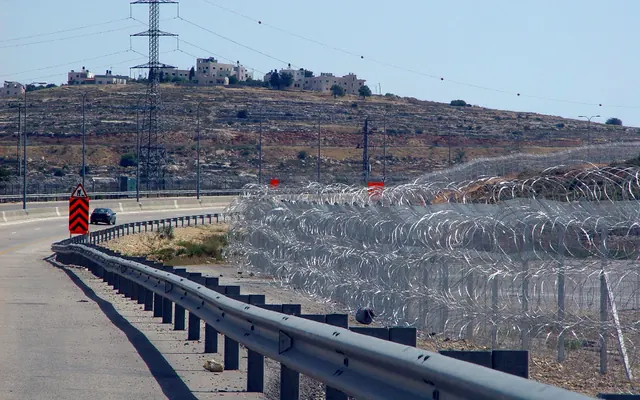
TJS S6E8 Boundary issues part IV
Though the first intifada paved the way for the wall, the second - known as the Oslo War - brought it into being. This episode makes a bridge...
Play Episode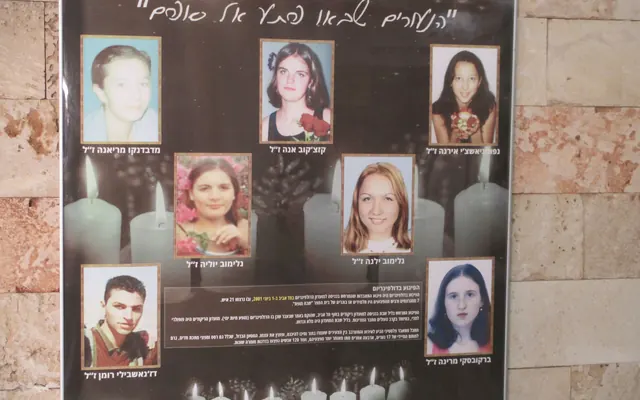
TJS S6E9 Boundary issues part V
Uzi Dayan was national security advisor to both Ehud Barak and Ariel Sharon, helping them navigate the stormy waters of the Camp David summit, the Oslo war and...
Play Episode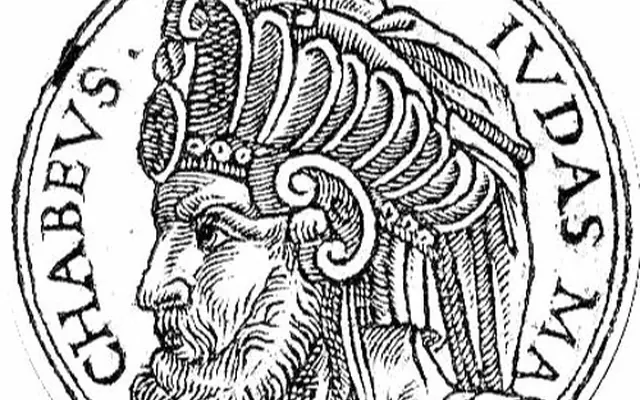
TJS S6 interlude - Greek Wisdom and cultural sovereignty
Here is my annual Hanukkah class in honor of my father, Charles Feuer/Betzalel ben Avraham ob'm. As the end of the Hasmonean kingdom that was established after the...
Play Episode