
TJS S6E11 American Antisemitism part II
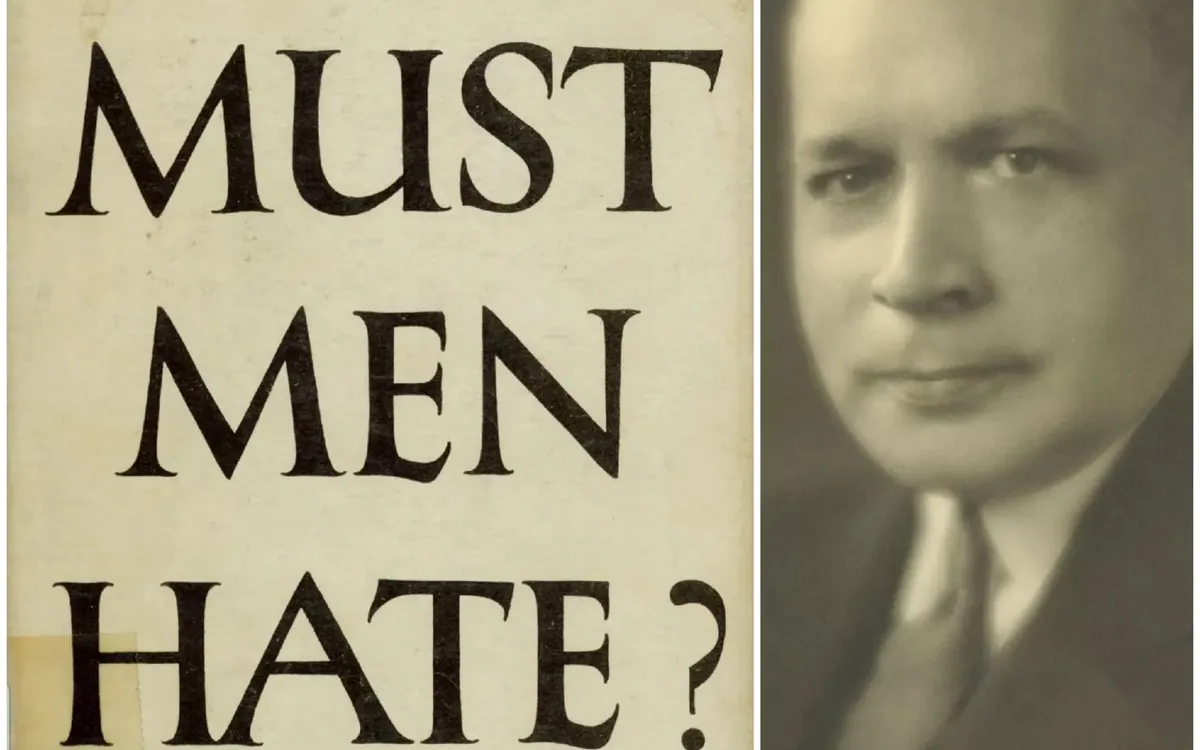
In part 2 of our exploration of the new face of the oldest hate focuses on the history of Jewish response to American Antisemitism through a look at the Anti-Defamation League, founded in 1913 by Sigmund Livingston. Over the years they battles Henry Ford's Dearborn Independent and Father Couglin's radio show. Later the faced off against modern incarnations of Judeophobia such as Christian Identity and replacement theory. As a bonus there is an interview with Bettysue Feuer, retried regional director of the ADL and my mother.
About this episode
Apply the most effective weapon to the most vulnerable target, said Bruce Lee, and Rav Mike works that equation while keeping his eye on the Jews rather than the antisemites. He puts his finger on the divide that has opened between American and Israeli Jewry, resting on the stance each community took toward survival after the Holocaust. Israel chose ethnic national solidarity, standing together as an enclave in a violent region where unarmed minorities have a short shelf life, at the price of sharp borders in land, identity and society. American Jewry chose what he calls safety in diversity, the wager that if minority rights are the ground of justice then the Jews will be safe, a stance that finds any single mainstream narrative vaguely threatening to those cast as outsiders.
When Jews moved to the suburbs in the fifties they did not simply go white, since full immersion was not yet truly possible, and they used their new position to fight hate of every kind. Rav Mike recalls Mickey Schwerner, martyr of the civil rights movement, who told his mother he wanted to spend his life relieving hate and not preserving it. Jewish liberalism replaced Jewish communism as a truism, and Milton Himmelfarb quipped that Jews earn like Episcopalians and vote like Puerto Ricans. He calls this an identity counterforce to assimilation, suburban comfort offset by standing with the oppressed, which both kept Jews distinct from the mainstream and tapped a deep vein of care for the weak, the root of Tikkun Olam Judaism and a practical tool of self-defense.
The story of American Jewry can be read through its institutions, and the clearest lens is the Anti-Defamation League, founded in 1913 by Sigmund Livingston to stop the defamation of the Jews and secure fair treatment for all. The ADL fought Ford and Coughlin, exposed Nazi groups, filed a brief in Brown versus Board, and championed anti-mask laws against the Klan. In the eighties it launched a legal blitz of hate-crime statutes, adopted by forty-five states and upheld by the Supreme Court in Wisconsin versus Mitchell, so that motive itself became a matter of law. Programs like World of Difference and No Place for Hate universalized the mission, and the Holocaust became a teaching tool against all prejudice, the ultimate expression of the belief that hate against one is hate against all.
To ground all this, Rav Mike interviews his mother, Betty Sue Foyer, a lawyer and ADL regional director who joined at the end of 1999. She describes a mission of education and diversity, teaching schoolchildren about similarity and telling police and decision makers who Jews actually were. On the ground in the late nineties she found little direct hate, calling it a kind of nirvana, which she measures against her own baby-boomer childhood of ethnic solidarity and a country club that barred Jews, when a boy's mother phoned to say she could not come to the Christmas dance. She came to believe America had a dirty little secret, that mainstream white America gave Jews a seat at the table for their skill at organizing while quietly not liking them.
Then came September 11, which she felt strengthened the Jewish position, since who knew better than the Jews how to fight the terror now striking America. But the Trump era and Charlottesville convinced her that decades of hate against one is hate against all had merely stuffed the hate down the sewer, with the lid now lifting, as BDS and new antagonists added layers of pressure. Her conclusion is sober, that the diversity industry failed, that American Jews are drifting from being Jewish toward being American and from alignment with Israel and with Jews who do not look like them. The real threat is long term, and if the allies in the diversity community are not there, then Jews will have to be their own allies or be in real trouble.
Key ideas
- American and Israeli Jewry split over survival, one choosing ethnic national solidarity and the other safety in diversity.
- Suburban Jews fought hate of every kind, an identity counterforce to assimilation that also served as self-defense.
- The ADL built an infrastructure from 1913 through hate-crime law, universalizing its mission into hate against one is hate against all.
- Betty Sue Foyer found the late nineties a nirvana of little direct hate, measured against a childhood where a country club barred Jews.
- She felt 9/11 strengthened the Jewish position, while the Trump era showed the hate had only been stuffed down the sewer.
- Her warning is that the diversity allies are not there for the Jews, so Jews will have to be their own allies.
Chapters
- 0:00 The most effective weapon
- 1:03 Two stances toward survival
- 3:22 Safety in diversity
- 4:40 Schwerner and the Volkswagen
- 6:50 Vote like Puerto Ricans
- 10:05 The ADL; Sigmund Livingston
- 13:31 Hate-crime law arrives
- 18:08 No place for hate
- 19:15 A conversation with his mother
- 23:44 Little hate in the late 90s
- 27:18 The country club that barred Jews
- 28:19 September 11 strengthens the position
- 30:43 The Trump era; Charlottesville
- 33:09 The dirty little secret
- 37:46 The real threat today
- 39:24 Be our own allies
Who, where and when
People
Bruce Lee, Betty Sue Foyer, Sigmund Livingston, Mickey Schwerner, Milton Himmelfarb, Earl Rabb, Donald Trump, Robert Bowers
Places
America, Pittsburgh, Charlottesville, Cleveland
Texts
The ABCs of Scapegoating, Computerized Networks of Hate, The Hate Crime Statistics Act
When
1913 CE: the ADL founded, 1963 CE: Schwerner on the Volkswagen, 1990 CE: the Hate Crime Statistics Act, 2001 CE: September 11, 2017 CE: Charlottesville, 2018 CE: the Tree of Life massacre
Read the transcript
There's only one basic principle of self-defense, said Bruce Lee. You must apply the most effective weapon as soon as possible to the most vulnerable target. Well, we're trying to work that equation out here and now. I'm Rav Mike Foyer, and this is The Jewish Story. Season 6, Episode 11, American Anti-Semitism, Part 2. I feel the need to talk about the Jews. Surprise, surprise. We will finish the story of how white anti-Semitism evolved into the strange beast we see today. Have no fear. But I don't want to take my eyes off the prize. This is the Jewish story, after all. Right now, as it unfolds in America, told through a focus on our current explosion in hate. Now, American Jewry, of course, has developed together with that hate.
And I don't want the antis to obscure the Semites, so to speak, in my story. So let's talk about the Jews. And though it may feel a bit tangential, I want to start by putting my finger on the divide that has opened up between American and Israeli Jewry. Or at least on the sense I have that it rests on a foundational stance that each of those communities took toward Jewish survival post-Holocaust. And of course, on the path of development, they pursued separately and together since. And the hate which we both face has evolved in tandem. Now, obviously, the question of Jewish survival goes way further back than the Nazis, as do primary strategies for achieving it. But these two communities had vastly different experiences and illustrate almost perfectly two different sides of the Jewish soul, as it were.
The fundamental difference in the requirements for survival as a national power and as a national religious minority in a larger society makes those stances that they took even somewhat oppositional, at least in theory. Now, a real articulation of the Israeli posture and the hate that it evokes is going to have to be left to our discussion of progressive anti-Semitism. Right, left to, get it, get it? For the sake of contrast in the moment, however, I'll label that survival stance as ethnic national solidarity. The need to stand together as an ethnic enclave in a violent and unstable region, where unarmed and easily subsumed minorities have a short shelf life, or at least a very miserable existence.
Solidarity comes at the price of drawing sharp borders, whether in land, identity, or within society, and often militantly maintained. That circling of the wagons stands in profound contrast to the basic American Jewish stance that I want to speak about today. That stance toward survival taken post-war might be called safety in diversity. If the powers that be see minority rights as fundamental ground for justice and freedom, then the Jews will be safe. It's a posture which means that on some level the very idea of a mainstream culture or single national narrative is at least vaguely threatening. Those so-called hegemonic narratives, the ruling stories, can often position minorities as outsiders to the story, not as an essential element of its fabric and certainly not as bearers of equally legitimate narratives.
Now, America is unique because individual freedom, especially that of religion, is so foundational to its hegemonic story. But the reality of how the country has unfolded on the continent has always been complicated and often violent. So American Jewry, consciously or not, has pursued a culture of diversity as we've played out our need to survive. And America offered, of course, the legal, political, and socioeconomic opportunities to do so in an unprecedented fashion. When the Jews made their communal shift from the urban ghettos toward suburban economic success in the 50s, they didn't just go white, as some people would like to claim. Frankly, there was little hope in the 50s, 60s, and 70s that total immersion into mainstream America was even truly possible.
Despite utopian pronouncements by post-war Jewish historians about the, quote, sudden sterilization of the virus of religious bigotry once it was transferred to American soil, nonetheless, Jews remained a recognizable minority in what was really white America, often even when they aimed to pass. and Jews maintained enough ethnic solidarity that assimilation, at least then, didn't yet have mass appeal as a means to Jewish survival or at least to Jews surviving and making the question of Jewish survival irrelevant. What these suburban Jews did do is use the privilege of their position to fight hate and not just hate against Jews, anti-Semitism, but hate of any kind. Now don't get me wrong, it's not like every Jew suddenly became a crusader for the marginalized and downtrodden.
But the idea that hate against one is hate against all began to seep into communities, activists, and even institutions. You may recall from back in Season 3, the words of Mickey Schwerner, heroic martyr of the civil rights movement. When his mother asked how he could possibly buy a Volkswagen as his first car when his relatives were murdered in Auschwitz, he replied, I know how you feel, mother. One reason I want to buy it is that it's a very economical and practical car. But, more important, I want to spend my life relieving hate, not preserving it. I see reason to hope that there will never be another Auschwitz. Now, ignore for the moment the somewhat uncomfortable pragmatism. It's perfect fodder for the anti-Semites, right?
Only a Jew would be willing to save a few bucks on a good car, be it soaked in the blood of his ancestors or not. Focus instead on the determination expressed in Schwerner's words to stop hate wherever it existed. and the possibility that it could be removed from the world altogether. Now, these are the words of a utopian universalist dreamer and a deep expression of the desire for Jewish survival. Now, it's far from obvious to most of American Jewry in 1963 when Schwerner said that, that there was reason to hope we would never see another Auschwitz. But now, while McGee and Schwerner didn't go as a Jew per se to his death in Jim Crow South, many Jews and Jewish institutions picked up the civil rights battle and every subsequent struggle for minority rights that America saw in the coming decade, very often as Jews.
And even outside activist circles, Jewish liberalism replaced Jewish communism as a truism of American culture in the post-war years. Because despite their rapidly rising social and economic status, Jews overwhelmingly threw money and political support behind those who stood with the marginal, the poor, immigrants, minorities, women, people of diverse genders. Hence Milton Himmelfarb's classic 1969 quip that the Jews, quote, earn like Episcopalians but vote like Puerto Ricans. This stance that I'm calling safety in diversity to some degree was driven by an identity need of American Jewry. And remember, real identity issues are always questions of survival. Because even as we mainstreamed into white American society, Jews continued to identify downward, so to speak, in the social hierarchy, and thus to preserve our sense of a separate identity from white suburbia.
To be a suburban Jew was to maintain somehow an awareness of the fragile contingency of life under a majority culture, a collective memory of victimhood, especially in the Holocaust, and even a classic sense of the vulnerability of Jewish life in exile, even as life itself had never been better. Trust me, I lived it. I might call it the identity counterforce to assimilation. Total suburbanization offset by support for the oppressed, which separates us from the moors of the mainstream while tapping a potentially deep vein of essential Jewish identity in care toward the weak and vulnerable. I mean, hence the rise of tikkun olam Judaism from the midst of suburban Jews. We're going to touch on that when we get to the progressive hate episodes, God willing.
In addition to those identity elements, a stance of safety in diversity was driven by a slightly more grounded element in the needs for survival. Minority consciousness and liberalism can become practical tools for Jewish self-defense in America. Now, no one knows better than the Jews that no matter how group-specific hate might be, once racism, intolerance, and violence are unleashed in society, they weaken the structures of law and culture that keep us safe as a minority within a majority society. and an understanding of Jewish history might just advocate for taking a militant stance against such destructive forces no matter where they're pointed meaning against hate altogether because life might be great now but who knows?
So this posture of safety and diversity is a major shaper of American Jewish culture a seemingly effective means for our survival in exile and of course the bugaboo of white racist supremacist worldview Because their dark fantasies are of the purification of the nation, not its diversification. And everybody knows, to purify, you have to get rid of the Jews. In general, American Jewry's development could best be understood through the growth of its communal institution, something we've touched on before. When it comes to that aspect of Jewish communal life, which is facing anti-Semitism, the ADL is the most illuminating example. That's the Anti-Defamation League, founded in 1913 by Chicago attorney Sigmund Livingston, who had had enough of the bigotry and intolerance Jews were facing and was willing to throw down 200 bucks a year and two deaths in his law office to fight it.
Now, from the outset, Livingston's mission embodied this safety and diversity posture that I posed in the previous section, stating that the ADL's mission was to stop the defamation of the Jewish people and to secure justice and fair treatment to all. Now, today's ADL website hammers the point home in case you missed it by explaining understanding that the fight against one form of prejudice cannot succeed without battling prejudice in all forms. We'll see if that holds true as we go forward. Now, because of this melding of the particular and universal into its mission, the ADL's story can actually be a lens on anti-Semitism and American hate in general, but I can only really tell it here in brief.
True to its name, the Anti-Defamation League, right? Many of the ADL's first battles were with the portrayal of Jews in media and public discourse as hate surged in the lead-up to World War I. One of its first anti-bias actions, a phrase which, as far as I know, they might have coined, was an approach to curbing speech that the ADL will actually pursue relentlessly with some uncomfortable results in our current era. Again, I push you off to the progressive episodes. So one of those first actions was a distribution of a memo signed by no one else than the publisher of the New York Times to all his media peers, discouraging, quote, objectionable and vulgar media references to the Jews. So the ADL fought Ford and Father Coughlin's anti-Semitic output in the 20s and 30s.
They aided America's war effort in the 40s by exposing Nazi organizations at home in the U.S. The birth of the State of Israel added a whole new portfolio of the anti-Israel, anti-Semitic intersection to its mission. And four years after Israeli independence the ADL published The Troublemakers It was an expose on efforts by the Arab propaganda apparatus in the U to foment hate toward both Israel and the Jews Not a new phenomenon. In that same year, the ADL also launched their first-scale educational effort to eliminate bigotry, intolerance, and anti-Semitism altogether. It was actually a revolutionary multimedia approach. One of the areas in which American Jews have pioneered for the world is how to use the media to fight hate, as opposed to how to use the media to foment it, which is a very old practice.
You know, that effort included the now classic book called The ABCs of Scapegoating. You can look it up. But what greater symbol of this notion of safety in diversity, of taking our particular mission and universalizing it toward all hate, what better symbol could there be than publishing a book which offers the ultimate Jewish ritual, the scapegoat, the Seir Hamistaleach, as a model for understanding the universal dynamic between hater and victim. Predilection leads to prejudice. Prejudice expressed to discrimination and discrimination to scapegoating, it says. Now, of course, as the decade moved forward, the ADL filed an amicus brief in the Brown v. Board of Education, that landmark U.S. Supreme Court school desegregation case, which in many ways launched the civil rights movement.
And at the same time, they championed anti-mask laws in six southern states, those statues that impeded the KKK efforts to terrorize minorities anonymously under their robes and actually resulted in a dramatic decrease in Klan membership. The ADL helped to mobilize the wave of national support for civil rights and voting rights legislation, which culminated in the Civil Rights Act of 1964 and the Fair Housing Act of 1968. And throughout the 70s, they continued to expand their capacity for research and analysis of anti-Semitism and hate crimes in general. Publishing books like Danger on the Right, the detailed radical movements threatening American democracy, as I said, and Some of My Best Friends.
It was a groundbreaking work on the subtle patterns of discrimination against Jews in employment, housing, education, etc. In the 70s, the ADL turned more deeply toward the Holocaust, and really that's reflective of a larger trend amongst almost all American Jews and Jewish institutions. In 1977, they established the International Center for Holocaust Studies, one of America's first formal Holocaust education programs. The goal was to create materials for students and educators which would help them understand the Holocaust and apply its lessons to contemporary issues of prejudice and hate. Now on some level, the universalization of the Holocaust as a teaching tool against all hate is the ultimate expression of safety in diversity.
For much of American Jewry, never again means no one ever anywhere. And the fight to build such a world is what will keep the Jews in particular and people in general safe. There's a whole discussion to be had there. But, like I said, this is a thumbnail sketch. By the time sociologist and Jewish communal leader Earl Rabb coined his term of commodity anti-Semitism that we mentioned last episode, In the 80s, the ADL had helped to build an informational, legal, and judicial infrastructure which really revolutionized American law. In 82, they published the first of their annual audit of anti-Semitic incidents, a unique effort at tracking actions of hate. And three years later, they put out another study entitled Computerized Networks of Hate.
This proved to be a prescient report in light of the world in which we live today. It was about how hate spreads through the new technology platforms. At the time, they were talking about white supremacists using dial-up modems to communicate with each other on computer bulletin boards. Raise your hand if you even remember what a dial-up modem was. Now, in response to this perceived increase in anti-Semitism, one which, by the way, Rab himself was inclined to put down to just better reporting, the ADL launched what I have to call a legal blitzkrieg of hate crimes statutes. In the coming decade, 45 states and the District of Columbia adopted laws which enhanced punishments for what they called bias-motivated crimes, all of them based on the ADL's model.
At the federal level, the ADL pushed for the passage of the Hate Crime Statistics Act signed into law, federal law, in 1990. Now, this meant that an entirely new field of criminal law in America had been born. It wasn't just a matter of what you did anymore. It was also a matter of the motivation behind why you did it. Now, not obvious to many legal scholars that the motivation for your crime should involve an enhanced punishment. But this approach received the ultimate imprimatur with the Supreme Court's 1993 Wisconsin v. Mitchell decision, which unanimously upheld this penalty enhancement approach. Hate crimes had arrived. Hate against one was hate against all. And the fight against all hate is what will stop anti-Semitism.
And frankly, it seemed to be working. I mean, I grew up in the 90s. Anti-Semitism may have happened out there, but there had never been a better time or place to be a Jew, or so it appeared, at least in exile. The ADL's reach seemed to grow, even as their primary mission appeared to recede or at least be diffused out in the world. At the beginning of the 90s, they launched their World of Difference program. It was a full-scale institute providing anti-bias training and resources across the U.S. and around the world. Remember, anti-bias means bias against anyone. And in a few years, the ADL's most cutting-edge program would be No Place for Hate. It was an effort to combat all hate-fueled violence. launched, by the way, in response to such diverse events of white hate as the Columbine school shootings, an attack on the LAJCC, the lynching of Blackman James Burden of gay student Matthew Shepard.
Now, the vision of America's premier fighter against anti-Semitism was unquestionably safety lies in diversity, and that even if Jews themselves don't feel hated, hate against one is hate against all, and we can get rid of hate altogether. It was a powerful model, and a hopeful one, and one which would be challenged by the events of the new millennium. So I'm sitting here with Betty Sue Foyer, at least virtually speaking, lawyer, Jewish communal professional through the United Synagogue and the Anti-Defamation League for over two decades, and you could probably tell by the last name, my mother. Hi, Mom. How are you doing? I'm fine. How are you? I'm great. Yeah, thank you so much for taking a little bit of time out of your busy day to talk to me about sort of a ground-level reality that I want to share with listeners about what it's actually like to fight in the trenches against American anti-Semitism.
Tell me, when exactly did you join the ADL? The end of 1999. The end of 1999. And how long and in what position did you serve? I was associate director of a regional office that was four states large, I guess you'd say, comprised of four states. I then became director of that region maybe two weeks or a week and a half before 9-11. Which states, just out of curiosity so that people know? Ohio, western Pennsylvania, West Virginia, and Kentucky. So let's start from the beginning. How would you describe the ADL's focus when you first began to work in the office there? What did they see to be their mission? What was the engagement on the ground with hate? so I think by that time late 1999 the ADL was very much into education going out speaking to both the Jewish community the non-Jewish community explaining who you know and what Jews were And also the World of Difference Division, which was the educational unit focused on public schools, well, schools from elementary to near high and high school.
Educating those school kids in what exactly? In issues of similarity as opposed to differences. so translated into something other people would know, that language meant diversity. We're all in this together. So essentially there were kind of two missions at that point. I mean, you say that education was the sort of primary tool, but there was the fact that even in 1999, the average American might not know all that much about the Jews. Or perhaps many people say in the police force or in decision-making for whom it actually would make a difference to know about Jews, surprisingly, even though we think that everybody knows everything about us, right, still might actually need an education. And then a broader mission of fostering a consciousness of diversity and the challenge and maybe even the benefits it offers.
That's a fair characterization? Very fair. Okay. And so who were your fellow travelers? I know that at that point, you know, people talk about a diversity industry that had kind of emerged in America. Right. And we would work with all the local groups we could find. Of course, the federations had a system of their community relations outreach. And we plugged into that wherever we could. there was always a little bit of tension between the ADL and community outreach and community relations people at the federation. I mean, Jews being who we are, you couldn't have actually gotten along in communal affairs. Right. In our region, I worked a lot with the African-American community, the NAACP, the West Urban Coalition, wherever we could find a partner.
Find a partner amongst other minorities who perceive themselves to be under threat, you would say, by a majority society? who perceived, and many times rightfully so, that they were somewhat less than the ultimate norm of white America. The ultimate norm, we're going to have to come back to that idea. So on a basic level, was there a lot of hate in the late 90s toward Jews? I would tell you not in my experience. I found that most major complaints that came into our office because people with Allah were non-Jews or people who had had an accommodation with a Jewish co-worker that fell apart because the co-worker retired. So down in, I can't remember if it was Southern Ohio or Northern West Virginia, but there were people who worked for a gas company, a crew of three.
And for years even though the union rule was everybody had to alternate Saturday and Sunday to cover the gas lines and anything that could go wrong This crew of three had, or at least two of the three, had worked out. One was a very devout Christian who didn't want to work Sunday. The other, strangely enough, was a pretty observant Jew that did not want to work on Saturday. And so they accommodated each other. The Jewish guy retired, and the company would not help out that Christian who wanted to maintain, you know, like, can't we work this out among friends kind of deal that they had before. And so he turned to you, meaning that on some level, the ADL was perceived as there to fight for the minority rights of whoever reached out to them.
Because hate against one is hate against God. Right. And this is something that I really was emphasizing earlier in the episode, which, of course, you haven't heard yet because it's still a mystery. this sense that at least that I have in my research that by the late 90s, the Jews kind of felt like the threat directly against them, the anti-Semitism, which the ADL was founded to combat, had receded and to a certain degree there had been mission creep, right, into the sense that perhaps we can actually get rid of at least hate speech altogether. Is that a fair statement? um yes but i i think you have to know what went before right and there were okay there were times doing my job which i did till 2006 2007 um i it was like okay antisemitism's not here But what was my frame of reference?
My frame of reference was growing up in upstate New York and being a baby boomer where Jews were lived in communities, went to Jewish day camps, if they could go to a day camp, had after school activities at the Jewish Community Center. they all belonged to a synagogue even if they didn't go and it we were insular there was still a sense of ethnic solidarity as we call it correct and even in high school and i'll just give you one little vignette um i moved to a new high school in my junior year and not new a new six and not a new building and you know some great looking guy asked me out to the christmas dance of course right and i said yes and later that evening my mother knocks on my door and she's really upset um which was an entire no-no so i said what's matter and she said i just got a call from this guy's mother saying that of course you can't go to the Christmas dance Jews are not allowed at that country club why would you say yes so remember the context or the background that we not everybody but many were working with.
So by 1999, it was Nirvana. Okay, so then talk to me. You took over as director of the region about a week before 9-11, correct? Yes. So what changed? I mean, that's a moment in time that people now really see in many ways as a turning point in American history. And I think that the further on we go, the more clear that will become. For you, on the ground level, facing hate in general and hate toward Jews in particular. Did anything change? Sure. It was, people were on war footing. So there was an immense solidarity that crossed ethnic groups and set up this American response. it became clear that as far as Jews went, this external threat, which might have been white supremacists, might have been upper class white people, it might have been blacks who felt a little put upon because Jews owned apartments or businesses in their neighborhoods.
It became the threat against America, and Jews had the infrastructure to fight that. So you felt actually the position was strengthened? Yes, because if we were being attacked by, we, America, was being attacked by Islamic or Islamists, Right. Radical is we. Who knew better than the Jews how to fight it? And this was despite what we see now, the sort of repetition of these conspiracy theories about how the Jews knew about it or it was planned by Mossad or or those things crept in later. or they were just so marginal that it was nothing new? I mean, there's always been, as I've spoken about in the series, there's always been this sort of like very nutty conspiracy theory edge to anti-Semitism in general, but in America in particular.
I would say that initially, right, that just was absurd and gave Jews a particular or Jewish organization. Let's be clear that it was Jewish organization, right? That gave them a clearer place at the table. Interesting. Okay, so scrolling forward, I mean, you said you left the ADL in 2006, 2007, but nonetheless, you remained a very active Jew. You're just a sharp observer in general, if I do say so myself. Talk to me about the Trump era. I mean, people like to use this phrase that the lid was taken off the sewer in the Trump era. And, of course, perhaps the hallmark event relating to anti-Semitism in the Trump era was the so-called Unite the Right rally that took place in Charlottesville, Virginia in 2017.
How did it feel as someone who had spent a good, close to a decade of her life directly in the ADL and a good chunk of her life in general serving the Jews? And having had that feeling that it was like, as you said, a nirvana almost of absence of hate to suddenly feel like the discourse shifted like that. I think I think you have to go again put it in because this is all kind of my musing put it back in my context and my context was a belief when I was with the ADL especially in the last year a belief that America's dirty little secret was that, you know, the Jews are really different. They're great at organizing. They can put on all these groups, meetings that deal with our social problems. and they have good programs and they are backed by money and so we gave them a seat at the table.
But the dirty secret, the dirty little secret is we don't really like them. And who's the we in that sense? They're not like them. Pardon? Who's the we? We don't really like them. Mainstream white America. Meaning not the hate organizations that you dealt with. I remember just as a memory that you once sent me on a covert mission. You remember that? Right. There was someone who had painted. Yes. Well, actually, I didn't have a camera. I sketched them out by hand. There was a topless car wash, of all things, down in downtown Cleveland where someone had taken to painting horribly anti-Semitic murals of, like, you know, Jews with a monopoly board made of skulls and, you know, with their tentacles around the world.
Like, good old-fashioned stuff. So that sort of element of just raw hate was out there. But what I hear you saying is that it's a part of mainstream culture that, as I've heard you say before, to quote you to you, that anti-Semitism in America is when you hate the Jews too much. That's a friend of the family quote. Not mine, but I adopted it. Right. Yes, I think that was perfect. So getting back to Charlottesville, I am a Trump era, and I think that the reference of opening up this sewer and letting this hate out is very F. Because for all the millions or billions or gazillions of dollars and time and energy spent in hate against one is hate against all, all that was accomplished in my mind was stuffing it down the sewer.
and that eventually something was going to be said or your reference you usually use to the lid on the pot and the boiling water, it's just going to explode. And I do believe that Trump helped move that lid. But add to it what was lurking in the early 2000s besides the aftermath of 9-11, but things like the BDS movement, the increase of Islamic organizations in the United States, which is not a bad thing. I'm not denigrating anybody, but it added a new layer of, should I say diversity, to the groups who choose my look out and say, oh, my, this is a problem. When you begin to think about all those pressures and somebody who would say incredibly idiotic things, Trump and Hurtful at times and it was kind of a matter of time and my reaction rather instead of raising money to do more programs and not getting rid of the language of hate against one and hate against all but actually especially for the Jews actually saying hey we have a problem here and it affects us directly and you can either join us or not but we not taking it And that we failed as a diversity industry in our goal, and that was the understanding that we are all in this kind of very different group society together, America.
You know, it's funny because when I heard you speak about the new diversity of the antagonism toward the Jews, it becomes, you know, rather than hate against one is hate against others, is we all hate one. And it just happens to be the Jews. Okay, last word, because I got to wrap it up and move forward. And I'm sure you have better things to do than to talk with me. As you look around, through the wisdom of both your personal experience and your professional experience, what do you see to be the major threat to American Jews today? And what would you recommend that people do about it? That's a hard question. But I see that American Jews are less and less oriented to being Jewish than to being America.
And you see that right now, especially with politics in Israel, politics in the United States, with the American Jewish community actually saying for the first time, I remember. And, you know, as you age, your memory dims. But the first time I remember, you know, it is perfectly acceptable to say I want no part of Israel. Okay. Do you see that as the real threat? I do believe that American Jews will do themselves huge harm by siding with the political forces that are not, bottom line, supportive of Israel and tying their politics to Israeli politics. So really, on some level, the thing to do is old-fashioned solidarity, that though hit against one is hit against all, propelled an amazing rise in the safety and prosperity of the Jews and built many bridges to a diverse community.
in the end of the day, it might have pushed the hate out of sight, but it didn't get rid of it. And perhaps that the counter movement today should be a little bit more grounding in understanding who we are and what exactly it is we need to do to keep ourselves safe. Fair statement? Yes, fair statement. And I also think that American Jews don't see themselves, the majority of American Jews, not only not in alignment with Israel, but with Jews that don't look like them. Yes, well, that's an awkward, the visible Jew issue is an awkward one. Right. Okay, well, listen, I really appreciate you taking your time, share your thoughts. Any other message to the Jews or non-Jews out there listening that you'd like to share about anti-Semitism or anything else?
I mean, you've got the ear of the world right here and now. I would just not look for easy solutions, that this is not a short-term problem. It is a very long-term problem. And that in order to combat anti-Semitism, our topic of the day, Jews are going to have to walk away from hate against one is hate against self. Our allies in the diversity community really are not there for us at this moment. So if we can't be our own allies, we're really in trouble. Well, there you have it, Betty Sue Foyer, decades as a lawyer, Jewish communal leader, and as my mom. I really appreciate your time and energy, and thank you so much. Take care. Bye-bye. You're welcome. Bye. Now, there is way more to the story of American anti-Semitism than just white hate.
And we haven't even really done justice to that, frankly. But even if the story never ends, each chapter must, at some point, come to a close. And before I draw this one together, I just want to put a last finger on where I see the danger to Jews in white anti-Semitism actually lying today. Now, one piece is political. Because amazingly, we live in an age when a sitting American congresswoman can suggest that wildfires that ravaged California were actually sparked by the PG&E Energy Company. In conjunction, of course, with the Rothschilds using a space laser in order to clear room for some high-speed rail project. Yes, the Jewish space laser thing isn't just a joke. We also live in a time when 15% of Americans polled say they think that levers of power in our country, or your country, I don't live there anymore, wait, those levers of power are controlled by a cabal of Satan-worshipping pedophiles.
Cabal being, of course, a code word for Jews. That's a core belief of the QAnon conspiracy theory. And fully 20% of respondents expect a biblical-scale storm to sweep away those evil elites and restore the rightful leaders. Now, that may sound simply bonkers to you, but don't forget, in December of 2016, a heavily-armed 29-year-old North Carolina man shot up a Washington, D.C. pizza shop in an ill-fated attempt to save the supposed child victims of this evil cabal. And in theory, he wasn't alone, because the conclusion of the pollsters was that 14% of Americans fall into the category of QAnon believers. That's more than 30 million people, five times the number of Jews in America alone. Now, in addition to its foundational and vicious anti-Semitism, a core belief of QAnon is that the so-called deep state cabal was working to unseat President Donald Trump when he was in office and stole the election from him in 2020.
Mind you, when pressed to denounce the QAnon theory while he was in office, Trump refused. I understand they like me very much, which I appreciate, he said, adding that the movement was gaining in popularity. I want to state for the record at the moment that I don't actually see former President Trump as an anti-Semite. From what I can tell, both from a distance and the little bit of knowledge that I've gained from closer, is that he actually is a classic racist philo-Semite. He likes Jews because he actually believes we're superior at a lot of things. Now that being said, never forget the wisdom of Earl Ramm. American anti-Semitism, its threat doesn't lie in its power as a sacred creed, like the Christian anti-Semitism of old Europe, rooted in the belief that we killed their God.
Its power lies in becoming a political commodity. And it's beyond doubt in my eyes that Trump is one of a growing number of politicians, mind you, on both sides of the aisle, because that progressive story is coming, who are increasingly aware of the value of Jew hate as a political commodity. So there is a political danger out there. Don't forget Rab's statistic that back in 1983, fully 30% of Americans polled said they would vote for a candidate even if he expressed vehemently anti-Jewish views. Then there's the issue of the culture war, which I can't dive deep into right now. Again, I think it belongs in our progressive discussion. We have to talk about the fact and hateful fiction in the notion of cultural Marxism so bound up with the Jewish story in America.
But for now, suffice it to say that the Jews have had and continue to have an outsized role in shaping American culture. And even shaping the notion of how Americans conceive of themselves. And right now, American society seems to be splitting along an ideological cultural divide. and Jews are in real danger of falling into the abyss opening between them. Last, but certainly not least, is the threat of actual violence. On October 27, 2018, Robert Gregory Bowers murdered 11 people, injured six others, including Holocaust survivors, in an attack on the Pittsburgh synagogue Tree of Life. It was the deadliest assault ever on a Jewish community in the United States. Now, one look at Bauer's online footprint is like seeing a photo montage of white anti-Semitism.
There are quotes about Jews as the spawn of Satan. There's Nazi imagery and support for what's known as the white genocide conspiracy theory. He's got a statement there that says, daily reminder, diversity means chasing down the last white person. Now, there are two fights in my sort of thumbnail sketch of the history of the ADL, which they'd been involved in almost from the beginning, for a century that I didn't mention. And those were for religious freedom and against armed militia. The stance against Christian hegemony in public spaces and also against paramilitary trained racists are perfectly consonant with the ADL's mission of safety in diversity. You want Jews and Hindus and Muslims to be perfectly welcome to be themselves in public spaces, and you don't want people in the backwoods arming themselves and training for race war.
But that being said, you make a mistake if you forget that the gun and the Bible lie at the base of American culture. Whatever stance American law might take on that fact. Max Weber's definition of the nation state that I've mentioned so many times, right? Something that wields a monopoly on the legitimate use of force to maintain order has actually never been fully true, or at least accepted, in the United States. I mean, there's a history of self-reliance that grades into a dark skepticism toward government power. There's a history of self-defense, which grades into a violent, vigilante culture. And that underlies much of what's called the modern militia movement, which the ADL spends much time and energy tracking and combating on the legal front.
And as I noted last episode, the notion of a race war, a cataclysm that will bring the dawn of a new American era, is the hallmark of Christian identity movement, which is rampant. In fact, it unites many of the white supremacists. And 30 million QAnon believers expect a biblical-scale storm to sweep away the evil elites and restore rightful leaders. so whatever else we might say this is not good news for the Jews I want to thank the folks that keep this show happening that make it possible that give their money to actually help me bring it to you I want to invite you to join them right now go to my website jewistory.co and you'll see a button in the upper right hand corner that says be a patron you can click on that to give a little bit of per podcast support or be in touch with me robmikefoyer at gmail.com or robmikefoyer on Facebook share your feedback and I'm happy to share with you how you can give a one-time Jeff support to the show.
I also want to thank the Land of Israel Network. That's thelandofisrael.com. They're building a center for global transcendence in the heart of the Judean mountains. I want to thank the Pardes Institute, pardes.org.il, for throwing the doors of the Beit Midrash open as wide as possible. And I want to thank you for joining me. I'm Rav Mike Foyer, and this is The Jewish Story.
More from Season 6
TJS S6 interlude - Greek Wisdom and cultural sovereignty
Here is my annual Hanukkah class in honor of my father, Charles Feuer/Betzalel ben Avraham ob'm. As the end of the Hasmonean kingdom that was established after the...
Play Episode
TJS S6E10 American Antisemitism part I
Antisemitism It's an old topic, but somehow seems to be making yet another comeback in America. Here is the introductory episode in my quest to understand the rebirth...
Play Episode
TJS S6E12 American Antisemitism part III
Jew-hatred has two fundamental elements no matter where it manifests - one connected to the role Jews play in society, the other the role we play in the...
Play Episode