
Season 1: Episode 3 - The Men of the Great Assembly
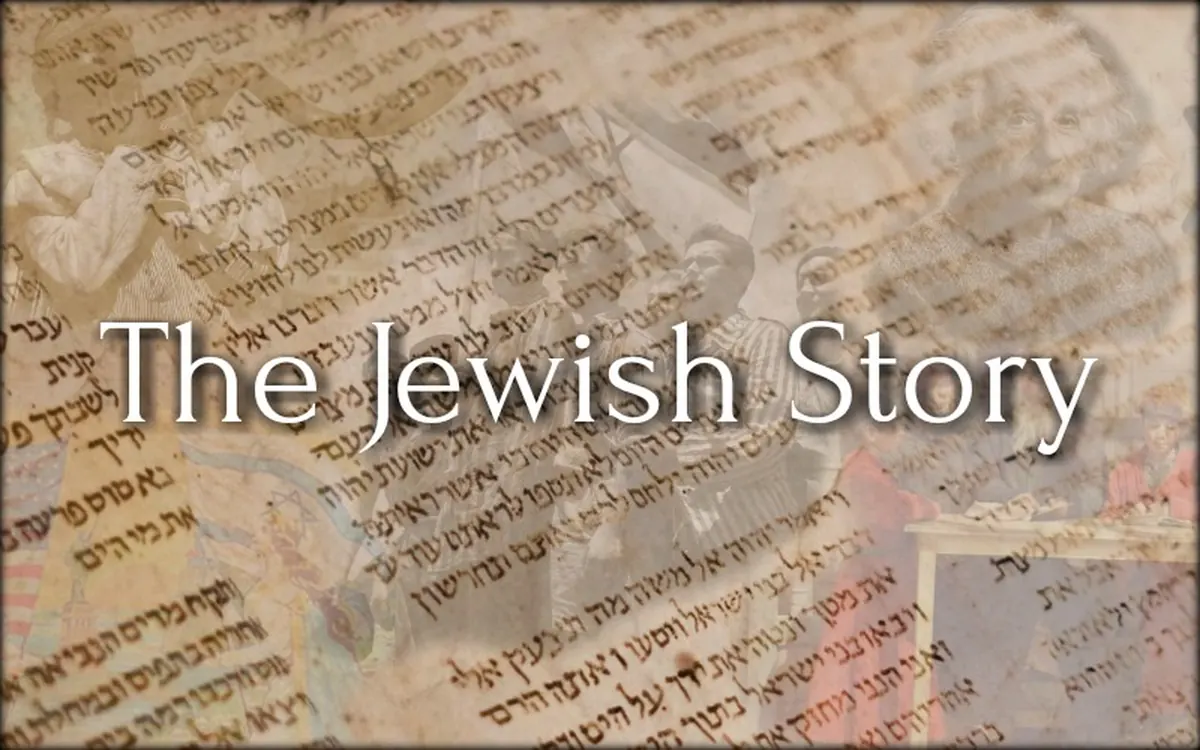
The Men of the Great Assembly lie on the other side of the mists of the Persian period from Daniel. They will begin to lay the foundations of Judaism as we know it, guiding Israel away from prophecy and toward wisdom. Aside from their place in chronology, what makes them so great?
About this episode
Moshe received the Torah from Sinai and handed it to Joshua, Joshua to the elders, the elders to the prophets, and the prophets to the Men of the Great Assembly, and they said three things. Rav Mike starts with the first Mishnah of Pirkei Avot and asks why only the last link in the chain gets a quote. His answer: what is being handed down is the ability to hand down, and prophecy's power lies in its possibility, in the very idea that heaven and earth can meet in a person. Wisdom is different. You only know the wise are wise if you can hear their words. The Men of the Great Assembly are where wisdom scripture begins.
How did they end prophecy? Through a story from the Gemara in Sanhedrin that Rav Mike tells with relish. They cried out that the desire for idolatry which had destroyed the Temple still danced among them, fasted three days, and a note fell from heaven with one word, emet, truth. The desire for idolatry leapt out of the Holy of Holies in the shape of a fiery lion and was sealed in a lead cask. Why from the Holy of Holies? Because the desire for idolatry and the desire for prophecy are the same desire, the hunger for transcendence, for something larger than ourselves. The God-saturated world was ending, Greece and the victory of the mind were on the horizon, and the Men of the Great Assembly built intellectual and spiritual constructs strong enough to carry the Jewish people anywhere while preserving one drop of the dew of prophecy inside them.
Their three sayings map the new leadership. Be deliberate in judgment: they were judges, and authority keeps its standing by not having to use power. Raise up many students: the shift to an educational model, and more souls in the game of the Oral Torah, because Sinai is never finished and the encounter between each Jew and the unchanging text is where revelation continues. Build a fence around the Torah: a continuation of Ezra's walls, and also, Rav Mike suggests, the beginning of an acceptance of exile, of a kingdom of God that moves inward rather than washing over the world.
That raises the hardest question in the episode. If the First Temple was meant to embody the kingdom of God and failed, and the whole Bible reads as a string of failures from Eden to the golden calf, are we living inside the inside of failure? The Men of the Great Assembly answered with what Rav Mike calls a theology of exile. Jeremiah had dropped the word awesome from Moshe's description of God, and Daniel had dropped mighty. The Great Assembly restored both: God's might is in holding back his wrath, and his awesomeness is in the survival of one nation among so many. Divine silence is read as presence. Exile, personal, national and existential, is given a place in the divine plan.
Two more foundations close the episode: prayer and the book. Ezra and his court composed the eighteen blessings in sequence, in Hebrew, because meaning lives in speakers and in a shared associative network, and because the Amidah told three times a day becomes the story we live in. They also fixed the structure of the Hebrew Bible. Rav Mike ends with the story of Shimon HaTzaddik walking out in the priestly garments to meet Alexander the Great on the road to Jerusalem, the first encounter between Israel and Greece, saved for next week.
Key ideas
- Tradition, mesorah, is the ability to hand down. Prophecy's power is in its possibility; wisdom's power is in its content.
- The desire for idolatry and the desire for prophecy are the same hunger for transcendence, which is why it leapt from the Holy of Holies.
- Be deliberate in judgment, raise up many students, build a fence around the Torah: judges, teachers, and the first acceptance of exile.
- The theology of exile reads God's restraint as might and Israel's survival as awe. Silence becomes presence.
- The Amidah in Hebrew, in sequence, is a story told three times a day until it becomes the story we live in.
- Shimon HaTzaddik meeting Alexander is beauty carried outside the holy precinct to make contact with the other.
Chapters
- 0:00 A thousand voices: the chain of tradition
- 1:05 What is handed down is the ability to hand down
- 2:12 Prophecy's possibility, wisdom's content
- 4:23 Killing the desire for idolatry
- 7:37 Why it leapt from the Holy of Holies
- 9:48 Where are we in time? The quiet century
- 11:54 Be deliberate in judgment
- 14:12 Raise up many students: more souls in the game
- 16:22 Build a fence around the Torah
- 19:33 Are we inside the inside of failure?
- 21:40 Three kinds of exile
- 23:04 Restoring the crown: awe and might
- 27:06 A theology of exile
- 29:13 Prayer, language and the eighteen blessings
- 34:30 The Amidah as a story
- 35:34 The structure of the Bible
- 36:42 Shimon HaTzaddik meets Alexander
Who, where and when
People
The Men of the Great Assembly, Ezra, Nehemiah, Shimon HaTzaddik, Alexander the Great, Rambam, Otniel ben Kenaz, Shimon ben Shetach, Rabbi Yehoshua ben Levi
Places
Jerusalem, The Holy of Holies, Elephantine, Mount Gerizim, Antipatris
Texts
Pirkei Avot 1:1, Gemara, Sanhedrin 64a, Gemara, Yoma 69, Megillat Taanit, Rambam, Laws of Prayer 1:4, The Amidah
When
The end of the age of prophecy, Around 400 BCE: the Elephantine record falls silent, The 25th of Tevet: the day of Mount Gerizim
Read the transcript
You know, they say it takes a thousand voices to tell a single story. And the kind of story that I want to tell might take a thousand voices and a thousand years. Because this isn't my story. That's too big for me. This is The Jewish Story. And I'm Rav Mike Foyer. And I'm here to share with you my take on our past in a way which, God willing, will take us into the future. Episode 3. The Men of the Great Assembly. What makes them so great? Moshe received the Torah from Sinai and transmitted it to Yoshua Yoshua to the elders and the elders to the prophets and the prophets to the men of the great assembly and they said three things before we get to what they said though we've got to ask a couple of questions first of all, what is this Torah of which you speak?
what's being received and handed on here? and as a corollary why did they, why did the men of the great assembly get a say when everyone else who comes before only receives recognition of being a link in the chain? Because that's what this is. It's a chain of authority. And in reality, that partially answers our first question, that what is being handed down here, what's being handed down is actually the ability to hand down. Because tradition in Hebrew is misora, that which is passed on. And because of this, our tradition will always be bound up with questions of authority. Who has the legitimate tradition? and who are his authentic inheritors. And this rolls right over into the second question of why we only hear of content when it comes to the men of the Great Assembly.
Because for the first stages from Moshe, the Yoshua, the elders, and the prophets, as we said, what's being handed down is the ability to hand down. The content is not primary. because the role that the men of the Great Assembly will play in finally ending the age of prophecy and laying out the first steps on the path of the wisdom will have a lot to do with the difference between the experience of prophecy and the content on which wisdom rests. Because we have content for the previous members of this mission. Moshe, of course, we know his Torah well. Yahushua has a book. The elders, the prophets, they have plenty of books. The Hebrew Bible is made up of them. In that sense, then, this Mishnahh, which I just quoted to you, which is the first Mishnahh from the first chapter in Pirkei Avot, the Ethics of Our Fathers, is actually wisdom scripture.
It is the written version of the process of the wise. Also, we're going to see that the men of the Great Assembly are different from the prophetic leadership which preceded them because the power of prophecy is primarily in its possibility. The very idea that heaven and earth could unite in a human being itself is an inspiration. And so therefore, as is always true, the content of revelation will be secondary to its experience. While, on the other hand, wisdom is all about the contact. How do you know the whys are wise if you can't hear their words? so we're here on the other side of this great abyss of the Persian period we've already laid out Daniel's role as holding one side of the bridgehead they are the mythic link to the age of prophecy we've begun to flesh out the role that Ezra and Nehemia play in bridging that gap to the other side and the return to Zion and the approaching end of the Persian period and the men of the great assembly who practically speaking are the spiritual and intellectual inheritors of that process that we mentioned last week of the Brit Amanah, of the covenant of faith that Nehemia put together, this oligarchical document that you can see there in the 9th and 10th chapters of the book of Nehemia.
It's worth it to check it out. It's a pretty amazing historical item to have in our hands. But they are the inheritors of that process. 120 men of the great assembly, the Gemara will teach us. Now you should understand that historians take that not literally and say there was never actually 120 people who sat in a room together. There's many indications that that is the case, even in the sages' words themselves. But I want to focus on the fact right now that we see them as the true end of the age of prophecy and the beginning of this path of wisdom. And Ezra and Nechemi, of course, started them off. And how did the men of the Great Assembly, Anshaykh, Knesset Gdolah, put the nail in the coffin of prophecy?
Well, it's pretty amazing. They did it by killing the Yetzir for idolatry, by getting rid of the desire for idolatrous worship. I'll tell you a little story from the Gemara in Sanhedrin. The Gemara says, come in here. It quotes a verse. It says, they cried aloud with a voice unto the Lord their God. And what did they say? They asked the Gemara. They said, woe it is to us that the idolatry which has destroyed our temple burnt our city to the ground, slew the righteous, and exiled us from our land, still sporks among us. Meaning, if we couldn't resist the desire of ideology when the temple stood, when kings were at our head, when prophets rebuked us in the voice of God, how on earth are we supposed to do so now?
I mean, here we are, a remnant, as Ezra described, huddled behind the gadir, the fence, the wall that God has given us, struggling to get the cultural momentum back together, to actually succeed in our divine mission? How are we going to resist such a strong temptation? So they fell down, fasted for three days, begging for mercy. And their sentence fell from heaven in the form of a petek, of a small piece of paper, on which was written, emet, truth. And here, Rabbi Haninah notes that it proves that Chot Moshe Al-Kadosh Baruch Hu is emet, that the seal of God is truth. As we've mentioned before, The word in Hebrew, emet, is the first aleph, middle mem, last taf, letters of the Hebrew alphabet, which means that truth in the mind of the Torah, in the mind of the sages, is not a reductionist process of looking for origins, but rather is an emergent process.
You're only going to know the fullness of the truth when you arrive at the end of the story. So their judgment was emet. and the shape of a fiery lion leaped out from the Holy of Holies, from the Kodosh Kedoshim. And the last prophet said to Israel, there he is, it's the desire for idolatry. And they leapt on it, and they had to pull out its hair and wrestle with it, and they tucked it into a lead cask and got rid of it forever. And then, by the way, on a side note, they decided since it was an eight-rath zone, a time of favor, and their prayer is working, that they might as well get rid of the desire for illicit sexual relations as well. And they succeeded. The problem was that for the next three days, they couldn't find one newly laid egg in all of Israel and all the land of Israel.
So they decided, hmm, life can't work without that. So they decided to let it half out. If you're curious, you can send me an email. I'll tell you the rest of the story. But for our purposes, there's a very simple question that comes out of this. why does the embodiment of idolatry leap out from the most intimate holy space which Am Yisrael knows? What was the spirit of idolatry doing in the Holy of Holies? From the very place that our sages teach us that God's voice also comes out from between the two krufim that are on top of the ark and into the hearts of the prophets? The answer is simple but quite profound. Because the desire for idolatry and the desire for prophecy for Avurah Zarah, strange worship and Avurah Hashem, the service of God are one and the same desire it's the desire to serve something larger than ourself to contact an absolute which lies beyond us this is the desire for transcendence and the men of the great assembly lived in a time where their horizons were open to the shift not only within their own people that had been provoked by exile and return, but the overwhelming transformation that the world was undergoing.
The world is changing, they said to themselves. We used to live in a God-saturated world, and that meant, by the way, that you might go and speak to the prophet, or you might go and pray to the Baal. That idolatry and prophecy were both expressions of the reality of God in every breath. And we're moving away from that God-saturated world toward intellectual constructs, toward the vessels which will hopefully be able to hold the last sparks of that desire for transcendence because the advent of Greece and the victory of the mind is just on our horizon and that breath of holy creative consciousness which allowed for prophecy and idolatry as well is fading. And we're going to see that the men of the Great Assembly, what makes them great is their ability to firmly lay the foundations of wisdom, of the intellectual and spiritual constructs which will allow the Jewish people to survive and thrive in every corner of the planet.
But at the same time, within those constructs, as strong as they may be, they manage to preserve a little drop of that dew of redemption, that divine experience which is just waiting there for those who taste it. Now, where are we in the flow of time? Well, you know, there's very little documentation from the Elephantine papyri, which we spoke about in the last couple of weeks. We have this cache of documents from the Jewish community on the island of Elephantine on the border between the Persian Empire and Egypt. We have documentation of Persian governors right up until around the year 400 before the Common Era. After that, things fall silent for almost 100 years. And let's remember, in history, no news is good news.
The fact that there's little written record means that the society was quiet and thriving. And in reality, we have to also remember that this second commonwealth, which the returnees established, really consisted of little more than Jerusalem and its surroundings. Spiritual and temporal power was concentrated into the hands of the priesthood, something which is going to play out not so well in the long run, But nevertheless, that's okay, because there's a new model on the rise, one which won't reach the fullness of its form or even a fraction of its eventual authority until the mission that I opened with was actually written down. But nevertheless, the leadership of the wise is beginning to emerge.
And one of the things we're going to have to keep in mind as we explore the men of the great assembly and I make an argument that they are indeed the beginning of the path of the wise which will reach its fruition in the writing of the Mishnahh later in the compilation of the Gemara and will become known as what we know today as Rabbinic Judaism So we're going to have to establish whether that's really true. Whether this Mishnahh that places the men of the Great Assembly in a direct line with Moshe and Joshua and the elders and the prophets is a legitimate foundation myth. right? And perhaps what they actually said can help us to judge whether this foundation story is solid enough to build our future on.
So they said three things. First, be deliberate in judgment. Now that's good advice for everyone, but when it comes to the men of the great assembly, what it tells us is that they were indeed judges. Remember, Ezra came back to the land of Israel not only Sofer Mahir Betoat Moshe, a ready scribe in the Torah of Moshe, but with the royal authority to establish courts which would adjudicate the life of the returnees according to the will of God as understood by Ezra and his students. The courts were meant to be an organizing principle for society. That's judgment, but why deliberate? Why the idea of pausing and taking your time? Well, you know, my father always used to tell me, better to be quiet and let people think you're a fool, then open your mouth and prove it.
And the Mishnahh in Pirkei Avod, later, much later actually, in the tractate than what I quoted to you, will tell us is that silence is a fence to wisdom. And in this sense, I think we can understand the deliberate in judgment. Because the reality is, a judge, without using power, wants to act on authority. Where does authority come from? Authority comes from the fact that people recognize his wisdom. And insofar as he has to actually give judgment and therefore there are going to be forces which are going to enforce his judgment, it actually undermines his authority. Authority maintains its status by not having to use it. And therefore, the sages are saying, be deliberate in judgment. Let your wisdom speak for itself and try to avoid exercising power.
They also said, raise up many students. Now, on one level, this is indicative of a shift to the educational model of leadership. We are going to witness an increasing democratization of Torah, of knowledge in general, so much so that in the Maccabean era, a few hundred years down the line, Shimon ben Shetach is actually going to be the first person that I'm aware of to mandate primary education. That's right, 2,500 years ago, the sages mandated primary education. And this also indicates to us that the courts aren't the only organizing principle for community. Education is as well, and it actually, knowing the Jewish community to this very day, proves a highly viable long-term strategy, raising up many students.
But there's a little bit more than that. One more very important piece, which is the sages were looking to get more souls in the game of the oral Torah. What do I mean? Well, you know, the Midrash tells us a story that after Moshe died, the people were so broken in mourning that they forgot 3,000 halakot, 3,000 different types of laws. And when they were ready to come out of mourning, it was Otniel Ben-Kanaz, a little-known biblical figure, but I remind you of the rabbinic principle of conservation of personality. They like to bulk up any name that they have and lump as many together as they need to. And Otnel Ben-Kanaz returned this knowledge with the precision of his mental acumen. Okay, so he learned it out well and brought all these laws back that they'd forgotten.
But this is a little bit odd considering that Yahushua, who was a prophet, as well as Eleazar, the son of Aaron, who had the Urim V'tumin, the prophetic ability of the high priest to ask questions to God using the breastplate. They had a direct line to God still. Why is it when these laws were forgotten in the morning from Moshe that it was specifically according to the sages, Otneel ben Kanaz, with his intellectual abilities that brought them back? It's for the very reason that I just said that the Torah needs Am Yisrael. The power of oral Torah, which is a phenomenon which is going to begin to emerge together with the sages and their predecessors, the men of the great assembly. The power of the oral Torah is in the encounter between the Jew of his day and the unchanging Torah which he has inherited.
Therefore, the more souls in the game, the more Jews who engage with the Torah, the greater the revelation which the Torah holds, Sinai, is never finished. And this is a topic we're going to come back to again and again because the question of what the oral Torah is, where it comes from, and how it shapes our lives, is really the story of the wise. But they said one more thing. They said to build a fence around the Torah. So at first glance, this is consistent with everything we knew about Ezra and Nehemiah, and makes sense that they were the beginners of this process. I mean, Ezra built a fence around the text. He built the fence of intermarriage. Nehemiah actually physically rebuilt the walls of Jerusalem, and then locked the gates on Shabbat in order to guard the fences of sanctity.
and here we just see a consistent continuation of that path and that is indeed one thing. But why do we build fences? Well, to keep things in and to keep things out, to protect what's inside and what's inside the Torah, these commandments which God has given us and if we violate them, it's a tremendous tragedy. Therefore, the sages will build behavioral walls around it. There's also a fear, I believe, that if we don't protect the Torah, that the world will seep in. You know, that different worldviews, Greek, Persian, Polish, North African, South American, everywhere, everywhere. The Torah's going to go everywhere. And how are we going to keep it real? Well, we're going to keep a fence around it. This, for me, raises the same question that that story we told a couple weeks ago about Zerubbabel and the returnees, when they were approached by the peoples of the land who said, hey, you're back.
Oh, you're building a temple to your God? Great, let us help you. and instead of seeing that as a potentially redemptive moment, they saw it as an opportunity to divide. Said, nope, it's not for you to build the temple to our God, it's for us, and pushed off the world. I see this as a very similar moment. Because why didn't they build paths through which the Torah could change the world? Why build a fence around the Torah? Well, in essence, this is the beginning of an acceptance of exile. that we as a people are no longer meant to influence the world. That kingdom of God is moving inward, and the goal has become, at least for the interim, an inner safe space and not a mighty stream which is going to wash over the world.
Remember, that vision of Daniel has told us that melchut, kingship, the ability to shape the context within which people will live, has been taken away from Israel and handed over to the nations. and even though we're going to see that in the Second Temple period it wasn't certain that this would be so there is still a burning desire within the Jewish people to build a kingdom of flesh and blood nevertheless, 2020 hindsight of history here in the 21st century or the 6th millennia depending on how you're counting, it didn't work so this is what they said and I open by saying that the path that the men of the Great Assembly are forging is to create intellectual and spiritual constructs, what we're going to come to call religion.
Because remember, religion is not quite here yet. We live in a God-saturated world still, and religion, as a set of beliefs, behaviors, and practices which negotiate your relationship with God, implies, if it doesn't directly state, that there's something outside of the God relationship. Nevertheless, the men of the Great Assembly are building the structures, digging into the Torah, and taking their local context and trying to create something which will last beyond the challenges of the moment. And in those structures, they want to preserve those sparks of the divine experience which they inherited from the prophets. Because exile is now a reality. It's a reality, and it poses a very big question.
Are we just a bunch of failures? I mean, if God had intended the first temple period to be a kingdom of flesh and blood which would be reflective of the kingdom of God, and we blew it. Does that mean that there's no way back? Furthermore, what does it imply about God if we have a deity that can't make us go in the right way? Unless you think that this is purely a local question and we can just blame that generation and say we had nothing to do with it, open up the Bible and you'll see that one could read the entire story from creation down to our day as a string of failures. Right, Adam, the Garden of Eden, it was perfect. Don't eat that fruit. Oh. And then all the peoples gather together and start to build that Tower of Babel.
Oh. Oh, and Noah, that generation. Oops. The flood. God chooses Abraham. That actually goes fairly well until the Jewish people are standing at Sinai and stray after the golden calf. And then we know, of course, we eventually make it to Israel. Build the temple. It's all well and good until it's not. Meaning that it seems that there's a consistent pattern written into our story of failure. So are we inside the inside of the inside of failure? Are we so far down the path that the best we can hope for is that God will just have mercy on us and end this quickly? I find that hard to accept. And so did the men of the Great Assembly. Therefore, they started a process that I call the theology of exile. They brought a consciousness to exile in an attempt to understand how it could have been that the divine intention from the beginning was that exile play a positive role in the development of the world.
Now we're going to flesh that out through the Gemara's words in a second, but I just want you to have in the back of your mind the fact that exile can be conceived on many levels, and I think of it in three. First of all, there's personal. This is what we call alienation. If I violate my sense of essential self through my behavior or through my thoughts, then I have been exiled from my reality, and I have to do some sort of work to return. There's also the National Historical Plane. This is what our story is mostly about. It the loss of homeland the dispersion amongst the nations We familiar with this There a third piece the understanding of which we going to have to wait a few weeks to really delve into but it the existential Because in the beginning, the first thing which God created was actually nothing.
Because in order for there to be an other, in order for God to fulfill his great desire to have relationship with other, there has to be an act of separation. because separation is the necessary precursor to all relationship. Just think about it. You don't have a relationship to your foot because it's part of who you are. In order to have a relationship, there must be separation. Of course, to enter into a relationship, one has to cross that space and gain intimacy. But nevertheless, separation is the necessary precursor to all relationship. And therefore, the first act of creation was actually God's withdrawal from the world and a creation of nothingness. which also is a form of exile. So that being said, let's think about how the men of the Great Assembly brought consciousness to exile.
And in that sense, we can look at a beautiful Gemara in Tractate Yoma on page 69b, where Rabbi Yahushua Ben Levi asked my question, what makes them so great? They're called men of the Great Assembly. Why are they so great? And he says, because they restored the crown of the divine attributes to its ancient glory. Meaning what? Moshe came and said, Ha'el hakadol hakibol v'hanora. Right? The great, mighty, awesome God. And then Jeremiah came and said, But foreigners are destroying his temple. Where are his awesome deeds? So Jeremiah dropped the word awesome and just said, The great, mighty God. And then Daniel came and said, Foreigners are enslaving his children. Where are his mighty deeds? And he dropped the word mighty.
Notice, Jeremiah and Daniel, the prophet whose promise we carried into exile, and the first one to begin to fulfill that promise by turning back from his exile, looking back to where he came to Jerusalem three times a day, praying on his knees, and thus in a sense, through his consciousness that he was not where he belonged, and his longing to be where he was meant to be, beginning that process of return. And of course, teaching us to read the writing on the wall. So, before we can get to how it is that the men in the Great Assembly are so great, we need to understand what it is we lost with Jeremiah and Daniel. What are awe and might? So awe makes me wish I had a camera. Because if I did, I could show you my favorite distinction between fear and awe.
Because there's an element of fear within awe. Yira, when we're approaching the Yamim no Raim, often mistranslated as the high holidays, they're really the days of awe. And what is the difference between awe and fear? There is an element of fear in there. But they are both the experience of standing in the presence of something greater than us. It's just that fear causes us to shrink and cower, throw our hands over our head and tremble, whereas awe causes us to throw our arms back, our eyes go wide, and we realize the scale of the horizon which is actually available in existence. Because there are things that are large in us that shrink us, and there are things that are large in us which open our consciousness to the greatness of creation.
And that's awe, standing in awe of God. And Jeremiah said, well, the temple was that symbol. It was meant to represent that connection between heaven and earth. And as I said previously, the power of prophecy is really in its possibility, in the idea that a human being could connect between the infinite and the finite. And what is might? The word gura in Hebrew really means the ability to assert one's will, to effectuate their will in the world. If you look in the Bible, a gibur is a hero, a mighty man. It says that the giburim, the mighty ones of David's army, swung their spear over 300 dead. Classic. But around about the same time that the Mishnahh we read previously was written, the rabbis gave us a slightly different definition of might.
Ezehu gibur. They said, who is mighty? Hakovei she ditzro. One who conquers their desire. Because there are two ways to effectuate will. One is to externalize it out into the world, and the other one is to focus it inward. And again, we can see that this is consistent with the sages' understanding of what is happening in history. The kingdom of God is moving ever inward. And so, here's where the men of the great assembly come in. They said, on the contrary, ifchamistabra, right? The opposite is true. Therein lie his mighty deeds. Where is God's might found that he suppresses his wrath and extends patience to the wicked? Meaning the very fact that God doesn't act is a sign of his power. This image of the angry Old Testament God who will smite the wicked is an immature image.
Any child can have a tantrum. Any immature adult wants to smash anything which opposes them. But real power lies in restraint, in the ability to see things for what they are, to allow them to develop in their own right, and perhaps also to reap the fruits of their behavior. But God's might, according to the men of the great assembly, is actually in his inaction, his holding back. And where is his awesome presence? Well, they say, if it were not for the fear of him, how could one single nation survive amongst so many nations? Meaning that God's awesome presence is no longer seen in Israel on its land with the temple standing and the prophet speaking and the king at their head, but rather, since this Gemara was written even after the destruction of the second temple, though the words are put into the mouth of the men of the great assembly who we're discussing now, rather, his awesome deeds are seen in the survival of the Jewish people.
That our presence represents His presence in the world. And these two things taken together are the real foundations of a theology of exile. Because God is hiding His face. He's not smiting the wicked. And He's not speaking in the voice of the prophets any longer. And what do the sages say? They say the very fact that God is silent, that His hand is not seen, is an indication of His presence. this is pretty great there's two more pieces I want to touch on that make them great and show their power in laying the foundations of creating the world in which we as Jews live the next piece is prayer and it's important to understand that by prayer we could really mean two things we can mean that deep human desire to communicate with God which really has its roots in the prophetic consciousness or we can mean liturgy.
And I know, because I speak to a lot of people, that the liturgy can be a significant challenge to the Jews out there. But nevertheless, we have to appreciate the power of language. Because here, the Rambam, 12th century sage, in his Mishnahh Torah, his great work of law, in the laws of prayer, in the first chapter and the fourth law, he tells us a little story. He says, when Israel was exiled in the time of the wicked Nebuchadnezzar, They became interspersed in Persia and Greece and other nations. This is our story. Children were born to them in these foreign countries, and these children's language was confused. Sound familiar? The speech of each and every one was a concoction of many tongues. No one was able to express themselves coherently in any one language, but rather in a mixture.
If you've ever been in a yeshiva, you know what that sounds like. Right? And consequently, when someone would pray, he would be limited in his ability to request, needs or praise the Holy One in Hebrew, unless other languages were mixed in. And therefore, Ezra and his court, with Rambam echoing the Gemara, sees as the beginning of this process of the men of the great assembly. When they saw this, they established the 18 blessings in sequence. In sequence. There's two important pieces here. There's language, and there's the 18 blessings in sequence. Let's take them piece by piece. Why language? Why does language matter? Well, I'll tell you why. Because the reality is meaning does not reside in language. Meaning resides in people.
But language is a network by which we can share meaning. Not communicate it, share it. Because the reality is words are not little boxes that I can put my meaning into and hand to you so you can open up and know what I mean. Because we could take words as innocent as tree or ball, and when I say them, I'm sure you picture something similar but not the same as what I picture. Or we could say something as loaded as God. And you know, if I've done the work and I've spent the time when I use the word God, I know exactly what I mean. And if you've done the work and you've spent the time, when you hear the word God, you know exactly what you think. The problem is, and this is the sweet irony of language, the more meaning-laden a word is, the less likely it is that you and I will share the same meaning.
unless, of course, we have an intimacy of relationship. Because when we say, am I speaking your language? We don't just mean the technical ability to communicate. We mean, are we talking to each other? Are we speaking out of a shared network of meaning which is reflective of a life experience, of a historical experience, of a cultural context, of a true language? And therefore, it was important in the mind of the man of the Great Assembly to preserve Hebrew as the core context for prayer. Because when I say the word king, I'm willing to bet that most of the English speakers out there think of a guy with a funny hat, big seat, maybe a horse and a lance and some armor. Divine right European monarchy. But when I say the word melech, which is king in Hebrew, it may evoke a host of different associations.
So we're going to speak a lot as we move deeper into exile about the power of language. And this has just begun. Remember, meaning does not reside in language. It resides in speakers. And words are not little boxes to convey meaning. They a point of contact in a whole associative network which if we share it can allow for true communication The other side of prayer that was so important that the men of the Great Assembly did was this sequencing You know, the basic structure of Jewish prayer really is summed up in three words. Baruch Hata Hashem. Blessed are you, O Lord. And there's a lot in each of these words, and I encourage you, especially those of you who pray the traditional prayers, to spend some time thinking about what those three words mean.
but just for a minute I want to touch my original assertion that the men of the great assembly though they legislated prophecy out of existence though they prayed that the desire for idolatry would be removed and it leapt out of the Holy of Holies taking with it the ability to be prophets as well nevertheless they preserved in our prayers one little touch of prophecy that each and every one of us who pray who say blessings on a daily basis participate in and that is that second word you we address God in the second person which is a little spark of the transcendent there in our institutionalized religion. And we say that 18 times in a row in sequence. You know, because the Rambam here is referencing a Gemara in Megillah which asks the question why does this prayer follow that prayer?
Why does this prayer follow that prayer? Why does this blessing follow that blessing in the whole structure of the 18 blessings? And anytime you ask the question why does A follow B follow C follow D what you're saying is what's the narrative flow? Meaning that the Amida, the 18 blessings, the silent prayer, is actually a story. It's a story that we tell three times a day. And now ask yourself, what happens when you tell the same story three times a day, every day, for your whole life? It becomes the story in which we live. And this national God awareness, which is the last vestige of the prophetic God consciousness is welded into a story in which we can live and which we share no matter where we go.
Because as the people disperse to North Africa and Spain and Babylon, Poland, America, wherever they go they'll take the story with them. And it will be the context which we share that transcends time and space. That's pretty great. last but certainly not least the men of the great assembly really did the bulk work on the structure of the Hebrew Bible though we're going to spend more time particularly in the late second temple period discussing the nature of the formation of the text and as we already touched on a little bit with the book of Daniel some of the competing streams in this compilation it was the men of the great assembly who laid down the fundamental structures of the Torah, the books of prophets, and the books of writings.
So here we see almost all of the elements of what we will eventually call religion emerging. Emerging out of this 100-year process where 120 men sat and adjudicated, they were judges, and educated, they were teachers, and did exegesis analysis in the text because they wanted to build a fence around that which was precious and to encourage that which had not yet taken form to grow. And they gave us the structures of prayer and a theology of exile within which we could live wherever we find ourselves. And they gave us a book, a book on which we could base all subsequent explorations. and so just in order to end on a last story note the next Mishnahh in Ethics of Our Fathers which follows the one that I open with mentions Simon the Righteous who is amongst the remnants of the Men of Great Assembly and he is the one who will represent Israel in its first historic encounter with Greece I'm going to tell you this story now and we'll leave the analysis of it for next week.
So if you open up the Gemara Neumon 69a, it'll tell you. Come in here. We have a question about the priestly garments. You know, the Kohen Gadol wore, the high priest wore eight special garments. Turquoise blue, vermilion red, a gold breastplate with 12 precious stones with the names of Israel engraved on them, a multicolored sash, a multicolored turban, a plate of gold on his forehead which was engraved with the name of God. Awesome. Awesome. And these most beautiful of all garments because indeed the whole temple court was the resident place of all beauty in the Jewish tradition. And you know what the most amazing thing is? The most beautiful place of all. The Holy of Holies coated in gold with cherubs and palm trees in the time of Solomon and the holy ark in the middle with the two cherubs facing each other with their wings arched over.
was hidden away, only seen by one person, one day a year, by the bad light of the smoldering coals. But nevertheless, it was there. And that person, the high priest, wore these eight vestments whenever he did the temple service. And the Gemara has a question. Is it permitted to wear those beautiful robes outside of the holy precinct? And it immediately answers, surely not. Implying, of course, that the place of beauty is together with holiness. but then the Gemara says it can't be so because we have a story the 25th of Tevet is the day of Mount Grisim says the Gemara on which no mourning is permitted this is a fragment from what's known as Megillat Tani, the scroll of fast the earliest second temple rabbinic document we have, there's a list of days on which miraculous salvation came to the Jewish people and then in subsequent years we forbid any mourning or eulogizing on those days.
So on the 25th of David is the day of Mount Gerizim. It's the day on which the Cuthians demanded the house of our God from Alexander the Macedonian so as to destroy it. These Cuthians are the Samaritans. They're the same peoples of the land that gathered around Zerubbabel and when he rejected their overture to help build the house of God, turned on him. Their enmity lasts even until now. And when Alexander comes to the region, There's a little back story here. And he conquers the city of Tyre on the modern day coast of Lebanon. The Jews remained loyal Persian citizens. They didn't send him help. On the contrary, they were ready to fight for the empire. But the Samaritans sent him food and help with the siege.
In return for their assistance, he asked them, what would you like? And they wanted their revenge. And so they incited him against the Jews. So whereupon, says the Gemara, some people came and informed Shimon Hatzari, Simon the righteous, who was the high priest. And what did he do? He put on those priestly garments. Remember, this is a question about whether he's allowed to take the beauty outside of the place of the holy. He put them on, robed himself, and the noblemen of Israel went with him carrying fiery torches in their hands. And in the Midrash it says that all of the koanim, all of the priests dressed in white, followed behind. And they walked all night, some walking on one side, others on the other, until the dawn rose.
And when the dawn rose, Alexander said to the Samaritans who were with him, who are these that approach us? And he answered, the Jews that rebelled against you. And as he reached Antipatris, a spot right on the middle of the road between Jerusalem and the coast, the sun burst forth and they met. And when he saw Shem'Natzari, beautiful robes, flowing beard, tall, stately, priest, he descended from his chariot and bowed before him. Now remember, Alexander was head and shoulders taller than every Greek, and they say that he used to wear a three-foot-high ostrich plume on his helmet, burnished bronze armor. This is beauty and beauty, meaning on their own. And Alexander gets down and he bows to Shimon Tzadik and the Qutlians go nuts.
They say, what? A great king like you is bowing before this Jew? And he said, ah, but it's his image which wins for me in all my battles. And our commentators explained that he had had dreams seeing Shimon Tzadik's face, telling him that he would be victorious. And then he said to the Jews, what have you come for? And they said, is it possible that these idol worshippers mislead you to destroy the house wherein prayers are said for you and your kingdom, that it never be destroyed? There's a little bit of fudging going on there, because as I said, the Jews were loyal Persian citizens. But nevertheless, all's fair love and war. And then Alexander says, well, what do you want from me? And he says, well, give us these Cuthians who stand before him.
He says, they're yours. And at once they put holes in their heels, tied them to the tails of their horses, and dragged them over thorns and thistles. until they came to Mount Gerizim, which they plowed and planted with vetch, even as they had planned to do with the house of God. This is the meeting between Greece and Israel in the person of Alexander of Macedon and Simon the Rises there on the road to Jerusalem. It's a meeting of beauty, which you have to take outside the place of the holy in order to make contact with the other. But that's going to be a story for next week. meanwhile I just want to thank everybody involved in this project the Pardes Institute for giving me a home to teach that's p-a-r-d-e-s dot o-r-g dot i-l I'd like to thank all the folks at the Land of Israel Network for their generous support in getting this out to a broader audience I'd like to thank Solom Yaakov because it's my home I'd like to thank all the amazing people out there who gave heart and soul to help make this project happen this is Rav Mike Foyer and I'm telling the Jewish story.
Have you ever planted a grapevine? What if the grapevine happened to be in the land of Israel? Not only that, but if you were a Christian planting this grapevine in the mountains of Israel, you would be fulfilling prophecy that Isaiah and Jeremiah foretold more than 3,000 years ago. I'm Joshua Waller with Hayyvel, and I invite you to fulfill prophecy on the mountains of Israel by joining us this harvest. Go to Hayovel.com, that's H-A-Y-O-V-E-L.com for more information.
More from Season 1
Season 1: Episode 1 - The Time Between the 1st and 2nd Temples - Daniel, The Mythic Link
The opening episode of the Jewish Story! Rav Mike touches his perspective on history and then tells the story of Daniel as the link between the age of...
Play Episode
Season 1: Episode 2 - The Return To Zion, Re-building the Walls of Identity, Religion, and Jerusale
In Episode 2 of The Jewish Story, Rav Mike explores the walls built by Ezra and Nechemia, and the power which exclusivity over our story gives in the...
Play EpisodeSeason 1: Episode 4 - The Greek Encounter
The encounter between Greek and Jewish culture was love at first sight. The two cultures were bridged by language, and one of its great products of their fusion...
Play Episode