
Season 1: Episode 11 - The Indigestible Element
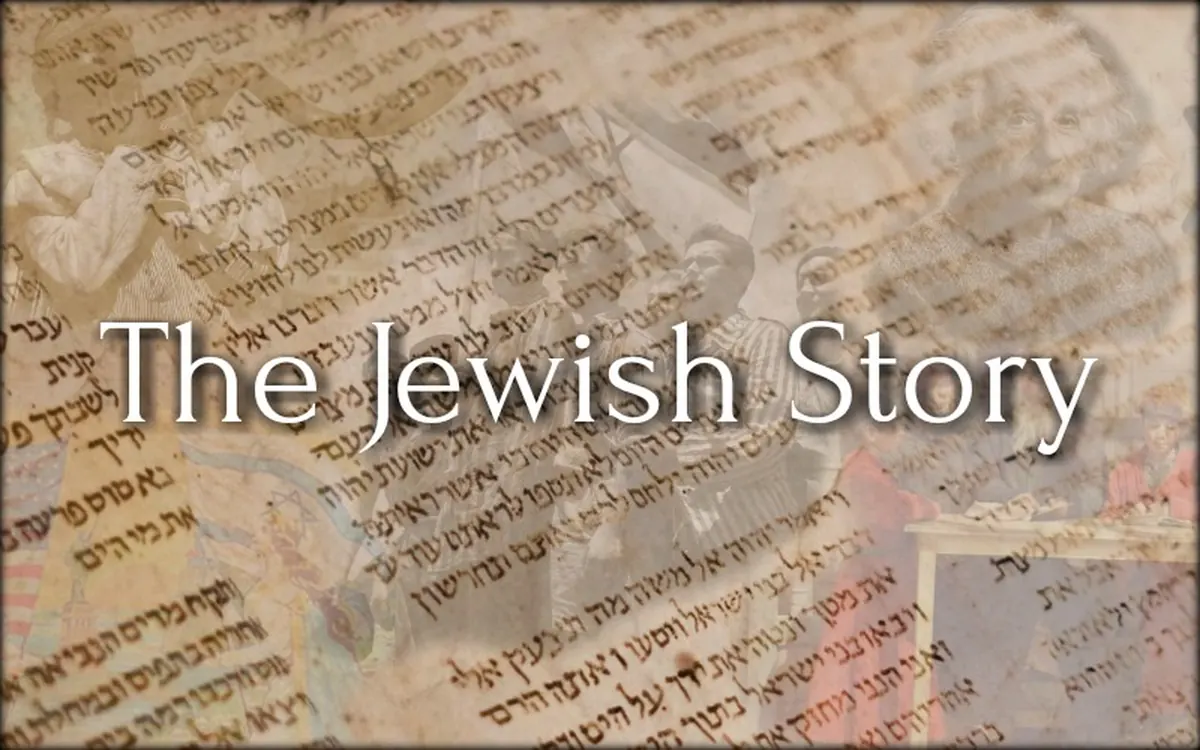
The ruins of the Temple were still smoldering when Judea burst into the flames of rebellion once again. In this episode Rav Mike discusses the final two rounds of the Roman Jewish wars. Filled with brutal bloodshed and failed messiahs, this is the time period which convinced Rome that the Jews were the indigestible element of their Empire.
About this episode
Orwell said the surest way to destroy a people is to obliterate their understanding of their own history. The eleventh episode is about a people that refused to be digested. It opens with the Fiscus Judaicus, the half-shekel every Jew in the empire had sent to the Temple, now redirected by Vespasian to a temple of Jupiter in Rome, and extended by Domitian to converts and to anyone who hid Jewish customs. Rav Mike sees in that tax the completed evolution of Jewish identity: from geography in the First Temple, to genealogy in Ezra's day, to entry into the covenant by law and the sign in the flesh. Even a convert in Hispania who had never seen Judea now paid as a Jew.
Then a war almost nobody has heard of. In 115, while Trajan was deep in Parthia, the Jews of Cyrene rose under Lucuas, who may have called himself king, and destroyed temples and everything Roman. The rising spread to Alexandria, Egypt and Cyprus, and Trajan had to pull back his army. Lucius Quietus crushed Mesopotamia and then besieged Lod, where Rabban Gamliel II declared a fast on Hanukkah and the martyrs of Lod died. Cassius Dio's description of Jewish atrocities, written after all three wars, is either the first blood libel or the record of something terrible, and it is where the Jews are fixed into Roman history as the indigestible element. Rav Mike pauses to say that this is also where Jewish history becomes a lens on Western history, the history of otherness, and tells of raising his hand in ninth-grade world history to say that was not how he had heard the story of the Crusades.
Hadrian, tolerant and perhaps philosemitic, is said in Bereishit Rabbah to have granted permission to rebuild the Temple in 118, until the Samaritans talked him into moving it five cubits, which no Jew could accept. The preparations for revolt began then. In 130 he announced Aelia Capitolina with a temple of Jupiter on the Mount, and Judea rose. The war had two leaders: Shimon bar Kochba, legendary and brutal, whose prayer was God, neither help nor hinder us, and Rabbi Akiva, who read a star goes forth from Jacob as Koziba goes forth from Jacob and said, this is King Messiah. Rabbi Yochanan ben Torta answered: Akiva, grass will grow on your cheeks and the son of David will not have come. Rav Mike notes that Akiva was using pesher, the Essene method of reading prophecy into the present, and throwing fuel on embers.
Why would the giant of Torah back a failed Messiah? Because the sages never gave up the model of a physical redeemer; a thousand years later the Rambam ruled that whoever liberates Israel, rebuilds the Temple and restores the Torah has the presumption of being on the right track. Yochanan ben Zakkai saved a little; Akiva went for broke. Both were playing to win. Akiva went for broke and failed. Julius Severus came from Britain with four legions, Beitar fell after three and a half years, and Hadrian banned circumcision, Torah, tefillin and mezuzah, hunted the rabbis, barred Jews from Jerusalem until the Islamic conquest, ploughed the Temple Mount, and erased Judea from the maps and wrote Palestina. Judeans became Jews, with no map to point to, for seventeen hundred years.
The episode ends with martyrdom. The ten martyrs of the Yom Kippur liturgy weave a century of war into one story whose purpose, Rav Mike argues, is to make people choose life, because living for the Torah is harder than dying for it. Akiva's own death, from Berachot 61b: the fox and the fish, Torah as the element in which we live and history as mere context; the iron combs; the Shema; and the word echad drawn out until he died, with a heavenly voice saying happy are you, Akiva. On the day he died, the sages teach, Rabbi Yehuda HaNasi was born.
Key ideas
- The Fiscus Judaicus completes the shift of Jewish identity from land to lineage to covenant: a convert anywhere in the empire now paid as a Jew.
- The Kitos War of 115 to 117 may have been the bloodiest of the three Roman wars, and it is where Rome fixed the Jews as indigestible.
- Jewish history is a lens on Western history, a competing narrative and the first history of a colonised people.
- Hadrian's permission to rebuild, withdrawn over five cubits, lit the fuse; Aelia Capitolina set it off.
- Rabbi Akiva crowned Bar Kochba Messiah by pesher. Yochanan saved a little; Akiva went for broke. Both were playing to win.
- Judea became Palestina and Judeans became Jews. Akiva died on the word echad, and on that day Rabbi Yehuda HaNasi was born.
Chapters
- 0:00 God of vengeance: the bitterness after 70
- 1:07 The Fiscus Judaicus
- 3:21 Conversion completes Jewish identity
- 4:26 Nerva's coin, Trajan's Parthian war
- 5:30 The Kitos War: Cyrene, Alexandria, Cyprus
- 8:43 Cassius Dio and the indigestible element
- 10:59 Mesopotamia and the martyrs of Lod
- 13:03 Greece, Rome and Christianity: three attempts to digest Israel
- 15:11 Jewish history as a lens: the ninth-grade Crusades
- 17:20 Hadrian and the five cubits
- 19:30 Aelia Capitolina and the tunnels
- 20:34 Bar Kochba: neither help nor hinder us
- 21:42 Rabbi Akiva: this is King Messiah
- 22:47 Pesher, and fuel on the fire
- 24:52 Son of disappointment; Moshe in Akiva's classroom
- 28:03 Why Akiva backed him: the Rambam's rule
- 29:08 Save a little, go for broke
- 30:14 Beitar falls
- 31:19 Hadrian's decrees and the map renamed Palestina
- 33:39 Martyrdom and the ten martyrs
- 38:02 The fox and the fish; Akiva's death
- 41:14 Rabbi Yehuda HaNasi is born
Who, where and when
People
Rabbi Akiva, Shimon bar Kochba, Hadrian, Trajan, Vespasian, Domitian, Nerva, Lucuas of Cyrene, Lucius Quietus, Julius Severus, Rabban Gamliel II, Rabbi Yehoshua ben Chananya, Rabbi Yochanan ben Torta, Cassius Dio, Eusebius, Rambam, Rabbi Yehuda HaNasi
Places
Cyrene, Alexandria, Lod, Beitar, Nachal Chever, Jerusalem, Aelia Capitolina, Judea renamed Palestina
Texts
Psalm 94, Seder Olam Rabbah, Bereishit Rabbah, Yerushalmi, Taanit 4:5, Numbers 24:17, Gemara, Menachot 29b, Gemara, Berachot 61b, Eleh Ezkera, Eicha Rabbah, Mishnah, Sotah 9
When
70 CE: the Jewish tax, 96 CE: Nerva's coin, 115 to 117 CE: the Kitos War, 118 CE: Hadrian's permission, 130 CE: Aelia Capitolina announced, 132 to 135 CE: the Bar Kochba revolt, 135 CE: Beitar falls
Read the transcript
George Orwell taught that the most effective way to destroy a people is to deny and obliterate their own understanding of their history. I'm Rav Mike Foyer, and we're trying to understand the Jewish story. We're sitting in the present, looking at the waves of the past as they roll over us, hoping to catch one and ride it into the future of which we dream. Episode 11, The Indigestible Element. You know, the great rabbinic chronology, Seder Olam Rabbah, says that when the temple was destroyed, the Levites were singing Psalm 94. El Nicomot Hashem, El Nicomot Ophiyah, God of vengeance, O God of vengeance, show your vengeance. Because despite the progress that the sages at Yavna made in embracing defeat even before it had happened and crafting exile to be a driver for positive identity, And in building the structures of religion that are going to allow Israel to play the long game in history, the Judeans have neither forgiven nor forgotten their first defeat at the hands of the Romans.
And the Flavian house that Vespasian establishes will rule Rome for the next three generations, and bitterness will remain between the Romans and the Jews. And that bitter, defeated state is probably best embodied for our story by the Fiscus Judaicus. That's the Jewish tax that Vespasian imposed on all Jews throughout the empire in the wake of the Great Revolt. Not just, by the way, on those who took part in the rebellion itself, but everyone everywhere. He declared that the annual tax paid by all Jews since time immemorial to the maintenance of the temple in Jerusalem would now be devoted to the maintenance of a temple to Jupiter in Rome. It doesn't get any more bitter than that. And when Mephasian died, his son Titus, who actually was the one who burned the city of Jerusalem and the temple, took over.
And when Titus died, he passed on this tax to his brother Domitian, who ascended to rule in his place. In fact, Domitian not only kept the tax in place, he expanded it to include not only Jews and converts, but he began to hunt those who concealed the fact that they were Jews or even observed Jewish customs. This was part of a general struggle that Domitian was waging on behalf of the traditional pagan culture of Rome, a losing struggle as we'll see as we move forward in further episodes. Because in addition to persecuting Jews and Christians, he actually twice expelled all the philosophers from Rome. Even his own cousin, the consul Flavius Clemens, was put to death for embracing the Jewish faith.
It boggles the mind how a consul, one of the most important positions in Rome, cousin to the emperor, actually chose to join a people who were in such a defeated state. It's also important to note, and we see this in the waves of persecution on Domitian, that it's during this period that Christianity began to formally differentiate itself from Judaism. Even though the Christians would not be recognized as the tolerated religion in the Roman Empire for another two centuries, and they would suffer much martyrdom at the hands of the Romans because of that. Nevertheless, now, not only was it too hard to be a Jew, it was a tax liability. And here, we can finally see in Domitian's enforcement of the Jewish tax, the full evolution of conversion as a means of membership into Am Yisrael, because even people who converted, who didn't fight in the revolt, who had never actually set foot in Judea were now subject to the Fiscus Judaicus.
Geography as the key to Judean identity faded after the destruction of the first temple in the Babylonian exile, as we spoke about. It was replaced first by genealogy amongst the returnees in Ezra's time, as we mentioned the importance they placed on their family tree. And now, the core to the Jewish identity will be the entry into the covenant through law, as especially as represented through the sign in the flesh, circumcision. Now, after the murder of Domitian in 96, the Emperor Nerva ascended to the imperial throne. He actually relaxed the rules of the tax and applied it only to those who openly practiced Judaism. And he struck a coin which was in opposition to the coin originally struck by Vespasian after the destruction of the temple that said Judea captor.
Judea is captured. Can you imagine the bitterness of a Jew somewhere in the far-flung province of Hispania, paying a tax for a place he may have never seen with a coin that said that he was defeated? But now Nerva, we have these coins in our hands, struck a coin that said the removal of the wrongful accusation of the Fiscus Judaicus. There was a lightning of the load, which unfortunately was not going to last. It's actually unknown if or when this tax was ever formally revoked, and in fact it was actually revived in the Middle Ages in the 14th century by the Holy Roman Emperors. Either way, Nerva went the way of all flesh and was succeeded by his adopted son Trajan, the great soldier emperor, who when he launched his campaign against Parthia, that perennial enemy on the eastern boundaries of the Roman Empire, the Persian Kingdom, when he launched that campaign in 114, where his advance actually represented the high watermark for the expansion of the Roman Empire ever.
Because the Romans had always believed in principle that their empire was unlimited. Trajan basically decided to put his money where his mouth is and try to make that idea a reality. It will be during this campaign that the Kitos War, also known as Merid Hatzfut Zot, the exile rebellion, took place. I'm willing to bet that very few people who are listening to this now have ever heard of it. But this lesser known round of the wars between the Romans and the Jews may have actually been its most bloody chapter. The initial sparks of the rebellion occurred in the city of Cyrene. It's located in modern day Libya, North Africa. It was a Hellenistic city that had actually held a population of Jews since the earliest time of the Ptolemaic Empire.
However, while under the Ptolemies, the Jewish inhabitants actually enjoyed equal rights as they did in Alexandria, as we spoke about a few episodes ago. When the city was created a Roman province in the first century before the Common Era, the Jews suddenly found themselves oppressed by a now autonomous and much larger Greek population. So for some reason, in the year 115, the Jews of Cyrene rose up in an outburst of religious rebellion against the local pagans. they began to destroy temples to Hecate, Jupiter, Apollo, Artemis, Isis, as well as every single civil structure that was associated with Rome. The uprising was led by one Lucuas, a bit of a mysterious figure. In fact, the whole history of this rebellion is told in fragments in a couple of Christian historians, as well as Cassius Deo, the great Roman historian of the late 2nd century.
Cyrene actually, in this sense becomes a major site for the ongoing territorial identity struggle between the Jews and the pagan Greeks throughout the Hellenistic cities something we mentioned long ago that in the year 38 when Agrippus passed through Alexandria in 38, that riots broke out it appears that the leader of this rebellion Lukos, may have actually had messianic pretensions as Eusubius, the church historian says he called himself a king. Whatever he called himself, his initial successes were quite impressive. So impressive, in fact, that the fervor spread to Alexandria, where more temples were sacked, and even the tomb of Pompeii was destroyed. Rioting and street battles began to spread throughout Egypt into Cyprus.
The entire eastern empire was alight. And Trajan, meanwhile, deep in Parthian territory, was actually forced to withdraw his army in order to put down the revolts. So he turned the eastern armies over to Lucius Quietus, and sent Marcius Turbo, the head of another force, to repress the revolt in North Africa, which he did with exceptional brutality. In fact, Ysuvius reports that the war left Libya so depopulated that a few years later, new colonies actually had to be established just to maintain viable settlement. There weren't enough people. And if that's not bad enough, Cassius Dio, as we mentioned, the late 2nd century Roman historian, gives the following description, speaking of what the Jews would do to their enemies.
They would cook their flesh, make belts for themselves of their entrails, anoint themselves with their blood, and wear their skins for clothing, many they sawed in two from the head downwards. He goes on and says, For this reason, no Jew may set foot in that land, meaning in North Africa, but even if one of them is driven upon that land by force of the wind, he's put to death. Now what are we supposed to do with such a horrific description? I mean, this may be, if it's false, the first written blood libel. On the other hand, we have to consider what exactly was happening during the Kittos War. What we do know is that this was written, as I said, in the late 2nd century, already in the light of not only the Great Revolt in 66, not only the Kitos war that we're discussing now in 115, but also the Barcochal Rebellion, which we'll speak about at the end in 135.
Meaning, the three wars between the Romans and the Jews fueled Cassius Deo's description of the Jews as bloodthirsty and specifically indigestible. Stiff-necked refusal to accept the Roman rule. And Cassius Deo actually is the one who cements this notion into Roman history. More on this shortly. Eusebius, the Christian historian, goes on to say that once Trajan had retreated, he suspected that the Jews in Mesopotamia would also rise up against his garrisons that he'd left behind. And he ordered Lucius Quietus to clean them out of the province I quote he organized a force and murdered a great multitude of the Jews there For this reform he was appointed governor of Judea by the emperor Truth is, it's quite likely that the large populations of Babel had no desire at all to live under Roman rule.
They'd been seeing what was going on in the Greco-Roman culture, and were quite happy to live under the Persians. And then, there seems to be some evidence that began to attack the garrison and supply lines which Trajan had established behind his conquering front. Either way, Lekuas had fled North Africa for Lod that's Lydda to the Romans in Judea with Marcus Turbo in hot pursuit. Inquietus, now command of the legions of Judea as well, lay siege to the city. And the suffering there became so great that the elderly Nasi or the head of the Sanhedrin, Rappan Gamliel II, who we spoke about in the last episode, the leader of the rabbis at Yavna was actually shut up with them in the siege and he declared a fast on Hanukkah something which the other rabbis rejected nevertheless, Lod was taken and many more Jews were executed they were known as the Horge Malchut the martyrs of Lod and we'll speak about the importance of that model at the end of the episode but for now, just remember that this is only the second of the Jewish rebellions which will occur between 66 and 135 CE.
Meanwhile, during these 70 years, the rest of the Roman Empire is enjoying the heart of the period, don't as Pax Romana, the Roman peace, the period of relative stability from the rise of the empire until the crisis of the 3rd century. And in specific, these years are known as the period of the five good emperors, that's Nerva, Trajan, Hadrian, Antonius Pius, and Marcus Aurelius. Though the term was coined by Machiavelli, in the early 16th century. Nevertheless, we see in the name, as well as Gibbon's description saying that the Roman Empire was governed at this point by absolute power, under the guidance of wisdom and virtue, that apparently Israel saw it otherwise. And in fact, this is definitely when Israel becomes the indigestible element of the Roman Empire.
And in the wake of the final upheaval, which is yet to come, there's going to be a desire to completely wipe them out, both in name and in flesh. But this is nothing new, the refusal to be part of the dominant culture. We know that this struggle began with the Greeks. They objected to the particular chosenness and Israel's model of ongoing revelation and partnership with creation, embodied in both the brief and circumcision and oral law. Meaning, they saw us as with an aesthetic evil. we were marring the flesh as well as a philosophical opponent we believed in redemption in progress, in time, in the ability as I said, to be partners in the unfolding of divine will and so the Greeks had their shot at wiping us out and Rome will soon also want to wipe out physical Israel because we are politically intractable we refuse to play the game and therefore the sign in the flesh will actually be outlawed and the masters of the oral law pursued ruthlessly to the death.
Finally, the last phase will occur when Christianity emerges as the inheritance of Greek culture and the Roman state together. Remember, circumcision and the binding nature of the oral law are already anathema to them when they gain this power. Therefore, the political indigestibility which the Romans saw in the Judeans will become the obstinate refusal of the Jews to accept the revelation of salvation as Christianity sees it. It's not just the historical fact that the Jews refuse to bow, which gets cemented into Roman history at this point. This is actually also the phase at which Jewish history becomes a new lens through which to understand world history, similar to what happens with feminist history and black history in the academy when they emerge as a completely different way of knowing Western culture.
it's an alternative frame of reference that actually develops in concert with what's traditionally called history, meaning it's not a subset of history it's a lens to which everything we know can be re-examined call it the history of otherness call it a competing narrative in that exegetical battle that will happen between Judaism and Christianity down through the ages about who's telling the right story and whose version of the past will get us to the future of which we dream, or call it really the first history of a colonized people. Any way you look at it, Jewish history will cast a very different light on Western culture. A story to demonstrate. I remember when I was in 9th grade, sitting in world history class, my teacher began to speak about the Crusades.
Now, I went to public school, but nevertheless I had a high-quality supplementary Jewish education. And as he began to speak about the formation of Christian Europe, the nature of the population dynamics, the challenges of primogenerate and inheritance, etc., etc., etc., and the war between Islam and Christianity. At a certain point, toward the end of the class, I raised my hand and said, excuse me, that's now how I heard the story. Because I knew that there was a whole other aspect of the brutality of the Crusaders which he had never mentioned. This will be the way in which Jewish history functions in relationship to Western history. Well, back into the flow. So, Hadrian never did actually succeed in conquering the Parthians, because not only did he have to draw back in response to the rebellion of the Kittos War, in 117 he fell ill and died.
The ember Hadrian succeeded him less than a year later in 118, while the fires of the Kittos War were still smoldering. now Hadrian was known to be tolerant of the Jews, he might even have been called a philo-Semitic, someone who actually was positive toward Jewish culture and he certainly had a great desire to bring peace to his eastern frontier and several Christian later sources as well as the Midrash Breshit Rabbah which is the oldest Midrash we have was composed, we believe, in the land of Israel in the 3rd century both indicate that in the first year of his reign, Hadrian actually went so far as to grant permission for the Jews to rebuild the temple in Jerusalem. The Midrash of Breshi Rabbah says that the Jews began to pour in to Eretz Israel in their excitement, exchange money, gather supplies, everything.
But it goes on to say that the Samaritans, the Shomronim, pulled a move reminiscent of many attempts in the past. If you recall, they are the ones who incited Alexander the Great against the Jews in the 4th century before the Common Era. They were also the ones in the time of Ezra, Nechamer, and Zerubel who roused the Persian emperor against the returnees in their efforts to rebuild Jerusalem. They now turned to Hadrian and convinced him that to rebuild Jerusalem would guarantee rebellion. When he replied, I can't exactly rescind my promise, they said, no, it's not necessary. Just tell them to build it on a slightly different spot or tell them to make it five cubits longer or five cubits shorter, something, of course, which was completely unacceptable according to the law.
Now this he did, and the Jews refused. Now, the masses of the disappointed, who had gathered in Judea in their fervor and excitement, according to the Midrash, were only barely held back for more by Rabbi Yehoshua ben Hananiah. But it's clear that it was from this point in 118 that the preparations for the coming conflict began. Cassius Dio, again, Roman historian from the late 2nd century, actually says that it's at this time the Jews began to dig the tunnels and connect the caves, which would actually become underground cities by the time the revolt erupted, making the rebels all but impossible to find for more than three years. Of course, if he'd been a Christian historian like Yesubius, he never would have made the mistake of thinking that the tunnels actually began then.
because if you look in the book of Judges, it says very clearly that the caves and tunnels which riddled the hills around here, first of all, began in karstic topography, people who are interested in the geology can shoot me an email, but they actually began to be hollowed out in the time of Gideon and the Midianites. But either way, the preparations had begun. And in approximately 1.30, Hadrian toured the eastern provinces, Egypt, Syria, and in passing through Jerusalem, it's said that he almost wept at the sight of desolation of what had been such a noble city and he announced his intention to rebuild it name it Aelia Capitolina and place a temple to Jupiter on the ruins of Herod's temple when word of this got out the whole of Judea rose in revolt and as we know, every good revolt needs a leader this one actually had two Shimon Bar Kokhba or Bar Koziba which may have been his actual name was the military leader of the rebellion and he's a figure shrouded in legend and almost no details of his life are known he was so legendary in fact that until in 1960 Yigal Yedin unearthed the cache of ladders from a cave in Nachal Chever overlooking the Dead Sea there were many who doubted that he was a genuine historical figure at all nevertheless we have many Midrashic discussions of him.
They describe his miraculous strength, his semi-miraculous doings, and his brutal harshness. They also give us an interesting insight into his theology by saying that when he and his men went out to battle, their prayer was, O God, neither help nor discourage us. Meaning, we can handle this one, just don't get in our way, O Lord. And it's very clear from the Midrashim that the rabbis were not overly fond of this military redeemer. In fact, he seemed to be the ultimate expression of the zealots who had burned Jerusalem from within only 70 years before. All the rabbis, that is, but one. Because the Bar Kokhrabot would likely have been just another Kitos war a bloody fragment of historical memory if it weren for the spiritual leader of the rebellion the one who declared Bar Kokhba to be the Messiah.
And that was none other than the giant of Torah, Rabbi Akiva himself. Yerushalmi Talmud in Tani says the following, Hereshim and Bar Yochai taught, Akiva my master used to interpret the verse, a star goes forth from Jacob, that's a Kochba, as Koziba goes forth from Jacob, changing the verse to match the name of the military leader. It goes on to say that Rabbi Kiva, when he saw Bar Koziba, said, this is King Messiah. But interestingly, Rabbi Yochvan ben Torta said back to him, Kiva, grass will grow on your cheeks and still the son of David will not have come. now, by applying the prophecy of Billan given back in the 24th chapter of the book of Numbers a couple thousand years before the event at hand but by applying that to the event happening in his own day Rebekah is actually employing a type of literary midrachic device that we associated earlier with the Essenes, we called it Pesher, again Pesher is what it is to search through the words of the prophets and find in them hints that clarify the events of the day in order that we understand the Eshkatan, the end of days how the infinite will of God will play out in the particular details of the history which you are living now not only by the way was Rabbi Akilah indulging in a dangerous midrashic method that had brought disaster perhaps already once.
By crowning Barcoho Messiah, he was also throwing fuel on the fire that was still smoldering from the Kittos rebellion. All the elements left from the great revolt even burst into flame once again. The spirit of the Maccabees, that need to serve God through sovereignty over particular territory, was now combined with a fiery messianism and not a small dose of end-of-day's energy. Now, we already mentioned in the last episode that the notion had spread well throughout the East that the ruler of the world would soon come out of Judea. In fact, we spoke about how both Rebbe Yochan and Josephus used this to their advantage in their dealings with Vespasian. And we spoke a few minutes ago about at least one failed Messiah, Lucas of the Kittos War.
Furthermore, we know that Christianity had turned away completely from the socio-political model of Messiah as king of flesh and blood. So much so, in fact, that there is a Christian tradition that recalls Bar Kokhba as a brutal bandit who forcibly circumcised Jewish Christians who had abandoned the physical covenant. What is certain is that the Christians did not join in his uprising. there was no more room in their world view for a human redeemer and that decision combined with the Roman persecution of the Jews which stretched all the way back to that Fiscus Judaicus, that tax we mentioned earlier together really aided the final split between Christianity and Judaism which is happening at this point in time and the sages well, they were split on the issue of whether the redeemer was going to be flesh and blood or some mystic event.
And the Bar Kokhba rebellion is actually a turning point in their discussion. Because you can just hear the echoes of rabbinic disdain for anyone who was Doche HaKetz, who tried to force the end. Grass will grow from the sockets of your skull, Akiva, before the Messiah comes. And in fact, there's actually a deeper hint of their attitude specifically toward Bar Kokhba in that Midrash. Because there he's called Bar Koziba, which as I said might actually be his name, but could also be interpreted as the son of disappointment, meaning he's the one that let us down. And yet, Rabbi Akiva. Now, we're going to have to discuss the exact contribution of this giant to the Torah in the next episode. But for now, suffice it to say that Rabbi Akiva is the bridge over which the oral law will pass in his generation.
I'll give you a story to illustrate from the Gemara Menachot the Behuda said in the name of Rav when Moshe ascended on high to get the Torah from God he found the Holy One, blessed be he engaged in affixing crowns to the letters of the Torah anyone who's ever seen the traditional script of the Torah as it's written in the scroll knows that many of the letters have decorative crowns that rise off from the tip-tops of the letters Moshe says, Rebunus HaOlam why are you delaying? and God answered him well because there'll come a man at the end of many generations Akiva ben Yosef by name who will learn out from each point of these crowns heaps and heaps of laws wow says Moshe let me see him so Kaddish Baruch Hu says to him okay turn around Moshe turned around and he went and sat down behind eight rows of students now it's important to know that in the rabbinic academies there was a meritocracy.
The most intelligent, most accomplished students sat in the front row, and then less so in the next, and so on. So Moshe is actually sitting in the back of a class. So he sat down and listened to Rebbe Kiva's discourse on the law. And he wasn't able to understand a word. Gemara says he was quite ill at ease, but when they came to a certain subject, and the disciples said to the Master, from where do you know this? What do you think Rebbe Kiva said? Ah, this is Torah Moshe Misenai. This is the law as it was given to Moshe at Sinai. And suddenly, Moshe was comforted. So he turned back to the Holy One and said, Rabboni Sheolam, you have such a man, and you give the Torah through me? God said, be silent. That's my decree.
And then Moshe said, Rabboni Sheolam, you've shown me his Torah. Show me his reward. Turn around, said God. And what he saw, we'll speak about at the end. but if Rebbe Kiva was so great then what was he thinking backing a failed Messiah in order to understand that I think it's important really to embrace the fact that the sages never really made a decision they never really abandoned the model of Messiah as a physical political redeemer though they may have pushed it off to an indeterminate messianic future and in fact a thousand years after these events Maimonides, the Rambam, the great sage of the 12th century, asked and answered this same question with a tremendous chiddish and incredible innovation in thought.
He says that anyone who liberates Israel from foreign rule, rebuilds the temple in Jerusalem, and returns the practice of the Torah to its glory, has the presumption that he's on the right track, and therefore his success will prove his messianic nature. now I understand this as a partner strategy to Rabbi Yochanan's decision to save a little bit that we discussed at the end of the last episode remember I don't believe that Rabbi Yochanan was playing it small and just taking what he could get when he told Vespasian that he wanted the sages at Yavna instead of telling him to go away and saving Jerusalem he was reading the writing on the wall and playing the long game and as you recall I hope it was Rebbe Akiva's voice that applied to Rebbe Yochanan in that moment that God turns the wise backwards because Rebbe Akiva actually represents the other half of this strategy you must save a little when you can but you gotta go for broke when the time is right because both of them believed that we're playing to win but unfortunately Rebbe Akiva went for broke and failed Horrified by the third uprising in 70 years, Hadrian was now determined to crush Judea once and for all.
He summoned Julius Severus, the greatest general of Rome at the time, all the way from Britain to conduct the campaign, and equipped four legions based out of Syria to do it. A guerrilla war now raged through Judea for three and a half years. The rebels refused direct engagement. They played hit-and-run tactics. they hid in their underground strongholds centered around the city of Beitar. But the struggle was doomed from the outset. Rome, after all, was here to stay. And these were the ones who did not get that choice piece of political wisdom. And when, after three and a half years, Beitar finally fell, the slaughter was horrific. Cassius Theo actually reports, 580,000 men were slain in the various raids and battles and the number of those that perished by famine, disease and fire was past finding out thus nearly the whole of Judea was made desolate the Midrash in Eicharabah says that when the Romans broke the siege and made it into Betar they slew the inhabitants until their horses waited in blood up to the nostrils and the blood rolled along and flowed out to the sea, standing it for a distance of 6 kilometers.
Hadrian was absolutely determined, after Betar fell, that there would never be a fourth Jewish-Roman war. And furthermore, he saw clearly that it was the life of the Torah that allowed the Jews to maintain their identity in the face of dominant Roman society. And so, he reached back to the Hanukkah story and took a move from Antiochus' playbook. Hadrian banned most of the core practices of Judaism, circumcision chief amongst them, as well as learning Torah, Tefillin, mezuzah, and he began to hunt down, one by one, the rabbis who could preserve the Torah. He forbid Jews from even approaching Jerusalem, a ban which would actually not be lifted until the city was conquered by Islam in the 7th century The Temple Mount was plowed over and Eile Capitolina the Roman city was indeed built with the Temple of Jupiter at its heart.
And, in perhaps the most subtle and far-reaching move, Hadrian literally wiped Judea off the map. Remember, the Romans are the keepers of knowledge at this point in history in the Mediterranean. If there are maps around, it's likely that they made them. Hadrian ordered that all the maps of the empire erase Judea and replace it with Palestina, in order that it evoke the Philistines who he believed were the original inhabitants of the land and not the Jews. So we were Jews now, no longer Judeans, because if someone asked you who you were and you said, I'm a Jew, and they said, where are you from, and you said Judea, and they said, where's that? you have no map to point to. And though the sages would have managed to embrace this exile in powerful and productive ways and that religion would be their primary vehicle, our return home to a place where we could stand and call ourselves the masters of our destiny, we have to wait for another 1,700 years.
You know, the Seder Ulam Rabbah, actually ends with the Bar Kokhah revolt. And the Mishnahh in Sotah, in the 9th chapter, calls this the last war. So Bar Kokhah died in the seizure of Atar. But what about Rebbe Kiva? Well, in order to appreciate his death and its significance, we have to understand the idea of martyrdom. Martyrdom is, in a sense, the ultimate expression of the Kingdom of God winning out over the Kingdom of Flesh and Blood. remember the book of Daniel yeah this is a story about Daniel as a young boy he's far from home but he has a dream he has a vision and in that vision history is no longer an embodiment of the will in God in kingdoms of flesh and blood but is rather a mask over the divine will we saw that golden head of Babylon that merited to take kingship away from Israel we saw the silver arms of Persia that brought Ezra and the returnees back to Jerusalem.
We encountered the bronze body of Greek culture, which upholds Western culture even to this day. And now we are in the midst of the iron legs of the legions, which will spread that culture all over the known world. And also remember that martyrdom plays a crucial role in the book of Daniel. He was, after all, the one that went into the lion's den. now martyrdom is powerful but it's a poor long term strategy for the shaping of religious identity its success kind of does away with that and therefore it's the story of martyrdom that will actually play the most critical role in shaping our understandings of ourselves and the stories of the Jorge Malchut as we mentioned actually appear throughout rabbinic literature in many places we're referring to many times but there's one well known midrash which weaves together nearly a hundred years of war and persecution into the story of the ten martyrs.
It's called Ela Ezkara, Viz I Recall. You can find it at the end of the repetition of the temple service which appears in the additional prayer on Yom Kippur, that's the Avoda and the Musaf, and also in the keynote in the liturgical poems of mourning that we say, at least Ashkenazim say, on the 9th of Av. and here's a little aside for those of you who pray the traditional liturgy and you want to know how deep this story actually goes the Arizal says that when we say El Nikamot Hashem, El Nikamot HaFiyah that verse we mentioned at the beginning of the episode during Pesuki de Zimra we're actually calling on God to take vengeance for the sake of these ten martyrs but even if you don't have any idea what I just said you can understand that this Midrash brings together the deaths of sages from the Great Revolt from the Kitos War, from Bar Kokho's rebellion, and everything in between.
It is the summation of the religious struggle and the consequence in martyrdom of all of the Roman Jewish wars. And despite the gruesome details of a Midrash like this, its goal is actually to motivate people, to motivate them to choose life. Because if these great giants were willing to die for the Torah, then we can at least live for it. and furthermore if you look deeply into these midrashim you'll see that the rabbis understood full well that ultimately living for what you believe in is greater than dying for it and more difficult because the ecstatic passionate moment in which you're called upon to give all in a sense is actually easier than the daily task of living the Torah because the life of the Torah can be lived as an ever conscious engagement with everything that is through law and through story and embrace and embodiment of the divine will in my every action or it can be the death of a thousand cuts a painful life a failed realization inadequacy grinding repetition and of course mockery from a dominant culture that believes that you're just mistaken and therefore these midrashim can't just be a story that we tell they have to become the life we live they have to be an access to a life which is actually larger than our own, which we can return to as a constant wellspring for inspiration in action and life.
And the way in which this Midrash is crafted, as well as the historical journey it makes into the liturgy and the lives of Am Yisrael, is actually the ultimate expression of the power of Midrash at all to transform exile into a crucible for identity. The specific story of Rabbi Akiva's death actually can be found in the Gemara and Bachot in 61b. Our rabbis thought, once the wiki government issued a decree forbidding the Jews to study and practice Torah, Papas ben Yehuda came and found Rabbi Akiva publicly gathering people to study and occupying himself with Torah. He said to him, Rabbi Akiva, aren't you afraid of the Romans? Rabbi Akiva applied with the following parable. He said, A fox was once walking alongside a river.
He saw fish swarming from one place to the other, and he said to them, What are you afraid of? What are you fleeing? And they replied, We're fleeing the nets cast for us by men. So the fox said to them, Well, why don't you come up onto dry land, so that you and I can live together in the way that my ancestors live with your ancestors. And the fish replied, Are you the one they call the smartest of animals? You're not clever. You're a fool. If we're afraid while we're in the element in which we live, how much more in the element in which we would die. And so Rabbi Akiva looked at him and said, so it is with us. If such is our condition when we sit and study the Torah, of which it's written, for that is your life and the length of your days, if we go and neglect it, how much worse off shall we be?
It's critical to understand that what Rabbi Akiva was saying is that the Torah is actually our life and what you know as history, Papas, is just its context. You don't give up on life in order to change your context. Macemar goes on and says that soon afterwards, Rebbe Kiba was arrested and thrown in prison. And when he was taken out for execution, it was the hour for the recital of the Shema, for that great declaration, not that there is only one God, but rather that God is one. and while they raked his flesh with iron combs he was accepting upon himself the kingship of heaven and his students cried out to him Master, Ad Khan even now? and he said to them my whole life, my whole life I've been bothered by this verse when it says Behol Nahshachah which I interpret as not just with all your soul but as even if he takes your soul and I've been saying to myself, when shall I have the opportunity of fulfilling this?
And now that I have the opportunity, shouldn't I do it? And he stretched out the word Echad, one, until he died while saying it. And Abakol, the echo of a divine voice, rang out and proclaimed, Ashrecha Akiva, happy are you, O Akiva, that your soul has departed with the word one. Rabbi Akiva was a master of the tools of Mishnahh and Midrash law and story in his last breath he not only affirmed his commitment to the kingdom of God over the kingdom of flesh and blood he affirmed his commitment to the unity of his experience in history the Romans were passing context he says God is what's real he knows that there are troubled times ahead for his students. Perhaps he couldn't quite realize how long those troubles would last, but Rabbi Akiva left them with an unshakable story of the supremacy of the kingdom of God.
But remember, God is a partner in this, not a passive observer. He's always got a hand in the story. And so our sages teach us that on the very day which Rabbi Akiva was martyred, the leader who would actually guide the next phase of the Jewish story was born that's Rebbe Yehudah Nasi the redactor of the Mishnahh I just want to thank everybody who helped make this show possible, you know there are 28 people who give their hard earned money so that I can produce this and keep it free and syndicated to as many people as I can reach if you want to join them you can go to www.patreon www.patreon dot com and you can find my page there and you can pledge prayer podcast I also want to thank Hardace Institute that's p-a-r-d-s dot org dot i-l for giving me a platform from which I can reach such a broad swath of the Jewish people I want to thank the folks at the Land of Israel Network for helping me get out to the broader world I want to thank you for listening I'm Rav Mike Foyer and this is the Jewish Story Thank you.
More from Season 1
Season 1: Episode 9 -The Eve of Destruction
We are on the eve of destruction. As the national vessel begins to fray at the seams and the Temple's burning looms, the cultural battle within the text...
Play EpisodeSeason 1: Episode 10 - Through the Flames
In this episode, R' Mike describes the destruction of Jerusalem from without and from within. In order to do so he compares the perspectives of the great Jewish...
Play Episode
Season 1: Episode 12 - The Portable Homeland
R' Yehudah HaNasi redacted the Mishna but he inherited its form and content from R' Akiva. In this episode, R' Mike explores the nature of the mishna and...
Play Episode