
TJS S4 Interlude Yom Yerushalayim (live)
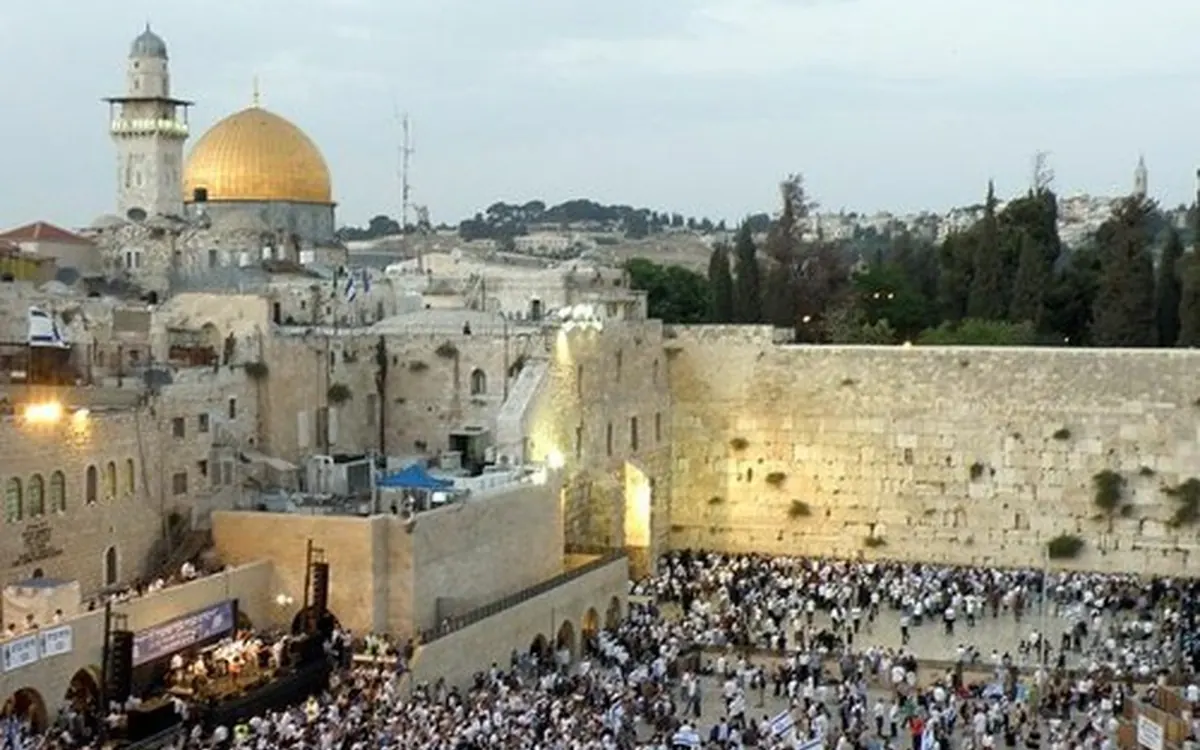
Here is a LIVE Yom Yerushalayim class given in honor of the 10th yartzheit of Fruma Raizel bat Genendel and Nehemia haKohen. It explores the relationship between Yom Ha'atzmaut and Yom Yerushalayim, between self-actualization and inspiration, in order to provide insight and inspiration for these holy days.
About this episode
Speaking live beneath a view of Jerusalem, Rav Mike begins with gratitude, aware that ancestors would have crawled until they bled just to glimpse what the room could look at freely. He wants to explore the bond between Yom Ha'atzmaut and Yom Yerushalayim, worried that two thousand years of longing have produced a day most Jews barely mark. He borrows a frame from his teacher Rabbi Yosef Leibovitz for sacred time: Shabbat simply exists, woven into creation; the moadim are commanded from above and handed to Israel to sanctify; and Purim and Hanukkah are historic events from which the sages extracted something eternal, light from darkness, the struggle for freedom, so that we keep them still, long after the Maccabees are gone and their messier history has been washed smooth.
So what must be extracted from the new days? He offers that Yom Ha'atzmaut is atzmaut, self-actualization, from etzem, essence, the building of a vessel that lets life take form. Anything embodied faces two problems. The first is a touch of absurdity, since a value with no line is merely an idea; he recalls his young daughter mocking the rules of modesty until he answered that there is no value without a place to point and say this is and that is not. The second is mess, because living systems are messy, and that is precisely why they thrive. The struggle for self-actualization will always carry an edge of absurdity and a productive mess, and both are signs of real life rather than failure.
Yom Yerushalayim he reads as hashra'ah, inspiration, the power to touch the infinite and let it rest in the world. The two need each other. Self-actualization without inspiration runs dry, and inspiration without self-actualization never takes form, staying a wow moment that never becomes an act. The willingness to accept that whatever we build from what we glimpsed will be imperfect and bounded is the whole difference between acting and standing still. He warns against collapsing the two: Ben-Gurion slammed the table at a Mapai conference and declared that if you can find the Messiah in the phone book, he is no longer the Messiah. The horizon has to stay a horizon so that it keeps drawing us forward into the next act of building.
He walks the two days through their eras. The spirit of 1948 was we made it, and still in question, and that tenuous edge lent life its vital exuberance. Arnold Toynbee warned that yesterday's solutions become tomorrow's problems, as a creative minority that once answered the crisis hardens into a controlling minority that only defends its idea, which is why self-actualization demands a constant pioneering. The spirit of 1967 was did that really just happen, a dreamlike miracle everyone acknowledged at first and then took for granted, the way Amalek appears right after the splitting of the sea with the question of whether God is in our midst. Nathan Alterman saw the vessel expand and understood that a new inspiration had to fill it.
Then 1973 drained the intoxication, and Rav Mike invokes Rav Nachman: a profound experience expands your vessel, and when it fades you are left with empty space and the depression that often follows, unless you fill the new capacity with a deeper inspiration. Rav Kook warned that when life has no aim, its power simply runs out, atrophying toward dissipation. That is the danger of a Yom Ha'atzmaut with no Yom Yerushalayim, a barbecue followed by regret. The tool the day already offers is hodaah, gratitude that is also acknowledgment of the source of inspiration, held within a machloket for the sake of heaven, where we argue because we share a larger picture. As Hanukkah took generations to become itself, so this work of extracting the eternal is ours, and far from finished.
Key ideas
- Rabbi Leibovitz's frame runs from Shabbat woven into creation, to the commanded moadim, to Purim and Hanukkah where the sages extracted the eternal from history.
- Yom Ha'atzmaut is atzmaut, self-actualization, the vessel that lets life take form, always carrying some absurdity and some mess.
- Yom Yerushalayim is hashra'ah, inspiration, and the two days need each other, since inspiration without form stays a wow moment.
- Ben-Gurion warned that a Messiah you can find in the phone book is no longer the Messiah; the horizon must stay a horizon.
- Toynbee's creative minority hardens into a controlling minority, so self-actualization demands a constant pioneering spirit.
- The tool Yom Yerushalayim offers is hodaah, gratitude that acknowledges the source, held within a machloket for the sake of heaven.
Chapters
- 0:00 Ancestors who longed for this view
- 2:11 A frame for sacred time
- 4:23 What must we extract from these days?
- 5:27 Atzmaut; bringing out the essence
- 6:39 The value that needs a line
- 8:48 Hashra'ah; touching the infinite
- 12:00 Self-actualization needs inspiration
- 13:03 The Messiah in the phone book
- 15:17 The spirit of 48; we made it
- 16:19 Toynbee; the creative minority
- 17:25 The spirit of 67; did that just happen
- 21:49 Rav Nachman; the expanded vessel
- 24:06 Yom Yerushalayim; hallel and hodaah
- 26:16 Machloket for the sake of heaven
- 29:32 Hanukkah's slow becoming
Who, where and when
People
Rabbi Yosef Leibovitz, David Ben-Gurion, Arnold Toynbee, Nathan Alterman, Yitzhak Rabin, Rav Nachman, Rav Kook, Josephus
Places
Jerusalem, The land of Israel, Mount Scopus
Texts
The Book of Devarim, Orot HaTechiya, We Were Like Dreamers, The writings of Josephus
When
1948 CE: the spirit of independence, 1950 CE: the Mapai conference on the Messiah, 1967 CE: the spirit of Yom Yerushalayim, 1973 CE: the war that drained the intoxication
Read the transcript
So first and foremost, thank you so much to Philip and Judy for having me, and everything that I say, really all our thoughts should be, because that's why we're here. I want to take the opportunity to talk a little bit about the relationship between Yom Atzmud and Yom Yerushalayim, and play a little bit. It's an exploration I'd like you to join me in, because I have a feeling that we face a number of challenges as a people. I was going to end on the challenge, but sitting here looking out on this view, I can't help but begin there. Because, you know, thinking about your mother's story, thinking about my family, I'm sure that many of us sitting here today, in fact, probably all of us, had ancestors that at one point in the last couple hundred years would have crawled on hands and knees until they were bruised and bleeding just to see what we're able to look at today.
And, I mean, we're not even in the Jerusalem line. We could go there if we'd like. and that's wonderful, it's beautiful but it also bears some consideration because for a significant portion of Am Yisrael, here in the country and certainly worldwide Yom Yerushalayim is at best nothing at best and unfortunately, increasingly a source of controversy and so what I want to do Tanakh is think a little bit together about what is the relationship between Yom Yerushalayim and what can we learn from them to sort of help us launch into this educational mission. I see it as a potentially redemptive mission, in fact, because 2,000 years of longing and most people don't even mark the day we return. And there's a big question of why.
So in order to do that, what I want to do is give you guys a frame in which we'll be able to look at these days, share a little language, and then we'll see what time is left to actually poke away at the days themselves. So you guys ready to begin? And I'm not opposed to questions. You can throw out things. You can throw things at me. I'm quite quick to dodge. But I will, however, make the commitment that at 9 o'clock we're diving in Marib, correct? Great. That is not my problem that you ran over. My problem is when I end. So first things first, I want to offer you a frame that actually was given to me by my teacher, Rabbi Dr. Yosef Leibovitz. Anybody happen to know Rabbi Leibovitz out there? No. He was around, is around, but he was quite a teacher for a long time.
And he taught me that there's a very important frame in which to understand sacred time in the Torah. It starts with Shabbat, of course. And Shabbat, we talk about the holiness of Shabbat is kviva kaima. It just exists. It's part of the fabric of creation. Before there's even any expression in what we think of as historic time, Shabbat's there and it's on its own. Then we get what we call the moadim, right? We're coming up on Shavuot. We just Pesach. These are the elements of holiness in time which are top-down, so to speak. God said in the Torah, do this. They might be tied to historic events, each on their own, Yitzchak, Mitzrayim, Sinai, etc., but the key is, is that it was a divine command, and the sanctification of the time in the calendar was given over to Israel.
And then we go further into the calendar, and we look at things like Purim and Hanukkah, and what are those? Now, those are historic events, right? The Maccabees, you know, contextually related here, fight their battle in history. And if you know a little bit about that history, it doesn't necessarily end so well, depending on where you put the story. But along come the sages, and they extract from those specific historic events the eternal, right? The emergence of light from darkness, the struggle for freedom, all the things that we can relate to, so that long after the Maccabees are gone and we've whitewashed the history of their kingdom to fit the essential story. I say whitewash, but I say that with tongue in cheek.
It's not a whitewashing. In the same way as the memories of the ones that we love are kind of like the stones that get washed by a river. All the rough edges disappear. My father passed away 20 years ago, and my mother never fails to remind me on his yortzai that he wasn't a saint. But nonetheless, that's the way the mind works, and I think it's how it ought to work. And so our sages were able to extract Hanukkah and Purim and in its own way Tisha B'Av, the essential. And so in each of them, if you think about those stories, we receive their sort of divine gushpanka. Like, yeah, you did it right. The Hanukkah candles, the Purim story, fine. Here's my question for you. What about Yom Ha'atmood and Yom Yerushalayim?
What is the essential that needs to be extracted from the historical, which will guarantee that our children's children's children, it's been 2,500 years since the Maccabees, we'll still be celebrating. And, of course, the flip side is, if we fail to do that, well, then, you're going to look at a glorified barbecue for Yom HaTzmut, and I don't really know what for Yom Yerushalayim. So it is worthwhile to consider where that task lays. And I would, I think it's important to point out that this comes in a whole package of what, you know, are known as Mo'adei Iyar, here, right? The Chagayi HaLuum, these national holidays, which so powerfully have fallen out in the midst of the counting of the Omer. And I do also want to mention the pure souls that passed on Lagba Omer and anything that we say should also add to their elevation, and frankly, they to ours.
So let's start with some definitions. Yom Ha'atzma'ut. The word Ha'atzma'ut is very powerful. You know, in this week's Parsha, the word which I personally, if you had asked me for a biblical term for independence, would have chosen, would have been Kom Ha'mi'ut. Right? Ha'atzma'ut is not a biblical term. Etzem means what? Bone or essence. What's atzma'ut? Well, careful, that was a little tautology. It's self-actualization I'll offer to you. Right? Atzem, atzma'ut, is bringing out the essence of something. And you know, the quest for self-actualization is an ongoing process of building and cultivating the capacity to receive and express life. That's what it is. It's the body. If you're an organizational person, it's your institution.
If you're a family person, it's your family. It's the building which allows life to take form. Now keep in mind, of course, anything which has form in the world always faces two problems. I call them the problems of embodiment. Number one, I'll tell you a quick story. My kids are from 7 to 17 in the midst of all those wonderful teenage struggles. And I will never forget that my 11-year-old daughter, when she first began to push against the rules of tznewt, of modesty in our house, she said to me very simply, and if you haven't figured this out, you probably all know this, that if you have to argue about these things, you've already lost as a parent. I didn't know it at the time, unfortunately. It took me five years.
But meantime, she says to me, Abba, really? Oh, I think I just ripped my shirt. She says, this matters? Really? Can you see the elbow? This? Like, really? Come on, this? Because I told her, elbows and knees, leave me alone. Fantastic. Do you hear the brilliance of it? Because on one hand, she's touching the absurdity of all rules. She's right. Come on, really? You know, it's always an edge, right? I pay taxes here, but I don't pay taxes there. So I said to her, you're not going to understand probably at 11 what I'm going to tell you, but you need to know this. There's no such thing as a value if it doesn't have a line. Things which are manifest in the world have a line. If you believe modesty is a value, we could get into an argument.
I go, who gets to make the lines and the rules? Fine. But that means you're going to be able to point at something and say, this is and that is not. And that is the nature of life. If you have a value and it's not manifest with a definable line, then it's not really a value. It's just some idea that you hold. And the problem with that is you'll always get somebody who's going to come and say, really? Really? That's absurd. That's the number one problem. There's always a little bit of absurdity to taking something as grand as a value, a people, a national vision, and making it into a state. The other problem, of course, is something you all know, which is life is very messy. Anybody who has ever witnessed a birth knows this is true.
Life is messy. And this illusion that was given to us at some time that it's supposed to be easy or neat or clean or somehow is simply false. Living systems are messy, and that's why they thrive. I want you to remember that, because that means the struggle for atzma'ut, for self-actualization, will always involve the absurdity of having some edge where you are or are not. and it's going to be a mess, but hopefully a productive one. So that atzma The other word I give you is hashra You know Yom Atz when it easy That the day of independence of self Yom Yerushalayim I going to offer to you that I believe what we need to extract from it is this idea of Hashra'ah. Now, what is Hashra'ah? Hashra'ah is also another word that you'd be hard-pressed to pin down in the Bible.
Nonetheless, in religious language, we speak about, right, that God's presence comes to rest. We'll get to that when we talk about Yerushalayim. But for now, what do I mean when I use the word Hashra'ah? It's more. It's the aspirational. It's life. It's the power to touch the infinite. And by touching it and giving it form through your self-actualization, you're going to put down boundaries. You're going to make that perfect inspiration a little bit messy because it's real. But nonetheless, this is life flowing through. and therefore is always bigger than whatever vessel gives it form. Right? I mean, can you point to life? Is the life that I'm feeling the same life that you're feeling, the same life that's flowing through these trees?
We could have a philosophical discussion, but at the end of the day, I think on some level we all believe yes. We're all alive and it's not something different, which means there's something flowing through. Now, there's a big problem here of how you get outside of your own box. How do I actualize? if we're an independent people in our land after 2,000 years, how do we really receive that inspiration in a way in which isn't already something what we know? How do we get outside of our own boundaries? There's a story they tell about the Chazan Isch and his brother, they had a Chavruta, can you imagine? They had a Chavruta, and any time that they got to a problem that they couldn't understand in the Gemara, they would each pick up a book of Tilim and go to their separate corners and daven for however long.
And then they would come back together and consistently they found that whatever the problem was, they had a different level of insight. And I give this to you as an example of inspiration. It's not a logical, analytical tool. It's not an attempt to use the forms and structures which you already have. It's an ability to open yourself to more. And prayer, of course, is the quintessential act of seeking inspiration. So here's a model. that we might be able to use in this framework. What are the essential pieces of Yom Atzmut and Yom Yerushalayim? Well, I'm going to tell you Yom Atzmut is self-actualization. I'm going to tell you that Yom Yerushalayim is inspiration, Hashra'ah. And now that I've defined them, I want to think a little bit about, I mean, how has this come to be in our time?
What do these days look like? Before I do, I do want to say one word about the relationship between the two. Because Atzmut needs Hashra'ah. Self-actualization needs inspiration. That's obvious because Hashra'ah is life itself. It's what makes our independence or any institution, family, or organism alive. It's not a dead end. But it's often missed that Hashra'ah, the infinite, inspiration, needs Atzma'ut. Because without Atzma'ut, without self-actualization, there's no real expression in the world. Anybody here ever had an inspiration? You can raise your hand if you want. An inspiration, something that really struck you and said, this is true. That's real. This must be. And, you know, you can always tell what type of person one is or where I'm at in my life on what I do with that inspiration.
Sometimes it's just a wow moment. And sometimes I act. And more often than not, I can tell you as both a father and a teacher and an evad Hashem, that our willingness to accept the fact that whatever we build inspired by what we've seen, is not going to be perfect. It's going to be messy. It's going to have boundaries. Our willingness to accept that and to say nonetheless, at least it can hold some of it, is the difference between acting and not. And that really, in the end of the day, if you want to know what I have to say, that's the relationship between Yom Atzmud and Yom Yerushalayim. And now I'll explain. Oh, sorry. One more warning. One more warning. Because, you know, Atzmud, here we are. We have a country.
Yom Yerushalayim, it's an inspiration, it's on the horizon great, neat package, we're done, right? except what happens then when we actually have Yerushalayim? Yerushalayim is most commonly in the book of Davarim called it's the future tense, the place which God will choose, more than 20 times in the book of Davarim the place God will choose, will choose, will choose you get the sense that it's not a destination you want to actually arrive at it's one you want to aspire to in 1950 might have been 51 let me write down exact date there was a meeting of the Mapai party the predecessor to the labor party who ruled the country with an iron fist at that point they were at the height of their power they had a conference, can you imagine a political conference today around the question has the messiah already arrived right, the answer is no no no Bibi left the building no politics, I'm going to resist it was like a ringer so at this conference Gershom Shalom was there, Ben-Gurion was there we're talking about major thinkers in the Zionist movement Ben-Gurion got up and he, if you know anything about his sleeping style, slammed on the table and he declared to everyone, if you can find his name in the phone book, he's no longer the Messiah.
Meaning the Messiah is a dream which must recede. It must be on the horizon. Because inspiration has to inspire actualization. They can't become the same thing. By the way, if you read the Tanakh, you can see that the actuality of Yom Yishalayim and the reality of the Migdash pose as many problems as they solve. And for someone like myself, who does indeed long for the rebuilding, it's a question that deserves contemplation. So, okay, I want to look a little bit at the past and present of these two days, Yom Asmut and Yom Yishalayim, and try to extract a little bit of a lesson and perhaps some inspiration for the future. So, Yom Asmut, I think, is easier. In 1948, the spirit of 48 was quite clear. Right?
Number one, we made it. We made it. And that should never be dismissed. And we're fortunate to still live in a time in which people even alive today can tell us that story. Something which those of us who are American, you know, when you go back and you speak to people about the 4th of July, it's a tough sell. But even more than simply we made it, the spirit of 48 is we made it, but it remains in question. it wasn't a certainty in 1948 or frankly through the 50s if you know the history right you know tripling the population the the era of fenna of tremendous economic struggle the wars in 48 56 and those are just the big wars you know this was life in its tenuous and sometimes desperate nature and i would say that a recognition of the tenuous nature of victory is essential for a healthy life why because it lends a vital edge to the struggle that we all have to express life on the personal level on the national level now that can be desperate but it can also be exuberant right it's good to be alive when you know what the alternative tastes like when you don't know what the alternative tastes like life can get somewhat dull right now we're very fortunate to have exuberant life today i mean look where we are and and if you look at the way in which Yom Ha'atzmuth is celebrated in the Hevay Yisraelit, that's really what it's about, the national barbecue.
T'ulim Ba'aret, we're looking around the land, life be easy, it's good life, and I'm not complaining, trust me. I was out there with the best of them. Right? But Ben-Gurion knew that Atzma'ut requires, to some degree, a pioneering spirit. You cannot settle. Real life evolves. To stagnate is to die. Now, on one hand, you don't want to reinvent the wheel, in every generation. I mean, we do have wisdom, and I'm quite proud of much of what we've built. But on the other hand, you never forget one of the most important lessons that Arnold Toynbee, no great lover of the Jews, but a fantastic thinker about history, offers in his approach to history. He says that yesterday's solutions in history are often tomorrow's problems.
And he specifically points out that in societies and it quite easy in ours to see it problems are usually solved by what he calls a creative minority It a group of people who are motivated either by ideology or wisdom or what have you and they engage and then they offer solutions, ideas, and society coalesces around them, and the Zionist movement did be impossible, literally did be impossible. What's the challenge? It's that the creative minority, once it succeeds, becomes a controlling minority. And rather than attempting to engage the oncoming problems with the same level of creativity and passion and self-sacrifice, they proceed to defend their idea. This may sound familiar if you read the news.
So in that sense, there needs to be a constant sense of pioneering, that life means breaking vessels. Real self-actualization means, great, I'm here now, what's next? And until the day I die, or until the day Mashiach comes and has a number in the phone book, that process will not cease. I do want to add one thought. Nope, we're going to skip it. Okay, so that was my inner conversation. I like to let people in on that. So Yom HaTzmuth, self-actualization with its problems and that need for the pioneering swing. What about Yom HaTzmuth, the spirit of 67? Well, if Yom HaTzmuth, if the spirit of 48 was, we got it, but it's still a little bit tenuous, then the spirit of 67, I'd say in its essence, was, did that really just happen?
Anyway, I hope you guys have read Yosikhan Alevi's book, We Were Like Dreamers. Fantastic book. If you haven't read it, I highly recommend it. But I'm sure many people here perhaps lived through the experiences we spoke about briefly or have some attention. There was a dreamlike quality. And one thing that's important is that in the immediate aftermath, everyone agreed that a miracle had happened. Even if they weren't willing to use the outright language of miracle, I'll give you as an example the speech that Chief of Staff Yitzhak Rabin gave upon receiving an honorary doctorate on Hartzofim, which of course had been liberated in the war, a matter of weeks after the combat. He speaks, it's a whole long speech, I won't drag you through the whole thing, but he speaks about how this war in particular brought forth a rare and magnificent instance of heroism and courage, together with expressions of brotherhood, etc.
But here's the key, it all starts and ends with the spirit, he says. our soldiers prevailed not by their weapons but by their awareness of their supreme mission, by their awareness of the righteousness of their cause, deep love for their homeland and by their recognition of the difficult task laid upon them to ensure the existence of our people in our homeland now on one hand their supreme mission begins and ends with the spirit, righteousness of their cause but what was the cause in his eyes? existence in our homeland. There's a big problem there. Because in 1967, that existence, you know, all the challenges of history aside, was more or less assured. Or at the very least, that desperation, which like I pointed out to you could be also exuberance, kind of went out of the situation.
If you know a bit about the history, it was almost an intoxicating sense of expansiveness, of power. This was a whole new way of being, which frankly, we as a people were not ready. And with it went that clarity of what that moment meant. The miraculous is shockingly easy to take for granted. All I need to do to prove that to you is to point out that in the book of Shemot, immediately on the heels of the crossing of the Red Sea comes Amalek. You guys familiar with the story, right? And what's the question that precedes their appearance? It's God in our midst or not. What kind of question is that? Ten plagues, splitting of the Red Sea, they're following a pillar of fire by night and cloud by day. And they're asking, where's God?
You don't need proof more than that, that the miraculous becomes commonplace like that. So what happens? Well, you know, in a sense, a controversy emerged around the meaning of this victory. People are familiar with Nhat's and Altman, great poet of the 50s and 60s, also created inspiration of the movement for the land the greater land of israel many people are unaware that he shifted from a sort of hardcore ben-gurian mapai stance to what today would be considered quite an extreme right-wing view but he speaks he says the victory is not about returning jews not only about returning jews to their nation's ancient exalted possessions more than anything else this victory has erased the division between the state of israel and the land of israel right there's an expansion of the vessel and he understood in all of his writings that he published subsequently that when you're when your vessel expands when that self-actualization hits a whole new level then there's a new idea which must inspire it but what followed quickly on 67 from a social historical standpoint was 73 right and you know that took the wind out of a lot of sales.
The intoxication of 67 wasn't just drained. Many people blamed the intoxication of 67 for the failure of 1973. So, frankly, it's not an unfair argument. There are, in my opinion, 67 Jews and 73 Jews, the modern war versus the post-modern war. If you're interested, that's where I'm at in the podcast right now. I'm in the thick of the battle for the Chinese farm. If you're familiar with the history of 1973, you can look it up. For now, what I'll tell you of this is that Rabbi Nachman teaches that you have to be wary anytime you have a profound spiritual experience it expands your kalim he says all right your your atzmu yourself is bigger and you know what happens what happens when you have an intense experience your capacity expands but then that experience fades you know what you're left with a bunch of empty space and you feel empty and he points out that depression which he himself famously struggled with often follows on the heels of profound spiritual experience unless we work to fill that new capacity with a deeper inspiration.
And that, of course, is why I want to talk about Yom Yerushalayim, because I'm quite concerned. Yom Asmuth, we could say, is in danger of becoming a national barbecue, right? And what will follow quickly on the heels of that, as we already see, is regret. Maybe it was a bad idea in the first place, God forbid. But I don't know how familiar you are with those voices in the Jewish world, but they're out there. saying we would have been better off without it. Right? And Rav Kook, in a fantastic passage in Orot HaTchian, the lights of the resurrection, which I'll just read you the key line, he says, when there's no aim to the power of life, it simply runs out. It's might waning as it atrophies along the slow march toward dissipation which awaits it at the bottom of its descent.
Right? If Yom HaTzmuth doesn't have Yom Yerushalayim, that we can build and be strong of a mshumma. For what? What are we working so hard for? To live an easier life? A better life? Then the real challenges that we face and the real moral questions which underlie our existence will weigh us down and we will peter out. But fortunately, God gave us Yom Yerushalayim. And the question is, what do we do with it? Now today, Yom Yerushalayim, I'm sure you know, is the province of two things, of two groups. the national religious world and the city itself. I mean, it's called Yom Yerushalayim. We can't avoid that. And what is the primary way in which it's marked? Halel v'hoda'a. Halel v'hoda'a, right? Give thanks, give praise, halel, songs, etc.
And I think it's a fitting, especially halel comes from the word whose roots means to give light. And, you know, I don't want to scare anybody with physics, but light happens when you excite electrons and then they fall back to place. Meaning that excitation that Yom HaTzmud in particular represents is just a giving of light. But what's Hoda'a? Well, part of it is gratitude, and certainly gratitude is not just always in place, but particularly in place like I pointed out. Something you pray for for 2,000 years and you finally get it, deserves some attention. But on a deeper level, Hoda'a isn't just to be Mode'a ni, I'm grateful, but it also to be moda in the sense of acknowledgement There a recognition embedded in Hoda a gratitude toward Toward something larger Toward not just inspiration, but the source of inspiration itself.
Now, of course, Yom Yishayim is also Sha'uribu Machloket. There's all kinds of controversy, and that doesn't just belong to the national religious world of Jerusalem. It unfortunately belongs to the whole world. right it's all about shrinking the story people want to shrink the story i can tell you as a student of history right if you follow the arc of the literature about the battles in 1967 they go from there's no explanation for this it's downright miraculous if i read you the whole rabin speech he literally says in his speech military experts have no explanation for how we won this war talks about the air force etc today trust me you can find a list of military experts who explain to exactly why really israel was actually goliath in the war sorry and and the arabs were dated and it's all a myth, we were stronger all along, etc., etc., etc.
They want to shrink the story, remove the miraculous, and all the inspiration that comes with it. For, unfortunately, very specific reasons. But, let's remember, of course, that controversy is not intrinsically bad. We're a people of Machloket. We believe in Machloket L'Shem Shemayim. You know what the difference between Machloket L'Shem Shemayim and Machloket She'en L'Shem Shemayim is? there's a shemaim that we share. Something bigger than you or I. The shorosh, the three-letter root of the word makloket, is what? Helech. It's an argument based on the assumption that I can only see part of the picture. And you can see a different part of the picture. Makloket l'shem shemaim means we agree there's a picture.
We call it shemaim. And I need you to disagree with me. Because if you disagree with me, we're coming closer to the wholeness. That's Yerushalayim could offer, because for us, the Shemaim, the inspiration which unites all the perspectives, potentially, of Am Yisrael and really of the world, right? Yerushalayim is meant to be the center of the world, right? That's Yerushalayim. But we have to find a way in which we can tell that story, not in a narrow fashion that speaks to our particular perspective, but in an inspirational fashion that allows people to open themselves to the grandeur, really, of what Yerushalayim represents. Now, many people feel a sense of crisis within our society. And it could be that that crisis is a reflection.
No, I would say, along with the Shefa, it's a strange thing. It's like we haven't had a government-passed electoral process for two years, And yet, the country's doing pretty well when you compare it to a lot of places in the world. I mean, aside from the fact that it somewhat conclusively proves the irrelevance of politics, it makes you realize how robust the world which we built is. But it also begs the question, it might just be that the structures which were built in 1948, the Atzma'ut, that self-actualization, should have been shattered and rebuilt in 67, like Nathan Altman said. In his eyes, it was a dropping of the division between the state of Israel and the land of Israel. Fine, that's not the only way to look.
I would say, by the way, I'll make a plug, especially because I think there might be some American Jews in the audience, that a constitution which represents a real social contract that allows a whole society to work together is a mo'odmivukash. We could use it a lot, and I think that American Jews in particular could play a special role, but it doesn't matter to me so much what it is. What I want you to understand is the relationship, because we haven't missed the boat. All those voices out there saying, We missed it. 67 was a chance. We didn't build the temple. We didn't take over the country. We didn't... Nonsense. What? We didn't come home. Yep. Listen, it is true, both in a person's life and in history, that you can miss the boat.
I'm not denying that. But I want to use Hanukkah again as an example, and we'll wrap up with this. That, you know, we all know the story of Hanukkah. I'm not going to drag you through it. Maybe you can tune in for the Hanukkah Shire when the time comes. But it's important to note that until the crisis of Herodian kingdom, Hanukkah as a national holiday was poorly attended. The evidence is pretty clear from Josephus that it was really when the Hasmoneans began to represent the ideal of liberty and independence. When you look at Josephus, the story of the Pach Hashem, of the oil, isn't there. He knows it's a holiday called lights, and he knows it's about liberty. but that's 150 plus years after the Hanukkah story right because there's a like I told you at the beginning there's a process of historical evolution there's a spiritual task which not just the leadership but the people can take on to extract the infinite the eternal the inspired from these specific events of history and we are in the thick of that process now we're far from done but i'll tell you this the tool which which the religious national religious community has chosen is at our disposal the tool of hoda not just gratitude but acknowledgement what is the source of our inspiration and and that's really in my eyes the task that lies ahead that that we have to think about what's the hashra what's the inspiration and the touching of the infinite we became capable of as a people in 67 and that we are capable of now that we're just not building the kaling, building the vessels to receive.
And we have to also have a little bit of amuna, just a little bit of faith that God doesn't hold back. And therefore, the world in which we live and our capacity to self-actualize really simply depends on our determination to receive what it is that's coming into the world and to build something new with it. So once again, I want to thank Phil and Judy for having me here. I want to thank you all for your attention. I want to bless us all that we should merit to celebrate Yom HaTzimut in real joy and Yom Yerushalayim in inspiration. And Shivanah bimhera b'ameneh. Question? You mentioned there's a chorus of people or groups saying, why do we need Yom HaTzimut? Why do we need Yom HaTzimut? Sure. Maybe I'm naive, but in all circles, I'm not hearing that.
So please tell me what circles you're hearing. So yes, it's true. We all tend to hear, we live amongst the people we love and share opinions with. I have in teaching in a more, we'll call it progressive left-wing world, the pain around the consequences and the messiness of life, either vis-a-vis the Arabs of this land or vis-a-vis the way the nations of the world look us, or vis-a-vis, by the way, the very real moral and spiritual challenges of being an actual people in the land with army and economy and etc. A lot of people, be they American Jews or some of the sort of more extreme left here, it's less common amongst Israelis, are basically saying perhaps that this is corrupting what Judaism is and we would be better in exile.
It is hard to believe, I know, but if you want to understand a good portion of where American Jewry is going, you can trust me to say that it's a small but very vocal crowd. also on the religious right very true the post-zionist religious right is is growing that's an excellent point other questions or comments before we wrap it up yes please yes uh-huh wow yes no i agree with you there is a concerted effort by people who care to extract the the eternally meaningful and and i i take that as a tremendously positive sign i didn't come here for doom and gloom. I came here for a call to action. I personally, I worry about American Jewry. I'm not so worried about what's happening here. I think that it's a rough process.
It's a messy process, but the amount of life here is just so overwhelming and signs like you're speaking about are so positive that I see a very bright future. I'm sorry you were just stretching. Anything else? Other comments, questions? Well, once again, thank you and Yom Rishalim Sameach. Thank you.
More from Season 4
TJS S4E16 Yom Kippur War IV: A stunning blow
A surprise blow is always the hardest to absorb, even if it's not so powerful. The first strike of the Yom Kippur War will be massive, and it...
Play Episode
TJS S4E17 Yom Kippur War V: Down but not out
This is the story of how close the end really came during the Yom Kippur War. Even as Israel's tanks held out in the north, turning a stretch...
Play Episode
TJS S4E18 Yom Kippur War VI The end game
Some people play a perfect role in the Jewish Story, and in this episode that will be US Secretary of State Henry Kissinger and General Ariel Sharon. As...
Play Episode