
TJS S3 Interlude - Making every day count
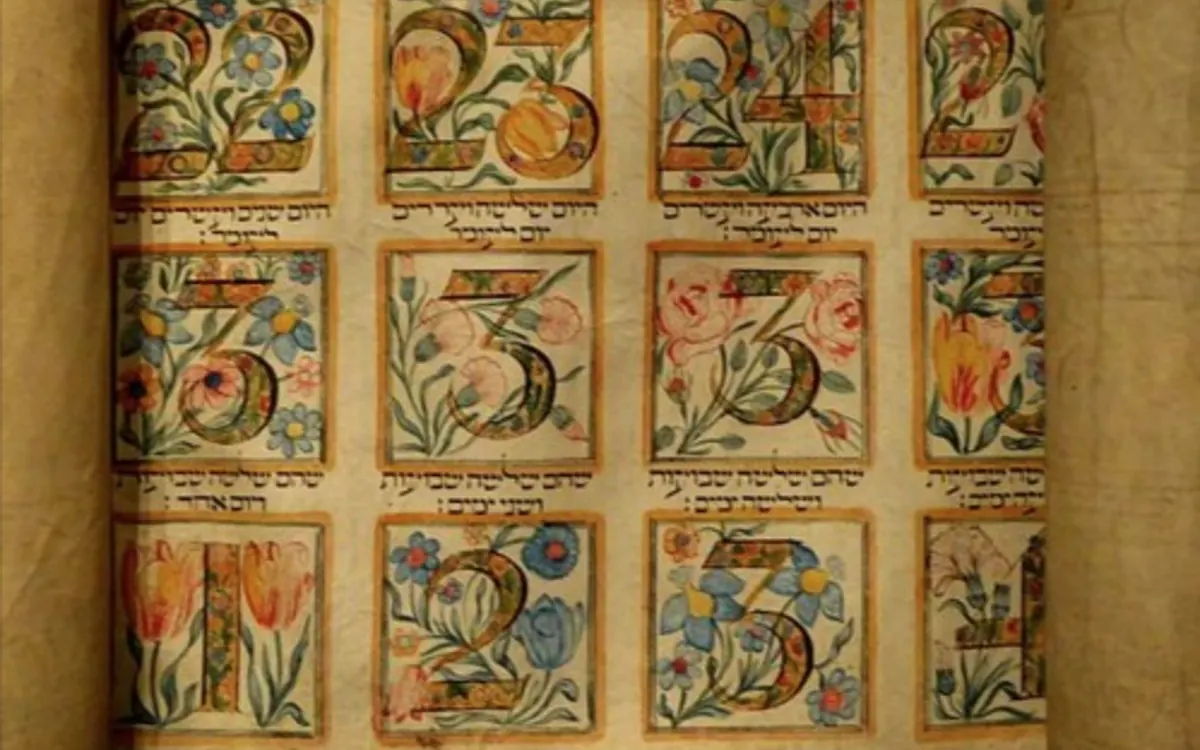
The exodus from Egypt was only the first step on the road to Sinai. The bridge between Egypt and Sinai, between liberation and revelation, is embodied in the practice of counting the Omer. Here is a reflection on the biblical narrative, the calendar and our current situation - all with an eye to making every day count.
About this episode
When one has finished building their house, said Nietzsche, they realize they have learned something they needed before they began. Rav Mike feels we are sitting outside of time, in a sacred dimension like the days in Lothlorien, the seven days of Pesach between Seder night and the crossing of the sea an enchanted wood. He is working away at 1967, so big he does not want to get it wrong, but there is a time to access the wisdom of the present, and having just left the narrow spaces as the curfew lifts, he reflects that our journey out of Egypt is far from over, since freedom is only the first step toward redemption. Redemption is hard to communicate, as his ten-year-old asked what it would look like, but it can be conceived as true freedom, freedom of rather than freedom from. Pesach is the link to Shavuot, from freedom from Egypt to the freedom of divine service, connected by the count of the Omer, and he dedicates the teaching to the soul of Miriam Rivka on her yahrzeit.
What we attained at the Seder was liberation from slavery and from false notions of divinity, but breaking the chains is only the first step. The Kabbalists teach that on Seder night a great light comes in, mohin de'gadlut, the most expansive consciousness, more than we can hold, as on that first night in Egypt the Israelites' conception of freedom and the divine was bound by the reality that shaped them. This is why the Shema says I am the Lord your God who brought you out of Egypt in order to be your God, since he was our God before, yet we had to break the bounds of the possible, free ourselves from both slavery and idolatry, for the real capacity of the divine to emerge, the breaking of Egypt a necessary precursor to Sinai. At the sea a maidservant beheld what Ezekiel did not, because the splitting was the final collapse of a world bounded by what Am Yisrael thought they knew, and its results were by definition revelatory, but all these great lights are too big to hold, we lack the vessels, which is why we count the Omer to get from the shattering light of the exodus to the lasting illumination of Sinai.
The Omer is the first new grain offering, barley cut after Pesach, and where the matzah is stripped-down simplicity, flour and water and sweat, Shavuot offers two loaves of leavened bread, the fullness of life. The forty-nine days lie between the essential self and the one that can express all life's richness, between exile and redemption, Egypt and Sinai, and they are real days in real time. In his counseling practice Rav Mike sees that one of the greatest barriers to success is fear of the process and even of getting started, since some dreams are so sacred we would rather leave them unrealized than fail, preferring the hazy notion of what might be to engaging reality. We would all risk everything on a single coin toss, win or lose, but life has no snapping of the fingers, every day counts, and only a month after the splitting of the sea the people cry that they wish they had died by the flesh pots, losing sight of the goal because of the process. On the simplest level, counting the Omer is learning to make each day count.
The prayers of the Omer bring the Kabbalah out of the closet, seven weeks of seven days, each day a permutation of the sefirot, the holy midot understood as modes of relationship that scale fractally from creator to creation, from self to group, between my present self and the one I long to be. Half the battle is showing up, since every day is a new invitation and what can happen now can never happen any other time. But the count does not last forever, as the student's roommate who loved the streak proudly announced he had reached a hundred, missing that this is not a never-ending linear process but a cyclical one culminating in seven times seven. That brings the secret of seven, the number of emergent properties, qualities that arise from more fundamental things yet are novel and irreducible, like life that dies under the dissecting knife, or consciousness, or love that emerges between us, or the sodium and chlorine that become table salt. The Maharal teaches six experiential directions that define a seventh point in their midst, the you, six plus one into Shabbat, so the count that links liberation and revelation is seven times seven because you cannot know where you are going when you set out, as the serendipity hike taught that true adventure is more about who we become than what we do.
Between Egypt and Sinai lies more than complaining, since Amalek appears triggered by the question is God within us or not, usually read is God with us, a childlike rather than childish question, for small children lack object permanence and Israel was still a child liberated from but not yet free of. They did not realize God does not exist somewhere outside, since they had been lowered by centuries of subjugation and did not appreciate that God brought them out because he saw their potential, the human potential of the divine image, so God is indeed within. Rav Mike admits he finds it hard to hold back, recalling the student who said his class was the most amazing she ever heard yet had no idea what he said, a reminder to meet people where they are, to give what they can receive, while holding the high expectations that are the most important tool for growth, a deep belief that people are capable of more than they believe. Sometimes expectations shatter us, which is the sacred myth of the Arizal, that God shined one ray of light so pure it shattered the vessels, and Rav Kook answers why: God gives according to the divine infinite strength, not our capacity to receive, for otherwise his goodness would be limited by us, and only when totally broken do we rebuild ourselves and achieve a touch of what it is to be a creator. So make each day count, know the process is non-linear, and know that when things break down it is an invitation to put the pieces back together and become someone who can receive more than they ever knew.
Key ideas
- Freedom is only the first step toward redemption, which is better conceived as true freedom, the freedom of rather than the freedom from.
- The great lights of the exodus are too big to hold, so we count the Omer to move from the shattering light to the lasting illumination of Sinai.
- On the simplest level, counting the Omer is learning to make each day count, since the fear of process and of starting is a great barrier to success.
- Seven is the number of emergent properties, and the seven times seven count teaches that you cannot know where you are going when you set out.
- Is God within us or not is a childlike question, since God brought us out because he saw our potential, the divine image, so God is indeed within.
- God gives beyond our capacity to receive, which shatters the vessels, and when we are broken we rebuild ourselves and touch what it is to be a creator.
Chapters
- 0:00 Outside of time; the enchanted wood
- 1:05 Freedom as the first step; freedom of
- 3:10 The great light too big to hold
- 5:18 The maidservant at the sea; lacking vessels
- 6:19 The Omer; matzah and the two loaves
- 7:26 Fear of the process; every day counts
- 12:47 The sefirot; showing up
- 16:08 The count is not forever; the roommate
- 17:15 Seven; emergent properties
- 18:26 The Maharal; six directions and Shabbat
- 20:43 The serendipity hike; who we become
- 21:46 Amalek; is God within us or not
- 23:54 Meeting people where they are; high expectations
- 26:18 The shattering of the vessels
- 28:26 Rav Kook; God does not hold back
- 30:36 Review; break down as invitation
Who, where and when
People
Rav Mike Feuer, Friedrich Nietzsche, Ezekiel, The Maharal, The Arizal, Rav Kook, Miriam Rivka
Places
Egypt and Sinai, The Red Sea, Lothlorien, Pardes
Texts
The counting of the Omer, The Shema, The Stanford Encyclopedia of Philosophy, Rav Kook on the shattering of the vessels
When
2020 CE: the days of Pesach, The Exodus and the counting, The giving of the Torah at Sinai
Read the transcript
When one has finished building their house, says Nietzsche, they suddenly realize that in the process they've learned something that they really needed to know in the worst way before they began. Well, I'm looking to put things together brick by brick, and I certainly know this is a learning process, because I'm Rav Mike Foyer, and this is The Jewish Story. interlude making each day count you know does anybody else feel like we're sitting outside of time right now like we're in some sacred dimension where time is a unity and the world outside flows on without us if you're a tolkien geek like me think of it it's kind of like the time they spent in Lothlorien. The seven days of Pesach, that space between Seder night and the crossing of the Red Sea, are kind of like a stay in the enchanted wood.
And for those of you who are wondering, I will indeed return to history, to our normal flow of time. I'm working away at the events of 1967 right now, and it's so big I don't want to get it wrong. And everything goes after the beginning, of course. But I feel like there are times in life where the insights of the past are what we need, and there's a time to try and access the wisdom of the present. And that's just where I'm at right now. We're just finished with Pesach, and they've lifted the curfew, and I can actually go outside. And so I've never felt a more real sense of leaving the narrow spaces. But of course, our journey out of Egypt is far from over. Never forget that freedom is just the first step on the way to redemption.
And redemption is a tough word. Over at Chag, my 10-year-old son actually asked me, what Geula, what redemption was going to look like? And despite the fact that I probably spent more time than most thinking about it, I found it extremely hard to communicate all my imaginings. Now, there is a more concrete way to conceive of redemption, which might be helpful for the average person. And that's to think of it as true freedom. Freedom of. Because Pesach, of course, doesn't stand alone. not only is it the beginning of the sacred cycle of our calendar but it's specifically the link to the coming festival of Shavuot the celebration of the giving of Torah at Sinai and that is really the time where we cease to be focused on freedom from Egypt and we became acculturated or introduced into the covenant of the mode of being free to or having the freedom of divine service And Pesach and Shavuot, this freedom from and the freedom of, are connected by a count.
That count is called Sfirat HaOmer, the Counting of Omer. And that's the one I want to explore with you for just a few minutes right now. Oh, but before I do, I want to say that anything that I say today, any Torah which we learn, any merit that comes into the world is dedicated to the Ilui Nishmat, the soul elevation of Miriam Shimoni, Miriam Rivka, Bat Mordechai Dav HaKon. It's the 31st yard site of her leaving the world, and I'm sure that she is loved and missed. So meanwhile, back in the flow. So what we attained at Seder was a liberation from slavery. And not to mention freeing ourselves from false notions of divinity, not a small task. But breaking the chains is always only the first step. Liberation from must lead to freedom of it's going to last.
On another angle, you should know that the Kabbalists, the mystics among us, teach that on Leil Seder, on Seder night, a great light comes into the world. And not just into the world, but into the life of each and every one of us. They call it Mohen de Gadlut, the most expansive consciousness which we can ever receive. More, in fact, than we can receive. Or at least, more than we can hold. which I imagine was exactly what happened way back when on that first Seder night thousands of years ago in Egypt I mean the Israelites have been steeped in Egyptian slavery and idolatry for hundreds of years their very conception of both freedom and the divine was bound to be limited by the reality that had shaped them and so as we say twice daily at the end of Kriyat Shema, the Rima Shema which is of course the daily equivalent of the Seder it says I am the Lord your God who brought you out of the land of Egypt in order to be your God.
Well, that's strange. It says, I am the Lord your God who brought you out of Egypt to be your Lord your God. Wasn't he our God before? The answer is yes, but we had to break the bounds of the possible, free ourselves from both slavery and idolatry in order for the real capacity of the divine to emerge among us. The breaking of Egypt was a necessary precursor to the revelation at Sinai. Otherwise, our ability to receive what God wanted to give us would have been far more limited. And I'll just throw it in there now, maybe we'll come back to it at the end, that the breaking of the world that we knew around us is very similar. Never forget that when the old collapses, it paves the way for something which we could have never otherwise received.
So we get a glimpse, actually, an interesting glimpse, of the relationship between liberation and the unbounded capacity for revelation that comes in its wake at the crossing of the Red Sea. First of all, the song that Israel sang, Song of the Sea, in their rejoicing, is one of the most powerful pieces of biblical poetry. It's packed, according to our sages, with prophetic visions of the future. But on a more simple level comes the statement of those very same sages who say that a maidservant beheld at the Red Sea that which was not seen by Ezekiel and all the other prophets. That's a strange thing. I mean, Ezekiel was the one who saw the mystic vision of the chariot, the very presence of God on earth.
How could such a thing be? Well, I'll tell you. Because the splitting of the sleeve was the last straw. It was the final collapse of a world bounded by what Am Yisrael thought they knew. And therefore, its results were by definition revelatory. But there's a problem. All these great lights whether it's the Mohen de Gadut, that expansive consciousness glimpsed on Seder night, or the power of the original exodus that set us free from Egypt, or the song at the sea, all of them are too big to hold. We lack the vessels. And that's why we're counting the Omer right now, in order to get us from the shattering light of the exodus to the lasting illumination of Sinai. Now, a little bit of definition. The Omer, that word refers to a new grain offering.
It was the first new grain offering made in the Holy Temple that would be built speedily in our day. It's a sheaf of barley that they would cut in the morning after Chag Pesach and bring to the altar. Now remember, the Matzah of Pesach is all about simplicity, stripping down to essential self. Remember, it's nothing but flour, water, and sweat. But life is much richer than that. And so on Shavuot, we'll offer two loaves of leavened bread. It's the biblical staff of life, which comes as no surprise. now what lies between my essential self and the one which has the capacity to express all the richness which life has to offer between stripped down existence of exile and the fullness of redemption in the land is these 49 days they also, in addition to the agricultural cycle lie between Egypt and Sinai of course between the breaking of what was and the revelation of what could be and last but certainly not least their marking days on our calendar heal in real time and that's what's brought me to want to dig into the opportunity which these coming days offer, particularly on a personal scale, to move from exile to redemption from that exodus to revelation and it all begins with making each day count I hope your Seder was revelatory I hope you caught a glimpse of the possible you of some broader horizon and imagined redemption But if you truly tasted those mochin de gadut that expansive consciousness, then I can tell you I know that it's already gone.
Because like I said, it was too big to hold. And if it didn't happen for you on Seder night, don't worry. I know it's never simple. This year it was harder for some. Actually, interestingly enough, in speaking to people, easier for others. Nevertheless, whether it happened on Seder night or not, I hope that everyone listening has had some moment of truth in their life. Some flash of a vision of something so real that it was actually bigger than life itself. Now, the problem with these flashes of deeper reality is, like I said, they're impossible to hold. The light fades almost at once. And we're left with vague impressions, kind of like the spots that float on your eyes when the old flashbulbs get used.
and sometimes as it fades we come to doubt whether we ever even glimpsed such a horizon of truth which will make sense of course because real truth being bigger than we are lies beyond our imagination redemption lies beyond the imagination and I for one am actually grateful for that I would hate to think that what we have come up with so far is all the world has to offer in general by the way be very wary of anyone who tells you that redemption will happen when everyone in the world is just like them. So I'd say, in general, it's downright idolatrous to claim that we know what God has in store. Nevertheless, we have the capacity to build our lives into a vessel which can hold the truth that is larger.
And the question is, how? Now, the first step of the simple answer is, Emunah, not just the belief that something larger than I can conceive indeed exists, which itself is no small matter, although the physicists at this point are giving us a tremendous assist on recognizing the world is bigger and stranger than we ever thought. But that's not the sum total of Amunah. In fact, what I'm focused on here with Amunah is that element of Amunah, which is a steadfast faithfulness to bringing that vision into being step by step. Because if it's too big to hold all at once, there's no other way. Which brings us to the counting of the Omer. You know, in my counseling practice, and frankly, in my own life, I often see that one of the greatest barriers to success is fear of the process.
And in particular, even getting started. And I think it's because some dreams, some goals, are so sacred, so big in our eyes, that we'd rather leave them unrealized than fail in our attempt. And often, we lack a belief in ourselves that we could ever really achieve them, and therefore leaving them in that sort of hazy notion of what might be is much more comforting than trying to engage the reality. And our failure to start down the road of realizing our dream usually has a few elements. One, of course, is fear of the very process itself. I mean, who wouldn't risk everything to get that job, have that relationship, build the holy temple, bring Mashiach, whatever it is, whatever the size of your dreams, who wouldn't risk it all if all they had to do was just take one gamble?
Snap your fingers, toss a coin, win or lose. But either way, there'll be no process. There'll be no slogging through the steps, losing sight of the vision amongst the weeds, no picky-owned details that can suck the excitement out of even the wildest dreams. But of course, that's not the reality of life. There is no snapping the fingers to win or lose. In life, every day counts. now if you look at the text of the original exodus you can see quite clearly the danger that any process offers only one month after the slaying of the firstborn less than a month after the splitting of the Red Sea the final blow that shattered the illusion of Egypt's power what are the children Israel saying? if only we died by the hand of the Lord in Egypt when we sat by the flesh pots when we ate our fill of bread notice their fill of bread what happened to matzah here?
you brought us out the wilderness to starve and die. They lost sight of the goal, even lost sight of the miraculous origins of their journey because of the process. And on one level, probably the most basic level, counting the Omer is about learning to make each day count. Now, if you look closely at the special prayers which accompany the counting of the Omer, you'll find that this is the season when the Kabbalah officially comes out of the closet, so to speak. We're in a process of seven times seven, seven weeks, each of seven days, of course. And I'll touch a little bit on the significance of that number by and by. If you look at these prayers, though, you'll see that the mystical architecture which underlies creation that corresponds to these seven weeks is actually spoken about explicitly.
Boundless loving kindness, the might of drawing boundaries, the integrative process. We could go through it all. each day is not only belonging to one of the seven weeks, but has its own permutation within them. I'm sorry if this disappoints you, but I'm not about to unfold all these qualities for you now. I will say, however, as a public service announcement, it's something that I do do in my spiritual counseling practice. If you're interested in trying a little bit of personal work during the Omer, shoot me an email at robmikefoyer at gmail.com, or you can send me a personal message on Facebook, at Rav Mike Foyer at Facebook, we can set up a little bit of time. But I'll say this, nonetheless. I've been taught to relate these Sfirot, these holy Midot, as modes of relationship.
Fundamentally they're modes of relationship between creator and creation, but there's a beautiful, almost fractal way in which these modes of relationship scale from creator to creation, from self to group, from one individual to another, between my present self and the one I long to be, all of these qualities negotiate those two sides. And as with all relationships, half the battle is showing up. Because every parent knows, hopefully every lover and every friend and every educator, that every day is a new invitation. There never was nor will be another moment just like this one. And therefore, what can happen now can never happen any other time. And if you're committed to the process of building a relationship, then you have to make every day count, or at least you have to have the intent to, each one in its own particular way.
The permutations of the divine qualities that you may see if you look closely at those prayers, Chesed Shebekevura and all that, are a guide to this on an advanced level. But the simple truth is that, like I said, every day offers a unique opportunity. And the first step in moving from liberation to revelation is receiving each day, each moment, as an invitation to build just a little bit more of your dream. Now, in order to do this, we need a clear vision of where we're headed and a deep amuna, a faith in ourselves that we can realize our dreams and a steadfast commitment to the step-by-step process. But it is important to remember, in addition to this notion of making every day count, that the count doesn't last forever.
You know, I had a student once who told me a story that when he was in college, he had a non-Jewish roommate who fell in love with the idea of counting the Omer. When my student would come back and he would ask me what he was doing, oh, I'm counting. He liked the idea of bringing a deliberate awareness to what each and every day offered. It is, after all, the original streak for all you social media junkies out there. And for a while, apparently, they actually counted together until Shavuot, of course. Or so my student thought. Because imagine his surprise when sometime in the summer his roommate proudly declared to him, I made it to 100. Are you there? This is not a never-ending linear process. It a cyclical one which culminates in 7 times 7 And that brings us the secret of the number seven I am fascinated by emergent properties If you spoken to me for any length of time or you've been listening to the Jewish story for a while, you're probably familiar with it, but it's come time to give a working definition.
And so I turn to the Stanford Encyclopedia of Philosophy, which defines emergent properties as properties which arise out of more fundamental entities and yet are novel or irreducible with respect to them, meaning there's something more than just the pieces or even the whole. There's something that emerges. If I was going to try to reach for an example of emergent property, the first one that comes to mind is life itself. Anybody who's ever used the tool of dissection to try to understand life realizes there's a difference between the mechanisms that generate life and the reality of it. If you dissect the cat, you've basically destroyed what you're looking for in the first stroke. Consciousness is another one.
I had a professor in college who used to have to say, there is no mind, only brain. And yet, where does your consciousness reside in between all those neurons? I could add to this love and really all relationship. After all, there's you, there's me, but our relationship emerges between us. If you want something a little bit less abstract and you happen to be slightly scientifically minded, try sodium chloride. You know, if you study pure sodium in the lab, you'll find it to be a malleable metal that explodes on contact with water. Always a great experiment in high school. And then if you turn your attention to chlorine, you'll encounter a poisonous gas. And looking at the two of them separately, could you ever imagine that by combining them, you'll end up with table salt?
a crystalline solid that dissolves meekly in water and is actually essential for life, the number which represents emergent properties, this idea that there's more which can come from the world than we can actually see by looking at its pieces, is the number seven. You know, the Maharal, the great sage of Prague, of the turn of the 17th century, teaches that there are six experiential directions. In front of you, behind you, right of you, left of you, above you, and below you. And those six directions actually define themselves a point of reference that emerges from within them. That's the you. Think about it. Front, back, right, left, up, down, bingo. Now you have a point in the middle. And if you're familiar with the Jewish tradition at all, then you know that the six plus one equals seven brings us into Shabbat.
There's really no understanding the quality, the deep quality of resting from creative work, of what it means to be created in the divine image as a creature which can really shape creation in our own image unless you actually cease all those activities at least once a week. And so it should come as no surprise that the count which links Egypt and Sinai, which puts together liberation and revelation, is a seven times seven process because the number seven here comes once again to lead us into a world which is bigger than we can conceive. Listen, making each day count, that steadfast commitment to process is certainly critical to building your life into a vessel that can hold higher vision. But the 7x7 cycle tells us that in order to really get from liberation to revelation, you can't actually know where you're going when you set out to get there.
I mean, think about it. Do you think that after hundreds of years of slavery and idolatry, the Israelis who left Egypt could have ever imagined what lay in wait for them at Sinai? And if they could have, it wouldn't have been the transformative event, which is always the hallmark of true redemption. You know, when I used to work with at-risk youth in the woods, one of my favorite activities was something we called a serendipity hike. Basically, what we would do is head out in the woods without any planned destination. And I loved it because eventually one of the kids would always ask, where are we going, chief? And the only answer I ever gave was, I guess we'll know when we get there. And aside from the fun of it, I think we've probably, most of us, I hope, have had the experience that true adventure, the best thing about true adventure, is not so much what we do.
True adventures are more about who we become through having them. The new me that emerges, not through the specific steps of the process, but through the wholeness at its end. Now, this might be the moment to note that there's more which lies between Egypt and Sinai than simply complaining about the process. Let's recall that this is the first appearance of Amalek, the anti-Israel, the other way the world can go. And there's a specific question which triggers their experience. And it's only really a chapter away from the complaints that we mentioned before. what it is, is that the people are complaining once again because they lack water they're having a hard time holding the process and they say literally, is God within us or not?
I mean, it's usually translated as is God with us? and that seems like a quite childish question for people who are following a pillar of cloud by day and fire by night they're eating manna and soon will be drinking from Miriam's well not to mention 10 plagues in the Red Sea about a month ago. But if I replace the word childish with childlike, then we can get a little bit of actual insight on what was happening for them. Remember, small children lack object permanence. That's why, if you're not familiar with the term, a toddler will laugh when I hide my face and reveal it with a peekaboo, and my teenager would just roll her eyes and think I was crazy. See, this was the state of Am Yisrael at this point.
we were still children we'd been liberated from, but we had not yet stepped into the freedom of which is the hallmark of maturity and therefore so long as we saw God's hand God was real but as soon as we didn't see it is God with us or not and the key misunderstanding was they actually didn't realize that God doesn't exist somewhere outside. See, because you can read that HaYesh Hashem BeKiber HaYim Ayin as a, do we have God within us or not? They had been taken out of slavery, but they'd been so lowered through hundreds of years of suffering and subjugation, something which really resonates, I think, with the state of our people today, that they didn't appreciate that God didn't bring them out of Egypt as a favor.
He brought them out because he saw their potential. In fact, it's the human potential that God saw. We're all created in the divine image after all. So therefore, God is indeed within. But remember, that process of building your life into a vessel which can express the divine is not linear. You have to have faith that you are indeed a piece of the infinite. You have to do the work of making each day count. and you have to walk forward knowing that sometimes something wholly unexpected will emerge. I admit it. Sometimes I find it hard to hold back. You know, my wife loves to tell the story. She works as in the office where I teach, if you're not familiar. She loves to tell the story that once as she was working there at Pardes, a student came out of my classroom and sought her out.
Karen says that the young woman was positively glowing and looked at her with excitement in her eyes and said, that was the most amazing class I've ever heard. I have no idea what he said. You know, it's good for a laugh, but that's not education. Part of our capacity to give, to actually help others build the vessels in their lives that they desire, is the ability to meet people where they're at. You have to give people what they can receive. After all, imagine I delivered the most important, most brilliant lecture of my life in Swahili to a crowd of English speakers That not education At the same time every educator parent lover and friend needs to know that high expectations are one of the most important if not the most important tools we can have for bringing about growth.
I mean, the whole world of outer education, where I was really trained, is built on the simple inner posture that every guide has to hold. And you can do it too. when you relate to people, you need to hold a deep belief that they're capable of even more than they believe. And by believing it, never saying it because it sounds condescending, but just by believing it and pushing people to do more than they think they can while you hold a deep belief that you know they can, you can bring about tremendous growth most of the time. Because sometimes what happens when your expectations are too high is a shattering experience. experience. And then we're forced to pick up the pieces. So the last piece I think we need to hold in mind as we make our way along this journey from liberation to revelation is that God doesn't hold back.
You have to make each day count. You have to know that the process is non-linear and that that seven by seven cycle is there to teach you that real redemption is an emergent quality. and you have to know that God doesn't hold back and therefore you can always build bigger vessels and the key to doing it is through the breaking. The beautiful, central, sacred myth that lies at the heart of our Torah cosmology begins with God's desire for relationship and because of course all relationship is premised on separation you only have relationship with other and you can have a relationship with yourself but think about how you conceptualize it Since all relationship is built on separation, so God, who in the beginning was all, withdrew and created nothingness.
And into that nothingness, that separateness, God shined one ray of divine light. There to be received by the vessels prepared that were God's will to allow for a relationship. Except what happened? That one ray of light was so pure, so powerful, that it shattered the vessels meant to receive it. And that, as the Arizal, the great mystic master, tells us, the rest of divine and then human history is us picking up the pieces, putting those vessels back together, liberating the little sparks of divine light that are trapped in the broken places. It goes a long way to explain why the world that we look around at is so broken. except everybody who spends enough time thinking about it at least in my experience eventually comes to the same question about that myth why would God create a vessel that couldn't hold the light?
well, the truth is that question used to really bother me until I found a beautiful teaching from our master and teacher Rav Avram Yitzchakha Cohen Cook and I have to admit to you that when I first read this I mamish danced around the Beit Midrash because Rav Kook actually answers the question he says Why does this breaking of the vessels occur? He says, That God gives according to God's own infinite strength, knowing that our capacity to receive is limited. And why? Because if God had given according to our capacity to receive, then God's goodness would have been limited by us. And therefore, God doesn't hold back. God gives goodness without limit, according to the divine measure. And that's what happens.
That's what causes the shattering. Because we can't possibly receive everything which God wants to give us, except, Rav Kook says, when we're totally broken. Because when we're totally broken, we rebuild ourselves out of a desire to actually return to relationship with God. And through that, he says, the created being, the Nivra, makes itself, and we achieve a level of wholeness, a touch of what it is to actually be a creator. And that wasn't possible, he says, without the abundant outpouring of goodness on a level beyond our ability to receive it. God doesn't hold back in order that we can cease to be a passive recipient of our life and we can be an active participant in creating it. Now this is a whole other element of the Amunah which underlies our journey from Egypt to Sinai.
And look closely at the narrative. there's a lot of breakdowns along the way. You might think that this is a sign of a failed process. You might think, in fact, looking at the whole biblical narrative, destruction of the temples and all the suffering of our people for the last 2,000 years of exile. You might think, looking at the mess that the world is in today, that this isn't going anywhere. I've got news for you. So long as you have faith that when things fall apart, we can put them back together. And in fact, the act of putting them back together is not just a fixing of what was, but actually increases our capacity to receive, then you'll know that the process of building vessels out of our life actually is bound up with accepting the fact that things will break and that that's what makes us just a little bit more godly.
So here we are after Egypt, or if you're looking out the window, after the collapse of whatever the pre-corona world that we knew really was. And we're deep in process, looking to move from exodus to redemption, from liberation to revelation. Let's just review. First step, don't just count the days. Make the days count. Make those small commitments to yourself. Follow through on them. Build that muscle, which is your ability to achieve, by remembering that each day is an invitation to come into a new mode of relationship. you and God, you and your loved ones, you and yourself. And by the way, on a simple, simple level, set some goals, people. I promise you that those who emerge from this current crisis with bigger calean, with bigger vessels, will be those who have clear daily objectives.
And remember that the fear of following through on long process toward high goals is counteracted by that training in commitment. So next, you have to know that redemption is never a linear process. Yes, move forward step by step. Don't forget, though, the secret of the number seven. In other words, the answer to the question, is God within me or not, is absolutely whether you see it or not. And last, but certainly not least, remember that God doesn't hold back. when things break down when you look at a broken world when you feel broken yourself it's an invitation to put the pieces back together and you have to have the faith that that very act is what can make you into someone who can receive more than they ever knew which is certainly a little taste of redemption before the thank yous I just want to remind everyone that anything I've said here and any goodness it may have possibly brought in the world is dedicated to the Eloi Nishmat of Miriam Rivka Bat Mordechai Dovah Cohen of Miriam Shemoni.
It's her 31st Yard site. And she and those who dedicated the show should just be blessed by all their efforts. So I want to thank everybody. I want to thank, first of all, the people who give their hard-earned money to help make the show happen, to keep it free and widely available. I want to invite you to join them. You can go right now to my website, jewishstory.co. In the upper right-hand corner, you'll see a box there that says, Be a Patron. You can click on it to make a little bit of per-podcast support. or if that's too much of a commitment at this stage, I'm happy to take dedications. Be in touch with me at ravmikefoyer at gmail.com or ravmikefoyer on Facebook, and I'll send you the details of how you can dedicate a show in honor of someone here today or someone who's no longer with us.
I want to thank the Land of Israel Network, that's thelandofisrael.com, for creating a platform that allows me to reach so many fantastic people. I want to thank the Pardes Institute, pardes.org.il, for building an educational institution that gives me the privilege of teaching so many wonderful Jews. And I want to thank you for listening. I'm Rav Mike Foyer, and this is The Jewish Story.
More from Season 3

TJS S3 Interlude - the many faces of mercy
Sometimes you have to speak from the heart. Here are a few thoughts, or really feelings, about our current situation. There is a tremendous potential in every crisis,...
Play Episode
SPECIAL LIVE! Pesach 5780 The Haggadah as narrative therapy
We tell stories to make sense of our lives, to give them meaning and direction, and the more challenging life is - the harder it is to craft...
Play Episode
TJS S3E27 Six Day War I - beginnings near and far
Who can say when historical events like the Six Day War actualy began, and what were their causes? It is a daunting task, but not one which we...
Play Episode