
TJS S5 Interview with Dr. Zhenia Fleisher
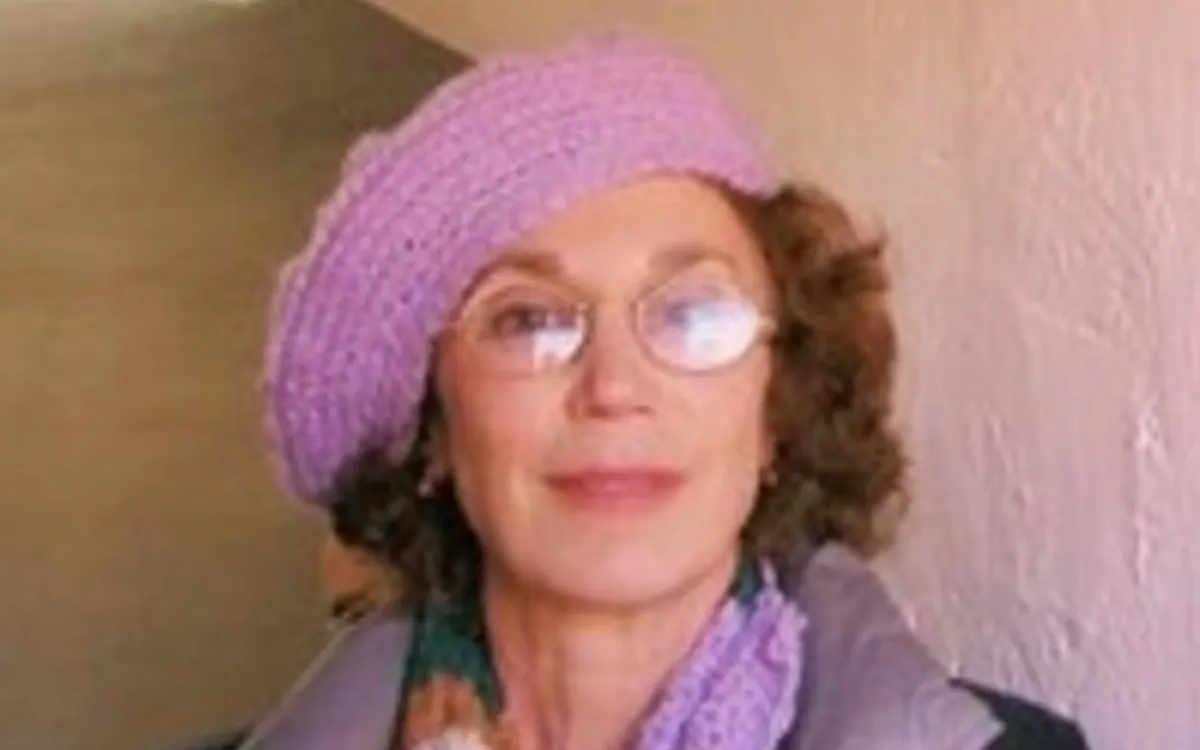
A second wrap up interview for season five. Dr. Zhenia Fleisher lived in all three of the 20th century's major centers of Jewish life - USSR, Israel and the USA. Tune in for her thoughts on past present and future.
About this episode
Dumas on waiting and hoping, in which all human wisdom is contained. Dr. Zhenia Fleisher, chemist, former refusenik and resident of Jerusalem, has lived in all three great Jewish centers of the century. Jerusalem had been a mystical name from literature, present even in secular Russian poetry and prose. Her Soviet childhood was happy, with Yiddish-speaking grandparents who read Sholem Aleichem aloud and laughed, a family whose Jewishness was written in the passport yet not defined by the Holocaust, since they had served in the Red Army. She knew a Jew had to be far better to pass the university quota, and her father steered her to chemistry as a profession that was not political in any way, which is why so many Russians became engineers.
The war of 1967 was a watershed that changed the whole Jewish atmosphere, families glued to the Voice of Israel, the image of the Jew transformed even in Gentile eyes. Fleisher began to realize she did not want the life of the Russian-Jewish intelligentsia, and as a chemistry student she exercised her right to attend any lecture, walking into the oriental languages department of Leningrad University to study Hebrew openly from the original of the Bible under Professor Winnikov, even as the underground Hebrew movement was only beginning to form. She had never seen the Bible in any language, encountering it first as a Xerox page, and a fellow student played her Jerusalem of Gold, whistled in Hebrew off the unjammed Voice of Israel.
The breakthrough came from the fearless Jews of Georgia, a Christian country on the edge of a cruel Muslim world, and then from the story of the plane, after which a large group connected to it was let out, and Fleisher went with them in 1972. She owes her parents deep gratitude for letting her go, since when she said goodbye she did not expect to see them ever again, though years later she did. She arrived in Israel in its magic time, after the Six-Day War and before Yom Kippur, into an Ulpan that taught Hebrew along with songs and holidays, nation building on the personal level, and she wandered the streets of Hebron alone, unaware that she was supposed to be afraid.
Sinai was a land of freedom hard to put into words, three hundred kilometers of empty beach where nobody experienced such liberty, and her family went twice a year for Pesach and Sukkot, so that her son Yishai as a boy thought there was always a full moon in Sinai. They became friendly with the Bedouin, who felt themselves no part of Egypt. When Begin withdrew, it felt like giving up part of their soul, and though they later returned as visitors, that sense of freedom and of history was lost. In 1984 she moved to America, where religion finally came to her, in Passaic among families like the Robinsons and Weisses who insisted a child not be pulled from Jewish school and offered to raise the money themselves.
Her wisdom draws on all three centers. She once believed Russian Jewry was the paramount Jewish experience, then saw it as merely one of many stories, and not the most distinctive, while American Jews of the eighties thought themselves kings with a crown on every head, looking down on Israel as a poor relation. In her lifetime that picture is gone, the American diaspora waning while busy with self-aggrandizement, and the biggest challenge is to grasp that the state of Israel is not another country or stage but the most important endeavor the Jewish people ever took upon themselves. She closes on the Temple Mount, old and alive with a gravitation everyone wants, where ownership is shown by living in the apartment, a call to come home.
Key ideas
- Fleisher's Soviet Jewishness was written in the passport yet not defined by the Holocaust, since her family had served in the Red Army.
- The war of 1967 was a watershed that changed the whole Jewish atmosphere and the image of the Jew in Gentile eyes.
- She studied Hebrew openly in the Leningrad oriental languages department, having never before seen the Bible in any language.
- She left with a group tied to the plane story in 1972, not expecting to see her parents again.
- Sinai was a land of freedom whose withdrawal felt like giving up part of the soul.
- Religion came to her only in America, and she now sees the state of Israel as the greatest endeavor the Jewish people ever took on.
Chapters
- 0:00 A refusenik in Jerusalem
- 2:15 A happy Soviet childhood
- 5:40 Jewishness without the Holocaust
- 6:42 The quota and a safe profession
- 9:55 1967; a watershed
- 11:01 Studying Hebrew in the open
- 14:15 First sight of the Bible
- 16:20 The Georgians and the plane
- 18:26 Leaving in 1972
- 19:29 Israel's magic time
- 21:39 Sinai, a land of freedom
- 23:47 Giving up part of the soul
- 26:58 Religion found in America
- 33:22 One of many stories
- 35:42 Israel, the greatest endeavor
- 37:52 The Temple Mount; come home
Who, where and when
People
Zhenia Fleisher, Yishai Fleisher, Professor Winnikov, Gershom Scholem, Menachem Begin, Uri Zvi Greenberg
Places
Leningrad, Jerusalem, Sinai, Hebron, Passaic
Texts
The Hebrew Bible, Master and Margarita, The Codex Sinaiticus
When
1967 CE: the Six-Day War, 1972 CE: Fleisher leaves the USSR, 1982 CE: the withdrawal from Sinai, 1984 CE: she moves to America
Read the transcript
There is neither happiness nor misery in the world, said Alexander Dumas. There is only the comparison of one state with another, nothing more. Live then and be happy, beloved children of my heart, and never forget that until the day God will deign to reveal the future to man, all human wisdom is contained in these two words, wait and hope. And I have nothing to add to that. I'm Rav Mike Foyer, and this is The Jewish Story. Season 5, Interview with Dr. Zania Fleischer. Okay, I'm here with Dr. Zania Fleischer, chemist, one-time refused, now resident of Jerusalem, mother of three and mother of my dear friend and colleague, Rabbi Yishai Fleischer. Dr. Fleischer, thank you so much for taking the time to speak with me today.
It's a true pleasure, one. I'm really excited because as we were speaking about before the show began, the Jewish story listeners have been deep in the tale of the Jewish 80s. You know, the 1980s, both in Israel, in America, even at least from a distance in the former Soviet Union, time wasn't former, right? And uniquely, you've lived in all three. Although, as you just said to me, it was important that I introduce you by saying resident of Jerusalem. Why is that? Why was that so important to say? I always wanted to live in Jerusalem. When I first came to Israel, we lived in Haifa. I went like most of the Russians, I went to Technion. My PhD is from Technion. So it's in Haifa and Jerusalem was far. But it was like always like a source of Jewish inspiration.
Even when I was in Russia, it was like a mystical name, you know, like from literature. Sure. I mean, Jerusalem has always been that light on the horizon for the Jewish people. Right. Also in Russia, Russian literature is a prominent presence. Absolutely, both because of the Russian Orthodox and just because Jerusalem is a city that you can't ignore. No, the Russian Orthodoxy was not of any significant influence when I lived in Russia. Well, of course, right, because it was the communist state. Right, but Russian literature, for instance, you know, Bulgakov, his famous Master and Margarita book, you know, the part of the story happens in Jerusalem, also Boonin, like Russian Nobel laureate of the 20s or 30s.
I mean, he published a great memoir of his travels in the Middle East. I read it all. That's fascinating. I had no idea that Jerusalem held a place in what I think of as secular, so to speak. Also in Russian poetry. It's like in a Jewish culture where religion and culture is very mixed. It's very hard to part them. Let's not even try. Yes, exactly. So the same thing is kind of in Russian. from Jerusalem was always kind of present in my life. Beautiful. I think about it. So I want to go backwards because I'd like to start, if I may, by asking that you tell us a little bit about your life as a Jew in the Soviet Union, eventually as a Refusenik, but if you can, most people have really no context, certainly today.
I had a very good childhood, a very happy childhood. And my grandparents on the mother's side were native Yiddish speakers. Well, they did not speak Yiddish in the house, but from time to time they would. Especially to say something which, you know, they wanted to keep secret from their children. Of course. and we did not have Jewish holidays in the world well now as I grew up I think backwards that some of the big meetings of the entire family were probably the Jewish holidays they didn't tell us meaning you knew your family came together and that was probably special as a child but you didn't necessarily know why no and another thing I remember that my grandfather and his brothers, they would also meet together and they would read Sholom Aleichem in Yiddish.
They laughed and they were so happy about it. And they laughed and laughed. It was very lovely. We always knew that we're Jewish because it's actually written in your passport. Right. But it is a very important, very important point. My entire family were Russian Jews. I mean, originally, my grandfather's family are from Pinsk, which is just white Russia, yellow Russia. But originally, by the time when the war came, and it was a defining moment in the Russian Jewish history, the Second World War, my entire family lived in Russia. They did not live through Holocaust. they were all in the army, in the Russian army. In the Red Army, right. In the Red Army. I have a picture of my grandfather with the hat of the Red Army and the Red Star.
So our Jewishness was not defined by Holocaust. And you felt Russian also? No. No. I never, never. I mean, I always knew that we were Jewish, but I did not really experience anti-Semitism. we knew for instance that in order to by the time I was about to start university I wanted to study history it was forever like a big interest of mine when I was a child and it's very much a big part of my life now but my father told me no no no you need a profession that is not political in any way so chemistry is great it's about as non-political as you can get so yeah I think this is the reason why so many Russians are engineers it was safe it is safe it's practical, it's not political so if it's hard for us probably to go you know very high in your career but many Jews did in any case it gives you like a decent life so we know for instance in order to get into university If you are a Jew, you have to be better, way better than the others, because there is a quota in the university.
So we kind of lived with that. The antisemitism in the world is a picture of pogroms. No, I didn't experience that at all. So eventually you made your way to Israel. So something must have changed. What happened at some stage that made you want to leave? My grandparents were always very excited about the existence of the Jewish state. I remember stamps. There were stamps from Palestine, also stamps from Israel, and they were very cherished. I mean, my grandparents or my parents never cared much about collecting stamps, but these stamps were very important. Precious. Precious, yes. And I always had interest in Jewish stuff. I cannot I don't remember looking backwards I don't remember the source of it but I always had this interest and my grandfather taught me Aleph Bet taught me how to read Hebrew at age I guess six or something like that.
Was that safe? Was that legal? It didn't in the house. did it in the house. So in the house it wasn't a political act it was just what you do in your home. I only ask because people speak about the underground Hebrew lessons in other contexts. It was later. I was like six or seven something like that. But another very important element of my upbringing was that you never ever say outside of the house the things that you heard in the house. never to anybody. Was that about being a Jew, or was that about the fear of the communists in general? In general. Being Jew, political, nothing. Majority of the Jewish families would not speak openly in the presence of their children. But my father was very much against it, and he said, she's a part of the family, and that's the rules.
These are the rules, and I never said anything. So you look back, you always had some love and attachment to things Jewish and the stamps from Israel or Palestine before Israel. So when did you begin to make that an active part of your own life? How did that happen? Because there were risks as you got older. there were always like a trickling of the immigration to Israel not from Leningrad but from Baltic Republic and we have a lot of connections to to the Baltics yes we lived for a couple of years So we always knew that the people are going And in 67 67 was like a watershed For everybody, it was like unbelievable I remember people and me probably Like glued to the radio Because my father bought Panasonic radio That you can listen to the Voice of America ways of Israel and ways of freedom.
Everybody was listening to it and the Jews were calling to each other telling you know what going on what they heard And in the beginning it was like terrible Then when the truth came out it was like a great holiday And it changed everything It changed the entire Jewish atmosphere atmosphere. And also Goem looked at us completely in a different way. There were tons of jokes about Jews, about the war, and they were kind of nice jokes. The image of Jew changed with that war. So for you, I hear the excitement, I hear the change in status, but when you say everything changed, what changed most for you? I kind of started to realize that I do not want this life of part of Russian Jewish intelligentsia. I just don't want it.
And what did you do? So when I started the university, I studied in the Department of Chemistry. But we have, in St. Petersburg University, there is a very big and important, very old and very well-known and highly developed Department of Oriental Languages, which goes back like 100 years. We have here in Jerusalem the presence of Russian, like, Oriental Studies, you know, all over the city. As a student of a university, I had the right to listen to any lectures of my choosing, only if it doesn't interfere with my normal studies. I went to the faculty oriental languages and I took classes in Hebrew. That was funny, because at the same time, this underground, I didn't know about that. all this underground started to pop up in the country and people had to do it underground and it was dangerous but I did it completely openly You were doing a lecture hall Yeah And I had a great teacher it was Professor Winniko and we actually studied Hebrew from the from the zero of the original of the Bible.
I never saw the Bible in any language. You had never seen it? How old were you? At that point, like 17, 18. 18 years old, you never seen the Bible. The first time you saw it was a Xerox page in the languages department of St. Petersburg University. I didn't see the Bible in Russian either. Right. Communist state. It wasn't a question of the Jews. It was an opposition to religion. No, no, it's not that it's in every hotel in the drawer where there's a Bible. Right. Not the way it is. Right. It was like an eye-opening for me because the teacher, the professor was great. Also, the students, some of them, they're extremely interesting. It's opened the picture, which was much more alive than what we had before. For instance, in Russian language there was in my time, there was a word Talmudist.
It had a totally negative connotation. Right. It must be a person who is who cares about little non-important details about everything. Right, it's the way the Christian culture uses Pharisees. like instead of Ludnik the word Ludnik didn't exist but Talmud is good and this opened up a new picture for you it opened a new picture for me then there was one of the students who when he called me and everybody was Russian there were no Jews there he called me and he said you know I want you to listen to a song he told me I heard a wonderful song on the voice of Israel he was like very talented and he could understand voice whistle in Hebrew. And voice whistle in Hebrew, you could listen freely because it wasn't interrupted.
So he came with his religion. He let me hear. Wow. You listened to Jerusalem of Gold in your university class. It was almost like homework. Not in class, but with one of the fellow students. Yeah, so I said, wow. I mean, at this point, we already imagined Israel like a real thing, not something mystical. Right. How old were you when you started thinking about actually leaving? In the beginning, I didn't do anything to learn Hebrew, but I started to think about it in very, very definite terms. I kind of knew inside me that I'm not going to live my life that's not going to happen something will come and I'm going to live my life somewhere else definitely and then we started I kind of got into this Jewish Zionist organizations so we talked about it They were like other people.
Then people started to leave. By the way, the big breakthrough was done by Jews in Georgia. In Georgia. Georgia, yeah. They were kind of fearless. I think Georgians had a fearless reputation in general. Yes, this is like a border. Georgia is a Christian country on the border of a huge and very cruel Muslim world. and they were always fighters. So yeah, maybe that is a part of it, yes. They kind of made a huge Brexit. Huge. And then there was this story with the plane. I told that story for my listeners. They've heard it. Yes. Yeah, I was a little bit involved with it, like inside. Then they let out a big group of people that were connected to the story on the plane. They let them out. And I went with them. That was in what year?
1972. So that's very early. Very early, yeah. My parents and I owe the huge appreciation of their love for me because they let me go. when I left and I said goodbye to my parents I did not expect to see them ever again and did you? did, yeah, definitely how much later? way later, years later years later tell me something, you, in 1972 you got out and if the listeners want to go back to the first episode on Soviet Jewry, they can hear the story of that, hijacking and the impact it had not only for I was focused there on the impact in energizing the student struggle for Soviet Jewry in America but what you're pointing out is it had a very immediate impact for Soviet Jews like yourself and you came to Israel and now you meet the reality and what I'm curious about is how did that reality match the dream?
Great. It was wonderful. It was wonderful. Israel was in these actually in the best year it was like after six days before Yom Kippur that was a very magic time it was a magic time to arrive yes so I was in Umpan and Umpan was very international we had people from like 13 countries Umpan also was very different from what is now because it's not only taught you Hebrew it's also taught you culture songs and hagi and holidays. It was nation building on the personal level. Right, right. And the teacher was great and they took us for trips and I went to Febron. I kind of wandered from the group and I walked the streets of Febron totally alone. I wasn't aware that I was supposed to be afraid. Well, like mother like son apparently.
Yeah, that was like very eye-opening for me. Every summer of my university I worked in archaeology in some remote places, mostly in Central Asia, which is like east. And so when I came here it wasn't like, oh my god, you know, what is that? Where did I come to? What was the biggest challenge? In Israel? Yeah. It went so easy and smooth. How long were you here? 12 years. 12 years. So from 1970 to 1984, I have a strange question, because one of the big events of the 80s that we spoke about in Israel was Prime Minister Menachem Begin's decision to withdraw from the Sinai. Now, I happen to know from your son, you guys had a personal love for the Sinai as a place. I'm curious, as a Jew who had struggled, it sounds like you were very blessed in that struggle being kind of brief and bearing fruit quickly, but nonetheless had struggled and was aware that many of your friends, Shirley, family, etc.
were still struggling. What was your reaction when Israel decided to withdraw from the Sinai? It is really hard to put in words what was Sinai for us. Sometimes I meet people my age here in Israel that look a little bit like old hippies. We kind of exchanged glasses and took remember Nueba, remember Tahanadele Benueba, remember Nueba, like a gas station. Doesn mean anything for like somebody who doesn know what was it Sinai was a land of freedom Nobody not we not anybody not an Israelis there were many foreigners there too. That kind of freedom nobody ever experienced. Like the beach, the line of the beach of Sinai is 300 kilometers. Endless. Yeah, there were no hotels. you drive now from here to and it's like a resort there was nothing absolutely nothing so we went to Sinai at least twice a year at least twice a year for Pesach and for Sukkot Ishai as a little boy at that time he thought that there's always a full moon in Sinai because you were there for the festivals what a beautiful image beautiful child image yes so you can go whatever you want you can do whatever you want like Israel used to be small and it became huge and Sinai when you walk Sinai it's endless it should take you 40 years yes Yeah, so the north of it with the sand dunes and like a little bit, you know, like Sahara type of view and the south with the mountains of Sinai is magical.
It's unbelievably, the arrow of it like filled with Hayem Etin, you know, like it's... The resurrection of the dead. Yeah. It was unbelievable. And the people, we became very friendly, not only my husband and I, like you. All that group of people became very friendly with the Bedouin of Sinai. The Bedouin of Sinai were very happy with Jews. They did not like Egyptians. They never felt themselves to be Egyptian. And Sinai is not Egypt. I mean, this is like a modern invention that Sinai belongs to Egypt. Yeah. when we gave up Sinai it's like part of our soul so in the beginning we didn't want to go there we didn't go then we started to go again so we were coming to Israel when we went to America we were coming to Israel once twice a year again and we would go to Sinai but something was lost that land of freedom that you've got yes the sense of freedom disability also it was like a sense of history history we are back to Sinai Sinai belongs to us and there were wonderful songs about Nahal Besinai Nahal Besinai and and Soviet Iran.
Yeah. In the beginning, Egyptians were kind of mild. But there was army, and there were rules, where you should go, where should you go, and the passport control, and all kinds of stuff. The Medley in life was basically the same, because they've been there. For far longer than... Right, right. But we studied Sinai, and we hiked Sinai with archaeology there, geology like plants it was like a very exciting plant, you know like Har Sinai and the monastery there and one of the oldest the Codex Sinaiticus is from there and part of it is in St. Petersburg I saw it in the Academy of Sciences in St. Petersburg which has by the way one of the biggest in the world and most important collection of the Hebrew manuscripts Someday we'll see those again I want to pivot with this image of Sinai as the land of freedom to another land of freedom because in the mid-80s having started off in one of the major Jewish centers of the world and then moved to Israel in the other, in the mid-80s you made it to America Now something I've spoken about a lot in the Jewish story is the the journey of American Jewry from what we might call the ethnic enclave, the sort of classic Jewish ghettos that were built in the Lower East Side of New York or in other cities, out into the suburbs.
That process that happened for American Jewry in the 50s and 60s. But by the 80s, one of the sort of phenomenon that we've been speaking about is how American Jews were so American that it challenged their Jewishness. assimilation and intermarriage were big challenges for American Jewry. And I'm curious, as someone who grew up knowing that she was Jewish and not Russian, even though you didn't have as much access, maybe, as American Jews did to ways of being Jewish, the communist state not being so enthusiastic about religion, then going to Israel and then to America, what was your experience as a Jew when you arrived in America? in Russia my Jewish education consisted of reading a lot of Sholom Aleichem and Leon Fechzwanger which is a German Jewish writer for some reason he has very few translations into English and he is not well known here but he was a great German Jewish writer and he wrote a lot of books about Jews and Jewish life and another thing that I got from my parents and from my family was one big Jewish thing never ever marry a Goy nobody in our family except for one actually married a Goy that was one thing then I come to Israel and Israel was a land of freedom Sinai was a land of freedom but Israel also We were not religious at all.
I mean, we had very few ideas of what is a religious way of life. Because we lived in Haifa, Red Haifa. I went to Technion. I always tell this story. There was this dining hall at Technion. And in a corner of it, there was like a sink. And there was a cup, strange cup with two hands. and it was kind of changed to the world. And I asked people, what is this strange thing? What is that? It took me six months until I got an answer. You can understand what was the level of Jew listening. If people listening aren't aware it's traditional to wash one's hands before eating bread. On the other hand my PhD advisor once told me listen, I want you to go with me to the lecture, there is somebody who is very interesting who is giving a lecture, so let's go, you will enjoy it.
Okay. It happened to be one of the last appearances of Gershom Sholem. Wow. Yes. And he gave a lecture about Ariya Kadoz. So you heard a lecture about one of the greatest mystics in history, from the greatest historian of Jewish mysticism. Wow. So it's also technical. Right. So that was your experience in Israel. And then as a Jew coming to America... Then I come to America, and in America, we experienced religion. In Haifa, we went to shul on Yom Kippur. Isha is like a babysitter, who was a lovely Arab Muslim woman. So he spoke perfect Arabic. so we had like more connections to Muslim religion than to like Jewishness but in America all of a sudden boom they are all all from Jews we figured that we should send Isha to a Jewish so he won't lose his Hebrew but people there they had a much much broader view of Judaism.
What do you mean? They saw us, basically, I became friends, I'm still friends with our neighbor in Passaic, New Jersey, where we landed, actually. The Robinson Weiss, maybe you know her, like, she's a dude of Rav Schwab. Oh, wow. I know Rav Schwab, sure. So, these people are so that we just don't know much. They saw that we are, like, opened. So they invited us for Shabbat and Misha went to this Jewish school. And when the boy goes to Jewish school, he's in the environment which is religious. And there were a lot of immigrants that were studying in these schools for free for the first year. But then we were thinking about taking him away from that school. We bought a house. And we thought he would go to the public school.
which there was a beautiful path through the forest to the school and I thought it was so romantic. Oh my god. And suddenly, the Robinson-Reismann and the school principal, all of a sudden they told them no. I said, what do you mean, no? I thought this was a land of freedom. Yeah, you can't do that, they said. We were like very stunned. Like, we don't understand why. And I said, listen, there have been many boys, Russian mostly boys, that also went for one year and they left and you didn't say work. And they told me, no, not a child. No, not a child. And I came home and I told my husband, listen, it looks that these people know something that we don't know. So we came back to school and they told me, what's your biggest problem?
And I said listen we just took a mortgage Schools are expensive And Robinson Weizman said so money is a problem That not a problem We'll make a collection. I heard that, and I knew how they live. And then I came home and said, Sasha, that's it. We should do that. So that was a moment that made us realize that there is more at stake than just, you know, the distance to school, more paying a mortgage or something like that. So I am so grateful to these people. So we sent Ishai to a Jewish school, different Jewish school. Some other rabbi from Batheik, Rabbi Zupnik, he took about himself to teach us for a year for free. My husband, Sasha, our friend, Joseph Spungen and me. We studied once a week. so this is an amazing arc the American Jews kind of took it upon themselves to give you religion meaning you always knew you were Jew and you got that identity in the Soviet Union in Israel you got a taste of that sort of fullness and freedom but in America it was where the religion and the Torah came I want to wrap up but before I do I just have to ask that having lived in the three primary Jewish centers of the 20th century.
What do you see that we need most today? Somewhere in your life wisdom, you've seen people survive and thrive in these three different cultures, and here you are living in the modern state of Israel. What do you see that we need most today? Or what do you see as our biggest challenge? You know, when I lived in Russia, and I left Russia for Israel, and there were like a whole group of the very young Zionistically thinking Jews came to Israel. My feeling was, and many of our friends was, and I know that till this day, some of my friends still think that the Jewish experience in Russia was a paramount experience of the Jewish life. Really? Yeah, right. So the Russian Jewry, to me, that was like the most important, most productive, most interesting, and most profound Jewish experience.
And I lived in Israel, and then I came to America, and I figured out, no, not at all. It's just one of the many Jewish experiences in different countries. And most probably the German Jews were more important. And of course, the experience of the Jews in the Oriental countries, like in the Middle East. Anyway, I realized that, you know, I'm always proud of being Russian, but I can clearly see that it's not that important. It's one of many stories. It's one of many, many stories, and really not the most distinctive story. And American Jews in the 80s, they thought that they are kings. So like each and every one of them has a crown on their head. This is the Jewish diaspora, which was like the most important, like something kind of thought that was familiar to me.
Like I thought before about Russians, but of course Americans were like way better. more important and influential. And I looked down at Israel as a poor relative that needs American help and needs American Jews to be there strong and important and influence American government. In my lifetime, that picture is not there anymore, the way I see it. the way I see now the American Jews this is another diaspora which is waning it's like going down in its importance and its influence still having like this self like very busy with self-aggrandizement it seems to me that the most the biggest challenge is for Jews is to realize that there is a profound revolution in the Jewish history State of Israel is not another country and it's not another stage in a Jewish life and it's not a regional development into something, no it is the biggest and most important endeavor that the Jewish people ever took upon themselves.
And the importance of diasporas, Russian diaspora, Ukrainian diaspora, I don't even read about it. It's boring. So I happen to know that there is something which doesn't bore you, which rather excites you, because I'm friends and colleagues with your son, and that's the Temple Mount. And I want to just take one last minute to close with something which, in my eyes, sits at the center of our story. I know that you feel a personal attachment to the Temple Mount. Tell me one word about what you would like people to know. There's people, Christians and Jews and religious and secular, progressives and conservatives that listen to my show. One thing you would like them to know about the Temple Mount and why it's important to you.
The Temple Mount is old, very old. And all the temples of the world that existed at the time when our temples stood in this place, they all now like broken ruins, maybe tourist attractions, but they gone and forgotten. This place has kind of gravitation force that is so much alive, so full of energy and like gravitation, everybody wants it. Everybody. It was never abundant. Everybody wants it, we want it, we have the right will, but everybody else also wants it and always want it. This place is different from the rest of the places. I mean, we religious Jews, we know why. We know why. But the other people, I don't know whether they know it or know it, but to put it in the words of great Israeli poet, Uritzli Greenberg, HaShulet Bahar Abayet, and Shulet Bahar Azkula.
The one who owns the Temple Mount rules the entire land. This is like a concentration of all the forces that are here in the Middle East. Like, we choose, we're not that sensitive. you know I have to say that every time I go to Pader Bight I look at it there is no other way of pronouncing your ownership but to live in the apartment since I started which was like 5 years ago many more Jews go there many more Jews it used to be that there was not enough people for Armenia now it's much more like 25,000 Muslims go there at least 25,000 Muslims go there every Friday so you tell me who owns it you know this is our generation challenge this is our generation task I mean you can pronounce millions like laws and the Knesset and the right articles until Jews go up it's kind of meaningless and the one thing I wanted to say from the last moment you know the research which is like religious religious like geographical, mathematical in the last 20 years moved so much further about Temple Mount that we know where was the areas.
The enclosures and the lines are forbidden. You know there is very little controversies left. so the idea that you cannot go there because you're going to desecrate it's an antiquated idea like many rabbis just didn't read the new stuff or maybe rabbis like everyone else have a complicated relationship I wanted just to guide on the harapites you guide up there, really? that's important to know because I know in particular people that would be looking for women to guide them. So that's great. I'm going to keep that in mind. So this is a powerful call. This is a powerful call because in a world which is really struggling to find its center, what I hear you saying is that this is a place that we've always been drawn to.
And the call you're making to people is to come home. Because like you show your ownership of an apartment by living in it, so too your call is for people to come up. When I came to Israel, there were 3 million people. Now it's nice. That's right. And there's only one way that happens. That's coming to home. So that is like the most important part of our home. So Dr. Janie Fleischer, thank you so much. I think that's a powerful image to end on. I really appreciate you taking the time. And I want to thank also all the folks that are listening. If they want to be in touch with me, you can reach me at robmikefoyer at gmail.com or you can find me on Facebook. I'd like to thank all the folks that give their hard-earned money to make this show happen, to keep it free and make it available.
you can join them by going to jewishstory.co in the upper right hand corner you see a button that says be a patron trying to gain some momentum for season 6 people dig deep, I need your support I also like to thank the Land of Israel Network that's thelandofisrael.com they're building a center for global transcendence in the heart of Judea and I want to thank the Pardes Institute pardes.org.il for throwing the doors of the Beit Midrash open as wide as possible and I want to thank you for listening I'm Rav Mike Foyer and this is the Jewish Story Thank you.
More from Season 5
TJS S5E24 Meir Kahane and the memory of the Holocaust
American Jewry in the Eighties were as safe and comfortable as a Jewish community had ever been - and yet the shadow of the Holocaust still loomed large...
Play Episode
TJS S5 Interlude 80s conversation with Rav Yehuda HaKohen
Here is a talk with Rav Yehuda HaKohen of the Vision Movement, the first in couple of conversations which will close our exploration of American Jewish life in...
Play Episode
TJS S5 Conclusion - an end and a beginning
All things good things must come to an end, so here is the concluding episode of season 5. In it you will find an exploration of how to...
Play Episode