
TJS S6E13 - American Antisemitism part IV
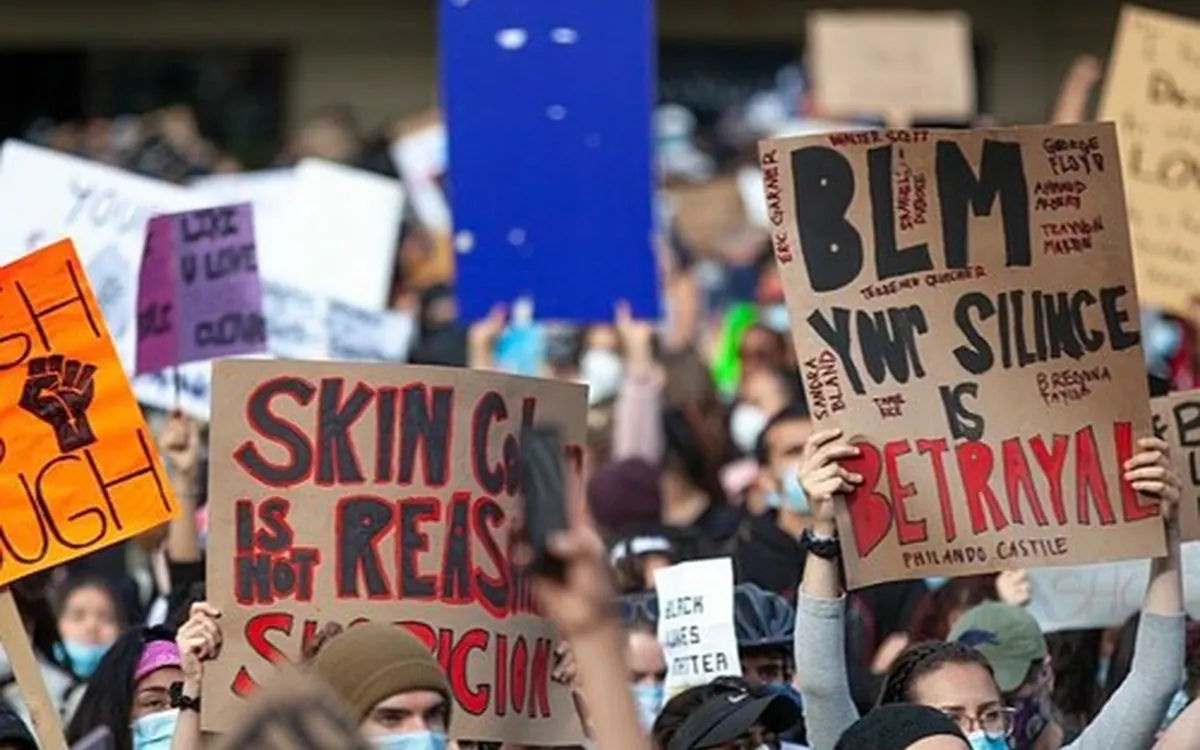
When the cracks start to open up in American race relations, Jew-hate seeps into the mainstream. Here is an episode about Reverend Jesse Jackson, Minister Louis Farrakhan and the evolution of black antisemitism.
image source: www.flickr.com/photos/gotovan/49958357796/
license: creativecommons.org/licenses/by/2.0/legalcode
About this episode
From the deepest desires often comes the deadliest hate, said Socrates, and Rav Mike treats antisemitism as a social virus, a small potent mix of ideas, fears and aspirations, only semi-alive, often resting at a low level in the system and waiting for a chance to reproduce. It can stay confined to the conspiratorial fringe or spread thin as the residue of two millennia of Christian hate, the kind that means disliking Jews too much. A virus needs no great reach to survive, only a niche host, and if it manages to infect the powerful, or those with nothing to lose, or worst of all both at once, look out. That is why he warned that the unity of all people of color had moved to the center of black consciousness with the scientist Yakub lurking behind it.
That move did not take over everyone, since few will accept that Yakub grafted the white race six thousand years ago, but ideologies grow by offering a whole way of being and not by logic, and society is not rational. The colorblind dream felt less and less satisfying to more black Americans through the eighties while the image of the Jew as draftsman of white supremacy gained resonance, fitting the old trope of the cabal wielding power behind a facade of weakness. Rav Mike points to Public Enemy and its minister of information, Professor Griff, whose raw antisemitism eventually forced him out, itself read as proof of Jewish power over the entertainment industry. Beneath it ran a broader feeling, that it is no longer a white man's world and so I need not serve the Jew, resentment as a potent force.
The Reagan era set the mold, a conservative revolution wrapped in a national optimism that crossed party lines and made social change possible without violent upheaval. In that climate a new profile of black politicians crossed from protest into national politics, and the breakthrough belonged to the Reverend Jesse Jackson. Jackson rose through the civil rights movement close to Martin Luther King, led Operation Breadbasket and founded PUSH, then built an international profile, embracing Arafat, sitting with Assad, and in 1983 bringing home the captured navy pilot Robert Goodman from Syria, which earned him a White House meeting and a springboard. His two presidential runs, in 1984 and 1988, broke the mold for racial politics, and they unfolded against a background of ugly antisemitism that would not stay hidden.
In January 1984 Jackson told a Washington Post reporter that all Hymietown wanted to talk about was Israel, using a slur he assumed a black journalist would never repeat, and when Milton Coleman finally printed it a storm broke that threatened to collapse his campaign. He denied, then alleged a Jewish conspiracy, then apologized at a New Hampshire temple over his wife's objections. The deeper poison was Louis Farrakhan, close enough to provide Jackson's security, who called Judaism a gutter religion and issued death threats against Coleman, drawing a unanimous Senate condemnation. Opposition only fed him, as he told CNN the little man would love him more the more they fought him, and a large part of black America saw him, and not Jackson, as the inheritor of Malcolm X's separatist mantle.
Farrakhan assigned his research department to prove the Jews responsible for slavery, producing The Secret Relationship Between Blacks and Jews, a work that joins the Protocols as an influential text, since blaming the Jews for slavery evokes a reaction on the order of the charge of deicide. The peak came in 1995 with the Million Man March, at least four hundred thousand strong, a moving call to self-reliance organized by a man whose antisemitism was tolerated as part of the event, and Rav Mike marks it as the real turning point in American race relations. He gestures ahead to Ferguson and Gaza linked, to the racialization of everything, and to Ibram Kendi defining antiracism as antiracist discrimination, with reason, merit and the rule of law recast as white values, the groundwork for the progressive hate still to come.
Key ideas
- Antisemitism is a social virus that needs only a niche host and grows dangerous when it infects the powerful or those with nothing to lose.
- Ideologies spread by offering a whole way of being and not by logic, which is how the Jew became the draftsman of white supremacy.
- The Reagan era's optimism opened the national stage to a new profile of black politicians, led by Jesse Jackson.
- Jackson's Hymietown remark and his bond with Farrakhan showed antisemitism moving into the black mainstream.
- The Secret Relationship blamed the Jews for slavery, joining the Protocols as an influential antisemitic text.
- The 1995 Million Man March marked a turning point, laying groundwork for Ferguson, Gaza and the racialization of everything.
Chapters
- 0:01 Antisemitism as a social virus
- 2:23 The unity of all people of color
- 6:03 Public Enemy; resentment
- 8:14 The Reagan era; national optimism
- 10:35 A new black political profile
- 12:46 Bringing Goodman home
- 15:03 The Hymietown remark
- 18:22 Deny, then apology
- 19:28 Farrakhan's death threats
- 22:46 The Senate condemns Farrakhan
- 24:58 Jews blamed for slavery
- 26:05 The secret relationship
- 31:31 A turning point; 1995
- 32:44 The Million Man March
- 36:02 Ferguson and Gaza linked
- 38:12 The racialization of everything
Who, where and when
People
Socrates, Professor Griff, Jesse Jackson, Robert Goodman, Louis Farrakhan, Malcolm X, Milton Coleman, Fidel Castro, Ibram Kendi
Places
America, Washington, Syria, Cuba, Ferguson
Texts
The Secret Relationship Between Blacks and Jews, The Protocols of the Elders of Zion, How to Be an Antiracist
When
1984 CE: the Hymietown remark, 1988 CE: the year of Jesse Jackson, 1991 CE: The Secret Relationship published, 1995 CE: the Million Man March, 2014 CE: Ferguson
Read the transcript
From the deepest desires, said Socrates, often comes the deadliest hate. And despite the backstory with the Greeks, I have to say I agree on that one. I'm Rav Mike Feuer, and this is The Jewish Story. Season 6, Episode 13, American Antisemitism, Part 4. This episode is dedicated in honor of the birthday of Shai Yistema Ben Yocheved. You should be blessed with long life, health, happiness, wisdom, and the capacity to give with generosity everywhere your heart desires. Now, as we go deeper and deeper into our exploration of this complex phenomenon, which is American Jew hate, it's crucial to keep in mind how anti-Semitism functions. It's like a social virus, small, potent combination of ideas, fears, aspirations, really only semi-alive, often residing at a low level in the system, just waiting for a chance to take over and reproduce itself.
It lives on wherever we find it in the role that Jews play in the socioeconomic fabric and as the tropes and home truths within the conceptual framework of society like we spoke about last episode. It can remain small, say confined to the conspiratorial crazies and strange demagogues that exist at the fringe of society. or it can be widespread while extremely dilute, like the residue that you can find from two millennia of Christian hate, built once upon a time on the Jew as the embodiment of opposition to God and now still present in Western culture with that meaning of antisemitism as when you dislike Jews too much. Now remember, a virus doesn't have to be widespread, nor powerful to survive, All it needs is a niche host.
And then, if it manages to infect the powerful, or those with nothing to lose in the system, or even worse, both at the same time, oi, va, voi, look out. And that's why, at the end of the last episode, I warned that by the early 80s, the narrative which posited the unity of all people of color, and therefore considered interracial alliances as suspect, had moved firmly to the center of black consciousness. Right? Behind that, lurking the evil scientist Ya'aqob, corrupter of races, as the Nation of Islam called it, I warned that that move to the center of black separatism and the role that the Jew potentially plays in its more radical forms doesn't mean that the idea took over everyone by any means, or even that the average person even took it seriously.
I mean, come on. Most people are going to find it a little bit hard to accept Nation of Islam's founder, Farrd Muhammad, was God incarnate. Or to believe that 6,000 years ago, the big-headed evil scientist Yaakov grafted the white race out of the black nation. But remember, religion rarely spreads through logic. Nor do ideologies in general, no matter how intellectual they purport to be. They grow by offering people ways to engage their hearts, their minds, and their souls through a whole way of being. Even if the pieces of the particular religion or ideology may at times appear uncomfortable or even absurd, they grow when they offer a way to exist in society. And society is by definition not rational.
And the idea of a colorblind society, frankly, was just simply less and less satisfying or even rational to more and more African Americans as the 80s progressed, while the idea of the Jew as the draftsman of white supremacy gained resonance. And that shouldn't be surprising. However we explain it logically, it just fits the classic anti-Semitic trope of the Jewish cabal, controlling, wielding power from behind a facade of weakness. In the 80s, we're going to witness some revolutionary shifts, at least in how Americans think about race and power, and that will directly affect the black Jewish relationship. we already saw one expression of this shift last episode in the statement released by the NAACP, which had gathered 200 black leaders to respond to the Andrew Young affair and the crisis it precipitated in black Jewish relations.
Now remember, Young wasn't just the highest ranking black American diplomat, itself an important achievement. He also represented a fundamentally different vision of American foreign policy, different both from the Jews who are nominally their allies within the Democratic Party and frankly from his bosses in the State Department, which is ultimately why he got the boot. His vision was informed by what he felt to be best for America, no question. And it was formed as seen through his community's increasing desire to identify with the so-called Third World, peoples of a color in Africa, Asia, and beyond. And whether the Jews had anything to do with his resignation or not, Young's ouster demonstrated that the vision which they supported, which in the early 80s was almost unquestioning support for Israel, was the winner within the power establishment.
And that's why the distress amongst black leaders about the breakdown in the wake of Young's departure was seen by many as an opportunity to reassess the whole black Jewish alliance, to basically reorder the internal power structure. And of course, it didn't stop at reassessment. Some rushed to deny there was ever an alliance to begin with, or at least celebrated the NAACP statement as a declaration of independence. And that was the feeling at the political level, that the interests of the two most focused and active minority communities within the Democratic Party, frankly, within America as a whole, had diverged. And that itself was part of a larger reordering of American politics in the Reagan era.
I'll pick up a little bit on that soon to come. But before I do, I want to note that while the boardroom political crowd may have been declaring their independence from a political alliance, on the street, the feeling was far more raw. It was the voice of Public Enemy, not Andrew Young. Now, if you're a child of the 80s like me, you must remember Public Enemy, even if you made the mistake of not loving hip-hop. You've surely heard songs like Fight the Power and Don't Believe the Hype. Public Enemy broke the mold on so many things, especially on the ability to express public anger and to challenge American myths about racism, violence, media, and power. And they also brought some of the more radical aspects of black power consciousness into the mainstream, be it for the good or the bad.
Professor Griff was Public Enemy's Minister of Information. He was the member who brought Louis Farrakhan's Nation of Islam vision to the group, and he wasn't shy about sharing his news in the media. In fact, his anti-Semitism and homophobia were so frequent and raw that he was eventually forced out of public enemy. This itself was seen by many as a confirmation of the Jews' new power role. No longer the landlord or grocer or pawnbroker, as James Baldwin had described in the 60s, when his article about blacks are anti-Semitic because they're anti-white hit the New York Times. Now, the Jew had a lock on the entertainment industry, still exploiting the black man and taking out any who opposed him. Now, Griff was a high profile and remarkably unrestrained example of crazy Jew hate in the late 80s.
but he was far from alone. There was a broader and less vehement, or really perhaps not even so hateful at all, sentiment which he was channeling, that it's not a white man's world anymore, and therefore I don't need to serve the Jew. Don't look for logic at that. Resentment is a potent force, whether it's aimed rightly or displaced at the easy target. So just keep that feeling close to hand as the story unfolds. If you actually remember Public Enemy, then you must remember the Reagan era as well, that oh-so-important phase of recent American history which really set the mold for much that came after it. In a general sense, the 80s saw what we call the Conservative Revolution. It was a broad-based movement in politics, culture, and their ideas dominated national questions on taxes, welfare, defense, and of course, the Cold War.
But the truth is that Reagan era extends well beyond Reagan himself, both in scope and time. And some see it as lasting on through neoconservatism, past the new millennia, and up into our day. But as a child of the 70s, I grew up in Reagan's America. And I mention it now because there was an element of that era which was both larger than policy and more diffuse. I would call it a sense of national optimism. because even liberal Jew that I was with hippie teachers having my 6th grade class build a participatory art nuclear protest for our end of grade project in 1984 I still remember the sense of pride and energy that the Reagan era brought to the United States because in the tradition of great American populists Reagan led as an outsider he was determined to restore what he called traditional values and a vision of America which actually crossed partisan lines.
It was a feeling that many Americans valued, even if they would never vote for the man. And its relevance to our present story is more than just informational, because everything that I'm going to speak about right now actually happened in the Reagan era. In a sense it set the tone It helped to support the type of social optimism which is a necessary prerequisite for the social change to happen at least if it going to happen without violent revolution. And thus it's no surprise that the 80s also saw the rise of a new profile for black politicians who began to cross the bridge from the protests of the civil rights movement and local leadership, which had been strong for quite some time, into the national political arena.
Now, for truth's sakes, there were earlier national personalities like Shirley Chisholm, not so well known, but first black congresswoman and first black candidate for a major party nomination in the 72 Democratic National Convention. But there's no doubt that it was the Reverend Jesse Jackson's two campaigns for president in 1984 and 88 that broke the mold for real and introduce some crucial new elements of discord and power into American politics. And a few of them were simply not good news for the Jews. A quick review. Jackson was born in 1941, Greenville, South Carolina, and grew up in Jim Crow South. He had a combination of hard life experience, enormous talent, and powerful ambition, which found outlets right away in the civil rights struggle from its get-go.
Jackson, as he went up in the movement, grew very close to Reverend Dr. Martin Luther King. And he also moved up the ranks within his Southern Conference of Christian Leadership. By 66, he'd left the South for Chicago to become the head of a regional office for what was known as Operation Breadbasket. That was the SCLC's economic arm. And within a year, Jackson had become its national director. He brought a new focus to the operation. Originally conceived as a job placement agency, under Jackson, the Operation Brad Bassley began organizing consumer boycotts on white-owned businesses with the goal of hiring and working with black-owned firms. Now, differences over that militant stance eventually led him to found his own organization called PUSH, People United to Serve Humanity, and to continue to pursue a national profile for actions.
International, really. Because we heard last episode about Jesse Jackson's 1980 trip to the Middle East, riding the tailwind of Andrew Young's dismissal as UN ambassador, where he claimed he would achieve unprecedented breakthroughs for peace through a new approach to foreign policy. Now, he learned, just like everybody else, that the Middle East is not so amenable to breakthroughs. But Jackson definitely broke through some barriers of American policy, embracing PLO leader Yasser Arafat, sitting with Syrian President Hafez al-Assad. And Jackson, overnight, had become the most important black American diplomat. But, unlike Andrew Young, he was operating outside of the official structure, which itself offered some unique opportunities.
In 83, Jackson went back to Syria to plead with President Assad to release captured U.S. Navy pilot Robert Goodman, whose plane was downed over Lebanon while bombing Syrian positions. and the Reverend achieved what the President and his administration could not. He brought Goodman home and thus was honored with a White House meeting in January of 1984. Today is a homecoming celebration and all of us are delighted to see Lieutenant Robert Goodman free, safe and reunited with his family. Reverend Jackson's mission was a personal mission of mercy and he has earned our gratitude and our admiration. It was the perfect springboard moment, and Jackson didn't miss it, announcing soon after a presidential run.
And that's why by the time he visited Fidel Castro in Cuba, only five months later, he was already a national politician. That trip, once again beyond the pale of American diplomacy, also bore fruit on the personal and political fronts. The Reverend convinced Fidel Castro to join him in a Havana church, something that Castro had refused to do for 27 years. It was a move that actually heralded a significant gain for religious freedom in Cuba, something the international world had been pushing for and failing at for decades. Castro, on the moment, praised Jackson on a level which may not have helped his presidential campaign in anti-communist America. Even the Democrats were against the commies in the 80s.
But it certainly elevated his moral stature. As Castro spoke of the very profound impression that the Reverend Jesse Jackson has made on all of us. Because of his honesty, his talent, his sincerity, his honor, and the profound passion with which he fights for peace and friendship. And I consider him an extraordinary spokesman, said Castro, of the highest ideas of Christian thought. Not sure what that means to a man who hadn't been in church 27 years, but it made its impression. as did Fidel's gesture to the Reverend when he released 22 American captives, with which Jesse Jackson became a legitimate international statesman. So why am I telling you this now? Because Jackson's rise to national prominence through his presidential run and to an international profile through his humanitarian efforts and successes came on a background of ugly anti-Semitism.
In January 1984, not long after bringing Robert Goodman home to the White House, the new presidential candidate gave an interview to The Washington Post reporter Milton Coleman. The conversation touched the full range of topics relevant to any presidential hopeful, but apparently it went downhill rather quickly when they turned toward American foreign policy, especially toward the Middle East. First, Jackson condemned the U.S. stance, saying that it, quote, excites one nation, meaning Israel, and incites 23 others, meaning the Arab world. And then he made a more domestic political comment about the Jews to whom he looked for political and financial backing on the campaign trail. That's all Jaime wants to talk about is Israel.
Every time you go to Jaime town, that's all I want to talk about. Oops. The origins of Jaime as a slur for Jews is of uncertain origin in case you didn't know that's what it was. Some even suggest it was born amongst urban blacks in the northern cities who were so often in confrontation with Jaime, a common Jewish man's name from a certain generation. And Jaime Town, of course, is New York, that other Jewish metropolis. Jackson was venting the same frustration that was felt by black leaders in the Andrew Young affair. that Jewish sectoral interests were not aiding the aims of his black community. And since Jews had an outsized power in Democratic Party politics, it was even thwarting them, at least in terms of the hierarchy of importance.
And because Milton Coleman was also a black man, the Reverend assumed those bitter remarks wouldn't ever be repeated. And the truth is, they didn't appear in that original interview. But as of the weeks passed, Coleman felt his duty as a journalist trumped any bond of racial solidarity. And so he allowed Jackson's remark to be included as a quote in another Washington Post article a few weeks later, which was focused on Jackson's rocky relations with American Jews. But the storm didn't really begin until the Post itself published an editorial a week after that, calling on Jackson to explain what it called his degrading and disgusting words. Now, word began to circulate that in addition to Coleman, a number of other journalists had heard Jackson use the slur, but had chosen to ignore it.
One CBS correspondent was bold enough to stick out his neck and say that had any other candidate made the comment, it would have been immediately front-page news, but that largely white news organizations have been timid. They don't want to look bigoted. Of course, condemnations from Jewish organizations poured in. And their vehemence not only shocked Jackson personally, I mean, after all, it was only a few words. The withdrawal of support which they threatened could actually have meant the collapse of his presidential campaign. So at first, he did the political thing, deny, deny, deny. And then he went on the attack with claims of a Jewish conspiracy against him, even though that's a little bit awkwardly reinforcing.
But those were both to no avail. Finally, the enormity of the political damage which was looming moved Jackson to apologize over the protests of his wife and many other advisors. The apology was made in an address to national Jewish leaders at Temple Adath Yeshurin in Manchester, New Hampshire. It was an emotional speech, if you read the whole thing, and it was focused on his personal failing. In private talks, he said, we sometimes let our guard down and we become thoughtless. It was not in a spirit of meanness, an off-color remark, having no bearing on religion or politics, however innocent and unintended, it was wrong. Many Jewish leaders were eager to accept this act of contrition. I mean, after all, none of us is perfect.
And frankly, racism is far from absent amongst the Jews. Furthermore, they had an interest in patching up this ever-growing rift between black and Jewish leaders that seemed to be weakening democratic politics altogether in the 80s. Others, however, were not so sanguine. He could light candles every Friday night and grow side curls and it still wouldn't matter. He's a whore, said ADL executive Nathan Perlmutter in response to Jackson's speech. Now, that may sound quite shocking and perhaps a little bit out of proportion, but that's because I left out a crucial part of the story, the part that includes Louis Farrakhan, then leader of the Nation of Islam. Reverend Jackson and the Minister Farrakhan were quite close.
They'd gone together to Syria to negotiate for Robert Goodman's release. And Farrakhan's Fruits of Islam squad were providing security for Jackson on the campaign trail. And the minister himself was stumping for Jackson in cities and towns across the country. By the way, at most stops, Farrakhan also took the time to tell everyone and anyone who had listened that Judaism is a gutter religion that the creation of Israel an outlaw act and those who support it criminals in the sight of Almighty God Something that apparently didn make him a liability on the campaign That only came when Farrakhan gave his reaction to the Heimetown crisis. We're going to make an example of Milton Coleman, he ranted. I'm going to stay on his case until we make him a fit example for the rest of them.
One day soon, we will punish you with death. Now, this wasn't Farrakhan's only death threat. Weeks after Jackson apologized, while Farrakhan was not only undenounced, but actually still deeply embedded in the presidential campaign, the minister warned, I say to the Jewish people, if you harm this brother, meaning Jackson, I warn you in the name of Allah, this will be the last one you harm. Eventually, Jesse Jackson was actually forced to remove Farrakhan from any official role in the campaign. Apparently, death threats cross a line that Jew hate doesn't. But the association between the two didn't hurt him in the polls. In the 1984 campaign, Reverend Jesse Jackson beat all expectations by winning nearly 20% of the Democratic primary vote.
And he shattered expectations in his second campaign only four years later, coming so close to the Democratic nomination that the New York Times declared 1988 the year of Jesse Jackson, whether he wins or loses. And so the mold was indeed broken for racial politics in America. And through the cracks, really cracks, between black and white, Jew hate was going to enter into the African-American mainstream. Now I'd love to tell a story of how Louis Farrakhan was crushed by the American establishment cast out from discourse for his hateful and violent rhetoric Heck, I'd even settle for a story of how Jewish power managed to de-platform this vicious anti-Semite relegating his hate-filled ideas to the backwaters of racist media But, unfortunately neither would be true For the next two decades more depending on how you count, Farrakhan remained a driving force in the African American community.
Which is not to say that there was any paucity of condemnations after Farrakhan came out of the shadows in 84 and they weren't just Jewish. Until Jackson's run for president brought the minister in his hateful stance to national attention. Most people had never heard of him. But on June 28, 1984, no less a body than the U.S. Senate voted 95 to 0 to condemn what it called his hateful, bigoted expressions of anti-Jewish and racist sentiments. They also instructed the chairman of Democratic and Republican parties to repudiate Farrakhan's remark. But you know, there's nothing better for publicity, and even for popularity, than opposition from the power establishment. Farrakhan appeared on CNN immediately after the unanimous condemnation and declared, go out on the streets and talk to the little man about the Senate's repudiation of Louis Farrakhan.
They love Farrakhan, and they will love me more the more you fight against me. Sounds right up the alley of the 80s, right? If you strike me down, I shall become more powerful than you can possibly imagine. And just like Obi-Wan Kenobi, Farrakhan was right. Because in the 80s, Jesse Jackson may have been embraced by mainstream America as a successor to Dr. Martin Luther King. But a large number of black Americans saw Louis Farrakhan as the inheritor of Malcolm X's mantle. And his vision wasn't about integration. Remember, it was about separation. For Farrakhan, the foundational thought was the white man is our mortal enemy. And he took every opportunity, when he wasn't spewing against the Jews, to rail against the mainstream civil rights organizations like the NAACP, Urban League, and even the Southern Christian Leadership Conference for their Uncle Tom politics, as he called it.
And by the way, if the white man was the enemy, then the Jew was all the more so. That would be the base of a whole new political platform for black America in his eyes, as he made clear in July of 84 when he said the Jewish leadership is spiritually blind. If the American government and the Reagan administration allow such lobby which is spiritually blind to have the great power to influence the guidance of this nation, then they will guide this nation to its destruction. Those may just sound like empty words of a madman, but Farrakhan embarked on a cross-country speaking tour right after Jesse Jackson's campaign in order to build momentum with this newly elevated profile. His opening speech in L.A., he told the crowd of 15,000 that Jews were responsible for slavery, declaring, we will never forget who sold our fathers into slavery.
Don't push your six million down our throats when we lost a hundred million. Now, I'm not interested in the race of grievance toward the bottom of victimhood. And that idea that the Jews are responsible for slavery may sound familiar to you, even if it sounds a bit nonsensical today. But in the 80s, it was a radically new concept. And it found a welcome reception, despite being almost entirely ungrounded, in fact. By the way, to overcome what he called that deliberate gap in scholarship, Farrakhan assigned the Nation of Islam's research department with the task of uncovering the truth that he had already asserted to be true. The result was the 1991 publication of The Secret Relationship Between Blacks and Jews, a 334-page work of pseudo-scholarism, which claims to, quote, chronicle Jewish writings that testify to their involvement in the slave trade and the oppression of black people.
The book repaints the transatlantic slave trade as an almost entirely Jewish enterprise, and in so doing, joins the Protocols of the Elder Zion as a classic and influential anti-Semitic text. Even further, really. Because for black Americans, making Jews responsible for slavery evokes a potential reaction on the order of the Christian response to our having killed their god. Now, I'm not interested in debating the truth of such an absurd claim for total responsibility. The point is the focus it draws on a painful issue, putting it right in the lap of the Jews. And you might believe that the absence of historical data to prove such an assertion would relegate the secret relationship to obscurity. And for many it did, but not for all.
John Henrik Clark, a much-honored professor of African world history at Hunter College, pronounced the work a competent piece of research, saying the documentation is good. Mind you, despite his stature as a founding father, of Afrocentric studies in America altogether. Clark had also said that the Protocols of Elders of Zion have no argument for or against. I have not been able to authenticate it one way or the other. Clark also wrote the introduction to a 1992 work called The Iceman Inheritance, Prehistoric Sources of Western Man's Racism, Sexism, and Aggression. It's a book that pins white brutality on their descent from brutish Neanderthals and of course speculates that the Jews may have been the, quote, purest and oldest Neanderthal Caucasoids, quite resonant with that strange pseudo-scientific, historical, anthropological work that we saw with Christian identity.
You know, a small controversy broke out in 93, only a couple years after the book was published, The Secret Relationship Between Blacks and Jews, when a tenured professor in Wellesley's Department of Africana Studies, Tony Martin, actually assigned portions of The Secret Relationship as required reading to his class. Martin vehemently denied the accusations of antisemitism that poured in afterwards, and he published a book entitled The Jewish Onslaught in Response. Now, if the title doesn't say it all, just know that many of his paragraphs open with statements like, to the Jews and their favorite Negroes who have insisted on attacking me. You might recall from a few episodes the name of sociologist Earl Rabb.
He was the one who gave us that notion of commodity antisemitism that I'm going to explore further in depth with the coming episodes on progressive Jew hatred. But for now, I also want to add to another observation he brought forward in his studies. Rabe identified what he called a worrying trend in the early 80s. In general, it was a standard wisdom among sociologists that in the American populace, there's a negative correlation between education and anti-Semitism, meaning, by and large, the more educated a person, the less likely they are to hate Jews. The opposite, however, seemed to be true amongst African Americans. That education, in general, seemed to have no impact. And in many cases, it appeared to elevate the level of anti-Semitism.
And that trend caught a big tailwind from people like Farrakhan and his fellow travelers in the African Studies Department. Truth was irrelevant to the leader of Nation of Islam. As he made clear, by the way, in an address to 15,000 people at the University of Illinois, not long after the book's publication, he said that the purpose of the secret relationship was to re-relange a relationship that has been detrimental to us. It's a consistent theme. Whether it was in the civil rights movement, whether it was the grocers of Harlem, whether it is in the entertainment industry today, the relationship between black and Jew in the eyes of Farrakhan was detrimental to us. And the myth of Jewish responsibility for American slavery has enough present-day appeal that you can find it in media, in academia, and that relationship apparently has been reordered.
Farrakhan began that 85 tour in LA talking about slavery, but he ended it at Madison Square Garden. where an audience of 20 strong gathered to hear him preach They cheered as he declared the Jewish lobby has a stranglehold on the American government and asserted that 246 House members and 46 senators are honorary members of the Israeli Knesset. Now, in the lead-up to his appearance, Mayor of New York City Ed Koch, who was Jewish, had labeled Farrakhan a Nazi in clerical garb, and black politicians like future Mayor David Dinkins joined the chorus of condemnation for his anti-Semitism as well. But Farrakhan dismissed Koch as a Jew while warning the others that, quote, when a leader sells out, the black people pay a price for that.
We should make examples of these leaders. In the political storm that preceded Farrakhan's appearance, not all black leaders were so eager to join that chorus of condemnation. On the contrary, many voiced resentment at being required to deliver what they call the litmus test of their racial sensibilities. One was Representative Charles Rangel, who told the New York Times, I just hope this isn't coming to the point where, if blacks in South Africa have to carry a passbook to go from place to place, that black Americans have to carry their last statement, refuting Therican. Now, we could take that statement apart for a long time. He just made an equivalency between the oppression of apartheid South Africa and the expectation that a black leader would condemn a very public and very vicious anti-Semite.
But bottom line, no one likes being told what to do. And certainly, everybody resents having to show loyalty, especially around such an explosive topic as race in America. So wherever Farrakhan went, he was not good news for the Jews. I don't know about you, but I feel like we have a story half told here. There are so many big pieces at play. But, you know, I want to end, nonetheless, by throwing a few more of them out there. Because as our sages said, Who is wise? The one who sees a thing even as it's being born. You know, in our recent times, many people expressed surprise by the outbreak of violence, which was triggered by the murder of George Floyd, or the eruption of intellectual mind bendery that has defined race relations in America.
And I've got to say, they just weren't paying attention. If I was going to point back to a turning point that I've seen in my life, I would say it happened in 1995. I mean, together with everything else we've been detailing. That's when Louis Farrakhan and the Nation of Islam arguably reached the peak of their influence with the organization of what they called the Million Man March. Now, the name itself asserts how many people were there, and I'm not going to wade into the controversy of how many men actually showed up on the mall in Washington, though by all accounts, the low number was at least 400,000. Nor really is this the time and place to delve into the content of the program, which in many ways was very moving.
It was a call for black men in America to interrogate their own lives and to stop seeking salvation outside themselves in white America. It was, in fact, so unique and so profoundly different from the march it was seeking to echo, Martin Luther King's 1963 march on Washington, that Harper's Magazine wrote at the time, with its bootstrapping mentality and narrative of deliverance through personal resolve, the Million Man March appears today to occupy a strange ideological space, part GOP convention, part Black Panther rally. And when it said GOP convention, remember, America was at the height of Newt Greenwich conservative revolution in Congress, and even Democratic President Bill Clinton seemed to be moving away from classic liberal principles of his party.
It was a difficult time for race in America when America itself appeared to be prosperous. My point is that the march was an incredible show of force, organized by a man whose vehement anti-Semitism was at the very least tolerated, if not actually seen as an intrinsic part of what was happening. And it was oriented toward a vision of racial separatism. You know, and this is why it frustrates me when Jews start pointing to their credentials that, hey, we marched with Martin Luther King. That's not the march that matters in American history at this point. What matters was that million man march. You know, 20 years after the march in 2015, an event marking the 20th anniversary of the million man march, Farrakhan declared something which might sound quite resonant in our day and age of fighting over monuments.
I don't know what the hell the fight is over the Confederate flag, he said. We need to put the American flag down, because we've caught as much hell under that as the Confederate flag. Who are we fighting today? It's the people that carry the American flag. What flag do the police have? What flag flies over the non-justice department? What flag flies over the White House? Now, you might want to say those are the rantings of a man who had admittedly passed his political prime. But don't forget the context in 2015. Just a year earlier, the murder of African American teenager Michael Brown at the hands of St. Louis County police officer sparked a protest in Ferguson, Missouri. That itself lit a flame which spread across the country, giving birth to the movement we now know as Black Lives Matter.
I'm going to tell that story in more depth later. And we're going to have to figure out how is it that Ferguson and Gaza came to be linked almost immediately. but anyone who saw at least half a million black men gather at Farrakhan's behest in 1995 seeking a better future for themselves separate from what they labeled white America shouldn't have been surprised at the explosion nor frankly should they be shocked that the Jew was given a starring role in that racial struggle The Nation of Islam labeled us the draftsmen of white supremacy. Into this mix, I have to throw the Women's March on Washington, organized in the wake of Donald Trump's election as president. It was the beginnings of a movement, a massive movement, that crumbled in part because of the association with Louis Farrakhan and accusations of anti-Semitism.
That sounds, if you want to look at it in a certain way, like the Jews pulling the strings. add to this, of course, the rise of critical social justice paradigm. A worldview in which everything has become racialized and in which Jews have gone from being a minority that once upon a time assimilated in order to avoid persecution and prejudice to one which now, quote, gains the benefits of whiteness by dropping ethnic markers of difference. Like I said, that discussion really lies ahead. But for now, just note how subtly and how well these new theories of anti-racism dovetail with the old theories of anti-Semitism. Jews were never seen as white when that was a marker of moral, social good. But we sure are now that being white is a mark of evil.
And when Professor Ibram Kendi, influential American thinker and professor, author of the New York Times number one bestseller, How to Be an Antiracist, defines antiracism as equity between racial groups and says it's a goal to be pursued by means of what he calls antiracist discrimination, Jews should sit up and notice. We're less than 3% of the U.S. population, but we represent 7 out of the 20 wealthiest Americans in 2020. We hold leadership roles in virtually every major American industry and institution. Jews are the opposite of this definition of equity. Now, we could debate why that is, and we could come up with some ideas of what needs to be done about it, but that's hard to do with the underlying forces of resentment and anger I've been describing, which have been awakened.
They seemed to be awakening that virus of anti-Semitism. Not to mention the fact that reason debate, a Jewish value, if there ever was one, has itself been called into question as a white value. The extreme and not so extreme voices of anti-racism are now labeling concepts like rule of law, merit, reason, logic, as social fictions constructed by the white power structure in order to perpetuate inequality. So, like I said, I'm just throwing a few thoughts out there at the end that are going to lay the groundwork for the coming bridge to the third element of our discussion of American antisemitism, white hate, black hate, and progressive hate. There is a deep, and in my eyes, quite deserved resentment felt by the African American community toward their history with white America and the present nature of life even today.
and there's a strangely constructed role that Jews have begun to play in that drama and then there's the progressive racialization of everything pun intended which the new millennia has witnessed and all these will come together but only in a coming story for now I just want to thank some folks I want to thank all the folks who give their hard-earned money make this show happen, keep it free and widely available I want to call on you to join them It's not too late to put your money where your ears are and help me make season six happen. Go to my website, www.jewishstory.co, and you'll see a button in the upper right-hand corner that says Be a Patron. You can click on that to give a little bit of per-podcast support.
Or you can send me an email, RobMikeFoyer at gmail.com, and I'll be happy to tell you how you can dedicate a show. I'd like to also thank the Land of Israel Network, that's thelandofisrael.com, for building a global center for transcendence in the heart of the Judean Mountains. I want to thank the Pardes Institute, pardes.org.il, for throwing the doors of the Beit Midrash open as wide as possible. I want to thank you for listening. I'm Rav Mike Foyer, and this is The Jewish Story.
More from Season 6
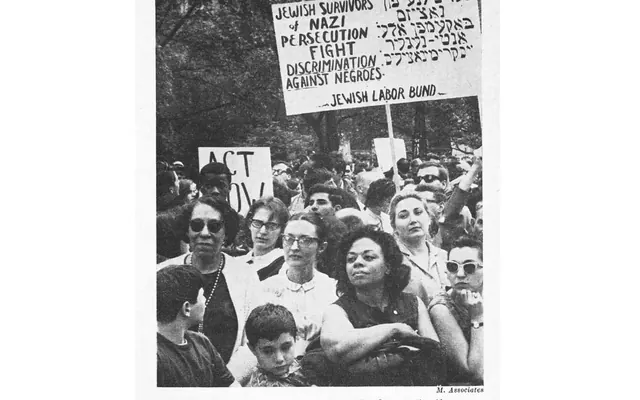
TJS S6E12 American Antisemitism part III
Jew-hatred has two fundamental elements no matter where it manifests - one connected to the role Jews play in society, the other the role we play in the...
Play Episode
TJS S6 interlude: The inner tension of the present moment
Sometimes you have to get out of your own head in order to know what you really think. Here is an episode where my good friend Eitan Ben...
Play Episode
TJS S6E14 - American Antisemitism part 5
This episode opens up our exploration of the third face of American antisemitism with the backstory of progressive Jew-hate. Listen in to uncover the ongoing impact of Soviet...
Play Episode