
TJS S6 Interlude - Purim Epistemology
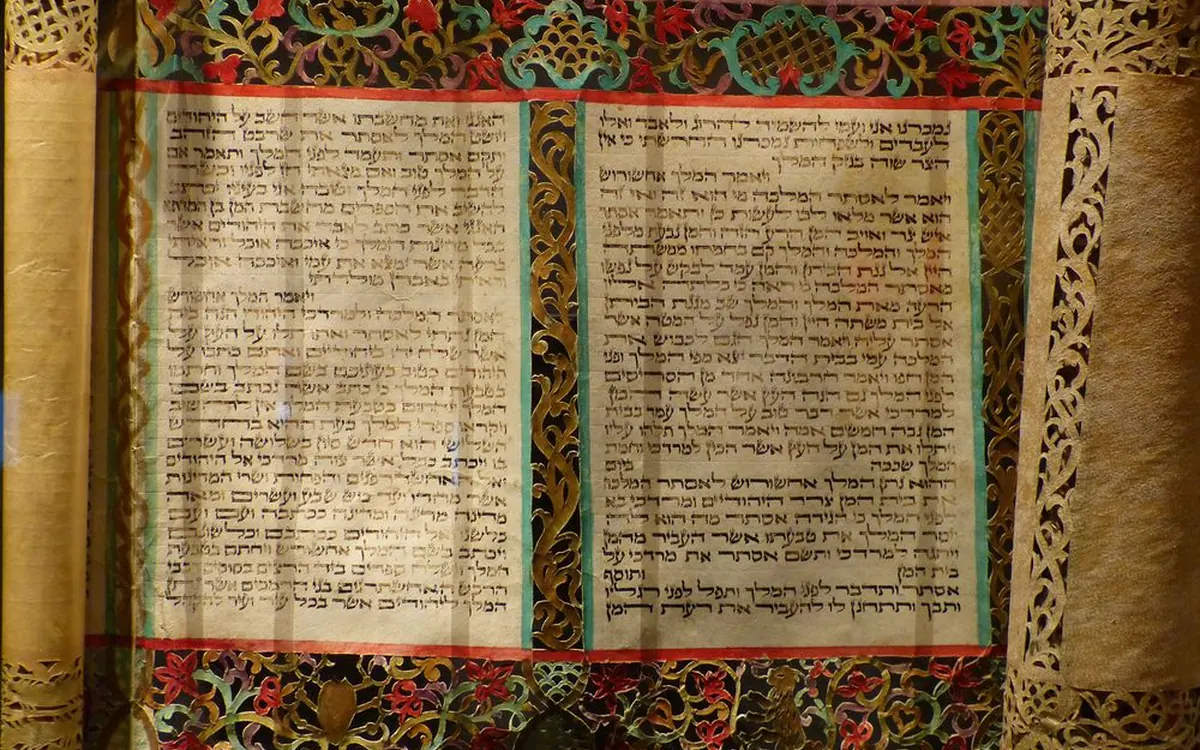
Just a little touch of pre-Purim madness! Rav Mike Feuer discusses the Jewish holiday of Purim, the Book of Esther (Megillah) and how it relates to us today.
About this episode
There is no great genius, said Aristotle, without some touch of madness. Rav Mike offers a Purim epistemology, which is about how you know rather than what you know, the frames and formative experiences that let us know anything at all. Purim earns its own way of knowing, since the Midrash says that of all the holidays it will never disappear, and the sages pair it with Yom Kippur, the day the Arizal called only like Purim. This epistemology is all about not knowing. Rava said a person must become so soaked in the perfumes of the world on Purim that they cannot tell cursed Haman from blessed Mordechai, a finger pointing at the moon of a different way of knowing, the sense that sometimes you have to get out of your head to know anything at all.
One root of this is the sages' teaching that the prisoner cannot free himself from his cell, that the redeemer always comes from outside. Rav Mike sees it daily as a counselor, where the great tool is to elicit from people a little of their ability to step beyond their bounded existence, a reflection of Godel's theorem that no system can pose and solve all its own problems. The word bissum, perfume, carries him to Sinai, where the sages say every word of the Ten Commandments filled the whole world with scent, an experience of synesthesia where the senses flow together like an infant's, doors of perception so open that there is only you, world and unmediated light, even as the hard boundaries were being carved in stone.
The link reaches back to the Garden of Eden, where after eating from the tree of knowledge, that tree of definitive distinction between good and bad, God's worry was that humanity would confuse it with the tree of life, a consciousness where everything is one with the divine will. We were driven out, guarded by the flipping sword of yes and no, and only the second tree of life, the Torah given at Sinai, lets us approach. Purim keeps us connected to boundlessness alongside the boundaries, because separating the two leaves a very limited existence. As Huxley says, half of all morality is negative and consists in keeping out of mischief, and yet there is a link between mischief, creativity and the hope that risk makes possible.
Certainty, Rav Mike holds, is the enemy of faith, since faith is not based on certainty and the solution to doubt is wonder, the turn from who knows in fear to who knows in openness. This brings him to the one line Mordechai actually speaks in the Megillah. When Esther fears to enter the king unsummoned, Mordechai tells her that relief for the Jews will come from another place, that the big picture is in God's hands, and yet she and her father's house may be destroyed. The strange warning teaches that when you are presented with a chance and fail to act, the person you might have become through it will certainly cease to exist, while the whole historical process that culminated in that moment passes away with it.
Mordechai ends on who knows whether it is for just such a moment that you have reached royalty, and even making the choice does not guarantee the outcome, which is the madness of the universe that frees us to act. The last piece ties Purim to Sinai, where the Gemara says God held the mountain over the heads of the Jews, raising a legal problem of duress that could void the whole covenant. The answer is Purim, when the Jews stood up and accepted what they had already received, a second giving of the Torah with no mountain and no thunder, done in full stature through their own agency. That is the epistemology of Purim, that embracing uncertainty is what lets us know that what is does not define what will be.
Key ideas
- A Purim epistemology is about how we know, and it rests on the obligation not to know, getting out of your head to know anything at all.
- The prisoner cannot free himself from his cell, so the redeemer and the fresh perspective always come from outside.
- Bissum carries us to Sinai, where the Ten Commandments filled the world with perfume even as the hard boundaries were carved in stone.
- The tree of knowledge brought distinction into the world, and only the second tree of life, the Torah, lets us approach unity again.
- Certainty is the enemy of faith, and the answer to doubt is wonder, the turn from who knows in fear to who knows in openness.
- Mordechai teaches that refusing a chance ends the person you might have become, and Purim is the Torah received again in full agency.
Chapters
- 0:00 Aristotle; what is epistemology
- 1:07 Why Purim merits a way of knowing
- 2:16 Amar Rava; the obligation not to know
- 3:25 Uncoupling perception; Huxley
- 4:31 The prisoner cannot free himself
- 6:47 Bissum; perfume at Sinai
- 7:48 Synesthesia; the doors of perception
- 8:56 The Garden; knowledge and life
- 10:03 The second tree of life; the Torah
- 11:12 Mischief, creativity and hope
- 12:23 Certainty is the enemy of faith
- 13:32 Mordechai's one spoken line
- 15:40 The danger to her father's house
- 16:43 Who knows; make the choice
- 17:52 The mountain over the heads; moda'a
- 21:06 Purim as a second receiving
- 23:15 Koma zekufa; full stature
Who, where and when
People
Aristotle, Rava, Esther, Mordechai, Aldous Huxley, Kurt Godel, Adam and Eve
Places
Sinai, The Garden of Eden, Shushan
Texts
The Book of Esther, The Doors of Perception, Gemara Shabbat on Sinai, Gemara Shevuot on the Ten Commandments
When
The giving of the Torah at Sinai, The Purim story, The exile from the Garden of Eden
Read the transcript
There is no great genius, said Aristotle, without some touch of madness. Well, I make no pretense to greatness, but anybody who knows me knows I'm just a little bit nuts. I'm Rav Mike Foyer, and this is A Jewish Story. Season 6, Purim Interlude, A Purim Epistemology. I love to use big words. And in case you don't know, epistemology isn't about what you know. It's about how you know it. Meaning, it's what you know that makes you know the world in the light of it. To understand epistemology, we have to unpack the frames, the experiences, the constructs, which actually give us a context for knowing anything at all. We might call these boundaries and content, vessels and lights, the frames and the formative experiences who make us a person who knows anything.
And that being said, you might also wonder, why would Purim merit its own epistemology? I mean, either there's one way of knowing the world, or there's many. Why would Purim be unique? You know, if I had to give a proof that such an effort is worthwhile, I might offer to you the notion that Purim, amongst all the holidays, said the Midrash, will not ever disappear. Somehow in the future, there's just going to be Shabbos. Oh, let it be soon. Let it be now. And Purim. Although the sages also add, in the name of Rabbi Eleazar, says, also Yom Kippur will forever not be nullified. You know, so once you put Purim and Yom Kippur, that day that the Arizal, great 16th century mystic, said is Ki Purim, the day so big, it's like Purim, meaning Yom Kippur is only big in comparison.
Once you put those two together, then you have a sense that perhaps this is not a normal day. So what is this Purim epistemology, aside from the fact of why I feel so hot about speaking on it? Well, it's all about not knowing. Many people are familiar with the phrase, Amar Rava. Rava said, A person is required to become intoxicated, to soak their essence in the perfumes of the world on Purim. Until they do not know between cursed be Haman and blessed be Mordechai. It's something which is the backbone of the notion of why we drink on Purim, and, I'd like to say, is also a finger pointing at the moon of a different way of knowing the world. You know, I had a good education when I was growing up, Western, secular in its nature, full of rules, boundaries, and formative experiences.
Thank God, which included at a certain point being introduced to the notion that perception and reality could be uncoupled. You know, there's a whole world of psychedelic Judaism starting to sprout out there, together with the questions about the therapeutic benefits of delving into the more powerful psychotropic chemicals that the brain can engage. And I have to say that there were certain experiences, like I said, which shook my assumptions about how we know the world. As Aldous Huxley said in The Doors of Perception, to be shaken out of the ruts of ordinary perception, to be shown for a few timeless hours the outer and the inner world, not as they appear to an animal obsessed with survival, or to even a human being obsessed with words and notions, but as they are apprehended directly and unconditionally by mind at large.
This is an experience of inestimable value to everyone, and especially to the intellectual. Well, my formative childhood experiences aside, being shaken out of the ruts of ordinary perception is a big part of what Purim is all about. It's an epistemology which is founded on the notion that sometimes you just got to get out of your head to know what you think. Really, to know anything at all. One piece of the reasoning behind this is a classic perspective of the sages, which is, The prisoner cannot free himself from his jail cell. See, the Redeemer always has to come from outside. There's something about the nature of captivity, be it physical, emotional, mental, or spiritual, which requires a broader horizon.
I see this almost every day as both counselor and consultant, especially when I'm working with couples. I can see them, not just individually, but together in ways in which they no longer see themselves or perhaps never could. And that's why, of course, the greatest tool of a counselor is listening and eliciting from the person with whom you're speaking a little bit of their ability to actually get outside of their head and see themselves and perhaps approach their partner from new angles. By the way, Rob Myfoyer, gmail.com. Shoot me a message if you want to do a little bit of that type of work. I also see it as a consultant, by the way. People come to you with a problem they want solved. And so often, as a certain personal reflection of Gödel's theorem, that mathematical notion that no system can simultaneously pose and solve all possible problems, they're stuck inside their own system.
And what they need is not as much my skills in creating content or even in generating ideas as an outside perspective that's able to step beyond their bounded existence. So that's one piece of the epistemology of Purim, and why it's so important not to know. But Rava said a very strange thing. A person is required, like I said, we translate it as to be and come intoxicated. Bissum is a perfume, which is why I struggle so much to translate that term. And when I hear the word Bissum, it connects me to a very important formative experience of the Jewish people as a whole. And that is the giving of the Ten Commandments Now there are many many important parallels between Purim and the giving of the Torah at Sinai So much so that a later authority one of the Hasidic masters the Holy Sfas Emes says that actually Purim and Shavuot, the holiday where we celebrate receiving the Torah, are spiritual twins, as it were.
And the sages in the Gemara, Shavuot, say, every word of the Ten Commandments left God's mouth. it filled the whole world with perfume see that experience at Sinai in the words of the sages really appears to be one of synesthesia, that state beloved of infants and day trippers where your senses all flow together where you see the sounds of the shofar and you hear the lightning as it arcs across the sky or as the developmental psychologist will tell you. When you're in that pure state of infancy, when there's only you and world, when the doors of perception are so wide open that they haven't differentiated between sound, light, touch, taste, there's only you, world, and an unmediated experience.
It's something that we seek so that we can break down the boundaries and really engage the light. See, because there at Sinai, even as the rules were being written in stone, quite literally, giving hard boundaries to behaviors, ones which I'm not only personally committed to, but have learned to really love. Because without boundaries, there can be no creativity. Maybe that's something we better touch before I'm through. Nonetheless, even as those rules were being written in stone, given down off the mountain, the experience was sweetening reality. It was filling the world with a perfume. And, you know, when Rava says, that a person's obligated to use some assistance in order to knock back the wall's perception and break down the things which you might know or you might not know, he's connecting us not just back to this moment at Sinai where the overwhelming experience managed to sweeten and soften the boundaries of existence, but even further to the Garden of Eden.
Because if you look there, after Adam and Eve ate from the fruit of the tree of knowledge, that tree of definitive distinction, good or bad, permitted or forbidden, pure, impure, cursed or blessed, after they ate from that tree, God's greatest worry was that they would confuse it with the tree of life. A tree which represents a level of consciousness in which everything is as it ought to be because it is one with God's will. Good and evil come into the world through our need for distinction. And what could be sweeter than a consciousness of unity like that? Sweeter or more dangerous because for humanity it's a place we might visit but we can no longer live there. We were driven out of the garden and what was left guarding that tree of life?
well, the flipping sword yes, no, right, wrong, bad, good, cursed, blessed and so we can't go through that to get to the tree of life until of course the second tree of life that tree of life for all who cling to it the Torah is given at Sinai and it's given as hard boundaries written in stone and as an experience meant to blow your mind And so comes Purim, to keep us connected to the importance of the experience of boundlessness together with the establishment of boundaries. Because if you ever separate the two, inevitably you will live a very limited existence, I should say. As Huxley says, half at least of all morality is negative and consists in keeping out of mischief. And trust me, as much mischief as I've liked to do in my life, I appreciate the necessity of staying on the track.
Truth is, if you really want to get places, it's usually the shortest way. But there's also an important link between mischief, creativity, and hope. Sometimes you have to embrace the madness. And if ever there were a time, then Purim's it. To take the gift of uncertainty, to know that not knowing is to have a chance for risk. And risk, of course, is the only place in which we can find growth. And without risking growth, there really is no hope. Now's the time to remind you that there's a definition of hope which connects to this epistemology as well. Because hope is a knowing, which isn't a knowing. It's knowing that what is does not define what will be, and yet having the courage to move forward with the bounded perceptions you have into the most unexpected experiences.
As Huxley said, the man who comes back through the door and the wall will never be quite the same as the man who went out. He'll be wiser, but less sure, happier, but less self-satisfied, humbler in acknowledging his ignorance, yet better equipped to understand the relationship of words to things, of systematic reasoning to the unfathomable mystery which it tries, forever vainly, to comprehend. Who knows is a very important part of the epistemology of Purim. You know, I've always felt that certainty is the enemy of faith. Whatever pretenses modernity may have given to substitute dogma for real emunah, faith is not based on certainty. You know, even though, of course, everyone thinks that doubt is the great enemy of religion, it's not really true.
The truth of the matter is, certainty is, because it removes the mystery of life. The solution to doubt is not to insist that the world is indeed as you see it to be. To reduce the infinite to the confines of my finite mind is a big step along the way of idolatry not on the way of true religion So then what the solution for doubt It quite simple Wonder It the way in which we transform who knows to who knows It's an opening to what might be, while embracing the fact that you can't really know what is. And knowing this, you're equipped to take the risks which are required to become that which you aren't even able to imagine. You know, there is an important line in the Megillah that I like to return to every year.
It's the only spoken line that Mordechai, the Yehudi, has in the entire story. If you aren't aware, that may strike you as somewhat surprising. You'll have to go check. Look in the fourth chapter, if I'm not mistaken. It's the ninth line. Oh, there are statements attributed to Mordechai, and there are directions which he gives, but the only thing he flat out says is when he's responding to Queen Esther. There she is, in the harem of the king, having been taken, of course, against her will. And suddenly, word goes out across the land, it's all over for the Jews. I mean, the most powerful person in the kingdom has a blood feud with your people and is well equipped, backed by the king and lots of cash. It doesn't look good.
And so when Morichai sends her the message, telling her about the decree and saying she'll have to go before the king, she already knows the story. She says, everybody knows if the king hasn't called you, then there's only one thing going to result in your own death. And though she doesn't say it, it seems a terrible waste. I mean, after all, isn't she safe of all the Jews in the land? Won't she survive the coming massacre? And couldn't one possibly imagine that God in the divine wisdom had placed her there for that very reason, to be the saving remnant in the palace of the king? That's not how Mordecai sees it. Because when he hears this response to Master, he says to her, If you sit silent in this moment, if you fail to act upon the chance which has been presented to you, don't worry about the Jews.
They'll be fine, he says. God will take care of the big picture. You are not here to save the Jews. That story is beyond us. However, there is a real danger. At v'letavich tovetu. You and your entire father's house may be destroyed. Not maybe, actually, he says, will be destroyed. It's a strange thing to say. First of all, it's hard to understand why sitting silent in the harem puts Esther herself in danger. And what does that have to do with the destruction of her entire father's house, which, of course, she's of royal descent, not the house of David, but Shaul is no mean sheikhs himself, first king of Israel after all. What does that mean? And what does it add to our Purim epistemology? Well, I'll tell you what it is.
There's one thing for sure when you're presented with a chance. You know, I spend a lot of time in my counseling speaking to people about making decisions. It's an important skill in life, one which is unfortunately undervalued in our educational system. Many people flounder at something which we actually are forced to do on a regular basis, make real decisions. Right? Again, shoot me an email, robmyforgmail.com. I can help you with that. But for now, I just want to give you this unsolicited piece of advice. One thing's for sure. If you're presented with a chance, if you don't act, then the person you might have become through that chance will certainly cease to exist. There's a whole world which is waiting to unfold no matter what you choose, but you must choose it.
and should you not, you and the entire historical, cosmological process, which came to its culmination in that moment, will cease to be who you could have been, and in fact, in a sense, who you were, will no longer exist. And that's what Mordecai is warning Esther about. And he says, at the end, and who knows? if he is not, if he is not, he is not, he is not, knows if that is the reason you've come here, because this is the other thing, the part that makes you want to laugh a little bit with the madness of the universe. Just because you make the choice doesn't mean it's going to happen. Who knows really what lies ahead? And unless that's a statement of wonder, who knows? Then it will always be one tinged by fear.
Who knows? And that will drive us to try to shrink the world to those hard boundaries, to make our perception, the sole representation of reality, and that itself cuts off the chances for a broader consciousness. One last piece of epistemology in this impromptu trot down the lanes of Purim thought, and that is there's an important link, as I said, between Purim and the giving of the Torah. You know, there's a strange story told in the Gemara Shabbat about the standing at Sinai. And if you've ever learned Daniel Gemara, you might be familiar with it. It says that God held Mount Sinai over the heads of the Jews and said, take this Torah or this will be your grave. In and of itself, it's sort of a strange notion.
And I usually understand it in the context of what we've been saying is that sometimes there are experiences which are so impressive, which so shatter the boundaries of the expected that they become definitive of how you know the world. they become a piece of your epistemology. And in a sense, that's what happened at Sinai. I mean, really, ask yourself, if you saw the flames from the mountain, you heard the lightning, and saw the shofar, and God in all divine glory directly told you, do this, don't do that, do this, don't do that, would you really do anything other than accept? See, we tend to say that we will do, and then we will understand, was a height of glory. But we missed the fact that the sages say we borrowed the phrase from the angels.
Now, angelic status sounds awfully great, but you know what it's not? Human. That which differentiates us from the angels is the fact that we have agency. Now, on one hand, it's a big mark against us, as the angels never failed to point out. When God wanted to give the Torah to Moses they said well you going to give it to these people They going to sin They going to lie They going to cheat They low down mean and dirty creatures And really there was no answer And when God demanded that Moshe answer them directly Moshe said well, do you have children that you should need to learn how to teach? Do you have husbands and wives that you should understand the laws of marriage? Will you own oxen to worry about who they gore?
It's a strange answer, until you appreciate the fact that it's agency which God desires out of creation. That God wants to create a creature which not only knows, but knows it knows, and frees itself from the boundaries of its knowing to open up into an even larger world so that we're not just automatons playing out some deterministic will which unfolded at the first moment of creation, but that we ourselves are creators, real agents in the world. And in order to do that, we have to have agency, which brings me back to the problem of this mountain hovering over our heads when we got the Torah. because if that's what really happened, we didn't have a choice. And I'm not the only one who feels the problem.
The sages themselves say, wait a minute, wait a minute. Muda'a, do la lo reita. This is a big problem for the Torah. See, a moda'a is a technical issue. Imagine we lived in the time of colonial Rome, right? And those mean and nasty conquerors were in the process of taking our land, but they like to do it through official means. So I have some mean, nasty Roman conqueror who says, Mike, I want to buy your ancestral land. And I'm willing to pay a full price, but I'm not willing to take no for an answer. And, you know, the Roman being who he is, I realize I really got to sign the contract. But first I gather together three good Jews and I appoint them as a court. And I testify before them that I am making this decision under duress.
So that if, please God, let it be soon, let it be now, Jewish sovereignty should return to the land, I'll be able to come to the court. And even though there's a contract with my name on it selling my land, I'll say, yeah, but that was not me. I did not mean to sell it. I was under duress. And that's considered circumstance for nullifying the contract. Which is what the sages were worried about. Because if God held the mountain over our heads when we received the Torah, that means we can't be held responsibility for the consequences of breaking the contract. Hmm, that's important. Except they said, it's fine, because along came Purim. you know right at the end of the Megillah as the Jews are celebrating our victory there's a line that says that the Jews stood up and accepted upon themselves and upon all their children and all those who joined them that they'll never stop keeping this holiday which is why that Midrash that I quoted at the beginning makes Purim seem so unique.
But they saw more in this. Kiblu, say the sages, they stood up and accepted, is they stood up and accepted that which they had already accepted before. That Purim is the second receiving of the Torah. Except this time, instead of in a passive state, overwhelmed, hearing the lightning, and seeing the shofar, now, God isn't there. It could have all just been circumstance. And who knows if we made the decision that needed to be made. And the answer is, we know. We're able to stand up on our own two legs. We're able to do something we weren't able to do at Sinai. We can face the infinite, the Ein Sof, while holding fast to our finite Sof-yot. We're using, in fact, our finite reality to relate to the infinite, guided at last by fullness of consciousness.
because this second giving of the Torah is B'koma Zikufa. Kimu V'kiblah. We stood up and received it. If you look at Rashi, on the first chapter of B'rashi, 25th line, he brings a Midrash that describes how God created the whole world B'tzivotan B'komatan, right? In our characteristic fashion, in our full stature. See, that state is what was lost in its innocence when we left the Garden of Eden. And it's attaching ourselves to the Tree of Life that allows us to pick ourselves up, basically to bootstrap ourselves back, not to an original state, but to a certain degree, to a higher state of consciousness, right? Using our agency to accept that which had been pressed on us, even for our own good before.
This is the epistemology of Purim, knowing that sometimes you've got to get outside your head to know what you know at all. And that embracing the madness, the gift of uncertainty, is what allows for the hopefulness of knowing that what is doesn't define what will be. And that a wondrous uncertainty is the true answer to doubt. It's not who knows, but who knows? And the one thing you know is if you don't take the chance when you're presented, the person you might be will certainly cease to exist. and in the fullness of our agency. In the measure of time, we will stand together and for a third time, every Purim, stand up, receive upon ourselves that which we've already been given, separate between the bounds of what is and open to the possibility of what might be.
And, Adiloyada. Adiloyada. Good Purim. I want to thank everybody listening. I want to thank those folks who give their hard-earned money. Make this show happen. Keep it free, widely available. I want to ask you to join them right now. Jewestory.co. You can go in the upper right-hand corner. See a button there. Click on it for a little bit of Purr Podcast supporter. Send me an email. Contact me. RobMikeFourier at gmail.com. Or on Facebook. I'll tell you how you can support a show with a single donation I'd like to thank the Land of Israel Network that's thelandofisrael.com they're building a center for global transcendence in the heart of the Judea Mountains I want to thank the Pardis Institute pardes.org.il for throwing the doors of the Beit Midrash open as wide as possible and I want to thank you for listening I'm Rav Mike Feuer and this is The Jewish Story
More from Season 6
TJS S6 Interlude - American Anti-Semitism - Interview with Ken Jacobson of the ADL
Is Judeophobia getting worse in the US? Kenneth Jacobson has worked for the Anti-Defamation League since 1971 and as deputy director, he shares his unique view on the...
Play Episode
TJS S6E15 - Progressing Towards Anti-Semitism
American Anti-Semitism part 6 - Anti-Jewish and Anti-Israel leftists and progressives. Learn why Jews vote Democratic, and how Tikkun Olam became the civil religion of liberal American Jews....
Play Episode
TJS S6E16 - American Antisemitism part VII - The Endgame
The final installment in the series on the tri-partite part nature of American Antisemitism. This episode revisits all three forms of Jew-hatred characteristic of society in the United...
Play Episode