
Season 2: Episode 33 - The Arab Revolt
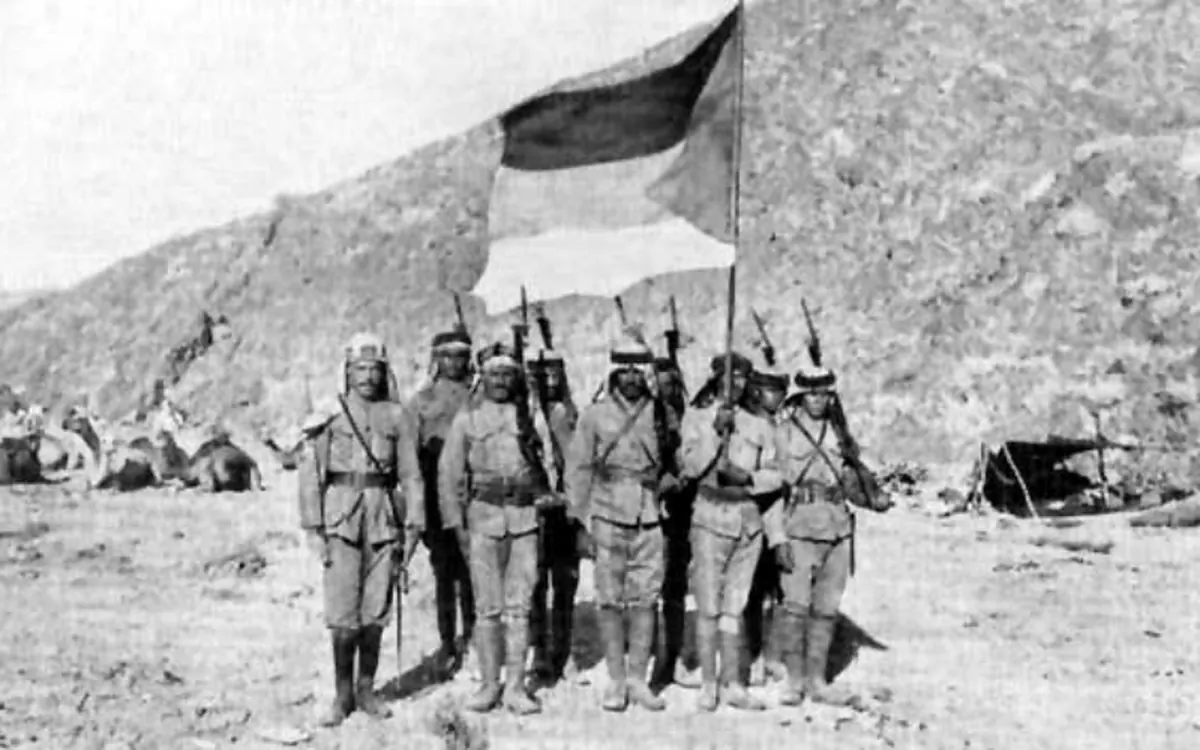
The 1930's saw the hate triangle of Arabs, British and Jews explode into an unprecedented scale of violence known as the Arab Revolt. The revolt brought on yet another cycle of repression and political concessions, and it split the Jews of the Yishuv over the question of whether restraint or retaliation was the proper response to Arab violence. Meanwhile, as violence spirals in the land of Israel, and Jews argue with one another, the darkness of Nazi Germany has begun to cast its shadow over Europe.
About this episode
Victorious warriors win first and then go to war, says Sun Tzu. The fight is no longer over a dunam; a national battle has emerged and Zionism has militarized in response. Refresh the pattern of episode 30: immigration and land purchase, Arab violence, brutal British repression, then concession, as Transjordan was carved off after 1921 and immigration nearly halted after 1929. In the thirties a Palestinian branch grew from the trunk of Arab nationalism, differentiating itself from Syria and from colonial Transjordan, slowly against clan and regional loyalties among fellahin, Bedouin and itinerant labourers mostly unpoliticized, while the wealthy, the educated, urban youth and peasants dispossessed by land sales were ripe for a new identity, fed by urbanization, German Jewish capital, British development and the literacy British schools spread.
Haj Amin al-Husseini dominated from the Supreme Muslim Council; in 1935 his family founded the Palestinian Arab Party, branded the opposition collaborators for talking to Zionists, and raised the al-Futuwwa youth corps, named for medieval Arab knights and modelled on a fascist youth movement. His aide noted a certain European dictator had begun with six followers, and in 1933 Haj Amin told the German consul that Muslims welcomed the new regime; the connection to the Axis would only deepen. On the Jewish side labour controlled the Agency and the Congress, Ben-Gurion ruled the land while Weizmann held the WZO presidency until his European base burned, and the revisionists, after the Arlosoroff persecutions and the 1935 break, were exiles and dissidents with a Polish following in the millions. Ben-Gurion met Musa al-Alami repeatedly, arguing Zionism would develop the country for both peoples, and was told the Arab would rather see it desolate for a hundred years; he was first on his side to see that immigration and land purchase were creating a Palestinian identity, and could still say that were he an Arab he too would rise against immigration that meant a Jewish state in all Palestine.
Britain's weakness over Italy in Libya, League sanctions that spiked unemployment, drought from 1931 to 1934, and treaties won by riot in Cairo and strike in Damascus set the stage. On April 15, 1936 a gang near Tulkarm stopped cars, extorted Arabs and shot Jews, three dead; a Jaffa funeral, a rumour and a mob left seventeen Jews and six Arabs dead. The Great Arab Revolt had begun. Land notables were swept aside by young urban nationalists; the Arab Higher Committee called a general strike demanding an end to immigration and land purchase and an elected legislature their majority would dominate, which asks whether they sought democratic rights or the undoing of the mandate's purpose. The strike lasted half a year, economically weak and politically tremendous, raising a new class to power on radicalism. From April to October some two thousand attacks on Jews and eight hundred on the British, eighty Jews murdered, nine hundred Arabs killed or wounded in the first month, though High Commissioner Wauchope preferred containment to crushing, to preserve prestige without bitterness among the Arab majority of the region; Haj Amin came to dominate the AHC and used the chaos to remove his rivals, a turn to internecine war that will threaten the Jewish revolt too.
On April 19 Dizengoff's manifesto told Tel Aviv that security depended on havlagah, self-restraint, and Ben-Gurion and Ussishkin said the same; overnight it was policy, rooted in the first aliyot's sense that passivity was safety and in Hashomer's rules. Ben-Gurion installed it and threatened to resign the Agency chairmanship to stop Jerusalem Haganah commanders from taking vengeance, since he would use violence but held absolutely that only politicians decide where, how and when. That need for control had already split the Haganah in 1931, when Avraham Tehomi and the Jerusalem district refused to return their weapons as the force moved from the Histadrut to the Agency, and formed the Irgun Tzvai Leumi, a name that is no cosmetic difference from defence. The logic of restraint: the Jews were weak, dependent on British force to go on buying dunams, a brutal response could crush the nascent army, and the West would never forgive revenge, to which Ben-Gurion added a moral claim that Jewish tradition limits retaliation to the guilty, which as a teacher of that tradition Rav Mike says can be made to say almost anything. Restraint had achievements, three thousand Jews licensed to bear arms, this is already a little army; but the Arabs read it as cowardice, and thirty of the eighty dead fell in August. At the Mapai committee Eliyahu Golomb called it a war between two peoples the Jews would lose without the Arabs' talent for self-sacrifice, and proposed group punishment of a perpetrator's village; Moshe Shertok wept that reprisal meant suicide and the destruction of all we have built, and won. Havlagah held with permission for special means where necessary. Arab intervention ended the strike and British regulars from Egypt brought quiet from October 1936.
Tchernichovsky's Dinah Affair gave voice to the split between a galut posture that seeks gentile approval and an emerging sabra posture of struggle; by the first phase's end each stream had its militia. The Peel Commission arrived in November 1936 at the Mufti's word; the Jews gave witnesses and tours, the Arabs boycotted while Nashashibi presented a case unofficially and Haj Amin demanded no sharing and no immigration. Weizmann described Europe as millions of Jews for whom the world is divided into places where they cannot live and places they may not enter. The July 1937 report named the causes, Arab desire for independence, fear of Jewish domination, the rush of immigrants, land purchase, the modernism of Jewish nationalism and uncertainty about Britain, declared the mandate unworkable, and proposed partition with a transfer of populations. The Arabs rejected it under death warrants; the Agency agonized between the wholeness of the patrimony, Solomon's true mother, and half a loaf as refuge for Jews fleeing Germany, and the Twentieth Congress voted 300 to 150 to negotiate, since for the first time a British report described a Jewish state on the way. Then Britain backed away: Woodhead shrank the Jewish state to a sliver and dropped transfer, and by late 1938 the Colonial Secretary declared partition impractical. The revolt resumed in 1937, the Arabs turning on Britain with the assassination of District Commissioner Andrews, and Britain unleashed full force, five thousand Arab dead by 1939, over ten percent of adult males killed, jailed or exiled, a decimation to which many credit 1948. Restraint frayed: Jabotinsky, who ordered patience toward a British-sanctioned Jewish force and opposed reprisals except when there was no choice, told the Irgun that if riots renewed, show no restraint, and after three Jews died eleven Arabs were killed. Shertok warned the Irgun on September 3 that the Haganah would fight them, calling their acts a disgrace to the combat tradition of Tel Hai, a battle the Jews lost. Rav Mike takes on terrorism: you do not make war on a method, the line from bombing a tank to the workers' neighbourhoods cannot be drawn, the Haganah and Irgun did not differ in methods, and terrorist is the word used to push people beyond the pale without considering what drives them. On November 14, 1937 the Irgun struck across the country with Jabotinsky's endorsement, Black Sunday to Ben-Zvi and the breaking of restraint, shvirat hahavlagah, to Zionist memory; Raziel taught that purely defensive tactics never break the enemy, and he who does not wish to be defeated must attack. Two days later the Agency's manifesto, drafted by Shertok and written by Ben-Gurion, coined purity of arms, tohar haneshek, a genuine ethic and a line drawn between Haganah and Irgun, though the lady doth protest too much. Orde Wingate, born 1903 to Plymouth Brethren who read the Jews' restoration as the millennium's hinge, believed the land was God's gift to Israel, arrived in 1936 in intelligence convinced that guerrillas are beaten by small commando units, Jewish-staffed and British-led, odd with his Bible, alarm clock and raw onions; ignored at first, he lobbied that Britain should ally with the Jews, and his 1938 appreciation on night movements won approval. The Haganah, trying the same under Yitzhak Sadeh, found in him its leader, Sadeh bringing the Red Army's ethic and Wingate the power of retribution; based at Ein Harod in identification with Gideon's three hundred, the Special Night Squads took the war to the enemy and guarded the Iraq-Haifa pipeline, with a cruelty that drew criticism even from Zionists, and taught officers to lead from the front. Removed for lobbying against Woodhead, sent home in 1939 with his passport stamped against return, code-named HaYedid, the friend, he died a major general in Burma. On Tisha B'Av 1938 in Warsaw Jabotinsky told Polish Jewry, the crown of world Jewry, that he had grown grey warning of the volcano, and begged each one to save himself in the eleventh hour; a month later came the Munich agreement, and in November Kristallnacht. His last words that night: whoever escapes will live to see the great Jewish wedding, the rise of a Jewish state, as sure as tomorrow's sunrise.
Key ideas
- Palestinian nationalism came of age in the thirties, urban, literate and radical, under Haj Amin; labour woke late to the fact that immigration itself created it.
- The 1936 strike and revolt raised young militants over the notables, cost eighty Jewish lives in six months, and let Haj Amin remove his rivals while Britain contained rather than crushed.
- Havlagah was Ben-Gurion's doctrine of civilian control over force; Golomb's collective punishment lost to Shertok's tears.
- Peel declared the mandate unworkable and proposed partition with population transfer; the Congress voted to negotiate, and Woodhead buried it within a year.
- The breaking of restraint on November 14, 1937 and the purity of arms manifesto two days later drew the line between Irgun and Haganah.
- Orde Wingate's Special Night Squads taught the Haganah to attack and lead from the front, and Jabotinsky's Tisha B'Av warning preceded Munich and Kristallnacht by weeks.
Chapters
- 0:00 Win first, then go to war
- 1:06 The pattern of pressure and concession
- 2:09 A Palestinian consciousness forms
- 3:13 Haj Amin and the Arab Party
- 6:26 Al-Alami; Ben-Gurion does the Arab's math
- 10:53 April 15, 1936: the roadblock and Jaffa
- 13:10 The general strike
- 14:15 Two thousand attacks; Wauchope's containment
- 16:27 Havlagah becomes policy
- 18:49 The Irgun's birth; the logic of restraint
- 23:07 Milk in the veins; Golomb and Shertok
- 28:43 The Dinah Affair
- 31:59 The Peel Commission
- 35:23 Partition and transfer; the Congress votes
- 39:50 Woodhead buries partition; the revolt resumes
- 42:05 Jabotinsky orders no restraint
- 46:24 You do not make war on a method
- 49:45 November 14: the breaking of restraint
- 51:58 Purity of arms
- 53:04 Orde Wingate and the Special Night Squads
- 65:07 Tisha B'Av in Warsaw; the great Jewish wedding
Who, where and when
People
Haj Amin al-Husseini, Musa al-Alami, Raghib al-Nashashibi, David Ben-Gurion, Moshe Shertok, Eliyahu Golomb, Meir Dizengoff, Chaim Weizmann, Zev Jabotinsky, Avraham Tehomi, David Raziel, Orde Wingate, Yitzhak Sadeh, Shaul Tchernichovsky, Lord Peel, Arthur Wauchope, Lewis Andrews
Places
Tulkarm, Jaffa, Ein Harod, The Iraq-Haifa pipeline, Warsaw, Munich
Texts
The Tel Aviv manifesto of April 19, 1936, The Dinah Affair, The Peel Commission report, The purity of arms manifesto, Secret Appreciation of Possibilities of Night Movements, Jabotinsky's Tisha B'Av speech
When
1931 CE: the Irgun splits from the Haganah, 1935 CE: the Palestinian Arab Party, April 15, 1936 CE: the Tulkarm roadblock, November 1936 CE: Peel arrives, July 1937 CE: the Peel report, November 14, 1937 CE: the breaking of restraint, 1938 CE: Munich and Kristallnacht, May 1939 CE: Wingate barred
Read the transcript
Victorious warriors win first and then go to war, says Sun Tzu, while defeated warriors go to war first and then seek to win. Well, I don't know if I'm at war, but I'm definitely seeking victory on the behalf of God, and I feel like if that can come about, then we'll all be winners. Because I'm Rav Mike Foyer, and this is The Jewish Story. Episode 33, The Arab Revolt. So we've come a long way since the question of who threw the first punch between the Arabs and the Jews, although if you read the papers, you might think that's still what it's all about. And the fight in the land of Israel is now over much more than a particular dunam of land. A national battle has emerged. And since Zev Jabotinsky crossed the Jordan with the Jewish Legion, and Yosef Trumpledor comforted his peers by telling him that it was good to die for their country, not to mention the riots of the 1920s, Zionism has become increasingly militarized in response.
It may be worthwhile, before you listen to this, to go back to episode 30 and refresh your memory on the origins of the hate triangle that's emerged between the British, the Arabs, and the Jews in the land of Israel. And the pattern of the pressure of Jewish immigration and land purchase, the eruption of Arab violence, and the British response of first brutal repression, and then political concessions. That's how three-quarters of the Palestine mandate became Transjordan in the wake of the 1921 riots, and Jewish immigration was nearly halted altogether in the wake of the 1929. But the 1930s are going to be a whole new level of struggle between British, Arab, and Jew. First of all, the Palestinian branch that's grown out of the trunk of Arab nationalism has begun to come into its own, and it's growing more militant every single day.
Because as Palestine is coming to be seen as separate from southern Syria and feels the need to differentiate itself from the new colonial state of Transjordan, it is hatching a growing national consciousness. It's a consciousness which is slow to form against the family, clan, and regional loyalties which already defined the people living there and still do. I mean, we're talking about a mix of felahim, of peasants, of the Bedouin, and itinerant laborers who've made their way in. That's the bulk of the population, and they will be largely unpoliticized. But some of the wealthy and educated, as well as many of the urban youth, be they a notch above the average worker, or even a few peasants dispossessed by land sales and the general economic hardships of the 30s, they're ripe for new political identity.
urbanization is on the rise in the world as a whole and in this region in particular as industrialization follows the arrival of the German Jews in the mid-30s and all of their capital as we spoke about and British colonial development begins to gather steam and most peasants evicted from the land which is either sold right out from under them by its aptitude owners or simply is part of a larger economic consolidation in the hands of the Arab owners they're going to move to the cities And then there's the rapid rise in literacy amongst Arab youth. It's a result of the liberal educational policies the British pursues, in opposition to those which the Ottoman had downright oppressive. So you add to this urbanization, and the creation of what we would call an urban poetariat, and the rise in educational opportunity, the regional struggles of Arab nationalism during the interwar period, as well as certain elements of Islam, and international intrigue between the European empires, and then you have a picture of how the politicization of Arab culture came about.
And Haj Amin Husseini will still dominate Palestinian politics at the opening of the 1930s from his position as head of the Supreme Muslim Council. In 35, he and his family formed the Palestinian Arab Party in order to compete with the opposition parties, whom he quickly labeled as collaborators for their very willingness to continue meeting with and talking to the Zionists. The platform of the Arab party called for resistance to the establishment of a Jewish home and even set up a youth corps, the Al-Futuah, which I'm sure I'm saying wrong, named for an association of Arab knights from the Middle Ages and modeled on the Hitler youth. When you hear the echoes of history, first those who struggled against the Crusaders and looking to their model to the greatest Jew hater in history.
At their foundational meeting, Haj Amin's aide, Jamal al-Husseini, declared that Hitler had started off with only six followers and now had 60 million. And already in 1933, only two months after Hitler took power, Haj Amin told the German consul in Palestine, the Muslims inside and outside Palestine welcomed the new regime of Germany and hoped for the extension of the fascist, anti-democratic governmental system to other countries. the connection between Haj Amin and the Nazis will only grow stronger in the coming decade and therefore there will be an absolute opposition between he and the Zionists but for now, the oath that his youth corps took is as clear an expression of the Palestinian Arab Party's vision as we can find life, my right, independence, my aspiration Arabism, my principle, Palestine, my country and there is no room in it for any but Arabs I believe in this, and Allah is my witness.
Now if you need a reminder about the political developments amongst the Jews during the 30s, go back and listen to episodes 29 and 32. But in brief, at this point, remember the labor Zionists control the Jewish agency executive, which is the heart of the political life of the Yishuv in the land of Israel, and also hold a dominant majority in the World Zionist Council, which is Zionism outside of the land as well. Ben-Gurion is already the undisputed leader within the land though Chaim Weizmann is still holding on to the presidency of the WZO outside his sun will not entirely set until European Jewry which is his power base, is consumed in the storm to come in opposition, the revisionists led by Zev Jabotinsky have been pushed further from the political pale as the decade has progressed first recall their failed attempt to win the executive in the early 30s Then, remember the persecutions that followed in the wake of the Orlazarov murder.
And finally, their break with the World Zionist Organization and the founding of the ENZIO, the New Zionist Organization of 1935. Jabotinsky is still a potent leader, particularly amongst the Polish Jewry, where his youth movement, Beitar, is strong, and its political following numbers perhaps in the millions. But he is an exile from the Yeshuv. and his followers have already been labeled as dissidents and even dangerous fanatics. And we're going to see more of that conflict further on in this episode. Ben-Gurion actually attempted to bridge the gap between the Jewish and Palestinian national movements in the early days. He met repeatedly with Musa al-Alami, head of the Palestinian Arab executive that actually had been formed in the wake of the 1920 riots.
There he tried to argue that Zionism would develop the country to the benefit of both peoples. It was a standard line, and I think was perhaps genuine most of the time. But Al-Alami replied that he'd rather see it desolate for a hundred years than see Zionism succeed. And we're going to sense in the coming episode a lot of the scorched earth policy, which both Arabs and Jews will take over the option of sharing. So slowly the labor Zionists are forced to awaken from their illusion that the violence of the 1920s was the work of bloodthirsty fanatics or hooligans that they had incited. Ben-Gurion was perhaps the first on the labor side to recognize that the twin pressures of Jewish land purchase and immigration were driving the rise of Palestinian nationalism, in fact had helped to create a Palestinian national identity.
Now in the 1930s, Arab population is going to decline from more than 82% of the mandate to 70% by the end. And land purchases will continue at a pace that leads Arab leadership to define it as a life or death issue, as it is seen today. Unless you think that a life or death issue would stop them from selling, there's an observation from Dr. Heinrich Wolf, German consul in Jerusalem, who noted that the Arab nationalists, quote, in daylight were crying out against Jewish immigration, and in the darkness of the night were selling lands to the Jews. The harsh clarity which Jabotinsky had expressed in the early 20s about the need for Zionism to develop behind an iron wall of armed might was now becoming clear to the labor Zionists as well.
As Ben-Gurion said, there is a fundamental conflict. We and they want the same thing. We both want Palestine. And he was even still able at this point to see the situation from the Arab perspective. Where I in Arab, he said, I would rise up against immigration libel sometime in the future to hand the country over to Jewish rule. What Arab cannot do his math and understand that immigration at the rate of 60,000 a year means a Jewish state in all Palestine. Well, he was certainly right that the Arabs in the mandate could do the math. and that an uprising was in the making. On the international scene, what contributed that uprising was Britain's failure to block Italy's occupation of Libya. Now that made the empire look weak in Arab eyes, never something liable to contribute to stability.
And when the League of Nations imposed Italian banks and businesses with a sanction, that triggered a minor but significant economic crisis in the issue of unemployment suddenly spiked. And the response of the Yishuv only added fuel to the fire of the Palestinian nationalist struggle. Here's a quote. The Histrodut's fundamental aim is the conquest of labor. No matter how many Arabs are unemployed, they have no right to take any job which a possible immigrant may occupy. No Arab has the right to work in Jewish undertakings. If Arabs can be displaced in other work too, that is good. Notice once again how Jewish labor, something today which is labeled as the province of the fanatical right, was actually a core principle of the labor left.
So you add to this international shift, as well as the economic struggles, a major drought which struck from 31 to 34, and we're in for trouble. I mean, in general, the all-powerful image of the European empires was weakening in the 30s. in 1935, street riots in Cairo led to an Egyptian treaty with the British, and a general strike in Syria forced the same with the French. So you put it all together, and the time seems ripe for a Palestinian nationalist uprising to follow suit. On April 15, 1936, a gang of armed Arabs set up a roadblock in the hill country near Tulkarm, snopping each driver that passed to ask them one simple question, are you an Arab or are you a Jew? Now if the driver was Arab, they extorted money from him to fund the coming revolt.
And if he was a Jew, they shot him. Three men would be dead before this roadblock ceased. The next day, at the funeral of one of the victims in Yafo, the crowd turned violent, attacking any Arab bystander that they could find. and a rumor quickly spread that an Arab woman in several Syrian labors had been murdered. In response, an angry mob surged out of the Arab quarter of Jaffa. In the subsequent riots, more than nine Jews were killed and 60 injured and violence raged back and forth for two days. Eight more Jews were killed and six Arabs died at the hands of the British police before calm was restored. And though the violence was triggered by unplanned circumstance, These incidents became known as the beginning of the Great Arab Revolt.
And from the outset of the revolt, the traditional land-based leadership of Palestinian Arab society was swept aside, forced to follow along as the young, primarily urban nationalists take the lead, those who were the product of the process of formation that we mentioned in the introduction. The Arab Higher Committee, the AHC, was formed to lead a general strike, and they declared that the Arabs of the mandate would only go back to work if the British halted all Jewish immigration and land purchases immediately and entirely. They also demanded that the mandatory authorities allow for the election of a popular legislature, which their population majority, of course, would allow them to dominate.
And this goes to a core question. Were they asking for their simple democratic rights, or were they undermining the very purpose for the formation of the mandate to begin with? Don't forget, Britain received this mandate from the League of Nations in order to create a national home for the Jewish people, not to create a popular democracy. Either way, the strike lasted half a year. And though its actual economic impact was limited, I mean, the port at Haifa remained open, the railways continued to run, and the peasants continued to sow and harvest, nevertheless, its political impact proved tremendous. Not only was this the strongest expression of Palestinian nationalist sentiment to date, and therefore a critical element in the formation of their national identity, it brought to the fore a whole new class of young activists and put them in positions of power which were based on their radicalism and readiness for violence as opposed to their connection to the traditional land and clan-based authorities which they'd replaced.
So along with the economic weapon of a general strike, 1936 also saw the beginning of, as I said, the Arab Revolt, which really might be called a guerrilla civil war between Arabs, British, and Jews. Between April and October of 1936, there were nearly 2,000 attacks on Jewish targets and almost 800 more on British security forces and government officials. 80 Jews were murdered and hundreds wounded, along with the widespread destruction of property. Now, lest you think this was a one-sided battle, the British security forces took a heavy toll in return. Some 900 Arabs were killed and wounded in the first month of the revolt alone. And that was despite the refusal of the mandatory authorities to apply full force in quelling the rebellion.
Believe it or not, despite those numbers, High Commissioner General Arthur Wauschop preferred to contain the situation through controlled military force rather than simply crush the rebels outright. Now why would that be? The British aren't known for their empathy toward rebels. The answer is an important element of the imperial perspective on our conflict. Because his goal was not to defeat the Arabs. His goal was to preserve British prestige in the area and to restore stability without incurring any undue animosity and bitterness amongst the Arab majority in Palestine and in the region as a whole. But because of this soft hand, so to speak, by the summer of 1936, the Arabs of Palestine were in full revolt, led by the Arab higher committee, which gradually but inexorably came under the domination of, you guessed it, Haj Amin al-Husseini.
In fact, as the revolt progresses, Husseini is going to use the chaos and violence as an opportunity to eliminate nearly every one of his political rivals through assassination or through voluntary exile when they leave on the run with the gunman behind them. That's an important element for us to remember as we go forward, not in this episode but others, that the Arab revolt turned almost inevitably to an internecine warfare, and that will threaten the Jewish revolt to come as well. So the Arabs are in volt, and the British are doing a balancing act between their imperial aims to placate the Arabs of the region as a whole and the local need and responsibility for law and order. What are the Jews doing?
Well, on April 19th, during the very first wave of violence, a manifesto was published on behalf of the Tel Aviv municipality calling on the public to refrain from irresponsible acts. And it declared that, quote, the return of public security depends largely on the self-control and self-restraint, the Havlagah of the Hebrew public. That's right. Mayor Disengoff, the mayor of Tel Aviv, was attempting to calm his fellow Jews in light of the deaths of their companions by telling them that the key to peace was Havlagah, self-restraint. At the same moment, more or less, Ben and Jewish National Fund President Menachem Ushiskan were delivering speeches in an exact similar vein at a meeting of the Zionist parties in Jerusalem And so almost overnight Havlagah, the concept of self-restraint, became the official response of the Zionist offices to the first wave of the Arab revolt.
Now, they didn't make the idea up. It had its roots deep in the patterns of behavior that originated during the first and second aliyot. Then, the Jewish immigrants sensed their vulnerability, and they felt that passivity in the face of violence was actually the only safe response. Don't provoke your attackers. That attitude was also enshrined in the guidelines of HaShomer, if you recall, that first armed force of the Zionist movement, and that was despite internal dissent, which was headed by the head of HaShomer himself, Israel Shochat. Nevertheless, Hashomer rejected the idea of revenge and civilian terror in favor of selective and focused attacks, which even those were only to be carried out as a last resort.
In the end, it would be Ben-Gurion, who was most influential in installing the philosophy of Havlagah, of restraint, as the only acceptable response to the violence of the Arab revolt, and despite his political dominance of the life of the Yishuv, it was not a simple fight. In the wake of the murder of five Jews in mid-May, Ben-Gurion was actually forced to threaten to resign from his position as chairman of the Jewish agency in order to compel the Haganah commanders in Jerusalem to refrain from taking vengeance. That's how important he was in the eyes of the Yishuv. If he left, people felt everything was over and so the field commanders of his underground army were forced to back down. Now we know from the street battles between labor and revisionist Zionists that had rocked the Yishuv only a few years before, and from things we haven't discussed yet, that Ben-Gurion was not afraid to use violence.
But it's critical to remember, particularly in light of the intra-Jewish struggles that lie ahead, that Ben-Gurion had an absolute belief in the subordination of military power to civilian authority. He wasn't afraid of using violence, but he was absolutely certain that only politicians ought to decide where, how, and when to use it. Remember that when we get toward the end of this season. So this need for control had actually already caused a split within the Haganah back in 1931. If you recall, the Haganah was originally formed under the auspices of the Hista Drut, that general labor federation of Jewish workers. and that with the goal of defending the Jews during the Arab riots of the 1920s. Go back to episode 30 for a refresher on their origins.
But it turns out that not every field commander saw eye to eye with the politicians and their notions of the appropriate use of force. In 1931, as Ben-Gurion was in the process of subordinating the Haganah away from the Histradut to the political leadership of the Jewish agency executive making it truly the official army of the Eshuv, a split within the ranks took place. The Jerusalem district commander, Avram Tahomi, together with many of his men, refused to return their weapons to the Haganah command. And they formed their own underground militia, what was known as the Irgun Tzvai Leumi, the National Military Organization, more commonly known at first as the Irgun Bet, and then ultimately just as the Irgun.
And as we'll see going forward, their choice of name, National Military Organization versus the defense language of the Haganah was not purely cosmetic. But meantime, Ben-Gurion's policy of restraint of Havlagah was not without logic, or claims at least to morality. He knew that the Jews were still numerically weak, and therefore ultimately dependent on British military strength in order to continue to purchase one more dunam, one more goat. And that required the cautious use of force. He knew that if they tipped the scales too far, there would be a brutal British response toward the Jews, especially if the Yishuv dared to take any independent military action against the Arab villages and guerrilla groups, and he knew that that response could crush his nascent army.
He also had a belief that the West would never forgive the Jews if they adopted a policy of revenge, and therefore he emphasized what he called the moral element of restraint, claiming that Jewish tradition dictated retaliation should be limited to those directly involved in attacks. Now, I don't want to get into an analysis of David Ben-Gurion's religious background, but this is not an obvious claim. And as we'll see going forward, whatever Jewish tradition may say, and as someone who both studies and teaches that, I can tell you, you can make it say almost anything. What you're actually hearing here is a voice of his own psychology coming through, but more on that later. Overall, Ben-Gurion sought to place the burden of defense on the mandatory authorities, and thereby avoid all these complications.
And in reality, his move was not without major achievements, because in the first year of the revolt, nearly 3,000 Jews were given permission to openly bear arms, and many thousands more were brought into the police and security activities together with the British forces. and this official militarization was a fundamental change in the situation of the Yishuv. The labor leadership saw these Jewish recruits to the British police as a basis for a Jewish militia under British command not even to speak of the Haganah and they themselves will be ready for battle once the mandate ended as Ben-Gurion boasted this is already a little army. But that was at the beginning of the revolt. By August, the situation had deteriorated because whatever the perceived strategic or moral benefits of restraint of Havlagah were to the leaders of the labor movement, the Arabs saw it as a sign of cowardice and weakness.
The Jews were judged to be a people in whose veins flows milk and not blood. And 30 of the 80 Jews murdered in that first phase of revolt died in the single month of August. A fierce debate erupted within the Mappai, the Mifleget Po'elei Eretz Yisrael, that core political party of the labor movement, on the policy of Havlagah, of restraint. Beryl Katnelson informed a meeting of the National Council that he would soon, quote, tearfully abandon the principle of restraint. One wonders why he cried to see it go. And when a gruesome series of murders rocked the Yishuv between August 13th and 16th, an editorial in Daily Haaretz, of all things, cried out, in the south and in the north, throughout the country, People are being butchered.
And the official labor newspaper, Davar, warned in its headlines, if we despair of our fellows, meaning the British security forces, we shall know how to lean on ourselves. Finally, two nurses were ambushed and killed as they were leaving the government hospital in Jaffa on August 17th, and the restraint began to fray. A series of attacks by the Haganah, and Irgun Bet organization in Jerusalem and Haifa left several Arabs dead, none of whom were in any way connected to the killing of those Jews. The Mapai Central Committee convened to debate the question of Havlagah of restraint before it was completely broken. On one side stood Eliyahu Golem, the architect of the Haganah and a leading figure within labor Zionism in general, and he informed the assembly that it was no longer a matter of Yeshuv security at that moment, but rather, quote, the question of our existence in the country.
The time had come, he said, to withdraw from the policy of restraint since, quote, a war was being fought between two peoples over the future of the country. A war, he said, which the Jews would lose if they were not wise enough to discover the talent for self-sacrifice possessed by the Arabs. And that's a lot of what this question comes down to. And if you read the news and follow what's happening in our country today, it's still a live question. Are we at war or not? So with the support of his fellow Haganah leaders, Golom proposed, quote, group punishment for the village of a perpetrator of any crime. That was to be his solution. And as an example, he suggested that in response to the murder of three Jews the day before, in the vicinity of Kfar Saba, hundreds of armed Jews should have been recruited to attack nearby Kalkilia.
and he admitted that that kind of act didn't exactly conform with the education and values that had been nurtured by the labor movement and furthermore that it would inevitably affect innocent people but nevertheless Gollum insisted that launching attacks on the places from which Arab attackers set out was essential and far more effective and even moral than the acts of blind revenge of the previous few days meaning if the official armed forces did not take off the gloves, then the people would take to the streets. Standing against him was Moshe Shertok, who would become Moshe Sharet and ultimately the second prime minister of Israel, as well as foreign minister for many years together with David Ben-Gurion.
And he took the podium to oppose any suggestion of reprisals. Now you have to understand that in the absence of Chaim Weizmann and David Ben-Gurion, both of whom were in Europe at the time, He was the highest ranking official present, and therefore it would fall to him to approve any operations. Sher Tok claimed that such a proposal for reprisal meant suicide for us and the destruction of all we have built. He actually wept open tears during the debate and said that Gollum's words made him feel as though he were witnessing the destruction of the Second Temple. And in the end, Sher Tok won the day. The policy of Havlaga, of restraint, was maintained, even though the Haganah was given permission to resort to, quote, special means where necessary.
Nevertheless, the political echelon of the Jewish agency had maintained its control over the military. The months from October 1936 all the way through the summer of 1937 were actually quite quiet, and that was true as a result of two things. First of all, the intervention of the Arab states, which helped put an end to the general strike, which allowed the Arab higher committee to step down off the shaky branch that threatened to destroy their own economy. And second was the decision of the British to finally import thousands of regular troops from Egypt in order to crush the rebels who had begun to dominate the countryside. Well, quiet may have come, but the debate about restraint was far from over.
In fact, if you're in tune with Israeli society today, then you know it's a topic still liable to raise blood pressures and cause angry exchanges of Nazi, weak, gulless Jew, depending on what kind of crowd you run in. In late 1936, it was actually the poet Shaul Chernikovsky who gave the deepest voice to this struggle. And don't forget, we are a people who values its poets above its fighters. Then he published what's called Parshat Dina, the Dina Affair, in which he came out in support of revenge attacks. Now Chernikovsky was revealed by all the Jews of the Yeshuv, on the right and on the left, and therefore his words couldn't be dismissed, as were those of his contemporary Uritzvi Greenberg. In Parshat Dina, instead of the curse that the Bible puts in the mouth of Jacob, that he places on his sons Shimon and Levi, for deceiving and killing the men of Shem after they kidnapped and raped his daughter Dina.
In Chernikovsky's poem, Dina blesses her two brothers for their actions, and she condemns the cowardly behavior of her other brothers who didn't rally to the slaughter. The poet had given a powerful expression to the ideological and psychological tension that was tearing the Shuv apart. to the divide which he characterized as a galut posture, an exile posture, which relied on the Gentiles for safety and even looked to them for approval on one side and on the other side the emerging sabra mentality, the native-born Israeli, with a posture of aggressive struggle and disdain for world opinion. Now such a divide was bound to embody itself in more than poetry. The Haganah may have seen restraint as expressive of the essence of labor ideology and their particular view of Jewish morality, even though they struggled against the restraint.
But the Irgun Bet had no such vision. As Tahomi and its other leaders reached out to Zeb Jabotinsky and gradually became associated with his revisionist movement, the rejection by the Irgun of restraint became expressive of a general militant posture of the revisionists, and a rejection of what they saw as an exilic morality which glorified powerlessness and elevated victimhood to a sacred ideal. By the end of the first phase of the Arab Revolt, each of the two primary streams of Zionism, labor and revisionists, could properly be said to have its own militia. And beyond their differing political positions, what divided them was the question of the proper posture to take toward their enemies. And so, even as Arab violence moved into a period of lull, the tension between the Jews rose.
But there's one more piece to put into place before this phase of our story can be complete. Because we've seen the provocation of mass Jewish immigration, and felt the explosion of Arab violence. And we know this was followed by brutal British suppression. And so, only the political concessions await. At the end of November 1936, just as the six-month-long Arab general strike came to an end, a British Royal Commission of Inquiry, headed by Lord William Robert Wellesley Peel, arrived in the mandatory Palestine. And truth be told, the timing was no coincidence. Officially, as I said, the end of the strike was due to the intervention of Arab rulers from throughout the region. But practically, it was the Mufti Haj Amin al-Husseini who agreed to halt the strike in order to enable the commission to function.
At his word, all hostile activities were suspended during their investigation at once. And Field Marshal John Greer, still the British military commander in Palestine, viewed the efficacy of his intervention as evidence of the Mufti's total control over the revolt. So the commission, the Peel Commission, was charged to ascertain the underlying causes of the disturbances which broke out in Palestine in the middle of April, to inquire into the manner in which the mandate for Palestine is being implemented in relation to the obligations of the mandatory toward the Arabs and the Jews, and to ascertain whether either the Arabs or the Jews have any legitimate grievances upon account of the way in which the mandate has been or is being implemented.
And once they got started, in a pattern that was established already back during the commissions which followed in the wake of the riots in the 1920s, the Jewish establishment welcomed the commission and trotted out reports and witnesses and all kinds of tours, while the Arab leadership announced an official boycott. Nevertheless, both sides had their say during the more than seven months of testimony which the commission heard. Former mayor of Jerusalem, Ragib al-Nashashibi, an opposition leader of the Arabs of Palestine, presented their case to the commission through unofficial channels. And meanwhile, not to be outdone by his deadly political rival, Haj Amin al-Husseini actually testified in front of the commission, but in his capacity as the Mufti of Jerusalem.
Unlike al-Nashashibi's more nuanced approach to presentation, al-Husseini announced that an absolute opposition to any sharing of Arab lands with the Jews and the demand to a complete end to Jewish immigration was the only thing the Arabs had to say. And perhaps the most dramatic moment for the Jewish representatives came when Chaim Weizman, always comfortable in front of the British, presented the case on behalf of unrestrained Jewish immigration. In the shadow of the rising Nazi menace, he described Europe as a place filled with millions of Jews, for whom the world is divided into places where they cannot live and places where they may not go. In the summer of 1937, the Peel Commission released its conclusions in a 400-page report.
The causes of the Arab uprising were deemed to be, first, the desire of the Arabs for national independence, second, their antagonism to the establishment of the Jewish national home in Palestine, quickened by their fear of Jewish domination the rush of Jewish immigrants escaping from Central and Eastern Europe Arab alarm at the continued purchase of Arab land by the intensive character and modernism of Jewish nationalism, and lastly, the general uncertainty as to the ultimate intentions of the mandatory power. Because up until that last one, everything that the Arabs had feared were precisely what the British had been given the mandate to do. So in light of these conclusions, the commissioners recommended an end to ambiguity.
After all, even in our rapid overview of the event of the last 20 years, we've seen the British promise the land of Israel to two peoples, make plans to divide it with another colonial power, and throughout it all, pursue a policy of divide and conquer, which really served its own imperial purposes. But now, for the first time, an official government commission admitted that the mandate had become unworkable. The solution, in their eyes, was to be a further partition of the Palestine mandate into Arab and Jewish regions, whose ultimate political forms were to be determined. And I say a further division, lest we forget that three quarters of the land originally allotted to the mandate were already divided off to make the state of Transjordan in the wake of the riots of 1921.
It's a repetition of that pattern. Now, it's important to note, for the events which will unfold over the next 15-20 years, that partition was only part of this plan. Having heard extensive testimony regarding this cycle of fear and violence that had roiled the mandate since the British appeared, the commissioners argued that in order for any agreement to become final and for the violence to cease, there would have to be a transfer of populations. The Arabs from the area of the Jewish state, and the Jews from the Arab designated area. Now the Arabs in Palestine were disappointed with the recommendations of the Peel Commission. At first, the opposition, mostly Ragib al-Nashash Shibi, agreed to consider the partition plan at least as an option.
But it wasn't long before he was forced to recant. Public opinion amongst the Arabs was in the hands of Haj Ami al-Husseini. And he rejected partition out of hand, threatened to renew the vote, and essentially issued a death warrant to anybody who disagreed. now the Jewish agency also had serious doubts about accepting the principle of dividing the land on one hand was their sense of betraying the patrimony that had been bequeathed to them by history no matter how secular the labor leadership may have been they had a vision of the wholeness of the land of Israel and of course all of them knew the story of Solomon's wisdom and how the true mother is the one who refuses to divide the baby in half On the other hand, land is not a baby.
Members of the commission urged them that half a loaf is better than no bread at all. And the opportunity for immediately establishing a Jewish state in order to provide a place of refuge for the Jews of Europe who had begun to flee Nazi Germany was a strong temptation. They were also well aware that securing a legitimate piece of the pie didn't preclude acquiring more in the rounds of violence they all saw as yet to come. And under the leadership of Ben-Gurion, Chaim Weizmann and Yitzhak Ben-Tzvi, the 20th Zionist Council voted 300 to 150 to negotiate with the Woodhead Commission that was sent afterwards to test the viability of these recommendations of the Peel Commission. After all, in the end of the day, for the first time an official British agency had presented a report which described the Jewish National Home as a Jewish state on the way.
What the specific borders might look like depended mostly on what the way ahead held. The Peel report was sent to the League of Nations and duly approved. And in a sense, partition and population transfer became foundations of regional diplomacy that persist down to our very day. but 1937 would provide no solution for the confusion in the land of Israel and the struggle between these two national movements in the face of universal Arab opposition and the growing shadow of war the need to placate the Arab street made the British began to back away from the conclusions of the Peel report before its ink was even dry when the Woodhead Commission was sent to try to negotiate the actuality of the Peel report they issued a further report that advocated limiting a Jewish state to a small area of the coastal plain and dropped entirely the idea of population transfer.
As Israeli historian Benny Morris said, the commission had ostensibly been set up to look into ways of implementing the Peel Partition recommendation, but in effect, its mandate was to bury the Peel proposal and the entire idea of partition. By the end of 1938, this was made clear when the Colonial Secretary published an additional declaration stating, quote, His Majesty's government, after careful study of the Partition Commission's report, have reached the conclusion that the political, administrative, and financial difficulties involved in the proposal to create independent Arab and Jewish states inside Palestine are so great that this solution of the problem is impractical. And as everyone knows, politics, like nature, abhors a vacuum.
In the absence of creative solutions, there's always the law of the jungle to fall back on. When the violence of the Arab revolt resumed in the summer of 1937, two things had changed. First was that the Arabs turned their guns directly on the British as well as on the Jews. And on September 26, 1937, Louis Andrews, commissioner of the Galilee district, was assassinated, an act that marked the beginning of widespread action against British rule. And that's significant for our story because Britain now really unleashed her full military might on the rebels. During the fighting in 1938, 68 British subjects, 292 Jews, and at least 1,600 Arabs were killed. And by the end of the revolt in 1939, Arab estimates were that some 5,000 killed and 10,000 wounded, as well as nearly 6,000 in prison.
Palestinian-American historian Rashid Khalidi notes that over 10% of the adult male population was killed, wounded, imprisoned, or exiled. The British response to the second phase of the revolt was so shattering that many historians attribute Israel's victory in 1948 in no small measure to the decimation of local Arab power by the British in 1938 and 1939. The second change which 1938 brought was amongst the Jews, as the pressure of rising violence began to break the fragile consensus around Havlagah, restraint. Now, I didn't mention it, but during the first round of violence, Zeb Jabotinsky had instructed the members of Beitar and the revisionist movement to display restraint and patience. This wasn't out of the same ideological belief in the value of Hav Laga as the labor movement.
Rather, it was his consistent belief that only by establishing a Jewish battalion, as he had attempted to do during World War I and ultimately succeeded, one which was sanctioned by the British authority, only that way would it be possible to defend the issue in a politically sustainable fashion. He wanted to create a Jewish army. He was also opposed to terror and reprisals on moral grounds, except when there was no longer any choice. Here's a selection from one of his articles in the time. Do not dare to punish the innocent. What superficial and hypocritical nonsense. In war, any war, each side is innocent. What crime has he committed against me, that enemy soldier who fights me? And he's as poor as I, as blind as I, as much a slave as I who has been recruited against his will.
There is no war which is not conducted against the innocent. Therefore, every war and the tribulations it brings is accursed, whether offensive or defensive. And if you do not wish to harm the innocent, you will die. And if you do not wish to die, then shoot and stop prattling. And so, during the deliberations of the Peel Commission, Jabotinsky had issued clear-cut orders to the commanders of the Irgun, if the riots are renewed, show no restraint. And that's why it came as no surprise that in the wake of the killing of three Jews a few months later, 11 Arabs were gunned down in various acts of retaliation. When news of these unrestrained acts reached David Ben-Gurion, he was on his way from France to the United States, and he noted in his diary, quote, Now that seems strange from a bunch of people who are so committed to the idea of a state.
But what Van Grin meant was that he suspected these were planned attacks on the part of the revisionists who opposed the partition plan of the Peel Commission and hoped to sink it by kindling the hostilities between Arab and Jew. It was no secret that Zev Jabotinsky opposed the division of the land of Israel in any way. He'd been amongst the loudest voices, which protested the tearing away of Transjordan from the mandate in 1922, and the Irgun adopted as its emblem a fist clenched around a rifle, held over a map of Israel showing both sides of the Jordan River. Its motto read, Rakh Kach, only thus. At a gathering in Tel Aviv on September 3rd, 1937, Moshe Shurtok warned the Etzel, the Irgun, that the Yeshu's security forces, meaning the Haganah, would fight them if they did not cease their terrorist activity.
As we'll see in the story going forward, there was no such restraint showed toward their fellow Jews. Shurtok announced that such acts were a disgrace to the Hebrew tradition of combat exemplified by the 1920 Battle of Telchai. These are strong words and they deserve some serious thought. We've spoken a lot about Telchai and the symbolism and symbolic power it held in the mind of the early Zionists. Let's not forget that Telchai was a battle which the Jews lost, and which ended in the death of their forces. And that models an essentially defensive posture. But as I pointed out last episode, the Beitaris and revisionists coming out of the pressure cooker of Poland were far more attuned to the argument that it's better to kill one's enemies than to die nobly at their hands.
Furthermore, we have to take this term terrorism head on. Because in our word, it gets thrown around as if it were nothing. Everybody's condemning terrorism. Everybody's enemy is a terrorist. The one thing the West and East can agree on is that there's a need to wage war on terror. But I've got news for you. You don't make war on a method. I mean, aside from the difficulty of differentiating between war and terror, which may be an edgy term, but I'll tell you, you can't really do it. I'll give you an example. Most people would agree that bombing a tank on the battlefield is a legitimate act of war. I think they'd probably agree that bombing the transport truck, which is bringing the tank from the rear guard up to the battlefront, is also a legitimate act of war.
Perhaps sinking the ship on which the tank was transported from the industrial bases of a foreign country is also an act of war. What about bombing the factory? in which the tank is being produced. Maybe how about firebombing the neighborhoods in which the factory workers work? So that's a major problem. And for the purposes of our story, as we've seen and will see, the Hakannath did not differ essentially with the Irgun about methods of combat, certainly not in the bitter intercommunal civil war which lies ahead. Why then did they call the Irgun terrorists? I think it's because terrorists is a word we use when we want to push people beyond the pale without having to give any real consideration to what's driving their actions.
The West does not want to consider the origins and aims of radical Islam, and so we have a war on terror on a method instead of a fight against jihad, which is a worldview. Israel doesn't want to contemplate the complexities of the Palestinian national narrative for our own story and identity. So they're all terrorists, and none of them are part of a national liberation movement. And the labor Zionists will give no legitimacy to the revisionists, not to their vision of leadership in a non-socialist Jewish state, nor the more radical dream of Malchut Yisrael, a truly Israelite kingdom. And so they will become terrorists, because one doesn't talk to terrorists after all. On November 9, 1937, five Jewish workers set out to work in the field of Kibbutz Kiryat Anavim, near Jerusalem.
They were encircled by an Arab ambush, and after it changed the fire, all five were killed. Kibbutz Maleh Hamishah, if you're familiar with it, the Hill of Five, was named for them. The murder stunned the Jewish community in Jerusalem. But despite their pain and anger, the leaders of the Jewish agency continued to call for restraint. And on the day of the murder, an important shift took place within the mandatory government. They announced the establishment of military courts in Palestine and declared the shooting of a firearm at any person, the possession of weapons and acts of sabotage and terror all to be capital crimes. It was the first step toward martial law, a martial law that would only come into full during the struggle between the British and the Jews in the 40s.
At the same time, the Jewish agency executive made an announcement, quote, forbidding terrorism, and issued a call for all loyal public institutions to use all means at their disposal to uproot terrorism in the country, meaning be unrestrained in your attitude toward Jews, but not toward the Arabs. The reaction of the revisionists and the Irgun was of an entirely different character. On Sunday, November 14, 1937, Irgun units launched a wide-scale series of retaliatory raids in various parts of the country. Yitzhak Ben Tzvi, then chairman of the Vod Leumi, the national council that ran the issue, called it Black Sunday. But in Zionist history, November 14th has actually gone down in their memory as the day on which the restraint was broken.
Shvirat Ahav Laga. It was not the first time that the Irgun had set out to attack Arabs in retaliation for attacks on Jews, but this time the operation was carried out on the initiative of their general headquarters and with Jabotinsky's endorsement. It was David Raziel, the commander of the initial operation, who believed that these attacks marked the transition from passive to active defense, and he explained the two methods as follows. Defensive actions alone can never succeed, he says. If the objective of the war is to break the will of the enemy, and this cannot be achieved without shattering their power, we clearly cannot be content with defensive action. Purely defensive tactics will never break the enemy's strength.
All these calculations lead to one conclusion. He who does not wish to be defeated must attack. The Irgun's actions took the Arabs completely by surprise, and attacks on Jews ceased entirely for some time. The British police, however, responded by carrying out large-scale arrests amongst the revisionist party activists. And it was this stage of revolt that another phrase, which continues to play an important role in the internal Israeli discourse around the appropriate uses of power and violence, was born Purity of Arms. A manifesto published on behalf of the Jewish Agency Executive in the local press on November 16th, only two days after the restraint was broken, declared the following, The Jewish yeshuv was severely tested during the period of bloodshed and withstood it.
With courage and tenacity, it defended all of our positions. but also maintained a purity of its arms of defense. Out of moral recognition and political maturity, the Yeshuv meticulously adhered to the boundaries of self-defense and, by overcoming elemental impulses and exercising national discipline, managed to avoid harming innocent Arabs. The Manifesta was composed by Ben-Gurion, based on drafts provided by Moshe Shurtok. And while it may have been expressive of a genuine desire to establish ethical norms for the growing conflict, It was certainly written to draw a clear distinction between the types of military action used by the Haganah and those by the Etzel. Except, a closer look at the process which transformed the Haganah into a militia, which could eventually become the core of the Israeli defense forces, gives one a sense that perhaps this manifesto is a case of the Lady Duff protests too much Let take a look at the man who helped make that process happen Ord Charles Wingate was born in 1903 in British colonial India to an officer in the British Army and the daughter of a missionary family.
His parents were members of the Plymouth Brethren, a non-denominational Christian movement which had originated back in Great Britain during the 20s and 30s. That's 1820s and 30s. Now the brethren subscribed to the dispensationalist belief that was popular in the mid-19th century, that a new dispensation was at hand, one which would usher in the thousand-year millennial kingdom predicted in Christian scriptures, and whose advent hinged on the restoration of the Jewish people to their land. Back in episode 27, we touched on the role that such Christian Zionism played in the lead-up to Balfour Declaration. And there we talked about the large-scale impact of such beliefs on the political picture. And as I noted at the time, it may or may not have been a decisive factor in the British cabinet's support of Zionist aims during and after World War I.
But Ord Wingate embodied his Christian beliefs in service of the Jewish people on a more personal scale. Quite simply, he believed that the Bible was true, that God had given the land of Israel to the people of Israel, and that their return to it would usher in the redeemed world which he saw as a blessing for all humanity. And whether one shares his beliefs or not, there's no question that they drove his actions, nor is there a doubt about the impact he made on the Zionist project in general and its military posture in particular. Like his father before him, young Ord was commissioned into the British military in 1923, serving first in India and then in the Sudan, where he studied Arabic and Semitics and acquired a familiarity with the Middle East.
A natural leader, if a bit eccentric, by 1936 Wingate had risen to the rank of captain, and in that same year he was transferred to the Palestine Mandate as a staff officer in military intelligence. Okay, okay, no jokes about contradictions in terms. The Arab revolt was fully underway when he arrived, and Wingate's immediate assessment was that the guerrilla war being waged in the towns and countrysides was best fought with overwhelming a force applied through small commando assault units. But his was not a purely military calculus. Remember, Ord saw the creation of a Jewish state in the land of Israel as a religious imperative, so he further pressed that these units should be Jewish staffed and only British led.
And in the beginning, he was ignored. The British were wary enough of the Jews they were training for the police force, already sensing the potential for the tension between imperial interests and Jewish national aspirations to erupt into violent conflict. And in general, you know, conventional minds fear unconventional methods and unconventional messengers. I mean, Wingate kept a Bible with him at all times, which made him odd in the eyes of many of his contemporaries, and he was fond of quoting from it not only for effect, but as a proof for his actions. He was so intensely focused on defending the Jews that he not only put off his fellow British officers, even the Zionists didn't know what to do with him at first.
This is aside from the fact that he was given to wearing an alarm clock on his wrist, eating raw onions for its health virtues and lounging around in the nude. Nevertheless, Wingate was a demanding and successful commander with a knack for cultivating politicians who helped him circumvent his military superiors. And after only four months of the mandate, he was telling every politician whose ear he could catch that the British Empire should ally itself militarily with the Jews. Now, not only did that counter the grain of the standard British wisdom, which, as we said, was to placate the Arab majority of the region, it seemed to be an absurd claim on the face of it. I mean, the Jews didn't even have an army.
And anyway, as I said, the Foreign Office and the Committee for Imperial Defense saw the situation from the exact opposite perspective. Middle East was rich in oil, home to strategic military bases for the British, and sat astride the routes to India and the Far East. By 1938, it was clear to the powers of imperialism that the tens of millions of Arabs and the hundreds of millions of Muslims in their empire were far more important to placate than all the Jews in Palestine or the world together. At a time when Britain was moving toward barring entry of any more Jews to the land of Israel at all, Wingate told everyone who would listen that the mandate could easily absorb a million Jews within seven years.
He even claimed that the Jews would make better soldiers than the British, citing his Bible as proof, and could provide the key to preserving the empire in the general war brewing on the horizon. Now, Wingate wasn't in a position to make colonial political policy, but he did have the power to create facts on the ground, and so he pushed ahead with his vision of Jewish commando units. And in June of 1938, when the countryside could fairly be described as in enemy hands. Wingate submitted a report entitled Secret Appreciation of Possibilities of Night Movements by Armed Forces of the Crown with object of putting an end to terrorism in northern Palestine. Here's a quote. There is only one way to deal with the situation, to persuade the gangs that in their predatory raids, there is every chance of their running into a government gang which is determined to destroy them.
The idea was to carry the offensive to the enemy, to take away their initiative and keep them off balance, and in particular, to produce, as he said, in their minds, the belief that government forces will move at night and can and will surprise them either in villages or across country. And as I said, the force was to be mixed British-Jewish, operating out of Jewish settlements rather than British bases. The Jewish police in the Haganah, after all, had good intelligence contacts, and they knew the land. While the British had the formal training, the equipment, and, of course, official support, Wingate insisted it would be an unbeatable combination. And as the violence of the Arab Revolt continued unabated into 1938, his argument began to gain weight in the minds of the colonial administration.
Until eventually, Archibald Waffle, commander now of British forces in Palestine, gave his approval. With his superior officers in hand, Wingate found it quite easy to win over the support of the Jewish agency and the leaders of the Haganah. And it was easy because, in many ways, his plan dovetailed with what the Haganah was already trying to do. Yitzhak Sadeh, who had been tasked in 1937 by Van Gurion to form special units for just such offensive defense, would later say, for some time, we did the same things as Wingate, but on a smaller scale and with less skill. We followed parallel paths until he came to us, and in him we found our leader. Now you should know that it was Yitzchak Sadeh who brought the ethic of the Red Army into the Agonah, and it will be Wingate who teaches them the power of retribution.
So Wingate made his main base at Ein Harod. Why? Well, his personal identification with the biblical judge Gideon was profound. And we all know that that guerrilla leader of the children of Israel had destroyed a large enemy force with only 300 men, an elite unit selected from 32,000 candidates. And so, the special knight squads came into being. Wingate was trainer, commander, and combat soldier all rolled into one. And it's no exaggeration to say that in the creation of the special knight squads, he shaped both the fighting tradition of the Haganah, and ultimately of the IDF, the Israel Defense Forces, that was its successor. taking the war to the enemy, commando tactics, covert operations, and the use of retaliatory raids as a deterrent, all left their mark on the future leaders of the Haganah, who were his students.
And perhaps, more than anything else, what left its mark was Wingate's ethic of officers who led from the front, a practice which he of course learned from his hero Gideon, who told his commanders, Mimeni tiru v'chein ta'asu, see me and do the same. You can look it up in Judges 7.17. In the eyes of his superiors, Wingate's primary mission was to use these special night squads to ambush the Arab saboteurs attacking the tap line, that's the pipeline which carried oil from the fields of Iraq to the refineries and port of Haifa, of vital imperial interests. But Lord Wingate's goals were eschatological, not colonial. He had no problem serving the imperial needs of his British masters, but his soul was in service of Jewish statehood, and the Messianic era he believed it would bring about.
And by the way, you don't hold your punches when you're fighting for the Messiah. That's why the SNS raided border villages used as bases by the Mufti's men and in general sought to degrade or even destroy the military capabilities of the Arab forces and plant the terror of Jewish power deep into their hearts. Wingate was the inheritor not only of the best military traditions of the British, but also its most powerful colonial prejudice toward its servants. Therefore, he had no inhibitions in relating to the Arab villagers who he saw as a barrier to his goals in an absolutely brutal fashion. In fact, his use of cruelty, humiliation, and severe collective punishment provoked criticism even from his Zionist supporters, not to mention his military superiors.
But in the end of the day, the war being waged in the Mandate from 1936 to 1939 was marked by exceptional brutality on all sides, and Wingate's SNS was marked by effectivity in its goals, and therefore his personal battle went on despite the qualms his superiors made it had. It went on, that is, until his problematic politics overtook his tactical utility. He simply could not subordinate his sense of religious vision to his duty as an officer in the colonial forces. In late 1938, Wingate asked for home leave. While in London, he arranged a private meeting with Colonial Secretary Malcolm MacDonald to lobby against the 1938 Woodhead Commission, which, as we said, had abandoned the proposals to partition the mandate into a viable Arab and Jewish state.
When word of that meeting reached his superiors in Palestine, they removed him from command, and in May 1939, he was transferred back to Britain. and, in recognition of the intense loyalty he held to the Zionist cause and the potential danger his skill set posed should they come in direct conflict with British imperial interests, his passport was stamped with an entry forbidding him return to Palestine. Ord Wingate's personal involvement with the return of the Jewish people to its land was at an end, but many of those he trained, as I said, in the special knight squads went on to become heads of the Palmach, that was the striking arm of the Haganah, and later the Israel Defense Forces. In reality, his impact as a commander was matched by the symbolic power which he held in the minds of the Zionist organization.
Here was a Christian who was so committed to the Jewish mission that his code name was Hayadid, the beloved friend, and it's how he's remembered down to this very day. Ord Wingate went on to fight many more battles in the service of the empire, eventually dying in the rank of Major General in a plane crash in 1944 during World War II. And his epitaph is perhaps best given in his own words, which were his battle order before the opening of his guerrilla operations in Burma. Victory in war cannot be counted upon, but what can be counted is that we shall go forward, determined to do what we can do to bring this war to the end we believe best for our friends and comrades-in-arms, without boastfulness or forgetting our duty, resolve to do the right so far as we can see the right.
Our aim is to make possible a government of the world in which all men can live at peace and with equal opportunity of service. Notice his aim, equal opportunity of service. And he concludes, finally, knowing the vanity of man's effort and the confusion of his purpose, let us pray that God may accept our service and direct our endeavors so that when we have done all, we shall see the fruit of our labors. and be satisfied. It is already three years that I am calling upon you, Polish jury, who are the crown of world jury. I continue to warn you incessantly that a catastrophe is coming closer. I became gray and old in these years. My heart bleeds that you, dear brothers and sisters, do not see the volcano which will soon begin to spit its all-consuming lava.
I know that you are not seeing this, because you are immersed in your daily worries. Today, however, I demand your trust. You were convinced already that my prognoses have already been proven to be right. If you think differently, then drive me out from your midst. However, if you do believe me, then listen to me in this eleventh hour. In the name of God, let any one of you save himself as long as there is still time, and time there is very little. These were the prophetic words of Zev Jabotinsky spoken in Warsaw on the night of Tisha B'Av, the 9th of Av, in August of 1938. As the great revolt was raging in the land of Israel, and the underground armies were struggling with each other over the question of restraint and morality in war, the world was inching ever closer to a volcanic explosion.
Little more than a month after Jabotinsky's speech, his last Tishaub address to his largest and most loyal audience, the Munich Agreement was signed by the leaders of Germany, France, United Kingdom, and Italy. Not by the Czechoslovakians, by the way, whose prime territory was being offered up in the agreement in hopes that it would satisfy the Nazi hunger for Lebensraum, for more room. We know how that ended. But when Neville Chamberlain returned to 10 Downing Street, he read out the agreement to the waiting crowd and then gave a brief address, which has gone down in history, at least the ending of it. My good friends, he said, for the second time in our history, a British Prime Minister has returned from Germany bringing peace with honor.
I believe it is peace for our time. We thank you from the bottom of our hearts. Go home and get a nice, quiet sleep. I leave it to your knowledge of history to ascertain how much peace and quiet was actually purchased through the Munich pact. And the darkness is only growing, reaching a new death only a month or so later, on the night of November 9, 1938. Kristallnacht, the night of broken glass. Jewish homes, hospitals, and schools were ransacked. The attackers destroyed whole buildings with sledgehammers. 267 synagogues throughout Germany, Austria, and the Sudetenland, formerly Czechoslovakia, were destroyed. Over 7,000 Jewish businesses were damaged or destroyed. Hundreds were killed or died in the aftermath.
And the name Kristallnach, the Night of Broken Glass, comes from the shards of glass that filled the streets after the windows of all these buildings were shattered. The violence was carried out by the SA, the Nazi paramilitary group, together with German civilians. But Kristallnach was a turning point in the Nazi political persecution of the Jews. Economic, political, and social exclusion had moved on to beatings, incarceration, and murder. And as second-in-command Hermann Goering said at a conference only a day after the pogrom, the Jewish problem will reach its solution if, in any time soon, we will be drawn into war beyond our border, then it is obvious that we will have to manage a final account with the Jews.
This is the darkness which lies on the horizon of our story. and there's no avoiding the obligation to tell its tale. And I, for one, as the grandchild of survivors, couldn't manage to do it, if not for the final words of Jabotinsky on that fateful and prophetic night in Warsaw. And what else I would like to say to you in this day on Tisha B'Av? Whoever of you will escape from the catastrophe, he or she will live to see the exalted moment of a great Jewish wedding, the rebirth and the rise of a Jewish state. I don't know if I will be privileged to see it my son will I believe in this as I am sure that tomorrow morning the sun will rise I want to thank a few people I want to thank the people who give their hard-earned money to help make this show free and widely available and really to make it happen I want to invite you to join them go right now to rovmike.com in the upper right hand corner you'll see a button that says be a patron and you can click on through to give a little bit of per podcast support I want to thank the Land of Israel Network that's thelandofisrael.com for creating a platform that allows me to reach so many wonderful people I want to thank the Pardes Institute pardes.org.il for building a school that allows me to teach and reach the hearts and minds of so many wonderful Jews and I want to thank you for listening I'm Rav Mike Boyer and this is The Jewish Story
More from Season 2

Season 2 Interlude: On Authenticity
Sometimes I just gotta be me, but the problem is knowing just exactly where to find myself. In this interlude from the flow of the Jewish Story, Rav...
Play Episode
Season 2: Episode 32 - Under Pressure
In the 1930's the ideological divides between the Revisionist and Labor Zionists grew, and cracks began to appear within the community of the Yishuv. Meanwhile, pressure on European...
Play Episode
JS S2:E 34: The Holocaust
There are things which need to be spoken about no matter how difficult and questions which need to be asked, no matter how unanswerable. Here is the first...
Play Episode