
JS S2:E 34: The Holocaust
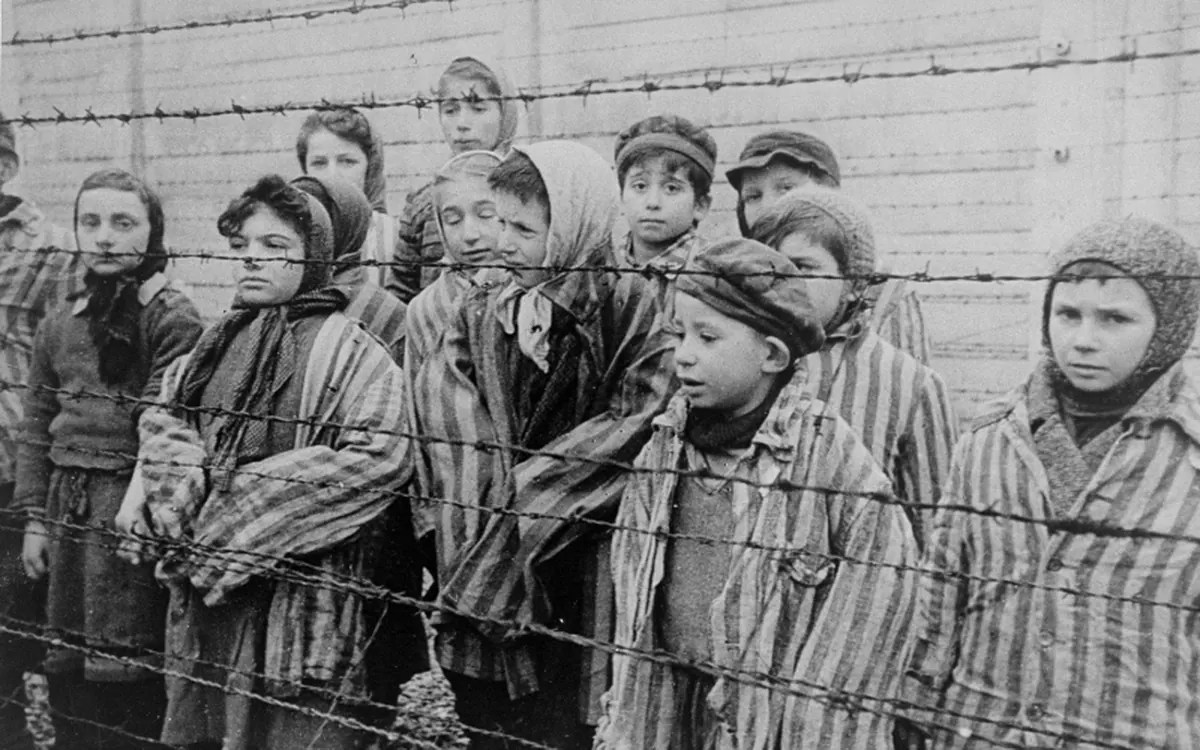
There are things which need to be spoken about no matter how difficult and questions which need to be asked, no matter how unanswerable. Here is the first of two episodes which engage the role of the Holocaust in the Jewish Story.
About this episode
The mind of man is capable of anything, wrote Conrad. How does one speak about the unspeakable? Rav Mike is not neutral: in 1937 his grandfather Huna Feuerwerger jumped ship from Belgium to New York with no plan but survival, later bringing his surviving siblings over, and saved his grandson from having to be dispassionate about the greatest darkness exile has known. A note on names. Holocaust is Greek, a whole burnt offering, which puts teeth on edge with its hint of sacrifice; it meant mass destruction by fire in English, was first applied to the Nazis in a 1933 story on book burning, and the chief rabbis of Palestine used it after Kristallnacht in a telegram calling a day of mourning. Shoah comes from the Tanakh, Zephaniah's day of wrath, of trouble and distress, a day of shoah and desolation, of darkness and cloud. The world around us was shaped by it, and Am Yisrael walks in its shadow. The impact on Israel waits for Season 3, as does the link between the state and the six million. For now, name the trauma, as his great-aunt Helene whispered hers to him at eleven. Historiography began in earnest only after the Eichmann trial of 1961, staged so the world would know. The international system we live in rose from the fight against Germany, and the question of the particular and the universal is here too: unique turning point or another genocide? Rav Mike is disturbed by Jews who want it to be just another, from an inability to face the why; whatever one thinks, it opened a door humanity has not shut.
When did it begin? One could lay it at the feet of a millennium of Christian Jew hatred, as Goldhagen's Hitler's Willing Executioners does; one could call it the end of the exile that began with the Second Temple, and if because of our sins applies to everything before, does it apply to the six million? A hard pill, since no one blames the victim on that scale, yet read Deuteronomy 28 and you cannot say no one saw it coming. Yad Vashem dates it 1933 to 1945, making it a product of Nazi ideology. Pick up in the land: Britain crushed the Arab revolt by 1939 and bought quiet. On March 15, 1939, the day Hitler entered Prague, the MacDonald White Paper limited immigration to 75,000 over five years and thereafter to Arab consent, restricted land purchase, and promised independence in ten years, an Arab-majority state, shutting the only refuge and betraying the mandate's reason. Ben-Gurion was ready for armed struggle; at the Twenty-First Congress in Geneva in August the showdown with Weizmann's moderates loomed until August 23, when the Soviet-German pact scattered the delegates to save their families, Weizmann's parting words au revoir, in peace. A week later Germany invaded Poland. Ben-Gurion's slogan: assist the English as if there were no White Paper and resist the White Paper as if there were no war, but with troops swarming the mandate there was little resistance and large enlistment, a million and a half Jews in Allied armies, thousands from the land setting aside liberation to defend an occupier, out of anti-fascism, pragmatism, and the belief that Zionism needs a backer. In Britain through Dunkirk and the Blitz, Ben-Gurion learned that democracy can cope with crisis and a resolute leader of a brave people cannot be defeated; Lenin was finished as his model, replaced by the man who said we shall fight on the beaches.
In 1941 came the invasion of the Soviet Union, the largest in history, and the assault on Moscow, with the enemy named as the Jews and only the Jews. Transports left for the east, and on October 18 all Jewish emigration was forbidden in view of the forthcoming final solution of the Jewish question. That question was emancipation's child: the medieval corporate Jew had a place; the emancipated individual was to dissolve into Christian Europe, and when he proved not the indigestible element nor the obstinate refuser but the alien other who kept his culture, the question arose, the shadow side of Zionism from Pinsker's ghost onward. What changed in 1941? Since 1933 the Nazis had pushed Jews out, over half of Germany's and Austria's left, camps punished and enslaved without yet being centres of mass murder. On December 7 came Pearl Harbor, and on December 11 Hitler declared war on the United States, baffling historians, speaking of the Jews behind Roosevelt. The next day, in a secret speech recorded in Goebbels' diary, he tied the world war to the annihilation he had prophesied. Authorization for a total solution had gone to Heydrich in July 1941, and in January 1942 at the Berlin suburb of Wannsee the plan took definitive form, the banality of evil in Arendt's phrase: senior officials and the SS leadership, Heydrich presiding and Eichmann as secretary, meeting to subordinate every ministry to the SS so no department would squabble, and to fix the definition of a Jew, which reached one grandparent, so that even monks and nuns were taken. The Wehrmacht later protested the railways and manpower spent, evidence that the murder mattered more than the war. The meeting lasted ninety minutes.
How could an era that began with emancipation end in elimination? Modernity ends in two images, the mushroom cloud over Hiroshima, where faith in progress went up in smoke, and the iron words over the gates of Auschwitz, where the hope that humanity would be human did. Functionalists see a groundswell of hate Hitler harnessed, intentionalists a master plan; Rav Mike cares more about the nature of the antisemitism, now rising again. The word names two things: the traditional hatred from pre-Christian times, and the new worldview of the 1870s, grounded in current pseudoscience, proving the Jews' racial inferiority, which Marr's pamphlet announced from a non-religious perspective. The Nazi version had a unique element, traced through Dietrich Eckart, journalist and member of an occult circle awaiting a German redeemer, who met Hitler and took him for that figure and introduced him to Alfred Rosenberg, who placed the Aryan atop a racial ladder, rejected Christian universality for a religion of the blood, and called for biological extermination of all Jewry in Europe. Hence what some historians call redemptive antisemitism, race pseudoscience fused with a religion of redemption in which the struggle against the Jews is the apocalyptic prelude to a unified world and the salvation of Volk, race and humanity, Hitler casting himself as the chosen one. It was not enough to kill the Jew physically; he had to be erased from culture, hence the claim that Jesus was no Jew and the renaming of Paul and Marx as Jewish infiltrators. Any universalist ideal that unites the world by homogenizing it has to get rid of the Jew.
Where was God in Auschwitz? Many simply left him behind, though secularization among survivors in America was as much about modernity. Aunt Helene expected lightning when her brother drove on her first American Yom Kippur, and when it did not fall everything looked different. Rubenstein, Berkovits and Greenberg have thought profoundly, and a student, Steph Kennedy, opened Rav Mike's eyes with Melissa Raphael's The Female Face of God in Auschwitz: a masculine God who smites and saves was absent or died there, as Wiesel's inner voice said of the hanged child, and the will to live then demands God's denial or Fackenheim's commandment to survive; but the feminine face that witnesses and holds was more present than we can imagine. Questions to be heard and held, not answered. And where was humanity? In 1939 the St. Louis, Captain Gustav Schroeder, later among the righteous, carried over nine hundred German Jews to Havana, was refused, circled off Florida while Cordell Hull advised Roosevelt against them and the Coast Guard prevented a grounding, and Schroeder, refusing to return until every passenger had a haven, won refuge in Britain, France, Belgium and Holland, all but one soon under the Nazis; a symbol of hatred, of indifferent governments, and of the cost of cold rationality in immigration, with millions desperate now from Syria southward. Jan Karski of Lodz, a devout Catholic courier of the Polish Home Army with a photographic memory, was ordered in October 1942 to report on occupied Poland, met two Jewish leaders who begged him to carry the message that our entire people will be destroyed, had himself smuggled into the Warsaw Ghetto and a camp, reached London, and the government in exile published The Mass Extermination of Jews in German-Occupied Poland on December 10, 1942, the first official document, sent to all twenty-six United Nations signatories, with limited effect, since even Jews in the ghetto could not believe until their dying day, which is why deniers find audiences. He went to America, saw Roosevelt, and Justice Frankfurter said he did not think the man was lying but could not believe him; in 1981 Karski told the liberators he had failed, and so became a Jew, a Christian Jew whose faith told him humanity had committed a second original sin. Why? Rav Soloveitchik warns in Kol Dodi Dofek that asking why evil has two risks, never knowing, and getting an answer; Am Yisrael asks instead what do I do now. Yerushalmi in Zakhor says myth and memory condition action. The mythic opponent is Amalek, who feared no God and struck the weary stragglers after the sea; Bilaam called him first of nations whose fate is to perish, the anti-Israel. Politics abhors a vacuum: if Israel will not raise the banner of God and of humanity in his image, Amalek rallies the world for evil. The Nazis were defeated, there was peace for forty years, and Israel rose, wounded, almost free; the euphoria of return has faded, the world's darkness has not, and the next chapter may be beginning. Let Am Yisrael be ready to lead.
Key ideas
- Holocaust is a Greek burnt offering, Shoah is Zephaniah's day of darkness; Rav Mike tells it as a grandson of those who got out, not as a neutral.
- Three beginnings, a millennium of Christian hatred, the exile itself, or Nazi ideology from 1933, and Deuteronomy 28 forbids saying no one saw it coming.
- The MacDonald White Paper shut the last refuge on the day Hitler took Prague; the Soviet-German pact scattered the Congress; Churchill replaced Lenin in Ben-Gurion's heart.
- The turn of 1941 and the Wannsee conference of 1942 gave the murder its bureaucratic form in ninety minutes.
- Redemptive antisemitism fused race pseudoscience with a religion of the blood in which destroying the Jew is the prelude to a homogenized world.
- Where was God, and where was humanity: the St. Louis turned away, Karski disbelieved, and the mythic answer is Amalek, whom Israel must be ready to confront again.
Chapters
- 0:00 How to speak the unspeakable; a grandson's disclosure
- 2:13 Holocaust and Shoah: the words
- 5:24 Witnesses, Aunt Helene, and the Eichmann trial
- 7:33 Particular or universal? A door not shut
- 9:53 When did it begin?
- 13:11 The MacDonald White Paper
- 16:26 Geneva 1939: the Congress scatters
- 18:40 As if there were no war; enlistment
- 21:56 Dunkirk, the Blitz, and Churchill replaces Lenin
- 24:08 The turn of 1941: the Jews and only the Jews
- 25:14 The Jewish question becomes a final solution
- 27:22 Pearl Harbor; war on America
- 31:43 The Wannsee conference
- 36:06 Hiroshima and Auschwitz: modernity ends
- 37:10 Two antisemitisms
- 40:31 Eckart and Rosenberg; the religion of the blood
- 43:47 Redemptive antisemitism
- 45:56 Where was God in Auschwitz?
- 48:02 The female face of God
- 50:11 Where was humanity? The St. Louis
- 53:33 Jan Karski
- 60:59 Why, and what do we do now
- 63:05 Amalek
Who, where and when
People
Huna Feuerwerger and Aunt Helene, Zev Jabotinsky, David Ben-Gurion, Chaim Weizmann, Winston Churchill, Hannah Arendt, Wilhelm Marr, Daniel Goldhagen, Gustav Schroeder, Cordell Hull, Jan Karski, Felix Frankfurter, Elie Wiesel, Melissa Raphael, Emil Fackenheim, Rav Soloveitchik, Yosef Chaim Yerushalmi, Bilaam
Places
Belgium to New York, Geneva, August 1939, Dunkirk and London, Wannsee, Hiroshima and Auschwitz, Havana and the Florida coast, The Warsaw Ghetto
Texts
Zephaniah 1:15, Deuteronomy 28, The MacDonald White Paper, The Wannsee protocol, The Mass Extermination of Jews in German-Occupied Poland, The Female Face of God in Auschwitz, Night, Kol Dodi Dofek, Zakhor, Numbers 24:20
When
1937 CE: Huna Feuerwerger jumps ship, March 15, 1939 CE: the White Paper; Hitler in Prague, May 1939 CE: the St. Louis sails, August 23, 1939 CE: the Soviet-German pact, September 1, 1939 CE: Poland invaded, October 18, 1941 CE: emigration forbidden, December 11, 1941 CE: war on America, January 20, 1942 CE: Wannsee, December 10, 1942 CE: the Polish report, 1961 CE: the Eichmann trial
Read the transcript
The mind of man is capable of anything, says Joseph Conrad, because everything is in it, all the past, as well as the future. Well, I wouldn't say that I'm capable of anything, but I would say that I'm filled with the past and longing to see the future, because I'm Rav Mike Hoyer, and this is The Jewish Story. Episode 34, The Heart of Darkness. I got a problem today, and it's a big one. How do I speak about the unspeakable? We've come to the time of the show of the Holocaust, and I just really don't know what to say. I have to start with saying, for full disclosure's sake, I'm not neutral on this topic. Even though you may think I haven't been neutral all along, I have been striving to keep an even keel.
But in this case, I'm the grandchild of refugees. In 1937, Huna Feuerwerger, Al Feuer, my grandfather, jumped ship from Belgium to New York without any plan other than to survive. I never got to meet him, but I guess he heard that 11th hour message we quoted from Jabotinsky at the end of the last episode. In the name of God, let any one of you save himself as long as there is still time. In time, there is very little. He saved himself, and in the long run was also able to bring over his surviving siblings after the war. And he saved me, not just in the lineal sense, but from having to take a dispassionate posture toward the greatest darkness to which our exile has ever subjected us, arguably the greatest darkness humanity has known.
And I've never claimed to be a historian, only a student of history that wants to tell the story of his people with integrity and soul. But like I said, just keep in mind as we go forward in this episode that this is a story that defines me, and one I'm determined not to let rule my life. So I have to try and get my head around the Shoah. So we have to start with a word on names, not just because it's important, but because I have a listener out there who asked me to do a little work on the origin of the word holocaust. Well, the word itself is of Greek origin. Holos means completely, and kostas is a sacrificial offering. And so calling the destruction of European Druid a Holocaust has at least the connotation of a sacrifice.
And that puts a lot of people's teeth on edge. The religious and theological implications of that type of definition makes a lot of statements about why it could be that such a thing would happen. And we're going to reserve any discussion of that until another episode, if I can manage it. But for now, Holocaust as a word has been used throughout the English language to refer to massive destruction by fire. And in fact, the first known use of the term in reference to the Nazis was a 1933 Newsweek story about a book-burning campaign in Germany. And immediately after Kristallnacht, that night of broken glass that we spoke about last episode in November of 1938, the largest pogrom that Germany had yet seen, the chief rabbis of the Palestine Mandate, Rabbi Yitzhak Herzog and Rabbi Yaakob Meir, sent a telegram to Rav Hertz at the time, Chief Rabbi of Great Britain.
It said, in part, Propose you, with leading French-American rabbis and ourselves, proclaim Jewish Day of Mourning throughout the world for Holocaust of synagogues in Germany. So that might be the origin of the word Holocaust. But the Hebrew term, Shoah, has its origins right where it ought, in the Tanakh, the Hebrew Bible. It appears in Isaiah, Ezekiel, Psalms, and of course in Job. But I give you this verse from Tzfania in the first chapter. Yom Evra Hayomahu It would be a day of great anger. Tzara u'mitzuka Of suffering and trouble. Yom Shoah u'mishoah Yom Koshich Rathela, Yom Anan, V'Arafel so much of the world as I look around me was shaped by the cataclysm of the Shoah I'm not just talking about Am Yisrael who in my opinion and my experience are still walking in its shadow I mean life in the land here is as good as a Jew has ever known but nevertheless I can't escape the feeling that we're like fools sitting in a patch of sunlight unaware of the towering wave of darkness curled over us and we're going to have to speak coming episodes about the political, ideological, and psychological impacts of the Shoah on the modern state of Israel and our culture, our Jewish culture today, I'm probably going to reserve that for season three, because they really seep through everywhere in my eyes.
And at some point, we're going to have to nail down the ever-contentious topic of what exactly the link is between the birth of the state of Israel and the death of the six million. But for now, like I said, I just need to name the trauma. a trauma that for me is so present, sometimes I see it in my dreams. Name it, and give it a bit of description in order to understand how, if not why, such a thing could come about. And we live in a critical time for this discussion. On one hand, there are still survivors, and I was blessed to be raised by some of them, witnesses to what actually happened. On the other hand, that generation is soon to pass. And though I love them so, and in some ways mourn the loss already, there's a certain type of conversation, a reframing the story of our history, a memory process that can't take place while the witnesses still stand.
I mean, what do I really have to say in the face of a survivor? I always feel that my task is to listen, and I think it's the proper posture. But I have to tell my students and my children something. So you may not know, actually, that in the immediate aftermath of the war, there was little intellectual discourse around what the Nazis had done. In fact, much of what was done was a refusal to speak. And there are reams of studies written on the children of survivors that generations so often raised with a darkness always present in their home but never spoken of. Well, I'm the third generation, and at age 11, my great Aunt Helene began to whisper her story in my ear. And of course, it's a story that starts before the war, watching her own grandfather dragged to death behind a wagon on Easter Day.
And in many ways, it was a story that ended when she entered Auschwitz at age 14. And the historiography of the Holocaust, meaning the attempt by historians to tell, and to some degree understand its story, really only began in earnest after the Eichmann trial in 1961. That was a trial that was more than just the vengeance of the Jewish people on its greatest living enemy, Yemach Shemot. It was staged in some part in order that the world should know, to raise the awareness in Israel and elsewhere of the Nazis' final solution in its grim detail through the trial of one of its primary architects. but the Shoah, like I said, is more than just the story of the suffering of the Jews the international system within which we live today despite the cracks that are beginning to show is what emerged from the fight against Germany it's quite significant for the Jewish story that modern nationhood and membership in the international community are to a large degree shaped by the stance that your people took on the Nazi men in its day Even behind this comes the issue of the particular and the universal.
Was the Shoah a unique event, a cataclysm which serves as a turning point in the Jewish story, and perhaps because of that in the human story, or was it just another genocide? I mean, after all, six million is bad, but tens of millions of people died in World War II. And the history since then demonstrates that the desire amongst human beings to the wholesale slaughter of their enemies didn't go away with the Allied victory in 1945. And I, for one, am quite disturbed by the attitude amongst many Jews who desire to reduce the Holocaust to just another genocide. And I think, and we'll touch on it before the end, that a lot of this is because of an inability to come to grips with not just the how, but the why.
So like I said, I'm not even pretending to take a neutral posture in this episode. I'll tell the story as best I can, Explore the how a bit and even touch on the why. But I want you to reflect on the implications as you listen. Because whether you believe the show is your story or someone else's, whether it's particularly Jewish or universally human, it opened a door which humanity has not managed to shut. In my eyes, every single human being needs to decide how such a thing could happen and reflect on why. As sociologists and philosopher Jürgen Habermas put it, for the continuity of conditions of life within history. Deciding when the Shoah began in many ways is to dive right into the debate about what it was and why it happened, and of course, who was responsible.
On one hand, I could easily make the argument that the Shoah was the culmination of more than millennia of European Jew hatred, and that in turn would allow me to lay it right at the feet of the church in particular and Christianity in general. And there is a truth in that which must be confronted. In his book, Hitler's Willing Executioners, Daniel Goldhagen focuses on the masses of people who were willing to participate in such a prolonged and horrific crime. Remember, whatever the Nazi mastermind scheme that became the final solution, it required tremendous manpower. And because that's his focus, he ends up more or less painting German history as a long preamble to murder. But I could tell a different story as well.
I could say that the Shoah was the end point of the exile which began with destruction of the Second Temple. I mean, after all, if I'm willing to say, because of our sins we were exiled from our land, about everything before the Shoah, shouldn't it apply to the six million as well? That's a hard pill to swallow. Because if it's our fault, then what do we possibly do about it? And what could the sins be that merited such a punishment? I mean, in our world, people are not willing to blame the victim at all. Certainly not on that scale. But before we can just dismiss such a thought out of hand as repugnant and beyond the pale, one has to take a look at the 28th chapter in the book of Davarim. And if you read it, at the very least, you can't say, no one saw it coming.
So when the memorial here in Israel, the memorial museum of the Holocaust called Yad Vashem, seeks to define the Holocaust, they say the following. The sum total of all anti-Jewish actions carried out by the Nazi regime between 1933 and 1945 from stripping the German Jews of their legal and economic status in the 30s, which we spoke about, segregating and starvation in the various occupied countries, and the murder of close to 6 million Jews in Europe. And by choosing those dates, 1933 to 1945, Yad Vashem narrows the focus onto the period during which Germany was under the rule of the Nazi Party. And therefore, the Holocaust is a product of Nazi ideology. Each of these deserves real consideration, whether it's the millennia or at least millennia and a half of Jew hatred that is built in to European culture as we've seen over the course of the Jewish story or whether you want to accept the more theological view that the Jews are always agents in our history and therefore we have to ask the question what does this have to do with our relationship to God or whether you simply want to look at the Nazis as the distillation of pure evil this is a complex situation which has elements of each narrative in the mix.
And like I said, this is far from the beginning of the Jewish story. And you may have begun to sense, in my mind, every story begins with that incomprehensible moment when God spoke and the world came to be. And so therefore we can always trace things back to the ratzon habore, to the will of God. And I won't shy away from that even now. But for the purposes of a semi-coherent story, I mean, you are listening, after all, because hopefully you listened to the last episode, I want to pick up right where we left off, in the land of Israel. If you recall, by 1939, the British had succeeded in brutally crushing the Arab revolt that had challenged their rule and the mandate for almost three years. But, true to the cycle of revolt, repression, and concessions that I've spoken about in the past, the end of the military phase invited a new political reality.
And just as Chamberlain's government in Whitehall had resolved to purchase peace from the Nazis by selling out their Czech allies through the Munich Accords, so too they were planning to achieve quiet in the mandate by very similar means. At the end of the revolt, Arab and Zionist delegations rushed to London in an attempt to shape the policy which everyone knew was sure to emerge. After all, the Peel Commission in 1937 had given its ideas, but it was not implemented yet. And the essential elements began to emerge in March. On March 15, 1939, the very day that Hitler entered Prague, the Arab and Zionist delegations were handed the provisions of a new governmental policy, the MacDonald White Paper of 1939.
The essential elements were the result of the conclusions of the 1937 Peel Commission, one which had identified Arab fear at the rise of a Jewish state as the primary cause of the violence. Therefore, the white paper limited Jewish immigration into the Mandate of Palestine to 75,000 over the next five years, after which any further aliyah would be contingent on Arab approval, meaning it wouldn't happen. And similar restrictions were placed on land purchase. And in a fundamental foreign policy about face, the paper declared that after 10 years, Palestine would be granted independence. In light of the previous clause, this meant the birth of an Arab-majority state in the mandate, and not the Jewish home for which it had been brought into being in the first place.
Thus, the British Empire managed to buy quiet in the Middle East at the price of shutting the door on the only possible refuge for the Jews of Europe, just as their situation became critical, and in so doing, betrayed the very reason for which they had been granted the mandate. Jan Mazerik, foreign minister of the dying Czech Republic that had just been betrayed by Britain to the Nazis joked to Chaim Weizmann, head of the World Zionist Organization that they should buy a three-story house together in London the first floor they would reserve for Emperor Haile Selassie recently expelled from Ethiopia by the Italians with British complicity the second floor Mazerik himself would take and Weizmann could have the third now Weizmann may have joked with his political friends that Ben-Gurion's initial reaction to the MacDonald white paper was downright explosive, the Anglo-Zionist alliance seemed to be officially over, and so he began to mobilize the Yishuv to fight with all its resources.
This was no longer just a matter of the clandestine immigration that the labor Zionists had been sponsoring since the mid And in truth Ben had stayed out of that business of what called al illegal immigration. He'd let his friend Beryl Catnelson use the resources of the Hista Druid toward that end, aiming to keep the hands of the Jewish agency clean of any anti-British activity. But now, however, it appeared that Ben-Gurion was ready for armed struggle against the empire itself. But this new fighting Zionism was just not meant to be. In mid-August 1939, the 21st Zionist Congress convened in Geneva. And of course, the MacDonald White Paper was the top item on their agenda. And at first it appeared that a showdown between the moderates, led by Chaim Weizmann, and the so-called activists who were rallied around Ben-Gurion, was finally unavoidable.
But soon after the conference began, on August 23rd, the Molotov-Ribbentrop Pact was announced. This was a non-aggression agreement signed between Soviet Russia and Nazi Germany. And with the stroke of a pen, Hitler neutralized the entire Red Army. It was amazing, he'd already intimidated the British Empire into a posture of appeasement. Now he wrote the Soviets off. and everyone knew that nothing was left to prevent him from unleashing the German war machine on all of Europe, maybe the world. Within days of the announcement, the delegates began to scatter, each one hurrying home in vain hope that they could save their families. Just listen to the parting words of Chaim Weizmann. My heart is full to overflowing.
The surviving remnant will continue to work, to fight, to live, until better times than these arrive. And for those time, I wish you all au revoir, in peace. Little could he know what lay ahead. Only a week later, the Germans invaded Poland, and within a fortnight, the Soviet Union followed suit from the east. The Second World War had begun. And with it, Ben Gurion's antagonism toward the British ended like that. because despite their anger over the shutting of the doors of immigration at such a critical time most of the Zionist leadership saw Hitler as the clear number one enemy of the Jews and Britain as the only thing which stood between the Nazis and world domination we'll speak perhaps in next episode about the breakaway of the militant faction of the Lohamei Chayrut Yisrael, the Lechi over this very issue of who the true enemy of the Jews was but for now, the Zionist mainstream was not going to leave the British to fight alone.
As Ben-Gurion declared, we must assist the English in their war as if there were no white paper, and resist the white paper as if there were no war. Well, as was his penchant, it was a catchy slogan. But the reality was very different. The empire was on the ropes in the early phase of the war, and the mandate was swarming with British troops, who were more than happy to use overwhelming force to maintain order. And therefore, there was little struggle against the white paper by the official Zionist entity at this stage. What there was, was actually large-scale enlistment by the Jews of the Mandate into the British army. Overall, it's approximated that 1.5 million Jews fought in the combined allied armies in World War II.
And for the British, that included thousands of recruits from the land of Israel who put aside their struggle for national liberation in defense of the empire that they were gradually coming to realize was actually their occupier. And we'll consider, like I said, next episode, how much of this decision to fight on behalf of the empire was the idealism of labor Zionism. Don't forget, on the world stage, this is a fight between the left and right, between fascism of the Nazis and the Bolshevism, or labor culture, of the left. And of course, in this case, they were double-dipping as labor Zionists that could fight fascism and save the Jews in the bargain. How much was that? How much was pragmatism? The recognition that the British would crush the Zionists just like they'd done to the Arabs in 1936-39 if they made any trouble during the war.
And frankly, they wanted to be well-positioned by helping the British when the war was over. And how much was driven by this deep-rooted belief that without an imperial backer, the whole Zionist project was doomed. I don't want you to forget about that last one, because it continues to plague our policy as a country down to this very day. So Ben Gurion was actually in Britain when Germany invaded the Low Countries. And he witnessed the Allied defeat at Dunkirk, and weathered the battle for Britain these dark days, when it seemed, in fact, that the whole world was going to fall instantly under the shadow of Nazism. You know, they say that Ben Gurion was such a hard worker, and perhaps a little bit unrealistic that he refused to take cover in the air raid shelters during the London Blitz.
But more than the suffering of war, it was the resiliency of the British people that made their impression on Ben-Gurion. The people and Winston Churchill as a leader. The war demonstrated in important ways to Ben-Gurion that democracy could actually cope with great crisis. Remember today, most people in the Western world take for granted that democracy is the only legitimate form of government. But that was not so in the interwar period, and Ben-Gurion was far more of a socialist than a democrat. And I know one is an economic doctrine and the other one is political, but it's not a given that socialism lends itself to democracy. But now he saw that indeed the democracy could cope with great crisis, and that a resolute and wise leader, standing at the head of a brave people committed to war, could not be defeated.
Lenin would never again be Ben-Gurion's heroic model and that has quite an impact on what lies ahead for the Jewish people now I can imagine the future leader of a state which has many wars yet to fight thrilling as he listened to Churchill's words after the defeat and the evacuation from Dunkirk we shall not flag or fail we shall go on to the end we shall fight in France we shall fight on the seas and oceans We shall fight on the beaches, we shall fight on the landing grounds, we shall fight in the fields and in the streets, we shall fight in the hills. We shall never surrender, until in God's good time the new world, with all its power and might, steps forth to the rescue and the liberation of the old.
But when Churchill spoke those words, the moment of rescue still lay far ahead. For now, Britain fought all but alone, and the world grew darker every day. In the summer of 1941, less than two years after Hitler signed the Molotov-Ribbentrop Pact, that agreement of non-aggression between the Nazis and the USSR, the German army invaded the Soviet Union. Operation Barbarossa, as it was known, was the largest invasion force ever assembled in history, and its launching marks a turning point in the war and in our story. The second phase of the assault was Operation Typhoon, attack on Moscow launched on October 2nd. And in his order of the day to the millions of soldiers, poised for what was supposed to be, quote, the last powerful blow that will shatter this enemy before the onset of winter, Hitler made quite clear who was the horrendous beast-like enemy intent on annihilating not only Germany, but the whole of Europe.
Juden und nur Juden. The Jews, and only the Jews. A new phase of the war started with the German attack on the Soviet Union, as did a radical escalation of the war against the Jews. Only two weeks after the invasion, the first transport trains filled with Jews from Western Europe left the ghettos of Lodz, Kovno, Riga and Minsk to the east. In Kovno and Riga, thousands were shot on arrival. And on October 18th, the declaration came from the highest echelons of the Nazi party. All Jewish immigration from Europe was henceforth forbidden. Quote, in view of the forthcoming final solution of the Jewish question. Now remember, the Jewish question has been with us for quite some time. It's a question that was posed by emancipation.
In the Middle Ages, the Jews were a corporate entity who, though they had, let's say, a complicated relationship with Christianity, nevertheless had their place as a foreign but integrated element in European society. And when emancipation came along, and the focus moved from corporate existence to individual, and the Jews were gradually granted first rights and then full citizenship, it was assumed that they would simply subsume themselves into the majority Christian European culture. But when the Jews proved to be not just the indigestible element of the ancient Roman Empire, or the obstinate refusers of Christian salvation, but now in this enlightened era, the alien other who refused to check their culture at the door and become just like everybody else, then the Jewish question arose, what do you do with the Jews?
And as we've seen, the Jewish question has essentially been the shadow side of the entire Zionist endeavor from day one, either because of anti-Semitism, which people like Herzl or Pinsker, many of the early political Zionists, perceived as the driving momentum toward the Zionist project. As Pinsker said, that we were like a ghost-haunting Europe and that anti-Semitism was Judeophobia, whose only cure was to get the Jews out. Or whether it was more of the liberal-cultural Zionists who wanted to know why it was the Jews didn't fit. Well, at this point, the Nazis have come with a final solution to the Jewish question. And the question is, what changed in 1941? Because since the Nazis rose to rule in 1933, as we've touched on a few times, they've done everything in their power to get the Jews out of Europe.
And indeed, by the start of the war in 1939, more than half had less Germany itself, and Austria as well, some to Eretz Israel, as we talked about through that transfer agreement, which was so controversial at its time, and many more to the United States and other countries. And the truth is, there were even concentration camps operating in Germany since 1933. Tens of thousands had died in them. But these were centers for punishment, imprisonment, even slave labor, but not mass murder. And in fact, the Einstadsgruppen, the special task forces who become so infamous in Jewish history, in the first phase of the war, their focus was on the Polish leadership. When the Nazis invaded Poland from the west and the Soviets from the east, they liquidated every leader that they could find.
But all that changed at the end of 1941. Now, it couldn't have just been the invasion of Russia. There's more going on here. On December 7th, not long after Operation Typhoon, the Japanese destroyed the U.S. Pacific Fleet in a devastating surprise attack on their naval base at Pearl Harbor, Hawaii. Now, many historians think the Japanese had taken their cue from Hitler's surprise invasion of the Soviet Union in June. I didn't mention it, but it's not like he sent the Soviets a telegram saying, listen, I know we had this non-aggression pact, but I'm done. No, and Hitler himself had told the Japanese ambassador one should strike as hard as possible and not waste time declaring war. And so indeed, the Japanese followed his cue, and four days later, on December 11th, Hitler declared war on the United States.
It was a decision that to this day baffles historians. Many think he was simply swept up in his visions of global domination. And, in a reciprocal move, a unanimous vote by both houses of the United States Congress declared war on Germany. The new world had awoken, as Trochell predicted, or at least had been knocked out of its slumber. But it seems, at least in the short term, that this was not good news for the Jews. As Hitler said in his speech that accompanied the declaration of war on the United States, the Jews are planning to use the American tool in order to prepare, quote, a second Purim for the European nations, which were becoming increasingly anti-Semitic. It was the Jew in his full satanic vileness who gathered around this man, meaning Roosevelt, but also to whom this man reached out.
And you can see in Hitler's speeches and writings that in his mind, the Jews stood behind every opponent. The day after declaring war, Hitler addressed a group of Nazi party leadership in a secret speech, one which would have been lost to us if it weren't summed up by the Reich Minister of Propaganda himself, Josef Goebbels, Yav Mach Shemot, in his diary. Quote, In regard to the Jewish question, the Fuhrer is determined to wipe the slate clean. He prophesied to the Jews that if they once more brought about a world war, they would be annihilated. It was not a mere declaration. The world war is here. The extermination of the Jews must be its necessary consequence. Now that what had been a European conflict had become a global war, one which included everyone that Hitler saw as the mortal enemies of his new Germany, all the forces allied with what he called world Bolshevism world Bolshevism that he saw as driven by the Jews where there could be only one conclusion and the records from the trials of the Nazi masterminds held in Nuremberg after the war indicate that by July 1941 well before the declaration of war on the United States but after that initial Russian invasion, Hermann Göring, Hitler's deputy, had given written authorization to Reinhard Heydrich, chief of the SS, to prepare and submit a plan for the total solution of the Jewish question in the territories under German control.
And with global war now, the prospect of almost 11 million Jews under German rule was on the horizon. We also know that by November 1st, construction of the first extermination camp, Belzec, located outside of Lubin, had already begun. But all these pieces seem to have been scattered fits and starts, lacking clarity or lacking that hallmark of what to me makes the Holocaust so chilling, which is bureaucratic efficiency. And it was in January of 1942, at the lakeside Berlin suburb of Wansee, that the Final Solution took its definitive form. And the Wansee Conference will go down in history as the epitome of the banality of evil, as Hannah Arendt calls it, of bureaucracy in the service of horror. It was simply a meeting of senior government officials, all of them, of course, part of Nazi Germany, and the SS leadership.
And the goal was to ensure the cooperation of administrative leaders of all government departments in the implementation of the final solution. They didn't want interdepartmental squabbling. Reinhard Heydrich presided. His deputy, Adolf Eichmann, Yamach Shemot, was secretary. Representatives from the Foreign Office, the ministries of justice interior and state all sat in attendance as Heydrich outlined how European Jews were to be rounded up and sent to extermination camps in the general government area, that's the occupied part of Poland, where they were to all be killed. Now by this time, mass killings of Jews in the newly conquered territories of the East were ongoing and more efficient methods of mass murder were being tested and refined every day in the field.
it took the Nazis quite some time, and many wasted bullets until they realized that the gas chamber and the crematoria were the way to go. And it seems from the sole record of the minutes of the meeting that survived that Huan Si was not actually about the mechanics of the murder, but rather about its administration. The meeting had two goals, like I said. Number one, to subordinate all government ministries to the SS. In this matter, in order to ensure a smooth implementation of the final solution. And if there's any doubt that the elimination of the Jews in the mind of Hitler and many of the Nazis was more important than the war effort, then all you need to do is look at the fact that the Wehrmacht, the German army, protested repeatedly at the resources which were expended in building railroads, massive camps, in expending the manpower to herd these Jews along and ultimately murder them at a time when the German army needed every man it could get.
so one goal of Wansi was this subordination of the entire machinery of government and war to the elimination of the Jews the other one was to arrive at a definition of who exactly was Jewish and thus determine its scope and it's well known that the definition which was arrived at was one Jewish grandparent which led to insane situations like Catholic monks and nuns being pulled out of their monasteries and thrown into the camps the text of the protocols is chilling because as is still common in the genocides happening down to our day the administrators of evil who had gathered in that leafy suburb knew already exactly why they were there and therefore the plan was couched in neutral language quote, under proper guidance in the course of the final solution the Jews are to be allocated for appropriate labor in the east Able-bodied Jews, separated according to sex, will be taken in large work columns to those areas for work on roads, in the course of which action doubtless a large portion will be eliminated by natural causes.
The possible final remnant will, since it will undoubtedly consist of the most resistant portion, have to be treated accordingly, because it is the product of natural selection, and would, if released, act as the seed of a new Jewish revival. The WANSI conference lasted only an hour and a half. That's more than 66,000 Jews per minute. So there is a question we at least need to ask, and that is, how could such a thing happen? how is it that an era, modernity which began with the emancipation of the Jews ended with an attempt at their elimination and in my eyes the modern era indeed ends there are two images which for humanity really represent the passageway from the modern to the most modern one is the mushroom cloud over Hiroshima in which the sense that scientific progress was inevitably leading us toward the good went up in smoke.
And the other one were the words Arbeit mach frei, that work shall set you free, written in iron over the gates of Auschwitz, where the hope that humanity would be indeed human went up in smoke. And it's common to break down historians into two camps around the question of how could such a thing happen. They call them the functionalists and the intentionalists. The functionalists say that widespread anti-Semitism, the need for a clear enemy in wartime, economic, sociology, and history all created a groundswell of hate that produced the conditions for mass murder. And that Hitler wasn't an ideologue in this respect, he just harnessed this wave of hate in order to pursue victory. The intentionalists, on the other hand, see a master plan, a top-down vision of Jewish extermination, which was central to Hitler's worldview.
and around which he managed to rally Germany. And frankly, I'm not so interested in this debate. But I believe we can't avoid at least a brief discussion of the nature of the anti-Semitism which played such an important role in both the conception and execution of the Final Solution, and which, by the way, is alive and growing today. Now, anti-Semitism normally refers to at least two different phenomena. And it's worth noting, by the way, that the world today is engaged in an effort to try and define such a thing. I'm not quite sure why, but it's noteworthy that governments have taken it upon themselves, as political anti-Semitism is on the rise once again in Europe, to try to get a handle on what exactly this is.
So, like I said, it normally refers to at least two different things. First is the deeply entrenched traditional hatred of the Jews, based on centuries, if not millennia, of vilification that reaches back to pre-Christian times. As I said, the story of how the Jew went from the indigestible element of the Roman Empire to the obstinate refuser of Christian salvation and how that impacted European Jewry has been a subplot to the Jewish story for some time. Go back and listen to most of the first and second episodes if you want some background on this good old-fashioned Jew hatred. But the term anti-Semitism itself was introduced in Germany during the early 1870s. It was not meant simply as a more modern synonym for the old hatred.
From the outset, the word anti-Semitism denoted a full-fledged new ideology. It's a complete worldview. At the time, grounded in what was considered current scientific theory, it sought to prove once and for all the spiritual and racial inferiority of the Jews and the threat which they posed to humanity in general and the unique cultures of Europe in particular. That's why Wilhelm Maher's 1879 pamphlet, which popularized the term, was entitled The Victory of the Jewish Spirit Over the German Spirit, observed from a non-religious perspective. You can pick up episode 20 from this season for a brief listen to that thought and the birth of what I call political anti-Semitism in the modern era. And so, our story right now has plenty of both these elements, but the way in which they found expression in Nazi ideology has a unique element that deserves attention.
Dietrich Eckhart was a German journalist, playwright, poet, and politician who was one of the founders of the German Workers' Party that eventually evolved into the Nazi Party. He was also involved with something called the Thule Society. This was a secretive group of occultists who were awaiting the German Messiah, the Great One who would come and redeem Germany after its defeat in the First World War. And it's outside the scope of our story, but you should know that many powerful and some productive elements of the occult came specifically out of Germany in the early 20th century. I don't know that I would call Eckhart productive, but certainly his thought was powerful. He was a passionate hater of the Jews.
Perhaps before World War I, but certainly he adopted the stab-in-the-back theory, that which claimed that it was the Jews and the Social Democrats who had lost the First World War and not the German army. They'd been betrayed. And in a poem written right before he first met Adolf Hitler, Eckhart referred to the Great One, the Nameless One, the one whom all can sense but no one saw. And when they met, Eckhart was immediately convinced that he had indeed encountered the prophesied Redeemer. He quickly became Hitler's mentor, but only briefly, because he died soon after the failed Beer Hall push of 1923 when Hitler and his men attempted their first shot at rule over Germany. But by that time, he'd already handed off the torch.
He'd introduced Hitler to Alfred Rosenberg, the man who gave the Nazi anti-Semitism its true theoretical framework. It was Rosenberg, Yamach Shemot, who placed the Aryan race at the top of a racial ladder and the Jew and the black at the bottom. He was the one who rejected universality of the Christianity of his day in favor of a quasi-pagan religion of the blood. And Rosenberg became not only the chief ideologue of the Nazi party, but following the invasion of the Soviet Union, he was appointed head of the Reich Ministry of the Occupied Eastern Territories. And in case there's any doubt about what happens when an ideologue like that gains power, here are his words from a November 18, 1941 press conference speaking about the Jewish question.
Some six million Jews still live in the East, he said. And this question can only be solved by a biological extermination of the whole of Jewry in Europe. The Jewish question will only be solved for Germany when the last Jew has left German territory. And for Europe, when not a single Jew stands on the European continent as far as the Ural Mountain. And to this end, it is necessary to force them beyond the Urals or otherwise bring about their eradication. So, under the influence of such thinkers, and consumed by his own visions of global conquest and racial war, Hitler and his Nazi party gave birth to what is known by some historians as redemptive anti-Semitism. It is the most radical form of Jew hatred, built on a conversion of pseudoscientific theories of racialism and a religious ideology of redemption, which is an all-encompassing belief system that sees the struggle against the Jews as an apocalyptic predecessor to world unification.
What was on the line? The salvation of the German folk, the Aryan race, humanity itself would be achieved only by the elimination of the Jews. And Hitler came to see himself as the messianic figure chosen by Providence to lead Germany in this final battle. According to his own words in Mein Kampf, in defending himself against the Jew, he was fighting for the work of the Lord. And it was not enough to eliminate the Jew physically. He must be culturally annihilated and all traces of the Jewish infection removed from world culture. Thus, Rosenberg and Hitler's hatred of modern-day Christianity, as Hitler said in one of his famous table talks, Jesus was not a Jew. The Jew Paul falsified Jesus' teaching in order to undermine the Roman Empire.
The Jews' aim was to destroy the nations by destroying their racial core. The Jews continued to torture people in the name of Bolshevism, just as Christianity, the offshoot of Judaism, had tortured its opponents in the Middle Ages. Saul became St. Paul Mordecai became Karl Marx and then the chilling finale by exterminating this pest we shall do humanity a service of which our soldiers can have no idea so in this sense anti-Semitism wasn't simply a religious opposition to the Jews nor was it simply a matter of a sediment of cultural antagonism Nazi redemptive anti-Semitism was a vision for global unification. Its racial elements were wholly modern, founded on the scientific and race ideas of the day, as well as those visions of peace through social homogeneity, which had such a prominent place in Western thought of its day.
And as was true then, so is true now. any universalist ideal that seeks to unite the world or rule it by homogenizing its elements has to get rid of the Jew. I mean, I could go on forever, but as long as we're asking the impossible questions, there's another we can't avoid. Where was God in Auschwitz? And so many saw the answer to this question as simply leaving God behind. What difference does it make? either there is no God, or I want nothing to do with him. Though the massive secularization of the survivors who came to America had as much to do with the transition to modern culture as it had to do with the rejection of God, still the question can't be avoided. You know, I personally remember my Aunt Helene, survivor of Auschwitz at age 14, telling me about her first Yom Kippur, Day of Atonement in America, when her older brother, my grandfather, who had gotten out, as I said, and brought her over after the war, got into a car in the morning on the Day of Atonement.
She told me that she was certain lightning would fall from the sky and strike him dead, and that when it didn't, everything looked different. Of course, when she told me the story, I was thinking, really? After Auschwitz? So asking where was God is also leveled as a criticism toward naive faith, or even faith at all. I've had it asked me, how could you believe in a God of salvation after the six million? And that question deserves real attention. And thank God there is some truly profound thought out there on the topic. Thinkers like Richard Rubenstein, Eliezer Berkowitz, Yitz Greenberg, have contributed to the struggle to believe in new old ways in the wake of the incomprehensible. If you're interested in some reading, some articles to chew on, you can send me an email or just personal message me at Rav Mike Foyer on Facebook.
and I'll shoot them back to you. And I also need to note a profound insight shared with me by one of my students, Steph Kennedy. I don't know if you're listening, Steph, but it's worth it. Her master's thesis actually opened my eyes to a completely new way of looking at this question of where was God. It's called Feminist Perspectives on Post-Holocaust Theology. In this comparison of Emile Fackenheim and Melissa Raphael, Raphael's work is actually entitled the female face of God in Auschwitz. And her essential point is that Judaism has been pulled into crisis by the absence of a saving God. What Raphael sees as a masculine stereotype of God, one who smites the wicked and saves the righteous, who by definition was absent in the camp, or even worse, died there.
You know, Elie Wiesel, famous author and survivor, writes about seeing a child hanging from the gallows in Auschwitz. and he says behind me I heard a man ask where is God now? and I heard a voice within me answer him where is he? here he is he's hanging here on this gallows from the perspective that God must save in order to be God after Auschwitz the will to live almost demands a denial of God if he couldn't save us then we'll do it on our own and what do we need him for? This is what Emil Fackenheim calls the commandment to survive. But Steph opened my eyes to the feminine face of God, the God who witnesses and holds, rather than smiting and saving. And by holding us in the midst of our suffering, God was of course more present in Auschwitz than we could even imagine.
And I have a question of what form that feminine face so to speak of God can give to our will to live after the death of the six million Another discussion for another time So there are many deep questions the Shoah wants to ask to God, and to me, they are questions that need to be heard and held, not necessarily answered. But the historical thread of our Jewish story insists that we also ask a slightly different question, one which plagues me, perhaps even more. Not, where was God in Auschwitz? Where was humanity? In 1939, more than two years before the beginning of the Final Solution, the MS St. Louis, a German ocean liner, set off on a voyage from Hamburg, Germany, to Havana, Cuba. Sounds good, but this was no vacation liner.
Captained by Gustav Schroeder, later to be counted amongst the righteous of the nations, by Yad Vashem, the ship held over 900 Jewish refugees from Germany, desperately seeking a home. She reached Cuba without incident, but was only permitted to offload a handful of her passengers, despite the fact that many more held legal visas. And so, despite warnings from the State Department, Captain Schroeder turned his ship northwards, toward the United States. He circled off the coast of Florida, begging for permission to enter, but Cordell Hull, then Secretary of State, advised President Roosevelt not to accept the Jews. The tensions of wartime were too high, the United States was neutral, and the immigration problems in the wake of the Depression, which had not really quite ended, just too hard.
So then the captain even considered running aground along the coast of Florida to allow his passengers to escape, but Coast Guard vessels shadowed the ship to prevent just such a move. Schroeder negotiated and schemed, seeking to find his passengers a safe haven, even considering plans to cross back over the Atlantic and wreck the ship on the British coast. But one thing was clear, he would not return to Germany until all of his passengers had been given entry to some other country. And God bless him, his stubbornness worked. U.S. officials, together with Britain and other European nations, found refuge for the Jews in the UK, France, Belgium and the Netherlands. But of course, within a year or so, all of these countries but Britain would be under Nazi rule.
And the St. Louis has become a symbol of many things in people's minds. Of widespread Jew hatred, we don't want your Jews here. Of a world led by governments indifferent to suffering, which became a passive, if not active, agent in the final solution. And more recently, of the fearful consequences of a cold rationality in immigration policy. now I'm not wading into the debate but one has to note the difficulties we face in the world today where there are literally millions particularly in the southern hemisphere but also here in Syria and other parts of the Middle East who are desperate for a better life living in war-torn places who have seen their attempts to immigrate be blocked by what are often very rational and sound reasoning I'm not judging My only point is, we have to ask the question of what the message of the St.
Louis was. And the fact that these debates are today taking place after Auschwitz, and indeed while the slaughter in places like Syria and the suffering elsewhere in the world is being documented and broadcast in real time over social media, ought to give us pause. But it took far longer for the world to wake up to what was happening to the Jews of Europe. and there is another individual whose name deserves to be remembered in that light. Jan Karski was born in Lodz, Poland, Lodz, I guess you say, to a devout Roman Catholic family. He was a good student. He completed demography studies at Lwów University and in 1935 embarked on a career of civil service at the Polish Ministry of Foreign Affairs. Little did he know it would be a brief career because when Poland was occupied by Germany, only four years later, Jan joined the Polish underground, known as the Home Army.
Karski's photographic memory made him an ideal courier, and he was soon making regular runs between the underground in Poland and the Polish government in exile, seated first in France and then when it was overrun by the Nazis, in London. And in October 1942, at the height of the destruction of Polish Jewry, the government in exile ordered Karski to deliver a comprehensive report on the situation of occupied Poland. And naturally, the situation of Poland's more than 3 million Jews was to be one section of that report. And so he traveled the countryside of his former home secretly, meeting with underground leaders, socialists, peasants, politicians, and clergymen, everyone whom he could. And just before the end of his journey, Karski met with two Jewish leaders who begged him to deliver, in addition to the official report, a personal message from the Jews to the leaders of the free world.
And what it said was, our entire people will be destroyed. Their appeal touched Jan Karski's heart, and he decided that in order to fulfill his mission, he had to see things with his own eyes. And so at great risk to his life, Jan Karski was smuggled into the Warsaw Ghetto, whose story, please God, we'll tell in the next episode, and even into a concentration camp outside of Lublin. And what he saw changed him forever. When Jan Karski left Poland, he was no longer just the messenger of the Polish underground. He was a man consumed by the need to give voice to the suffering of the dying Jews. In November 1942, Karski reached London, delivered his report to the Polish government in exile, and set out to meet Winston Churchill and any other politician, journalist, or public figure he could reach.
What he showed them was a pamphlet entitled The Mass Extermination of the Jews in German-Occupied Poland. Published by the Polish government in exile on the 10th of December, 1942, this pamphlet was the first official document that informed the Western public about the Holocaust occurring in German-occupied Poland. No longer could the rumors be denied. The government in exile sent the booklet to the foreign ministries of all the 26 governments who had signed the declaration by United Nations. That declaration was the main treaty that formalized the Allies of World War II, and it became the basis of the United Nations when it was formally declared in 1945, and they all received the book. In its pages, they found detailed information on the persecution and murder of the Jews in London, and in particular, on the liquidation of the Warsaw Ghetto, which was even now underway.
And though it would take one more year before another soldier of the Polish underground was able to enter and escape Auschwitz with the full picture of the horror of industrial genocide, the title of the pamphlet already says it all, the mass extermination of Jews in German-occupied Poland. And despite the details and the horror of these words, the effect of the document was extremely limited. and that's just another debate I can't wait into was it wartime pragmatism or was it in the interest of the allies in light of the troubles in Palestine that there'd be less Jews left to deal with after the war or did everybody really just hate them we're going to have to come back to pieces of that in the next episode or by the way, can't leave out the very real issues bound up with immigration that need to be reflected on today there is nothing simple about this story But one thing must be emphasized.
Many people outside of occupied Europe, and even inside, found it all but impossible to comprehend that the Germans were systematically exterminating the Jews. And in fact, the Jews themselves, anyone who reads the accounts of the liquidation of the Warsaw Ghetto, sees that till their dying day, they simply would not, or could not, or did not want to believe. I mean, people deny such a thing could have happened today. And they get an audience because it remains incomprehensible, even to those who witnessed it firsthand. The publication of the mass extermination of the Jews in German-occupied Poland was the completion of Jan Karski's assignment, but his personal mission was far from over. Karski left London for the United States, where he sought out any politician or public figure who would listen, including President Roosevelt, trying in vain to stir public opinion against the massacre of the Jews.
But disbelief reigned. And we'll see more of that when we speak of the Bergson Group and their efforts to awaken American Jewry in next episode. Jewish U.S. Supreme Court Justice Felix Frankfurter actually met Karski and after hearing his account said he didn't think the man was lying, but that he simply could not believe what he said was true. And there are more reasons behind the inaction of the Americans than simple disbelief. But that lies, like I said, in the next episode. After the war, Karski stayed on in the U.S. and eventually became a professor at Georgetown University. He remained committed to perpetuating the memory of the victims of the Shoah, unable, as he said, to come to terms with what he had witnessed and with the world's silence at the slaughter of the six million.
In 1981, Don Karski addressed a meeting of American military officers who had participated in the liberation of the concentration camps, saying that he had failed to fulfill his wartime mission. And thus I myself became a Jew. And just as my wife's entire family was wiped out in the ghettos of Poland in its consecration camps and crematoria, so have all the Jews who were slaughtered become my family. But I am a Christian Jew. I'm a practicing Catholic. My faith tells me the second original sin has been committed by humanity. This sin will haunt humanity to the end of time. And I want it to be so. So as you probably sense, I could go on with this forever. We've already raised the question of how could such a thing happen.
How can it be that in the very heart of Europe, at one of the centers of the culture which sought to spread the notion of enlightenment to the world, a darkness erupted for which there has been no parallel. And the question of how led us to the nature of anti-Semitism, to that strange fact that the hatred of Jews is the most persistent, widest spread, and ever-changing form of hate that humanity has ever known. And the link between the how and the hate brings us to the truly unaskable why. Now, I'm not foolish enough to think I can give you an answer to such a question, but I have to ask, and I have to ask to fight the warning that thinkers like Rav Salaveshik give in his work, Cold Odito Fake. Warnings against asking why evil and suffering occur.
In his eyes, asking why to evil involves two risks. One is that I may never know. In which case, why ask why? Perhaps the pragmatic, life-affirming approach, which brackets off certain questions, is a healthier response than letting the unanswerable haunt me. The other risk is that I might actually get an answer. And what exactly would I do if God revealed to me why the six million died? Would I be comforted? Or would I turn my back on a God who could justify such horror? So Am Yisrael maintains our relationship with God and our forward momentum in history, not by asking, why did this evil occur? Why am I suffering? Rather, what do I do in response to it? And that's the question. Knowing what we know, even only just a little, what do we do now?
And we're going to keep speaking about the complex and fraught relationship between the Shoah and the modern Jewish life, and in particular, the state of Israel. In God willing, season 3, we're going to come back to the question of what type of healing is even possible for a people that carry such a wound on its collective consciousness. But I want to end with a thought evoked by the words of Professor Yosef Chaim Yerushalmi, great Jewish historian of the last generation and author of the book Zahor, which I highly recommend. As a result, he says, of emancipation in the diaspora and national sovereignty in Israel, Jews have re-entered the mainstream of history, and yet their perception of how they got there and where they are is most often more mythical than real.
Myth and memory condition action. There are myths that are life-sustaining and deserve to be reinterpreted for our age. There are some that lead astray and must be redefined. Others are dangerous and must be exposed. Now for Professor Rouchalme and myself as well, there's nothing pejorative about the word myth. Myth, in fact, in my eyes, is often greater than factual truth. It is the story vehicle that allows eternal truths to appear in a form that can be made fit to the needs of every generation. and the mythic opponent of Israel in the world is Amalek the cruelty of Amalek who had no fear of God who attacked Israel as we were at the height of our divine mission just after crossing the Red Sea who struck when we were famished and weary at the weak who straggled behind is obviously associated with the Nazis and Israel is called to erase this quality from the world be it within ourselves or within others but Amalek is much more than a vicious enemy and the Nazis were more than another evil empire that we've survived as Bilaam said Bilaam the great prophet of the nations back in the 24th chapter of the book of Numbers of Amidbar when he lifted up his eyes and he saw Amalek and he took up his theme and he said Amalek is the first of nations but his fate is to perish forever.
Amalek is more than an enemy. He's the anti-Israel. And politics, like nature, abhors a vacuum. The world must organize around something. If Am Yisrael is unwilling or unable to raise the banner of God, the banner of humanity, all of whom are created in the divine image, well then, Amalek will step to the center and rally the world for evil. And so the world defeated the Nazis and there was peace for 40 years, in the biblical phrase. And Israel arose once again as a people in its land, wounded and broken, but almost free. And if you read the news, the world which emerged out of the cataclysm of World War II is crumbling around us. I'm not going to offer you the reworking of our mythic struggle with Amalek right now.
Perhaps that's better left for Purim. But I will say this. I can feel around me that the euphoria of the return has almost faded. But the darkness of the world has far from disappeared. The next chapter of this mythic struggle may just be beginning. And I, for one, pray that Am Yisrael is ready to lead. Let it be soon. Let it be now. I just want to thank a few people. I want to thank all the people who give their hard-earned money to help make this show happen, to keep it free and widely available. And I want to invite you to join them. Go right now to robmike.com. In the upper right-hand corner, you'll see a button that says Be a Patron, and you can click on through for a little bit of per-podcast support.
I want to thank the Land of Israel Network, that's thelandofisrael.com, for creating a platform that allows me to reach so many amazing people. I want to tell you, be in touch. You can get me at robmikefoyer at gmail.com or robmikefoyer on Facebook. I want to thank the Pardes Institute, that's pardes.org.il, for building an educational institute where I get the privilege of touching the hearts and minds of so many wonderful Jews. And I want to thank you for listening. I'm Rav Mike Foyer, and this is The Jewish Story.
More from Season 2
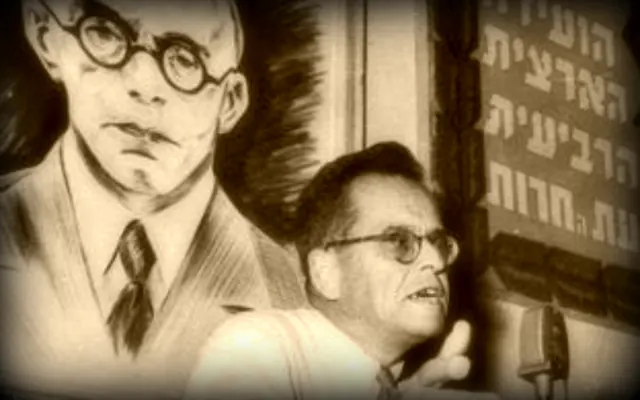
Season 2: Episode 32 - Under Pressure
In the 1930's the ideological divides between the Revisionist and Labor Zionists grew, and cracks began to appear within the community of the Yishuv. Meanwhile, pressure on European...
Play Episode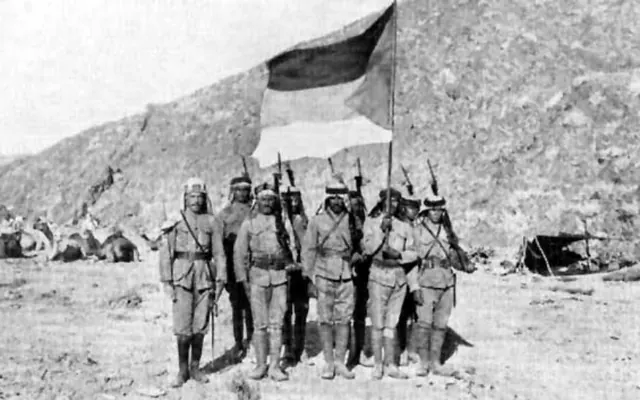
Season 2: Episode 33 - The Arab Revolt
The 1930's saw the hate triangle of Arabs, British and Jews explode into an unprecedented scale of violence known as the Arab Revolt. The revolt brought on yet...
Play Episode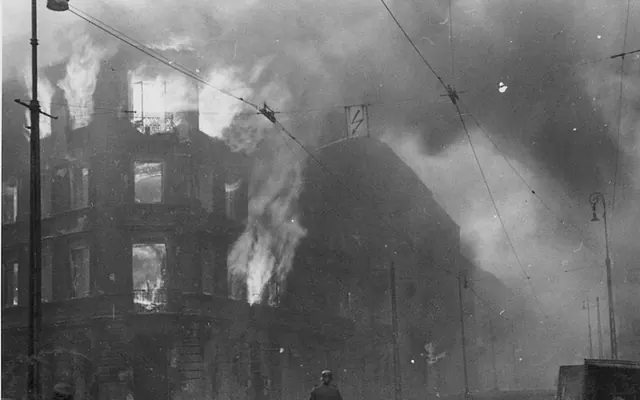
JS S2:E35: Jewish Resistance in the Warsaw Ghetto
By 1942 there was no escape from Europe for the Jews, and even if they had managed to run - who would take them in. This second episode...
Play Episode