
Three things which divide the stories of American and Israeli Jews
About this episode
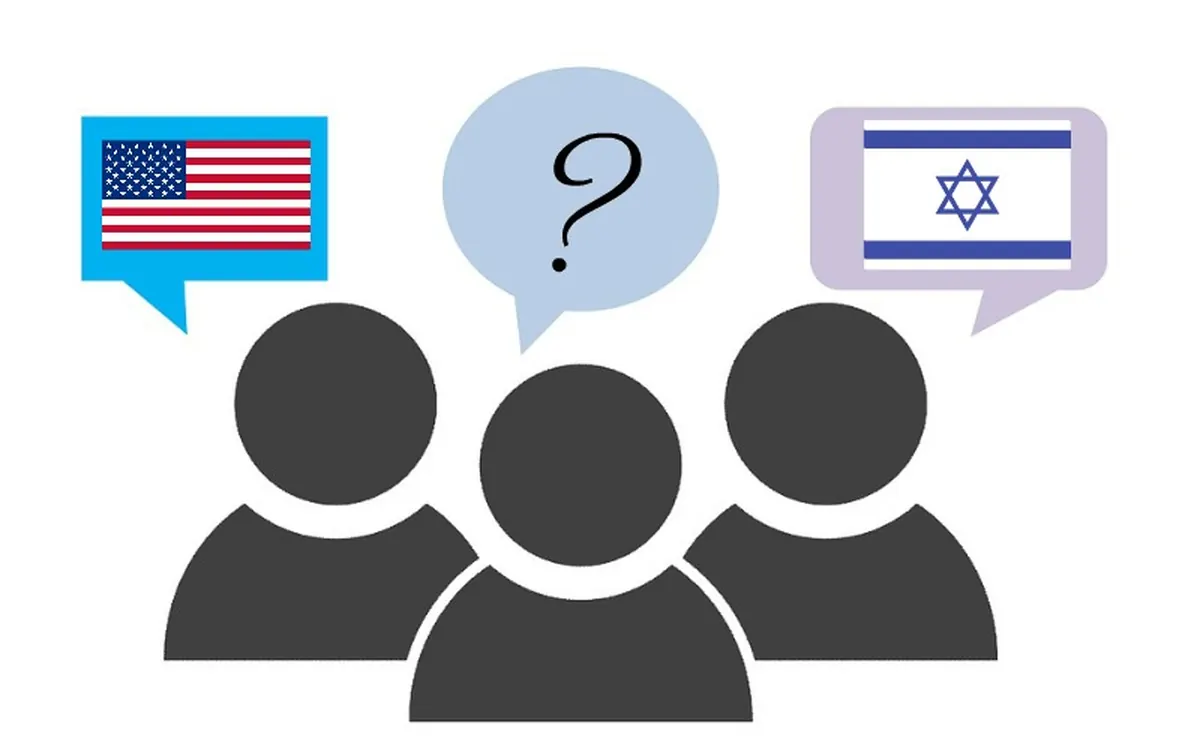
It was impossible to get a conversation going, said Yogi Berra, everybody was talking too much. Amid all the talk of an American-Israeli-Jewish divide, with its nauseating breakup metaphors, Rav Mike asks a question he has a deep personal stake in: did Israeli and American Jews ever really speak a common language? He feels in his kishkes the question of what moved each group to leave home, why some went west and some east, and how each coalesced into a distinct identity, and he considers three dividing elements. The first is the different narrative arcs. American Jewry, Sephardic at its roots but Ashkenormative from the nineteenth century, tells an immigrant's story of economic survival and the struggle between tradition and assimilation, over which the generation of Holocaust survivors stamped the refugee element just as the Jews were Americanizing, and onto which 1948 added joy, pride, guilt and fear. Israeli Jewry holds up the pioneer over the immigrant, the second aliyah ideal of livnot u'lehibanot, to build and be rebuilt, even though Israel is as much an immigrant nation and the kibbutz population peaked around seven and a half percent. Israel's story is also national rebirth bound up with shlilat hagalut, the negation of exile, which poses to Zionism a question strikingly like the one the stubborn survival of the Jews posed to the early church, answered by Augustine's witness doctrine, and which Zionism must now find a way to answer about a thriving American Jewry.
The second element is competing visions of redemption. America is the land where the secular progressive vision found its greatest manifestation, an ideology rooted in the Jewish idea of a beginning and an end and a directionality to time, which Christianity took and secular Western culture stripped down to progress. Secular American Jewish culture translated Jewish values into that progressive language, a transvaluation, and invested its hopes in transnational structures like the UN and ideals like international law, dreaming of global peace and prosperity even after Auschwitz and Hiroshima dealt progress a philosophical death blow. Israeli secular redemption looks very different, the appeal of national rebirth, of historical re-embodiment, being a people in the land again, prophetic in its roots even when it claims to be secular, the dream of min haTanach el haPalmach, from the Hebrew Bible to the striking arm of the Haganah, reattaching the modern story to its biblical roots and skipping over exile. As long as the national and the international run in parallel they can even feed one another, but as the twentieth century closed the two narratives headed for a showdown, which is why the different pictures of the endgame make it so hard for American and Israeli Jews to communicate.
The third element is the problem of language itself, the gap between the signifier and the signified, since a word is not a box that holds meaning to hand across intact. American and Israeli Jewry began with a deeply shared language of text, tradition and historical experience, but certain fundamental terms took new shape in the twentieth century and became divisive dialogues within each society, let alone between them. What is an am, a people, the very question the whole Zionist movement revolved around, now with a fixed point in a nation-state that looks very different from without than from within. What is Torah, framed in America by the civic nation-state and Reform Judaism around tradition versus assimilation and community versus personal liberty, and in Israel by an ethnic nation-state with no amicable divorce between religion and government and the ground for culture war. And what is a Jew, not who is a Jew, an important distinction held for another time. These terms either unite or divide, and if the hope is a common language the Jews on both sides have to speak to one another far more, clarify their terms, and share their dreams of the future, the task of season three, done in actuality and not only in theory.
To begin, Rav Mike speaks with David Abitbol, founder of Jewlicious, a group blog and one of the founding voices of the Jewish blogosphere, born in Israel to parents from Morocco, raised in Montreal, and back in Israel for fourteen years on the Zionist dream. Jewlicious writes about the Jewish world writ large, and for eleven years ran annual festivals in Long Beach where Hasidic Jews rubbed shoulders with activists and every major Jewish band played, not outreach but an image of Judaism more realistic than the dry, boring, Holocaust-focused thing most young adults had been handed, a vibrant and relevant and fun Judaism people were then free to do with as they chose. He led about a dozen Birthright trips and still hosts groups for Shabbat. Asked what most divides the two communities, Abitbol names politics, sharpened by consultants who prey on division and fear, the same hands behind Netanyahu and Orban, turning the press or Arab citizens voting in buses into existential threats and making calm conversation impossible. What unites is that we may not share a common faith but we share a common fate, a sense of family and of being named together by those who hate Jews, though Rav Mike notes his Pardes students are tired of a Judaism defined by its haters, and Abitbol agrees that an identity based on death, six million died so marry a Jew, is just not compelling, while millions pour into Holocaust memorials as Jewish day schools close.
On what each can learn from the other, Abitbol says Israelis need the American instinct for democracy, checks and balances, and the protection of the minority, the civics that Israelis, many from places where democracy is not in the DNA, seem to miss, while attacks on the courts and the press go unchecked. And Americans need from Israel a life lived Jewishly, where secularization does not mean de-Judaization, where the days and months and holidays are Jewish and Judaism is at its most vibrant, interesting and fun, against an American pattern where Judaism has lost its hold and people lead less rich lives for growing up with nothing beyond they tried to kill us, we survived, let us eat. Asked for the exciting coming chapter, Abitbol finds the trends grim, high intermarriage, the Haredi sector the most dynamic, but takes hope that the Jewish population is nearly back to its pre-Holocaust level, an opportunity to reboot into a world where half or more of Jews live in Israel and a more liberal remnant lives in America, and how the community handles those differences will decide between a bleak and divided future and a new Jewish renaissance. Rav Mike closes on the line he is pushing, that the bridge between American and Israeli Jewry is learning to speak to each other and developing a common language, and that the very challenges of the gap can become the source of a real dynamic creativity.
Key ideas
- Three elements divide American and Israeli Jewry: different narrative arcs, competing visions of redemption, and the very problem of shared words.
- American Jewry tells an immigrant's story, Israeli Jewry the pioneer's, and shlilat hagalut poses to Zionism the question a thriving diaspora will not let it dodge.
- America's progressive redemption invests in the international, Israel's in national re-embodiment, and the two visions head for a showdown.
- Am, Torah and Jew took new shapes in the twentieth century and became divisive dialogues within each community before they ever divided the two.
- David Abitbol names politics, sharpened by consultants who prey on fear, as the chief divider, and a common fate rather than a common faith as the unifier.
- Israelis can learn democratic checks and the protection of the minority; Americans can learn a life lived Jewishly where secular does not mean de-Judaized.
Chapters
- 0:00 Too much talk; did we share a language?
- 2:12 Three dividing elements
- 3:17 The narrative arcs: immigrant and pioneer
- 6:39 National rebirth and the question to Zionism
- 7:45 Replacement theology and Augustine
- 10:00 Competing visions of redemption
- 11:03 America and secular progress
- 13:14 Israel: national re-embodiment
- 15:22 A showdown of narratives
- 16:29 The problem of language
- 18:46 What is an am?
- 19:53 What is Torah, here and there
- 21:00 What is a Jew?
- 22:00 Speaking to each other: the task of season three
- 23:15 Meet David Abitbol of Jewlicious
- 26:30 The festivals; a vibrant Judaism
- 30:59 What most divides: politics and fear
- 35:22 A common fate, not a common faith
- 40:54 A Judaism not defined by its haters
- 45:18 What each can learn: democracy and a Jewish life
- 51:52 The coming chapter: grim trends, a possible reboot
- 56:22 Learning to speak; the challenge as creativity
Who, where and when
People
Rav Mike Feuer, David Abitbol, Yogi Berra, Augustine of Hippo, Benjamin Netanyahu, Viktor Orban, George Soros, The Chazon Ish
Places
New York and Newport, Montreal, Morocco, Long Beach, California, Jerusalem and Pardes
Texts
Jewlicious.com, Psalm 59:12 and the witness doctrine, The Law of Return
When
4th century CE: Augustine's witness doctrine, 1930s CE: the Workmen's Circle statement, 1948 CE: statehood complicates the immigrant story, 2019 CE: the interlude on the divide
Read the transcript
It was impossible to get a conversation going, said Yogi Berra. Everybody was talking too much. Now, at the risk of being guilty as charged, I've got a lot to say today, because I'm Rav Mike Boyer, and this is The Jewish Story. Interlude. Were American and Israeli Jewry ever speaking the same language? There is a lot of talk about the American-Israeli-Jewish divide these days in the press. And the relationship metaphors have actually gotten a bit childish in my eyes, if not somewhat nauseating. I'm not so into you, we're headed for a breakup, and I haven't heard it yet, but the next will surely be the ever-popular, it's not you, it's me. So I'm going to throw my hat into the ring with this question, because it's a relationship that I obviously have quite a personal stake in, and I have a deep-seated emunah that we just need to hold the Jews together.
And finally, it's interesting to me to trace the historical arc that brought these two pieces of Am Yisrael to the opposite sides of the planet and yet makes them together the vast majority of the Jews of our day. And the last two seasons have gone a long way, in particular season two, toward laying the groundwork for understanding the basics of how things came about. Meaning, aside from the individual circumstance and the great will of God that the Jews survive at all, number one, what moved each group to leave home in the first place? And that one I feel in my kishkas, because as you've heard me say before, my grandfather was one of the few that jumped ship from Europe in 1937. I always want to know, what is it that differentiates those that are able to uproot themselves and move on?
So that's one. Number two, why did some go east and some go west? There are certainly reasons that people headed for the Golden Medina in America and others headed out for the Middle East. And number three, what did the process look like as each of these two groups began to coalesce into a distinct identity? And it's that third one, the process of identity formation, that I really want to focus on moving forward into season three. But before we do, we need to put the pieces that we already have in place. And I want to do so today by asking a simple question. Did Israeli and American Jews ever really speak a common language? Are we looking at a breakup? Are we looking at two very divergent groups? So I want to do that by considering three elements.
Number one is the different narrative arcs described by Israeli and American Jewry. Number two, the very different visions of redemption that are embodied within those communities. And number three, the very problem of language. So let's start with the narrative arc, because certainly American and Israeli Jewry have different and maybe even conflicting stories about themselves. Now, I haven't really done justice to American Jewry. I know that I've made some promises. Season three will actually give more. But just to touch it, America's roots are Sephardic. Go back to Season 2, Episode 5 to learn about the port Jews if you want to understand how that happened. But anyone who's been up their own island and seen the Toro Synagogue or knows a bit of the backstory about the Jewish roots in New York City at least has that idea.
Nevertheless, and despite the fact that everyone's experience is their own, the Jewish story in America becomes pretty much Ashkenormative, as my students would say, for American Jewish culture going forward from the 19th century. First the German Jews, and then the masses of Eastern European Jews in the later 19th century will be the Jews in most American media and public representation. And their story will overwhelmingly be an immigrant's story, at least in the beginning. And therefore, it concerns economic survival, cultural struggles between tradition and assimilation, the critical process of communal and political organization. and on top of that, the generation of Holocaust survivors are going to set a powerful stamp over those previous hundred years of development of the immigrant narrative by reawakening the refugee element at a time when the Jews themselves were just really starting to Americanize.
That's going to be a difficult piece of the story to be continued. Suffice it to say for now that on top of the immigrant story, you get 1948 and that will tremendously complicate that immigrant story. U.S. Jewry is going to experience the birth of the State of Israel with a mix of joy, pride, guilt, and fear that we'll spend quite a bit of time unpacking in Season 3. That's one side of the narrative arc, the immigrant's story. And the Israeli side of 1948 is hardly any simpler. I did do justice in Season 2, I think, to the historical arc that carried the people who are now citizens of this new state to their location. So I'm not going to recapitulate. What I'll say is that the Israeli holds up the story of the pioneer over against the American immigrant story.
And that's true despite the fact that it's obvious that Israel is as much an immigrant nation as America. And that the actual pioneering element of Israeli society was always a small minority, even at its height. The kibbutz population will peak out at around 7.5% in 1950 when state building was at its greatest pace. Nevertheless, the story at this stage belongs to the pioneering hero generation. That second aliyah romantic ideal of Livnot U Libanot to build and be rebuilt is the driving force. And it's only going to strengthen going forward into season 3. Be it in the internal Israeli discourse or in the young states developing international image. It'll shatter eventually. But for now, just picture Ben-Gurion standing up to the world with his open collar shirt and loose cotton pants, fearless, free and strong.
And that image of the indomitable kibbutznik that dropped the rifle instantly upon ceasefire and snatched the hoe to build the land. That's what we're speaking about. And there'll be plenty to complicate that narrative as we speak it out in Season 3. Don't worry. The very gritty immigrant story that just lies underneath the pioneer's tail and which is so bound up with the process of the birth of the state must be told in full. But whether it's how Israelis received the Jews of the Arab world or how they absorbed the reality of the Holocaust and its survivors, that's our story going forward. Right now, there's an immigration story on both sides of the Atlantic, and the pioneer does not, by definition, conflict with the immigrant.
However, the story in the land of Israel is more than the pioneer story. It's also that classic Zionist story of national rebirth. Now, we're not going to review all Zionist thought in case you were worried that we were, but remember that no matter how it was conceived, almost all of the visions of rebirth were bound up with this notion of Shlilat Hagola, the negation of exile. That in order to really come to be, to be a people in our land, in order for the new Jew to be born, everything from the exilic past must go. And this makes me a little nervous. Lahavdil, but the ongoing existence of an independent American Jewry, one that doesn't face imminent destruction, but is rather a thriving competitor for what it means to be a Jew, poses a philosophical question to Zionism that's strikingly similar to the question posed by the ongoing existence of the Jews to early Christianity.
What do I mean? Well, you'll recall, I hope, this notion of replacement theology, the idea in the early church that God had rejected the Jews and chosen the church, and therefore that spiritual Israel, meaning Christianity, had replaced Colonel Israel, meaning the historic Jewish people. And that may or may not appeal as a theoretical construct, but the biggest challenge to it was, of course, the ongoing, persistent, stubborn life of the Jews. And the church might have trainwrecked around that theological question if it weren't for Augustine of Hippo, who saved the day in the 4th century with his theology that could fit the Jews into an acceptable Christian narrative. It's what he called the witness doctrine, or I've called the suffering remnant.
That when Augustine looked at the psalm in 59.12, which says, Slay them not, lest my people forget, scatter them with your might. He said, no, we don't need to destroy the Jews. We need to actually keep them alive so that people remember not only the origin of the scriptures that are so important to Christian theology, but also what happens when you refuse salvation. So they will be scattered amongst the nations of the world. And as I said, the Havdil 1000 Havdabim, the Zionist and now Israeli narrative, are going to have to find some theological, theoretical, philosophical model of national rebirth that can incorporate the independent American existence. And that's not going to be simple. We'll talk more.
For now, we're just asking the question, did Israeli and American Jews ever speak a common language? And our first piece is these divergent narrative arcs. U.S. Jewry is telling an immigrant's tale by and large. Israeli Jewry is living the dream of pioneering a national rebirth. And there are definitely elements within these narratives that unite and those that divide. But it's unquestionable that we've learned to tell our stories in very different ways. so in the epilogue of season 2 I made the assertion that you cannot understand Jewish history without contemplating the Messiah and if that's true about the past how much more so the Jewish future I don't think most Jews would admit it or would even be aware but I see American and Israeli Jewry divided by separate visions of redemption at least in their majority narratives And I gave a taste back in that epilogue of how complex the question of what we even mean when we speak about messianic redemption really is.
Right now, I'm going to stay out of the classic religious conceptions, which themselves are far from monolithic. I want to consider the somewhat competing secular redemptive visions that animated U.S. and Israeli Jewry in the late 20th century. Now let's just remember, in world history, America is the land where secular progressive vision found its greatest manifestation in general. And that great ideology of the modern era actually has its roots in Am Yisrael. We were, after all, historically, the ones who brought the idea of a beginning and an end, and therefore a linear directionality to time. And Christianity adopted it from Jewish culture and infused Greco-Roman culture with this hope for redemption.
And then when Western culture secularized, the Christian structure was stripped away and they were left with this notion of progress. And America is the land of progress of the 20th century. So the rise of a secular American Jewish culture in general necessitated a translation of all Jewish values into that progressive language. It's what Nietzsche calls transvaluation. Here's an example. The Workman's Circle and Shem Aleichem Institute, which names say it all, joint statement from the 1930s that declared there are three models of relationships, man to God, man to man, and man to self. And they went on and said, only the first is exclusively the realm of those who believe in a supreme being. The other two are the concern of all thinking people, which means that the Jews are going to need to rethink all three of those modes of relationship.
And when they're transvaluating, the Jews are not going to do without the hope for redemption. And so, it makes sense to me that the secular progressive vision, this idea that the world is going somewhere and that that somewhere is good, evinced by the mastery of nature, the increase in knowledge, the growth of political and social freedom, will fire the Jews and strike a deep chord in their soul just like it fired in the modern era. I mean, come on, who doesn't dream of a humanist paradise where everyone's free to do what they like and the streets are paved with gold? However, if you've been following the last century, the modern world was derailed philosophically and to some degree socially by Auschwitz and Hiroshima.
If that's where progress leads, then I want off the bus. Despite this sort of philosophical death blow, nevertheless, the world built by modernity is going to remain energetically alive and thriving for the rest of the 20th century. I mean, hey, it's still doing all right right now. And that secular redemptive vision that fires the world of global peace and prosperity, the rule of international morality, is going to coalesce around transnational structures like the UN and ideals like international law. And lo and behold, American Jewry will become deeply invested in both those structures and the ideals, at least in their hopes and dreams, if not in their activism. So that's one side of secular redemption.
But it looks very different, secular redemption that is, in the newborn state of Israel in 1948. Because rather than an internationalist progressive vision of one world, here we have the redemptive appeal of secular national rebirth once again. Now, I could make an argument that there's really no truly secular messianism in Israeli society. society, at least not in that uniquely Israeli aspect that's all about historical re-embodiment, about being a people in our land once again. And then there is the internationalist left, which is quite secular and has a strong presence here from its earliest socialist roots. But it seems to me that the unique element of Israeli redemptive thinking is the national story.
And even if that purports to be secular it really prophetic in its roots and we will speak don worry going forward about how the Zionist ideal of Min HaTanach El HaPalmach from the Hebrew Bible to the striking arm of the Haganah underground, of this dream of reattaching the modern Jewish story directly to its biblical roots, skipping over exile, how that's going to play out in Israeli politics. But for now, for our conversation and these purposes, this is another gap which divides. We have those two narrative arcs, how Israeli and American Jewry are telling separate stories, the immigrant and the pioneer. Now we have a divergent image of the end. Because even if the international element exists in both societies, the particulars Israeli national, and yes, call it secular identity, has a very different vision of what redemption in the world will look like than the progressive American dream.
And as long as they run in parallel, then theoretically, this is not a problem. In fact, the sort of nationalist and internationalist visions can contribute to one another. There's no absolute chasm here. But we know that the national and international narratives overall in the world are headed for a showdown as the 20th century comes to a close. And so it should come as no surprise to those of us sitting a little bit further into the 21st century that we're feeling the different pictures of the endgame is another piece that makes it very difficult for American and Israeli Jews to communicate. So we have divergent narrative arcs, the stories we tell about ourselves, and we have differing visions of the end.
The third piece in the puzzle, at least for now, has to do with the very problem of language itself. with the question of are Israeli and American Jews even talking about the same things when they use the same words. If we've ever learned together, I'm sure that we've spoken about the problem of the signifier and the signified. This idea that a word is not a little box which holds meaning, that I can hand to you and you open up and know exactly what I'm talking about. Because a word like God, country, religion means something to me. And it probably means something to you. But the chances that it means the same thing to both of us are quite low unless we're in an ongoing conversation about what they mean.
And therefore, when I use a word, I may know exactly what my intent is. I've done the work. I've clarified. And when you hear it, you may know exactly what you think it means because you've also contemplated the question. But the likelihood that we're talking about the same thing is low. And therefore, this leads to breakdowns in communication on the interpersonal, much less the intercommunal level. So, we have to ask the question, when Israeli and American Jews even enter into dialogue, do the words that we use mean the same thing? First things first, even with all the diverse factors of religiosity, country of birth, communal culture that are the hallmark of Jewish experience down through the ages, American and Israeli Jewry at least started off with a deeply shared common language, be it through our texts and traditions, be it in our deep historical experience, or be it in the ever-present external definitions placed on us by the non-Jewish world around us.
There are, however, certain fundamental terms that were shared but took on a new shape in the 20th century and have to some degree become a dialogue within Israel and America, much less between them, and it's a dialogue which is very divisive. So I want to pose three different questions of terms to help us understand this last piece in the puzzle. Number one, what is an um? Now I know it's normally translated as people, but as we've spoken about, the whole Zionist movement could be summed up as a consideration of this question, what is it to be a people? What's an um? And the birth of a Jewish nation state in 1948 didn't end that conversation. It did, however, give it a new fixed point around which it began to revolve.
And that fixed point looks very different from without than from within. And that's not even considering that the cataclysmic events of the mid-20th century made any nuanced theoretical discussion of what it is to be an um take a quick back seat to the very practical question of how does that um survive? This, in my eyes, is a critical conversation and one that needs to be revived in order to clarify what we mean when we use the term people and what are the implications of being one so that's number one. Number two, what is Torah? Now in America, the context for the question of Torah and therefore for defining even the meaning of the term is the civic nation state. It's a place in which religion and government are held to be intrinsically separate and furthermore in America, communal existence is going to be dominated by Reform Judaism, at least in 1948.
And therefore, the question of what is Torah will revolve around tensions between tradition and assimilation and tensions between communal allegiance and personal liberty. These are classic, modern, and post-modern questions. In Israel, on the other hand, you have an ethnic nation-state. It's a place that we can't assume any amicable divorce between religion and government. And even though the religious and the secular in Israel will have quite a bit of common cause in state building, there's just as much grounds for all-out culture war between them. And as we'll discuss, under Bangvarian's leadership, the Orthodox world will establish quite a bit of power through a status quo that grants them control over certain key realms of society.
At the same time, though, the Chazan Ish, who is the religious leader that negotiated much of that structure with Ben-Gurion, will be amazed when two years after independence, the Zionists are still letting them make matzah on Pesach. That's how great was he and his students' fear of a militant secular state. Remember, Zionism doesn't just break with religion. It's against it in many ways. Add to this the rise of an Israeli national identity as a thing unto itself, an event that's going to throw crazy cross currents into the meaning of the term Torah, plus the whole problem of modernity and the undermining of traditional narratives of Torah altogether. And we see that without even considering the conversation between America and Israel, within each society, there's a tremendous struggle with the question of what is the Torah.
And so therefore, it's not clear that when we speak to each other about such a thing, that we're talking at all. So, what's an Am? What's the Torah? And last, but certainly not least, there is, what is a Jew? You know, you heard me right. I didn't say, who is a Jew? I said, what is a Jew? And there's a very important distinction between those two questions, one that God willing will consider in another one of these interlude episodes before too long. But we're not going to go there now. Have no fear. We will, but not right now. For now, I just want to make some order. These are a few key words. Torah and Jew that either unite or divide American and Israeli Jewry. And we can add them to these divergent narrative arcs and these competing, perhaps competing, or let's just say different visions of redemption to safely say that if our hope is to develop a common language between American and Israeli Jewry, then the Jews on both sides have to simply speak to each other more.
And it can't just be Stamm conversation. I'm not talking about exchange of tourists. We need to speak out our present identities and come to a deeper understanding of how they came to be. And as part of that, we have to clarify our terms that we use for the things that mean most to us. And hopefully, we need to share our dreams for the future in order to figure out where they really overlap. This is the task of Season 3. And one that I actually aim to do in actuality, not just theoretically. I want to speak to people in the streets. And in order to get us started on that, I want to have an opening conversation right now with someone who, like myself, spans that divide personally and who is also deeply engaged in bridging it for others.
So hold tight for a minute while we transition into an interview segment with David Abitbol, creator of the Jewelicious blog. Okay, we're back, but I'm not alone any longer. I get really used to actually kind of sitting in the closet there recording on my own. So it's exciting for me to be in the presence of someone else. Not just someone else. I'm here with David of Bitbull, founder, editor, creator really of Jewelicious.com. It's a Jewish group blog and is really one of the founding voices of the entire Jewish blogosphere, blogosphere, if I could use a frame such as that. Hi, David. How are you doing this morning? I'm good. How are you? So thank you for welcoming me into your home. My pleasure. I'm a little excited, like I said, to get out, see the light and air, not be surrounded by the echoes of my own voice.
It's always a good time. We're in the middle of a conversation about the relationship between the American and Israeli Jewry. And what I'd like to speak to you a little bit about is where you see that conversation to be right now and where perhaps it might be headed and what you're doing in order to make it go there. But first, just tell us a little bit about yourself. Where are you from? Who are you? Where do you come from? Where are you now? I was born in Israel to parents who had immigrated to Israel from Morocco. And we left Israel when I was two years old and moved to Canada, where I grew up. Where in Canada? Montreal. So we can do this in French if you want. No thanks. I don't want to embarrass myself.
And then 14 years ago, I came back to Israel, and I've been here since. What brought you back? Zionist dream. It was time. It was time. It was time. I mean, it's a whole long and funny story, but it has nothing to do with the subject at hand. Not a lot to do with the subject. Maybe not directly, but give us one little snippet. Well, when some motivation. Before I left Israel, before I left Canada, I was running a web design firm. And we had a studio in old Montreal. It was beautiful. I had an apartment like a quarter of a block away. The good life. Right. Like just perfect location. You know, we had the ghetto shul just up the street. So I had access to kosher food. I had access to synagogue. And it was a legendary community there.
Right. Very legendary. and it was great. And then a group of Israelis came along and bought the building that my office was in. Uh-oh. And that signaled sort of like the death knell of the neighborhood. It was the gentrification had taken its final toll. Everything there had converted to condos and I was like, okay, this is a sign from God. I'm never going to find an office as grandiose and as wonderful and as inexpensive as the one that I had. And so I pecked up and left. Amazing. I can see there's much more in there, but it is always worthwhile seeing what gives each of us that last little oomph to get over the world. It was like it was a sign from God. I was like, I'm going to go to Israel. I'm going to find their moms, and I'm going to buy their houses and turn them into web design studios.
I'll show those guys. Follow me to Canada. So here you are. You've been here for 14 years. And what's Julicious? What are you doing? Well, Julicious is very simple. It's a group blog where we write about anything having to do with the Jewish world writ large and Israel. And you can find in-depth analysis about the Middle East. You can find interesting podcasts. Hey, the Jewish Story. You guys are amazing new hosts for the content, and I am grateful. And you can find things like the unofficial guide to sex on birthright Israel, for instance. That's the unofficial one because the official one is not yet published. No. They're working on it. Having problems getting the pictures past the religious community. We're actually working now on the unofficial birthright Israel guide to Palestine.
Ooh, that's going to be a good time. That'll have a draw. Let me know when that comes out. And for a period of about 11 years, we ran annual festivals in Long Beach, California, where we would have kids from all over the U.S. and Canada, Jewish students and young adults, come down for a three-day festival with Shabbat and speakers and all kinds of things. And it was a great experience. We literally had Hasidic Jews rubbing shoulders, maybe not literally with like Code Pink activists and every major Jewish band in North America played at our festival So it was literally the Jewish Big Ten Yeah, it was great and it wasn't like a Kiruv thing, it wasn't like, you know I mean, obviously we kept kosher and Shabbat and whatnot, but people were free to do whatever they wanted to do.
If it wasn't Kiruv what was the goal? Oh, Kiruv by the way, for those of you who don't know is outreach, right? So what was the goal then of these festivals? The goal was to present an image of Judaism that was more realistic than that that had been presented to most Jewish young adults, which is a dry, boring thing that you have to get through to do your bar mitzvah or something that was focused on the Holocaust and anti-Semitism. We were promoting a vibrant and relevant Judaism that was also a lot of fun. and then people were free to decide what they wanted to do with it afterwards. Amazing. And you see Jewelicious as an online platform essentially serving the same purpose? Basically, yeah. The festival was like a real version of the blog and that all it is It not really nefarious or anything like that We also ran a number of Birthright Israel trips branded as Julicious Birthright Israel trips.
I led about a dozen of them. You're speaking in the past tense. Do you not lead Birthright any longer? Well, no. I definitely don't. It's hard to keep it fresh. I live here and I've got a family and whatnot. And Birthright Israel doesn't really need our assistance in promoting the trips anymore. It's a well-oiled machine. It's a well-oiled machine, and there's lots and lots of demand. But 12 trips, you're talking about years of experience of working with American youth. Right. And I continue to have, I mean, I don't lead Birthright Israel trips, but we work with an organization called Shabbat of a Lifetime, and we host Birthright Israel groups in our homes for Shabbat. So the last group was two weeks ago.
So I keep myself... So let me picture you talking about it. How many kids in your... Sorry, young adults. Young adults. Teenage children now. I call everybody kids. So how many people are you speaking about in your house here? We're sitting here where we host the Shabbat events. We're sitting here where we host the Shabbat events and we have 20, 21 people that can sit here on three tables set up like a tea. I'm picturing the cheek and jowl Shabbos meal here, but it must be amazing. It is amazing. I mean, I remember we had a Shabbat trip sponsored by the Los Angeles Federation that came here two years ago. And the Madriach recently came back to Israel on another trip, and he specifically requested to be in this house with us for Shabbat.
So you know you're doing something right. We know we're doing something right. So it's a good experience, a fun time. And like I said, it allows me to keep up with what's going on with the kids these days. Yeah, well, that's exactly where I want to go, and that's probably a good segue. Because as I mentioned, already the first half of this episode was my thoughts on three elements that either unite or divide American and Israeli Jewry. And I just want to ask you a very simple, straightforward question. is in your experience, being a native-born Israeli, having lived in North America, having come back, and not just come back, but deeply committed to it, involved in a dialogue of what you said, of presenting Judaism in a very different light to English speakers.
So nevertheless, it's all over the press right now. Everybody's talking that there's a breakup coming, and it's going to be messy, and all this, I personally think, media frenzy. But in your eyes, we'll start with the negative, because I want to end on a positive note. What's the number one thing that you see right now dividing Israeli and North American Jewry? I would have to say probably politics. The majority of North American Jews, as we all know, vote Democrat. And the majority of Israeli Jews keep re-electing. Despite the fact that the left wants to claim its majority, the Knesset has not reflected that for a good 20 years. Right, exactly. So we keep re-electing a party that's Likud and Benjamin Netanyahu, supported by Sheldon Adelson, who's also a big birthright Israel supporter.
Sure. So politics. But I want to push on that a little bit because politics is an abstraction. If you're having dinner with a bunch of friends and this one votes for the Aminah Hadash, the new right, and that one votes for Meretz, in theory, of course, their political views divide them. But there are people that can sit rationally around the table and say, okay, we don't agree. let's talk about that and there are those that as soon as the political distinction comes out it's like everybody retreats to their corner and pulls out the knives like we know what's going on particularly in america right now in the polarization here as well although here it's kind of more of a fragmentation since god forbid the jews should ever have just two poles um so so tell me more in politics sounds to me like a trigger not so much a cause well i mean i think you have to look at the way politics has evolved over the last, say, decade with the advent of certain political consultants who've determined that preying on people's divisions and fear gets folks elected.
Oh yeah. It's a big mobilizing factor. And you see, you know, the same political consultants that help Benjamin Netanyahu win election after election are helping Victor Orban. That's broken the press. Right, that just broke in the press with George Soros as the big bogeyman because they have no other opposition. And why not just use the Jews because it's such an old school resonant appeal that the Jews are the bogeyman. It's in people's DNA. That's a discussion for another time. So meaning it's not just politics, but it's the way in which politics have evolved. Right. It preys on division. It preys on irrational fear. and it preys on creating enemies where none exist. So, like I said, in Hungary, it was George Soros.
And it's funny, Viktor Orban was a fellow of the Open Society. I mean, he was one of the beneficiaries of George Soros' money and now, you know, it was like politically expedient to blame him. In Israel, it's been journalists or busloads of Palestinian Arab citizens voting. Oh my God, the horror, right? The horror. The horror. Voting wait, wait, in droves? No, what was it? In busloads. Busloads. That was the phrase. Right. Right? I mean, Israeli citizens doing what they're legally supposed to be doing. I would say morally obligated, too. Yeah, morally obligated, of course. And that is posed as an existential threat. And I'm not like some bleeding heart lefty and whatnot. You know, I'm a proud Zionist. And it's divisive.
And it creates hatred. And it makes it so that people can't have calm, rational conversations about the subject because the threat is existential. So that's another piece. I heard a couple of things. So there's politics. There's the nature of the divisive sort of tactical approach to politics that's evolved over the last 10 years. I heard two more pieces in here. There's the existential fear that we're very familiar with here in Israel. I mean, I've been here for going on 18 years. I can't count how many times I've voted God knows how many governments have we had in the last 18 years but every time you're faced with not just the media frenzy and the consultants spin but a real sense that gosh if we do this wrong this might be it rightly or wrongly so there is that existential fear which doesn't really allow for nuanced conversation there's a last piece I heard behind the cards which is that there's a sense that well I'm right and you're wrong so therefore if I don't get politics my way I'm going to take my ball and go home this is like you know I don't really it's true technically it's true every citizen should vote but they should vote for who I want them to vote for not that they should just vote so this is I want to come back to this notion that I have a sense that this idea, the freedom that both sides of the equation American and Israeli have to look at each other and say well if you're not going to play by my rules you know, yeah, I'm going home, is part of the problem here.
So that's good. Politics, definitely a classic division. Let's try the flip side. What do you see as the number one thing tying us together? Well, we're all Jews. We all share that familial... Well, we identify as Jews on the basic fundamental level, whether you're talking religion, whether you're talking halachic definitions of Judaism or whatnot. People sit there and define themselves as Jews and therefore tie themselves to a common Jew fate. Yes. Right? So when you have white nationalists or Islamic fundamentalists criticizing the Jews, they're talking about all the Jews. They're talking about, you know, the Hasidic Jew in Me'asharim. They're talking about the Upper West Side liberal Jew. I mean, if those even exist anymore.
There are a few of them left. They own all the buildings now. We may not share a common faith, but we definitely share a common fate. And that's a very powerful unifier. So in that sense, I like that phrase, if not a common faith, then a common fate. And I heard you mention two things. First of all, you slipped in right at the beginning the sense of family. It's like the tribe. I remember when I was in high school, I never had to go to gym class in my 10th and 11th grade years. We were always allowed to work out. I was a big weightlifter. Why? Because my gym teacher, Mr. Schwartz, used to say, it's okay for you. You're a member of the tribe. Right? There is that sense of family, although I wonder. I went to a Jewish school.
We got no favors for that because everyone. We're all members of the tribe so we can squash in our inter-tribal battles. Well, so there is that sense, and I wonder. I want to maybe come back to that as well in terms of how enduring that is and really a little bit more what it means. But let's start with the second one first, which is the external pressure. It's always interesting to me how quickly when I speak to people that we all go, myself included, to this sense of hatred. That, well, you know, when the white supremacists or the Islamic nationalists talk about the Jews, they're not making these distinctions. And as we'll speak about going forward in the Jewish story, the very nature of Jewish immigration to the state of Israel ultimately will revolve around the definition which was supplied by the Nazis.
Right? You will hear this phrase, and I haven't yet tracked down who said it first, but the idea that the law of return, which gives the legal right to every Jew to become an instant citizen upon setting, well, instant, subject to bureaucracy, but legally instant citizen when they set foot here, is defined by one Jewish grandparent. Why? If it was good enough for Hitler, it's good enough for the state. I think that's a fallacy. I think the understanding is that it's based on Hitler is wrong. I think it's just about they didn't want to create a situation whereby a Jewish man married to, say, a non-Jewish woman, and I'm using this example completely randomly, would not escape his tormentors because he didn't want to leave his family behind, would not have that impediment.
That interesting. And he would be able to come to Israel and bring his non-Jewish family, and therefore we would save one Jewish life by bringing in, you know. I'm researching it right now. Fortunately, a lot of the conversations are transcripted. So we can read them slowly but surely. I'm making my way through there. So it remains to be seen. But either way, it's powerful and important to me that sense of negative pressure. And I wonder, do you really think that holds us together? Because I work at one of the things I do. I'm the faculty member at the Parties Institute. I've heard of that place. You have, I'm sure. Where we get, intellectually speaking, the cream of the crop of American liberal jury. Those are just amazing, amazing students.
And they're the ones who are really deeply embedded in the liberal world, but still attached enough that they come. They come to Jerusalem. I mean, it's an amazing thing. I love them for it. And they are very tired of that notion that the world hates us. so much so that I often find it stunning how ignorant they are of, forget history, just modern politics and the truth of its manifestation. So I'm not arguing with you that that ties us together, but I wonder how much my students would agree. There's definitely, that definitely exists. And it's realistic and it's true. Because the flip side is, by the way, the American Jews will say, well, if you Israelis would just toe the line and do the good thing, then the world wouldn't hate us in America.
They wouldn't tie us to your boat. And the subtle, unstated so far by most of them is, and I really wish I could just cut the tie because then you guys can just do whatever the heck you want and I won't be blamed. Right, right. And they can always point to their liberal credentials to demonstrate the fact that they're not like those bad Israelis. Yeah, we know that phenomenon. But let's get back to something that you said before and this is definitely something that's been very important in our evolution and what we do. The notion of, first of all, Judaism existed before Hitler. This comes as a shock to many people. Thank God. But the notion that we allow our haters to define who we are robs Judaism of so much of what it's about.
It's not this death cult that worships the dead and whatnot. It's a very living thing. And this has been an issue with me and with Jewlicious. And we've noticed that a religion or an identity based on death is one that's just not very compelling. Six million people died, now marry a Jew. Exactly. Exactly. That's just not very compelling. It's not very interesting. And it's not real. It doesn't represent the breadth and depth of what Judaism is about. And in terms of, right, so we've definitely taken a very, a policy about the Holocaust that has gotten us in trouble, you know, almost making fun of March of the Living Trips and the proliferation of Holocaust museums across the United States while Jewish day schools are shutting down and parents can't afford to send their kids to study what Judaism is actually all about.
Right. But there's millions and millions being pumped into a memorialization of the Holocaust in a very particular way that I personally find difficult, if not indigestion. How many Holocaust museums do you need? We need more Jewish day schools, though. That's for sure. And I see it all the time when I'm on these birthright Israel trips, and everyone's seen Schindler's List, and everyone's been to the U.S. Holocaust Museum, but people don't know the very basics, the fundamentals of Judaism, Jewish history. of anything like that, which has made the existence of birthright Israel almost necessary. And it sad that the idea is literally not it not about making Jewish babies or getting drunk and having a little zio orgy or whatever Those are just side benefits Sorry It's about having 10 days in Israel make up for a lack of any formal Jewish education beyond bar mitzvah years.
And the bill is still out on the stats, whether it's money well spent. Right, right. And people sit there and say the stats are right there. and the others are like, well, the stats have been massaged. And you know what they say about statistics, right? Yeah, yeah. Plus, it's a generational question. Exactly. I was always taught by my teachers that if I want to know whether I've succeeded in inculcating my values into my children, I have to wait and see how they raise theirs. Right. That's the real question. Right. And you have to wait a long time nowadays. Oh, yeah. People like starting families super, super late and you have no idea. and what keeps Jews, what allows Jews to continue to identify with the Jewish community in absence of children, in absence of a pressing need.
And it's very little. It's very little. So this is, once again, something that divides us, because there in America, in theory at least, you could step out, you could pass, as we say. Here in Israel, the circle has been drawn around us, and not that there are only Jews here, obviously. I mean, you know, 20% of our country are Arab Israelis, and there's a good handful of others. Nevertheless, to identify us as Jews by the nature of Israelis is a fair bid, right? Meaning as opposed to America where you could pass. I want to try another angle here. We'll just keep wandering our way through because I also don't want to eat up your whole morning. So here's a different question. What do you think we could learn from each other?
You know, you speak to these kids on a Friday night, and you mentioned their, I find, almost stunning ignorance. And by the way, it's not just the kids who didn't go to day school. As a person who teaches Jewish history, how many times do I have to have a day school graduate ask me whether Hanukkah happened during the first temple or the second before I say to myself, we have a problem, people? So you're sitting around the table with these kids and I'm imagining young adults, and you're naturally in the position of teacher or at least host and facilitator, and so there's an assumption of knowledge. But I know that you're an intelligent person and your ear is very open. So there's probably what to be learned from them as well.
So what do you think Israeli Jewry has to learn from American Jewry and vice versa? Well, the thing that stands out the most are the basic fundamental principles of democracy. Who's learning that from whom? I think the Israelis need to learn that from the Americans. The notion that there exist checks and balances for a reason. the sort of the American experience not the Canadian experience but the American experience has definitely been based on overthrowing the yoke of tyranny and therefore a centralization of power in one particular area has always been seen as a threat to the body politic and that's super important and people here don't seem to understand that so we have justice ministers trying to sort of disembowel the Supreme Court and prevent it from being able to act as a check and balance on the Knesset is seen as undemocratic.
My right-wing friends would say the exact opposite. What she's trying to do is actually put a check on the Supreme Court because it's out of balance. But I get your point. There's a problematic in the structure of the government. And then, again, you have the Likud party putting out giant banners advertising the fact that the press is not going to determine who's going to be the next. It's an attack on the press. Oh, yeah. you know, out and out attacking the press and disregarding the important role played by the Fourth Estate. It's the Fourth Estate, yes. America's the fifth one here. Right. And it seems to me that Israelis have missed out on understanding the sorts of things that you would learn, I guess, in Civics 101 in America about the importance of democracy and how oftentimes things seem like, you know, the strength and the vibrancy of a democracy isn't determined by how well the majority is represented, but by how well the minority is protected.
And Israelis don't seem to understand that, such that, you know, populist messages based on, I don't know, ignorance or whatnot resonate with the population here. Oh, sure. who come maybe from parts of the world where democracy is not part of the DNA or they didn't grow up in those sorts of things. And it makes sense. This is a significant piece that we're going to speak about going forward in Season 3. I actually, with all the warts and bumps, have a tremendous pride in our democracy because just think about it. In 1948, there was, first of all, no guarantee there was going to be a democratic state. The leadership was socialist. They took the word democratic out of the Declaration of Independence. Which is good because it didn't help the Democratic Republic of Congo.
No, sure not. But like you're pointing out, I mean, you know, half the country comes from Soviet Russia. The other half comes from the Arab Middle East. It's like, where does this democratic notion come from? Nevertheless, what I hear you saying is that there's more to a democracy than the structures of government or the idea of majority rule. There's a culture and that American Jewry is a product of civic democratic culture. And there's there's what we learn there. Right. I mean, they marched, they fought to fashion America into the democracy that it is today. Yeah, and there's a question, by the way, why? One of the things that we're going to pursue as well is the American Jewish experience has been such that liberal democracy is a safe space for them.
Whereas there's a deep part of the Israeli Jewish experience, which is, let's just say, less than sure, that a liberal democracy is a safe space for us here. So let's flip the side. And what do American Jews have to learn from Israeli Jewry? Well, the cool thing about living in Israel is that regardless of whether you're super religious or super secular, you still live within a very Jewish framework. That means the days of the week are Jewish days of the week, the months are Jewish months, the holidays that you take are not Christmas. The dogs speak Hebrew. It's amazing. The language that you speak is a resurrected ancient language. And here, Judaism is often at its most vibrant and interesting and complicated and, dare I say, fun.
And that's something that Jews can learn. Oftentimes, I speak to American Jews, and you sit there and you say Judaism, and right away it's like, ugh. I mean, they know what an interesting, vibrant life looks like, but it ain't Jewish. Right, right. And it can be, and it should be. I mean, I know that, for me, everything I do is based on Judaism. Literally everything I do, who I vote for, how I spend my time, is informed by knowledge that I got from Judaism. And it's important. Our history and our values define who we are, not just as a people, but as individuals. And when you take that away, when you have a giant portion of American Jews growing up without any knowledge of who they are or where they came from beyond they try to kill us, we survive, let's eat.
I think they lead less rich lives. And this is all part of the whole secularization of everyone in America. But here, secularization doesn't mean de-Jewization. I remember the word I was talking about. Judenbein. Yeah, exactly. Whoops. Yeah, so great. So what I hear you saying is that essentially what Israeli Jewry has to offer is a vision of a life lived Jewishly, as opposed to what it means to do Jewish, which in America has lost its hold on most of American Jewry. Right. It's not very compelling. I mean, how many bagels can you eat? Actually, a lot. But let's not go there. I missed that so deeply in the schmear. All right. I want to wrap up with one last question because what you have to say is amazing, and I can see there are conversations for the future.
Last thought is, I mean, the podcast here is The Jewish Story. And part of what I want to do in Season 3 is sort of move toward the history. I'm sorry, move toward the future because, you know, history is not going to last forever. So I've got to figure out what I'm going to do going forward. And so I want to hear from you what you think is the exciting coming chapter in The Jewish Story. Here we are in the year 5779 or 2019, depending on how you count. The world seems to be swirling in so many ways. I tell you, I have to add in that I know from my students that there is a very vibrant, fermenting Jewish world happening in America. It's just happening in nontraditional spaces. So there's, like, I think a lot happening out there.
And I feel like you have a good, if not bird's eye view, you've got a tremendous perspective from both sides of the divide here. So what do you see to be the exciting coming chapter of the Jewish story? Give us a teaser. Come on, David. Good grief. Good grief. I wish I knew. What would you like it to be? The trends are grim on every level. So we see, for instance, a tremendous rate of intermarriage in the United States that threatens basic principles of Jewish identity. We see also growing, you know, that the most dynamic elements of the Jewish community are the Haredi sector. They're the ones that are having the babies. They're the ones that are growing by leaps and bounds, and everyone else is not as much.
The one thing that kind of perhaps excites me is yesterday was International Holocaust Memorial Day, and it's interesting that since the Holocaust, we still haven't returned to the levels of population that we had. Not even close. We're close. It was 18 million before the Holocaust. Right now, soaking wet, we're at about 14. Okay, so depending on the numbers that you... Okay, we can argue with the numbers later. The number that I saw was there were 16 million Jews, 16, 17 million Jews pre-Holocaust, and now we're up to like 15.6. I'm not buying that number. No? Not even with every double count you could get, but we can argue about it. What your point was? The point is that soon, soon, were going to return back to the population levels that we had before the Holocaust.
And I think that will give us an opportunity to perhaps reboot. And it's going to be an interesting Jewish world. Half, if not more, of the Jews are going to be living in Israel. A significant chunk of them are going to be traditional, ultra-Orthodox and whatnot. And then there's going to be the remnant in the United States that are going to trend more liberal. and how we as a Jewish community deal with these differences is going to determine whether we condemn ourselves to a bleak and divided future or whether we usher in a new Jewish Renaissance, which would be really, really interesting. And what that's going to look like, I don't know. I mean, I have an idea, you know, and a lot of it relates to the interaction between traditional Judaism and liberal Judaism.
But things like, I don't know, Chulant in New York is very fun, where you see liberal Jews and Orthodox Jews and Off-the-Durch Jews commingling together and having a good time. Gathering around the Chulant pot. Right. I'm sure it'll involve a violin. So a reboot. I like it. We're coming back around the 70 years of the state of Israel, which is a very whole number, getting our population without our argument about the numbers back to some sense of, oh, we were here once at one of our most vibrant points in history, and potentially a new Jewish renaissance. And you, I think that people need to check out Jewlicious.com. That's J-E-W-L-I-C-I-O-U-S.com. You don't need to check out Jewlicious.com. I think people should do it.
Come on, let me plug. Absolutely necessary, but I would rather you sat there and said, I know this is going to sound weird to some people, say one bracha today and think about what you're saying. Just one. Pick it. Okay, but they're not mutually exclusive. And the reason I would encourage them to check that out as well as any other platform in which ideas of various stripes come together is because the line that I'm pushing for the bridge between American and Israeli Jewelry is that we need to learn to speak to each other. And in order to do that, we have to develop a common language. And the challenges that we face being on almost opposite sides of the globe, not even sharing a common language, the deep divide between the ethnic nation-state and the civic nation-state that we are embedded in poses particular challenges.
But this idea of a reboot and a renaissance is appealing to me because those very challenges can become the source for a real dynamic creativity. So, David, I want to thank you for spending time. And as long as I'm thanking people, I want to thank everybody that's listening, and in particular, I want to thank the folks that give their hard-earned money to help make this show possible, to keep it widely available and free. And I want to invite you to join them. Go right now to the new website. That's jewishstory.co. In the upper right-hand corner, you'll see a button that says Be a Patron. You can click on through for a little bit of her podcast support. Also, if you want to dedicate an episode, we've had people do that.
You can send me an email at ravmikefoyer at gmail.com, and I'm more than happy to dedicate a show to the living or to the deceased. So as long as I'm thanking too, I want to thank the Land of Israel Network. That's thelandofisrael.com for creating a platform that aroused me to reach so many amazing people. I want to thank the Pardes Institute, P-A-R-D-E-S dot org dot I-L, for building an educational institution that gives me the chance to teach amazing Jews. And I want to thank you for listening. I'm Rav Mike Foyer and this is The Jewish Story.
More from Season 2
TJS S2 Interlude: Who is Rabbi Mike Feuer and why is he telling the Jewish story?
Every story has a teller, and a good listener knows that you can't really separate the two. In this podcast, Rav Mike sits down with his old friend...
Play Episode
S2 Epilogue: The re-emergence of Jewish political theology and messianism in 1948
What better way to wrap up season two than to talk about the messiah? Here is an exploration of the power of the messianic idea and its centrality...
Play Episode