
TJS S2 Interlude: Who is Rabbi Mike Feuer and why is he telling the Jewish story?
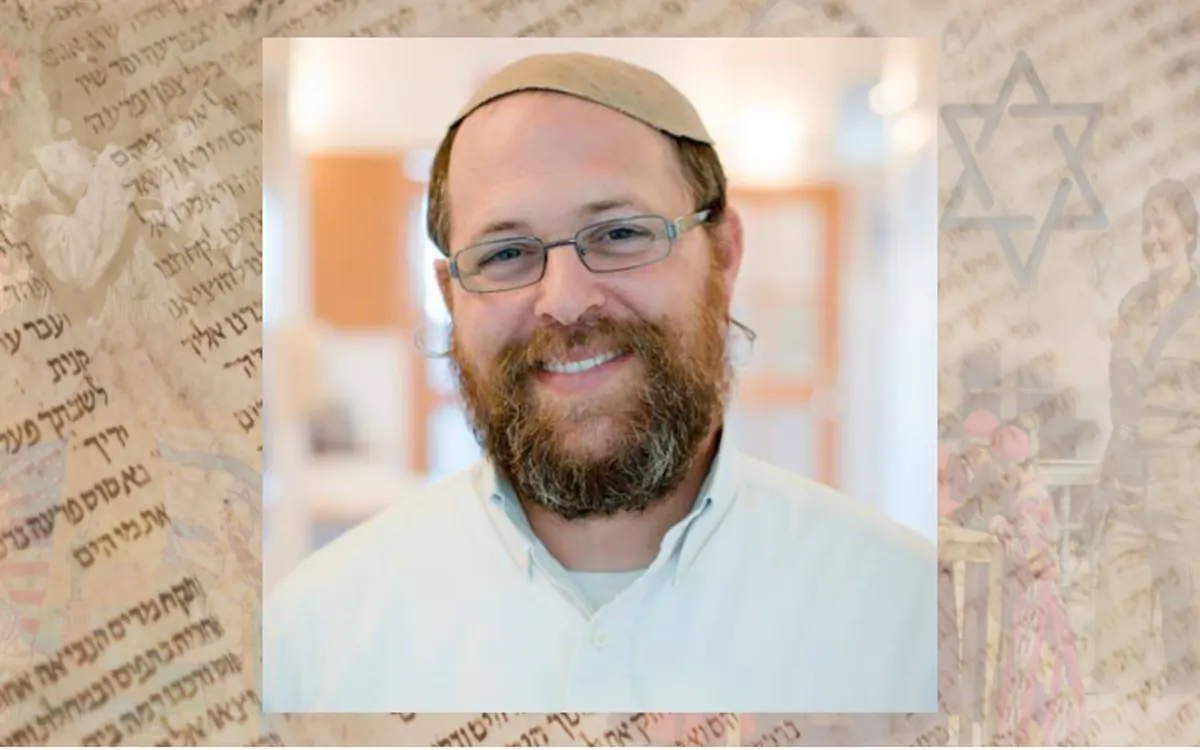
Every story has a teller, and a good listener knows that you can't really separate the two. In this podcast, Rav Mike sits down with his old friend and founder of Aleph Male, Eitan Ben Avraham, and answers Eitan's curious questions about Mike's childhood, formative years, how Mike ended up living in Israel becoming a rabbi and why he is on a mission to tell the Jewish Story.
About this episode
Self-knowledge, says Jane Austen, is the first step to maturity. At the space between seasons two and three, Rav Mike hands the microphone to Eitan Ben Abraham, the friend and co-conspirator behind the website, the Facebook page and the logo, to answer the question many listeners have asked: who is the man telling the Jewish story, and why. Eitan opens with the soul of the show, that he cannot separate what the Jewish story is from who Mike Feuer is, which Mike admits may be a level of identification a little too close. So they start with the basics. He grew up in Cleveland, Ohio, in a strong Jewish community and the Conservative movement, public school all the way through grad school, a Hebrew school kid who actually enjoyed it, Ramah camps and United Synagogue Youth, in a mixed world of African American and white, Jewish and not, a self-described misfit who breaks boxes from the inside. The home was intellectual, fueled by curiosity and upper-middle-class values of achievement, the culture around him secular, run-DMC and the Beastie Boys and a deep love of reggae, and his Jewish identity in-your-face proud with a chip on his shoulder against a nominally secular but really Christian America.
The family was Zachor and not Shamor: Friday night dinners legendary among his friends, a kosher house his mother took on when he was ten, but a Shabbat recalled rather than kept. At the end of high school, on a senior project of twenty-one days backpacking in the Smoky Mountains, he found God in the woods, a living presence and a rhythm that only comes when you can wait to hear the birds before the sun comes up. He headed straight for the Rocky Mountains, to Colorado College, got off the plane onto the tarmac, looked up at the mountains and knew he belonged there; four years a passionate environmentalist and climber, a geology major whose life was about rocks, with no Jewish life on campus and the volume on God rising the more time he spent on a rock face a thousand feet up where his life was in his own hands, that nexus of awe and fear he names yirah.
After college he made a deal with God to just go and be shown where to end up, a year of travel through Australia and then the land of Israel and the Sinai, which had always been his destination. A nuclear bomb of a visit: living with an ex-girlfriend who was a parliamentary assistant to Naomi Chazan of Meretz while going each day to the Old City to learn with yeshiva friends, big beard and a kippah, children running after him. Standing in the Tel Aviv bus station he discovered his plane ticket was dated a day too late, and rather than make the great decision of his life in a TWA office he spent his last money and flew home. Every time his feet touch the ground here he is at home, but home means expectations, and at twenty-one or twenty-two he knew he was in the right place but was not yet the right person at the right time. He went to the woods of North Carolina for two years of wilderness therapy with at-risk youth, nature now a workshop, reading Mesillat Yesharim and the Hebrew Bible that friends sent from Jerusalem, acquiring a discipline, until he applied to a graduate program back in the land of Israel and said goodbye to America in his mind forever.
Man plans, God laughs: a few months into grad school his father died very suddenly, and he went home for a year to a life that became a pile of rubble, with deep bouts of depression and a shock he only recognized as mourning a decade later. He decided to rebuild from scratch, began to learn and pray and say Kaddish at a breakaway minyan whose rabbi would only serve if the men committed to learning together every week, and they drew him in gently. There the commandments came to him as a binding practice, not as spiritual principles or avenues of relationship but as something you do because you must, what spiritual circles call surrender in the sense of giving oneself over. On Shavuot of the year 2000 he made his decision, to wear tzitzit and a kippah wherever he went, and he was in. Then came a graduate program in sustainable international development through Brandeis, a thesis on water resource management done in Israel, the move here about seventeen and a half years ago, meeting his wife, learning how to learn Gemara, and falling backwards into the beit midrash and eventually into teaching at Pardes, discovering that this is what he loves to do.
Coming to Eretz Yisrael, a week before the Twin Towers fell and at the height of the Second Intifada when blood ran in the streets, opened the Torah for him as a grand narrative of creation, carrying a note from his great-aunt who survived Auschwitz which he placed in the wall. So what is the Torah? The story of your people, not a passive thing you receive but an active thing you are called to embody, a story larger than yourself that calls you to embody it, the call to Am Yisrael to embody in creation the potential for a real relationship between creator and creation. The Jewish story is his attempt to map how that narrative has played out in history, integrating the critical historical perspective with a deep immersion in the Torah as a self-referential narrative that can only be understood from inside, because comparative religion is like figuring out what life is by dissecting a cat. His kavanah is redemption, telling a story in which everyone can find their place, that strengthens their relationship to one another and to creation and moves them to build a healed future. One side is the honest conversations we need to have, that the Jews are just like everyone else only more so and never claimed otherwise; the other is spiritual motivation and the momentum of a story bigger than us, refusing the great tragedy of shrinking it all to the petty and venal. Eretz Yisrael is where we stand and the Torah is the lever we use to move the world, and when he gets on the mic he is trying to tell the story that binds the pieces together in a way that brings life and leads to redemption, aiming to take us home.
Key ideas
- Eitan Ben Abraham takes the mic to ask who Rav Mike is and why he tells the story, since the two can be hard to separate.
- From Cleveland and the Conservative movement to finding God in the Smoky Mountains and the Rockies, the road ran through nature before Torah.
- Twice spit out of the land, he learned that being home means being the right person at the right time, not only the right place.
- His father's sudden death turned life to rubble, and rebuilding from scratch led on Shavuot 2000 to the commandments as a binding practice.
- The Torah is the story of your people, not received passively but embodied, a story larger than yourself that calls you to live it.
- The Jewish story's kavanah is redemption: Eretz Yisrael is where we stand and the Torah is the lever to move the world.
Chapters
- 0:00 Self-knowledge; handing over the mic
- 2:20 What is the Jewish story, who is Mike Feuer
- 3:26 Cleveland, Hebrew school, Ramah
- 4:29 A mixed world; a misfit by nature
- 5:37 Secular culture, reggae, in-your-face Jewish
- 6:42 Zachor not Shamor; finding God in the woods
- 8:47 The Rockies; a life about rocks
- 14:22 Filling in the blanks
- 15:27 A deal with God; a year of travel
- 17:38 The useless ticket; flying home
- 18:46 What it means to be home
- 24:11 North Carolina; reading in the woods
- 26:21 The father's death; a pile of rubble
- 28:32 The commandments as a binding practice
- 29:34 Shavuot 2000; he is in
- 32:51 Grad school, marriage, the beit midrash
- 34:58 The Torah opens as a grand narrative
- 37:04 The story of your people, to embody
- 42:26 Integrating the critical and the self-referential
- 46:46 Kavanah: redemption and bringing life
- 54:18 Where we stand and the lever; taking us home
Who, where and when
People
Rav Mike Feuer, Eitan Ben Abraham, Jane Austen, Naomi Chazan, Rav Mike's great-aunt Helene, Rav Mike's father
Places
Cleveland, Ohio, The Smoky Mountains, Colorado College, Australia and the Sinai, The Old City of Jerusalem, North Carolina, Pardes Institute
Texts
Mesillat Yesharim, The Hebrew Bible, The Torah as grand narrative
When
1992 CE: graduates high school, 2000 CE: the Shavuot decision, 2001 CE: arrives a week before the Twin Towers fall, 2019 CE: the interlude between seasons
Read the transcript
Self-knowledge, says Jane Austen, is the first step to maturity. Well, I don't know how mature I am, but I'm willing to take a few steps toward self-knowledge. I'm Rav Mike Foyer, and this is The Jewish Story. Interlude, what is The Jewish Story? So I'm sitting here at the end of a very long road. Those of you who have been listening for a while know that we've come to the end of Season 3, from the book of Daniel to 1948, thousands of years of history. And I have to tell you, I'm feeling both odd and worn out. And I thought to myself that we've gained a lot of people along the way. There's a lot of you, bless you, out there who have become fans, who have become supporters, who are even boosters of the Jewish story.
But many of you I've never even met. And some of you have come along the way late in the games. You haven't even heard the little bits and pieces I've let out about why the Jewish story is important. And last but certainly not least, not a few of you have asked that I engage somebody to start asking me questions. So in light of all the above, I've decided that here in that space in between, because Season 3 is coming, but I need a little bit of breather. In that space in between, I've brought in our very own beloved, much honored and highly contributory. Those of you who don't know, I, of course, didn't create the jewishstory.co website, nor the Facebook page there at Jewish Story Podcast, nor the Twitter, nor, frankly, the logo or anything else of real graphic significance.
That's all been the man behind the scenes, Eitan Ben Abraham, my dear friend and co-conspirator here on the Jewish Story. Hi, Eitan. How are you doing? What's going on with Mike? So I want to try something. I've never done it before, but I feel ready. All those steps towards self-knowledge and maturity. I'm going to hand the mic over to you. So what I want to do right now... That's a huge sign of trust. Well, you know, it makes me nervous. Plus, my name is Mike, so the symbol is a mic behind the mic. Not anymore, because here. Ready? One, two, three. Switch. Unbelievable. I feel a little bit strange. You're in the other side of my head in the recording earphones, but nonetheless, I think we can do it. So I want to hand it over to you, and you take where you will.
Okay. So the reason that we just did this switch is because the way I would call the soul of the show is, what is the Jewish story, and who is Mike Foyer? I can't separate them in my mind. who is Mike Foyer and what is the Jewish story? Actually, that's a really important thing to be able to separate those things. From a branding perspective or just psychologically? No, from a psychological perspective. In the same way that you might really, really love someone, but you might not like their cooking. Right. And then if you don't like their dish, they think you don't like them. Well, this would be a big step of maturity for me. I have to admit that the level of identification between myself and my content right now is perhaps a little too close.
Right. So then this interview is going to be a good thing because that's what we're going to get into is who you are. And really, I just want to get to know you. And so really, let's just start with the basics of where are you from? Where am I from? I grew up in Cleveland, Ohio. Wonderful place it is. Great Jewish community. I went to public school my whole life, all the way through grad school. But strong Jewish identity. I was in the conservative movement, big C, because they are all liberal, little L. And when you say in the conservative movement and strong Jewish identity, Does that mean like you went to a Jewish school every day or you went to Hebrew school every week? No, I went to public school, as I said, but I was a Hebrew school kid.
So you went to Hebrew school after public school? After public school, twice a week plus on either Shabbat or Sunday. And I was a survivor in the sense that I actually enjoyed it, at least in my later years. Because you know what they say about the Hebrew school system, that two generations of Hebrew school did more than a thousand years of missionaries could achieve. I mean, there are a lot of people that are very broken in their relationship to Torah through Hebrew school, but I was not one of them, thank God. I also went to Jewish camps. Two shouts out for Ramah, which was an amazing part of my life. And it continues, as I know from my own students, to be an important part of many people's lives.
And I was in United Synagogue Youth. So you went to like a secular public school. Yep. Did you have non-Jewish friends growing up? Are you kidding? I mean, my school was about 2,000 people. The big sort of split in the population was between African-American and sort of the white folk. It was about 50-50. I played sports in school so I had a much more eclectic group of friends than the average person both crossing racial barriers and religious barriers and social barriers I'm also a bit of a misfit by nature, like I don't like to fit boxes, in fact as soon as I fit one it starts to feel confining and I deliberately tend to break it from the inside, that's why I'm either beloved or not much admired in institutions I've been part of so yeah, my world was a very mixed world.
So you were hanging out with Christians you were hanging out with. Yeah, there weren't so many Muslims in our environment at that time. Black Muslims, like the nation of Islam. A couple of guys that I was actually, through the football team, reasonably close with. But yeah, sure. America. And then also in terms of culture, because right now you're sitting here and you're wearing a kippah and you're wearing a tzitzit and you live in Malaj Amim and you daven three times a day and sometimes you even lead the davening and you learn Torah all day long. But that's not how you grew up. You grew up in high school. you know i grew up in an excellent academic environment in an intellectual environment in the home that was always fueled by curiosity um in a sense of of freedom and interest and engagement uh also you know some good solid sort of like upper middle class values of success and achievement and your zone of culture was also secular culture secular music secular all that stuff i'm a child of the 80s in that sense late 80s at least i mean i graduated high school so Who were you into growing up?
I mean, I remember very clearly listening to the early run DMC tapes with my brother in the back of the car. When the Beastie Boys came online, that was like a big hit in my life. Gosh, who else? Music-wise? I think, well, that's about... I also actually was deeply, deeply involved in reggae. In fact, I'm contemplating in season three doing the Rastafarian interlude. Just to open up for people the fact that somehow out there in the hills of Jamaica, little sparks of prophecy came leaking through and how that could be is craziness it is madness it's total madness um and so and so in terms of your jewish identity like if people asked if you were jewish you would have been like yeah i'm jewish oh yeah no i was like kind of in your face jewish i mean i wasn't like militant i wasn't like wearing a kippa in public school or anything but but deeply proud deeply attached i had a huge chip on my shoulder against the dominant Christian culture.
I'm always resentful of the fact that nominally America is a secular country, but in reality, it's a Christian country. And I felt like a minority. So what was December like for you? Well, I grew up in a world where we certainly didn't sing Christmas songs in school, but instead, I remember growing up, I know a whole series of Halloween carols. I can sing you pumpkin bells. I can sing you songs about the great pumpkin. is coming to town. I'm not joking, actually. All written, of course, by a Jewish choir master, but that's his own funny issue. So it was, you know, the winter holidays, as we like to call them, were never my favorite time. At the same time, I loved putting my menorah out the window. Friday night dinner was like a well-known...
Did you go sledding and get in snowball fights? Oh, sure. The only time, actually, I tell my kids we like to drink hot chocolate any time it rains here in our fair country, that I can't drink hot chocolate unless I've actually been like knee-deep in snow and my toes are semi-numb. And do you have any brothers or sisters? I have one older brother. He's about two and a half years older than I am. Did you guys get along when you were growing up? Well, I mean, we were boys, so we like pounded on each other and drew blood mostly. Okay. Until he left the house. Really? And the territorial issues faded, and we actually became quite close once he was in college. But until then, no, no. And not only that, but he was a senior when I was a freshman, which is the way the years worked out.
And he and his friends, I went to a school, like I said, 2,000 people, very easy to get lost in. Some pretty scary corners where we had on-duty policemen in our school. So they used to deliberately misdirect me my freshman year when I was trying to find a class. Like, oh yeah, go down to the end of that hole, up those stairs. I find myself in the boiler room as the bell rang in class. Not only am I late, but potentially in danger. That's hilarious. You made it. I made it. So you graduated from, you went public school your whole life, and then you graduated from high school? Yes, in 1992. in 1992. Good old. And then what happened? Well, then the Rocky Mountains called. Actually, at the end of my high school existence, found God in the wilderness.
I mean, I grew up, like I said, in a, I wouldn't call it a religious environment, but an environment that was conscious of its religion. Like you knew you were Jewish. I knew it. And also, like I said, I went to, I was involved in youth group. Did you keep kosher? So we kept a kosher house. Yes, my mother, when I was around 10, decided to kosher our house under the auspices of the conservative rabbi. So, you know, there are, say, details that I differ with her on how to run kashu, but I eat in her house. There's a little bit of a dancing around that. And what about, like, Shabbos and stuff like that? So Shabbat, we were Zahorah, not Shemor, as we say it. Okay. Meaning we recalled the Sabbath day, but we did not keep it.
So we would have Friday night dinners, which were legendary amongst my friends, Jewish and non-Jewish. Like, curiosity, questioning, raging. My family likes to talk. I can't imagine that. You get the four years together, my poor wife, the first time she spent the Shabbat with us at like 7.30 in the morning when I'm on my way to Shul and having a cup of coffee. And we're all like talking politics and roused up. And she's like, oh my gosh, who are these people? It's 7.30 in the morning on Shabbat. Different tribe. Yeah, very different tribe. But at the end of my high school existence, I really found God. I mean, I found God in the woods. What does that mean? Why wasn't God in Shul? What do you mean when you say you found God in the woods?
Well, the Torah was in Shul, though I didn't really know what it was. And there was a lot of talk, I don't even say about God, there was a lot of talk of God, you know, in Shul, although not much in Hebrew school. But in terms of an actual living presence in my life, which was sort of a pervasive environment in which I moved, that I found in the woods. I found in the woods when I realized that the birds... So, like, what were you doing? Like, high school's over, you started walking to the woods with your friends? Well, at the end of my high school existence, we had a great thing called Senior Project in my high school, which allowed you under certain conditions to take the last 30 days of the high school and do basically whatever you wanted as long as it was some sort of nominal educational focus.
So my friends and I did 21 days of backpacking in the Smoky Mountain National Forest. Whoa. Tennessee, yeah. We did the Tennessee side of the smoke. It was an unbelievable experience. We did a seven-day and a 14-day loop. The 14 days on the trail is quite a bit. It's a lot of logistics and it's a lot of, you know, that was a huge learning for me because it was the first time that we'd ever done that. but one of my friends was much more experienced and the rest of us it was new. And, you know, there's a rhythm which is available in life that only comes when you can wait to hear the birds sing before the sun comes up. And in my experience, without knowing that rhythm, you will always be somewhat estranged from the planet on which you walk.
And since I'm a believer that this planet is one of the great blessings that the Creator imagined, so then you're missing a deep, passionate desire that the Creator has to connect with us. And so you discovered this on your senior project trip to the Smoky Mountains. Yeah, I don't know that I would have put it exactly in those words. But you felt it. I felt it, and then I headed straight to the Rocky Mountains. What does that mean? You didn't go to college? No, that's where I went to college. Meaning, I mean, I was, thank God, quite successful in high school and could have really gone almost anywhere between my academic record and my sports and et cetera, et cetera. In fact, my high school principal was deeply disappointed with my choice as he made clear to me.
because he also made clear to me that he could make me valedictorian if i would let him choose my classes hmm ew it was that kind of place interesting yeah it was interesting place half my college half my high school didn't go to college and and the upper percentage went to the ivy leagues um so anyway i didn't go to the ivy leagues but i did go to college was the colorado colorado college the foot of the rocky mountains in colorado springs amazing amazing place really just good and like why'd you choose it for the mountains or i went to visit i got off the plane and in those days the plane like there was no you know what's it called the tunnel docking tunnel thing i got off on the tarmac i looked up and i said here i want to stay here and i like called my parents i was ready to have them just send everything out and they're like you have to finish high school you're not done yet like but i want to stay here uh it was very very clear to me where i belonged um and i had four amazing years there delving very deeply into the world into the mountains.
And that's also where you got into reggae, right? No, gosh, that's high school. Yeah, okay. Give a little shout out to Simon Waldbaum, dear friend, who brought me into the world of Bob. But the mountains... So who were you in college? Who was I in college? A passionate environmentalist. Deeply engaged with the planet. I love to climb. My life was about rocks. I majored in geology, the environmental geology major. I spent a lot of my free time climbing, mountaineering, backpacking, some biking, although that was more of an avocation. And was there like a Hillel or a Chabad on campus that you connected to? You know, Colorado College is one of those places where there's lots of Jews, but no Jewish life. Okay. There was some sort of, what was it called?
I don't even remember what it was called. It was something. So what did you do for the high holidays? The first year or two, I think I found somewhere to go, and then after that, I just let it go. Okay. I just let it go. Okay. It was not relevant to me because I found God who was becoming ever more present the more time I spent outside in incredible and deeply challenging and therefore sort of self-revealing environments. I mean, there's a part of yourself that you come to know when you're hanging a thousand feet up on a rock face on equipment that you place there yourself, which probably doesn't find so many other outlets in modern day Western. Like your life is actually in your hands. Yes. For me, it's that nexus of awe and fear that expresses Yira, that the horizons of existence are suddenly so much bigger and the stakes are so much higher that the selfhood which emerges into them is fundamentally different.
So I'm really curious, and what I'm trying to do is fill in the blanks of how your high school self and your college self eventually evolved into the present-day self sitting in front of me. Right. Because I think that these are important things because they're also reflections of a state of mind. Sure. Right. And also how you ended up really ultimately creating the Jewish story. Like this is ultimately a product of your own personal journey and your own personal thought process. Absolutely. It's more than a product. it's a shaper because, you know, as everyone's heard me say a thousand times, I'm not actually interested in the past. I'm interested in the future. But in order to have anything intelligent to say about it and any sort of real dream of what it might be, I feel like I need to sort of like get a straight line on how I got here.
So it sounds like you, generally speaking, you dive into things. So in high school, you were like diving into sports diving into academics and college You dove into sort of being out in nature and the mountains and connecting to the rocks And somehow I know in your journey that you ended up also like working with at youth right That was after college before. I mean, I traveled for about a year after college because I made a deal with God that I would just go and he would tell me where to end up. It was a very fascinating year that didn't end perhaps how I expected it to. Any points on the map that you care to share? Oh, there's lots of them, but I think that would take us too far. Was it like East or the Middle East?
Oh, where did I go? I went to Australia. I went to Australia. My father, Alav O'Shalom, had been there for a number of years in business and it got me very excited about it. Plus, I was a sort of newbie traveler and more or less we speak the same language. So I thought it was a good place to start. Plus, you're right there on the door of Asia. And I ended up actually not going to the rest of Asia. I was in Australia for six months and then I came back here to Israel. I was down in the Sinai for a little bit. But this has always been my destination. it's just a question of whether I was ready to be here the way in which the Rabbana Shalom So after you graduated from college you did this year of travel and then you ended up in Israel, what was that visit like?
Well, it was a bit of a nuclear bomb just to give you a snippet, I was living with an ex-girlfriend who was a parliamentary assistant to Nomi Chazan you know what Nomi Chazan is? She's the member of Knesset for Meretz, the far left wing party. So it's like living with this ex-girlfriend going every day to the old city of Jerusalem to learn with two of my best friends from high school who were in yeshiva in Eshatora. Now I had a huge beard and I looked like one of the yeshiva guys, but I wore a kippah. Little kids in the old city used to run after me like, you're kippah, you're kippah, you're kippah. Right? And I still had the travel bug, so I was periodically just kind of like leaving to go to the Sinai or to Akko or something.
And I was a little bit confused about what I was going to do. let's just say and then in the end i don't want to tell the whole story now but um he i ended up standing with a uh useless plane ticket outside the tw day office and tel aviv having to make a decision about the rest of my life and just balked and went back to america when you say useless what do you mean in brief i was traveling up to go to akko and i was in the tel aviv bus station and i got that sort of fear i want to look at my ticket it's an international traveling thing like where's my passport i just want to see my passport pulled the ticket out and it was supposed to be booked for april 24th um sorry april 23rd i'd send the money to my mom and and she sort of arranged it somehow it said march 23rd and that day was march 24th oh no yeah so i call up twa their first response was dude that plane left yesterday sucks to be you and i said no no no that's not gonna happen i went down there and like begged and pleaded with this woman you know you watch a ticket agent.
It looks like they're playing Pac-Man. She's like, no, no, no, wait, wait, wait. No, no, no, wait, wait, wait. Bing! She's like, okay, if you give me $400 right now, I can reserve you a ticket for April 1st. That was all the money I had left. Oh, no. I was planning to maybe go into the army or I was going to go into Yeshiva at Pesach. I didn't really make a decision. Look where I was living. I was like, I can't make this decision in the TWA office in downtown Tel Aviv right now. I can't do it. I can't do it. And then you did it. Gave her the money and just went home. Okay. So that was your first round with Israel. That was, well, not my first round, no, because I came here when I was much younger, when I was 15, and really wanted to stay and go to the army.
And so this, but this visit also must have helped shape your Jewish identity, right, in terms of going to Eshatora. Well, and also what it means to get spit out of the land. I got spit out. So tell me both. Tell me about the awakening and tell me about the spitting out. Well, listen, it's probably a general principle in life is in order to achieve anything, you have to actually be the right person at the right time, at the right place. So I was in the right place. I wasn't the right person and it certainly wasn't the right time. Well, I mean, listen, part of you is thinking about staying, so you must have had some sort of... Yes, but notice I couldn't decide what does that mean for me. Is that staying a delving into the world of the Torah and an absolute sort of inner devotion to the specific demands it makes upon my life?
Is staying, joining the IDF and ignoring that whole world of Torah and, you know, I don't know, maybe getting back together with my old girlfriend and pursuing down that path? Okay, but you want to know what? apparently you encountered something that you never encountered before right oh a major choice i wasn't willing to make no but but but that choice was based on something right so so what i'm asking is like what did you encounter in this year in between graduating from college and starting your groove that i can tell you very quickly what does it mean to be home what does it mean to be home i mean i grew up in cleveland like i said but you know my grandfather was a stowaway immigrant who escaped from Europe in 1937.
So the fact that my family's from Cleveland is circumstance. And I love America. I felt very attached. I'm very proud of my American side of my identity. But it's not where I'm from. But am I from Romania? I mean, that's where my grandparents were from. And I sort of empathize and connect very deeply with the Ashkenazi story, as people who have been hearing me tell the Jewish story have probably sensed all along. But I'm not from Poland or Romania. Come on. I'm not speaking any of those languages. And they're in business places. You know? And so, but every time I have entered the land of Israel, the minute my feet touch the ground, I am at home. Now, remember, going home is... And so that's what you felt with your big beard without a kippah.
You were like... Well, of course I felt home because, like I said, it wasn't my first time here. The problem is that when you're 15 years old and you come home, everybody loves to see you. You're always welcome. Oh, he's just 15. he's doing this he's doing that i don't know we'll get into what we were all doing when we were 15 right but you know by the time you're 21 22 the expectations are different you walk into your parents house at 21 22 and you wipe your dirty feet on the living room rug you leave your dishes in the sink and and uh you know you make a bunch of noise at two in the morning can't let your parents sleep that's not okay so this is a metaphor for you being here after college and you have to be the right person at the right time in the right place i knew i was in the right place but it was not the time that I had the clarity of what type of person I needed to be.
Okay. So I was pursuing parallel to basically music. Mike, I'm sorry, but I'm going to, I'm just, I want to dive in more. But so what about Torah as in, did you, did your headspace change? You grew up conservative. Did anything change or did you stay the same? Like your friends were learning at age. I sat with them and on one level I could hear everything they were saying. I was the religious one in high school, mind you. I was the one who had knowledge. I was the one who was much more committed to some form of ritual expression. At the same time, I couldn't help feeling that what they were doing was a running from instead of a running toward. I'm not asking about your friends. I'm asking like, all right.
So it didn't penetrate. It didn't penetrate. I heard it. It made perfect sense to me, but it was all over there. It wasn't me. It's not who I am. Okay. So would it be safe to say that you didn't really connect to Torah on this visit? You know, it's an interesting question. I wouldn't say no, I don't think that's true, because that's a very deep, connective experience. Classes, rabbis, anything, because that's what I'm trying to get at. No, I was also learning with my friends. It wasn't to... So did you, because some people come to Israel, and besides connecting to Erech Israel and feeling home, they also discover Torah as a spiritual path. This is my friend who was there, who had a round-the-world ticket. He took when he was 18.
His first stop was Tel Aviv. He never left. He's still here. Right, and so that's what I'm asking, is did you have a spiritual awakening in relationship to Torah? No. okay no it was still over there so it was like love of Eretz Israel I'm Jewish I'm home but there wasn't like okay that's it I want to keep Shabbos I want to learn Rashi and Tosvos and all that that didn't happen what did happen was that the volume on God went up extraordinarily when I came but there's a deep tension in what it is that God is asking of us as a people in our generation and I now that I look back I'm always a little bit wary of framing my own life as a narrative but now that I look back I can see that I was sitting on the edge of that tension is that the sort of like the secular Israeli identity is a very important contribution to what God wants of Am Yisrael in the world today with all of its warts and bumps and etc.
the power of embodiment in the world which is most powerfully represented by the IDF by the Israeli army I see a desire, a divine desire driving it. At the same time, the depth of the Torah and its engagement is also a clear expression. Okay, this is all great, but I want to stay on your bio. So at this point, I left. Right. And I didn't want to put down any roots. I love the outdoors. I was involved in outdoor leadership for many years, both when I was in college and afterwards in private guiding. And so I found this wilderness therapy program, working with at-risk youth. Like you applied for a job. You found a wanted... Got to get a job, man. Got to get a job. Got to pay bills. Got to feed the people. That's not a choice.
And where were you at this point? I bounced around a little bit. And then I eventually went, as I was in the process of trying to find the job, went back to my parents in Cleveland. I was home for about three months. And then next thing I knew, I was in the woods of North Carolina for the next two years. And was it outward bound or something more? It's called the Eckerd Youth Alternatives. It has a small element of the outward bound personal challenge, but it's also got a little bit element of other disciplines. It's really a psychiatrist named William Glasser whose structure they run. It's a collective living and a re-socialization process of kids that are removed from their child. So nature in many ways was your temple, and now you're dealing with young people who can't fit into society.
So now it became a workshop. And did you see transformations happen with kids? Absolutely. No question. And within myself as well. Now, mind you, this whole time my friends are still sending me letters from Jerusalem and books. I'm getting, you know, like, M'silat Y'sharim from my friends. I'm reading M'silat Y'sharim in the woods of North Carolina, right? The Path of the Just, for people who are familiar with the English name. And it makes sense to me. I'm reading, you know, a couple of chapters of the Hebrew Bible every day. And, like, I have a certain discipline that I've acquired already. and getting to understand that there is a deeply broken side to America that as a suburban white kid in Chaker Heights, Ohio, I actually did see in my own way because of the nature of my high school, but didn't really see.
It wasn't real to me. And so now who you are is feeling deeply connected to nature, deeply connected to Eretz Yisrael. And living in a half-frame canvas and pole tent in the woods in North Carolina. So completely rootless. and what I did was when I was finished I had applied to a graduate school program here in once again the land of Israel which thank God I was accepted gave me a scholarship and a stipend and that was it I finished out two years in the woods and said goodbye to America in my mind forever in my mind forever that was it there's no going back man plans, God laughs the second time I was spit out of the land is because after about two, three months of grad school, my father died very suddenly.
Many things collapsed for me at that point. I went home. I was home with my mother for about a year. And that was the point at which all of the thoughts about the Torah that I'd been holding off, I was able to give them space. Because, you know, on a certain level, the challenge that I held in my relationship to Torah is, it's a really big ask. it's a really big ask the lifestyle of the torah and so while i was happy and things were going my way it spoke to me but you know it's much more pleasant to just live a free life right um or at least seems to be easier once i had already um dropped the structure of my life what do you mean when you say drop the structure you mean after your dad passed away i passed away and i dropped out of graduate school i wasn't working i was sitting at home basically alone with my mom who worked so you know that was it like so i had a couple friends so you were kind of like you're at this point your life was kind of like a pile of rubble my pile my pile my yes my life was a pile of rubble i mean there were some some deep bouts of depression in there and i mean the death of anyone is painful a shocking death all the more so i was very close to my father and so therefore the loss was um put it this way it took me a good 10 years to realize that what I'd been dealing with was the shock and not the mourning.
That was the second stage which came to me much later. I basically decided that I was going to rebuild from scratch. I began to learn. I began to learn. I began to pray. I was saying Kaddish. Telechorses, local shul. I was saying Kaddish to my father because that became important to me. There was a wonderful rabbi at the shul and this really sweet group of guys that he had gathered together. He was like a breakaway minion from a big Orthodox shul. And he was working finance or something. They didn't pay him. He said, the only way I'm going to agree to be a rabbi in this breakaway minion is if we all agree to commit to learning together every week. So he had a chabur of guys who were more than happy to sort of draw me in and were sort of very sweet and directing and gentle about what I knew and what I didn't know and how to do it the way the Jews do.
and yet it was clear to me shortening the story somewhat that perhaps now I could be the right person at the right time and the right place it was clear to you that you needed to be in Israel so your life is in a state of rubble you begin to rebuild you start connecting on a deeper level to Torah and orthodox Judaism you start connecting to these guys who are learning Torah every week which I would point out in the essence what it meant for me was the idea of the commandments as a binding practice. Like the covenant. Beyond the covenant, because I think the covenant embraces more than that, although I think you are correct, that's a central element of what it is. The commandments as a binding practice.
Not the commandments as... Imagine you putting on tefillin when you say that. Yes, not the commandments as amazing spiritual principles or as avenues for relationship or as means of embodying the divine will in the world. A binding practice. A binding practice. You're going to do it because you must. and everything flows from there and so the term that's often used in spiritual circles to describe that is surrender not in the sense of quitting but in the sense of giving oneself over to yes so that for me was the Shavuot of that year that was the you mean like you had an internal decision that was when I made my decision for me every year Shavuot is a time of Kabbalot of accepting things upon myself and so you decided that shavuot was to take on halacha is that what you saying I decided that externally the expression would be I would start wearing tzitzit and a kippah wherever I was going.
And that meant that I was now I'm in. I'm still ignorant of a lot, but I'm in. So I just want to time out and zoom out for a second. So it's 2019. How many years ago was this shavuot? It was the year 2000. 19 years ago. Okay. Cool. Almost 19 years because 2019 hasn't come up. Almost 19. Okay. A little more than 18. And then I came back. Well, first I went to grad school. I was in a program for Sustainable International Development based in Brandeis. But I found the program for a number of reasons. Brandeis is good if you want to learn how to be Jewish. Thumbs up. So you got good grades in college? Yeah, listen, I'm a learner. the grade thing has never been a problem the the so it was good to be Jewish there or easy and informative and it was a two year program the first year in classroom work and the second year abroad working on a master's thesis so I found an advisor for my thesis here in Israel in order for it to be a bridge to get back here not just as like I'll tell you when I went to grad school for the first time and I showed up down in this desert research station in Stable Kerh, you know where it is, well south of Beersheba, in the heart of the Negev.
And I said to my professor, okay, what can I do? And he says, I don't know, what can you do? I was not ready for that. Academically, I was an achiever, give me the task, I'll get the high marks, etc. But it's a very different stance on life when you actually have to figure out, well, but what can you do? Yeah, so I wasn't ready for that at the time. I was much more ready for it the second time around. It was very successful. educational endeavor and got me here. I mean, that was when I moved here about, you know, 17 and a half years ago. So you made Aliyah. Well, I actually came here without formally making Aliyah. I came here to do my project. I ended up changing my sort of legal status after having been here for almost a year.
So you finished grad school in Israel. Yes. I wrote my thesis here. And then became a citizen of Israel. Yes. I met my wife and learned how to learn Gemaraa, which as my master's thesis advisor said to me is not possible in one year. And that happened during your second year slash final year slash senior year of your graduate. Yes, second year of my master's, which was the year 2001-2002. I got here a week before the two towers fell. So tell me again what the master's was in that you ended up walking away with. What did you become a master of? I'm a master of sustainable international development. Interesting. It's an MA. My focus was on water resource management here in the land of Israel. Water resource management.
Yeah. So then how did you end up in Pardes? Oh, I fell backwards into the Beit Midrash as soon as I got married. It was, you know, I'm very passionate about the question of water resource management here. For various reasons that lie off our topic, it was not a good time to be looking for jobs in that field when I got married. I had a friend who, from Yeshiva, I went to Yeshiva my first year of marriage. God bless all those people. When we got married in America, we told people things that fold are easier to travel with. Wink, wink. Right? And then we proceeded to take all the money that we got in our first year of marriage that most people use as a nest egg or buy all the stuff they'll have for the rest of the 20 years of marriage.
We just spent it on rent and food for a year. It was great. I mean, it wasn't that much money. But I went to yeshiva. My wife was working very part-time. And it was an amazing, amazing first year of marriage. And as part of that, I met someone who we shared outdoor interests. and he connected me to a person who was starting up a yeshiva who he wanted to do with an outward bound type yeshiva who approached me for my outdoor skills. And I said, great, but I'm not done learning. And he said, wonderful, because I have my son. He's at the Mir Yeshiva in Jerusalem and he needs a kavuta. So I started to learn with his son and to run his program. And I got to do some amazing, amazing trips in the two and a half years that we worked together here in the land of Israel.
and I kept learning and suddenly discovered this is what I like to do. This is really great. So Shavuos, about 19 years ago, you decided you're going to put on a kippah and sitzvah and connect to Torah as a binding practice. You grew up conservative, strong Jewish identity, but not fully into Torah. Even when you came to Israel, it still didn't happen. And so how did your relationship to Torah change during this time? I think part of it, and this segues nicely into the motivation for this conversation, is that coming to Eretz Yisrael, particularly at the time that I did, opened up the Torah for me as a grand narrative of creation, as opposed to just simply a document that people studied, or a law book, or the story of our holy ancestors.
and even more than the sort of classic blueprint of the grand narrative that we're in a story. When I came here, like I said, a week before the World Trade Centers were destroyed at the height of the Second Intifada, so-called the Oslo War, when blood was running in the streets of Jerusalem and every other major city in Israel. It happened a couple of times that my then-girlfriend, now-wife, and I left places that were bombed an hour or so after we left. And there was a sense of swirling crisis, of potential, of pressure and arc. I carried a note from my great aunt with whom I was very close growing up. She was a survivor of Auschwitz. One of the first things I did when I got to the land of Israel was put that note in the wall from her.
Profound. So carrying that element of my narrative, which I carry very deeply and not always in such a comfortable fashion, People who listen to the episodes on the Holocaust know that by now. So the Torah opened for me in a way in which I had no idea of the depth, grandeur, this sort of sometimes crystalline clarity and other times in sort of intense fogginess of the world which it's attempting to birth. So if you were to like, if you could go back in time or write a letter to your younger self that's hanging out in Cleveland at what age? at, I don't know, 10, 12, 13, 13, bar mitzvah age. and it's like right now, if you were to travel back in time and tell your 13 year old self what the Torah is, what would you tell them?
You know, I'm not fond of those types of questions. I'll tell you why. Because I don't think I want to mess with my 13 year old self. Okay. I'm happy with who I am. But I understand the point of your question. I just wanted to get that caveat. Okay. I'm not trying in order to, in order to reorder my life. I understand. But it's important to me to express that. What is the Torah? It's the story of your people. But it's not a passive thing that you receive. It's an active thing that you're called to embody. And so therefore, whatever you do going forward, make sure it is who you are. It's the story of your people. Yes. And what do you mean when you say that? That we all have stories that are smaller than us. They're the stories that we tell.
We tell about this or how we make sense out of the world, etc. some of us are privileged to encounter stories that are larger than us that call us to embody them and the divine thought embodied in the Torah is a call to Am Yisrael to embody in creation the potential for a real relationship between creator and creation so if you were to say that to your 13 year old self I would have said it that way my 13 year old self would have understood it you didn't know me when I was 13 I was a very difficult child so you were a smart kid too you would understand embodying Am Yisrael One of my greatest challenges as a learner has always been this sneaking suspicion I have that I'm smarter than my teachers.
Okay. Okay. It's a certain situation. Because when you say like being aware of a story that's bigger than yourself, you know, I think getting into, you know, what is the Jewish story, right? And you say the Torah is the story of your people. Like what's the connection there? well the Jewish story is an attempt to map out my understanding of how that narrative has played out in history when you say narrative though are you talking about Bereshit? is that where it starts? it starts before the beginning the big unanswered question of Bereshit is why? what is it that God wants that brings us all about? so the Jewish story podcast jewishstory.co you know, Facebook slash the Jewish story podcast, you know, all these things is ultimately a reflection of a question that existed before creation.
Absolutely. That you're attempting in some way, shape or form to answer. Oh, absolutely. That's like the super big picture. No question. Not just to answer, but to embody. And I keep using that word. Okay, so bring it down, Mike. Bring it down. Because the way that we build a world is through stories. We don't just slap together brick and mortar to build a house. We build a home. We don't just have biologically related people in a unit. We have a family, right? And if you've ever been a member of a family where you aren't biologically related but really felt that intimacy, so you understand what I'm speaking about. In the same way, listen, all the postmodern historians will tell you that there is no such thing as Judaism.
There's just these Jews, these people insist on calling themselves Jews, and this Jew was different than that Jew, was different than this Jew. There is no essence behind them that they are embodying in the world. And I deeply disagree, though I think that they're correct in many critiques, because there's only one story. And it's the story of love between creator and created. But since there are an infinite number of human beings, that story has facets upon facets upon facets. And we as a people have the great grace of having been told that it was a story from the beginning. and therefore that gives you a consciousness and a power to build bridges for that relationship and so this story started out in the past before time okay this story started out before time and at some point somebody came to consciousness that it was a story and started to write it down in our sacred texts whether it was Joseph Tzadik in Egypt, whether it was Moshe at Sinai, whether it was Ezra whether it was a committee, I don't really care to be frankly honest with you.
To me, it's very clear that our blessings of people is our consciousness of the story. And insofar as we're able to sort of do that dance of both pulling ourselves above the story to get the kind of like the God's eye view, as it were, but not taking the skeptical, cynical approach that it's just a myth, it's just another story, and to be able to deeply immerse ourselves into embodying the story in the world and feel its power. I mean, you want to talk about the greatest story ever? Look out your window, right? I don't know if people heard the construction background and the noise in the background there, but that's Binyan Yerushalayim. That's the building of Jerusalem. How did that come about? Because for 2,000 years, Jews told themselves, it's going to happen.
It's going to happen. Imagine telling the story that Jerusalem will be rebuilt in 14th century Rhineland, right? When the Black Plague has killed a third of the population of Europe and the Jews are being blamed for poisoning the wells. Oh, don't worry, son. Someday, we're going to live in the rebuilt Jerusalem. oh thanks dad now I can go on and lo and behold you and I complain about the noise of construction you know stories don't get more powerful than that and we're at a point now and this is to me what season 3 I mean I hate to like get overly ambitious but this to me is what season 3 is about is that we're at a point now that we have where to stand it's time to move the world I want to roll back a bit you're always rolling back man I want to charge ahead I know but I want more Blackfire so that's your job so before creation into creation.
I know we're using very big words and very big terms, but we're actually talking about a podcast that you can listen to and download. And you took us through a few thousand years of history up to the creation of the state of Israel. But at the same time, that is going all the way back to this story. And so why is the Jewish story, what separates, like, is this a Jewish history podcast or what's your angle? What's your take on it? What are you doing? What I'm trying to do is integrate the critical historical perspective, which to me is very important. There's a side of my selfhood which bleeds very deeply in the analytical critical power of the mind and the importance of information and data and verifiability and replicability and all those wonderful tools that the Western world has brought forward in the search for truth and meaning.
I'm integrating that with a deep attachment immersion in the Torah as almost a self-referential narrative. That the only way to understand what the Torah is is to step inside. The attempts at comparative religion and critical religious studies are basically the equivalent of trying to figure out what life is by dissecting a cat. At the first stroke you get rid of what you're after. so you may see a lot about the guts of how it came to be but you'll never find the thing you were looking for and so how does that relate to the Jewish story? so I'm trying to do both I'm constantly trying to turn up the volume on God in my life and hear in the here and now what the Rebunshun Olam is asking of us demanding of us often pleading with and how does that relate to a Jew living in America?
deeply immersed in the critical sources as well of how does the academic vision tell the story? How does it relate to a Jew in America? I think it's very important because God is everywhere. And no matter where you live, as a human being, you're part of the story, called the Homer, all the more so as a Jew. And I happen to be a believer that while God might let the average non-Jew off the hook if they decide not to take up the task of moving the story forward, the Jews don't have a choice in the matter. So you want the Jews to know their story. Not just to know their story, to own it. And owning the story doesn't just mean knowing facts and figures. No, it means seeking to embody it in your life. And embodiment means?
Means that how do you walk in the world? What are the values that you hold? What are the relationships that you build? What are the communities that you inhabit look like? And how does that relate to the Torah? That's one answer how it relates to the Torah. I mean, the Torah is a bit of a mythic entity. Right, but you're a Jew, you have a kippah and siddhis, you're telling the Jewish story all these things how you walk in the world could apply to anything so how does it relate to being a Jew Right Well you know why I have a keeping insistence and why you have a mezuz on your door why we both strapped ourselves with leather this morning and said, Shema Yisrael, lest you forget. Lest you forget that there is something that God is asking from you right now.
And so you want American Jews to know that God is asking something from you right now. I want all Jews to know it. It just happens to be that I am in a position to bridge a culture because I have the grace to be born in America, which I see as a tremendous grace, certainly considering my family's history, since most of my family died in Auschwitz, I had the grace to be born there and I've been blessed to come here. And so I see myself having an obligation, not just by living my daily life where I do, how I do, raising my children here and forwarding the national project, but to reach out to all my brothers and sisters, who, as far as I can tell, by and large, want the story. They're just not necessarily feeling attached to it because of their own background or the way it's being presented to them is often very either childish or demeaning or one-sided or et cetera, et cetera.
There are many ways in which a story can be presented, and I, of course, have my own biases. And so how do all these facts and figures relate to the Jewish story? The facts and figures of history? Yeah. Well, you have to weave them all together into a narrative that allows you to build an identity in the present, which is always based on your story of the past. But identity is future-oriented. What future is the past asking of us? And who do we need to be in the present in order to both understand it and naturalize it? And you're speaking about this as a Jew, right? As a Jew, absolutely. Although it's a human phenomenon. It's a human phenomena, but you... But I'm a Jew. Right. And this is the Jewish story, not the human story.
Although, I mean, there is obviously quite a bit of overlap between the two, more so every day. And so it's an attempt to orient the Jewish people through the Jewish story. Yeah, although I want to go back to that quote from Archimedes that I paraphrased, right? It's attributed to him at least, right? He said that if you give me where to stand and a lever, I can move the world. Right? And so we talk about the Archimedean point. Give me a big enough lever and I can move the world. The key is you also have to have where to stand. Archimedes understood that. And so to me, Eretz Israel is where we stand and the Torah is the lever we use to move the world. Now, does that mean a Jew in America can't move the world?
No, that's not what I'm saying. But he'll always be striving to do so as an individual or at best as a member of a community. The idea of having the leverage that a people can muster, that force is mustered here. So before people do a mitzvah, before they put on tefillin, they share their kavanah. Right. So what's your kavana behind the Jewish story? Redemption. In the sense of telling a story in which everyone can find their place and that will strengthen their relationship to one another, to creation and to the B'an Asha'olam, and motivate them to build the vision of what a healed future could look like. Okay, so now throw some more black fire on that and localize it to the Jewish people. localize it to the Jewish people we have to accept the fact that our past is not perfect this need which I see as a need of the trauma of the last hundred years perhaps since the destruction of the second temple to present ourselves as perfect flawless, guiltless, blameless you know, God's chosen people better than sliced bread who are just inexorably wending our way toward redemption is understandable but not getting us where I see us needing to go So on one hand, there are just honest conversations that we need to have, especially in light of the last hundred years.
That's one piece. And that's sort of the facts and figures. The critical historical view. That don't always paint a beautiful picture of, say, how the pioneer Israelis behaved during the founding of the State of Israel. If you just listened to the last episode, how is it that Romel and Lod are actually Jewish towns? But that's not what they were historically. Right. Or there's many more. Right. So you mean Jews aren't moral paragons of virtue. That's one. By the way, they never claim to be in the Torah or anywhere else. No, and that's one expression that the Jews are just like everybody else, only more so. Right? But my point is not simply to burst bubbles and to deflate our moral image. I don't think that that's effective.
As an educator, I can tell you that what you're going to get is not what you're after. Okay. So you have this redemptive goal. So the other half of the story is to provide people with spiritual motivation and inspiration and a sense of the momentum that's gained from understanding that the story is bigger than us. So you're saying the past. The past is bigger than us. And so is the present. I mean, like I said, look around you, man. One of the great tragedies, my dear friend Yishai Fleischer often points it out, one of the great tragedies that we face today is everybody wants to shrink it. They want to shrink it. They want to make everything petty, venal, small. Israel, it's not a miracle. It's just a state like any other.
And look, they're even brutal. We're going to call you Nazis enough times that we do two things. We knock you off your high horse that you've had since the Nazis slaughtered you. And we reduce the Nazis to just another thing that we blame people for being. You understand how awful that is? It's a shrinking of the grandeur of the human project, of the divine project, of the potential of Am Yisrael. And I refuse that. And so look around through the eyes of the Jewish story and what do you see? Ferment. I see the old world. They say in the mystic tradition of many peoples that the seed has to rot in the ground before the tree can grow. And so what I honestly see is a tremendous – it's amazing, by the way. Okay, but how is listening to your podcast going to help me with this ferment?
Because the question – it's not a neutral act what tree will strike out of this soil. We have an active element in that. And so how does your podcast relate to this active element? It helps you decide how did you get to where you are, who do you want to be, and where do you want to go? As a Jew. As a Jew and as a human being. Because ultimately the goal here is Ula Shlema. It's universal redemption. So you're going for a big goal with this podcast. Listen, it's the only goal the Jews have. And insofar as we're focused on it, we will move forward. Insofar as we aren't. Listen, we have tremendous kohot. But, you know, like people love to send around that thing about the Internet, about like how many PhDs or how many Nobel Prize winning Jews, etc.
You know what? We can't claim any credit for that. Okay, so tell me again. like the world is in a state of ferment ferment ferment it's fermenting like kombucha yes right but nonetheless you know which means things are rotting and falling apart right and things are being born and bubbling okay and and and i'm listening to your podcast and spiritually what is your kavana in in this time of fermentation and me with my earphones on listening to your podcast. Put the pieces together in a way which will enhance life. Which pieces? Pieces of Jewish history. Not just pieces of Jewish history, the pieces of the world today as we see them. One of the great tools of evil in our world is decontextualization. If I can take apart how a thing came to be and just isolate it as evil or good or strong or weak, then I can tell you whatever story I want about it.
What I'm trying to do is embed the present in its process of development, not to give excuses or, you know, sort of paper over the past. On the contrary, to free up our power to say, ah, that's how we got here. And when you say present, you mean the presence of the Jewish people. Yes, but also humanity. Humanity, I understand, but Mike, as in, listen, I'm holding the mic right now, okay? I hear that. So I'm asking the questions. And I'm giving the answer. And I'm asking the questions because I want answers. Okay. Okay. I just gave you one. And so I'm going in. And so when you say decontextualization is like a weapon. It's a very potent intellectual weapon. It's a very potent intellectual weapon. So what I'm hearing you say is that part of your goal in this podcast is to allow Jews to orient themselves in the context in which they find themselves.
Yes, it's to return our organic existence. You know, philosophy might hang on a thread and be born out of abstraction, but anything real in the world has an organic process of formation. Okay, so tell me how history is going to allow me as a Jew to anchor myself. And not just history, but the Jewish story. I mean, obviously the most concrete example is in one's relationship to the state of Israel. if you don't understand history it's very easy to judge the existence of the state of Israel according to certain modern day philosophical or political or cultural standards the great example is the difference between a person who lived 70 years ago and looks at the state of Israel and the person who was born in the last 30 years and looks at it is black and white because understanding the arc of our people's past not just the suffering and the obvious need for a refuge.
That, to me, goes without saying, although people forgot already. But in the sense of, what's our mission as a people? We've been wandering for an awfully long time. And what's the potential that we're being offered to build a better world and the fact that we actually have a place to stand together in order to do it? Oh, suddenly you see these Zionists who weren't just these rapacious colonialists looking to sort of like denude the natives of their riches. We're actually trying to redeem the world in a secular, perhaps, messianic fashion. but you know when Golda Meir wanted to bring water technology and agricultural technology to Africa she said it's part of my socialist Zionist vision to help fix the world and so this podcast is looking to fix the world and I see the story as its primary tool and functionally why is history so important is because it embeds the present in the organic process of formation of the past and that itself allows you to make honest estimations about the future that we want And so because decontextualization is such a huge weapon right now, being aimed in so many different directions.
Willy nilly. Just breaking things. Breaking things has become like a passion. Deconstruction. Yes. Yes. It's exactly what's happening. And while I indulge in my own fair share of it, and that's what the critical historical perspective is, and there is an important element in deconstructing mythology if it's not serving life. I'm making a judgment here Let me be clear on that I don't presume to have Sort of The absolute truth Nor do I feel What I'm doing is neutral I'm making a judgment About what parts of the stories Are serving us And which parts aren't And the story I'm telling Is one that I believe Will bring life Uvechard de v'chaim That is our role In the world Bring life But it's also It's also to I mean the word that keeps Coming to mind Is orientation Yeah for sure Because there's two things There's two things You can say for sure To go back to our question Of the six days of creation Remember because I said there's no why in the book of Bratia.
But the truth is, there's an implicit one and an explicit one. The implicit one is, you can say for sure that God wants life. Otherwise, there would be nothing. So in which case, if we want to reflect God's will in the world, what we need to do is bring life. And as a people, that is what we've always chosen. Number two, the more explicit, is, you know, humanity is that element created in God's image. Correct? And what is God's first observation about humanity? It's not good to be alone. So implicitly we know that what God desires out of creation is not just life, but relationship. If you think about it, that's what a story provides. It's a vessel that allows you to take the forces of life and shape them into a viable context for relationship.
A marriage is a story of two. Now, you know, there are obviously more people involved, but the main characters, the thematic thread, is a story of two. What we're dealing with here as a people in our land is a story of a people, people in the land, people with the Torah, and ultimately, it's a story of creation. That's why I keep coming back to this also being the human story, although you are correct, I'm a Jew, I'm trying to tell the Jewish story. That's how I see my role in redemption. So every time, it's like we have Mike on the mic, So it's like before we switch the microphones back, it's like so when Mike gets behind the mic and tells the Jewish story, where is he taking us? And speak to me as a Jew.
Where I am taking you? Like I as a Jew am making this podcast. I as a Jew am making this podcast and I am aiming to take you home. By which I don't just mean a small piece of real estate on the planet. by which I mean into the depth of relationship that is expressive of the original desire that led to creation. And in order to tie all the pieces together, that we can be human beings in our own right, that we can be a people in our land, that we can be a planet that's healthy and growing rather than undermining itself through rampant desire and deconstruction, in order to do that, we need a story. So when I get on the mic, I'm trying to tell that story that can bind the pieces together in a way which I believe will bring life.
and that ultimately will lead to redemption. I have confidence in that. Awesome. So maybe we should just switch mics one more time and we'll wrap it up. So I want to say a few thank yous before I sign up. I want to thank Etan Ben-Avram. It was just a wonderful, wonderful interview and for a partnership, really a partnership. You've helped me enormously, not just now, as you know. And I want to thank all the people that give their hard-earned money to help make this show happen, to keep it free and widely available. I want to invite you to join them right now. You can go to jewishstory.co in the upper right hand corner you'll see a little button there that says be a patron you can click on through give a little bit of per podcast support now's the time between season two and season three to help me make history if you've been a listener up to now and you want to be a contributor this is a great time to do it I want to also thank the Land of Israel Network for creating a platform that allows me to reach so many amazing people out there that's thelandofisrael.com I want to thank Pardes Institute for building a school that allows me to touch the hearts and minds of so many wonderful Jews.
That's p-a-r-d-s.org.il I want to invite you. Reach out to me now. Get me at ravmike at thejewishstory.cl You can get me on Facebook at thejewishstorypodcast at ravmike at thejewishstory.co That's what I said, didn't it? You said C-L. C-L. Sorry. C-O. You're listening. Glad somebody is. Now's the time. I can't make any promises, but if you let me know what you want to think about and talk about in Season 3, it might just make it in. And finally, I want to thank everybody out there for listening. I'm Rav Mike Foyer, and this is The Jewish Story.
More from Season 2
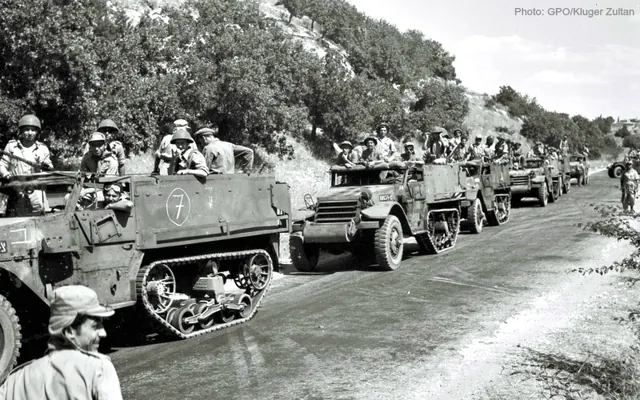
TJS S2 E39: Pre-Independence 1948 - The Battle for the Roads and the birth of the War of Narratives
1948 was a year of Biblical proportions, which means the stories told about what happened often have more power than the events themselves. This is part one of...
Play Episode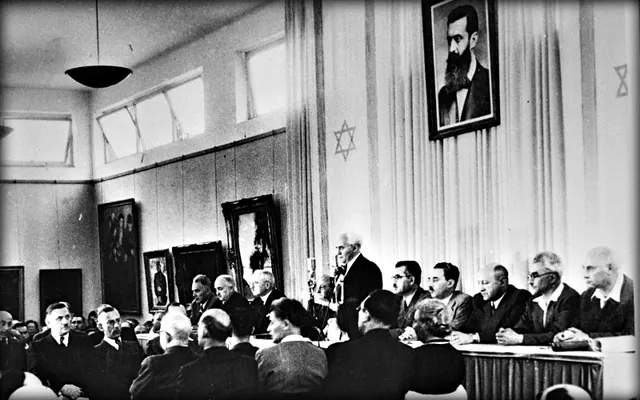
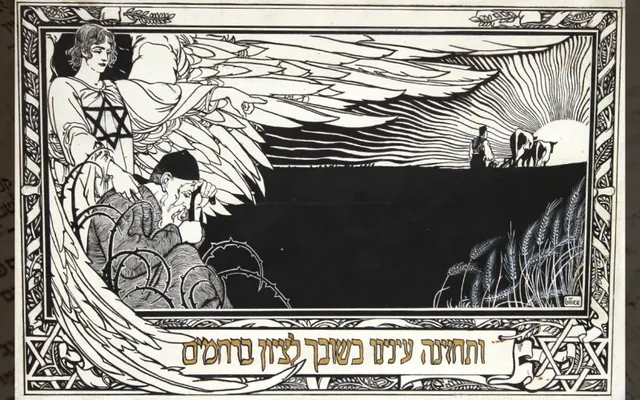
S2 Epilogue: The re-emergence of Jewish political theology and messianism in 1948
What better way to wrap up season two than to talk about the messiah? Here is an exploration of the power of the messianic idea and its centrality...
Play Episode