
TJS S3 Interlude: 9th of Av
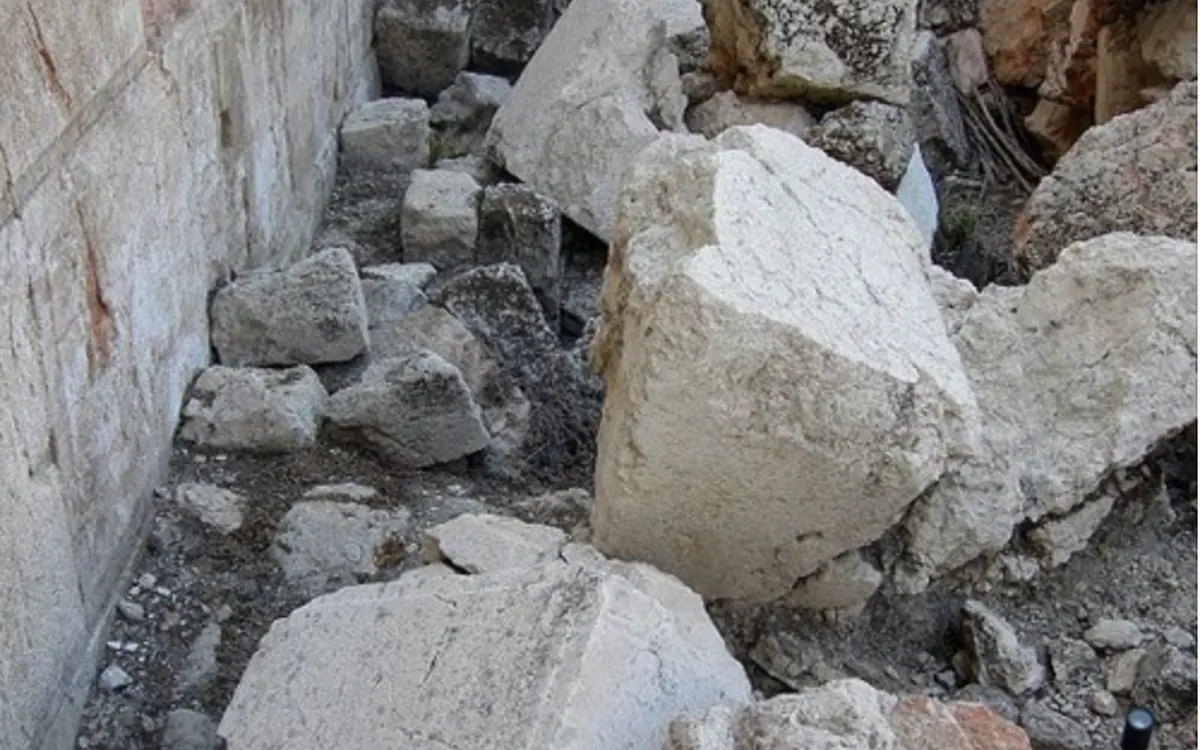
Some timely questions for a difficult day. How do we reach redemption if we don't know what it looks like? How do we transform suffering into a source of positive identity? And what does it look like to turn our mourning into joy?
About this episode
Make the most of your regrets, says Thoreau, to regret deeply is to live afresh. The ninth of Av approaches like a crater, and Rav Mike brings questions rather than a tidy thought, starting with what geula looks like, the redemption we strive for, relevant because tradition says the Messiah is born on the ninth of Av, the depth of mourning one day transformed into the height of joy. But how do we build a better world without its blueprint, and do not say humanity already knows, in religion or reason or science, since anyone who says we already know the Messiah, and once everyone agrees with me all will be well, is making a power play, and the world we dream of is bigger than the one we know. And the Jews have the Torah, true, but have you met any Jews, since from Daniel to the 1950s we do not agree on what the Torah is or asks, which is both a good thing and indicative of what the thing itself is, because any plan for redemption we could grasp would be bounded by our consciousness.
This is the power of machloket, the constructive conflict at the heart of rabbinic epistemology and perhaps the purpose of creation, since the unanswered question of Genesis is why God made the world, and the hint is that God made humanity in the divine image, then noted it is not good for man to be alone, the most autobiographical statement in the Torah, so it is not good for God to be alone, and the solution is an ezer kenegdo, one who helps by standing against, which is true machloket, as only others can see our face for us. The sages teach the Second Temple was destroyed by this very energy gone corrupt, sinat chinam, causeless hatred, the need to be right rather than to reach the truth, the inhumane power of abstract principle over organic life, the ideologue's slaughter of humans in the name of humanity. So the destruction was a gift, the gift of exile and disembodiment, since our embodied national life was too narrow to hold the wholeness of how we saw the world, and only through exile could we transform sinat chinam into machloket l'shem shemayim, by three principles: the obligation to reach my own truth and live and die for it, the belief that truth is larger than I can grasp so others must find it too, and that there is only one creation moving toward its fullness.
Exile softened the demands of embodied national life, the immediacy of kings and temples that forces a decision left or right, replacing it with the daily battle of Torah, the rabbinic project that God cares about everything and we can know what God thinks even when we disagree. Now home again, what worries Rav Mike most is that sinat chinam is as fresh as it was two thousand years ago, so he does not know what geula looks like but knows it starts on Tisha B'Av, pledging never to let the hatred of one creation into his heart. The greatest wisdom the Torah offers is how to transform suffering into a source of positive identity, since life is suffering and we must turn what life serves us into fuel, as a wounded veteran climbs Kilimanjaro and a people overcomes slavery, exile and the Holocaust to become a vehicle for redemption. Tisha B'Av is the keystone for this, built on the rejection of the land by the spies, whose failure made the people who could live in the land.
Historical mastication, chewing and digesting what life serves before we choke, has five steps. First, accept the new reality, look it in the face, since covering our eyes leaves us stuck with the unwanted image, as in Aaron's silent acceptance of his sons' deaths. Second, mourn, which belongs to any life-changing event, mourning lost possibility, the loss of what might have been, as the pain of his father's absence is that he never met his wife or children, and the three weeks build toward a cathartic cry on the ninth of Av. Third, nechama, a word that means both regret and comfort because it means changing one's perspective on what already was, comfort being the choice of life after a loss that will not change, which is why the sages concentrated the pain into a point so we never lose its preciousness yet do not become perpetual mourners. Fourth, ask not why suffering, which is disempowering, but what is this suffering offering, what new self might be forged. And fifth, just do it, extreme ownership, a life of daily action to embody the person or nation we could become.
Which loop from the past are we repeating: the Book of Judges with its battles and charismatic leaders, or more pointedly Shivat Zion, the return to Zion, Ezra and Nehemiah worth rereading for the parallels. Rav Mike ends with Zechariah 7 and 8, where emissaries ask whether to still fast in the fifth month after seventy years, now that the Temple is rebuilt, a question resonant for Israelis today. God throws it back: when you fasted, did you fast for me, or because your homes were burnt and your children taken, and now that life is better it is all good; and when you eat and drink, are you not the ones who eat and drink, meaning if you compartmentalize the world into what you do for God and what you do for yourself, you are still in a broken world. They did not learn that life in the good land is not about the good life but about moving the world forward, Israel the place to stand and the Torah the lever. The prophet's nechama is not that the fasts are abolished but that the fasts of the fourth, fifth, seventh and tenth months shall become days of joy, so we transform our mourning into joy, and this year, when the ninth of Av falls on Shabbat and we feast, we taste the world to come.
Key ideas
- We must build redemption without a blueprint, since any plan we could grasp would be bounded by our consciousness, and geula is bigger than the world we know.
- Machloket is the ezer kenegdo that helps by standing against, and its corruption into sinat chinam burned the Second Temple.
- Exile was a gift that let us transform causeless hatred into constructive conflict, yet home again sinat chinam is as fresh as ever.
- Transforming mourning into joy has five steps: look it in the face, mourn the loss, choose life, ask what the suffering offers, and just do it.
- Nacham means both regret and comfort because it is changing one's perspective on what already was, the choice of life after irreversible loss.
- Zechariah teaches that the fasts become days of joy not by abolition but by transformation, so life in the good land is about moving the world forward.
Chapters
- 0:00 Make the most of your regrets; what does geula look like?
- 2:08 No blueprint; a bigger dream
- 3:16 Machloket; it is not good to be alone
- 5:27 Sinat chinam burned the Temple
- 7:46 The gift of exile; three principles
- 9:00 Exile softens embodied life
- 11:08 Home again; sinat chinam is fresh
- 12:26 Transforming suffering; the spies
- 14:37 Step one: look it in the face
- 17:55 Step two: mourn lost possibility
- 20:14 Step three: nechama, regret and comfort
- 23:23 The preciousness of pain
- 25:34 Step four: what does suffering offer?
- 27:00 Step five: just do it
- 27:44 Which loop; Shivat Zion
- 29:55 Zechariah's question
- 32:00 Did you fast for me?
- 34:08 The fasts become joy; a taste of the world to come
Who, where and when
People
Henry David Thoreau, Aaron, Zechariah, Rav Daniel Cohen, Zev Orenstein, Jocko Willink
Places
Jerusalem, The Mediterranean beaches, The Golan, Tzfat
Texts
Genesis 2 and 6, Isaiah 40, Zechariah 7 and 8, Ezra and Nehemiah
When
The destruction of the Second Temple, The return to Zion, The fourth year of King Darius
Read the transcript
Make the most of your regrets, says Henry David Thoreau. Never smother your sorrow, but tend it and cherish it till it comes to have a separate and integral interest. To regret deeply is to live afresh. Well, I definitely have my regrets, personal and national. I'm Rav Mike Foyer, and this is The Jewish Story. Interlude, the ninth of Av. Well, the great and terrible day of the Lord is on its way. And I don't know about you, but if you're anything like me, I always feel like the ninth of Av approaches just a little bit like a crater in the distance. You feel yourself drawing inevitably toward the drop. I don't really have a neat and tidy thought for you today. But I have some questions, some thoughts, and a real urge, more than anything else, to start pushing this process a little bit further along in history.
So I'm just going to go there and we'll see where it takes us. First of all, I want to start with a very simple question. What does Geulah look like? What is this redemption toward which we're striving? And the reason it's relevant for the 9th of Av, if you're not familiar, is that we have a deep tradition from our stages that it's specifically on the 9th of Av that the Messiah is born. That somehow this day, which right now marks the height, or depth rather, of our national morning, will one day be specifically transformed into the heights of our joy. But the problem is, how are we supposed to build a better world without its blueprint? How are we supposed to bring redemption if we don't know what it looks like?
And please, don't tell me that somewhere out there humanity already knows. It's in religion, it's in reason, it's in science, it's in politics. First of all, I'm enough of a product of the postmodern age to reject out of hand many of the facile notions of redemption that are being sort of sold around on the market and are really just a power discourse. Anybody who tells you that we already know what the Messiah will be, and as soon as everybody agrees with me, then everything will be okay, is really telling you that once everyone sees the way the world they do, everything will be all right. You should move slowly backwards away from a person like that, because not only is that consciously or not a power play but I'd like to believe that the world of which we dream is bigger than the one we know so that's one thing now you might then respond to me but hey, we're the Jews, right?
we have the Torah, that's different and I'll tell you 100% true then I'll ask, have you ever met any Jews? because if there's one conclusion I can draw from the Jewish story up to this point and it's incredible for me to think that we've gone from the book of Daniel all the way through the 1950s is that we don't agree on what the Torah is, what it says, or what it's asking of us. And you know what? It seems to me that despite all the pain and grief and conflict that that has caused, it's ultimately not only a good thing, it's indicative of what the thing itself is. Because our task is indeed to redeem the world, to build it anew, without a blueprint that is handed with us on any paper that we could possibly read.
Because any plan for redemption that we could grasp would be a plan perforce bounded by our consciousness and understanding. And like I said, my dreams for Geula are much, much bigger than that. And we've spoken in many places about the power of machlokit, the constructive conflict that lies at the heart of rabbinic epistemology, the way in which the rabbis knew the world in general, and certainly the way in which they knew the Torah and how they learned it. And it's not just within the Torah. Like I said, it's a lens for the world as we know it. Machlokit, in many ways, is a driving force for creation. And perhaps even its purpose. After all, you know, the one question that doesn't get answered at the beginning of the book of Genesis is, why does God make the world?
We get a bit of the how. You know, scientists might scoff, but nevertheless. And we do get a bit of the key message, which is that God made the world. That's kind of the underlying important. But we do get a hint at the why. You know, follow this logic, and forgive me if you've heard it from me before, God makes humanity in God's own image, B'Tselem Elohim, one of the most profound and important assertions that lies at the base of the Torah. But then God promptly notes, Lo tov yot adam livodo, it's not good for man to be alone. And I think that that is the most autobiographical statement in the entire Torah. I mean, follow the logic of it. God creates humanity in God's image. It's not good for humanity to be alone.
Ergo, it's not good for God to be alone. Ergo, God needs a companion. And notice the solution for Adam is Ezer Kednegdo. When God creates Eve to stand against Adam, not just stand against, Ezer Kednegdo is one who helps by standing against. From this, we see what true Makhlod is. It's one who helps another by standing against them. It may be hard to understand what that means, but anybody who's been in a long-term committed relationship knows what that means because there's a place in which the people who matter to us are the ones who are able to say, look, I know you say you want to do that, but I know you better than that. You really don't. Look, I know you say that this is important to you and I believe that, but I know you better than that.
There's something more important. On a certain level, it comes down to the fact that you can actually never see your own face. You can see a reflection of it, but you can't see the thing itself. Only others can see our face for us. On some level, we need someone to stand against us and help us. And on some level, that's the role that humanity plays with God. You know, our sages teach that the Second Temple was destroyed by this very energy. I love asking groups of people, why was the Second Temple destroyed? Almost invariably, it really depends on the depth of their Jewish education, but the most common answer is Sinat Chinam, causeless hatred. Although, as I've said many times, and I'll put the offer out again, if you want a source sheet that will give you many more reasons in the minds of our sages about why the temple was destroyed, I'm happy to send it to you.
But the key is, this is an educational success. It's clear that in the rabbinic mind and in the culture that we've carried down from their times, that the problem of sinat chinam, of causeless hatred, which indeed made the temple burn, was the key issue at the end of the Second Temple period. And what's Sinat Chinam? What's causeless hatred if not the corrupt form of machloket, of constructive conflict? Because Sinat Chinam is the need to be right rather than to reach the truth by standing against one another. It's the inhumane power of abstract principle, absolute in its nature, over organic life, which is always somewhat contingent. It's the sectarian's all-consuming passion for bringing redemption, but only their way.
The ideologue's eager slaughter of endless humans in the name of humanity. We know this from history. It's even, by the way, the rationalists' deep need to deny anything that they can't understand. So because of that power of Sinat Chinam, of Machlok had gone off the rails, of the need to claim that the peace of the world as I perceive it is actually its whole, we were given a great gift with the destruction of the second temple. It was the gift of exile. It was a gift of disembodiment because our embodied national life was just a little bit too narrow to hold the wholeness of how we saw the world. And so therefore there was an almost endless struggle for somebody to grasp the wheel and steer the nation in the right direction.
It was only through the gift of exile that we could make the tikkun. the true fixing and transform this causeless hatred, this need to be all right which tore apart our second commonwealth, to transform Sinat Chinam into Machloket L'Shem Shemayim a deep, constructive argument for the sake of heaven and it's something which is worth understanding on Tisha B'A' because of course, the world is riven by arguments, maybe now more than ever although I'm not so sure that's not just the way it looks in the media, but there are basically three principles that allow us to transform this sort of hatred we feel for others just because they're not like us, just because they disagree, into machloket l'shem shamayim, into that as-re-connecto relationship, the helping another by standing against them.
Remember, I'm not looking for homogenous thought here. So three principles. Number one, it starts with my absolute belief that I'm obligated to reach the truth I'm capable of. And that when I do, that truth is real and essential and must be brought into the world because it's who I am, not just what I believe. And furthermore, it's so true that I will live, die, and even kill if necessary for it. That's number one. Number two is my absolute belief that the truth in reality is larger than I will ever grasp on my own. And therefore, those around me have the same obligation as I do to find the truth through themselves, regardless of how I view the truth that they conceive. That's just simply something everyone needs to do.
It doesn't mean I need to agree with them. Remember, we're talking about machloket. Number three, it's last but certainly not least, there is only one. Only one creation only one God only one reality And this is the posture that underlies the idea of one who helps by standing against That posture of helping by standing against is actually what moves that one creation toward its fullness. So like I said, our journey into exile, lo these many moons ago, softened the demands of embodied national life. that immediacy and power of kings, temples, and prophets that demanded decisions this way or that way I mean, Machlokit is all well and good but if I say left and you say right and it's a Machlokit, on some point we're either going to drift off the cliff that's straight ahead of us or one of us is going to grab the wheel so that immediacy and power was replaced with the needs of survival and repentance and all the wisdom that they offered down through the ages, through the millennia and instead of the sectarian wars that caused Jerusalem to burn from within before the Romans ever breached her walls.
Now we have Milchamda, the Torah, that passionate battle that happens every day. And I can take you to rooms filled with people who are passionate to know and embody God's will in every daily practice. Just remember that the rabbinic project is based on the notion that God cares about everything and that we as humanity can know what God thinks about every particular thing, even if we don't agree on what God says. So, by the way, I mean, exile hasn't been perfect. Let's get that clear. If you've been listening to the Jewish story for any length of time, you know, we've had our internecine struggles out here as well. But the rabbinic mind showed a remarkable ability over the last 2,000 years, not just to survive, but to thrive and actually to push this divine project forward.
Remember, the whole goal is to bring creation to fullness. One creation. That's all we get. Now, here we are, home again. I'll be marking Tisha B'Av for the 17th time in the land of Israel home or at least with one foot through the door and what worries me perhaps more than anything else is lo and behold Sinat Chinam that causeless hatred that we thought we'd fixed and transformed into constructive conflict into that posture of standing against in order to help no no that Sinat Chinam is as fresh in our hearts as it was 2,000 years ago So I don't know what Ke'ula looks like, but I know it starts on Tisha B'Av, and I'm committed to imagining my part and to listening to yours. Whether I agree with you or not, I may help you through support or I may help you through opposition, and I expect the same from you.
But my pledge today is that I will never let the hatred of one creation into my heart. So in my experience, the greatest wisdom, personal, national, you name it, the greatest wisdom that the Torah really can offer us is how to transform our suffering into a source of positive identity. And this is a critical human need because life is suffering, Your Highness. Ever since leaving Egypt, Am Yisrael has been struggling with how we as a people, and ultimately, therefore, each of us as individuals, we can't just digest what life serves us. We have to actually transform it into the fuel that helps make us who we want to be. And that may sound sort of very grandiose, but the truth is, most people are at least vaguely familiar with the transformative potential of personal adversity.
Think of the wounded veteran who loses limbs and goes on to climb Kilimanjaro, or the single mother who becomes a world-famous author or dozens of other stories that I'm sure we could all evoke. Or think about a people that overcomes slavery, exile, and even the Holocaust, and goes on to be a vehicle for redemption. Let it be soon. Let it be now. So I want to think together for just a couple of minutes about how do we actually do this? Because in my eyes, the ninth of Av is actually the keystone in our calendar for this process. It's been placed there by our sages to help us digest the suffering of our past in order to transform it into an energized future. And we really know that in its origins, because, of course, the ninth of Av has its origins in the rejection of the land.
You know, back in the earlier part of the book of Bamidbar, when Moshe sent the spies, and they came back and said, yeah, it's a good green land, but we can't go there. We're too afraid. On a simple level, they weren't the people that they needed to be in order to cross the Jordan. And so the failure and the weeping for generations, as we say, which was rooted in that rejection, it was a sin, it was a failure, nevertheless. The process which evolved from it made the people who were capable of living in the land. That very breakdown led to the resolution which was desired. So, basically, in my eyes, Tisha B'Av is all about turning Ava le Simcha, transforming mourning into joy. And I think that that energy is the origin of the Midrashim that I referenced earlier that speak about the Messiah being born on this very day.
It's why we call Tisha Bab a moed, a sacred time of meeting with God, and why in the future we will celebrate this day as a day of redemption. And I'm not passive waiting type. I don't know if we've met. Certainly not when it comes to the redemptive process. So let's just try to figure this out together. First of all, I have to admit that when I look at our historical situation in the current moment, despite my tremendous pride in the Jewish people, and my awe in the grace of God of having gotten us to where we are. I mean, I've been traveling around the country for the last few days. I've been on the beautiful Mediterranean beaches. I've been in the mountains of the Golan. I've been in the holy city of Spott.
And it's just incredible. It's incredible what's going on here. Nevertheless, I have to admit that I'm feeling like we're just a bit stuck in the mud. It's not actually stuck spinning our wheels. We're wasting energy on things that we could be doing with half the time and energy and twice the productivity. and therefore we could put ourselves to better purpose, like redeeming the world. But I feel like what we haven't done really is digest the deep wisdom of exile. We haven't been able to transform our suffering into a source of positive identity. So I want to now offer a few thoughts on how you engage in this process that I like to call historical mastication, right? Chewing and digesting what life serves up before we choke on it.
Now, on some level, the steps I've come up with are simple, but you probably know that sometimes the simplest things are the hardest to do. And anyone who's been an avil, has been a mourner, or really anyone who's lost anything of significance, knows that healing process for loss begins with two steps. Now, I say two steps because they are actually two separate motions of the heart, but often they can be so intertwined that they happen together in complex ways. The first motion is accepting the new reality, whatever it is. My Rebbe of Daniel Cohen used to say to us that the instinct we all have to cover our eyes in the face of a reality we don't want to see makes perfect sense. But it also means that we're stuck with the image of what we don't want as the last thing that we'll ever look at.
the only way that you can begin to change a situation is by looking in the face of what it actually is and accepting it it's only after that that we can talk about change because otherwise you're not changing what is you're changing some idea of what you think it ought to be biblically speaking this is the moment if you're familiar of it of Vayidom Aharon when Aharon's two sons Nadav and Avihu were burnt so to speak almost a whole offering at the end of the dedication of the tabernacle, Aaron's silent acceptance of their death is a profound turning point in the Torah as a whole. This is not a fatalistic attitude about the unchanging nature of reality. It's an honest attitude toward what actually is.
We simply have to look reality in the face. That's step one of transforming our mourning into joy. Quickly on the heels of that comes step two, which is mourning itself. Now, many people associate mourning with death, which makes perfect sense. But in reality, the mourning process ought to play an important role in any event that has changed the course of your life. I see this all the time in my counseling practice, is that people don't give themselves the space to mourn loss. A relationship which ends, a job that fell apart, homes that you move out of, any expected future, needs to be given the space of the pain of saying, wow, yeah, you know what truth is? I really wanted that to happen. I did, and it hurts that it didn't.
I'm going to look in the face the reality that it didn't, but I'm also going to let myself feel the pain. Because a velut is mourning lost possibility. The real tragedy of loss, I think, is not just in losing what we once had. It's also in the loss of what might have been. I can tell you, the pain of the absence of my father isn't so much for me wrapped up in all the good times we used to have and the fact that I can't see that together with him anymore. It's the fact that he never met my wife. He'll never meet my children He wasn at my wedding It not just losing what we had It the loss of what might have been And letting oneself feel the pain of what was and what might have been is what the 9th of Av is all about In fact this entire time this three structure is oriented toward what we call reverse mourning Usually, the mourning process begins with the intense experience of loss.
And then we gradually move toward ever lighter, both personal, psycho-emotional states, and in the structure of Jewish law, practices. I'm not going to go through the details now, but I hope you've been working your way on some level through the stages of the three weeks, pushing aside some of the aspects of joy that we express and the cutting of the hair and maybe the music, and then into the nine days with intensification of removing meat and wine from one's diet and all kinds of other things, and ultimately using all those experiential levers of our tradition to bring ourselves to tears on the ninth of Av itself. Bring ourselves to tears about something, about anything. That's my advice to you, by the way, this night above.
Cry about something. Listen, the world is so broken, it doesn't lack. You can look at pictures of the Syrian civil war. You can gaze at what's happening on your borders. You can think about whatever it is. For me, usually it's the Holocaust or videos of bulldozers knocking down the houses of Gush Katif, to be honest with you. We have to practice. This doesn't come easy. We have to practice letting ourselves feel the depth of pain which loss evokes. This is the catharsis of classic Greek theater that the sage has built into our calendar. Feeling pain and loss is something we shy away from instinctively. Therefore, a clean, healthy cry is something that needs, on some level, for some people, be learned, especially if that loss happened 2,000 years ago.
So our first step in transforming our morning into joy is looking reality in the face. And the second which comes together with it is feeling the pain of loss. And I'm sure you can see how these two could actually be an iterative process. I look reality in the face. I feel the pain. But I didn't really look it fully in the face. Once that pain intensifies, I actually realize, let myself see how profound the loss is. And then that feeling of loss deepens. And you get to the bottom. And that's, by the way, when we begin to cry. So those are the first two steps. The next is Nehama. You know, Necham is a funny word. Next week, after Tisha B'Av, we'll read the famous lines at the beginning of the 40th chapter in Isaiah, Nachamu Nachamu Ami Yomalueichem, right?
Comfort, comfort my people, says the Lord your God. Nacham means comfort there. And yet, we find that the first usage of the word, back in B'Rishit, 6th chapter and 6th line, is, That God regretted that God had made man upon the land, and God was troubled or saddened. You know, that's just a powerful image. He made God cry. There, means to regret. Now, how can one word mean comfort and regret? I know we've spoken about this a number of times before, but it's so important to internalize that dynamic. The answer is, the word doesn't mean comfort or regret. The word means to change one's perspective on what already was. I mean, regret is easy to understand. I thought it was a good idea until I did it, and now I really regret that.
I'm sure, not you, me, I can come up with a significant number of significant events in my life in which I could say that. Comfort is a little bit different. Because comfort means that I have a real loss. And it's not going to change. I now have to change myself in relationship to that loss. Am I going to choose life? Am I going to say that this is now who I am and the reality in which I live, and I will find some way to integrate that reality into my world? Nechama, finding comfort after real loss, on some level is choosing life, which is why, God forbid, there are people who are perpetual mourners. people for whom that state of loss is either so precious or psychologically necessary that they don't ever leave it and on some level they withdraw from the world and one of the great powers of Tisha B'Av is in the fact that our sages concentrated this pain into a particular point they built it in so we could be confident we would never lose the preciousness of our pain because pain is precious sometimes if you lose a loved one the only thing you're left with is the pain of their loss and you feel disloyal if you let it go But if you live your entire life and experience that loss, you're not living.
That's not really life. Choosing life is finding a way in which, as Thoreau said in the beginning, of giving the right place to that regret and pain of what might have been. So in the structure I'm building, after looking reality in the face and allowing myself to feel the pain of loss that comes with it, the next step is choosing life. making a conscious decision, not that I'm going to forget, suppress, move on, ditch my baggage, man, can't let it go, but rather I'm going to change my perspective on that loss. I'm going to reframe it in the wholeness of my life as a source of strength, wisdom, sensitivity, you name it. I mean, everybody's different and every loss offers something different. It's true that there are plenty of things in life that we need to just let them roll off our back.
They're not that significant, but there's plenty more that we cannot and should not. There are life-shaping experiences that offer us that alchemy of transforming pain into gold, mourning into joy. Now, I said that this third step is a decision of choosing life, but depending on the scale of the loss one's facing, steps one through three can function as daily, weekly, monthly iteration, and the process could last for a century. looking things in the face, feeling the pain of their loss, deciding, choosing life, that I'm going to find some way that this will make me stronger. Yes, we are in exile. I feel brokenhearted at the loss of the temple, our national home, the countless dead and enslaved of the centuries.
You have to build a structure into our life that allows us, even as we feel that pain, to accept the fact that there's a better life, which not only lies beyond it, It actually emerges out of it. The Messiah will be born on the day that we let the brokenness of the world truly break our hearts. So look it in the face. Let yourself feel the fullness of the pain and loss. Choose the life which will incorporate that loss into a new way of being. Step four actually flows naturally from here. What can I do with this pain and suffering? You know, this is how I've been taught, and really I believe we should ask the question, because in my humble opinion, the question of why does suffering happen is simply not productive.
It offers only two alternatives, neither of which are particularly empowering. Number one, there is no answer, right? The Job answer, as it were. Like, you'll just never understand why suffering, in which case, if you'll never understand, why ask? Or, what might be worse, there is an answer. I mean, could you imagine if you had a moment of FaceTime with God, and you said, listen, I just got to understand why the Holocaust and God had an answer? I don't think that's something I want to hear. So either way, the question of why suffering is disempowering. But the question of what is my response to suffering can open up entirely new horizons. What am I being called to through this pain? What powers within me and the world around me have suddenly become available through this crisis?
What new self might be forged in the fire of this suffering? Now for some people, the answer will be obvious. Others may have to hold the question for a long time, for a lifetime, for millennia. And holding a question like that is itself transformative, especially when by holding it, you can share it with others. So the last step on this part of the rant, number one, look it in the face. Number two, feel the fullness of pain and loss. Number three, choose life. Number four, ask the question, what is this suffering offering? And then last but certainly not least, just do it. It's what my good friend Zev Orenstein has taught me in the name of Jocko Wilnick. You got to say the thing in the name of its originator in order to bring redemption after all.
Extreme ownership. You are responsible for your life and no one else. commit to a life of daily action that can embody not only the lessons you've learned but the person or nation that you believe you could become and by the way in terms of our goal here on Tisha B'Av of transforming mourning into joy that honest look in the face the deep cathartic pain of loss the decision to live and the enlightening question of what to do, of what this suffering offers, and then the commitment to make it happen? What could be a greater source of joy than bringing my whole self to bear on doing what my heart tells me that I must I know this might seem a bit disconnected but I warned you from the beginning that Tisha B was just stirring the pot here in the brain of me So if I asked you what narrative loop you feel like were repeating from the past I wonder what you would say, because if you asked me, I actually have two answers that come right away, and they might actually be the same.
The first is the Book of Judges. I don't want to go too deep on it right now because I have too much to say, but the idea of this sort of chaotic mid-stage conquest, the massive battles followed by downfalls, followed by the rise of charismatic leaders, might seem a little bit familiar for anybody who knows the last 70 years of our history. But the reality is the other period is of more interest to me right now. And that's the period of Shivat Zion, of the return to Zion at the beginning of the Second Temple period. Now, many of the fundamental parallels are obvious if you think about it. And if you haven't read the books of Ezra and Nehemia lately, do yourself a favor, go back and re-read them with an eye toward the similarities to our time.
You might just find it enlightening and perhaps a little bit worrisome, I admit. And there is actually a powerful incident in the book of Zechariah that I want to end with right now. Because it bears not only on the historical period in which we find ourselves, but actually on this time of year, on the ninth of Av. So there in the seventh chapter of Zechariah, the first six lines, it says, It came to pass in the fourth year of King Darius, that the word of the Lord came to Zechariah on the fourth of the ninth month, in Kislev. So it's wintertime. And Sharez and Reg and Melech and his men sent to pray before the Lord and to ask the priests and the prophets, saying, shall I weep in the fifth month, abstaining as I have done these many years?
A little bit of context. The fifth month is, of course, Av. And what they're asking is, listen, we've been mourning the destruction of the first temple now for almost 70 years. It might even be a bit longer. we had to pin this down but 70 years or more they've been fasting on the 9th of Av for the first temple and why are they asking should I weep in the 5th month? because they're actually asking in the 2nd temple of whether such a thing can be done meaning the temple has been rebuilt it's a question that is quite resonant amongst a certain subset of Israelis today those who fast and yet when I say the special prayers on Tisha B'Av about Zion laying in waste and our gates burnt to the ground and our children scattered in exile.
It's a little hard to do in the bustling city of Jerusalem, or at least hard to do it from the heart. At the same time, it's certainly not the rebuilt city as we dreamt of it, so we're kind of in between, a very similar state. And so they ask the question, and the answer is, the word of the Lord our host came to me, now the prophet speaking, saying, say to all the peoples of the land and to the priests, saying, when you fasted and mourned in the fifth month and in the seventh month, even these 70 years? Did you fast for me? And when you eat and when you drink, are you not the ones who eat and you the ones who drink? Meaning God threw the question back in their face. It's a very different ask if the reason you've been fasting, says God, is that my presence has been pushed away from creation.
Were you fasting because of what we call that God's intimate divine presence has been blocked from the communication it so deeply desires in the world, from the relationship for which I believe creation was brought into being? Is that why you've been fasting, says God? Or were you fasting because your homes were burnt? Your children were taken? You were brought into exile and life was hard, and now that life is a significant chunk better, well then, it's all good, right? And notice at the end, And when you eat and drink, are you not the ones who eat and the ones who drink? Meaning, there's a way of life in which everything I do, the food I eat, the exercise I take, the books I learn, the words I speak are all avodat Hashem.
They're all acts of divine service. And there's a way in which I can compartmentalize and say, when I do commandments and when I pray, that's for God. But when I eat, I don't know, pasta linguine on a Thursday night with my wife, that's about me. And what God is saying is, if you can compartmentalize the world into what you do for me and what you do for yourself, well then, you're still in a broken world. It's interesting, if you follow, by the way, the arc of the rest of the seventh chapter there, there's a demand for specifically righteousness and generosity. And then there's a description of what the failure and punishment that will follow. And then it says, and with a whirlwind, I will scatter them among all the nations whom they did not know, and the land shall be waste after them with no one passing through or returning.
They made a precious land, a desolation. This is a prophecy of the exile to come at the beginning of the second temple period. At this point, it could have been that redemption was at hand, but what God's telling you, your very question tells me, you didn't learn the lesson of exile. You didn't learn the fact that living life in the good land is not about living the good life. Living life in the good land is about how Archimedes said it, that give me where to stand in a lever and I'll move the world. God says the land of Israel is your place to stand and the Torah is your lever. Now move the world forward. But instead we made the precious land a desolation. When we ate, we ate for ourselves. And when we fasted, we fasted for what we lost and we forgot about the fact that creation lost the relationship for which it was indeed created.
But don't worry, because the prophet has words of nechama, of consolation. after we come to regret that failure of consciousness and that belief that life in the good land is about the good life and not about bringing redemption well, as Harius says at the end these are the things you should do in the 8th chapter lines 16 through 19 speak the truth to one another each to his neighbor truth and judgment of peace shall you judge in your cities that's a pretty important thing look life in the face and say what's real let no one think evil of their neighbors in their heart. Get rid of the Sinat Chinam. Standing against someone in order to help them is what moves creation forward. Standing against them simply because you oppose them is what tears it apart.
He says, Nor shall you love a false oath for all these are what I hate, says the Lord. And then the word of the Lord of hosts came to me, says Zechariah, saying, So said the Lord of hosts. The fast of the fourth month, the fast of the fifth month, the fast of the seventh month, the fast of the tenth month. If you don't know, that's the seventeenth of Tammuz, the ninth of Av, the third of Tishrei, and the tenth of Tevet, shall be for the house of Judah for joy and happiness and for happy holidays, love, truth, and peace. And I want to end with this thought because the prophet doesn't tell us in the word of God that I will wipe out these fasts. You won't have to fast anymore. Notice that's what they wanted.
No, should we fast anymore? No, no. Tishabav is not going away. We're not just going to let it go. We can't drop the baggage of our history and move on into an unconcerned future. What we're going to do is transform our mourning into joy. The fast of the fifth month is going to be for joy and happiness for the house of Judah. If we learn to transform our suffering into a source of positive identity, if we can take that passionate hatred which lies in so many hearts, of Sinat Chinan, of that causeless hatred, and transform it into the power of machloket l'shem shemaim, of helping one another by standing in opposition, then we can truly transform the track of suffering and pain that we've seen for the last 2,000 years into a source of an identity that can bring redemption.
Let it be soon and let it be now. And I want to lend really with this because there's a beautiful opportunity that we're offered this year in our calendar. It happens every once in a while because this year, the ninth of all falls out on Shabbat and we'll be fasting on the 10th, therefore on the first day of the week. That means on Shabbat, when it's actually the ninth of Av, when we all sit down to our Shabbos table, if you don't normally sit down to the Shabbos table, do it this week. Sit with your friends. Have a glass of wine. Something a little bit nicer. Feast and be joyful because you'll be fulfilling the words of the Prophet Zechariah that in that moment that you're able to take joy, specifically because of the loss, not in spite of it, able to take joy on that Shabbat, which is the ninth of Av, it'll be a little bit of a taste of the world to come let it be soon, let it be now so I just want to thank a few people, I want to thank all those folks who give their hard earned money to help make this show possible to keep it free and widely available and I want to invite you to join them right now you can go to my website jewishstory.co in the upper right hand corner you'll see a button that says be a patron and you can click on through there for a little bit of per podcast support if that's too complex for you you can send me an email or find me on Facebook at Rav Mike Foyer and I'll tell you how you can dedicate a show in the honor of someone who's important in your life right now or in the memory of someone who's no longer with you in the flesh happy to do it just let me know I'd also like to thank the Land of Israel Network that's thelandofisrael.com for creating a platform that allows me to reach so many amazing people I want to thank the Pardes Institute P-A-R-D-E-S dot org dot I-L for building an educational institution that gives me the privilege to teach so many amazing Jews I want to thank you for listening.
I'm Rav Mike Foyer, and this is The Jewish Story.
More from Season 3
TJS S3E11 1945-55 part III The reorganization of American Zionism
We spoke about the suburbs and the shadows, now it is time to talk about Zionism. The 'Golden decade' was a time of reorganization in general, and particularly...
Play Episode
TJS S3 Interlude: Am Yisrael and the postmodern challenge
graphic attribution: www.flickr.com/photos/versionz/2596831861
Play Episode
TJS S3E12 The Reparations Controversy
The focus of our story has returned to the land of Israel, where it is once again a time of controversy. Despite the population growth, the economic hardships...
Play Episode