
TJS S3 Interlude Government - a crisis of faith
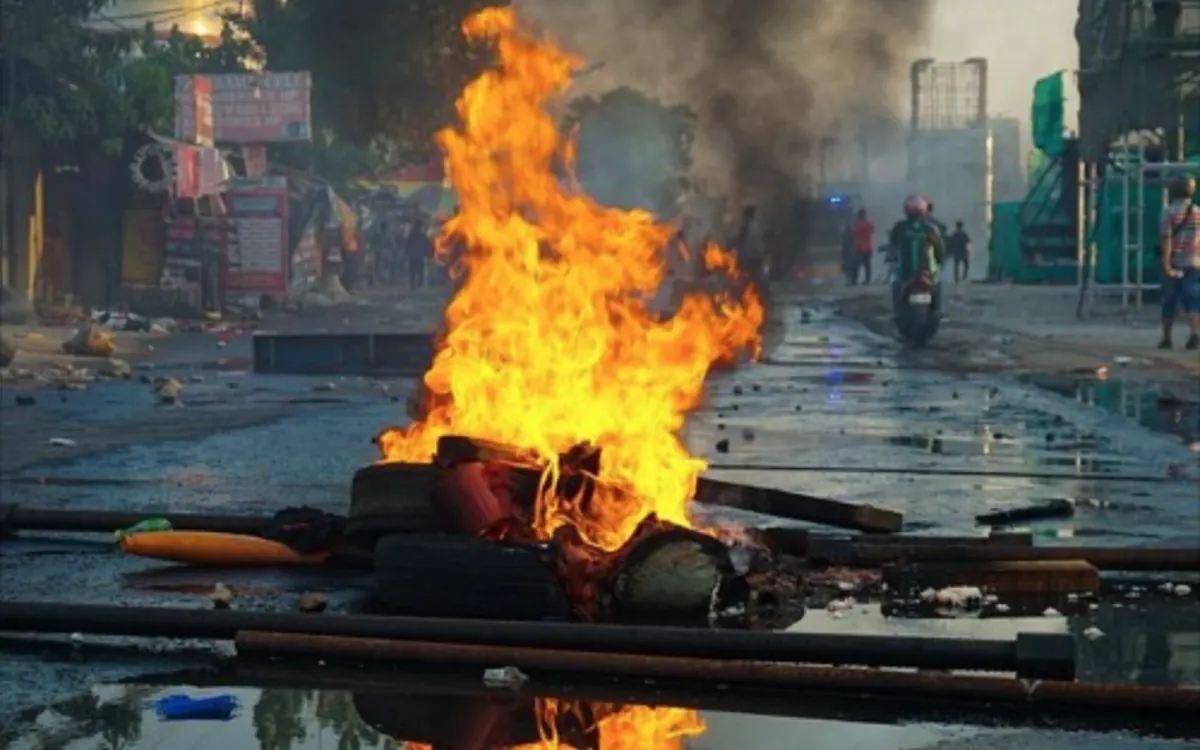
No matter where you turn, it seems that democracy is in crisis. Here is an interview with Rav Mike which touches on the global situation as well as what is happening in the state of Israel. The question at hand is - whither democracy?
About this episode
In a democracy every citizen holds office, says Kennedy. Rav Mike brings in Rabbi Adam Titcher of Pardes to interview him on why government seems to be going to pot across the globe and why liberal democracy is retreating toward authoritarianism. His controversial starting point, which drew the most pushback from students, is that liberal democracy is not a value but a tool, so if it is not serving its purpose we should question using it, distinguishing democracy as a set of values, a product of nineteenth-century liberalism with cultural assumptions about secularism and the supremacy of the individual, from democracy as a procedure by which groups negotiate over resources. The example is Hamas, brought to power in Gaza through arguably the most democratic election in the Middle East, overseen by Jimmy Carter, producing the most illiberal result, which shows the global shift toward voting for the more authoritarian-looking candidate, unlike the earlier wave of authoritarian governments that grew out of empire and revolution rather than the ballot.
The shift is visible across Europe, South America and the United States, in the cult of personality in both American parties, and Rav Mike lays much of it at the deep fear of freedom that Erich Fromm named in Escape from Freedom, a Jew who asked how a bastion of liberal values like Germany could retreat into authority and produce one of the top three most evil dictators. We live in a world of unprecedented freedom, mobility and resource, yet with it comes a fear both of what to do with freedom and of how to wield power, making charismatic personalities who give a hierarchical framework deeply attractive. Censorship today is not the limitation of information but distraction and the leveling of the moral horizon, a news feed that juxtaposes a friend's breakfast, a massacre and a kitten so that we are desensitized and internalize a horizon with no vertical. The global sense of mutual responsibility is good news, but it also brings a fear of insignificance, the young idealist overwhelmed by the scale of the problems who gives up before starting, so that recycling or a small moral act seems futile, yet it matters because we do not need the whole world in line, only a critical mass of consciousness.
Turning to Israel, there are two challenges. The systemic one is the drift toward a third round of unresolved elections in under a year, which Rav Mike roots in the constitutional crisis and the parliamentary democracy adapted to a Jewish personality that splits rather than lumps, a natural outgrowth of the culture that produced Zionism but at a crisis point of evolution that is also an opportunity. The political one is Prime Minister Netanyahu, whom Rav Mike discusses carefully given the prohibition against cursing the leaders of Israel, the first sitting prime minister served with indictments on three cases, Case 1000 gifts from Arnon Milchan, Case 2000 favorable coverage from Yedioth, Case 4000 benefits to Bezeq for positive coverage, amounting to bribery, fraud and breach of trust; yet the counter-narrative is a coup by unelected media and judicial forces against the longest-standing and arguably most successful prime minister, and Rav Mike notes it is possible all the charges are true and it is still a witch hunt, since few politicians could withstand such scrutiny.
The structural and political problems meet in the lack of collective responsibility: if we had it, Kennedy's point that the government we get depends on how we fulfill our responsibilities, we would be out demanding a better system rather than protesting for or against Bibi, since Rav Mike has deep faith in the seichel of Am Yisrael to figure out a better way to govern within democracy. The problem is there is no public discourse, only a discourse of power-seeking individuals lacking any unifying narrative other than survival, the only thing holding Israeli society together, as his friend the army officer admitted that the Auschwitz missions convey the message that there is Auschwitz or the IDF, a paucity of imagination that reduces the people to a clenched survivalism, which is why a strongman like Bibi, who gets it done and found friends where none were expected, thrives on the stoking of existential fear, a tool of authoritarianism that lets people avoid their responsibility by reducing the world to a black-and-white fear-safety equation.
The world judges Israel by the ideal that it is the only democracy, yet it falls short because democracy is a tool, not a value, and the liberal myth that it is either democracy or Hitler is false, since the Torah offers a deeper model. The Zionists were the most successful and ruthless nationalist movement the world has seen, recreating a people, reviving a language and seizing a land, an astounding accomplishment in which Rav Mike sees the hand of God, but if we keep going down the path of being just like everybody else only more so, look where everybody else is going. The alternative is to dig into the Torah, both halachically and into its narrative and structures, where the division of powers originates, king, high priest and court, with deeply anarchist elements too, each under their own fig tree, and to recognize that the Torah is a profound articulation of human psychology, the need for the authoritarian parent-figure counterbalanced by the Torah and the legislature. The call to action is to learn, to cultivate the critical mind, to swallow neither liberal nor authoritarian sloganeering whole, and to create the spaces to tell a multi-voiced story together of what a Jew is and our purpose, since the strong survive but the wise thrive, and we are a people of wisdom.
Key ideas
- Liberal democracy is a tool, not a value, and the global retreat toward authoritarianism comes through the ballot, driven by the fear of freedom.
- Censorship today is distraction and the leveling of the moral horizon, and the fear of insignificance makes people give up their responsibility.
- Israel faces a systemic electoral deadlock rooted in a parliamentary democracy adapted to a splitting Jewish culture, and the Netanyahu indictments.
- The charges may all be true and it may still be a witch hunt, since few politicians could withstand such scrutiny, and the last empire fell on corruption.
- A strongman thrives by stoking existential fear because survival is the only narrative holding Israeli society together, a paucity of imagination.
- The alternative to being just like everybody else only more so is to dig into the Torah's narrative and structures and tell a multi-voiced story together.
Chapters
- 0:00 Every citizen holds office; bringing in Adam
- 1:05 Why is liberal democracy retreating?
- 2:13 Democracy as value versus procedure; Hamas
- 5:33 The fear of freedom; Erich Fromm
- 8:45 Distraction and the leveling of the moral horizon
- 10:56 Mutual responsibility and the fear of insignificance
- 12:02 Recycling; a critical mass of consciousness
- 14:17 Israel; the systemic electoral problem
- 16:28 Netanyahu's indictments
- 18:34 A coup or a witch hunt?
- 20:45 The lack of collective responsibility
- 22:52 Auschwitz or the IDF; the survival narrative
- 24:00 The strongman and existential fear
- 25:10 Judged as the only democracy
- 26:22 The most successful nationalist movement
- 27:27 Digging into the Torah; the call to learn
Who, where and when
People
Rav Mike Feuer, Rabbi Adam Titcher, John F. Kennedy, Erich Fromm, Benjamin Netanyahu, Donald Trump, Adolf Hitler, King Herod
Places
Gaza, Germany, Israel, The United States
Texts
Escape from Freedom, The Netanyahu indictments
When
2006 CE: Hamas elected in Gaza, 1936 to 1977 CE: Mapai's rule, 2019 CE: the electoral deadlock and the indictments
Read the transcript
For in a democracy, says John F. Kennedy, every citizen, regardless of his interest in politics, holds office. Every one of us is in a position of responsibility, and in the final analysis, the kind of government we get depends upon how we fulfill those responsibilities. You know, I can't really add so much to that. I'm a man who knows that life gives you exactly what you put into it. Because I'm Rav Mike Foyer, and this is The Jewish Story. Interlude. Government. Crisis of faith. You know, I'm kind of on a string of every once in a while you've got to step back and take a look at the big picture, but I feel like it's seasonal. Winter comes in, things slow down, the mind just isn't clicking on the same level, and I just have to take the big picture view.
But it's best not to do these things alone. So instead of just launching into a diatribe about why in the world government seems to be going to pot all over the globe, I've decided to bring in a partner, a friend, a colleague. I'm sitting here with Rabbi Adam Ticher, Director of Digital Media at the Pardes Institute of Jewish Studies, and he has agreed to take the lead in interviewing yours truly on some fundamental questions about government all over the world. Hi, Adam. How are you doing? Hey, Mike. Thanks for having me. It's great to see you in a different context. Usually we're in the office, we're chit-chatting, or you're helping me take over the digital media of the world, and now here we are in my world.
Exactly. You feeling comfy? Very nice. So we're going to do a formal switching of the microphones, which I find really helps in terms of switching of the microphones. You ready to take over? Yes. All right, here you go. Watch this. Ooh, this one's heavier. It's amazing how that happened. Yeah, it's unbelievable. Okay, I am all yours. I think something our viewers, our listeners, excuse me, would be very interested in knowing with the recent news of things happening in Israel and also in America, is what's going on with democracy? Why is liberal democracy not advancing in our 21st century? Rather, it feels as if it's retreating to a more authoritarian form of government as we saw in the 20th century. Even before I get to answering the question, I want to say, we had a panel here at Pardes last week, two weeks ago.
I can't quite remember when it was. And I threw out a couple of somewhat controversial notions for our students. But the one, surprisingly enough to me, that got the most sparks was when I said that, you know, liberal democracy is not a value. It's a tool. And if it's not serving its purpose, then we ought to begin to question whether we are sort of interested in still using it. I just thought that was a given. But you would not believe the level of pushback I've gotten from our student body. So it's important to make a distinction in that light between democracy as a set of values and democracy as a procedural approach to governance. Right. Just because you claim to be a democracy, you hold democratic elections may not mean necessarily you are holding democratic values as a society.
Correct, but my point is that the idea of democratic values, liberal democracy, is a product of 19th century liberalism. And it has a whole host of what's called cultural hegemonies. Assumptions about a secular worldview. Assumptions about the supremacy of the rights of the individual. Assumptions that the collective comes into being by consent of the individual. These are assumptions which are based on a very specific culture and time and may not map at all onto the world which we live in. So that's the first thing to put our finger on. Whereas democracy as a procedure, meaning groups of people come together and buy into a system that allows them to negotiate over resources, methods of governance, you know, legislature, etc.
That is more or less alive and well. Let's take an example for our region here, right? Hamas. Hamas is, if people are unfamiliar, which would be surprising to me, but we'll let it go. The nationalist version of the Islamic Jihad movement, which is geographically based in Gaza. They are historically an offshoot of the Muslim Brotherhood in Egypt. But they have mixed nationalism, Islamic messianism, to the extent that it puts the settlement movement to shame. Let's just face it. Sorry, I wasn't making a comparison there. If you want, you can send me an email and rant at me for even implying that. But why am I bringing them up? because Hamas was actually brought to power in Gaza through what was arguably the most democratic election ever to occur in the Middle East.
You remember? Jimmy Carter, for God's sake, oversaw the process. People went to the ballot, and they voted their conscience, and you got the most illiberal organization you could ever imagine. People began to shut down liquor stores, force women to cover themselves in public, that will literally throw gay and lesbian folks off of rooftops in order to demonstrate their deep displeasure of the lifestyle, as we call it. And yet, procedurally, well, if that's what people want, that's what Kennedy just said. That's exactly what they'll get. So that's part of the context, I think, when we look at what is indeed across the world, you could call it a retreat, you could call it a move forward, let's just say a shift toward authoritarian government.
Or voting for the more authoritative-looking candidate, maybe. Yes, and that's critical. It's the voting force, not like in, say, the 30s or 20s or 30s, even though, of course, Hitler famously was voted into power in the Weimar Republic. But most of the authoritarian governments of Europe weren't voted in at all. They were outgross of empire, monarchy. In Russia, there was the revolution, etc. The Hitler example, which I don't want to go to right now, though it should be kept in the back of the mind, is actually the exception to the previous wave of authoritarian government. Whereas today, exactly that. You can see it all over Europe. You can see it in the United States. South America. In South America, for sure.
You can see it in the United States with the rise of the cult of personality around President Trump. Many places. And Trump doesn't own that either. You can see it in both parties, if you will. And a lot of that, I think, can be put squarely at the plate of the deep fear of freedom that human beings hold. Have you ever read Eric Fromm's Escape from Freedom? I have not. So we're going to stop the show right now. You're going to take, I don't know, a day and a half. You're going to read it. I'm kidding. But everyone listening should actually know that if you want to understand the world in which we live, you should read Eric Fromm's Escape from Freedom. Fromm was, we spoke about him, gosh, I wish I knew what episode because I would bring it back up.
We spoke about him somewhere at the end of season two, maybe the beginning of season three, that Fromm was a Jew. He actually grew up in a religious world. He lost his attachment to Torah in World War I, which was very true of many of his generation. But he was one of the great students of the students of Freud. and the founder, really, in many ways, of the whole field of social psychology. And so Freud's great, sorry, Fromm's great question was, how do you take a country like Germany or like America or like Israel, which has a history of being a bastion of what we would call liberal democratic values? And in Germany, it wasn't that there was such a deep history, but they were the generator of such values.
And suddenly, instead of moving inevitably toward freedom, which was the assumption of the progressive world of 19th century liberals, that humanity was on its secular messianic arc toward freedom, it retreated into authority. And it produced the world's, well, one of the top three most evil dictators. You could put off their worth, Stalin and Mao. Jews, we have a personal thing with Hitler. But on an objective scale, I think that there's a lot of competition to be made. They're all around the same time. Yeah, exactly. And that was the last wave. and I would rather not see the next one and I plan on living for quite some time so therefore it behooves us to ask the question and I think part of the answer is we live in a world of unprecedented freedom mobility, communication resource, you and I in particular granted let's not forget that half the world still lives largely in abject poverty but because of that freedom there's a tremendous fear not just the existential fear of once I can do whatever I want what do I do Which needs to be addressed We come to that specifically in the case of Israel But there also this deep fear of power How do I actually wield this power?
So therefore, charismatic personalities, which can give us a hierarchical framework within which to exercise that power, are deeply attractive. Because they allow us to maintain our personal power and they fit it into a hierarchy, which gives it not only purpose, but application and gives it focus. You know, don't forget that we live in an age in which censorship and the control of the mind is no longer about the limitation of information. Right? That's the old world. You know how you do censorship in today's world? Distraction. Distraction and also what's called the leveling of the moral horizon. I wouldn't accuse you of having a smartphone, but if you had such a thing, Now, imagine you might have had the experience of flipping through your news feed and seeing, oh, that's what Susie had for breakfast.
Oh, that's that picture of the kids I took last year. Look, they killed how many people in Syria? Oh, Ebola is going back in West Africa. Oh, Trump. Oh, you see what I'm hearing? And then, oh, look, a kitten playing with a slingshot. And it's a leveling of the moral horizon. And we're desensitized. Yes. Because we're seeing it. It's not just desensitization. There's an internalization of a moral horizon which has no vertical. This might be a random thought, but I remember with the big tsunami in 2004. Oh, gosh. Quarter million people killed. Tsunamis have always happened. For sure. This was the first one, I think, where we actually saw it unfolding because of social media, national media. And now tsunamis are happening all the time that we see, and we just go about our days.
Yeah, it's like, ooh, see that picture from Fukuyama? That was dense. It's terrible. 100 years ago you'd read about it in the newspaper four weeks later you're touching on my geology side I should know there's an amazing I'm going to keep quoting books now about the world's largest explosion ever experienced Krakatoa, the volcano that blew up in the exact, the Straits of Sunda around the Sumatra same spot and that was the first global event because then Reuters media had come into being but there it was like cables and boats and people running on fast horses Or some people just didn't even know it happened. Most of the world didn't know. But yes, your point is well taken. And on one hand, that's good news for the world.
Because the sense of global experience opens up a sense of mutual responsibility, which paves the way for contemplating not just different forms of governance, but different levels of interaction and responsibility. That quote that I gave at the beginning from Kennedy is that everyone of us is in a position of responsibility. He's speaking on a national level. And that's the fear, I think. yeah that's what i'd rather give up to my leader than than taking it on for myself it's not just the responsibility it's also the sense of insignificance when i interact with some of my students here the younger ones in particular millennials so-called one of the things i hear is like i had a conversation with a young woman the other day who said i was a fiery idealist for at least a year but i've given up and part of me wanted to just say listen come back to me in a decade when you have some life experience, please.
But the other part of me was really sad because you know what caused her to give up? She became a fiery idealist. She began to look into the problems that she thought were important. And since she lives in 2019, she was immediately overwhelmed by the amount of information and the specificity and therefore the scale of the problem. And she gave up before she ever started. Too many problems to tackle, maybe. It's not just too many, it's just each one's too big. I mean, there's an app out there that can tell you exactly how many global slaves work for you in order to produce the lifestyle that you so graciously pursue. You know, you hear that? You can't fix that. You could walk around barefoot, but if you want to wear shoes, they're going to come from somewhere.
And most of that is going to be from Southeast Asia, where a bunch of little children are packed into sweatshop factories to produce them. It's not just Nike, although they probably deserve the bad name. There's a sense of conformity that you have to accept. That's the fear of freedom, because that level of responsibility you simply can't take. On the other hand, we see today with the sort of outrage around the climate crisis, there's an awakening of, well, okay, but I'm going to stop using plastic forks. And I call this the sort of moral nexus of decision making because, frankly, let's talk about recycling. Do you recycle? Yes. So do I. And yet we both know that, let's just go this way, two-thirds of the planet doesn't know what recycling is.
Fair statement. Okay. Yeah. Yeah. So and let's say two thirds of the remainder that knows what it is, has no actual infrastructure in order to do it. OK. And then two thirds of those, probably more, who know and have the infrastructure don't. So that's being generous. We'd be down to less than, you know, I do a third of a third of a third. So you're telling me that me, it makes a difference if I put my bottles in that little cage there. Plus, you know, who knows whether it's actually getting recycled, you know, probably not. And you know what my answer to that is? Yes, it matters. It matters both on a moral level, that a human being should never lose hope that they have the ability to embody their values and actions, but it also matters on the educational level because we don't need the whole world to get in line.
What we need is a critical mass of consciousness in order to get behind it. So let's just put our finger on that as, say, the global scale. On the global scale, I think a lot of that retreat is a retreat from the responsibility, on one hand, that comes with the awesome power that the individual wields today on a greater scale, at least in our slice of society, than they ever have. At the same time, a sense of strange powerlessness that goes with it, which is why it's all but intoxicating to watch in my news feed this guy who tells me how it's going to be and who wields real power. So that's one skill. I'm bouncing back to you. What's the next skill you want to look at? Because I think there are all some practical questions people want some insight on here.
I think what our listeners would also enjoy is sort of a bit of background on what's going on in Israel at the moment with its democracy. And if you could just share a couple bits of information in case someone may not have read the newspaper. Sure. Well, there's two challenges we face. One is a systemic challenge, meaning we are looking like we're going to head to the third round of unresolved elections in less than a year. as we say here in Israel, which I've never actually been able to determine why third time is ice cream. But basically, it's not third time is the charm. It's just third time is likely going to result in the same thing. So that's one side. And that I would put my finger. First of all, people should go back and listen to the early episodes in this series on the constitutional crisis and the fact that the structure of government that we have today is a direct outgrowth of the organic process that produced the Zionist movement and a certain type of European parliamentary democracy that was adapted to the, let's say, Jewish personality.
Jews are splitters, not lumpers. We divide along ideological lines at a sneeze. Some people say that's an Ashkenazi problem. I'm not so sure that's true when you go to a neighborhood and there's a Moroccan, Syrian, Iraqi shul, like side by side. But you know what I'm talking about? Or two Yemenite shuls. Or two Yemenite shuls right next to each other because there's a different Nusakh or the Arab was from here and not from there. so nevertheless it's certainly a Jewish problem we know it all the way back from the destruction of the second temple for goodness sake so giving Jews parliamentary democracy might not have been the best method to approach but it was a natural outgrowth of the culture which produced Zionism but you know what if you can't evolve then you'll be gone and we are at a crisis point of evolution structurally which is good news in my opinion because it's an opportunity so that's one side of the problem Maybe we'll come back to it.
But my guess is you were more referring to the immediate sort of political woes of our personal strongman, Prime Minister Benjamin Netanyahu. Now, I want to walk a careful line here because I believe it's very important. It's also a Torah-level prohibition not to curse the leaders of Israel. And I do want to say that if we say in general that you can't judge a person until you've walked into their shoes, so I think that when we speak of our leaders that like a kol shechem It all the more so true Nevertheless just on a basic level informationally so we have a sitting prime minister for the first time in the history of Israel who has been indicted by the attorney general or at least he's served the indictments.
There's some technical issues around whether he's actually been legally indicted because there's no Knesset to receive the indictment. But he has been the published indictments from the attorney general on three different cases, which basically boiled down to an accusation that he's damaged the image of public service, I'm quoting here, and the public's trust in it, that while serving in public positions, he has received gifts and benefits, basically in return for favors. That's the Hollywood producer, Arnold Milchan, that's Case 1000. Case 2000 is that he has used his influence to gain favorable coverage from Arnold Moses, who's the head of Idiot Ahonot. And case 4000 was that he basically is advancing certain government decisions that have benefited the controlling shareholder of the Bezek telecom giant in exchange for, once again, positive coverage from the news site that he owns.
So we could just say bribery charges. It's bribery, fraud, and breach of trust. Those are the three. Bribery, fraud. Well, corruption, and this is kind of part of the story here. I don't like to say that he's being indicted for corruption, because the reality is, if you want to indict politicians for corruption, we can line them all up against the wall. And that's part of the problem that's happening, is that the counter-narrative is that this is a coup, an attempt to unseat the longest standing, and depending on what your measures are, some people will say most successful prime minister that Israel has ever known, a coup by non-elected forces within government and society, that being the media and the judicial legal system.
Why are they doing it? So we can get into the whole backstory. People who have been listening to the Jewish story for a while know that there's no love lost between left and right here in our fair country, just as we see the parallels, which it's worth putting the finger on now, between what's happening between the Democrats and the Republicans in America. It's astounding. I, way back in season one, made some jokes, which I got a little bit of heat for about the comparison between Bebe and Herod. Because the thing that they both have in common is that they've mastered the art of being a client state. Which is, there are two skills you need to be a client state. You know what they are? In case you're ever thinking about going into the industry.
Number one is you need to just build, build, build. Number two, you need to be able to talk out of both sides of your mouth with no shame whatsoever. And they both mastered that. And he does it in two languages. Yes. Herod likely did as well. I mean, And so those skills have served him quite well in building a somewhat startling parallelism to President Trump in America. And I'm not going to go into the parallels now because we want to speak about Israel. But this is what we're facing. First of all, there's a structural problem in government, which I would say is an evolutionary issue. that if we had some sense of, once again, to go back to that Kennedy quote, of collective responsibility, remember that he says the kind of government we get depends upon how we fulfill those responsibilities.
And if we had a sense of collective responsibility here in our fair country, we would all be out on the streets not protesting for Bibi or against Bibi. We would be out on the streets saying, this isn't working anymore. We want our leaders to sit down and figure out a better system. I'm sorry, I have a deep faith in the ingenuity of humanity and an even deeper faith in the Seychel of Am Yisrael, in the Jewish Yiddish cup, as they call it. You're telling me we can't figure out, even within the bounds of democracy, a better way to govern ourselves? I find that hard to believe. And even if it takes us a generation to do it, then at least putting that squarely in the center of our public discourse. The problem is we don't have public discourse right now.
We have a discourse of individuals and power-seeking for all kinds of reasons, not the least of which is that we lack any unified narrative other than survival that will allow us to even speak to one another on the same plane. And that's really where I see the two meet. Like, how is we ended in a situation where structurally we have this problem, and politically, meaning we have a sitting prime minister who's being accused. And I want to be clear, I think that it's possible that all these things are true and that it's still a witch hunt. because like I said, I think many people would agree with me that there are very few politicians of stature who could stand up to the level of scrutiny that he's been subjected to and come out without something that you can indict them for and that's a sad fact it's a sad fact of many things and let's not forget that the last sort of great empire that Israel knew in governance was the Mapai Ben-Gurion's sort of left-wing party who ruled the country from, let's say we'll go from pre-state from 1936, even though it was probably significantly earlier, until 1977.
So you're talking about almost 40 years of rule. And you know what brought them down in the end? Corruption. It was just nepotism and the sense that they controlled everything, so why not get fat on whatever you can. I mean, it was more than that, but it was a big part of it. There's something about the need to fatten oneself that either draws people to politics or strikes them once they're there. The problem here is not Bibi per se. But it seems like there's a wound in the way things are being run, and the people can't process surgery right now. They just need to patch it up. That's why they're not out in the streets demanding an overall change. And that goes to the survival narrative. As far as I can tell within our country, the only narrative that holds together the bulk of Israeli society is the sense of survival.
I have a good friend who's a career officer in the Army. recently was part. The army sends, as do the high schools we spoke about this a couple episodes ago, sends regular delegations to Auschwitz and other sort of death camps within Poland, etc. So I asked him, why do you think the army does that? His response was, well, I'm an officer, I need to be able to help my soldiers relate. And I said, okay, but why do you need to help your soldiers relate? Like, why is that part of the army's mission? I thought the army was like fighting wars. And so eventually I got him to admit, accept the fact that it's very clear because the message the army wants to convey is there's only one or two things. There's Auschwitz or there's the IDF.
And while I understand the equation, and I would for sure choose the IDF over Auschwitz, let's not, you know, I think it's such a paucity of imagination to think that the only option we have as a people is a clenched sense of survivalism. Existentialism. Yeah. All the time. Which is why, by the way, a strongman like Bibi, because let's face it, the guy gets it done. our country right now is thriving in a region where most of the states around us are tottering if not collapsed where we have an unbelievable array of enemies and yet he's succeeded in finding us friends where no one ever really would have thought to look for them he's got what everyone thinks about what's happening in American politics he's got the strongest and closest relationship to an American president ever in Israeli history which is producing direct benefits to our ability to assert our sovereignty in our land.
Again, if you want to tell me that that's not what you want, fine, I'm not saying yes, or just you need to put the facts on the board. And yet, here he is, on the ropes, and people aren't necessarily out there fighting for the values that he represented. They're fighting for Bibi. Bibi. Why? Because it's psycho-emotional thumb-sucking. They're scared what's going to happen if Daddy goes away. Right. And that's because he has mastered the stoking of this narrative of existential threat. He pointed toward the Israeli Arabs in what I feel to be shameful ways, even though they help by electing leaders who support terrorism. Nevertheless, the stoking of fear is one of the tools of authoritarianism, which shows that we're not having a real discourse.
People want to avoid their responsibility, and the easiest way to avoid one's responsibility is by reducing the world to a black and white fear safety equation So here like I said my guess is that things are going to get worse before they get better It might behoove us, having just stirred a dirty pot, to try to think about, well, okay, but what's that better look like and how do we make it happen? So I'll stop there and I'll bounce the ball back to you. So one of the things to think about after what you just said is the world has a perspective, I think, of how Israel should govern itself. Oh, yeah. A lot of judgment. And what the ideals of Israeli society should be because of this notion it's the only democracy.
Yes. While our neighbors might be democratically voting some of their elected officials. Yes. They're far from democratic, both in procedure or in value. True democracy is here in Israel as the world understands it and views it. Why then do we seem to be failing to live up to those expectations and ideals? Good question. And why, you said people are out there, let's say we're supporting Bibi. Why have we fallen into that trap then of needing the authoritarian to get us out of the mess? Great. That's a good question. I'll answer it this way. I think that, like I said earlier, that democracy is a tool, not a value. And if it's not working, then we should reconsider. Now, that doesn't mean that I think that we should become a fascist dictatorship.
That's part of the mythic narrative that the liberal world puts out there. It's either democracy or Hitler. whereas the Torah offers us a much deeper and more complex model and in the end of the day if we don't return to ourselves as part of our return to our land then we will simply become we say the Jews are just like everybody else, only more so right? so lo and behold, nationalism is born in Europe in the 19th century European romantic nationalism you know who the most successful and ruthless and powerful nationalist movement the world has ever seen? You know who they are? Who are they? The Zionists. There's no question. Just think of it. They recreated a people out of a scattered diaspora. They revived a national language.
They seized a chunk of land through both legal purchase, international diplomacy, and war, and have established a thriving nation state in the heart of a region where the vast majority of the population weren't born here. that's an astounding accomplishment which we should be deeply proud of I personally think I'm deeply proud I find it moving and in person I see the hand of God all over it but the problem is is that that's where we have to take the other side of ourselves and say but you know what truth is we're different we're Jews there's two sides to the Jewish story we're just like everybody else only more so look we want nationalism I'll show you nationalism you want liberal human universalism I'll show you liberal human universalism right but then there's this well what does it actually mean to be a Jew in the world and that's where if we keep going down this path of being just like everybody else well look where everybody else is going right now that's where we started I'm not interested in that I'm not interested in that for me personally I'm not interested in that for the world the alternative then is to dig deeply into the Torah not purely in a legalistic halachic sense but also into the narrative and the structures lo and behold you'll find you know what the origins of the division of powers within governance are?
it's in the Torah you have a king you have a high priest you have a court you have the you know landed you know and there's also deeply by the way deeply anarchist elements in the Torah which is every individual under their own fig tree and their own vine meaning this whole question of whether a king is even a good thing but more than anything else since we don't really have the time to go through the depth of analysis that it would take to think out how it would look to revive the structures of the Torah within the context of sort of modern political theory and culture and the very deep importance of the individual I'm not erasing that, but what I would say is that the Torah is many things. One of them is a profound articulation of human psychology.
And the need for the authoritarian figure, the parent figure, both psychologically and practically in order to focus power, is what a king is. You see it in its origins. The Torah says, you want a king like the nations around you? What's that? The answer is because it's a general human need. But that is counterbalanced in our tradition by the Torah and the legislature, the oligarchic legislature. It's a complex thing, what exactly is the Nehren is. But beginning to return to the dynamics of how do we find these different elements within society and give them their right form depends upon some level of unifying narrative. And if that unifying narrative is going to be survival, then I think that the strong survive.
But you know what? The wise thrive. And we're a people of wisdom. Strength is not our strong suit, so to speak, even though we've specialized it for the last hundred years. It's time to move forward, not move on. I'm not willing to give up the strength. I'm not stupid, nor am I naive. Also, I plan to reshape the whole world. But it needs to start within. And so on that level, the question becomes, what can you or I do about it, right? Is there a call to action, let's say? There's definitely a call to action. There's always a call to action. First and foremost, learn, people. Learn. don't swallow the sort of liberal democratic speak for granted and don't swallow the sort of authoritarian fascist sort of like sloganeering, you know, whole cloth either.
You must cultivate your critical mind and you must accept the fact that without a combined narrative, without learning to tell a story together, which isn't monotone, it's multi-voiced, it's multifaceted, and I hope anybody listening now who's been a listener for a while knows that I value, that every real story, every good story that we love is complexed. There's darkness and light. There's us and them, but then there's just we. There's all those beauties of human experience. But if we don't begin to create the spaces in which we can speak to each other about what is a Jew, what's our purpose in the world, we don't evoke our mission, both from our classical sources and from looking around the world today, well, then we'll be just like everybody else, only more so.
And when I look around at where the governmental systems of the world are going, I'm not so sure I want to lead the pack on that one. Anything else? Last questions? It was good. I think we've done fair justice. Okay, then what we're going to do here is we're going to switch watches. We're going to hand the microphones back. First, I want to say thank you. I really appreciate it. And maybe we'll do more. This is very enjoyable. We'll get some feedback. Folks, give me some feedback. If you like this format, I happen to know where Adam works. So I can always corral him into a half hour of well-spent time. and as long as we're at, I want to thank all the folks by the way that are joining in the webinar, you should know we're full up, if you're interested in getting access to the content of the webinar, be in touch with me, get me at ravemikefoyer at gmail.com you can get me on Facebook lots of amazing things happening, Hanukkah is a big time for me and I'll make you a promise now, if you send me an email I will send you back a single link with most of the Hanukkah content I've ever created, it'll keep you busy from Rosh Chodesh all the way through the end of the Chag and I promise it's worthwhile I also want to thank the folks that give their hard-earned money to make this show happen, to keep it free.
We are in the debate process of whether there's going to be a Season 4 or not. So I want your opinion on that. Not only your opinion written, but the biggest vote in favor of Season 4 could be putting your money where yours are. So you can go to my website right now, juicestory.co, and there's a button in the upper right-hand corner that says Be a Patron. You can click on that and follow through for a little bit of per-podcast support. I'm also happy for dedications. People that are with you today that you want to love and honor. people that are no longer there that you would like to remember, you send me an email or a personal message on Facebook, and I'll shoot you back the details of how to do that.
I want to thank the Land of Israel Network. That's thelandofisrael.com for creating a platform that allows me to reach so many people, fantastic people, all over the world. I want to thank the Pardes Institute, pardes.org.il, for building an educational institution that gives me the privilege of touching the hearts and minds of Jews from all over the world. And I want to thank you for listening. I'm Rav Mike Boyer, and this is The Jewish Story.
More from Season 3
TJS S3E18: The Eichmann Trial
The Holocaust was so dark and vast that the Jews struggled to integrate it into their consciousness, despite the hundreds of thousands of survivors in their midst. One...
Play Episode
TJS S3 Interlude: War, what is it good for?
Sometimes in life, and in history, it is time to step back and reflect. I have seen five rounds of conflict since I moved to Israel, all of...
Play Episode
TJS S3E19: The Samson Option
In the first decade of the state, Prime Minister Ben Gurion was haunted by one thought - that a second holocaust could come at the hands of Israel's...
Play Episode