
TJS S3 Interlude: War, what is it good for?
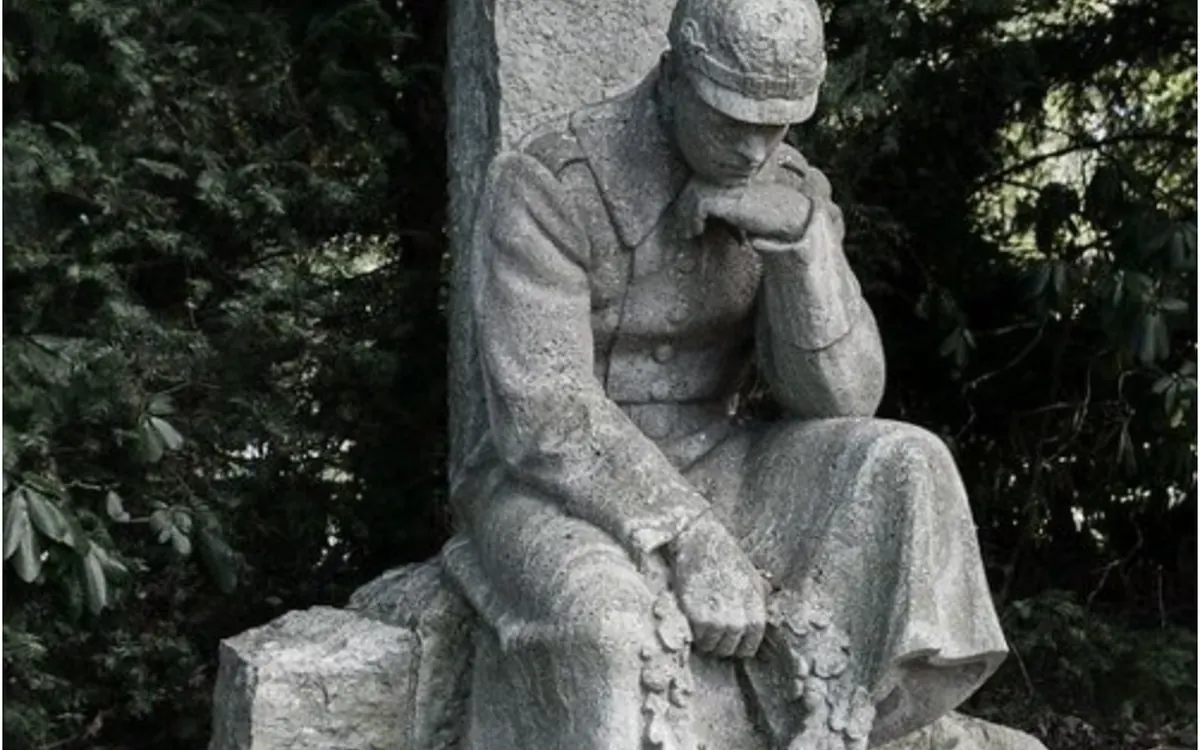
Sometimes in life, and in history, it is time to step back and reflect. I have seen five rounds of conflict since I moved to Israel, all of them inconclusive. For me this raises the question - war, what is it good for?
photo from: www.flickr.com/photos/105105658@N03/30502660157Rav MikeJewish HistoryWar
About this episode
Victorious warriors win first and then go to war, says Sun Tzu. Reacting to another futile round with Gaza, Rav Mike ran a small experiment, asking people war, what is it good for, and getting the song's answer, absolutely nothing. But he wants to know if that sentiment, reflecting a stage of American and Western culture responding to the postmodern collapse of the grand narratives of patriotism and progress, is relevant here. Too old to enlist, he has never looked battle in the face, yet in eighteen years he has seen the Oslo War, two Lebanon wars, sat in bomb shelters and known the dead, and we have been fighting our Hundred Years' War since Tel Hai in 1920. Many are done with it, some idealists who think war passe, others simply finished, like Olmert's 2005 we are tired of fighting, tired of winning. But exhaustion is a poor analysis and he is not interested in national suicide; war is a tool, only as good as the hand, and really the will, that holds it, so the real question is what will guides this war.
The background goes further back than the Hundred Years' War, since every biblical leader of significance was both a military and spiritual leader. One could tell a crusading story binding the victory of the Torah's message to Israel's victory over its idolatrous enemies, and there is truth in it, as his teacher answered the skeptic who doubted redemption would come by F-16s and tanks, have you ever read the Bible; to survive and achieve the Torah's ideals you must fight, there is evil in the world, and no one knows better than the Jews what happens to spiritual ideals when you lose your place in the world. Yet no one knows better the risk when you win, the Torah warning beware lest your heart grow haughty and you say it was my own power and the might of my hand, kochi v'otzem yadi, that won this, so the sword and the hand must derive their will from God. From Joshua through the Babylonian exile Israel failed to internalize this, and the Maccabean kingdom descended because it failed to heed that the strength of one's own hand is the great trap.
Once exile began the sages took a different stance: the mighty man is no longer David's warrior who knows war is good for defeating enemies but the one who conquers his own passions, victory directed inward, uncoupling spiritual leadership from the military over two thousand years of powerlessness. Yet the sages were not pacifists, as a text in Shabbat shows, arguing whether weapons are an ornament a man may wear on Shabbat or reprehensible because the swords shall be beaten into plowshares, Isaiah's line engraved at the UN. Rabbi Eliezer holds weapons are an ornament so long as the world is imperfect and war exists, so Israel must be ready to fight, or, in another answer, that even in the messianic era they remain, meaning Israel will keep the peace so no nation lifts a sword. This holds two competing visions of redemption, a world that has transcended war and a world where Israel is so powerful it keeps the peace, but for the sages it was theoretical, whereas Rav Mike's question is not, since Israel now has power, suffering a cultural whiplash from fuel in the ovens to a regional power in one generation.
The generation of the return gave two answers to what war is good for, survival and redemption, the two faces of Zionism as problem-solving and as aspiration. For survivalist Zionism the key document is Jabotinsky's 1923 Iron Wall, that settlement can proceed only behind an iron wall the native population cannot breach, that if anyone objects this is immoral the answer is that Zionism is moral and just so justice must be done whether Ahmed agrees or not, and that peace comes only when there is no hope of breaching the wall. An uncomfortable truth, but Jabotinsky was a clear-eyed thinker of the beginning of the end of European Jewry, and the prolonged war may be due to our ambivalence about being here and our unwillingness to fight for victory rather than mere survival. But survival is necessary and insufficient, since life in Israel is now fantastic, and when survival becomes the pursuit of the good life it loses moral force, as when Olmert told the Lebanon troops they fought for the right to a normal life, which made Rav Mike pull over the car, since there is nothing normal about being a Jew and one could choose Berlin or Brooklyn; the problem today is that it is not hard enough to be a Jew.
The other answer is redemption, as Rav Kook's Orot HaMilchama says that when there is a great war the power of the Messiah awakens, the pruning of the tyrants, destroying in order to build, written of World War I, which did not map onto a world that turned to pacifism, and which began our Hundred Years' War and parted us from the arc of Western culture. The vision of Israel's divine mission as the will that guides the sword cannot be ignored, the most motivated element of the officer corps now the religious Zionist world, which makes much of the country nervous, since survival is consensus but redemption never has been, and we do not even know what it looks like, as Colonel Ofer Winter's 2014 dispatch invoking the God of Israel against a foe who curses His name was both moving and poorly received as a religious militia. War is a necessary tool so long as evil exists, never nothing, but without a vision guiding the hand it becomes kochi v'otzem yadi or the postmodern disparagement of all purpose. Rav Kook ends that were it not for the sin of the golden calf the nations would have made peace with Israel out of awe of God's name, so if we tap the true vitality of Am Yisrael, war is only one tool, and Israel's influence would flow outward through the paths of peace as in the days of the Messiah.
Key ideas
- War is a tool only as good as the will that holds it, so the real question is what will guides our Hundred Years' War.
- The Bible binds conquest to the Torah's mission yet warns against kochi v'otzem yadi, that the sword must derive its will from God.
- The sages made the mighty man one who conquers his passions, yet were no pacifists, holding weapons an ornament while the world is imperfect.
- Jabotinsky's Iron Wall is survivalist Zionism, and the prolonged war may stem from ambivalence about fighting for victory rather than survival.
- Survival is necessary but insufficient now that life is good, and becomes the pursuit of a normal life that loses moral force.
- Redemption, Rav Kook's lights of war, motivates the religious Zionist officer corps but has never been consensus, so vision must be chosen carefully.
Chapters
- 0:00 Win first; war, what is it good for?
- 1:06 A tool and the will that holds it
- 4:19 The biblical background; have you read the Bible?
- 6:26 Kochi v'otzem yadi; the great trap
- 7:33 The sages' mighty man
- 9:53 The Shabbat text; ornament or reprehensible
- 12:00 Two visions of the messianic era
- 13:04 Cultural whiplash; a non-theoretical question
- 14:11 Survival and redemption; the Iron Wall
- 16:26 Zionism is moral and just
- 17:33 Ambivalence and the prolonged war
- 18:39 When survival becomes the good life
- 20:49 Fighting for a normal life
- 23:01 Not hard enough to be a Jew
- 23:01 Redemption; Rav Kook's lights of war
- 26:21 The officer corps; Winter's dispatch
- 30:42 War is never nothing; the paths of peace
Who, where and when
People
Sun Tzu, Ehud Olmert, Zev Jabotinsky, Rav Kook, Rabbi Eliezer, Colonel Ofer Winter, King David
Places
Gaza, Lebanon, Jerusalem, Gush Katif, The UN
Texts
The Iron Wall, Shabbat 63a, Isaiah 2, Orot HaMilchama, Deuteronomy 8
When
1920 CE: Tel Hai begins the Hundred Years' War, 1923 CE: the Iron Wall, World War I: Rav Kook's lights of war, 2006 CE: the Second Lebanon War, 2014 CE: Winter's dispatch
Read the transcript
Sun Tzu says victorious warriors win first and then go to war, while defeated warriors go to war first and then seek to win. Well, I'm definitely looking to win, but I first got to figure what victory looks like, because I'm Rav Mike Foyer, and this is The Jewish Story. War, what is it good for? You know, I've been conducting a bit of a sociological experiment this week, and I want to make you a partner in my exploration. Mostly, it was a personal response to what I perceive to be yet another futile round of back and forth with Gaza. I've got to tell you, one of the greatest crises of faith I've ever had was back, it might have been the first round of Gaza in 2006, who can really remember, but it was at a certain point when I realized that the morality of war, to some degree depends on one's willingness to win.
And that's part of the question I want to ask, is how do we actually conduct a war meant to win? But my experiment was a little bit more simple. It was going around and asking people, war, what is it good for? And I'm willing to bet that most of you listening responded in the exact same way that the vast majority of people I asked did, which is absolutely nothing. Maybe with a little, uh, throw it in there for emphasis. But joking aside, I want to know if this is true. I want to know if a sentiment expressed in an anti-war song, which is really reflective of a very particular stage of development in American culture, Western culture as a whole, a development which is a response in many ways to the postmodern collapse of all the grand narratives that had motivated governments and armies up to that point.
the narratives of patriotism, the narratives of Western progressivism, all kinds of narratives, which had collapsed in the face of a very ugly war and a lack of government trust. Are they relevant to answering that question here in our country? And I think it's quite important. You know, I was rejected in my efforts here to enlist. I was too old, perhaps one of the most difficult moments of my life, both because it had been a Zionist stream of mind from a young age and because it was the first time anyone ever told me I was too old to do something. But because of that, I've never had to look battle in the face. And I want to leave that as a caveat. Nevertheless, I have been here for 18 years. And in those 18 years, I've seen the Oslo War.
Some people call it the second Intifada. I've seen the second Gulf War, the second Lebanon War. Oslo 1, 2, 3, depending on how you count. I've sat in bomb shelters with my children. I've left buildings that were bombed. and unfortunately I have known those who've been killed. And that's not all. That's only 18 years. If you've been listening to the Jewish story for any amount of time, then you know we've been fighting our own version of the Hundred Years' War basically since the Battle of Telchai back in 1920. Go check out Season 2, Episodes 28 and 29 to get the backstory there. That's a very long time to fight. And when I look around, when I listen to the media, when I pay attention to my society, I see that there are many who are done with it.
Some of them are the insistent idealists who believe that war is passé and that there's a pursuit of an ideal of peace. We'll come to that by and by. But others are just simply finished. I remember in 2005, shortly before he became prime minister, Ewan Oman declared from the podium at the Israel Policy Forum, we are tired of fighting. We're tired of being courageous. We're tired of winning. we are tired of defeating our enemies. It's a bit of a strange thing to say. Why would you be tired defeating your enemies? What's the other option that he's offering? Now, on one hand, listen, I get it. If war is not an effective tool to achieve our national aims, then I'm more than happy to try something else. But I'm not interested in national suicide as the path of least resistance.
And every decision maker knows that exhaustion is a poor excuse for analysis. And frankly, if what you're saying is that there's a path of peace which we could pursue instead of war, then that's going to demand, in many ways, even more energy. And the reality is, as we'll touch maybe later, Omer himself saw that he was wrong in the Second Lebanon War. Am Yisrael has endless wells of vitality when properly tapped. And my question really when I say what is war good for is whether it is an effective tool for drawing on those energies. Because that's all it is. War is a tool. And therefore, like any other, the efficacy or danger of that tool lies in the hand that holds it. It's a little bit silly to ask what is war good for.
It's like asking what a knife is good for. The knife is only as good as the hand that holds it. And not even as good just as the hand. Really, it's about the will that guides it. So that's really my question. What will is guiding this 100-year war at this point? And I feel like if I can put a finger on that, maybe then I can answer the question of what war is good for in our day, if anything at all. So if we're going to address the question of what war is good for in our day, we need a little bit of background. Don't be nervous. I'm not going to try and recapitulate the entire 100-year war. Frankly, we need to go further back. I mean, it's not for nothing that every biblical leader of significance, with both a military and spiritual leader, there's a message in there.
And on some level, it would be quite easy for me to tell you a crusading story, a story in which the victory of the Torah's message in the world, in overcoming idolatry, is tightly bound up with the victory of Am Yisrael over our idolatrous enemies. And there's truth in that. It's a story that was told in the Bible and could be told today. I'll never forget once I was sitting in class and one of my fellow students expressed skepticism to our teacher about the relationship between our divine mission as Am Yisrael and the military aspect of the Zionist project. It came in the form of a question. He said, do you really think that redemption will come with the hands of F-16s and tanks? And all our teacher said was, have you ever read the Bible?
Because on some level, it's a biblical truth. in order to survive and thrive and achieve the ideals of the Torah in the world, you're going to have to fight. There is evil in the world. It's an important thing to continue asserting, even in the face of the postmodern breakdown and the skepticism. I wonder how many of you are rolling your eyes when I say it. But no one knows better than the Jews what happens to your spiritual ideals when you lose your place in the world. It's not an easy thing to do. At the same time, no one knows better than we the risk you face to your spiritual ideals when you win. I mean, after all, the Torah warned us, beware, once you get into the land and have the good life, lest your heart grow haughty and forget the Lord your God, and you say to yourselves, It was my own power and the might of my own hand that won this wealth for me.
In the mind of the Torah, the sword and the hand that wielded it must derive their will from God. The rest of the Passover is, remember the Lord your God, because he's the one who gave you strength to all these things in the world. So there's an essential tension there in the Bible. On one hand, you've got to fight just to make it in the world. And the Torah certainly conceives of Am Yisrael as carving out our space in the world through conquest. On the other hand, that conquest itself can put you into the trap of believing that it was your hands, your will, which is driving the story. And we can follow the struggle and failure to internalize that essential danger from the conquest of the land by Joshua all the way through the Babylonian exile.
But like I said, I'm not going to recapitulate all of Jewish history. Nevertheless, seeing as Hanukkah is coming up, it is worth going back and listening to Season 1, Episode 6. If you want to see how the descent of the Second Temple period, really beginning with the kingdom founded by the Maccabees after their awesome victory, was largely due to their failure to heed the warning that the strength of one's own hand in many ways, even though it's necessary for surviving the world, is the great trap But scrolling forward once our current exile began you can see the sages begin to take a fundamentally different stance on war than the one found in the Bible A mighty man is no longer a gibur of David, who swings his spear over 300 dead and knows exactly what war is good for, defeating your enemies.
Now, Ezehu gibur, who's the mighty man in the mind of the sages? ha-kovesh-et-yitzroh, one who conquers their own passions. The sages understood that the direction of one's will inward, almost like that quote from Sun Tzu at the beginning, that victory before the battle is actually where the might of the warrior lies. And it doesn't take so much imagination or psychological analysis to figure out why, over the course of a couple thousand years of statelessness and lack of any military per se, that the model of spiritual leadership cultivated by the sages would be largely uncoupled from that of the military and political. But you know what? Our holy rabbis were never simple. And I wouldn't want to try to paint them as ideological pacifists.
It just wouldn't be true. I'm going to take a look at a text with you right now. Maybe I'll post it attached with the show. We'll see. And I think it provides us with a framework of asking the question of what war is good for. It starts with a Mishnahh in Shabbat. If you're looking in the Gemara, it's on 63a. The Mishra is speaking about what one can carry outside of their house on Shabbat. I don't want to get into the details of why one can or cannot. Just go with me. There are things you can carry, which are essentially clothing and jewelry. I mean, because you're wearing them, you're not carrying them. And there are things you can't carry because they're a tool. So the Mishra says a man can't go out on Shabbat with a sword, a bow, a shield, or a spear.
And if he goes out, then he's liable to bring a sin offering. That means that a sword, a bow, a shield, weapons of war are not part of a person's clothing. But then Rabbi Eliezer says, no, these weapons are ornaments. Ooh, interesting. And the rabbis say back to him, there's nothing ornamental about them. They're reprehensible. Gnayim. And they say, why? Because it's written, and they shall beat their swords into plowshares and their spears into pruning hooks. Nation shall not raise up sword against nation, neither shall they learn war anymore. that great quote from Isaiah, quote, by the way, which is of course engraved on the entrance to the United Nations, an idea that God willing we'll come to before we're done.
So here's the mission that's laid out in argument. Are tools of war an ornament for a man? So when the Gemara begins to discuss it, they say to Rabbi Eliezer, well, if in your opinion these are ornaments, then why are they going to be gone in the Messianic era? One answer he gives is that they won't be needed anymore. that a sword, tools of war, are an ornament for human beings so long as the world is in its imperfect state. Because it says, then nation won't raise a sword against nation anymore in Isaiah. And Rabbi Eleazar is telling you, so long as war exists in the world, then Am Yisrael needs to be ready to fight it. And it's a legitimate thing to leave your house on Shabbat with your M16. Another answer the Gemara says, well, since they're ornaments for him, why will they be limited in the Messianic era?
He says to them, no, even in the Messianic era, they won't be eliminated. Meaning, what does it mean? Nation will not raise sword against nation? It means that Am Yisrael will keep the peace. There's a deep tension. We could go further into this Gemara, which discusses actually the competing visions of the Messianic era, which exists within the minds of our sages. One is a world in which we've transcended war. Another is a world in which Am Yisrael has become so powerful that we manage to keep the peace. There will no longer be a sword that even passes through your land. This is a complex question. What role do we strive for as a people? Are we looking to be left in peace in order to pursue our internal mission?
Or are we looking to establish ourselves as a kingdom that is able to project power so far through the world that nation won't lift up sword against nation anymore? That's a big question. but no matter which side you take on it, when you look at this Gemara, you can see that it was largely a theoretical question. I mean, it's being discussed at a point in which Israel has no power to project itself throughout the world. And frankly, we know there were very few rabbinic scholars who were also warriors. I mean, Shmul HaNagid was a notable exception, if you remember back in Season 1, but even he marched at the head of a Muslim army, not a Jewish one. But the question I'm asking is decidedly non-theoretical, theoretical, because here we are at the end of a hundred year mark of our hundred year war, and what is that war good for, and can the wisdom of our sages crafted and forged in a time of powerlessness really be our guide?
Now, personally, I think that when it comes to our relationship with power, and specifically with war as a tool for projecting it, Am Yisrael is suffering from a severe case of cultural whiplash. Frankly, on top of the trauma of the last 2,000 years, how are we meant to deal with the transition from being fuel in the ovens of Europe to being regional military power, all within the space of one generation? And when we look back at that, what story do we tell about what got us out of that? And how can that story be a guide to the hand which is presently holding the sword. Don't forget we touched a bit on this problem in the last two episodes, how the need of the Zionists to create the new Jew in many ways led to their need to disparage the survivors of the greatest tragedy that Ashkenazi Jewry, maybe world Jewry, perhaps humanity, had ever seen.
This is a classic expression of what many see to be the original sin of Zionism. It was my power and the strength of my hand that made all this happen. Now, on one hand, if the Zionists hadn't made it happen, we wouldn't be having this conversation today, in my opinion. On the other hand, there's a trap that lies down this road. So, if we want to look back at the generation of the return, we'll see that there are actually two basic answers they gave to the question, what is war good for? One was survival, and the other was redemption. These are kind of the two faces of Zionism as a whole. There's Zionism as problem solving, how do we defend the Jews, and then there's Zionism as an aspiration for redemption.
So first things first, if we're going to talk about survivalist Zionism, then there's no better document to begin with than Zev Jabotinsky's essay, 1923, The Iron Wall. I'll just give you a couple of excerpts and you'll see what I'm talking about. He says, Zionist settlement must either stop or else proceed regardless of the native population, which means that it can proceed and develop only behind an iron wall, which the native population cannot breach. That is our Arab policy, not what we should be, but what actually is, whether we admit it or not. Now, that may be an uncomfortable truth for some of the people listening out there. I know when I speak, particularly to some of my North American students, they find it very difficult that our whole project here is bound up with force.
From the very beginning, Zionism was oriented toward taking this land, whether people wanted it or not. And so Jeb Dinsley actually addresses that. He says, if anyone objects that this point of view is immoral, answer, that's not true. Either Zionism is moral and just, meaning either it's moral and just, that the Jews have a state, or it is immoral and unjust. But he notes that's a question we should have settled before we became Zionists. Actually, he says, we've settled that question in the affirmative. We hold that Zionism is moral and just. And since it is moral and just, justice must be done, no matter whether Joseph or Simon or Ivan or Ahmed agree or not. There is no other morality. That needs to be reflected upon, especially in light of Jabotinsky's final statement, at least the final one I'll quote to you.
He says is only when there is no longer any hope of getting rid of us because they can make no breach in the iron wall Now it a perspective that makes comfortable people uncomfortable And it's critical to remember that Jabotinsky was far from living in a world where the Jews were comfortable, whatever his life experience personally was or not. that the beginning of the 20th century was the beginning of the end of European Jewry. I don't want to get into analysis right now of whether he was right, or even how such statements look through the eyes of postmodern 21st century Jewry. I have to think that for his day, Gepardinske was an exceptionally clear-eyed thinker, and that there's a critical point we all need to reflect upon here, how much of the prolonged nature of this Hundred-Year War is actually due to our ambivalence about being here and our unwillingness to fight it with victory as the goal as opposed to simply survival.
Now that aside, but I want to put my finger on a present-day problem, and that's the necessary but insufficient role that survival can play in guiding the hand that holds the sword. I think only a fool would question the fact that war is a tool for survival. But what I want to speak about in light of the 21st century reality in the land of Israel, is what happens when survival is no longer the goal, but war is still the tool. Because really, honestly, when I look around, I can ask the question, are we actually still struggling for survival? Were any of the, I lost count, number of wars I witnessed in the last 18 years really in response to an existential threat? Life is really good right now in the state of Israel.
In fact, it's fantastic. I'm looking out my window. I see the rebuilt Jerusalem. I've got a wonderful apartment, a healthy family, more resources than the vast majority of the world can even dream of. And in some ways, that's part of the problem. You know, I have actually a particularly strong relationship to the Second Lebanon War. It was because at the time that it broke out, I was working as a program director for a summer backpacking trip that took place along the Northern Israel Trail. and I had two groups in the field right off the Lebanese border when the rockets first started to come down. It's a little bit hard, I think, to imagine, but there I am getting updates from what's called Chere Matzab, the Situation Room.
It's a joint effort between the Ministry of Education and the security forces, so I'm getting updates. Move your group here, move your group there. At one point, I actually put them on the eastern shore of the Galilee, and they were in tents while they were watching rockets fall on the western shore on Tiberias. I'm also getting midnight phone calls from frightened and angry parents wondering what is going on. Why haven't you gotten those kids out of there? But on top of all that, there was an intense experience of national consensus. It was so strong, in fact, that people were calling it the spirit of 48. Now, what's the spirit of 48 mean? It means late bray-rah. We have no choice. Our backs are to the wall.
And I'm telling you, on some level, our country is always seeking that sense that we have no choice in order to muster the will that it takes to drive the hand that holds the sword. And I'll never forget, right before the ground troops crossed the northern border into Lebanon, Prime Minister Ehud Olmer addressed them. It was a fantastic speech. I was listening to him on the car radio as I had left home for Jerusalem, and he was just here still in Malia Dumim, and he had me right up until the end. right until the point when he declared, and what we're fighting for is the right to live a normal life. No. I actually had to pull over. I was so upset. That's the will that guides the hand that holds the sword?
We're fighting war to maintain a normal life? Well, first of all, let's just face it. There's nothing normal about being a Jew. Second of all, I happen to have higher aspirations than a comfortable socioeconomic category. Third of all, it's a terrible justification for the death and destruction that ensued in that war. I mean, if we want a normal life, if that's the will that guides the hand that holds the sword, then why not choose Berlin or Brooklyn over Tel Aviv? I mean, when the battle for survival is actually a battle for normalcy, it loses quite a bit of its moral force, at least in my eyes, and I'm telling you, in the eyes of the world, which is why it's so important, particularly in the secular parts of our country, to have a sense of no choice, that it's actually about survival.
And really, Omic's speech shouldn't have come as a surprise. Remember, I quoted him early, declaring that Israel was tired of fighting. If war is only good for survival, then you're going to know exactly why those who are no longer looking to survive, but rather to live a normal life, might actually feel that what's war good for? Absolutely nothing. Or at least if one's going to fight a war, it should be kept to the bare minimum. It should preserve the good life, not change the situation as a whole. You should mow the lawn in that horrible euphemism we use for how we deal with Gaza, one, two, three, rather than ever have to conceive of what victory might look like. when survival becomes the pursuit of the good life, there are very profound moral questions which come up.
And ironically, the fact that life is so good here in Israel is, in my eyes, one of the major challenges we face with people today. For so many generations, my holy Ashkenazi ancestors lamented, it's hard to be a Jew. On one hand, that was lament. On the other hand, it was a badge of pride. But at the very least, that need to survive with the hardness of life provided them with a clear will, a will which found its expression in Jabotinsky's Iron Wall, right? In fact, it held up that wall for quite some time. We've seen, even in this season, the battles of 48 and 56 and 67 is on the way. But we're a long way from 67. and in many ways our problem today is not that our back's against the wall and that it's hard to be a Jew our problem is it's not hard enough to be a Jew and therefore many people for whom survival provided the answer to what war is good for are beginning to wonder what are we fighting for after all so what about redemption you know our holy master and teacher Rav Kook has a beautiful section in the book orot, lights, called orot ha-milchama, the lights of war.
And there he says, when there is a great war in the world, the power of the Messiah awakens. The time of pruning has arrived, the pruning of the tyrants. The wicked are being eliminated from the world, and it fills with a fragrant scent. It's what we call in Hebrew stira l'maan binyan. We're going to destroy in order to build. And every good revolutionary knows that sometimes a situation is so broken, it can't be fixed. Only erase. Now, it's noteworthy that Rav Kook wrote those words in reference to World War I. As he says, the current World War brings with it a great and awesome expectation, combined as it is with all the events of the time in the settlement of the land of Israel, which is an express sign of the end.
Why do I say it's noteworthy? Because Rav Kook's sense of imminent redemption, that the destruction of World War I was actually paving the way for the rebirth of the Jewish people, didn't map so well onto the reaction of the rest of the world. Now, we could say that he was as yet unaware of the horrors of that conflict, the conflict that turned many romantic believers in the cleansing power of war into devoted pacifists. But however you slice it, World War I was the beginning of our Hundred Year War. And in many ways, that sentiment that war paves the way for our national mission is what caused us to part ways with the arc of Western culture. Western culture, even though they did muster themselves for survival's sake to fight the Nazis, after that, they were largely done.
The skepticism around war settled first in Europe and then emerged in our very song War What Is It Good For in America But note that Israel was about to face the 1967 war when that song came out Nobody had any questions about our need for survival and the importance of war as a tool then. But I want to just put a finger on this idea that the vision of Israel's divine mission as the will that guides the hand that holds the sword actually can't be ignored, not in our history and not in our present day. I remember when I was sitting on the edge of Gush Katif before our friends were uprooted from their homes. We snuck our way right to the edge there, and Zev, if you're listening, it was an important moment.
And I remember hearing a conversation between two older national religious men debating about whether all the soldiers, that year, the largest group of national religious graduates had made it into the officer's corps. And the debate was whether they should participate in this disengagement or not. On one hand, one person was saying, it's a sin, you can't uproot Jews from the land. On the other hand, the other one was saying, but this is what we've worked for, to raise these boys up into positions of leadership so we can begin to change the country. And the truth of the matter is, won't get into how that debate ended. When you look at the Israel Defense Force today, it's beyond question that the most motivated element, certainly of the officer's corps, comes from the religious Zionist world.
I have the great privilege to see these men all the time in my community and there's much to be proud of. They've been given the ideal of the soldier, scholar, and many strive and succeed to live up to it. But that very success makes a good portion of our country quite nervous. Now, we can all agree on the goal of survival. That's kind of a basic biological instinct. But the vision of the state of Israel as a vehicle for redemption has never been consensus. Forget the fact that even if we agree that redemption is the goal, we don't know what it looks like. I just mean, for many, if not most of our country, redemption is not in the cards. Survival and perhaps now the good life. I'll tell you a little story that really highlights it.
Back in July of 2014, just as Israeli ground troops were preparing to enter the Gaza Strip for Operation Suketan, Protective Edge, the Givati Brigade Commander, Colonel Ofer Winter, sent the following dispatch to his battalion and company commanders. History has chosen us to spearhead the fighting against the terrorist Gazan enemy which abuses, blasphemes, and curses the God of Israel's forces. We have planned and prepared for this moment, and we take the mission upon ourselves out of commitment, complete humility, and because we are prepared to endanger ourselves and lay down our lives in order to protect our families, our people, and our homeland. And then at the end, he calls upon the God of Israel to make our path successful as we go and stand to fight for the sake of your people Israel against a foe which curses your name.
Personally, I find it quite moving. And the idea of fighting for God's name to me is a much better motivation than simply survival. I mean, after all, the rockets out of Gaza are not an existential threat. That's why our government is willing to leave hundreds of thousands of Israeli citizens to put up with them for almost 15 years. Nevertheless, there is a question of how to engage such an enemy. And Colonel Winter was giving an answer. An answer, by the way, which was not so well received. Just to give you one choice quote from a prominent Israeli religious activist, meaning activists for religious freedom, I would expect IDF commanders to remember that the IDF is the army of the people and not a religious militia.
Now, I might be tempted to say, tough luck. I mean, after all, the vision of Israel conquering our enemy, a vision of victory rather than survival, a vision in which what war is good for is enacting the will of God in the world, is a source of serious motivation for a very active portion of our society. The problem is that if you read the news, then you'll know that the religious divide is growing deeper within our country. And I'm not one to speak of civil war, but I would say that the army is one of the only, if not the only, institution that still unites our country. And therefore, it would behoove us to choose our motivations quite carefully. And so, on one hand, if we ask war, what is it good for?
Survival is obvious. Necessary, but insufficient, since it's actually really good to be a Jew right now. You know, this notion of redemption is very tempting, but when you look back on the history of Am Yisrael, when we don't agree, when there's no consensus on what the vision of redemption is, things tend to go poorly pretty quickly. so where does this all leave us today what is war good for frankly i'm not really sure as you've probably begun to sense i didn't set out on this journey with such a clear map but i can say this i would never answer absolutely nothing first of all so long as evil exists and there are those in the world who seek to destroy us and sadly there still are war is a necessary tool but i worry that without some sort of vision, that guy's the hand that holds the sword, without some sort of sense of where we're headed as a society, other than toward the easy life, war can quickly become kokhti v'otsumi hadi, it can become all about my strength and the might of my hand, or it can become all about that post-modern disparagement of any purpose for war, because after all, everybody's only out for their own power anyway.
And by the way, we didn't even get into the challenge that the arms industry poses in this whole equation and the whole military-industrial complex that Eisenhower himself warned us about. So that's one side. Then there's that spiritual vision of redemption, which might be bound up with the need to vanquish our enemies. At the same time, I want to offer you this. I think that there is an action we can all take. War might be a necessary evil, but it's never an end unto itself. What is it good for? It's good for survival. It's also good for defeating enemies. But I'll end with this last quote from Rav Kook. He says in that same section on the lights of war, If it were not for the sin of the golden calf, the nations settled in the land would have made peace with Israel and acknowledged them, because the name of God, which is called upon Israel, would have awakened within them the awesome fear of this loftiness.
Meaning, if you tap into the true vitality of Am Yisrael, if we're able to channel our vision, then we'll realize that war is only one tool that we have in the basket. And don't forget, for a man whose only tool is a hammer, every problem looks like a nail. Our other tool is the spiritual power, which is our true inheritance. And he goes on to say, there would have been no call for any method of war. and Israel's influence would have flowed outwards through the paths of peace as it will be in the days of the Messiah. Let it be soon. Let it be now. I'm really curious, by the way, to hear your responses on this. Send me an email. RobMikeCorey at gmail.com or you can hit me up on Facebook. And while you're at it, I would love it if you want to put your money where your ears are.
I'm thinking about whether to do Season 4 right now. I want your feedback on that. And the biggest feedback you can give me is by becoming a patron. You can go right now to my website, jewishstory.co, and there's a little button in the upper right-hand corner there that says Be a Patron. You can click on there for a little bit of per-podcast support, and that will tell me very clearly that you want this story to keep going. I want to thank the Land of Israel Network, that's thelandofisrael.com, for creating a platform that allows me to reach so many fantastic people. I want to thank the Pardes Institute, pardes.org.il, for creating an educational institution and giving me the privilege of teaching so many wonderful Jews.
And I want to thank you for listening. I'm Rav Mike Boyer, and this is The Jewish Story.
More from Season 3
TJS: S3E17 The Kastner affair
The memory of the the Holocaust is dark and traumatic enough that it threatens to overwhelm even the light of the present. Here is the first part of...
Play Episode
TJS S3E18: The Eichmann Trial
The Holocaust was so dark and vast that the Jews struggled to integrate it into their consciousness, despite the hundreds of thousands of survivors in their midst. One...
Play Episode
TJS S3 Interlude Government - a crisis of faith
No matter where you turn, it seems that democracy is in crisis. Here is an interview with Rav Mike which touches on the global situation as well as...
Play Episode