
TJS: S3E17 The Kastner affair
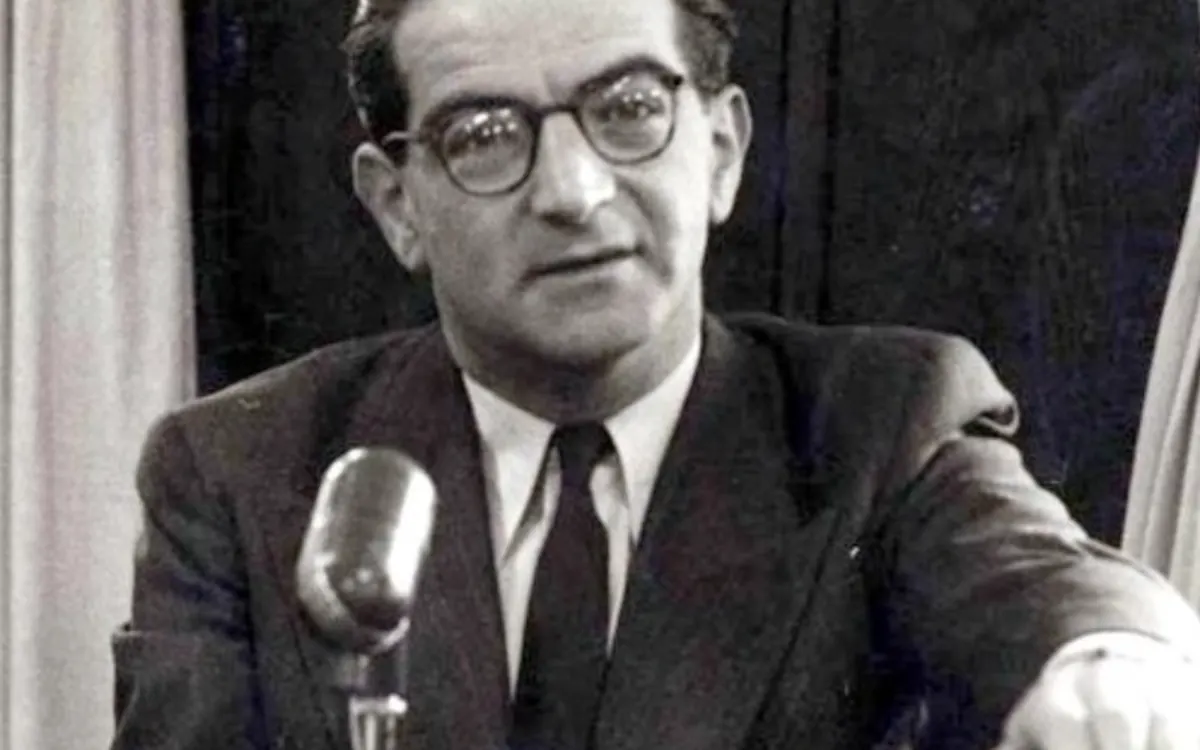
The memory of the the Holocaust is dark and traumatic enough that it threatens to overwhelm even the light of the present. Here is the first part of an exploration of Holocaust memory in Israel's open decade, as seen through the lens of one of the darker stories of the early state - the Kastner affair.
About this episode
In war I would deal with the devil and his grandmother, said Stalin. Just after midnight on March 4, 1957, Yisrael Kastner was shot three times outside his Tel Aviv home and later died, the Shin Bet quickly narrowing the search to Lehi veterans, Menkes, Shemer and Eckstein. The murder shook the country because Kastner had become famous when he stood as the accuser in a libel trial in which he was accused of being a Nazi collaborator, so the shots were a verdict. To understand why it was a shot heard around the Jewish world, one must see the place the Holocaust held in early Israeli memory. Rav Mike fears the Holocaust has fallen prey to partisan agendas and become a burden generating a desire to drop it and move on, as survivor Yehuda Elkana called in 1988 for a willful forgetting lest the traumatic memory overwhelm the light of the present, as Tom Segev accused the Poland missions of glorifying strength, and as a Haaretz screed called Holocaust studies the pornography of violence, while American Jews fight over who owns the word concentration camp; Rav Mike hears the challenge yet holds that forgetting is no solution, since it is all about how you tell the story.
In the first decade the collective memory was binary, a schism between the martyrs and heroes who fought the Nazis and the victims who went like sheep to the slaughter. From 1945 to 1947 some 70,000 immigrants poured in, mostly survivors, among them a handful of underground fighters and leaders of the Warsaw Ghetto Uprising, hailed and needed as national heroes because their story reinforced the negation of exile, the Zionist plank that life belongs in the land and nowhere else, the Holocaust proving Jabotinsky's cry that if you will not liquidate the exile the exile will liquidate you, so that those consumed were by implication guilty of their own blood, except the fighters who forged the new Jew free of the exilic posture. So the public narrative, embodied in the 1951 Holocaust and Ghetto Fighters Day, emphasized the bravery of the few and neglected the suffering of the many, the textbooks until the late seventies dealing almost solely with the Nazi machine, not the victims. There was also the shock and the limits of information, and the cognitive inability to assimilate what had happened, so that even the Nuremberg trials, focused on the war waged by the Nazis rather than the suffering of victims, with few victims called, bounced off the collective psyche.
In 1950 the Knesset passed the Nazi and Nazi Collaborators Punishment Law, aimed not at Nazis but at the capos, the Jewish and non-Jewish prisoners recruited to maintain order, for whom becoming a capo often meant choosing between the possibility of life and certain death; Rav Mike does not judge, noting his great-aunt Helene was saved by a capo who was a childhood friend, yet a common refrain among survivors was the cruelty of the Jewish capos. The law was Israeli officialdom grappling with a deeper shame, since the guilt and the inability to assimilate cast a shadow on the survivors themselves, judged as passive victims and even called sabonim, soap, so the minister of justice Pinhas Rosen spoke of cleansing the atmosphere and purifying the camp, mixing the Zionist hatred of passivity with the category of the collaborator, so that non-survivors found it easy to assume anyone who survived bore the mark of shame, all survivors regarded with suspicion as possible collaborators. The trials received little coverage until 1952, when a mimeographed pamphlet by Malkiel Grunwald accused Dr. Rudolf Kastner of being a Nazi collaborator who grew fat on Hitler's lootings.
Kastner was a Hungarian Jewish journalist, lawyer and key member of the Budapest Aid and Rescue Committee, a brilliant political fixer who knew whom to bribe and flatter, which he put to work when the Nazis occupied Hungary in 1944 and Eichmann set out to deport nearly 800,000 Hungarian Jews, meeting many times with Eichmann and the SS officer Kurt Becher to save whom he could. On June 30, 1944 a train of 35 cattle cars carried over 1,600 Jews to safety in Switzerland, the wealthiest 150 paying 1,500 dollars each, a cross-section including the Satmar Rebbe and 388 of Kastner's family and friends, while the rest of Hungarian Jewry met their deaths at Auschwitz; Kastner's partisans say he saved whom he could and worked with Becher to save more than ten thousand, his accusers that he chose the wealthy and his friends and suppressed information so the rest went blindly to their deaths. After the war Kastner's affidavits helped free Becher, and Kastner came to Israel in 1947, well connected to Mapai, becoming spokesman for the trade ministry, until Grunwald's pamphlet forced the attorney general to make him sue for libel or resign.
The Kastner trial became what Mapai did not want, because Shmuel Tamir, a Herut leader and opponent of Ben-Gurion, represented Grunwald and turned the libel charge into an indictment of the entire wartime labor Zionist leadership and its alleged failure to help European Jewry, a case lasting ten months with sixty witnesses and three thousand pages, laid out in Ben Hecht's Perfidy, which accuses everyone from Ben-Gurion to Weizmann of treachery against the Jews who did not serve their Zionist vision. Rav Mike declines to rule on Kastner's guilt, noting that Perfidy was on Kahane's JDL reading list while Yad Vashem honors Kastner as a hero on par with Schindler, as Tommy Lapid said no man saved more Jews and suffered more injustice. Ignorance of the unfathomable reality combined with the right-left divide and each side's desire to use the Holocaust led only to deeper wounds. Justice Benjamin Halevi ruled for Grunwald, finding that Kastner sold his soul to the devil by accepting the gift of saving the important Jews, a verdict the Supreme Court overturned six years later, Justice Agranat writing that it is easy to paint Kastner blacker than black or purer than snow, but Kastner did not live to hear it, having died of the gunshot a few months before his appeal. What lies ahead, only a few years on, is the capture of Adolf Eichmann and the trial of the devil himself.
Key ideas
- Kastner's assassination was a verdict in the libel trial over whether he was a Nazi collaborator, and it shook the country's memory of the Holocaust.
- Early Israeli memory was binary, heroes who fought and victims who went like sheep, serving the Zionist negation of exile.
- The Nazi Collaborators Law grappled with the shame of the capo, so that survivors were regarded with suspicion as possible collaborators.
- Kastner's rescue train saved over 1,600 while the rest of Hungarian Jewry died, his partisans and accusers reading his deal with Eichmann opposite ways.
- Shmuel Tamir turned the libel trial into an indictment of the labor Zionist leadership's failure to help European Jewry.
- Halevi ruled Kastner sold his soul to the devil, a verdict the Supreme Court overturned, finding the impossibility of judging such a situation.
Chapters
- 0:00 The devil and his grandmother; the assassination
- 2:19 The Holocaust in early Israeli memory
- 3:27 Willful forgetting
- 7:52 The heroes-and-sheep binary
- 10:00 The negation of exile
- 11:07 Shock and the limits of information; Nuremberg
- 14:19 The meta-narrative; Yediot's editorial
- 16:27 Uri Zvi Greenberg; Rehovot HaNahar
- 18:40 Survivor guilt; the internal discourse
- 20:45 The Nazi Collaborators Law; the capo
- 22:52 Sabonim; the shame
- 24:59 Purifying the camp; the collaborator
- 26:03 Grunwald's pamphlet; Kastner
- 27:10 The rescue train and the deal with Eichmann
- 30:40 The libel trial becomes an indictment
- 33:28 Perfidy; hero or collaborator
- 34:55 Halevi's verdict; the Supreme Court overturns it
Who, where and when
People
Yisrael Rudolf Kastner, Malkiel Grunwald, Shmuel Tamir, Adolf Eichmann, Kurt Becher, Benjamin Halevi, Ben Hecht, Uri Zvi Greenberg, Pinhas Rosen, Yehuda Elkana, Tommy Lapid
Places
Tel Aviv, Budapest, Auschwitz, Switzerland, Hungary
Texts
The Nazi and Nazi Collaborators Punishment Law, Perfidy, Rehovot HaNahar, Halevi's verdict
When
March 4, 1957 CE: Kastner shot, June 30, 1944 CE: the rescue train, 1950 CE: the collaborators law, 1952 CE: Grunwald's pamphlet, 1955 CE: Halevi's verdict
Read the transcript
In war, said Joseph Stalin, I would deal with the devil and his grandmother. No, I'm not looking to judge the deals that people make. I'm just trying to tell a tale that can help us put it all together. I'm Rav Mike Foyer, and this is The Jewish Story. Episode 17, The Kastner Fair. On March 4, 1957, just a few minutes after midnight, Yisrael Kastner pulled up to his home in a Tel Aviv suburb. It had been a long day of work as spokesman for the Ministry of Industry and Trade, and I'm sure that Kastner was ready for a sound night of sleep. But it was not to be. Because as he was locking his car, a man slipped out of a nearby Jeep and approached in the dark. Yisrael Kastner, he called out, and upon receiving a positive reply, the man pulled a handgun from his jacket and fired three shots.
The first was a dud. The second hit the car door, but the third found its mark in Kastner's chest. And as he slumped to the ground, the shooter raced back to his Jeep and fled the scene. Within an hour after the shooting, the Shabak, Shin Bet Kali, the General Internal Security Services of Israel, at this point still such a secretive organization that they were unknown to the Israeli public, only those with the highest security clearance knew of their existence, which raises the question of why they and not the police were on the scene. But within an hour, they were indeed there. And using their usual methods, they quickly narrowed their search to a group of Lehi veterans. And within days, Yosef Menkes, Dan Schemer, and Zev Eckstein were in custody.
The Shabbat used its usual methods, and Schemer and Eckstein relatively quickly confessed. Menkis, by the way, refused to cooperate with the investigation from the beginning to the end. In fact, he claimed all along that it was the Shabbok and not he who'd done the deed and that this was all a show trial dependent on someone else. We could spin this story out into quite a conspiracy theory about who actually killed Yisrael Kastner. But, you know, as awful as one murder may be, I want to actually talk about why this one shook the country. And that's because Yisrael Kastner had already become famous before his death, when only a few years before he'd stood up as the accuser in a libel trial, a libel trial in which he was accused of being a Nazi collaborator.
And thus, on that night in the dark Tel Aviv suburb, we could say that Shemrin Eckstein, whoever sent them, had delivered their verdict. Now we're going to hear about the trial itself before the episode is over, But if we want to understand why this was really a shot heard around the Jewish world, then we need to first take a look at the place which the Holocaust held in Israeli collective memory during the opening decade of the state. You know, I have a creeping fear. The truth is it's one of many, but this one is that the Holocaust has fallen prey. It's fallen prey to a few things. First of all, to partisan political agendas. It's too often a stick used to beat our opponents into silence. On the other hand, it's also become a burden.
A burden which is generating a growing desire to drop it and move on. Now, I'm not speaking about the European guilt fatigue and the, I didn't kill the Jews, haven't we paid enough sense of exhaustion, which seems to be part of the mix fueling the rebirth of political anti-Semitism over there. Because frankly, their guilt is not my problem. We all have to find a way to bear the burden of the past, and not just bear it. But as anyone who's been listening knows, we have to tell the story of the past in a way in which that will get us the future we actually desire. And that's what the questions which underlie this episode are really all about. When I'm speaking about this growing desire to drop the Holocaust and move on is the complex ways in which the Jews would like to do so.
You know, for a few decades, there have been certain voices in Israeli society calling for what they call a willful forgetting of the Holocaust. Already back in 1988, survivor Yehuda Elkanah wrote the following in an Israeli newspaper. There is no more important political and pedagogical task for the leaders of Israel than to side with life, dedicate themselves to the future, and not deal constantly with the symbols, ceremonies, and lessons of the Holocaust. they must eradicate the domination of this historical memory over our life. It's a call for willful forgetting, but not out of tiredness or a lack of care, out of a fear that the traumatic memory of the past is overwhelming the light of the present.
And I have to tell you, in many ways, I hear the challenge he's addressing. I don't actually think forgetting is a solution. Like I said, it's all about how you tell the story. But there is a danger in being overwhelmed by the trauma of the past. And his was not, in fact, is not a lone voice in Israeli society. Israeli journalist Tom Segev actually levels the accusation that the youth missions to Poland are part and parcel of a government policy, one that glorifies strength above all else, and actively seeks to place Israel's actions above moral criticism. And if that's not bad enough, in January of 2012, The Israeli newspaper Haaretz published an article by journalist and entrepreneur Boaz Gaon entitled, The World Should Be Happy That Steve Jobs Wasn't Israeli.
It's a pretty bitter screed, even by Haaretz's standard. It's a launch against the Israeli educational system and by extension, Israeli culture as a whole. But for our purposes, there's a critical paragraph. Try and listen to this. He says, had Steve Jobs been an Israeli, Apple's slogan wouldn't have been Think Different. would have been think like everyone else. Had Steve Jobs been an Israeli, it is doubtful whether his fourth grade teacher, Miss Hill, would have noticed his exceptional talents. It's also doubtful whether his literature teacher would have taken him on an inspiring snow hike in Yosemite National Park. Instead, Jobs would have been required to memorize the difference between chalky soil and clay soil.
And, listen to this, to swallow every year the pornography of violence toward children called Holocaust Studies in school. And his last year in high school to be preoccupied with only one question, whether to enlist in the elite Maglan unit or the elite Duv Devan unit in the Israel Defense Forces. Did you hear it? Pornography of violence. Listen, as someone who's about to send his 16-year-old daughter on her class trip to Poland, I don't want her being exposed to pornography. And I have a lot of thoughts on the truth and lies in what he just said. But I'm going to hold back on the personal front because what matters in my eyes right now is the disgust wrapped up in his perception of how the memory of the Holocaust is being used.
Now, just to round it out, witness the tempest in a teacup that has been occurring among American Jews about who owns the word concentration camp and whether it can be applied to anything other than the Nazi death machine. The progressive perspective that wants to universalize the Holocaust and detach its memory, and therefore its educational message, from a particularly Jewish historical experience is another expression of their desire to move on from the trauma. So I'm afraid that by not engaging the depth of that trauma, and the need to tell its story in a life-giving fashion, by willful forgetting the darkness of that trauma will only claim more victims. And so, with that said, let's get back to the story of how it came to be that Jews were shooting Jews on the street there, back in Tel Aviv in 1957.
So, in the first decade of Israel's existence, the collective memory of the Holocaust was all but binary. There was a schism. On one side lay the martyrs and heroes, those who fought the Nazis, and on the others, the victim who, as it said, went like sheep to the slaughter. And the way this came about is not hard to fathom. From 1945 to 1947, 70,000 immigrants poured into the issue, despite the best efforts of the British blockade, and the majority of them were survivors. Among those survivors were a handful of the surviving underground fighters, including some of the leaders of the Warsaw Ghetto Uprising. At the time when the underground in Israel was fighting the British occupation with increasing violence and success, these leaders were hailed as national heroes.
Not just hailed, they were needed. They were needed because by telling their story, they could reinforce a narrative which was core to the Zionist ideology and quite core to its practical leadership base. That ideology was what we've called many times the negation of exile. This fundamental plank of the Zionist worldview which said that life for the Jewish people belongs in the land of Israel and nowhere else. Now part of that is literal, physical. Zionism indeed believed and believes in the return of all Jews to their historic homeland. And in this case, hadn't the Holocaust proved beyond all doubt the necessity of getting out while you can? I mean, in 1945, everyone heard the truth of Jabotinsky's heart cry from 1938 Warsaw.
If you will not liquidate the Galut, the exile, the Galut will liquidate you The Jews of Yishuv who are struggling against the British are the ones who had gotten out or at least their parents had And that means at least by implication that those who were consumed in the Shoah were somewhat guilty of their own blood. Guilty of their own blood, except for those who fought. Because the ones who were fought were expressive of that other key aspect of Zionist ideology in the negation of the exile. They were part of the forging of a new Jew who was free from the exilic posture. No stoop-shouldered passive victims were these. By staying to fight the Nazi enemy, the heroic underground fighters had redeemed Jewish honor and also set the mold to gather with the underground fighters here in the state of Israel of what it was going to mean to be a Jew going forward after the war.
And so, it should come as no surprise that the public narrative around the Holocaust, embodied in my eyes by the 1951 establishment of a National Holocaust and Ghetto Fighters Day, emphasized the bravery and revolt of the few while almost entirely neglecting the horrific suffering of the many. And truth is, when you look at the documentary evidence, until the late 1970s the history textbooks used in Israeli schoolrooms which were produced by the educational governmental authorities dealt almost solely with the Nazi machine and the evils that it represented, not with the experience of their victims. And we'll speak next episode, actually, about the specific point at which that began to shift. For now, there was more to the first stage of collective memory of Holocaust than just a desire to elevate heroism.
Because there was also the shock. the shock together with the limits of clear information I mean, today in the information age you can see pictures of everything almost before it happened but in 1945 despite all of the evidence uncovered by the allied armies it was still unclear what exactly had happened in Europe certainly the extent of it and not just unclear there's also the cognitive inability to assimilate what that information actually said I mean, who could possibly believe their own eyes when they saw the pictures. Who could believe that such an evil could come to be in the heart of Europe? Well, one of the points at which the world was forced to at least take notice, if not believe, were the Nuremberg trials.
Those were the trials that took place from November 45 to October 1946. And you might think that a series of military tribunals which sought to hold the Nazi leadership accountable for its crimes would be a tremendous Holocaust education opportunity. But you'd be wrong. There was a potential because the trials were based on three categories of crimes. War crimes and crimes against peace which had existed in international law before and a new category which was created solely to deal with the Nazis' actions and that was crimes against humanity. Sometime we're going to have to speak about the idea that it was the Holocaust which brought into human jurisprudence the notion that you can commit a crime against humanity, but not just against the Jews.
Nevertheless, Nuremberg was not an opportunity for Holocaust education because the focus was on the war waged by the Nazis, not the suffering of their individuals, and certainly not on Jewish national trauma. Even when the final solution was detailed, which it was at length, it was done through paperwork and documentation of the Nazi machine, not through the testimony of their victims. Very few victims were actually called to the stand. there was not enough an exposure of the reality of the horror to cut through the heroic narrative of the Zionist culture happening in Israel at the time because frankly, psychologically and physically the Jews were struggling so desperately that in my eyes they needed that sense of heroism and nothing else in order to carry on with an impossible task at hand and it might have been the best move for the time I mean, after all, if one looks the Holocaust in the face, what else is there to do but stand dumbstruck?
You're certainly not going to pick up and start to build a new country. Now, there is one last element here. And I feel like it needs to be said. There's not just the very deep attachment that Zionist culture has to the heroic narrative. and its at least passive, if not active, rejection of what they declared to be the victim mentality of the exile culminating in the six million. And it's not just the impossibility of assimilating such an event, both in terms of the availability of information and the cognitive frames that one needs to make sense out of it. There's one more piece, and I'll put it out there just because it deserves to be heard. the Holocaust also fits a dominant meta-narrative of Jewish experience and because of that meta-narrative the Nuremberg trials basically bounced off the collective psyche of the Jews in Israel you'll hear it in this editorial from Yediot Akronot written on December 16, 1945 not long after the trials had begun it says, why are we so apathetic to what history will undoubtedly record as one of the greatest victories of the Jewish people over its enemies?
This was written in response to the sight of the nations of the world placing the enemies of the Jews on trial at Nuremberg. The editorial goes on and says, We do not believe that the world, judges, prosecutors, understand what befell us, are genuinely shocked by it, regret what happened, or would lift a finger to prevent a recurrence of such a holocaust tomorrow or the day after. So don't forget, we're working our way toward understanding why two Jews would gun down a third Jew on the streets of Tel Aviv in 1957. So through the mass immigration of the 1950s, 400,000 more Holocaust survivors joined that original 70,000 in Israel. And you might think that presence of such a significant percentage of the populace who had directly experienced the nightmare, that's a quarter of the population, would shift the nature of Holocaust memory in Israel.
That that minority narrative of heroism would at least be offset by the reality which all these people shared. But the evidence in educational materials, journalism, art, indicates that it was largely otherwise. Now, there is a very important point at which it did begin to diverge. The poet Uri Tzvi Greenberg. We told his story back in season two, episode 32, worth going back and checking it out. He'd been banished by the liberal art establishment for his radical right-wing views. Well, he made a comeback after the war through his poetic grappling with what had occurred. In the spring of 1945, Uri Tzvi began publishing a series of poems in the daily paper Haaretz, which quickly became acknowledged as the most important response in Jewish literature to date to the incomprehensible loss that the Jewish people as a whole had just sustained.
And he not only published, he regained his role as national poet prophet, no longer warning the people of the evil to come, and certainly not offering them comfort in the wake of its passing. No, for the next four years on an almost weekly basis, Uri Tzvi published poems which the public received simply as an authentic and visceral expression of collective grief and shock. You know, it's noteworthy to me that the poet rejected the term Holocaust because he maintained it implied a natural catastrophe, one without intention, evil, or even conscious perpetrators. Uri Tzvi chose the traditional Hebrew term Horban, which means a destruction. It's one that's applied to the destruction of the First and Second Temples, and it absolutely implies not only the existence of a destroyer, but their intent to destroy as well.
In 1951, his poems on the Holocaust were collected into what's known as Rehobot Hanar, the streets of the river, which is a strange title until you understand that it was meant to be taken literally. It was an image of the poet walking the streets of Tel Aviv or Jerusalem where he saw himself and all the people who surrounded him as unknowingly treading the rock bottom of a river of tears and blood. Yes, unknown to themselves, they were already dead. They drowned, and at every corner, they might meet the familiar face of a dead friend or relative. And those meetings in his poetry hold the sweetness of reunion mingled with a consuming sense of guilt, the guilt and shame of the survivor whose dear ones had faced extermination.
And as far as I can tell, it was this guilt that largely was the cause which prevented the hundreds of thousands of witnesses, those people whose testimony could have entirely changed the Israeli understanding of and relationship to the Holocaust in the 50s, what prevented them from lifting their voices into the public sphere. Now, it's not to say that the reality of the camps and the horrors of the Shoah weren't discussed, but at this stage it was largely an internal discourse amongst the survivors I mean just look at the 1946 paper written by survivor Mark Dworzecki titled How Did You Survive He says, It seems that I'm branded with a mark that will never be expunged, the mark of shame for remaining alive when everyone else is gone, lost.
My living thoughts are with those killed and vanished. Now, at nighttime, their shadows appear to me, and I hear their voices speaking, we have perished and you are alive. Please tell me, dear conscience, how to answer them. And my conscience replies, it's a tie. I can't give you an answer. You'll have to search for it yourself for the rest of your life. Now, that's quite a burden of guilt. But at this early stage of the assimilation of the Holocaust into Israeli consciousness and culture, the official government organs, and along with them, the native-born Zionist elite culture that they represented, held itself above that guilt. I mean, after all, hadn't they gotten out before it all happened? Hadn't they tried to help their brothers and sisters before the darkness fell?
They weren't guilty for surviving. It was a product of a decision. Now, in 1950, there was an interesting legislative act, one that's going to have far-reaching effect on the two trials that lie ahead in this episode and the next, and one which, in strange ways, opened the door to a new element of the Israeli narrative around the Holocaust. It's the Nazi and Nazi collaborators' punishment law passed by Israel's first Knesset in August of 1950. Now, there was no assumption at this point that any Nazi would be so foolhardy as to try and take refuge within Israel. And furthermore, at this point, the state didn't yet see itself as an instrument of justice and vengeance on behalf of worldwide Jewry, though stay tuned for next episode.
Rather, the legislation really related to one of the most evil aspects of the Nazi death machine, the recruitment of Jewish and non-Jewish prisoners in the concentration camps to maintain order and discipline and oversee the work, the so-called capos. You know, as one scholar notes, for a Jew becoming a capo, a stooge of the Nazi machine often, quote, meant choosing between the possibility of life and certain death. In exchange for complete obedience to the SS, they received more food, warmer clothing, better sleeping accommodations. These amenities increased Capo's likelihood of survival tenfold. Now, I'm certainly not one to judge, and there are many stories which indicate that people in power actually use that power in order to help others.
In fact, my great-aunt Helene, she'll be healthy and well, survived Auschwitz because when she reached her bunk, the capo there was a childhood friend who immediately sent her off to a work camp instead of to the gas. Nevertheless, a common refrain which was heard amongst the survivors in Israel was the cruelty of the Jewish capos. And in many ways, this law represents a grappling by Israeli officialdom with an even deeper level of shame around the Holocaust. We have to appreciate this. That the shame, the guilt, the inability to assimilate the information caused a shadow to fall upon the survivors themselves. I mean, it was bad enough that they were judged as passive victims. They were even called by many, I don't know about many, by some Israeli, native Israelis, sabonim.
Sabonim, Israel, is soap. That refers to the persistent notion that floated around that the Nazis had made soap out of the human flesh of their victims. Do you realize the deep disgust and disparagement of calling someone who'd survived Auschwitz sabonim? You know, as one of the child survivors growing up in the early state time put it, what I hated and dreaded most when I was a child was summertime. It was a time when the numbers on my mother's arms would be there for all to see, and people would know that she was a survivor and was one of the despised people. People like my parents were despised in Israel, and I was ashamed of them. This was a shame which went very deep and was shared by the fellow Jews, even the establishment that wasn't there.
And it's what drove the collaborators' punishment law. As Pinchas Rosen, Israel's first minister of justice and driver of the legislation, testified during its first reading in the parliament, The proposed law may also contribute to the cleansing of the atmosphere amongst the survivors who immigrated to the land of Israel. Whoever knows their problems knows how painfully embedded in them is the question of suspicions and reciprocal accusations. The police could not, given the absence of the proposed law, commence an investigation. He goes on to say, Let our camp be pure. V'haya mahanecha kadosh. But what's this reference to the police? What accusations are being made between the survivors of people that were capos?
What is he looking to purify from the camp? Part of what he's looking to purify is that Zionist hatred of passivity. As member of Knesset Eliezer Perminger said during the debate on the law, had there been the slightest sign of physical resistance, it would not have been possible to murder 6 million Jews. But in reality, this leads us a little bit deeper, because in the Zionist-Israeli mind, there were more than a few heroic Jews who resisted, and the passive weak, who went like sheep to the slaughter. There was something in between. There were the collaborators. As another member of Knesset put it in the debate, one cannot turn a blind eye on the fact that collaboration is what assisted the Nazis to realize their objective.
If one was a capo for two or three years, he could not have been anything but a criminal. Not knowing, not wanting to know, the realities of the horror, the non-survivors found it easy to mix the two categories of collaborator and survivor, and assumed that anyone who survived bore some mark of this shame. As Israeli sociologist Judith Bubergassi writes, in the early years after the war, all survivors of the Holocaust who came to Israel were regarded with suspicion as possible collaborators. And thus, that law began as an attempt to purify the people from within, to wipe out the guilt that went deeper than simply surviving all the way into the shame of collaboration. Now, I know this sounds dramatic or even melodramatic, but for most of the Israelis, these elements were subconscious or at best expressed as superficial judgments.
The actual trials that flowed from the law received very little media coverage or even public discussion, there were an internal reckoning amongst survivors. That's true until one day in 1952, when a mimeographed hand-distributed pamphlet began to circulate through the streets of Jerusalem. And on the front page of this pamphlet, it read, My friends, the stench of a carcass fills my nostrils. This will be the choicest funeral. Dr. Rudolf Kastner must be liquidated. For three years I've been waiting to unmask this careerist who grew fat on Hitler's lootings and murders. Because of his criminal machinations and collaborations with the Nazis, I consider him implicated in the murder of our beloved brothers.
Rudolf Israel Kastner was a Hungarian Jew, journalist, lawyer, and key member of the Budapest Aid and Rescue Committee as World War II unfolded across Europe. He'd been a Zionist activist and intellectual from a very early age. And Kastner is remembered alternatively as arrogant, brilliant, furious, dictatorial. But one thing is clear. He had a well-established reputation as a political fixer. Kastner knew almost with an instinct who to bribe, how much to offer, and how to flatter the right people to get what he wants. And those were good skills, skills that Kastner put to good work as Nazi power grew. Because Hungary maintained self-rule during most of the war, and though life was far from easy for the Jews, at first they were spared the mass murder of the final solution.
That changed in 1944 when the Nazis occupied Hungary, and when Adolf Eichmann, the architect of Hitler's genocidal plan, decided to deport the entirety of Hungarian Jewry, nearly 800,000 strong to their deaths at Auschwitz. It was during that summer that Kastner put his skills perhaps to the greatest test which they had seen, meeting many times with Adolf Eichmann as well as with SS officer Kurt Becher in a desperate attempt to save whatever Jews he could. Now, from this point on, I want you to know the story is steeped in controversy. Kastner's partisans say that he saved as many Jews as he could. His accusers claimed he only chose the wealthy and powerful along with his friends and family. And furthermore, he got them out at the price of deceiving the rest of Hungarian Jewry and allowing them to go blindly to their deaths.
Some say he was on par with Oskar Schindler. Others, that through his suppression of information, that he was complicit in the murder of the entirety of Hungarian Jewry. Now, I can't weigh in on this struggle. And trust me the deeper you go the messier you get And it roiled Israel for a number of years and it still has a power to pop up now But what I tell you is this On June 30, 1944, during that German occupation of Hungary, a train consisting of 35 cattle cars left Budapest, carrying over 1,600 Jews to safety in Switzerland. The wealthiest 150 passengers all paid $1,500 American dollars for the privilege of escape. But the cars were filled with many types of people, students, children, various escapees, and also a cross-section of the leadership of Hungarian Jewry, including the Satmar Rebbe, Rav Jóld Teideban, as well as 388 family and friends from Kastner's hometown.
The rest of Hungarian Jewry, almost in its entirety, met their deaths in Auschwitz. But Kastner didn't take the train. Instead, he traveled back to Germany with Kurt Becher, that SS officer who'd received the money paid for that escape. Now, from there, like I said, his advocates claim that the two worked together in the last days of the war to save more than 10,000 lives. Now, true or not, at the war's conclusion, Becher was arrested along with many other high-level Nazis and investigated at Nuremberg as a war criminal. However, in the end, he was released largely due to Kastner's intervention and his giving of affidavits, which swore that Becher was not like the rest. And by 1960, Kürb Becher was reputed to be one of the wealthiest men in West Germany.
He will serve as a witness for the prosecution against Adolf Eichmann. That story lies ahead. Kastner arrived in Israel in 1947, and his connections with the Mapai establishment were quite good. he actually ran for a seat in the First Knesset, and soon he became, as we know, spokesman for the Minister of Trade and Industry. He might have lived out his days in that post and even enjoyed the minor hero status he held as one of the few who risked his life to save the Jews of Europe that weren't for the Fuhrer of Malkiel Grunwald. Grunwald was a former activist with Menachem Begin's Irgun, and since the birth of the state, had devoted himself to a one-man crusade against the Mapai government, which he saw as hopelessly corrupt and was hated with a fiery passion.
It was Grunewald who published the mimeograph accusing Kastner of being a Nazi collaborator. And in his eyes, Kastner was not just a collaborator, he was the epitome of everything wrong with the world of labor Zionism, a careerist who grew fat on Hitler's looting and murders. Now, when the mimeograph hit the streets, Kastner himself was inclined to ignore Grunewald's accusations. After all, he was a well-known crackpot. But Chaim Kohn, attorney general, meaning the government's legal advisor, told him he could not ignore them. He said either fight the accusation by suing for libel or resign from your post as spokesman for the Ministry of Industry and Trade. After all, the Muppei was not about to harbor a known collaborator in its midst.
What ensued is known as the Kastner trial, and it resulted in exactly what Chaim Kohn and the Mapai leadership did not want. That was largely because Shmuel Tamir, a leader in Begin's Chayrut party, and fellow passionate opponent of Ben-Gurion and the Mapai, took it upon himself to represent Grunewald. Now suddenly, it wasn't the noble Israel Kastner, well-respected member of society, versus Malkiel Grunewald, crackpot, Here was a lawyer by training, an underground fighter by temperament, and Tamir knew that the best defense is a good offense. Grunewald had been charged with libel, as I said, due to his accusation that Kastner was a collaborator, and so Shmuel Tamir turned his trial into an indictment of the entire wartime labor Zionist leadership and its alleged failure to help European jury.
It was a case that lasted 10 months. The court heard 60 witnesses, all hundreds of documents submitted as evidence, and generated over 3,000 pages of testimony. If you want to read the full indictment, you can find it in Ben Hecht's powerful and very troubling book, Perfidy. There, he not only labels Kastner as complicit in the destruction of European Jewry, or specifically Hungarian Jewry, he accuses everyone from Ben-Gurion to Chaim Weizman of a treachery against the Jews of Europe, those who didn't serve their purposes and their vision of a new Zionist state. This is the ugly underbelly of the labor Zionist story, at least as Hecht tells it. Because right now, I'm not going to weigh in on the question of Kastner's guilt or innocence or what exactly Ben-Gurion and the other labor Zionists did or did not do.
I mean, it continues to be a question that divides along very partisan lines, something which makes me suspicious. Ben Hecht's book, Perfidy, is a work that Rav Meir Kahana actually placed on the JDL's required reading list. It was part of his effort to reshape the memory of the Holocaust along what he considered more honest and, more importantly, more useful lines. At the same time, Kastner today is honored as a hero on par with Oskar Schindler by nothing less than the Yad Vashem Museum. You know, as Tommy Lapid, politician, Hungarian survivor, and chairman of Yad Vashem's board of directors when he was alive, said there was no man in the history of the Holocaust who saved more Jews and was subjected to more injustice than Yisrael Kastner.
I think you can see my point. Ignorance of the unfathomable reality of the Shoah combined with the bitter right-to-left divide of Israeli culture and the separate agendas of each side and their desire to use the Holocaust in service of the future which they wanted was only going to lead to deeper wounds and not to healing. Now at this point we're in the middle of a discussion so I'm going to draw it to a close for now in what I see to be the most logical manner. Justice Benjamin Halevi was the one who presided over the trial and he ruled in Malkiel Grumeld's favor acquitting him of libel meaning that he supported the truth of the accusations against Kastner in what many found to be a highly injudicious statement he closes verdict with the following words the temptation was overwhelming that at this stage Kastner had the opportunity to save 600 souls from the approaching holocaust and not any 600 but the most important and deserving ones as he saw them his relatives, friends, members of his movement in other words the important Jews of Hungary Kastner sold his soul to the devil by accepting this gift.
Now, Halevi's verdict was actually overturned by the Israeli Supreme Court on appeal six years later. And their verdict, unlike Halevi's, recognizes the complexity of what it is to pass judgment on anyone in such a situation. In his brief, Supreme Court Justice Schnurzalman Chesson wrote the following, On the basis of the extensive and diverse material which was compiled in the course of the hearing, it is easy to describe Kastner as blacker than black and placed the mark of Cain on his forehead. But it is also possible to describe him as purer than the driven snow and regard him as the righteous of our generation, a man who exposed himself to mortal danger in order to save others. Now, unfortunately for him, Kastner did not live to hear Chaston's verdict.
He died from that gunshot wound a few months before he won his appeal. Conspiracy theories live on about what Kastner did, who really killed him, and why, but they already lack the power to really roil the public imagination which they once held. And one reason for that, of course, is time. Another is the very different role which the Holocaust began to take in Israeli collective memory after his assassination. Because while the Kastner affair was a traumatic and very public engagement with the dark and complex realities, The reality is about what it means to make a deal with the devil when everything, literally everything, is on the line. What lies ahead, only a few years ahead in our story, is the capture of Adolf Eichmann.
Soon, the state of Israel will succeed in putting the devil himself on trial. But that's a story for the coming episode. This episode is actually dedicated to the merit and memory of Abraham and Miriam Shor, beloved grandparents of Celeste Arno. and with saying that I want to thank Celeste and all the other people out there who give their hard-earned money to help make this show happen to keep it free and widely available and I want to invite you to join them. You can go right now to my website jewishstory.co in the upper right-hand corner you'll see a button there that says be a patron and you can click on through for a little bit of her podcast support or you can join people in dedicating the show you can send me an email at rovmikefoyer at gmail.com or a personal message on Facebook Rav Mike Coyer at Facebook and I'll shoot you back the details.
It's time to connect people. Put your money where your ears are. I also want to thank the folks at the Land of Israel Network. That's thelandofisrael.com for creating a platform that allows me to reach so many fantastic people. I want to thank the Pardes Institute P-A-R-D-E-S dot org dot I-L for building an educational institution that allows me to reach so many wonderful Jews. And I want to thank you for listening. I'm Rav Mike Coyer and this is The Jewish Story. .
More from Season 3

TJS S3 Interlude: Kingdom or client state?
Sukkot is a time to sit in the Sukkah and reflect, so here are a few thoughts from my Sukkah. This is an exploration of what it means...
Play Episode
TJS: S3E16 Israel at age ten
Life offers so few opportunities to stop and reflect that we need to seize every chance. What better time to look back at the questions with which we...
Play Episode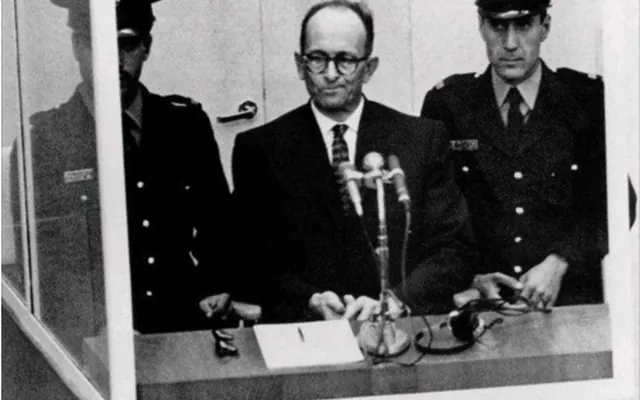
TJS S3E18: The Eichmann Trial
The Holocaust was so dark and vast that the Jews struggled to integrate it into their consciousness, despite the hundreds of thousands of survivors in their midst. One...
Play Episode