
TJS S3 Interlude: Kingdom or client state?
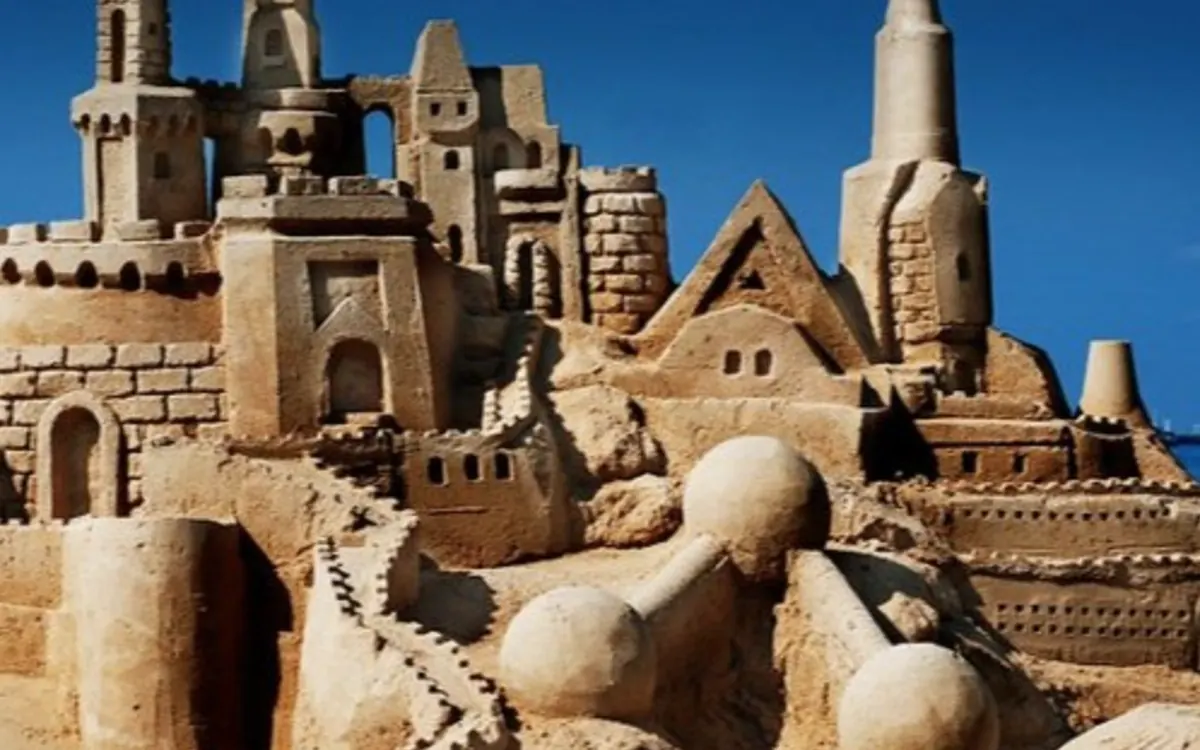
Sukkot is a time to sit in the Sukkah and reflect, so here are a few thoughts from my Sukkah. This is an exploration of what it means for the state of Israel to be a kingdom and and it what means to be a client state.
Picture from www.flickr.com/photos/adforce1/2462794123podcast
About this episode
He who reigns within himself is more than a king, says Milton. The haftarah for the first day of Sukkot, Zechariah 14, has it all, war, earthquake, plague, and one line that captures the imagination: on that day the Lord will be king over all the earth, the Lord one and his name one. It is surprising that a civil war in Judea leads to a global conflict, disaster and divine intervention that finally reveals God's kingship, though today it does not seem so unlikely. The current phase of the Third Commonwealth hangs on what Rav Mike sees as the central question of Jewish national history, relevant again around 1956: are the people of Israel meant to be a kingdom or a client state. Since it is the time of our joy and there is no joy like removing a doubt, he poses it as a binary.
The client state is best taught by the second temple period and King Herod, who inherited from his father the central truth that Rome is here to stay, which everyone else who bucked the system, the Hasmoneans and the rabbis, failed to absorb; you do not make the rules, you hope to succeed at them. After the Battle of Actium Herod, who had backed Mark Antony, executed the last Hasmonean, sailed to Rhodes, and in an act of supreme chutzpah boasted of his loyalty to Octavian's enemy and promised the same to the new master, so impressing Octavian that he confirmed the monarchy and added territory; Herod knew a medium fish needs a patron, and the secret of success, speak out of both sides of your mouth and build, build, build. But the client state ends with Agrippa, the last Herodian, who at the outbreak of the great revolt sided with Rome against his own people, the primary danger: when the supreme value is survival in a world where the patron makes the rules, those in power look after their own interests, an inevitable clash with a stiff-necked people, perhaps what Zechariah warns when Judah makes war in Jerusalem, brother against brother, at the risk of losing a sense of self, having to be more Roman than the Romans.
Malchut, kingship, has two components. First, the ability to hold the context that lets the pieces come to right relationship, which can be a malchut of self, a well-integrated personality, an interpersonal malchut of leadership, or the divine malchut, and for Am Yisrael the indwelling nation that marches to its own drummer, am levadad yishkon, not a people put in Antarctica but at the crossroads of the ancient world, an inner organizing principle that lets you make your own rules. Second, melech from the root to draw, a king draws the people after him and Israel draws the world after it. But there is an intrinsic problem: the first offered kingship, Gideon, refused, the Lord alone shall rule over you, since everyone is supposed to know God is really king, so whoever sits on the throne becomes a nobody or a usurper, and the arc of kingship descends toward destruction. The model of success is Solomon, who the Gemara says ruled the heavenly and earthly worlds because he sat on the throne of the Lord as king, never losing sight of whose seat it was.
The power of being a kingdom is obvious, we make the rules and can draw the world toward redemption, but Israel is a dangerous, petty kingdom that creates instability wherever it goes, because marching to our own drummer offers an alternative malchut, so we stand in opposition to power, which the world does not take sitting down, the war of Gog and Magog that gathers all nations against Jerusalem. Every world-dominating movement of the last twenty-five hundred years has had to get rid of the Jews, to exterminate, appropriate or make us irrelevant, in order to establish itself as the organizing principle of the world. Another benefit of even a petty kingdom is organizing around our own organic nature, the malchut of personality, the place where we make our greatest contributions, which is why though first-temple kingship failed, the books of the Bible are its great product. King Josiah, the last righteous king, who believed he could be the Messiah, went out against Pharaoh Necho though he had no stake and was outgunned, because he understood that the messianic promise is that no sword will pass through your land, so a malchut is responsible for everything that passes through it, to be God's representative on earth or die trying.
From its inception Zionism imagined the Third Commonwealth as a client state, though the Lehi saw otherwise, Yair Stern's principles calling for renewed Hebrew sovereignty and a social order of prophetic justice as an example to the world, the ultimate malchut. But Ben-Gurion crafted the state, and though famous for um-shmum and that it matters what the Jews do, he held the perhaps incompatible belief that Israel needed a superpower patron, siding with Britain and France in 1956 to serve Israel's survival and then bowing to Soviet and American pressure to withdraw from his victory, a client-state posture that will bring the country to the brink in 1967. The client posture has shown amazing success, build, build, build, yet Rav Mike asks whether the aim of survival is taking us off mission, since today's model of power is Esau's sword rather than Jacob's mouth that organizes values, and he worries about an arms industry that became an end unto itself, recalling Eisenhower's warning on the military-industrial complex that it is the task of statesmanship to mold, balance and integrate, which is malchut. So: kingdom or client state, only God knows the right move, but the next step is to make our decisions in the light of God and not only of our own interests, that we may see God become king over all the earth.
Key ideas
- The central question of Jewish national history, relevant again from 1956, is whether Israel is meant to be a kingdom or a client state.
- Herod mastered the client state, Rome is here to stay and build, build, build, but it ends with Agrippa siding with Rome against his own people.
- Malchut is both the holding of context that lets the pieces come to right relationship and the power to draw the world after you.
- Israelite kingship is intrinsically problematic since God is the real king, and only Solomon succeeded by sitting on the throne of the Lord.
- A kingdom that marches to its own drummer stands in opposition to power, which is why world-dominating movements must get rid of the Jews.
- Zionism imagined a client state, and Ben-Gurion's patron posture will bring Israel to the brink in 1967; the next step is to decide in the light of God.
Chapters
- 0:00 More than a king; Zechariah 14
- 2:13 Kingdom or client state
- 3:22 The client state; Herod and Rome
- 4:34 Herod's chutzpah at Rhodes
- 6:50 Agrippa; the danger of the client state
- 9:15 Malchut: holding the context
- 11:21 Malchut: drawing the world
- 11:21 The problem; Gideon refuses
- 13:31 Solomon on the throne of the Lord
- 14:35 A dangerous, petty kingdom
- 16:48 Organizing around our own nature; Josiah
- 21:01 Zionism as a client state; the Lehi
- 23:18 Ben-Gurion's patron posture
- 24:23 Off mission; Esau's sword
- 25:35 The arms industry; Eisenhower's warning
- 27:52 Kingdom or client state; in the light of God
Who, where and when
People
John Milton, Zechariah, King Herod, Agrippa, Octavian, Gideon, King Solomon, King Josiah, Avraham Stern, David Ben-Gurion, Dwight Eisenhower
Places
Jerusalem, Rhodes, Carchemish, The Suez Canal, Gaza
Texts
Zechariah 14, Numbers 23:9, Judges 8, Megillah 11b, Leviticus 26, Stern's eighteen principles, Eisenhower's farewell address
When
31 BCE: the Battle of Actium, 66 CE: the great revolt and Agrippa, 600 BCE: Josiah and Necho, 1956 CE: the client-state posture, 1961 CE: Eisenhower's warning
Read the transcript
He who reigns within himself, says John Milton, and rules passions, desires, and fears, is more than a king. I'd like to believe I have quite a grip on myself, though I can't claim any royal descent. I'm Rav Moik Foyer, and this is The Jewish Story. Interlude, Kingdom or Client State? So Chag Samech, everyone, I hope you're having fun out there just like me. In fact, I'm having so much fun, you might hear a bit of chaos in the background, because I decided to do this one, even though we're in the middle of the holiday, and all the kids are swirling around me. So, I want to just start off by saying that I love the Haftorah for the first day of Yom Tov Chag. I don't know if you got a chance to read it.
Maybe you're not the shul-going type, but it's the 14th chapter of Zechariah, and you ought to take a look. It's got everything. War, earthquake, plague, darkness. It's downright biblical, frankly. And there's one line that just captures my imagination. In many ways, it blows every other one out of the water. And it shall be on that day that the Lord will be king over all the earth. Right? The Lord will be one and his name one. And every time I read it, I just have to say, what? I mean, first of all, we would have thought that God was king to begin with. Second of all, what's the connection? Frankly, I wouldn't have predicted that what sounds like a civil war in Judea would lead to a global conflict that would actually trigger some sort of disaster and then divine intervention was going to be the way in which God's kingship is finally revealed to the whole earth.
I wouldn't have guessed if I was reading the Bible, that is. But today, if you look at the news, it doesn't actually seem so unlikely. And I'm only half joking there. I mean, I have many friends who read this chapter like news, or at least like a take on modern history. And for those who've been following the Jewish story up to its latest chapter, it may not be a stretch to imagine either. Because the current phase of the Third Commonwealth, as I like to think of our fair state of Israel, is hung right now on what I see to be the central question of Jewish history, at least in its national dimension. And in many ways, it's a question which really only became relevant again around 1956, where our last linear episode left off.
So I want to just take a few minutes here on the Sukkot holiday when I'm feeling anyway a little bit out of the box. We just stepped out of everything normal. And if you're not there yet, then you will be by the end of the week. I want to take a few minutes to consider it. And since it is, after all, Zaman Simchatenu, the time of our joy, and our sages teach us, Ein Simcha, Gehaterat Hasfeikot, there's no real joy quite like that of removing a doubt, I'm going to pose the question as an either-or. And that's despite the inherent limitations of binary thinking, because I really do believe, nevertheless, it's a powerful tool for removing doubt. And so my question is, are the people of Israel meant to be a kingdom, or are we meant to be a client state?
So it might just be that a bit of definition is in order, because I pose a binary question like kingdom or client state. Anybody who's paying attention is going to immediately bounce back to me, okay, what do you mean by that? So let's start with a client state. When I look back on our history, it's the second temple period that I really feel I can learn the most about what it looks like to be a client state. And who better to teach us than King Herod? If you really want his full story, go back to Season 2, Episode 7. But for right now, what you need to know is that Herod inherited from his father Antipater the central truth of politics in late antiquity. And that was, Rome is here to stay. If you look back on that story, everybody else who was constantly trying to buck the system, whether it was the Hasminians, whether it was the rabbis, whomever it might have been, failed to absorb that foundational truth.
And in many ways, it's the essential truth of what it means to be a client state, and certainly the key to its survival. You don't make the rules. All you can do is hope to succeed at them. You know, there's a crazy story about Herod. It took place right after the Battle of Actium in 31 before the Common Era. You might remember that Actium is, of course, where Octavian finally overcame Mark Anthony and established himself as the Augustus Caesar. It's the moment of the birth of empire. And so, therefore, you'd think that nobody's going to mess with Octavian at his most powerful moment. Now, Herod, however, had backed the wrong horse in that war. He was a longtime friend and client of Mark Antony. But no matter, as soon as he heard the news of Octavian's victory, first, he executed the last surviving member of the Hasmonean house, making sure that there was no other legitimate claimant to his throne.
And then he jumps in a ship, sails to the island of Rhodes, where Octavian was currently camped, and undertakes what is perhaps the greatest act of chutzpah that our history has ever seen. And that's saying something, right? Because he gives a brilliant speech. he approaches Octavian without his guards, without any signs of kingship or the rule that he's had up to now. And in this speech, Herod boasts of his loyalty to Mark Anthony, to Octavian's enemy. And then right at the end, he promises the same loyalty to the new master of the Roman Empire. Octavian is so impressed by the sheer audacity that he not only confirms Herod's monarchy, he adds the coast of Judea and Samaria to his realm. You see, Herod got it.
he knew the essential truth of the client state. Like I said, you don't get to make the rules. And furthermore, he understood one of the sort of corollaries that as a medium-sized fish in a very big pond, life is impossible without a patron. By the way, it's worth it to go back and listen to that episode because Herod also knew the real secret of success as a client state. Learn to speak out of both sides of your mouth and build, build, build. So one might think then that this is a successful model. After all, I mean, Herod was the great builder of the East. The sages even said, along with some of the Roman historians, that anybody who had never seen Herod's constructions, including the temple, had never seen beauty at all.
But how does his client state end? Well, Herod Agrippa II, also known simply as Agrippa, was the eighth and final ruler of the Herodian dynasty. He was the Jewish king present at the outbreak of the great revolt against Rome in 66 of the Common Era. And he wasn't just present, because King Agrippa sided with the Romans. And no matter what you may think about that revolt, foolish, noble, futile, disastrous, Agrippa's choice to side with the oppressor against his own people can serve us as a reminder of the primary danger of being a client state. If the primary value is survival, in a world where a patron makes the rules, then it's almost inevitable that those in power end up looking after their own interests no matter what the cost.
And for Am Yisrael, always a stiff-necked and ideologically motivated people, this means there's an inevitable clash coming between the people in the power and the people. and that might just be what Zechariah is warning us about back there in chapter 14 when he says also Yehudah will make war in Jerusalem according to a number of the commentators what they say is that there will be so much confusion in this final battle that the Jews will fight their brothers instead of their enemies and I add to that because people won understand who their real enemies are because part of being a client state the living in a world in which you allow someone else to make their own rules is at the risk of losing a sense of self The mission of a client state is to survive whatever the world in which it finds itself, to adapt, to adapt to the current reality.
You've got to find powerful patrons, imitate the dominant model in order to carve out a bit of security in a dangerous world. These are very real things. You've got to be more Roman than the Romans, more Germans than the Germans, more Americans than the New Yorkers. And I don't dismiss survival. In fact, I'm a big fan. And of course, a strong client state can also do a lot of good beyond surviving, spreading God's light wherever people will let it in. Don't forget, Hillel lived in the time of Herod. The great masters of the Mishnahh were doing their work as Herod was ruling over his client state. But the reality is, the world is always changing. Kingdoms come and kingdoms go. And the demands of survival as a client state can easily come at the cost of one's very nature.
So if that's what it means to be a client state, then let's consider our other option. So before we talk practically in politics about what it is to be a kingdom, let's recall that malchut, kingship, in Hebrew has two primary components in its meaning. First of all, it's not just a guy with a funny hat who sits on a big chair. Malchut is really the ability to hold the context which allows the pieces to come to right relationship. Now, this can be purely local. You can have a malchut of self that we call personality, a well-integrated personality. It's actually one of the primary models that I use in my counseling practice, a malchut of self, the interpersonal malchut that we call leadership, and then, of course, this sense of divine malchut, whose God's really holding the big picture.
So that can happen on many scales. That's one aspect of Malchut. And for Am Yisrael, in much of our history, this means that we've been Am Levadad Yishkon. That famous line of Bilem back in the book of Bamidbar, which is usually translated as a nation that dwells alone. But those of you who've been with me for a little while know that I'm not buying the simplistic definition. After all, I posed the question so many times, if you were God, so to speak, and you wanted to create a nation that dwells alone, where would you put them? You wouldn't put them at the crossroads of the ancient world. You know, Antarctica, the Gobi Desert, you could think of many places. Not right between Assyrian Egypt, the northern Seleucids, and the southern Ptolemaics.
Between the Romans and the Parthians, you get the picture. So therefore, what does Am Levadad Yishkon mean? Well, I'll offer to you this idea of the indwelling nation. A people that marches to our own drummer. And if you know any Jews, this might sound familiar. That's its own type of malchut. Malchut isn't just a political manifestation of the ability to hold a context which allows the pieces to come to right relationship. It's also an inner sense of organizing principle. It's having some conception, some standard of measure, moral, philosophical, or otherwise, that allows you to move in the world and basically make your own rules as you work your way forward. That's one aspect of Malchud. The other aspect of Malchud is Melech Milashon Molich.
A king comes from the same root as the language of to draw something, not draw in terms of a pen, as in to pull it toward you. Meaning a king has the power to draw their people after them, and also we in our Malchud have the power to draw the world after us. So that's just a little bit of the linguistic background. But I also want to talk about the problem for a second, because there is an intrinsic problem with all Israelite kingship. If you look back through the Bible, the first person to be offered the kingship, or at least the official power to rule, was actually Gidon. It's back in the 8th book of Judges. And here's what happens. The man of Israel said to Gidon, rule over us, you, your son, your grandson as well, for you have saved us from the Midianites.
Their response to his ability to make order out of the chaos of their lives is, hey, we want this guy to put a system in place. And listen to what Gidon's response is. But Gidon replied, I will not rule over you myself, nor shall my son rule over you, i.e., I won't be king. The Lord alone shall rule over you. Now, what's he saying? He's expressing the essential dilemma of kingship in Israel. Everybody's supposed to know that God is really king. And therefore, even though we have a mitzvah, a commandment to put a king on the throne, and the Bible, of course, has a whole period of kingship, whoever sits on the throne of Israel ends up being either a nobody or a usurper. And seeing as the people that make it to the kingship don't tend to be the nobody type, you can understand the arc of kingship in the Hebrew Bible, how it descends ultimately toward the destruction.
Nevertheless, if I wanted to look back to the Bible for a model of successful kingship, the obvious example is Shlomo, King Solomon. Now I'm not going to get into the archaeological debate about the actual extent of his kingdom, Though it deserves mention that the Davidic realm seems to get bigger with every actual dig that we do these days. Nevertheless, I'm more interested in how the sages describe Shlomo's kingdom in the Gemara and Megillah 11b. You can look it up. It says, for he ruled over the inhabitants of the heavenly worlds, as well as the human inhabitants of the earthly worlds. As it's stated, then Solomon sat upon the throne of the Lord as king. This is the essence of kingship, as I described it above.
Solomon was king over everything, king over all, and therefore everything on heaven and earth was able to come into right relationship. And why was he able to do such a thing? Because he did so by sitting on the throne of the Lord as king. Shlomo, like David before him, with one notable exception, never lost sight of whose seat he was sitting in. Now, the power of what it offers to be a kingdom as opposed to a client state is obvious. we get to make the rules. Not only for ourselves, we have, once we make those rules, the possibility of drawing the world after us toward the ultimate vision of redemption. But, I got news for you. Read history. Israel is a very dangerous, petty kingdom. She creates instability wherever she goes.
The very fact that we march to our own drummer means we offer an alternative malchut, Malchut, another organizing principle around which reality can coalesce, which means that we stand in opposition to power wherever we are. And the world doesn't tend to take that sitting down. I mean, listen to this line from the Haftor and Zechariah. For I will gather all the nations to Jerusalem for war. The city shall be captured, the houses plundered, the women violated, and part of the city shall go into exile. So what is this ultimate war, this war of Golg and Magog, as we call it, that will draw all the nations against us that Zaharia is speaking about? Well, frankly, I don't know. But I can tell you this. Every world-dominating movement of the last 2,000, 2,500 years, whether it was the secular empires, whether it was world religions, whether it's been philosophical ideas seeking to set their mold across humanity as a whole, all of them have had to get rid of the Jews in one way or another.
At one point or another, they either literally attempted to exterminate us or to appropriate our culture or simply to make us philosophically irrelevant. And why? In order to establish themselves as the organizing principle of the world Now there a longer discussion there and we not going to get into it now in the power that the true Jewish model of kingship offers in the reconciliation between the particular and the universal, and the lack of need that we have to remake the world in our image. That's a discussion for another time. For now, I just want to consider the question, since I think we'll all agree that Israel has always been a very dangerous, petty kingdom. And despite the fact that I will not own the responsibility for the chaos of the Middle East, it is noteworthy that we are sitting here, the strongest regional power, and if we really wanted to, we could enforce a lot more order than there is at the present.
But we don't, because there's a competing world order that we would be bucking at our great cost. So does this mean that kingship for Israel is an all-or-nothing equation? that either we rule the world or it rules us as a client state? That's a question that's got to be considered in episodes ahead. Nevertheless, there is that option of kingship. Another benefit, by the way, to even being a petty kingdom with all its dangers is that we get to organize ourselves around our own organic nature. That's that aspect of malchut, which is personality. You know, when people say, I just got to be me, I got to find my voice, even though sometimes that brings you into conflict with people around you. And if the people around you want to, they manage to get you into line, that moment or that period in your life when you get to be me and find your voice is often the place in which you make your greatest creations and contributions to the world.
Which is why even though ultimately kingship in the first temple period fails, the books of the Bible are its great product. So this aspect of being a kingdom, of being able to organize ourselves around our own organic nature, is true even if it doesn't end well. You know, one of my favorite biblical stories is actually the tragic death of King Yoshiahu. Yoshiahu is considered really the last righteous king of the kingdom of Judah, the southern kingdom there. We're talking now around, I don't know, 600 before the common era, more or less. And here's the story from the second book of Chronicles. It says, King Necho of Egypt came up to fight at Carchemish on the Euphrates. The Egyptians were going to fight the Assyrian Empire.
And Yoshiahu went out against him. Now remember, Yoshiahu, if you can picture the geography, the king of Egypt is marching his troops up Der HaMelech, the king's way up the coast. And then he's going to cut in through the north. Yoshiahu is king of Judah. His capital is in Jerusalem. He's not even near there. But nevertheless, he goes out against him, marches his soldiers down out of the hills to the coastal road. So Necho sends messengers to him saying, what have I to do with you, king of Judah? I do not march against you this day, but against the kingdom that wars with me. And it is God's will that I hurry. Refrain then from interfering with God who is with me, that he not destroy you. That's a great biblical threat, isn't it?
But it says, the next line, that Yoshiahu would not let him alone. He wouldn't let it go. It seems very foolhardy. I mean, after all, not only didn't have no dog in the fight, it was between Egypt and Assyria, he was massively outgunned. And even narrow, real politic perspective on this would be foolhardy and extreme. Stay home, this will only end one way. But there's something you have to understand about Yoshia. He wasn't just the last righteous king. He believed that he was the Messiah, or at least that he could be. And one of the most beautiful and powerful statements that the Torah makes about the Messianic era, let it be soon, let it be now, is in Vayikra 26.6, that's Leviticus. It says, I'll put peace upon your land, and you'll lay down, and no one will trouble you.
And I'll get rid of all the evil, wicked animals, dangerous beasts out there. And a sword will not pass through your land. And that last piece, is exactly what Yoshiahu thought. Because you may think his belief that he was the Messiah was hubris or insanity. Right? But you have to understand that Yoshiahu got it. He knew what it meant to be a kingdom. The Messianic promise is not just there will be no more war in your land. That no one will pass through your land to make war with anyone else. Which means that when you have a malchut, be it ever so small, you're responsible for everything which passes through you. So, Yohoshiah who got it, first of all, he believed in the kingdom of Israel. He believed in Am Yisrael.
You know, like Rabbi Shlomo says, to believe in the Messiah is actually to believe that Am Yisrael can make it happen. That means, by the way, if you have a hard time believing in redemption, don't give up on the Jews. But Yohoshiah who also understood what it meant to be a melek, to be a king and to have malchut in kingdom. It means sitting on God's throne. It's a responsibility within the boundaries of even your petty kingdom and even within your own life to make sure that it's not just about controlling your own behavior it's about not allowing not being a bystander when evil is happening you have to be God's representative on earth or as he teaches us die trying so where does this all leave us?
well frankly have very little idea since it's a bit of a mishmash in my head, but I'll try to sort it out. So first of all, let's remember, from its inception, the Zionist movement imagined the Third Commonwealth as a client state. We just have to be clear about that. It's true that the Lehi, the freedom fighters of Israel led by Avram Yair Stern, did see it otherwise. There was an alternative perspective. I mean, just listen to Numbers 11 and 12 of Yair's 18 principles of the rebirth of the Hebrew nation. 11 is sovereignty, renewal of Hebrew sovereignty over the redeemed land. And 12 is the rule of justice, establishment of a social order in the spirit of Jewish morality and prophetic justice. Under such an order, no one will go hungry or unemployed.
All will live in harmony, mutual respect and friendship as an example to the world. I mean, that's the ultimate expression of Malchut, isn't it? But it was Ben-Kurion and not Yair who actually crafted the state, which I hope, if you've been listening for a little while, you already know. Now, on one hand, Ben-Gurion was famous for his willingness to do whatever it took, to buck world opinion without blinking an eye. After all, he was the one who was famous for saying it doesn't matter what the Goyim say, but rather what the Jews do. And he gave that famous aphorism about the UN, Um, Um is the United Nations in Hebrew, Um Shmum. Right? Nevertheless, Ben-Gurion held perhaps the mutually incompatible belief that Israel could not go it alone on the world stage, that a superpower patron was an absolutely essential component for the survival of the Jewish project, at least at this phase.
Now, we saw this in his willingness to side with the colonial powers of Britain and France in 1956, not really to serve their interests, but rather to serve Israel's vital interests of survival, stopping the Fedin raids from Gaza and opening up the Straits of Tehran to shipping so that the port of Eilat could thrive. We also saw it in the last episode when Ben-Gurion bowed to the threats of Russian and American pressure and he withdrew from the very victory which he had attained. This is a critical question. And we going to see that his posture of we must be a client state will actually lead the country to the brink of destruction in 1967 That a story that lies ahead Now on the one hand the client state posture which in all fairness can be blamed on Ben it's been part of Zionism since Hercel, has shown amazing success, and I don't want to dismiss it.
I mean, the thing that we do best as a client, we've actually learned quite well from Herod, build, build, build. and in a crazy dangerous world, which sometimes seems like it's getting more dangerous, although it's hard to know, in the wake of the murder of one-third of our people, remember 1948 is only three years after the end of the world, we're thriving. But I feel at this point, actually, that it's critical to start asking the question whether our aim of survival is not taking us off mission. because when I look around, today's world, the model of power, is quite familiar with us. We know it as Aesop. Now, I'm not getting into the whole rabbinic take that Aesop is Rome and that America happens to be the inheritance of Roman culture, although one could make that argument.
What I'm speaking out specifically is the rule of power. Our sages teach us that the tools of Aesop are the sword, whereas the tools of his brother Yaakov is meant to be the mouth, meaning Esau creates his kingdom through force, but Yaakov is meant to create his kingdom through organizing values. But today's world, we've sided pretty clearly with Esau, and isn't that a world destined to give up its kingship? I mean, remember the words of the prophet of Vajib, that the Redeemers will go up on Mount Zion to judge the mountain of Esau, and to God will be the kingship. And if I want to be more specific, instead of just general and perhaps cryptic to those of you who don't know me so well, I'll say it like this.
I particularly worry about how our desire for survival in the modern state of Israel has given birth to an arms industry, which originally was critical to our survival and still has a very important role in it, but nevertheless has also become an end unto itself, a source of real wealth and power. and not a reflection of our ability to project power in the world in service of God's kingship, or frankly, even in service of basic morality. I don't know if you've ever listened to it, but it's highly worthwhile to check out Eisenhower's parting speech in 1961, his famous military-industrial complex speech. It is really worth hearing in full, but just hear this. He starts off by saying, America's leadership and prestige depend not merely upon our unmatched material progress, riches and military strength, but on how we use our power in the interests of world peace and human betterment.
It's a very important message and one in which we should consider. We have unmatched material progress here in the state of Israel, riches and military strength beyond what we could ever imagine, certainly in 1948. But in what interest do we use them? because after pointing out that military power is of course critical to survival and to success in bringing about that vision of world peace and human betterment that he had, Eisenhower gives his warning. He says the prospect of domination of the nation's scholars by the power of money is ever present and is gravely to be regarded. He also says we must be alert to the equal and opposite danger that public policy could itself become the captive of scientific technological elite.
And then he tells us it is the task of statesmanship to mold, to balance and to integrate these things. Notice, mold, balance, integrate. That's malchut. These and other forces, new and old, within the principles of our democratic system, ever aiming toward the supreme goals of our free society. It's a warning that we would do well to heed here in the land of Israel. If we want to be a client state, we will do it quite well. And I don't dismiss the importance of survival or of thriving or of build, build, build. Nevertheless, don't forget, in a world in which you allow others to make the rules, then those in charge of your client state will be forced to choose between their own survival and the good of their people.
That might sound a bit familiar. So then, what lies ahead? Now, like I mentioned, in the current phase of the Jewish story, and frankly, in the news today, international pressure is increasingly high. You know, my wife and I often laugh that considering where we live, if we wanted to build an extension on our porch, the United Nations would have an opinion on the matter. In fact, they might even think that our sukkah is a war crime. And my question is, does that matter? Is Israel meant to play by the current rules, no matter what they are, to be a client? Or are we meant to remake the rules and the world in their image, kingdom, or client state? Now only God knows which is the right move at this point.
But we do have a sense from the words of our prophets where it's all meant to end. And I will end with this because I feel a little bit like the Sukkot vibe is running out. At the entrance to the UN building in New York City are engraved the immortal words of Isaiah. Nations shall not lift up sword against nation, neither shall they again know war. And we've spoken in the past and will speak much more going forward about whether the UN is a stage in the realization of those words or a lie that prevents them from coming to be by giving shelter to those who don't even desire them. or whether it's actually both. But for right now, if we in the state of Israel, in the third commonwealth, have any hope of creating a kingdom that can realize that holy vision, then I think the next step is to read the coming line.
Beit Yaakov, lehov enelcha beor Hashem. O house of Jacob, come and let us go together in the light of God. As we make our decisions, as individuals, and as society, we would do well to consider them in the light of God and not just in the light of our own interests. Even survival. We would do well to think what would the world be like if we could find our own organic principle around which to organize as opposed to just accepting the rules of the game and shaking our heads when we felt like that they might be a little bit dirty. And maybe then, maybe then we would bear to see the fulfillment of those awesome words of Zechariah. God will be king over all the land on that day. God is one, and his name is one.
Chag Sameach. I want to thank a few people. I want to thank all those folks who give their hard-earned money to make this happen. I want to thank those in particular who in this holiday season have made a real bump in the patrons. We're shooting for 100 patrons by the end of the secular year. So if you want to put your money where your ears are, now is the time to do it. You can go right now to my website, jewishstory.co. In the upper right-hand corner, you'll see a button that says Be a Patron. You can click on through there for a little bit of per-podcast support. I want to thank the Land of Israel Network. Amazing, you guys. That's thelandofisrael.com. Creating a platform that allows me to reach so many fantastic people.
I want to thank the Pardes Institute, pardes.org.il, for building an educational institution that gives me the privilege of teaching so many amazing Jews. And I want to thank you for listening. I'm Rav Mike Foyer, and this is The Jewish Story.
More from Season 3
TJS S3E15 Israel among the nations part III: Operation Kadesh
The Sinai campaign was many things - a preemptive strike against Israel's enemies, the last gasp of colonialism in the Middle East and a complete failure of international...
Play Episode
TJS S3 Interlude: 5780 A New Horizon
The High Holy Days are also know as the Days of Awe which can be awesome, or awful. Here is a look at how to tie the work...
Play Episode
TJS: S3E16 Israel at age ten
Life offers so few opportunities to stop and reflect that we need to seize every chance. What better time to look back at the questions with which we...
Play Episode