
TJS S3E15 Israel among the nations part III: Operation Kadesh
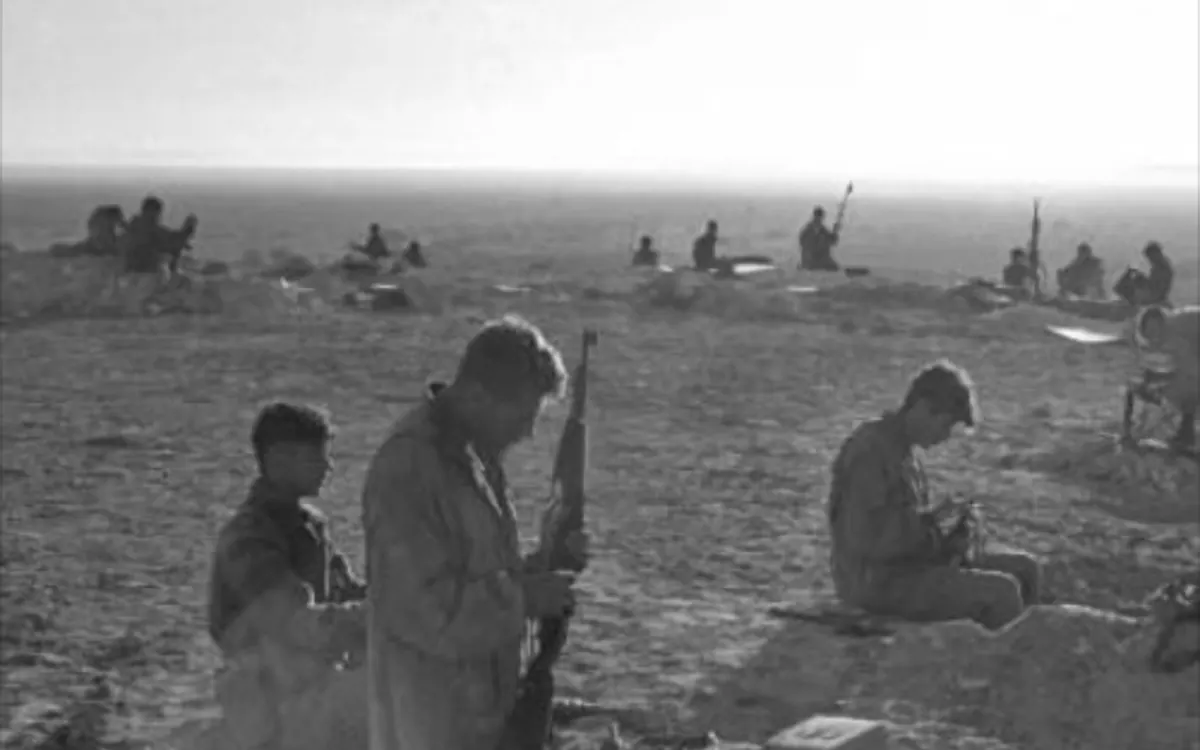
The Sinai campaign was many things - a preemptive strike against Israel's enemies, the last gasp of colonialism in the Middle East and a complete failure of international law. This episode explores the 1956 war from all these angles.
About this episode
It doesn't matter what the world says about Israel, said Ben-Gurion, only that we can exist on the land of our forefathers. Rav Mike plants a question: are the structures of international law a help or a hindrance to justice, does the UN further Isaiah's words at its entrance or serve as a cover for might makes right, and does Israel, the nation that dwells alone, belong in such a body. With the arms channel from France secured and Ben-Gurion back as prime minister giving Dayan free rein, Israel felt war in the air, Begin now leader of a stronger opposition pressing for action before the Hitler on the Nile could finish the job. Britain and France struggled to adjust to the new world order, the French bleeding in Algeria, the British dignity slipping, as when foreign secretary Selwyn Lloyd threatened Nasser with Glubb and the Legion only to be told Hussein had just exiled Glubb. At the start of 1956 Nasser was on top, the regional military power with Czech arms, a hero of anti-imperialism prepared to erase the humiliation of 1948.
America under Eisenhower and Dulles tried to keep the peace without being the world's policeman, bound to Britain and France through NATO yet pursuing even-handedness, and tried to draw Egypt back with 70 million dollars for the Aswan Dam. But Nasser would not play ball, and Dulles, having lost trust after Nasser recognized China, withdrew the offer and added insult by questioning Egypt's ability to build the dam, which Nasser read as a veiled call for his overthrow. On July 26, 1956 Nasser declared martial law, sent troops into the canal zone and announced the nationalization of the Suez Canal, the tolls now to fund the dam. The British and French were hit like a shockwave and beat the war drums, though world opinion was neutral or saw historic justice in Egypt nationalizing a canal in its own territory. Eisenhower thought the Europeans had lost the game and rushed to head off their militancy, but at a tripartite conference the Americans found their allies already planning for war, since diplomacy, the London conference, the maritime powers, the Menzies mission to Cairo, was to the Europeans only a delaying tactic.
Eden wrote Eisenhower comparing Nasser to Hitler in the Rhineland and warning of Soviet-backed revolution, and after the Soviets vetoed internationalizing the canal, the French, who had already reached out to Britain for war, promised Eden the pretext he needed, saying they had just the right man for the job. In Israel the fedayeen raids rose and Ben-Gurion's cabinet cracked along the old lines of activists and diplomats, Sharett trusting the UN, Ben-Gurion scoffing um-shmum, only the daring of the Jews created the state, not any resolution, and Israelis resented the international mechanisms, learning the double standard, as Soviet tanks would roll into Hungary the very week Israeli paratroopers entered the Sinai. Moshe Dayan's eulogy for Roy Rotenberg gave voice to the generation, not blaming the Arabs for their hatred but seeing that to live meant to fight, refusing the ambassadors of malign hypocrisy who call upon us to lay down our arms. In June 1956 the activists carried the cabinet, Ben-Gurion forced Sharett's resignation, replaced by Golda Meir, and when the French air commander asked Peres if Israel would fight alongside them, Peres agreed without hesitation.
By late September the French demanded Israel's participation as the price of continued arms, and after the October 20 plan was called off because it depended on an Israeli first strike timed to the American elections, a new deal was struck at the Sevres conference, where the French also agreed to share nuclear technology. The plan had three stages: Israel would invade the eastern Sinai and provoke Egypt, Britain and France would call for a ceasefire that Egypt, wrongly invaded, would refuse, and then an Anglo-French air and amphibious assault would seize the canal to separate the combatants, crushing Nasser's army while the Europeans defended Israel at the UN and Israel kept Gaza and the Straits. The plan for Israel's second war was mapped on the back of a Kent cigarette pack. At 2:15 pm on October 29, 1956 Mustangs cut the Egyptian telephone lines, Sharon's column rolled toward the Mitla Pass and paratroopers of the 202nd dropped east of it, phase one a total surprise, Nasser at first assuming a mere retaliatory raid. Phase two ran like clockwork: the American resolution to withdraw was vetoed by France and Britain, who issued their own ultimatum that Egypt rejected, and British bombers and the Anglo-French armada of 80,000 men began phase three, the Hitler of the Nile about to get the blitzkrieg.
The world would not let the Europeans or their Israeli client play by colonial rules. As Americans cast their votes for Eisenhower, the one indisputable American power was money: the pound was pegged to the dollar, Britain had lost gold reserves and faced speculation and a cut-off of Middle East oil, and when Macmillan sought to draw on the IMF the US, its largest depositor, said no gold until a ceasefire. Meanwhile the Soviets, glad the world watched Suez rather than their suppression of Hungary, sent threatening letters including a veiled nuclear threat, Bulganin branding Israel a tool of imperialists in words dripping with hypocrisy. Britain caved first on November 6, and Operation Musketeer ended after less than 43 hours of groundwork. Britain and France lost, Eden resigning, de Gaulle rising; Nasser unquestionably won, a hero who defied the West and survived, pan-Arabism sweeping the region, the statue of de Lesseps toppled in Port Said. Israel achieved her immediate goals, the Straits opened and the fedayeen bases destroyed, and Ben-Gurion made a victory speech of a new revelation at Sinai, but within days the Soviet letter, American threats and doubt of American Jewish backing had him reconsidering, and by March 1957 international pressure forced Israel to withdraw, the gamble buying a few years of quiet while Nasser grew stronger and Israel seemed more isolated.
Key ideas
- The war poses whether international law helps or hinders justice, and whether Israel, the nation that dwells alone, belongs in the UN.
- Dulles's withdrawal of the Aswan offer led Nasser to nationalize the Suez Canal, hitting Britain and France like a shockwave.
- The Sevres collusion plotted an Israeli first strike as the pretext for an Anglo-French seizure of the canal, mapped on a cigarette pack.
- Operation Kadesh surprised Egypt and ran like clockwork through its staged ceasefire into the Anglo-French assault.
- American financial pressure and a Soviet nuclear threat forced Britain to cave in 43 hours, ending the last gasp of colonialism.
- Nasser won as a hero of anti-imperialism, and though Israel met its goals it was forced to withdraw by March 1957, more isolated than before.
Chapters
- 0:00 Is international law a help or hindrance?
- 2:09 The pieces in place; Britain and France slip
- 5:26 America tries to keep the peace; the Aswan offer
- 8:44 Nasser nationalizes the canal
- 11:00 Europe plans for war
- 14:12 Eden's Hitler letter; the French pretext
- 16:24 The cabinet cracks; um-shmum
- 18:34 Dayan's eulogy for Roy Rotenberg
- 21:49 The activists carry the cabinet
- 23:00 The French connection; Peres agrees
- 26:13 Sevres; the three-stage plan
- 28:21 Mapped on a cigarette pack
- 29:39 October 29; phase one surprises Egypt
- 31:55 Phase two and three; the armada
- 33:05 The world and colonial rules; American money
- 35:15 The Soviet threats
- 38:33 Britain caves; who won
- 39:37 Nasser's victory; de Lesseps toppled
- 40:45 Israel's goals and the forced withdrawal
Who, where and when
People
David Ben-Gurion, Gamal Abdel Nasser, Dwight Eisenhower, John Foster Dulles, Anthony Eden, Guy Mollet, Moshe Dayan, Shimon Peres, Golda Meir, Ariel Sharon, Nikolai Bulganin, Nathan Alterman
Places
The Suez Canal, The Mitla Pass, Sevres, Sharm el-Sheikh, Port Said, Hungary
Texts
Isaiah at the UN entrance, The eulogy for Roy Rotenberg, The Sevres protocol, Bulganin's letter
When
July 26, 1956 CE: the canal nationalized, October 22 to 24, 1956 CE: the Sevres conference, October 29, 1956 CE: Operation Kadesh begins, November 6, 1956 CE: the ceasefire, March 1957 CE: Israel withdraws
Read the transcript
Let me tell you one thing, said Ben-Gurion. It doesn't matter what the world says about Israel. The only thing that matters is that we can exist here on the land of our forefathers. Well, I'm pretty into existence, and I have the great privilege of being in that holy land. Because I'm Rav Mike Foyer, and this is The Jewish Story. Episode 15, Israel Among Nations, Part 3, Operation Kadesh. So I know we're in the middle of a story, and I'm not going to keep you in suspense for too long with an introduction. But I do want to plant a question here, right at the beginning of the episode. One that might be more pressing today, even, than it was in the 1950s. And the question is, are the structures of international law a help or a hindrance to justice?
And more specifically, by creating a form of nations and empowering it to legitimize and judge the actions of its members, does the United Nations further the words of Isaiah inscribed at its entrance nation shall not lift up sword against nation neither shall they learn war anymore or by serving as a cover for the politics of might makes right and reducing international law to a stick with which the strong can beat the weak does it push those ideals further away and a perhaps more pointed question that flows from that one which is specifically relevant to the Jewish story is does Israel really belong in such a body? I mean, after all, we are the nation which dwells alone, reckon not amongst the nations, as it says over there in Bamidbar 23.9.
And the distinction between Israel and the nations is a principle of biblical thought. But so is their ultimate reunion in the time of redemption. Let it be soon, let it be now. And as we're going to see today, the question of where exactly Israel sits amongst the nations, The United Nations in particular was a crux issue in the War of 1956, Operation Kadesh, as it was known in Israel. So like I said, we're in the middle of a story and it's about to get pretty exciting. At the end of last episode, I hope it will occur that all the pieces were in place. Israel had at long last secured its arms channel from France, and we left Shimon Peres working furiously to get as many weapons as possible into the country before the storm he saw coming broke.
Ben-Gurion is back in charge as Prime Minister, giving free reign to his protege, Chief of Staff Moshe Dayan, to pursue the retaliation policy for all cross-border raids. And don't forget, as the casualty count rose, so did the Egyptian military's humiliation. In general, Israel felt war in the air. The constant Fed'in cross-border raids, the blockades of the Straits of Tehran, Nasser's genocidal rhetoric in paper and on the radio waves. Now, Ben-Gurion may have returned as prime minister in 1955, but you should know that his arch-rival, Menachem Begin, had also nearly doubled the seats of his more militant Heirut party. Begin was finally the leader of the opposition, not just morally, but politically, and his voice thundered from the podium, pressing Ben-Gurion for action before the Hitler on the Nile could finish the job the Germans had begun.
Meanwhile, the former colonial powers of the Middle East, Britain and France, were struggling to adjust to that New World Order. The French were deep in the bloody Algerian War, fast approaching not only the end of their rule there, but ultimately their retreat into near international insignificance. Sorry if you're listening to this in Paris. And some actually call the failure of the Algerian War the death knell of colonialism altogether. Now, the British had already seen the sun set on their empire back in 1948, really, with Indian independence. Now, I know somebody out there is going to argue with me that the British had holdings all around the world still, but practically they were struggling to keep their dignity on the international stage, as well as a toehold of power in the Middle East.
And they should have heard the end of that era when Foreign Secretary Selwyn Lloyd tried to threaten Nasser in February of 1956. The Secretary was in Cairo to insist that Nasser negotiate in what was rapidly becoming the Suez Crisis. When the Egyptian dictator Stonewall, Lloyd reminded him that we still have Glubb and the Legion. Now, he was referring to General John Baggett Glubb, who you may remember from the War of Independence, British subject, commander, and really architect of the British trained and equipped Jordanian Legion. But Lloyd's attempt at colonial power play became a moment of the emperor has no clothes. Nasser laughed in his face and informed the secretary that King Hussein of Jordan had just now exiled Glubb from his country.
That news only reached the foreign secretary on his return trip to England. So at the beginning of 1956, Nasser looked to be on top of the world. He was unquestionably the regional military power, because the Soviets had supplied him with enough Czech arms to give Egypt a qualitative and quantitative edge over Israel. The Arab world increasingly saw him as a hero of anti-imperialism and a rising leader of pan-Arab nationalism. And if his rhetoric was to be believed, he was prepared to crown his rise by erasing the so-called humiliation of 1948. Israel would soon be removed from the map of the Middle East. Meanwhile, on the other side of the Atlantic, the United States was sitting on the edge of all this action, attempting to keep the peace without being the world's policeman.
And that's, of course, not an easy posture to take. Because remember, the U.S. is treaty-bound to both Britain and France through NATO, the North Atlantic Treaty Organization, and thus potentially a partner, willing or not, in any military adventures which lie ahead in our story, they are also pursuing an increasingly hardline approach to Soviet expansionism. We're only months away at this point from the so-called Eisenhower Doctrine, the President's declaration authorizing the commitment of U.S. forces, quote, to secure and protect the territorial integrity and political independence of such nations requesting aid against overt armed aggression from any nation controlled by international communism.
And if you listen closely, that might include Nasser. He is, after all, at this point, a Soviet client. So we add to this mess in the American political scene a historic commitment to Israel's security, bolstered by an increasingly effective domestic pro-Israel lobby, but one that exists in tension with Secretary of State John Foster Dulles' his new policy of even-handedness in the Middle East. And just when he thought it couldn't get messier, 1956 is an election year, one in which the Democrats, heavily backed by the Jews, are breathing down Eisenhower's neck. Now, having led the free world against the Nazis, Eisenhower believed that there was no chance at a meaningful and lasting peace outside of international diplomacy.
The United Nations was the crown jewel of everything he fought for in his eyes. Nevertheless, he recognized that the institution was still too young to wield real authority and, frankly, too weak to assert power. So at this point, the U.S. preferred to pursue diplomacy on its own and to apply economic rather than military pressure. And we saw at the end of last episode that, practically speaking, this meant they tried to draw Egypt back into the Western sphere with money, specifically with $70 million in direct funding of the Aswan Dam irrigation project and backing for an even larger World Bank loan. But Nasser really wasn't interested in playing ball with the West anymore. Maybe it was the power of the Czech arms deal that had gone to his head, or maybe he believed the voices around the world, hailing him in almost messianic terms as the champion of anti-imperialism.
But no matter how he cut it, The American Secretary of State had already lost his trust in the Egyptian dictator when he extended diplomatic recognition to the Communist People's Republic of China back in May. And so, when Nasser sent his ambassador to Washington to notify the Secretary that Egypt was ready to accept all the conditions set for their aid package, Dulles informed him that the American government was withdrawing its offer of financial support. And then the Secretary of State added insult to injury. He released a press statement calling into question Egypt's financial ability to carry out the Aswan project without the aid he'd just rejected. As the World Bank president Eugene Black later said, Dulles was really to blame for escalating the situation.
Quote, it's just as if you went to the bank and asked the bank to lend you some money. They might say we won't lend you any money. You don't put it in the paper that their credit is no good. Now to say that Nasser was enraged is a gross understatement. understatement. This wasn't just a public insult. He saw the Secretary of State's reminder that the United States remains deeply interested in the welfare of the Egyptian people, and not necessarily their leader, as a veiled call for his overthrow. Apparently, the United States was also unaware that the colonial era had ended. They were about to get a little bit of wake-up call, because Dulles wasn't the only one who could make statements to the press.
On July 26, 1956, only a week or so after the withdrawal of American aid for the Aswan Project, President Nasser declared martial law throughout Egypt, and then sent his troops into the canal zone and announced to the world the nationalization of the Suez Canal. Now, he wasn't subtle, nor did he hide his purpose. The tolls from the passage through the strategic waterway would now go, instead of two British and French pockets to the funding of the building of the Aswan Dam. Now Nasser not only had a Soviet patron, he had seemingly limitless sources of cash, and the American decision to play economic harble had clearly failed in a big way. The nationalization of the canal hit the British and French like a shockwave.
British Prime Minister Anthony Aydin broke off a state dinner with the King of Iraq to call an emergency cabinet meeting, and their denunciation of Nasser's act was joined immediately by French Premier Guy Mollet. The British and French press reacted predictably with a rage, beating the war drums and demanding immediate reoccupation of the canal. However, public opinion outside of Britain and France was more or less neutral. Many just felt that Egypt had done nothing illegal by nationalizing a canal that ran through its own territory. Others, particularly in the developing world, actually saw Nasser's act as one of historic justice. After all, what right exactly did the French and British have to control Egyptian sovereign territory taken in the colonial era by force?
And at home, and in the general Arab world, Nasser's popularity soared. The Council of the League of Arab States declared the solidarity of Arab governments with Egypt, and many countries actually sent letters of support and congratulations. Once again across the Atlantic the Americans always had a slightly different view of events than their NATO allies To President Eisenhower and Secretary Dulse the British and France had lost the game as soon as Nasser made his move. The President did release a statement of concern over the nationalization, but he avoided giving any indication of what an American response might look like. Meanwhile, he rushed to head off what was clearly British and France militancy.
Nasser had declared his commitment not to impair traffic through the canal, accepting, of course, Israeli traffic that he had blocked since 1951. And the Americans believed that the world had already accepted the nationalization of the canal by Egypt as fait accompli. It would be foolish, in their eyes, to consider anything but diplomatic means at this point. But, when the State Department Representative Robert Murray arrived at a hastily convened tripartite conference, British, American, and French, he discovered that their European allies were already planning for war. When he cabled Eisenhower, he told them that the British believed, quote, Suez was a test which could be met only by the use of force, and that the French government saw eye to eye with the British, that they were prepared to participate in a military operation.
Now, when the United Nations was founded in 1945, two of its charter principles were to save succeeding generations from the scourge of war, and to establish conditions under which justice and respect for the obligations arising from treaties and other sources of international law can be maintained. And the struggle which is coming highlights just how lofty and, frankly, irrelevant those sentiments were only ten years later. As the summer progressed and the British and French moved closer to war, American attempts at diplomacy moved into high gear. England and France seemed to play along, but what the U.S. saw as a way of preventing conflict, the Europeans really viewed as a delaying tactic, one that would buy them time while they planned their attack.
In August, Secretary of State Dulles traveled to London for yet another international conference on this crisis, this one now made up of all the world's major maritime powers. And he carried with him the idea of an international advisory committee for the canal, something that would work in tandem with the Egyptian government without violating their sovereignty. But the British and the French were not interested. They would only lend their support to an international body that would actually operate the canal, not just advise the Egyptians. So on September 3rd, they sent Prime Minister Robert Menzies of Australia to Cairo to present the London proposal to Nasser. One wonders how he got the short stick.
Everybody knew that his mission was doomed to failure. Nasser would never agree to what he already saw as collective colonialism, a return to foreign rule in his land by the backdoor. And Mendes certainly didn't help anything when he hinted that a refusal to accept the proposal would end in what he called trouble. You are threatening me, Nasser responded. Very well, I am finished. There will be no more discussions. It is all over. Oh, how wrong he was. It had actually just begun. Because now the British and French had their excuse. Diplomacy had failed. In their eyes, really the only barrier that remained was Eisenhower's opposition. British Prime Minister Anthony Aden addressed a letter to the President, calculated to strike a nerve in the man who had been the supreme commander of Allied forces in Europe.
Quote, In the 1930s, Hitler established his position by a series of carefully planned movements, he wrote. These began with the occupation of the Rhineland, and were followed by successive acts of aggression against Austria, Czechoslovakia, Poland, and the West. And then, in a clearly veiled reference to the Cold War, Aidan went on to say that if the international community allowed Nasser to get away with nationalizing the Suez Canal, his enhanced status would enable him to incite revolutions across the Middle East, of course backed by Soviet arms. There was one last nod to international diplomacy. On September 23rd, Britain and France attempted to have the canal internationalized via a UN Security Council resolution, but the Soviets quickly vetoed the move, as was expected.
And anyway, weeks before this, the French had already reached out to the British to move forward on their plans for war. Prime Minister Eden was more than interested, but he told the French he wouldn't agree to attack without some pretext that could provide political cover. And they said, no problem, we've got just the right man for the job. Back in Israel, Nasser's newfound assurance on the international stage had led to an increasingly belligerent posture across the border. The Fedayin raids rose in frequency, and Ben-Gurin and Dayan responded with ever-larger-scale retaliation. And as the conflict intensified, so did the Egyptian rhetoric. We must be strong, Nasser declared, in order to regain the rights of the Palestinians by force.
In midsummer, only weeks before the nationalization, the commander and the chief of the Egyptian army announced, the hour is approaching when we will stand in the front ranks of the battle against imperialism and its Zionist ally. A sense of siege began to grip the country, and as the pressures rose, cracks began to show in Ben-Gurion's cabinet, not surprisingly along the old fracture lines between the activists and the diplomats. We've discussed it many times. I'm not going to go over it, or even overstate the differences between Ben-Gurion's militarists and Moshe Sharet's diplomats. In the end of the day, it's always important to remember that each one believed both war and diplomacy were critical to Israel's survival.
But whereas Ben-Gurion's style was belligerent, Sharet's was appeasing. And furthermore, perhaps the biggest difference between them was that Sharet had far more trust in the structures of international law, particularly in the United Nations. At the end of March, after a particularly bad Fede'in attack, the cabinet held a marathon six-hour debate over Ben-Gurion's proposal to finally conquer the Gaza Strip once and for all and remove the threat of the Fede'in. According to Charit's diary entry of the day, when he insisted that war was not the solution and that rather they should turn to the UN, the prime minister scoffed at him and at the international body. Charit responded that were it not for the United Nations, the Jewish state would not have come into existence at all, at which point Ben-Gurion exploded.
No, no, no, he shouted. Only the daring of the Jews created the state, not any um-shmum resolution. Um-shmum, the um is umot ha-olam, which is the nations of the world, and in Hebrew it's um, and it's um-shmum means nothing. So you've got to hear the dismissal in that. And Ben-Gurion was far from alone in his dismissal of the UN, by the way, because throughout the violence of the 1950s, Israel as a whole, Israelis I should say, looked at the United Nations and the international mechanisms created to monitor their ceasefire with their Arab neighbors with increasing resentment, things that were just meant to hold them back and force them to fight with one hand tied behind their back. And furthermore, Israeli leaders were quick to learn that there was a clear double standard operating in international law.
Perhaps the most blatant example of this comes in our story when Soviet tanks roll into Hungary, crushing everyone in their way in the very same week that Israeli paratroopers enter the Sinai. But that story is going to lie ahead. For now, as a hard spring turned toward an increasingly bloody summer, the activists within the cabinet began to press for a preventative war against Egypt. In particular, Shimon Peres and Moshe Dayan pushed to strike the Egyptians before they could integrate the massive amounts of new Soviet arms into the military. Now, I do feel the need to open a slight window on the psychology of this time, lest anyone listening think that this was simply warmongering or raw reactive fear.
And I think that the best way to do this is by quoting one of the most famous speeches in Israeli history. It was given by Moshe Dayan as a eulogy for Roy Rotenberg, a kibuznik murdered by the Fedi'in in the late spring of 1956. Just listen to one paragraph. It's a little bit long, but pay attention. Yesterday at dawn, Roy was murdered. Let us not today cast blame on the murderers. What can we say against their terrible hatred of us? For eight years now, they've sat in the refugee camps of Gaza and have watched how, before their very eyes, we've turned their land and villages, where they and their forefathers previously dwelled, into our home. It is not among the Arabs of Gaza, but in our own midst, that we must seek Roy's blood.
How did we shut our eyes and refuse to look squarely at our fate and see, in all its brutality, the fate of our generation? Beyond the furrow of the border surges a sea of hatred and revenge, revenge that looks towards the day when the calm will blunt our alertness, the day when we shall listen to the ambassadors of maligned hypocrisy who call upon us to lay down our arms. Because we swore a thousand times that our blood will not be spilled lightly, and yet again yesterday we were tempted, we listened, we believed. Let us take stock today with ourselves. We are a generation of settlement, and without the steel helmet and the gun's muzzle, we will not be able to plant a tree or build a house. Let us not fear to look squarely at the hatred that consumes and fills the lives of hundreds of Arabs who live around us.
Let us not drop our gaze, lest our arms be weakened. This is the fate of our generation. This is our choice, to be ready and armed, tough and hard, or else the sword shall fall from our hands, and our lives will be cut short. It's worth listening to that again. But did you hear the elements? He doesn't blame the Arabs for their hatred. He only sees the reality that choosing to live for him means choosing to fight. And choosing not to fight means bringing needless death upon his brothers. And he certainly doesn't look to the international community, the ambassadors of malign hypocrisy, who call upon us to lay down our arms for any protection, much less salvation. Moshe Dayan was the face of a generation which saw its choice as to live by the sword or to die by it.
Now, in 1956, there was a good argument to be made that this was the case. However, it's a worldview which persists as a powerful force in our society even today. And at some point, we're going to need to consider if it's still reflective of our reality. But it certainly was reflective of theirs. In June of 1956, the activists finally carried the cabinet. Ben-Gurion forced the foreign minister's resignation and within less of a year Moshe Sharet went from being prime minister to foreign minister to private citizen. He was replaced actually by the famous labor minister Golda Meir but her story is one that we're going to have to tell another time. You know the next steps already actually We discussed them just a few minutes ago The U withdrawal of support from the Oswald Dam Nasser nationalization of the Suez Canal the failure of international diplomacy to check Britain and France on their way to war All of those events were being watched very closely by the Israeli government.
It was almost as if Ben Gurion were waiting for a call that he knew would come. By the summer of 1956, the French connection had reached new heights. Dozens of jets, hundreds of tanks, ammunition beyond count were flowing into Israel. Beyond the arms, there was also growing intelligence cooperation and ultimately an emerging sense that France and Israel were allies in a united struggle. So, when the French air commander, André Beaufort, approached Simon Perez in early August and asked, as a hypothetical question of course, if we make war in Egypt, would Isabel be prepared to fight alongside us? Perez agreed without hesitation. Ten days later, he was quietly informed that an Anglo-French attack, codenamed Operation Musketeer, was actually in the works, and when asked how long it would take the IDF to cross the Sinai and reach the canal, Two weeks was Perez's reply.
Now, as Director General of the Defense Ministry, Shimon Peres had no authority to agree to such a plan or even discuss it. He wasn't even a member of the cabinet. But as he later said in his memoirs, he would rather risk his neck than risk missing such an opportunity. Because here was finally the preemptive war that he and Moshe Hadayon had been waiting for. Waiting for it. They'd been pushing for it. And so in early September, when the French asked straight out if Israel was prepared to attack Egypt in conjunction with France and Great Britain on October 20th, Perez said, yes, but I do have to ask. He cabled Ben-Gurion twice, getting no answer. And so he jumped on a plane and flew back to Jerusalem, where he and Moshe-Dahan teamed up to convince the old man that their moment had finally come.
But still, the Prime Minister refused to comment. By mid-September, the French upped the ante, saying that the price for their continued support, read arms, was Israel's participation in the now certain upcoming operation. On September 23rd, Ben-Gurion finally cabled back in Paris. Tell them that their dates suit us, was all his message said. And so, on September 29th, Foreign Minister Golda Meir and General Moshe Dayan arrived in Paris on a French bomber, shopping list in hand, and a massive airlift of French arms began. You know, not an ultiman. The poet famed for his Magasha Kesef, the silver platter, really the voice of the generation of 48, and in many ways the man who replaced Urit Zvi Greenberg as the poet prophet, this time on the left.
He was allowed to witness the unloading of one of the French transports, and his words, I think, give voice to the fear and hope that were so characteristic of his times. Perhaps this is a night of dreams, he wrote, but wide awake, and what I saw was the melting away of the terror gap between us and the forces of destruction. Iron comes, unsteadily in the bowels of the earth, tremble. Now Israel's goal in the coming operation were clear. They aimed to remove the Egyptians from the Gaza Strip and all the bases of the Fediyin that were attacking them and to end their blockade of the Straits of Tehran. But Ben-Gurion distrusted the world in general and he had many fears about entry into what appeared to be a risky and rapidly evolving war.
His journal entry of September 27th actually reads, I made three negative assumptions. One, we shall not be the ones to open hostilities. Two, we shall not participate unless there's British agreement, and their agreement must include our defense against a Jordanian and Iraqi attack. Three, that no action will be taken contrary to U.S. opinion without it being informed. But it turns out that the Anglo-French plan depended on an Israeli first strike, and that they'd chosen the timing of their attack to coincide with the American elections in order to hobble Eisenhower's ability to react. And so Ben-Gurion balked, and the October 20th operation was called off. But Operation Musketeer had a momentum that would not be stopped.
On October 22nd, a French Air Force plane carrying Ben-Gurion, Perez, and Moshe Dayan landed at a quiet airstrip southwest of parents. A new deal needed to be struck. Not only had the French guaranteed that their navy and air force would defend Israel's cities, it later emerged that they agreed to share their nuclear technology with the Jewish state as well. That's a story we'll have to tell at another time. And so on the third and final day of what later became known as the Serres Conference, I'm sure I said that wrong, named for the Parisian suburb where it was held, Ben-Gurion presented a list of final objections. He was willing to cooperate with the Europeans, but not to be their mercenary. Their goal was the Suez Canal, but Israel's focus was on the Gaza Strip and the Straits of Tehran, both of which lay on the opposite side of the Sinai Peninsula.
And so, with much back and forth, the plan which emerged in response to his concern had three stages. Stage one, Israel would invade the eastern Sinai, surely provoking a massive Egyptian response. Stage 2, Britain and France would call for a ceasefire on both sides. Israel would announce the agreement but nevertheless continue to advance on the battlefield toward the canal and its own objectives, and the Egyptians, wrongly invaded, would surely refuse any order to lay down their arms. Stage 3 then would be a combined British and French air and amphibious assault, aiming to secure the canal and nominally to, quote, separate the combatants who were refusing to comply with international resolutions.
Nasser's army would be crushed. Perhaps his regime would fall. Britain and France, permanent members of the security councils, would defend Israel in the international forum. Israel would possess the Gaza Strip and the Straits of Tehran, and the Suez Canal would be back in colonial hands. What could possibly go wrong? The Israelis retreated to make their final decision. And as Shimon Peres told the story, he and Dayan worked all night with the Allies to prepare answers to all of Ben-Gurion's objections. Quote, when we came back to the villa in the morning, we wanted to show Ben-Gurion a map of the Sinai, but there was none. And so I pulled the pack of Kent that was smoking and took out the silver foil, and Dayan drew the map and the arrows on the other side.
The central arrow is as far as the Mitla. The plan was to parachute into the Mitla Pass and from there to move backward toward the eastern border. And so the plan for Israel's Second War in less than a decade was mapped out on the back of a cigarette pack. At 2.15 p.m., October 29, 1956, four F-51 Mustang fighters raced westward over the Sinai Desert, diving to a mere dozen feet off the ground. Their propellers and wingtips cut the telephone lines linking the 30,000 men of the Egyptian 3rd Infantry to their bases in Cairo. Only an hour later, two battalions of Israeli forces, riding French-made tanks, half-tracks, and more than 100 jeeps, equipment they had received only three days earlier from the French, rolled into Egyptian territory under the command of Colonel Ariel Sharon.
They were headed for the Mitla Pass, the strategic choke point which controlled the only way to travel east to west across the central Sinai. At the same time, 16 Douglas C-47 transports, flying low to evade radar, crossed the sky above them. And at 5 p.m. they rose to 1,500 feet, and the first of 395 paratroopers of the 202nd Brigade leapt out into space just east of the Mitla Pass. The paratroopers dug in at the eastern entrance and awaited the arrival of Sharon's column. The link-up came at 10.30 p.m. the following night. Meanwhile, with Sharon holding the keys to the Sinai against any reinforcement from the west, the rest of the Israeli army swung into action. Heavy armor rolled into Rafiach City to cut off the Gaza Strip from Egypt proper, while lighter units raced down the coast toward the tip of the Sinai, paratroop planes flying overhead.
Phase one was an unqualified success. Israel had totally surprised Egypt. When Nasser first got word, he assumed that this was yet another Israeli retaliatory raid, albeit larger than most. He couldn't possibly know that it was actually what the French and the British were waiting for. It was their justification for intervention. And so, phase two happened immediately, and the world of international diplomacy responded like clockwork. On October 30th, the American ambassador to the United Nations, Henry Cabot Lodge Jr., presented a resolution in the Security Council calling on Israel to withdraw from the Sinai and with an eye toward England and France, requesting that member states of the UN, quote, refrain from using force in the region.
Well, the resolution failed, because it was vetoed by France and Britain, of course, who then announced that their own ultimatum had been given to combatants. cease fire in compliance and withdraw to positions 10 miles from the Suez Canal. It was an ultimatum that expired at 4.30 a.m. the next day. Now Israel was still miles from the canal anyway and they had no intention of halting their attack but they played out their role perfectly and accepted the ceasefire. As expected, Egypt rejected it. They had no intention of withdrawing their troops from a strategic position in response to invasion. They were sitting right on the canal at that time. The very next night British bombers out of Cyprus began to strike the Egyptian airfields, and the Anglo-French invasion armada sailed from Malta and Algeria to put Phase 3 underway.
Now, armada may sound like a very grandiose term, but altogether the force consisted of nearly 80,000 British and Frenchmen on 230 warships, including seven aircraft carriers, and more than 70 merchant marine ships conscripted for transportation. They were carrying hundreds of landing craft and more than 20,000 vehicles for the assault. The Hitler of the Nile was about to get the blitzkrieg. Informed the approaching invasion, Nasser accepted the UN ceasefire on November 2nd. And the very next day, Israel did as well under the assumption that it could force open the Straits of Tehran before the ceasefire actually went into effect. But the French cabled them a warning. This was a violation of their agreement and they threatened to call off the attack.
and so Ben-Gurion withdrew Israel's acceptance by basically setting impossible conditions for the ceasefire. The British airstrikes intensified as their armada approached, and Israeli troops raced down the eastern coast of the Sinai. They reached Sharm el-Sheikh, the city at the tip of the peninsula, just as the European boats took up position off of Port Said at the northern head of the Suez Canal. Ironically the war between the so belligerents meaning Egypt and Israel ended just as the Anglo invasion began Now I not going to talk you through the details of the rest of Operation Musketeer I'm sorry if that's disappointing to you. Though, if you are a war history buff, it's worth reading up on. Not only was it a complex operation, filled with drama, revisions, and snafus, it was actually a testing ground for many of the elements of modern war.
For instance, when the Royal Marines executed the first helicopter-borne assault landing in history, 22 choppers put ashore 415 men and 23 tons of equipment in less than an hour and a half. That's pretty impressive in 1956. But for our story, what matters is that the world was not going to allow the British and the French, or their Israeli client, to play by colonial rules anymore. As the fighting raged in Egypt, Americans were casting 57% of their votes for Eisenhower. The timing was perfect, as the French and British had planned, because he was indeed distracted. But in 1956, America had one power which was indisputable in the Western world, money. Since the post-war rebuilding of the British economy, the pound sterling was pegged to the American dollar.
And that meant that the British treasury required significant gold reserves to keep the value of the pound stable. Do a little research on international monetary information if you want. But for various reasons, Britain had lost nearly $200 million in gold reserves since September, and market speculation against the pound spiked as soon as British paratroopers landed on Egyptian soil. Add to this the news that Syrian sabotage in support of Egypt had just cut off the supply of oil from the Middle East, one on which Britain was entirely dependent, and that the Americans were threatening to have the Saudis do the same, and you can see their economic crisis mounting. Harold Macmillan, British Treasury Secretary, attempted to withdraw Britain's contribution to the International Monetary Fund in hopes of regaining a little bit of gold and shoring up the pound.
But when he did, he received a blunt no. You see, the U.S. was the largest depositor in the IMF and therefore held veto power. Britain would get no gold until she took a ceasefire. At the same time as this was going on, the USSR began to shoot off threatening letters to Paris, London, and Tel Aviv. Now, in reality, the Soviets were not sorry to see the world focus on the Suez Crisis, rather than the suppression of the Hungarian uprising. They rolled tanks into Hungary on October 24th, only a few days before Israeli troops crossed into the Sinai. But, nevertheless, the Soviets were not about to squander their newfound influence in the Middle East by letting their client get crushed. Premier Nikolai Bulganin's letter to Ben-Gurion, written while he was still stamping out the sparks of liberty in Eastern Europe, is more than a bit hypocritical.
Here's a good quote for you. All peace-loving mankind indignantly brands the criminal actions of the aggressors who have attacked the territorial entity, sovereignty, and independence of the Egyptian state. Disregarding this, the government of Israel, acting as a tool of foreign imperialist powers, continues the foolhardy adventure, challenging all the peoples of the East who are waging a struggle against colonialism for their freedom and independence, all the peace-loving people of the world. This from the man who's grinding Eastern Europe under his boot. At the same time, hypocrisy aside, the premier made a comment which deserves further consideration. It's something I actually hope to do in a later interlude, but for now, just hear what he has to say.
Carrying out the will of other people, acting according to instructions from abroad, The government of Israel is playing with the fate of peace, with the fate of its own people, in a criminal and irresponsible manner. It is sowing hatred for the state of Israel amongst the peoples of the East, which cannot but affect the future of Israel, and which will place a question mark upon the very existence of Israel as a state. Now, this wasn't the only letter he sent. And the Premier's letter to President Eisenhower also reeked of hypocrisy. But in addition, it contained a veiled threat of nuclear war as well. Quote, The Soviet Union and the United States are permanent members of the Security Council and the two great powers which possess all modern types of arms, including atomic and hydrogen weapons.
We bear particular responsibility for stopping war and reestablishing peace and calm at this threatening hour when the loftiest moral principles and the foundation and aims of the United Nations are being put to the test. Like I said, for being put to the test in the Middle East and in Eastern Europe. But there's only one place he cares about. And so the pressure was on, and Britain was the first to cave. Prime Minister Aidan, plagued by domestic protests, the Brits were not happy about the rebirth of imperialism, and facing the impending financial crisis that we describe, agreed to the ceasefire on the evening of November 6. French Premier Guy Mollet was informed by telephone, and though he and his generals were eager to finish the job, they couldn't do it alone.
And so Operation Musketeer, intended to topple the Hitler of the Nile and retake the Suez for the French and British, came to a premature end after less than 43 hours of groundwork. So, who won the war? There's one thing we can say for sure. Britain and France lost. Prime Minister Aidan, sick and broken, resigned in January of 1957. For France, the end was a bit slower, but by 1958, French soldiers returning from the failed war in Algeria and in Egypt voted out the Fourth Republic and brought Charles de Gaulle to power. The sun had clearly set an empire altogether. I can also say that Nasser unquestionably won. Left to himself, it seems that the Egyptian dictator may have never amounted to much at all, but now, because of the Cold War, he had a superpower patron to arm him, and the last gasp of colonialism in the Sinai campaign had made him a hero of the Arab world.
Nasser had accomplished something that no other country in the region had yet been able to do. He'd openly defied the West and came out on top. Egypt, Syria, Saudi Arabia, and Jordan signed an Arab solidarity pact in January of 1957, affirming their commitment to intra-Arab cooperation and really laying the groundwork for much greater political and military cooperation to come. Pan-Arabism as a worldview swept the Middle East, and with it, Nasser's power grew. It will only take another decade before he's ready to wield it again. But perhaps the most dramatic symbol of the victory of Arab nationalism over European imperialism came on Christmas Eve 1956, just after the European troops departed the Canal Zone, when an angry Egyptian mob in Port Said surrounded the 40-foot-high statue of Ferdinand de Lesseps, builder of the canal.
Climbing a ladder, a few men placed explosives between the stone pedestal and the bronze statue, and as the crowd cheered, an eruption of smoke and fire toppled the 57-year-old symbol of colonial domination. And how about Israel? Well, at first glance, she'd achieved her immediate goals. The Straits of Tiran were open to navigation for ships coming to and from the port of Eilat, and the Fedi'ing bases in the Gaza Strip were destroyed. There was even a heady moment on November 7th when Ben-Gurion made a victory speech to Knesset, declaring that there had been a new revelation at Sinai, claiming the Sinai Peninsula had never belonged to Egypt, and arguing that the Jews had an ancient historic claim to the islands of Sanapir in Tehran that controlled the entrance to the Gulf of the Lot.
But within two days, things looked very different. The menacing letter from the Soviet premier that we quoted, threats of American diplomatic and economic embargo, and even signs that American Jewry might not back Ben-Gurion if he went face-to-face with the President, had him reconsidering his victory speech. The French and the British were nowhere to be seen with their promised diplomatic cover from the fallout of Operation Kadesh, as Israel knew it. By mid-November, in fact, the first element of a blue-helmeted UN emergency force made up of soldiers from half a dozen neutral states were already taking up position in the canal zone, and the last of the Anglo-French forces pulled out of Port Said just before Christmas.
Israel tried to hold out. I mean, after all, she had the most to lose. And in an open address to Knesset in February of 1957, Ben-Gurion expresses bitterness over the question with which we began. Are the structures of international law a help or a hindrance to justice? For eight years, he said, the United Nations has permitted acts of hostility, boycott, blockaded, murder by the Egyptian government against Israel. If the United Nations writes this wrong, that will immediately solve all the problems that trouble the American president and ourselves in connection with the Straits and the Gaza Strip, and the question of compliance or non-compliance on Israel's part will not arise at all. Israel's right to peace and security is no less valid than Egypt's right to war and destruction.
The people of Israel cannot submit to discrimination in international relations. We have believed and we shall continue to believe in the conscience of humanity. We appeal to the American government and to all friends of peace and justice in the world to stand by our side and to help to secure for the people of Israel its international rights, sovereign equality, peace, and security. Grand words. But by March of 1957, American and international pressure forced Israel to withdraw the last of its troops from the Sinai. Ben-Gurion's gamble had bought a few years of quiet, but at what price? Nasser was growing stronger, the Arab world was awakening, and Israel seemed increasingly isolated in the international world.
The new revelation at Sinai and another opportunity for the emergence of the conscious humanity would have to wait just a bit longer. You know, before I sign off, I want to thank a few folks. I want to thank all the folks who give their hard-earned money for helping to make this show happen, for keeping it free and making it widely available, and I want to invite you to join them. Go right now to my website, jewishstory.co, and in the upper right-hand corner you'll see a button that says Be a Patron, and you can click on through and make a little bit of per-podcast support. If that's too complicated or more than you bargained for, you can also write me an email at rovmikefoyer at gmail or send me a message at rovmikefoyer on Facebook, and I'll give the details of how you can dedicate a show to the honor of someone with you today or in memory of someone who is not.
So I'm happy to share that with you. Just write me. I'd also like to thank the Land of Israel Network. That's thelandofisrael.com for creating a platform that allows me to reach so many amazing people. I want to thank the Pardes Institute, P-A-R-D-E-S dot org dot I-L for building an educational institution. It gives me the privilege of teaching amazing, amazing Jews. And I want to thank you for listening. I'm Rav Mike Foyer, and this is The Jewish Story. .
More from Season 3
TJS: S3E13 Israel among the nations part I The Lavon Affair 1954
The 1950's were a formative time in Israeli history. The Cold War was getting hot, internal politics were volatile, and the it seemed as if the War of...
Play Episode
TJS: S3E14 Israel among the nations part II: War Approaches 1955
The clock is counting down toward the 1956 Sinai Campaign. Before we can tell that story the threads of the Cold War, infiltration and post-colonial politics have to...
Play Episode
TJS S3 Interlude: 5780 A New Horizon
The High Holy Days are also know as the Days of Awe which can be awesome, or awful. Here is a look at how to tie the work...
Play Episode