
TJS: S3E13 Israel among the nations part I The Lavon Affair 1954
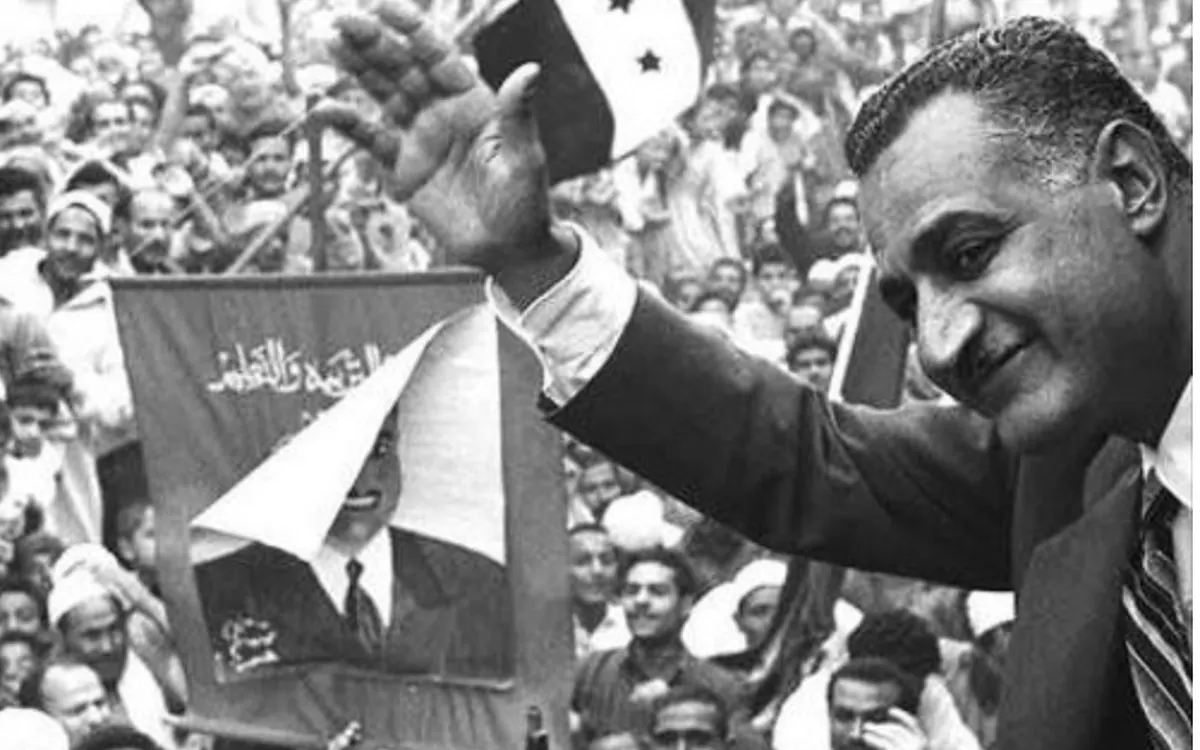
The 1950's were a formative time in Israeli history. The Cold War was getting hot, internal politics were volatile, and the it seemed as if the War of Independence had not quite ended. To Israel's leaders, there was nothing more important than maintaining a strong posture, even though this may have meant that they were marching steadily toward another war.
About this episode
The law of unintended consequences is the only real law of history, says Niall Ferguson. On the way to the Sinai campaign of 1956, which set the stage for 1967, Rav Mike asks how it came about that Israel is both a regional power rooted in its culture and a thriving society and, to many including its own, an interloper and colonial transplant. History's events are the product of vast economic, social and cultural forces, yet a force never did anything, people do things, so events are ultimately human decisions shaped by those forces, and the forces-of-history approach is disempowering while human decision is frightening because history is littered with the casualties of unintended consequences. The sages read this in Isaiah's I will speed it in due time: if we merit God speeds redemption, and if not it comes in its time anyway, so the big picture is coming no matter what and the question is whether we bring truth and consciousness to our decisions.
The modern history of Egypt turns on the Suez Canal, completed in 1869, which revolutionized world trade and European colonialism, the scramble for Africa taking the continent from 10 percent under European control in 1870 to 90 percent by 1914, and halving Britain's distance to India, so Egypt could not be ignored. The French-built canal passed to British control, and when economic troubles turned political, Britain seized the country in 1882 behind an obedient ruler, declaring direct occupation in World War I, and after the 1919 unrest the independent kingdom of Egypt kept British domination of the canal, army, police and railways. World War II saw rising nationalism, and the straw that broke the monarchy was the defeat by Israel in 1948, which the humiliated officers blamed on a corrupt pro-British monarchy, giving rise to the Free Officers Movement under the figurehead Naguib but led by Gamal Abdel Nasser, whose reputation was made at the Fallujah pocket, the one Egyptian holdout the Israelis came to see as a leader they could negotiate with. King Farouk was deposed in July 1952, and when democracy proved hard Nasser banned the parties, survived an assassination attempt, crushed the Muslim Brotherhood and communists, and became Egypt's sole power, his aims to get the British out and Egypt out of poverty, winning British evacuation of the canal zone by July 1954.
In Israel the sense of isolation grew. America under Eisenhower and Dulles steered a neutral course and excluded Israel from the Baghdad Pact, the Soviets had shifted from recognizing the state and backing it through Czech arms to vetoing concern over the Suez blockade and persecuting rootless cosmopolitans, Khrushchev calling Israel a tool of Western imperialists, and even the non-aligned movement rejected it for the prominence of Arab states. Domestically Mapai ruled with an iron hand but stayed split between the military activists and the diplomats, Ben-Gurion holding that military strength won independence and only strength gives safety, Sharett that international recognition is the key to survival; both knew a well-equipped army made it possible, and Israel faced a qualitative and quantitative gap, Ben-Gurion unable to sleep for fear of a combined Arab attack, the only solution an international patron to arm the IDF, assumed to be the United States, blocked by the 1947 embargo, the Tripartite Declaration, and the fallout of Kibya. In December 1953 Ben-Gurion retired to Sde Boker, from exhaustion, to teach that no state depends on one man, and out of a new spirit drawn to the desert as the place to begin again, leaving Sharett as prime minister but installing his activists, Dayan as chief of staff, Lavon as defense minister and Shimon Peres as director general.
Peres, born Szymon Perski in Poland in 1923, taught Talmud by his grandfather, drawn into the labor youth movement and noticed by Ben-Gurion, alone held that France, not America, was Israel's best hope for arms, against Lavon and even Ben-Gurion, who asked why the French surrendered to the Nazis. Given the green light to pursue the French connection, Peres drew on post-war French guilt, the shared memory of the resistance, a mutual dislike of Britain and French admiration for the IDF, but it might have come to nothing without Nasser: when the Algerian FLN launched the Toussaint Rouge of November 1954 and Nasser backed Algerian independence as part of his ambition to lead the Arab world against Western imperialism, every Frenchman killed in Algeria, as Peres put it, drew France and Israel closer, the enemy of my enemy. Facing a French foreign ministry worried about its image and a Fourth Republic of twenty-six governments in twelve years, Peres went unconventional, wining and dining industrialists and military leaders and connecting the two defense ministries directly, cutting the diplomats out, and in the fall of 1954 France delivered tanks, artillery and Ouragan jets more advanced than any in Arab hands.
1954 was a tense year: leadership of the guerrilla campaign passed from Jordan to Nasser's Egypt, the refugee camps of Gaza spitting distance from the western Negev, nearly 400 complaints in three months, fedayeen penetrating deep into the south. When Egypt won the British withdrawal from the canal and the Americans seemed ready to arm Nasser, disaster appeared at hand, since the British were the essential buffer between two states still technically at war, so some in Mapai felt the only solution was focused chaos: if the Americans and British lost confidence in Nasser's grip, they would not arm him or leave him the Suez. Thus Operation Susanna, a false-flag operation by Aman's sleeper cell 131 in Egypt, Egyptian Jews recruited and trained to bomb Western institutions so the attacks would be blamed on the Muslim Brotherhood or communists and provoke a crackdown and mayhem. The first bombs went off in July 1954 causing no casualties and little damage, but the agent Avri Elad, a double agent, betrayed the uncompartmentalized cell, Philip Nathanson caught when his bomb went off in his pocket, the operation rolled up, thirteen young Jews tortured, two agents suicides, and in a show trial two defendants, Moshe Marzouk and Shmuel Azar, were hanged. The fallout was chaos of a different kind, a hardening toward the war of 1956 and mayhem in Israeli politics falling on Lavon, Peres and Gibli, known in Israel not as the Lavon Affair but as Esek Bish, the bad business.
Key ideas
- Events are shaped by vast forces but made by human decisions, and the question is whether we bring truth and consciousness to them.
- The 1948 defeat broke Egypt's monarchy and raised Nasser's Free Officers, whose aims were to get the British out and Egypt out of poverty.
- Israel's growing isolation and arms gap drove the search for an international patron, blocked in Washington by the embargo and Kibya.
- Shimon Peres alone bet on France, and the Algerian revolt made every Frenchman killed draw France and Israel closer.
- Peres cut the diplomats out and connected the defense ministries directly, winning the first French delivery of advanced arms in 1954.
- Operation Susanna, a botched false-flag bombing in Egypt, ended in a show trial and two hangings, the chaos of Esek Bish falling on Lavon and Peres.
Chapters
- 0:00 The law of unintended consequences
- 2:12 Forces of history or human decision
- 5:36 I will speed it in due time
- 6:38 The Suez Canal and colonial Egypt
- 10:54 Nasser and the Free Officers
- 13:16 Farouk deposed; Nasser's sole power
- 16:35 Nasser's aims; Ben-Gurion's hand of friendship
- 18:45 Israel's isolation; America and the Soviets
- 22:04 The arms gap; a patron to arm the IDF
- 25:30 Ben-Gurion retires to Sde Boker
- 28:43 Shimon Peres; the French connection
- 31:05 French guilt and the Algerian revolt
- 34:50 Cutting the diplomats out; the first arms
- 38:20 1954; the campaign passes to Egypt
- 40:34 Focused chaos; Operation Susanna
- 41:40 The false flag; cell 131
- 43:53 Betrayed and rolled up
- 44:59 The show trial; two hanged
- 46:04 Esek Bish, the bad business
Who, where and when
People
Niall Ferguson, Gamal Abdel Nasser, Muhammad Naguib, David Ben-Gurion, Moshe Sharett, Moshe Dayan, Pinhas Lavon, Shimon Peres, Avri Elad, Philip Nathanson, Konrad Adenauer, John Foster Dulles
Places
The Suez Canal, Cairo and Alexandria, The Fallujah pocket, Sde Boker, Algeria, The Gaza Strip
Texts
The Tripartite Declaration, The Baghdad Pact, Isaiah 60
When
1869 CE: the Suez Canal completed, July 23, 1952 CE: Farouk deposed, December 1953 CE: Ben-Gurion retires to Sde Boker, November 1, 1954 CE: the Toussaint Rouge, July 1954 CE: Operation Susanna
Read the transcript
The law of unintended consequences, says historian Niall Ferguson, is the only real law of history. And it's true, I definitely intend to do many things, but there's no real way of knowing where this story is going. Because I'm Rav Mike Foyer, and this is The Jewish Story. Episode 13, Israel Among the Nations Part 1, The Lavon Affair. You know, I had a life-changing experience when I was in college. I was stuck on a 14,000-foot peak with three friends for more than 22 hours. It was intense, incredible, but looking back, and I've done it many times, together with my friends and by myself, I can identify a chain of bad decisions that led to something which could have been a real tragedy and not just an ordeal.
But the truth of the matter is, when we got up in the morning and decided to go for it, Instead of getting out of camp an hour late, it never occurred to any of us where such a choice might lead. And the same can always be said of the events that lie ahead in the Jewish story. Because we're on our way to the Sinai campaign of 1956. It's going to take us another episode or two to get there, is my guess. It's an act of political buccaneering, if I could call it such, which in many ways will set the stage for the even more dramatic Six-Day War of 1967. And since we basically live in a post-67 world here in Israel, I would be remiss as a storyteller and as a student of history if I didn't ask, how on earth did this all happen?
Now, I said this and not that because what I really want to know is about today. How did it come about that Israel today is, on one hand, a regional power, rooted in our local culture, able to project our might around the world, and a thriving and dynamic society? On the other hand, we're increasingly viewed as an interloper, a colonial transplant in the heart of the Middle East, and not just by our Arab cousins around us, but even by many of our Jewish brothers and sisters back in the States, and, frankly, here in the country. So both storytellers and students of histories need to ask how things came about. I don't mean need to from a technical standpoint. We have an inner need. That's why we tell stories.
That's why we learn history. but we need to be very careful once we've asked how things come about in supposing that we can ever have a real answer because on one hand, when you look at history there's no questions that the events that make up the stories that we've been telling all along are the product of vast economic, social, cultural forces but what bothers me is whether this means that the people in them who certainly believe they're rational actors I mean, I get up every day believing my choices matter are no more than puppets? Are we just chips in the stream of world history? As many historians, by the way, would have you think. But an economic force actually never did anything. People do things.
And therefore, from the other perspective, is that historic events are ultimately the product of human decisions. Yes, yes, shaped and constrained by the larger forces. Therefore, it's worth mapping them out. But ultimately, every decision is the product of the subjective elements in personality, belief, ideology, education, ego. And I frankly find the sort of forces of history approach that social and economic historians tend to rely on downright disturbing. I find it disturbing because it's disempowering. And I find human decision-making as the nexus of historical change frightening, because history is littered with the casualties of the law of unintended consequences. And I've studied it enough to know that on some level, yes, we are chips in the stream.
And Marx said it correctly when he pointed out the history of all hitherto existing society is the history of class struggles. You don't have to believe in his sort of dialectic materialism. His point is, most of the real clashes throughout time happen on a scale above the individual. And yet, as a Jew, I know the power of human action. God wouldn't have offered us a relationship of commandedness if our actions didn't matter. And frankly, our sages tell us, not only do they matter, that each of us has the power to bring about redemption in our own measure. So, with the approach of the Sinai Campaign of 56, we're about to jump on the fast track toward creating the world, like I said, which we know today, at least as far as Am Yisrael is concerned, as we go along, I'll make the argument it's actually the world that everybody knows.
And we also have to recognize that despite the fact that we live in a post-67 world the Jewish world in particular is undergoing a rapid evolution right now. So like I said, I want to keep our eyes on how it came to be and in particular on how history's most downtrodden people the bearers of the sacred flame of human sanctity in the face of endless human evil have come to be seen as ourselves evil imperial oppressors in our own land. And like I said, not just by our enemies, also by many of our brothers and sisters. Some of you listening now may have these thoughts. Hey man, I have my moments. So in order to do this, we're going to have to follow the big forces at play. We need to understand the American Soviet Cold War struggle for influence in the Middle East.
We need to understand post-colonial politics as the empires which ruled the world only a few years ago in our story begin to crumble. And we need to also keep our eye on the rising global economic integration and the role that oil plays in that, amongst many other factors. But remember, as we're going forward, the Cold War itself never made a decision. Post-colonial politics is an idea, not an actor. in the events that lie ahead in our story it will always be human beings who bring either triumph or tragedy even if they're only channels themselves for greater forces and it might just be that this is what our sages meant with their explanation of the human element in the ultimate redemption if you look at the end of the chapter 60 in Isaiah, line 22 it says that the smallest shall become a clan in the least a mighty nation.
I'm more interested in the second half, although there's what to say about that. Ani Hashem Be'ita Achishenah. I, the Lord, will speed it in due time. And the sages pick up on what seems to be a strange contradiction in Isaiah's words. What does that mean, speed it in due time? Either it comes in due time, or you speed it up. And so they say, I will speed it, meaning, if we merit, God will cause redemption to come more quickly. But, you know, Be'ita, it will all come in its time. If we don't merit, it just will happen according to plan. Meaning that the big picture of redemption is coming no matter what. There is an evolution of human consciousness in society which lies over the horizon and we're headed there in God's sweet time.
The real question is whether we will be able to bring to bear truth and consciousness on our decisions in order to help it more rapidly unfold. You know, the history of colonial rule in Egypt is kind of long and ugly, but the modern phase can't be separated from the Suez Canal. Completed 1869, the canal revolutionized world trade by eliminating the need for ships to round the Horn of Africa in order to travel between Europe and Asia. And it didn't just revolutionize world trade, it revolutionized European colonial efforts. The best way to see this is that the so-called scramble for Africa, when the European nations suddenly realized that the crown jewel of colonialism was waiting for them to carve up, that scramble never could have happened without the canal.
In 1870, the year after the canal was completed, only 10% of Africa was under formal European control. By 1914, it was 90%. And of course, I used the term, but India was really the jewel and the crown of the British Empire. And now that the canal had cut travel distance between Britain and her crown jewel by almost half, it became of immense strategic importance, which meant that Egypt as a whole could not be ignored. Now, it was originally constructed, the canal that is, by a private French company. And the Khedive, I think I'm pronouncing it wrong, the ruler of Egypt and Sudan, held an initial 44% interest with the French holding a controlling share. But within a few years, the ruler of Egypt was forced by his financial difficulties to sell out to the British crown.
And suddenly the Suez Canal became a European waterway owned and managed by the British and the French in the heart of the Middle East. Now this influx of British pounds didn't save Egypt's government. And by 1880, their economic troubles had turned political. Riots, unrest, and army revolt. This will begin to sound familiar by the end of this episode. That was all it took to bring the British Navy into the picture. And Her Majesty's government could not risk any threat to the lifeline of empire. And so in 1882, a combined force of British, Indian, and French troops had landed at both ends of the canal. They met in the middle, pivoted, and not only wiped out the Egyptian army, basically with their left hand, but took control of the country altogether, though under the guise of placing an obedient Egyptian ruler on the throne, something that the British were quite good at in their various pieces of empire.
And even that facade was put aside during and after World War I. Egypt had nominally remained part of the Ottoman Empire, even when the British were pulling the strings. But now, Britain was at war with the Ottomans, and so a direct occupation of the country was declared. World War I unfolded, and in the wake of the Paris Peace Conference of 1919, which I hope you recall, the Egyptian populace decided it was tired of foreign rule. And there were several years of demonstrations, violence, nationalist unrest, which eventually led to the establishment of the independent kingdom of Egypt. Now, that sounds nice, but lest you think it was actually the end of colonial rule, the British influence continued to dominate Egypt's political life through encouraging their fiscal, administrative, and governmental reforms.
I mean, they told them how to do government. And, frankly, the British retained control of the canal zone, as well as responsibility for both Sudan and Egypt's external protection and the protection of all foreigners in the country. And just to top it off, the British ran the police force, the army, the railways, communications, and that of course meant that British troops were stationed in every major city and town to make sure everything ran smoothly. So, hearing this, you can probably understand why the people of Egypt felt that the revolution of 1919 was not quite yet complete. So World War II saw a steep rise in Egyptian nationalist influence, particularly within the Egyptian army. And perhaps in order to pacify those forces and to keep the very important base that Egypt was for British war efforts in World War II, the British agreed to modify what was called the Anglo-Egyptian Treaty that they'd signed back in 1936 before the war and committed to a withdrawal of their troops from the Canal Zone by 1949 and from the country altogether within 20 years.
But even this wasn't enough. There are no half measures when it comes to independence. Don't forget that. So really, according to many historians, the straw that broke the camel's back or maybe the monarchy's back in this case was the Egyptian failure against the newborn Israeli army in 1948 the nationalists within the Egyptian army were humiliated by their defeat and when we're humiliated we always look for someone to point the finger at they blamed the monarchy which they said was both corrupt and pro-British two unforbillable sins and frankly the monarchy itself was an affront to their national pride and an insult to the poverty under which the vast majority of Egyptians suffered The result of these feelings was the organization of the Free Officers Movement It was a group of reform Egyptian officers backed by the way by the Soviet Union and the United States, which began to agitate for the end to monarchy.
And now they used General Muhammad Naguib as their head. He was sort of an elder statesman who was used to show a serious front and to attract high-level supporters in the army. But the real mind behind the Free Officers Movement was a young lieutenant colonel named Gamal Abdel Nasser. Nasser had come to nationalism even before he came to the military. He was a young activist during the anti-British unrest back in the 30s. But his popular reputation, which really gave him his power, was made when he was deputy commander of the Fallujah pocket. We didn't speak about it, but this was the only holdout of the Egyptian army which wasn't defeated by the Israelis. Nearly 4,000 Egyptian troops were besieged by the IDF for four months during the War of Independence and they were actually allowed to return to Egypt under the 1949 Armistice Agreement.
Now, it's interesting to note that it was in his four months at Fallujah that the Israelis gained a sense that Colonel Nasser was not only a strong and honorable leader but someone that they could negotiate with. And he, in turn, had direct experience of the Israelis in the various phases of their, I guess, retreat would be the right word. So when the troops returned from the Fallujah pocket after the armistice, the only portion of the Egyptian army that suffered neither defeat nor surrender, they were all instant heroes. Heroes, that is, in the eyes of the populace. It's noteworthy that the royal government sought to suppress any celebration of their return. Nevertheless, Nasser used his newfound popularity and the widespread disgust that existed with the monarchy to help him organize a founding committee for the Free Officers Movement.
It was a committee that really reflected a broad spectrum of Egyptian society. The Young Egypt Nationalist Movement, the Muslim Brotherhood, the Egyptian Communist Party, even members of the aristocracy. And despite their diverse viewpoints, the committee was able to unite around two simple aims. Freedom, meaning political freedom, and the restoration of their country's dignity. And as we'll see going forward, those two don't always work well together. So the details of the revolution which followed are not really essential to our story. King Farouk was deposed in a military coup on July 23, 1952. And the initial aim of the free officers was to establish a parliamentary democracy. But if you read the news and you know a bit of history, then you know that such things are easier said than done.
In his attempts to maintain order, only a few months later, by January of 1953, Nasser had already banned all political parties. And when General, now President Naguib, nominally the head of the officers' movement, protested, well, Nasser just put him under house arrest. But this only increased the unrest, mostly driven by the communists in the Muslim Brotherhood who were not about to bow to some secular nationalist Arab leader. When finally an attempt was made directly on Nasser's life, the failed assassin's bullet killed all hope for democracy. because when he stood up from the podium, unscanthed, this is what Nasser had to say. My countrymen, my blood spills for you and for Egypt. I will live for your sake and die for the sake of your freedom and honor.
Let them kill me. It does not concern me so long as I have instilled pride, honor, and freedom in you. If Gamal Abdel Nasser should die, each of you shall be Gamal Abdel Nasser. Gamal Abdel Nasser is of you and from you, and he is willing to sacrifice his life for the nation. classic, right? It sounds nice, but Nasser now initiated one of the largest crackdowns in Egyptian history, something which the populace strongly approved of because of his instant hero status. And once 20,000 people were rounded up and dropped in prison, mostly Muslim Brotherhood members and communists, he remained Egypt's sole political power. Now, Nasser's initial policy focused on two points, get the British out of Egypt and get Egypt out of poverty.
And regarding Israel, even though they saw the defeat by Israel as the sort of straw that broke the back of the monarchy, at first, Nasser seemed to hold a much more open view than the monarchy had. In a Knesset speech only three weeks after the 1952 revolution, Ben-Gurion extended, quote, the hand of friendship to the new regime in Egypt, declaring in a Knesset speech that Israel wished to see, quote, a free, independent, and progressive Egypt. Privately, Israel offered Cairo direct economic and political assistance. Foreign Minister Moshe Sharet was particularly enthusiastic about the idea that in return for Israeli aid in building relationships with Washington, the new Egyptian government would be willing to open peace negotiations.
Ben-Gurion, on the other hand, despite his public declarations, was far more skeptical. In general, when the old man looked at the map, he saw a protracted spell of what he called peacelessness upon the land. as well as the need to expand Israel's precarious borders by any means necessary. Meaning he didn't just see Arab hostility as a source of that peacelessness. He also saw the legitimate, in his eyes, needs of Israel as a cause for war. Now, Nasser had an almost immediate success in his primary foreign policy goal. Because through a combination of a quiet encouragement of terror attacks on the British military bases in the Canal Zone, and a stream of public pressure on the British, both within Egypt and abroad.
By July of 1954, an agreement was signed between the Empire and Egypt for British evacuation of the Canal Zone within 20 months, not 20 years. Now, asking what if to history is foolish. But nonetheless, I do wonder what would have happened in the region if Nasser had been as successful in his domestic aim of alleviating poverty as he was in his foreign goal of getting rid of the British. But you know what? It takes way more than a treaty or even imperial power to rebuild a society from the ground up. And as history has shown time and again, when widespread poverty leads to deterioration in domestic politics, there's no better way for a strong man to rally his base than with a clear enemy. Okay, out of Egypt into Israel.
Because while there were no revolutions in Israel in the early 50s that we just described, we've already seen that the political situation there was far from stable, let's just say. Internationally, the sense of isolation is growing. America was unquestionably at this point the leading nation of the democratic world, and initially had been the strongest supporter of Israel. After all, Harry Truman's decision to recognize the state de facto was probably the single most important political decision that helped it come to be. But when President Eisenhower took office in 1953, his Secretary of State, John Foster Dulles, made it clear that their policy was now, quote, to steer a neutral course between Israel and its Arab antagonists in the Middle East.
and that may sound nice but when Washington and London immediately undertook negotiations to win air participation in a Mutal East defense pact what was eventually known as the Baghdad Agreement while pointedly excluding Israel from that very discussion it seemed clear what such a neutral course was going to look like for Eisenhower Ben-Gurion and most of the Mapai leadership were deeply convinced that Israel's security lay to the West even with the new Republican administration that didn't seem to be giving them its ear. And frankly, even if they'd been willing to look to the east, as some within the government advocated, that door was shut as well. Now, the Soviet Union had actually been the first country to grant de jure, actual legal recognition to the Jewish state.
They did it on May 17, 1948, only three days after Israel declared independence. And initially, the Soviets put their money where their mouth was. Let's not forget, it was arms from Czechoslovakia, provided with the Soviet backing, that were critical to the Israeli victory. in the 48th War of Independence. But after this, the political winds began to shift around rapidly. The Soviet Union did abstain from, and thus allow to pass, a Security Council resolution in September of 1951, which castized Egypt for maintaining its blockade on ships bound for Israeli ports by the Suez. And that blockade of the Suez is going to be a key cause of the coming war. But as the first years of the decade passed, their voting records shifted clearly in favor of the Arab world, until by early 54, they were vetoing even a grave concern, an expression of concern, over that very same blockade, which had in no way been lifted.
Israeli ships, and not just Israeli ships, but even foreign ships bound for Israeli ports, were kept out of the Suez. Now that's not to mention the Russian, sorry, Soviet campaign against what they called rootless cosmopolitans, read Jews, within the Soviet Union, which in the early 50s led to numerous show trials and even the executions of Jewish intellectuals. By 1955, Soviet Prime Minister Nikita Khrushchev was labeling Israel a tool in the hands of the Western imperialists in their war against the Arab states. Horrible, right? But as we'll see when we get to the next episode, it may not have been so untrue. So at this point, Israel couldn't choose sides in the Cold War even if she wanted to because neither side wanted her.
Even the emerging non-aligned movement, the groups of mostly third world nations that were refusing to join up to either sides, they rejected the Jewish state because of the prominence of Arab countries like Egypt in its ranks. Now, that was internationally. Domestically, as we've seen, the Mapai ruled with an iron hand. Go back to the reparations episode. But nevertheless, the government was still split, as it had been since its inception, between the military activists and the diplomats. You can go back to episode 6 in this season for a really detailed account of their differences. But for now, just recall that Ben-Gurion, who at this point was both prime minister and defense minister, was convinced that it was military might of the IDF that had won Israel's independence, and only a posture of military strength was what would give the state international legitimacy.
Legitimacy is the wrong word. International reality. He wasn't looking to be legitimate. He was just looking to be safe. On the other hand, Foreign Minister Moshe Sharet believed deeply that international recognition was the key to survival. And that was something which would only be gained through moderating the very militant policies that Ben-Gurion advocated, and, of course, an active diplomacy. Now, though Ben-Gurion and Sharet disagreed, specifically on whether retaliatory raids or efforts at reconciliation with the Arabs were the best method to secure the state, They both recognized that one way or another, a well-equipped army made it all possible. And in the early 50s, Israel faced a qualitative and quantitative gap in comparison with the surrounding Arab armies.
There's just no way around it. Ben-Gurion would later note in his journals about that time, quote, I could not sleep at night, not even one second. I had one fear in my heart, a combined attack by all the Arab armies. In his eyes, the only solution to closing this military gap was to find an international patron who would arm the IDF. This is consistent Zionist thinking in general, and particularly the labor Zionist movement, who had gone from Britain to America sort of and were still looking for that international patron who could give them not only a sense of legitimacy but security So as I said most of the Maapai leadership saw the U as the obvious choice But you may recall, if you've been paying attention to the details of the last, I don't know, 15 episodes, that back in 1947, the U.S.
placed an embargo on arms sales in the Middle East in a failed effort to prevent war from breaking out. Now, it may have been a noble attempt at de-escalating attention at the time, but they reinforced it with what was known as the Tripartite Declaration, in which the United States, the British, and the French all agreed not to sell arms to the combatants in the Middle East. Now, declarations aside, the British continued to arm and train Jordan. The U.S. did the same for Saudi Arabia. And before the revolution in the very early 50s, Egypt was even receiving arms from France and Italy. Now, if the embargo had been enforced under Truman, it was even more complete under Eisenhower. Not only was he absolutely unreceptive for Israeli pleas for arms, the State Department turned a cold shoulder and a deaf ear and anything else you can think of to the repeated request for at least a written security guarantee from the U.S.
government that said that in the event of a massive Arab attack, that they would come to their assistance. Nevertheless, the foreign ministry, meaning Moshe Sharet, and Ambassador to the United States, Abba Ibn, remain convinced that the right set of Israeli policies would change the United States' mind. But then came Kibya. Again, go back to episode 6 for the story. But once Israel's policy of massive cross-border retaliation had blown up in such a spectacular way, it seemed that all hope for a thaw in Israel-U.S. relations, or at least in terms of an armed deal, was all over. However, at the end of 1953, it appeared that the diplomats might just get a second chance. Because in a December 7th radio address, the old man, Ben Gurion, announced that he was retiring from political life and moving to Sté Bokère, a tiny kibbutz in the heart of the Negaed Desert.
Now, historians differ on the reason for this surprise move, and they break down basically into, I don't know, three or four categories. One was clearly exhaustion. I mean, the old man, as they called him, had served for more than three decades. And that was certainly a legitimate reason to call it a day. But it was way more than exhaustion. Ben-Gurion was the only prime minister and defense minister that the country had ever known, and he led in those informal capacities even before the state was born. And the very panic with which many people responded to his announcement was proof enough that he'd made the right move by going. In a letter written shortly before his retirement, Ben-Gurion wrote to a friend, No state depends on a single individual, certainly not me.
This was a lesson that the country needed to learn, by the way, then and now. So those are two, exhaustion and the need to hand off the reins of power. Last, and to my eyes, most interesting, though we're not going to pursue it too much right now, is that a new spirit had actually gripped this old politician. Ben Gurion had first seen Stebuker when he was traveling through the Negev, not long after the war of independence. And when he asked its young members, what on earth they were doing out there in the middle of nowhere? I spent quite a bit of time at Stable Care, two months, in fact, and I can tell you, it's not just the middle of nowhere. You go to the middle of nowhere, and then you look for the edge of it, and you go a little bit further.
That's where it is. He said, what are you doing out here in the middle of the desert? Their answer went straight to his heart. They said, we fought for this place in the war of independence, so we decided to live here. and having fought his entire adult life, Ben-Gurion was now ready to actually live what he had fought for. When he wrote about the desert later in life, this is what Ben-Gurion said, The desert provides us with the best opportunity to begin again. This is a vital element of our renaissance in Israel, for it is in mastering nature that man learns to control himself. And he added that looking at the trees he planted himself gave him a greater sense of beauty and satisfaction than could be had looking at any other tree in the world, not only because he planted them, but also, quote, because they were a gift of man to nature and a gift of the Jews to the compost of their culture.
So when he retired, Foreign Minister Moshe Shiret replaced Ben-Gurion as Prime Minister, despite the old man's attempt to have his protege, Levi Eshkol, fill the role. But before he left, having failed to put his pick in place for Prime Minister, Ben-Gurion nevertheless ensured that his activist military policies would continue. He fought to make Moshe Dayan, the architect of the reprisal policy, if you recall, chief of staff, and he placed his loyalists, Pinchas Lavon and Shimon Peres, as minister of defense and director general of defense ministry, respectively. Now, Dayan we've discussed, and we'll get to see him before too long in the coming episode when we deal with the actual war. Pinchas Lavon we'll touch on at the end of the episode.
So, for now, Shimon Peres. Shimon Peres was born Seisman Perski in Poland in 1923, son of a wealthy timber merchant. Peres received a broad education. I mean, by the age of high school, he spoke five languages. Now, the family was not religiously observant, but later in his life, Shimon Peres would say that it was his grandfather, Rabbi Tzvi Meltzer, who himself, by the way, was a grandson of Rav Chaim Voloshen, If you want to do some real review, go back to Season 2, Episode 19, to hear about Reb Chaim. It was his grandfather who taught him Talmud, and actually was a major influence in his life. In 1932, Perez's father made Aliyah, settling in Tel Aviv, and the family followed two years later. And by 15, young Shimon had been drawn, like so many others, into the labor youth movement, and he never looked back.
He became a founding member of Kibbutz Alamot, just south of the Kinneret. And by age 20, he was already active in the Mapai Party politics, where he was quickly noticed by David Ben-Gurion. Perez joined the Haggadah in 1947, and Ben-Gurion gave him responsibility for personnel and arms purchases, a major, major task. And that, in fact, remained his teak, it remained his portfolio, in various forms right up until 1953, when, just before his retirement, Ben-Gurion appointed, as I said, Perez Director General of the Ministry of Defense at the ripe old age of 29. Now there was much grumbling among the Mapai old guard at the appointments of Dayan, Pinchas Lavon, and Peres. And we're going to need to remember that in the coming episode when we talk about the political fallout that lies ahead.
Because a lot of what's happening right now is the resistance of the old guard and their sense that perhaps their time had passed and therefore their fight with the young upstarts. Peres in particular was seen as simply too young and inexperienced for such a job. I mean, you just have to chuckle if you know anything about how he became the elder statesman of Israel up until his death not so long ago. And, by the way, he compounded the problem by completely refusing to agree with his elders. As I said before, the universal assumption within the government was that the United States was the only viable source of arms which would allow Israel to keep pace with its Arab neighbors. And the only dispute was about how to get those arms from the Americans.
Perez alone, amongst the entire military and political establishment, held the belief that not America, but rather France, was Israel's best hope of procuring arms. Even Pinchas Levon, Ben-Gurion's replacement as defense minister, and therefore Perez's political ally, strongly disagreed with him. Even Ben-Gurion, who his protégés continued to consult, even though he was down in the desert, didn't trust the French. His repeated refrain was, Why did they surrender to the Nazis? But Perez was nothing if not persistent. And in the end, Ben-Gurion gave him the green light to pursue what they came to call the French connection. Now, Chimam-Perez might have been inexperienced in international diplomacy at the time, but he knew people.
And when he spoke with his contacts in the French government, he heard the post-war guilt they felt toward the Jews. And he also heard their desire to emphasize in their own, let's just say, complicated history of World War II, the shared experience of the resistance fighters. many of whom actually ended their lives in the same concentration camps as the Jews. And when you add to this a mutual dislike of Britain, and of course the admiration that the French military held for the IDF, which had beaten the British as well as the Arabs, not to mention the French ruling party was socialist, and at least nominally saw the Maapai as an international sister, and of course, money and power. The French needed a source of income for the military industry, and they nourished the aspirations of regaining their role as a world power, as we'll see next episode, all of this might have come to naught, despite all of its compelling power, if it weren't for Nasser.
Because on November 1st, 1954, the Algerian National Liberation Front, what's known as the FLN, when you actually say it in French, staged attacks against military and civilian targets across Algeria, in what became known as Toussaint Rouge, you can correct me if you like, the Red All Saints Day. It was because it came out on Catholic All Saints Day, and the red, of course, is for the blood they spilled. And simultaneous with these attacks, which took place in Algeria, from Cairo, the FLN broadcast a proclamation calling on all Muslims in Algeria to join in a national struggle for, quote, the restoration of the Algerian state, sovereign, democratic, and social, within the framework of the principles of Islam.
Now, just to put it into a little context, But colonialism, at this point, is somewhat passé. In fact, even the French, only months before, had completed the liquidation of their colonial empire in Indochina. But Algeria was not seen by the French as a colony. It was considered integral to the actual French Republic. I mean, for quite a number of years, the French had controlled it, and of course, it's just across the lake, as they say. As radical social premier Pierre Mendez France declared in the wake of these initial bombings, And that meant that the French were now at war. A horrible, bloody war, by the way, which would lead to Algerian dependence despite the Premier's protests in 1962. But in the meantime, the French would fight the FLN by any means necessary.
And Nasser, on the other hand, would back them with everything he had. And the support for Algerian independence movement through propaganda, arms shipment, military training within Egypt was part of Nasser's larger ambition to lead the Arab world. How? Once again, by finding the enemy. He was going to fight what he labeled as the forces of Western imperialism. And we'll speak more later about his larger plan of how to do that. For now, just understand that this was the final blow and had a tremendous impact on Shimon Paris' quest to acquire arms, the very arms which Israel would ultimately use against Nasser, by the way. As Paris said, quote, every Frenchman killed in Algeria, like every Egyptian killed in the Gaza Strip is a step towards strengthening the ties between France and Israel, because the enemy of my enemy is my friend He didn say that last part that was me So many of the French military establishment indeed quickly came to see arming Israel as integral to their war with Algeria But Perez and the military still had a major barrier to overcome and that was the French foreign ministry which was quite worried that if they became Israel's sole arms supplier France's image, which was already hurting from what was going on in Algeria would go into the toilet, at least within the Arab world.
And therefore things seemed to be going nowhere and Perez felt the pressure mounting. Now, add to this the fact that France's Fourth Republic had 26 governments within 12 years. That meant that every deal Perez tried to strike died when his partner disappeared and a new government formed next week. Clearly, he realized conventional diplomacy wouldn't work, and so he went unconventional, which, if you know anything about his role in the nuclear program that we're going to have to touch on, was his style. He whined, he dined, he targeted industrialists, local politicians, military leaders, anyone with influence outside of the federal government. As he said in the secret communication back to Lavon, direct contact with the government leaders could be made and maintained through unofficial channels.
And that when one gets to meet them, one found that they were people one could talk to, even about delicate matters, even bring them around to our point of view. Prez also managed to exploit what he called a structural weakness that flowed from the fragmented nature of French politics. Since it was the French foreign ministry which opposed any arms deal, Prez simply made direct contact between the defense ministry in France and the Israeli defense ministry. He cut the diplomats out of the loop altogether, something, by the way, that he got a lot of grief for back in Israel. But nevertheless, he later would recall, when you're struggling for your life, it's not necessary to stick to formal diplomacy.
Every foreign ministry represents the prudence of its nation, and prudence doesn't necessarily promote aid to Israel. Finally, in August of 1954, Perez arranged for a visit to Paris by Moshe Dayan, who was quite famous at this time and made a tremendous impression on the French military man, which finally paid off. That very fall, only a few months later, France made a major delivery of arms, including tanks, artillery, radar equipment, and Origen jet fighters that were more sophisticated than any in Arab hands. Now this was something, but it wasn't enough. As we're going to see in coming episodes, Paris' pursuit of the French Connection would bear much larger fruit. But he, Lavon, and Dayan were still true disciples of Ben Gurion.
They knew that arms weren't enough. only an activist militant stance would protect their country. After all, they weren't purchasing these arms just for show. 1954 is not a particularly famous year in Israel but it surely was a tense one. You might recall from the story of Kibbe back in episode 6 that most of Israel's infiltration problem stemmed in the early part of the decade from the Hashemite Kingdom of Jordan. Not only was it home to the majority of Arabs who had fled and been expelled during the War of Independence, the winding mountainous border between Jordan and Israel was a tactical nightmare. And at the time, the Egyptian border was almost silent. As Bern-Gurion said in 1952, between our two countries extends the vast desert of Sinai, and there is no room for border clashes.
Politically and economically, the two countries are not at odds. The reverse is true. Well, that was true, perhaps, under the monarchy. But not in 1954. This was the year in which leadership of the guerrilla campaign against Israel passed from the Hashemites in Jordan to Nasser in Egypt. Now, the Sinai might separate mainland Egypt from Israel, but the refugee camps of the Gaza Strip were spitting distance from the agricultural settlements of the western Negev and the coastal plain, in fact, the entire south of Israel. Between May and July of 1954, Israel registered nearly 400 complaints to the Mixed Armistice Commission about this renewed assault from Gaza. And by the fall, Fed'in units, trained and equipped by the Egyptian army, were regularly penetrating deep into southern Israel.
Their murder, theft, sabotage actually began to threaten the entire enterprise of settlement, something we spoke about in earlier episodes. Now, this was bad enough. But when the Israeli leadership heard that Egypt succeeded in concluding a treaty for the complete withdrawal of British troops from the Canal Zone, disaster appeared to be at hand. Add to this that it appeared the Americans were now ready to add arms to the economic aid package they were dangling in front of Egypt, hoping to win its alignment in the Cold War. And now the Israelis began to sweat bullets. The British were an essential buffer between these two nations, who, recall, were technically still in a state of war. Armistice is not a peace treaty.
And if infiltration were this bad now, what would happen when the Egyptian army controlled the Suez Canal, armed with American weapons. There were some amongst the Mapai leadership who felt that the only solution to this threat was chaos. But chaos of a particularly focused type. That if the Americans and the British lost confidence in Nasser's grip on Egypt, the likelihood that they'd sell him arms or leave the Suez in his hand would be greatly reduced. I mean, after all, big players only back the winning horse. and thus Operation Susanna was born. Amman is the intelligence branch of the Israeli military and in 1954, they'd actually had sleeper cells in Egypt for a number of years. Immediately after the 48th War, an Israeli intelligence officer named Avram Dar arrived in Cairo posing as John Darling, a British citizen from Gibraltar.
He set about recruiting several Egyptian Jews who had already been active at this point in helping their fellow Jews flee to Israel, something which was illegal. And he trained them the skills of sabotaging covert operation. And the idea of Operation Susanna was to activate cell 131, as he called it, in order to carry out a highly risky false flag operation, meaning they wanted to pull the wool over the eyes of the Americans and the British. The plan called for the bombing of Western institutions and various buildings in Egypt. And they wanted to do this under the assumption that the attacks themselves would be blamed on Egyptian dissidents, most likely the Muslim Brotherhood or the Communist Party.
And in order to make this happen, Israeli agent Avril Ad was sent down to Egypt to oversee the operation, posing as Paul Frank, a former SS officer with a Nazi underground connection, something which was unfortunately common in Egypt at that point. Their ultimate hope wasn't just to destroy a few buildings. It was rather that the bombings would lead to a crackdown by Nasher's regime, which in turn would lead to protests, riots, mass incarceration, acts of revenge, in short, general mayhem, giving the Americans and the British the impression that this was not a man in whose hands they wanted to leave the most strategic waterway in the world. Now what could possibly go wrong, right? The first two bombs went off at a post office in Alexandria on July 2nd.
1954. And less than two weeks later, the libraries of the U.S. Information Agency in Cairo and Alexandria were hit. Now, the ROMs were primitive incendiary devices, and they were timed in order to go off after closing hours, so there were absolutely no casualties, and actually very little damage. What happened next, however, is the source of quite a bit of controversy, but according to the best accounts to date, Avri Elad, the agent who had been sent down to activate operations in Nazana, turned out to be a double agent who betrayed the cell that was perpetrating the bombings. And so, when Philip Nathanson, one of the saboteurs, approached the British-owned Rio Theater in Cairo with a bomb in his pocket, the Egyptian intelligence agency was waiting to catch him.
In fact, they arrested him before he ever entered the building because the bomb went off in his pocket. Now, the Egyptians immediately searched Nathanson's apartment, and because the cell was not compartmentalized, meaning that everyone actually knew each other, they were able to roll up the entire operation almost in one sweep. Within a few days, 13 young Jews were undergoing torture in Egyptian jail cells. Elad and Dar, the two Israelis, managed to actually evade capture, while Yosef Karman and the third Israeli agent, Max Binneth, committed suicide in prison. And the trial of the remaining suspects began on December 11, 1954, lasted for a month and a half. From the outset, Israel labeled as a show trial, a legal pogrom that was meant to paint all Egyptian Jews as disloyal to the Egyptian state.
And because of the power of the military censor over the Israeli media, the entire populace of Israel actually believed that the people on trial were innocents, that the accusations of espionage were ridiculous, and outrage filled the streets of Jerusalem and Tel Aviv. By the close of the trial, two of the defendants were actually condemned to death by hanging. Two were acquitted, and the rest were given quite lengthy prison terms. Now, given that the bombs had harmed no one, and even done very little damage, despite the fact that many people knew that the accusations were not false, there was widespread protest in Israel and around the world over these harsh sentences, especially execution. Winston Churchill, the heads of the World Jewish Congress, many others joined in pleading with Nasser to at least commute the death penalty, but to no avail.
Moshe Marzouk and Shmuel Azar were hanged by the neck until dead. The other members of the conspiracy would serve their full term, some only being released in a secret prisoner exchange after the 1967 war. But the fallout from Operation Susanna was indeed chaos, just not the type that its initiators had foreseen. There was now a hardening of Israeli and Egyptian attitudes, which would contribute in no small part to the march toward the War of 56. There was, furthermore, mayhem within the highest echelons of Israeli politics as the fallout actually came on Levon Perez and the head of Amman, Israeli military intelligence, Ghibli. Now that's a story that we're going to tell later because it's known in Israel not as Operation Susanna, not even as the Levon affair as we know it in English, but as Essek Bish, just bad business.
But ultimately, where we're headed is the Sinai campaign, which turns out to be a last-ditch effort to keep the canal in European hands. But all of these things, the chaos that emerged from Operation Susanna, are going to be a story for another episode. All right, I just want to thank a few people before I go. I want to thank all the folks that give their hard-earned money to help make the show happen, to keep it free, to make it widely available. and I want to invite you to join them. You can go right now to my website, jewishstory.co and in the upper right-hand corner, you'll see a button that says Be a Patron and you can click on through there to make a little bit of per-podcast support. Remember, every dollar matters.
I encourage you to put your money where your ears are. If that's too much for you or you don't like to operate that way, I'm happy to sponsor shows in the honor of someone alive or in the memory of someone dead. You can send me an email at robmikefoyer at gmail.com or you can send me a personal message on Facebook at robmikefoyer at Facebook and I'll let you know what the details are. I also want to thank the folks at the Land of Israel Network. That's thelandofisrael.com for creating a platform that allows me to reach so many amazing people. I want to thank the Pardes Institute, P-A-R-D-E-S dot org dot I-L for building an educational institution that gives me the privilege of teaching fantastic Jews.
And I want to thank you for listening. I'm Rav Mike Foyer, and this is The Jewish Story.
More from Season 3
TJS S3 Interlude: 9th of Av
Some timely questions for a difficult day. How do we reach redemption if we don't know what it looks like? How do we transform suffering into a source...
Play Episode
TJS S3E12 The Reparations Controversy
The focus of our story has returned to the land of Israel, where it is once again a time of controversy. Despite the population growth, the economic hardships...
Play Episode
TJS: S3E14 Israel among the nations part II: War Approaches 1955
The clock is counting down toward the 1956 Sinai Campaign. Before we can tell that story the threads of the Cold War, infiltration and post-colonial politics have to...
Play Episode