
TJS: S3E14 Israel among the nations part II: War Approaches 1955
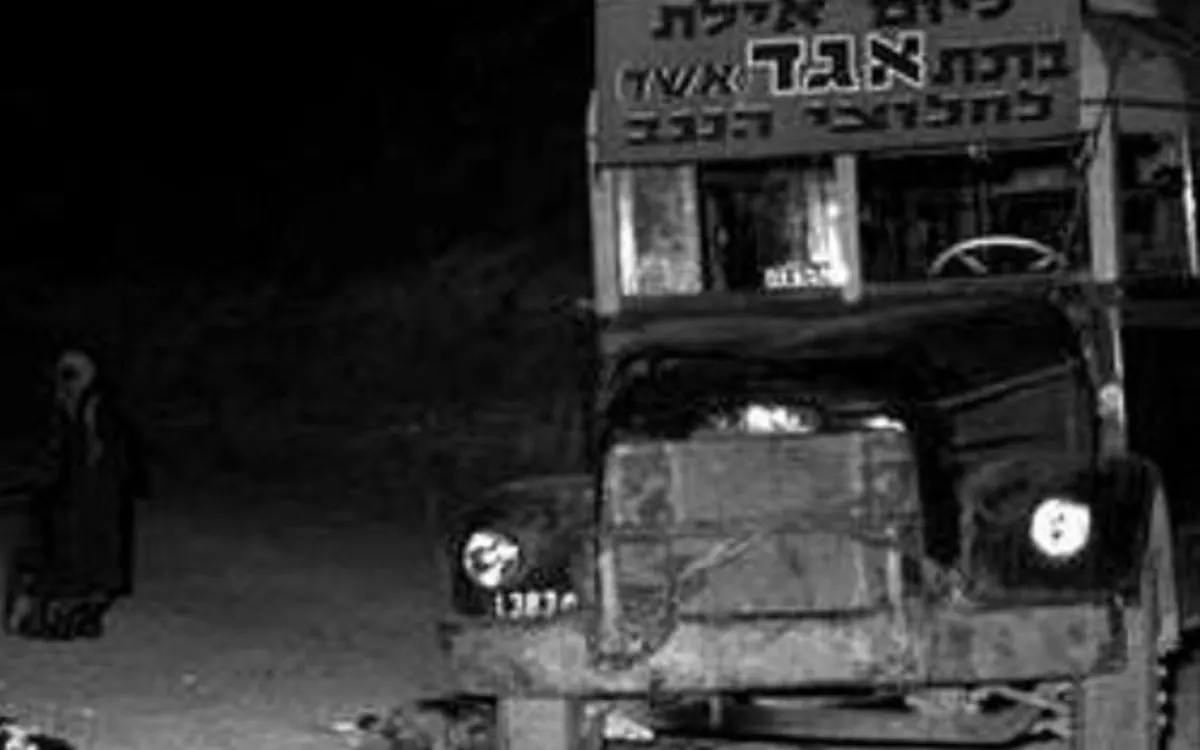
The clock is counting down toward the 1956 Sinai Campaign. Before we can tell that story the threads of the Cold War, infiltration and post-colonial politics have to come together.
About this episode
Those who best manage change survive, not the strongest. Laying the last groundwork for the Sinai campaign of 1956, Rav Mike takes a closer look at Nasser, who will dominate the region until 1970, and revisits Israeli politics. The failure of Operation Susanna strengthened Nasser and destabilized the Israeli government, a shock even to Prime Minister Sharett, who had been ignorant of it and was humiliated when Israeli agents were put on trial, with 50,000 Egyptian Jews now at risk. The question of who gave the order became a hot potato that roiled politics for a decade, the Lavon Affair: Colonel Gibli of military intelligence had given the tactical command but produced proof that defense minister Lavon gave the political order, which Lavon denied, with Dayan and Peres arguing against their boss. The Olshan-Dori committee found no conclusive evidence, so Sharett forced both Lavon and Gibli to resign, the real casualties of the affair known in Hebrew as Esek Bish, the dirty business.
With no one at the helm of the defense ministry and the public doubting Mapai's ability to defend the country, and since politics abhors a vacuum, it was the perfect time for Ben-Gurion's comeback, who had found retirement in the Negev less thrilling and had kept directing military policy through his proteges. One more escalation brought him fully back. On March 16, 1954 a bus climbing Maale Akrabim, Scorpion's Pass, on the road from Eilat was ambushed, the driver and passengers gunned down, only a woman and a child among the few survivors, a dark spot in Israeli memory used to remind the world terrorism did not begin in 1967. Sharett, fresh in his post without a strong base, the leading diplomat, five months after Kibya and with no political capital, leaned on his skill of speaking well and doing nothing, condemning Jordan and withdrawing from the mixed armistice commission, then warning prophetically that unchecked provocation could lead to incalculable results. Rav Mike notes the Arab narrative that Maale Akrabim was revenge for Kibya, raising whether the retaliation philosophy learned from Wingate had failed to reckon with the demand blood places on honor in Middle Eastern culture, creating a blood debt to be erased at all cost.
On February 25, 1955 an infiltration from Gaza murdered a civilian in Rehovot, and when the IDF killed the perpetrators one carried documents linking him to Egyptian military intelligence, the smoking gun Ben-Gurion and Dayan had awaited, having learned from Kibya to hit military targets at a scale that forces the host government to control its border, and that Ariel Sharon was still the man for the job. Sharett's feeble attempt to restrain Ben-Gurion failed, and within months the champion of moderation was back to foreign minister while Ben-Gurion resumed prime minister and defense minister at once, their relationship deteriorating, as Sharett mocked that Ben-Gurion the defense minister consulted Ben-Gurion the acting foreign minister and got the green light from Ben-Gurion the prime minister. On February 28 Sharon's paratroopers launched Operation Black Arrow against an Egyptian base near Gaza, the largest battle since 1948, 38 Egyptians dead to Israel's eight, a humiliation that moved the region toward war: Nasser tightened the blockade of the Straits of Tiran, cutting off Eilat, and made it policy to increase support for the Palestinian fedayeen raids, declaring there is no sense in talking peace, Israel must be destroyed to deliver the Arab world from the intrigue rooted abroad.
To grasp the forces swirling around Israel, Rav Mike discusses pan-Arabism, the idea that the Arabs are linked by special bonds of language, history and religion and that their political organization should reflect it, which makes it easy to assert that a politically, religiously and culturally united Arab Middle East requires the removal of the Jewish state stuck in the middle. Arab nationalism rose against the Ottomans, tangled with British and French colonialism, and after the war decolonization made pan-Arabism central, since divide-and-rule and arbitrary borders had fragmented the region, so any leader who wanted to succeed had to pursue four goals: proper observance of Islam, Arab unity, progress and social justice, and the expulsion of foreign influence. No one harnessed this better than Nasser, who by 1954 had the Voice of the Arabs radio broadcasting Arab unity and the fight against foreign influence, poured money into Egyptian newspapers abroad, nationalized the banks and businesses, and funded education and health, the pan-Arabist triple crown of concentrating the state, feeding the people and kicking the colonialists out. In 1955 the Baghdad Pact, Iraq with Turkey, Iran, Pakistan and Britain, meant to contain the Soviets, looked to Nasser like a new colonial power play fracturing Arab unity, so he opened channels with the USSR.
Rav Mike recalls the temple of Abu Simbel, cut into 30-ton blocks and moved to save it from Lake Nasser's rising waters behind the Aswan High Dam, sawn by teams of peasants working night and day for two years because once you start you cannot stop, an image of what it meant to be Nasser. Humiliated by the Israeli raids and worried the Baghdad Pact let the West reposition as Cold War saviors, Nasser made his first move east on May 17, 1955, recognizing communist China, a Cold War code word and a victory for the USSR. But Nasser's real aim was vengeance, Israel's death, which required rebuilding the army, and since the West had rebuffed his requests, Dulles calling him a dangerous reckless nationalist, he turned to the Soviets, announcing the Czech-Egypt arms deal on September 27, 1955, a failure of containment and a potentially fatal move for Israel: 150 MiGs, Ilyushin bombers, 230 tanks and a whole new navy gave Egypt the quantitative and qualitative edge, which Dayan read as preparation to wipe Israel out. The clock began to tick toward war, with perhaps six to eight months before the arms were integrated, and the Americans made a last-ditch effort, Dulles announcing in December 1955 that the US and Britain would fund the Aswan Dam, though within a year he would change his mind, a story for the next episode.
Key ideas
- The Lavon Affair's fallout forced Lavon and Gibli to resign and opened the door for Ben-Gurion's return.
- The Maale Akrabim massacre, seen in the Arab world as revenge for Kibya, raised whether retaliation reckoned with the blood debt it created.
- Operation Black Arrow of 1955 humiliated Egypt and moved the region toward war, tightening the Tiran blockade and increasing fedayeen raids.
- Pan-Arabism made the removal of the Jewish state the implicit corollary of a united Arab Middle East, and Nasser was its great champion.
- The Baghdad Pact pushed Nasser east, and his recognition of communist China was a Cold War victory for the Soviets.
- The Czech arms deal of September 1955 gave Egypt the edge and started the clock ticking toward the Sinai War.
Chapters
- 0:00 Managing change; a closer look at Nasser
- 1:13 Susanna's fallout; the Lavon Affair
- 4:33 Olshan-Dori; Lavon and Gibli resign
- 5:38 A vacuum; Ben-Gurion's comeback
- 6:45 The Maale Akrabim massacre
- 10:03 Sharett speaks well and does nothing
- 11:13 Revenge for Kibya; the blood debt
- 13:26 Rehovot; the smoking gun
- 14:32 Ben-Gurion returns; Operation Black Arrow
- 16:46 The fedayeen defined
- 19:10 Black Arrow and escalation
- 20:17 Pan-Arabism
- 23:31 Four goals; Nasser the champion
- 25:39 The Baghdad Pact; turning east
- 26:44 Abu Simbel; what it meant to be Nasser
- 28:51 Recognizing China
- 30:04 The Czech arms deal
- 32:12 The clock ticks; the Aswan offer
Who, where and when
People
Gamal Abdel Nasser, Moshe Sharett, David Ben-Gurion, Pinhas Lavon, Benjamin Gibli, Moshe Dayan, Ariel Sharon, Shimon Peres, John Foster Dulles, Barry Rubin
Places
Maale Akrabim, Rehovot, Gaza City, The Straits of Tiran, Abu Simbel, The Aswan Dam
Texts
The Baghdad Pact, The Czech arms deal, The Voice of the Arabs
When
March 16, 1954 CE: the Maale Akrabim massacre, February 28, 1955 CE: Operation Black Arrow, May 17, 1955 CE: Nasser recognizes China, September 27, 1955 CE: the Czech arms deal, December 1955 CE: the Aswan Dam offer
Read the transcript
It is not the strongest or the most intelligent who will survive, but those who can best manage change. Well, that's good news for me, because I don't claim to be one or the other. I am, however, trying to learn to read the writing on the wall. Because I'm Rav Mike Foyer, and this is The Jewish Story. Episode 14, Israel Among the Nations, Part 2, War Approaches, 1955. So if the road to hell is paved with good intentions, then I've got to say the path to Armageddon might just be built by unintended consequences. It's a lot on my mind right now because we're in the middle of a story here and it has an awful lot of threats. The Cold War, the ongoing war between Israel and her Arab neighbors in all of its forms, internal Israeli politics, and each one of them crosses over the other in ways that are just too complex to predict the outcomes.
And what I want to do today is actually finish laying the groundwork for understanding the Sinai campaign of 1956. And not just understanding it as a regional military event, or even as perhaps the last gasp of colonialism in the Middle East, but also as a turning point in Israel's position amongst the nations of the world. Something that won't become entirely clear until the third episode when we actually get to the war itself. But in order to do this, we're going to have to take a closer look at Nasser. He's a personality that, after all, is going to dominate the region until his death in 1970. And his attempt to pull Egypt out of poverty, his desire to lead the Arab world, and his role in bringing the Cold War to the Middle East conflict are going to be a big part of our story today.
We're also going to have to revisit, ever so briefly, the Israeli political scene, the internal cabinet struggles, the external border wars, and in particular, how those two intersect. And you know, the truth is, that might be the right place to start, because we left off last episode with the catastrophic failure of Operation Susanna, that false flag mission, whose purpose was to undermine Western confidence in the stability of the Nazi regime, and therefore in its ability to protect the ultimately important Suez Canal. and really the true goal was to try and keep Britain sitting securely on the canal zone to serve as a buffer between Israel and Egypt and also to prevent too many American arms from flowing into Nasser's hands.
The irony of Susanna's failure was not only in the fact that it strengthened Nasser's hands making his intelligence apparatus look quite good while exposing the incredible hubris of Israeli agencies. What it actually destabilized was the Israeli government because the failed mission was a shock to all of Israel's leaders and a complete surprise to a few of them, including Prime Minister Moshe Sharet. He'd been ignorant of the mission altogether until it quite literally blew up in his face. And his vigorous public denials of any Israeli involvement turned into a public humiliation when Israeli agents were trot out and put on trial. Now add to that, the very real fear amongst the leadership that Operation Susanna had just put 50,000 Jews living in Egypt at a very high risk of being labeled traitors to the Egyptian state.
You can only imagine the Prime Minister's rage. But when Shari turned to his cabinet for answers on how such a mission was allowed to go forward, much less to fail, no one was prepared to accept responsibility for the activation of the sleeper cell that led to it all. And the question of who gave the order became the ultimate political hot potato. passed from hand to hand in a way that roiled Israeli politics for more than a decade. It became known as the Lavon Affair, after Defense Minister Pinchas Lavon. In the immediate aftermath, Shari established the Olshan Dori Committee of Inquiry. It's a pattern, I'm not entirely sure he was the first to do it, but it comes known from this point that any time there's a big disaster, we're going to have a committee of inquiry, which is not such a bad thing.
And it was called Olshan Dori because Supreme Court Justice Yitzhak Olshan, and the first IDF chief of staff, Yaakov Dori, were the heads. And the committee quickly encountered a complete mess. Stories, lies, half-truths, basically total confusion. On one hand, Colonel Benjamin Ghibli, who was the chief of Israel's military intelligence directorate, Amman, had clearly given the tactical command to go ahead with the mission. But he insisted, and even brought forth written proof, that it was the defense minister, Pinchas Lavon, who'd given the political order to do so. Now, Levon, on his side, totally denied ever signing such a document. Enter into this mix Chief of Staff Moshe Dayan and the Director General of Defense Ministry, Shimon Peres, who actually argued against their boss, Levon, and you can see where this is headed.
The issue of ultimate responsibility will actually remain a live political issue in Israel and one which wrecks careers well into the 60s, like I mentioned. And the question who actually gave what order is still open to debate now, So I'm not going to try and cut that knot. What matters for our present story is the immediate political impact of the committee's process. Because on the face of it, the obvious responsible party was the defense minister. After all, it was under his authority that everybody else operated. But Dory and Olshan were unable to find any really conclusive evidence that Lavon had ever even authorized Operation Zudana. So in the end, the Prime Minister had to step in, and he resolved the dilemma by forcing both Pinchas Levon and Colonel Ghibli to resign.
They, and not Gamma Abdel Nasser, were the real political casualties of Operation Susanna. But like I said, in the years ahead, there will be more careers ruined by a story that's so messy that in Hebrew, it's actually known as Essek Bish, the dirty business. But lest you think the law of unintended consequences stopped here, you would be wrong. Because due to the military censor, the average Israeli believed that the trials in Egypt had been a legal pogrom, and the country was in an uproar. Meanwhile, over in Egypt, Nasser was foaming at the mouth with the arrogance of the Israeli attack. And internationally, the British were still moving steadily forward toward a complete withdrawal from the canal zone, which they'd promised to do by the end of 1956.
The clock is ticking. And in the middle of all this, There's no one at the helm of the Israeli Defense Ministry, just when the Mapai Party leadership was getting clear signals that the voting public had major doubts about their ability to defend the country. And remember, politics, like nature, abhors a vacuum. So it seemed like the perfect time for a comeback. The truth is, Ben-Gurion had found retirement down in the Negev a little bit less thrilling, perhaps, than he thought it would be, and had managed, through his protégés Dayan, Perez, and Lavon, to continue to all but direct the government's military policy, even from so far away. The Java defense minister, half of his former position, was now open, and he stepped right into it, a classic political comeback.
But it was going to take one more element of regional escalation before the old man was able to be fully back in the saddle. Ma'ale Akrabim, also known as Scorpion's Pass is reached by a fantastic road narrow, winding, incredibly steep it crawls up through the mountains just south of Machetech Catan the little crater it's in fact some of the most scenic area in all of Israel at this point it's just an awesome tourist destination and I encourage you to get there but until relatively recently Route 227, which is the road, was actually the primary route between the southern city of Eilat and the rest of Israel. And on the night of the 16th of March, 1954, an agate bus carrying 14 passengers from Eilat to Tel Aviv was climbing the steep grade when shots rang out in the dark.
The driver was killed instantly by the first round, and those who tried to escape were quickly gunned down. The attackers then boarded the bus and proceeded to shoot all of the remaining passengers. Two soldiers, a woman, and a five-year-old girl were the only survivors, the last because one of the passengers defended her with his body. And to this day, the Maale-Akrabi massacre is a dark spot in Israeli collective memory. It's often brought out, in fact, in order to remind the world that terrorism did not begin in 1967. Well, that's today. At the time the public outcry was instant furious and all The people wanted blood And they wanted it in the form of an immediate retaliation against Jordan The attack was presumed to originate.
But Prime Minister Moshe Sharet was in a real bind. First of all, he was still somewhat fresh in the post. Ben-Gurion had retreated to the Negev only a few months before, and therefore without a terribly strong political base. Furthermore, he was the leading advocate of the diplomatic camp. He'd fought against the military activism of Ben-Gurion and Kampri for his entire career. And last and certainly not least, only five months before, Unit 101 had staged Israel's largest retaliation to date, leaving dozens of dead in the village of Kibya and stirring up a global political storm, as I hope you remember from our previous episodes. That was a storm that Ben-Gurion stirred up and then dumped into Shari's lap with his sudden retirement, by the way.
And now the Prime Minister had no political capital to spend, not domestic and not international. And so Moshe Sharet leaned on the skills which had served him so well when he was Foreign Minister. Speak well and do nothing. In his statement to the Knesset a week after the incident, Sharet condemned the murder in harsh terms, pointing the finger of blame squarely at Jordan and actually withdrawing from the Israel-Jordan Mixed Armistice Commission. You may remember these MAC, mixed armistice commissions, were the way in which the non-peace conditions of 1948 between Jordan and Egypt and Israel and Syria and Israel were all managed. So he actually withdrew from the Israeli Jordan one. And then Shari turned his anger on the international community, calling for international condemnation of the murders in words that might sadly sound quite familiar.
Quote, We are not asking the powers to shoulder an unfamiliar burden, for they themselves were quick to initiate a discussion in the Security Council following a border incident last October. He's referring to Kibya and how the world totally condemned Israel. It is difficult to imagine that the innocent lives cut down at Mali Akrabim can be regarded by the powers as less deserving of sympathy than the lives of innocent people lost at another place concerning whose death the government of Israel at the time expressed its deepest and unreserved regret. And then the Prime Minister issued a warning which, in retrospect, was downright prophetic. The chain of bloody events, he said, of increasing Jordanian provocation and attacks against the background of constant incitement against Israel, both official and unofficial, reached a new peak at Mali Akrabim.
If it is allowed to continue unchecked, it can lead to incalculable results. Now, the Prime Minister may have hoped that things at least plateaued at Mali Akrabim. But a few months later, there was a new defense minister in town, and he wasn't exactly the talking type. And before I go on, I should note at this point, just for honesty's sake, that there's another narrative around Mali Akrabim massacre. Many in the Arab world saw it as a justified revenge for the Kibya massacre, and they were quick to point out that the balance of blood was not even. And this is one of the places where it bears consideration. We have to ask the question whether the philosophy of retaliation that the IDF had learned from Ord Whitgate way back in the pre-state days, go back and do your review in season two, whether they had failed to consider the demand that blood places on honor in Middle Eastern culture.
Killing 60 of theirs for 10 of yours might cow the enemy into submission, but it also might create a blood debt which they feel compelled to erase beyond all cost. Just keep that thought in the back of your mind, because we're about to enter a cycle of strike and counter-strike that we could really say include the wars of 56, 67, and 73. I mean, after all, as Nasser would say only a year after the Mali Akrabi massacre, Egypt has decided to dispatch her heroes, the disciples of Pharaoh and the sons of Islam, and they will cleanse the land of Palestine. There will be no peace on Israel's border because we demand vengeance, and vengeance is Israel's death. No matter whether this was a wanton act of murder, a justified act of revenge, or simply another bloody round in an unending war, the Mali Akrabi massacre was the final outrage, which convinced Ben-Gurion that only he could save the country.
And when the seat opened up through the Levon affair, he came back as defense minister, but Prime Minister Moshe Shari was quickly forced to take a back seat, once again, to the activist policy. On February 25, 1955, in yet another cross-border infiltration from the Gaza Strip, an Israeli civilian was murdered in the town of Rehovot. But this time something was different, because when the IDF pursued and killed the perpetrators, One of them was found in possession of documents which clearly linked him to the Egyptian military intelligence. This was the smoking gun for which Defense Minister David Ben-Gurin and his Chief of Staff Moshe Dayan had been waiting all along. Because the architects of the retaliation policy had learned two key lessons from the debacle at Kibya.
The first was that any future raid should be on a military target, and that it should be taken on a scale that would force the host government to actually take charge of their border. The second lesson they'd learned was that no matter what had happened at Kibbea, Ariel Sharon was still the best man to get the job done when it needed doing on the other side of the border. Now, Moshe Shari, Prime Minister Moshe Shari, made a feeble attempt to restrain Ben-Gurion, but it was to no avail. In fact, like I mentioned, it was only a matter of months before the champion of diplomatic moderation was back to his post as foreign minister and Ben-Gurion would resume his role as defense minister and prime minister simultaneously.
Their relationship was steadily deteriorating, and we're going to actually take a closer look at the final breakup next episode when we revisit the diplomatic versus the activist stances. But for now, just hear his mocking statement, one which Sharet left in his journal in response to a massive retaliation that Ben-Gurion ordered against the Syrian army on the shores of the Galilee up north. It was actually a decision he took without consulting the cabinet, while Ben-Gurion was not only defense minister and prime minister, but he was actually acting foreign minister because Sharet was in America begging for weapons. The quote is like this, Ben-Gurion, the defense minister, consulted with Ben-Gurion, the acting foreign minister, and received the green light from Ben-Gurion, the prime minister.
You get it? So here we are on the path of escalation. On February 28th, only three days after the murder in Rehovot, Ariel Sharon, who was now commander of a paratroop brigade that he'd instilled with his reckless spirit of the Unit 101, was issued the go-ahead for Operation Black Arrow. And that very night, a force of 150 paratroopers attacked an Egyptian base near Gaza City. Together with several smaller engagements, it was actually the largest battle between Israeli and Egyptian troops since 1948. And when the smoke cleared, 38 Egyptian soldiers were dead, and many more injured. The IDF lost eight men. For Egyptians, the imbalance was humiliating, and in fact, in many ways, was worse than the casualties themselves.
Their response actually moved the region one step closer to war. First of all, Nasser tightened the blockade on the Straits of Tehran. those are the islands that block the southern outlet to the Red Sea off of Israel's coast and that ended the last vestiges of shipping and travel out of the southern port city of Eilat together with the closure of the Suez Canal which has been practically in effect since 1950-51 that meant that Israel was cut off from trade to the east and then the Egyptian dictator made it his official policy to increase support for the Palestinian Fedi'in raids out of the Gaza Strip Now that's a key term, Fede'in, and I think we need to define it. The problem with that being is that it depends on who you ask.
Terrorists, freedom fighters, guerrilla commandos, I can say without controversy that Fede'in or Fide'in, I've been looking up the actual pronunciation, I'm sure I'm wrong on both points, it's a general term given to the Palestinian fighters based out of Gaza, Syria, and Jordan, and they kept up a steady stream of cross-border raids between the wars of 1948 and 1956. And though their numbers and their firepower were never really enough to present a true military threat to Israel, we discussed elsewhere how the pattern of infiltration theft sabotage and murder did threaten the settlement efforts of much of the borderlands which for Israel in the 40s and 50s was actually a significant part of the country But something changed in 1954 On one side, like I said, it was Israel's shift in policy away from civilian targets and toward the military, which meant an almost inevitable escalation in scale.
And on the other side, the Egyptians made a decision that the Fedi'in were now not just to be tolerated, but were rather an important tool in their war against Israel. There is no reason, declared the Egyptian minister of religious properties, why the faithful Fideon, hating their enemy, should not penetrate into Israel and transform the lives of its citizens into a hell. Yes, we will be victorious because we are more diligent in death than is Israel in life. There was a growing sense amongst Israeli politicians that for Egypt, These Fedein raids now fit into a larger political-military vision. And as Nasser himself announced in October of 1955, I'm not solely fighting against Israel itself. My task is to deliver the Arab world from destruction through Israel's intrigue, which has its roots abroad.
Our hatred is very strong. There is no sense in talking about peace with Israel. There is not even the smallest place for negotiations. Now it's important to note in his word that Israel must be destroyed, but not just to wipe out Arab shame over their defeat in 1948, or the theft of Arab land, but also to save the whole Arab world from the intrigue which has its roots abroad. We'll come back to this sort of anti-colonial stance of Nasser a little later on. But for now, like I said, officially, Ben-Gurin was not yet Prime Minister until the elections of November 1955. But Operation Black Arrow at the beginning of the year really marked the return of his unrestrained policy of retaliation against the rising threat of these raids.
It was a policy best summed up actually by Shimon Peres, his young protege. In a political region in which peace has not yet been realized, it's very important to emphasize that crime does not pay. And instead of the political means that are common between civilized countries toward a war of mutual crimes, Israel must, to our regret, use military means to achieve the same ends. Like I said, that sounds really nice when you're coming at it from a European perspective. I'm not entirely sure it maps well onto the Middle East. Meanwhile, the casualty counts on the Egyptian front climb steadily. Operation El-Yakim in August results in 72 Egyptians killed in action. Operation Volcano, two months later, left 81 Egyptian soldiers dead.
And still the Fed'in cross-border terror continued, almost unchecked, and the humiliation of Nasser and the Egyptian army deepened. After Operation Volcano, Nasser actually flew correspondence to the battle site and attempted to convince him that the bodies of dead Egyptians strewn about the battlefield were actually Israelis. Needless to say, no one bought it. For Israel, on the other hand, Operation Volcano in particular seemed like an unqualified success, not only on the immediate tactical level on the battlefield, but even on the strategic front. After all, it put an end to Egyptian military encroachments into the demilitarized zone and established uncontested Israeli sovereignty over the Nitzana border region in the southwestern Negev.
But that law of unintended consequences is all but inescapable. In order to appreciate the scale of forces, which are slowly beginning to swirl around the young Israeli state, at least in the 50s, we need to take a minute to discuss the idea of Pan-Arabism. And if you look into the scholarly literature, it's a bit of a moving target, as is true with all large sociocultural political movements. But a working definition of Pan-Arabism, at least that I found, is the idea that the Arabs are a people linked by special bonds of language, history, and religion, and that their political organization should in some way reflect this reality. And I think it's the last piece that's most relevant for our story, that political organization in the Arab world should somehow reflect their collective unified culture.
And that's because it would be all too easy then to make the assertion that the vision of an Arab Middle East, which is politically, religiously, and culturally united, will require the removal of the Jewish state stuck right in the middle because we don't share the language or the religion or the culture. Now, Nasser is rightly known as the great champion of the pan-Arabist cause, but he didn't invent it. Arab nationalism originally rose as an opposition movement within the Ottoman Empire, and it was almost immediately tangled up with the colonial aspirations of the British and the French. You can go back to Season 2, Episode 27, for a bit of a refresher on how the intersection of Arab nationalism and European colonialism threw a big fat wrench in the early phase of Arab-Jewish relations, if you want.
But for now, post-World War II, decolonization was all the rage. It was in a full swing throughout the Middle East, and pan-Arabism became even more important as it came about. Because the divide and rule tactics of the European powers, combined with their tendency to create countries that reflected their political needs and not the organic nature of local populations, had left a fragmented region, to say the least. I mean, if you read the news, in many ways, we're still playing that out. Domestic colonial policy had been driven by the desire to keep the population of the region from uniting and thereby threatening European interests. So therefore, it's not surprising that post-colonial domestic policy within the Arab states that inherited that situation often revolved around the notion that all Arabs were connected to one another through language, religion, art, and ultimately, as I said, politics.
And it came about that in the early 50s, there emerged a set of basically four main goals that any leader who wanted to succeed in the Arab world must pursue. They were basically the proper observance of Islam, or at least the appearance of it. You couldn't insult the religion. There was a pursuit of Arab unity as a high goal. There was what we call progress and social justice. Economics were very important. and ultimately the expulsion of foreign influence. And when you look throughout the 50s, there were a series of military coups and revolutions, all of which pursued this goal. And as the Middle East expert, Bear Rubin, says, all the leaders of these military coups argued that Arabs had to fight the West, and they made big promises for the efficacy of anti-imperialism, revolution, Arab socialism, and activist pan-Arabism.
Because that pan-Arabism was the panacea. it was the cure to all the ills of the colonial world. And nobody fit that bill better. Nobody was able to harness that feeling more than Gamal Abdel Nasser of Egypt. We spoke a bit about his rise to domestic power in the last episode. But what I didn't mention is that by the end of 1954, Nasser had established the Voice of the Arabs radio program. He was broadcasting to many of the Arab countries within the Middle East, and his focus was on Arab issues and Western influence. He also poured money into increasing the circulation of Egyptian newspapers to Arab countries, newspapers, of course, that he controlled, specifically Jordan, Lebanon, and Syria. And this media blitz created the perception that he was a regional leader.
And not only that, it allowed him to spread his message that Arab unity depended on fighting foreign influence. As he said in one interview, the ties that bind the Arabs together will grow stronger and stronger no matter how hard our enemies attempt to break them. The two always came as one package. And it wasn't all fodder for public consumption. Nasser also followed through on that element of economic justice. One of his first economic reforms, in fact, was the nationalization of Egypt's privately owned banks and commercial businesses. This not only concentrated the entire commercial economy in state hands, Reid in his hands, making him a very strong dictator, it also brought in significant revenue to fund his social policies.
He increased education, health care, well above what the colonial government had office. But ultimately what it resulted in was the expulsion of all British and France influence within the country. It was the perfect pan-Arabist triple crown. Concentrate the state in your hands, get a little bit more money for the people, and kick the colonialists out. Now at first, Nasser avoided the international entanglement of choosing sides in the Cold War. but ultimately his vision of regional leadership and the desperate poverty of post Egypt made a position of non impossible maintained In 1955 Iraq signed a defense pact with Turkey Iran Pakistan and the United Kingdom It was known as the Baghdad Pact. And the goal was to create an alliance of strong states along the southwestern frontier of the Soviet Union.
It was along the model of the NATO Pact, if you're familiar with it. The idea was just to stop the Soviets from expanding into the Middle East. And that may have been how the U.S. and Britain saw it. But Nasser viewed the treaty entirely differently. Because the U.S. and the Britain had now gained access to military bases throughout the region. And as far as he was concerned, it was just a new form of colonial power play. In particular, he resented the fact that they'd drawn Iraq into the alliance. He saw it as a deliberate attempt to fracture the Arab unity that he was working so hard to build. And so it was at this point that Nasser opened political channels with the USSR. Now, the Soviets had little colonial history in the region, and they tended to be far more generous with the two things that Nasser now needed, guns and money.
When I was a college student, I traveled in Egypt for three weeks. It was a fantastic experience. I highly recommend it to anyone who has the chance. And I have to say, I saw nothing more impressive than the temple at Abu Simbel, way down south on the western bank of Lake Nasser. It wasn't just the temples themselves. I mean, they're pretty amazing. Built by Ramses II to he and his wife, Queen Nefertari, more than 3,000 years ago. It was also the fact that the whole temple complex had been cut into 30-ton blocks and dragged more than 200 meters back from the banks of the Nile in order to save them from the rising floodwaters of the Aswan High Dam. You know, the Aswan Dam is perhaps the best-known irrigation project in the world, and that's really largely due to the politics around it, as we're going to hear a bit of soon.
But for now, I want you to take away an image, and it's one I think that will help you understand what it meant to be Nasser, the undisputed ruler of Egypt. Because when the world community saw that the floodwaters of Lake Nasser were actually going to drown what they considered to be a World Heritage Site, they rallied to save Abu Simbel from this irrigation project. And the temple was moved, like I said. But in order to move it, you had to cut it out of the native rock. And in order to cut through sandstone in that remote location in 1964, which is when they did it, they had to use human labor and not machines. But here's the trick. Once you start sawing the stone, you can't stop. because if you do, the pressure of the uncut rock will cause the blade to seize and you'll start all over again.
And so just picture it. They had teams of peasants who sawed in rotation for two years straight, night and day. Now I can only imagine that the pharaohs of old would have been proud of the man who claimed to be their descendant. Anyway, now to the point. As I said earlier, Nasser's eye had begun to drift toward the Soviet Union and he felt the deep humiliation of Egyptian army's repeated failures against those Israeli retaliatory raids. And he was worried that the British Americans were using the Baghdad Treaty to reposition themselves as Cold War saviors rather than colonialists. But the end result, in his eyes, would be the same. And so the first move eastward that Nasser made came on May 17, 1955, when he formally recognized the People's Republic of China, meaning communist China, as the legitimate government of the Chinese people.
Now, that may not sound like such a big deal to you, but it was a code word in the day, because the struggle on the international political stage between the Soviets and the Americans, over who would recognize either nationalists or the communists as the legitimate government of the Chinese people, was actually a significant Cold War battleground at the time. And this was a big victory for the USSR, because it was not just Egypt. There was reasonable to expect that the other Arab nations would follow suit as their regional leader. But the truth is, Nasser was only secondarily interested in Cold War politics. His aims were quite a bit more specific. Remember what he said, there will be no peace on Israel's border because we demand vengeance.
And vengeance is Israel's death. And in order to have his revenge, he would need to rebuild the Egyptian army bottom up. Up to now, however, the West had rebuffed his repeated requests for guns. United States Secretary of State John Foster Dulles had actually labeled Nasser as a dangerous and reckless nationalist. And of course, America would never arm anyone like that. So I'm sure you can see where this is going. In a classic Cold War pivot, Nasser did exactly what the U.S. and Britain didn't want them to do. He approached the Soviets, and they told them they would be quite happy to arrange for a purchase of checkmate arms more than enough to meet his every need. So on September 27, 1955, Nasser announced the Czech-Egypt arms deal.
For the West, the deal marked a failure of containment. The Soviet Union was now officially in the Middle East. That might have been a big failure for America, but it was a potentially fatal move for Israel. With one purchase, Egypt had gained both the quantitative and qualitative edge in the regional arms race. 150 MiG jets, 50 Aleutian bombers, 70 transport planes, anti-aircraft, 230 tanks, 200 APCs, 600 artillery pieces, and what amounts to a whole new Egyptian navy, destroyers, submarines, torpedo boats. As Moshe Dayan, chief of staff, would later remark, it was clear to us in Israel that the primary purpose of this massive Egyptian rearmament was to prepare Egypt for a decisive confrontation with Israel in the near future.
The Egyptian blockade, her planning and direction of mounting Palestinian guerrilla activity against Israel, Nasser's own declarations, and now the Czech arms deal left no doubt in our minds that Egypt's purpose was to wipe us out. Now, at this point, the clock really begins to tick toward war. Because, you know, buying weapons doesn't mean you start to shoot them tomorrow. First of all, they have to be shipped, and then you have to be trained, and they have to be integrated into your military infrastructure. Therefore, Israel felt they had perhaps six to eight months in which to deal with this situation. There was a last-ditch effort. Maybe they sensed that the situation in the Middle East was in danger of really moving from Cold War to hot.
And the Americans tried to catch the Egyptian train before it left the station. You know, I mentioned that Egypt's population was sunk in dire poverty and the Aswan Dam project was meant to create a whole new reality. It was going to finally stop the problem of seasonal flooding on the Nile and give them a lake on which they could build an irrigation empire year-round, which would lift them out of that poverty. Except the dam was so big that Egypt couldn't afford to build it. And so in December 1955, less than two months after the Czech arms deal, Secretary of State Dulles, who didn't quite like Nasser, announced that the United States, together with Great Britain would now provide $70 million in aid toward the Aswan Dam on the Nile.
But truth is, less than a year later, Dulles would once again change his mind, thinking that he could use money as both a carrot and a stick. But the consequences of the U.S. canceling that funding of the Aswan Dam, and how the events cascaded from there to the Sinai War, is a story that will have to wait until next episode. I know we're in the middle, but I just want to thank a few people. I want to thank all the folks who give their hard-earned money to help make this show possible, to keep it free and widely available, and I want to encourage you to join them. Go right now to my website, jewishstory.co, and in the upper right-hand corner, you'll see a little button there that says Be a Patron, and you can click on through to make a little bit of per-podcast support.
And if that's more than you're looking for, you can always contact me if you want to dedicate the show, either in honor of someone who's with you today or in memory of those who are no longer, you can send me an email at ravmikefoyer at gmail.com or you can send me a message at ravmikefoyer on Facebook and I'll bounce you back to the details. I also want to thank the Land of Israel Network. That's thelandofisrael.com for creating a platform that allows me to reach so many fantastic people. I want to thank the Pardes Institute, p-a-r-d-e-s dot org dot i-l for building an educational institution that gives me the privilege of teaching so many wonderful Jews. And I want to thank you for listening. I'm Rav Mike Foyer, and this is The Jewish Story.
More from Season 3
TJS S3E12 The Reparations Controversy
The focus of our story has returned to the land of Israel, where it is once again a time of controversy. Despite the population growth, the economic hardships...
Play Episode
TJS: S3E13 Israel among the nations part I The Lavon Affair 1954
The 1950's were a formative time in Israeli history. The Cold War was getting hot, internal politics were volatile, and the it seemed as if the War of...
Play Episode
TJS S3E15 Israel among the nations part III: Operation Kadesh
The Sinai campaign was many things - a preemptive strike against Israel's enemies, the last gasp of colonialism in the Middle East and a complete failure of international...
Play Episode