
TJS S3 Interlude: 5780 A New Horizon
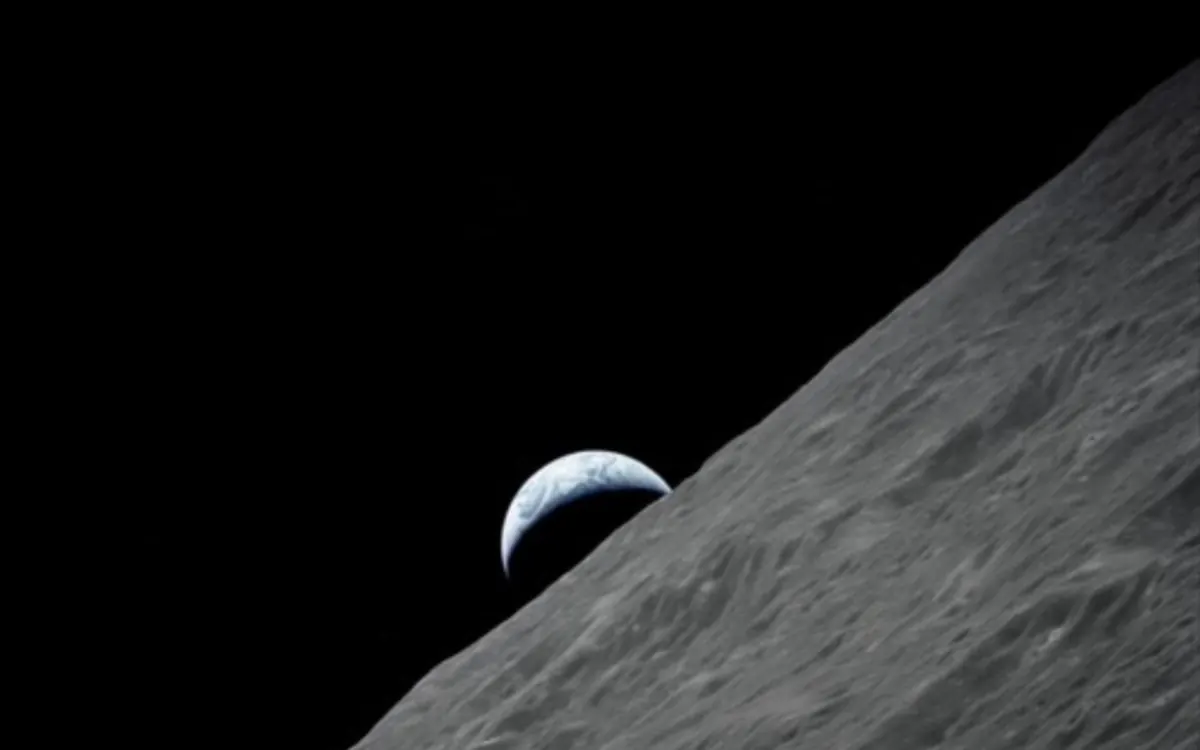
The High Holy Days are also know as the Days of Awe which can be awesome, or awful. Here is a look at how to tie the work of Rosh Hashanah, Yom Kippur and Sukkot together into an approach to building a world whose horizon is big enough to hold our dreams.
About this episode
The more obvious a truth, the more it is neglected, says the Ramchal. We have to dream, for ourselves, our people and the world, and to put dreams into words, since language is actionable where dreams are insubstantial, as the Bible shows. For the Days of Awe, the Yamim Noraim, awe unites with fear in standing before something far greater than we can grasp, but awe gives a sense of open possibility where fear makes us shrink, and these days set the horizon for the year. Rav Mike's dream is the liturgy's line that the whole world become one unit, agudah achat, to do God's will with a whole heart, which brings him to tears, both because to be wholehearted is to abandon the woulda-coulda-shoulda and the outer compulsion of you must, and because it is mission-oriented, a whole heart to do God's will rather than merely a whole heart, and because it unites the whole world around it.
The natural start is Rosh Hashanah, also Yom HaZikaron, the Day of Remembrance, since we are a people of memory, telling a story of the past that integrates into present identity and orients us toward the future we want, and the question is what story we tell when we stand before the open book, a narrative. People get stuck in a single deterministic story of the past that limits the future, while the thin narratives in between hint at another way of knowing themselves. Deuteronomy 32 says remember the days of old, and Rashi reads it through the generation of Enosh whom God drowned and the generation of the flood, a reading that fits our world too well, whether the religious longing for the apocalyptic end or the secular despair of a dystopian future, the inevitability pervading modern culture, now most potent in the fear of climate change, which Rav Mike, with a degree in environmental geology, takes seriously while refusing to let it be a partisan issue. Both the religious madness and the scientific despair see destruction as inevitable because of how they remember the past.
But Rashi also brings a second explanation, that one should consider the generations so as to become conscious that God has the power to bestow good and bring the days of the Messiah, so there is more in the past than failure and punishment. The splitting of the Red Sea, where a Midrash says all the water in the world split at once, teaches that once such a thing has occurred the world is changed forever, a new horizon opened, since even the natural world is not limited by how it has behaved, all the more so humanity. So if the seas rise, instead of a story of inevitable destruction we could tell a different story of humanity's ability to build a better society, since there are more people with more food, water, education and freedom than ever, and the rising waters could become the pressure, hard enough to hurt but slow enough to react, that finally moves us to get our act together. The horizon of the future is shaped by the story we tell of the past.
Yom Kippur is the Day of Rachamim, usually translated mercy, as in I have failed, and the line between I have failed and I am a failure is too thin to hold, and the world too looks like a failure, Adam, Noah, Babel, the golden calf, both temples destroyed, as if God is incompetent or we live in an ad hoc world. But if failure is not an accident, then mercy is not a divine compromise, and teshuva is more than repentance or a return to an essential self or an idealized past; it is evolution, becoming something we have never been, as Rav Kook says the world inevitably comes to complete teshuva, the spirit of teshuva hovering over the world and driving its evolution toward a perfected world that has never yet been. The root of rachamim is rechem, a womb, so rachamim is God's commitment to hold space for us while we come to be, compassion that sees what someone is but is committed to what they will be. To make it actionable, the locks are the keys: the needs underlying our failures are usually legitimate, and the maladaptive behavior needs to change, which we find through reut halev, the true heart's will, asking I want that because until we peel back to the real desire, so this Yom Kippur write this is what I am and I will be.
Everything leads to Sukkot, which is more than the reward after the labor; it is the embodiment of the transformative process: first remember and choose the story of the past and its horizon, then have mercy as a commitment to our own evolution, and then step out of the built environment into the sukkah, a world that reflects a will other than our own, whose primary obligation is to be happy, a deeper act of faith into unknown possibility. The farewell prayer asks to merit the sukkah of the Leviathan, from the Gemara in Bava Batra where God will make the righteous a feast and a sukkah from the Leviathan, which embodies the joy God takes in creation, playing with the Leviathan in the last quarter of the day, and which the Maharal calls the primordial stuff of creation, so the faith of entering the sukkah is the belief that God plays with creation, where the rules allow the unexpected to emerge. This is the messianic hope: tell a story of the past that lets the future happen, recognize that we are all evolving and have compassion, and take a playful approach to creation, like Abraham's laughter at the impossible, not the cynical laughter of despair but the laughter of a world we have never imagined that just might be, since our dream was never that the world become like us but a dream so big we cannot imagine it.
Key ideas
- The Days of Awe set the year's horizon, and the dream is agudah achat, the whole world one unit doing God's will with a whole heart.
- On Rosh Hashanah we choose the story of the past we tell, and a story of failure and punishment yields an inevitable and undesirable future.
- The splitting of the sea opened a new horizon, so we could tell a story of humanity's ability to build rather than of inevitable destruction.
- Rachamim comes from rechem, a womb, so mercy is God holding space for us to evolve, and teshuva is becoming what we have never been.
- The locks are the keys: the legitimate need underlying a failure can find a new manifestation once we reach the true heart's will.
- The sukkah and the Leviathan embody the playful faith that God plays with creation, where the rules let the unexpected emerge.
Chapters
- 0:00 The neglected truth; we have to dream
- 1:03 The Days of Awe; awe and fear
- 2:08 Agudah achat; a whole heart
- 4:13 Rosh Hashanah; the story we tell
- 7:27 Remember the days of old; Rashi
- 9:36 Religious madness and secular despair
- 11:53 The second reading; the splitting of the sea
- 14:04 A new horizon; a different story
- 15:09 Yom Kippur; the Day of Rachamim
- 17:15 Teshuva as evolution; Rav Kook
- 19:21 Rachamim as a womb; compassion
- 20:25 The locks are the keys; the true heart's will
- 23:55 Sukkot; stepping out of the box
- 26:10 The sukkah of the Leviathan
- 28:16 God plays with creation
- 29:19 Abraham's laughter; a dream we cannot imagine
Who, where and when
People
The Ramchal, Rashi, Rav Kook, Michael White, Rav Daniel Cohen, Rabbi Ashlag, Abraham, The Maharal
Places
The Red Sea, Mount Zion
Texts
Deuteronomy 32:7, Leviticus 26, Bava Batra 75a, Orot HaTeshuva
When
Rosh Hashanah, Yom HaZikaron, Yom Kippur, the Day of Rachamim, Sukkot, the time of our joy
Read the transcript
According to the familiarity and the extent to which a truth is evident to all, says the Ramchal, so too is its neglect very prevalent, and forgetfulness of it very great. In other words, the more obvious a thing is, the less likely we are to think about it. Well, I'm here to remind us of just a couple of things in these special days. I'm Rav Mike Foyer, and this is The Jewish Story. Interlude, A New Horizon 5780. So, you know, we all have to dream. I actually think it's a critical part of a healthy life. We have to dream for ourselves, for our people, for the whole world. And not only do we have to dream, I believe it's important to put our dreams into words. Because as much as something might be lost by descending out of those clouds of infinite possibility into the very hard reality of language, I think a lot more is gained.
Because language is actionable. Dreams are insubstantial. Words can build a new world. I mean, after all, just look at the Bible. And if I were going to try and put my dreams into words right now, then there couldn't be a better place to look than the liturgy of the Yomim Norayim. Now, you may know them as the High Holidays, but I prefer to put the emphasis on their true name, these Days of Awe, and how awesome they really are. I mean, just think about it. The word awe is a critical notion. It's not quite the same as fear, but it has an element of it in there. You know, if you could see me now, I do what for many of you is a very familiar demonstration, which is the difference between awe and fear is cowering before something or standing back with that sort of blasted look on your face.
Think of hanging a thousand feet up on a cliff face. I've done it actually many times. It's awesome and also really scary because the thing which unites awe and fear is that in both of them we stand before something which is far greater than our ability to really grasp it. But what's awesome gives us a sense of open possibility, and what's fearful makes us shrink in the face of that scale. So these are the days that have the possibility to set our horizon for the whole year ahead, maybe for us, maybe for our people, maybe for all creation. And I think it's therefore worth it to take a little time to talk about our dreams. So what's my dream? I'm going to pull a line out which may be familiar to those of you who indulge in the traditional liturgy.
It's, This is the line that always brings me to tears, right? And that the whole world should come together into one unit to do your will with a whole heart. Now, why on earth would that bring me to tears? First of all, who doesn't want to be wholehearted? to act, think, feel in one accord for our inner desire and our outer actions to really be aligned without that weariness of inner friction that comes from the could've, should've, would've versions of doubt and insufficiency. You know, when I was growing up, I was a high school wrestler, revealing some things about myself, I guess. In our wrestling room, there was a poster that I'll never forget. It showed these three guys there pointing their fingers at you, and it said, could have been, would have been, should have been.
The three bin brothers, they never did anything for anybody. And so that sense of wholeheartedness is dependent upon abandoning the woulda, coulda, shoulda. But it's more than that. It's also something that exists without a sense of outer compulsion. You must, you should, you shall that comes from, even from God, from anything outside of ourselves. There's a sense of wholeheartedness, which is the identification which we really feel with that which we do. Now, it's also important to this phrase that it's not just about having a whole heart. It's mission-oriented. I'm not just wholehearted, but I'm wholehearted to do God's will with a whole heart. So how do we make our hearts whole? How do we achieve this complete inner identification with a task that lies beyond our horizon by definition?
It's too big for me to do. And how can we do it in a way that will actually unite the whole world around it? Not a small task, I grant you. But though we may be a small people, we've always had very big aspirations. And I think, without presuming to answer that question in its whole, since we've been chewing on it for 3,000 plus years, I think that the wisdom of the Hebrew calendar is perhaps our most important tool in at least engaging the task at hand. And that's what I want to do in this little brief interlude. I want to touch on the key points of these days of awe, these awesome, awesome days, in order to see how they just might help us build a world with a whole new horizon. So the natural place to start is, of course, Rosh Hashanah, the head of the year.
I know it's past for everybody listening, but aside from the fact that it will also come around next year again, there's always something to learn from asking where a process starts. starts because the other name of the Jewish New Year is Yom Hazikaron, the Day of Memory or the Day of Remembrance. And if you've been a listener for any amount of time, but certainly for a while, then you know the importance which in my eyes memory plays in the Jewish story. My primary contention has always been, since I started this journey 12 years ago as a teacher in a post-high school Midrashah women's program, my primary contention has always been that we are people of memory, not history. If you want a full analysis and a speaking out of that, you can send me an email, rovmikefoyer at gmail.com, or you can personal message me on Facebook at the same Rav Mike Foyer, and I'll send you the show.
But for now, just remember, ha ha ha, that the idea of memory, the power of memory, is in telling a story of the past, which can integrate into our present identity, leaving us motivated and oriented toward the future which we want to live. And for our purposes in the present discussion, the question is, what story of the past are we telling? You know, that sort of somewhat medieval image which floats around in our liturgy about the two books open, the Book of Life, and you notice they don't ever name the alternative. It's a book. It's a narrative. And the question is, what story are we telling when we stand there remembering our past? You know, in my counseling practice, I find often that people are stuck in a sort of unified, singular story of the past.
And therefore, they feel very limited in the options that their future offers. I mean, after all, if you know exactly what happened in the past, you know already who you are. There's a certain determinism about what lies ahead. But often, if I listen closely enough, I'll find that the truth is, even unbeknownst to them, they're telling other stories. It's what Michael White, the sort of creator of narrative therapy, calls the thin narratives, right? Those pieces that lie in between, which for various reasons we tend to edit out in the self-conscious articulation of our life, but are often indicative of a whole different way of knowing ourselves, a whole different way that we understand the past and therefore expressive of a different future we might live.
So, what story are we telling about our past right now, and how can it affect our future? Well, fortunately, in this week's portion, in Davarim in 32.7, if you want to look it up, there's a very famous and powerful line, which can help us. It's, Remember the days of old. Consider the years of ages past. Ask your father, he'll inform you. Your elders, they will tell you. This is the ultimate injunction, which carries itself forward in many practices in Jewish tradition, that you gotta know your past. But the problem is, knowing your past is far from simple. I mean, after all, aside from the recollection of the event, what we're really interested in is what's their message. As Rashi the great commentator tells us in his comments on that line says consideration of years of generation after generation right He says what are we referring to The generation of Enosh over whom God caused the waters the ocean to flow The generations of the flood in the time of Noah, whom he drowned by flood.
You know, I got to tell you, I feel like there's a reading of this Rashi, which fits our world a little bit too well right now. I mean, this looking backward at the past and drawing the conclusion, we're going down. Now, whether it's the religious version, those voices out there that seem to be almost longing for the final battle, this sort of hunger, the apocalyptic end, a sense of looking at the past and the present manifestation and passing judgment that the world is simply a failed project, a bowl of sin that deserves to be destroyed. Now, some of you listening out there may know that I go there too in my dark moments. I don't deny it. Don't get me wrong. I understand that there is something quite satisfying in contemplating the Pyrrhic victory, because at least I'll get the satisfaction of shouting, I told you so, while the world burns around me.
And maybe I have some sort of strange metaphysical belief that I won't actually go. So that's one side of that story of the past that we are telling. But there's another one, and I call it secular despair. It's the dystopian vision of the future that pervades so much of our current popular culture. When I was growing up, I was a science fiction fantasy junkie. I read everything you can imagine. And there's something that's actually occurred to me lately, which I find quite disturbing. I don't know. If you've read enough science fiction, you've probably noticed that all those galactic empires of the distant future, the Earth isn't there. I mean, at best, it was a lost planet, a vague memory. But at worst, it's a radioactive trash heap, smoking, ruin, suck, dry, and toss aside in our quest for a better future.
And I think that the science fiction there bespeaks a sense of inevitability which pervades modern secular, postmodern secular culture. And you know what? today, this dystopian sense of the inevitable destruction which the present and immediate future are offering, because of the way we understand our past, finds its unquestionably most potent expression in the fear of climate change. Yes, I'm sure that you've been reading the news and you've seen the sort of young Scandinavian woman who has become the poster child of the fear of the inevitable. Now, don't get me wrong. I am afraid, for full disclosure purposes, I guess this is going to be as much about me as it is about the Omim Narayim. I have my first degree in environmental geology, and I did it in the early to mid-90s when we were reading the original papers that now serve as the scientific basis for the understanding of climate change.
I don't want to get into the whole debate. I do want to say, however, that it disturbs me that any question of the environment should become a partisan left- right issue. People, there's only one planet, whether you stand on the left side of it or the right. But What interests me now is that scientific despair actually parallels the religious madness. Both of them see destruction as inevitable. Whether it's because it's an expression of our moral flaws, a judgment of the past, or simply our socioeconomic failure to build a sustainable world, again, a judgment of the past. Both of these are stories of the past which produce an inevitable and, by the way, undesirable future. But doesn't that match what Rashi said?
He said, remember the generation of Enosh caused the waters of the ocean to flow. Quite evocative today, right? And the generations of the flood of Noach. You know what? My answer is, it really depends on how you remember the past. What story are you telling? A past story of failure and punishment leads almost inevitably to a sense of impending judgment and destruction in the near future. But truth is, Rashi also isn't satisfied with a monochromatic narrative of the past. Because if you look at the rest of his comment there, he says, And for those of you out there who spend some time learning Rashi, when he says another explanation is, it means he senses that there's some insufficiency in the first that he brought.
He says, well, if you haven't succeeded in setting your attention on the past, then consider at least the years of generation and generation. so you become conscious of what might happen in the future, that God has the power to bestow good upon you and make you inherit the blissful days of the Messiah and the world to come. Let it be soon, let it be now. That's me, not Rashi. Meaning, there's more when we look backwards in the story of generations than one of failure and punishment. I mean, after all, we could pull out another famous incident dealing with water just to stay on theme. I mean, God, water, national behavior, the classic is the splitting of the Red Sea. And it's not just the splitting of the Red Sea.
I love, there's a beautiful and strange Midrash, which Hirashi also brings, that the rabbis say that when the Red Sea split, when the children of Israel came out in that great moment of revealed redemption, that all the water in the world split at the very same time. It's a strange notion. You're picturing some guy, I don't know, in Central Africa or the high mountain plateau in Tibet, goes to get in the bath, and just because Am Yisrael happens to be coming out of Egypt at that very moment, boom, he hits the dry bottom? I don't think so. Because in my eyes, the Midrash is always talking about something fundamental and not something incidental. And what it's telling us here is that once such a thing as the splitting of the Red Sea has occurred, then the whole world has changed forever.
a new horizon opened up when the sea split. Because now that Israel had seen such a thing, we knew it was possible. And if we knew it was possible, then it was possible for the whole world. Because even the behavior of the natural world is not limited by our experience of how it has behaved up till now. And if that's true of the natural world, then it's all the more so for humanity. Just imagine for a moment that the seas do rise. Slowly, slowly. But instead of telling a story of inevitable destruction, of an almost just reward that we're receiving for our gluttonous consumption of the past, we told a different story about the ability of humanity to slowly but surely build a better society. Because the truth is, there are more people getting more food, more water, more education, more freedom today than their ever world.
What if we told that story? Well then, perhaps as those waters rose slowly, slowly, that this would become the pressure that we finally need, hard enough to hurt, but slow enough to allow us to react, to finally get our act together as a species. We could live the dreams of a better world, one of cooperation and sanctity, love and abundance, because we tell those stories as well. It's the world of our dreams. And I think that the horizon of our future will be shaped in a large part by the story we tell when we look to our past. So next up, of course, is Yom Kippur, the Day of Atonement. You have to say it like that because it's pretty heavy, I understand. It's also known, however, as the Day of Rahamim.
And the question I want to touch on right now is, what exactly does that mean? Now for many people, the word Rahamim means, of course, it's translated as mercy, as in, have mercy, have mercy, Lord Nabuch, I've failed. Not only I've failed, because the truth of the matter is, for most of us, the difference between I've failed and I am a failure is a line which is too thin to hold. And not only have I failed, I look around and the world is a failure. I mean, after all, when you look at the story, it seems pretty strange. Let's go from the beginning. Adam, God says, here's one thing, don't eat that fruit. It took him less than 24 hours. Okay, Noah, oh, here comes the flood. Tower of Babel, going to knock that down.
Oh well it looks good with Avraham and his children Next thing you know they dancing around the golden calf First temple destroyed Second temple destroyed It could lead one to believe that either God forbid God is incompetent or that we live inside the inside the inside of a failure of what's called a ad hoc world, which ought never have come to be. Okay, so God says, Nebuch, I'll have mercy on them. They're humans. What can I do? But it certainly isn't a very uplifting way of looking at the world. It doesn't make you want to engage its potential. But once again, it really depends on what story we're telling. Because maybe, just maybe, failure isn't an accident. And therefore, mercy isn't some divine compromise.
And if that's true, then tshuva isn't just repentance. The sense that I have the desire to return to the path from which I've strayed, which it certainly is in part. And it's not even just return that oh-so-popular translation in the literal meaning of the word, a struggle to regain an essential self on the personal level, or to return to some idealized past on the national level of Hebrew native culture. What if tshuva is actually about evolution? That is not repentance and the returning to a path from which I've strayed, or return in the sense of regaining my essential self. It's actually about becoming something which I've never been. and as Rav Kook says it is inevitable that the world come to complete tshuva the world is not a static entity which remains in one state but rather one which evolves he says true whole evolution brings it inexorably to complete health material and spiritual which brings with it the light of the life of tshuva a life of tshuva says Rav Kook is a life of the perfected world which has never yet been he goes so far as to say the spirit of Tshuva hovers over the world.
Merachef al Ha'aretz. A phrase which is very evocative from the very early moments of creation. Giving its essential character and driving its evolution. The scent of its perfume refines the world, giving all its capacity for beauty and glory. So, what does he mean? He says, if Tshuva is about evolution, then mercy is not about God letting us off the hook. for our failures. Our greatest hope is not to get packed to what we once were, to the world from which we've strayed, but it's rather to go forward to that which we have not yet been. Because the word rachamim, properly translated, its three-letter root in Hebrew is rechem. It's a womb. Which means that rachamim is an expression of God's commitment to holding space for us while we come to be.
I mean, after all, what's a womb? It's the ultimate physical expression for my willingness and commitment to holding space for another being to come to be. What does it mean when we truly have compassion, which might actually be a better translation of the word? We have compassion for another, we see them for what they are, but we're committed to what they will be. And we're willing to hold the space to be a womb for them to evolve into that space. So how do we not only understand this, how do we make it actionable? because Yom Kippur is fast upon us. Let's try something simple. Now, always remember that the locks are the keys, like Rabbi Ashlag says. And I don't just mean that in the sense that there's a moral benefit in overcoming our base selves, that we become more of who we want to be when we overcome.
I think that's very true. But there's something more fundamental. The locks are the keys. It's through an understanding that the needs and desires which underlie our failures, which our failures in fact often express, are usually legitimate. The problem lies in the way in which we seek to fulfill them because sometimes our behavior is counterproductive and even destructive. Needs are real, but often the behaviors through which we seek to meet them are maladaptive. And therefore, more often than not, it's really the behavior that needs to change, not the legitimate need which is driving it. The question is, how do I separate between the two? And that's a process which is called getting at Reutadaliva, one's true heart's will.
You know, there's a great tool I learned from my Rebbe, Ravdeno Cohen, which is a simple exercise that you can all do. I do it often with my clients. I'll ask someone what they want. You can ask it to a child. You can ask it to yourself. And when you tell me what I want is X, I'll say, well, finish the following sentence. and I want that because. Now, if you want to do it yourself, make sure you keep the statements positive. You don't ever want to say, I want that because otherwise X will happen. Push yourself, I want it because as a positive statement. If you keep asking, like I want that because and then when you give the answer and I want that because and you give the answer, oftentimes like peeling back the layers of selfhood, you can figure out what your real desire is.
I'll give you an example. It's one that many of us who've gotten to spend time together in the classroom before have heard, right? sometimes, believe it or not, I find myself at 10 at night with my face in the freezer, eating a pint of Ben and Jerry's ice cream. And part of me is saying, Mike, you don't want to do this. You have a commitment to losing weight. It's not healthy. And you know what the other part of me is saying? Ice cream so good. Want it. Because I do want it. But do I really want it? Well, I want that because maybe I'm feeling sad or maybe I need a reward. Maybe I have to have a sense of acknowledgement for the hard work, which is very easily gained when I give myself a big pint of fish food.
The idea is if we can peel back what need and desire underlies a particular behavior that you find problematic, if you can touch the root of your own will, you become far more free to embody it in a new way. And not just in a new way, in a way which is more fit, to borrow the evolutionary model. Fit, be that to your understanding of God's will, if that's how you roll, or to your understanding of your ideal conception of self, or frankly, to anything else. But it's a freedom in understanding the legitimacy of the desire that underlies a maladaptive behavior that allows you to evolve. so this Yom Kippur have mercy on yourself but in a real sense I want you to do this now either right now or when we're done take a piece of paper and write the following on it this is what I am period and I will be dot dot dot that's the work of this time you need to be able to look yourself in the face and figure out what the desire driving you is and the behavior that embodies it But you need to open yourself to the possibility that that desire could have a completely new manifestation.
And what could be more merciful, more evolutionary than that? So every year, I have the same experience. When I hear that first shofar blast in the morning in Elul, I have the same thought. I try to suppress it, but it's always there. everything that lies ahead this whole next month and a half of intense inner work and not a small amount of outer work cooking, cleaning, family, etc. is all, everything we have to go through in order to get to Sukkot and I don't just mean in the sense of the reward that comes after our labor although it's for sure true I love this holiday what could be better than sitting in my little hut sipping a glass of red wine with my friends and loving life. I actually mean the Sukkot is the manifestation.
It's the embodiment of all the transformative process that precedes it. But you have to get there first. First we have to remember. We have to choose the story of the past that we want to live out and the future horizon that comes with it. Am I in the book of life Am I a good person who also fails and my goodness finds its expression in my ownership of my failure not my avoidance Or by being unwilling to look that in the face have I condemned myself to that other story? And then, of course, we have to have mercy on ourselves, not as a compromise that lets us off the hook, but rather as a commitment to our own evolution. This is what I am, and I will be. And as the last stage here on Sukkot, you've got to step out of the box.
We step out of the built environment into our little hut on the porch or out in the street or wherever you may have it. We leave the world that reflects really nothing but the works of our own hands. I mean, look around you now. I'm willing to bet, unless you happen to be out in the park somewhere listening to me, that everything, if not everything, almost everything you're looking at right now reflects the work of human hands. and we want to step out into a world which is a little bit more simpler, a little bit more natural, and reflects ultimately a will other than our own. It's an act of faith, but one which is more than just the willingness to take a risk that, you know, after all, let's face it, if it rains, we go inside.
And as our sages teach us, our primary obligation when we sit in the sukkah is to be happy. Don't forget that, people. The goal there is to be happy. So even if it's too hot, they say you're not obligated to be there now, this is a deeper act of faith, one that's about stepping into unknown possibility have you ever read the prayer for parting from the Sukkah? I hope you have if you haven't, check it out in Hebrew it reads like the following let it be your will O Lord our God and God of our fathers just as I have fulfilled the commandment and sat in this Sukkah so too should I merit in the year to come to sit in the Sukkah of the Leviathan now that's a strange goodbye what's with the Leviathan? well it's a reference to an even stranger statement that you'll find in the Gemara in Baba Batra there on 75a I'm a Rabbi, I'm a Rabbi Yochanan Rabbi says in the name of Rabbi Yochanan In the future, God's going to make a festive meal for the righteous from the flesh of Leviathan.
You know there's an old yeshiva joke. Why is God going to serve the righteous fish instead of meat? The answer is the righteous won't trust God's kashrut. Anyway, sorry, that's my evil side. There's this notion that we're going to eat the festive feast of redemption will be the flesh of Leviathan. And then it goes on to say, Amarav Amarayi Yohanan Atida Kodesh Borchul Asot sukkah le tzaddiki Mi'oro shaliv yatan Right? In the future that God is going to make a sukkah for the righteous from the skin of the Leviathan. So what's with the Leviathan? Why are we feasting on the flesh of the Leviathan in that time to come? Let it be soon, let it be now. Right? And why are we sitting in that one sukkah and by the way, the sukkah in which the whole world can fit.
Remember, Agudah Achat, We're trying to make one world. So on one level, the Leviathan, the Leviathan, is an embodiment of the joy that God takes in creation. As it says in Psalms 104, line 26, in the seas that God made, there are the ships that go, and this Leviathan, which you created to play with. In the Gemara, it actually says that during the last quarter of the day, all God does is play with the Leviathan. and on a deeper level or perhaps as an explanation according to the Maharal, the great sage of Prague at the end of the 17th century Leviathan is the foundational stuff of creation he's the primordial soup so basically you put these two together with the Gemara and what you'll see is that the faith embodied by our entrance into the Sukkah is the belief that God plays with creation and remember that the beauty of play is you never really know what can come of it it's an open possibility it's true that there are rules but those very rules are what allows for the unexpected to emerge and this is really in my eyes the messianic hope if we want to achieve a world where everyone unites and of their own heart's will fulfills the divine vision first we have to learn to tell a story about our past, that we'll even let that happen.
Don't get stuck in one story that buries a future in a bad version of the past. And then we have to recognize that we are all evolving. None of us is yet what we will be. In order to do that, we have to have compassion for one another. Don't just look at what someone is. Look at what they might be. And then, last and certainly not least, you have to take a playful approach to creation. Now just imagine Abraham's laughter when God told him, don't worry, you'll have a child. You know why we laugh? Oftentimes we laugh because of the juxtaposition of the impossible. A horse walks into a bar. You picture it and you say those things don't fit together. And the instinct is to laugh. Like the laughter of a hundred-year-old man and his equally ancient wife when they're told that they'll have a child.
Now it's not the cynical laughter of despair. because that only comes if I believe that the world I've always known constrains the world which might be. That's why cynicism so often parades itself as wisdom. Well, we all know where this is headed. No, no, no. The laughter of Abraham, the laughter of play, the laughter of God with Leviathan is the laughter of a world which I've never imagined but just might be. Or I put the peace together in a way in which I never thought they would work. You know, our messianic dream as a people has never been about the whole world becoming like us. It's never even actually been about the world seeing things exactly how we see it. Because if that were the case, then the story of our history would amount to a failure to convince the world that we've been right all along.
Never trust anyone who tells you the Messiah is already here. You just need to get with the program. now our hope our horizon our redemption is a dream so big that we can't even imagine it but you know what if you're willing to take a risk we can try so in these days ahead I want to bless you and I hope you bless me back that they should be awesome that the horizon should be broad that they should be merciful we should have compassion on ourselves and for each other remembering that we are what we are but we will be and that we should learn to laugh together in the hope that the world is better than we have yet seen. Before I sign off, I want to thank a few people. I want to thank all the folks who give their hard-earned money to help make this show free, to make it happen, to keep it widely available.
I've noticed a lot of you have joined up. Thank you so much. We've taken a big jump and I want to invite you to join these patrons. You can go right now to my website, jewishstory.co. In the upper right-hand corner, you'll see a button that says be a patron. You can click there for a little bit of per podcast support. Every dollar counts, people. Now is a good time to put your money where your ears are. And if that's too much, I'm also happy to dedicate the show to the honor of someone alive or the memory of someone who is not. You can send me an email at robmikefoyer at gmail.com or you can personal message me on Facebook, Rav Mike Foyer, and I'm happy to shoot you back the details. So I also want to thank the Land of Israel Network.
That's thelandofisrael.com for creating a platform that allows me to reach so many amazing people. I want to thank the Pardes Institute, P-A-R-D-E-S.org, for building an educational institution that gives me the privilege of teaching fantastic Jews of every age. And I want to thank you for listening. I'm Rav Mike Foyer, and this is The Jewish Story.
More from Season 3
TJS: S3E14 Israel among the nations part II: War Approaches 1955
The clock is counting down toward the 1956 Sinai Campaign. Before we can tell that story the threads of the Cold War, infiltration and post-colonial politics have to...
Play Episode
TJS S3E15 Israel among the nations part III: Operation Kadesh
The Sinai campaign was many things - a preemptive strike against Israel's enemies, the last gasp of colonialism in the Middle East and a complete failure of international...
Play Episode
TJS S3 Interlude: Kingdom or client state?
Sukkot is a time to sit in the Sukkah and reflect, so here are a few thoughts from my Sukkah. This is an exploration of what it means...
Play Episode