
TJS S3 Interlude Hannukah - releasing the light within
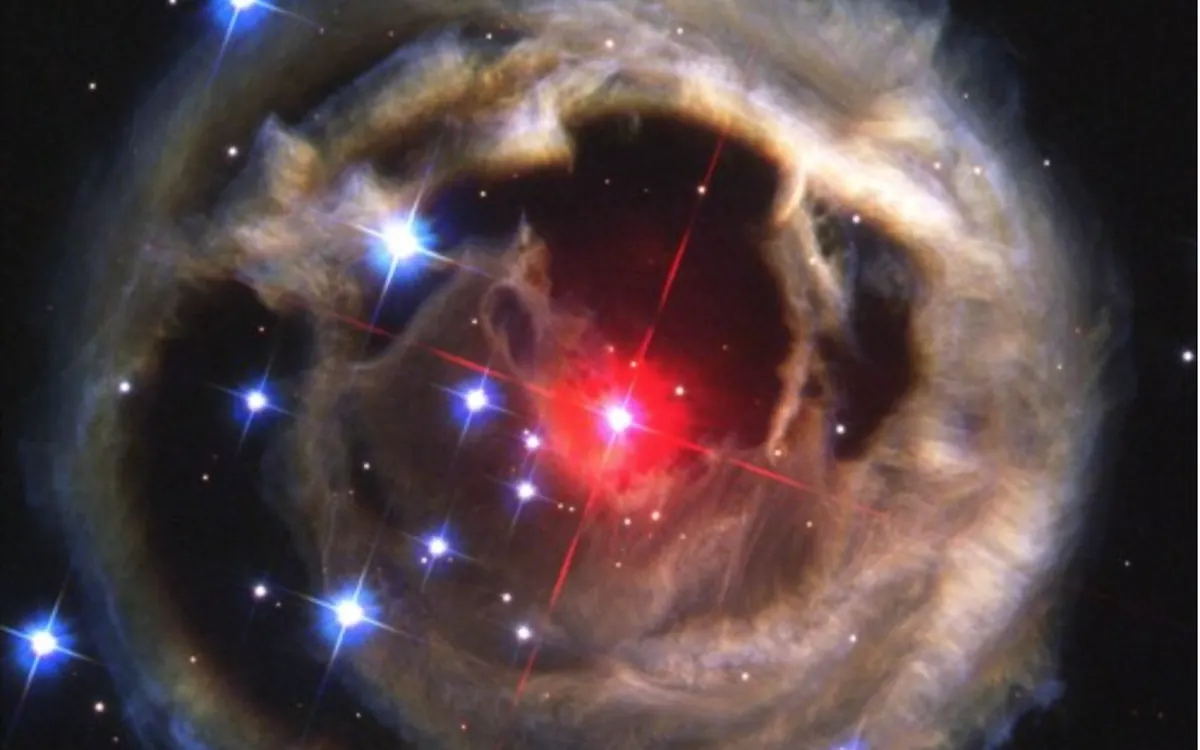
Here is a live interlude from Rav Mike - his annual class in memory of his father, Charles Feuer ob'm. It is an exploration of the Hannukah light as it has been gradually released through the challenges of history, theology and personal experience.
About this episode
On the twentieth yahrzeit of his father Charles Martin Feuer, Rav Mike gives a live shiur at Pardes, Releasing the Light Within. He opens with his father, an electrical engineer who never had a chance to pause, out of college into work avoiding the war, raising two children, while Rav Mike was blessed with a pause after college to ask what the potential is, and whose father handed him a check for a ticket to Australia and asked only that he keep a journal, because he saw the potential. The loss of a father at twenty-five provoked a crisis of faith, but the real question is the nature of faith, and there are two faces to the question life poses: why did this happen, which treats meaning as existing outside us to be deciphered, and what does this mean, which treats the essence of life as within and our task as imbuing the world with meaning, paraphrasing Viktor Frankl that life is always asking us the question. That, for Rav Mike, is the meaning of faith: everything is a question from God, and the power to answer lies within, which is why we are still discussing Hanukkah after two and a half thousand years.
Hanukkah is strange in our tradition, with no tractate and no book in the canon, and its treatment begins with a question, mai Hanukkah, unlike Purim or Pesach, so is this deriving meaning or making it. The earliest text to answer, Josephus, calls it the festival of Lights but admits he does not really know why, I suppose the reason was that this liberty beyond our hopes appeared to us, so he puts his own meaning, liberty, on it in the time Rome had destroyed the temple, since the miracle of the cruse of oil is not in the Book of Maccabees nor the earliest rabbinic references but appears only in the Bavli. The light is out there, as the Mishnah in Bava Kamma shows when it exempts a camel driver from damages on Hanukkah because everyone knows there are candles outside, but no one says why. A word on metaphor: it is not that God lacks a hand so the hand is a figure, but that God has a hand and ours is the metaphor, the ability to assert will in the world, so every part of our physical being embodies some aspect of the divine, and the question is what meaning the Hanukkah lights embody and whether it is fixed.
The oldest story of Hanukkah is the natural one, nearly every northern culture celebrating light in midwinter, and the rabbis fill in a backstory in Avodah Zarah where Adam after the sin panics as the days shorten, fasts eight days, then sees them lengthen and celebrates, the sages insisting these were sacred holidays corrupted into idolatry and awaiting redemption. The first stage of exposure to light is responsive: you have to be photosensitive, and responsiveness to light is a definition of life, as an EMT measures consciousness, so many live in darkness because they put a callus around themselves. The next aspect is activation energy: a match has an exothermic potential released once you strike it, so the room is full of potential energy, but light and matter were thought separate until Einstein, requiring the conceptual courage to say everyone is wrong, a courage shared by Abraham against idolatry and by Matityahu and the Maccabees against the Hellenism the whole world embraced, the endarkenment. The original light of creation, the Or HaGanuz, shone 36 hours and was hidden for the righteous, and the Sefat Emet, quoting the Rokeach, connects it to the 36 Hanukkah candles, a light you can see from one end of the world to the other, seeing what is rather than through the contrast of shadow.
The world, olam, is akin to he'elem, hidden, a veil over that light that most never see and call the natural world, the old battle with a materialist Greece that held the mind supreme, whereas revelation holds the mind a necessary but insufficient tool, so that emunah begins where the intellect ceases to be the proper tool and you refuse to shrink the world to fit your mind. Hope is a great light, based on the belief that what is does not define what will be, and the Maccabees released that light through mesirut nefesh, self-sacrifice, a small group against the whole world including their fellow Jews, who told them this is the way it ought to be, and they answered this is not our story and fought a bloody fight to build a kingdom unequaled until the modern state. Hanukkah is also the end of the olive-pressing season, a metaphor for drawing the potential from life through being picked, crushed, strained and lit, and Kohelet's line that light is superior to darkness also reads that darkness brings benefit to light, the Zohar's teaching that the power of light comes from the experience of darkness, as Rav Mike can stand happy with who he is and say his father's death, which he would never call good, was the best thing that happened to him.
The last element is the collapse of light's potential by consciousness: light is a wave until it meets something to reflect, absorb or observe it, and the original light of creation reappears most powerfully in the chemistry of the brain, matter releasing the energy that lets us know the world, the light of consciousness giving meaning to the plethora of possibilities, whose primary tool is language, the vayomer let there be light. Rav Kook teaches that prayer actualizes and brings to light what is hidden in the depths of the neshama, and that a great light pours out with the well-derived word, so choose your words carefully, since what you pray for is who you are. Hanukkah's companion is Purim, both taking a historical experience and asserting its essential meaning, and when the sages wanted to give the light of Hanukkah to those beyond the Maccabean kingdom, which was destroyed, and beyond the northern hemisphere, they told a story about candles, the Bnei Binah who understood that a light without a wick is nothing: the world is the oil, you are the wick, and consciousness extracts light through a well-chosen word, a powerful story that draws light from the darkest situation. Whether the oil story happened is not the question, but whether faith is finding meaning outside us or touching the capacity within to imbue the world with meaning, and the proof that the story is true is that two and a half thousand years on we are still lighting the candles, and the light only gets stronger.
Key ideas
- Faith is less the question why did this happen than what does this mean, since the essence of life is within and our task is to imbue the world with meaning.
- Hanukkah begins with a question and the miracle of the oil appears only in the Bavli, so its meaning is made as much as derived.
- The first stage of light is responsiveness, a definition of life, and the next is the activation energy of conceptual courage against the endarkenment.
- The Or HaGanuz, the hidden light of creation, reappears in the 36 Hanukkah candles, a light seen from one end of the world to the other.
- The Maccabees released that light through mesirut nefesh, answering this is not our story, and hope is the light that what is does not define what will be.
- Consciousness collapses light's potential through the well-chosen word, so the sages gave Hanukkah's light a story about candles we still light today.
Chapters
- 0:00 Twenty years; releasing the light within
- 3:12 The father who never paused; the pause
- 6:31 Faith: why did this happen or what does it mean
- 9:47 Mai Hanukkah; a question
- 11:57 Josephus; the festival of Lights
- 15:08 Metaphor embodies meaning
- 17:16 Adam; light as responsiveness
- 20:24 Activation energy; conceptual courage
- 23:34 The Or HaGanuz and the 36 candles
- 26:46 Olam and he'elem; the materialist Greece
- 27:54 Hope; the Maccabees' mesirut nefesh
- 33:14 The olive press; darkness benefits light
- 37:26 Consciousness collapses the wave; language
- 40:37 Rav Kook; prayer and the well-chosen word
- 42:47 The companion Purim; the story of candles
- 47:04 The proof the story is true
Who, where and when
People
Charles Martin Feuer, Viktor Frankl, Josephus, Adam, Einstein, Abraham, Matityahu and the Maccabees, The Sefat Emet, Rav Kook
Places
Pardes, Jerusalem, The Temple Mount
Texts
Josephus, Antiquities, Bava Kamma on the camel, Avodah Zarah on Adam, Kohelet, The Zohar, Olat Re'iyah on prayer
When
1999 CE: the death of Rav Mike's father, The Maccabean victory, The hidden light of creation, Hanukkah, the end of the olive-pressing season
Read the transcript
Okay, good evening everybody and welcome. Thank you all for coming to, at this point, I have no idea how long I've been doing this year, but it's the 20th year, it's my father, Charles Martin Foyer, the Taliban Abraham, he passed away in this Kufbet, Kislev, which is Tanakh, that was December 1st, 1999, Biminyan Nam. And before we get started on the show, I just want to do a couple of housekeeping items. First of all, welcome to Pardis Institute. Thank you so much. Those of you who have never been here before, take a look. It's the center of Jerusalem, whether you know it or not. If anybody's curious, I'm happy, and I'm sure several of our students would be happy to tell you more about the place when we're done.
That's number one, the code Ahsaniah, as they say. Number two, a number of people asked me if book two of the Age of Prophecy series was out. It's right here. If you don't know what the Age of Prophecy series is, it happens to be Wave Dave. My co-author is right here. He'll be able to explain it, not while I'm talking. They are here. They're on sale. I'm happy to tell people about that afterwards. Number three is I want to take the opportunity to say a word about the Jewish story. Because those of you who were here last year, which is actually a good crop of the folks, know that last year we did a launch party for the Jewish story. And it's been fantastically successful. I want to thank everybody for the work they've done, for their support.
If you're not yet a listener, so you can find the Jewish story at my website, jewishstory.co, or simply on iTunes, or frankly, if you Google it, you'll come up with it. If you are a listener and you're not yet a supporter, I want to make a call right now for people to put their money where their ears are. In a world which is facing a narrative divide, where it seems like we've lost the ability to speak to those who don't agree with us, I'm telling a story where Christians and Jews, religious, secular, conservatives, and progressives are all listening to the same story. And if you think that that's an important part of the solution to the type of crisis of communication that we're facing today, I encourage you, like I said, to put your money where your ears are.
You can go to the website. There's a little button there that says be a patron. Or you can ask me directly. Trust me. Cash check. I'll figure out how to take your credit card if you really push me. And last but certainly not least, if you are a supporter, thank you. Thank you, guys, because you make this happen, and I'm really excited. And I think that's it for the housekeeping for now. So, the title of the shir is Releasing the Light Within, and it's a bit of a retrospective for me. It's 20 years since my father passed away. I remember, some of us were sitting 10 years ago in the Beit Midrash of Sulem Yaakov, Alehhal Shalom, and somebody asked me, 10 years seems like a long time, and it actually didn't seem that long to me at the time.
But when I sat and started thinking about 20 years, that indeed actually struck me as It's been quite a while. So with your permission, rather than telling kind of the same stories they tell about my father every year, although I'm sure one or two of them will pop up, I want to take a second and just contemplate what that means. Because, you know, if you look at the Mishnahh and Avot, which people are probably familiar with, there's a whole educational approach, five years to Mikra, ten years to Mishnahh, et cetera, and it goes on to all the different sort of stages of life. It says, Ben Esrim Lir Dov. Right? You're meant to be pursuing when you're 20. Now, it's speaking about Parnassah, it's speaking about making a living, but, you know, in some sense, I'm 20 years old today.
The person that basically everybody, not basically, that everybody in this room knows is 20 years old. And it's one of the challenges I really faced in my life of trying to put things together is that no one in my life today that I interact with on a daily basis even knew my father. It's a strange thing. I actually went and Googled Charles Martin Foyer today just to see what would happen. You know what happened? Not a whole lot. Because the world in which I live is not the world in which he lived. And my father was an electrical engineer. He was actually graduated from the University of Michigan with a degree in electrical engineering. Had a very, very low draft number. He was going to Southeast Asia. But actually got a deferment from the Army because he took a job from Michigan Bell in essential industries.
And as I said to him at my graduation from college, he never actually had a chance to pause. Never. Out of college, got to avoid the war, into work. He and my mom were married actually before he graduated and had my brother, had me, work, work, work. We were not cheap or easy children. So at a certain point when I was, I'm the younger brother, when I graduated from college and I had an opportunity, the whole world was wide open in front of me. Here, I'm going to tell the story again. You know it well, right? The whole world was wide open in front of me. I had no debt. I had an excellent education. I had all this potential. And that's what I actually want to speak about today, is this power of potential. And how do you release the light?
How do you release the light? The Hanukkah is the holiday of lights. We're all going to be lighting candles. But how do you release the light? It's not a symbolic act. So I had decided not to get a job. And I asked my mom, actually, to tell my dad I wasn't going to get a job. And she said, no way, you can tell him. Then sure enough, he comes up to me right before graduation and says, so your mother tells me you're not getting a job. Yes. Right? Go, Mom. And I said, yeah, you know, I want to go to Australia. I want to go to Australia. I want to travel. I was going to travel around Asia. I had this big plan. And he said, why? And I said, you know why, Dad? Because I can. You didn't ever have a chance. Like I said, out of college, work, avoid the war, kids, make a living.
There was never a pause. And I have this great blessing of having had a pause in my life to ask, what's the potential? And so, you know, you should know my father was a tremendous listener. A number of my friends at that graduation weekend came up to me afterwards and said, I just had the most intense conversation with your father around the keg. He also was quite a competent drinker. This was really one of the great gifts that he was able to give to me, to my brother, really to everyone he knew, is that, as I've said here before, I don't really have so many memories of anything my father said to me. but I have a lot of memories of him listening. And I think in many ways that's even more important to me.
So sure enough, at the end of graduation, he comes up to me and he hands me a card, and I open it up, and there's a check for the plane ticket to Australia. And he says to me, all I want you to do is keep a journal. That's all I asked, which I did for a good five years afterwards, because he saw the potential. Right? And so, it's a bit of a cliche to say that the loss of someone's father at a young age, I was 25, he was 53 when he died, to say that it provokes a crisis of faith is, it's like, you know, yeah, exactly, I'd make that face too. Right? Nonetheless, but actually the real question is, what's the nature of that crisis? In other words, what do we mean by faith? People speak about living in the light of faith.
It's like a big question today in the postmodern world. What does faith look like after fill in the blank? After the Holocaust, after Hiroshima, I don't know, after the White House. Take your pick. You know, and, you know, what I want to point out and what I want to carry through this shure is there's kind of two faces that question. One is, why did this happen? Right? What's the meaning? Can I extract from something which essentially exists outside of me? That the essential importance of the world lies outside of us, and our task is to decipher it. The other one is what does this mean? Which is a fundamentally different stance. That means that the essence of life lies within, and my task is to imbue the world and everything which it offers with meaning.
And to paraphrase Viktor Frankl, as he says that the meaning of life is found not by asking what life means, but by recognizing that life is asking you that question at all times. Right? So, Mike, what does it mean that your father died suddenly? What does it mean that the temple was liberated from the Greeks? What does it mean that we're sitting in the rebuilt Jerusalem? You understand the difference? that either that meaning exists out there and our only hope is to somehow find it, which I don't know about you, that's been a particularly dissatisfying approach in my attempts to understand the difficult things in my life, or I hear it as a question to me, and then the answer, the power to answer that question, lies within.
So everything in life is a question from God. That is the meaning of faith in my eyes, And the question is, what does this mean? And the answers we give to the questions that are posed by our life, by history, are an expression of the divine within us that has the capacity to give the real meaning to life, past, present, and future. Remember, if God was just sort of planting meaning in the world, if we knew what Hanukkah meant, and I will come to Hanukkah in a minute, don't be nervous. If we knew what Hanukkah meant, then we wouldn't still be discussing it today. Somebody said to me before this year, I don't get it. You've been doing this for almost 15 years. How is it possible to actually say something new about Hanukkah every year?
So the only answer to that is, well, we've been doing it for 2,500. Who read the Parsha this week? Yeah, that's a waste of time, right? How many times have you personally read it? Much less, how many times has it been read? You get the point. Right? So I can tell you this. My father was a man who loved life. Joao de vivre doesn't touch it. My father loved and believed in me. and in many other people, but I'm the one talking. And my father would have wanted to see the world, which I built for myself and for my children. And last, but certainly not least, he didn't get to. So what does that mean? And what does it have to do with Hanukkah? Well, I can tell you that at age 20, I'm pursuing that meaning. And every year, I build a little bit more.
So, you know, Hanukkah's funny in that, of course, there's no tractate Hanukkah, right? Not in the Mishnahh, certainly not in the Gemara, right? There's no book of Hanukkah. There's a book of the Maccabees, but our tradition has kept it on the outside. And it's an interesting book. I highly encourage reading the first two. The other ones are like knockoff sequels. It's not so worth your time. But the strangest thing about the treatment which Hanukkah does get in our tradition is it all starts with a question. May Hanukkah. You've heard it before. It's a strange thing. We don't say May Purim, May Pesach. And of course, the Gemara gives its answer, but you know, we're Jews here. Don't let an answer ruin a good question.
Right? So, is this an act of deriving meaning or making it? So when we start looking in the text, the earliest text that we actually have that attempts to answer the question actually well predates the Gemara, it's Josephus. Josephus, great historian of the Second Temple era. I'm not going to tell his story. You can look it up. But he actually says a very clear answer. Well, actually, not so clear. But you can look on your source sheet. If you have it there, it's the first source I gave you from the Antiquities. But he speaks about, oh, sorry, obviously the Maccabees comes, the Book of Maccabees comes before Josephus. But they're not trying to give some answer to the meaning of the story. Why not? they're living it.
And that's a very important point. Right? It's only afterwards. Right? This is what Wallace Stegner in a beautiful book called The Angle of Repose, which you should all go home and read Tanakh, calls the Doppler effect of time. As life is coming at you, it increases in pitch. You don't have time to contemplate it. At best, you can live it right. It's only once it passes and the wavelength stretches out, you know, that's the ambulance, that you can begin to actually wonder, like, well, what did that mean? So the Maccabees, we're not going to look to right now, although it's a discussion we've had before. Maybe they'll come up at the end. For now, Josephus is really the first text that we have who attempts to answer this question unposed yet by the Gemara because that comes hundreds of years later What Hanukkah And his answer is light He tells a brief part of the story They very glad and yada yada yada But here the last line I gave you from this time We celebrate this festival and call it light.
Now remember, if you're not familiar, that the story of Neis Pach Hashem and the little cruise of oil which burned for eight days is not in the Book of Maccabees. It's a classic question. It's not in the Book of Maccabees. It's not in the Tanaitic material. It's not in the earliest reference to Hanukkah, which in rabbinic literature, which is known as Megillat Tanit, which is a list of dates on which we don't fast or say eulogies, that it only appears, actually, in the Gemara and Babli. Then some later sources. But we'll come to that momentarily. But nevertheless, Josephus says it's called lights, which all of us, having grown up with the story of Hanukkah, want them to say, why is it called lights?
Well, they went in, and they found the jar of oil. No, he says, and it's strange, we call it lice. I suppose the reason was because this liberty beyond our hopes appeared to us, and that thence the name was given to the... That kind of answers that, I suppose. He knows it's called life, and there must be some reason for it, but he doesn't really know why. So what does he do? He puts his own meaning on it, a meaning which was very important to him. We're not going to go into the life of Josephus, but the reality is it was quite critical, this question of liberty, in the time when Rome had just destroyed the temple. But there's other early sources that speak about this camel. I didn't bring it to you, but one of the classics is the Mishnahh in Babakama that talks about in legal damages, if a camel is carrying a bunch of flax and it is overflowing into the courtyard of a store and lights on fire because of the store owner's candle, so the camel driver is liable for damages because you should pack your camel better.
Always remember that. But if it's outside, he's still liable unless what? Unless it's Hanukkah, because then everybody knows you're going to have candles outside. Interesting. Nobody says why, but everybody knows. Everybody knows, so much so that it actually exempts you from damages, which if you're familiar with civil law, that's a very strong assertion. everybody knows to the point where I will exempt you from your responsibility for damages. So the light is out there, but we don't know why. And so that's what I want to do. I want to look a little bit about where this light comes from and use the light as a metaphor in order to understand a little bit about this process of deriving meaning, of creating meaning, and what really lies between them.
A word on metaphor before we go much further. Metaphor is a funny thing. there's a common assumption that metaphor works like this. God stretched out God's mighty hand and strong arm and took the children of Israel out of Egypt. But God doesn't have a hand. Raise your hand if you have a hand. Let me just check if you're listening. So therefore, it's a metaphor. This is a hand, and we use it to understand something about God. I've got news for you. You're wrong. That's not how it works. God has a hand. this is a metaphor a yad is the ability to assert will in the world which of course only God can really do in its fullness and we have this appendage which is expressive of the divine that means when we're created in the divine image you may have noticed Rashi is insistent it's tselem u dimut it's diffuse meaning your shape is specifically reflective of the divine.
That's why. Every aspect of your physical being is a metaphor for some aspect of the divine. So therefore, metaphors are not simply a tool to understand the world. They're an embodiment of meaning, which is when we speak about Hanukkah lights, that's exactly what I want to get at. What meaning are they embodying, and is it fixed? So what's the oldest story of Hanukkah? Anybody know? You can probably look in your source sheet and figure it out. There's a great one. Every culture, more or less, of the northern hemisphere has some holiday celebrating light and darkness in the midwinter. It's fairly natural, I think, for ancient cultures. It's like, this time of year, I mean, granted, winter is, please God, let it come, let it be soon, let it be cold, let it snow, but right now, it's not so impressive.
Nevertheless, raise your hands if you grew up in the Midwest, like me, right? Yeah, so you know what a real winter is on the northeast, right? Oh, Canada. Oh, Canada. Oh, Canada. But, hey, fair enough. We always forget Canada, don't we? So, like, you can understand why it would be very important to celebrate the existence of light when a time where, and certainly for ancient humanity, you might actually doubt that it was ever coming back. But Hanukkah waits. It's not a biblical holiday. It's not there from the God's eye perspective that the Torah gives us. It waits. Except the rabbis fill in a backstory here on your source sheet in the Gemara Navodah Zarah, that when Adam, after the sin, noticed that the world was gradually getting darker because the days were getting shorter, read, heading into winter, he says, woe is me!
Why? Because this is the death that he had been promised for eating from the tree. Panic. The world is going to die. He fasts for eight days, fortunately approaching the winter solstice, and then, being an excellent observational astronomer, notices that the days are getting longer again and says, oh, that's just how the world works. And he celebrates. And it's very interesting. We won't go into discussion now because it's just kind of a setup. But it's interesting to note that the sages insist that these were sacred holidays in the beginning, that autumn fixed these as a time of celebration, and that they were taken by the nations of the world and made in idolatry. This is a classic vision that the sages have, that there's a natural religion, which is bound up with God, and then there's a corruption of natural religion, which is idolatry, and then there's a redemption of that, which we call Torah.
And it's a process which begs the question of, what's the next phase look like? But we'll get there. But in this sense, I want you to just remember, the first stage of exposure of light is responsive. You have to be photosensitive. If you want to know what the world means, you have to be responsive. And responsiveness to light is one of the definitions of life. I was trained as an EMT. I'm going to keep asking people to raise their hands. How many of you guys have trained in the medical profession? Right? Responsiveness to light is one of the ways you start measuring levels of consciousness. I mean, it's not quite pain. We'll get there. Right? But it's a very low level of consciousness, but nevertheless differentiates between life and death.
if you cannot respond to the world around you, then there's not much hope that any light will come from the situation. Okay, that's the first element of the metaphor. I mean, I'll make it obvious and just point out that many people have things happen to them in their life and they never respond. Not by asking what does this mean, and not by asking or looking at it as a question to them of what it means. Right? And I think a lot of people live with a lot of darkness because of that. Not out of judgment, just out of the callus that we put around ourselves in order to not be responsive to the world. All right, next step. We can move from responsive to another aspect of light. I thought about doing this as like a demonstration, but it's dangerous to play with matches anywhere, especially in the Beit Midrash.
But just think about striking a match. It's a, oh, striking notion? No. So it's a strange thing, but this room is filled with energy. This room is filled with energy. Potential energy all around us. Right? Now, it might take you a while by breaking a piece of this table off and rubbing against that piece of table to prove it to yourself. But it is possible to release that energy. What stands in the way of releasing that energy? What? Action, right? You have to release the potential inside. First of all, you have to know it's there. it's an astounding thing that for most of the history of humanity we thought there was light and there was matter and never the two shall meet the whole fire thing when it was once it was understood it was a chemical reaction but the idea that light and matter are only one thing came to us much later who brought that one out?
Einstein right? and before we even get into the details of where I think that goes, just appreciate the conceptual courage that's involved in looking at the world and saying, yeah, I know everybody thinks that matter and energy are different, but they're wrong. The conceptual courage is one of the most important elements in being able to draw light out of a dark situation, in being able to look at dead matter and say, no, no, no, there's life in there. It's a conceptual courage which I would argue is second perhaps only to another great Jew who was his ancestor, Abraham. The whole world says, no, idolatry. He says, I don't think so. And he goes looking, and he brings a great light to the world. By the way, there's a parallel, of course.
Abraham, Matityahu, and the Maccabees. The whole world is going Greek. Everybody says it's the best way to do it. Hellenism is the cultural rage. They're making movies. Everybody dresses like them. Right? And suddenly, Matityahu and his sons stand up and they say, no, this is actually darkness. It's the endarkenment. You guys ever heard that phrase? Instead of the enlightenment? Got to hang out with a firmer crowd. So this ability to see light in the inert, in matter, is a product of conceptual courage. you have to have some ability to step out of the frame. So how do we know the light is there? Well, we're going to keep going with the order here, even though I can feel my brain changing this even as we speak.
But there's a beautiful notion that the Talmud Yushami, I didn't bring it to you here, but the Talmud Yushami brings down a beautiful notion that the Orhaginus, the original light of creation, God's statement by He, let there be light, that the organ news, of course, if you've read Rashi, know that it didn't stick around. God hid it away for whom? For the righteous, right? I'll do a plug. You should all listen to the Pardes podcast because you can get the full story on the organ news there coming out probably next week. Next week. But for now, that light gets hidden away. It gets hidden away, except the Rishami says, but it stuck around for how long? 36 hours. 36 hours. 12 hours air of Shabbat, 12 hours on the night of Shabbat, 12 hours on the day of Shabbat.
Striking. Where else have you heard that number 36 before? Happens to be the number of candles that you will be lighting to fulfill the mitzvah of Chanukah. And the 36th Tadikim, I heard it over there. That, you're going to listen to the other podcast before. I can't, there's only so far we can do it. So there's a connection, says the Svas Ames, great Hasidic master of the second half of the 19th century. There's a connection between these two lights. That the original light of creation, he says, he's quoting the Rokeach, Rabbi Elzer Mew Worms, says the 36 candles we light on Hanukkah parallel the 36 hours that that original light of creation is shown. And therefore, he says, it reappears every year when you light your Hanukkah candles.
And that's a light that you can see from one end of the world to another. What does that mean? That you can see from one end of the world to another. You know, we see not because of light alone. We also see because of shadow. The eye works through contrast. The proof of that is if I took a big flashbulb and set it off in this room flooded the room with light would you be able to see better No you be blind Just think about that for a minute Too much light blinds you We see through shadow But the organus, that original light of creation, you don't need to see something by understanding what it's not. It's not the either-or universe. You simply can see what is, and that means you can see from one end of the world to the other.
So that light gets hidden away, tucked inside. We'll speak a little bit about it more in a second, but the Swas Emes says, or quoting the Rokeach, that it's also there in the candles of Hanukkah. Why? Because he points out that the word for world in Hebrew is olam, which is strikingly similar, as he points out, to he'elem, right? Something which is obscure or hidden, or is ma'alim, which hides. So if the world is somehow a veil over this light, most of us never see it. We call it the natural world. This was a big part of our challenge with Greece. Greece was a materialist society. They believed in the supremacy of the mind. They weren't so into our notions of revelation. That's an old battle, one that we're still fighting today.
But the basic premise of revelation is that the mind is a necessary but insufficient tool for understanding creation. The other way to say that is that emunah begins when the intellect ceases to be the proper tool for engaging the world. Otherwise, you know what you have to do? You have to shrink the world to fit your mind. And you live in a very small world, no offense to your mind. But it's certainly not as big as it could be. I wasn't looking at you specifically. We'll talk about that later while you blanch. Really, It's an important challenge. How do you live in a world bigger than you can imagine? You have to believe that it's got more potential. And then you have to figure out how to unleash it. And the key, when the Sos Amis here engages on a deeper level, how was it that the generation that walked in darkness, and the sages define Greece as darkness, as Phrashit Rabba goes through the four exiles and fits them back into one of the first verses of creation, each one has its quality.
The quality of the exile of Greece is darkness, and we're still fighting it today. This insistence that what you see is what you get is a great tool for darkening people's eyes, for removing their hope. Hope is one of the great lights of the world. You know what hope is based in? That what is does not define what will be. As soon as you believe that what is defines what will be, there's no place for hope. I mean, it might be cheery, but it's not hopeful. hope means that there's something you can't see, which nevertheless will come to be. And that's a great light. How do you release it? So the next stage, after this responsiveness, adem, unless you put up a callus, when things happen to you in life, you respond.
Oh, darkness is coming, light comes. Of course, his response is giving thanks and praise. The Maccabees respond with mesirut nefesh. this, says the Swas Emes, that the generation that lived in the days of the wicked Greece walked in darkness, but they served God with a spirit of self-sacrifice even in the midst of that darkness. I mean, just think about it. I mean, you've got a small group, I mean, classically, Matityahu and his sons. The whole world is against them, not just the Greeks, because let's not forget, this is a cultural battle. The Jews are against them. This may sound familiar, right? Their fellow Jews are telling them, listen, you're nuts. this is the way of the world. It's not just the way of the world in a fatalistic way.
It's the way it ought to be. And there's a small group of Jews saying, no, this is not our story. We're going to come back to that. That's the last stage, that question of what our story is. This is not our story. And they fight. It's a bloody fight. This is a bloody fight. You know, this is one of the funny things about Hanukkah is that the meaning that we imbue it with changes according to who you ask, right? Hanukkah to Adam was this natural religion. To the Maccabees, it was the sort of great national victory. throwing off the yoke of not only the foreign oppressor, but of the cultural oppression. You know, the Zionists, or so the rabbis, it's, you know, the eight days Konica thing. We're going to get to that, don't worry.
Right? To the Zionists, what was it? There's a classic Zionist song, There Was No Oil, There Was No Miracle. You guys ever heard that one? It's like, yeah, it's like, yeah? Like, it expresses, like, who needs such a thing? It's about the victory of might. And you ask the average, I don't know about the average, If you ask many sort of liberal Jews today, Hanukkah is a celebration of religious freedom. Which, I mean, it is, unless you disagreed with the Maccabees, in which case it wasn't. But you get my point, is that there's so much there that can be drawn out. So here's the Maccabees, and says the Sos Emes, how do they access that organus, which we're going to speak about what it is in one second. How do they access that light that underlies creation, misirut nefesh, self-sacrifice?
There's something which is more important than life. And the amazing thing is that when you live a life which is dedicated to something greater than you, you get more life. It's a fantastic thing. Living life for one's own self might seem like a great strategy for self-preservation, but you're playing it small, and you're selling yourself short. Because there's so much more life which can be released. And Masirat Nefesh is the next stage of how we create life. One is the responsiveness of light. The next one, like go back to that match. How come the match if it burns when I strike it, doesn't just combust in the box? Right? It needs activation energy. I don't want to scare anyone, but go back to your high school chemistry education and think about the difference between an endothermic and an exothermic reaction.
An endothermic reaction is one you have to constantly put energy into in order to make it happen, in which case, as soon as you stop putting energy in, it's over. That's not what's a match. A match actually has an exothermic potential. As soon as you start the reaction, it goes to consumption, burst of light. So why doesn't the match just burn up in the box? Because it has an activation energy. You always got to get over the hump if you want to let the light out of life. That's the way it is. And as soon as you get over that hump, the light comes pouring out. So the Maccabees, they go for broke. a guy and his kids, small group of rebels. It's insane, right? We're still telling their story today. They build a kingdom unequaled in strength, wherever it ends, which is its own story that deserves a treatment.
Some of us have spoken about it before. But they build a kingdom unequaled in strength until the modern state of Israel. It's a fantastic release of light. So, all built in this year. And just to finish out this Fasemes, because he deserves his own treatment, is that he points out that we should all rejoice because in this day, right? We say, These days, in that time, this all happened, which means when you light your Hanukkah light, you're releasing some of that hidden light, and you can benefit from it and rejoice because the Greeks wanted to make us forget, and we're doing this act of remembering. And not just remembering, but advertising the miracle. So we have this response to this of Adam. we've got the activation energy of the Maccabees, and there's one more piece that I want to put into it.
Well, actually, before we get there, a more personal note. You know, Hanukkah is also an agricultural holiday. You guys know that? We think of the agricultural holidays as Pesach, Shavuot, Sukkot. It's fairly well known where they fall out. No, not as potatoes. It's the end of the olive pressing season. It's not when the olives grow. This is the end of the pressing season. You gather olives, you let them ripen to the point where they're perfect for pressing, and you do it, now is the time. Which is why we're all eating fried foods. But it's a fantastic metaphor for life, and it's been used by many others before me, not just me, that if you want to get the potential out of life, it needs to be picked, weighted on, ripened, crushed, strained, processed, and then lit.
Right? And that is a powerful and painful process. I brought you guys a source here. The first is a quote from Kohelet. If anybody can tell me what Ecclesiastes is, I'm happy to hear later. It's a quote here from Kohelet. It says, literally, or I don't know, literally the classic translation I have here is I've seen that wisdom is superior to folly as light is superior to darkness. Don't miss the resonance with Hanukkah, because we're all arguing about what wisdom is with the Greeks. Is it Greek wisdom? Is it our wisdom? But the reality is that there's another level to this verse, because a yitron lechokva min ha-sichlut, or yitron le'or min ha-choshech could also mean what? There's something in darkness which brings benefit to light.
There is a truth in that statement that the Zohar below it brings out. The benefit of light only comes from darkness, says the Zohar, because the Tikkun of white is black. This is this contrast again. Right? Just like the Tikkun, it goes on to say, a bitter is sweet. that the power of light comes from that experience of darkness. And something that everybody here probably knows, but it's worth saying anyway, is that we should never know difficult things unless we want to grow. Right? I would never say that I'm happy my father died, but I can tell you, standing here happy with who I am, that it was the best thing that happened to me. You can't take it back. You only get to be who you are. So either there's a yitron le'omine hachosheh, there's a benefit that darkness brings to light through that crushing process which extracts something that you otherwise wouldn't be able to access.
And again, go back to Viktor Frankl. You can say, why did this happen? And you're going to chase down a blind alley. or you can hear the question being posed to you, Mike, what does this mean? 20 years pursuing that meaning, and here we are. So that's just an important moral piece, which frankly I put in here, note to self, don't forget this. Last element, just in building a fairly loose structure here to understand, what are we after? Again, we're asking, how do you get the light? One is you have to be responsive. You have to be responsive. That Adam's experience of giving thanks in face of that light is what preserved that as part of human consciousness. Otherwise, it's just another day. We all know this.
We wake up in the morning. How many people said, and they woke up this morning, right? How many of you meant it? Good. That's a good percentage. I mean, it happens every morning. And it's very hard to maintain an honest, responsive posture to things which happen every day. But I've got news for you. If you can do it, it's the key to drawing the light out of life. The next phase is Masirot Nefesh. Whatever it's for, find something bigger than you to serve. And the beauty is it will draw out from you more than you already have. It will get you over that activation energy hump. We say it. Man, he's on fire. He's on fire in the Beit Midrash. He's on fire for that issue. We say it. We say this. Why? Because we recognize that there's something in the human spirit which, once activated, is capable of more than you ever would have imagined.
And last but certainly not least oh and by the way that can be a crushing experience too but that as I said is just a moral lesson that deserves to be remembered The last but certainly not least is there another funny fact of light which is the wave problem. Right? I'm a wave, I'm a particle, I'm a wave, I'm a particle, I'm light. It's both, it's neither. There's a power of light that has to be collapsed in order to be seen. Right? Light is potential. It's cruising through the ether. Greeks after all, right? He's cruising through the ether until it meets something. Something to refract it, something to reflect it, something to absorb it, or something to observe it. There's a power of consciousness, which is a critical piece of what's underlying creation.
There's a light inside everything waiting for you to observe it. You know, the Kabbalists talk about light all the time. People may be familiar with this language. Some of us have had a chance to learn Rav Kook together. And if we have, then you know I love that language. Rav Kook, of course, names his core text, Rout, lights. So what's he speaking about? Where does this light come from? Well, it's actually quite simple to explain that in the beginning, there's God. Everything else is essentially a solidification. there's light which slows down into matter which slows down into organic products which through the process of evolution yeah I said the E word comes up with what? the dinosaurs they all get wiped out and that little gerbil under the rocks who happen to be small enough not to be worried about the changing climate is putting a man on the moon where does that original light of creation reappear most powerfully in our world?
In the chemistry of your brain. It's a fantastic thing. Matter producing energy. You see? It begins as light. It becomes matter, which becomes organic, which releases that energy, which allows you to do what? Know the world. The light of consciousness can then, of course, as we say, collapse the wave function. It can give meaning to the plethora of possibilities. Remember, light's about releasing the potential. Gives meaning to it. That plethora of possibilities which exists in creation. And you know what the primary tool of consciousness is in giving meaning to creation? Language. Dahi'o, said the boy olam, let there be light. Rav Kook, in what I think is the last source, oh, apparently not. Somebody else put this together.
Oh, I did bring the Ushami. Anyway, Rav Kook here on the bottom of the second page, in what to me is one of the most important passages in the introduction to Ola Ria, he says, Prayer actualizes and brings to light, to complete life, that which is hidden in the depths of the Neshama. So first of all, which is not my focus, but it needs to be emphasized, if you want to let the light out into the world, you've got to pray. And if you read the books of Maccabees, by the way, prayer plays a very important role in their victory. And aside from the mechanistic, I pray because something outside of me is the meaning of the world, God help me, God help me, the power of prayer that's not what Rav Kook said what did he say the power of prayer was?
it releases the light inside of you just imagine you're walking down the beach and you come across a little jar in the sand you take it out, it's metal, you rub it off to see what it is and what happens out comes the genie we've all heard the story, right? you better hope it's the best day you've ever had You know why? Because whatever that genie offers you, you're going to get. Whatever you ask for, you'll know exactly who you are, and you'll have to live it for the rest of your life. What you pray for is who you are. Unstated, but in potential. And forcing yourself to put it into words releases something inside of you which could always remain murky. You know this. You've journaled before and you've found this out.
you've spoken out your thoughts with a friend and you've figured this out. Prayer works the same way. That's why Rav Kook said that it actualizes and brings to light that which is hidden in the depths of the neshama. But even more specifically, he says, HaMila HaNigzeret OGadol Shopeima A great light pours out with the well-derived word. Choose your words carefully. Because they can cover over or they can release that light. And this kind of brings us to the last point I wanted to make, which is that, here's a question. We have this Adam thing, okay, mythic thinking, we're down with that. All northern cultures, light, darkness. Why do they have to wait? Well, because it's the responsive holiday. I didn't make that point, but it's the responsive holiday.
It has to wait to a point in which Am Yisrael is ready to actually assert our capacity to make these holidays. Comes together, what's its companion? Purim. Both of them are a process of taking a historical experience and asserting their essential meaning. Hanukkah was a gimme. Oh, dark light, we got that. Right, so the power there, or the power here, so we go there, go to the Maccabees, there, Messirut Nefesh, releases a great light. That's a kingdom? I mean, the Rambam says that we're celebrating a kingdom that lasted 200 years. That's what we're celebrating on Hanukkah. If you do the math, 200 years includes Herod and the whole terrible story and how it ends. What's the Rambam telling you? He's saying, listen, the light that they released, the power of that kingdom, malchut, kingship, is not to be scoffed at.
And think about that today, all right, with all the problems that we have in our fair country here, all the difficulties, Pamsul Shih, Glida, and all those jokes we're all making right now, right? never dismiss the great light which surrounds us right now. Never. Because 100 years ago, 150 years ago, any one of us would have wept and died to see it happen. But there's another level, because the reality is that light didn't last. The Maccabean kingdom was destroyed. But Hanukkah doesn't go away. the potential is there and it waits for the B'nai B'na. Who are these B'nai B'nai? I guess I'm hoping you know the pew to the liturgical poem Mao Tzu, right? Traditionally set on Hanukkah often by the light of the candles.
Right? B'nai B'nai Yemesh M'ona. Kavu L'shiro Nani. The people who really got it. They were the ones who understood. What did these people understand? They understood that a light without a wick is nothing. In many ways, you can think about the whole metaphor that I'm trying to give you, that the world is a pool of potential. It's the oil. You are the wick. How do you draw the world through yourself and give light? There's a responsiveness. There's that masiratnesesh, that you've got to strike the match and let it burn. Right? But the sages understood you also have to be able to plant yourself in the world wherever you are. They wanted to draw light out of Hanukkah that wouldn't depend upon the tragedy. Remember, of course, they saw the kingdom destroyed.
So the ultimate power of humanity to dip our soul into the world in extracted light is consciousness. And the tool of consciousness to extract meaning from the world is a well-chosen word. a story, a powerful story, which is able to extract the light from the darkest of situations. And lo and behold, when the sages wanted to give you the light of Hanukkah in a way in which it would make sense, not just to those who lived in the kingdom of the Maccabees, not even just to those who live in the northern hemisphere, by the way, they told us a story about candles. Was it true? It's not the same as asking, did it happen, by the way. Did it happen? You'll never know. You'll just have to ask. Remember that question about faith?
Does faith mean you're able to identify what exists outside of you? Or does faith mean that you are able to touch that capacity within yourself to imbue the world with meaning? Is it a question, why did this happen? what happened when they got into the temple courts there? Or is it a question of, hey Mike, what does that mean that they got in there? Here's a classic question that shows up in the safe about why we light candles for eight nights. You can all go home and write an essay on this. Why wouldn't we light for eight nights? Because eight nights is why do we light for eight nights? Because the miracle, what was the miracle? They burned for eight nights. But the miracle is seven because they found enough oil for one night.
Oh, it's so rabbinic, isn't it? There's a whole host of answers you can find. You can get like a hundred answers. The best one I've ever heard is the miracles that they bothered to look. Don't forget that Hellenism began on the Temple Mount. It was the priests that were the source of the Hellenistic conflict within. And the fact that the Maccabees got to the Temple courts, they potentially could have lit those candles in impurity but they had a belief that that point of purity never disappears and so they went looking for it and lo and behold they brought a great light into the world I've done it before, I'll do it again I can prove to you that the story is true last time I asked you to do this. Raise your hand if you lit Hanukkah candles last year.
Fantastic. 2,500 years ago. And we're still doing it now. The light only gets stronger. So you tell me. These are a few pieces of light which are important to me. There's that responsiveness. Don't put up a callus when light gives you darkness. Wait for the light to come and be responsive when it does. There's this power of Mesir Nefesh. Recognize the fact that the potential which underlies all creation has to be released. There's an activation energy that you commit yourself to and a little bit of friction makes the match burn. And last but certainly not least, the power of the story. Mila Nikzeret. a well-chosen word brings great light into the world and it's the great capacity that humanity has. Not just to communicate, but to create through stories.
This is what I would like to give to you as a few tools, not just to release the light of Hanukkah, but hopefully to touch a little bit more of the light which is offered by life. And I say it, li'inlu'ni sh'mat avi mulri b'tal bin avam. So thank you all for your attention. there's and some other refreshments in the dining hall there and I'm happy to take any questions or comments from here forward but I'm going to stop this now applause applause applause applause applause
More from Season 3
TJS S3E19: The Samson Option
In the first decade of the state, Prime Minister Ben Gurion was haunted by one thought - that a second holocaust could come at the hands of Israel's...
Play Episode
TJS S3 E20 The Spirit of the 60’s part I: pragmatism and prophecy
The 1960s were a revolutionary period in American history, and since the Jews were so deeply involved it is a turning point in the Jewish Story as well....
Play Episode
TJS S3E21 The spirit of the 60s part II
1964 was the Freedom Summer in America, and it saw a wave of white, Jewish volunteers leaving the comfort of their suburban existence to fight the battle against...
Play Episode