
TJS S3E21 The spirit of the 60s part II
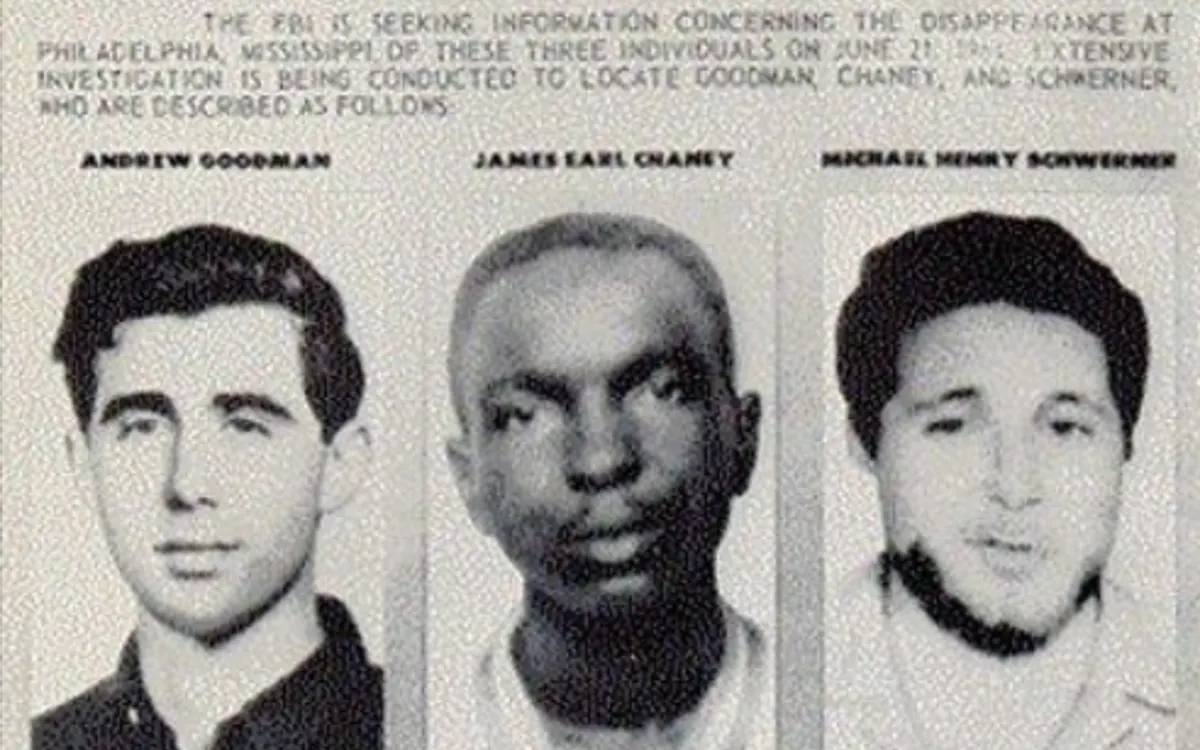
1964 was the Freedom Summer in America, and it saw a wave of white, Jewish volunteers leaving the comfort of their suburban existence to fight the battle against racism in the rural south. This episode explores the suburban cultural vacuum which many of them were fleeing and asks whether they went South as Jews, human beings or both.
About this episode
It is a blessing to die for a cause, says Andrew Young. On August 4, 1964 the bodies of James Chaney, Andrew Goodman and Mickey Schwerner were exhumed from a Mississippi dam 44 days after their murder; Chaney was a black Mississippian, Goodman and Schwerner northern Jewish CORE workers registering black voters, and their killers called them commie Jews. Rav Mike asks whether their being Jewish had anything to do with it and what their deaths teach about American Jewry. 1964 was Freedom Summer, Johnson signing the Civil Rights Act, and CORE and others flooded Mississippi with trained volunteers. Andrew Goodman saw himself as a Jew in the sense that to be a Jew meant a liberal social conscience acted upon, his mother an activist who after his death said she would let Andy go again, and his life ended in a Jewish burial, whereas Mickey Schwerner was cremated less than twenty years after Auschwitz. Schwerner's story shows another face: when his mother asked how he could buy a Volkswagen so soon after Auschwitz, he said it was economical and practical, but more than that he wanted to spend his life relieving hate, not preserving it.
Life in the sixties was materially good for the Jews, reaping the golden decade, but at what cost, since the move to suburbia into mainstream white America was catastrophic for traditional identity, the final phase of a process begun in eighteenth-century Europe, except that now no one asked the Jews to check their culture at the door, they did it themselves. By 1960 immigration had ended, the immigrant story was fading, and the tribal markers, nostalgia, Yiddish, the sense of otherness, were no match for the homogenizing force of suburbia, the motto now be a Jew in the synagogue and American outside, with the social hall at the center and the executive director as crucial as the rabbi. Economically the Jews were better paid and educated, their children in public schools aspiring to be like their non-Jewish peers, and though over 75 percent received some Jewish education its results were dismal, often alienating rather than educating, the bar mitzvah marking the end of involvement. By 1964 Look magazine ran The Vanishing American Jew, and Alan Brownfield's response noted that most Jews did not care and that the efforts to re-tribalize were driving youth away, leaving a vacuum that suburban life did not fill.
Philip Roth's Goodbye Columbus of 1959 is the fiction behind the question of how Mickey and Andrew ended in a Mississippi mud pit, its stories of second and third generation Jews leaving the ghetto for college and the suburbs painting a negative picture that got him accused of being a self-hating Jew and a shanda far di goyim, Leon Uris, author of Exodus, calling him a professional apologist. But Roth was a social critic rebelling against the same vacuous suburban culture Schwerner and Goodman rejected, turning the tables on critics still stuck in the ghetto mentality of what will the goyim think, insisting that all the tolerance of persecution seeped into the Jewish character must be squeezed out until the only response to any restriction of liberty is no, I refuse. In Eli the Fanatic he sensed that American Jewish identity would soon derive from identification with Europe's dead, Jewishness synonymous with victimization, and he answered Uris that at this point in history, with the murder of six million fixed in our imaginations, there is a higher moral purpose for the Jewish writer than the improvement of public relations.
Roth wrote about shameful behaviors because he was ashamed and wanted his fellow Jews ashamed so they would change, wielding his pen like a scalpel, since the other structures of Jewish culture would not do it, addressing men and women as men and women rather than children. He channeled the angst of a younger generation searching for content to fill the cultural vessels they had inherited empty, who found the comfort of suburbia stifling, as the Port Huron Statement of 1962, the founding manifesto of the Students for a Democratic Society and the New Left, declared that comfort was penetrated by the southern struggle against racial bigotry and the Cold War's threat of death, compelling them from silence to activism to avoid the unimaginable. To understand what led Schwerner and Goodman from comfort to death we must understand the New Left, which differed from the old in two ways: a turn from the top-down scientific model toward individual action through participatory democracy, which Jews joined in absurdly high numbers, half the civil rights attorneys and two thirds of the Freedom Summer volunteers being Jews.
The second distinction was a shift from economics as the sole system of oppression toward cultural forms of oppression, laid out by the Frankfurt School and Herbert Marcuse, the grandfather of the New Left, a largely secularized Berlin Jew for whom the Holocaust reawakened a Jewish identity, who always defended Israel as an asylum for the persecuted, a stance that sets up the problem of 1967 when Israel becomes a power. His 1964 One-Dimensional Man argued that capitalism works far better than orthodox Marxists admitted, improving economic circumstances so the proletariat grew irrelevant, but at a great cost, since to expand markets capitalism must supply the very needs and then fulfill them, so the Frankfurt School replaced the means of production with a cultural industry, a social factory that tells people what to want and distracts them from alienated labor, advertising replacing religion as the opiate of the masses, molding the human into ever new markets, which the students called the system. So the New Left meant personal activism and the recognition that the first act of revolt is to step out of the cultural industry and liberate sexuality, gender, race and ethnicity. Marcuse and the Frankfurt School, despite their secularism, belonged to the classic rebellious spirit the rabbis called dochkei haketz, those who force the end, refusing to wait for God, which brings back Mickey Schwerner, who refused a bar mitzvah insisting he was not a Jew but a man, declaring he was an atheist who believed in all men and not one God, who wrote that he had an emotional need to offer his services in the South.
Key ideas
- The murders of Goodman and Schwerner in Freedom Summer pose whether being Jewish had anything to do with their deaths and what suburban Jewry had become.
- Suburbia hollowed out Jewish identity, and no one asked the Jews to check their culture at the door, they did it themselves, leaving a vacuum.
- Philip Roth wrote about shameful behaviors because he was ashamed and wanted his fellow Jews to change, a social critic of the vacuous suburb.
- The New Left differed from the old by participatory democracy and a shift from economic to cultural oppression, joined by Jews in high numbers.
- Marcuse's One-Dimensional Man cast advertising and the cultural industry as the new system of oppression, the opiate of the masses.
- The Frankfurt School belonged to the spirit of dochkei haketz, forcing the end, and Schwerner refused his Judaism for a belief in all men, not one God.
Chapters
- 0:00 A blessing to die for a cause; the three murders
- 2:12 Goodman the liberal Jew; Schwerner the Volkswagen
- 7:42 Good for the Jews, at what cost?
- 9:56 Be a Jew in the synagogue; the edifice complex
- 13:26 The Vanishing American Jew; the vacuum
- 16:47 Philip Roth; Goodbye Columbus
- 18:55 A shanda or a social critic?
- 21:10 Oppression changes the oppressed; Eli the Fanatic
- 23:20 A higher purpose than public relations
- 24:25 The Port Huron Statement; the New Left
- 26:45 Old left and new; participatory democracy
- 31:25 Cultural oppression; the Frankfurt School
- 32:39 Marcuse, grandfather of the New Left
- 34:53 One-Dimensional Man; the system
- 38:15 Dochkei haketz; back to Schwerner
Who, where and when
People
Andrew Young, James Chaney, Andrew Goodman, Mickey Schwerner, Carolyn Goodman, Philip Roth, Leon Uris, Herbert Marcuse, Lyndon Johnson, Tom Hayden
Places
Neshoba County, Mississippi, The suburbs, Berlin, Columbia University
Texts
Goodbye Columbus, Eli the Fanatic, The Port Huron Statement, One-Dimensional Man
When
July 2, 1964 CE: the Civil Rights Act, August 1964 CE: the bodies exhumed, 1959 CE: Goodbye Columbus, 1962 CE: the Port Huron Statement, 1964 CE: One-Dimensional Man
Read the transcript
It is a blessing to die for a cause, says Rev. Andrew Young, because you can so easily die for nothing. Now, while I happen to agree, I'm more focused on what it's worth living for, because I'm Rav Mike Foyer, and this is The Jewish Story. Episode 21, Spirit of the Sixties Part 2, A Cause to Live For. On August 4th, 1964, the bodies of James Chaney, Andrew Goodman, and Mickey Schwerner were exhumed from beneath an earthen dam in Neshoba County, Mississippi. They'd been hidden there, rotting away after their murder 44 days previously. Now, James Chaney was a Mississippi native, and so not very far from home. And sadly, as a black man in the early 60s South, the torture and murder to which he was subjected, no matter how horrific, were far from exceptional.
Goodman and Schorner were, however, significantly further from their points of origin. They were northerners, both from New York, both college graduates working with CORE, the Congress of Racial Equality, and fighting to register black voters in rural Mississippi. And they both happened to be Jewish. And that's what I want to know as part of our exploration of the spirit of the 60s in the Jewish story is, did their being Jewish have anything to do with their murder? And what can how their lives ended teach us about the state of American Jews in the early 60s? Because if the summer of 1967 is known in American history as the summer of love, well, then 1964 was known as the Freedom Summer. On July 2nd, President Lyndon Baines Johnson finally signed the Civil Rights Act into law, making illegal segregation in public places and employment discrimination on basis of race, color, religion, sex, or national origin.
That was a legislative revolution, and it was followed quickly by the Voting Rights Act. But changing the reality on the ground, everyone knew would take a lot more work, and the institutions of the civil rights movement were ready to make it happen. Organizations like CORE banded together into an umbrella organization called COFO, the Council of Federated Organizations, and they prepared, in their own words, quote, to flood Mississippi with Northern volunteers, trained in community organizing, voter registration, and nonviolent resistance. And as I said, Cheney was born in Mississippi. Mickey Schwerner and his wife Rita were core workers that arrived in January of 1964. Goodman showed up less than a week before his murder.
Now, before we go into this story, I need to make a caveat. The Civil Rights Movement is a story that deserves its own telling. By the way, you can take a look at the bibliography from this episode to get a little bit of guidance for what I think is worth reading. But in particular, when I'm going through today's episode, I mean in no way to diminish the story represented by James Cheney's death. But this is the Jewish story. So I want to keep my question focused on what the deaths of these two Jews there in rural Mississippi can teach us. Now I say Jews, and certainly the men that murdered Goodman and Schorner called them commie Jews, as well as a host of other racist names that I'm not going to repeat.
But how do we think they identified themselves? Now according to his family's own account, Andrew Goodman did indeed see himself as a Jew. In many ways he exemplified a type of Jew that the world knows well even today. He was the product of a Jewish culture in which to be a Jew meant to have liberal social conscience. and to act on it. His mother, Carolyn, had organized farm workers in her youth, and she supported the Spanish Republicans during the Civil War in the 30s. She and her husband then raised their three sons to be engaged in fixing the world, even before tikkun olam became a rallying cry for liberal Jews. And thus, despite their fear of violence, they made no effort to stop Andrew from going south that summer.
And in an interview given only a year after his death, Caroline said the following, I still feel that I would let Andy go to Mississippi again. Even after this terrible thing happened to Andy, I couldn't make a turnabout of everything I believe in. Unless you think these were just words. Until her death at 91, she carried forward her son's legacy through her own activism. She was protesting civil rights abuses and getting arrested well into her 80s. Now, two years after Andrew's death, Robert and Caroline Goodman set up the Andrew Goodman Foundation to create what they called a heroic citizenry who will take responsibility for righting the world's wrongs. And on the website of the foundation, you'll find an article on black Jewish relations, a topic we're going to have to treat at some point in an episode to come.
But here's a quote from the article. It says, Their martyrdom became another tragic symbol of the racism ingrained in much of America's deep south. But their deaths also sent a message that blacks and Jews, two peoples with historical narratives of persecution and oppression, could make the ultimate sacrifice for one another and their shared ideals. So, on some level, it's clear that they understood their mission, Andrew's mission, as a Jewish mission. It shouldn't surprise us, therefore, that Andrew's life ended with a Jewish burial. That's as opposed to Mickey Schwerner, who was cremated less than 20 years after Auschwitz. So I'm actually less interested in Andrew Goodman's story. He's the story of the liberal Jew, and we'll come back to him even more next episode.
But I think that Mickey Schwerner's story shows us another very important face of American Jewry. You know, Three Lives from Mississippi is a fantastic book by journalist William Bradford Huey. It details the martyrdom of Cheney, Goodman, and Schwerner. Highly worth reading. Enjoyable as well as informative. And he starts it out with a somewhat strange anecdote. He says that when Schwerner bought his first car at age 18 in 1957, it turned out to be a Volkswagen. Now, by 1957, the Jewish world at least knew that the Volkswagen Corporation had been, let's just say, complicit in the whole Nazi slave labor industry. And so his mother asked him if he really wanted to buy a German car. In fact, she didn't just ask him if he wanted to.
She asked, how would he feel driving it so soon after Auschwitz, where some of his own family were murdered? And his response can tell us much. He said, I know how you feel, mother. One reason I want to buy it is it's a very economical and practical car. But more important, I want to spend my life relieving hate, not preserving it. I see reason to hope that there will never be another Auschwitz. And here we have the two pieces that I see us exploring in the episode ahead. One, hey, it's a very economic and practical car. There's a suburban ethic of serving one's own need, regardless of what the larger context might be. But furthermore, there's an idealism that to hold on to a ban against German goods more than 10 years after the Nazi regime had been toppled was simply to hold on to hate.
And this was a young man who was looking to remove that hate from the world, not, as he said, toward preserving it. So with this in mind, let's get a little bit of background that might help us understand what drove Mickey Schwerner and Andrew Goodman to sacrifice their lives to the oppressed of Mississippi. Now there's one thing we have to get straight. from a certain perspective, life in the 1960s is good for the Jews. In fact, it's never been better. By any material standard, American Jewry is reaping the benefits of the golden decade whose story that we told back in episodes 9 through 11, and it's comparable, if not surpassing, any other period in Jewish history. But the question I want to ask in this episode is, at what cost is such goodness actually good for the Jews.
Now, as we detailed, the move to suburbia was in many ways a move into mainstream white America, and therefore the impact on traditional Jewish identity was downright catastrophic. In a sense, suburban 1960s America was the final phase in a process that began way back with the opening of the doors to modern European society back in the 18th century. Raise your hands if you've been listening since that long. But back then, we spoke about how the price of entry for Jews into modernity was checking their culture at the door. They were welcome to be part of European modern society as human beings, but not as Jews. The catch is, in suburban America, no one was being asked to abandon their culture anymore.
They did it on their own. Now, how did that happen? Well, by 1960, first of all, Jewish immigration to America had essentially come to an end. So therefore, the immigrant story, as a lived reality, was fading quickly. And as an anchor for identity, was going with those actual immigrants into the past. And even the second generation, whose formative identity of ethnic Judaism was rooted in the urban ghettos of America, well, even that was waning. After all, Bubby and Zadie may have still lived in the urban environment, but the youth, the cream of the crop of American Jewry, had moved to the burbs in the 50s, and their children weren't so keen on making the commute back into the urban ghettos. All the tribal markers of identity, nostalgia for the old country, a shared language of Yiddish and a culture of Yiddish culture, that ingrained sense of otherness, of Jews stay separate, none of these were a match for the homogenizing force of suburbia.
nor, by the way, was the mild religious allegiance that was so typical of American culture in general, Jew or Christian alike. We spoke back in episode 9 about what's called the Jewish edifice complex. By the 60s, the suburban synagogues that I grew up in had reached their apex of huge and common place. But, though in all Jewish history, it was probably never easier to build a shul, at this point in our story, it's never been harder to fill them. You may recall that 19th century Russian Moskiel, the Enlightener, Yehuda Leib Gordon, who gave as the Haskalah ideal, be a Jew in your home and a man outside it. Well, if that was true in 19th century Europe, the suburban motto in 60s America was be a Jew in the synagogue and American outside of it But notice how the percentage of time as Jew versus time as something else has gone down You spend a lot less time in the synagogue than you do at home And even when the Jews went to shul, the suburban synagogue had begun to mirror in many fundamental ways suburban Jewish life.
The social hall was at the center of activity, not the sanctuary. And the executive director who planned the events was as critical to the average Jewish life as the rabbi. Now one study from the late 50s actually reported, quote, the synagogue in America no longer represents a country of believers. Nothing in the way of belief or practice, not even the belief in God and the practice of the most elementary mitzvot may be taken for granted amongst synagogue members. It had become in many ways a point of Jewish cultural and social rallying, but it was lacking substance. Now there's not just the synagogue issue, there are economic factors at play here as well. The Jews of the mid-60s were better paid, better educated, far more integrated into the American life than their immigrant forefathers could have ever dreamed.
The fathers were union workers and merchants who aspired to middle management. The children were now flooding the law and medical and other professional schools of America. And these young, upwardly mobile families of the suburbs sent their children overwhelmingly to public schools, like yours truly, where, like every teenager, they aspired to be just like their peers, the vast majority of whom, of course, were not Jewish. Now, that being said, nonetheless, there was a certain level of parental loyalty to the Jewish tribe, which was enough to cause them to send their kids to supplementary Hebrew schools to get a Jewish education as well. But, though the percentages were extraordinarily high, In the 60s, more than 75% of Jewish children received some sort of Jewish education throughout the whole decade.
The results were downright dismal. Part of this was that the teachers were often untrained, poorly motivated, and frankly, more Jewishly committed than their students. Sometimes they were even remnant immigrants, the classic community outsiders. Bottom line, the educational experience was so foreign to their public schooling that it often served more to alienate the youth from their culture than to educate them in it. You know, when I was growing up in the 80s, the running joke was that what a thousand years of missionaries had failed to do, Hebrew school accomplished in two generations. Many, if not most, of the Jewish youth still had a Barabat mitzvah, But more often than not, this had become a celebration that marked the end of Jewish involvement, rather than a rite of passage into deeper obligation, which it was classically meant to be.
By 1964, the sense that American Jewry was melting away into the general cultural stew was so widespread that Look Magazine published an article called The Vanishing American Jew, Leaders Fear Threat to Jewish Survival in Today's Crisis of Freedom. Now, it's noteworthy that such a headline appeared in a popular publication. Look! reached a peak circulation of nearly 8 million by 1969, and it certainly was not a Jewish magazine. It was filled, this article is filled with alarmist predictions about soaring intermarriage, plummeting birth rates, erosion of Jewish identity markers. It may all sound familiar, and they were all true. But something that the current doomsayers should take to heart was true then as it is now.
Look Magazine's been gone for almost 50 years. American Jewry is still around. It just looks very different than it did in 1964. You know, two years after the original article, in 1966, Alan C. Brownfield, himself an interesting character, I'll hold back, he published a response to The Vanishing Jew. And his criticisms of the article and American Jewry are quite illuminating for our story. First, he asserts, quote, rather than worrying about what rabbis term an alarming rate of intermarriage and a lack of concern about Jewish identity, most American Jews are happy in the feeling that they've never had it so good. Meaning there's a reason this article wasn't published in a Jewish publication. Most Jews don't care.
And then he points out that the efforts to keep the Jews from vanishing were primarily attempts at reinforcing the original tribal nature of Jewish identity and therefore, in his eyes, counterproductive. Quote, for many younger Jews, the idea of Jewish nationality and ethnic identity conflicts with the American philosophy of religious freedom and equality in an open and single society. He's pointing out that all the efforts to re-tribalize were actually driving the youth further away from Judaism and not bringing them in through the door. We'll see, perhaps next episode, how that pendulum swings. But in the early 60s, it was a big fail. Then Brownfield quotes Albert Vorspahn, Director of Social Action for the Union of American Hebrew Congregations.
That's the Umbrella Organizations for the Reform Movement. Notice, social action. Already, this is the world of tikkun olam, of fixing the world. He says, it is, quote, foolish and tragic for Jewish leaders to decry the drift of our own youngsters away from organized Jewish life. If they're resentful of Jewish life, we'd better look with candor at their critique. He goes on to add that the rebellion of younger Jews against the old orthodoxies, be they tribal or religious, was simply a shedding of values and approaches which no longer seem relevant and often leaves a vacuum. Now everyone knows that identity, like nature itself, abhors a vacuum. and this is what we're seeing that the cultural erosion which happened with the end of immigration and the emergence from the urban ghettos particularly on the east coast and the sort of embedding in suburban life left the vacuum and the question that we have to ask is what's the consequence did suburban life offer enough substance to fill it Goodbye Columbus was published by Philip Roth in 1959, and only a year later, it won the U.S.
National Book Award for Fiction. Now, in addition to the title novella, Goodbye Columbus, it contains five short stories, each of which deals with the lives of second and third generation American Jews as they leave the ethnic ghettos of their parents and grandparents and go on to college, white-collar professions, and life in the burbs. Basically, this is the fiction of the story, which is the background for our question of how did Mickey and Andrew end up dead in a mud pit in Mississippi. Now, the book itself was a huge success for Philip Roth. It launched his career as one of the best-known American writers of the 60s, not just Jewish writers, but it was not without controversy. because since his stories tended to highlight the, let's say, more unsavory behaviors and attitudes of his fellow Jews, basically painting a negative picture of suburban Jewry, people were quite upset.
And when Goodbye Columbus began to circulate, Roth was quickly accused of being a self-hating Jew, of adding fuel to the fire of anti-Semitism. Basically, he was seen to be as the ultimate Jewish problem, a shanda for the goyim, an embarrassment in front of the non-Jews who were going to read his work and get his attitude about his fellow Jews. Leon Urus, who you may know as the author of the 1958 novel Exodus, details the heroic journey of the illegal immigration ship of the same name. He was known also as a proponent of what I would call a more muscular Judaism than the one found in Goodbye Columbus. He despised Philip Roth, and probably personally, but certainly his writing. In an interview given soon after the book was released, he assigned Roth to, quote, a whole school of American Jewish writers who spend their time damning their fathers, hating their mothers, wringing their hands, and wondering why they were born.
This isn't art or literature. It's psychiatry. These writers are professional apologists. Every year you find one of their works on the bestseller list. Their work is obnoxious and makes me sick to my stomach. Those are harsh words, but truth is, having read many of Roth's books, I can say that it would be easy to dismiss him as the essence of Jewish neurosis in print. He's kind of the written version of Woody Allen in that sense. But I think that would be missing the point. Because in his own way, Roth was a social critic, And he was rebelling against the same vacuous Jewish suburban culture which Mickey Schwerner and Andrew Goodman rejected. As one reviewer wrote about Goodbye Columbus, remember this is 1959, Philip Roth has looked penetratingly into the heart of the American Jew who faces the loss of his identity.
And what he saw hollowing out Jewish suburban identity can teach us much about Schwerner and Goodman, as well as the social justice Jews of our generation. Ross' general response to being called a Shanda for the Goyim was to turn the tables and point out to his critics that they themselves were still stuck in that ghetto mentality of what will the Goyim think? He refused to hush his criticism of fellow Jews out of fear of invoking anti-Semites. Listen to these words, and he said them nearly a decade before the popular rise of ethnic consciousness movements that will characterize the late 60s. Quote, ending persecution involves more than stamping out persecutors. It's necessary, too, to unlearn responses to them.
All the tolerance of persecution that is seeped into the Jewish character, the adaptability, the patience, the resignation, the silence, the self-denial, must be squeezed out until the only response there is to any restriction of liberties is, no, I refuse. Those aren't the words of a neurotic. Those are the words of someone who understands that oppression actually changes the oppressed. Now, this wasn't Roth's only prescient insight about the suburban Jewish culture. One of the short stories published in Good Guy Columbus is called Ellie the Fanatic. It's highly worthwhile reading, by the way. And in it, Roth makes clear that the bulk of American Jewish identity would soon come to be derived from its identification with Europe's dead.
Or, as one critic put it, he was among the first to sense the emerging commitment to pass on a legacy in which Jewishness is synonymous with victimization. Does that sound familiar? Now, for the purposes of our present story, it actually may be Roth's response to Leon Urus' criticism, which is most important. It's long, but bear with me. He says, There are people who told me that Leon Urus has made many friends for the Jewish people They told me that it a long time since the Jew has been so respected and honored as he is today in America I nod my head for I no enemy of honor and respect and enjoy friends. I enjoy them so much that I know that there are times when we are even led to make them at the expense of ourselves, of our character, of our fate.
That is why at this point in human history, when power seems the ultimate end of government, and success the goal of individual lives, when the value of humility is endowed in the nerve to fail hardly to be seen at all, when a willful blindness to man's condition can only precipitate further anguages and miseries, at this point with the murder of six million peoples fixed forever in our imaginations, we cannot help but believe that there's a higher moral purpose for the Jewish writer and the Jewish people than the improvement of public relations. You know, Roth wrote about shameful behaviors because he was ashamed. And he wanted to make his fellow Jews ashamed as well, not so that they would run and hide, but so that they would change.
He wielded his pen like a scalpel, attempting to pierce the pus that he saw bubbling underneath the moral facade and the comfort of suburban society. And he felt that the other structures of Jewish culture weren't going to do it. As he wrote in his essay writing about Jews, the question really is, who's going to address men and women like men and women, and who like children? If there are Jews who have begun to find the stories the novelists tell more provocative and pertinent than the sermons of some of the rabbis, perhaps it's because there are regions of feeling and consciousness in them which cannot be reached by the oratory of self-congratulation and self-pity. Roth hit a nerve amongst the older generations who wanted to congratulate themselves and pity themselves as well in the wake of the tragedy he also channeled the angst of the younger who were searching for some content that could fill the tremendous cultural vessels which they had inherited empty basically the older generation wanted to hide their Jewishness sink into that rich homogeneity of suburban life but the latter found that very sinking to be stifling, and they weren't willing to leave its comfort behind in search for something more.
We are people of this generation, bred in at least modest comfort, housed now in universities, looking uncomfortably to the world we inherit. As we grew, our comfort was penetrated by events too troubling to dismiss. First, the permeating and victimizing fact of human degradation, symbolized by the Southern struggle against racial bigotry, compelled most of us from silence to activism. Second, the enclosing fact of the Cold War brought awareness that we ourselves and our friends and millions of abstract others might die at any time. The declaration, all men are created equal, rang hollow before the facts of Negro life in the South and big cities of the North. The proclaimed peaceful intentions of the United States contradicted its economic and military investments in the Cold War status quo.
As students for a democratic society, we are committed to stimulating this kind of social movement, this kind of vision and program in campus and community across the country. If we appear to seek the unattainable, as it has been said, then let it be known that we do so to avoid the unimaginable. These are just a few words from the opening and closing lines from the Port Huron Statement, a 1962 manifesto of a new social movement, the Students for a Democratic Society, the SDS. And in the coming few years, the Port Huron Statement came to be known actually as the agenda for their entire generation. It's considered by many to be the founding statement of the 60s radicals, or what's known as the new left in American politics.
And if we want to understand what led Mickey Schwerner and Andrew Grubin away from that life of modest comfort, as the statement says, to join the southern struggle against racial bigotry and ultimately to find their deaths in the swamps of Mississippi, then we have to understand more than the erosion of the numbers of Jewish identity and more than the sense of hollowed out emptiness which came with the comfort of suburbia. We have to understand the emergence of the New Left as a political power and its aims in the beginning of the 1960s. And of course, I want to know, was it good news for the Jews? So first, we have to differentiate between old and new. Don't be nervous. I'm not about to launch into a prolonged discourse on Marxist theory and the tension between economic and social issues as organizing principles.
Although those of you that know me know that you are in a little bit of a danger there. But it actually is what this is mostly about. The old left, you may recall, as the socialists and Marxists that we knew from the first half of the 20th century and really the end of the 19th. Their revolutionary focus was on class struggle, and they had a fixation on structure. To the orthodox Marxists, economic structure directly determines social reality. That's why Marx said all struggles are economic struggles, even when he looked at the social reality that he wanted to change. And that's also why the fight against capitalism, in his eyes, depended on creating an alternative economic structure. And that meant a heavy political bureaucracy to manage it, the party.
But by 1960, most Orthodox Marxists are hiding their faces in shame or speaking a level of doublespeak that would make George Orwell blush. because the great communist societies of the USSR and China proved to be as brutal and repressive as their worst capitalist opponents. And furthermore, in the West, where, remember, Marx had originally predicted the emergence of the revolution, the traditional forms of revolutionary organization, mass party trade unions, have essentially been co-opted by the progress of capitalism. They become reforming elements from within the system and not revolutionary elements looking to take it down. I mean, after all, who was a more staunch supporter of American capitalism in 1960 than the auto unions of Detroit?
Now, that's a little bit of a taste of the old left. And you can go back to some of the earlier episodes to get more of a sense of the role that the Jews played in the rise of socialism. The new left is going to distinguish itself from the old in two critical ways. The first is a turn away from that scientific top-down model of organization toward a more human approach that focuses on individual action through what they called participatory democracy. You know, if you've been watching the news over the last, I don't know, decade, think the Occupy Wall Street movement, right? That was participatory democracy at its finest. Now, this is how Tom Hayden, founding member of the SDS, explained participatory democracy.
He says, the emphasis in the movement on letting the people decide, on decentralized decision making, on refusing alliances with top leaders, stems from the need to create a personal and a group identity that can survive both the temptations and the crippling effects of this society. power in America is abdicated by individuals to top-down organizational units. And it is in the recovery of this power that the movement becomes distinctive from the rest of the country and a new kind of man emerges. Jews are going to join this new personalized revolution in the same absurdly high numbers that they had joined the old mass socialist movements. Now, my argument is part of that is because of that sense of loss of identity which came with the homogenizing and depersonalizing and institutionalizing nature of suburbia.
Now, take the civil rights movement, if you want to just talk numbers, whose central belief, of course, was, quote, men must share in the decisions which affect their lives. During the 50s and early 60s, fully half of the civil rights attorneys in the South were Jews. More than half of the white Freedom Riders were Jews. Nearly two-thirds of the white volunteers involved in that Freedom Summer of 1964 were Jews, including, of course, Goodman and Schorner. And we'll speak properly about the student protest movement in the second half of the 60s. That one where the SDS really began, we'll speak about that next episode. But just to round them into the numbers, approximately 30 to 50 percent of the SDS membership in the early to mid 60s were Jewish.
And Jews made up a huge proportion of the leadership as well. So you can see whether the Jews joined because they were Jews or whether they joined simply because it was there. There's something drawing them there in disproportionate numbers. That's the first distinction from the mass bureaucratic institutionalized movement to the movement of personal action and participatory democracy. The second distinction between old and new left might also sound familiar to us today. It was a shift away from the old exclusive focus on economics as the system of human oppression toward an emphasis on cultural form oppression. And in order to understand that shift properly, which in many ways laid the groundwork for the identity politics and the discourse of intersectionality which is taken over the left today, we need to say another word about the Frankfurt School.
If you actually want the full story of the Frankfurt School, you can go back to Season 2, Episode 31, and once again, take a look at the bibliography attached to this show for some further reading. But for now, just recall that we're speaking about a group of German scholars, heavily stacked with Jews, who fled to America with the rise of Hitler in the early 30s. And in their flight to safety, they brought with them new approaches to Marxist thought, Freudian psychology, and sociological insight that ultimately became known in their combination as critical theory. And for the purposes of our story today, it was the thinkers of the Frankfurt School who helped to build the intellectual infrastructure for the cultural revolt of the 60s.
and in particular, Herbert Marcuse, who has been called the grandfather of the New Left, even though, even in his lifetime, he denied that title. Marcuse was born in 1898 and raised in an assimilated Berlin family. He received only a minimal Jewish education, showing no interest as a young man, either in Judaism or Jewish issues. He was German by society and culture Jew by accident of birth But as we know that an accident that can have serious and even fatal consequences So blocked from advancement in his academic career by his anti mentor philosopher Martin Heidegger, Marcuse became a founding member of the Frankfurt School when it was actually in Germany and fled together with them to America in the 30s, like I said.
And the experience of persecution and ultimately the horror of the Holocaust seems to have changed Mark Hughes' relationship to his own Jewish identity. Unlike many of the other members of the Frankfurt School committed leftists, Mark Hughes always staunchly defended Israel as an asylum for persecuted Jews. He said, quote, I cannot forget that for centuries the Jews belonged to the persecuted and oppressed, that not too long ago, six million of them were annihilated. When finding a place is to be created for these people where they will not need to fear persecution and oppression, that is a goal with which I must declare my sympathy. Now, on one hand, you can hear how that differentiates him from many of his peers.
On the other hand, you can hear how it sets up the problem of what's going to happen once Israel no longer is simply a haven for the persecuted, but turning the corner in 1967 becomes a regional power. More on that later. But for now, when asked, decades after he'd left Germany, how he defined himself as a Jew, Marcus's reply was the following, I'm Jewish by tradition and culture, but if the culture includes dietary laws and the Bible as Holy Writ, then I can't be classified in that way. I've always defined myself as a Jew when Jews were unjustly attacked. Notice the problem with power. But nevertheless, as a believer that all true philosophy must culminate in action, Marcuse made public protests in the 70s about the persecution of Soviet Jewry.
But for our story, what I'm interested in happened in 1964. That was the year that Marcuse published his work One Dimensional Man, Studies in the Ideology of Advanced Industrial Society. It's a fascinating book. I admit I haven't read it all, but reasonable chunks. What it is is a wide-ranging critique of both contemporary capitalism and, by the way, communist society of the Soviet Union. There were people that accused him of being a CIA plant after this. The book documents and analyzes the rise of what he calls new forms of social repression. Now, already back in the late 50s, Marcuse had written, quote, the definition of the standard of living in terms of automobiles, television sets, airplanes, and tractors all too easily serves to justify the perpetuation of repression.
This was a critical turning point in insight. Up until now, Marxists had been fighting the battle on an economic field, and the argument was that capitalism gave much to few by taking more from many, and that communism would give to each what they deserved and ask from each of what they were able, but all of those measures were economic measures. The big insight that one dimensional man offered was a new understanding of the actual ills of industrial society. it was that capitalism actually works far better than the orthodox Marxists were willing to admit. Technology and science had allowed the capitalist and even industrialized Soviet Union world to improve the economic circumstances in their society to the point that the Marxist notion of a proletariat was becoming more irrelevant every day.
But that didn't mean that oppression had disappeared. because, Marcuse noted, capitalism had achieved this economic mastery, if you will, at a great cost. Because in order to generate wealth, markets have to continually expand. Don't forget, if you look back at the history of the expansion of American society, it goes kind of from conquest to tribute to taxation to advertising. What do I mean? It was no longer enough for capitalism to simply supply what people needed to do it better. Now, in order to expand its markets, capitalism needed to supply the very needs themselves and then create an economy by fulfilling them. And thus, the Frankfurt School replaced the old Marxist terms of means of production, class relations, all that, with the idea of a cultural industry, a social factory for the creation of media content which could tell people what to want, what to think, and how to behave.
It was a cultural industry that filled leisure time with entertainment in order to distract us from the boredom and corrosive despair, which is a byproduct of how we spend most of our time in meaningless and alienated labor, and furthermore, which could generate new desires to create new markets for capitalist expansion. For Marcuse and the ideologues of the New Left, advertising replaced religion as the opiate of the masses. and the flood of television, radio, commercial billboards, and now, of course, social media and streaming platforms was so intense that it prevents humanity from realizing that we're even being exploited and therefore prevents us from resisting. The result, as Marcuse describes it, is an all-embracing consumer culture that molds and pacifies as it creates the human being into ever new markets.
And the students who read Marcuse and his fellows from the Frankfurt School called that culture the system. And so we have the two key elements of the New Left that we need to understand. That call to activism on the personal front, the overriding sense of moral urgency and of individual responsibility, which were born basically out of our frustration with the impersonal nature of the world in which we live, and the recognition that the first act of revolt is to step out of the cultural industry, what Marcuse called willful self-alienation, to create a counterculture as the real field of battle against oppression, to liberate sexuality, gender, race, ethnicity. Those are the sources of oppression and therefore the systems which need to be challenged and not just the economics.
and to do so is to find one's real and authentic self. So basically you probably hear that if you mix Herman Marcuse with Bob Dylan, nee, Zimmerman, another Jew, and add a strong dose of marijuana and a little touch of LSD, poof, you've got the 60s. So that's all well and good, but what does it have to do with the Jewish story? We're almost at the end of the episode here, and as I said, we're going to look at the bigger question of the overwhelming role Jews played in the cultural revolution of the 60s next decade, because there's a breaking point around about 1965. We'll discuss it. But I want to know in specific, what does this have to do with the deaths of Mickey Schwerner and Andrew Goodman? So, you know, after his death, Herbert Marcuse's wife wrote that the aspect of Jewish tradition with which Herbert most strongly identified is the importance it places on the struggle for justice in this life, in this world.
It's insistence on the ongoing effort to use life to help bring about a better life. And there are many scholars who point out that despite their avowed secularism, Mark Hughes and the others of the Frankfurt School were actually part of that classic rebellious spirit that the rabbis called Duhakea Keitz, those who are trying to force the end. It's a particular part of Jewish Messinism, which the Zionists held by as well. they refused to accept the world as it was. And they weren't going to wait for God to change it. They were going to take matters into their own hands and make it happen themselves. And that brings us back to Mickey Schwerner, dead beneath the Mississippi mud at age 24. Mickey's grandparents were European Jews.
His story is very familiar, tribally Jewish in the classic sense. They carried their culture with them from the old world. And they passed on to their American board children what they called Jewish humanism. And at age 13, Mickey, continuing the process, refused to even have a bar mitzvah, insisting that he wasn't a Jew, only a man. And later, after his death, his wife Rita commented that he used to declare he was an atheist, someone who believed in all men and not one God, as if the two were mutually exclusive. Oilanu, that our religious teaching has led someone like Mickey Schwerner to believe that one can either believe in all men or one God. He went on to Michigan State University, originally intending to become a veterinarian in the good suburban mold.
But something happened. Maybe he felt that emptiness. He transferred to Cornell University, switched his majors to sociology, went going on to grad school at the school of social work at Columbia University, where, by the way, the Frankfurt School had found shelter. during the war, but his studies weren't enough to fill the emptiness which he had inherited. In his application for the core position in Mississippi, Schwerner wrote, I have an emotional need to offer my services in the South. And he added that he hoped to spend the rest of his life working for an integrated society. Well, indeed he did, though he might have been surprised to know how brief a time he had to do it. So I'm going to hold off my analysis on whether it was the inner Jew that drove Mickey Schwerner and thousands of his peers to rebel against the culture of comfort that their parents had labored so hard to give them.
And for now, I'll leave the question for you. Did Mickey Schwerner die as a Jew? Die as a man? Or both? As long as I've got you here, I want to make an invitation. Go right now to my website, jewishstory.co. So in the upper right-hand corner, you can see the little button there that says Be a Patron. You can click on through for a little bit of per-podcast support. If you want to help make a story happen in a world which is so divided, that allows Jews and Christians, religious and secular, conservatives and progressives to actually tell the same tale, then I encourage you to help me make it happen. If that's too much, you can also send me an email, or you can reach me at RobMikeFoyer at Facebook. And if you want to sponsor a story in honor of someone who's alive today or in memory of someone who's gone, I'm happy to shoot you back the details.
That being said, I also want to thank the Land of Israel Network, thelandofisrael.com, for creating a platform that allows me to reach so many amazing people. I want to thank the Pardes Institute, P-A-R-D-E-S dot org dot I-L, for building an educational institution that gives me the privilege of teaching so many fantastic Jews. And I want to thank you for listening. I'm Rav Mike Foyer, and this is The Jewish Story. Thank you.
More from Season 3
TJS S3 E20 The Spirit of the 60’s part I: pragmatism and prophecy
The 1960s were a revolutionary period in American history, and since the Jews were so deeply involved it is a turning point in the Jewish Story as well....
Play Episode
TJS S3 Interlude Hannukah - releasing the light within
Here is a live interlude from Rav Mike - his annual class in memory of his father, Charles Feuer ob'm. It is an exploration of the Hannukah light...
Play Episode
TJS S3E22 Spirit of the 60s part III: the revolution starts tonight
At the Sixties progressed they became more intense. In particular, the tone of the civil rights movement shifted from integration to separation and from evolution to revolution. This...
Play Episode