
TJS S3E22 Spirit of the 60s part III: the revolution starts tonight
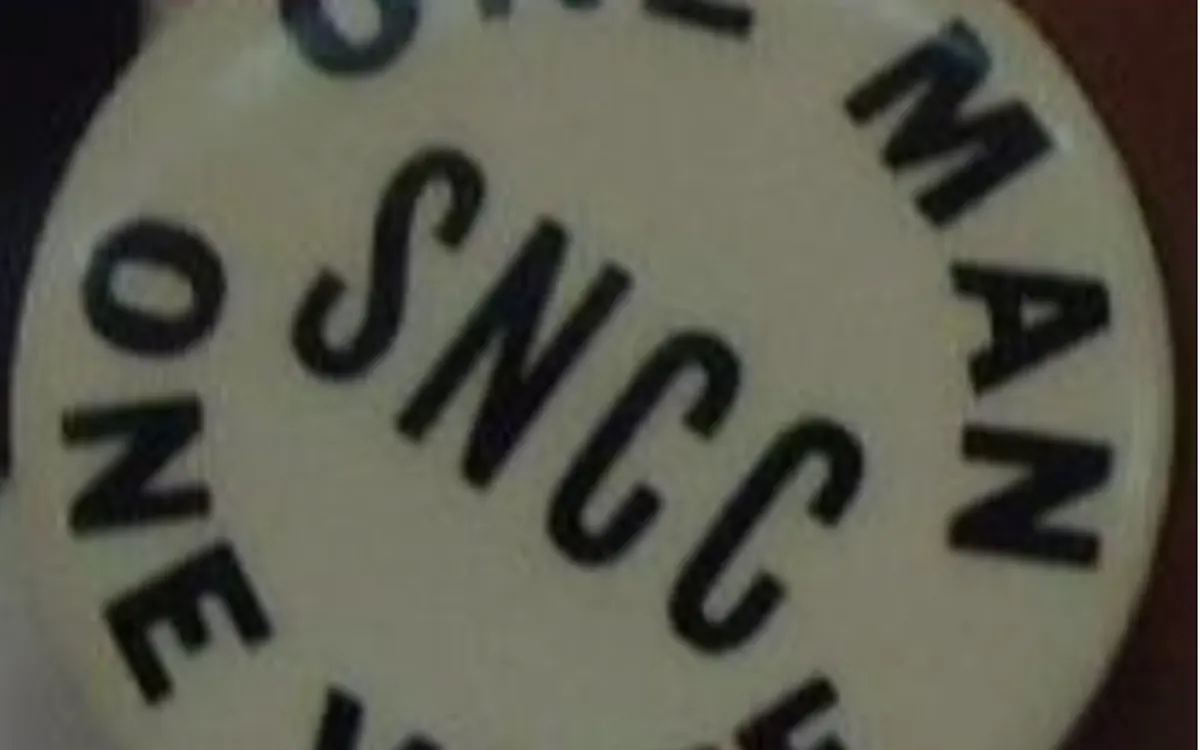
At the Sixties progressed they became more intense. In particular, the tone of the civil rights movement shifted from integration to separation and from evolution to revolution. This episode will explore the impact of these shifts on the 'grand alliance' between Jews and African Americans. shedding light on both past and present.
About this episode
Every revolution was first a thought in one man's mind, says Emerson. Heschel and Joachim Prinz showed that universal justice could be organically Jewish, while Schwerner and Goodman showed how far most Jews had gone from their Judaism, asking what it meant to be a human being in the suburban era rather than a Jew. 1965 was a turning point in both the civil rights movement and the New Left, and since the Jews were so involved it marks a shift in the American Jewish story. The brutality of the police at Selma left activists doubting that prayer and nonviolence would change anything, and though the Voting Rights Act passed, a rising militancy grew more interested in power than integration, fed by the assassination of Malcolm X, so Stokely Carmichael declared we have been saying freedom for six years and have nothing, now we say black power, shifting from the rural South to the urban North and from integration to separation, which would strain the Black-Jewish Alliance. The New Left also turned in 1965 as Johnson escalated Vietnam, doubling draft inductions, so the campuses full of Jews became ground zero of the anti-war struggle.
To tell the Jewish sixties we need Abbie Hoffman, born 1936 in Worcester, a middle-class Jewish rebel who loathed authority, the only Jew expelled from his high school, the embodiment of the suburban Jewish story who held that being Jewish meant being a rebel, to question society and be funny, and that firstborn male Jews must choose between the money and going for broke, between middle class and Messiah. At Brandeis his rebellion took a political tinge under Marcuse, and by 1963 he was drawn from the NAACP into SNCC, the Student Nonviolent Coordinating Committee, a grassroots movement that led the Freedom Rides and voter drives but whose leader John Lewis, at the March on Washington, angrily refused to support Kennedy's bill as failing to protect the people, saying there would be no cooling-off period, while King dreamed of a colorblind world of evolution not revolution. SNCC's southern-born black staff grew resentful of the intellectual, moneyed young white volunteers, and amid the violence of Freedom Summer the stage was set for a new phase, with a small but influential group of Jewish activists sympathizing with SNCC's radicalization, a worldview rooted in the black-Jewish radical community of New York.
That community's classic product was Stokely Carmichael, born in Trinidad, raised in Harlem and the Bronx, who at Bronx Science encountered radical Jewish political culture and whose first protest was for Israel, who dreamed of Brandeis but went to Howard, joined SNCC, was a freedom rider and field worker, and by 1965 was disgusted with nonviolence, organizing the Lowndes County Freedom Organization whose mascot was the black panther, the birth of the movement; openly carrying arms where federal protection was absent. Elected SNCC chair in 1966, he marked the displacement of southern black leaders by northerners and the shift from integration, which he called a subterfuge for white supremacy, leaving black brothers behind as fast as a sports car will go, refusing to check his culture at the door the way the Jews did. After his twenty-seventh arrest the crowd roared black power, a call for black people to define their own goals and lead their own organizations, which meant the white activists, most of them Jews, had to go, and the remaining white staffers were expelled from SNCC at the end of 1966, hurting Abbie Hoffman, who attacked black nationalism in the Village Voice until he spoke with Carmichael and read Fanon and understood that the struggle sought liberation from systemic oppression, not acceptance, turning Liberty House over to black management.
Not everyone saw the coming revolution as good, and the rupture over civil rights stirred charges of antisemitism. The later sixties widened the focus from the enfranchisement of the South to the poverty of the urban North, changing the black-Jewish dynamic: in the South the Jews were do-gooders, almost every white civil rights lawyer a Jew, but in the North, where urban renewal under Title I displaced hundreds of thousands of African Americans into tenements while their Jewish neighbors moved to the suburbs, the Jews were often the landlords and shopkeepers. James Baldwin's 1967 essay, Negroes are anti-Semitic because they are anti-white, recalled hating the Jewish landlord, grocer and pawnbroker, and noted that civil rights donations could look like conscience money to keep the Negro in his place, and that the Negro condemns the Jew for having become an American white man, in effect a Christian doing Christendom's dirty work, while confessing that his own oppression did not ennoble him and he refuses to hate because he knows how it feels to be hated.
From the domestic to the international: the 1967 war shook black-Jewish relations. King held that peace for Israel means security and called it an outpost of democracy, though he urged withdrawal from the territories lest Israel become smug and unyielding, but he never rejected the Jewish right to a state. Not so the black nationalists: as the war ended SNCC's Ethel Minor wrote The Palestine Problem, Test Your Knowledge, with a caption that Zionists shot Arab victims in cold blood, this is the Gaza Strip, not Dachau, and a cartoon of a Star-of-David hand with a dollar sign holding a noose around an Arab and an African. Jewish reaction was predictable, Theodore Bikel telling SNCC it had no right to spit on the tombs of Schwerner and Goodman, but SNCC's leadership was unfazed, seeking new bridges to the post-colonial world even at the cost of burning the old. At the National Conference on New Politics two months after the war, James Foreman demanded the most dispossessed lead, the race to the bottom of victimhood, and the convention condemned the imperialist Zionist war, setting the mold for the intersection of race and the Arab-Israeli conflict still playing out, as a later SNCC newsletter warned, do not get caught on the wrong side of the revolution.
Key ideas
- 1965 turned the civil rights movement from integration to black power and the New Left to the anti-war struggle on the Jewish-filled campuses.
- Abbie Hoffman embodied the suburban Jewish rebel who held that firstborn Jews must choose between the money and going for broke.
- SNCC's shift to black power expelled its white allies, most of them Jews, refusing to check its culture at the door as the Jews had.
- In the urban North the Jews were often the landlords, and Baldwin wrote that the Negro condemns the Jew for having become an American white man.
- King upheld Israel's right to exist while urging withdrawal, but the black nationalists condemned the imperialist Zionist war.
- SNCC's Palestine newsletter and the New Politics conference set the mold for the intersection of race and the Arab-Israeli conflict.
Chapters
- 0:00 Every revolution a thought; the 1965 turn
- 2:09 Vietnam escalates; the campuses
- 6:39 Abbie Hoffman, the suburban rebel
- 10:07 SNCC; John Lewis's anger
- 14:46 Freedom Summer; the resentment
- 16:56 Jewish radicals fuel the militancy
- 17:59 Stokely Carmichael
- 20:16 The black panther; black power
- 22:26 The white allies expelled; Hoffman turns
- 26:49 The rupture; North and South
- 29:06 Urban renewal; the Jewish landlord
- 30:13 Baldwin: anti-Semitic because anti-white
- 33:34 The international; King on Israel
- 34:36 SNCC's Palestine newsletter
- 37:47 The outrage; Bikel on the tombs
- 39:54 The New Politics conference; the wrong side of the revolution
Who, where and when
People
Ralph Waldo Emerson, Abbie Hoffman, Stokely Carmichael, John Lewis, Martin Luther King Jr., James Baldwin, Ethel Minor, Theodore Bikel, James Foreman, Frantz Fanon
Places
Selma, Harlem and the Bronx, Lowndes County, Alabama, The urban North, Gaza
Texts
The Palestine Problem, Test Your Knowledge, Negroes are anti-Semitic because they are anti-white, The SNCC newsletter
When
1965 CE: Selma and the turn to black power, 1966 CE: Carmichael chairs SNCC; the white staff expelled, 1967 CE: Baldwin's essay and the SNCC newsletter, 1967 CE: the National Conference on New Politics
Read the transcript
Every revolution, says Ralph Waldo Emerson, was first a thought in one man's mind, and when the same thought occurs to another man, it is the key to that era. Well, I hope you're thinking what I'm thinking. I'm Rav Mike Foyer, and this is The Jewish Story. Episode 22, Spirit of the Sixties Part 3, The Revolution Starts Tonight. So we're deep, deep in the spirit of the 60s here. In the last two episodes, we're devoted primarily to the role that various Jews played in the civil rights movement and what that could teach us about the Jewish story. And if I was going to do a little bit of review and reduce them to two statements, I would say that Heschel and Joachim Prince taught us that there is a way in which universal justice and civil disobedience can be organically Jewish actions.
While the story of Mickey Schorner and Andrew Goodman demonstrated how far most of the Jews had gone away from their Judaism, for those involved in the Civil Rights Movement, the movement raised the question of what it meant to be a human being in the suburban era, and not what it meant to be a Jew. So we've got a lot more work to do, and I have a sense already that the coming episode is actually two. I just haven't really fulfilled that yet. The year 1965 is going to be a key transition point in both the Civil Rights Movement and the rising New Left that we introduced last episode. Because of how deeply the Jews were involved in both, it therefore marks a shift in the American side of the Jewish story as well.
Now, for all you Zionists out there, have no fear, we're going to get back to Israel soon. I warned you that we were going to go split screen for quite a bit of time. In many ways, the fact that I can't tell the story of the American 60s easily, together with the story of the Israeli 60s, is symptomatic of the splits erupting between the two communities today. So pay close attention. All the groundwork, in fact, for that current crisis is being laid right now in our story. And even the tempest in a teacup that's going on over black anti-Semitism has its roots in today's episode. So like I said, keep your eye on the prize. So, 1965 was a turning point. Heschel may have felt like his legs were praying when he marched with the Reverend Dr.
Martin Luther King and hundreds of others across the bridge at Selma, but the brutality of the police response, tear gas, dogs, vicious beatings, left many of the activists wondering whether prayer and nonviolence were ever going to change anything. The Voting Rights Act of 1965 was pushed over the top by the public response to Selma, which had been televised around the world. It was a major achievement for the integrationist cause. But there's a rising militancy within the movement which is growing more interested in power than integration. The 1965 assassination of black nationalist leader Malcolm X poured fuel on that fire so that by early 66, Stokely Carmichael, who we'll meet later in the episode, would declare, we've been saying freedom for six years and we ain't got nothing.
What we're going to start saying now is black power. We're going to see a shift in emphasis within the civil rights movement from rural south to urban north, along with this shift from integration to separation. The ghettos of New York, Philly, Newark, Watts, Huff, and so many others are going to erupt in flames. And therefore, there will be a concomitant shift in focus by a subset of black activists, like I said, away from integration and the goal of attaining rights and toward a dismantling of what they label as a global system of racial oppression. That's going to have a significant impact on the Jewish-Black Alliance, which has played such a role in our story up until now, and that's really going to be our focus, my sense is, for this episode.
Now, the New Left, like I said, who we met last episode, will have its own transition in 65, because this was the year that President Johnson ordered an escalation of the war in Southeast Asia. It was a countrywide bombing campaign and a massive buildup of U.S. ground troops sent to Vietnam. Just recall for a moment, the opening lines of that Port Huron statement, founding manifesto of the SDS, the Students for a Democratic Society, and really of the New Left altogether. They were shocked out of their privileged comfort by, quote, the Southern struggle against racial bigotry, which compelled them, quote, from silence to activism and by the enclosing fact of the Cold War, which brought, quote, awareness that we ourselves and our friends and millions of abstract others might die at any time.
Well, the Cold War and the threat of death may have felt abstract in 1962 when the statement was issued. But in July 1965, President Johnson announced that draft inductions would increase from 17,000 per month to 35,000. That's more than double. And his explanation for sending what he called the flower of our youth, our finest young men, into battle was that North Vietnam and communist China sought to conquer the South to defeat American power and extend the Asiatic dominion of communism. And Asia so threatened by communist domination, he said, would certainly imperil the security of the United States itself. But the youth of the SDS and the new left weren't buying it. And in 1965, their activism shifted from the southern struggle for civil rights to the fight against Vietnam that was really centered in college campuses of the north.
This shift is going to have another significant consequence to the Jewish story, because like every other American community, the Jews are going to have to decide whether Vietnam was the domino that had to be propped up in order to avoid communist catastrophe, remembering that more than a million Jews at this point are suffering under Soviet repression, or whether the war in Vietnam was a crime to be resisted at all costs. As Rabbi Balfour Brickner asked in 1970, how would we as a nation fair were we to be judged by the Nuremberg principles we imposed on the Germans in 1945? And of course, the more obvious fact that those college campuses which become ground zero for the anti-war struggle are top full of Jews.
So we've got plenty to talk about. Our target year in the American side of the Jewish story is actually 1968. We'll hit it next episode. And I believe that will allow us to place the Revolutionary Middle Eastern events of 1967 in their full context. And in order to tell the tale of the Jewish 60s properly, there's someone in particular whose story we need to know. Abbott Howard Hoffman was born in Worcester, Massachusetts in 1936, in a middle-class Jewish home, and he had what he would later describe in his autobiography as an idyllic childhood. That being said, it seems nonetheless that even from a young age, he had a love for trouble and a loathing of authority. His father had grown up hungry, his grandfather being a Russian immigrant who peddled fruit on the streets.
And so that father worked hard to make sure Abby's plate was full every night of the week. But he often refused to eat anything, and though his father repeatedly banished from his room and apparently beat him severely, Abby never knuckled under the pressure. In the words of his Aunt Dorothy, he was the kind of kid who if you said don't do it, he did. Which meant that as he grew older, his clash with authority, wherever he found it, only escalated. He would carve his initials on school property, put snakes in teachers' desks, crack jokes in the classroom, use four-letter words, which in the 50s was a bombshell, call teachers by their first names. He was smoking in the bathroom, bullying younger kids, and basically became a 1950s greaser punk.
Again, in his autobiography, he tells the story that in 1953, at age 16, he became, quote, the only Jew in the history of classical high school to be expelled. He is, of course, the product of this process that we outlined last week, from immigrant to immigrant son to suburban ne'er-do-well. You know, Abbey wrote a paper, this is why he said he got expelled, that argued there really couldn't be a god, because if there were, he would dispense reward and punishment fairly and justly, and that obviously wasn't the case. His English teacher, when he received the paper, called him a little communist bastard, tore it up, and hurled the piece at him. Abbie then overturned the teacher's desk and tackled him before he could be restrained.
This was just signs of things to come. And like I said, it should be clear by now that Abbie Hoffman is the embodiment of the American Jewish story we've been telling up to now. So much so that he would later recall going to the temple and asking the rabbi of Temple Emanuel, what do you think of Philip Roth, Norman Mailer, Joseph Heller, you know, those kind of writers. Then the response was, not good for the Jews. But Abby didn't care, because to him, being Jewish meant being a rebel, to question society, and of course to be funny. That last one, hold on to, because it's going to have a major impact on his story next episode. So as often tells it, it wasn't oppressive authority against which he struggled.
After all, let's face it, he was a middle class Jewish kid in the suburbs. And he never even learned about the execution of the Rosenbergs that took place the same year he was expelled. and the lynching of black men in the South that was going on while he was acting out in school. A fact, by the way, he later claimed to resent. He was rebelling not against direct oppressive authority, but what he called the cultural vacuity of middle class society. He and his friends, as he said, saw their fathers disappear behind the cornflakes box and hurry off to their other life in a distant land called downtown. And they heard from their mothers over and over again about being respectable and responsible and above all, reasonable.
But Addy had a slightly different aspiration in life than being reasonable. As he said, Jews, especially firstborn male Jews, have to make a big choice very quickly in life, whether to go for the money or go for broke. In other words, in his eyes, the choice was between Messiah and being middle class. And though it took him a few years to fully break the suburban mold in which he was cast, ultimately we'll see that Hoffman went for broke. So the next stop on this archetypical Jewish suburban rebel's journey was of course Brandeis University where his rebellious streak took on a political tinge under the guidance of Professor Herbert Marcuse whose role in the New Left we spoke about last episode. And upon graduation in 1959 Hoffman tried to dance at two weddings He was soon married with two children and a job but he was also increasingly drawn toward the civil rights movement By 63, he was one of the driving forces in the NAACP chapter in Worcester, but it wasn't enough.
His desire for something more radical drew him into SNCC, the Student Nonviolent Coordinating Committee. The Student Nonviolent Coordinating Committee, SNCC, was born out of the student-led sit-ins at segregated lunch counters in Greensboro, North Carolina, and Nashville, Tennessee, back in 1960 and 61. And SNCC's goal was to form a grassroots movement, something that was driven by activists in the field and not by centralized leadership in an office in a major city. In many ways, what they were aiming to do was to distinguish themselves from the Southern Christian Leadership Conference, headed at this point by the Reverend Dr. Martin Luther King, though at first their institutional goals were more or less the same.
Even if within the movement of the early 60s, SNCC was at the activist core. They led the Freedom Rides in 61. They were at the center of the voter registration drives, which followed and helped to organize the March on Washington in 63. But already here, the cracks with the mainstream of the movement began with SNCC's attitude specifically toward President Kennedy's proposed Civil Rights Act that was ultimately passed in 64. Listen to SNCC leader John Lewis's words. Granted, at the time, they were overshadowed by the hopefulness of Martin Luther King's dream, but the anger that Lewis expressed is perhaps more indicative of what's actually to come. First, Lewis remarked that those marching for jobs and freedom there on the mall, quote, have nothing to be proud of.
We march today for jobs and freedom. But we have nothing to be proud of. The hundreds and thousands of our brothers are not here. For they're receiving starvation wages or no wages at all. While we stand here, there are sharecroppers in the Delta of Mississippi who are out in the field working for less than $3 a day, 12 hours a day. And then he went on to express what was soon to become a fundamental split within the civil rights movement. There's nothing to protect the young children and old women who must face police dogs and firehorses in the South while they engage in peaceful demonstration. In its present form, this bill will not protect the citizens of Danville, Virginia, who must live in constant fear of a police state.
In good conscience, he said, we cannot support the administration's civil rights bill. This bill will not protect young children and old women from police dogs and fire hoses when engaging in peaceful demonstrations. Mr. Kennedy is trying to take the revolution out of the streets and put it in the courts. Listen, Mr. Kennedy, the black masses are on the march for jobs and for freedom, and we must say to the politicians, there won't be any cooling off period. I appeal to all of you to get in this great revolution that is sweeping this nation. Get in and stay in the streets of every city, every village and helmet of this nation until true freedom comes, until the revolution of 1776 is complete. We must get in this revolution and complete the revolution.
And all over this nation, the black mass is on the mark for joy and freedom. You see, Reverend King dreamed of a colorblind world into which African Americans could integrate. It would be an evolution of society and not a revolution. Lewis and Snick were already starting to wake up to the fact that the nature of power required that the old world be demolished if a new one was going to arise. Nevertheless, SNCC was still a partner in the movement, helping to bring hundreds of the white northerners south for a voter registration drive in the summer of 1964. That was the Freedom Supper that we talked about last episode when Cheney, Schwerner, and Goodman met their deaths. And Abbie Hoffman was there in Mississippi with SNCC that summer as well.
By the end of 64, SNCC actually had the largest staff of any civil rights organization in the south. But to their activists in the field, the movement as a whole seemed to be drifting and somewhat at a loss. First of all, everyone was reeling from the violence of the white response to the Freedom Summer. The three dead that we spoke about, four more critically wounded, 80 beaten, 1,000 in jail, dozens of shootings, church bombings, homes and businesses were burned to the ground. It felt like war. But that wasn't all, and here's the piece that's really going to interest us today. The local staff for SNCC, all southern-born black men and women, were growing increasingly frustrated with and even resentful of having to deal with a bunch of, quote, young white people who were intellectual and moneyed.
The leadership of SNCC watched in horror as the brutality continued into 1965 to be met by overly moderate leadership and what they now judge to be passivity within the movement. And thus, the stage was set for a new phase in the struggle. Now, there were a small number of Jewish activists on SNCC's staff. And though they were few, they had a disproportionate influence. And that was because of their tendency to sympathize with and even encourage the gradual movement of SNCC toward greater radicalism. Initially, as was true with most of the movements, SNCC's early southern black leaders directed their appeals for support to the northern Christian student movements. But as their rhetoric and actions grew more militant, these northern Christian movements started to pull back, and the reliance on the support of northern Jews increased.
First and foremost, it came in terms of money. The leftist radical Jews that they turned to were far less restrictive in the use of their funds. But in truth, it wasn't just about money. Because militancy was fed by the worldview of those northern Jewish radicals. In fact, it was a natural outgrowth of an old community, that small but very vibrant black Jewish radical community of New York City. This community, historically speaking, was a critical link, one that brought the lessons and methods of the communists of the 30s, who were major agitators, into the hands of the militant activists of the 60s. And it had no more classic product than Stokely Carmichael. Stokely Carmichael was born in Port of Spain, Trinidad and Tobago, and moved to Harlem at age 11 in 1952.
It was there in Harlem that he met the American black experience. But it was in the Bronx, where he moved soon after, where he gained an understanding of its political dimension. The family, like I said, moved quickly to the Bronx, and being extremely gifted, Stokely gained admission to Bronx Science, a highly selective, though public, school, and it was here that Carmichael encountered the radical Jewish political culture. He later recalled in envying all these intelligent young men and women who had a political and intellectual awareness of which he could only dream. Stokely soon became best of friends with Gene Dennis, Jew, and son of New York Communist Party leader. Dennis, in turn, served as his entree into the world of black radicals within the party, men like Councilman Benjamin Davis and others who furthered his political education and racial awareness.
Nonetheless, the Jews remained at the center of Stokely Carmichael's political world in the beginning, so much so that his first act of protest was actually on behalf of Israel. He says that someone at the UN said something anti-Semitic, he couldn't remember what, but the Young People's Socialist League drew up a big picket line at the UN. By the end of high school, the influence of Jewish radical culture was so great on Carmichael that his ambition was to attend Brandeis University and become a teacher. He just missed sitting in Herbert Marcuse's class with Abby Hoffman. But it wasn't to be. His parents were not so interested in Brandeis. They wanted him to go to a historically black college. And he himself, at this point, wanted to be near the sit-in movement that had just begun down south.
So Stokely enrolled in Howard University for the fall of 1960. And from here, his role in the movement took off. He joined SNCC upon arrival, was a freedom rider in 61, a full-time field worker in the freedom summer of 64. He was screamed at, spit on, beaten, arrested time and again. And by 1965, he had had enough. He was disgusted by the internal struggles between SNCC and the moderates of the Southern Christian Leadership Conference, and increasingly skeptical of nonviolence as a legitimate path. That year, Carmichael was working at voter registration in Lowndes County, Alabama, where he managed to increase registered black voters from 70 to 2,600, outnumbering white voters by 300. With his help, the black residents also organized the Lowndes County Freedom Organization, whose mascot was the Black Panther.
and since federal protection from Klan violence was non-existent, he and other Lowndes County activists took to openly carrying arms. And this, of course, was the birth of the Black Panther movement. Stokely Carmichael was elected as chair of SNCC in 1966 in a move that really marked the end of a process of displacement from leadership of Southern black activists by people at least educated, if not born in the North. It also marked a shift away from integration as the goal of this part of the movement. As Carmichael said, integration speaks not at all to the problems of poverty, only to the problem of blackness. Integration today means the man who makes it, leaving his black brothers behind in the ghetto as fast as his new sports car will take him.
It has no relevance to the Harlem wino or the cotton picker making $3 a day. Integration, moreover, speaks to the problem of blackness in a despicable way. It has been based on complete acceptance of the fact that in order to have a decent house or education, blacks must move into a white neighborhood or send their children to a white school. This reinforces amongst both black and white the idea that white is automatically better and black is by definition inferior. This is why integration is a subterfuge for the maintenance of white supremacy. Now we going to focus on the black story a little bit here in order to understand America and the role of the Jew in it But notice the parallel that what he pointing out he not willing to check his culture at the door the way in which the Jews were.
Perhaps because the Jews would actually be able to pass as white and therefore would never be in an inferior position or simply because it was too precious a commodity to let go of. On the night of June 16, 1966, Carmichael walked out of jail after his 27th arrest. And when he asked the waiting crowd, what do you want? They roared back, black power, black power. And as he came to define it, black power became a call for black people to define their own goals, to lead their own organizations. He said, we have to organize ourselves to speak from a position of strength and stop begging people to look kindly upon us. We're going to build a movement in this country based on the color of our skins that is going to free us from our oppressors and we have to do it ourselves.
Which meant that the white people within the movement, no matter how supportive, had to go. At first, Carmichael tried to bridge the gaps between the separatists and the remaining integrationists within SNCC. He even advocated for maintaining relationships with whites who were sufficiently alienated from white majority to support SNCC on the terms set by blacks, most of whom, of course, were Jews. But fear was running rampant at this point in white America. In September of 66, Carmichael actually was invited to interview with Mike Wallace on the CBS News in a special broadcast. And when he was asked to speak directly to white America, he said, Understand yourself, white man. The white man's burden should not have been preached in Africa.
It should have been preached among you, that you need now to civilize yourself. You've moved to destroy and disrupt. You have taken people away, you've broken down their systems, and you have called all this civilization. And we, who have suffered at this, are now saying to you, you are the killers of the dreams, you are the savages. Civilize yourself. Basically, as 1966 progressed, integration ceased to be the goal within SNCC. And ideologically, Malcolm X and Franz Fannin began to replace Karl Marx and Martin Luther King as the inspiration. And ultimately, the Separatists gained the upper hand, and the remaining white staffers and activists were actually expelled from SNCC at the end of 1966. Abbie Hoffman was one of the whites most hurt and angered by this decision.
In 66, he'd returned north to New York City and helped SNCC set up and operate the Liberty House. It was a cooperative store which sold handmade goods produced by the Poor People's Cooperative down in Mississippi. Hoffman was in charge, and he loved it. He was also sure that SNCC was making a big mistake when they expelled their white activists, so sure, in fact, that he wrote a classic leftist attack on black nationalism as a whole, insisting that the civil rights movement and the poor people's campaign had to be framed in terms of class and not in terms of race. His article was printed in the Village Voice, and as widely praised by New York liberals as black power was being condemned by conservatives.
Both the integrationist side of the civil rights battle and the conservative voices, who were never interested in the plight of black Americans in the first place, began to denounce black power as reverse racism and they saw SNCC as the inverse of the KKK and they used Hoffman's article as fuel for the fire. It was the convergence of these voices that tipped Hoffman off to something might be wrong within his thinking. And so what did he do? He went and talked to Soakley Carmichael, whom he knew fairly well, and began to understand that the separatist approach sought liberation from systemic oppression, not acceptance into a white-dominated society. I want you to remember that when we talk about the rise of Jewish nationalism.
And then Hoffman went on to read Francis Fannin, and he began to understand that the struggle for black liberation within America represented a whole new worldview. One whose goal was social transformation, not just the reform of current society, and whose scope was global. As Stokely said, ultimately the economic foundations of this country must be shaken if black people are to control their lives. The colonies of the United States, and this includes the black ghettos within its borders, must be liberated. For a century, this nation has been like an octopus of exploitation stretching from Mississippi and Harlem to South America, the Middle East, Southern Africa and Vietnam. The pattern must be broken.
As his grips loosen here and there around the world, the hopes of black Americans become more realistic. For racism to die, a totally different America must be born. I don't know how those words land with you, but Hoffman was convinced. He turned Liberty House over to black management and walked away to find his own path in the rebirth of America. And it's a story which I can tell just looking at the clock belongs really to next episode. That being said, not everyone saw the coming revolution as a good thing. In particular, the rupture in the Black-Jewish alliance over civil rights stirred deep passions. And of course, with those passions came charges of anti-Semitism. There's a rough road ahead and many hard words.
I mean, look at what's being said today between Jews and African Americans. And in order to understand how there could have been what appears to be such a radical shift from 1965, Selma, to 1967, we're going to have to understand two sides of this story. One is domestic, and the other, international. In addition to the shift from integration toward separation, the later half of the 60s brought a widening focus within the civil rights movement. They went from simply fighting for the enfranchisement of the suffering southern black communities to struggling with the poverty and social exclusion of urban black communities in the north. And that shift brought with it a change in the black Jewish dynamic.
In the early southern phase, the Jews were almost overwhelmingly perceived as do-gooders. I mean, frankly, almost every single white civil rights lawyer in the South was a Jew. And as we said, a huge percentage of the white volunteers for things like the Freedom Summer were Jewish. While this raised questions about black empowerment and the role of white people in the movement in general, it was nevertheless a largely positive relationship between blacks and Jews. Not so in the North, because there, there was a very different background. In the 1950s, under Title I of the Housing Act, thousands of apartment buildings across America were torn down in city centers in the name of urban renewal. In New York City alone, Mayor Robert Moses ordered the demolition of hundreds of buildings to be replaced by middle-income housing, which resulted in the displacement of some 320,000 people, almost entirely African American and Puerto Rican.
And where did these people go? Well, they ended up in tenements and slums. They didn't get to move to the suburbs like many of their Jewish neighbors. And so by this mid-60s, these tenements and slums became tinderboxes of poverty and anger. Harlem and Philadelphia exploded in 64. The L.A. neighborhood of Watts followed in 65, followed by Huff in my hometown, Cleveland, and Newark soon after. And those are only the major events. it seemed that the urban riots were sweeping the country. In that CBS interview we mentioned, Stokely Carmichael described the riots as rebellions. And he tried to explain to white America that the unrest in black communities, the violence that they so quickly condemned, actually reflected the diseases of a social order created and maintained by and for white society.
And so in his eyes, the cure for the violence that they feared lay in black consciousness, in a political self-awareness that would lead to community control over the housing and resources and therefore turn the ghettos into thriving neighborhoods. Now you're thinking, what does this have to do with the Jews? Well, particularly in New York, the Jews were often the landlords and shopkeepers who controlled that housing and those resources. As author and activist James Baldwin wrote in a 1967 New York Times article entitled Negroes are anti-Semitic because they're anti-white. When we were growing up in Harlem, our demoralizing series of landlords were Jewish, and we hated them. We hated them because they were terrible landlords and did not take care of the building.
Our parents were lashed to futurist jobs in order to pay the outrageous rent. We knew that the landlord treated us this way only because we were colored, and he knew that we could not move out. The grocer was a Jew, and being in debt to him was very much like being in debt to the company's store. The butcher was a Jew, and yes, we certainly paid more for bad cuts of meat, and we often carried insult home along with it. We bought our clothes from a Jew and sometimes our second-hand shoes, and the pawnbroker was a Jew. Perhaps we hated him most of all. I'm here to tell you, Baldwin's article must be read in full. You can find it with the bibliography that goes with this episode, or frankly, on my Facebook page.
He goes on to speak of how galling it was, quote, to be told by a Jew whom you knew to be exploiting you that he cannot possibly doing what you know he's doing because he's a Jew. And how bitter it felt, quote, to watch the Jewish storekeeper locking up his store for the night and going home with your money in his pocket to a clean neighborhood miles from you, which you will not be allowed to enter. That's the other side of the suburban exodus. And then he points out in an interesting insight of the civil rights movement in the 60s, nor can it help the relationship between most Negroes and most Jews when part of this money is donated to civil rights. In light of what is now known as the white backlash, meaning the fear and anger that white people felt in the face of the rising militancy of the civil rights movement, this money can be looked on as conscience money merely, as money given to keep the Negro happy in his place and out of white neighborhoods.
This rage that you hear coming through and the desire to dismantle the system of oppression rather than to achieve a better status within it was often what fueled the black power movement And it fueling it still this day It true that the landlord and the grocery man are no longer Jews in these neighborhoods But what that's caused is that the direct anger has been replaced by conspiracy theories about the Rothschild and Jewish control of American politics. As Baldwin says, If one is a Negro in Watts or Harlem, One can't but look on the American state and the American people as one's oppressors. For that, after all, is exactly what they are. They've corralled you where you are for their ease and profit.
And then he says something that should cause anyone with a knowledge of European Jewish history to sit up and cringe. He says that the Negro is really condemning the Jew for having become an American white man, for having become, in effect, a Christian. The Jew profits from his status in America, and he must expect Negroes to distrust him for it. He is singled out by Negroes not because he acts differently from other white men, but because he does not. His major distinction is given him by that history of Christendom, which has so successfully victimized both Negroes and Jews, and he's playing in Harlem the role assigned him by Christians long ago. He is doing their dirty work. Like I said, there's a lot to digest in that article.
So I'll just end with a few words that he says about himself. If one blames the Jew for not having been ennobled by oppression, one is not indicting the single figure of the Jew, but the entire human race. I know that my own oppression did not ennoble me. I also know that if today I refuse to hate Jews or anybody else, it is because I know how it feels to be hated. and so from the domestic to the international. You know, you probably know that when the Arab-Israeli conflict erupted once again in 1967, it sent shockwaves around the world. And have no fear, we will take a proper look at this event, perhaps overly deep, depending on your taste, and we're going to check it out from many angles. For now, I just want to touch on how it impacted the black-Jewish relations within the U.S.
because aside from the urban, domestic context, there is an international element at play here. Many Jews, I'm guessing, are familiar with the words of the Reverend Dr. Martin Luther King, spoken just before his death in 68. Peace for Israel means security, and we must stand with all our might to protect its right to exist, its territorial integrity. I see Israel, and I never mind saying it, as one of the great outposts of democracy in the world, and a marvelous example of what can be done. Peace for Israel means security, and that security must be a reality. Now, when you look closely at the statements that the Reverend King made about Israel, and in particular in the wake of the Six-Day War, you'll see that he was hardly unequivocal in his support.
In fact, he saw a necessity for a withdrawal from the territories that Israel conquered in 1967, less, as he said, the bitterness of the Arab world toward Israel deepen, and he even had a moral concern that Israel faced the danger of becoming what he called smug and unyielding. Nevertheless, the Reverend King never let his understanding of the global issues of imperialism, colonialism, and racism cause him to reject the right of the Jews to a sovereign state in the land of Israel. Not so the black nationalist elements of the civil rights movement particularly snick. As the Six-Day War was coming to a close, SNCC's Central Committee commissioned Ethel Minor, editor of their newspaper, to prepare a position paper on the conflict.
You might wonder why. It was because they realized they didn't know much about the Arab-Israeli conflict, but it was becoming a central element of third-world politics. Now, Minor had already made up her mind, because she had been involved with Palestinian activists all through her college days. So rather than preparing an internal paper, She wrote an article in the Third World section of the newsletter. It was entitled, The Palestine Problem, Test Your Knowledge, and it offered 32 points of information which she claimed were not, quote, available in the white press. Now, we could go through all 32 points, and we might dispute or support the factuality of her 32. I'm telling you here now, and if you want a copy of it, once again, look at the bibliography, she's certainly not lying.
But it was her choice of illustrations which left no room for doubt about the conclusions that she meant her readers to draw from them. One photograph shows Israeli soldiers holding rifles as Palestinians huddle against a wall. Not pretty by any means, but the caption says, Zionists lined up Arab victims and shot them in the back in cold blood. This is the Gaza Strip, Palestine, not Dachau, Germany. And in case you missed the point, accompanying the picture is a cartoon in which there's a hand with a star of David that has a dollar sign in the middle of it, holds a noose around the necks of an Arab and African, while a sword-labeled Third World Liberation Movement is coming to cut it off. Now, Jewish reaction was quite predictable and obviously not unwarranted.
Will Maslow, executive director of the American Jewish Committee, called an article in, quote, shocking and vicious anti-Semitism and said that there's no room for racists in the fight against racism. Even the more radical allies of SNCC were shocked. The Jewish Labor Committee said that SNCC has now irrevocably joined the anti-Semitic American Nazi Party and the Ku Klux Klan as an apostle of racism in the United States. On a more personal note that connects to the story that we've been telling. Folk singer Theodore Bickle, long-time SNCC supporter and major figure in the civil rights movement, said at the end of an open letter that he wrote to the leadership of SNCC, Not being able to turn my mind from your monstrous comparison of my brothers with the arch-foe of my people, I shall leave you with this thought.
You may want to spit in my face for being whitey and a fat cat, but do not look to me for silence while you insult the memory of my people so recently martyred. You have no right to tamper with their graves. And think of Mickey Schwerner and Andy Goodman. You have no right to spit on their tomb. They died for a concept of brotherhood, which you now cover with shame. Even integrationist civil rights organizations were dismayed by this radical rejection of their traditional Jewish allies. One of the wiretap conversations of Reverend King reveals him saying that, quote, Stokely must be politically isolated and suggesting that he be treated as a black Trotskyite. But the leadership of SNCC was unfazed. They saw the moderate civil rights organizations as politically naive.
And as I said, they rejected the goal of integration into a white-dominated society. They wanted to dismantle the system. And as for rupture with the Jews, they were looking to build new bridges, particularly to the post-colonial developing world, even at the cost of burning the old ones. And if there was any doubt about it, it was proven at the National Conference on New Politics which took place only two months after the war. But when you hear it, it could have taken place yesterday. It was an amazing conference, I'm sure. It brought together 2,000 people from every possible stripe of political leftism in hopes of finding a new direction for progressive politics in America. All the big people were there.
And SNCC leader James Foreman announced to the delegates, quote, there can be no new concept of politics, no new coalitions, unless those of us who are the most dispossessed assume leadership and give direction to that new form of politics. It's the race to the bottom of victimhood as a true source of power, which should be so familiar to you today. And in order that all progressives present show solidarity with the most dispossessed, He claimed that the convention must adopt an article which condemned, quote, the imperialistic Zionist war between Israel and the Arab states, which, of course, they did. And in doing so, they set the mold for progressive politics and the intersection between racial issues within America and the Arab-Israeli conflict, which were still playing out today.
After the twin blows of the newsletter and the conference, it might seem that radical politics and American Jewry had parted ways altogether. But don't forget, we started this story with Abbie Hoffman. He did make his peace with both Stokely Carmichael and Francis Fannin, the philosophical thought behind this type of action. And he's still out there looking to organize. Trust me, he will tell his story next week. There's much, much more there. So I'll just end with just a few words from the SNCC newsletter, which followed the one that caused the controversy. One article declared that SNCC had placed itself squarely on the side of oppressed peoples and liberation movements. Perhaps we have taken the liberal Jewish community, or certain segments of it, as far as it can go.
If so, this is tragic. Not for us, but for the liberal Jewish community. For the world is in a revolutionary ferment. our message to conscious people everywhere is don't get caught on the wrong side of the revolution so as long as I've got your attention I want to ask you to put your money where your ears are if you want to support a story that everybody out there can hear one which can bridge the narrative divides that you heard so much about only a few minutes before go right now to my website jewishstory.co in the upper right hand corner you'll see a little button there that says be a patron you can click on through for a little bit of per-podcast support. Or if you want to dedicate an episode in the honor of someone with you today or in the memory of someone who's gone, send me an email or a Facebook message and I'll shoot you back the details.
I just want to thank a few people. I want to thank those who give their hard-earned money to make this show happen, keep it free and widely available. Thank you, folks. I want to thank the Land of Israel Network. That's thelandofisrael.com for creating a platform that allows me to reach so many amazing people. I want to thank the Pardes Institute, P-A-R-D-E-S dot org dot I-L for building an educational institution that gives me the privilege of teaching a fantastic group of Jews. And I want to thank you for listening. I'm Rav Mike Foyer, and this is The Jewish Story.
More from Season 3

TJS S3 Interlude Hannukah - releasing the light within
Here is a live interlude from Rav Mike - his annual class in memory of his father, Charles Feuer ob'm. It is an exploration of the Hannukah light...
Play Episode
TJS S3E21 The spirit of the 60s part II
1964 was the Freedom Summer in America, and it saw a wave of white, Jewish volunteers leaving the comfort of their suburban existence to fight the battle against...
Play Episode
TJS S3E23 Spirit of the Sixties part IV: The radical break
For a few brief weeks, it looked like 1968 would be a revolution in America on par with 1967 in Israel. This episode explores the role of radical...
Play Episode