
TJS S3E25 Shifting identities in early Israel
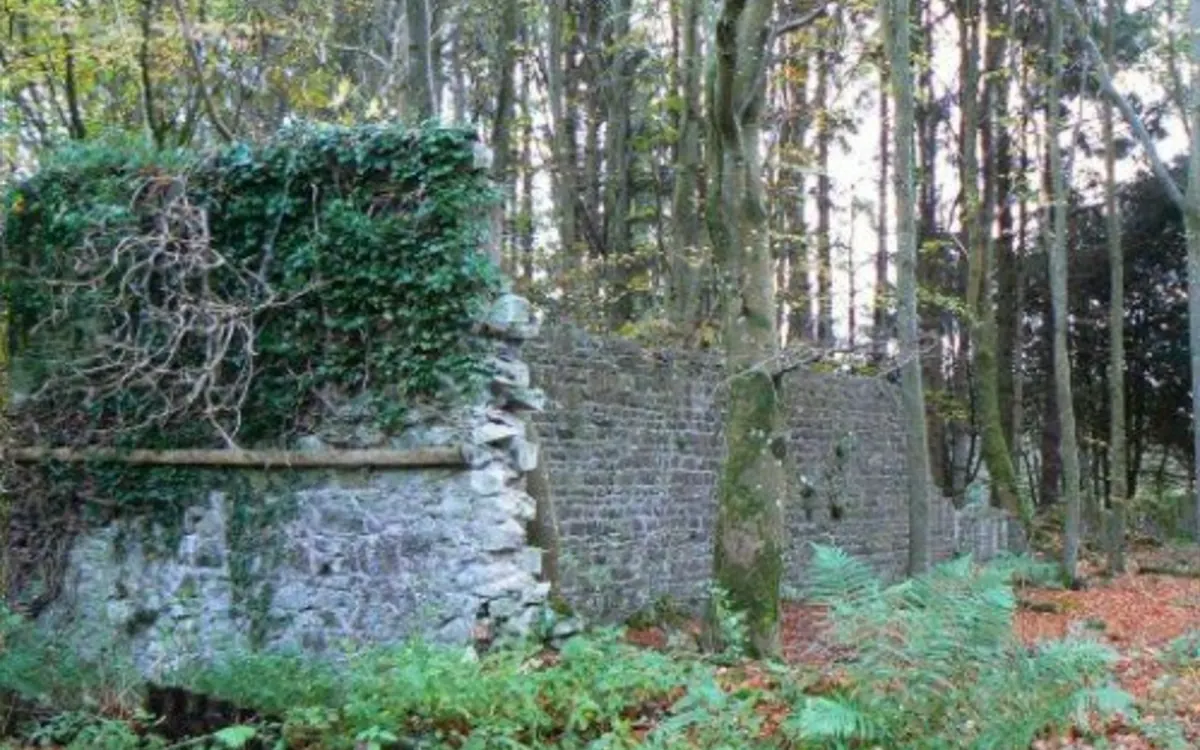
The present is always built on the ruins of the past, the only real question is - how do we integrate this reality into our identity? This episode looks at the begins of a shift in Israeli identity in the early 60s, together with the emergence of a new national consciousness among the Arabs in Israel and abroad.
About this episode
Be who you are and say what you feel, says Dr. Seuss. The spirit of the sixties is harder to pin down in Israel, in part because the decade from 1956 to 1967 was one of relative peace and prosperity, and when a people has room to breathe after the twin traumas of the Holocaust and the War of Independence, it finds time to think, the Eichmann trial beginning to integrate the Holocaust into Israeli identity. A listener was incensed at Rav Mike's minimal recognition of Palestinian national identity, raising two questions: whether it is nothing more than a tool of war, and whether Israeli and Jewish identity is a scarcity dependent on the non-existence of a Palestinian one. Since this is the Jewish story, the real question is how we as Jews integrate the traumatic origins of a Palestinian identity, whose narrative is a direct negation of our own, into our own story in a life-giving way. Why unearth the past at all, when the Hasbara approach sells cherry tomatoes and beaches and a cultural Disneyland where you skip what you do not want to see; because the past is messy by definition, and as Renan said, forgetting and even historical error are essential to a nation and unity is always brutally established, yet forgetting is a poor long-term strategy when competing narratives have weaponized the past.
Rav Mike holds that Am Yisrael can stand up to any critical examination, proud and confident while owning the pain, which depends on a clear vision of the future. A 2008 sign in Park Canada, product of a lawsuit by the NGO Zochrot, memorializes the destroyed villages of Imwas, Yalu and Beit Nuba, and Zochrot's mission to reconceptualize the Nakba and the return would turn back the clock on the Jewish state, the Arab response of seeking through international politics and then through convincing the Jews themselves that their society is built on injustice what they could not win on the battlefield, political cartography traceable to Hadrian wiping Judea off the map. A.B. Yehoshua's 1962 Facing the Forest was the first real treatment in Israeli literature of the Palestinian experience of loss; Yehoshua, a fifth-generation Yerushalmi who fought in the 1956 campaign, belonged to the new wave that moved away from the Palmach generation forged by destruction and rebirth and intoxicated with the land, children of a bureaucratic state disillusioned with the Zionist dream, drawing from the Western cynicism of the fifties, the roots of post-Zionism, though Yehoshua would also become a strong advocate that Israeli identity is the only genuine Jewish identity.
Facing the Forest is an allegory: an aimless young Israeli working as a fire lookout discovers that the JNF forest was planted over an Arab village destroyed in 1948, whose mute caretaker, his tongue cut out in some war, finally burns the forest while the intellectual stands dumbstruck, paralyzed by ambivalence toward everything his parents built on the ruins. The forest is Israel's present built over a violent silence, the first generation now powerful men edging toward old age and willfully ignorant, the Arabs silenced by defeat but seething, and the children paralyzed by a vague awareness. Rav Mike offers three points: the sense of topographic injustice begs how far back the debt goes, since the Arab villages were themselves a product of colonization as were the Ottomans, Mamluks, Crusaders and the Romans who erased Judea; the biblical promise of Deuteronomy that you inherit cities you did not build comes with the warning not to forget, which the founders and Yehoshua's generation may be symptomatic of; and perhaps this is simply the way of the world, since every political formation is built on violent acts, a reality Yehoshua and the new wave would grow more critical of, saved from despair only by shifting their sense of injustice onto 1967 so they could avoid facing the forest.
Not all the Arab villages were left in ruins, and in 1961 Martha Gellhorn visited the Arabs of Israel, whose very name is contested, Arabs in Israel, Israeli Arabs, or Palestinians. Shmuel Divon, the prime minister's adviser, found them in 1949 confounded, segmented, divided and frightened, their leadership fled, their economy in shambles, many in shock, and from 1949 to 1966 most lived under military rule whose legal basis was, in a historic irony, the British emergency regulations of 1945 once used against the Jews, five of which controlled the movement of citizens who were nonetheless citizens, many needing permits to move and living under curfew. Gellhorn found calm and stability, 200,000 Arab citizens against nearly two million Jews, and heard the chief grievance, that their land was taken under the absentees' property law, cheaply, and that the military government had an informer in every village. The question is what identity was emerging: some looked at the material benefits, schools, water, electricity and radios, and decided it was good enough to be Israeli, an attitude the military government strengthened by fighting their consolidation as a national collective, but buying off national identity is risky, as the poet Rashid Hussein said these things are only candies that win the hearts of toddlers, we are not infants.
Hussein gained his consciousness through Maki, the Communist Party, the only party embracing both Arabs and Jews, which fought the military government by arguing it was backfiring and becoming the main source of Arab nationalism. On Independence Day 1958 a Maki-driven boycott and the May Day march in Nazareth rang with end military rule, down with Ben-Gurion, long live Nasser, becoming a riot, and in its wake the Al-Ard movement, the land, raised nationalist consciousness, tired of the communists who gave them consciousness but denied their national identity and tired of being ignored by an Arab world that let no Palestine emerge from 1948 to 1967 because the refugees were too useful degraded. Those who wanted to be Palestinians believed Israel would not let them and the Arab states would not help, so only self-liberation remained: George Habash formed the Arab Nationalist Movement bridging pan-Arabism and Palestinian nationalism, the way to Tel Aviv through Damascus, Baghdad, Amman and Cairo, keeping alive Haj Amin al-Husseini's rhetoric; and as pan-Arab unity failed with the collapse of the UAR, Yasser Arafat's Fatah, founded in 1959, focused entirely on Palestine, refused to be manipulated by Arab regimes, and made armed struggle its core strategy, drawing on Algeria, Vietnam and Cuba. Under Arab League pressure to rein Fatah in, the Palestinian National Council convened in Jerusalem in 1964 to establish the PLO, and Fatah carried out its first operation in December 1964 against a pumping station of the national water carrier, the lifeblood of the nation.
Key ideas
- The breathing room of the late fifties let Israelis begin to unearth the Arab past under the thriving present, which forgetting serves poorly when narratives are weaponized.
- A.B. Yehoshua's Facing the Forest was the first treatment of Palestinian loss, an allegory of a present built over a violent silence.
- The topographic injustice begs how far back the debt goes, since the Arab villages were themselves products of layers of conquest.
- Most Arabs of Israel lived under military rule from 1949 to 1966 under the British emergency regulations once used against the Jews.
- Some accepted material benefits as good enough to be Israeli, but Rashid Hussein called them candies that win the hearts of toddlers.
- Palestinian consciousness revived through Al-Ard, Habash's Arab Nationalist Movement and Arafat's Fatah, which struck the national water carrier in 1964.
Chapters
- 0:00 The spirit of the sixties in Israel
- 2:16 Two questions; the scarcity of identity
- 4:27 Why unearth the past? Renan
- 8:53 Park Canada; Zochrot and the Nakba
- 12:15 Facing the Forest; the new wave
- 16:41 The allegory of the burning forest
- 20:04 Three points; how far back the debt
- 22:11 The biblical promise and warning
- 23:20 The way of the world; saved by 1967
- 24:25 The Arabs under military rule; Gellhorn
- 26:44 The emergency regulations; the grievances
- 30:03 Good enough to be Israeli; Rashid Hussein
- 33:17 Maki and the military government
- 35:25 Nazareth; the rise of Al-Ard
- 37:34 Habash and the Arab Nationalist Movement
- 40:44 Arafat's Fatah and the PLO
Who, where and when
People
A.B. Yehoshua, Ernest Renan, Martha Gellhorn, Shmuel Divon, Rashid Hussein, George Habash, Yasser Arafat, Haj Amin al-Husseini, David Ben-Gurion
Places
Park Canada and Imwas, The Galilee and Nazareth, Jordan and the Gaza Strip, Damascus and Cairo
Texts
Facing the Forest, The absentees' property law, Deuteronomy 6, The PLO charter
When
1962 CE: Facing the Forest, 1958 CE: the Nazareth May Day riot, 1961 CE: Gellhorn's visit, 1964 CE: the PLO founded, December 1964 CE: Fatah's first operation
Read the transcript
Be who you are and say what you feel, says Dr. Seuss, because those who mind don't matter, and those who matter don't mind. And if you don't mind, I'd like to speak of some matters that really matter to me, because I'm Rav Mike Foyer, and this is The Jewish Story. Episode 25, Shifting Identities in Early Israel. You know, I have to admit that I find the spirit of the 60s in Israel much harder to pin down than its parallel in America. Maybe that's just because I'm American, and by the nature of things, I have more access to and understanding of the narrative of what went on there. I mean, after all, I grew up on the stories of the hippies and the yippies. Or maybe it's because the American 60s have actually become the property of global culture, music, the imagery, the political slogans, and therefore just feel more significant and pervasively present.
But there's also a third element that I've begun to sense in that difficulty. You know, some time back, I offered the image of that decade between the 1956 Sinai War and the 1967 Six-Day War. I know it's 11 years, but go with me. I offered an image of that as a decade of relative peace and prosperity. And whether you see the Sinai War as colonialist adventurism or as a justified attempt to bring quiet to Israel's borders, the breathing room it provided justified the campaign in the eyes of the majority of Israelis. But when you have room to breathe, you often find time to think as well. And for a people that suffered the twin traumas of the Holocaust and the War of Independence in the last two decades, and really together within the space of one decade, there's a lot to consider.
We spoke about the Eichmann trial in 1961 and how the testimony of that trial unearthed some of the horrors of the Holocaust, exposing many Israelis to its realities for the first time. And that trial began a process of integrating the Holocaust into Israeli identity, which is ongoing even today. And it's not the only reality that was unearthed in the 60s in Israel. Now, just recently, I actually had a less than happy email exchange, we'll call it. It was a listener who was incensed with the very minimal recognition that I granted to the existence of a Palestinian national identity. He labeled it as a historical error and pointed out that said national identity is right now a tool in the war on the Jews of Israel.
Now, I really am not going to argue with that, but I see two fundamental questions which underlie the exchange that we had. One is whether Palestinian national identity is nothing more than a tool of war. And we're going to look a bit at this question today, or at least lay the groundwork for it, by examining the rebirth of Palestinian political consciousness in the 60s. The other question is whether what we're experiencing here is simply a scarcity of identity. Whether the Israeli, and by extension, Jewish identity, which has emerged post the birth of the state of Israel, is simply dependent upon the non-existent of a Palestinian identity. Basically, is there enough room in the world for both Israeli and Palestinian identities, however you construe them?
Let's not forget it. Jewish identity has undergone some major shifts in the last 2,000 years. So the Arabs of the land of Israel have probably done the same in their, let's say, 100 years of national consciousness. And frankly, since this is the Jewish story, I'm not all that interested or even equipped to deal with the Arab side of that equation. So what I really mean is, even if we deny the historic roots of Palestinian national identity, how do we as Jews integrate its traumatic origins into our own story in a way which is life-giving, as opposed to a guarantee of constant conflict? Because whether you believe it or not, there are a few million people in the world who identify as Palestinian and their narrative is violently bound up with our own.
In fact, in many ways, it's a direct negation. So we're going to have to touch today on the first tentative efforts by Israelis to unearth the Arab side of their recent past. And we'll ask whether that was done in a healthy and constructive manner. And we're also going to have to touch on, like I said, the rebirth or perhaps reconstruction of a Palestinian national identity and whether that was done in a healthy and constructive manner. Bottom line, the exploration of an emergence of Israeli and Palestinian identities in the 60s is not going to be a quick, linear, or even neat process. So let's just see where this first episode goes. Before we even get started, you might well ask, what's the point of unearthing the past?
Don't we have enough problems to deal with in the present? And I could go further and ask whether isn't it dangerous to our national project to start digging skeletons out of the closet, or the ground for that matter. This is how I see the current Hasbara approach, you know, the selling Israel to the world. We sell a country of cherry tomatoes, beautiful beaches, liberal Western values. And that might work for 30-second Facebook videos or whirlwind tours of heritage stops in a cultural Disneyland. Heritage tours, by the way, where you can simply skip what you don't want to talk about or even see. but it's hardly representative of a real place, a real country, and certainly not of the awesome nation that we have here in the land of Israel.
Now, one thing we have to be clear on, if you've been listening to the Jewish story for any amount of time, then you know that the past is messy by definition. If you do the research on any country that you admire, and certainly on the ones that you don't, you'll find some pretty difficult events underlying their present reality. I mean, think about what the United States looked like 15 years after the Revolutionary War, which would put us in 1963 in Israel, or how about even 70 years? Back in Season 2, I gave you a quote from Ernest Renan, late 19th century French linguist and philosopher and important thinker about early nationalism, and it goes like this. He says, forgetting, I would even say historical error, is an essential factor in the creation of a nation, and it is for this reason that the progress of historical studies often poses a threat to nationality.
Historical inquiry, in effect, throws light on the violent acts that have taken place at the origin of every political formation, even those that have been the most benevolent in their consequences. He finishes by saying unity is always brutally established. So it may be comfortable and perhaps even necessary to found a national identity on forgetting. At least in the short term, it's not possible to pick all your wounds when they're trying to heal and establish a reality whose aims are good. But I would say that forgetting is a poor long-term strategy for health, especially when there are competing national narratives in the present. National narratives, by the way, which have weaponized their divergent stories of the past in order to try to destroy each other.
The Arabs fled. They were driven out. They fled. They were driven out. This may sound familiar. We've been touching on this all along. And frankly, if one chooses to gloss over the difficulties of the past, it's all but impossible to honestly engage the challenges that we have in the present. That's why you hear so many young Jews saying, you never told me this. You never told me about the complex relationship between Jews and Arabs, between the Jordan and the Mediterranean Sea. Because we didn't tell them. Because we ourselves were either ignorant or simply didn't want to know. Now I want to make it clear before we get too deep into this that it's my unwavering belief that Am Yisrael, we get the God-given rights, we can stand up to any critical examination of our past.
We can be proud and confident of what we've done, while at the same time owning the pain and difficulties which also reside there. That's a sign of strength and righteousness of purpose, because the ability to embrace the whole past, its glories and its difficulties, depends on having a clear vision for the future. Now, I'm not saying that the ends justify the means, but rather that the formation of a benevolent union, as Renan called it, is an organic process of history, and history is always messy, and that the perfection of a present-day nation shouldn't be measured by its absolute success, which of course is a myth, but rather by its ongoing efforts to build a society that is reflective of its core values.
There'll be more on this in coming episodes. Meanwhile, back to this task of unearthing the past. You know, in 2008, a new sign appeared in Park Canada. You may have been to Park Canada. It's one of the JNF's more beautiful parks in the Jerusalem area, situated on 7,000 dunams of fantastic land, tucked right between Sharagai and Bichlafer-Trun, the Latrun intersection, if you know it. It's a great low-key hiking picnic spot. Google it. It's worth going. Even if you are familiar with Park Canada, you may be less familiar with the fact that for a number of years, there was, and maybe still is for all I know, a weekly Friday tour to Park Canada. You may not be aware of this tour because the title of that tour is The Rite of Return, and it brings together the descendants of the Arab families who lived on that land before the wars of 48 and 67.
Which brings me back to this new sign that appeared in 2008. It memorializes the villages of Dir-i-Uv, Imwas, and Yalu, which I'm sure I said wrong, where approximately 2,000 people lived before they were destroyed in 48 and 67. It also notes that their descendants now live in Jordan and Ramallah. The sign is not an accident. It's the product of a lawsuit brought by a non-governmental organization called Zohrot. Zohrot defines its mission as promoting acknowledgement and accountability for the ongoing injustices of the Nakba, the Palestinian catastrophe of 1948, and the reconceptualization of the return as the imperative redress of the Nakba and a chance for a better life for all the country's inhabitants.
When you wade through the language, what you find is that Zohrot and other organizations like it want to turn back the clock on the state of Israel. They want to turn back the clock of history, not only bringing the refugees, or in reality, their great-great-grandchildren, not only bringing them home, but erasing the Jewish nature of the state. And as we'll see as we go forward in the coming episodes, this has always been a core element of the Arab response to their defeat in 1948. If you can't win a war on the battlefield, then you seek victory through international politics. And if you can't win on the battlefield and you fail to get what you want through international politics, well then convince the Jews themselves that our society is built on injustice.
and in this case, literally built on it. The goal is clear. If the Arabs were here first, then we Jews are invaders. We're a colonial power which must atone for the sin of conquest as all other former colonial powers are being forced to do here in the well we the 21st century I almost said 20th It part of an ongoing game I like to call it political cartography, right? We could trace this game, by the way, all the way back to Hadrian's decision to wipe Judea off the map after he defeated the third revolt against the Roman Empire. Go back to season two if you don't know what I'm talking about. Now, I want to be clear. I'm not looking to justify Israel right now and I'm certainly not advocating for the right of return I want to understand how the image of ruined Arab villages buried under freshly planted JNF forces actually underlies a particular layer of Israeli identity it's a layer which is going to begin to crumble in the early 60s and though the catastrophic victory of 67 will hold off that tide in the end that too is actually going to contribute to its erosion.
When A.B. Yehoshua published his short story, Facing the Forest, in 1962, it was, according to many critics, the first real treatment in Israeli literature of the Palestinian experience of Nakba, of that defeat that they suffered in 1948, and specifically of their feelings of loss. So Avram bully Yehoshua, as he was known, was born in 1936 to a fifth-generation Yerushalmi family. And too young to fight in 1948, Ebi Yehoshua served as a paratrooper in the 1956 Sinai campaign. And in many ways, that distinction embodies what he came to represent in Israeli literature, a move away from the generation of 48, of the Palmach generation. The writers of that founding generation were forged by the drama, that drama of destruction and rebirth.
and they were therefore bound by collective experience and frankly infused by a romantic intoxication with the land. But by the late 1950s, the attitude of Hebrew writers had begun to shift. The generation of 48 came of age in a time of pioneering idealism. Their children were raised in an increasingly bureaucratic state, one which was no longer about being able to shape reality according to your dreams, but was almost swamped by the waves of immigration and saturated with partisan politics. That society produced its own generation of poets, songwriters, authors, and their work was marked by a growing sense of disillusionment with the Zionist dream. People think of post-Zionism as a much later product, but in reality, it has its roots in this new wave.
because they saw their parents' generation as too collectivist, too nationalist, too romantic. And instead of looking inward at the drama of the Jewish people to draw their inspiration, they drew it from the cultural waves that were sweeping Europe and the West in the 50s and early 60s, where cynicism toward old truths was the hallmark of sophistication, and the focus was on the individual, on personal freedom, on self-expression. And A.B. Yoshua became one of the most prominent voices of this new wave, as they literally began to be known. At this point, meaning right now, he's an author of world renown. He's a leading figure of left-wing activism in Israel. And perhaps surprisingly, a very strong advocate of Israeli identity as the only genuine expression of Jewish identity.
Can you imagine this guy standing up at the 2006 Centennial Symposium of the American Jewish community and declaring to all these American Jews, leaders of the American Jewish community. Judaism outside Israel has no future. If you do not live in Israel, your Jewish identity has no meaning at all. That just gives you a taste of the type of person we're dealing with. So he's a major figure of interest and controversy even today. But in 1962, he was just publishing his first collection of short stories called Mot Hazaken. The title story, Motazakein, which means death of the old man, is according to Yeshua's own explanation about the young state burying the exhausted old man of diaspora Jewish identity.
Another story in the collection, Hamifakeid Aharon, the last commander, is about a group of soldiers who prefer sleeping to fighting. The author says it's an expression of weary distaste for war felt by those with whom he fought in the Sinai campaign. It's a war weariness, which in 1962 presaged the birth of the Israeli peace camp. And so it should come as no surprise that these are ripe images. They're ripe images that can tell us a lot about the model of Israeli identity, which will emerge in the hands of people like A.B. Yoshua and Amos Oz and their other contemporaries once they come of age in the post-1967 area. That lies ahead. What interests me right now is this story facing the forest, which was also included in that first collection.
As I said, called the first real treatment of Palestinian feelings of loss. And I'm sure you can see why a general turn away from collective nationalist identity might open the door to the human experience of those who were until now largely seen as the faceless enemy other. What's the advantage in empathizing with the enemy? Now whether the results for Israel were good or not, I will leave to your judgment. Facing the Forest is worthwhile reading, by the way. You can find it on the internet, not so long. It's a story about a young Israeli Jew, educated but aimless, intelligent but lacking motivation, who takes up a job as a fire lookout in a remote mountaintop outside of Jerusalem in hopes of gaining some focus in his life.
It's a lonely existence, and his only companions are an elderly Arab caretaker and his daughter. The caretaker's tongue, by the way, was cut out in the war. We never learn which war or by whom, and so it's a silent existence as well. In his wanderings through the forests over the course of a year, the young Israeli discovers that the trees were actually planted on the ruins of an Arab village destroyed in 48. This comes as quite a shock to him. But when he mentions it to his supervisor, who visits periodically, that man cannot recall any such village. But finally, when pressed, he responds, Ah, a small village. Ah, yes, there used to be some sort of farmstead here, but that is a thing of the past. As the story progresses, the man becomes more isolated and, frankly, more than a bit unhinged.
He spends his days trying to connect with the mute caretaker and slowly mapping the outlines of the ruins he's found. This is when he also discovers that the Arab father has been stockpiling kerosene among the fallen stones. Finally, when, toward the end of the story, consumed by rage over the past that he can't express, the caretaker decides to burn down the forest, the Israeli intellectual fails in his responsibility. He stands dumbstruck before the rising flames, fascinated by their destructive power and unable to act because of his ambivalence toward everything his parents' generation built, built on top of the ruins he's been tracing. As with so much of Yehoshua's early work, Facing the Forest is an allegory.
And it's an allegory for what the author sees as the dilemma of post-independence Israel. The Forest is Israel's present in the early 60s, built over a violent past and tense with silence that begs to be broken. On the Jewish side, there's what's left of the first generation that waged war in the name of sacred ideals, but who are now powerful men, quote, edging their way to old age, as Yehoshua describes the forest manager, powerless and willfully ignorant of the past which they themselves lived. Opposing them are the Arabs uprooted by the word independence, silenced by defeat, buried by the present but seething underneath with a desire for revenge, and perhaps even with righteous anger. And then there are the children of present-day Israel, the student fire watcher, a generation unmoved by the pathos that drove their parents to do incredible things, and frankly paralyzed by a vague awareness of the violent past which underlies the thriving world they've inherited.
As Eoshua characterizes what goes through the mind of this young student as he watches the world which he's been given to take care of burn, and there, from within the smoke, from within the mist, the little village rises before him, reborn in its most basic outlines, as in an abstract painting, like every submerged past. As a first attempt to unearth the past that underlies the Israeli present of the 60s, Facing the Forest strikes, at best, a deeply ambivalent note. But rather than offer my commentary on its significance, I mostly want to leave you to contemplate it for yourself and what it means to come to awareness that the present is built on the ruins of the past. But I will give you three points to guide your thoughts.
First, it's important to recognize that the sense of topographic injustice that Ebi Yoshua is expressing, that the present has stolen the land from the past and that there is a violent and guilty debt which those who thrive today owe to those who lived before may be true, but it begs the question of how far back that debt actually goes. As part of the literary new wave, Yehoshua was unmoved by the national historical scale. He wanted to feel the pain of the individual villager. And I get that. But there's more to justice than feeling individual pain. And in this case, if you want to think about justice, you may have to recall that the Arab villages themselves were a product of colonization, as were the Ottomans, the Mamluks, the Crusaders, and the Byzantines that came before.
How deep into the underlying past does one need to dig in order to achieve topographic justice? The hills of Jerusalem are also littered with the stones of Second Temple life, ruined by the Romans before they erased Judea from the map and renamed it Palestine. Were those some of the ruins that were coming up through that forest? So that's one element in consideration. A second one is the biblical question. As it says in the book of Davarim, 6th chapter, 11 through 13, you can look it up. When the Lord your God brings you into the land that he swore to your fathers, Avram, Yitzchak, and Yaakov, to assign to you great and flourishing cities that you did not build, houses full of all good things that you did not fill, hewn cisterns that you did not hew, vineyards and olive groves that you did not plant.
That's a biblical promise, and one needs to contemplate why God would phrase it in such a way that you are inheriting a land which you didn't build. But of course, if we look to the Bible in order to understand the relationship between past and present, then we also have to consider the future as well, because there's a warning that comes with that promise. Take heed that you not forget the Lord, lest the anger of the Lord your God blaze forth against you and he wipe you off the face of the earth. And that type of forgetting might even be called symptomatic of the founding fathers of the Zionist state and in particular of Ebi Yoshua second generation which begs the question of how we supposed to move forward with the violent past that underlies our present if we don't have some real vision of the future.
One is the question of how far back topographic injustice should be checked, and number two is what do we do with the divine promise? last but certainly not least, we might just say that this is the way of the world. Is there any society which is not built on the ruins of the past? As Renan said, there are violent acts at the origin of every political formation, even the most benevolent, in which case, maybe it's not even worthwhile to ask the question. And that's not a justification. It might just be reality. But it's a reality of which Yoshua and the other artists of the new wave will become increasingly critical as they shed what they deem to be a confining collective Jewish narrative and begin to deepen their empathy for individual suffering wherever it's found, which of course makes them particularly vulnerable to the counter-narrative, which is just getting off the ground in their day.
You know, it's odd to say, but in many ways, these cultural critics will be saved from despair by the conquests of 1967. Those conquests, which they themselves will become so critical of, because by shifting their sense of injustice onto the way in which Israel behaves in the territories captured in the Six-Day War, they're able to avoid facing the forest in any real way. But the reality is, the problematic relationship between Jews, Arabs, and military rule didn't begin in 1967. And that's because not all of the Arab villages in the state of Israel were left in ruins. In the summer of 1961, Martha Gellhorn, one of the great American war correspondents of the 20th century, and incidentally third wife of Ernest Hemingway, took a journey to the Middle East in order to report on the Palestinian refugee problem, as she labeled it.
Her trip took her to Jordan, Lebanon, Syria, the Egyptian-ruled Gaza Strip, and maybe we'll touch on what she saw there at some point or another, But for now, I'm more interested in the complexity of the situation which she found when she came to speak to the Arabs of the state of Israel. I say the Arabs of Israel in an attempt to be factual and non-judgmental. But in reality, it's all but impossible to do that when it comes to the identity issues that faced the Arabs left under Israeli rule in 1948. Were they Arabs in Israel, implying a foreign body that at best was tolerated but perhaps was meant to be expelled? Were they Israeli Arabs, implying full citizens in a budding democracy? Or were they Palestinians, which implies not only that they don't belong, but that they are a rightful competitor for the land itself?
So what did Gellhorn find only 13 years after the war had ended? Well, in the words of Shmuel Dibon, the Prime Minister's advisor for Arab affairs, in 1949, the Arab population was, quote, confounded, segmented, divided, and frightened. This should come as no surprise. I mean, after all, their intellectual and political leadership had fled after losing a bloody insurrection, which had been ongoing for more than 10 years. Many of them abandoned the ship, of course, before the fight was fully lost. Their economy was in shambles from the chaos of invasion and war. And many of them were personally in shock, having sided with the invading Arab armies, at least emotionally, in the hopes that the Jews would be driven into the sea.
and now, having found themselves under occupation, often uprooted from their villages and internally displaced, more often than not, because of their own fear. Now, Dibon was the most senior government official who operated in the Arab sector, and his job was to bring order to this chaos. And his primary tools in doing that were the General Security Service and the IDF, the Israel Defense Forces, not civilian tools, because most of the Arab population which remained within Israel was under military rule from 1949 all the way through 1966. And in a twist of historic irony, the military government's legal infrastructure was none other than the infamous emergency defense regulations of 1945. You may recall, if you listen closely to season two, that these are the laws originally passed by the British mandatory government in its attempt to suppress the Jewish uprising against its rule with ever more draconian legal tools.
And the regulations were adopted after independence by the Provisional Council of State and later by the Knesset. And by the by, they continue to serve as the legal basis for the military civil administration here within Yehudah and Shomron, where I live. The initial decision to place large parts of the Galilee and the areas bordering the Shomron and even parts of the coast under military rule was based on the assumption that the Arabs left under Israeli rule in 1949 were the remains of an enemy force, and that their presence constituted an existential security threat to the Jewish state. And so accordingly, the military government took five of the 162 mandatory regulations and applied them. It was a specific five whose primary purpose was to control the movement of citizens under its authority.
because citizens, they were. They are truly Israeli Arabs on that level. They had been granted citizenship by the state of Israel, and that was despite the fact that most needed a government permit to move from one village to another, and many lived under a permanent curfew. So by the time Martha Gellhorn came to visit in 1961, calm and stability had indeed been attained. The question was whether the methods justified the results, and that depended on who you ask. According to Israeli statistics, on January 1st, 1960, there were roughly 200,000 Arab citizens of the state, as opposed to nearly 2 million Jews. And since Arabs were both Christian and Muslim, Gellhorn split her time between the two. Speaking to one Christian Arab school teacher in a village near the Lebanese border, she asked for his complaints.
And he said, we have military zones all along the frontiers, referring to the permit system used by the military government to control their movement. We must ask for permission to travel or work in different places. And then, when she probed, he gave voice to what was really the chief grievance amongst most of the Arab populace. They've taken our land, which is in the military zones. When she asked whether it was truly taken or whether it was paid, he said, yes, they pay for it, but very cheaply. At the price it used to be worth in the mandate, she responded, before it was improved by the Jews. Something like that, he said, but no, even cheaper. Now, these types of purchases were actually made under the absentee's property law.
It was a law passed by the Knesset in 1950, which defined all those who were uprooted by the War of Independence, whether they left the borders of the state of Israel, or whether they were uprooted internally, as absentees, and gave the government the right, in many cases, to take control of their property. The conversation then turned to the presence of the military administration in daily life. By the way, as a school teacher, this young man had been approved by the security agencies. Otherwise, you were not permitted to teach, and thus he knew their methods. I should think it might be hard for the Jews to know what Arabs they could trust, suggested Gellhorn. They are right not to trust 50% of the Arabs in this country, he responded.
How can they know which 50%, she asked. Oh, they know everything. They have a CID agent, that's the military police, in every Arab village. He's a Jew, and everybody knows him. what's the use of having a secret policeman if everybody knows he's a secret policeman she asked there are plenty of informers I don't know what it is that has taught all Arabs to be spies now it's worth reading all of Gellhorn's article and by the way if you want to get access to it you can find it on my Patreon feed all you need to do is a minimum of $1 per podcast you can go either to jewishstory.co in the upper right hand corner you'll see a button that says be a patron You can click on through for a little bit of per-podcast support, or you can go to patreon.com forward slash mfoyer, and you'll find it there.
Anyway, if you want to read the article, it's worthwhile. But I want to move on from the anecdotal to the conceptual, because my question is, what kind of identity was emerging amongst the Arabs left under Israeli rule? And what are the implications for Israeli identity in turn? There were those who looked at the material benefits which had come to them in the last decade and decided that it was good, or at least good enough, to be Israeli. As one Muslim schoolteacher told Gellhorn, before the war, only my father sent his sons to school from this village. Now we have a school and 240 children in it, 100 girls, 140 boys. We have a water tap at every house, an electric light, never such things before.
No one owned a radio. Now there are a hundred radios and frigid airs too. The people earn good wages. It was an attitude adopted also by many Jewish Israelis. Its roots actually stretched back to the earliest Zionist movement, many whose founders felt that the prosperity brought by a Jewish state would erase Arab antagonism, or perhaps even justified an aggressive stance in taking the country, in taking the land, I should say. And that was an attitude deeply strengthened by the military government. which used all means at its disposal, in general, to keep the Arab Israelis individual. Their task was to fight their consolidation as a national collective, with the economic, political, and educational means at its disposal.
But the buying off of national identity is always risky business, and in particular was flatly rejected by the more politically conscious leaders of Israel's Arabs. People like the poet Rashid Hussain. And he delivered actually the following poem, well actually not the following poem, it's the following quote, at the first ever gathering of Jewish and Arab poets in Tel Aviv in 1958. It was a messy affair, by the way, since a number of the participants from the Arab side had to get up in the middle and leave because they were under curfew. He who denies us, says Hussein, he who denies us the right to express our suffering and our hope can be compared to one who denies Bialik and Chernikovsky their volumes of nationalist bialik.
poetry. We would expect you to understand our heartfelt love for nationalist aspirations and our identification with the aspirations of the Arab world to liberate itself from imperialism and defeat it. Although we Arabs of Israel have enough black bread to satisfy our bellies, and the roads into our villages are now paved, yet these things are only candies that can win the hearts of toddlers. We are not infants. It's an awfully risky business, as I said, to try to buy off political consciousness with bread. Now Hussein had gained his political consciousness through Maki, the Israeli Communist Party. And he'd done that because Maki was, from its origins, the only Israeli political party which embraced both Arabs and Jews as citizens of a Zionist state As strange a mix as that may sound if you familiar with today politics after many offshoots break and reconfigurations today party Hadash which is the center of the Arab joint list is still the Communist Party.
So Maki had been also leading the fight against the military government since the early 50s. And they did so in a very important way. Maki pointed out that it isn't just simply protesting what they saw as discriminatory policies against a class of Israeli citizens. They argued that the military government was backfiring and had actually become the main source for raising nationalist sentiments amongst the Arabs. As communists, they weren't interested in nationalist sentiment. I mean, by the way, the days of the underground struggle against the British had proven to the Jews that nothing brings about solidarity like an oppressive enemy. We perhaps should have remembered that. Now, one wonders, if Martha Gellhorn heard any of the following story when she came to visit.
Only three years before her visit, on Independence Day 1958, the Mapai government decided to show off its success in a decade of integration of the Arab minorities into the state. In order to do so, they offered money and every incentive they could find to the local councils in the Arab areas in order to gain their participation. Rashid Hussein, by the way, was even pressured to compose a poem. Sure enough, a boycott movement emerged, driven by Maki. After the fact, the government would claim that 8,000 people marched in honor of the state through the streets of the Arab city of Nazareth on April 26, but a different type of story unfolded on May Day, less than a week later, when the Communist parties marched.
Along with the singing of Soviet songs and the normal doctrinal battles, the streets rang with much more nationalist slogans, perhaps for the first time loudly spoken in public. End military rule, they shouted. Down with Ben-Gurion, long live Nasser. The people of Nazareth were fed up, not only with the military government, which only the year before had expropriated 1,200 dunams of city land to begin the construction of the all-Jewish town of Nazareth elite. They were largely fed up with the Jewish and Arab communists, communists who had given them political consciousness in the first place, but wanted to deny their national identity. The shouting on May Day soon became a riot. Dozens were arrested for throwing stones.
But what really emerged in the wake of this was the seeds of a new breed of Palestinian nationalism. And it was centered on an organization which called itself Al-Ard, the land. Now, despite attempts for the government to ban this organization, and its repeated attempts to rebrand and rename itself. Al-Ard was quite successful in raising nationalist consciousness amongst Palestinians. First and foremost, they were tired of the communists. And in fact, their call for an entire boycott of the 1959 elections, which is a major break in national consciousness, caused Maki to drop from six seats to three in the Knesset. They were also tired of being ignored by the Arab world. Remember, both the Gaza Strip and the so-called West Bank, meaning Yehuda and Shomron, were under Egyptian and Jordanian rule respectively at this point.
And yet no state of Palestine emerged in the years 1948 to 1967. The refugees were far too useful in their degraded state as a tool in the national struggles of the Arab states against Israel. You know, Marsha Gellhorn herself expressed the attitude she'd heard from the Arab leaders in her 1961 testimony before the U.S. Congress, which she gave on return from her trip. She said, the Israeli government, this is the words of these leaders, the Israeli government refuses to welcome back to their homeland the refugees, now swollen to more than a million in number. This refusal demonstrates the brutality and dishonesty of Israel, an abnormal nation of aliens who not only forced innocent people into exile, but also stole their property.
There is no solution to this injustice, the greatest the world has ever seen, except to repatriate all Palestinian refugees in Palestine. Palestine is an Arab country now infamously called Israel. Israel has no right to exist, and the Arab nations will not sign peace treaties with it, but will, by every means possible, maintain the state of war. So, those Arabs who want to be Palestinians do not believe that Israel will let them, nor do they hope that the Arab states will help them, which means that there's only one path left open before him, to liberate themselves. George Abash was a Christian Arab refugee from the city of Lod, who graduated first in his class from the medical school at the American University of Beirut in 1951.
But he always claimed that his real education was political, and that it came while operating a clinic in one of the refugee camps in Jordan. It was here, together with some of his fellow former students, that Habash formed the Arab Nationalist Movement, a revolutionary alternative to all the other political movements which they saw as failing in defending, quote, their people against Zionism and liberating them from Western rule. The ANM was nominally a pan-Arabist movement. Let's remember, that was the vogue in those days, especially once Nasser rose to power in the early 50s. But its focus on return and revenge made it particularly appealing to the refugees of Lebanon and Jordan. Habash bridged the gap between Arab unity as a goal and Palestinian nationalism by asserting that Arab unity and independence from the foreign world were the prerequisite for waging a successful war against Israel.
Or as he put it, the way to Tel Aviv is through Damascus, Baghdad, Amman, and Cairo. And it was the A&M who kept alive the religious racist rhetoric of Haj Amin al-Husseini, who you may recall is the Grand Mufti of Jerusalem, and the fiercest opponent to Zionism in the pre-state days. The A&M defined the cause of conflict as, quote, the constant aspiration of the Jews to conquer Palestine, which represented a danger equivalent to absolute extermination. He accused the Zionists of imperial aspirations in the whole Middle East and claimed they were supported by the wealth and resources of international Judaism. Capital letters, of course. By the early 1960s, however, pan-Arab unity seemed like a distant and perhaps unattainable dream.
The failure of the United Arab Republic to bring together Egypt and Syria, it blew up in 1961. The Egyptian intervention in Yemen's civil war in 1962 that almost drew the entire Arab world into civil war. So A&M may have declared that, quote, Palestine was the means, Arab unity the end, but the rest of the Arab world was occupied elsewhere. But there was an alternative emerging, because just as the El Ard movement was becoming the first Palestinian nationalist movement within Israel, a group of refugee activists began to coalesce around the head of the General Union of Palestinian Students at Cairo University, Yasser Arafat, and the new organization that he'd founded in 1959, the Fatah. Now, Fatah was distinct from the Arab nationalist movement in a few ways.
First of all, it was entirely focused on Palestine. Arab unity, socialism, Islam, class struggle, everything else that made up the mix of Arab intellectual life were of interest only to the extent that they served the nationalist cause. Second, Fatah was particularly concerned not to let the Arab regimes manipulate the Palestine issue to their own goals. And thus it aimed to mobilize directly the Palestinian masses and involve them in the process of their own liberation. As Arafat said, quote, the movement must originate directly with the Palestinians and not be linked to any particular Arab country. It must be a comprehensive movement that would start operating from all Arab countries simultaneously in order to engage the enemy on all fronts.
And the third difference actually flows from that last quote. Drawing on the experience of liberation movements in Algeria in the 50s, Vietnam and Cuba, Fatah saw armed struggle as its core strategy. indeed as the only way to achieve its aims. Again, in the words of its founder, the Palestinian people no longer believed in talk and speeches. All they want is to see action. Now you can imagine that such an activist stance, one which disregarded not only the goals of other Arab states, but actually their borders, it planned to launch a guerrilla war from wherever they were, was less than popular with the Arab governments. And in fact, the leaders of Fatah found themselves off and on imprisoned in Arab jails for months at a time in the early 60s.
And even though they eventually gained Syrian support and managed to move a safe base to Damascus, it was clear to the leaders of the Arab world that they had to be reigned in. And that's how it came about that the Palestinian National Council, under pressure from the Arab League and really under its direct aegis, convened in Jerusalem in 1964 to establish the Palestinian Liberation Organization, the PLO, in order to, quote, mobilize the Palestinian people for the eventual liberation of the land of Palestine. Their charter spoke in the name of the Palestinian Arab people who struggle against the forces of international Zionism and colonialism, which sought to conspire and work to displace it, dispossess it from its homeland and property.
and these words were followed quickly by deeds. The Fatah, as the largest and most militant element within the PLO, actually carried out its first grill operation in December of 1964, not coincidentally against a pumping station for the National Water Carrier, through which, as Prime Minister Levi Eshkol had said, flowed the lifeblood of the Israeli nation. So there we have it. The Arabs of the land of Israel may have been eclipsed by the 1948 war, but they are in the midst of a struggle to find their own identity. Just as the Jews of Israel, at the end of a decade or in the midst of a decade of peace, finding the breathing room, begin to contemplate how exactly is it that we got here and who are we now that we've arrived.
But since the militant element of Palestinian identity is making a comeback in the 60s, there may not be so much room to breathe. rovmikefoyer at gmail.com, or personal message at Facebook, rovmikefoyer, and I'm happy to share the details with you. Also want to thank the Land of Israel Network, that's thelandofisrael.com, for creating a platform that allows me to reach so many amazing people. I want to thank the Pardes Institute, pardes.org.il, for building an educational institution that gives me the privilege of teaching so many wonderful Jews. And I want to thank you for listening. I'm I'm Avmai Foyer, and this is The Jewish Story.
More from Season 3

TJS S3 Interlude: some more questions
Why stop once with a good thing? Here is another interlude answering listener questions on Israel as a Jewish State. Hold out to the end hear what Rav...
Play Episode
TJS S3E24 Levi Eshkol - a new face of leadership
Old politicians never die, they just fade away. The era of Ben Gurion ended in 1963 and it appeared that his replacement, Levi Eshkol, could not live up...
Play Episode
TJS S3 Interlude Purim - Own your story
The Jewish Story is narrative therapy for a nation, but how can it also serve each of us in our quest to be actors in our lives instead...
Play Episode